

Description
Product details
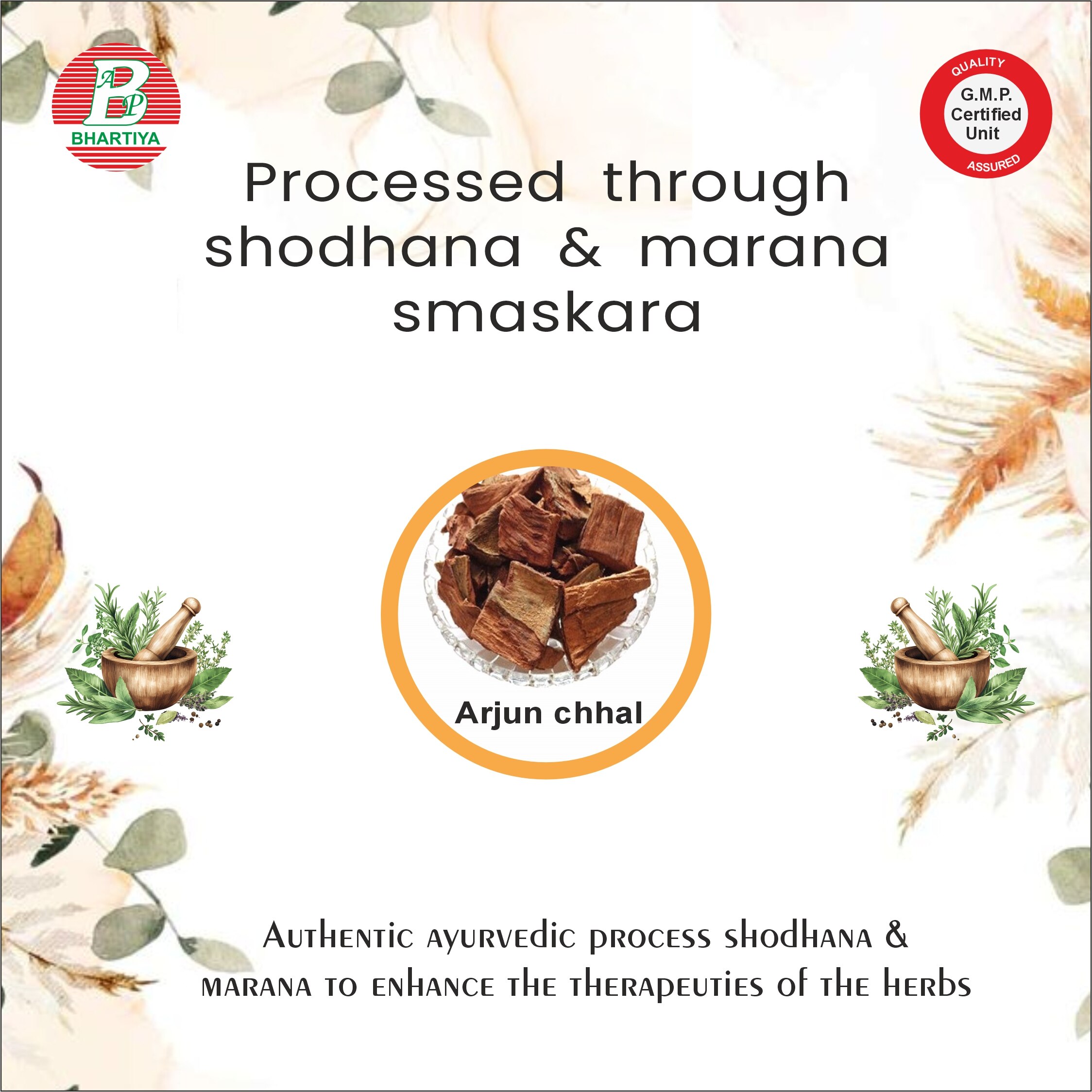
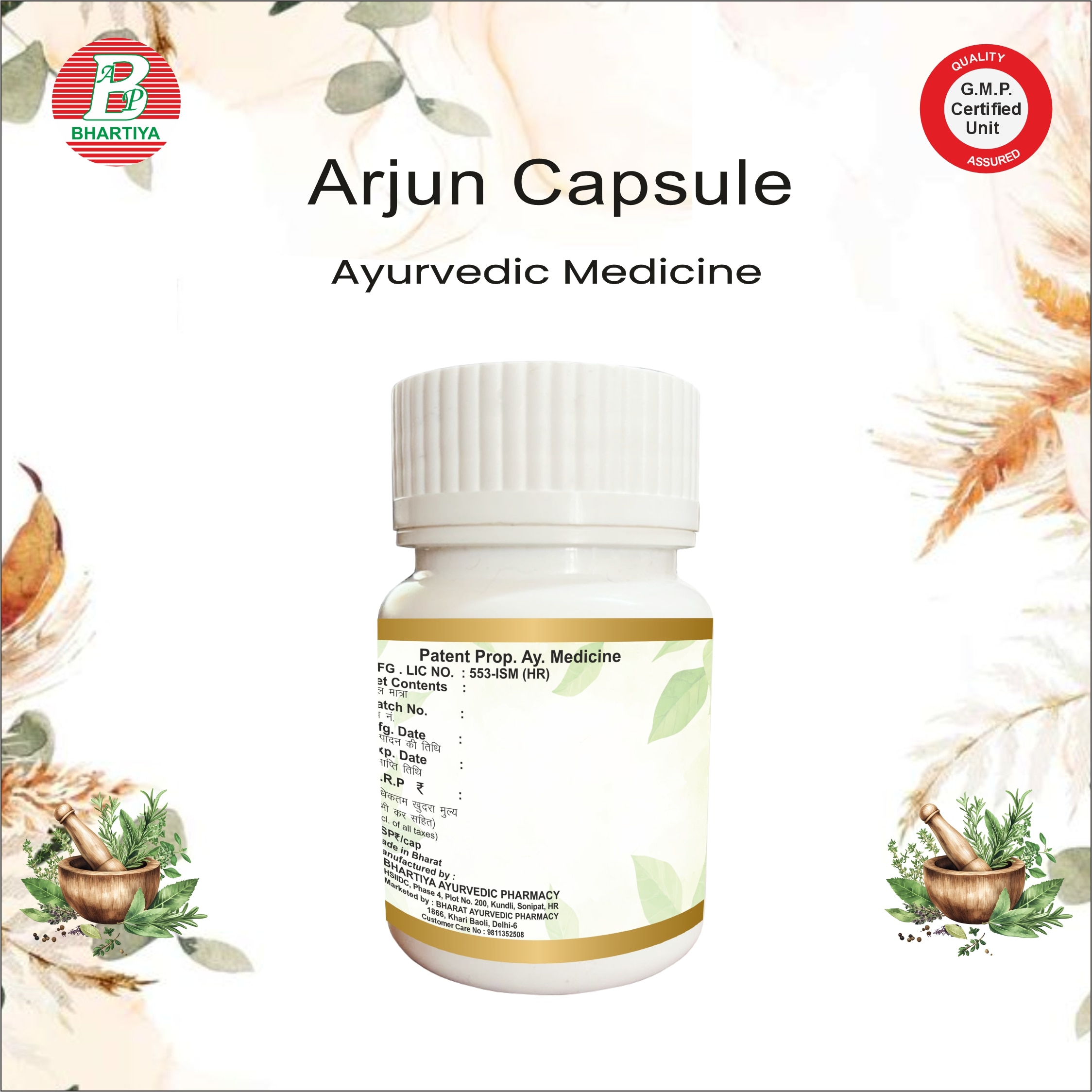
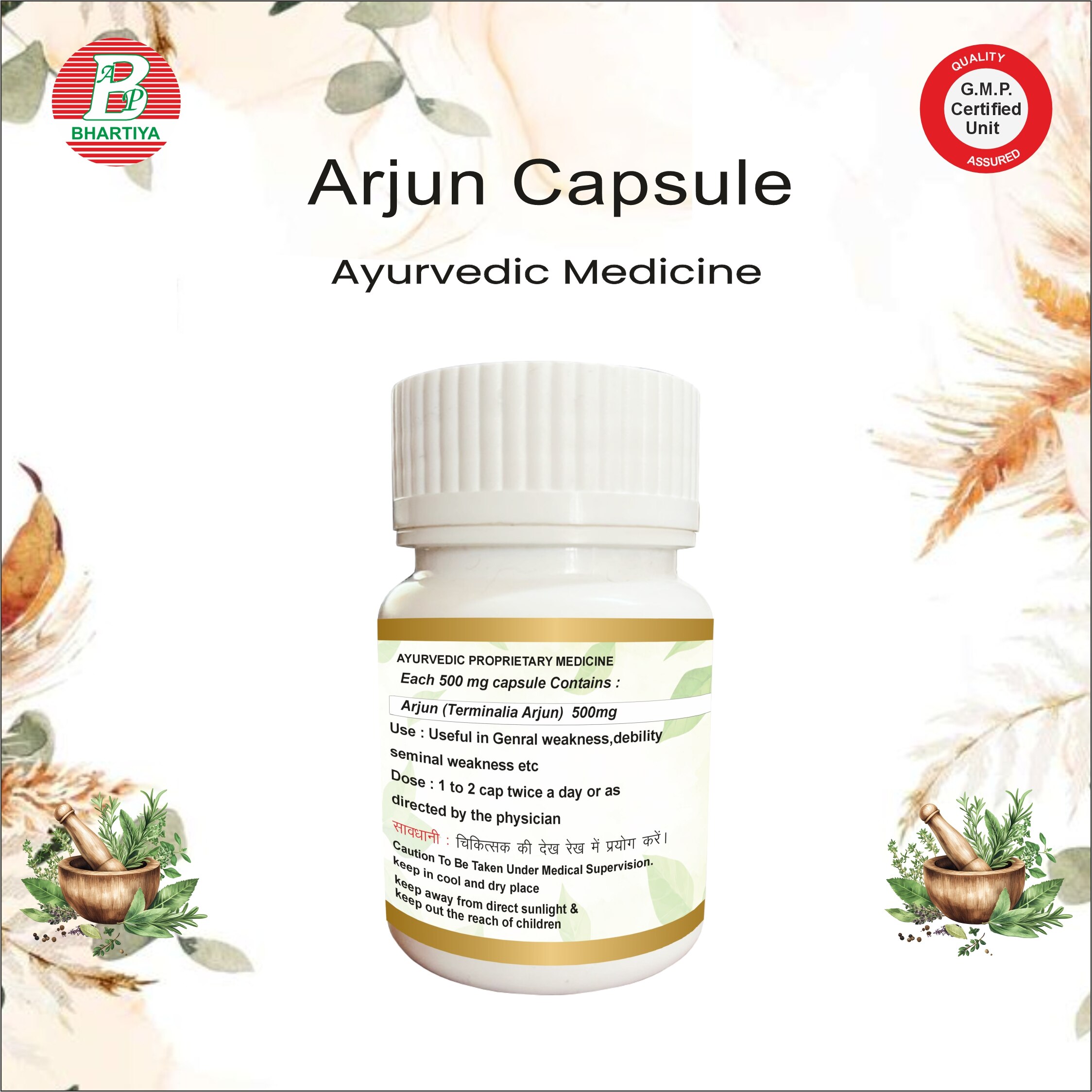
ARJUNA (Terminalia arjuna Wight & Arn.) The Supreme Hṛdya — “Kṣata-Śodhana,” the Divine Protector of the Heart Arjuna, known as Arjuna, Arjunah, Dhanvi, Veeravruksha, is the most celebrated Hṛdya (cardiac protective) drug in Ayurveda. Revered for its ability to strengthen the heart, purify blood, heal wounds, and restore vitality, Arjuna is mentioned extensively by Charaka, Sushruta, Vagbhata, and Nighantukars. Its bark is rich in co-enzyme Q-like compounds, triterpenoids, flavonoids, and tannins, responsible for its cardioprotective and antioxidant effects. Traditionally used for Hṛdroga, Raktapitta, Urahshoola, Kshaya, Prameha, and Shotha, it remains one of Ayurveda’s most important rejuvenative herbs for cardiovascular wellness. BOTANICAL INFORMATION Scientific Name: Terminalia arjuna (Roxb. ex-DC.) Wight & Arn. Family: Combretaceae Order: Myrtales Genus: Terminalia Species: arjuna Common Names • Sanskrit: Arjuna, Dhanvi, Indradruma, Ksheerashleshma, Partha • Hindi: Arjun • Tamil: Marudha Maram • Telugu: Tellamaddi • Malayalam: Neer Maruthu • Kannada: Matti • Bengali: Arjun • Marathi/Gujarati: Arjun SYNONYMS FROM CLASSICAL AYURVEDIC NIGHANTUS Charaka Saṃhitā • Listed under Kashaya Skandha (astringent group) • Actions indicated: Hṛdya, Kṛmighna, Vrana-ropana Sushruta Saṃhitā • Mentioned in Pittaghna and Kasaya Varga • Described as Rakta-stambhana, Vrana-shodhana, Vedanasthapana Bhavaprakasha Nighantu • Synonyms: Arjuna, Kukubha, Dhavala, Veeravriksha, Nadisarjaka • Actions: Hṛdya, Raktaprasadana, Sthambhana, Vrana-ropana Dhanvantari Nighantu • Synonyms: Indradruma, Partha, Ksheerashleshma, Arjunah • Attributes: Kaphapittashamaka, Shoshahara, Hṛdya All classical texts glorify Arjuna primarily for cardiac protection, blood purification, wound healing, and strength building. SHORT STORY OF ARJUNA — AS PER ĀCHĀRYA TRADITION In the ancient riverbank forests where great sages lived, the Arjuna tree stood tall and white-barked like a vigilant warrior. The Āchāryas observed that wounded animals resting near the Arjuna tree would heal more quickly, and those who drank decoction from its bark recovered from blood loss and weakness with remarkable speed. Seeing this, the sages proclaimed: “Arijayati iti Arjunaḥ — that which conquers the enemies of the body is Arjuna.” (Bhavaprakāśa Nighaṇṭu, Arjuna Varga) Recognizing its Hṛdya (heart-protecting) power, they declared: “Arjuna strengthens the heart just as the warrior Arjuna protected the Pāṇḍavas.” (Traditional commentary based on Dhanvantari Nighaṇṭu) Thus, inspired by both its healing nature and the valour of the Mahābhārata hero, the sages named the tree Arjuna — the protector, the healer, the conqueror of disease. THE HISTORICAL & PURĀNIC STORY OF ARJUNA — “The Warrior Tree of Courage and the Heart” ** Among all the trees described in Ayurveda, Arjuna carries one of the most inspiring and sacred stories. The ancient Vaidyas say that Arjuna is not merely a medicinal tree; it is a symbol of courage, strength, and unshakeable heart power. Its origin is tied to the valor of Arjuna, the Pandava warrior, and to the compassion of divine beings. THE LEGEND OF ARJUNA: Why the Tree Was Named After the Mahabharata Warrior According to Ayurvedic tradition and Pauranic lore, during the time of the Mahabharata: Arjuna, the mighty Pandava prince, was known for: • His immovable courage, • His unbreakable will, • His sharp focus, • And his compassionate heart. But during the exile, Arjuna once felt deep weakness and exhaustion of heart, both physically and mentally. Seeing his fatigue, Sage Chyavana and Sage Dhaumya took him to the banks of a sacred river. There, stood a tall, shimmering white-barked tree. Sage Dhaumya said: “Partha, this tree shall bear your name, for it holds the same virtues you do — Courage, strength, purity, and a heart that protects all.” He instructed Arjuna: • To rest under its shade, • To consume a decoction from its reddish inner bark, • And to meditate facing the river. After days of consuming the bark decoction, Arjuna regained astounding strength, clarity, and vitality. And thus, the tree came to be known as “ARJUNA” — the tree that strengthens the heart just as the warrior inspired hearts. THE STORY OF ARJUNA AND LORD INDRA (Said in some regional Ayurvedic oral traditions) Another folklore says: Arjuna performed severe penance to receive divine weapons. Pleased by his devotion, Lord Indra appeared before him. When Arjuna asked: “O Deva! Grant me something that will protect and strengthen the hearts of future generations.” Indra touched a nearby tree and said: “This tree shall become a guardian of hearts. Its bark will protect, its strength will heal. As you guard dharma, this tree will guard life.” Hence, the tree was blessed with: • Unmatched heart-protective power • Strength-giving qualities • Wound-healing MORPHOLOGY OF ARJUNA Tree Large, deciduous, 20–30 m tall, with a wide crown. Bark-Smooth, greyish-white to pinkish, Peels in thin, papery flakes, Medicinal bark is thick, reddish-brown inside Leaves-Simple, opposite, oblong, Shiny dark green above, pale beneath Flowers-Small, white to yellowish, In terminal panicles, Mild fragrance Fruit-2.5–5 cm, fibrous, 5-winged drupe Seeds-Single seed in hard woody pericarp ECOLOGICAL REQUIREMENTS • Climate: Tropical, subtropical • Soil: Prefers moist alluvial soil; thrives along riverbanks • Habitat: Riverbanks, forests, moderately dry regions • Altitude: 200–1200 m • Native to: Indian subcontinent GEOGRAPHICAL DISTRIBUTION India: Central and Southern India — UP, Bihar, Bengal, Odisha, MP, Maharashtra, Karnataka, Andhra Pradesh, Tamil Nadu, Kerala. Outside India: Sri Lanka, Bangladesh, Myanmar, Nepal, Thailand, Malaysia. CLASSICAL AYURVEDIC PROPERTIES (RASA–GUNA–VIRYA–VIPAKA) Rasa (Taste): Kashaya (astringent) dominant Guna (Qualities): Laghu (light), Ruksha (dry), Sara (flowing) Virya (Potency): Sheeta (cooling) Vipaka (Post-digestive): Katu Doshic Action: • Kaphapittashamaka • Strengthens Vata when combined with milk or ghee THERAPEUTIC ACTIONS ACCORDING TO AYURVEDA (KARMA) 1. Hṛdya – Strengthens heart muscles, improves cardiac tone 2. Rakta-stambhana – Stops internal bleeding 3. Vrana-ropana – Excellent wound healer 4. Kshaya-nashana – Useful in emaciation & debility 5. Kaphashamaka – Reduces Kapha accumulation 6. Shothahara – Anti-inflammatory 7. Pramehaghna – Supports urinary and metabolic disorders 8. Urah-shoolahara – Relieves chest discomfort INDICATIONS Cardiac System-Hṛdroga (cardiac weakness), Hṛdaya sthambhana (palpitation), Hypertension (traditionally interpreted as Raktapitta/Kapha vitiation), post-cardiac recovery tonic Blood & Circulatory System-Raktapitta, Excessive bleeding, Varicosities & weak vessels Respiratory-Kasa, Shwasa, Urahshoola (chest pain) Skin & Wounds-Non-healing wounds, Ulcers, Inflammatory conditions Urinary & Metabolic-Prameha, Kshaya, Excessive urination MODERN PHYTOCHEMISTRY & PHARMACOLOGY Major Constituents • Triterpenoids: Arjunolic acid, Arjungenin, Arjunone • Flavonoids: Quercetin, Kaempferol • Glycosides: Arjunetin • Minerals: Calcium, magnesium • CoQ10-like compounds • Tannins: Ellagic acid, Gallic acid Pharmacological Actions: Cardioprotective, Antioxidant, Anti-ischemic, Antihypertensive, Anti-inflammatory, Lipid-lowering, Wound-healing, Antimicrobial. CULTIVATION DETAILS • Propagation: Seeds, stem cuttings • Planting season: June–August • Spacing: 6–8 m • Irrigation: Needs moisture, but tolerates drought after maturity • Harvesting: Bark: Collected during winter, eaves/flowers: Seasonal CLASSICAL DOSAGE (as per Ayurvedic Granthas) (For educational/classical reference only) • Churna: 3–6 g/day • Kwatha: 40–80 ml/day • Swarasa: 10–20 ml • Arjuna Ksheer Paka: 50–100 ml • Arishta: 15–25 ml • Ghrita: 5–10 g CLASSICAL AYURVEDIC FORMULATIONS CONTAINING ARJUNA 1. Arjuna Ksheer Paka – Primary cardiac tonic 2. Arjunarishta – Cardiac strength, digestion, vitality 3. Arjuna Ghrita – Hṛdya, Rasayana 4. Ksheerabala Taila (variant) – Nervine & strengthening 5. Sarivadyasava – In Raktapitta & inflammation 6. Hridya Vati (classical) 7. Dashamoola Arjuna Kwatha – Respiratory & cardiac support Arjuna (Terminalia arjuna) Formulations – Bhartiya Ayurvedic Pharmacy Bhartiya Ayurvedic Pharmacy prepares a range of Arjuna-based formulations following the classical Ayurvedic system described in Charaka Saṁhitā, Suśruta Saṁhitā, Aṣṭāṅga Hṛdaya, Bhavaprakāśa Nighaṇṭu and other authoritative granthas. Each preparation is designed to retain Arjuna’s full Hṛdya (cardio-protective), Raktaprasādaka, Shothahara, Vrana-ropana, and strength-promoting properties. These formulations support heart health, stamina, circulation, wound healing, metabolism, and overall vitality. 1. ARJUNA CAPSULE Description: A convenient, easy-to-absorb capsule containing standardized extract of Arjuna bark (Terminalia arjuna). Designed for daily cardiovascular strengthening. Key Benefits: • Strengthens cardiac muscles (Hṛdya Rasayana) • Supports healthy cholesterol & lipid profile • Increases stamina and reduces fatigue • Promotes healthy blood circulation • Antioxidant and anti-inflammatory Dosage:1–2 capsules twice daily after meals with warm water (or as directed by a physician) Precautions: Use cautiously in low BP conditions Monitor dosage in pregnancy or chronic heart conditions 2. ARJUNARISHTA Description: A classical fermented formulation prepared from Arjuna bark decoction, jaggery (guda), and Dhataki pushpa. Ideal for digestion, circulation, and heart health. Key Benefits: • Natural cardio-strengthening tonic • Useful in palpitations, mild chest discomfort, and weakness • Improves digestion, appetite, and metabolism • Enhances stamina and vitality • Supports post-illness recovery Dosage:15–25 ml twice daily with equal water after meals Precautions: Contains natural sugars — use carefully in diabetes Store away from sunlight 3. ARJUN CHHAL POWDER (Arjuna Bark Powder / Arjuna Churna) Description: Pure, finely powdered Arjuna bark, prepared through classical purification (Shodhana) for maximum potency and therapeutic effect. Key Benefits: • Strengthens heart and blood vessels • Stops bleeding (Rakta-stambhana) • Promotes wound healing (Vrana-ropana) • Reduces Pitta and inflammation • Supports urinary health and metabolism Dosage: 2–4 g once or twice daily with warm water or milk • For best Hṛdya Rasayana effect: Use with warm milk (Arjuna Ksheer Paka) Precautions: May cause dryness in Vata prakriti — combine with ghee or milk • Avoid overdose in constipation Short Classical Reference (Āchāryas / Granthas) Bhavaprakāśa Nighaṇṭu: “कषायो हृद्यः शीतवीर्यः पित्तकफापहः । व्रणरोपणकृत् श्रेष्ठो रक्तपित्तनिवारकः ॥” Meaning: Arjuna is cooling, astringent, heart-protecting, Pitta-Kapha balancing, excellent wound-healer, and stops bleeding. SAFETY & PRECAUTIONS • Safe in classical doses • Avoid excessive use in: Severe constipation, Dryness (Vata aggravation) • Monitor in: Low blood pressure • Pregnancy/lactation: Use under guidance • Long-term bark consumption should be cycled to protect gut dryness