

Description
Product details
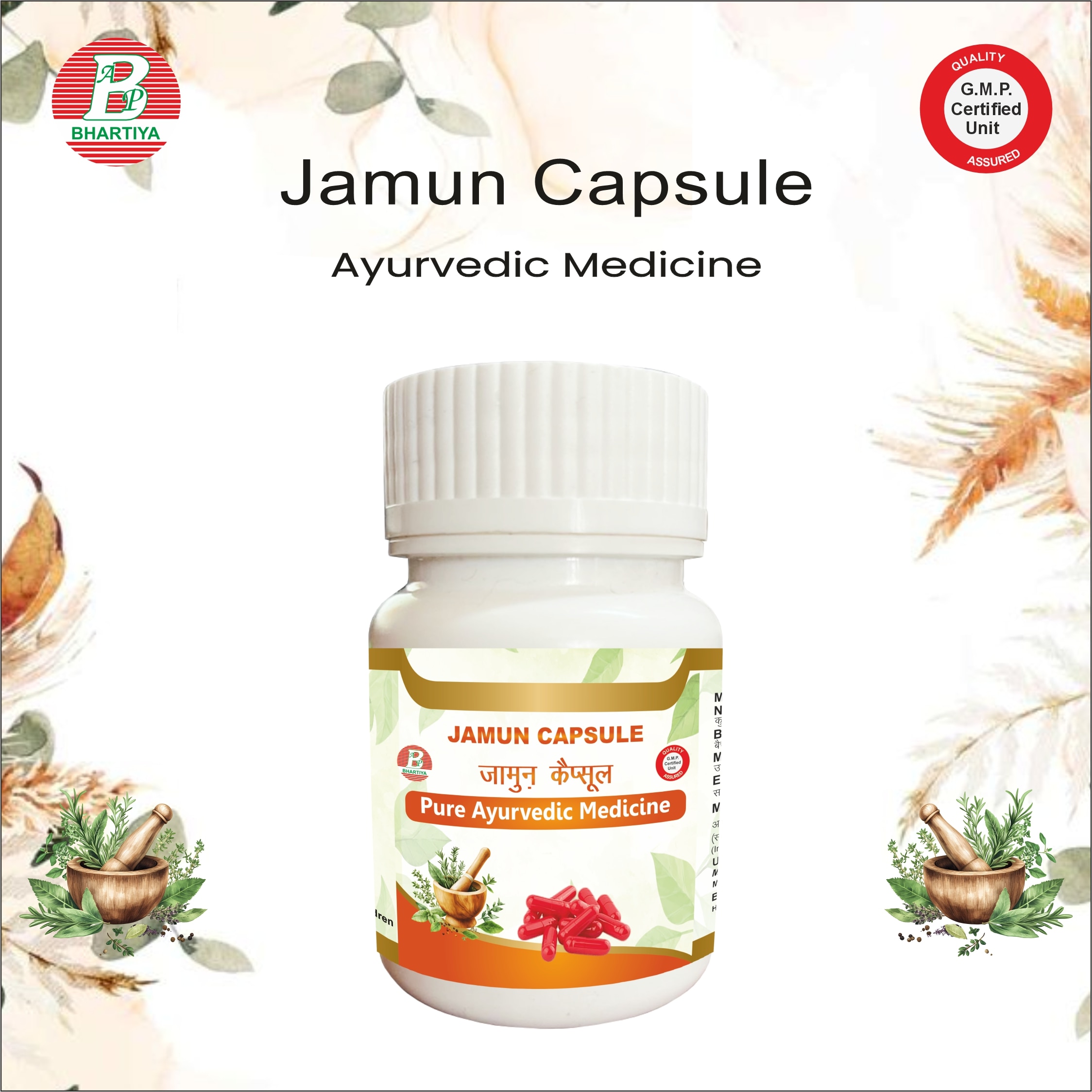
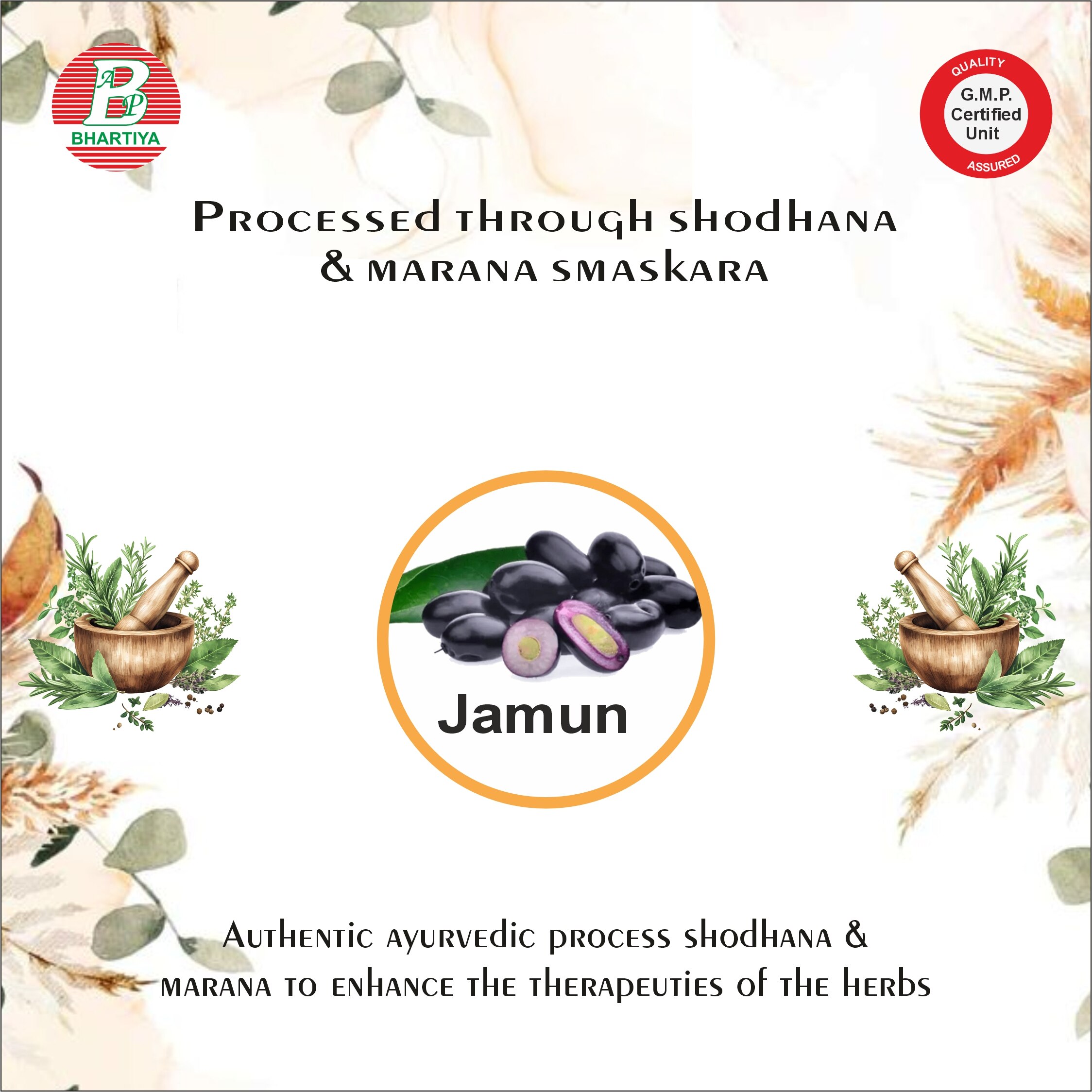
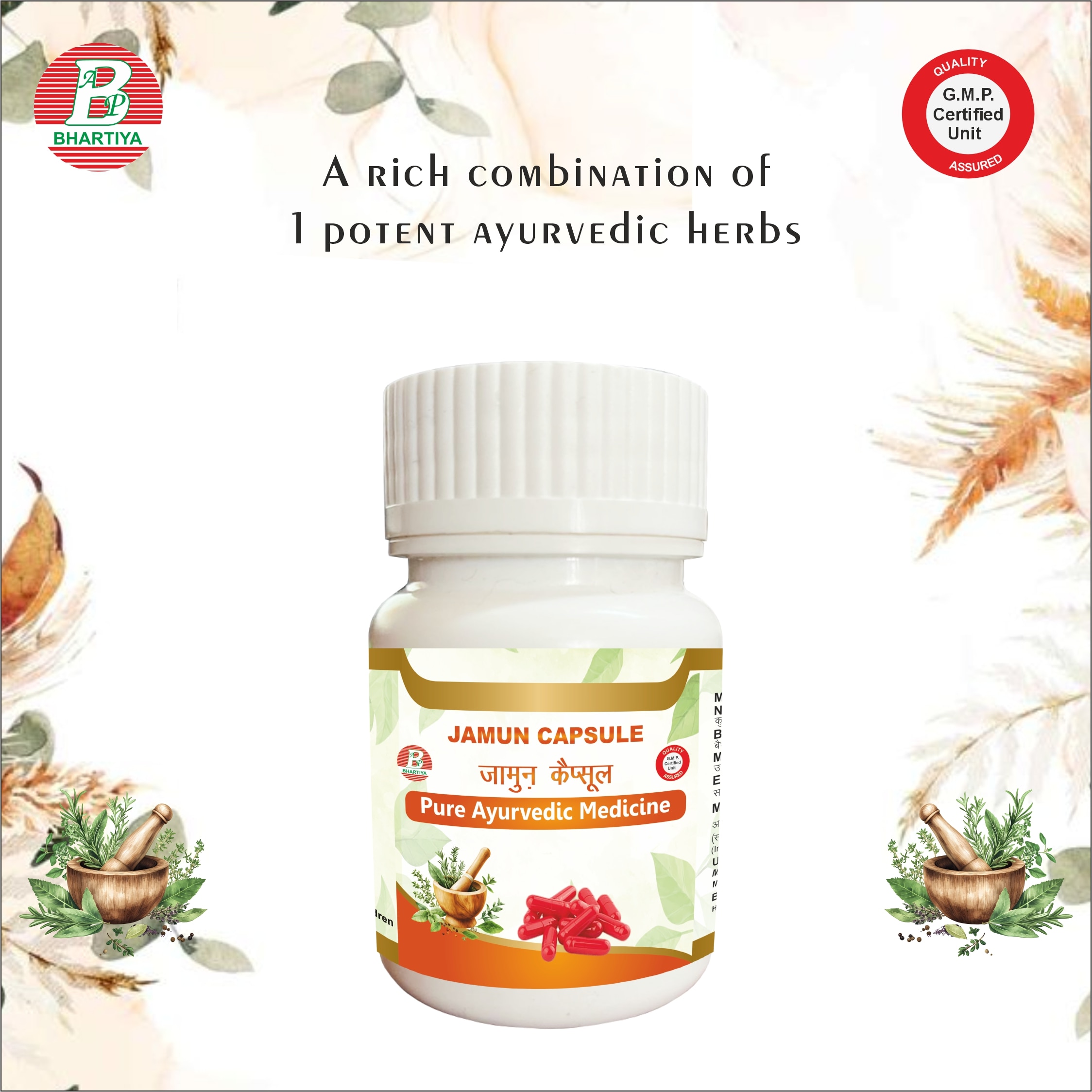
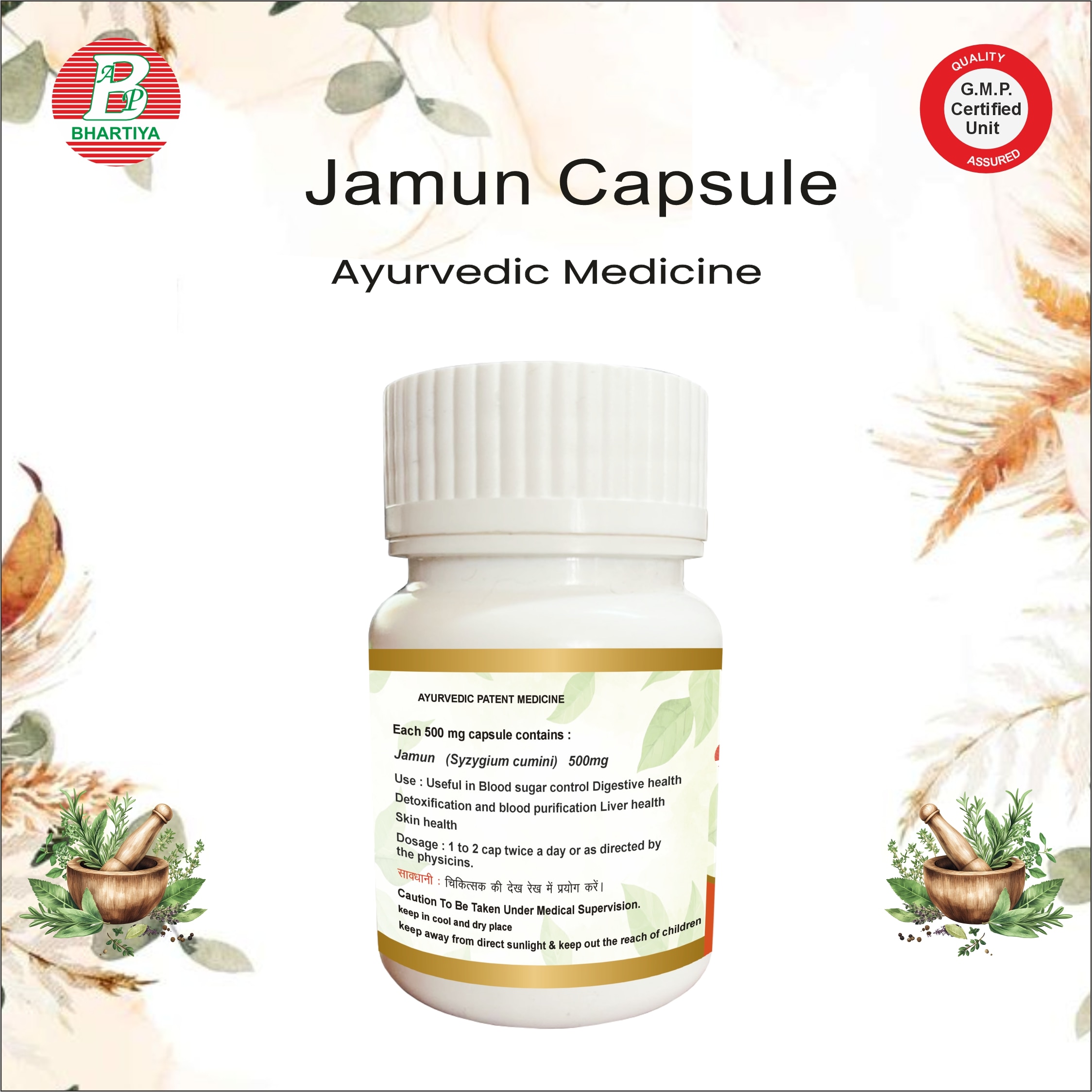
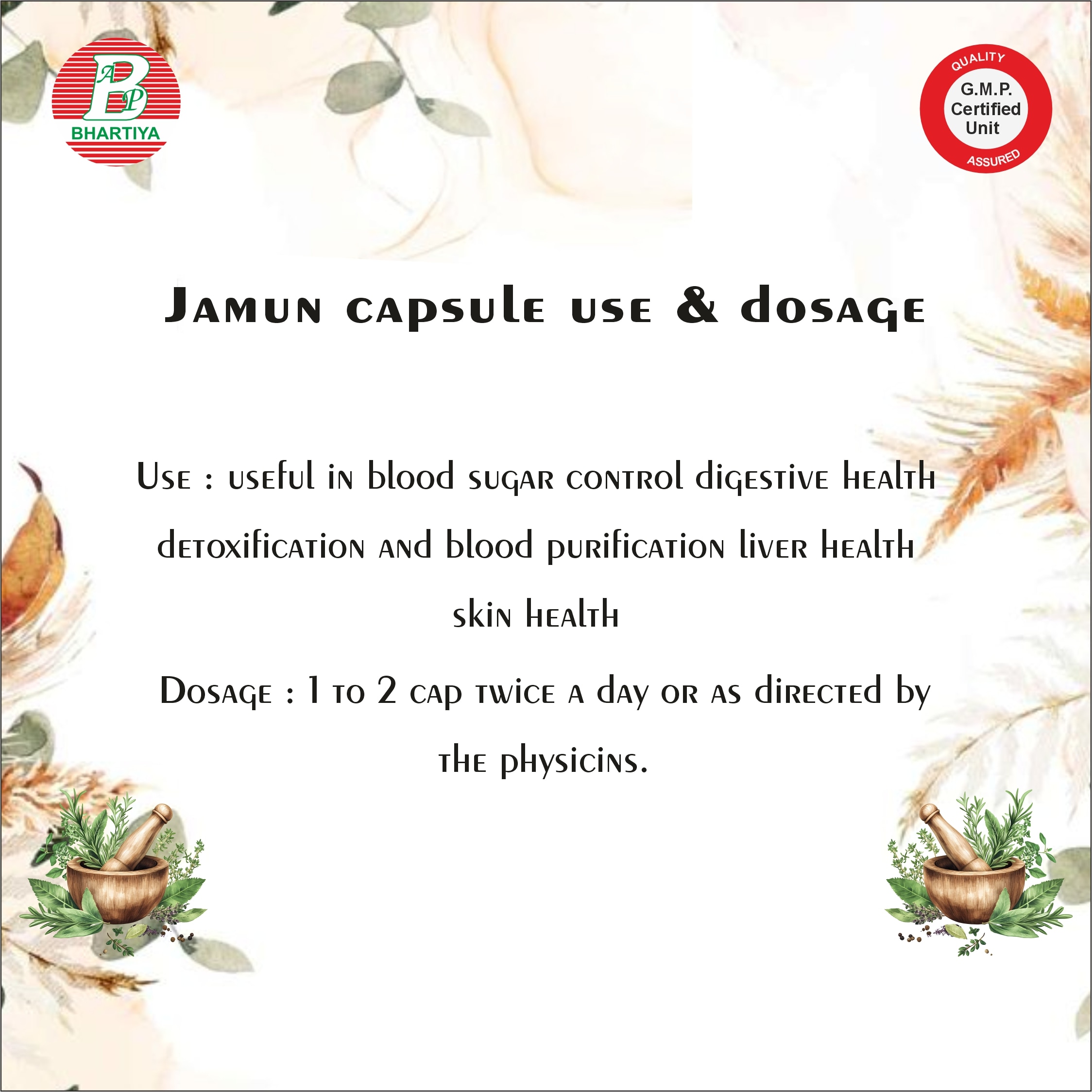
JAMUN The Dark Jewel of Ayurveda — “Jamun / Syzygium cumini” Jamun is a revered fruit in Ayurveda, known for its Raktashodhaka (blood-purifying), Madhumehahara (anti-diabetic), Deepana–Pachana (digestive), Rasayana (rejuvenative), and Vata-Kapha balancing properties. It is highly valued for maintaining healthy blood sugar, supporting digestion, improving immunity, and revitalizing the body. Traditionally, Jamun is considered especially effective in Madhumeha (diabetes), Pitta disorders, and digestive imbalances. CLASSICAL AYURVEDIC REFERENCES Charaka Samhita • Recommended in Madhumeha, Pitta disorders, and digestive disturbances • Acts as a Rasayana to improve overall vitality • Supports blood purification and metabolic balance Sushruta Samhita • Used for digestive disorders, Pitta imbalances, and urinary issues • Promotes tissue rejuvenation and detoxification Bhavaprakasha Nighantu • Highlights Jamun for Raktashodhaka, Madhumehahara, Rasayana, and Vata-Kapha balancing • Particularly emphasized for blood sugar management, anaemia, and general debility Unani & Folk Medicine • Known as “Indian Blackberry” • Traditionally used to control diabetes, reduce inflammation, improve digestion, and detoxify the body CLASSICAL STORY / TRADITIONAL ANALOGY Ancient Ayurvedic texts narrate: “Jamun is the dark-hued gem of the forest, whose seeds, fruit, and bark hold the power to sweeten the imbalance of blood, calm the fire of Pitta, and strengthen the weakened tissues. As the fruit ripens under the summer sun, so does the body regain strength and metabolic balance when nourished by Jamun.” Rishis and Acharyas prescribed Jamun to: • Control Madhumeha (diabetes) and high blood sugar • Support digestion and liver function • Purify blood and enhance tissue metabolism • Rejuvenate the body and support immunity BOTANICAL INFORMATION OF JAMUN Scientific Name: Syzygium cumini (L.) Skeels Family: Myrtaceae Order: Myrtales Genus: Syzygium Species: cumini Common Names: • Sanskrit: Jambū, Jambu, Krishnaphala • Hindi: Jamun • English: Indian Blackberry • Tamil: Neredu • Telugu: Jambhulamu • Kannada: Neredu • Bengali: Jam • Malayalam: Neredu Synonyms in Traditional Texts: • Madhumehahara – Anti-diabetic • Raktashodhaka – Blood-purifying • Rasayana – Rejuvenative • Deepana–Pachana – Improves digestion MORPHOLOGY OF JAMUN Plant Type: Large evergreen tree Height: 10–30 m Leaves: Simple, opposite, oblong-elliptic, dark green Flowers: Small, white to pinkish, fragrant Fruit: Dark purple to black berry, fleshy, sweet-sour taste Seeds: Oval, hard, light brown Bark: Thick, dark brown, astringent taste ECOLOGICAL PREFERENCES • Climate: Tropical and subtropical • Soil: Well-drained loamy, alluvial soil • Sunlight: Full sun to partial shade • Water Requirement: Moderate; tolerates drought once established • Altitude: 0–1500 m • Distribution: India (all over, especially Madhya Pradesh, Maharashtra, Tamil Nadu, West Bengal), Pakistan, Sri Lanka, Southeast Asia AYURVEDIC PROPERTIES (RASA–GUNA–VIRYA–VIPAKA) • Rasa: Tikta (bitter), Madhura (sweet), Kashaya (astringent) • Guna: Laghu (light), Ruksha (dry) • Virya: Sheeta (cooling) • Vipaka: Madhura (sweet) • Dosha Effect: Pitta-Vata pacifying, Kapha balancing THERAPEUTIC ACTIONS (KARMA) • Madhumehahara: Helps control blood sugar levels • Raktashodhaka: Purifies blood and detoxifies • Rasayana: Rejuvenative, strengthens immunity • Deepana–Pachana: Improves digestion and nutrient assimilation • Vata-Kapha balancing: Reduces inflammation and metabolic disorders INDICATIONS • Diabetes / high blood sugar • Digestive disorders and Pitta imbalances • Urinary and kidney issues • Blood impurities / anaemia • Chronic inflammation • General debility and weakness MODERN PHYTOCHEMISTRY & PHARMACOLOGY Major Constituents: • Anthocyanins (jamunins) – responsible for hypoglycemic effect • Ellagic acid, Gallic acid – antioxidant • Flavonoids and Tannins – digestive, anti-inflammatory • Essential oils and resins Pharmacological Actions: • Anti-diabetic / hypoglycemic • Antioxidant and anti-inflammatory • Hepatoprotective • Antimicrobial • Digestive support • Immunomodulatory CULTIVATION DETAILS • Propagation: Seeds, grafting, and air-layering • Sowing Time: Early monsoon • Harvesting: Fruits harvested in summer; seeds and bark processed for medicinal use • Irrigation: Moderate; drought-tolerant once established • Soil Preference: Well-drained loamy soil CLASSICAL DOSAGE • Powder (Churna): 3–6 grams/day • Seed Powder: 1–2 grams/day • Decoction / Extract: As prescribed by Ayurvedic practitioner • Fruit: 10–20 berries/day for mild metabolic support JAMUN FORMULATIONS BY BHARTIYA AYURVEDIC PHARMACY At Bhartiya Ayurvedic Pharmacy, we prepare a range of Jamun (Syzygium cumini) formulations following classical Ayurvedic methods as described in Charaka Samhita, Sushruta Samhita, Bhavaprakasha Nighantu, and other Ayurvedic Granthas. Each product is crafted to retain the therapeutic potency, purity, and efficacy of Jamun for blood sugar management, digestive support, detoxification, and rejuvenation. 1. Jamun Capsule Description: Bhartiya Ayurvedic Pharmacy Jamun Capsules are prepared using standardized Jamun seed and pulp extract, ensuring convenient daily use while preserving the full therapeutic potential of the herb. Key Actions: • Supports healthy blood sugar levels • Promotes digestion and liver function • Acts as a blood purifier and rejuvenative • Reduces inflammation and metabolic imbalances • Enhances immunity and general vitality Dosage: • 1–2 capsules twice daily with warm water after meals, or as advised by an Ayurvedic practitioner Precautions: • Monitor blood sugar if taking antidiabetic medications • Avoid overdose • Use under supervision in pregnancy and lactation 2. Jamun Powder (Churna) Description: Powdered form of dried Jamun seeds, suitable for internal use or preparation of decoctions. Maintains blood sugar balance, digestive health, and tissue rejuvenation. Key Actions: • Helps control blood sugar levels (Madhumehahara) • Purifies blood (Raktashodhaka) • Supports digestion and metabolic balance • Acts as a general rejuvenative (Rasayana) • Balances Pitta and Vata doshas Dosage: • 2–4 grams once or twice daily with warm water, honey, or ghee • Can be taken before or after meals depending on constitution Precautions: • Avoid in cases of low blood sugar without monitoring • Not recommended for individuals with known hypersensitivity to Jamun CLASSICAL INSIGHT • Prescribed in Charaka Samhita, Sushruta Samhita, and Bhavaprakasha Nighantu for: o Diabetes / high blood sugar o Blood purification and anaemia o Digestive disorders o Rejuvenation (Rasayana) Traditional Analogy: “As the dark-hued Jamun ripens under the sun and nourishes all, so does the body regain strength, balance, and vitality when nourished by Jamun.” a jamun, benefits of jamun juice, best jamun in india, best jamun powder, can jamun cause cough can jamun cause gas, can jamun cause stomach pain, does jamun cause constipation does jamun cause cough, does jamun cause gas, jamun capsule, jamun capsule amazon jamun capsule ayurvedic, jamun capsule company name, jamun capsule composition jamun capsule contains, jamun capsule content, jamun capsule cost, jamun capsule daily dose jamun capsule dosage, jamun capsule dose, jamun capsule dose per day, jamun capsule image jamun capsule in hindi, jamun capsule jan aushadhi, jamun capsule jiomart, jamun capsule journal jamun capsule lagane ke fayde, jamun capsule life, jamun capsule life pharmacy, jamun capsule ling par lagane ke fayde jamun capsule manufacturer, jamun capsule manufacturers in india, jamun capsule mrp, jamun capsule online jamun capsule online order, jamun capsule quality, jamun capsule quantity, jamun capsule quantity per day jamun capsule question, jamun capsule rate, jamun capsule research paper, jamun capsule review, jamun capsule uses jamun capsule uses in hindi, jamun capsule wale gulab, jamun capsule white, jamun capsule wholesale jamun capsule wiki, jamun capsule zepto, jamun capsule zydus, jamun capsules, jamun capsules benefits jamun fruit capsules, jamun ka kalam kaise lagaye, jamun ka ped kaise lagaye jamun uses, jamun vati, kala jamun capsule, what is jamun, what is jamun good for what jamun called in english, when jamun tree gives fruit