

Description
Product details
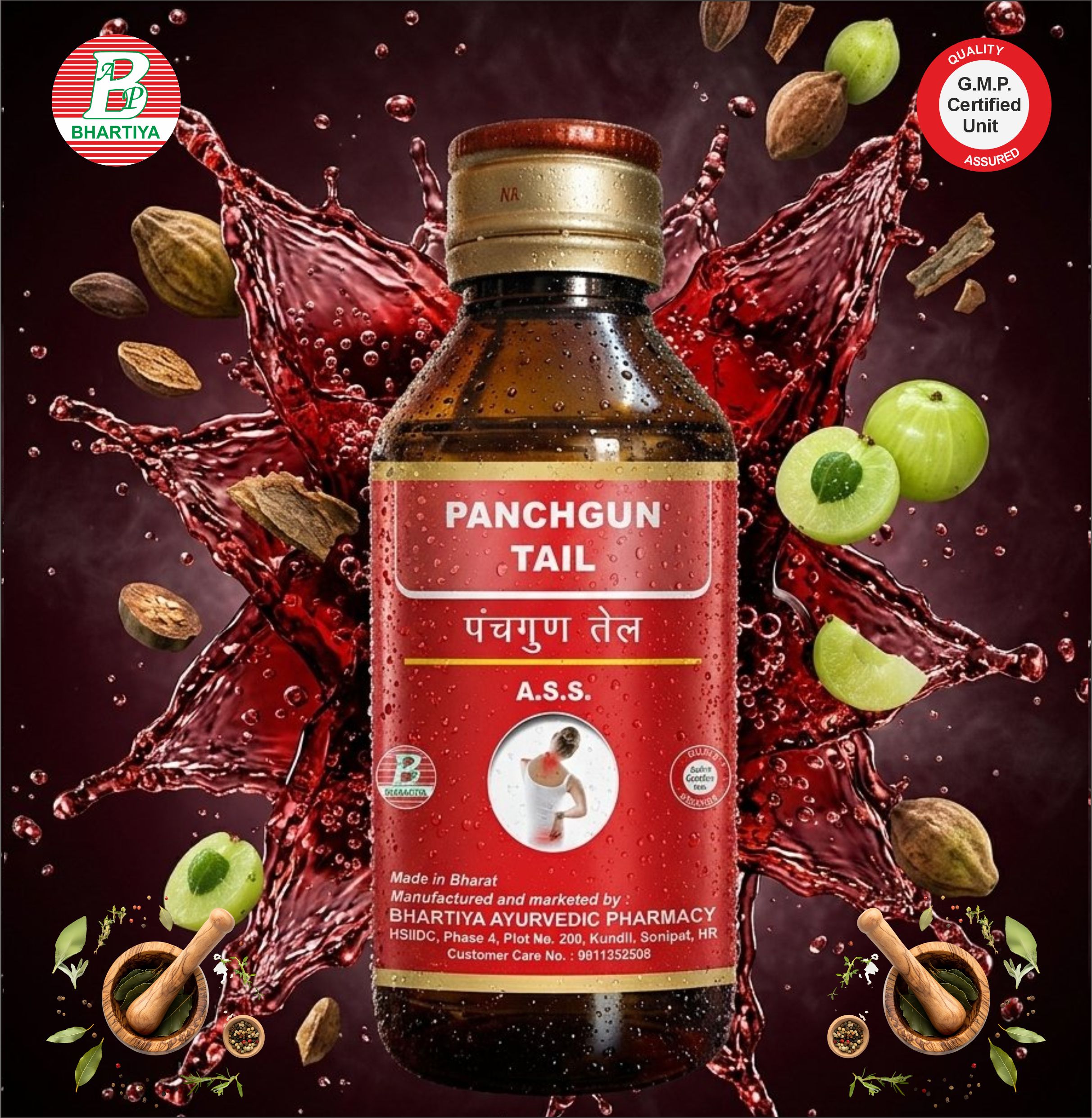
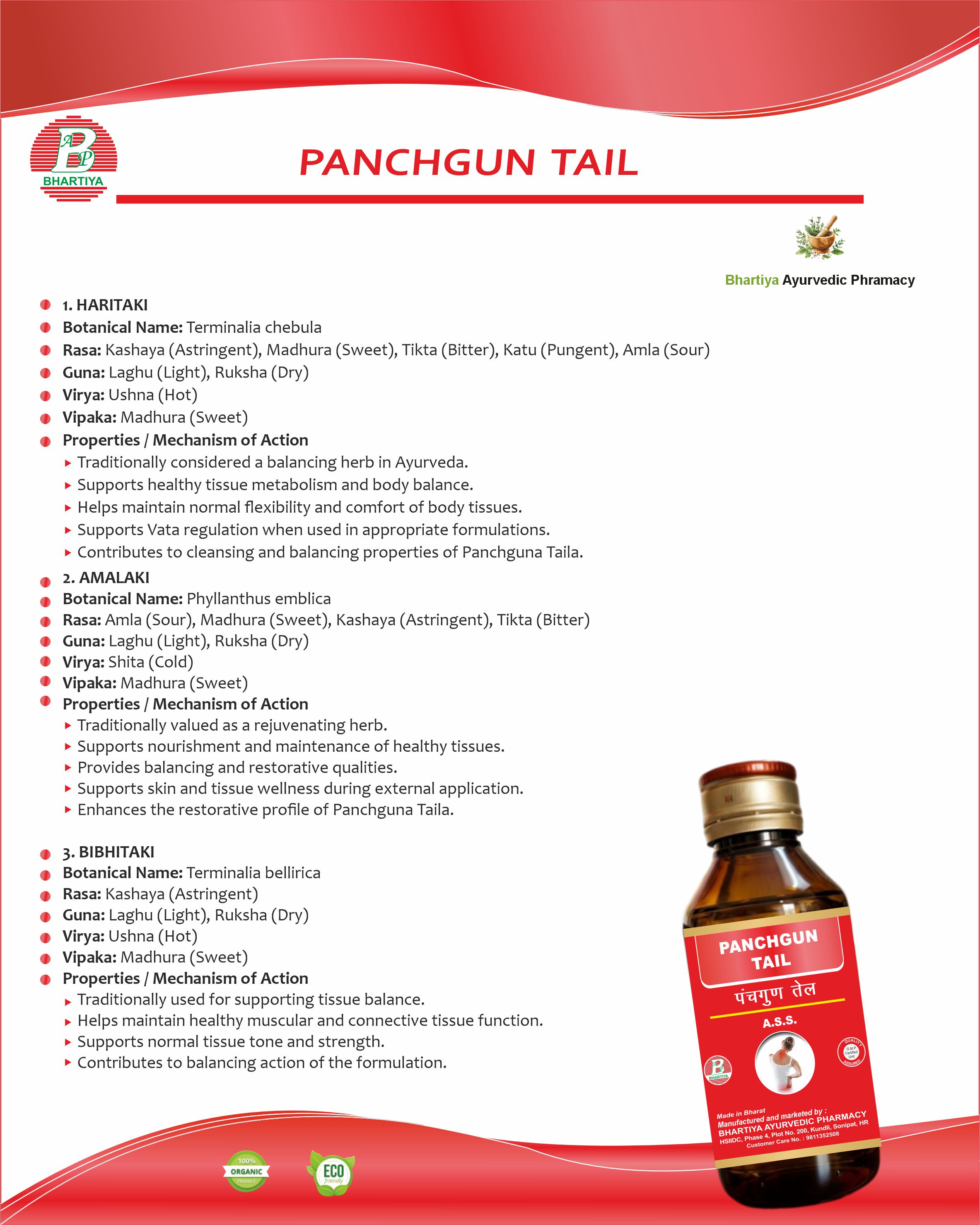
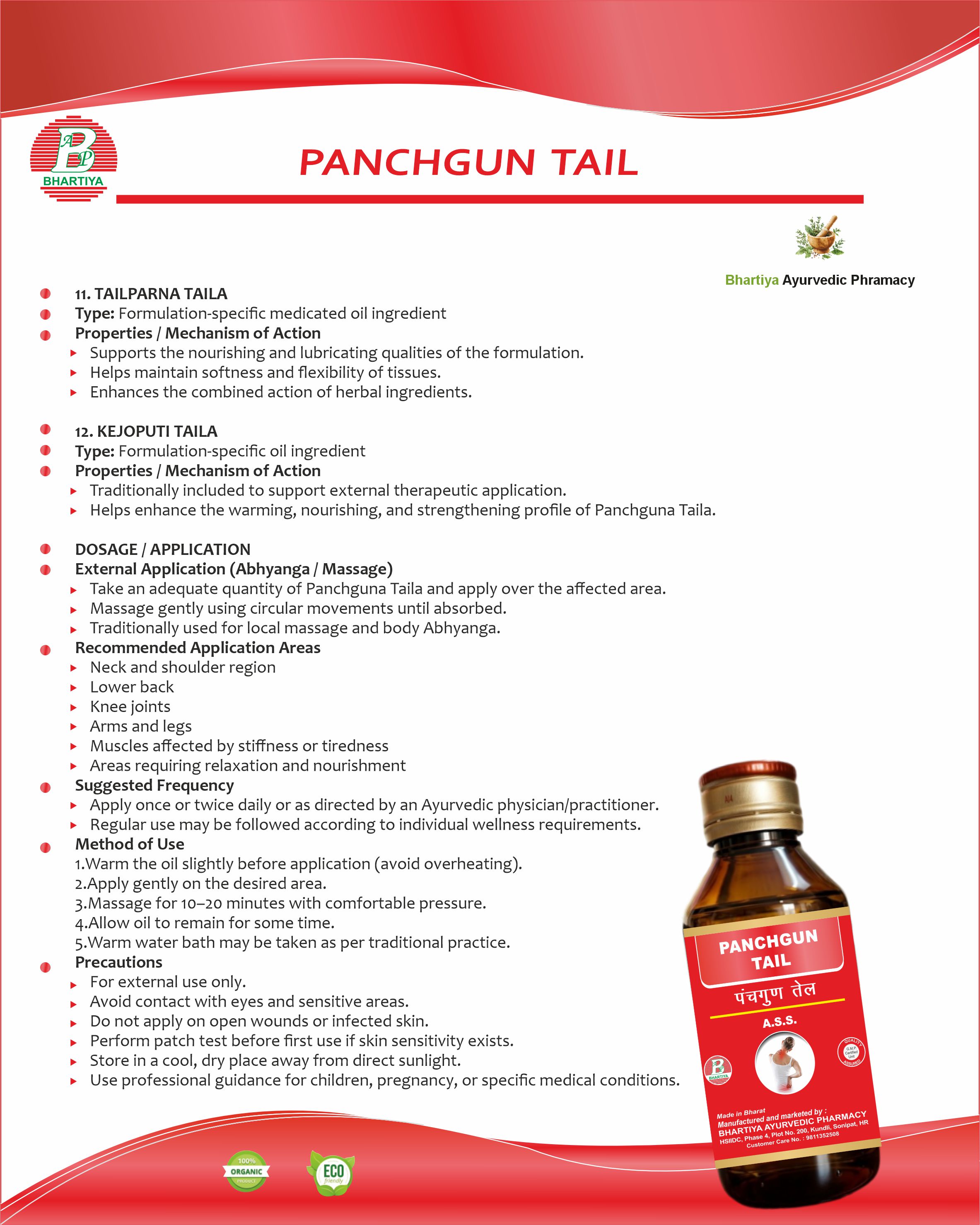
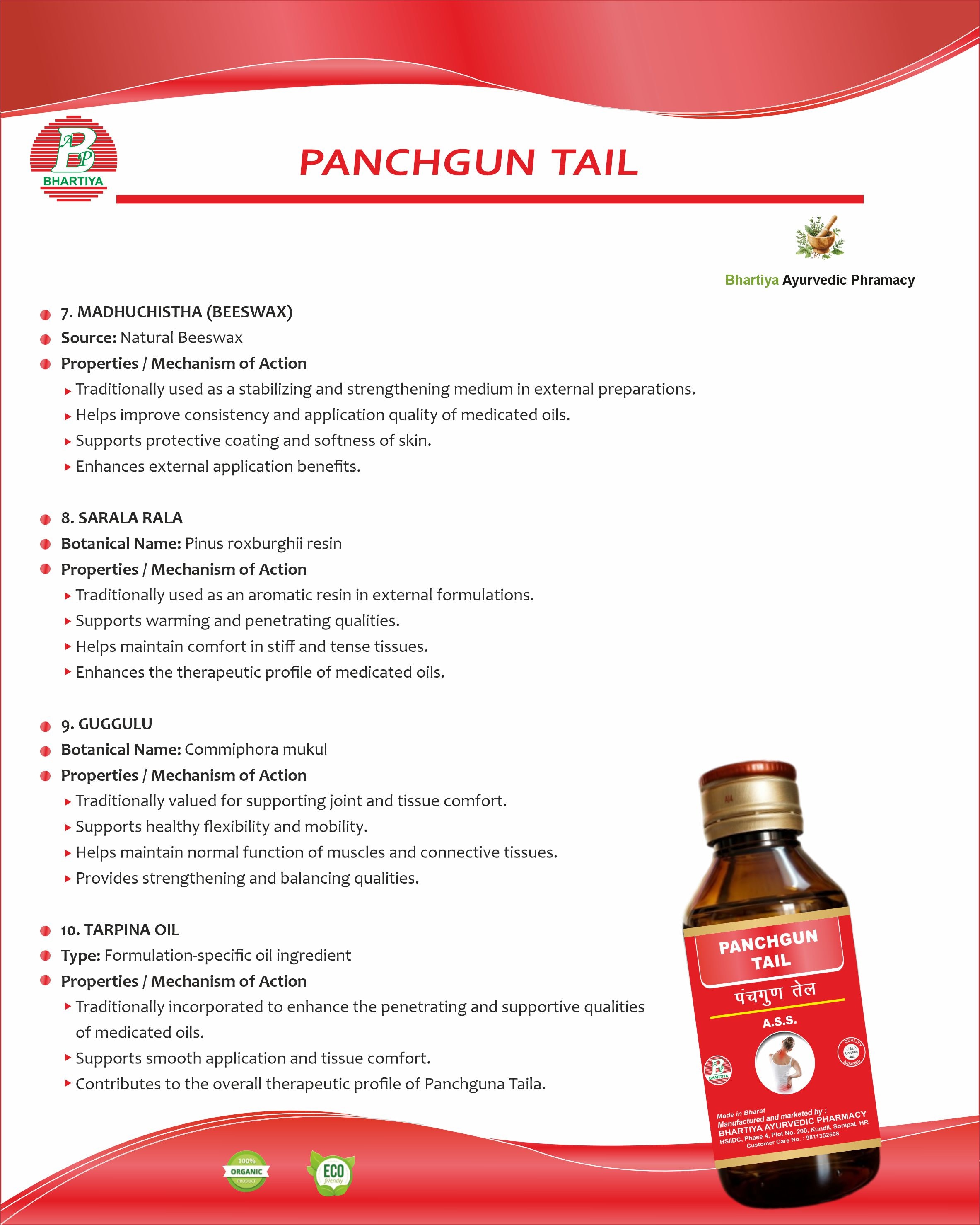
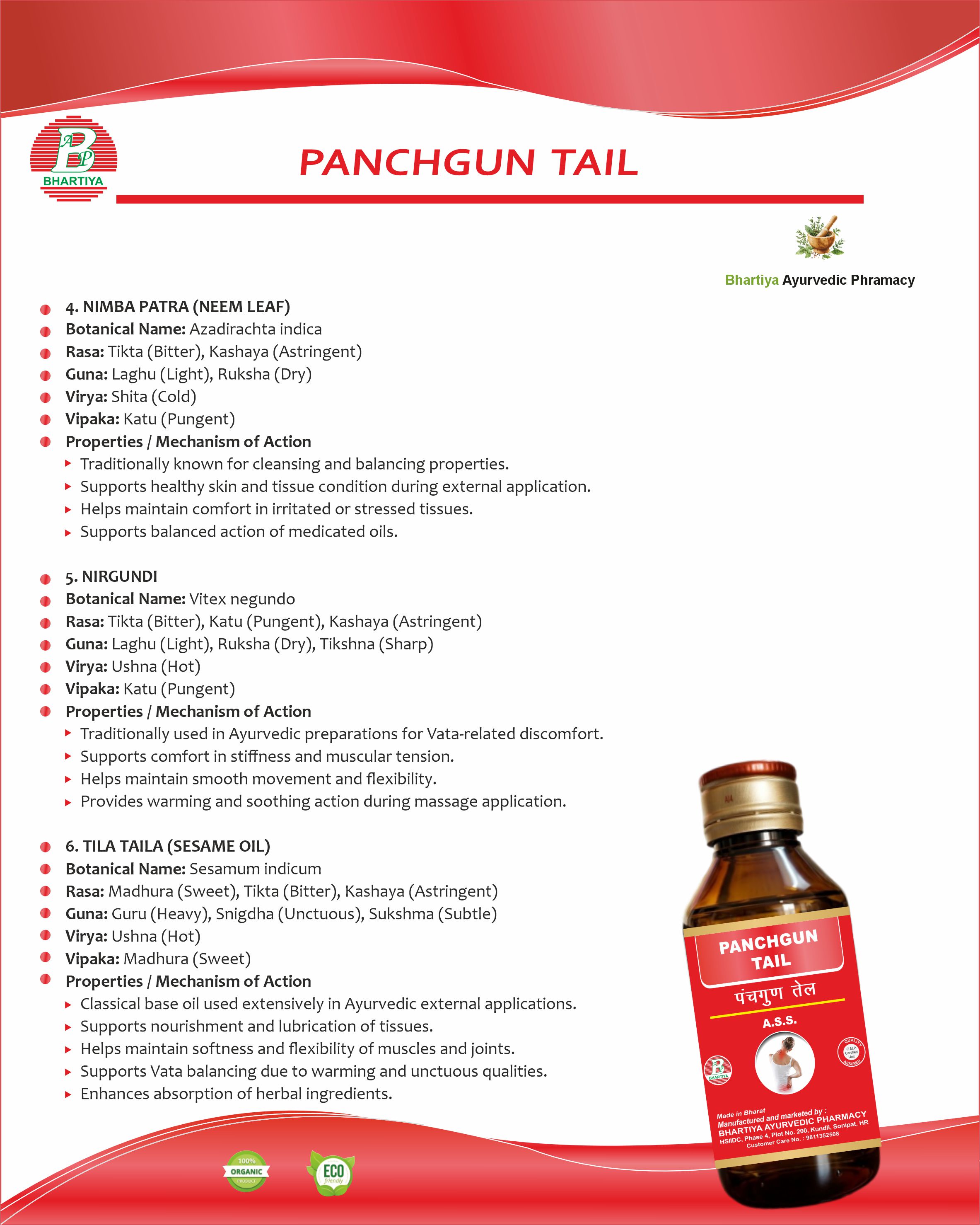
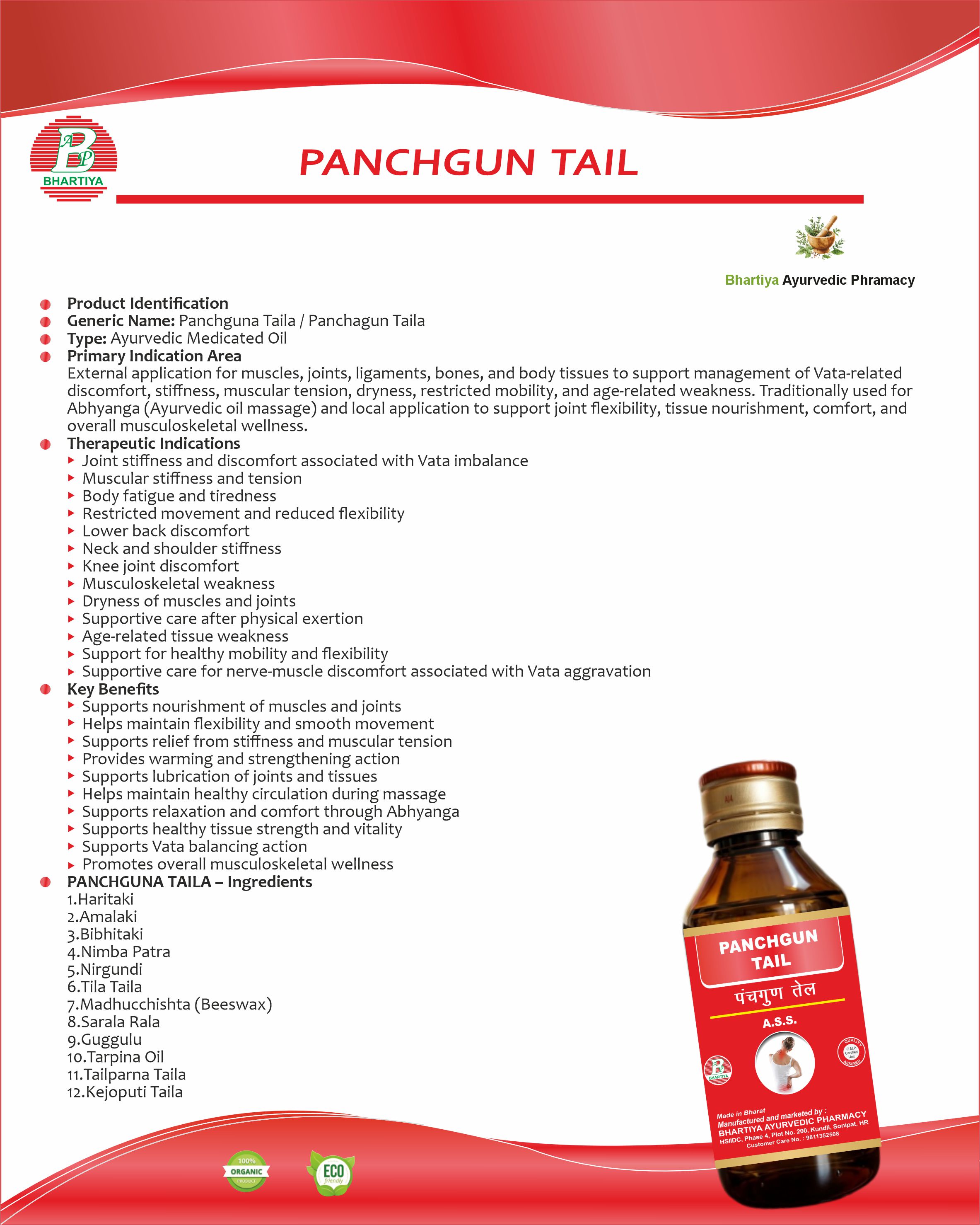
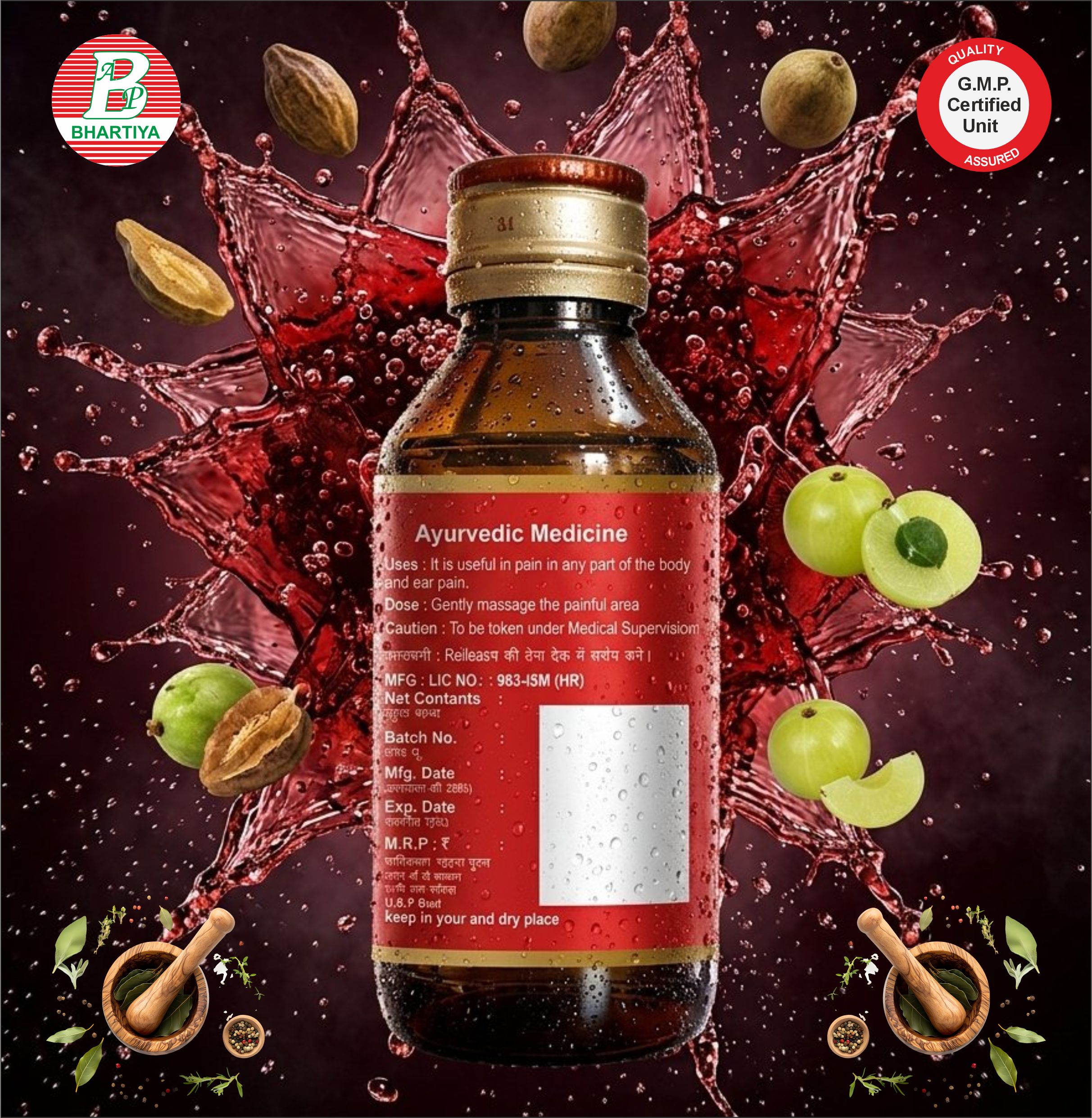
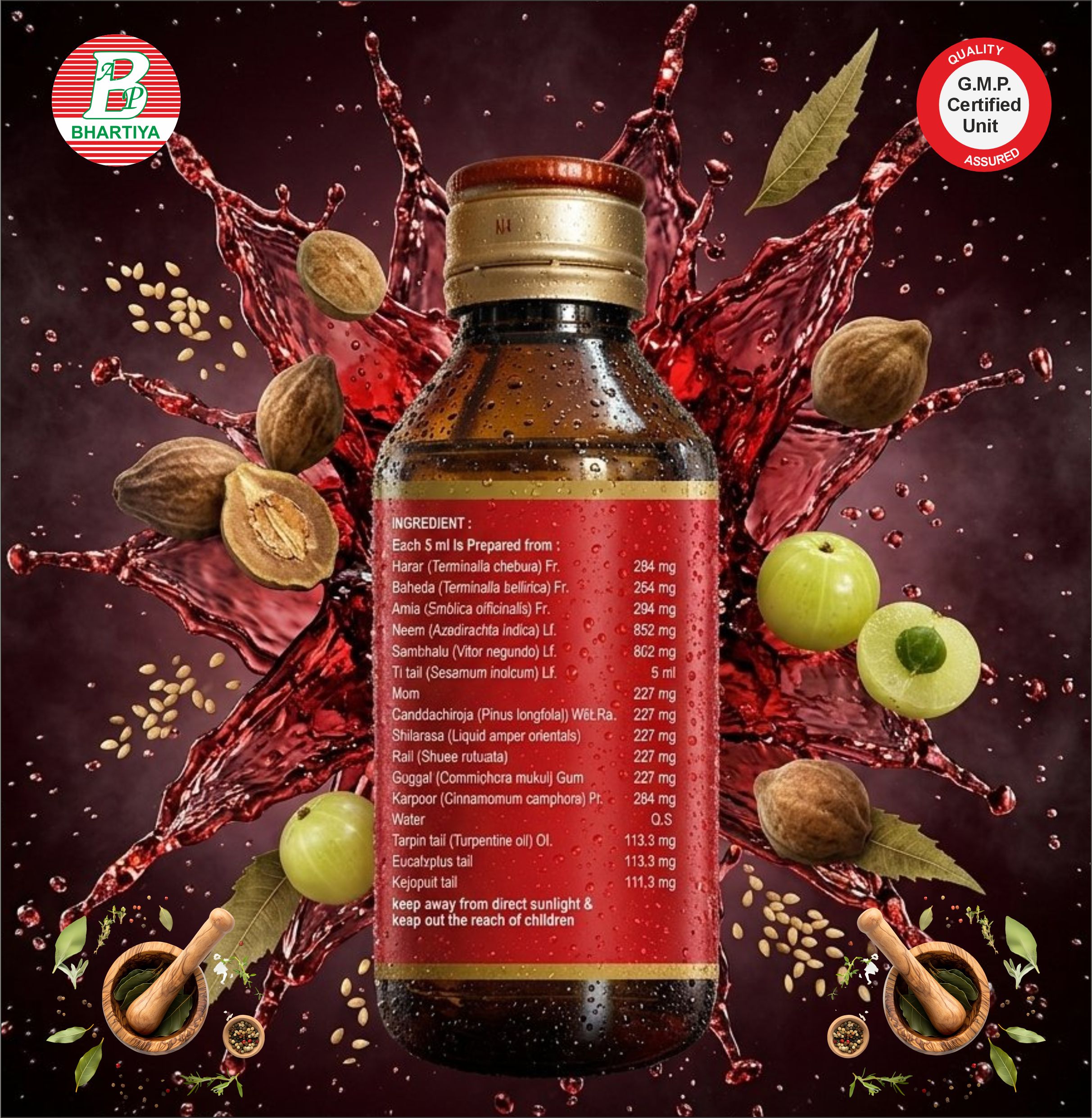
PANCHGUNA TAILA Product Identification Generic Name: Panchguna Taila / Panchagun Taila Type: Ayurvedic Medicated Oil Primary Indication Area External application for muscles, joints, ligaments, bones, and body tissues to support management of Vata-related discomfort, stiffness, muscular tension, dryness, restricted mobility, and age-related weakness. Traditionally used for Abhyanga (Ayurvedic oil massage) and local application to support joint flexibility, tissue nourishment, comfort, and overall musculoskeletal wellness. Therapeutic Indications • Joint stiffness and discomfort associated with Vata imbalance • Muscular stiffness and tension • Body fatigue and tiredness • Restricted movement and reduced flexibility • Lower back discomfort • Neck and shoulder stiffness • Knee joint discomfort • Musculoskeletal weakness • Dryness of muscles and joints • Supportive care after physical exertion • Age-related tissue weakness • Support for healthy mobility and flexibility • Supportive care for nerve-muscle discomfort associated with Vata aggravation Key Benefits • Supports nourishment of muscles and joints • Helps maintain flexibility and smooth movement • Supports relief from stiffness and muscular tension • Provides warming and strengthening action • Supports lubrication of joints and tissues • Helps maintain healthy circulation during massage • Supports relaxation and comfort through Abhyanga • Supports healthy tissue strength and vitality • Supports Vata balancing action • Promotes overall musculoskeletal wellness PANCHGUNA TAILA – Ingredients 1.Haritaki 2.Amalaki 3.Bibhitaki 4.Nimba Patra 5.Nirgundi 6.Tila Taila 7.Madhucchishta (Beeswax) 8.Sarala Rala 9.Guggulu 10.Tarpina Oil 11.Tailparna Taila 12.Kejoputi Taila 1. HARITAKI Botanical Name: Terminalia chebula Rasa: Kashaya (Astringent), Madhura (Sweet), Tikta (Bitter), Katu (Pungent), Amla (Sour) Guna: Laghu (Light), Ruksha (Dry) Virya: Ushna (Hot) Vipaka: Madhura (Sweet) Properties / Mechanism of Action • Traditionally considered a balancing herb in Ayurveda. • Supports healthy tissue metabolism and body balance. • Helps maintain normal flexibility and comfort of body tissues. • Supports Vata regulation when used in appropriate formulations. • Contributes to cleansing and balancing properties of Panchguna Taila. 2. AMALAKI Botanical Name: Phyllanthus emblica Rasa: Amla (Sour), Madhura (Sweet), Kashaya (Astringent), Tikta (Bitter) Guna: Laghu (Light), Ruksha (Dry) Virya: Shita (Cold) Vipaka: Madhura (Sweet) Properties / Mechanism of Action • Traditionally valued as a rejuvenating herb. • Supports nourishment and maintenance of healthy tissues. • Provides balancing and restorative qualities. • Supports skin and tissue wellness during external application. • Enhances the restorative profile of Panchguna Taila. 3. BIBHITAKI Botanical Name: Terminalia bellirica Rasa: Kashaya (Astringent) Guna: Laghu (Light), Ruksha (Dry) Virya: Ushna (Hot) Vipaka: Madhura (Sweet) Properties / Mechanism of Action • Traditionally used for supporting tissue balance. • Helps maintain healthy muscular and connective tissue function. • Supports normal tissue tone and strength. • Contributes to balancing action of the formulation. 4. NIMBA PATRA (NEEM LEAF) Botanical Name: Azadirachta indica Rasa: Tikta (Bitter), Kashaya (Astringent) Guna: Laghu (Light), Ruksha (Dry) Virya: Shita (Cold) Vipaka: Katu (Pungent) Properties / Mechanism of Action • Traditionally known for cleansing and balancing properties. • Supports healthy skin and tissue condition during external application. • Helps maintain comfort in irritated or stressed tissues. • Supports balanced action of medicated oils. 5. NIRGUNDI Botanical Name: Vitex negundo Rasa: Tikta (Bitter), Katu (Pungent), Kashaya (Astringent) Guna: Laghu (Light), Ruksha (Dry), Tikshna (Sharp) Virya: Ushna (Hot) Vipaka: Katu (Pungent) Properties / Mechanism of Action • Traditionally used in Ayurvedic preparations for Vata-related discomfort. • Supports comfort in stiffness and muscular tension. • Helps maintain smooth movement and flexibility. • Provides warming and soothing action during massage application. 6. TILA TAILA (SESAME OIL) Botanical Name: Sesamum indicum Rasa: Madhura (Sweet), Tikta (Bitter), Kashaya (Astringent) Guna: Guru (Heavy), Snigdha (Unctuous), Sukshma (Subtle) Virya: Ushna (Hot) Vipaka: Madhura (Sweet) Properties / Mechanism of Action • Classical base oil used extensively in Ayurvedic external applications. • Supports nourishment and lubrication of tissues. • Helps maintain softness and flexibility of muscles and joints. • Supports Vata balancing due to warming and unctuous qualities. • Enhances absorption of herbal ingredients. 7. MADHUCHISTHA (BEESWAX) Source: Natural Beeswax Properties / Mechanism of Action • Traditionally used as a stabilizing and strengthening medium in external preparations. • Helps improve consistency and application quality of medicated oils. • Supports protective coating and softness of skin. • Enhances external application benefits. 8. SARALA RALA Botanical Name: Pinus roxburghii resin Properties / Mechanism of Action • Traditionally used as an aromatic resin in external formulations. • Supports warming and penetrating qualities. • Helps maintain comfort in stiff and tense tissues. • Enhances the therapeutic profile of medicated oils. 9. GUGGULU Botanical Name: Commiphora mukul Properties / Mechanism of Action • Traditionally valued for supporting joint and tissue comfort. • Supports healthy flexibility and mobility. • Helps maintain normal function of muscles and connective tissues. • Provides strengthening and balancing qualities. 10. TARPINA OIL Type: Formulation-specific oil ingredient Properties / Mechanism of Action • Traditionally incorporated to enhance the penetrating and supportive qualities of medicated oils. • Supports smooth application and tissue comfort. • Contributes to the overall therapeutic profile of Panchguna Taila. 11. TAILPARNA TAILA Type: Formulation-specific medicated oil ingredient Properties / Mechanism of Action • Supports the nourishing and lubricating qualities of the formulation. • Helps maintain softness and flexibility of tissues. • Enhances the combined action of herbal ingredients. 12. KEJOPUTI TAILA Type: Formulation-specific oil ingredient Properties / Mechanism of Action • Traditionally included to support external therapeutic application. • Helps enhance the warming, nourishing, and strengthening profile of Panchguna Taila. DOSAGE / APPLICATION External Application (Abhyanga / Massage) • Take an adequate quantity of Panchguna Taila and apply over the affected area. • Massage gently using circular movements until absorbed. • Traditionally used for local massage and body Abhyanga. Recommended Application Areas • Neck and shoulder region • Lower back • Knee joints • Arms and legs • Muscles affected by stiffness or tiredness • Areas requiring relaxation and nourishment Suggested Frequency • Apply once or twice daily or as directed by an Ayurvedic physician/practitioner. • Regular use may be followed according to individual wellness requirements. Method of Use 1.Warm the oil slightly before application (avoid overheating). 2.Apply gently on the desired area. 3.Massage for 10–20 minutes with comfortable pressure. 4.Allow oil to remain for some time. 5.Warm water bath may be taken as per traditional practice. Precautions • For external use only. • Avoid contact with eyes and sensitive areas. • Do not apply on open wounds or infected skin. • Perform patch test before first use if skin sensitivity exists. • Store in a cool, dry place away from direct sunlight. • Use professional guidance for children, pregnancy, or specific medical conditions.