

Description
Product details
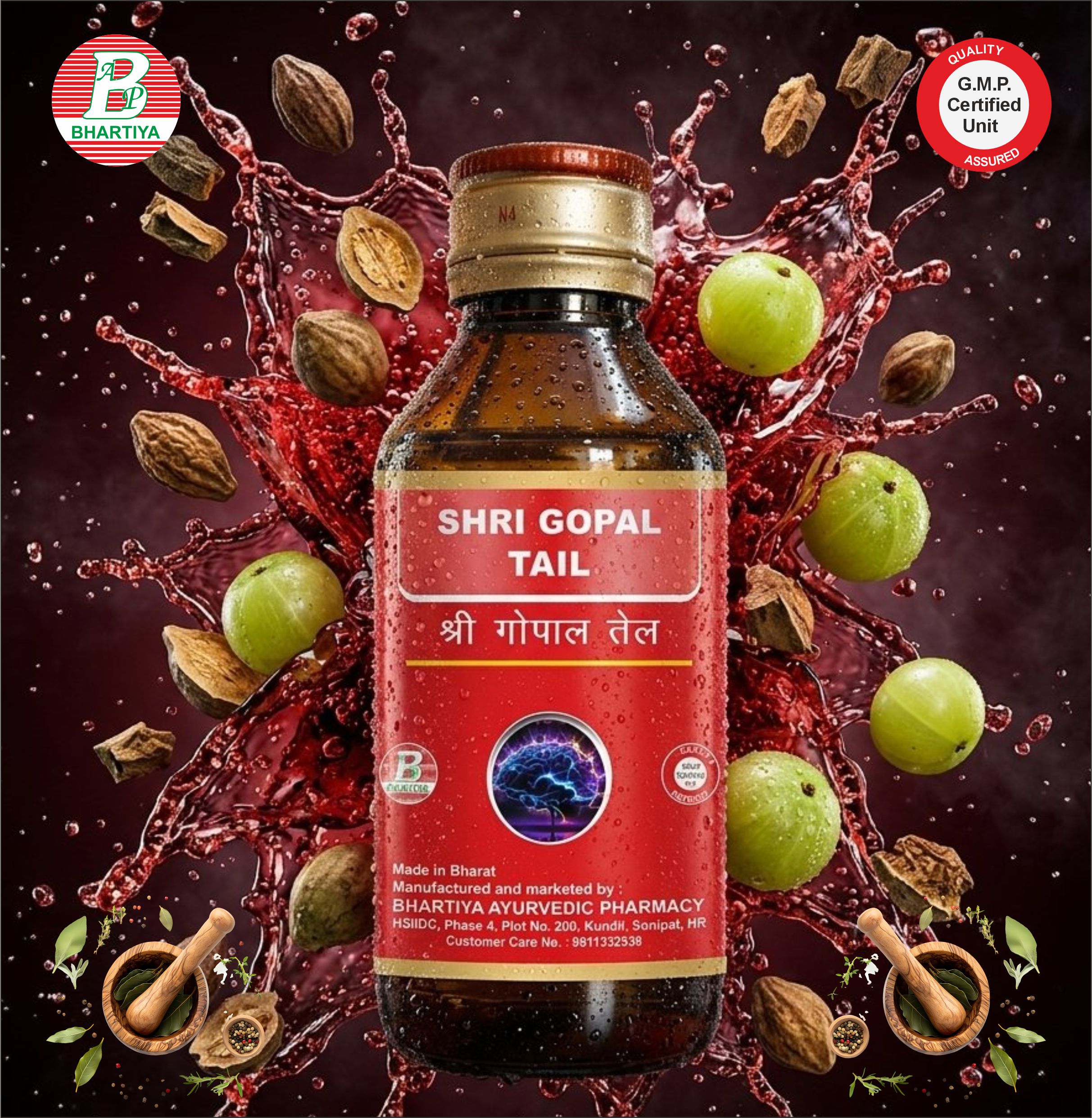
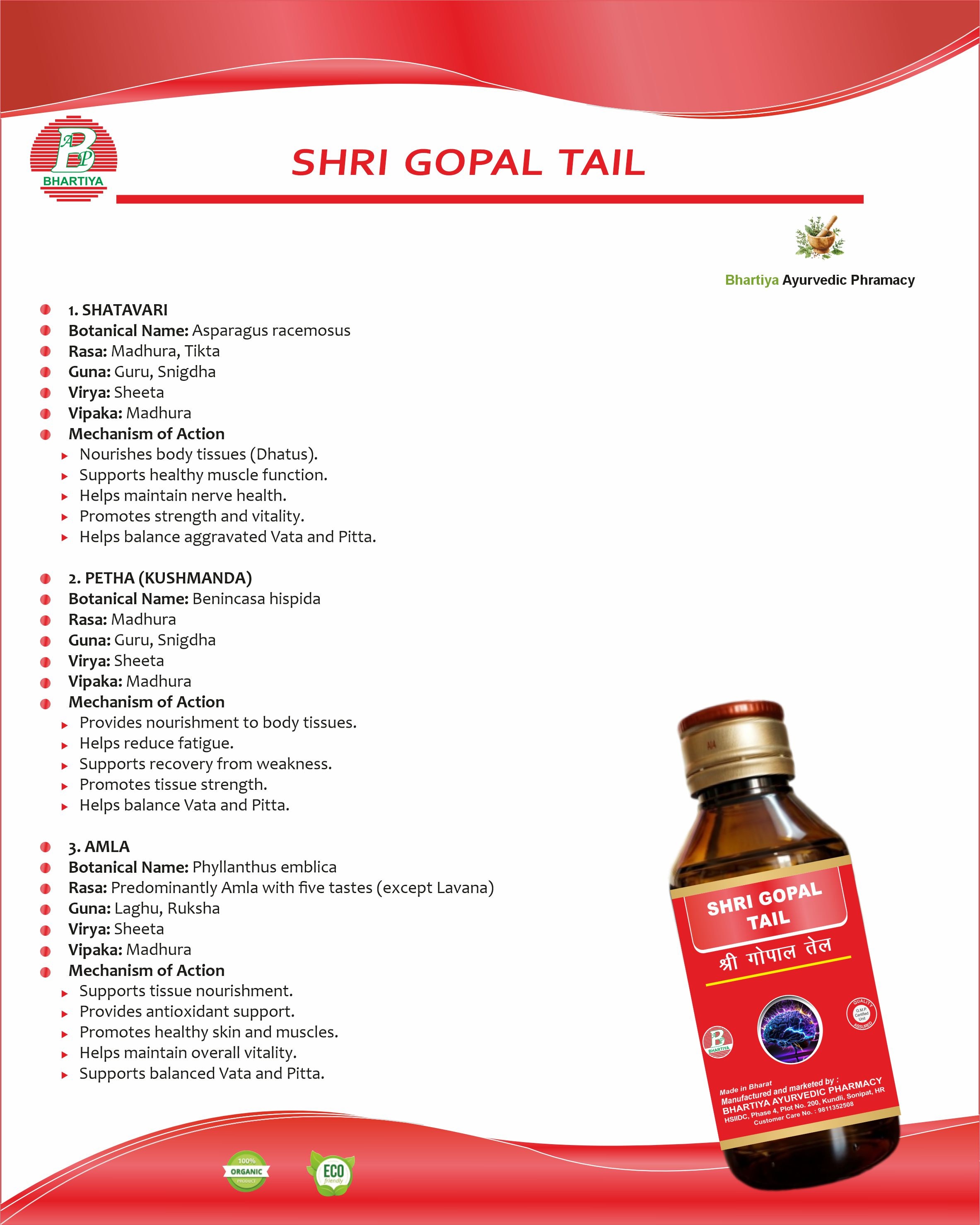
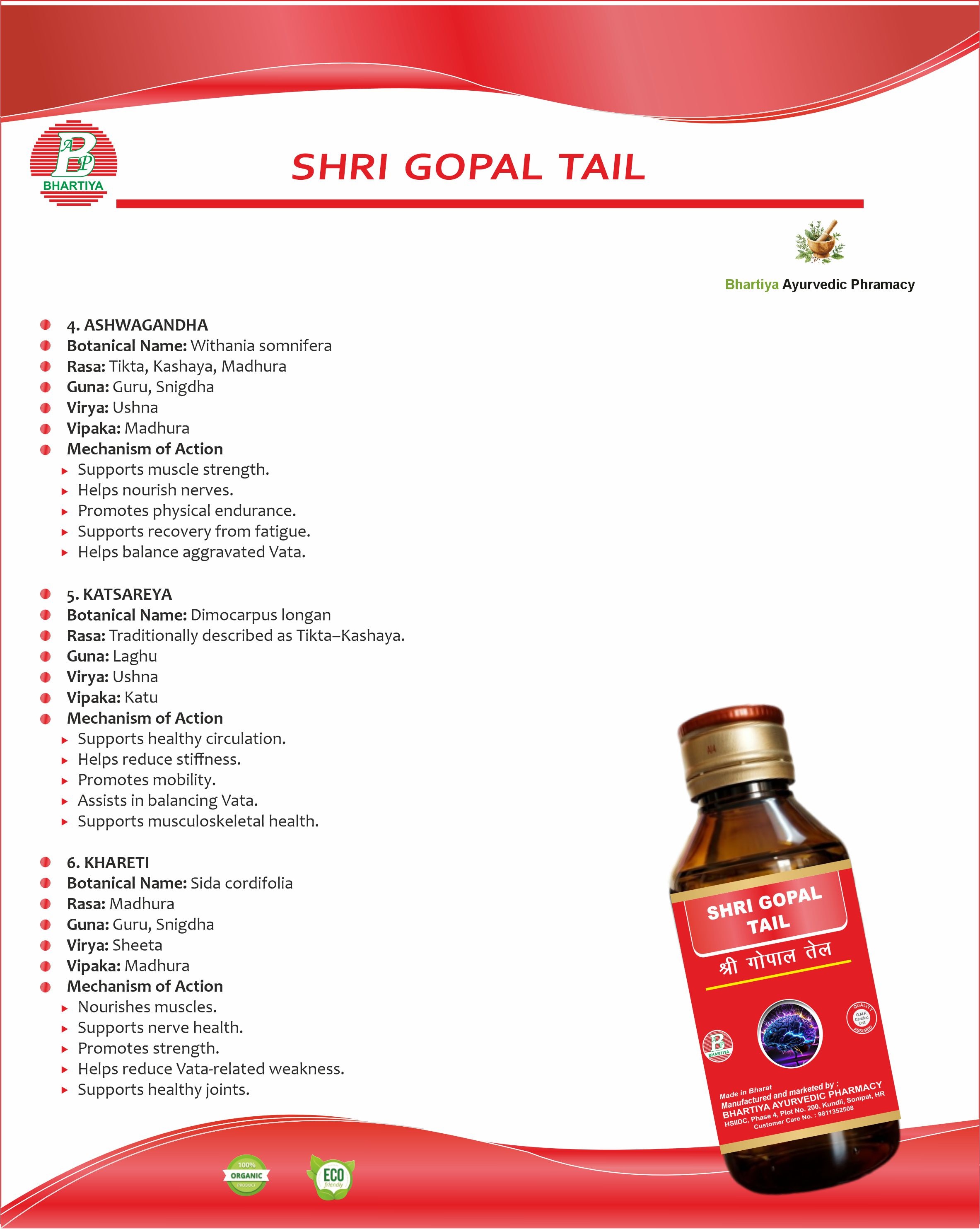
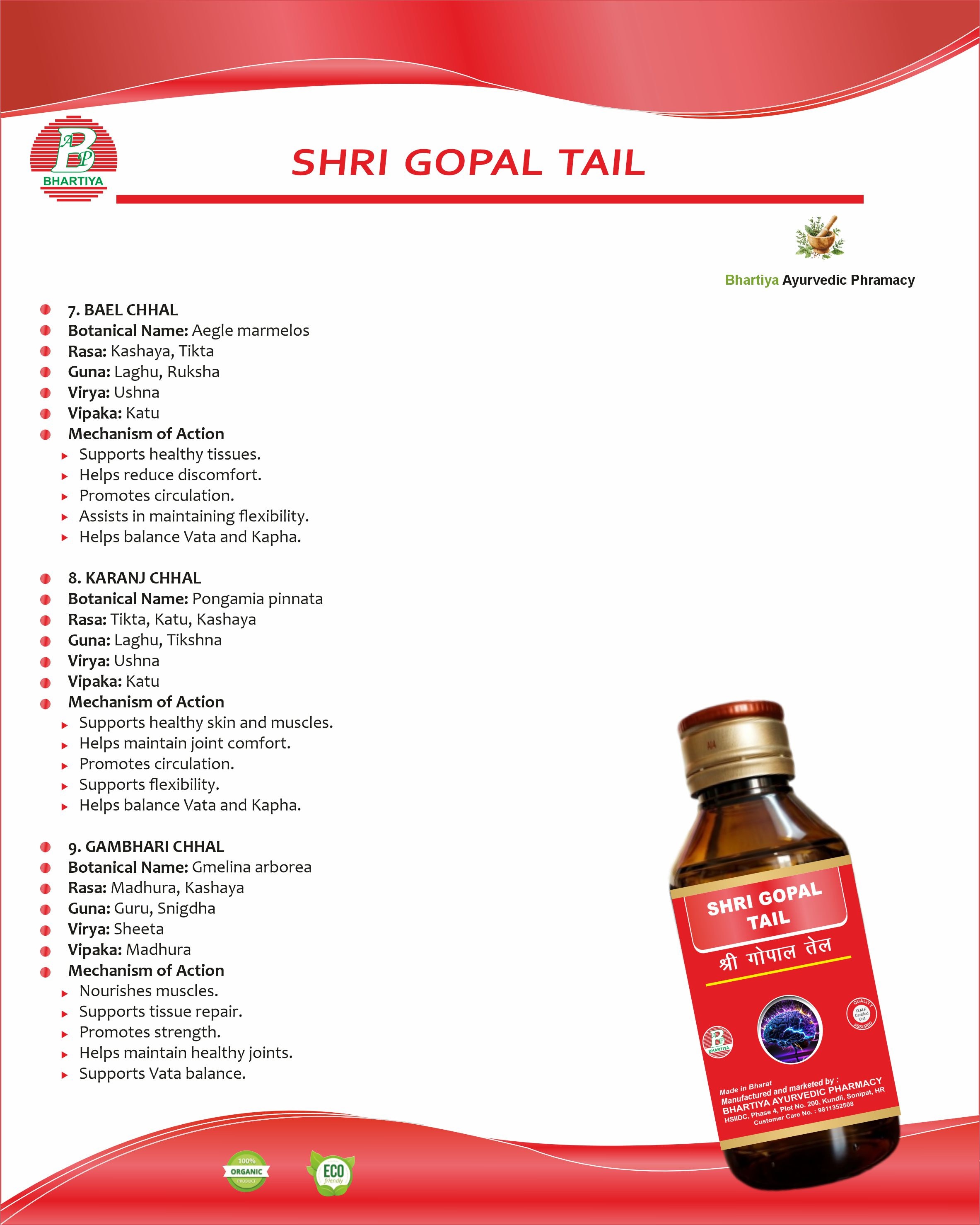
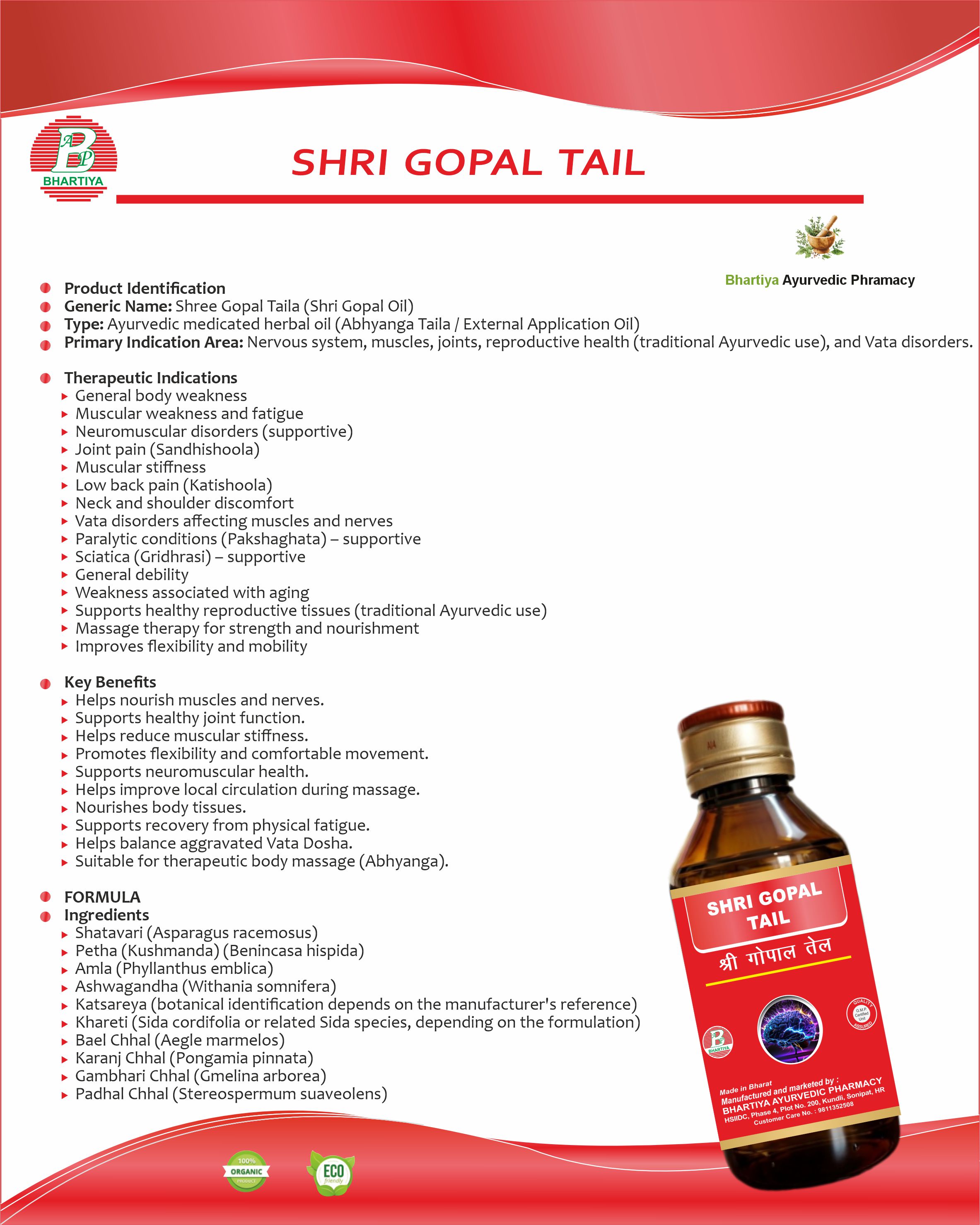
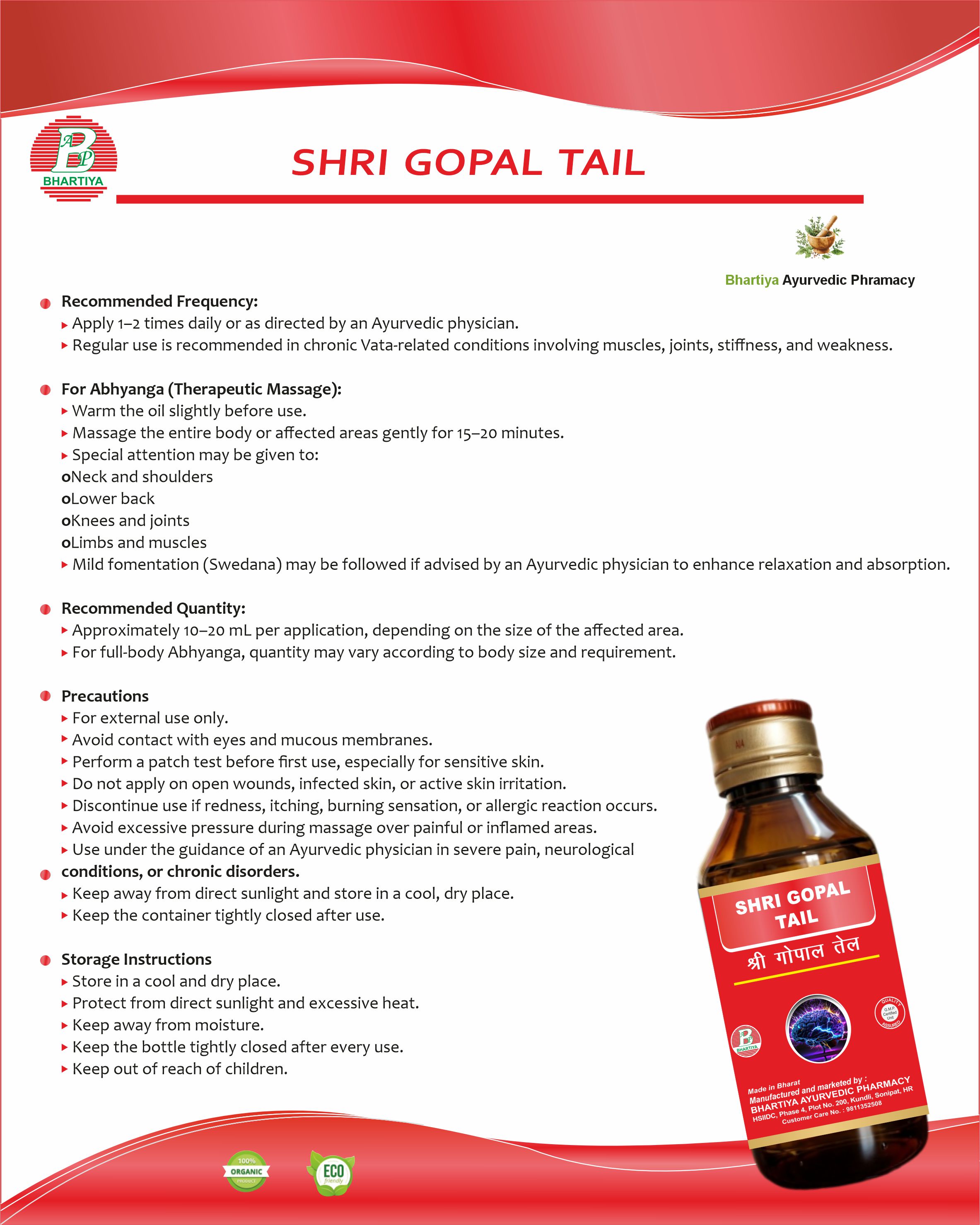
SHREE GOPAL TAILA Product Identification Generic Name: Shree Gopal Taila (Shri Gopal Oil) Type: Ayurvedic medicated herbal oil (Abhyanga Taila / External Application Oil) Primary Indication Area: Nervous system, muscles, joints, reproductive health (traditional Ayurvedic use), and Vata disorders. Therapeutic Indications General body weakness Muscular weakness and fatigue Neuromuscular disorders (supportive) Joint pain (Sandhishoola) Muscular stiffness Low back pain (Katishoola) Neck and shoulder discomfort Vata disorders affecting muscles and nerves Paralytic conditions (Pakshaghata) – supportive Sciatica (Gridhrasi) – supportive General debility Weakness associated with aging Supports healthy reproductive tissues (traditional Ayurvedic use) Massage therapy for strength and nourishment Improves flexibility and mobility Key Benefits Helps nourish muscles and nerves. Supports healthy joint function. Helps reduce muscular stiffness. Promotes flexibility and comfortable movement. Supports neuromuscular health. Helps improve local circulation during massage. Nourishes body tissues. Supports recovery from physical fatigue. Helps balance aggravated Vata Dosha. Suitable for therapeutic body massage (Abhyanga). FORMULA Ingredients Shatavari (Asparagus racemosus) Petha (Kushmanda) (Benincasa hispida) Amla (Phyllanthus emblica) Ashwagandha (Withania somnifera) Katsareya (botanical identification depends on the manufacturer's reference) Khareti (Sida cordifolia or related Sida species, depending on the formulation) Bael Chhal (Aegle marmelos) Karanj Chhal (Pongamia pinnata) Gambhari Chhal (Gmelina arborea) Padhal Chhal (Stereospermum suaveolens) 1. SHATAVARI Botanical Name: Asparagus racemosus Rasa: Madhura, Tikta Guna: Guru, Snigdha Virya: Sheeta Vipaka: Madhura Mechanism of Action Nourishes body tissues (Dhatus). Supports healthy muscle function. Helps maintain nerve health. Promotes strength and vitality. Helps balance aggravated Vata and Pitta. 2. PETHA (KUSHMANDA) Botanical Name: Benincasa hispida Rasa: Madhura Guna: Guru, Snigdha Virya: Sheeta Vipaka: Madhura Mechanism of Action Provides nourishment to body tissues. Helps reduce fatigue. Supports recovery from weakness. Promotes tissue strength. Helps balance Vata and Pitta. 3. AMLA Botanical Name: Phyllanthus emblica Rasa: Predominantly Amla with five tastes (except Lavana) Guna: Laghu, Ruksha Virya: Sheeta Vipaka: Madhura Mechanism of Action Supports tissue nourishment. Provides antioxidant support. Promotes healthy skin and muscles. Helps maintain overall vitality. Supports balanced Vata and Pitta. 4. ASHWAGANDHA Botanical Name: Withania somnifera Rasa: Tikta, Kashaya, Madhura Guna: Guru, Snigdha Virya: Ushna Vipaka: Madhura Mechanism of Action Supports muscle strength. Helps nourish nerves. Promotes physical endurance. Supports recovery from fatigue. Helps balance aggravated Vata. 5. KATSAREYA Botanical Name: Dimocarpus longan Rasa: Traditionally described as Tikta–Kashaya. Guna: Laghu Virya: Ushna Vipaka: Katu Mechanism of Action Supports healthy circulation. Helps reduce stiffness. Promotes mobility. Assists in balancing Vata. Supports musculoskeletal health. 6. KHARETI Botanical Name: Sida cordifolia Rasa: Madhura Guna: Guru, Snigdha Virya: Sheeta Vipaka: Madhura Mechanism of Action Nourishes muscles. Supports nerve health. Promotes strength. Helps reduce Vata-related weakness. Supports healthy joints. 7. BAEL CHHAL Botanical Name: Aegle marmelos Rasa: Kashaya, Tikta Guna: Laghu, Ruksha Virya: Ushna Vipaka: Katu Mechanism of Action Supports healthy tissues. Helps reduce discomfort. Promotes circulation. Assists in maintaining flexibility. Helps balance Vata and Kapha. 8. KARANJ CHHAL Botanical Name: Pongamia pinnata Rasa: Tikta, Katu, Kashaya Guna: Laghu, Tikshna Virya: Ushna Vipaka: Katu Mechanism of Action Supports healthy skin and muscles. Helps maintain joint comfort. Promotes circulation. Supports flexibility. Helps balance Vata and Kapha. 9. GAMBHARI CHHAL Botanical Name: Gmelina arborea Rasa: Madhura, Kashaya Guna: Guru, Snigdha Virya: Sheeta Vipaka: Madhura Mechanism of Action Nourishes muscles. Supports tissue repair. Promotes strength. Helps maintain healthy joints. Supports Vata balance. 10. PADHAL CHHAL Botanical Name: Stereospermum suaveolens Rasa: Tikta, Kashaya Guna: Laghu Virya: Ushna Vipaka: Katu Mechanism of Action Supports joint health. Helps maintain mobility. Promotes healthy muscles. Assists in reducing Vata-related stiffness. Supports healthy circulation. 11. ARNI Botanical Name: Clerodendrum phlomidis Rasa: Tikta, Katu Guna: Laghu, Ruksha Virya: Ushna Vipaka: Katu Mechanism of Action: Helps relieve joint and muscular discomfort. Supports healthy mobility and flexibility. Promotes local circulation. Assists in reducing Vata-Kapha imbalance. Supports healthy musculoskeletal function. 12. KATELI (KANTAKARI) Botanical Name: Solanum xanthocarpum Rasa: Tikta, Katu Guna: Laghu, Ruksha Virya: Ushna Vipaka: Katu Mechanism of Action: Supports healthy muscle and joint function. Helps relieve stiffness associated with Vata disorders. Promotes healthy circulation. Supports normal neuromuscular function. Assists in maintaining comfortable movement. 13. MURVA ROOT Botanical Name: Marsdenia tenacissima Guna: Laghu, Ruksha Virya: Ushna Vipaka: Katu Mechanism of Action: Supports healthy tissue metabolism. Helps reduce Vata-Kapha aggravation. Promotes musculoskeletal comfort. Supports normal circulation. Assists in maintaining healthy connective tissues. 14. KEWADA ROOT Botanical Name: Pandanus odorifer Rasa: Tikta, Madhura Guna: Laghu, Snigdha Virya: Sheeta Vipaka: Madhura Mechanism of Action: Helps soothe body tissues. Supports muscle nourishment. Promotes relaxation during massage. Helps maintain healthy skin. Balances Vata and Pitta. 15. FARHAD CHHAL Botanical Name: Sterculia urens Rasa: Kashaya Guna: Guru Virya: Sheeta Vipaka: Katu Mechanism of Action: Supports connective tissue health. Helps maintain muscle strength. Promotes tissue nourishment. Supports flexibility. Assists in balancing Vata. 16. TILA TAILA (SESAME OIL) Botanical Name: Sesamum indicum Rasa: Madhura, Tikta, Kashaya Guna: Guru, Snigdha Virya: Ushna Vipaka: Madhura Mechanism of Action: Acts as an excellent carrier for herbal constituents. Deeply nourishes muscles and joints. Enhances penetration of herbal actives. Helps reduce dryness and stiffness. Pacifies aggravated Vata Dosha. 17. GODUGDHA (COW'S MILK) Source: Cow's Milk Rasa: Madhura Guna: Guru, Snigdha Virya: Sheeta Vipaka: Madhura Mechanism of Action: Nourishes muscles and nerves. Supports tissue strength. Helps reduce burning sensation. Promotes recovery from weakness. Balances Vata and Pitta. 18. GO GHRITA (COW'S GHEE) Source: Clarified Butter prepared from Cow's Milk Rasa: Madhura Guna: Guru, Snigdha Virya: Sheeta Vipaka: Madhura Mechanism of Action: Nourishes deeper body tissues. Supports healthy nerve function. Promotes lubrication of muscles and joints. Helps improve the absorption of herbal constituents. Supports Vata-Pitta balance. 19. SHATAPUSHPA Botanical Name: Anethum sowa / Anethum graveolens Rasa: Katu, Tikta Guna: Laghu, Snigdha Virya: Ushna Vipaka: Katu Mechanism of Action: Helps reduce muscular stiffness. Supports healthy circulation. Promotes flexibility. Assists in relieving Vata-related discomfort. Supports comfortable movement. 20. SAINDHAVA LAVANA Source: Rock Salt Rasa: Lavana Guna: Laghu, Snigdha Virya: Sheeta Vipaka: Madhura Mechanism of Action: Helps soften stiff tissues. Supports local circulation. Promotes muscle relaxation. Enhances penetration of medicated oil. Helps pacify aggravated Vata. Application / Dosage of Shree Gopal Taila Route of Administration: External use only. Method of Application: Apply an adequate quantity of Shree Gopal Taila over the affected areas such as muscles, joints, neck, shoulders, back, limbs, and other areas requiring nourishment and massage. Gently massage the oil using slow circular and upward strokes for 10–15 minutes to facilitate absorption. The oil may be warmed mildly before application for enhanced therapeutic benefit. Allow the oil to remain on the skin for 30–60 minutes or as advised by an Ayurvedic physician. For therapeutic massage (Abhyanga), regular application is recommended for better support of muscles, joints, and nervous system. Recommended Frequency: Apply 1–2 times daily or as directed by an Ayurvedic physician. Regular use is recommended in chronic Vata-related conditions involving muscles, joints, stiffness, and weakness. For Abhyanga (Therapeutic Massage): Warm the oil slightly before use. Massage the entire body or affected areas gently for 15–20 minutes. Special attention may be given to: oNeck and shoulders oLower back oKnees and joints oLimbs and muscles Mild fomentation (Swedana) may be followed if advised by an Ayurvedic physician to enhance relaxation and absorption. Recommended Quantity: Approximately 10–20 mL per application, depending on the size of the affected area. For full-body Abhyanga, quantity may vary according to body size and requirement. Precautions For external use only. Avoid contact with eyes and mucous membranes. Perform a patch test before first use, especially for sensitive skin. Do not apply on open wounds, infected skin, or active skin irritation. Discontinue use if redness, itching, burning sensation, or allergic reaction occurs. Avoid excessive pressure during massage over painful or inflamed areas. Use under the guidance of an Ayurvedic physician in severe pain, neurological conditions, or chronic disorders. Keep away from direct sunlight and store in a cool, dry place. Keep the container tightly closed after use. Storage Instructions Store in a cool and dry place. Protect from direct sunlight and excessive heat. Keep away from moisture. Keep the bottle tightly closed after every use. Keep out of reach of children.