

Description
Product details
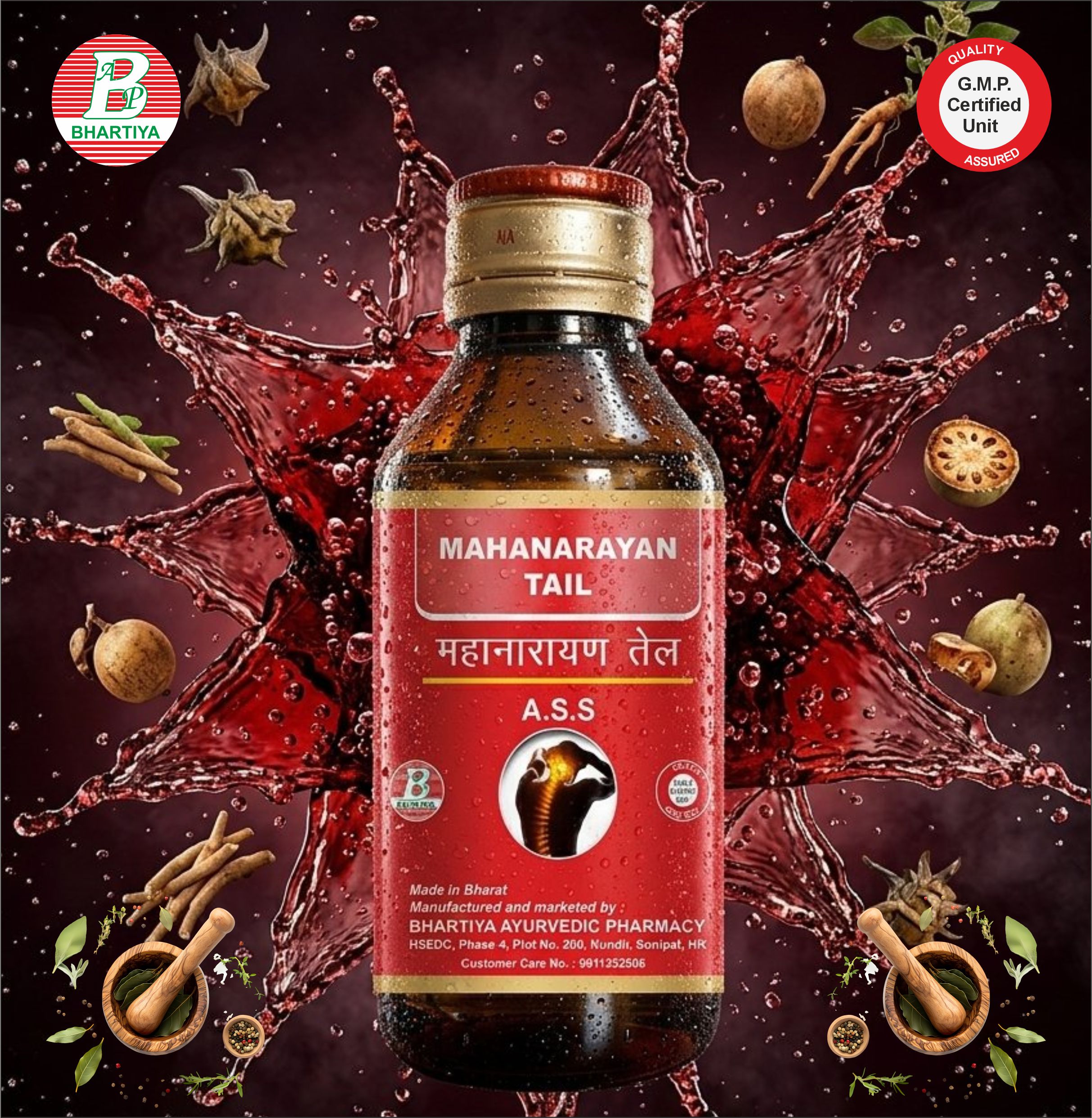
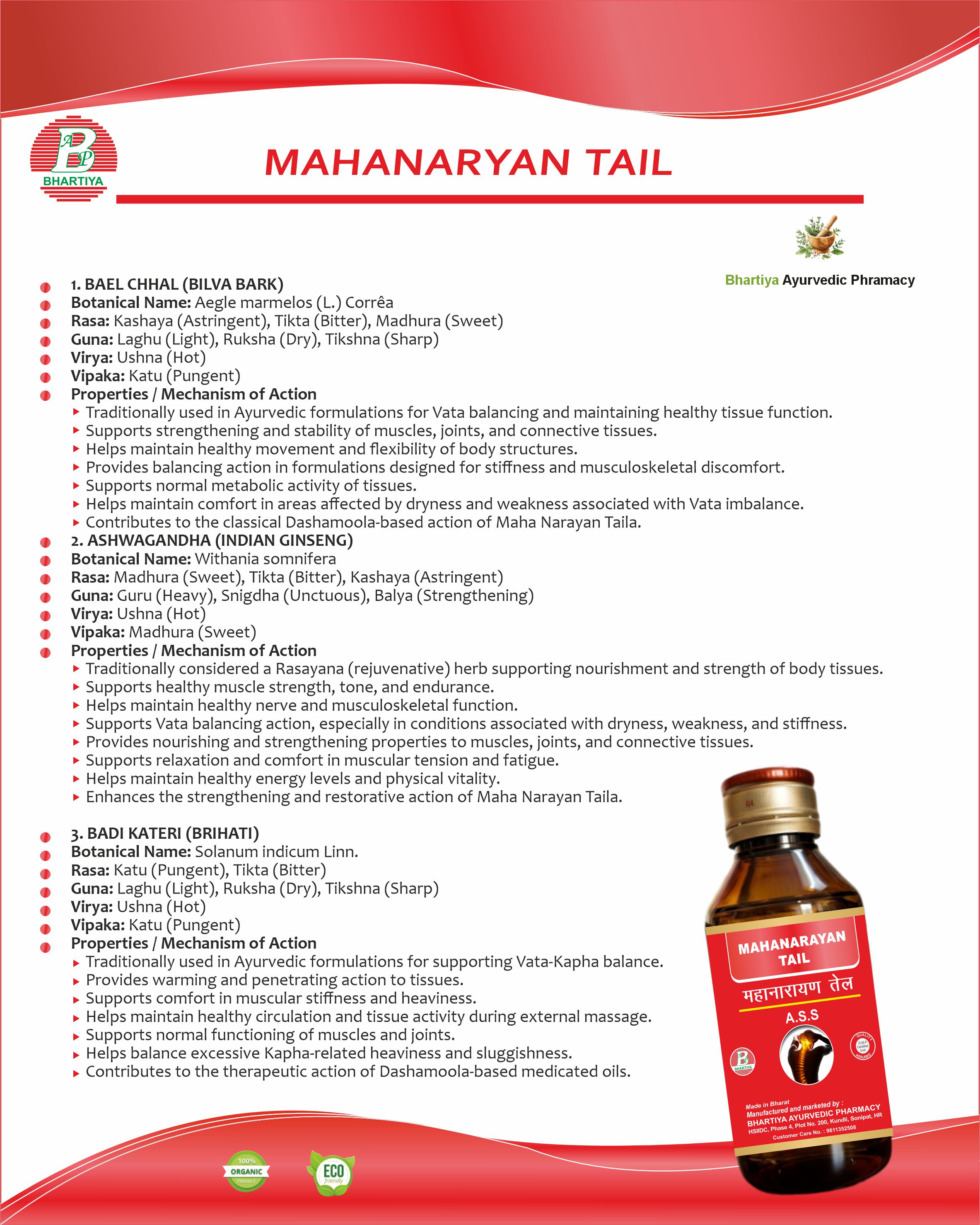
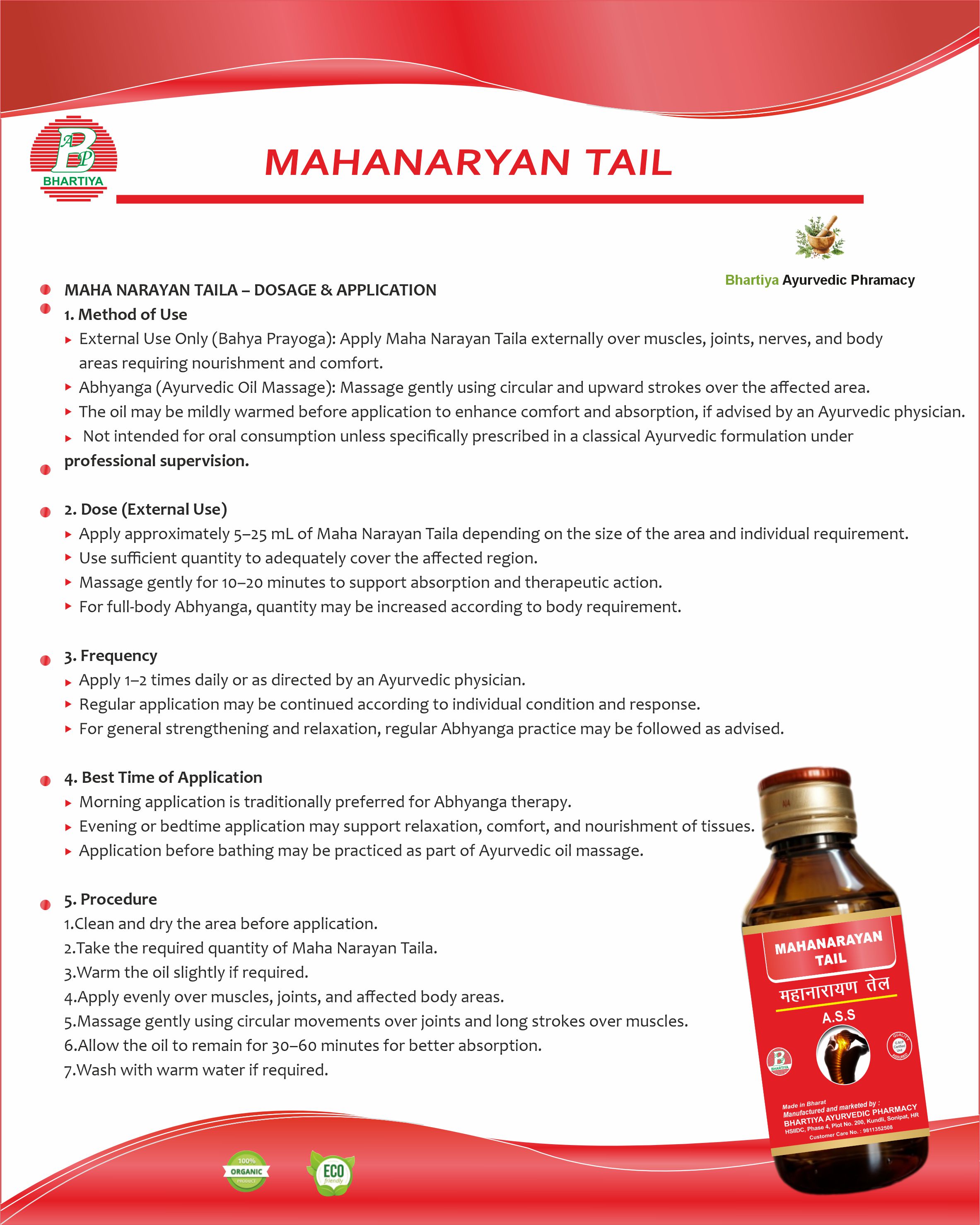
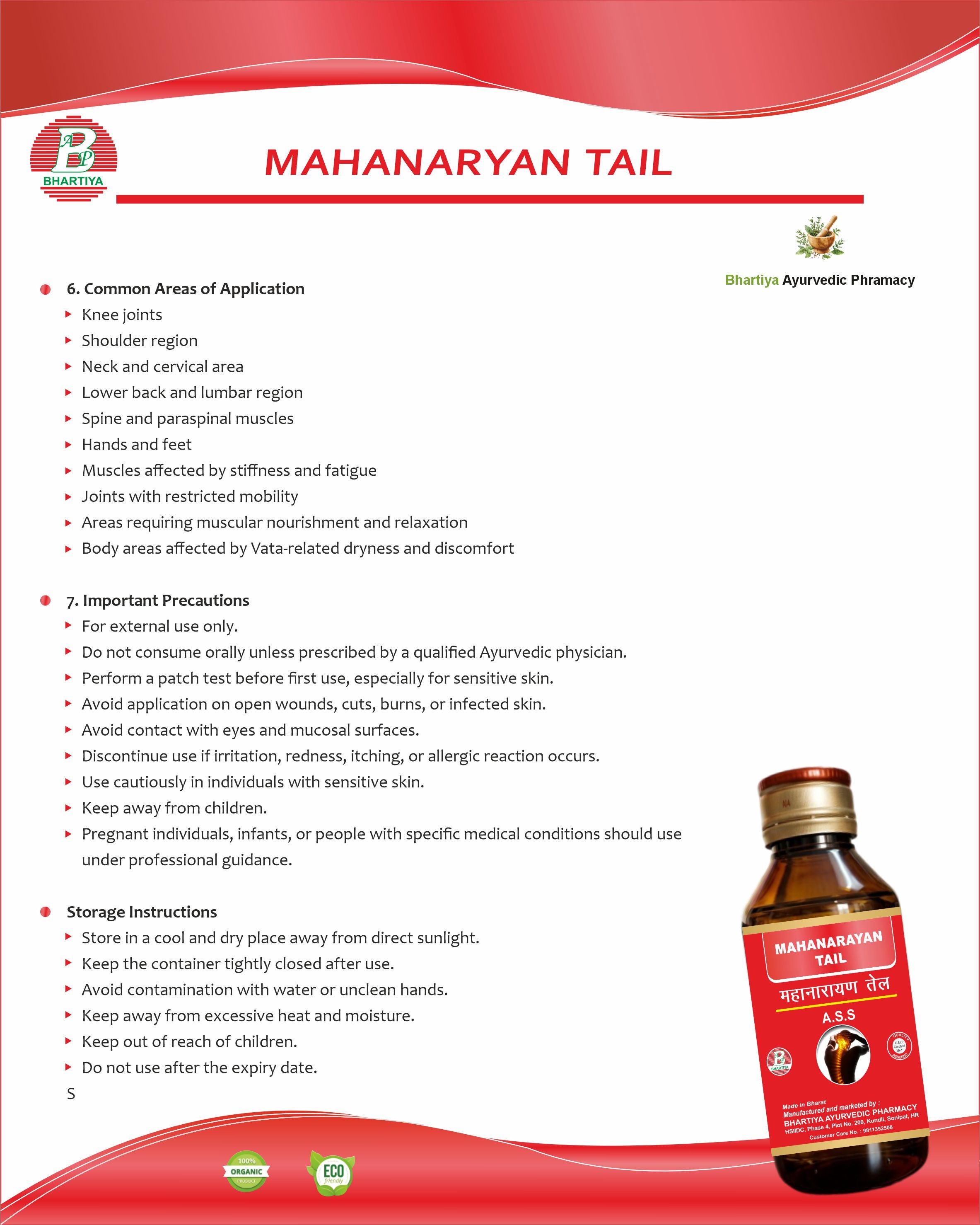
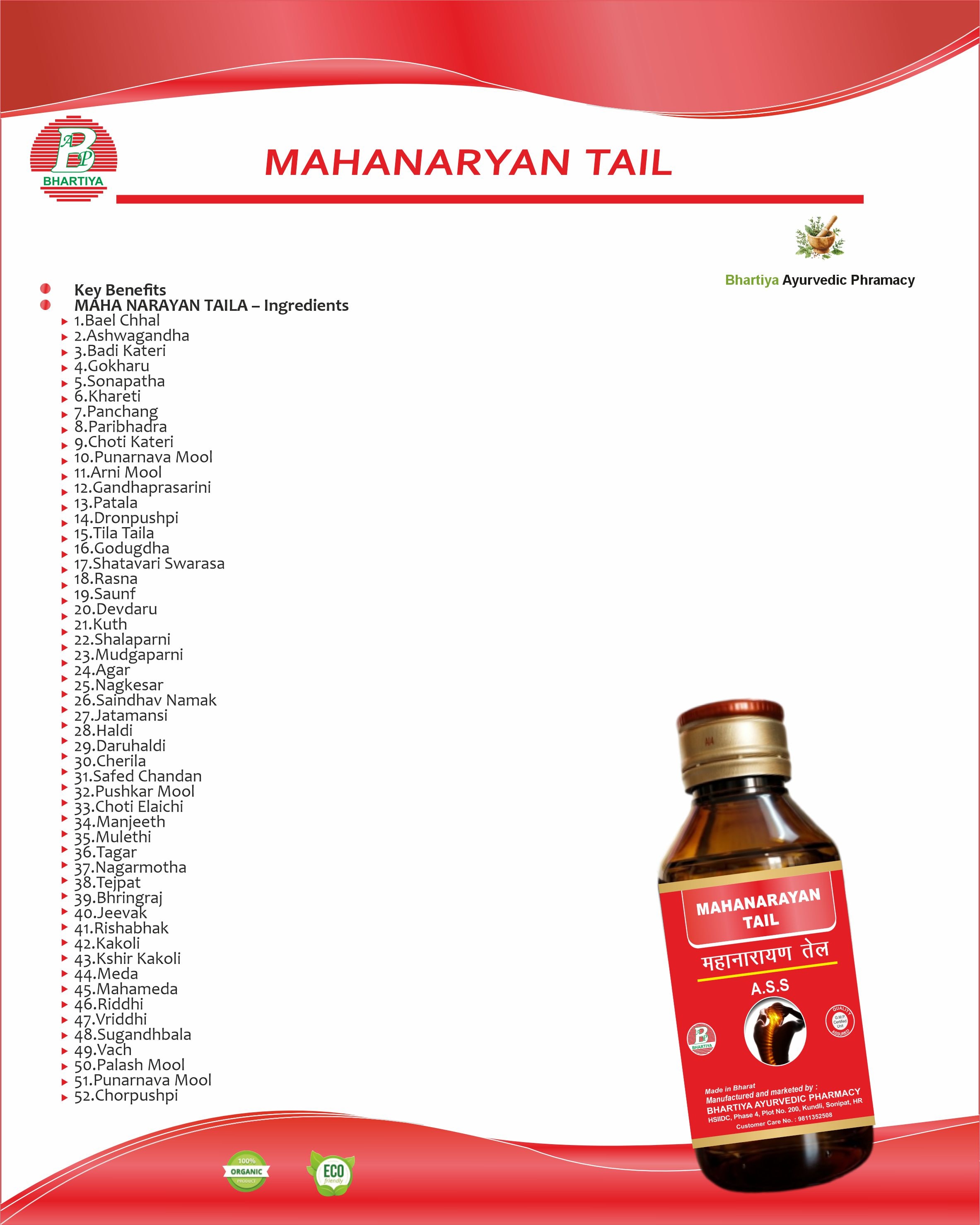
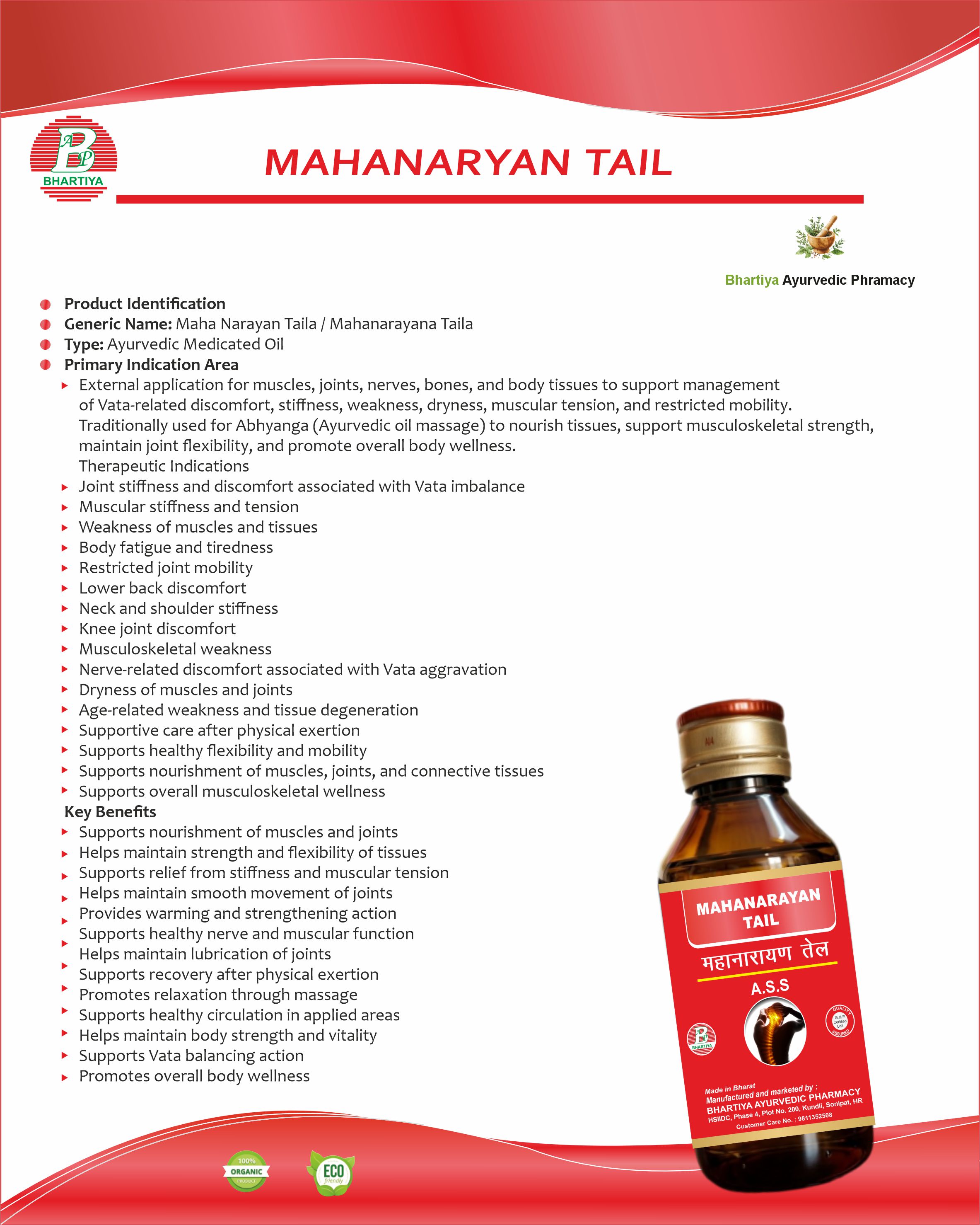
MAHA NARAYAN TAILA Product Identification • Generic Name: Maha Narayan Taila / Mahanarayana Taila • Type: Ayurvedic Medicated Oil Primary Indication Area • External application for muscles, joints, nerves, bones, and body tissues to support management of Vata-related discomfort, stiffness, weakness, dryness, muscular tension, and restricted mobility. Traditionally used for Abhyanga (Ayurvedic oil massage) to nourish tissues, support musculoskeletal strength, maintain joint flexibility, and promote overall body wellness. Therapeutic Indications • Joint stiffness and discomfort associated with Vata imbalance • Muscular stiffness and tension • Weakness of muscles and tissues • Body fatigue and tiredness • Restricted joint mobility • Lower back discomfort • Neck and shoulder stiffness • Knee joint discomfort • Musculoskeletal weakness • Nerve-related discomfort associated with Vata aggravation • Dryness of muscles and joints • Age-related weakness and tissue degeneration • Supportive care after physical exertion • Supports healthy flexibility and mobility • Supports nourishment of muscles, joints, and connective tissues • Supports overall musculoskeletal wellness Key Benefits • Supports nourishment of muscles and joints • Helps maintain strength and flexibility of tissues • Supports relief from stiffness and muscular tension • Helps maintain smooth movement of joints • Provides warming and strengthening action • Supports healthy nerve and muscular function • Helps maintain lubrication of joints • Supports recovery after physical exertion • Promotes relaxation through massage • Supports healthy circulation in applied areas • Helps maintain body strength and vitality • Supports Vata balancing action • Promotes overall body wellness Key Benefits MAHA NARAYAN TAILA – Ingredients 1.Bael Chhal 2.Ashwagandha 3.Badi Kateri 4.Gokharu 5.Sonapatha 6.Khareti 7.Panchang 8.Paribhadra 9.Choti Kateri 10.Punarnava Mool 11.Arni Mool 12.Gandhaprasarini 13.Patala 14.Dronpushpi 15.Tila Taila 16.Godugdha 17.Shatavari Swarasa 18.Rasna 19.Saunf 20.Devdaru 21.Kuth 22.Shalaparni 23.Mudgaparni 24.Agar 25.Nagkesar 26.Saindhav Namak 27.Jatamansi 28.Haldi 29.Daruhaldi 30.Cherila 31.Safed Chandan 32.Pushkar Mool 33.Choti Elaichi 34.Manjeeth 35.Mulethi 36.Tagar 37.Nagarmotha 38.Tejpat 39.Bhringraj 40.Jeevak 41.Rishabhak 42.Kakoli 43.Kshir Kakoli 44.Meda 45.Mahameda 46.Riddhi 47.Vriddhi 48.Sugandhbala 49.Vach 50.Palash Mool 51.Punarnava Mool 52.Chorpushpi 1. BAEL CHHAL (BILVA BARK) Botanical Name: Aegle marmelos (L.) Corrêa Rasa: Kashaya (Astringent), Tikta (Bitter), Madhura (Sweet) Guna: Laghu (Light), Ruksha (Dry), Tikshna (Sharp) Virya: Ushna (Hot) Vipaka: Katu (Pungent) Properties / Mechanism of Action • Traditionally used in Ayurvedic formulations for Vata balancing and maintaining healthy tissue function. • Supports strengthening and stability of muscles, joints, and connective tissues. • Helps maintain healthy movement and flexibility of body structures. • Provides balancing action in formulations designed for stiffness and musculoskeletal discomfort. • Supports normal metabolic activity of tissues. • Helps maintain comfort in areas affected by dryness and weakness associated with Vata imbalance. • Contributes to the classical Dashamoola-based action of Maha Narayan Taila. 2. ASHWAGANDHA (INDIAN GINSENG) Botanical Name: Withania somnifera Rasa: Madhura (Sweet), Tikta (Bitter), Kashaya (Astringent) Guna: Guru (Heavy), Snigdha (Unctuous), Balya (Strengthening) Virya: Ushna (Hot) Vipaka: Madhura (Sweet) Properties / Mechanism of Action • Traditionally considered a Rasayana (rejuvenative) herb supporting nourishment and strength of body tissues. • Supports healthy muscle strength, tone, and endurance. • Helps maintain healthy nerve and musculoskeletal function. • Supports Vata balancing action, especially in conditions associated with dryness, weakness, and stiffness. • Provides nourishing and strengthening properties to muscles, joints, and connective tissues. • Supports relaxation and comfort in muscular tension and fatigue. • Helps maintain healthy energy levels and physical vitality. • Enhances the strengthening and restorative action of Maha Narayan Taila. 3. BADI KATERI (BRIHATI) Botanical Name: Solanum indicum Linn. Rasa: Katu (Pungent), Tikta (Bitter) Guna: Laghu (Light), Ruksha (Dry), Tikshna (Sharp) Virya: Ushna (Hot) Vipaka: Katu (Pungent) Properties / Mechanism of Action • Traditionally used in Ayurvedic formulations for supporting Vata-Kapha balance. • Provides warming and penetrating action to tissues. • Supports comfort in muscular stiffness and heaviness. • Helps maintain healthy circulation and tissue activity during external massage. • Supports normal functioning of muscles and joints. • Helps balance excessive Kapha-related heaviness and sluggishness. • Contributes to the therapeutic action of Dashamoola-based medicated oils. 4. GOKHARU (GOKSHURA) Botanical Name: Tribulus terrestris Linn. Rasa: Madhura (Sweet) Guna: Guru (Heavy), Snigdha (Unctuous) Virya: Shita (Cold) Vipaka: Madhura (Sweet) Properties / Mechanism of Action • Traditionally used as a nourishing and strengthening herb. • Supports healthy muscles, joints, and connective tissues. • Helps maintain proper lubrication and comfort of body tissues. • Supports Vata balancing action. • Provides restorative and nourishing properties. • Helps maintain flexibility and mobility of joints. • Contributes to the strengthening and rejuvenating profile of Maha Narayan Taila. 5. SONAPATHA (SHYONAKA) Botanical Name: Oroxylum indicum Rasa: Kashaya (Astringent), Tikta (Bitter) Guna: Laghu (Light), Ruksha (Dry) Virya: Ushna (Hot) Vipaka: Katu (Pungent) Properties / Mechanism of Action • Traditionally used as a major ingredient of Dashamoola formulations. • Supports Vata balancing action and healthy musculoskeletal function. • Helps maintain comfort in stiffness and restricted movement. • Supports healthy tissue metabolism and structural strength. • Provides stabilizing and strengthening effects to muscles and joints. • Helps maintain normal inflammatory response of tissues. • Contributes to the classical therapeutic action of Maha Narayan Taila. 6. KHARETI (KSHIRAKAKOLI / KHARETI HERB) Botanical Name: Abutilon indicum (L.) Sweet (Botanical identification may vary according to regional usage of the name Khareti.) Rasa: Madhura (Sweet), Tikta (Bitter) Guna: Guru (Heavy), Snigdha (Unctuous) Virya: Sheeta (Cold) Vipaka: Madhura (Sweet) Properties / Mechanism of Action • Supports nourishment and strengthening of body tissues. • Provides soothing and restorative action in Ayurvedic formulations. • Helps maintain healthy muscle and joint comfort. • Supports balancing of Vata-related dryness and weakness. • Promotes tissue nourishment and stability. • Contributes to the rejuvenating action of Maha Narayan Taila. 8. PARIBHADRA (PARIBHADRAK) Botanical Name: Erythrina variegata Rasa: Tikta (Bitter), Kashaya (Astringent) Guna: Laghu (Light), Ruksha (Dry) Virya: Ushna (Hot) Vipaka: Katu (Pungent) Properties / Mechanism of Action • Supports Vata-Kapha balancing action. • Provides warming and stimulating properties. • Helps maintain healthy muscle and tissue function. • Supports comfort in stiffness and heaviness of tissues. • Promotes healthy circulation during external application. • Enhances the strengthening effect of Maha Narayan Taila. 9. CHOTI KATERI (KANTAKARI) Botanical Name: Solanum xanthocarpum Rasa: Katu (Pungent), Tikta (Bitter) Guna: Laghu (Light), Ruksha (Dry), Tikshna (Sharp) Virya: Ushna (Hot) Vipaka: Katu (Pungent) Properties / Mechanism of Action • Traditionally included in Dashamoola formulations. • Supports Vata-Kapha balancing properties. • Provides warming and penetrating action. • Helps maintain comfort in muscular stiffness and heaviness. • Supports healthy tissue activity and circulation. • Enhances the deep-acting nature of Maha Narayan Taila. 10. PUNARNAVA MOOL (PUNARNAVA ROOT) Botanical Name: Boerhavia diffusa Rasa: Madhura (Sweet), Tikta (Bitter), Kashaya (Astringent) Guna: Laghu (Light), Ruksha (Dry) Virya: Ushna (Hot) Vipaka: Madhura (Sweet) Properties / Mechanism of Action • Traditionally used in Ayurvedic formulations for supporting healthy tissue balance. • Supports normal fluid balance and comfort of tissues. • Helps maintain healthy muscle and joint function. • Supports Vata balancing action and reduces heaviness associated with Kapha. • Provides restorative and balancing properties. • Supports healthy circulation and tissue nourishment. • Contributes to the strengthening and balancing effect of Maha Narayan Taila. 11. ARNI MOOL (AGNI MANTHA ROOT) Botanical Name: Premna integrifolia Rasa: Tikta (Bitter), Katu (Pungent), Kashaya (Astringent) Guna: Laghu (Light), Ruksha (Dry) Virya: Ushna (Hot) Vipaka: Katu (Pungent) Properties / Mechanism of Action • One of the classical herbs of Dashamoola group. • Supports Vata balancing action in musculoskeletal conditions. • Helps maintain healthy function of muscles and joints. • Provides warming and penetrating action. • Supports comfort in stiffness, heaviness, and restricted movement. • Helps maintain normal tissue metabolism. • Enhances the classical action of Maha Narayan Taila. 12. GANDHPRASARINI Botanical Name: Paederia foetida Rasa: Katu (Pungent), Tikta (Bitter) Guna: Laghu (Light), Tikshna (Sharp), Snigdha (Unctuous) Virya: Ushna (Hot) Vipaka: Katu (Pungent) Properties / Mechanism of Action • Traditionally used in Ayurvedic external oil preparations for Vata-related discomfort. • Supports healthy nerve and muscular function. • Provides warming and penetrating action. • Helps maintain flexibility and mobility of joints. • Supports comfort in muscular stiffness and tension. • Promotes local tissue activity during massage application. • Enhances the Vata balancing properties of Maha Narayan Taila. 13. PATALA Botanical Name: Stereospermum suaveolens (Roxb.) DC. Rasa: Tikta (Bitter), Kashaya (Astringent), Madhura (Sweet) Guna: Laghu (Light), Ruksha (Dry) Virya: Ushna (Hot) Vipaka: Katu (Pungent) Properties / Mechanism of Action • Classical ingredient of Dashamoola formulations. • Supports healthy musculoskeletal function. • Helps maintain balance of aggravated Vata. • Supports strength and stability of tissues. • Provides balancing and soothing action to muscles and joints. • Helps maintain normal tissue response. • Contributes to the therapeutic profile of Maha Narayan Taila. 14. DRONPUSHPI (DRONAPUSHPI) Botanical Name: Leucas cephalotes Rasa: Tikta (Bitter), Katu (Pungent) Guna: Laghu (Light), Ruksha (Dry) Virya: Ushna (Hot) Vipaka: Katu (Pungent) Properties / Mechanism of Action • Supports balancing action of Kapha and Vata. • Provides warming and stimulating properties. • Helps maintain healthy tissue activity. • Supports local comfort during external application. • Enhances the herbal activity of medicated oils. • Contributes to the overall therapeutic action of Maha Narayan Taila. 15. TILA TAILA (SESAME OIL) Botanical Name: Sesamum indicum Linn. Rasa: Madhura (Sweet), Tikta (Bitter), Kashaya (Astringent) Guna: Guru (Heavy), Snigdha (Unctuous), Sukshma (Subtle) Virya: Ushna (Hot) Vipaka: Madhura (Sweet) Properties / Mechanism of Action • Considered an important Ayurvedic oil base for Vata disorders. • Provides deep nourishment to skin, muscles, and tissues. • Supports lubrication and flexibility of joints. • Helps enhance absorption and delivery of herbal constituents. • Provides warming and strengthening action. • Supports relaxation of stiff muscles through massage. • Acts as the primary oil medium of Maha Narayan Taila. 16. GODUGDHA (COW MILK) Source Name: Cow Milk (Ksheera) Rasa: Madhura (Sweet) Guna: Guru (Heavy), Snigdha (Unctuous), Mridu (Soft) Virya: Sheeta (Cold) Vipaka: Madhura (Sweet) Properties / Mechanism of Action • Traditionally used as a nourishing medium in Ayurvedic medicated oil preparations. • Supports nourishment and strengthening of body tissues. • Helps maintain softness and moisture of tissues. • Provides soothing and restorative action. • Supports balancing of Vata-related dryness and weakness. • Enhances the nourishing and rejuvenating properties of Maha Narayan Taila. 17. SHATAVARI SWARAS Botanical Name: Asparagus racemosus Willd. Rasa: Madhura (Sweet), Tikta (Bitter) Guna: Guru (Heavy), Snigdha (Unctuous) Virya: Sheeta (Cold) Vipaka: Madhura (Sweet) Properties / Mechanism of Action • Traditionally considered a Rasayana (rejuvenative) herb. • Supports nourishment of muscles, tissues, and body structures. • Helps maintain healthy lubrication and moisture of tissues. • Provides cooling and soothing action. • Supports Vata balancing properties. • Helps maintain strength and flexibility of joints. • Enhances restorative action of Maha Narayan Taila. 18. RASNA Botanical Name: Pluchea lanceolata Rasa: Tikta (Bitter), Katu (Pungent) Guna: Guru (Heavy), Snigdha (Unctuous) Virya: Ushna (Hot) Vipaka: Katu (Pungent) Properties / Mechanism of Action • Traditionally used for Vata-related musculoskeletal conditions. • Supports healthy joints, muscles, and connective tissues. • Provides warming and penetrating action. • Helps maintain flexibility and ease of movement. • Supports comfort in stiffness and muscular tension. • Promotes local tissue activity during massage application. • Contributes to the Vata balancing action of Maha Narayan Taila. 19. SAUNF (FENNEL) Botanical Name: Foeniculum vulgare Rasa: Madhura (Sweet), Katu (Pungent) Guna: Laghu (Light), Snigdha (Unctuous) Virya: Ushna (Hot) Vipaka: Madhura (Sweet) Properties / Mechanism of Action • Provides aromatic and soothing properties in herbal formulations. • Supports healthy tissue metabolism. • Helps maintain comfort and relaxation during external application. • Provides mild warming and stimulating action. • Supports balancing of Vata and Kapha. • Enhances the overall therapeutic fragrance and action of medicated oil. 20. DEVDARU (DEVADARU) Botanical Name: Cedrus deodara Rasa: Tikta (Bitter), Katu (Pungent) Guna: Laghu (Light), Ruksha (Dry), Tikshna (Sharp) Virya: Ushna (Hot) Vipaka: Katu (Pungent) Properties / Mechanism of Action • Provides warming and penetrating action to tissues. • Supports comfort in muscular stiffness and tension. • Helps maintain healthy joint and muscle function. • Supports Vata-Kapha balancing action. • Promotes local circulation during oil massage. • Enhances penetration of herbal constituents. • Strengthens the deep-acting property of Maha Narayan Taila. 21. KUTH (KUSHTHA) Botanical Name: Saussurea costus Rasa: Tikta (Bitter), Katu (Pungent), Madhura (Sweet) Guna: Laghu (Light), Tikshna (Sharp), Ruksha (Dry) Virya: Ushna (Hot) Vipaka: Katu (Pungent) Properties / Mechanism of Action • Provides warming and penetrating action. • Supports healthy circulation and tissue activity. • Helps maintain comfort in stiffness and heaviness. • Supports Vata-Kapha balancing properties. • Enhances absorption of herbal components. • Supports muscular and joint comfort. • Contributes to the potency of Maha Narayan Taila. 22. SHALPARNI (SHALAPARNI) Botanical Name: Desmodium gangeticum Rasa: Madhura (Sweet), Tikta (Bitter) Guna: Laghu (Light), Snigdha (Unctuous) Virya: Ushna (Hot) Vipaka: Madhura (Sweet) Properties / Mechanism of Action • Classical ingredient of Dashamoola formulations. • Supports Vata balancing action and tissue nourishment. • Helps maintain healthy strength of muscles and body tissues. • Provides restorative and strengthening properties. • Supports comfort in weakness and fatigue. • Helps maintain healthy mobility and flexibility. • Enhances the nourishing action of Maha Narayan Taila. 23. MUDGAPARNI Botanical Name: Vigna trilobata Rasa: Madhura (Sweet), Kashaya (Astringent) Guna: Laghu (Light), Snigdha (Unctuous) Virya: Sheeta (Cold) Vipaka: Madhura (Sweet) Properties / Mechanism of Action • Traditionally used as a nourishing herb in Ayurvedic formulations. • Supports strengthening and restoration of tissues. • Helps maintain healthy muscle function. • Supports balancing of Vata-related weakness and dryness. • Provides soothing and stabilizing action. • Contributes to the rejuvenating profile of Maha Narayan Taila. 24. AGAR (AGARU / AGARWOOD) Botanical Name: Aquilaria agallocha Rasa: Tikta (Bitter), Katu (Pungent) Guna: Laghu (Light), Tikshna (Sharp), Ruksha (Dry) Virya: Ushna (Hot) Vipaka: Katu (Pungent) Properties / Mechanism of Action • Provides warming and penetrating action. • Supports local circulation and tissue stimulation during massage. • Helps maintain comfort in stiffness and heaviness. • Supports Vata-Kapha balancing properties. • Enhances absorption and activity of herbal constituents. • Contributes to the aromatic and therapeutic action of Maha Narayan Taila. 25. NAGKESAR Botanical Name: Mesua ferrea Linn. Rasa: Kashaya (Astringent), Tikta (Bitter) Guna: Laghu (Light), Ruksha (Dry), Tikshna (Sharp) Virya: Ushna (Hot) Vipaka: Katu (Pungent) Properties / Mechanism of Action • Supports healthy tissue balance and function. • Provides stabilizing and astringent properties. • Helps maintain normal circulation and tissue activity. • Supports healthy skin and connective tissue condition. • Contributes to balancing of potent heating herbs in the formulation. • Enhances the overall therapeutic profile of Maha Narayan Taila. 26. SAINDHAV NAMAK (ROCK SALT) Source Name: Natural Rock Salt (Saindhava Lavana) Rasa: Lavana (Salty) Guna: Snigdha (Unctuous), Laghu (Light), Sukshma (Subtle) Virya: Sheeta (Cold) Vipaka: Madhura (Sweet) Properties / Mechanism of Action • Traditionally used in Ayurvedic oil preparations to enhance penetration. • Supports absorption of herbal constituents into tissues. • Helps maintain softness and flexibility of tissues. • Supports Vata balancing action. • Promotes smooth application and therapeutic action of medicated oils. • Enhances the deep-acting property of Maha Narayan Taila. MORE 27. JATAMANSI Botanical Name: Nardostachys jatamansi Rasa: Tikta (Bitter), Kashaya (Astringent), Madhura (Sweet) Guna: Laghu (Light), Snigdha (Unctuous), Tikshna (Sharp) Virya: Sheeta (Cold) Vipaka: Katu (Pungent) Properties / Mechanism of Action • Traditionally used for supporting healthy nerve and tissue function. • Provides calming and soothing action to muscles and tissues. • Supports relaxation and comfort during massage application. • Helps maintain healthy nerve function. • Supports balance of Vata-related disturbances. • Promotes tissue nourishment and overall body relaxation. • Enhances the balancing action of Maha Narayan Taila. 28. HALDI (HARIDRA / TURMERIC) Botanical Name: Curcuma longa Rasa: Tikta (Bitter), Katu (Pungent) Guna: Laghu (Light), Ruksha (Dry) Virya: Ushna (Hot) Vipaka: Katu (Pungent) Properties / Mechanism of Action • Supports healthy skin and tissue function. • Provides antioxidant support to tissues. • Helps maintain normal inflammatory response. • Supports healthy circulation in applied areas. • Promotes cleansing and balancing properties of herbal oil. • Enhances overall therapeutic action of Maha Narayan Taila. 29. DARUHALDI Botanical Name: Berberis aristata Rasa: Tikta (Bitter), Kashaya (Astringent) Guna: Laghu (Light), Ruksha (Dry) Virya: Ushna (Hot) Vipaka: Katu (Pungent) Properties / Mechanism of Action • Supports healthy skin and tissue balance. • Provides antioxidant properties. • Helps maintain normal condition of tissues. • Supports local tissue metabolism. • Provides balancing action in herbal formulations. • Enhances the protective and restorative profile of Maha Narayan Taila. 30. CHERILA (CHIRATA) Botanical Name: Swertia chirata Rasa: Tikta (Bitter) Guna: Laghu (Light), Ruksha (Dry) Virya: Sheeta (Cold) Vipaka: Katu (Pungent) Properties / Mechanism of Action • Traditionally used for maintaining healthy tissue metabolism. • Supports balancing and cleansing properties of herbal preparations. • Helps maintain healthy skin and tissue condition. • Provides bitter and stabilizing action. • Supports normal metabolic activity of tissues. • Contributes to the balancing effect of Maha Narayan Taila. 31. SAFED CHANDAN (WHITE SANDALWOOD) Botanical Name: Santalum album Rasa: Madhura (Sweet), Tikta (Bitter), Kashaya (Astringent) Guna: Laghu (Light), Ruksha (Dry) Virya: Sheeta (Cold) Vipaka: Madhura (Sweet) Properties / Mechanism of Action • Provides cooling and soothing action to tissues. • Supports healthy skin function and tissue balance. • Helps maintain comfort in localized irritation and discomfort. • Provides antioxidant support. • Balances the warming effect of other herbs in the formulation. • Enhances the soothing and nourishing action of Maha Narayan Taila. 32. PUSHKARMOOL (PUSHKARAMULA) Botanical Name: Inula racemosa Rasa: Tikta (Bitter), Katu (Pungent) Guna: Laghu (Light), Tikshna (Sharp), Ruksha (Dry) Virya: Ushna (Hot) Vipaka: Katu (Pungent) Properties / Mechanism of Action • Traditionally used in Ayurvedic formulations for supporting healthy respiratory and musculoskeletal function. • Provides warming and penetrating action. • Supports local circulation and tissue activity during massage. • Helps maintain comfort in stiffness and heaviness. • Supports Vata-Kapha balancing action. • Enhances absorption and activity of herbal constituents. • Contributes to the deep-acting property of Maha Narayan Taila. 33. CHOTI ELAICHI (CARDAMOM) Botanical Name: Elettaria cardamomum Rasa: Madhura (Sweet), Katu (Pungent) Guna: Laghu (Light), Ruksha (Dry) Virya: Ushna (Hot) Vipaka: Madhura (Sweet) Properties / Mechanism of Action • Provides aromatic and stimulating properties. • Supports healthy tissue metabolism. • Helps maintain comfort and relaxation during external application. • Supports balancing of Vata and Kapha. • Enhances the fragrance and therapeutic quality of medicated oils. • Contributes to the overall formulation activity of Maha Narayan Taila. 34. MANJEETH (MANJISHTHA) Botanical Name: Rubia cordifolia Rasa: Tikta (Bitter), Kashaya (Astringent), Madhura (Sweet) Guna: Guru (Heavy), Ruksha (Dry) Virya: Ushna (Hot) Vipaka: Katu (Pungent) Properties / Mechanism of Action • Traditionally used for supporting healthy blood and tissue function. • Supports healthy skin and connective tissue condition. • Provides antioxidant support. • Helps maintain normal tissue response. • Supports cleansing and balancing properties of herbal formulations. • Enhances the restorative action of Maha Narayan Taila. 35. MULETHI (YASHTIMADHU / LICORICE) Botanical Name: Glycyrrhiza glabra Rasa: Madhura (Sweet) Guna: Guru (Heavy), Snigdha (Unctuous) Virya: Sheeta (Cold) Vipaka: Madhura (Sweet) Properties / Mechanism of Action • Traditionally considered a nourishing and soothing herb. • Supports healthy tissue nourishment and strength. • Helps maintain softness and moisture of tissues. • Provides soothing and balancing action. • Supports healthy muscle and connective tissue function. • Helps balance the heating effect of stronger herbs. • Enhances the rejuvenating quality of Maha Narayan Taila. 37. NAGAR MOTHA (MUSTAKA) Botanical Name: Cyperus rotundus Rasa: Tikta (Bitter), Kashaya (Astringent) Guna: Laghu (Light), Ruksha (Dry) Virya: Sheeta (Cold) Vipaka: Katu (Pungent) Properties / Mechanism of Action • Traditionally used for maintaining healthy tissue balance. • Supports balancing of Kapha and Pitta qualities. • Provides soothing and stabilizing action. • Helps maintain healthy skin and tissue function. • Supports normal metabolic activity of tissues. • Promotes comfort during external application. • Enhances the balancing effect of Maha Narayan Taila. 38. TEJPAT (INDIAN BAY LEAF) Botanical Name: Cinnamomum tamala Rasa: Katu (Pungent), Tikta (Bitter), Madhura (Sweet) Guna: Laghu (Light), Ruksha (Dry), Tikshna (Sharp) Virya: Ushna (Hot) Vipaka: Katu (Pungent) Properties / Mechanism of Action • Provides warming and aromatic action. • Supports local circulation and tissue stimulation. • Helps maintain comfort in stiffness and heaviness. • Supports Vata-Kapha balancing properties. • Enhances penetration and activity of herbal constituents. • Contributes to the warming profile of Maha Narayan Taila. 39. BHRINGRAJ (BHRINGARAJA) Botanical Name: Eclipta alba Rasa: Tikta (Bitter), Katu (Pungent) Guna: Laghu (Light), Ruksha (Dry) Virya: Ushna (Hot) Vipaka: Katu (Pungent) Properties / Mechanism of Action • Traditionally considered a rejuvenating herb supporting tissue health. • Supports nourishment of muscles and body tissues. • Helps maintain healthy skin and connective tissue function. • Provides balancing and restorative properties. • Supports healthy circulation and tissue metabolism. • Enhances the strengthening action of Maha Narayan Taila. 40. JEEVAK Botanical Name: Malaxis muscifera Rasa: Madhura (Sweet) Guna: Guru (Heavy), Snigdha (Unctuous) Virya: Sheeta (Cold) Vipaka: Madhura (Sweet) Properties / Mechanism of Action • Traditionally included among Ashtavarga rejuvenative herbs. • Supports nourishment and strengthening of body tissues. • Helps maintain healthy muscle function and vitality. • Provides restorative and cooling properties. • Supports balancing of Vata-related weakness. • Enhances the rejuvenating action of Maha Narayan Taila. 41. RISHABHAK (RISHABHAKA) Botanical Name: Microstylis wallichii Rasa: Madhura (Sweet) Guna: Guru (Heavy), Snigdha (Unctuous) Virya: Sheeta (Cold) Vipaka: Madhura (Sweet) Properties / Mechanism of Action • Traditionally used as a nourishing Rasayana herb. • Supports strength and nourishment of muscles and tissues. • Helps maintain body energy and vitality. • Provides soothing and restorative action. • Supports Vata balancing properties. • Contributes to the strengthening and rejuvenating profile of Maha Narayan Taila. 36. TAGAR Botanical Name: Valeriana wallichii Rasa: Tikta (Bitter), Katu (Pungent) Guna: Laghu (Light), Snigdha (Unctuous), Tikshna (Sharp) Virya: Ushna (Hot) Vipaka: Katu (Pungent) Properties / Mechanism of Action • Supports healthy nerve and muscular relaxation. • Provides calming and soothing effects during massage. • Helps maintain comfort in muscular tension. • Supports Vata balancing action. • Promotes relaxation of tissues and body structures. • Enhances the restorative and balancing properties of Maha Narayan Taila. 42. KAKOLI Botanical Name: Roscoea purpurea Rasa: Madhura (Sweet) Guna: Guru (Heavy), Snigdha (Unctuous) Virya: Sheeta (Cold) Vipaka: Madhura (Sweet) Properties / Mechanism of Action • Traditionally included among Ashtavarga rejuvenative herbs. • Supports nourishment and strengthening of body tissues. • Helps maintain healthy muscle function and vitality. • Provides cooling, soothing, and restorative action. • Supports balancing of Vata-related weakness and dryness. • Enhances the nourishing and rejuvenating effect of Maha Narayan Taila. 43. KSHIR KAKOLI Botanical Name: Lilium polyphyllum • Rasa: Madhura (Sweet) • Guna: Guru (Heavy), Snigdha (Unctuous) • Virya: Sheeta (Cold) • Vipaka: Madhura (Sweet) Properties / Mechanism of Action • Traditionally considered a Rasayana herb. • Supports nourishment of muscles, tissues, and body structures. • Helps maintain healthy strength and vitality. • Provides soothing and cooling properties. • Supports Vata balancing action. • Helps maintain softness and moisture of tissues. • Contributes to the restorative action of Maha Narayan Taila. 44. MEDA Botanical Name: Polygonatum cirrhifolium Rasa: Madhura (Sweet) Guna: Guru (Heavy), Snigdha (Unctuous) Virya: Sheeta (Cold) Vipaka: Madhura (Sweet) Properties / Mechanism of Action • Traditionally used as a nourishing and strengthening herb. • Supports healthy tissue development and nourishment. • Helps maintain muscle strength and body stability. • Provides cooling and restorative action. • Supports balancing of Vata-related dryness and weakness. • Enhances the rejuvenating profile of Maha Narayan Taila. 45. MAHAMEDA Botanical Name: Polygonatum verticillatum Rasa: Madhura (Sweet) Guna: Guru (Heavy), Snigdha (Unctuous) Virya: Sheeta (Cold) Vipaka: Madhura (Sweet) Properties / Mechanism of Action • Traditionally classified among rejuvenative Ayurvedic herbs. • Supports nourishment and strengthening of tissues. • Helps maintain healthy muscles and body vitality. • Provides soothing and restorative properties. • Supports Vata balancing action. • Enhances the strengthening and nourishing effects of Maha Narayan Taila. 46. RIDDHI Botanical Name: Habenaria intermedia Rasa: Madhura (Sweet) Guna: Guru (Heavy), Snigdha (Unctuous) Virya: Sheeta (Cold) Vipaka: Madhura (Sweet) Properties / Mechanism of Action • Traditionally included in rejuvenative Ayurvedic formulations. • Supports nourishment of body tissues. • Helps maintain strength and vitality. • Provides cooling and restorative action. • Supports healthy muscle and joint function. • Contributes to the Rasayana and strengthening action of Maha Narayan Taila. 47. VRIDDHI Botanical Name: Habenaria edgeworthii Rasa: Madhura (Sweet) Guna: Guru (Heavy), Snigdha (Unctuous) Virya: Sheeta (Cold) Vipaka: Madhura (Sweet) Properties / Mechanism of Action • Traditionally included among rejuvenative Ayurvedic herbs. • Supports nourishment and strengthening of body tissues. • Helps maintain healthy muscle function and vitality. • Provides soothing and restorative action. • Supports balancing of Vata-related weakness and dryness. • Enhances the rejuvenating and strengthening properties of Maha Narayan Taila. 48. SUGANDHBALA (RAMACHAM / TAGARA VARIETY) Botanical Name: Valeriana wallichii Rasa: Madhura (Sweet), Tikta (Bitter) Guna: Laghu (Light), Snigdha (Unctuous) Virya: Sheeta (Cold) Vipaka: Madhura (Sweet) Properties / Mechanism of Action • Provides aromatic, soothing, and calming properties. • Supports healthy nerve and muscular relaxation. • Helps maintain comfort in tension and fatigue. • Supports Vata balancing action. • Promotes relaxation and nourishment of tissues during massage. • Enhances the calming and restorative profile of Maha Narayan Taila. 49. VACH (SWEET FLAG) Botanical Name: Acorus calamus Linn. Rasa: Katu (Pungent), Tikta (Bitter) Guna: Laghu (Light), Tikshna (Sharp) Virya: Ushna (Hot) Vipaka: Katu (Pungent) Properties / Mechanism of Action • Provides penetrating and stimulating action. • Supports healthy nerve and muscular function. • Helps maintain comfort in stiffness and heaviness. • Supports Vata-Kapha balancing properties. • Enhances absorption of herbal constituents in medicated oil. • Promotes local tissue activity during external application. • Contributes to the deep-acting nature of Maha Narayan Taila. 50. PALASH MOOL (PALAS ROOT) Botanical Name: Butea monosperma (Lam.) Taub. Rasa: Kashaya (Astringent), Tikta (Bitter), Katu (Pungent) Guna: Laghu (Light), Ruksha (Dry) Virya: Ushna (Hot) Vipaka: Katu (Pungent) Properties / Mechanism of Action • Traditionally used for balancing Kapha and Vata properties. • Supports healthy tissue metabolism. • Provides stimulating and strengthening action. • Helps maintain healthy muscle and connective tissue function. • Supports local circulation during massage application. • Enhances the traditional therapeutic action of Maha Narayan Taila. 51. PUNARNAVA MOOL (PUNARNAVA ROOT) Botanical Name: Boerhavia diffusa Linn. Rasa: Madhura (Sweet), Tikta (Bitter), Kashaya (Astringent) Guna: Laghu (Light), Ruksha (Dry) Virya: Ushna (Hot) Vipaka: Madhura (Sweet) Properties / Mechanism of Action • Supports healthy tissue balance and nourishment. • Helps maintain comfort of muscles and joints. • Supports normal fluid balance of tissues. • Provides restorative and balancing properties. • Supports Vata balancing action. • Enhances the strengthening and restorative action of Maha Narayan Taila. 52. CHORPUSHPUSHPI (CHORPUSHPI) Botanical Name: Murdannia loriformis Rasa: Madhura (Sweet), Tikta (Bitter) Guna: Laghu (Light), Snigdha (Unctuous) Virya: Sheeta (Cold) Vipaka: Madhura (Sweet) Properties / Mechanism of Action • Traditionally used as a supportive herbal ingredient in rejuvenative formulations. • Supports nourishment and balance of body tissues. • Helps maintain healthy muscle and nerve function. • Provides soothing and restorative action. • Supports Vata balancing properties. • Completes the nourishing and strengthening profile of Maha Narayan Taila. MAHA NARAYAN TAILA – DOSAGE & APPLICATION 1. Method of Use • External Use Only (Bahya Prayoga): Apply Maha Narayan Taila externally over muscles, joints, nerves, and body areas requiring nourishment and comfort. • Abhyanga (Ayurvedic Oil Massage): Massage gently using circular and upward strokes over the affected area. • The oil may be mildly warmed before application to enhance comfort and absorption, if advised by an Ayurvedic physician. • Not intended for oral consumption unless specifically prescribed in a classical Ayurvedic formulation under professional supervision. 2. Dose (External Use) • Apply approximately 5–25 mL of Maha Narayan Taila depending on the size of the area and individual requirement. • Use sufficient quantity to adequately cover the affected region. • Massage gently for 10–20 minutes to support absorption and therapeutic action. • For full-body Abhyanga, quantity may be increased according to body requirement. 3. Frequency • Apply 1–2 times daily or as directed by an Ayurvedic physician. • Regular application may be continued according to individual condition and response. • For general strengthening and relaxation, regular Abhyanga practice may be followed as advised. 4. Best Time of Application • Morning application is traditionally preferred for Abhyanga therapy. • Evening or bedtime application may support relaxation, comfort, and nourishment of tissues. • Application before bathing may be practiced as part of Ayurvedic oil massage. 5. Procedure 1.Clean and dry the area before application. 2.Take the required quantity of Maha Narayan Taila. 3.Warm the oil slightly if required. 4.Apply evenly over muscles, joints, and affected body areas. 5.Massage gently using circular movements over joints and long strokes over muscles. 6.Allow the oil to remain for 30–60 minutes for better absorption. 7.Wash with warm water if required. 6. Common Areas of Application • Knee joints • Shoulder region • Neck and cervical area • Lower back and lumbar region • Spine and paraspinal muscles • Hands and feet • Muscles affected by stiffness and fatigue • Joints with restricted mobility • Areas requiring muscular nourishment and relaxation • Body areas affected by Vata-related dryness and discomfort 7. Important Precautions • For external use only. • Do not consume orally unless prescribed by a qualified Ayurvedic physician. • Perform a patch test before first use, especially for sensitive skin. • Avoid application on open wounds, cuts, burns, or infected skin. • Avoid contact with eyes and mucosal surfaces. • Discontinue use if irritation, redness, itching, or allergic reaction occurs. • Use cautiously in individuals with sensitive skin. • Keep away from children. • Pregnant individuals, infants, or people with specific medical conditions should use under professional guidance. Storage Instructions • Store in a cool and dry place away from direct sunlight. • Keep the container tightly closed after use. • Avoid contamination with water or unclean hands. • Keep away from excessive heat and moisture. • Keep out of reach of children. • Do not use after the expiry date. S