

Description
Product details
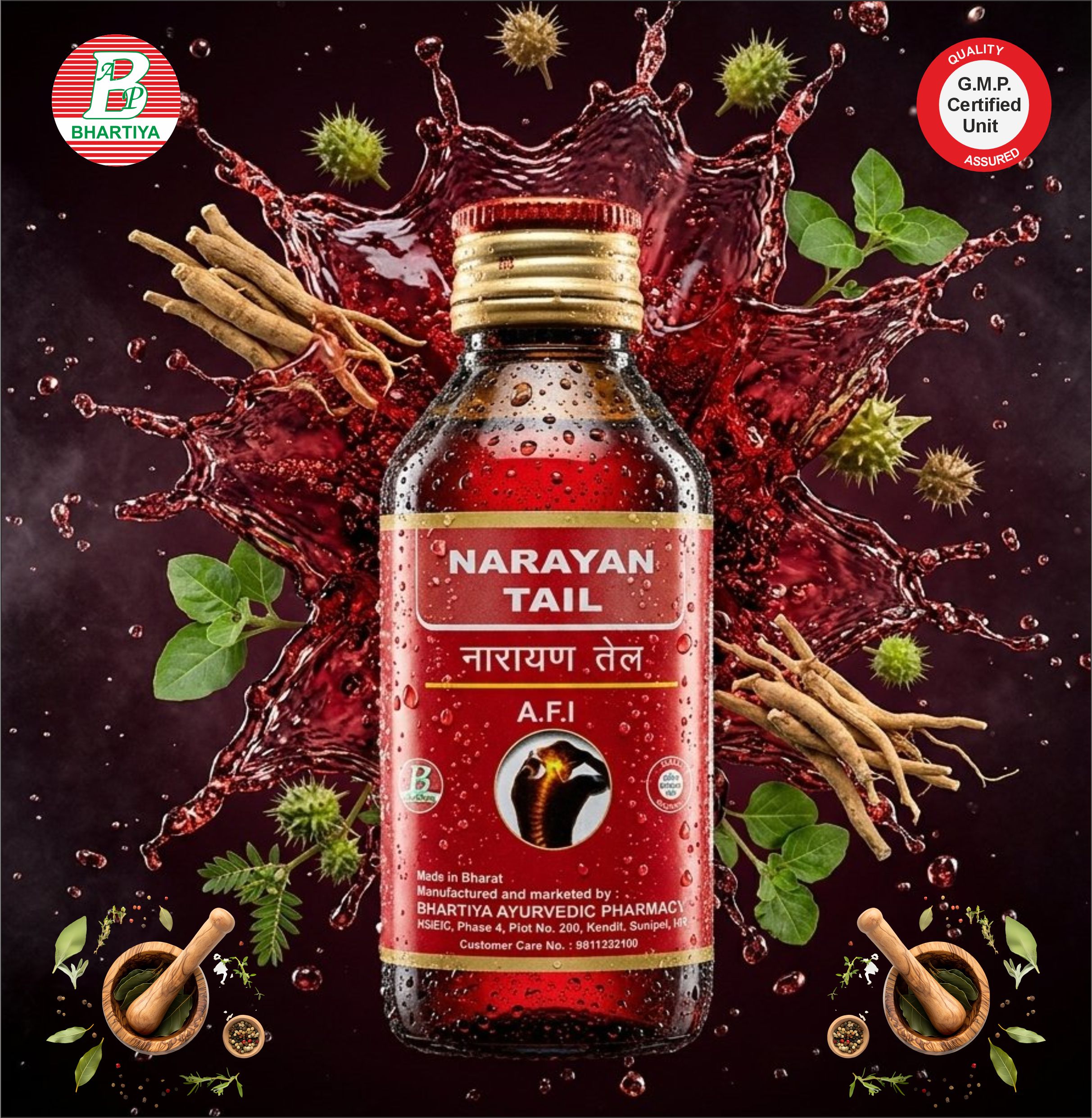
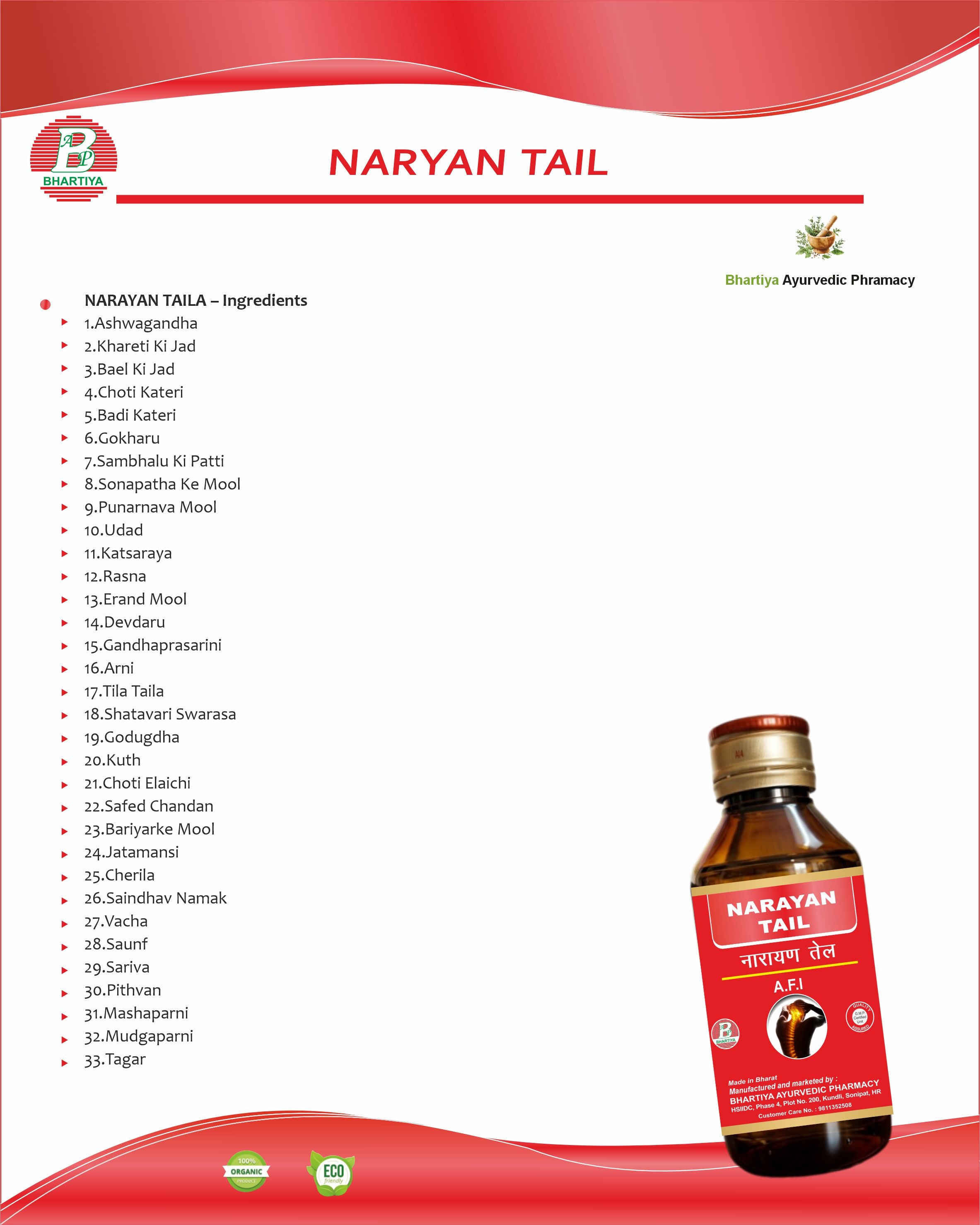
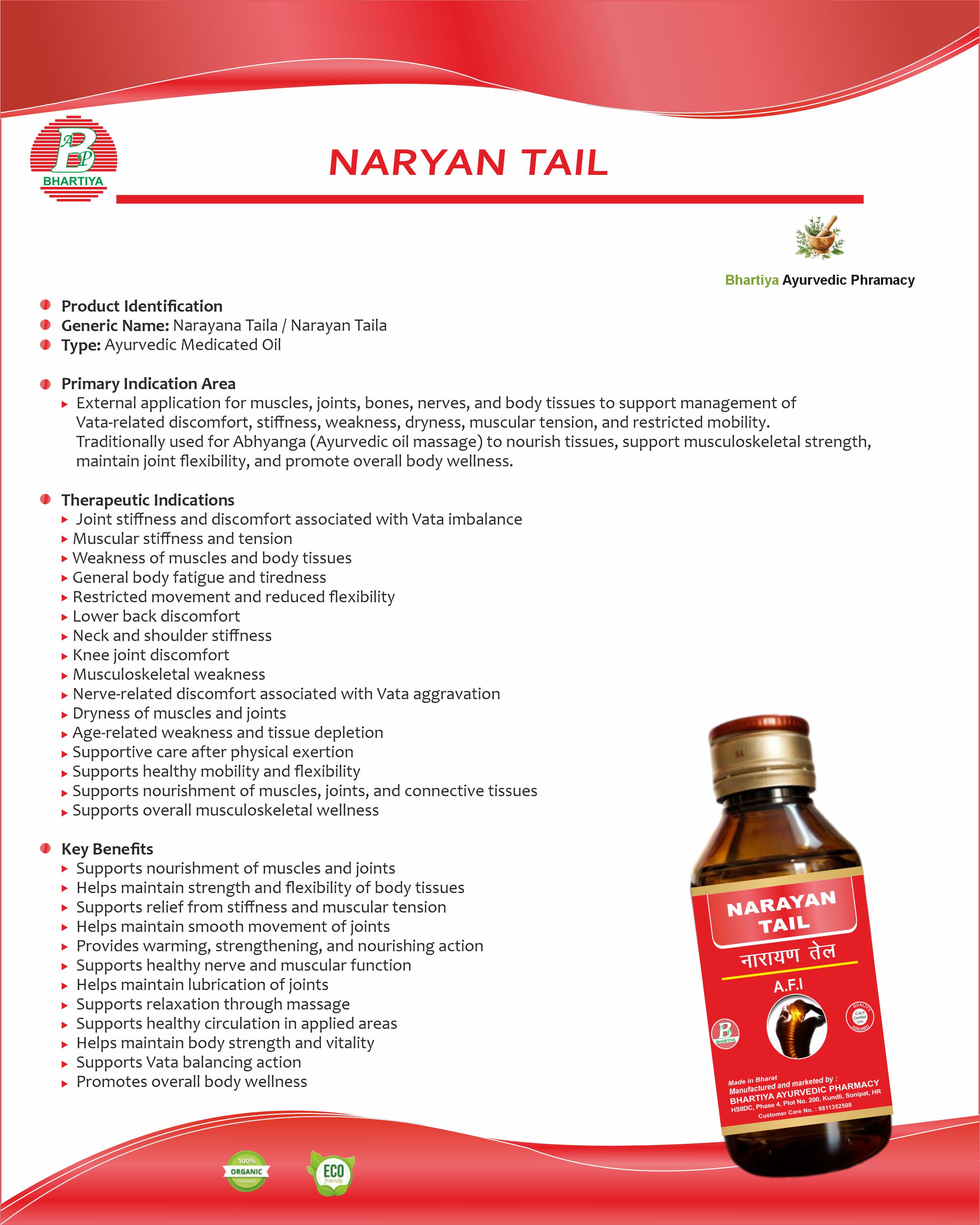
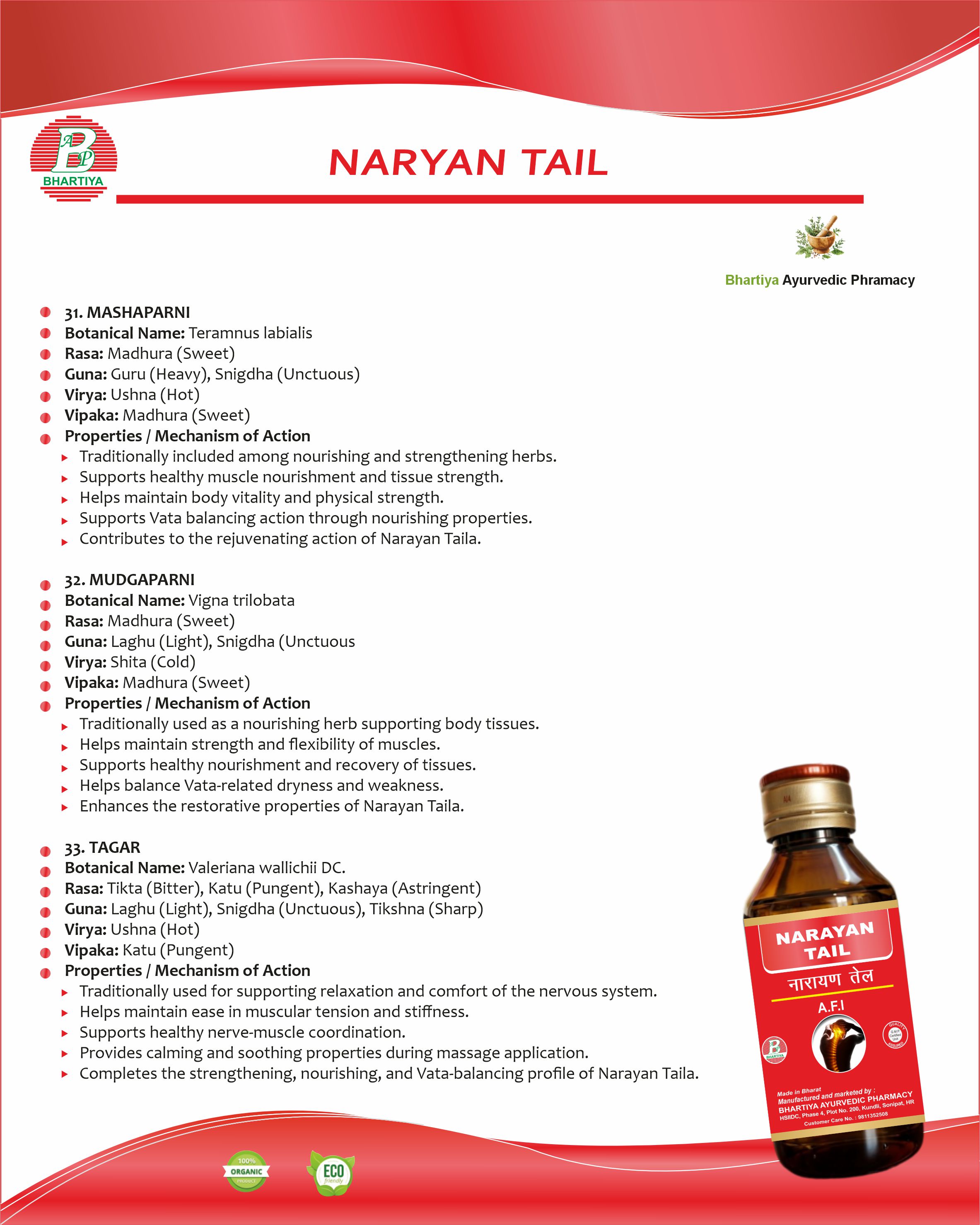
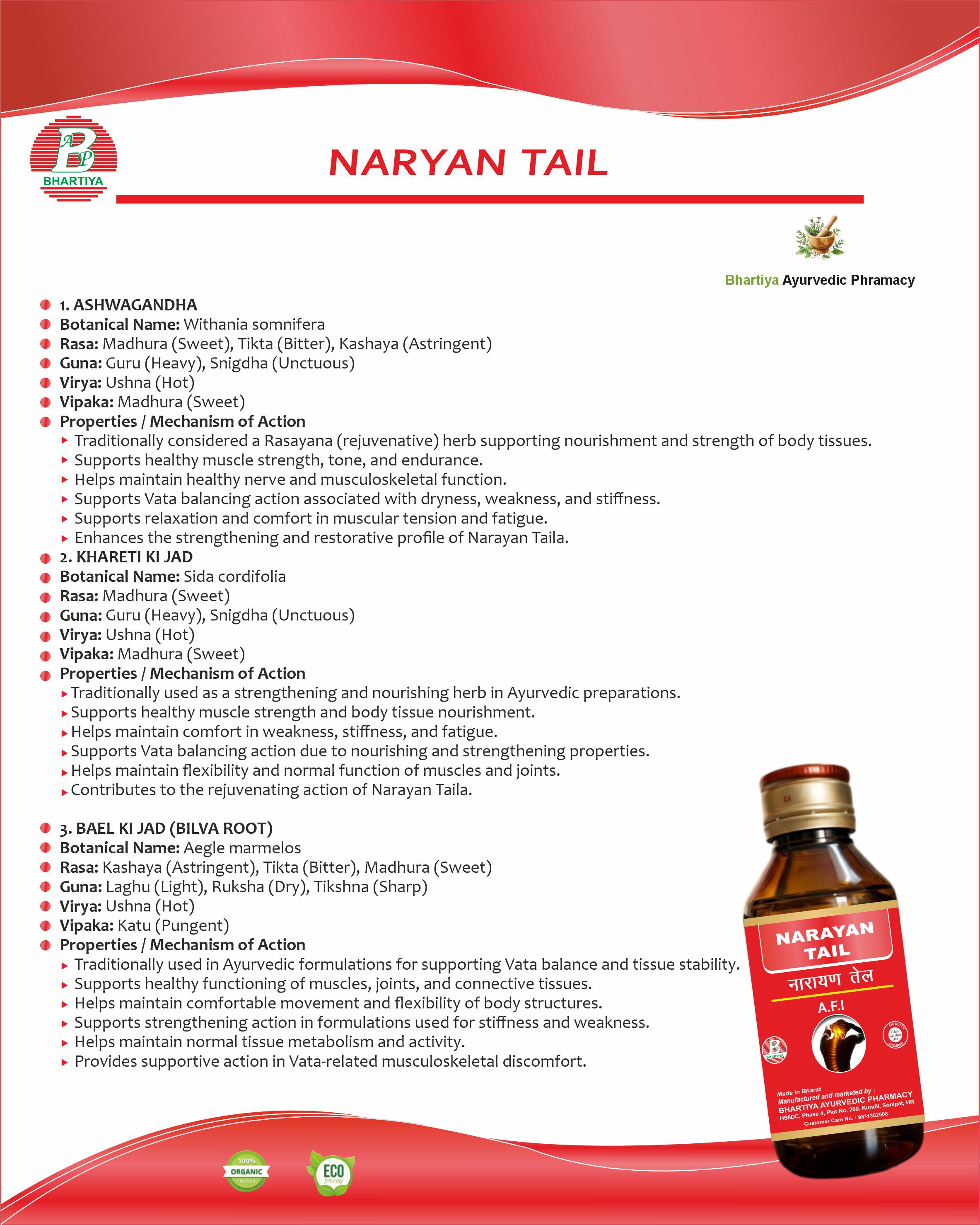
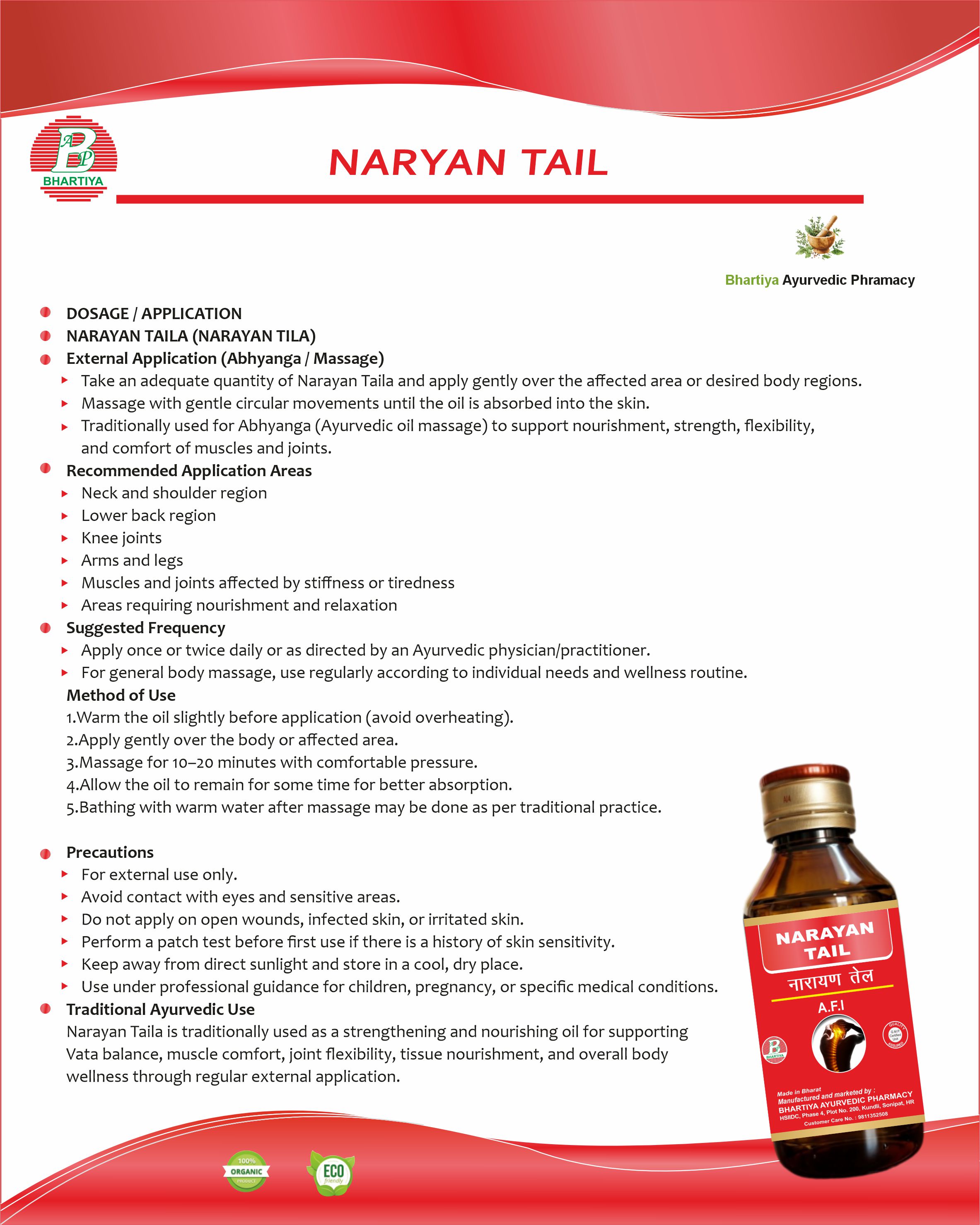
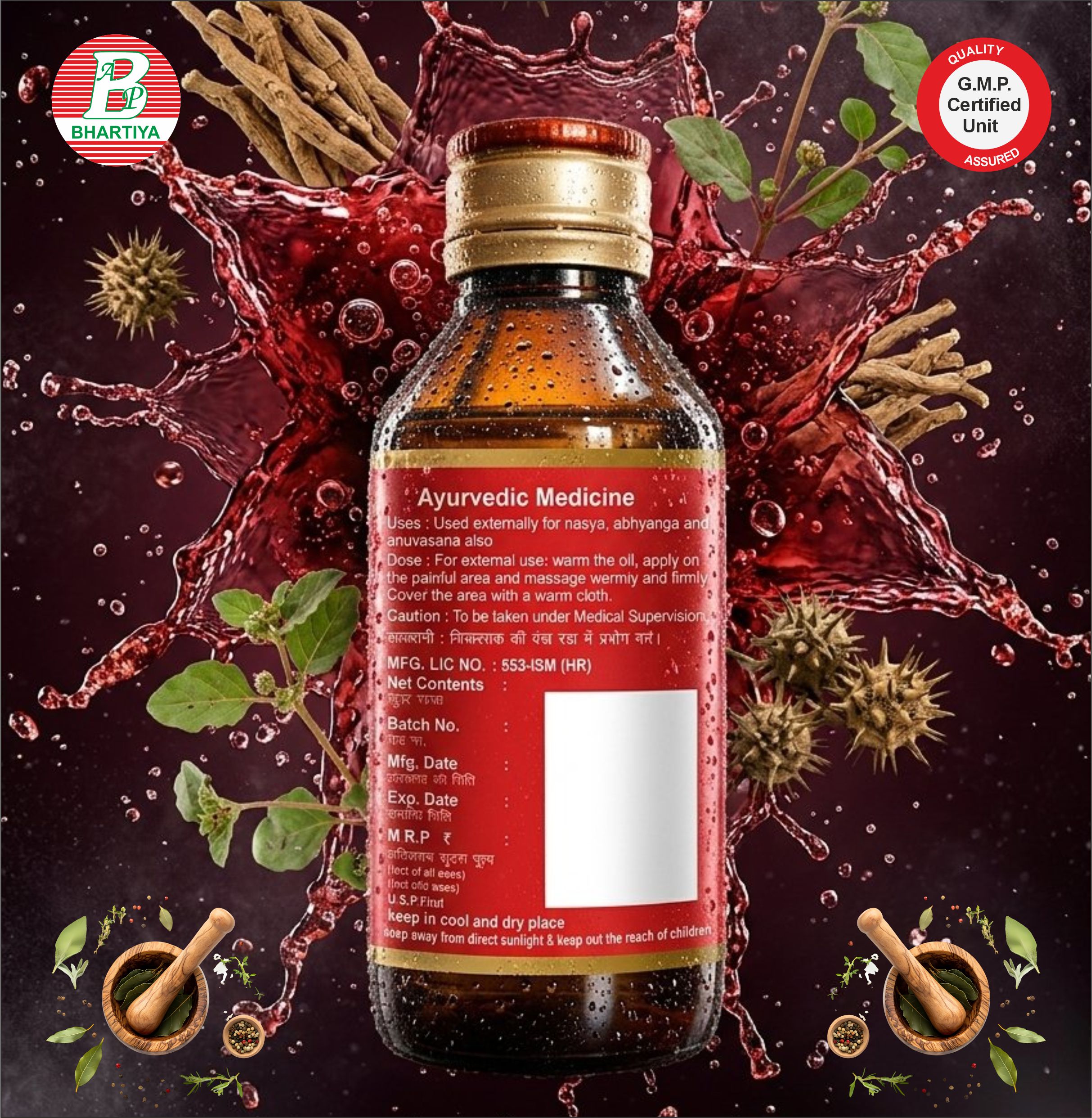
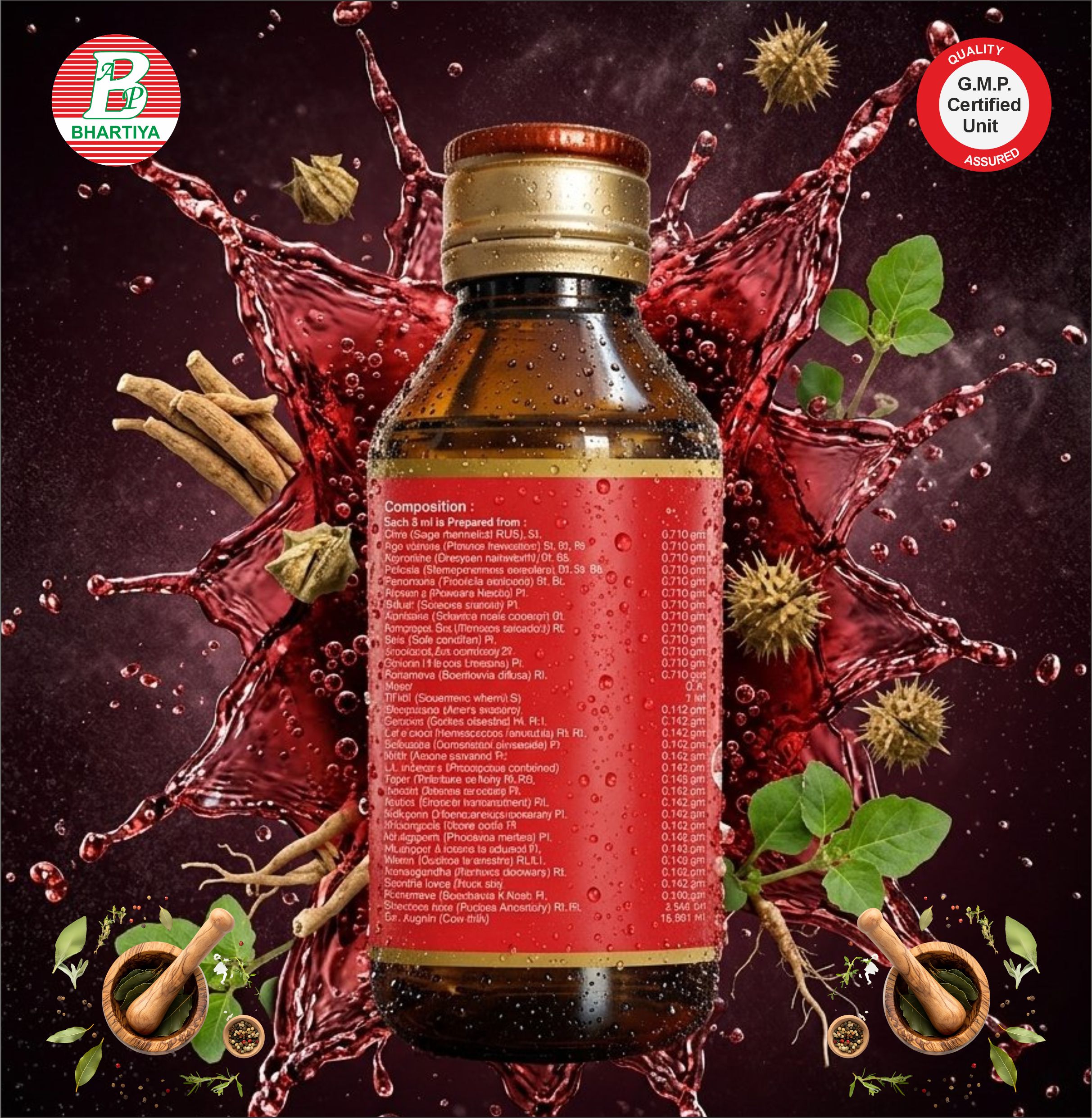
NARAYANA TAILA Product Identification • Generic Name: Narayana Taila / Narayan Taila • Type: Ayurvedic Medicated Oil Primary Indication Area • External application for muscles, joints, bones, nerves, and body tissues to support management of Vata-related discomfort, stiffness, weakness, dryness, muscular tension, and restricted mobility. Traditionally used for Abhyanga (Ayurvedic oil massage) to nourish tissues, support musculoskeletal strength, maintain joint flexibility, and promote overall body wellness. Therapeutic Indications • Joint stiffness and discomfort associated with Vata imbalance • Muscular stiffness and tension • Weakness of muscles and body tissues • General body fatigue and tiredness • Restricted movement and reduced flexibility • Lower back discomfort • Neck and shoulder stiffness • Knee joint discomfort • Musculoskeletal weakness • Nerve-related discomfort associated with Vata aggravation • Dryness of muscles and joints • Age-related weakness and tissue depletion • Supportive care after physical exertion • Supports healthy mobility and flexibility • Supports nourishment of muscles, joints, and connective tissues • Supports overall musculoskeletal wellness Key Benefits • Supports nourishment of muscles and joints • Helps maintain strength and flexibility of body tissues • Supports relief from stiffness and muscular tension • Helps maintain smooth movement of joints • Provides warming, strengthening, and nourishing action • Supports healthy nerve and muscular function • Helps maintain lubrication of joints • Supports relaxation through massage • Supports healthy circulation in applied areas • Helps maintain body strength and vitality • Supports Vata balancing action • Promotes overall body wellness NARAYAN TAILA – Ingredients 1.Ashwagandha 2.Khareti Ki Jad 3.Bael Ki Jad 4.Choti Kateri 5.Badi Kateri 6.Gokharu 7.Sambhalu Ki Patti 8.Sonapatha Ke Mool 9.Punarnava Mool 10.Udad 11.Katsaraya 12.Rasna 13.Erand Mool 14.Devdaru 15.Gandhaprasarini 16.Arni 17.Tila Taila 18.Shatavari Swarasa 19.Godugdha 20.Kuth 21.Choti Elaichi 22.Safed Chandan 23.Bariyarke Mool 24.Jatamansi 25.Cherila 26.Saindhav Namak 27.Vacha 28.Saunf 29.Sariva 30.Pithvan 31.Mashaparni 32.Mudgaparni 33.Tagar 1. ASHWAGANDHA Botanical Name: Withania somnifera Rasa: Madhura (Sweet), Tikta (Bitter), Kashaya (Astringent) Guna: Guru (Heavy), Snigdha (Unctuous) Virya: Ushna (Hot) Vipaka: Madhura (Sweet) Properties / Mechanism of Action • Traditionally considered a Rasayana (rejuvenative) herb supporting nourishment and strength of body tissues. • Supports healthy muscle strength, tone, and endurance. • Helps maintain healthy nerve and musculoskeletal function. • Supports Vata balancing action associated with dryness, weakness, and stiffness. • Supports relaxation and comfort in muscular tension and fatigue. • Enhances the strengthening and restorative profile of Narayan Taila. 2. KHARETI KI JAD Botanical Name: Sida cordifolia Rasa: Madhura (Sweet) Guna: Guru (Heavy), Snigdha (Unctuous) Virya: Ushna (Hot) Vipaka: Madhura (Sweet) Properties / Mechanism of Action • Traditionally used as a strengthening and nourishing herb in Ayurvedic preparations. • Supports healthy muscle strength and body tissue nourishment. • Helps maintain comfort in weakness, stiffness, and fatigue. • Supports Vata balancing action due to nourishing and strengthening properties. • Helps maintain flexibility and normal function of muscles and joints. • Contributes to the rejuvenating action of Narayan Taila. 3. BAEL KI JAD (BILVA ROOT) Botanical Name: Aegle marmelos Rasa: Kashaya (Astringent), Tikta (Bitter), Madhura (Sweet) Guna: Laghu (Light), Ruksha (Dry), Tikshna (Sharp) Virya: Ushna (Hot) Vipaka: Katu (Pungent) Properties / Mechanism of Action • Traditionally used in Ayurvedic formulations for supporting Vata balance and tissue stability. • Supports healthy functioning of muscles, joints, and connective tissues. • Helps maintain comfortable movement and flexibility of body structures. • Supports strengthening action in formulations used for stiffness and weakness. • Helps maintain normal tissue metabolism and activity. • Provides supportive action in Vata-related musculoskeletal discomfort. 4. CHOTI KATERI (KANTAKARI) Botanical Name: Solanum xanthocarpum Rasa: Katu (Pungent), Tikta (Bitter) Guna: Laghu (Light), Ruksha (Dry), Tikshna (Sharp) Virya: Ushna (Hot) Vipaka: Katu (Pungent) Properties / Mechanism of Action • Traditionally used in Ayurvedic formulations for supporting Vata-Kapha balance. • Provides warming and penetrating properties to tissues. • Supports comfort in muscular stiffness and heaviness. • Helps maintain healthy movement and flexibility. • Supports normal functioning of muscles and joints. • Contributes to the strengthening and balancing action of Narayan Taila. 5. BADI KATERI (BRIHATI) Botanical Name: Solanum indicum Rasa: Katu (Pungent), Tikta (Bitter) Guna: Laghu (Light), Ruksha (Dry), Tikshna (Sharp) Virya: Ushna (Hot) Vipaka: Katu (Pungent) Properties / Mechanism of Action • Traditionally used for supporting Vata-Kapha balance. • Provides warming and stimulating action to body tissues. • Supports comfort in muscular tension and stiffness. • Helps maintain healthy circulation in applied areas during massage. • Supports normal activity of muscles and joints. • Contributes to the classical therapeutic profile of Narayan Taila. 6. GOKHARU (GOKSHURA) Botanical Name: Tribulus terrestris Rasa: Madhura (Sweet) Guna: Guru (Heavy), Snigdha (Unctuous) Virya: Shita (Cold) Vipaka: Madhura (Sweet) Properties / Mechanism of Action • Traditionally used as a nourishing and strengthening herb. • Supports healthy muscles, joints, and connective tissues. • Helps maintain lubrication and comfort of body tissues. • Supports Vata balancing action. • Provides restorative and rejuvenating properties. • Helps maintain flexibility and mobility of joints. • Contributes to the strengthening action of Narayan Taila. 7. SAMBHALU KI PATTI Botanical Name: Vitex negundo Rasa: Tikta (Bitter), Katu (Pungent), Kashaya (Astringent) Guna: Laghu (Light), Ruksha (Dry), Tikshna (Sharp) Virya: Ushna (Hot) Vipaka: Katu (Pungent) Properties / Mechanism of Action • Traditionally used in Ayurvedic formulations for supporting Vata balance. • Provides warming and soothing action to muscles and joints. • Supports comfort in stiffness, muscular tension, and restricted movement. • Helps maintain healthy circulation in applied areas during massage. • Supports normal functioning of muscles and connective tissues. • Contributes to the supportive action of Narayan Taila. 8. SONAPATHA MOOL (SHYONAKA ROOT) Botanical Name: Oroxylum indicum Rasa: Kashaya (Astringent), Tikta (Bitter) Guna: Laghu (Light), Ruksha (Dry) Virya: Ushna (Hot) Vipaka: Katu (Pungent) Properties / Mechanism of Action • Traditionally used as an important ingredient in classical Ayurvedic formulations. • Supports Vata balancing action and healthy musculoskeletal function. • Helps maintain comfort in stiffness and restricted mobility. • Supports strength and stability of muscles, joints, and connective tissues. • Helps maintain normal tissue response and flexibility. • Contributes to the strengthening profile of Narayan Taila. 9. PUNARNAVA MOOL (PUNARNAVA ROOT) Botanical Name: Boerhavia diffusa Rasa: Madhura (Sweet), Tikta (Bitter), Kashaya (Astringent) Guna: Laghu (Light), Ruksha (Dry) Virya: Ushna (Hot) Vipaka: Madhura (Sweet) Properties / Mechanism of Action • Traditionally used for supporting healthy tissue function and body balance. • Supports comfort in muscular stiffness and fatigue. • Helps maintain normal mobility and flexibility of joints. • Supports healthy nourishment and activity of body tissues. • Provides balancing properties in Vata-related conditions. • Contributes to the restorative action of Narayan Taila. 10. UDAD (BLACK GRAM) Botanical Name: Vigna mungo Rasa: Madhura (Sweet) Guna: Guru (Heavy), Snigdha (Unctuous) Virya: Ushna (Hot) Vipaka: Madhura (Sweet) Properties / Mechanism of Action • Traditionally considered a nourishing and strengthening ingredient. • Supports muscle nourishment and tissue strength. • Helps maintain healthy body mass and physical vitality. • Supports lubrication and comfort of body tissues. • Helps balance Vata by providing nourishing and unctuous properties. • Contributes to the strengthening action of Narayan Taila. 11. KATSARAYA Botanical Name: Hygrophila auriculata Rasa: Madhura (Sweet), Tikta (Bitter) Guna: Guru (Heavy), Snigdha (Unctuous) Virya: Ushna (Hot) Vipaka: Madhura (Sweet) Properties / Mechanism of Action • Traditionally used as a nourishing and strengthening herb. • Supports healthy functioning of muscles and connective tissues. • Helps maintain strength and flexibility of body structures. • Supports Vata balancing action. • Helps maintain comfort in weakness and fatigue. • Contributes to the rejuvenating properties of Narayan Taila. 12. RASNA Botanical Name: Pluchea lanceolata Rasa: Tikta (Bitter), Katu (Pungent) Guna: Guru (Heavy), Snigdha (Unctuous) Virya: Ushna (Hot) Vipaka: Katu (Pungent) Properties / Mechanism of Action • Traditionally one of the important herbs used for Vata-related musculoskeletal support. • Supports comfort in joint stiffness and muscular tension. • Helps maintain smooth movement and flexibility of joints. • Supports healthy function of muscles and connective tissues. • Provides warming and soothing action during external application. • Enhances the therapeutic profile of Narayan Taila. 13. ERAND MOOL (CASTOR ROOT) Botanical Name: Ricinus communis Rasa: Madhura (Sweet), Tikta (Bitter), Kashaya (Astringent) Guna: Guru (Heavy), Snigdha (Unctuous), Tikshna (Sharp) Virya: Ushna (Hot) Vipaka: Madhura (Sweet) Properties / Mechanism of Action • Traditionally used in Ayurvedic formulations for supporting Vata balance. • Supports comfort in muscular stiffness and joint discomfort. • Helps maintain flexibility and smooth movement of body structures. • Provides nourishing and warming properties to tissues. • Supports healthy functioning of muscles, joints, and connective tissues. • Contributes to the Vata-balancing action of Narayan Taila. 14. DEVDARU Botanical Name: Cedrus deodara Rasa: Tikta (Bitter), Katu (Pungent) Guna: Laghu (Light), Ruksha (Dry), Tikshna (Sharp) Virya: Ushna (Hot) Vipaka: Katu (Pungent) Properties / Mechanism of Action • Traditionally used for supporting healthy muscle and joint function. • Provides warming and penetrating action to tissues. • Helps maintain comfort in stiffness and muscular tension. • Supports healthy circulation in applied areas during massage. • Helps maintain normal flexibility and mobility. • Contributes to the balancing action of Narayan Taila. 15. GANDHAPRASARINI Botanical Name: Paederia foetida Rasa: Katu (Pungent), Tikta (Bitter) Guna: Laghu (Light), Snigdha (Unctuous) Virya: Ushna (Hot) Vipaka: Katu (Pungent) Properties / Mechanism of Action • Traditionally used in Ayurvedic preparations for Vata-related musculoskeletal support. • Supports healthy movement and flexibility of joints. • Helps maintain comfort in stiffness and muscular tension. • Supports normal functioning of nerves, muscles, and connective tissues. • Provides warming and soothing action during external application. • Enhances the supportive properties of Narayan Taila. 16. ARNI Botanical Name: Clerodendrum phlomidis Rasa: Tikta (Bitter), Kashaya (Astringent), Madhura (Sweet) Guna: Laghu (Light), Ruksha (Dry) Virya: Ushna (Hot) Vipaka: Katu (Pungent) Properties / Mechanism of Action • Traditionally considered an important herb in Vata-balancing formulations. • Supports healthy muscles, joints, and body tissues. • Helps maintain comfort in stiffness and restricted movement. • Supports structural strength and stability of tissues. • Helps maintain normal flexibility and mobility. • Contributes to the strengthening profile of Narayan Taila. 17. TILA TAILA (SESAME OIL) Botanical Name: Sesamum indicum Rasa: Madhura (Sweet), Tikta (Bitter), Kashaya (Astringent) Guna: Guru (Heavy), Snigdha (Unctuous), Sukshma (Subtle) Virya: Ushna (Hot) Vipaka: Madhura (Sweet) Properties / Mechanism of Action • Traditionally considered the primary oil base in many Ayurvedic external applications. • Supports nourishment and lubrication of body tissues. • Helps maintain softness and flexibility of muscles and joints. • Supports Vata balancing due to warming and unctuous properties. • Helps improve absorption of herbal ingredients through massage application. • Provides strengthening and nourishing action to Narayan Taila. 18. SHATAVARI SWARASA Botanical Name: Asparagus racemosus Rasa: Madhura (Sweet), Tikta (Bitter) Guna: Guru (Heavy), Snigdha (Unctuous) Virya: Shita (Cold) Vipaka: Madhura (Sweet) Properties / Mechanism of Action • Traditionally considered a nourishing and rejuvenating herb. • Supports healthy strength and nourishment of body tissues. • Helps maintain lubrication and comfort of muscles and joints. • Supports balancing action in conditions associated with dryness. • Contributes to the restorative and strengthening properties of Narayan Taila. 19. GODUGDHA (COW'S MILK) Source: Cow Milk Rasa: Madhura (Sweet) Guna: Guru (Heavy), Snigdha (Unctuous) Virya: Shita (Cold) Vipaka: Madhura (Sweet) Properties / Mechanism of Action • Traditionally used as a nourishing medium in Ayurvedic medicated preparations. • Supports tissue nourishment and strengthening. • Helps enhance the unctuous and rejuvenating qualities of the formulation. • Supports comfort and softness of body tissues. • Contributes to the nourishing action of Narayan Taila. 20. KUTH (KUSTHA) Botanical Name: Saussurea lappa Rasa: Tikta (Bitter), Katu (Pungent), Madhura (Sweet) Guna: Laghu (Light), Ruksha (Dry), Tikshna (Sharp) Virya: Ushna (Hot) Vipaka: Katu (Pungent) Properties / Mechanism of Action • Traditionally used in Ayurvedic formulations for supporting Vata balance. • Provides warming and penetrating action to body tissues. • Supports comfort in muscular stiffness and tension. • Helps maintain healthy circulation in applied areas. • Supports normal functioning of muscles and joints. • Contributes to the strengthening and balancing action of Narayan Taila. 21. CHOTI ELAICHI (CARDAMOM) Botanical Name: Elettaria cardamomum Rasa: Katu (Pungent), Madhura (Sweet) Guna: Laghu (Light), Ruksha (Dry) Virya: Ushna (Hot) Vipaka: Madhura (Sweet) Properties / Mechanism of Action • Traditionally used as an aromatic ingredient in Ayurvedic preparations. • Supports healthy metabolic activity of tissues. • Provides warming and soothing properties. • Helps enhance the overall aromatic and balancing profile of the formulation. • Supports comfort and relaxation during external oil application. 22. SAFED CHANDAN (WHITE SANDALWOOD) Botanical Name: Santalum album Linn. Rasa: Madhura (Sweet), Tikta (Bitter), Kashaya (Astringent) Guna: Laghu (Light), Snigdha (Unctuous) Virya: Shita (Cold) Vipaka: Madhura (Sweet) Properties / Mechanism of Action • Traditionally valued for its cooling and soothing properties. • Helps maintain comfort of skin and tissues during external application. • Supports balancing of heat-related discomfort. • Provides a calming and nourishing effect in medicated oils. • Contributes to the overall balancing action of Narayan Taila. 23. BARIYARKE MOOL (BARIYAR ROOT) Botanical Name: Sida cordifolia Linn. Rasa: Madhura (Sweet) Guna: Guru (Heavy), Snigdha (Unctuous) Virya: Ushna (Hot) Vipaka: Madhura (Sweet) Properties / Mechanism of Action • Traditionally used as a strengthening and nourishing herb. • Supports healthy muscle tone and body strength. • Helps maintain flexibility and mobility of joints. • Supports Vata balancing action through nourishing properties. • Contributes to the restorative profile of Narayan Taila. 24. JATAMANSI Botanical Name: Nardostachys jatamansi Rasa: Tikta (Bitter), Kashaya (Astringent), Madhura (Sweet) Guna: Laghu (Light), Snigdha (Unctuous) Virya: Shita (Cold) Vipaka: Katu (Pungent) Properties / Mechanism of Action • Traditionally used for supporting relaxation and balance of the nervous system. • Helps maintain comfort in muscular tension associated with stress and fatigue. • Supports healthy nerve and tissue function. • Provides calming and soothing properties in external applications. • Enhances the restorative quality of Narayan Taila. 25. CHERILA (CHIRATA) Botanical Name: Swertia chirata Rasa: Tikta (Bitter) Guna: Laghu (Light), Ruksha (Dry) Virya: Shita (Cold) Vipaka: Katu (Pungent) Properties / Mechanism of Action • Traditionally used as a bitter medicinal herb in Ayurveda. • Supports healthy tissue metabolism. • Helps maintain balance and normal function of body systems. • Contributes to the overall herbal profile of Narayan Taila. 26. SAINDHAV NAMAK (ROCK SALT) Botanical Name: Natural Mineral Salt Rasa: Lavana (Salty) Guna: Laghu (Light), Snigdha (Unctuous) Virya: Shita (Cold) Vipaka: Madhura (Sweet) Properties / Mechanism of Action • Traditionally used in Ayurvedic formulations to support absorption and balancing action. • Helps enhance the penetrating quality of medicated oils. • Supports comfort in stiffness and muscular tension. • Contributes to the overall therapeutic action of Narayan Taila. 27. VACH (SWEET FLAG) Botanical Name: Acorus calamus Linn. Rasa: Katu (Pungent), Tikta (Bitter) Guna: Laghu (Light), Tikshna (Sharp), Ruksha (Dry) Virya: Ushna (Hot) Vipaka: Katu (Pungent) Properties / Mechanism of Action • Traditionally used for supporting healthy nerve and tissue function. • Provides warming and stimulating properties. • Supports comfort in stiffness and restricted movement. • Helps maintain healthy coordination of muscles and nerves. • Contributes to the balancing action of Narayan Taila. 28. SAUNF (SHATAPUSHPA / FENNEL) Botanical Name: Foeniculum vulgare Mill. Rasa: Madhura (Sweet), Katu (Pungent) Guna: Laghu (Light), Snigdha (Unctuous) Virya: Ushna (Hot) Vipaka: Madhura (Sweet) Properties / Mechanism of Action • Traditionally used as an aromatic and supportive herb in Ayurvedic formulations. • Supports healthy tissue metabolism and normal body functions. • Provides soothing and warming properties. • Helps maintain comfort in muscular tension and stiffness. • Contributes to the overall balancing and nourishing action of Narayan Taila. 29. SARIVA (ANANTMOOL) Botanical Name: Hemidesmus indicus Rasa: Madhura (Sweet), Tikta (Bitter) Guna: Guru (Heavy), Snigdha (Unctuous) Virya: Shita (Cold) Vipaka: Madhura (Sweet) Properties / Mechanism of Action • Traditionally considered a nourishing and cooling herb. • Supports healthy functioning of body tissues. • Helps maintain comfort and balance of muscles and joints. • Supports healthy skin and tissue nourishment during external application. • Contributes to the restorative quality of Narayan Taila. 30. PITHVAN Botanical Name: Cissampelos pareira Linn. (Traditional identification varies regionally) Rasa: Tikta (Bitter), Kashaya (Astringent) Guna: Laghu (Light), Ruksha (Dry) Virya: Ushna (Hot) Vipaka: Katu (Pungent) Properties / Mechanism of Action • Traditionally used in Ayurvedic formulations for supporting Vata balance. • Helps maintain healthy movement and flexibility of body structures. • Supports comfort in muscular stiffness and weakness. • Contributes to the balancing and strengthening profile of Narayan Taila. 31. MASHAPARNI Botanical Name: Teramnus labialis Rasa: Madhura (Sweet) Guna: Guru (Heavy), Snigdha (Unctuous) Virya: Ushna (Hot) Vipaka: Madhura (Sweet) Properties / Mechanism of Action • Traditionally included among nourishing and strengthening herbs. • Supports healthy muscle nourishment and tissue strength. • Helps maintain body vitality and physical strength. • Supports Vata balancing action through nourishing properties. • Contributes to the rejuvenating action of Narayan Taila. 32. MUDGAPARNI Botanical Name: Vigna trilobata Rasa: Madhura (Sweet) Guna: Laghu (Light), Snigdha (Unctuous Virya: Shita (Cold) Vipaka: Madhura (Sweet) Properties / Mechanism of Action • Traditionally used as a nourishing herb supporting body tissues. • Helps maintain strength and flexibility of muscles. • Supports healthy nourishment and recovery of tissues. • Helps balance Vata-related dryness and weakness. • Enhances the restorative properties of Narayan Taila. 33. TAGAR Botanical Name: Valeriana wallichii DC. Rasa: Tikta (Bitter), Katu (Pungent), Kashaya (Astringent) Guna: Laghu (Light), Snigdha (Unctuous), Tikshna (Sharp) Virya: Ushna (Hot) Vipaka: Katu (Pungent) Properties / Mechanism of Action • Traditionally used for supporting relaxation and comfort of the nervous system. • Helps maintain ease in muscular tension and stiffness. • Supports healthy nerve-muscle coordination. • Provides calming and soothing properties during massage application. • Completes the strengthening, nourishing, and Vata-balancing profile of Narayan Taila. DOSAGE / APPLICATION NARAYAN TAILA (NARAYAN TILA) External Application (Abhyanga / Massage) • Take an adequate quantity of Narayan Taila and apply gently over the affected area or desired body regions. • Massage with gentle circular movements until the oil is absorbed into the skin. • Traditionally used for Abhyanga (Ayurvedic oil massage) to support nourishment, strength, flexibility, and comfort of muscles and joints. Recommended Application Areas • Neck and shoulder region • Lower back region • Knee joints • Arms and legs • Muscles and joints affected by stiffness or tiredness • Areas requiring nourishment and relaxation Suggested Frequency • Apply once or twice daily or as directed by an Ayurvedic physician/practitioner. • For general body massage, use regularly according to individual needs and wellness routine. Method of Use 1.Warm the oil slightly before application (avoid overheating). 2.Apply gently over the body or affected area. 3.Massage for 10–20 minutes with comfortable pressure. 4.Allow the oil to remain for some time for better absorption. 5.Bathing with warm water after massage may be done as per traditional practice. Precautions • For external use only. • Avoid contact with eyes and sensitive areas. • Do not apply on open wounds, infected skin, or irritated skin. • Perform a patch test before first use if there is a history of skin sensitivity. • Keep away from direct sunlight and store in a cool, dry place. • Use under professional guidance for children, pregnancy, or specific medical conditions. Traditional Ayurvedic Use Narayan Taila is traditionally used as a strengthening and nourishing oil for supporting Vata balance, muscle comfort, joint flexibility, tissue nourishment, and overall body wellness through regular external application.