

Description
Product details
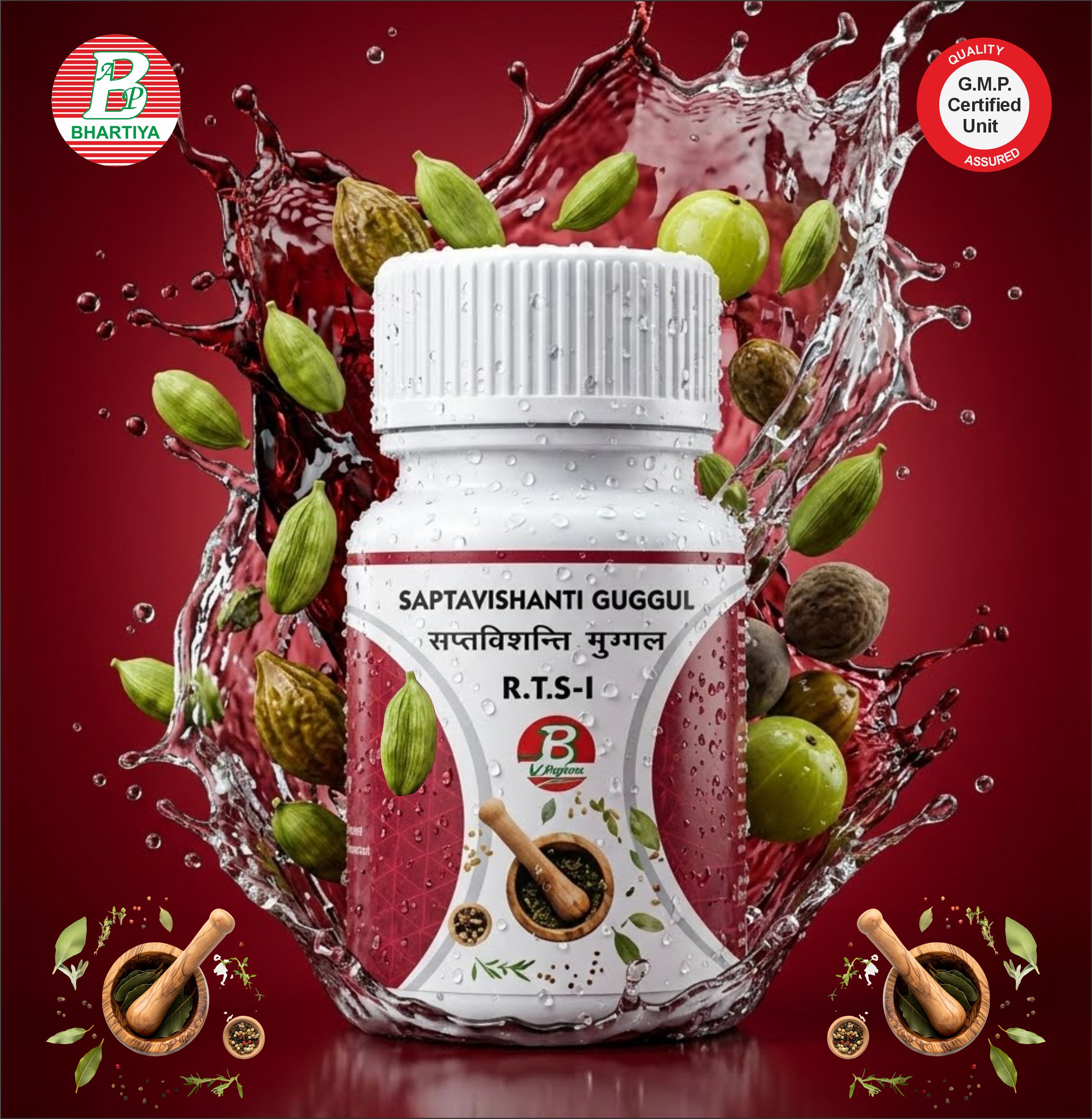
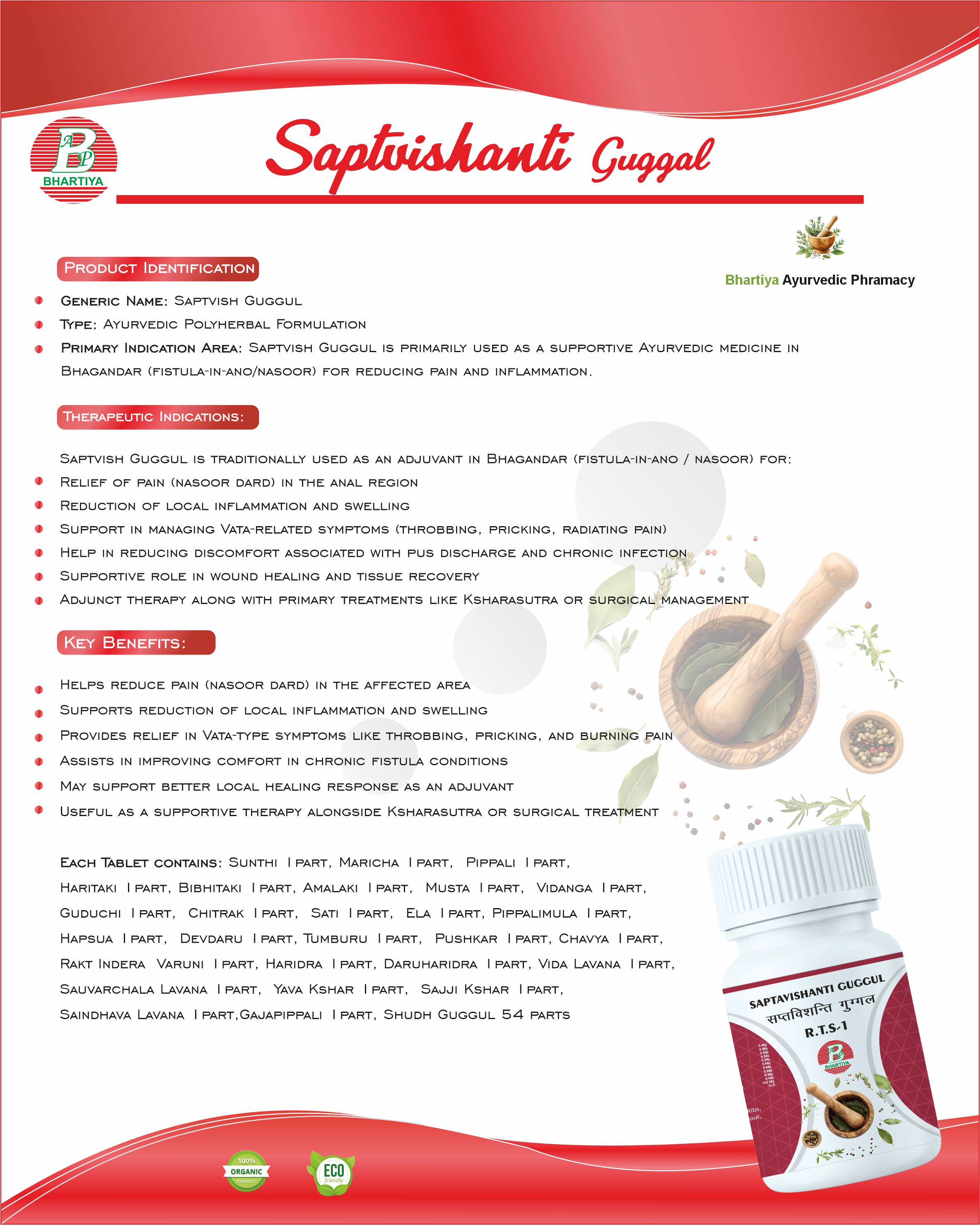
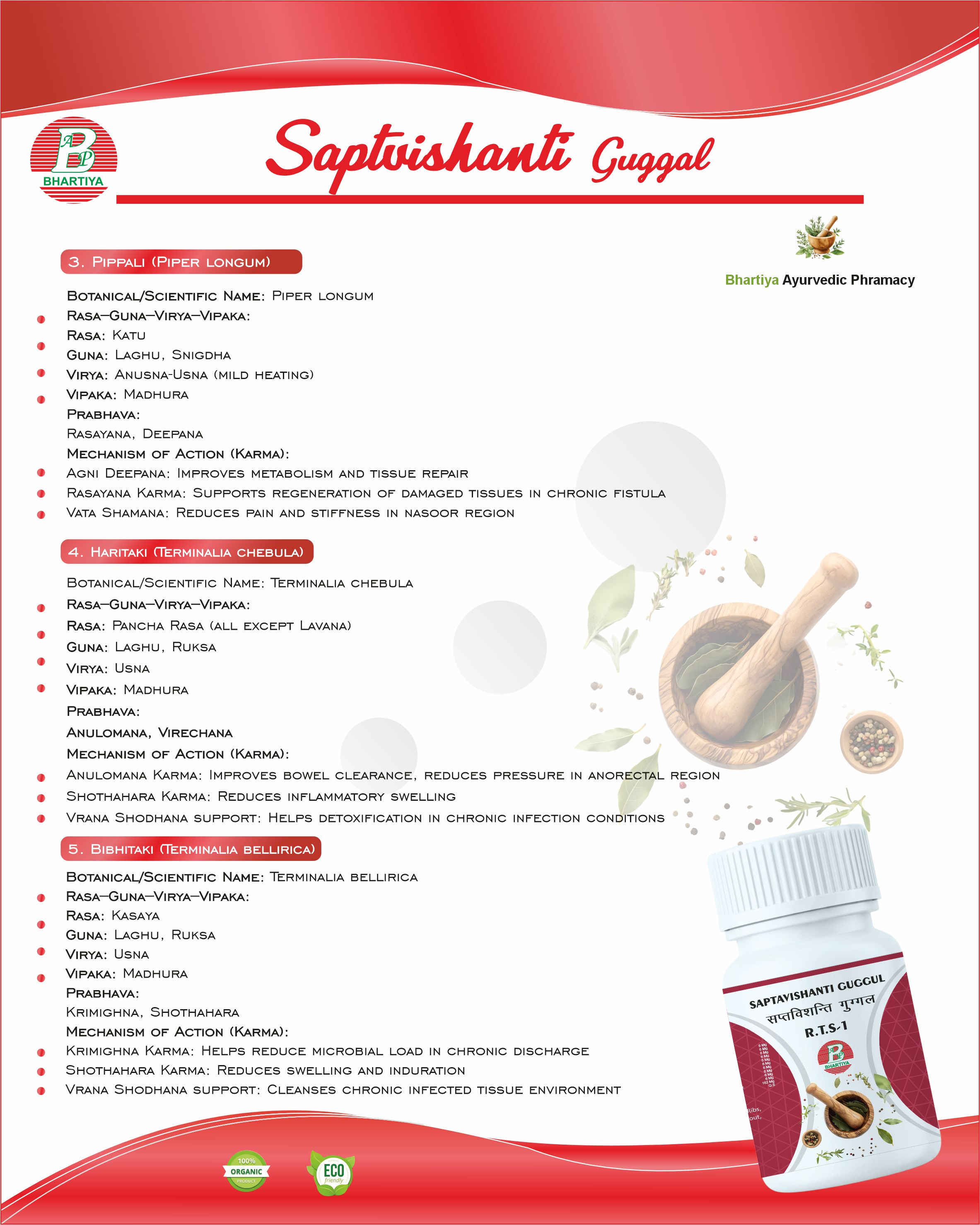
SAPTVISH GUGGUL Product Identification • Generic Name: Saptvish Guggul • Type: Ayurvedic Polyherbal Formulation • Primary Indication Area: Saptvish Guggul is primarily used as a supportive Ayurvedic medicine in Bhagandar (fistula-in-ano/nasoor) for reducing pain and inflammation. Therapeutic Indications: Saptvish Guggul is traditionally used as an adjuvant in Bhagandar (fistula-in-ano / nasoor) for: • Relief of pain (nasoor dard) in the anal region • Reduction of local inflammation and swelling • Support in managing Vata-related symptoms (throbbing, pricking, radiating pain) • Help in reducing discomfort associated with pus discharge and chronic infection • Supportive role in wound healing and tissue recovery • Adjunct therapy along with primary treatments like Ksharasutra or surgical management Key Benefits: • Helps reduce pain (nasoor dard) in the affected area • Supports reduction of local inflammation and swelling • Provides relief in Vata-type symptoms like throbbing, pricking, and burning pain • Assists in improving comfort in chronic fistula conditions • May support better local healing response as an adjuvant • Useful as a supportive therapy alongside Ksharasutra or surgical treatment Each Tablet contains: Sunthi 1part Maricha 1part Pippali 1part Haritaki 1part Bibhitaki 1part Amalaki 1part Musta 1part Vidanga 1part Guduchi 1part Chitrak 1part Sati 1part Ela 1part Pippalimula 1part Hapsua 1part Devdaru 1part Tumburu 1part Pushkar 1part Chavya 1part Rakt Indera Varuni 1part Haridra 1part Daruharidra 1part Vida Lavana 1part Sauvarchala Lavana 1part Yava Kshar 1part Sajji Kshar 1part Saindhava Lavana 1part Gajapippali 1part Shudh Guggul 54 parts Ingredients: 1. Sunthi (Zingiber officinale) • Botanical/Scientific Name: Zingiber officinale • Rasa–Guna–Vīrya–Vipāka: o Rasa: Kaṭu (Pungent) o Guna: Laghu (Light), Rūkṣa (Dry) o Vīrya: Uṣṇa (Hot) o Vipāka: Madhura (Sweet) • Prabhāva: Deepana, Pachana, Shothahara • Mechanism of Action (Karma): o Deepana Karma: Improves Agni and reduces Ama (toxins) o Shothahara Karma: Reduces inflammation and tissue swelling in fistula area o Vedana Sthapana Karma: Helps reduce pain and discomfort in nasoor condition 2. Maricha (Piper nigrum) • Botanical/Scientific Name: Piper nigrum • Rasa–Guna–Vīrya–Vipāka: o Rasa: Kaṭu (Pungent) o Guna: Laghu, Rūkṣa, Tikṣṇa o Vīrya: Uṣṇa o Vipāka: Kaṭu • Prabhāva: Deepana, Krimighna • Mechanism of Action (Karma): o Deepana-Pachana Karma: Enhances digestion and clears Ama o Krimighna Karma: Helps reduce infection tendency in chronic wounds o Shothahara Karma: Reduces swelling in fistulous tract 3. Pippali (Piper longum) • Botanical/Scientific Name: Piper longum • Rasa–Guna–Vīrya–Vipāka: o Rasa: Kaṭu o Guna: Laghu, Snigdha o Vīrya: Anuṣṇa-Uṣṇa (mild heating) o Vipāka: Madhura • Prabhāva: Rasayana, Deepana • Mechanism of Action (Karma): o Agni Deepana: Improves metabolism and tissue repair o Rasayana Karma: Supports regeneration of damaged tissues in chronic fistula o Vata Shamana: Reduces pain and stiffness in nasoor region 4. Haritaki (Terminalia chebula) • Botanical/Scientific Name: Terminalia chebula • Rasa–Guna–Vīrya–Vipāka: o Rasa: Pancha Rasa (all except Lavana) o Guna: Laghu, Rūkṣa o Vīrya: Uṣṇa o Vipāka: Madhura • Prabhāva: Anulomana, Virechana • Mechanism of Action (Karma): o Anulomana Karma: Improves bowel clearance, reduces pressure in anorectal region o Shothahara Karma: Reduces inflammatory swelling o Vrana Shodhana support: Helps detoxification in chronic infection conditions 5. Bibhitaki (Terminalia bellirica) • Botanical/Scientific Name: Terminalia bellirica • Rasa–Guna–Vīrya–Vipāka: o Rasa: Kaṣāya o Guna: Laghu, Rūkṣa o Vīrya: Uṣṇa o Vipāka: Madhura • Prabhāva: Krimighna, Shothahara • Mechanism of Action (Karma): o Krimighna Karma: Helps reduce microbial load in chronic discharge o Shothahara Karma: Reduces swelling and induration o Vrana Shodhana support: Cleanses chronic infected tissue environment 6. Amalaki (Emblica officinalis) • Botanical/Scientific Name: Emblica officinalis • Rasa–Guna–Vīrya–Vipāka: o Rasa: Pancha Rasa (predominantly Amla) o Guna: Guru, Ruksha o Vīrya: Sheeta o Vipāka: Madhura • Prabhāva: Rasayana, Pittashamaka • Mechanism of Action (Karma): o Rasayana Karma: Promotes tissue repair and healing o Pitta Shamana: Reduces burning and inflammation in fistula region o Vrana Ropana support: Enhances wound healing process 7. Musta (Cyperus rotundus) • Botanical/Scientific Name: Cyperus rotundus • Rasa–Guna–Vīrya–Vipāka: o Rasa: Tikta, Kaṭu o Guna: Laghu, Rūkṣa o Vīrya: Sheeta o Vipāka: Kaṭu • Prabhāva: Deepana, Pachana • Mechanism of Action (Karma): o Deepana-Pachana: Reduces Ama and supports metabolism o Shothahara: Reduces inflammatory swelling o Krimighna support: Helps control infection tendency 8. Vidanga (Embelia ribes) • Botanical/Scientific Name: Embelia ribes • Rasa–Guna–Vīrya–Vipāka: o Rasa: Kaṭu o Guna: Laghu, Rūkṣa, Tikṣṇa o Vīrya: Uṣṇa o Vipāka: Kaṭu • Prabhāva: Krimighna (strong anti-parasitic/anti-infective) • Mechanism of Action (Karma): o Krimighna Karma: Controls microbial/infective tendency in chronic sinus o Shodhana Karma: Helps cleanse infected fistulous tract o Shothahara support: Reduces swelling and pus formation tendency 9. Guduchi (Tinospora cordifolia) • Botanical/Scientific Name: Tinospora cordifolia • Rasa–Guna–Vīrya–Vipāka: o Rasa: Tikta, Kaṣāya o Guna: Laghu, Snigdha o Vīrya: Uṣṇa o Vipāka: Madhura • Prabhāva: Rasayana, Immunomodulator • Mechanism of Action (Karma): o Rasayana Karma: Enhances tissue regeneration and healing o Shothahara Karma: Reduces chronic inflammation in fistula tract o Ojas Vardhaka: Improves resistance to recurrent infection 10. Chitrak (Plumbago zeylanica) • Botanical/Scientific Name: Plumbago zeylanica • Rasa–Guna–Vīrya–Vipāka: o Rasa: Kaṭu o Guna: Laghu, Rūkṣa, Tikṣṇa o Vīrya: Uṣṇa o Vipāka: Kaṭu • Prabhāva: Agni Deepana, Ama Pachana • Mechanism of Action (Karma): o Deepana Karma: Improves digestion and metabolic clearance o Shothahara Karma: Reduces inflammatory swelling o Shodhana Karma: Helps remove deep-seated toxins contributing to chronic disease 11. Sati (Hedychium spicatum) • Botanical/Scientific Name: Hedychium spicatum • Rasa–Guna–Vīrya–Vipāka: o Rasa: Tikta, Kaṭu o Guna: Laghu, Rūkṣa, Tikṣṇa o Vīrya: Uṣṇa o Vipāka: Kaṭu • Prabhāva: Shothahara, Vedana Sthapana • Mechanism of Action (Karma): o Shothahara Karma: Reduces swelling and inflammatory induration o Vedana Sthapana Karma: Relieves pain in chronic fistulous tract o Krimighna support: Helps reduce infective tendency in nasoor 12. Ela (Elettaria cardamomum) • Botanical/Scientific Name: Elettaria cardamomum • Rasa–Guna–Vīrya–Vipāka: o Rasa: Tikta, Madhura, Kaṭu o Guna: Laghu, Snigdha o Vīrya: Sheeta o Vipāka: Madhura • Prabhāva: Deepana, Rochana • Mechanism of Action (Karma): o Deepana-Pachana Karma: Improves digestion and reduces Ama o Shothahara support: Helps reduce systemic inflammatory load o Srotoshodhana: Clears subtle channel obstruction contributing to chronic disease 13. Pippalimula (Root of Piper longum) • Botanical/Scientific Name: Piper longum (root) • Rasa–Guna–Vīrya–Vipāka: o Rasa: Kaṭu o Guna: Laghu, Rūkṣa o Vīrya: Uṣṇa o Vipāka: Madhura • Prabhāva: Deepana, Vata Shamana • Mechanism of Action (Karma): o Agni Deepana: Improves digestion and tissue metabolism o Vata Shamana: Reduces pain and nerve-related discomfort in nasoor o Shothahara: Helps reduce chronic inflammatory swelling 14. Hapusha (Juniperus communis) • Botanical/Scientific Name: Juniperus communis • Rasa–Guna–Vīrya–Vipāka: o Rasa: Tikta, Kaṭu o Guna: Laghu, Rūkṣa o Vīrya: Uṣṇa o Vipāka: Kaṭu • Prabhāva: Krimighna, Shothahara • Mechanism of Action (Karma): o Krimighna Karma: Helps control microbial infection tendency o Shothahara Karma: Reduces swelling in chronic sinus tract o Shodhana support: Assists detoxification of chronic infected tissue 15. Devdaru (Cedrus deodara) • Botanical/Scientific Name: Cedrus deodara • Rasa–Guna–Vīrya–Vipāka: o Rasa: Tikta, Kaṭu o Guna: Laghu, Rūkṣa, Tikṣṇa o Vīrya: Uṣṇa o Vipāka: Kaṭu • Prabhāva: Shothahara, Vedana Sthapana • Mechanism of Action (Karma): o Anti-inflammatory action: Reduces swelling and induration o Pain-relieving action: Helps in chronic fistula pain o Vrana Shodhana support: Assists in cleansing unhealthy tissue 16. Tumburu (Zanthoxylum armatum) • Botanical/Scientific Name: Zanthoxylum armatum • Rasa–Guna–Vīrya–Vipāka: o Rasa: Kaṭu, Tikta o Guna: Laghu, Rūkṣa, Tikṣṇa o Vīrya: Uṣṇa o Vipāka: Kaṭu • Prabhāva: Krimighna, Shothahara • Mechanism of Action (Karma): o Krimighna Karma: Helps reduce infective organisms in chronic wound o Shothahara Karma: Reduces swelling and pus formation o Vedana Sthapana: Relieves local pain and burning sensation 17. Pushkar (Inula racemosa) • Botanical/Scientific Name: Inula racemosa • Rasa–Guna–Vīrya–Vipāka: o Rasa: Tikta, Kaṭu o Guna: Laghu, Rūkṣa o Vīrya: Uṣṇa o Vipāka: Kaṭu • Prabhāva: Shothahara, Hridya (supportive circulation action) • Mechanism of Action (Karma): o Shothahara Karma: Reduces chronic inflammatory swelling o Improves microcirculation: Supports healing in damaged tissue o Vata Shamana: Helps reduce pain and stiffness 18. Chavya (Piper retrofractum) • Botanical/Scientific Name: Piper retrofractum • Rasa–Guna–Vīrya–Vipāka: o Rasa: Kaṭu o Guna: Laghu, Rūkṣa, Tikṣṇa o Vīrya: Uṣṇa o Vipāka: Kaṭu • Prabhāva: Deepana, Krimighna • Mechanism of Action (Karma): o Deepana Karma: Enhances metabolism and reduces Ama o Krimighna Karma: Helps control infection in chronic sinus tract o Shothahara support: Reduces swelling and discharge tendency 19. Rakt Indra Varuni (classical identification varies) • Botanical/Scientific Name: Classical Ayurvedic herb (exact botanical varies by region) • Rasa–Guna–Vīrya–Vipāka: o Rasa: Tikta, Kaṭu o Guna: Laghu, Rūkṣa o Vīrya: Uṣṇa o Vipāka: Kaṭu • Prabhāva: Shothahara, Vrana Shodhana • Mechanism of Action (Karma): o Vrana Shodhana: Helps cleanse chronic infected tissue o Shothahara: Reduces swelling and inflammatory discharge o Support in nasoor: Assists in reducing chronic sinus activity 20. Haridra (Curcuma longa) • Botanical/Scientific Name: Curcuma longa • Rasa–Guna–Vīrya–Vipāka: o Rasa: Tikta, Kaṭu o Guna: Laghu, Rūkṣa o Vīrya: Uṣṇa o Vipāka: Kaṭu • Prabhāva: Krimighna, Vrana Ropana • Mechanism of Action (Karma): o Anti-inflammatory action: Reduces swelling and pain o Antimicrobial action: Controls infection in fistula tract o Vrana Ropana: Promotes healing of chronic wounds 21. Daruharidra (Berberis aristata) • Botanical/Scientific Name: Berberis aristata • Rasa–Guna–Vīrya–Vipāka: o Rasa: Tikta, Kaṣāya o Guna: Laghu, Rūkṣa o Vīrya: Uṣṇa o Vipāka: Kaṭu • Prabhāva: Krimighna, Vrana Shodhana • Mechanism of Action (Karma): o Antimicrobial action: Helps control infection in fistula tract o Vrana Shodhana: Cleanses chronic discharging wound o Shothahara: Reduces swelling and induration 22. Vida Lavana • Rasa–Guna–Vīrya–Vipāka: o Rasa: Lavana (Salty), Tikta o Guna: Laghu, Tikṣṇa o Vīrya: Uṣṇa o Vipāka: Madhura • Prabhāva: Lekhana, Shothahara • Mechanism of Action (Karma): o Lekhana Karma: Helps scraping and clearing blocked channels in chronic sinus o Shothahara: Reduces swelling and fluid accumulation o Srotoshodhana: Improves drainage in fistulous tract 23. Sauvarchala Lavana • Rasa–Guna–Vīrya–Vipāka: o Rasa: Lavana, Tikta o Guna: Laghu, Snigdha, Tikṣṇa o Vīrya: Uṣṇa o Vipāka: Madhura • Prabhāva: Deepana, Srotoshodhana • Mechanism of Action (Karma): o Deepana Karma: Improves digestion and reduces Ama o Srotoshodhana: Clears obstructed channels in chronic disease o Shothahara: Reduces inflammatory swelling 24. Yava Kshar • Rasa–Guna–Vīrya–Vipāka: o Rasa: Tikta, Kaṭu o Guna: Laghu, Tikṣṇa o Vīrya: Uṣṇa o Vipāka: Kaṭu • Prabhāva: Lekhana, Ksharana (tissue debridement action) • Mechanism of Action (Karma): o Ksharana Karma: Helps remove unhealthy tissue in chronic sinus tract o Lekhana Karma: Clears blockage and promotes drainage o Vrana Shodhana: Supports cleansing of fistulous tract 25. Sajji Kshar • Rasa–Guna–Vīrya–Vipāka: o Rasa: Tikta, Kaṭu o Guna: Laghu, Rūkṣa, Tikṣṇa o Vīrya: Uṣṇa o Vipāka: Kaṭu • Prabhāva: Ksharana, Shodhana • Mechanism of Action (Karma): o Ksharana Karma: Helps chemical debridement of fistula tract o Shodhana Karma: Cleans infected tissue and discharge pathway o Shothahara: Reduces swelling 26. Saindhava Lavana • Rasa–Guna–Vīrya–Vipāka: o Rasa: Lavana (mild), Madhura o Guna: Laghu, Snigdha o Vīrya: Sheeta o Vipāka: Madhura • Prabhāva: Tridosha Shamana • Mechanism of Action (Karma): o Softening action: Helps tissue relaxation and healing support o Vata Shamana: Reduces pain and stiffness o Improves absorption: Enhances penetration of other herbs 27. Gajapippali (Scindapsus officinalis) • Botanical/Scientific Name: Scindapsus officinalis • Rasa–Guna–Vīrya–Vipāka: o Rasa: Kaṭu o Guna: Laghu, Rūkṣa, Tikṣṇa o Vīrya: Uṣṇa o Vipāka: Kaṭu • Prabhāva: Deepana, Krimighna • Mechanism of Action (Karma): o Deepana-Pachana: Improves digestion and toxin clearance o Krimighna: Reduces infective tendency in chronic wounds o Shothahara: Helps reduce swelling in fistula 28. Shuddh Guggul (Commiphora wightii) • Botanical/Scientific Name: Commiphora wightii (Purified resin) • Rasa–Guna–Vīrya–Vipāka: o Rasa: Tikta, Kaṭu, Kashaya o Guna: Laghu, Rūkṣa, Sara o Vīrya: Uṣṇa o Vipāka: Kaṭu • Prabhāva: Shothahara, Yogavahi (carrier action) • Mechanism of Action (Karma): o Shothahara Karma: Strong anti-inflammatory action in chronic fistula o Vrana Ropana: Supports tissue healing and regeneration o Yogavahi Karma: Enhances delivery and action of all other herbs o Vata Shamana: Reduces pain, stiffness, and chronic inflammation in Bhagandar Dosage of Triphala Guggul • Form: Tablet / Capsule • Dose: 1–2 tablets (250–500 mg each) • Frequency: Twice daily (BID) • Timing: After food • Anupana: Lukewarm water. saptvinshati guggul saptvinshati guggul uses saptavinshati guggulu in hindi saptavinshati guggulu ingredients saptavinshati guggulu ke fayde saptvinshati guggul price saptvinshati guggul content saptvinshati guggul tablet saptavishanti guggul ke fayde saptvisanti guggul ke fayde saptavishanti guggul uses saptavishanti guggul saptvish guggul benefits saptvisanti guggul content saptvisanti guggul uses in hindi saptvinshati guggul uses in hindi saptvish guggul extract saptvinshati guggul ke fayde saptvisanti guggul hindi mein saptvinshati guggul hindi saptvisanti guggul in hindi saptvinshati guggul use in hindi saptvinshati guggul uses hindi use of saptvinshati guggul how much guggul to take for weight loss saptvinshati guggul reference saptavinshati guggulu reference saptvisanti guggul tablet divya saptvinshati guggul uses saptvish guggul weather saptvish guggul waterfall saptashati guggul ke fayde saptashati guggulu uses in hindi tab saptavinshati guggulu saptvinshati guggul ingredients saptavinshati guggulu benefits in hindi uses of saptvinshati guggul uses of saptavinshati guggulu