Preview

This is your website preview.

Currently it only shows your basic business info. Start adding relevant business details such as description, images and products or services to gain your customers attention by using Boost 360 android app / iOS App / web portal.

BHARTIYEAYURVEDICPHARMACY 67810fc344772a6a78a797b9 Products https://www.bhartiyaayurvedicpharmacy.com

Manufacturing test

                            GUGGUL    The Golden Resin — “Guggul / Commiphora mukul”Guggul is a revered resin in Ayurveda known for its Shothahara (anti-inflammatory), Medohara (fat-reducing), Deepana–Pachana (digestive), Rasayana (rejuvenative), and Rakta-shodhaka (blood-purifying) properties. It is highly valued for promoting joint health, balancing lipid metabolism, supporting detoxification, and enhancing vitality. Traditionally, it is considered especially effective in Kapha–Vata disorders and metabolic imbalance. CLASSICAL AYURVEDIC REFERENCESCharaka Samhita•	Described under Shothahara (anti-inflammatory) and Rasayana dravyas.•	Indicated for Medoroga (obesity), Asthi-Majja Kshaya, Sandhigata Vata (arthritis), and Kaphaja disorders.•	Supports digestion and metabolism without aggravating Pitta.Sushruta Samhita•	Recommended in Kshaya (tissue depletion), Vrana (wound healing), and Medoroga.•	Used for deep tissue purification and detoxification.Bhavaprakasha Nighantu•	Highlights Guggul’s use in Balya, Brimhana, and Rasayana therapy.•	Considered Kaphahara and Vatahara, especially for joint and lipid disorders.Unani & Folk MedicineCalled “Indian Myrrh” or “Mirra Indica.”Traditionally used to improve vitality, cleanse toxins, reduce swelling, and support weight management. CLASSICAL STORY / TRADITIONAL ANALOGYAncient Ayurvedic texts narrate:“Guggul is the sweat of the sacred Kalpavriksha of the desert; as the tree yields resin under harsh conditions, so Guggul strengthens and purifies the human body in the face of chronic imbalances.”Rishis and Acharyas prescribed Guggul to:•	Reduce joint stiffness and Vata disorders•	Normalize lipid metabolism and obesity•	Detoxify and rejuvenate tissues•	Support overall longevity and vitality BOTANICAL INFORMATION OF GUGGULScientific Name: Commiphora wightii (Arn.) BhandariFamily: BurseraceaeOrder: SapindalesGenus: CommiphoraSpecies: wightiiCommon NamesSanskrit: GugguluHindi: GuggulEnglish: Indian MyrrhTamil: Seethaphal GuggulTelugu: GuggulaKannada: GuggulaBengali: Guggal SYNONYMS IN TRADITIONAL TEXTS•	Asthipushtika – Bone-nourishing•	Medohara – Reduces excess fat•	Shothahara – Anti-inflammatory•	Rasayana – Rejuvenative MORPHOLOGY OF GUGGULPlant Type: Thorny, deciduous shrub                                                                                                                                                                                                                                                                                                                                                                                                                                                                                                                                                                                                                                                                                                                            Height: 1–3 mLeaves: Small, ovate, light greenFlowers: Greenish-yellow, inconspicuousResin: Golden-yellow, aromaticRoots: Deep taproot systemSeeds: Small, oblong ECOLOGICAL PREFERENCESClimate: Arid to semi-aridSoil: Sandy, well-drainedSunlight: Full sunWater Requirement: LowAltitude: Up to 1,500 m GEOGRAPHICAL DISTRIBUTIONIndia: Rajasthan, Gujarat, Madhya Pradesh, MaharashtraWorldwide: Pakistan, Middle East, Africa AYURVEDIC PROPERTIES (RASA–GUNA–VIRYA–VIPAKA)•	Rasa: Tikta (bitter), Katu (pungent)•	Guna: Laghu (light), Ruksha (dry)•	Virya: Ushna (heating)•	Vipaka: Katu (pungent)Dosha Effect:Vata-Pitta haraKapha reducing THERAPEUTIC ACTIONS (KARMA)Medohara – Reduces excess fat, supports lipid metabolismShothahara – Anti-inflammatory, relieves joint swellingAsthipushtika – Strengthens bones and musclesRasayana – Rejuvenative, anti-agingDeepana–Pachana – Improves digestion and metabolismKaphahara – Reduces Kapha-related disorders INDICATIONS•	Obesity and lipid disorders•	Arthritis, joint stiffness, gout•	Tissue depletion and weakness•	Chronic inflammation•	Metabolic disorders•	Detoxification therapy  MODERN PHYTOCHEMISTRY & PHARMACOLOGYMajor Constituents:•	Guggulsterones (E & Z)•	Flavonoids, Tannins, Terpenoids•	Essential oils•	Resinous compoundsPharmacological Actions:•	Lipid-lowering (hypolipidemic)•	Anti-inflammatory & analgesic•	Antioxidant•	Bone-protective•	Immunomodulatory•	Detoxifying  CULTIVATION DETAILSPropagation: Seeds and stem cuttingsSowing Time: March–MayHarvesting: Resin tapped from 4–5-year-old shrubsIrrigation: Minimal; drought-tolerant CLASSICAL DOSAGEPowder (Churna): 500 mg – 1 g twice dailyResin (Shuddha Guggul): 250–500 mg twice dailyDecoction/Extract: As prescribed GUGGUL CAPSULE   Bhartiya Ayurvedic Pharmacy Guggul Capsules are prepared using purified, standardized Guggul resin (Shuddha Guggulu) according to classical Ayurvedic principles. These capsules preserve the full therapeutic potential of Guggul for metabolism, joint health, tissue nourishment, and rejuvenation. KEY BENEFITS•	Supports healthy lipid metabolism and weight management•	Reduces joint stiffness, inflammation, and Vata-Kapha imbalances•	Promotes bone and tissue strength•	Acts as a Rasayana for rejuvenation and vitality•	Enhances digestion and metabolism naturally•	Balances Kapha and Vata doshas THERAPEUTIC ACTIONS (KARMAMedohara – Supports healthy fat metabolismShothahara – Anti-inflammatory for joints and musclesAsthipushtika – Strengthens bones and connective tissueRasayana – Rejuvenation and longevity supportDeepana–Pachana – Improves digestion and nutrient absorption INDICATIONS•	High cholesterol and lipid imbalance•	Obesity and metabolic disorders•	Osteoarthritis, gout, joint inflammation •	Chronic Vata-Kapha imbalances•	Tissue depletion and general weakness•	Detoxification and rejuvenation therapy DOSAGE•	Adults: 1–2 capsules twice daily•	Recommended with lukewarm water or milk•	Best taken after meals or as advised by physician SAFETY & PRECAUTIONS•	Safe for long-term use under medical guidance•	Avoid in pregnancy and lactation unless prescribed•	Caution in Pitta-dominant individuals if taken in high doses•	Not for use in individuals with known hypersensitivity to Guggul FORMULATION HIGHLIGHTS•	100% pure Shuddha Guggul resin•	Classical Ayurvedic purification and processing•	No preservatives, additives, or artificial fillers•	Standardized for consistent therapeutic efficacy MODERN PHARMACOLOGICAL SUPPORT•	Hypolipidemic – Supports healthy cholesterol and triglyceride levels•	Anti-inflammatory & Analgesic – Reduces joint pain and swelling•	Antioxidant – Protects tissues from oxidative stress•	Immunomodulatory – Enhances overall immunity•	Bone & Tissue Protective – Strengthens musculoskeletal system  CLASSICAL AYURVEDIC INSIGHT•	Guggul has been prescribed in Charaka Samhita, Sushruta Samhita, and Bhavaprakasha Nighantu for:•	Metabolic disorders (Medoroga)•	Joint and bone disorders (Sandhigata Vata, Asthi Kshaya)•	Detoxification and  rejuvenation (Rasayana & Shothahara therapies)                                                                                                                                                                                                                                                                                                                                                                                                                                                                                                                                                                                                                                                                                                 •	“As the golden resin strengthens the tree against desert harshness, Shuddha Guggul strengthens the body against chronic imbalances.”
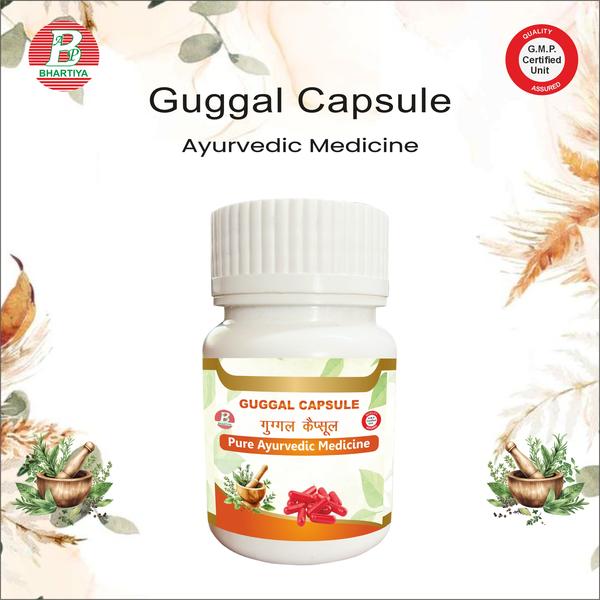
Guggal capsule

INR 300 INR 600
You Save 50%

VIEW DETAILS
                    GUDMAR    GUDMAR (Gymnema sylvestre R.Br.) The Sugar-Destroyer & Blood Sugar Regulator — “Madhunashini”Gudmar is a revered herb in Ayurveda known for its potent Madhumeha-hara (anti-diabetic) and Rasa-hara (sweetness-reducing) properties. It supports healthy blood sugar levels, improves pancreatic function, reduces sugar cravings, and aids in weight management. Traditionally used in diabetes, metabolic syndrome, obesity, and sweet cravings. CLASSICAL AYURVEDIC REFERENCESCharaka Samhita•	Mentioned under Madhumeha Chikitsa for managing diabetes.•	Described as Raktaprasadaka, Madhumeha-hara, and Kapha-Pitta balancing.Sushruta Samhita•	Recommended in Madhumeha, obesity, and metabolic disorders.•	Supports insulin regulation and pancreatic health.Bhavaprakasha Nighantu•	Described as Madhunashini, Sheetapittahara, and Medohara.•	Promotes healthy digestion, metabolism, and sugar control. CLASSICAL STORY / ANECDOTEAyurvedic lore describes Gudmar as the herb that “destroys sugar.”Traditional Vaidyas observed that chewing its leaves temporarily removes the taste of sweetness from the tongue, inspiring its name Madhunashini— “the destroyer of sugar.” BOTANICAL INFORMATION OF GUDMAR• Scientific Name: Gymnema sylvestre R.Br.• Family: Apocynaceae• Order: Gentianales• Genus: Gymnema• Species: sylvestreCommon Names:• Sanskrit: Madhunashini• Hindi: Gudmar• English: Gymnema, Sugar Destroyer• Tamil: Periploca of India• Telugu: Chinna Chinta• Malayalam: Pullaari• Kannada: Meshasringi• Bengali: Gudmar SYNONYMS IN CLASSICAL AYURVEDIC NIGHANTUS• Charaka Samhita: Madhumeha-hara – Raktaprasadaka, Kapha-Pitta balancing• Sushruta Samhita: Gudmar – Madhumeha-hara, Medohara• Bhavaprakasha Nighantu: Madhunashini – Sheetapittahara, Rasa-hara MORPHOLOGY OF GUDMAR• Plant Type: Perennial climber• Stem: Woody, climbing• Leaves: Opposite, ovate, smooth• Flowers: Small, greenish-white• Fruit: Follicle containing seeds• Taste: Bitter, slightly astringent ECOLOGICAL PREFERENCES• Climate: Tropical and subtropical• Soil: Well-drained sandy or loamy soil• Habitat: Forests, dry hills, wastelands• Sunlight: Full sun to partial shade• Altitude: Up to 800 m GEOGRAPHICAL DISTRIBUTION• India: Madhya Pradesh, Maharashtra, Karnataka, Tamil Nadu, Kerala• Outside India: Sri Lanka, Southeast Asia, Africa CLASSICAL AYURVEDIC PROPERTIES (RASA–GUNA–VIRYA–VIPAKA)• Rasa (Taste): Tikta (bitter), Kashaya (astringent)• Guna (Qualities): Laghu (light), Ruksha (dry)• Virya (Potency): Ushna (heating)• Vipaka (post-digestive effect): Katu (pungent)Dosha Effects:• Kapha–Pitta hara• May increase Vata if used excessively THERAPEUTIC ACTIONS (KARMA)• Madhumeha-hara – Manages blood sugar• Medohara – Reduces excess fat• Rasa-hara – Reduces sweetness perception• Sheetapittahara – Balances Pitta• Agnivardhana – Improves digestion and metabolism INDICATIONSo	Diabetes (Madhumeha)o	Obesity and metabolic syndromeo	Sweet cravings and sugar dependencyo	High cholesterol and triglycerideso	Digestive weakness MODERN PHARMACOLOGY & PHYTOCHEMISTRYMajor Constituents:• Gymnemic acids• Saponins• Flavonoids• TanninsPharmacological Actions:• Anti-diabetic (reduces blood sugar)• Anti-obesity• Reduces sugar absorption in the intestine• Improves insulin function• Hypolipidemic CULTIVATION DETAILS• Propagation: Stem cuttings or seeds• Planting Season: Monsoon• Spacing: 1–1.5 m• Irrigation: Low to moderate• Harvesting: After 12–18 months CLASSICAL DOSAGE (According to Ayurvedic Practice)• Powder (Churna): 1–3 g/day• Decoction (Kwatha): 40–60 ml/day• Fresh Leaf Juice: 10–20 ml/day• Chewing Fresh Leaves: As requiredGudmar (Gymnema sylvestre) Formulations – Bhartiya Ayurvedic PharmacyBhartiya Ayurvedic Pharmacy prepares authentic Gudmar (Gymnema sylvestre) formulations based on classical Ayurvedic texts, ensuring optimal blood sugar support, metabolic balance, and digestive wellness. GUDMAR CAPSULE Gudmar Capsules are prepared using premium Gymnema sylvestre leaf powder or standardized extract following classical Ayurvedic methods.Key Benefits:• Supports healthy blood sugar levels• Reduces sugar cravings• Promotes weight management• Improves metabolism and insulin functionDosage:• Adults: 1–2 capsules twice daily with warm water or milk• Or as directed by an Ayurvedic physicianSafety & Precautions:• Safe for long-term use under guidance• Use cautiously in low blood sugar conditions• Suitable for metabolic supportFormulation Highlights:• 100% pure Gudmar leaf extract• No artificial additives or preservatives• Prepared using classical Ayurvedic principles GUDMAR POWDER Gudmar Powder is prepared from shade-dried, finely powdered leaves of Gymnema sylvestre, preserving its natural anti-diabetic potency.Key Benefits:• Supports blood sugar regulation• Reduces sugar cravings• Supports weight management• Improves digestive and metabolic healthDosage:• Adults: 1–3 g daily• Take with warm water, milk, or honey• Or as advised by an Ayurvedic physicianSafety & Precautions:• Avoid excess use to prevent hypoglycemia• Store in a cool, dry placeFormulation Highlights:• 100% pure Gudmar leaf powder• No chemicals, fillers, or preservatives• Traditionally processedSuggested Use:• Ideal for diabetes management, sweet cravings, weight control, and metabolic support
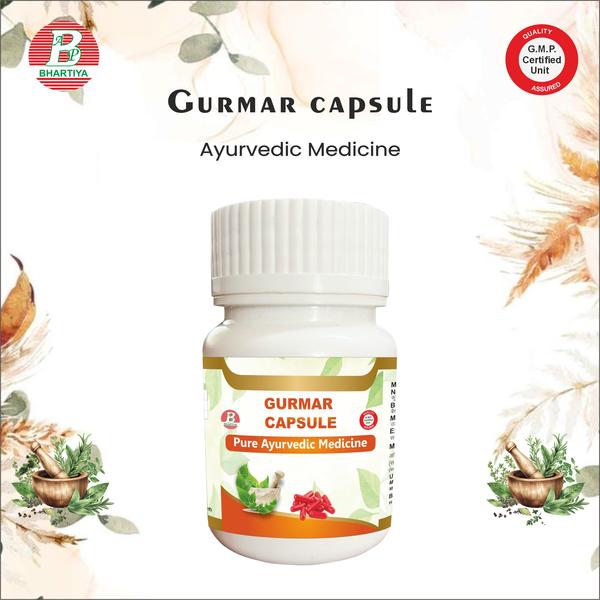
Gurmar Capsule

INR 180 INR 360
You Save 50%

VIEW DETAILS
               GREEN COFFEE  GREEN COFFEE (Coffea arabica L.) The Natural Metabolic Booster — “Unroasted Coffee Bean”Green Coffee, the unroasted form of the coffee bean, is valued in modern herbal and Ayurvedic-inspired nutrition for its weight management, antioxidant, and metabolic-supporting properties. Rich in chlorogenic acids, polyphenols, and essential minerals, Green Coffee supports blood sugar balance, cardiovascular health, digestion, and overall vitality. CLASSICAL AYURVEDIC REFERENCESAlthough not classically described in traditional Ayurvedic texts, Green Coffee’s properties can be aligned with Ayurveda based on its effects:1.	Rasa (Taste): Katu (pungent), Tikta (bitter)2.	Guna (Qualities): Laghu (light), Ruksha (dry)3.	Virya (Potency): Ushna (heating)4.	Vipaka (post-digestive effect): Katu (pungent)5.	Dosha Effects: Vata-Kapha hara, Pitta samana in moderationModern herbal scholars often reference Green Coffee as a Metabolic Rasayana, supporting weight management, antioxidant defense, and cardiovascular health. BOTANICAL INFORMATION OF GREEN COFFEE•	Scientific Name: Coffea arabica L.•	Family: Rubiaceae•	Order: Gentianales•	Genus: Coffea•	Species: arabica•	Common Names:o	Sanskrit: Coffee Beejao	Hindi: Hara Coffeeo	English: Green Coffeeo	Tamil: Pachai Coffeeo	Telugu: Pachha Coffeeo	Malayalam: Pachha Coffeeo	Kannada: Hara Coffeeo	Bengali: Green Coffee MORPHOLOGY OF GREEN COFFEE•	Plant Type: Evergreen shrub / small tree•	Height: 2–5 m (cultivated), up to 10 m in wild•	Leaves: Glossy, dark green, elliptical•	Flowers: Small, white, fragrant, clustered•	Fruit / Seed: Drupes (coffee cherries), green when unripe•	Seeds: Oval, green (unroasted coffee beans) ECOLOGICAL PREFERENCES•	Climate: Tropical and subtropical; prefers moderate rainfall and mild temperatures•	Soil: Well-drained loamy soils, slightly acidic (pH 6–6.5)•	Habitat: Cultivated plantations, home gardens, shaded slopes•	Altitude: 600–2,000 m above sea level GEOGRAPHICAL DISTRIBUTION•	India: Karnataka, Kerala, Tamil Nadu, Arunachal Pradesh•	Outside India: Brazil, Colombia, Ethiopia, Vietnam, Central America THERAPEUTIC ACTIONS (KARMA)1.	Metabolic Support: Helps regulate blood sugar and support weight management2.	Antioxidant: Neutralizes free radicals, supports cellular health3.	Cardiovascular Health: Supports healthy lipid profile and circulation4.	Digestive Aid: Mild stimulant, supports digestive fire (Agni)5.	Mental Alertness: Enhances focus and energy without roasting-induced bitterness6.	Rasayana: Supports vitality and general endurance INDICATIONS•	Weight management, obesity, and metabolic syndrome•	Mild fatigue or lethargy•	Digestive sluggishness•	Mild cognitive support and alertness•	Cardiovascular and antioxidant support MODERN PHARMACOLOGY & PHYTOCHEMISTRY•	Major Constituents:o	Chlorogenic acids (CGA)o	Polyphenols and antioxidantso	Caffeine (low to moderate)o	Minerals: magnesium, potassium, iron•	Pharmacological Actions:o	Antioxidanto	Anti-obesity / metabolic modulatoro	Mild CNS stimulanto	Antihyperglycemic effecto	Cardioprotective CULTIVATION DETAILS•	Propagation: Seeds (beans) or grafted saplings•	Sowing / Planting: Monsoon season or as suitable for elevation•	Spacing: 1–2 m between plants•	Irrigation: Moderate; avoid waterlogging•	Fertilization: Organic manure preferred•	Harvesting: Cherries picked green for Green Coffee powder CLASSICAL DOSAGE (Modern Herbal / Ayurvedic Use)•	Green Coffee Powder / Extract: 200–400 mg twice daily or as directed•	Capsules / Tablets: 1–2 capsules twice daily with water•	Decoction / Tea: 1–2 cups/day, preferably before meals GREEN COFFEE FORMULATIONS – BHARTIYA AYURVEDIC PHARMACYBhartiya Ayurvedic Pharmacy prepares Green Coffee formulations maintaining full bioactive content of chlorogenic acids and antioxidants, designed to support metabolic health, weight management, digestion, and vitality.Key Uses of Green Coffee Formulations:•	Weight and metabolism support•	Blood sugar regulation•	Cardiovascular and antioxidant protection•	Digestive support and mild stimulation•	Rasayana for energy and vitality GREEN COFFEE CAPSULE – BHARTIYA AYURVEDIC PHARMACY Bhartiya Ayurvedic Pharmacy offers Green Coffee Capsules, prepared from premium quality unroasted coffee beans (Coffea arabica), retaining full bioactive content of chlorogenic acids, antioxidants, and nutrients. The capsules provide a convenient way to support metabolism, weight management, cardiovascular health, digestive balance, and overall vitality.Key Benefits:•	Supports healthy blood sugar levels and metabolism•	Promotes weight management and helps maintain healthy body composition•	Mild CNS stimulant for alertness and cognitive support•	Supports cardiovascular health by maintaining lipid balance•	Acts as a Rasayana, enhancing energy, endurance, and vitality•	Supports digestive health and regular bowel functionDosage:•	Adults: 1–2 capsules twice daily with warm water, preferably before meals•	Can be combined with warm water or milk for enhanced Rasayana effectSafety & Precautions:•	Safe for long-term use when taken as per dosage•	May cause mild stimulation in caffeine-sensitive individuals•	Not recommended in high doses during pregnancy or lactation•	Monitor if taking stimulant or antidiabetic medicationsFormulation Highlights:•	100% natural Green Coffee (Coffea arabica) powder/extract•	Free from artificial colours, preservatives, and additives•	Prepared using Ayurvedic-inspired processing methods to preserve therapeutic qualitiesSuggested Use:•	Ideal for adults seeking support in weight management, metabolism, and vitality•	Convenient form for Ayurvedic Rasayana support in daily life
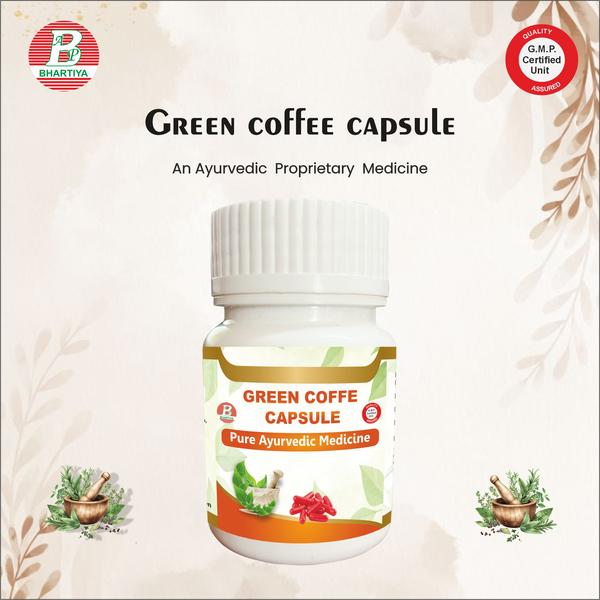
Green coffee capsule

INR 300 INR 600
You Save 50%

VIEW DETAILS
                  GOKHRU (Tribulus terrestris L.)           The Rejuvenative & Aphrodisiac Herb — “Gokhru” (Cow’s Testicle Plant)Gokhru, known as Gokshura or Pashanabheda in Sanskrit, is a highly revered herb in Ayurveda for urinary, reproductive, and musculoskeletal health. It is considered a Medhya, Vrishya, and Rasayana herb. Classical texts describe Gokhru as a “Mutravirechaka and Shukrala Rasayana,” promoting vitality, reproductive health, and strength. BOTANICAL INFORMATION OF GOKHRU•	Scientific Name: Tribulus terrestris L.•	Synonyms: Gokhru, Pashanabheda, Gokshura•	Family: Zygophyllaceous•	Order: Zygophyllales•	Genus: Tribulus•	Species: terrestris•	Common Names:o	Sanskrit: Gokshura, Pashanabhedao	Hindi: Gokhruo	English: Caltrop, Tribuluso	Tamil: Kottamalli, Nalla Gokhruo	Telugu: Gokhru   o	Malayalam: Gokhruo	Kannada: Gokhru SYNONYMS IN CLASSICAL AYURVEDIC TEXTS•	Charaka Samhita: Gokshura, Vrishya, Shukrala•	Sushruta Samhita: Gokhru, Mutravirechaka, Vatahara•	Bhavaprakasha Nighantu: Pashanabheda, Gokshura, Medhya•	Dhanvantari Nighantu: Gokhru, Shukrala, VrishyaGokhru is traditionally associated with urinary tract support, reproductive health, aphrodisiac effects, and Vata-Pitta balancing. MORPHOLOGY OF GOKHRU•	Plant: Small, trailing, herbaceous annual, 30–60 cm tall•	Stems: Prostrate, branched, with spiny stipules•	Leaves: Opposite, pinnate, small leaflets, oblong•	Flowers: Yellow, small, axillary•	Fruit: Hard, spiny, globular capsule, 4–5 mm diameter•	Seeds: 1–3 per fruit, brown, kidney-shaped ECOLOGICAL PREFERENCES•	Climate: Tropical and subtropical, drought-resistant•	Soil: Sandy, rocky, dry soils•	Habitat: Fields, wastelands, roadsides•	Altitude: Sea level to 1,500 m GEOGRAPHICAL DISTRIBUTION•	India: Widely distributed in Rajasthan, Gujarat, Maharashtra, Uttar Pradesh, Madhya Pradesh•	Outside India: Pakistan, China, Middle East, Mediterranean, Africa CLASSICAL AYURVEDIC PROPERTIES (RASA–GUNA–VIRYA–VIPAKA)•	Rasa (Taste): Tikta (bitter), Kashaya (astringent)•	Guna (Qualities): Laghu (light), Ruksha (dry)•	Virya (Potency): Ushna (hot)•	Vipaka (post-digestive effect): Madhura (sweet)•	Dosha Effects: Tridoshaghna, especially Vata & Kapha-shamaka, Pitta-hara in excess THERAPEUTIC ACTIONS ACCORDING TO AYURVEDA (KARMA)1.	Vrishya: Aphrodisiac, enhances libido, fertility, and Shukra dhatu2.	Mutravirechaka: Diuretic, supports kidney and urinary tract3.	Vatahara: Relieves joint pain, gout, and musculoskeletal disorders4.	Medhya: Supports cognitive function and vitality5.	Rasayana: Rejuvenative, promotes overall strength and immunity6.	Hridya: Supports cardiovascular health7.	Kantya/Keshya: Improves skin and hair quality INDICATIONS•	Urinary System: Kidney stones, dysuria, urinary tract infections•	Reproductive System: Low libido, infertility, sperm quality improvement•	Musculoskeletal System: Gout, arthritis, Vata disorders•	Metabolism & Immunity: Rejuvenation, general debility•	Cardiovascular: Hypertension support MODERN PHARMACOLOGY & PHYTOCHEMISTRY•	Major Constituents: Saponins (Tribulosin, Protodioscin), Flavonoids, Alkaloids, Sterols, Glycosides•	Pharmacological Actions:o	Diuretic and kidney-protectiveo	Aphrodisiac and fertility-enhancingo	Anti-inflammatory and analgesico	Antioxidant and cardioprotectiveo	Hepatoprotective and immunomodulatory CULTIVATION DETAILS•	Propagation: Seeds, stem cuttings•	Sowing Time: Monsoon (June–July)•	Spacing: 30–40 cm between plants•	Irrigation: Moderate, drought-tolerant•	Fertilization: Organic manure•	Harvesting: Fruits and roots collected during dry season; leaves as required CLASSICAL DOSAGE (According to Ayurvedic Granthas)•	Churna (Powder): 1–3 g•	Swarasa (Juice): 10–20 ml•	Kwatha (Decoction): 40–60 ml•	Avaleha (Paste/Lehyam): 5–10 g•	Capsules/Tablets: As per preparation CLASSICAL AYURVEDIC FORMULATIONS CONTAINING GOKHRU1.	Gokhru Churna: Diuretic, urinary tract support, anti-urolithic2.	Gokhru Kwatha: Kidney stone and urinary cleansing3.	Gokhru Avaleha / Rasayana: Rejuvenative, aphrodisiac4.	Gokhru Capsules/Tablets: Standardized modern dosage forms for vitality and urinary health5.	Gokhru Taila: Joint pain, Vata disorders, topical application SAFETY & PRECAUTIONS•	Generally safe when used in classical doses•	Avoid excessive use in dehydration or severe kidney disorders•	Use cautiously in hypotensive or pregnant patients•	Monitor blood sugar if diabetic GOKHRU (Tribulus terrestris L.) FORMULATIONS – BHARTIYA AYURVEDIC PHARMACY Bhartiya Ayurvedic Pharmacy prepares a range of Gokhru formulations following classical Ayurvedic principles described in Charaka Samhita, Sushruta Samhita, Bhavaprakasha Nighantu, and other texts. Each product is designed to retain the full rejuvenative, diuretic, aphrodisiac, and urinary-supportive properties of Gokhru. 1. Gokhru TabletDescription:A modern, convenient dosage form containing standardized Gokhru (Tribulus terrestris) extract. Ideal for daily use to support urinary, reproductive, and vitality health.Key Actions:•	Tridoshic Rasayana: Balances Vata, Pitta, Kapha•	Supports urinary tract and kidney function•	Enhances reproductive health, libido, and fertility•	Strengthens joints and musculoskeletal system•	Improves immunity and vitalityDosage:•	1–2 tablets twice daily after meals with warm water, or as directedPrecautions:•	Avoid excessive use in severe kidney disorders•	Use under supervision during pregnancy•	Monitor blood sugar if diabetic 2. Gokhru CapsuleDescription:A convenient, easy-to-swallow form containing concentrated Gokhru extract, suitable for those preferring capsules over tablets or powders.Key Actions:•	Diuretic, anti-urolithic, and kidney supportive•	Aphrodisiac, reproductive health booster•	Anti-inflammatory and antioxidant•	Supports cardiovascular health and metabolismDosage:•	1–2 capsules twice daily with warm water after mealsPrecautions:•	Avoid overdose•	Use under supervision if pregnant, lactating, or on anti-diabetic medications 3. Gokhru Powder (Gokhru Churna)Description:Finely powdered Gokhru for traditional use. Can be consumed with honey, ghee, or warm water.Key Actions:•	Rasayana and rejuvenative•	Supports urinary tract, kidneys, and bladder health•	Enhances reproductive health and fertility•	Improves musculoskeletal strength•	Detoxifying and immunity-enhancingDosage:•	1–3 g daily with warm water, honey, or ghee, preferably before meals or at bedtimePrecautions:•	Avoid excessive intake in dehydration•	Use under practitioner supervision in elderly or weak patients•	Monitor blood sugar if diabetic 4. Gokshuradi GuggulDescription:A classical Ayurvedic herbo-mineral formulation combining Gokhru with Guggul and other synergistic herbs, used for urinary stones, joint health, and metabolic disorders.Key Actions:•	Anti-urolithic, dissolves kidney stones•	Anti-inflammatory for arthritis and gout•	Enhances reproductive and urinary health•	Supports metabolism and immunityDosage:•	2–4 tablets twice daily after meals with warm water, or as directedPrecautions:•	Avoid in severe kidney disease•	Use cautiously in pregnancy•	Monitor for mild digestive discomfort 5. Gokshuradi ChurnaDescription:Classical powdered formulation containing Gokhru and complementary herbs for urinary and reproductive health, joint pain, and detoxification.Key Actions:•	Mild diuretic and urinary tonic•	Anti-urolithic and anti-inflammatory•	Rejuvenative and aphrodisiac•	Supports Vata and Kapha balanceDosage:•	1–3 g daily with warm water, honey, or ghee, preferably before bedtimePrecautions:•	Avoid excessive intake leading to loose stools•	Use under practitioner supervision in elderly, children, or weak patients SAFETY & PRECAUTIONS•	Safe for long-term use in classical doses•	Avoid excessive consumption in dehydration or severe kidney disorders•	Use cautiously in pregnancy, lactation, or hypotension•	Monitor blood sugar if diabetic
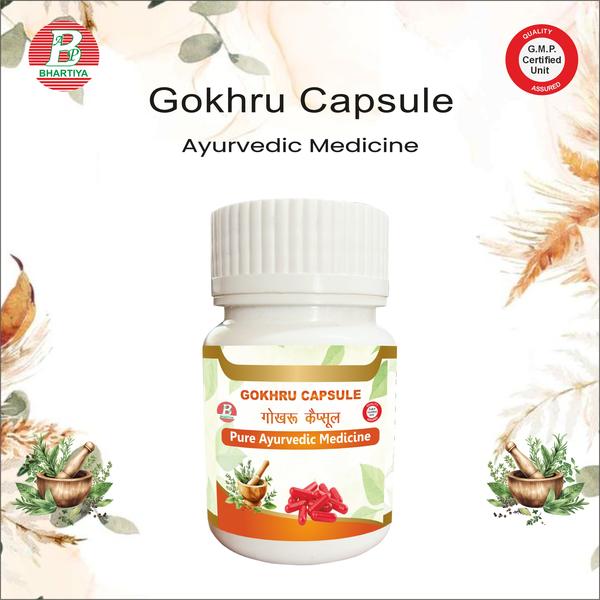
Gokhru Capsule

INR 165 INR 330
You Save 50%

VIEW DETAILS
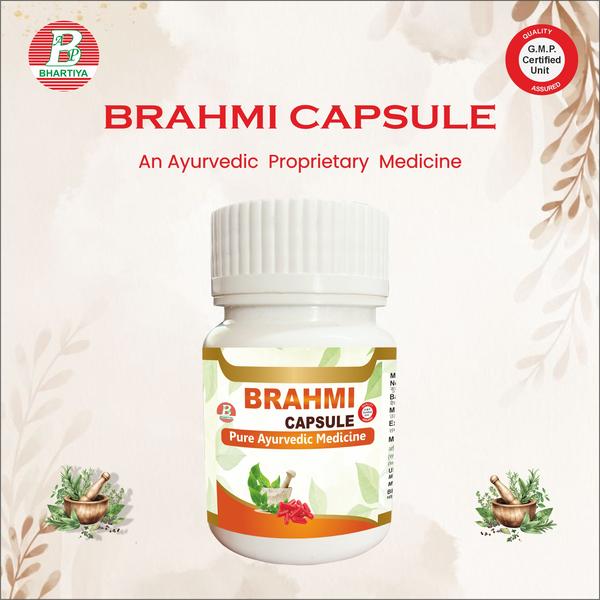
                             Brahmi (Bacopa monnieri)          The Ancient Rejuvenating Herb for Mind, Memory, and Nervous SystemBrahmi is one of the most revered herbs in Ayurveda, prized for its profound effects on cognition, memory, intellect, and mental resilience. The name Brahmi derives from Brahma, the creator, symbolizing its connection to higher mental faculties and spiritual insight.In Ayurveda, Brahmi is classified as a Medhya Rasayana (intellect and memory enhancer), Shukra-Vardhaka (reproductive tissue supporter), and Rasayana (rejuvenative). It is highly valued for improving memory, concentration, calming the mind, reducing mental fatigue and anxiety, supporting the nervous system, and promoting longevity.The herb has a rich historical background, documented in classical Ayurvedic texts for thousands of years, highlighting its role in enhancing mental faculties, cognition, and overall vitality. Historical Study and Classical References1. Charaka Samhita•	Acharya Charaka describes Brahmi as a Medhya Rasayana that strengthens intellect, improves memory, and sharpens mental faculties.•	Recommended for Manasika Vikara (mental disorders), nervous system weakness, and stress-related conditions.•	Classical Dosage: 3–6 g of root/whole plant powder (Churna); decoction (Kwatha) 40–60 ml, 2–3 times daily.2. Sushruta Samhita•	Acharya Sushruta emphasizes Brahmi in Manas-Roga Chikitsa (mental disorder treatment) and as a rejuvenative for the nervous system.•	Forms: root/whole plant paste, powder, decoction.•	Uses: Memory enhancement, calming overactive mind, improving mental clarity.3. Bhavaprakasha Nighantu•	Brahmi listed under Medhya and Smritivardhini categories.•	Variants: Wild vs. cultivated forms; leaf quality and flowering stage noted for potency.•	Synonyms: Brahmaka, Medhya, Smritivardhini, Haritaki-brahmi.4. Raja Nighantu & Dhanvantari Nighantu•	Brahmi described as Medhya and Jivaniya, improving intelligence, longevity, and mental function.•	Used in compound formulations for cognitive enhancement, stress reduction, and rejuvenation.5. Classical Ayurvedic Formulations•	Brahmi Ghrita / Taila: Nourishes the brain, calms the mind, improves memory.•	Brahmi Churna / Tablet / Capsule: For cognitive support, memory, and mental clarity.•	Medhya Rasayana Compounds: Brahmi often combined with Shankhpushpi, Ashwagandha, and Vacha for brain tonics. Botanical Information of Brahmi•	Scientific Name: Bacopa monnieri (L.) Wettst.•	Family: Plantaginaceae•	Order: Lamiales•	Genus: Bacopa•	Species: monnieriCommon Names:•	Sanskrit: Brahmī, Medhya, Smritivardhini•	Hindi: Brahmi•	English: Water Hyssop, Herb of Grace•	Tamil: Brahmi, Neer Brahmi•	Telugu: Brahmi•	Malayalam: Brahmi•	Kannada: Brahmi•	Bengali: BrahmiSynonyms in Ayurvedic Nighantus:•	Bhavaprakasha Nighantu – Brahmi, Medhya, Smritivardhini•	Raja Nighantu – Brahmaka, Jivaniya•	Dhanvantari Nighantu – Medhya, Smritivardhaka Morphology of Brahmi•	Plant Type: Perennial, creeping, succulent herb•	Stem: Creeping, quadrangular, green, slightly succulent•	Leaves: Opposite, small, oblong to spatulate, fleshy, light green•	Flowers: Small, white to light purple, axillary cymes, bloom during warm seasons•	Roots: Fibrous, white•	Fruits: Capsule, ovoid, containing tiny seeds•	Habit: Creeping, spreading, fast-growing, regenerates easily Ecological Preferences•	Climate: Tropical and subtropical; tolerates heat and moderate drought•	Soil: Sandy, loamy, marshy, wet soils; thrives in marshes and near water bodies•	Sunlight: Full sun to partial shade•	Moisture: Prefers moist conditions; hardy to dry periods•	Altitude: Low to medium elevations•	Habitat: Marshes, wetlands, riverbanks, paddy fields, gardens Distribution•	India: Found across the country in wetlands, paddy fields, marshes•	Asia: Sri Lanka, Nepal, Bangladesh, Myanmar•	Global: Naturalized in tropical/subtropical regions worldwide due to hardy growth Classical Ayurvedic Properties•	Rasa (Taste): Tikta (bitter)•	Guna (Qualities): Laghu (light), Snigdha (slightly oily)•	Virya (Potency): Shita (cooling)•	Vipaka: Madhura (sweet)•	Dosha Effect: Kapha-Vata pacifying•	Karma (Actions / Therapeutic Effects):o	Medhya – Enhances memory and intellecto	Rasayana – Rejuvenative, anti-agingo	Hridya – Supports heart functiono	Shukra-Vardhaka – Supports reproductive tissueo	Vata-Kapha pacifying – Reduces neurological weakness Therapeutic Actions According to Acharyas1.	Medhya (Nootropic): Improves memory, cognition, and focus2.	Rasayana (Rejuvenative): Enhances vitality, immunity, and longevity3.	Manah-Shamana: Reduces anxiety, stress, and mental fatigue4.	Hridya: Supports cardiovascular health5.	Shukra-Vardhaka: Improves reproductive tissue quality6.	Vata-Kapha Balancing: Useful in neurological weakness, tremors, fatigue Modern Phytochemistry•	Bacosides (A & B): Cognitive enhancement, neuroprotective•	Alkaloids: Nervine tonic•	Flavonoids (Apigenin, Luteolin): Antioxidant, anti-inflammatory, neuroprotective•	Saponins: Brain rejuvenation, memory support Classical Dosage•	Powder (Churna): 3–6 g/day•	Decoction (Kwatha): 40–60 ml, 2–3 times daily•	Juice (Swarasa): 10–20 ml, 1–2 times daily•	Taila / Ghrita: External application or oral use as per formulationPrecautions: Safe in classical dosage; pregnant/lactating women under supervision; avoid overdose. Classical Ayurvedic Formulations of Brahmi1.	Brahmi Ghrita / Taila: Brain nourishment, mental calmness, memory enhancement2.	Brahmi Churna / Tablet / Capsule: Cognitive support, stress reduction3.	Brahmi Kwatha: Nervous system support, memory enhancement4.	Medhya Rasayana Compounds: With Shankhpushpi, Ashwagandha, Vacha for brain tonics5.	Compound Formulations: Brahmi included in brain tonics, rejuvenative preparations, and nervous system revitalizers Brahmi Formulations by Bhartiya Ayurvedic PharmacyAt Bhartiya Ayurvedic Pharmacy, we prepare a range of Brahmi (Bacopa monnieri) formulations following classical Ayurvedic methods as described in Charaka Samhita, Sushruta Samhita, Bhavaprakasha Nighantu, and other Ayurvedic Granthas. Each product is crafted to retain the therapeutic potency, purity, and efficacy of the herb, ensuring benefits for memory enhancement, cognitive support, nervous system health, stress relief, and overall mental rejuvenation. Brahmi CapsuleDescription: Brahmi Capsule contains high-quality standardized extract of Bacopa monnieri in an easy-to-swallow form for optimal absorption.Key Actions: •	Enhances learning ability, concentration, and memory retention.•	Reduces mental fatigue, brain fog, and overthinking•	Calms the mind and supports balanced emotional health•	Supports healthy sleep-wake cyclesDosage:•	1 capsule twice daily with warm water after meals•	For high stress or exam periods: 2 capsules daily•	Can be taken for long-term brain rejuvenationPrecautions:•	Do not exceed recommended dose•	May enhance sedation if used with sleeping medicines•	Consult during pregnancy, lactation, or chronic neurological illness Brahmi Powder (Churna)Description: Pure Brahmi powder for traditional Ayurvedic use, ideal for decoctions, smoothies, or milk-based preparations.Key Actions:•	Supports memory, cognition, and overall nervous system health•	Acts as a Rasayana (rejuvenative) for the brain•	Reduces stress, anxiety, and mental fatigueDosage:•	3–6 grams daily with water, milk, or honey•	Can be used as decoction: 40–60 ml, 1–2 times dailyPrecautions:•	Avoid overdose•	Use under supervision during pregnancy or neurological disorders Brahmi Amla TailaDescription: Medicated herbal oil prepared with Brahmi and Amla (Indian gooseberry) for external application or internal use as per classical Ayurvedic methods.Key Actions:•	Nourishes brain tissues and supports the nervous system•	Enhances memory, mental clarity, and concentration•	Reduces stress and promotes calmness•	Supports hair and scalp health when applied topicallyDosage:•	Apply externally as needed•	For internal use, take as directed by an Ayurvedic practitionerPrecautions:•	Avoid excessive use•	Consult a physician during pregnancy, lactation, or neurological conditions
Brahmi Capsule

INR 180 INR 360
You Save 50%

VIEW DETAILS
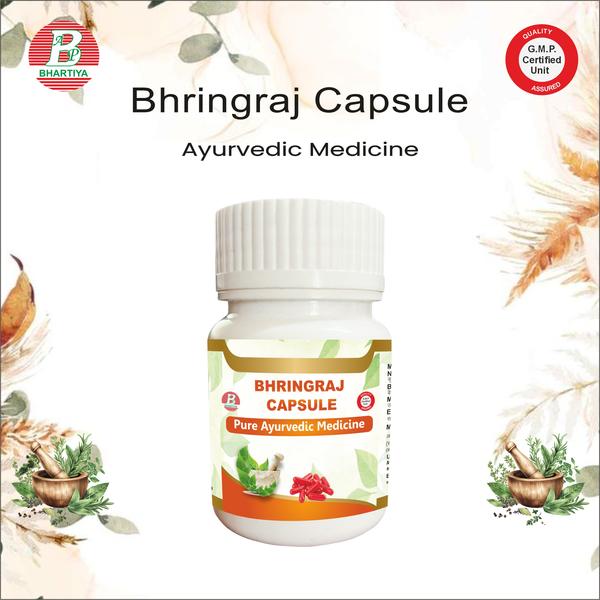
                  BHRINGRAJ  BHRINGRAJ (Eclipta alba / Eclipta prostrata) The King of Hair & Supreme Liver RejuvenatorBhringraj is one of the most important Rasayana herbs in Ayurveda, especially renowned for hair regeneration, liver rejuvenation, blood purification, and nervous system support.It is called “Kesharaja” – King of Hair, and “Yakrit Uttama” – Best herb for liver health. Meaning of BhringrajBhringa = Black beeRaja = King The herb that gives hair the black, glossy shine of a beeHistorical Story According to AcharyasAccording to Charaka Samhita and Bhavaprakasha, Bhringraj was first described as a divine herb gifted to humanity for promoting longevity and vitality. It is said that Lord Dhanvantari, during the churning of the ocean (Samudra Manthan), gave this herb to rejuvenate the sages and heal ailments, particularly those affecting hair, liver, and blood.Bhavaprakasha Nighantu highlights:“Keshya, Rasayana, Hridya, Yakrit Pleeha Shodhaka” – Bhringraj nourishes hair, rejuvenates the body, supports heart health, and purifies liver and spleen.It has been traditionally used as a Rasayana (rejuvenative), Keshya (hair tonic), and Yakrit-Pleeha Shodhaka (hepato-splenic tonic) in Ayurveda for centuries. Botanical Information of Bhringraj•	Scientific Name: Eclipta alba (L.) Hassk.•	Family: Asteraceae•	Order: Asterales•	Genus: Eclipta•	Species: albaCommon Names:o	Sanskrit: Bhringraj, Kesharaja, Bhringrajo	Hindi: Bhringrajo	English: False Daisyo	Tamil: Karisalankannio	Telugu: Bhringrajamo	Malayalam: Bhringarajamo	Kannada: Bhringarajao	Bengali: BhringrajSynonyms in Ayurvedic Nighantus:•	Bhavaprakasha Nighantu: Keshya, Rasayana, Hridya•	Raja Nighantu & Kaiyadeva Nighantu: Bhringraj, Karisalankanni•	Dhanvantari Nighantu: Keshya, Shreshtha Rasayana Morphology of Bhringraj (Eclipta alba)•	Plant Type: Annual, erect or semi-prostrate herb•	Stem:o	Erect, glabrous or slightly hairyo	Green, branching, 30–100 cm height•	Leaves:o	Opposite arrangement, simple, lanceolate or ovateo	Smooth, dark green, slightly hairyo	Short petiole•	Flowers:o	Small, white, tubular, bisexualo	Bloom throughout monsoon•	Roots:o	Slender, fibrous, whiteo	Medicinal part for Rasayana and Keshya use•	Fruits:o	Small, one-seeded achenes•	Habit:o	Fast-growing, creeping or erecto	Tolerates dry and degraded soils Ecological Preferences•	Climate: Tropical and subtropical•	Soil: Sandy, loamy, well-drained; grows in poor soils•	Sunlight: Full sun to partial shade•	Moisture: Moderate, drought-tolerant•	Altitude: Plains to medium elevation•	Habitat: Roadsides, fields, gardens, wastelands Distribution•	India: Widely throughout the country•	Asia: Sri Lanka, Bangladesh, Myanmar, Nepal•	Africa: Tropical Africa•	Americas: Naturalized in South and Central America•	Other regions: Common in tropical areas worldwide Classical Ayurvedic Properties of Bhringraj•	Rasa (Taste): Tikta (bitter), Kashaya (astringent)•	Guna (Qualities): Laghu (light), Snigdha (slightly oily)•	Virya (Potency): Ushna (hot)•	Vipaka (post-digestive effect): Katu (pungent)•	Dosha Effect: Kapha-Vata ShamakaKarma (Actions):o	Keshya: Promotes hair growth, delays greyingo	Rasayana: Rejuvenative, increases vitalityo	Yakrit-Pleeha Shodhaka: Supports liver and spleeno	Hridya: Supports heart functiono	Medohara: Reduces excess fat, balances metabolism Therapeutic Actions According to Acharyas1.	Keshya (Hair tonic):o	Prevents hair fall, premature greyingo	Strengthens hair roots2.	Rasayana (Rejuvenative):o	Enhances strength, vitality, longevityo	Improves immunity3.	Yakrit-Pleeha Shodhaka:o	Supports liver and spleen healtho	Detoxifies blood4.	Hridya (Cardio-supportive):o	Improves circulation and heart health5.	Medohara / Vata Shamak:o	Reduces fat depositiono	Balances Vata doshaReferences:•	Charaka Samhita: Bhringraj as Keshya and Rasayana•	Sushruta Samhita: Describes hair growth and liver-protective properties•	Bhavaprakasha Nighantu: Emphasizes rejuvenation, hair care, and liver support Modern Phytochemistry of Bhringraj•	Alkaloids: Wedelolactone, Demethylwedelolactone – hepatoprotective•	Flavonoids: Luteolin, Apigenin – antioxidant, anti-inflammatory•	Coumestans: Antioxidant, anti-hepatotoxic•	Triterpenoids: Support liver and kidney health•	Phenolic compounds: Anti-aging and detoxifying effects Species of Bhringraj (Genus: Eclipta)1.	Eclipta alba (L.) Hassk. – Most widely used in Ayurveda2.	Eclipta prostrata (L.) L. – Similar properties, sometimes used interchangeably in folk medicine Cultivation•	Propagation: Seeds or stem cuttings•	Sowing time: Early monsoon•	Spacing: 25–30 cm between plants•	Watering: Moderate; drought-tolerant•	Fertilization: Organic manure; hardy herb•	Harvesting: Leaves and whole plant after 3–4 months•	Ecological note: Pioneer plant, stabilizes degraded soils Classical Dosage (According to Granthas)1.	Charaka Samhita:o	Powder (Churna) 3–6 g/dayo	Decoction (Kwatha) 40–60 ml, 2–3 times/day2.	Sushruta Samhita:o	Fresh juice (Swarasa) 20–30 ml/dayo	External paste for hair 2–3 times/week3.	Bhavaprakasha Nighantu:o	Churna 3–6 go	Kwatha 40–60 mlo	Swarasa 20–30 ml Bhringraj Formulations1.	Bhringraj Churna (Powder) – Hair growth, liver tonic, Rasayana2.	Bhringraj Swarasa (Juice) – Internal detox, Rasayana, hair health3.	Bhringraj Taila (Oil) – Hair tonic, prevents greying, strengthens scalp4.	Bhringraj Capsule / Tablet – Convenient, standardized for internal use5.	Bhringraj Asava – Fermented preparation for liver and general rejuvenation Bhringraj Formulations by Ayurvedic Pharmacy1.	Bhringraj Tablet – 1–2 tablets twice daily, supports hair, liver, and Rasayana effect2.	Bhringraj Capsule – 1 capsule twice daily, detoxifies and rejuvenates3.	Bhringraj Oil – Apply to scalp 2–3 times/week for hair fall, greying4.	Bhringraj Swarasa / Asava – 20–30 ml twice daily, improves liver, blood, and immunity Safety and Precautions•	Safe in classical doses•	Avoid overdose; may cause mild digestive upset if excessive•	Pregnant women: Use only under supervision•	Patients with liver disease: Consult physician before long-term use BHRINGRAJ FORMULATIONS – BHARTIYA AYURVEDIC PHARMACYBhartiya Ayurvedic Pharmacy prepares Bhringraj (Eclipta alba) formulations using purified plant material, processed according to classical Ayurvedic principles, preserving its rejuvenating, hair-nourishing, liver-supporting, and Rasayana qualities.Key Uses• Promotes healthy hair growth and prevents premature greying• Supports liver and spleen function• Enhances vitality, stamina, and immunity• Blood purification and detoxification• Acts as a Rasayana for longevity and rejuvenation BHRINGRAJ CAPSULEBhartiya Ayurvedic Pharmacy Bhringraj Capsules are prepared using standardized Bhringraj extract/powder, following classical Ayurvedic processing methods.Key Benefits• Supports healthy hair growth and strengthens roots• Promotes liver and spleen health• Enhances energy, stamina, and general vitality• Acts as a rejuvenative (Rasayana) tonicDosage• Adults: 1 capsule twice daily with warm water after meals• Or as advised by an Ayurvedic physicianSafety & Precautions• Safe for long-term use in recommended dose• Suitable for both men and women• Pregnant or lactating women: Use only under supervisionFormulation Highlights• 100% pure Bhringraj extract/powder• No preservatives or additives• Classical Ayurvedic processing to retain therapeutic potency BHRINGRAJ POWDER (CHURNA)Bhringraj Powder is prepared from dried and finely powdered Bhringraj whole plant/root.Key Benefits• Promotes hair growth and delays greying• Supports liver function and detoxification• Improves general vitality and immunity• Acts as a Rasayana for longevityDosage• 3–6 grams (1 tsp) once or twice daily with lukewarm water, honey, or milk• Or as advised by an Ayurvedic physicianSafety & Precautions• Safe in classical doses• Avoid overdose• Pregnant women: Use only under guidanceFormulation Highlights• Pure, dried Bhringraj powder• No artificial additives• Preserves natural bioactive compounds BHRINGRAJ ASAVA / SWARASABhringraj Asava is a classical fermented liquid preparation from fresh roots/whole plant.Key Benefits• Supports liver and spleen health• Detoxifies blood and enhances vitality• Improves hair health from within• Acts as a mild Rasayana tonicDosage• 20–30 ml twice daily after meals with water or honey• Or as advised by an Ayurvedic physicianSafety & Precautions• Contains naturally occurring alcohol (fermentation)• Use cautiously in children and pregnancyFormulation Highlights• Prepared from fresh plant material for maximum efficacy• Classical Ayurvedic fermentation process• Preserves bioactive constituents BHRINGRAJ OIL (TAILA)Bhringraj Oil is a classical medicated oil prepared with Bhringraj Swarasa/Kwatha and carrier oils like sesame or coconut oil.Key Benefits• Strengthens scalp and hair roots• Promotes hair growth, prevents hair fall and premature greying• Nourishes hair and improves shine• Soothes scalp irritation and drynessMethod of Use• Apply to scalp 2–3 times weekly• Massage gently, leave 30–60 minutes or overnight• Wash with mild herbal shampooFormulation Highlights• Made from Bhringraj Swarasa/Kwatha in herbal oils• Preserves hair-nourishing bioactive compounds• No artificial chemicals or additives
Bhringraj Capsule

INR 150 INR 300
You Save 50%

VIEW DETAILS
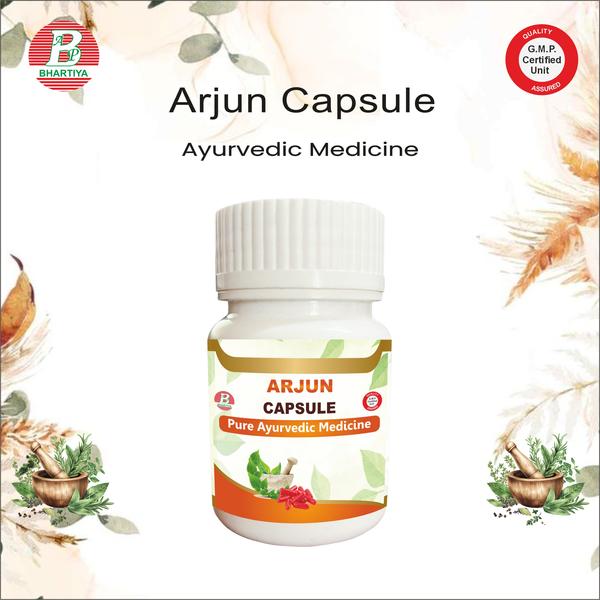
                      ARJUNA (Terminalia arjuna Wight & Arn.)             The Supreme Hṛdya — “Kṣata-Śodhana,” the Divine Protector of the HeartArjuna, known as Arjuna, Arjunah, Dhanvi, Veeravruksha, is the most celebrated Hṛdya (cardiac protective) drug in Ayurveda. Revered for its ability to strengthen the heart, purify blood, heal wounds, and restore vitality, Arjuna is mentioned extensively by Charaka, Sushruta, Vagbhata, and Nighantukars.Its bark is rich in co-enzyme Q-like compounds, triterpenoids, flavonoids, and tannins, responsible for its cardioprotective and antioxidant effects. Traditionally used for Hṛdroga, Raktapitta, Urahshoola, Kshaya, Prameha, and Shotha, it remains one of Ayurveda’s most important rejuvenative herbs for cardiovascular wellness. BOTANICAL INFORMATIONScientific Name: Terminalia arjuna (Roxb. ex-DC.) Wight & Arn.Family: CombretaceaeOrder: MyrtalesGenus: TerminaliaSpecies: arjunaCommon Names•	Sanskrit: Arjuna, Dhanvi, Indradruma, Ksheerashleshma, Partha•	Hindi: Arjun•	Tamil: Marudha Maram•	Telugu: Tellamaddi•	Malayalam: Neer Maruthu•	Kannada: Matti•	Bengali: Arjun•	Marathi/Gujarati: Arjun SYNONYMS FROM CLASSICAL AYURVEDIC NIGHANTUSCharaka Saṃhitā•	Listed under Kashaya Skandha (astringent group)•	Actions indicated: Hṛdya, Kṛmighna, Vrana-ropanaSushruta Saṃhitā•	Mentioned in Pittaghna and Kasaya Varga•	Described as Rakta-stambhana, Vrana-shodhana, VedanasthapanaBhavaprakasha Nighantu•	Synonyms: Arjuna, Kukubha, Dhavala, Veeravriksha, Nadisarjaka•	Actions: Hṛdya, Raktaprasadana, Sthambhana, Vrana-ropanaDhanvantari Nighantu•	Synonyms: Indradruma, Partha, Ksheerashleshma, Arjunah•	Attributes: Kaphapittashamaka, Shoshahara, HṛdyaAll classical texts glorify Arjuna primarily for cardiac protection, blood purification, wound healing, and strength building. SHORT STORY OF ARJUNA — AS PER ĀCHĀRYA TRADITIONIn the ancient riverbank forests where great sages lived, the Arjuna tree stood tall and white-barked like a vigilant warrior. The Āchāryas observed that wounded animals resting near the Arjuna tree would heal more quickly, and those who drank decoction from its bark recovered from blood loss and weakness with remarkable speed.Seeing this, the sages proclaimed:“Arijayati iti Arjunaḥ — that which conquers the enemies of the body is Arjuna.”(Bhavaprakāśa Nighaṇṭu, Arjuna Varga)Recognizing its Hṛdya (heart-protecting) power, they declared:“Arjuna strengthens the heart just as the warrior Arjuna protected the Pāṇḍavas.”(Traditional commentary based on Dhanvantari Nighaṇṭu)Thus, inspired by both its healing nature and the valour of the Mahābhārata hero, the sages named the tree Arjuna —the protector, the healer, the conqueror of disease.  THE HISTORICAL & PURĀNIC STORY OF ARJUNA —“The Warrior Tree of Courage and the Heart” **Among all the trees described in Ayurveda, Arjuna carries one of the most inspiring and sacred stories. The ancient Vaidyas say that Arjuna is not merely a medicinal tree; it is a symbol of courage, strength, and unshakeable heart power. Its origin is tied to the valor of Arjuna, the Pandava warrior, and to the compassion of divine beings.   THE LEGEND OF ARJUNA:Why the Tree Was Named After the Mahabharata WarriorAccording to Ayurvedic tradition and Pauranic lore, during the time of the Mahabharata:  Arjuna, the mighty Pandava prince, was known for:•	His immovable courage,•	His unbreakable will,•	His sharp focus,•	And his compassionate heart.But during the exile, Arjuna once felt deep weakness and exhaustion of heart, both physically and mentally. Seeing his fatigue, Sage Chyavana and Sage Dhaumya took him to the banks of a sacred river.There, stood a tall, shimmering white-barked tree.Sage Dhaumya said: “Partha, this tree shall bear your name, for it holds the same virtues you do —Courage, strength, purity, and a heart that protects all.”He instructed Arjuna:•	To rest under its shade,•	To consume a decoction from its reddish inner bark,•	And to meditate facing the river.After days of consuming the bark decoction, Arjuna regained astounding strength, clarity, and vitality.And thus, the tree came to be known as “ARJUNA” —the tree that strengthens the heart just as the warrior inspired hearts.   THE STORY OF ARJUNA AND LORD INDRA(Said in some regional Ayurvedic oral traditions)Another folklore says:Arjuna performed severe penance to receive divine weapons. Pleased by his devotion, Lord Indra appeared before him. When Arjuna asked:“O Deva! Grant me something that will protect and strengthen the hearts of future generations.”Indra touched a nearby tree and said:  “This tree shall become a guardian of hearts. Its bark will protect, its strength will heal.As you guard dharma, this tree will guard life.”Hence, the tree was blessed with:•	Unmatched heart-protective power•	Strength-giving qualities•	Wound-healing   MORPHOLOGY OF ARJUNATreeLarge, deciduous, 20–30 m tall, with a wide crown.Bark-Smooth, greyish-white to pinkish, Peels in thin, papery flakes, Medicinal bark is thick, reddish-brown insideLeaves-Simple, opposite, oblong, Shiny dark green above, pale beneathFlowers-Small, white to yellowish, In terminal panicles, Mild fragranceFruit-2.5–5 cm, fibrous, 5-winged drupeSeeds-Single seed in hard woody pericarp   ECOLOGICAL REQUIREMENTS•	Climate: Tropical, subtropical•	Soil: Prefers moist alluvial soil; thrives along riverbanks•	Habitat: Riverbanks, forests, moderately dry regions•	Altitude: 200–1200 m•	Native to: Indian subcontinent  GEOGRAPHICAL DISTRIBUTIONIndia:Central and Southern India — UP, Bihar, Bengal, Odisha, MP, Maharashtra, Karnataka, Andhra Pradesh, Tamil Nadu, Kerala.Outside India:Sri Lanka, Bangladesh, Myanmar, Nepal, Thailand, Malaysia.   CLASSICAL AYURVEDIC PROPERTIES (RASA–GUNA–VIRYA–VIPAKA)Rasa (Taste): Kashaya (astringent) dominantGuna (Qualities): Laghu (light), Ruksha (dry), Sara (flowing)Virya (Potency): Sheeta (cooling)Vipaka (Post-digestive): KatuDoshic Action:•	Kaphapittashamaka•	Strengthens Vata when combined with milk or ghee  THERAPEUTIC ACTIONS ACCORDING TO AYURVEDA (KARMA)1.	Hṛdya – Strengthens heart muscles, improves cardiac tone2.	Rakta-stambhana – Stops internal bleeding3.	Vrana-ropana – Excellent wound healer4.	Kshaya-nashana – Useful in emaciation & debility5.	Kaphashamaka – Reduces Kapha accumulation6.	Shothahara – Anti-inflammatory7.	Pramehaghna – Supports urinary and metabolic disorders8.	Urah-shoolahara – Relieves chest discomfort   INDICATIONSCardiac System-Hṛdroga (cardiac weakness), Hṛdaya sthambhana (palpitation), Hypertension (traditionally interpreted as Raktapitta/Kapha vitiation), post-cardiac recovery tonicBlood & Circulatory System-Raktapitta, Excessive bleeding, Varicosities & weak vesselsRespiratory-Kasa, Shwasa, Urahshoola (chest pain)Skin & Wounds-Non-healing wounds, Ulcers, Inflammatory conditionsUrinary & Metabolic-Prameha, Kshaya, Excessive urination  MODERN PHYTOCHEMISTRY & PHARMACOLOGYMajor Constituents•	Triterpenoids: Arjunolic acid, Arjungenin, Arjunone•	Flavonoids: Quercetin, Kaempferol•	Glycosides: Arjunetin•	Minerals: Calcium, magnesium•	CoQ10-like compounds•	Tannins: Ellagic acid, Gallic acidPharmacological Actions: Cardioprotective, Antioxidant, Anti-ischemic, Antihypertensive, Anti-inflammatory, Lipid-lowering, Wound-healing, Antimicrobial. CULTIVATION DETAILS•	Propagation: Seeds, stem cuttings•	Planting season: June–August•	Spacing: 6–8 m•	Irrigation: Needs moisture, but tolerates drought after maturity•	Harvesting: Bark: Collected during winter, eaves/flowers: Seasonal   CLASSICAL DOSAGE (as per Ayurvedic Granthas)(For educational/classical reference only)•	Churna: 3–6 g/day•	Kwatha: 40–80 ml/day•	Swarasa: 10–20 ml•	Arjuna Ksheer Paka: 50–100 ml•	Arishta: 15–25 ml•	Ghrita: 5–10 g CLASSICAL AYURVEDIC FORMULATIONS CONTAINING ARJUNA1.	Arjuna Ksheer Paka – Primary cardiac tonic2.	Arjunarishta – Cardiac strength, digestion, vitality3.	Arjuna Ghrita – Hṛdya, Rasayana4.	Ksheerabala Taila (variant) – Nervine & strengthening5.	Sarivadyasava – In Raktapitta & inflammation6.	Hridya Vati (classical)7.	Dashamoola Arjuna Kwatha – Respiratory & cardiac support  Arjuna (Terminalia arjuna) Formulations – Bhartiya Ayurvedic PharmacyBhartiya Ayurvedic Pharmacy prepares a range of Arjuna-based formulations following the classical Ayurvedic system described in Charaka Saṁhitā, Suśruta Saṁhitā, Aṣṭāṅga Hṛdaya, Bhavaprakāśa Nighaṇṭu and other authoritative granthas. Each preparation is designed to retain Arjuna’s full Hṛdya (cardio-protective), Raktaprasādaka, Shothahara, Vrana-ropana, and strength-promoting properties.These formulations support heart health, stamina, circulation, wound healing, metabolism, and overall vitality.   1. ARJUNA CAPSULEDescription:A convenient, easy-to-absorb capsule containing standardized extract of Arjuna bark (Terminalia arjuna). Designed for daily cardiovascular strengthening.Key Benefits:•	Strengthens cardiac muscles (Hṛdya Rasayana)•	Supports healthy cholesterol & lipid profile•	Increases stamina and reduces fatigue•	Promotes healthy blood circulation•	Antioxidant and anti-inflammatoryDosage:1–2 capsules twice daily after meals with warm water(or as directed by a physician)Precautions: Use cautiously in low BP conditionsMonitor dosage in pregnancy or chronic heart conditions   2. ARJUNARISHTADescription:A classical fermented formulation prepared from Arjuna bark decoction, jaggery (guda), and Dhataki pushpa. Ideal for digestion, circulation, and heart health.Key Benefits:•	Natural cardio-strengthening tonic•	Useful in palpitations, mild chest discomfort, and weakness•	Improves digestion, appetite, and metabolism•	Enhances stamina and vitality•	Supports post-illness recoveryDosage:15–25 ml twice daily with equal water after mealsPrecautions: Contains natural sugars — use carefully in diabetesStore away from sunlight   3. ARJUN CHHAL POWDER (Arjuna Bark Powder / Arjuna Churna)Description:Pure, finely powdered Arjuna bark, prepared through classical purification (Shodhana) for maximum potency and therapeutic effect.Key Benefits:•	Strengthens heart and blood vessels•	Stops bleeding (Rakta-stambhana)•	Promotes wound healing (Vrana-ropana)•	Reduces Pitta and inflammation•	Supports urinary health and metabolismDosage: 2–4 g once or twice daily with warm water or milk•	For best Hṛdya Rasayana effect: Use with warm milk (Arjuna Ksheer Paka)Precautions: May cause dryness in Vata prakriti — combine with ghee or milk•	Avoid overdose in constipation  Short Classical Reference (Āchāryas / Granthas)Bhavaprakāśa Nighaṇṭu:“कषायो हृद्यः शीतवीर्यः पित्तकफापहः ।व्रणरोपणकृत् श्रेष्ठो रक्तपित्तनिवारकः ॥”Meaning:Arjuna is cooling, astringent, heart-protecting, Pitta-Kapha balancing, excellent wound-healer, and stops bleeding. SAFETY & PRECAUTIONS•	Safe in classical doses•	Avoid excessive use in: Severe constipation, Dryness (Vata aggravation)•	Monitor in: Low blood pressure•	Pregnancy/lactation: Use under guidance•	Long-term bark consumption should be cycled to protect gut dryness
Arjuna Capsule

INR 90 INR 180
You Save 50%

VIEW DETAILS
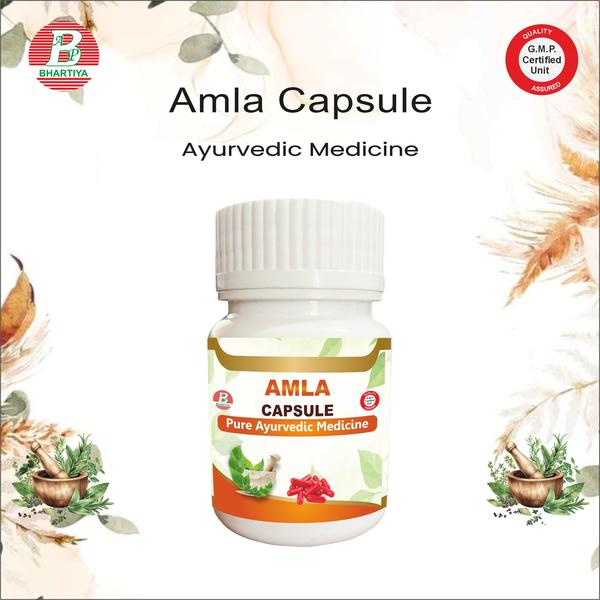
                  (AMLA (Emblica officinalis Gaertn.)                The Supreme Rasayana — “Dhatri Phala” (The Nourishing Mother Fruit)Āmla, also known as Āmalakī, is one of the most celebrated herbs in Ayurveda, recognized as a prime Rasayana (rejuvenative) and Pittashamaka. Considered sacred and synonymous with longevity, it is used for rejuvenation, metabolism, immunity, skin, hair, digestion, eyesight, and vitality.It is among the richest natural sources of Vitamin C, in a unique heat-stable and bioavailable form preserved by tannins such as Emblicanin A & B.Ayurvedic texts describe Amla as a divine herb, equal to nectar, and capable of restoring youth, strength, and Ojas. BOTANICAL INFORMATION OF AMLAScientific Name: Emblica officinalis Gaertn.Synonyms: Phyllanthus emblica Linn.Family: Phyllanthaceae (formerly Euphorbiaceae)Order: MalpighialesGenus: PhyllanthusSpecies: emblicaCommon Names•	Sanskrit: Āmalakī, Dhatri, Shiva, Amrutaphala, Vayasya•	Hindi: Amla•	English: Indian Gooseberry•	Tamil: Nellikai•	Telugu: Usirikaya•	Malayalam: Nellikka•	Kannada: Nellikayi•	Gujarati/Marathi: Amla•	Bengali: Amloki SYNONYMS IN CLASSICAL AYURVEDIC NIGHANTUSCharaka Samhita•	Dhatri, Amalaki – Supreme Rasayana for long lifeSushruta Samhita•	Vayasya, Shreyasi, Kshaya ApahaBhavaprakasha Nighantu•	Amruta, Shiva, Shreyasi, AmalakiDhanvantari Nighantu•	Tishya, Vayasya, Dhatri Phala•	These synonyms emphasize longevity, nourishment, rejuvenation, and divine purity. MORPHOLOGY OF AMLATree-Medium-sized deciduous tree, Height: 8–20 crooked trunk, spreading crownBark-Thin, greyish or reddish-brown, Exfoliating in irregular flakesLeaves-Simple, subsessile, linear-oblong, closely arranged along branchlets, resembling compound leavesFlowers-Greenish-yellow, Unisexual, axillary clustersFruit-Nearly spherical, smooth, light green,6 vertical stripes, extremely sour and astringent, highly nutritious and medicinal.Seed -Hard, six-triangular ECOLOGICAL PREFERENCESClimate: Tropical and subtropical, highly drought-resistant, Tolerates high temperaturesSoil: Grows in poor, alkaline, calcareous, or sandy soils, Thrives in well-drained loamy soilHabitat: Dry deciduous forests, Fields, gardens, village premises, Native to Indian subcontinentAltitude-Sea level to 1,500 m GEOGRAPHICAL DISTRIBUTION            India•	Widely distributed throughout•	Major states: UP, MP, Rajasthan, Gujarat, Maharashtra, Tamil Nadu, KeralaOutside India•	Sri Lanka, Nepal, Bangladesh, Pakistan•	China, Myanmar, Thailand•	Naturalized in Southeast Asia and tropical regions worldwide CLASSICAL AYURVEDIC PROPERTIES (RASA–GUNA–VIRYA–VIPAKA)Rasa (Taste): Pancharasa (five tastes): Amla (sour) predominates Madhura (sweet), Kashaya (astringent), Tikta (bitter), Katu (pungent)No Lavana (salty)Guna (Qualities): Laghu (light), Ruksha (dry)Virya (Potency): Śīta (cooling)Vipaka (post-digestive effect): Madhura (sweet)Dosha Effects: Tridoshaghna (balances all three) Especially Pittashamaka Balances Vata & Kapha too THERAPEUTIC ACTIONS ACCORDING TO AYURVEDA (KARMA)1. Rasayana (Rejuvenative)-Restores youth, vitality, Ojas, Promotes longevity2. ChakshushyaImproves eyesight, Used in Tripahala for eye therapies3. Dipana & Pachana-Enhances digestive fire gently, Prevents acidity despite sour taste4. Medhya-Enhances memory, intellect, Nourishes brain tissues5. Hridya-Strengthens heart, Improves circulation6. Vrishya / Reproductive Health-Promotes fertility, Nourishes Shukra dhatu7. Keshya-Strengthens hair roots, Prevents greying & hair fall8. Raktaprasadana-Purifies blood, Detoxifying9. Lekhana & Kapha-pittahara-Reduces excessive Pitta, Clears Kapha from channels INDICATIONSDigestive System-Acidity, Indigestion, Constipation, Hyperacidity, IBS, Loss of appetiteRespiratory System-Cough, Cold, Allergies, Asthma (as part of formulations)Reproductive & Urinary System-Semen quality improvement, Strengthens bladderSkin & Hair-Brightens complexion, Anti-aging, reduces pigmentation, Promotes hair growthMetabolism-Diabetes, Obesity, High cholesterolNervous System-Memory loss, Fatigue, Stress MODERN PHARMACOLOGY & PHYTOCHEMISTRYMajor Constituents•	Vitamin C (highly stable)•	Tannins: Emblicanin A &, Gallotannins, Ellagitannins•	Phenolics: Gallic acid, Ellagic acid, Chebulinic acid•	Flavonoids: Quercetin, Kaempferol, Amino acids, mineralsPharmacological Actions•	Adaptogenic•	Antioxidant•	Anti-inflammatory•	Immunomodulatory•	Hepatoprotective•	Anti-ulcer•	Antidiabetic•	Anti-aging CULTIVATION DETAILSPropagation-Seeds (most common), Vegetative cuttingsSowing Time-June–July (monsoon)Spacing-8–10 m between plantsIrrigation-Moderate, tolerates drought once matureFertilization-Organic manure preferredHarvesting-Fruits harvested November–March, Leaves and bark collected as required CLASSICAL DOSAGE (According to Ayurvedic Granthas)Churna (Powder): 2–5 g twice dailySwarasa (Fresh juice): 10–20 mlKwatha (Decoction): 40–60 mlAvaleha (paste/lehyam): 10–15 gCapsules / Tablets: As per preparationOil (Thaila): External useGhrita: Internal rejuvenation CLASSICAL AYURVEDIC FORMULATIONS CONTAINING AMLA1. Chyawanprash-Primary Rasayana formulation, Rejuvenation, immunity2. Tripahala Churna-Digestive, detoxifying, eye tonic3. Amalaki Rasayana-Anti-aging, brain tonic, immunity4. Dhatri Rasayana-Pitta balance, digestion5. Brahma Rasayana-Brain and nerve rejuvenative6. Dhatryarishta-Digestive and hepatoprotective7. Amla Oil (Thaila)•	Used for hair growth, cooling Amla (Phyllanthus emblica/Emblica officinalis) Formulations – Bhartiya Ayurvedic PharmacyBhartiya Ayurvedic Pharmacy prepares a range of Amla formulations following classical Ayurvedic principles described in Charaka Samhita, Sushruta Samhita, Bhav Prakash Nighantu, and other Ayurvedic texts. Each product is designed to retain the full rejuvenative, antioxidant, and digestive properties of Amla, supporting immunity, digestion, liver health, and overall vitality. 1. Amla TabletDescription:Amla Tablet is a modern, convenient dosage form containing standardized Amla (Phyllanthus emblica) extract. Ideal for daily use, it retains Amla’s rejuvenative, antioxidant, and digestive properties.Key Actions:•	Tridoshic Rasayana: Balances Vata, Pitta, Kapha•	Supports immunity and vitality•	Enhances digestion and bowel regularity•	Improves liver and kidney health•	Promotes skin and hair healthDosage:•	1–2 tablets twice daily after meals with warm water, or as directedPrecautions:•	Avoid excessive use in diarrhea or loose stools•	Diabetics should monitor blood sugar 2. Amla CapsuleDescription:Amla Capsule is a convenient, easy-to-swallow form containing Amla extract. Suitable for those who prefer capsules over tablets or powders.Key Actions:•	Rejuvenative and immunity-boosting•	Antioxidant properties reduce oxidative stress•	Supports digestive health•	Promotes liver and kidney functionDosage:•	1–2 capsules twice daily with warm water after mealsPrecautions:•	Avoid overdose•	Use under supervision if pregnant or lactating 3. Amlakyadi Loh (Amlakyadi Loh Bhasma)Description:A herbo-mineral Ayurvedic formulation combining Amla and metallic/mineral preparations (Loh Bhasma – iron ash). Traditionally used for blood disorders, anaemia, and general debility.Key Actions:•	Hematinic: Supports red blood cell formation•	Rejuvenative: Enhances strength, vitality, and metabolism•	Improves immunity•	Supports liver functionDosage:•	1–2 tablets once or twice daily after meals with warm water or milk, as directed by an Ayurvedic practitionerPrecautions:•	Monitor iron levels during prolonged use•	Avoid in cases of iron overload or gastric sensitivity 4. Amla Powder (Amla Churna)Description:Pure, finely powdered Amla for traditional use. Can be consumed with honey, ghee, or water.Key Actions:•	Rasayana and rejuvenative•	Supports digestion and bowel movements•	Enhances liver and kidney detoxification•	Improves immunity, skin, and hair healthDosage:•	1–3 g daily with water, honey, or as advisedPrecautions:•	Avoid excess intake in diarrhea•	Diabetics should consult before use Amlaki Rasayana (Semi-Solid / Avaleha Form)Description:Classical semi-solid Rasayana prepared from Amla (Phyllanthus emblica), sometimes with other rejuvenative herbs, preserving full potency and bioactive constituents.Key Actions:•	Rejuvenative (Rasayana) and immunity booster•	Enhances digestion and nutrient absorption•	Detoxifies liver and kidneys•	Promotes healthy skin and hair•	Supports respiratory health and longevityDosage:•	5–10 g (1 teaspoon) twice daily with warm milk, water, or honeyPrecautions:•	Avoid in diarrhea or loose stools•	Diabetics should monitor sugar if sweetened•	Use under supervision during pregnancy or chronic illnessBenefits:•	Vitality and strength•	Digestive, liver, and kidney support•	Antioxidant and anti-aging effects•	Overall rejuvenation and longevity 6. Tripahala ChurnaDescription:A classical Ayurvedic powder containing Haritaki, Bibhitaki, and Amla, used for digestion, detoxification, and bowel regulation.Key Actions:•	Mild laxative: Supports regular bowel movements•	Rejuvenative: Improves immunity and vitality•	Detoxifying: Cleanses liver, kidneys, and digestive tract•	Balances Vata and Pitta doshasDosage:•	1–3 g daily with warm water, honey, or ghee, preferably at bedtime or as advisedPrecautions:•	Avoid excessive use leading to loose stools•	Consult practitioner for prolonged use in elderly or weak patients SAFETY & PRECAUTIONSSafe for long-term use when taken in classical dosesHighly safe fruit for children, elderly, and pregnant women (dietary form)Precautions:•	Excess consumption may increase dryness (Vata)•	Use cautiously in:• Severe hypoglycemia• Chronic diarrhea•	Avoid cold Amla juice in Kapha prakriti people during heavy winter
Amla Capsule

INR 105 INR 210
You Save 50%

VIEW DETAILS
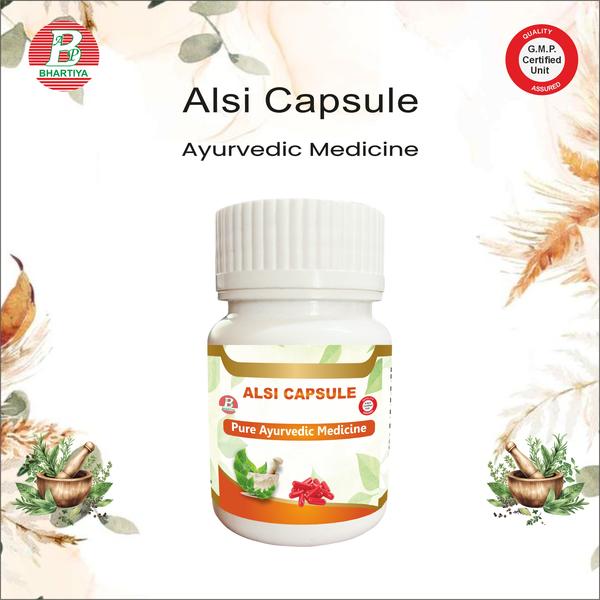
                                    ALSI  ALSI (Linum usitatissimum L.) The Nutrient-Rich Seed — “Flaxseed” (Golden and Brown Variants)Alsi, commonly known as Flaxseed, is a highly valued seed in Ayurveda and modern nutrition. It is known for its cooling, nourishing, and digestive-supporting properties. Rich in omega-3 fatty acids, lignans, dietary fiber, and proteins, Alsi is considered beneficial for heart health, metabolism, skin, hair, and overall vitality. CLASSICAL AYURVEDIC REFERENCES1.	Charaka Samhitao	Mentioned in Kalpa Sthana (Charaka Kalpa 6/3–4) as a Vata-Pitta pacifying, nourishing seed.o	Used in formulations for strengthening Shukra dhatu and improving Medha (intellect).2.	Sushruta Samhitao	Listed in Kalpa Sthana (Sushruta 52/12) as a seed beneficial in Vata disorders, constipation, and joint stiffness.o	Emphasized as Snigdha (unctuous), Guru (heavy), and Shita (cooling)—helpful for Rasayana therapies.3.	Bhavaprakasha Nighantuo	Referred to as Alasi / Tila, promoting Ojas, longevity, and reproductive health.o	Mentioned in Vrishya and Medhya formulations, often mixed with milk or ghee for nourishing tonics. CLASSICAL STORY / ANECDOTEWhile Alsi is not associated with a divine legend like Āmla, Ayurvedic granthas often highlight its practical mythological analogy:In Bhavaprakasha Nighantu, Alsi is compared to the “supporting seed”, symbolizing its role in strengthening the body like a pillar supports a structure. The granth describes Alsi as “Balapradā, Medhya, Vrishya, Snigdha, Guru”—meaning it supports physical strength, intellect, fertility, and nourishment.Traditionally, sages recommended Alsi to warriors and kings during winter months: roasted with ghee and honey, it would improve strength, endurance, and resilience, functioning as a natural “fortifier” for the body. BOTANICAL INFORMATION OF ALSI•	Scientific Name: Linum usitatissimum L.•	Family: Linaceae•	Order: Malpighiales•	Genus: Linum•	Species: usitatissimum•	Common Names:o	Sanskrit: Alasi, Tila Pishitao	Hindi: Alsio	English: Flaxseedo	Tamil: Linseedo	Telugu: Alasio	Malayalam: Alasio	Kannada: Alasio	Bengali: Alasi SYNONYMS IN CLASSICAL AYURVEDIC NIGHANTUS•	Charaka Samhita: Alasi – Nourishing, Vata-Pitta balancing•	Sushruta Samhita: Alasi – Vrishya (reproductive tonic), Medhya (brain nourishing)•	Bhavaprakasha Nighantu: Alasi, Tila – Promotes longevity, fertility, and strength MORPHOLOGY OF ALSI•	Plant Type: Annual herb, slender stem•	Height: 30–90 cm•	Leaves: Narrow, lanceolate, alternate•	Flowers: Blue, small, 5-petaled•	Fruit / Seed Capsule: Small capsule containing 5–10 seeds•	Seeds: Tiny, smooth, golden or brown, oily, nutty flavour ECOLOGICAL PREFERENCES•	Climate: Temperate to subtropical, prefers cool growing season•	Soil: Well-drained loamy or sandy soil, pH 6–7.5•	Habitat: Cultivated in fields, gardens; requires full sun•	Altitude: Sea level to 1,800 m GEOGRAPHICAL DISTRIBUTION•	India: Punjab, Haryana, Rajasthan, Madhya Pradesh, Uttar Pradesh•	Outside India: Canada, USA, Russia, China, Egypt, Europe CLASSICAL AYURVEDIC PROPERTIES (RASA–GUNA–VIRYA–VIPAKA)•	Rasa (Taste): Madhura (sweet), Tikta (bitter), Kashaya (astringent)•	Guna (Qualities): Snigdha (unctuous), Guru (heavy)•	Virya (Potency): Śīta (cooling)•	Vipaka (post-digestive effect): Madhura (sweet)•	Dosha Effects: Vata-Pitta hara (reduces Vata & Pitta), Kapha samana in moderation THERAPEUTIC ACTIONS (KARMA)1.	Medhya: Supports brain health, improves memory and intellect2.	Hridya: Supports heart and circulatory system3.	Vrishya: Enhances fertility, nourishes Shukra dhatu4.	Vatahara: Reduces Vata disorders like constipation, joint stiffness5.	Snigdha & Lekhana: Lubricates intestines, reduces dryness, promotes digestion6.	Keshya: Nourishes hair, prevents dryness and hair fall7.	Rasayana: Improves longevity and overall vitality INDICATIONS•	Digestive System: Constipation, irregular bowel movements, IBS•	Cardiovascular System: Hyperlipidemia, hypertension, atherosclerosis•	Reproductive & Urinary System: Fertility support, urinary dryness•	Skin & Hair: Dry skin, hair loss, premature greying•	Metabolism: Obesity, diabetes, metabolic syndrome•	Nervous System: Anxiety, stress, memory support MODERN PHARMACOLOGY & PHYTOCHEMISTRY•	Major Constituents:o	Omega-3 fatty acids (α-linolenic acid)o	Lignans (secoisolariciresinol diglucoside)o	Proteins, dietary fibero	Vitamins (B1, B6, folate), minerals (Mg, P, K)o	Phenolic compounds, flavonoids•	Pharmacological Actions:o	Cardioprotectiveo	Anti-inflammatoryo	Antioxidanto	Anti-diabetico	Laxative & gut health promotero	Hormone modulating (phytoestrogens) CULTIVATION DETAILS•	Propagation: Seeds•	Sowing Time: October–November (Rabi season)•	Spacing: 20–25 cm between plants•	Irrigation: Moderate; sensitive to waterlogging•	Fertilization: Organic manure preferred•	Harvesting: 90–120 days after sowing, when capsules turn brown CLASSICAL DOSAGE (According to Ayurvedic Granthas)•	Whole Seeds: 5–10 g/day, chewed or powdered•	Powdered Seeds (Churna): 3–6 g/day•	Oil (Taila / Flaxseed Oil): 5–10 ml/day•	Decoction / Paste: As per therapeutic need (for skin or joint disorders)Alsi (Linum usitatissimum) Formulations – Bhartiya Ayurvedic PharmacyBhartiya Ayurvedic Pharmacy prepares a range of Alsi formulations following classical Ayurvedic principles described in Charaka Samhita, Sushruta Samhita, Bhavaprakasha Nighantu, and other Ayurvedic texts. Each product is designed to retain the full nutritive, cooling, Vata-Pitta balancing, and digestive-supporting properties of Alsi, promoting heart health, metabolic balance, skin and hair nourishment, and overall vitality.Key Uses of Alsi Formulations:•	Digestive Support: Relieves constipation, promotes gut health, and aids in proper metabolism.•	Cardiovascular Health: Supports healthy lipid profile and reduces risk of cardiovascular disorders.•	Reproductive Health: Enhances fertility, supports Shukra dhatu, and nourishes reproductive tissues.•	Skin and Hair Care: Improves skin hydration, reduces dryness, and strengthens hair roots.•	Rasayana (Rejuvenative): Provides nourishment, supports longevity, and maintains overall vitality. ALSI CAPSULEBhartiya Ayurvedic Pharmacy offers Alsi Capsules prepared according to classical Ayurvedic principles described in Charaka Samhita, Sushruta Samhita, and Bhavaprakasha Nighantu. Each capsule contains premium quality Alsi (Flaxseed) powder or extract, retaining its full nutritive, Vata-Pitta balancing, and rejuvenative properties. The capsules provide a convenient way to support digestive health, metabolism, heart function, skin and hair nourishment, and overall vitality.Key Benefits:•	Supports digestive health and relieves mild constipation•	Promotes heart and cardiovascular health by supporting healthy lipid levels•	Enhances reproductive health and nourishes Shukra dhatu•	Maintains healthy skin and hair, reducing dryness and promoting strength•	Acts as a Rasayana, promoting overall vitality, strength, and enduranceDosage:•	Adults: 1–2 capsules twice daily with warm water or as directed by an Ayurvedic physician•	Can be combined with milk or ghee for enhanced Rasayana effectSafety & Precautions:•	Safe for long-term use when taken as per dosage•	May cause mild laxative effect in sensitive individuals due to high fiber content•	Monitor blood sugar if taken along with antidiabetic medicationsFormulation Highlights:•	100% natural Alsi (Flaxseed) powder•	Free from artificial colors, preservatives, and additives•	Prepared using classical Ayurvedic processing methods to preserve therapeutic qualitiesSuggested Use:•	Ideal for adults looking to improve digestion, heart health, metabolism, and vitality•	Suitable for those seeking Ayurvedic Rasayana support in a convenient capsule form
Alsi Capsule

INR 165 INR 330
You Save 50%

VIEW DETAILS
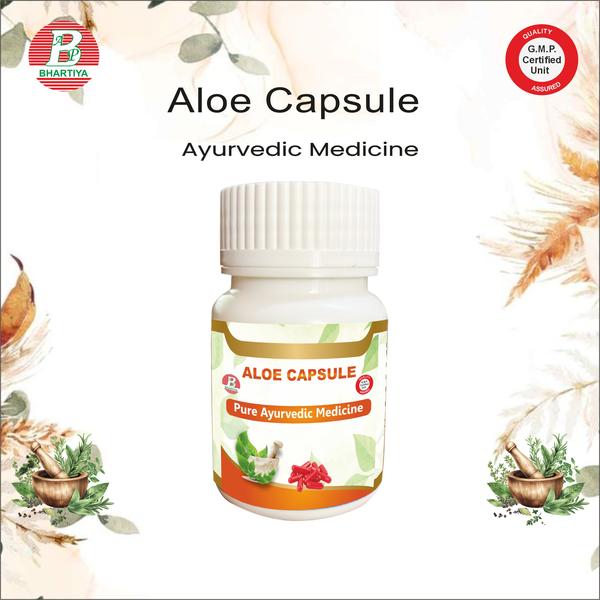
                          ALOE The Cooling Healer — “Ghritakumari / Kumari”Aloe is one of the most revered medicinal plants in Ayurveda and traditional systems worldwide. Known for its Sheetala (cooling), Mridu (gentle), Deepana-Pachana (digestive), and Rasayana properties, Aloe supports digestion, liver function, skin health, hormonal balance, and overall rejuvenation. It is especially valued for its Pitta-pacifying and wound-healing actions. CLASSICAL AYURVEDIC REFERENCES1. Charaka Samhita•	Described in Chikitsa Sthana as Bhedana, Deepana, Yakrit-uttejaka (mild purgative, digestive, liver stimulant).•	Used in Virechana therapies for Pitta disorders.•	Considered beneficial in Yakrit vikara (liver disorders), Arsha (piles), and Udara roga.2. Sushruta Samhita•	Mentioned for Vrana-ropana (wound healing), Daha prashamana (relieves burning sensation).•	Used externally for burns, ulcers, skin diseases, and inflammation.3. Bhavaprakasha Nighantu•	Listed under Guduchyadi varga.•	Described as Kumari – Balya, Rasayana, Pittahara, Yonidoshahara.•	Highly praised for female reproductive health and rejuvenation. CLASSICAL STORY / TRADITIONAL ANALOGYIn Ayurvedic tradition, Kumari symbolizes eternal youth and regeneration.Ancient physicians compared Aloe to Amrita for the skin and liver, stating that just as the moon cools the earth, Aloe cools the overheated Pitta in the body.Sages prescribed Aloe juice regularly to Rishis, women, and kings for:•	Maintaining youthfulness•	Supporting digestion and liver health•	Enhancing vitality and longevity BOTANICAL INFORMATION OF ALOE•	Scientific Name: Aloe vera (L.) Burm.f.•	Family: Asphodelaceae•	Order: Asparagales•	Genus: Aloe•	Species: veraCommon Names•	Sanskrit: Kumari, Ghritakumari•	Hindi: Ghritkumari•	English: Aloe vera•	Tamil: Kathalai•	Telugu: Kalabanda•	Malayalam: Kattarvazha•	Kannada: Lolisara•	Bengali: Ghritokumari SYNONYMS IN CLASSICAL NIGHANTUS•	Kumari – Promoter of youth and fertility•	Ghritakumari – Cooling like ghee, rejuvenating•	Visala – Wide therapeutic utility•	Kanyasara – Essential for female health MORPHOLOGY OF ALOE•	Plant Type: Perennial succulent herb•	Height: 30–60 cm•	Leaves: Thick, fleshy, lance-shaped with serrated margins•	Gel: Transparent, mucilaginous inner pulp•	Flowers: Yellow tubular flowers on long spikes•	Roots: Fibrous ECOLOGICAL PREFERENCES•	Climate: Tropical to subtropical, dry climate•	Soil: Sandy, well-drained soil•	Sunlight: Full sun to partial shade•	Water Requirement: Low (drought tolerant)•	Altitude: Sea level to 1,500 m GEOGRAPHICAL DISTRIBUTION•	India: Rajasthan, Gujarat, Maharashtra, Tamil Nadu, Andhra Pradesh•	Worldwide: Africa, Middle East, USA, Mexico, Mediterranean regions AYURVEDIC PROPERTIES (RASA–GUNA–VIRYA–VIPAKA)•	Rasa: Tikta (bitter), Madhura (sweet)•	Guna: Guru (heavy), Snigdha (unctuous), Picchila (slimy)•	Virya: Śīta (cooling)•	Vipaka: Madhura•	Dosha Effect:o	Pitta hara (strong)o	Vata pacifying (when used with ghee)o	Kapha increasing in excess THERAPEUTIC ACTIONS (KARMA)1.	Rasayana – Rejuvenative, anti-aging2.	Yakrit-uttejaka – Liver stimulant3.	Deepana–Pachana – Improves digestion & metabolism4.	Virechana – Mild purgative5.	Vrana-ropana – Heals wounds and burns6.	Twachya – Improves skin health7.	Yonidoshahara – Supports female reproductive health INDICATIONS•	Digestive: Constipation, acidity, IBS, poor digestion•	Liver: Fatty liver, hepatitis, sluggish liver•	Skin: Burns, wounds, acne, eczema, psoriasis•	Female Health: PCOS, menstrual irregularities, uterine health•	Metabolic: Diabetes, obesity (Pitta-related)•	Inflammatory Conditions: Burning sensation, ulcers MODERN PHYTOCHEMISTRY & PHARMACOLOGYMajor Constituents•	Polysaccharides (Acemannan)•	Anthraquinones (Aloin, Emodin – in latex)•	Vitamins A, C, E, B12•	Minerals (Zn, Mg, Ca)•	Amino acids & enzymesPharmacological Actions•	Anti-inflammatory•	Hepatoprotective•	Immunomodulatory•	Antioxidant•	Wound healing•	Mild laxative (latex portion) CULTIVATION DETAILS•	Propagation: Offshoots (suckers)•	Planting Time: February–March / July–August•	Spacing: 45 × 45 cm•	Irrigation: Minimal•	Harvesting: Leaves after 8–10 months CLASSICAL DOSAGE•	Fresh Juice (Swarasa): 10–20 ml/day•	Gel (Pulp): 5–10 g/day•	Powder (Churna): 250–500 mg•	Processed Aloe (Kumari Asava, Ghrita): As prescribed ALOE FORMULATIONS – BHARTIYA AYURVEDIC PHARMACYBhartiya Ayurvedic Pharmacy prepares Aloe (Kumari) formulations strictly according to classical Ayurvedic texts such as Charaka Samhita, Sushruta Samhita, and Bhavaprakasha Nighantu. These formulations preserve Aloe’s cooling, rejuvenating, liver-supportive, and skin-healing properties.Key Uses•	Liver detox & digestive balance•	Skin and hair nourishment•	Female reproductive health•	Metabolic and Pitta disorders•	Rasayana & longevity support                                                                                                                                                                                                                                                                                                                                     ALOE CAPSULEBhartiya Ayurvedic Pharmacy Aloe Capsules are prepared using purified Aloe extract/powder, following classical Ayurvedic processing methods.Key Benefits•	Supports liver and digestive health•	Helps regulate bowel movements•	Promotes healthy skin and hair•	Supports hormonal and reproductive balance•	Acts as a natural RasayanaDosage•	Adults: 1–2 capsules twice daily with lukewarm water•	Best taken on empty stomach or as advised by physicianSafety & Precautions•	Safe for long-term use under guidance•	Avoid during pregnancy unless prescribed•	Excess use may cause loose stoolsFormulation Highlights•	100% pure Aloe vera•	No preservatives or additives•	Classical Ayurvedic processing
Aloe Capsule

INR 165 INR 330
You Save 50%

VIEW DETAILS
                                      LEUCORIN CAPSULE Product Identification•	Generic Name: Leucorin Capsule•	Type: Ayurvedic Patent MedicineTherapeutic Indications •	Helps manage excessive vaginal discharge, restores vaginal health, and balances hormonal and metabolic functions.Primary Benefits•	Helps reduce excessive vaginal discharge•	Restores normal vaginal health and hygiene•	Supports hormonal balance•	Strengthens reproductive and urinary tract health•	Promotes overall female reproductive wellnessOther Benefits•	Improves Immunity: Supports the body’s natural defense mechanisms, helping prevent recurrent infections.•	Supports Digestive Health: Aids proper digestion and nutrient absorption, which can indirectly help maintain reproductive health.•	Enhances Energy & Vitality: Helps reduce fatigue and general weakness often associated with prolonged leucorrhoea.•	Promotes Hormonal Balance: Helps regulate the endocrine system, which can improve menstrual health and overall reproductive function.•	Maintains Urinary Tract Health: Supports healthy urinary function, reducing the risk of associated irritation or infections.Ingredients: Safed Musali (White Musli) •	Botanical Name: Chlorophytum borivilianum•	Key Constituents: Steroidal saponins, Alkaloids, Flavonoids, Polysaccharides, Proteins, Amino acidsMechanism of Action in Women’s Health – Biochemistry / Pharmacology•	Acts as a reproductive tonic, nourishing uterus and vaginal tissues•	Regulates hormonal balance (estrogen and progesterone), supporting menstrual and reproductive health•	Exhibits anti-inflammatory and antimicrobial effects, helping prevent infections•	Boosts immunity to reduce recurrent reproductive tract infections•	Enhances energy, vitality, and overall well-being, supporting systemic and reproductive health Shatavari •	Botanical Name: Asparagus racemosus•	Key Constituents: Steroidal saponins (Shatavarins), Flavonoids, Alkaloids, Polysaccharides, ProteinsMechanism of Action in Women’s Health – Biochemistry / Pharmacology•	Acts as a female reproductive tonic, nourishing uterus and ovaries•	Regulates hormonal balance (estrogen and progesterone), supporting menstrual and lactational health•	Exhibits anti-inflammatory and antioxidant effects, protecting reproductive tissuesArjun Chhal (Arjuna Bark) •	Botanical Name: Terminalia arjuna•	Key Constituents: Tannins, Flavonoids, Glycosides, Saponins, Polyphenols, MineralsMechanism of Action in Women’s Health – Biochemistry / Pharmacology•	Supports cardiovascular health, improving circulation and heart function•	Exhibits antioxidant and anti-inflammatory effects, protecting blood vessels and tissues•	Helps maintain healthy blood pressure and lipid levels, indirectly supporting metabolic and reproductive health Mulethi (Licorice) •	Botanical Name: Glycyrrhiza glabra•	Key Constituents: Glycyrrhizin, Flavonoids, Saponins, Coumarins, PolysaccharidesMechanism of Action in Women’s Health – Biochemistry / Pharmacology•	Exhibits anti-inflammatory and soothing effects, supporting reproductive tract health•	Helps maintain hormonal balance, particularly estrogen, aiding menstrual and reproductive function Gokharu (Tribulus terrestris)  Botanical Name: Tribulus terrestrisKey Constituents: Saponins (Protodioscin, Tribulosides), Flavonoids, Alkaloids, SterolsMechanism of Action in Women’s Health – Biochemistry / Pharmacology•	Supports hormonal balance by modulating luteinizing hormone (LH) and ovarian steroidogenesis, aiding menstrual and reproductive function•	Exhibits anti-inflammatory effects, reducing pelvic and systemic inflammation.•	Acts as a mild adaptogen, enhancing energy, stamina, and resilience to metabolic or hormonal stressAmla (Indian Gooseberry) Botanical Name: Phyllanthus emblica Key Constituents: Vitamin C, Tannins, Flavonoids, Polyphenols, Gallic AcidMechanism of Action in Women’s Health – Biochemistry / Pharmacology•	Potent antioxidant, reducing oxidative stress and protecting reproductive and systemic tissue•	 Supports hormonal balance by enhancing adrenal and thyroid function, indirectly regulating menstrual cycles•	Exhibits anti-inflammatory effects, helping reduce menstrual and pelvic discomfortKaunch beej (Mucuna pruriens)  Botanical Name: Mucuna pruriens Key Constituents: L-DOPA, Alkaloids, Flavonoids, Saponins, ProteinsMechanism of Action in Women’s Health – Biochemistry / Pharmacology •	Supports hormonal balance by modulating dopamine levels, which can influence prolactin and ovarian function, aiding menstrual and reproductive health•	 Exhibits mild adaptogenic and anti-stress effects, enhancing energy, vitality, and resilience to metabolic or hormonal stress•	 Acts as a reproductive tonic, promoting ovarian function and fertilityVidhara (Shatavari, Asparagus racemosus)  Botanical Name: Asparagus racemosusKey Constituents: Saponins (Shatavarins), Flavonoids, Alkaloids, Glycosides, PolysaccharidesMechanism of Action in Women’s Health – Biochemistry / Pharmacology •	Supports hormonal balance, particularly estrogen, aiding menstrual regulation, reproductive health, and fertility•	Exhibits galactagogue activity, enhancing lactation in postpartum women via prolactin modulation•	Acts as a mild adaptogen, improving energy, vitality, and resilience to hormonal or metabolic stress•	Shows anti-inflammatory and antioxidant effects, protecting reproductive tissues and reducing menstrual or pelvic discomfortBala (Sida cordifolia)  Botanical Name: Sida cordifoliaKey Constituents: Alkaloids (Ephedrine, Sidanol), Flavonoids, Sterols, Glycosides, SaponinsMechanism of Action in Women’s Health – Biochemistry / Pharmacology• Supports reproductive health by strengthening uterine and ovarian function• Exhibits hormonal modulatory effects, aiding menstrual regulation and fertility• Acts as a mild adaptogen, enhancing energy, vitality, and resilience to hormonal or metabolic stressBombax malabaricum (Semal / Silk Cotton Tree)  Botanical Name: Bombax malabaricum Key Constituents: Flavonoids, Tannins, Saponins, Polysaccharides, SterolsMechanism of Action in Women’s Health – Biochemistry / Pharmacology•	Supports reproductive health by promoting uterine and ovarian function•	 Exhibits anti-inflammatory and soothing effects, reducing menstrual and pelvic discomfort•	 Acts as a hormonal modulator, aiding menstrual regulation and fertilityLajwanti (Mimosa pudica)Botanical Name: Mimosa pudicaKey Constituents: Alkaloids, Flavonoids, Tannins, Saponins, PolysaccharidesMechanism of Action – Women’s Health (Biochemistry / Pharmacology)•	Uterine & Ovarian Support: Promotes reproductive organ function.•	Anti-inflammatory: Reduces menstrual cramps and pelvic discomfort.•	Hormonal Modulation: Aids menstrual regulation and fertility.•	Antioxidant: Protects reproductive tissues from oxidative stress.Hygrophila spinosa (Talmakhana / Kokilaksha)Botanical Name: Hygrophila spinosaKey Constituents: Alkaloids, Flavonoids, Saponins, Sterols, GlycosidesMechanism of Action – Women’s Health (Biochemistry / Pharmacology)•	Reproductive Support: Promotes uterine and ovarian function, supports fertility.•	Anti-inflammatory: Reduces menstrual cramps and pelvic discomfort.•	Hormonal Modulation: Aids in menstrual cycle regulation. Daruhaldi (Berberis aristata)Botanical Name: Berberis aristataKey Constituents: Berberine, Alkaloids, Flavonoids, Tannins, Phenolic compoundsMechanism of Action – Women’s Health (Biochemistry / Pharmacology)•	Reproductive Support: Promotes uterine and ovarian function.•	Anti-inflammatory: Reduces menstrual cramps, pelvic discomfort, and inflammation.•	Hormonal Modulation: Aids in menstrual cycle regulation and fertility support.Devdaru (Cedrus deodara)Botanical Name: Cedrus deodaraKey Constituents: α-Pinene, Limonene, Cedrol, Flavonoids, Tannins, Resinous compoundsMechanism of Action – Women’s Health (Biochemistry / Pharmacology)•	Reproductive Support: Promotes uterine and ovarian function.•	Anti-inflammatory: Reduces menstrual cramps and pelvic discomfort.•	Hormonal Modulation: Supports menstrual regulation and fertility.•	Antioxidant: Protects reproductive tissues from oxidative stress.Shudh Guggul (Commiphora mukul)Botanical Name: Commiphora mukulKey Constituents: Guggulsterones, Resin, Flavonoids, Tannins, Volatile oilsMechanism of Action – Women’s Health (Biochemistry / Pharmacology)•	Reproductive Support: Promotes uterine and ovarian function.•	Anti-inflammatory: Reduces menstrual cramps and pelvic discomfort.•	Hormonal Modulation: Aids menstrual regulation and supports fertility.•	Antioxidant: Protects reproductive tissues from oxidative stress.Kali Mirch (Black Pepper)Botanical Name: Piper nigrumKey Constituents: Piperine, Volatile oils, Alkaloids, FlavonoidsMechanism of Action – Women’s Health (Biochemistry / Pharmacology)•	Reproductive Support: Promotes uterine and ovarian function.•	Anti-inflammatory: Reduces menstrual cramps and pelvic discomfort.•	Hormonal Modulation: Supports menstrual regulation and fertility.Aloe (Aloe vera)Botanical Name: Aloe veraKey Constituents: Anthraquinones, Polysaccharides, Saponins, Flavonoids, VitaminsMechanism of Action – Women’s Health (Biochemistry / Pharmacology)•	Reproductive Support: Promotes uterine and ovarian function.•	Anti-inflammatory: Reduces menstrual cramps and pelvic discomfort.•	Hormonal Modulation: Supports menstrual regulation and fertility. Lodhra (Symplocos racemosa)Botanical Name: Symplocos racemosaKey Constituents: Tannins, Flavonoids, Glycosides, Alkaloids, SaponinsMechanism of Action – Women’s Health (Biochemistry / Pharmacology)•	Reproductive Support: Glycosides and flavonoids modulate estrogen receptor activity → support uterine and ovarian function.•	Anti-inflammatory: Tannins and flavonoids inhibit prostaglandin synthesis → reduce menstrual cramps and pelvic discomfort.•	Hormonal Modulation: Alkaloids and glycosides help regulate menstrual cycle and fertility.•	Antioxidant: Flavonoids and tannins scavenge free radicals → protect ovarian and uterine tissues from oxidative stress Dhataki (Woodfordia fruticosa)Botanical Name: Woodfordia fruticosaKey Constituents: Flavonoids, Tannins, Glycosides, Anthocyanins, Volatile oilsMechanism of Action – Women’s Health (Biochemistry / Pharmacology)•	Reproductive Support: Flavonoids and glycosides may modulate estrogen receptor activity → support uterine and ovarian function.•	Anti-inflammatory: Tannins and flavonoids inhibit prostaglandin synthesis → reduce menstrual cramps and pelvic discomfort.•	Hormonal Modulation: Glycosides help in regulating menstrual cycle and fertility.Bhringraj (Eclipta alba / Eclipta prostrata)Botanical Name: Eclipta albaKey Constituents: Alkaloids, Coumestans (Wedelolactone), Flavonoids, Tannins, SaponinsMechanism of Action – Women’s Health (Biochemistry / Pharmacology)•	Reproductive Support: Modulates estrogen receptors → promotes uterine & ovarian function.•	Anti-inflammatory: Inhibits COX-2 & prostaglandin synthesis → reduces menstrual cramps.•	Hormonal Modulation: Influences steroidogenesis → balances estrogen & progesterone Vacha (Acorus calamus)Botanical Name: Acorus calamusKey Constituents: β-Asarone, α-Asarone, Essential oils, Flavonoids, TanninsMechanism of Action – Women’s Health (Biochemistry / Pharmacology)•	Reproductive Support: β-Asarone may modulate estrogen receptor signaling → supports uterine and ovarian function.•	Anti-inflammatory: Inhibits prostaglandin synthesis → reduces menstrual cramps and pelvic discomfort.•	Hormonal Modulation: Influences steroidogenesis → helps in menstrual regulation and fertility.•	Antioxidant: Flavonoids and essential oils scavenge ROS → protect reproductive tissues.Tejpatra (Cinnamomum tamala)Botanical Name: Cinnamomum tamalaKey Constituents: Essential oils (Cinnamaldehyde, Eugenol), Tannins, FlavonoidsMechanism of Action – Women’s Health (Biochemistry / Pharmacology)•	Reproductive Support: Cinnamaldehyde may modulate estrogen receptor activity → supports uterine and ovarian function.•	Anti-inflammatory: Inhibits prostaglandin synthesis → reduces menstrual cramps and pelvic discomfort.•	Hormonal Modulation: Flavonoids influence steroidogenesis → aid in menstrual regulation and fertility.•	Antioxidant: Essential oils and flavonoids scavenge ROS → protect reproductive tissues. Dalchini (Cinnamomum verum / Cinnamon)Botanical Name: Cinnamomum verumKey Constituents: Cinnamaldehyde, Eugenol, Tannins, Flavonoids, Volatile oilsMechanism of Action – Women’s Health (Biochemistry / Pharmacology)•	Reproductive Support: Cinnamaldehyde and flavonoids modulate estrogen receptor signaling → support uterine and ovarian function.•	Anti-inflammatory: Inhibits prostaglandin synthesis → reduces menstrual cramps and pelvic discomfort.•	Hormonal Modulation: Flavonoids influence steroidogenesis → aid menstrual regulation and fertility.Methi Dana (Fenugreek seeds)Botanical Name: Trigonella foenum-graecumKey Constituents: Saponins (Diosgenin), Alkaloids, Flavonoids, Fiber, MucilageMechanism of Action – Leucorrhoea / Women’s Health (Biochemistry / Pharmacology)•	Hormonal Modulation: Diosgenin acts as a phytoestrogen → supports estrogen balance and strengthens vaginal mucosa.•	Anti-inflammatory: Flavonoids inhibit prostaglandin synthesis → reduce inflammation in vaginal and uterine tissues.•	Antioxidant: Saponins and flavonoids scavenge reactive oxygen species (ROS) → protect reproductive tissues from oxidative stress. Aamguthli (Mango seeds)Botanical Name: Mangifera indicaKey Constituents: Tannins, Polyphenols, Flavonoids, Fatty acids, MangiferinMechanism of Action – leucorrhoea / Women’s Health (Biochemistry / Pharmacology)•	Astringent & Reproductive Support: Tannins and polyphenols → tighten vaginal mucosa and reduce excessive discharge.•	Anti-inflammatory: Flavonoids inhibit prostaglandin synthesis → reduce inflammation in vaginal and uterine tissues.•	Antioxidant: Mangiferin and polyphenols scavenge reactive oxygen species (ROS) → protect reproductive tissues from oxidative stress.Saunth (Dry Ginger)Botanical Name: Zingiber officinaleKey Constituents: Gingerols, Shogaols, Zingerone, Volatile oils, FlavonoidsMechanism of Action – Leucorrhea / Women’s Health (Biochemistry / Pharmacology)•	Anti-inflammatory: Gingerols and shogaols inhibit prostaglandin and cytokine (TNF-α, IL-1β, IL-6) production → reduce vaginal and uterine inflammation.•	Antioxidant: Gingerols and shogaols scavenge reactive oxygen species (ROS) → protect reproductive tissues from oxidative stress.•	Hormonal Modulation: Active compounds may support estrogen receptor activity → help normalize vaginal mucosa and secretions. Ashwagandha (Withania somnifera)Botanical Name: Withania somniferaKey Constituents: Withanolides, Alkaloids, Saponins, Flavonoids, IronMechanism of Action – Women’s Health (Biochemistry / Pharmacology)•	Reproductive Support: Withanolides modulate estrogen and progesterone receptor signaling → support ovarian and uterine function.•	Adaptogenic & Hormonal Modulation: Reduces stress-induced cortisol → indirectly normalizes menstrual cycles and improves fertility.•	Anti-inflammatory: Inhibits pro-inflammatory cytokines (TNF-α, IL-1β) → reduces pelvic discomfort and uterine inflammation.Pippali (Piper longum)Botanical Name: Piper longumKey Constituents: Piperine, Volatile oils, Alkaloids, FlavonoidsMechanism of Action – Women’s Health (Biochemistry / Pharmacology)•	Reproductive Support: Piperine may modulate estrogen receptor activity → supports uterine and ovarian function.•	Anti-inflammatory: Inhibits prostaglandin synthesis → reduces menstrual cramps and pelvic inflammation.•	Hormonal Modulation: Influences steroidogenesis → aids menstrual regulation and fertility.•	Antioxidant: Flavonoids and piperine scavenge ROS → protect reproductive tissues. Vidhara (Acorus calamus)Botanical Name: Acorus calamusKey Constituents: α-Asarone, β-Asarone, Volatile oils, Flavonoids, TanninsMechanism of Action – Women’s Health (Biochemistry / Pharmacology)•	Reproductive Support: α- and β-Asarone modulate estrogen receptor activity → support uterine and ovarian function.•	Anti-inflammatory: Inhibits prostaglandin synthesis → reduces menstrual cramps and pelvic inflammation.•	Hormonal Modulation: Influences steroidogenesis → aids menstrual regulation and fertility.•	Antioxidant: Flavonoids and volatile oils scavenge ROS → protect reproductive tissues. Lahsun (Garlic)Botanical Name: Allium sativumKey Constituents: Allicin, Sulfur compounds, Flavonoids, SaponinsMechanism of Action – Women’s Health (Biochemistry / Pharmacology)•	Reproductive Support: Sulfur compounds may improve uterine and ovarian microcirculation → support reproductive tissue function.•	Anti-inflammatory: Inhibits prostaglandin synthesis and NF-κB pathway → reduces pelvic inflammation and menstrual cramps.•	Hormonal Modulation: Flavonoids and organosulfur compounds may influence steroidogenesis → aid menstrual regulation and fertility.Belgiri (Aegle marmelos)Botanical Name: Aegle marmelosKey Constituents: Alkaloids (e.g., Marmeline), Tannins, Flavonoids, Coumarins, Essential oilsMechanism of Action – Women’s Health (Biochemistry / Pharmacology)•	Reproductive Support: Alkaloids and flavonoids modulate estrogen receptor activity → support uterine and ovarian function.•	Anti-inflammatory: Tannins and coumarins inhibit prostaglandin synthesis → reduce menstrual cramps and pelvic inflammation.•	Hormonal Modulation: Flavonoids influence steroidogenesis → help regulate menstrual cycles and fertility.Naagkesar (Mesua ferrea)Botanical Name: Mesua ferreaKey Constituents: Xanthones, Coumarins, Flavonoids, Tannins, Essential oilsMechanism of Action – Women’s Health (Biochemistry / Pharmacology)•	Reproductive Support: Xanthones and flavonoids modulate estrogen receptor activity → support uterine and ovarian function.•	Anti-inflammatory: Inhibits prostaglandin synthesis and cytokine release → reduces menstrual cramps and pelvic inflammation.•	Hormonal Modulation: Coumarins influence steroidogenesis → aid menstrual regulation and fertility. Dhania (Coriandrum sativum)Botanical Name: Coriandrum sativumKey Constituents: Essential oils (Linalool, Geraniol), Flavonoids, Tannins, AlkaloidsMechanism of Action – Women’s Health (Biochemistry / Pharmacology)•	Reproductive Support: Linalool and flavonoids may modulate estrogen receptor activity → support uterine and ovarian function.•	Anti-inflammatory: Inhibits prostaglandin synthesis → reduces menstrual cramps and pelvic inflammation.•	Hormonal Modulation: Flavonoids influence steroidogenesis → help in menstrual regulation and fertility.Cæsalpinia sappan (Sappan wood)Botanical Name: Cæsalpinia sappanKey Constituents: Brazilein, Flavonoids, Tannins, Phenolic compounds, SaponinsMechanism of Action – Women’s Health (Biochemistry / Pharmacology)•	Reproductive Support: Brazilein and flavonoids may modulate estrogen receptor activity → support uterine and ovarian function.•	Anti-inflammatory: Inhibits prostaglandin synthesis and NF-κB pathway → reduces menstrual cramps and pelvic inflammation.•	Hormonal Modulation: Phenolic compounds influence steroidogenesis → aid menstrual regulation and fertility. Ashoka (Saraca asoca)Botanical Name: Saraca asocaKey Constituents: Flavonoids, Tannins, Catechins, Glycosides, SaponinsMechanism of Action – Women’s Health (Biochemistry / Pharmacology)•	Reproductive Support: Flavonoids and glycosides modulate estrogen receptor activity → support uterine and ovarian function.•	Anti-inflammatory: Inhibits prostaglandin synthesis → reduces menstrual cramps and pelvic inflammation.•	Hormonal Modulation: Glycosides influence steroidogenesis → help regulate menstrual cycles and fertility.Jeera (Cuminum cyminum)Botanical Name: Cuminum cyminumKey Constituents: Essential oils (Cumin aldehyde, Limonene), Flavonoids, Alkaloids, TanninsMechanism of Action – Women’s Health (Biochemistry / Pharmacology)•	Reproductive Support: Cumin aldehyde and flavonoids may modulate estrogen receptor activity → support uterine and ovarian function.•	Anti-inflammatory: Inhibits prostaglandin synthesis → reduces menstrual cramps and pelvic inflammation.•	Hormonal Modulation: Flavonoids influence steroidogenesis → aid in menstrual regulation and fertility.Anantmool (Hemidesmus indicus)Botanical Name: Hemidesmus indicusKey Constituents: Saponins, Flavonoids, Tannins, Coumarins, Essential oilsMechanism of Action – Women’s Health (Biochemistry / Pharmacology)•	Reproductive Support: Flavonoids and saponins may modulate estrogen receptor activity → support uterine and ovarian function.•	Anti-inflammatory: Inhibits prostaglandin synthesis → reduces menstrual cramps and pelvic inflammation.•	Hormonal Modulation: Coumarins influence steroidogenesis → aid menstrual regulation and fertility.•	Antioxidant: Flavonoids and essential oils scavenge ROS → protect reproductive tissues from oxidative stress.Chavya (Piper chaba)Botanical Name: Piper chabaKey Constituents: Piperine, Essential oils, Alkaloids, FlavonoidsMechanism of Action – Women’s Health (Biochemistry / Pharmacology)•	Reproductive Support: Piperine modulates estrogen receptor activity → supports uterine and ovarian function.•	Anti-inflammatory: Inhibits prostaglandin synthesis → reduces menstrual cramps and pelvic inflammation.•	Hormonal Modulation: Influences steroidogenesis → helps in menstrual regulation and fertility. Artoon (Oraxylum indicum / Sonapatha)Botanical Name: Oroxylum indicumKey Constituents: Flavonoids (Baicalein, Chrysin), Tannins, Alkaloids, Phenolic compoundsMechanism of Action – Women’s Health (Biochemistry / Pharmacology)•	Reproductive Support: Flavonoids modulate estrogen receptor activity → support uterine and ovarian function.•	Anti-inflammatory: Inhibits prostaglandin synthesis → reduces menstrual cramps and pelvic inflammation.•	Hormonal Modulation: Flavonoids and phenolic compounds influence steroidogenesis → aid menstrual regulation and fertility.Patha (Cissampelos pareira)Botanical Name: Cissampelos pareiraKey Constituents: Alkaloids (Bebeerine, Cissampeline), Flavonoids, Tannins, SaponinsMechanism of Action – Women’s Health (Biochemistry / Pharmacology)•	Reproductive Support: Alkaloids modulate estrogen receptor activity → support uterine and ovarian function.•	Anti-inflammatory: Inhibits prostaglandin synthesis → reduces menstrual cramps and pelvic inflammation.•	Hormonal Modulation: Alkaloids influence steroidogenesis → aid menstrual regulation and fertility. Piper cubeba (Cubeb)Botanical Name: Piper cubebaKey Constituents: Piperine, Cubebin, Essential oils, Flavonoids, AlkaloidsMechanism of Action – Women’s Health (Biochemistry / Pharmacology)•	Reproductive Support: Piperine and cubebin modulate estrogen receptor activity → support uterine and ovarian function.•	Anti-inflammatory: Inhibits prostaglandin synthesis → reduces menstrual cramps and pelvic inflammation.•	Hormonal Modulation: Influences steroidogenesis → aids menstrual regulation and fertility.•	Antioxidant: Flavonoids and essential oils scavenge ROS → protect reproductive tissues from oxidative stress.Nisoth (Ipomoea turpethum)Botanical Name: Ipomoea turpethumKey Constituents: Resin glycosides, Alkaloids, Flavonoids, Starch, Phenolic compoundsMechanism of Action – Women’s Health (Biochemistry / Pharmacology)•	Reproductive Support: Resin glycosides and flavonoids modulate estrogen receptor activity → support uterine and ovarian function.•	Anti-inflammatory: Inhibits prostaglandin synthesis → reduces menstrual cramps and pelvic inflammation.•	Hormonal Modulation: Alkaloids influence steroidogenesis → aid menstrual regulation and fertility. Sugar (Sugarcane)Botanical Name: Saccharum officinarumKey Constituents: Sucrose, Glucose, Fructose, Polyphenols, Flavonoids, MineralsMechanism of Action – Women’s Health (Biochemistry / Pharmacology)•	Energy & Vitality: Provides quick metabolic energy → reduces fatigue and supports systemic wellness.•	Reproductive Support: Polyphenols and flavonoids may modulate estrogen receptor activity → indirectly support uterine and ovarian function.•	Antioxidant: Polyphenols and flavonoids scavenge ROS → protect reproductive tissues from oxidative stress. Lauha Bhasma (Incinerated Iron)Composition: Primarily Iron (Fe), along with trace mineralsMechanism of Action – Women’s Health (Biochemistry / Pharmacology)•	Reproductive Support / Hematopoiesis: Supplies bioavailable iron → supports hemoglobin synthesis → improves oxygen delivery to reproductive tissues.•	Energy & Vitality: Corrects iron-deficiency anemia → reduces fatigue and boosts systemic energy.•	Hormonal Support: Adequate iron is essential for proper synthesis of steroid hormones → indirectly supports menstrual regulation and fertility. Shudh Shilajit (Purified Shilajit)Composition: Fulvic acid, Humic acid, Minerals (Iron, Zinc, Magnesium), Dibenzo-α-pyrones, Amino acidsMechanism of Action – Women’s Health (Biochemistry / Pharmacology)•	Reproductive Support: Fulvic acid and minerals modulate estrogen receptor activity → support uterine and ovarian function.•	Hormonal Modulation: Enhances steroidogenesis → helps in menstrual regulation and fertility.•	Anti-inflammatory: Inhibits prostaglandin synthesis and cytokine activity → reduces menstrual cramps and pelvic inflammation.Use : useful in general weakness,leucorrhoea & white dischargeDosage Form: Capsule•	Dose: 1–2 capsules, twice dailyAdministration Guidelines (Point-wise):1.	Timing: Take after meals (commonly after breakfast and dinner) to aid digestion and absorption.2.	With Vehicle: Can be taken with warm water, milk, or honey as per preference or practitioner advice.3.	Course Duration: Usually recommended for 2–3 months, depending on individual health and response.4.	Precautions:o	Consult a qualified Ayurvedic practitioner before starting.o	Monitor blood sugar levels regularly, especially if on antidiabetic medications.5.	Monitoring: Regular checkups for blood glucose and overall metabolic health are advised during prolonged use.
Leucorin Capsule

INR 240 INR 480
You Save 50%

VIEW DETAILS
                                      ROMAVIT CAPSULE Product Identification•	Generic Name: Romavit Capsule•	Type: Ayurvedic Patent Medicine•	Primary Indication Area: Helpful in relieving all kinds of body aches. Therapeutic Indications•	Useful for relieving general body pain and mild aches.Primary benefits:•	Reduces pain and discomfort in the body•	Eases muscle stiffness and soreness•	Supports relief from mild aches and fatigue•	Promotes overall comfort and well-beingOther benefits:•	Reduces inflammation: Helps in calming localized inflammation in muscles and joints, providing soothing relief from swelling and discomfort.•	Improves mobility and flexibility: Supports the natural movement of joints and muscles, making daily activities easier and more comfortable.•	Relieves muscle tension: Aids in relaxing strained or stiff muscles, which can occur due to physical exertion or prolonged inactivity.•	Enhances circulation: Promotes better blood flow to affected areas, which can accelerate healing and reduce stiffness.•	Supports overall stamina and energy: Helps reduce fatigue associated with body pain, contributing to a sense of vitality and well-being.•	Preventive support: Regular use may help in preventing occasional body aches caused by stress, overexertion, or minor injuries.•	Promotes general comfort: Provides gentle relief from minor aches and body discomfort, improving overall physical comfort.Ingredient:  Ashwagandha (Withania somnifera)•	Botanical Name: Withania somnifera•	Key Constituents: Withanolides, Alkaloids (Withanine, Anaferine), Saponins, FlavonoidsMechanism of Action in Body Aches – Biochemistry / Pharmacology1.	Anti-inflammatory Action:o	Withanolides inhibit pro-inflammatory mediators such as cytokines (TNF-α, IL-1β, IL-6) and enzymes like COX-2 and LOX.o	Reduces local and systemic inflammation, which is often the cause of muscle and joint pain.2.	Analgesic Effect (Pain Modulation):o	Modulates the nociceptive pathways by influencing neurotransmitters and pain receptors in the peripheral and central nervous system.o	Provides mild to moderate pain relief in muscles, joints, and general body aches.Harad Chilka (Terminalia chebula – Fruit Shell / Coarse Powder)•	Botanical Name: Terminalia chebula•	Key Constituents: Tannins (Chebulagic acid, Chebulinic acid), Gallic acid, Flavonoids, PolyphenolsMechanism of Action in Body Aches – Biochemistry / Pharmacology1.	Anti-inflammatory Action:o	Tannins and polyphenols inhibit pro-inflammatory cytokines (TNF-α, IL-1β, IL-6) and enzymes like COX-2, reducing inflammation in muscles, joints, and connective tissues.o	Helps relieve localized swelling and discomfort in affected areas.2.	Analgesic Effect (Pain Modulation):o	Modulates nociceptive signaling pathways in peripheral nerves, reducing pain perception.o	Provides mild to moderate relief from muscle and joint aches.Harmala (Peganum harmala)•	Botanical Name: Peganum harmala•	Key Constituents: Harmaline, Harmine, Harmalol (β-carboline alkaloids), Flavonoids, TanninsMechanism of Action – Biochemistry / Pharmacology1.	Anti-inflammatory Action:o	β-carboline alkaloids inhibit pro-inflammatory cytokines (TNF-α, IL-1β, IL-6) and enzymes like COX-2, reducing inflammation in tissues.o	Helps in alleviating localized pain and swelling.2.	Analgesic Effect (Pain Modulation):o	Influences nociceptive pathways by modulating neurotransmitters in the peripheral and central nervous system.o	Provides mild to moderate relief from muscle and joint aches.Suranjan (Colchicum luteum / Colchicum autumnale)•	Botanical Name: Colchicum luteum / Colchicum autumnale•	Key Constituents: Colchicine, Colchicoside, Flavonoids, AlkaloidsMechanism of Action – Biochemistry / Pharmacology1.	Anti-inflammatory Action:o	Colchicine inhibits microtubule polymerization, reducing activation of neutrophils and the release of pro-inflammatory cytokines (IL-1β, TNF-α).o	Helps in reducing inflammation and swelling in joints and soft tissues.2.	Analgesic / Pain Relief Effect:o	By reducing inflammatory mediators and neutrophil activity, it provides relief from pain and tenderness associated with joint and muscle inflammation Kikarphali •	Botanical Name: Acacia nilotica•	Key Constituents: Tannins, Flavonoids, Saponins, PolyphenolsMechanism of Action 1.	Anti-inflammatoryo	Blocks pro-inflammatory molecules (like TNF-α, IL-1β) and enzymes (COX-2).o	Helps reduce swelling and pain in joints and tissues.2.	Antioxidanto	Neutralizes ROS (reactive oxygen species).o	Protects cells from oxidative damage, supports tissue recovery.Saunth (Dried Ginger) •	Botanical Name: Zingiber officinale•	Key Constituents: Gingerols, Shogaols, Volatile oils, Flavonoids, StarchMechanism of Action – Biochemistry / Pharmacology1.	Anti-inflammatory Action:o	Gingerols and shogaols inhibit pro-inflammatory cytokines like TNF-α, IL-1β, IL-6, and enzymes such as COX-2 and 5-LOX.o	Helps reduce joint and muscle inflammation, swelling, and stiffness.2.	Analgesic / Pain Modulation:o	Acts on peripheral and central pain pathways to reduce nociceptive signaling.o	Provides relief from mild to moderate pain, including headaches, menstrual cramps, and muscular aches.Shudh Guggul (Commiphora mukul)•	Botanical Name: Commiphora mukul•	Key Constituents: Guggulsterones (E & Z), Terpenoids, Essential oils, Resins, FlavonoidsMechanism of Action – Biochemistry / Pharmacology1.	Anti-inflammatory Action:o	Guggulsterones inhibit NF-κB activation, reducing the production of pro-inflammatory cytokines like TNF-α, IL-1β, and IL-6.o	Helps alleviate joint inflammation, swelling, and stiffness.2.	Analgesic / Pain Modulation:o	Reduces pain by modulating inflammatory mediators and peripheral nociceptive signaling.o	Supports relief in osteoarthritis and musculoskeletal discomfort. Salai Guggul (Boswellia serrata / Indian Frankincense)•	Botanical Name: Boswellia serrata•	Key Constituents: Boswellic acids (AKBA, KBA), Triterpenoids, Essential oils, ResinsMechanism of Action – Biochemistry / Pharmacology1.	Anti-inflammatory Action:o	Boswellic acids inhibit 5-lipoxygenase (5-LOX) and reduce leukotriene synthesis, which decreases inflammation.o	Helps relieve joint swelling, stiffness, and pain in arthritis and musculoskeletal conditions.2.	Analgesic / Pain Modulation:o	Reduces nociceptive signaling through inhibition of inflammatory mediators.o	Provides relief from chronic joint and soft tissue pain.Aloe indica (Aloe vera / Aloe indica) Botanical Name: Aloe indica Key Constituents: Anthraquinones (Aloin, Emodin), Polysaccharides (Acemannan), Glycoproteins, Flavonoids, Vitamins, SaponinsMechanism of Action – Biochemistry / Pharmacology1.	Anti-inflammatory Action:o	Polysaccharides, anthraquinones, and flavonoids inhibit pro-inflammatory cytokines (TNF-α, IL-1β) and enzymes like COX-2.o	Reduces localized inflammation, swelling, and redness in muscles and joints.2.	Analgesic / Pain Modulation:o	Modulates peripheral nociceptive pathways to reduce pain perception.o	Provides relief from muscular aches, joint pain, and stiffness. Kuth (Saussurea costus / Costus root) •	Botanical Name: Saussurea costus•	Key Constituents: Sesquiterpene lactones, Alkaloids, Flavonoids, Essential oils, Bitter principlesMechanism of Action – Biochemistry / Pharmacology1.	Anti-inflammatory Action:o	Sesquiterpene lactones and flavonoids inhibit pro-inflammatory cytokines (TNF-α, IL-1β, IL-6) and enzymes like COX-2.o	Reduces joint and muscle inflammation, swelling, and discomfort.2.	Analgesic / Pain Modulation:o	Modulates peripheral and central nociceptive pathways to reduce pain perception.o	Provides relief from muscular aches, joint pain, and stiffness.Hing (Asafoetida / Ferula foetida)•	Botanical Name: Ferula foetida•	Key Constituents: Ferulic acid, Sulfur compounds (Resin), Sesquiterpene coumarins, Volatile oilsMechanism of Action – Biochemistry / Pharmacology1.	Anti-inflammatory Action:o	Sulfur compounds and flavonoids inhibit pro-inflammatory cytokines (TNF-α, IL-1β, IL-6) and enzymes like COX-2.o	Reduces localized inflammation, swelling, and discomfort in muscles and joints.2.	Analgesic / Pain Modulation:o	Modulates peripheral nociceptive pathways to reduce pain perception.o	Provides relief from muscular aches, stiffness, and joint pain.Satavar (Shatavari / Asparagus racemosus)•	Botanical Name: Asparagus racemosus•	Key Constituents: Steroidal saponins (Shatavarins), Flavonoids, Glycosides, Alkaloids, PolysaccharidesMechanism of Action – Biochemistry / Pharmacology1.	Anti-inflammatory Action:o	Steroidal saponins and flavonoids inhibit pro-inflammatory cytokines (TNF-α, IL-1β, IL-6) and enzymes like COX-2.o	Reduces muscle and joint inflammation, swelling, and discomfort.2.	Analgesic / Pain Modulation:o	Modulates peripheral nociceptive pathways to reduce pain perception.o	Provides relief from muscular aches, joint pain, and stiffness.
Romavit capsule

INR 165 INR 330
You Save 50%

VIEW DETAILS

Filter using tags

Hingul Bhasma

INR 300 INR 600
You Save 50%

INR 180 INR 360
You Save 50%

INR 300 INR 600
You Save 50%

INR 165 INR 330
You Save 50%

INR 180 INR 360
You Save 50%

INR 150 INR 300
You Save 50%

INR 90 INR 180
You Save 50%

INR 105 INR 210
You Save 50%

INR 165 INR 330
You Save 50%

INR 165 INR 330
You Save 50%

INR 240 INR 480
You Save 50%

INR 165 INR 330
You Save 50%

Have any question or need any business consultation?

Have any question or need any business consultation?

Contact Us