

Description
Product details
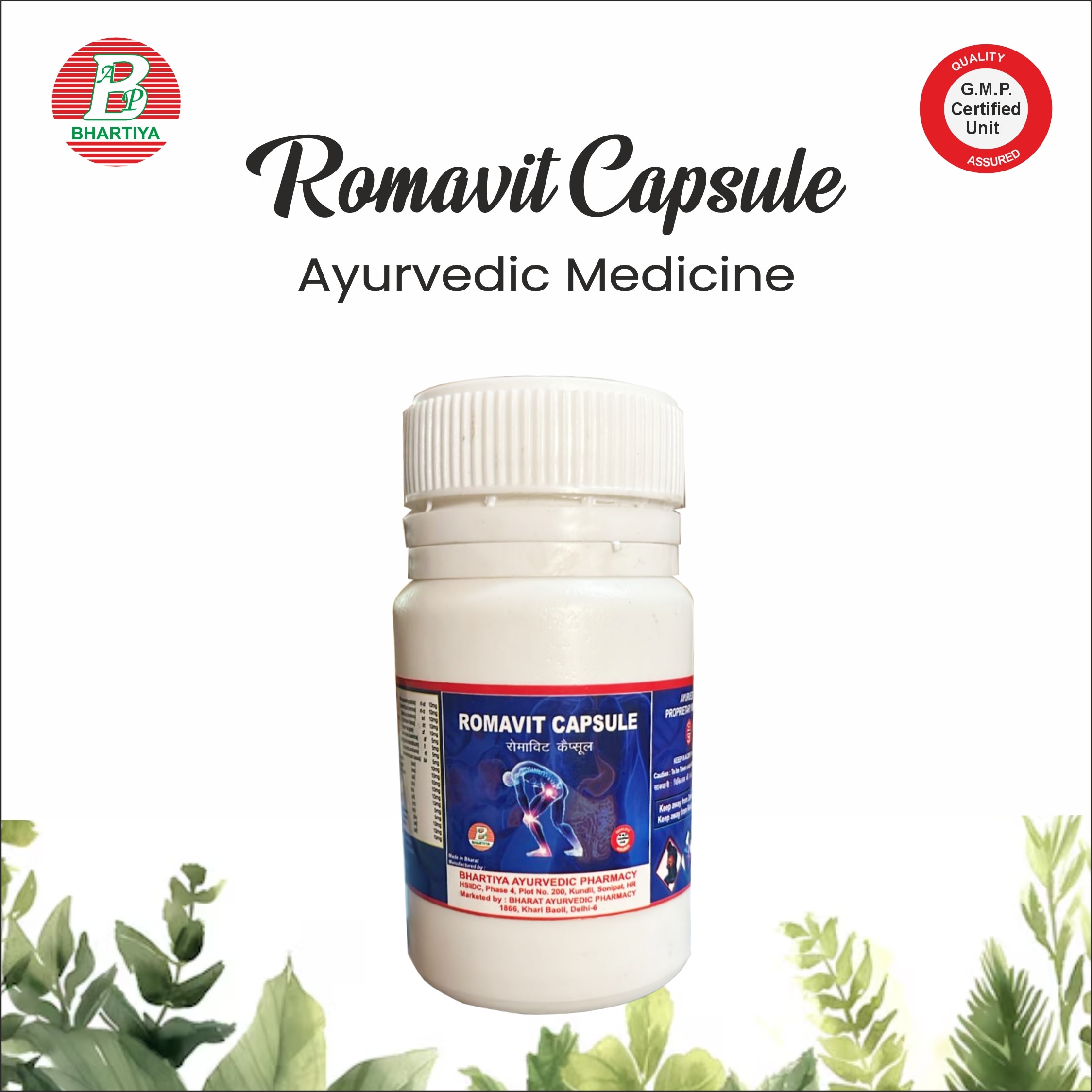
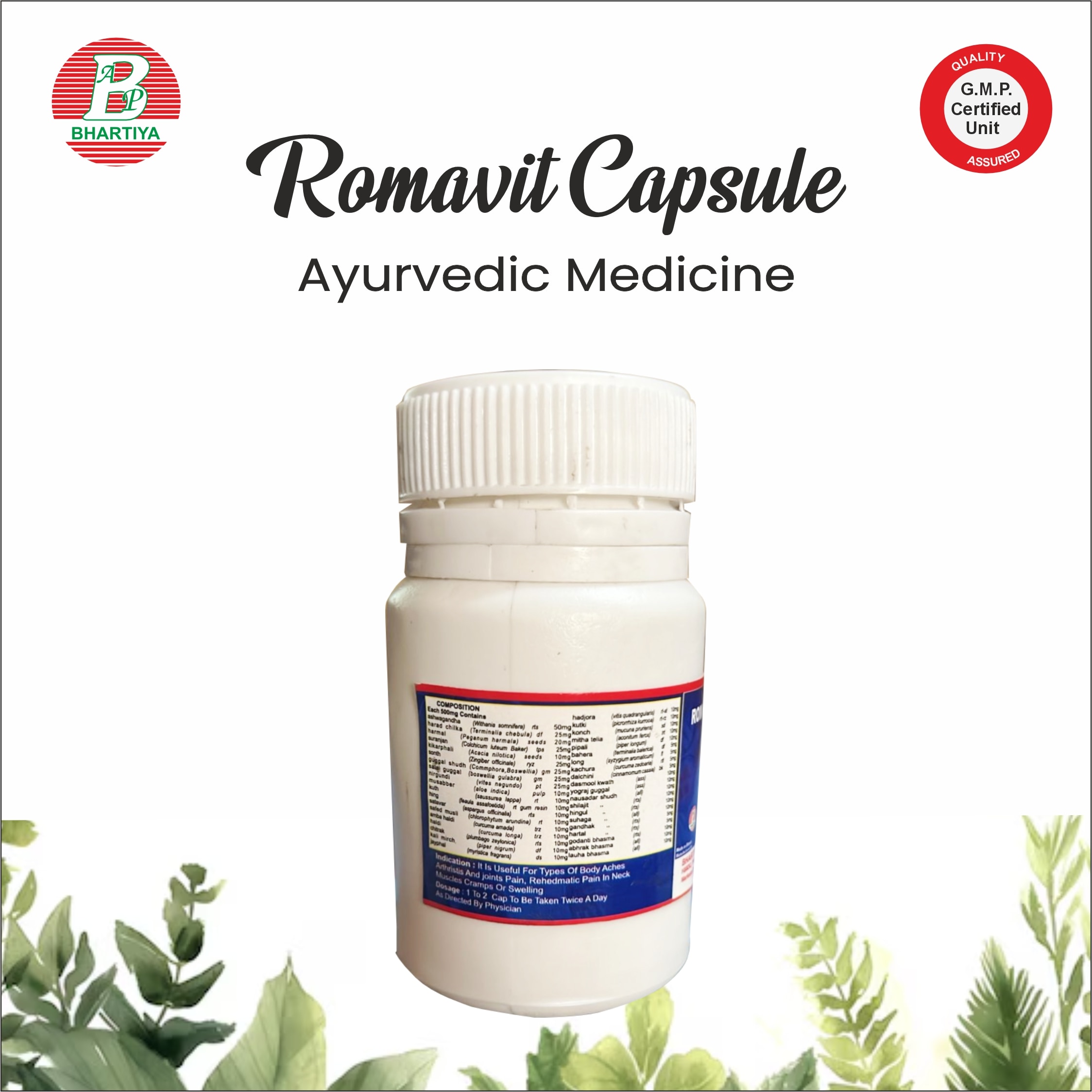
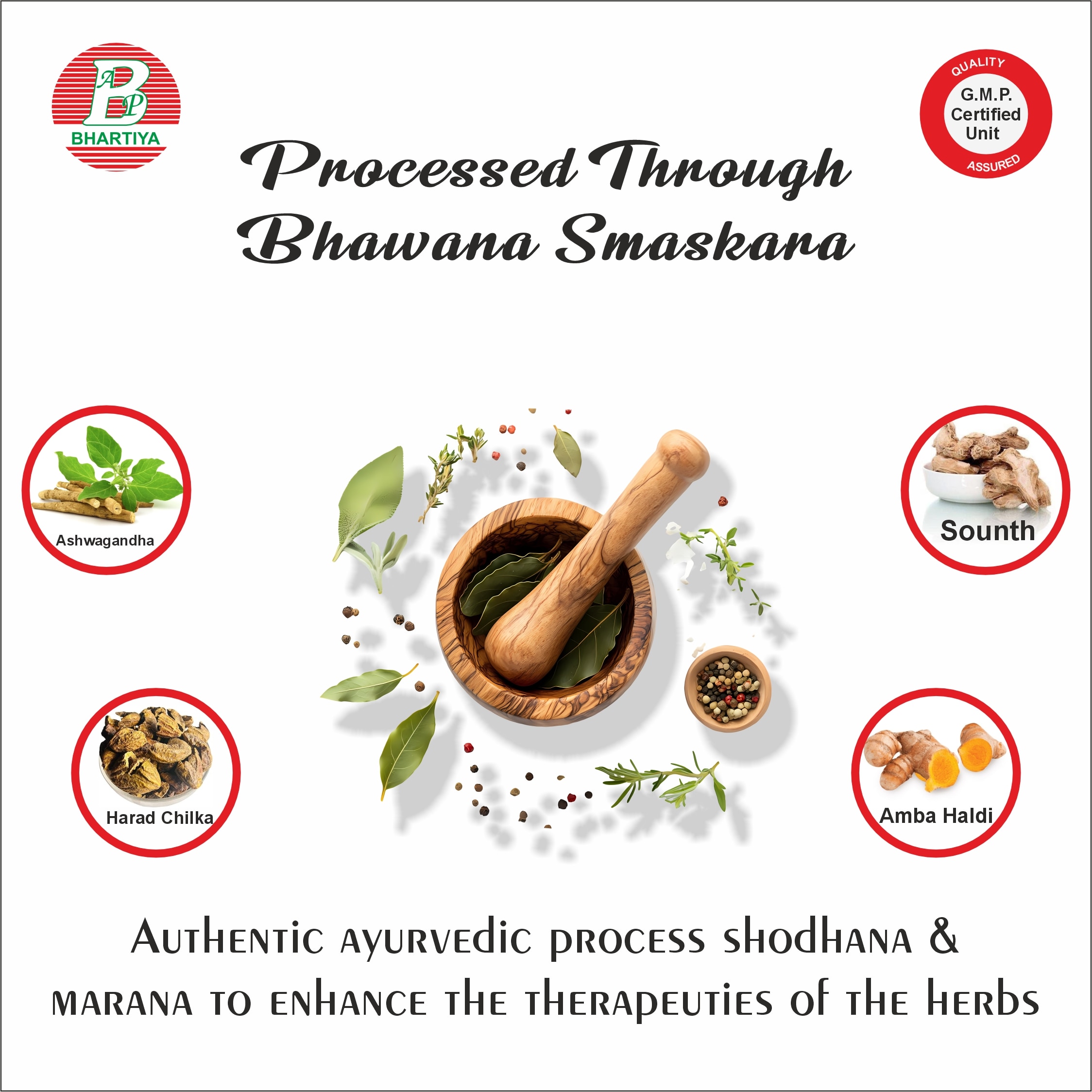
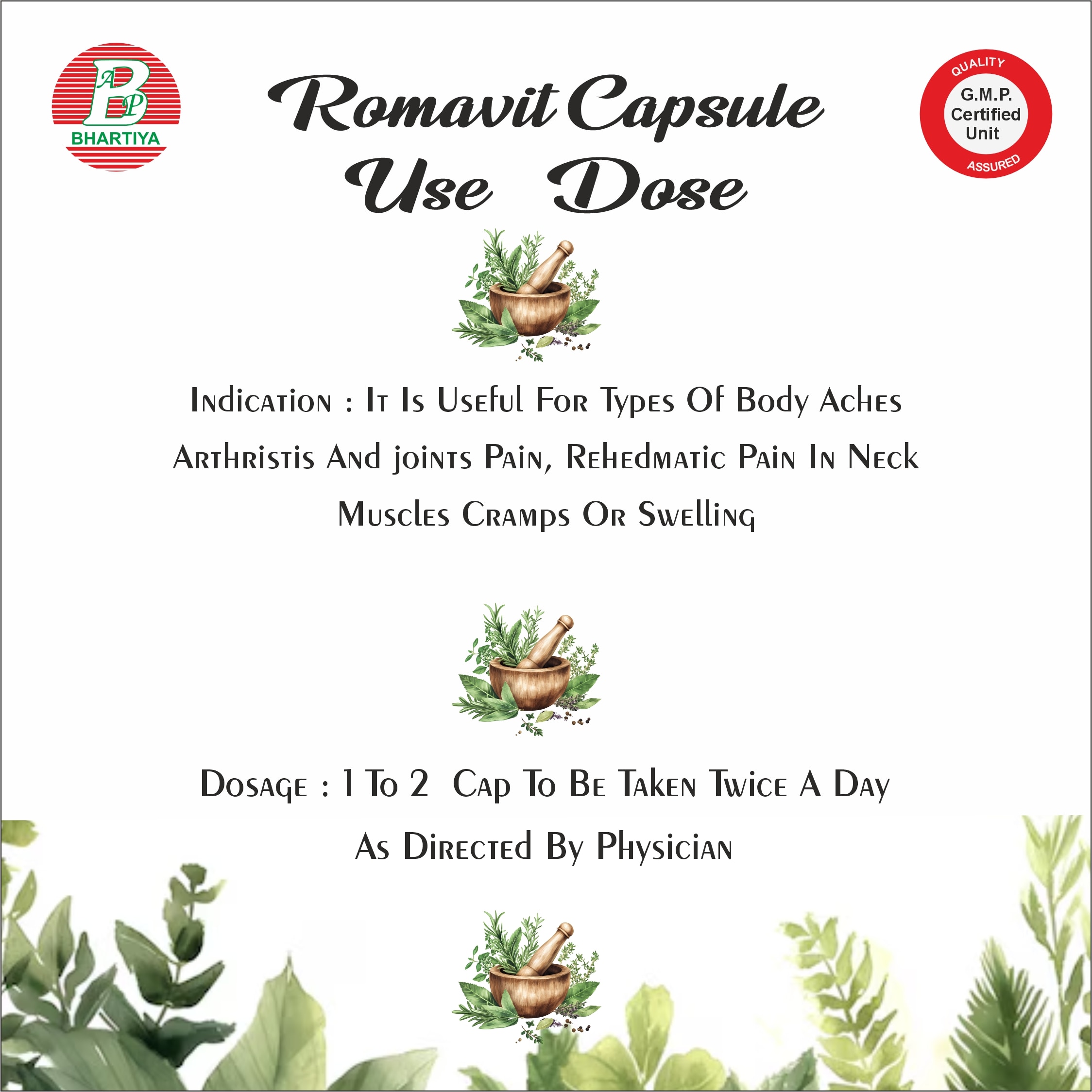
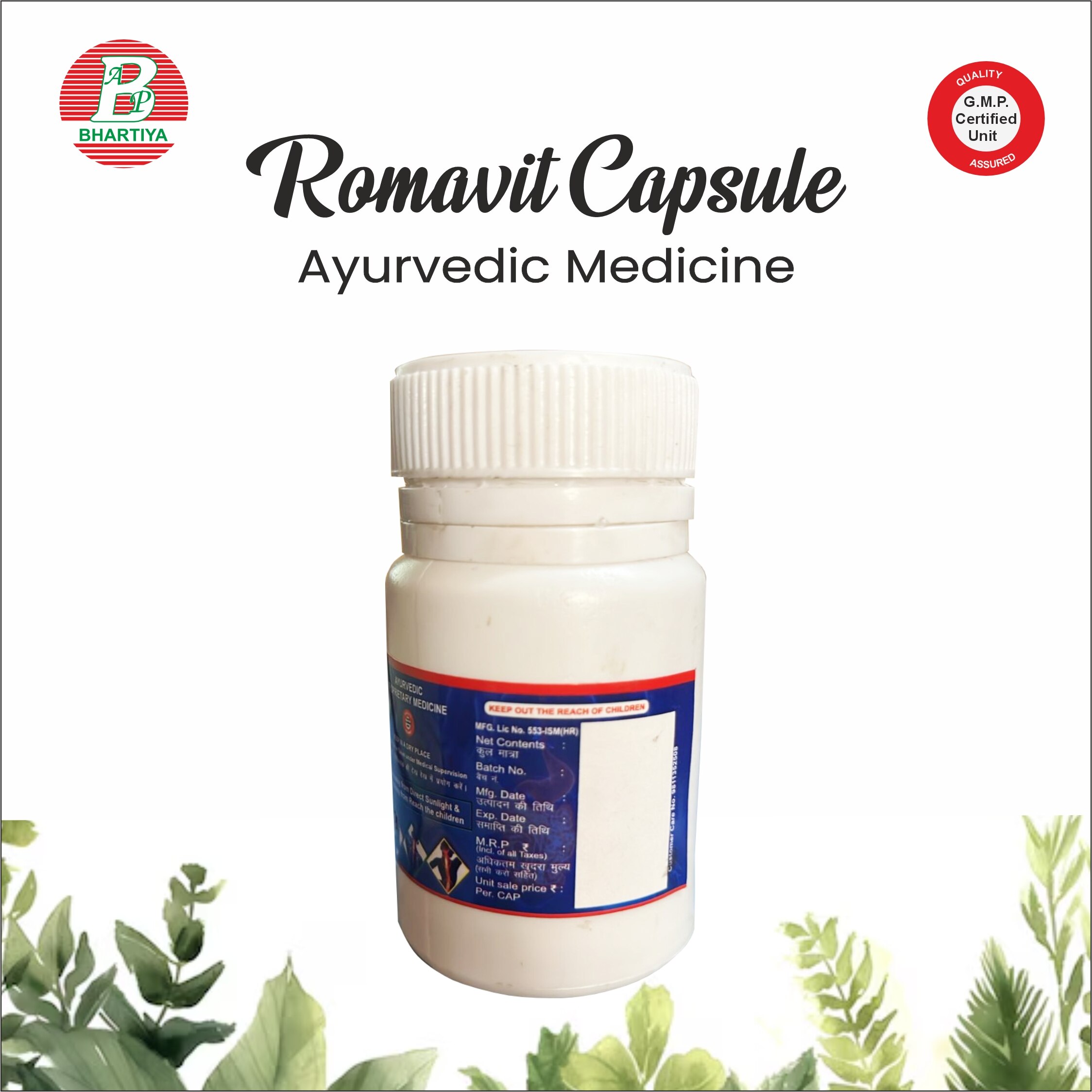
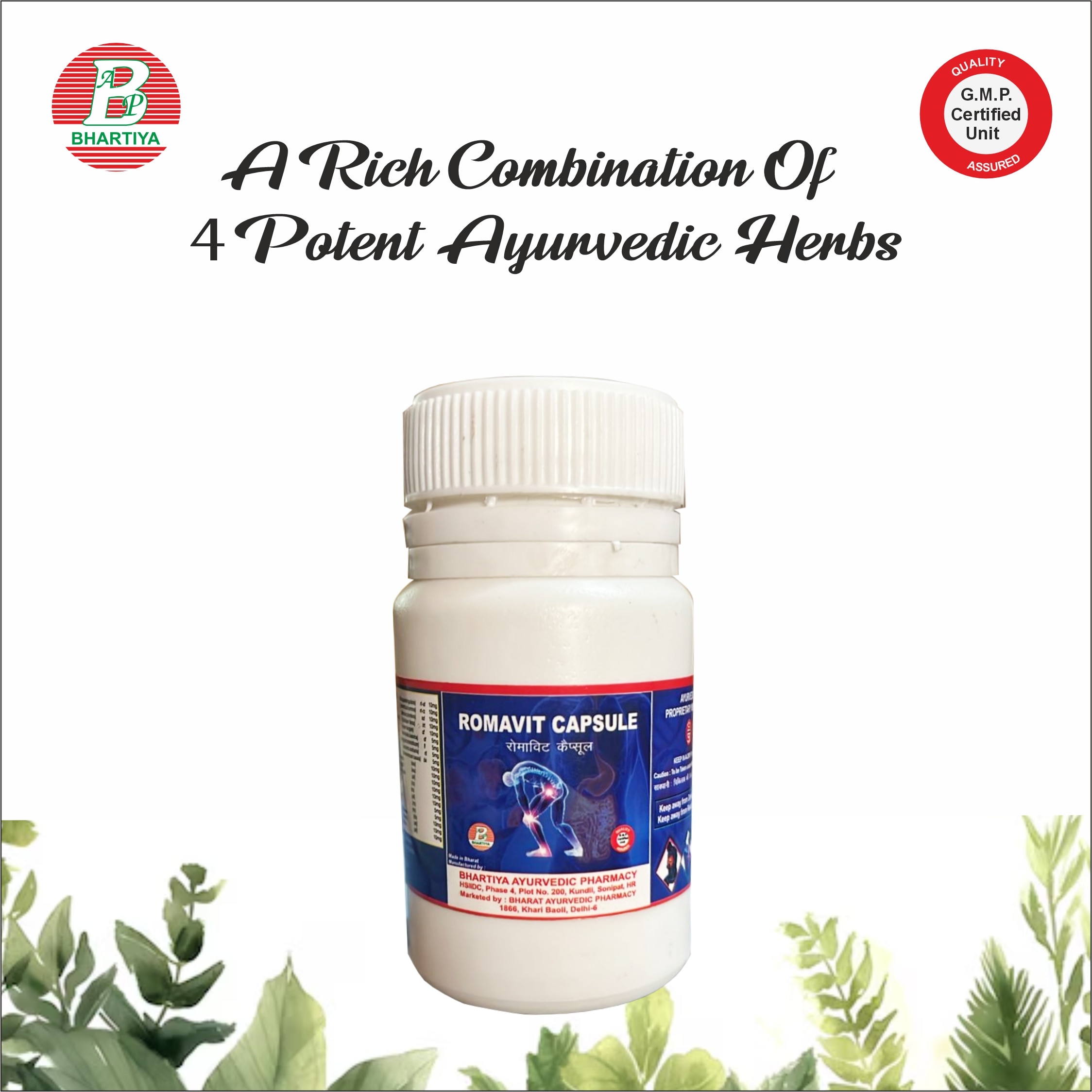
ROMAVIT CAPSULE Product Identification • Generic Name: Romavit Capsule • Type: Ayurvedic Patent Medicine • Primary Indication Area: Helpful in relieving all kinds of body aches. Therapeutic Indications • Useful for relieving general body pain and mild aches. Primary benefits: • Reduces pain and discomfort in the body • Eases muscle stiffness and soreness • Supports relief from mild aches and fatigue • Promotes overall comfort and well-being Other benefits: • Reduces inflammation: Helps in calming localized inflammation in muscles and joints, providing soothing relief from swelling and discomfort. • Improves mobility and flexibility: Supports the natural movement of joints and muscles, making daily activities easier and more comfortable. • Relieves muscle tension: Aids in relaxing strained or stiff muscles, which can occur due to physical exertion or prolonged inactivity. • Enhances circulation: Promotes better blood flow to affected areas, which can accelerate healing and reduce stiffness. • Supports overall stamina and energy: Helps reduce fatigue associated with body pain, contributing to a sense of vitality and well-being. • Preventive support: Regular use may help in preventing occasional body aches caused by stress, overexertion, or minor injuries. • Promotes general comfort: Provides gentle relief from minor aches and body discomfort, improving overall physical comfort. Ingredient: Ashwagandha (Withania somnifera) • Botanical Name: Withania somnifera • Key Constituents: Withanolides, Alkaloids (Withanine, Anaferine), Saponins, Flavonoids Mechanism of Action in Body Aches – Biochemistry / Pharmacology 1. Anti-inflammatory Action: o Withanolides inhibit pro-inflammatory mediators such as cytokines (TNF-α, IL-1β, IL-6) and enzymes like COX-2 and LOX. o Reduces local and systemic inflammation, which is often the cause of muscle and joint pain. 2. Analgesic Effect (Pain Modulation): o Modulates the nociceptive pathways by influencing neurotransmitters and pain receptors in the peripheral and central nervous system. o Provides mild to moderate pain relief in muscles, joints, and general body aches. Harad Chilka (Terminalia chebula – Fruit Shell / Coarse Powder) • Botanical Name: Terminalia chebula • Key Constituents: Tannins (Chebulagic acid, Chebulinic acid), Gallic acid, Flavonoids, Polyphenols Mechanism of Action in Body Aches – Biochemistry / Pharmacology 1. Anti-inflammatory Action: o Tannins and polyphenols inhibit pro-inflammatory cytokines (TNF-α, IL-1β, IL-6) and enzymes like COX-2, reducing inflammation in muscles, joints, and connective tissues. o Helps relieve localized swelling and discomfort in affected areas. 2. Analgesic Effect (Pain Modulation): o Modulates nociceptive signaling pathways in peripheral nerves, reducing pain perception. o Provides mild to moderate relief from muscle and joint aches. Harmala (Peganum harmala) • Botanical Name: Peganum harmala • Key Constituents: Harmaline, Harmine, Harmalol (β-carboline alkaloids), Flavonoids, Tannins Mechanism of Action – Biochemistry / Pharmacology 1. Anti-inflammatory Action: o β-carboline alkaloids inhibit pro-inflammatory cytokines (TNF-α, IL-1β, IL-6) and enzymes like COX-2, reducing inflammation in tissues. o Helps in alleviating localized pain and swelling. 2. Analgesic Effect (Pain Modulation): o Influences nociceptive pathways by modulating neurotransmitters in the peripheral and central nervous system. o Provides mild to moderate relief from muscle and joint aches. Suranjan (Colchicum luteum / Colchicum autumnale) • Botanical Name: Colchicum luteum / Colchicum autumnale • Key Constituents: Colchicine, Colchicoside, Flavonoids, Alkaloids Mechanism of Action – Biochemistry / Pharmacology 1. Anti-inflammatory Action: o Colchicine inhibits microtubule polymerization, reducing activation of neutrophils and the release of pro-inflammatory cytokines (IL-1β, TNF-α). o Helps in reducing inflammation and swelling in joints and soft tissues. 2. Analgesic / Pain Relief Effect: o By reducing inflammatory mediators and neutrophil activity, it provides relief from pain and tenderness associated with joint and muscle inflammation Kikarphali • Botanical Name: Acacia nilotica • Key Constituents: Tannins, Flavonoids, Saponins, Polyphenols Mechanism of Action 1. Anti-inflammatory o Blocks pro-inflammatory molecules (like TNF-α, IL-1β) and enzymes (COX-2). o Helps reduce swelling and pain in joints and tissues. 2. Antioxidant o Neutralizes ROS (reactive oxygen species). o Protects cells from oxidative damage, supports tissue recovery. Saunth (Dried Ginger) • Botanical Name: Zingiber officinale • Key Constituents: Gingerols, Shogaols, Volatile oils, Flavonoids, Starch Mechanism of Action – Biochemistry / Pharmacology 1. Anti-inflammatory Action: o Gingerols and shogaols inhibit pro-inflammatory cytokines like TNF-α, IL-1β, IL-6, and enzymes such as COX-2 and 5-LOX. o Helps reduce joint and muscle inflammation, swelling, and stiffness. 2. Analgesic / Pain Modulation: o Acts on peripheral and central pain pathways to reduce nociceptive signaling. o Provides relief from mild to moderate pain, including headaches, menstrual cramps, and muscular aches. Shudh Guggul (Commiphora mukul) • Botanical Name: Commiphora mukul • Key Constituents: Guggulsterones (E & Z), Terpenoids, Essential oils, Resins, Flavonoids Mechanism of Action – Biochemistry / Pharmacology 1. Anti-inflammatory Action: o Guggulsterones inhibit NF-κB activation, reducing the production of pro-inflammatory cytokines like TNF-α, IL-1β, and IL-6. o Helps alleviate joint inflammation, swelling, and stiffness. 2. Analgesic / Pain Modulation: o Reduces pain by modulating inflammatory mediators and peripheral nociceptive signaling. o Supports relief in osteoarthritis and musculoskeletal discomfort. Salai Guggul (Boswellia serrata / Indian Frankincense) • Botanical Name: Boswellia serrata • Key Constituents: Boswellic acids (AKBA, KBA), Triterpenoids, Essential oils, Resins Mechanism of Action – Biochemistry / Pharmacology 1. Anti-inflammatory Action: o Boswellic acids inhibit 5-lipoxygenase (5-LOX) and reduce leukotriene synthesis, which decreases inflammation. o Helps relieve joint swelling, stiffness, and pain in arthritis and musculoskeletal conditions. 2. Analgesic / Pain Modulation: o Reduces nociceptive signaling through inhibition of inflammatory mediators. o Provides relief from chronic joint and soft tissue pain. Aloe indica (Aloe vera / Aloe indica) Botanical Name: Aloe indica Key Constituents: Anthraquinones (Aloin, Emodin), Polysaccharides (Acemannan), Glycoproteins, Flavonoids, Vitamins, Saponins Mechanism of Action – Biochemistry / Pharmacology 1. Anti-inflammatory Action: o Polysaccharides, anthraquinones, and flavonoids inhibit pro-inflammatory cytokines (TNF-α, IL-1β) and enzymes like COX-2. o Reduces localized inflammation, swelling, and redness in muscles and joints. 2. Analgesic / Pain Modulation: o Modulates peripheral nociceptive pathways to reduce pain perception. o Provides relief from muscular aches, joint pain, and stiffness. Kuth (Saussurea costus / Costus root) • Botanical Name: Saussurea costus • Key Constituents: Sesquiterpene lactones, Alkaloids, Flavonoids, Essential oils, Bitter principles Mechanism of Action – Biochemistry / Pharmacology 1. Anti-inflammatory Action: o Sesquiterpene lactones and flavonoids inhibit pro-inflammatory cytokines (TNF-α, IL-1β, IL-6) and enzymes like COX-2. o Reduces joint and muscle inflammation, swelling, and discomfort. 2. Analgesic / Pain Modulation: o Modulates peripheral and central nociceptive pathways to reduce pain perception. o Provides relief from muscular aches, joint pain, and stiffness. Hing (Asafoetida / Ferula foetida) • Botanical Name: Ferula foetida • Key Constituents: Ferulic acid, Sulfur compounds (Resin), Sesquiterpene coumarins, Volatile oils Mechanism of Action – Biochemistry / Pharmacology 1. Anti-inflammatory Action: o Sulfur compounds and flavonoids inhibit pro-inflammatory cytokines (TNF-α, IL-1β, IL-6) and enzymes like COX-2. o Reduces localized inflammation, swelling, and discomfort in muscles and joints. 2. Analgesic / Pain Modulation: o Modulates peripheral nociceptive pathways to reduce pain perception. o Provides relief from muscular aches, stiffness, and joint pain. Satavar (Shatavari / Asparagus racemosus) • Botanical Name: Asparagus racemosus • Key Constituents: Steroidal saponins (Shatavarins), Flavonoids, Glycosides, Alkaloids, Polysaccharides Mechanism of Action – Biochemistry / Pharmacology 1. Anti-inflammatory Action: o Steroidal saponins and flavonoids inhibit pro-inflammatory cytokines (TNF-α, IL-1β, IL-6) and enzymes like COX-2. o Reduces muscle and joint inflammation, swelling, and discomfort. 2. Analgesic / Pain Modulation: o Modulates peripheral nociceptive pathways to reduce pain perception. o Provides relief from muscular aches, joint pain, and stiffness.