

Description
Product details
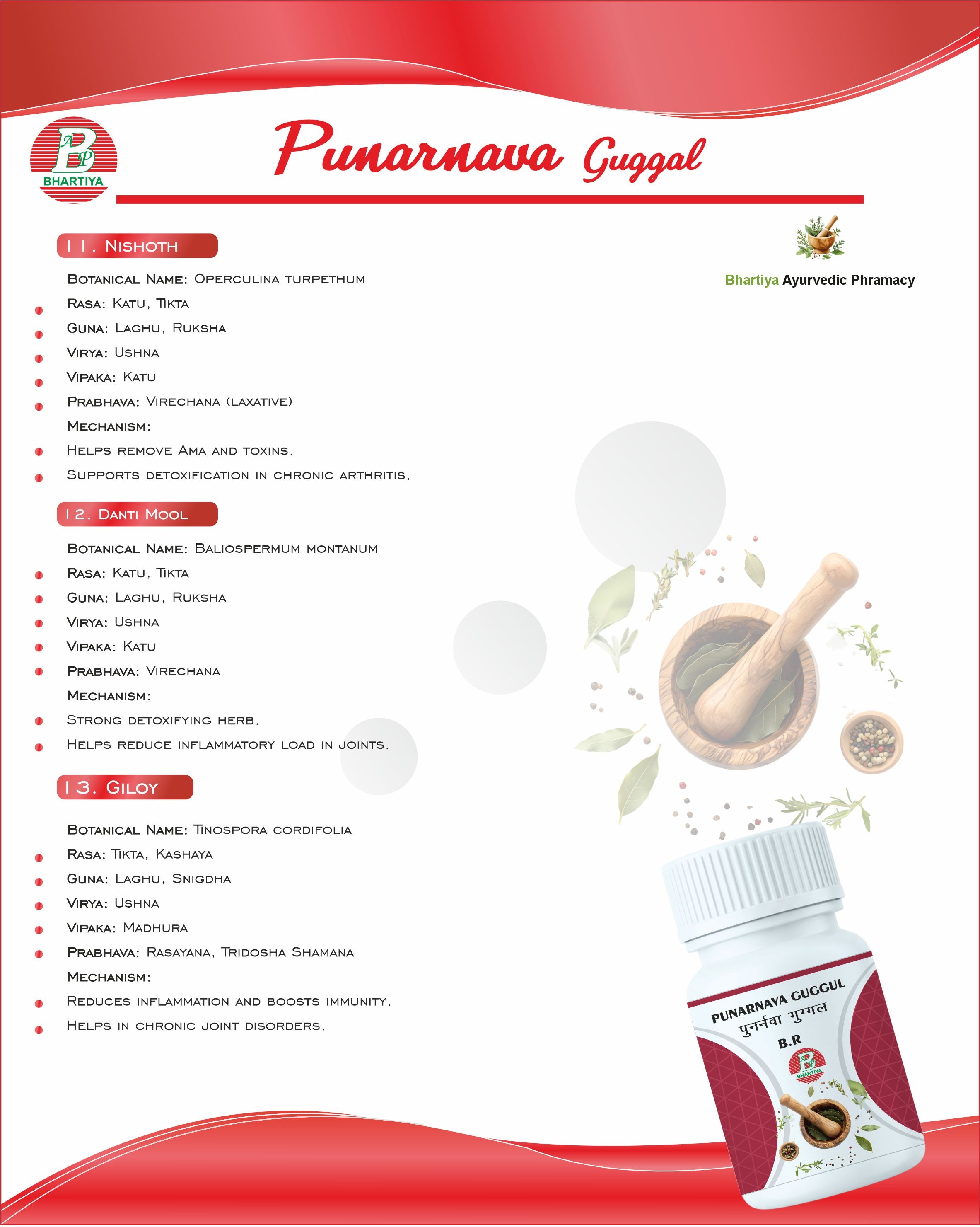
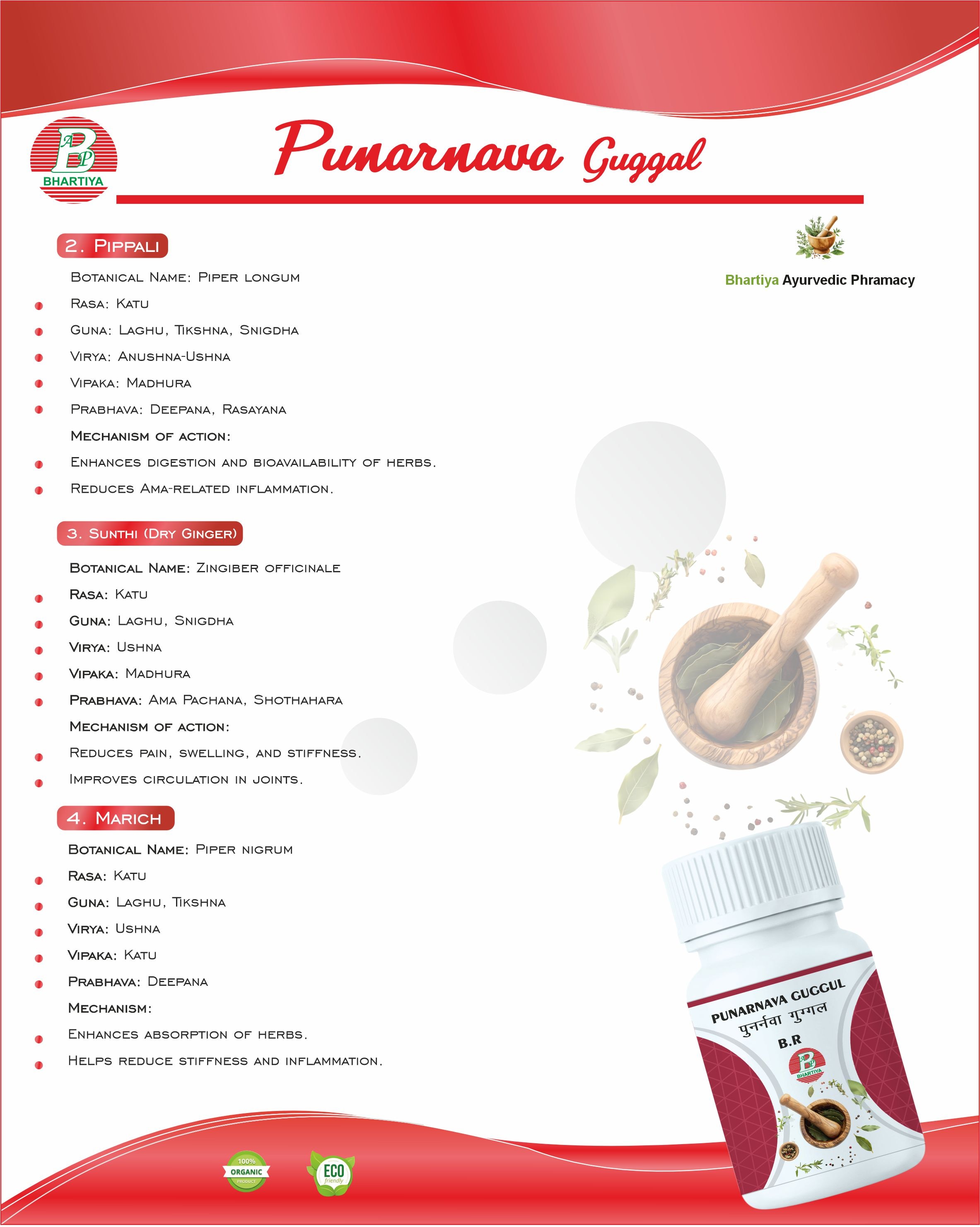
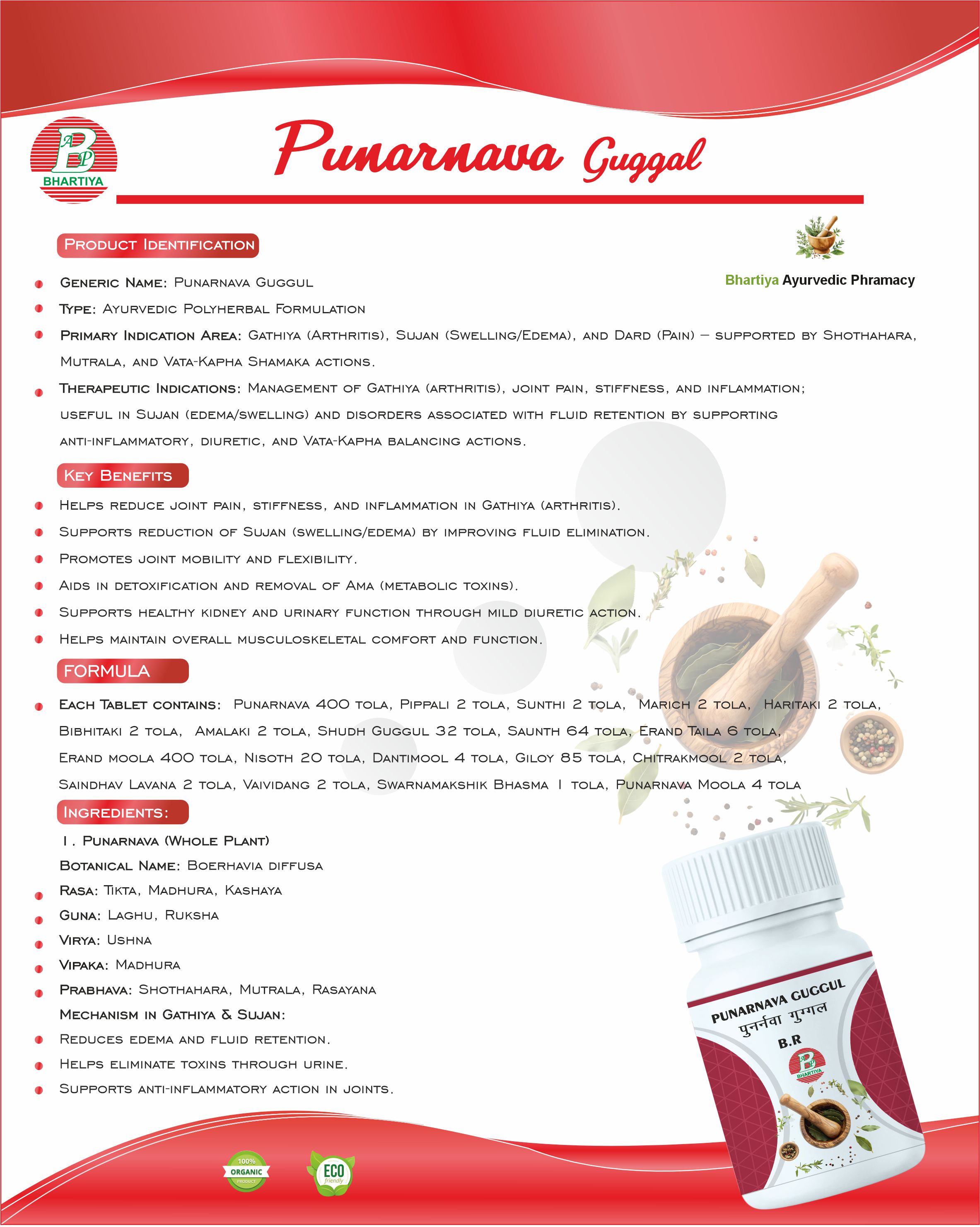
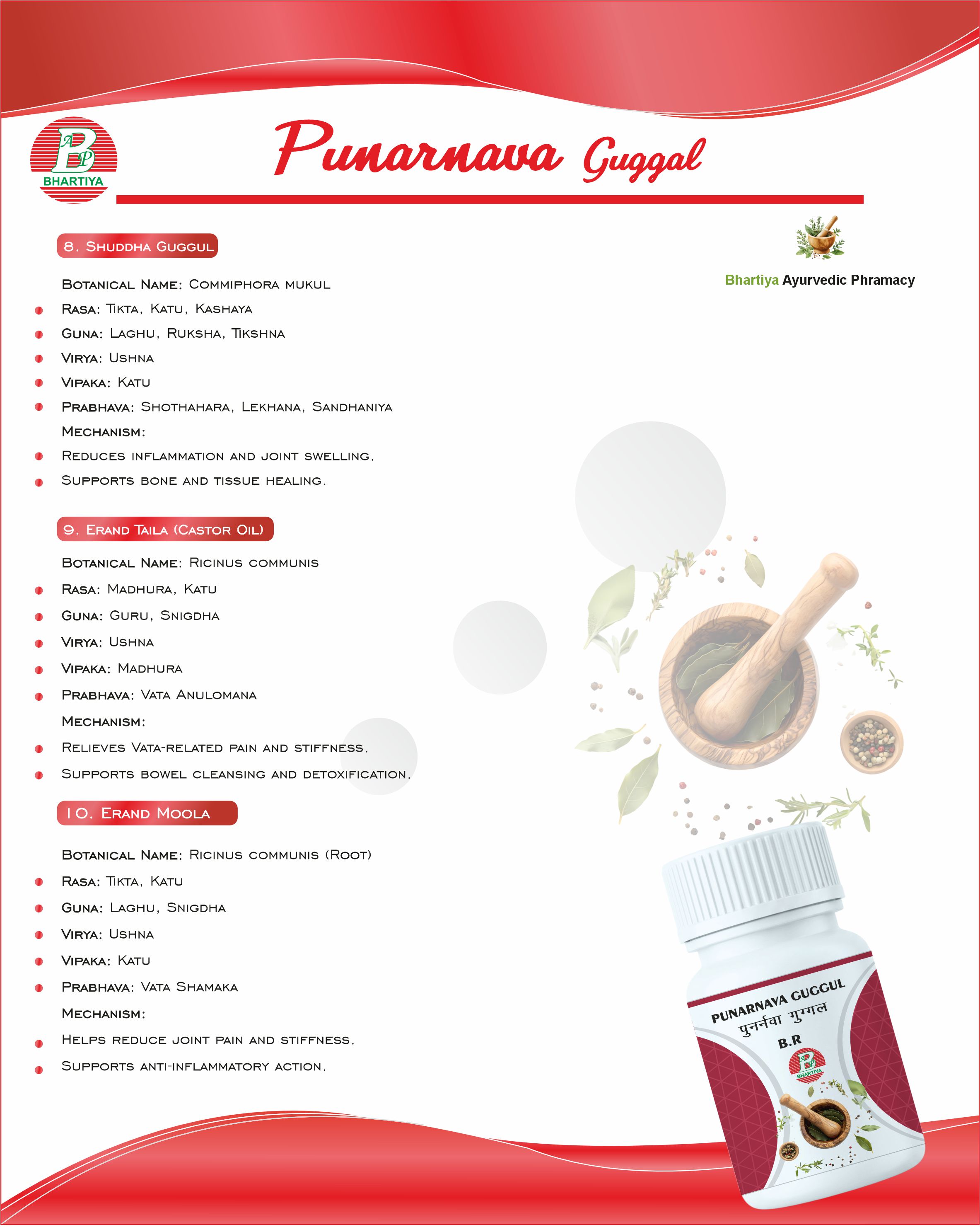
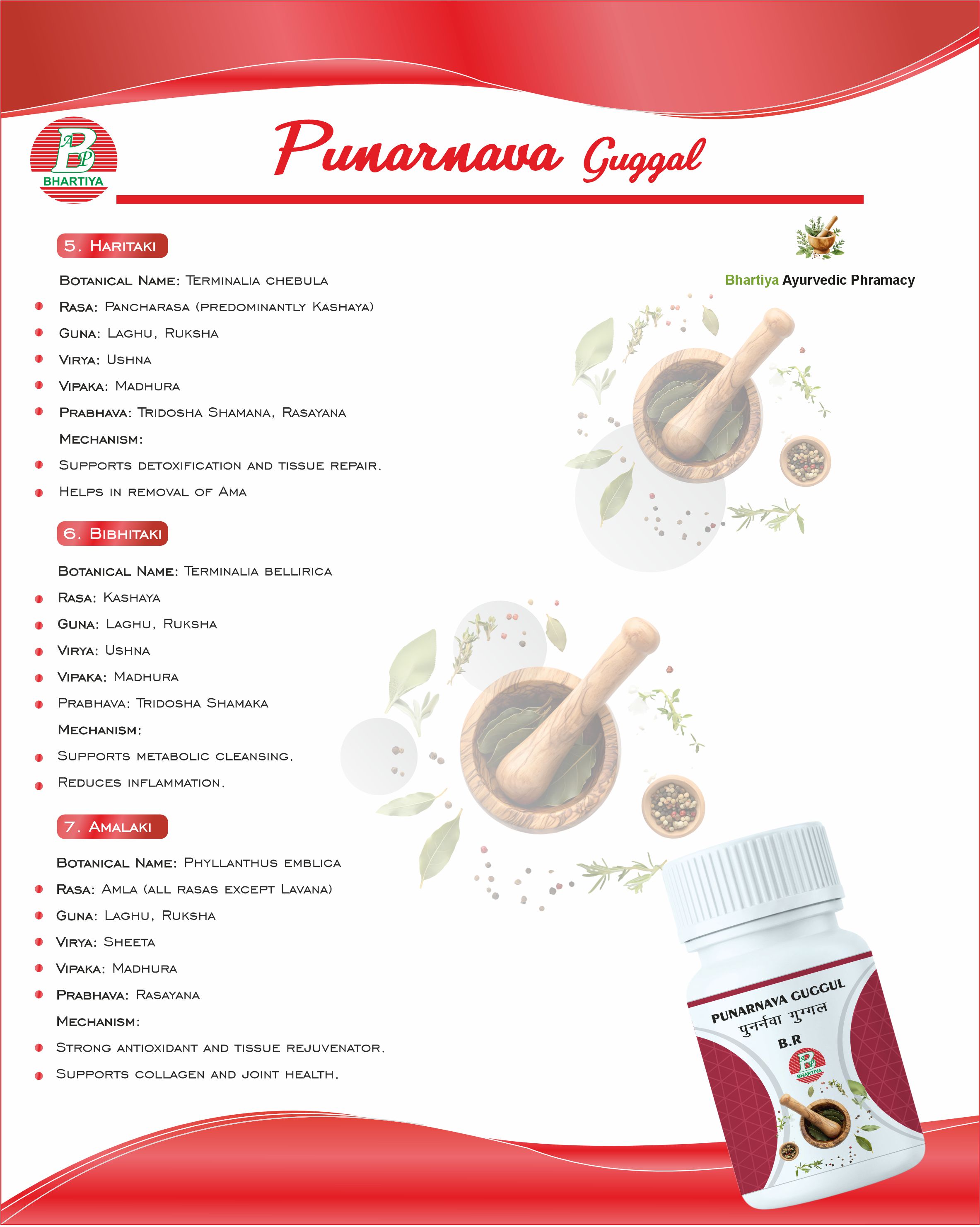
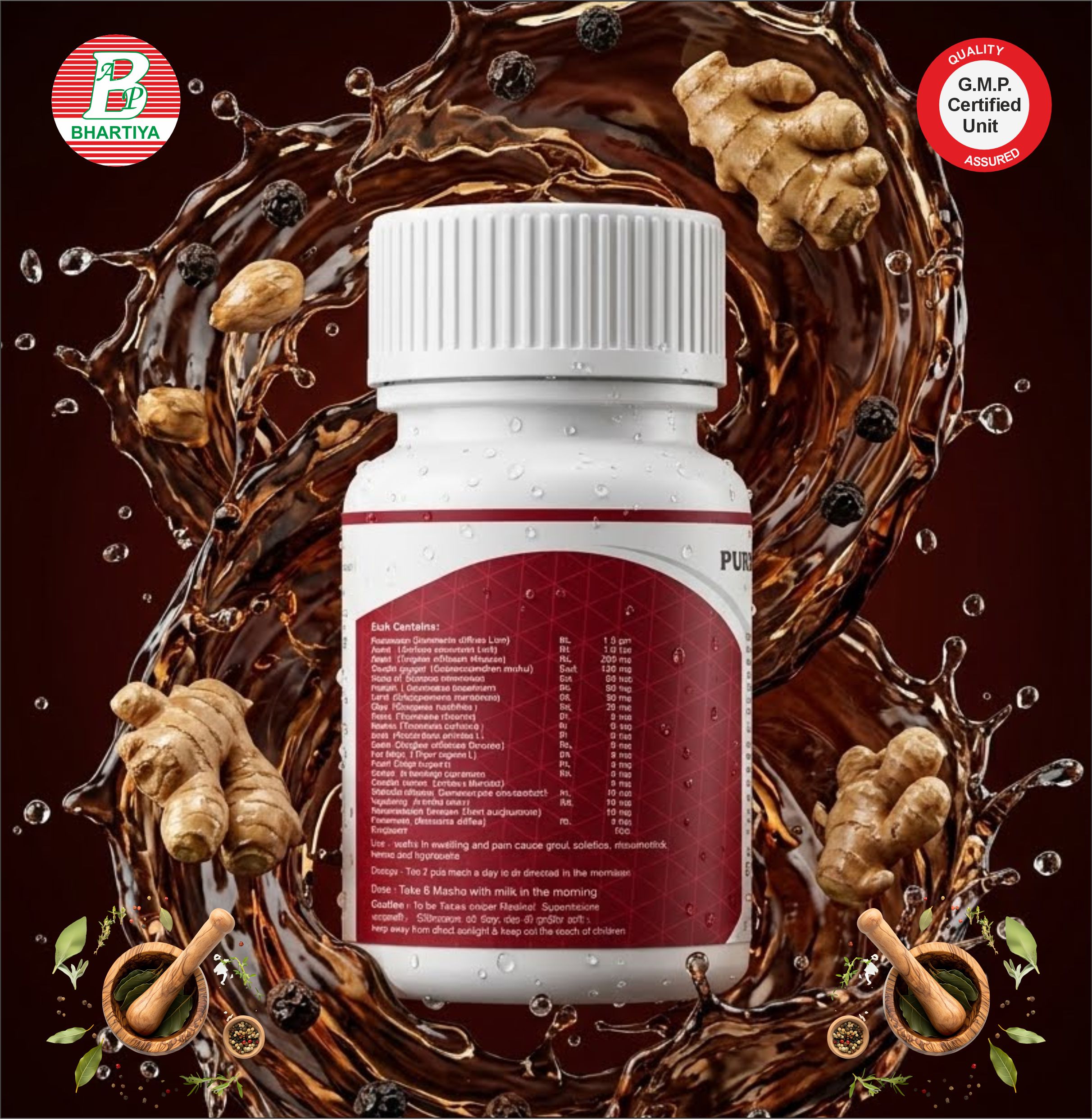
PUNARNAVA GUGGUL Product Identification Generic Name: Punarnava Guggul Type: Ayurvedic Polyherbal Formulation Primary Indication Area: Gathiya (Arthritis), Sujan (Swelling/Edema), and Dard (Pain) – supported by Shothahara, Mutrala, and Vata-Kapha Shamaka actions. Therapeutic Indications: Management of Gathiya (arthritis), joint pain, stiffness, and inflammation; useful in Sujan (edema/swelling) and disorders associated with fluid retention by supporting anti-inflammatory, diuretic, and Vata-Kapha balancing actions. Key Benefits • Helps reduce joint pain, stiffness, and inflammation in Gathiya (arthritis). • Supports reduction of Sujan (swelling/edema) by improving fluid elimination. • Promotes joint mobility and flexibility. • Aids in detoxification and removal of Ama (metabolic toxins). • Supports healthy kidney and urinary function through mild diuretic action. • Helps maintain overall musculoskeletal comfort and function. FORMULA Each Tablet contains: Punarnava 400 tola Pippali 2 tola Sunthi 2 tola Marich 2 tola Haritaki 2 tola Bibhitaki 2 tola Amalaki 2 tola Shudh Guggul 32 tola Saunth 64 tola Erand Taila 6 tola Erand moola 400 tola Nisoth 20 tola Dantimool 4 tola Giloy 85 tola Chitrakmool 2 tola Saindhav Lavana 2 tola Vaividang 2 tola Swarnamakshik Bhasma 1 tola Punarnava Moola 4 tola Ingredients: 1. Punarnava (Whole Plant) Botanical Name: Boerhavia diffusa Rasa: Tikta, Madhura, Kashaya • Guna: Laghu, Ruksha • Virya: Ushna • Vipaka: Madhura • Prabhava: Shothahara, Mutrala, Rasayana Mechanism in Gathiya & Sujan: • Reduces edema and fluid retention. • Helps eliminate toxins through urine. • Supports anti-inflammatory action in joints. 2. Pippali Botanical Name: Piper longum • Rasa: Katu • Guna: Laghu, Tikshna, Snigdha • Virya: Anushna-Ushna • Vipaka: Madhura • Prabhava: Deepana, Rasayana Mechanism of action: • Enhances digestion and bioavailability of herbs. • Reduces Ama-related inflammation. 3. Sunthi (Dry Ginger) Botanical Name: Zingiber officinale • Rasa: Katu • Guna: Laghu, Snigdha • Virya: Ushna • Vipaka: Madhura • Prabhava: Ama Pachana, Shothahara Mechanism of action: • Reduces pain, swelling, and stiffness. • Improves circulation in joints. 4. Marich Botanical Name: Piper nigrum • Rasa: Katu • Guna: Laghu, Tikshna • Virya: Ushna • Vipaka: Katu • Prabhava: Deepana Mechanism: • Enhances absorption of herbs. • Helps reduce stiffness and inflammation. 5. Haritaki Botanical Name: Terminalia chebula • Rasa: Pancharasa (predominantly Kashaya) • Guna: Laghu, Ruksha • Virya: Ushna • Vipaka: Madhura • Prabhava: Tridosha Shamana, Rasayana Mechanism: • Supports detoxification and tissue repair. • Helps in removal of Ama. 6. Bibhitaki Botanical Name: Terminalia bellirica • Rasa: Kashaya • Guna: Laghu, Ruksha • Virya: Ushna • Vipaka: Madhura • Prabhava: Tridosha Shamaka Mechanism: • Supports metabolic cleansing. • Reduces inflammation. 7. Amalaki Botanical Name: Phyllanthus emblica • Rasa: Amla (all rasas except Lavana) • Guna: Laghu, Ruksha • Virya: Sheeta • Vipaka: Madhura • Prabhava: Rasayana Mechanism: • Strong antioxidant and tissue rejuvenator. • Supports collagen and joint health. 8. Shuddha Guggul Botanical Name: Commiphora mukul • Rasa: Tikta, Katu, Kashaya • Guna: Laghu, Ruksha, Tikshna • Virya: Ushna • Vipaka: Katu • Prabhava: Shothahara, Lekhana, Sandhaniya Mechanism: • Reduces inflammation and joint swelling. • Supports bone and tissue healing. 9. Erand Taila (Castor Oil) Botanical Name: Ricinus communis • Rasa: Madhura, Katu • Guna: Guru, Snigdha • Virya: Ushna • Vipaka: Madhura • Prabhava: Vata Anulomana Mechanism: • Relieves Vata-related pain and stiffness. • Supports bowel cleansing and detoxification. 10. Erand Moola Botanical Name: Ricinus communis (Root) • Rasa: Tikta, Katu • Guna: Laghu, Snigdha • Virya: Ushna • Vipaka: Katu • Prabhava: Vata Shamaka Mechanism: • Helps reduce joint pain and stiffness. • Supports anti-inflammatory action. 11. Nishoth Botanical Name: Operculina turpethum • Rasa: Katu, Tikta • Guna: Laghu, Ruksha • Virya: Ushna • Vipaka: Katu • Prabhava: Virechana (laxative) Mechanism: • Helps remove Ama and toxins. • Supports detoxification in chronic arthritis. 12. Danti Mool Botanical Name: Baliospermum montanum • Rasa: Katu, Tikta • Guna: Laghu, Ruksha • Virya: Ushna • Vipaka: Katu • Prabhava: Virechana Mechanism: • Strong detoxifying herb. • Helps reduce inflammatory load in joints. 13. Giloy Botanical Name: Tinospora cordifolia • Rasa: Tikta, Kashaya • Guna: Laghu, Snigdha • Virya: Ushna • Vipaka: Madhura • Prabhava: Rasayana, Tridosha Shamana Mechanism: • Reduces inflammation and boosts immunity. • Helps in chronic joint disorders. 14. Chitrakmool Botanical Name: Plumbago zeylanica • Rasa: Katu • Guna: Laghu, Tikshna • Virya: Ushna • Vipaka: Katu • Prabhava: Deepana, Pachana Mechanism: • Improves digestion and Ama metabolism. • Reduces stiffness and heaviness. 15. Saindhav Lavana Botanical Name: Rock Salt • Rasa: Lavana • Guna: Snigdha • Virya: Sheeta • Vipaka: Madhura • Prabhava: Deepana Mechanism: • Improves absorption of medicines. • Helps relieve stiffness and gas-related discomfort. 16. Vidang Botanical Name: Embelia ribes • Rasa: Katu, Kashaya • Guna: Laghu, Ruksha • Virya: Ushna • Vipaka: Katu • Prabhava: Krimighna Mechanism: • Helps in detoxification. • Reduces Ama and metabolic toxins. 17. Swarnamakshik Bhasma Mineral Preparation (Copper-Iron Sulfide compound) • Rasa: Tikta, Kashaya • Guna: Laghu, Ruksha • Virya: Ushna • Vipaka: Katu • Prabhava: Yogavahi, Rasayana Mechanism: • Enhances metabolic and tissue repair functions. • Supports bone and joint regeneration. 18. Punarnava Moola Botanical Name: Boerhavia diffusa (Root) • Rasa: Tikta, Madhura, Kashaya • Guna: Laghu, Ruksha • Virya: Ushna • Vipaka: Madhura • Prabhava: Shothahara, Mutrala Mechanism: • Strong anti-edema and anti-inflammatory action. • Supports urinary detox and joint swelling reduction. . General Ayurvedic Dosage for Punarnavadi Guggulu (Adults) Punarnavadi Guggulu • Tablet: 1–2 tablets (250–500 mg each) • Frequency: 2–3 times daily • Timing: After meals (or as directed by an Ayurvedic physician) • Anupana (Vehicle): With lukewarm water; sometimes with herbal decoctions like Punarnava kwath or Gokshuradi kwath if prescribed Note: Dosage may vary depending on the condition (e.g., swelling, joint disorders, kidney issues), age, and physician’s recommendation. .