

Description
Product details
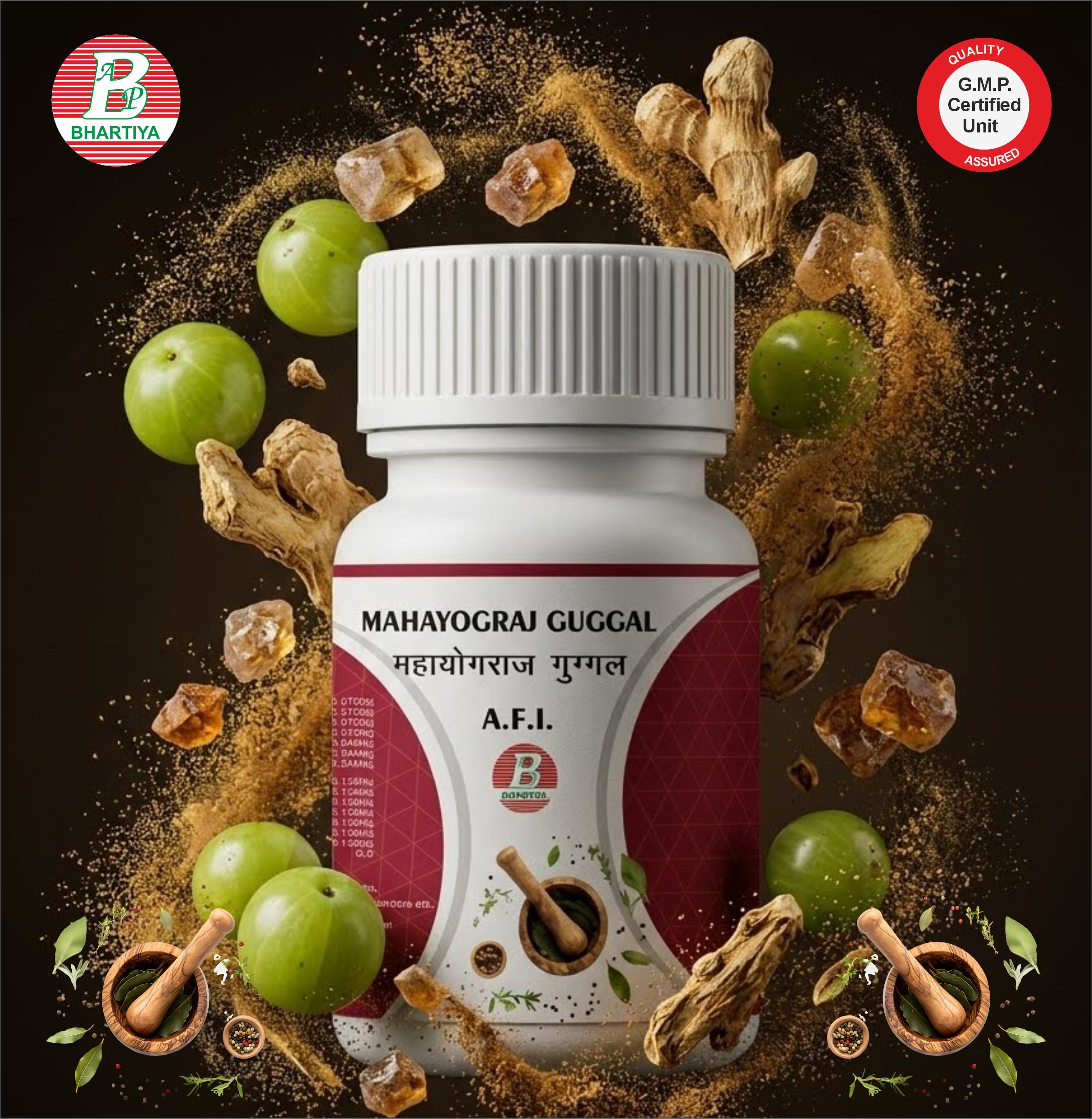
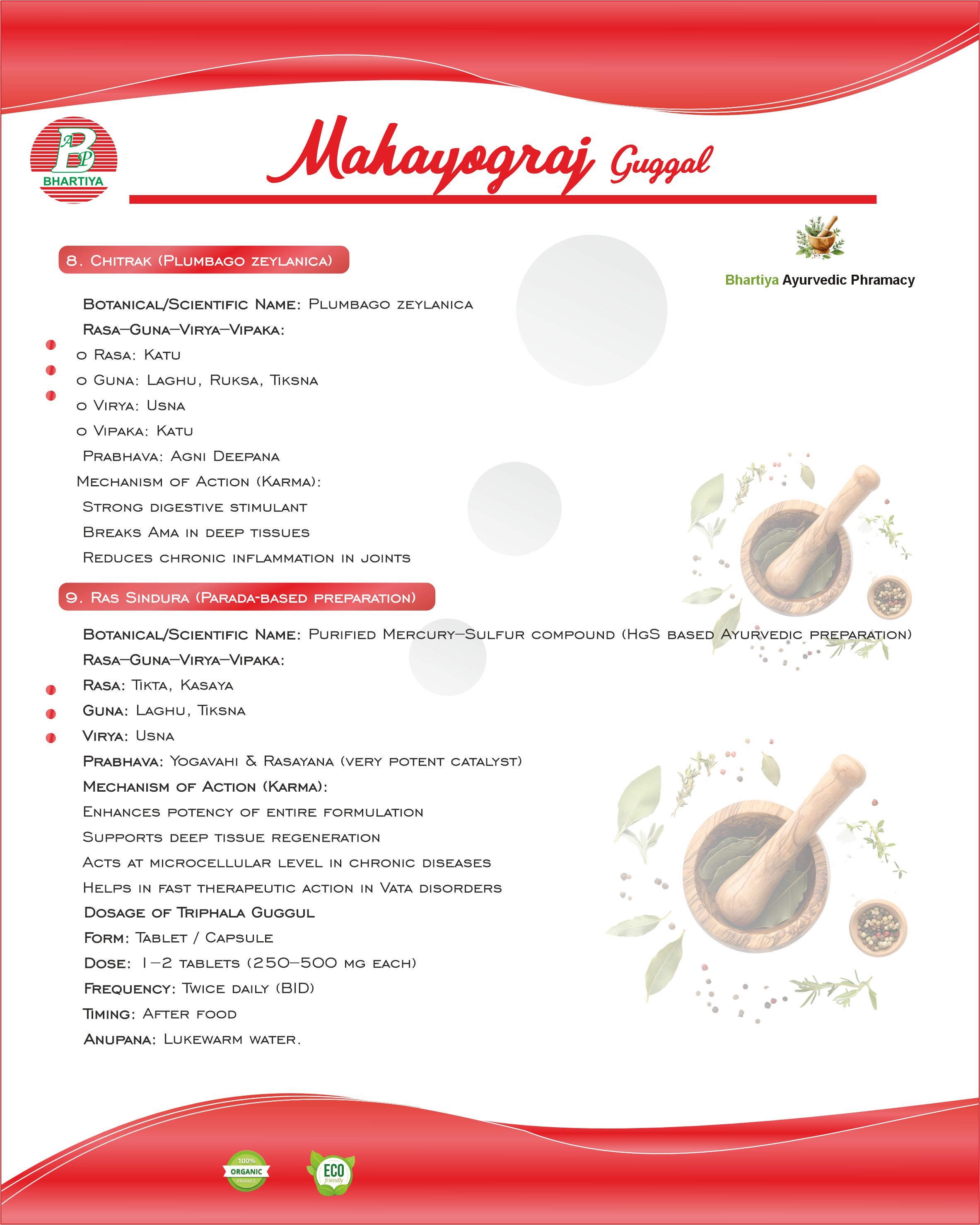
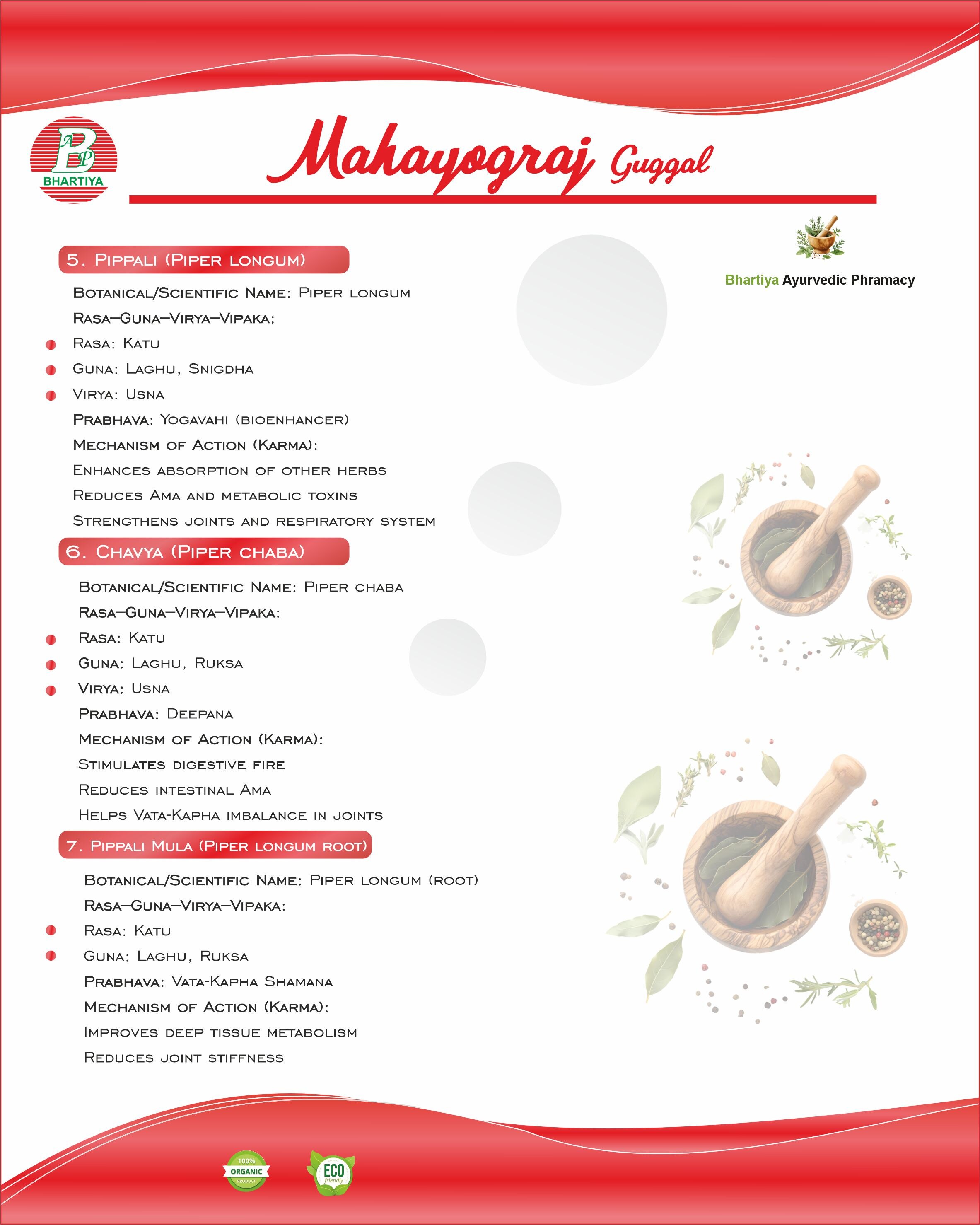
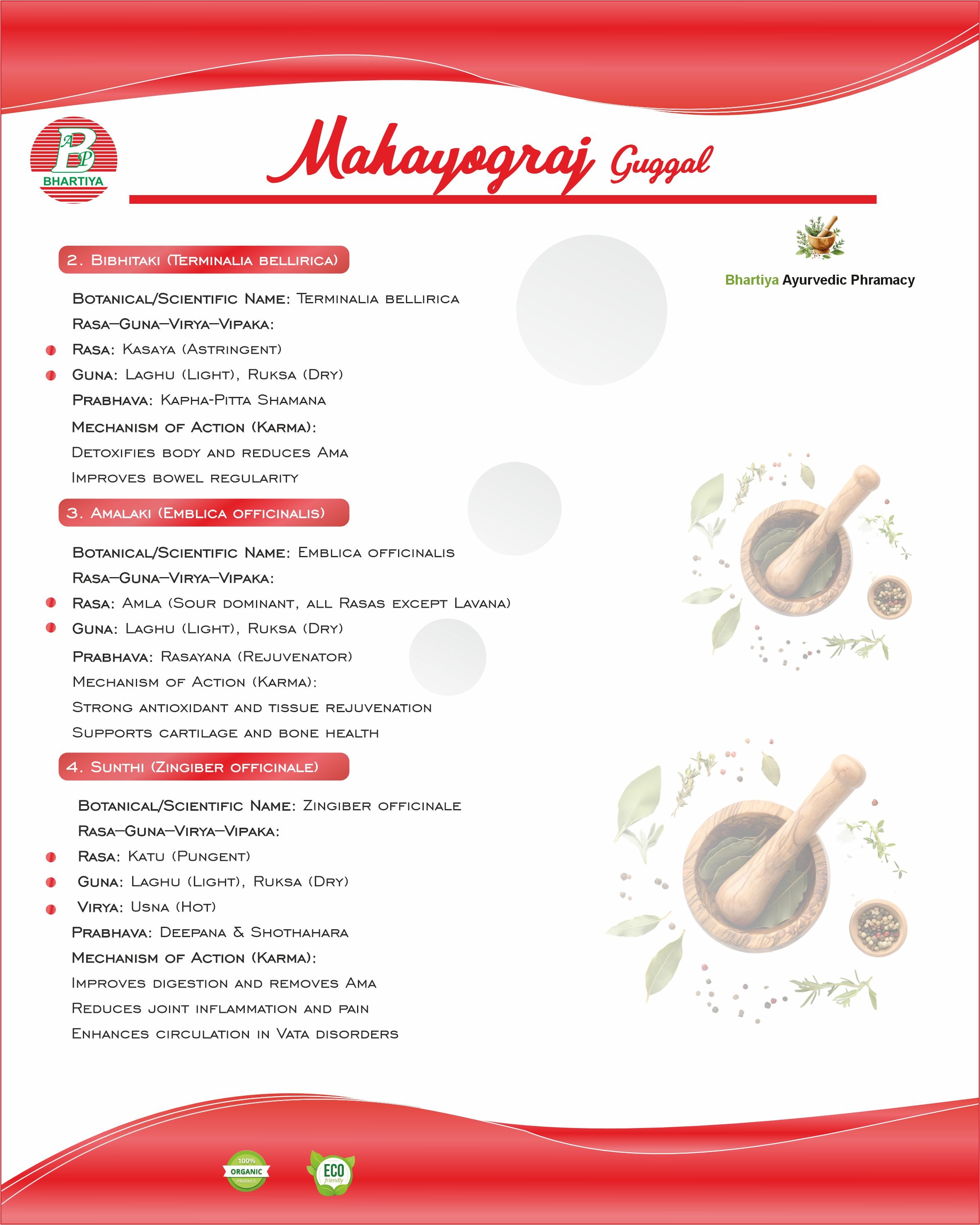
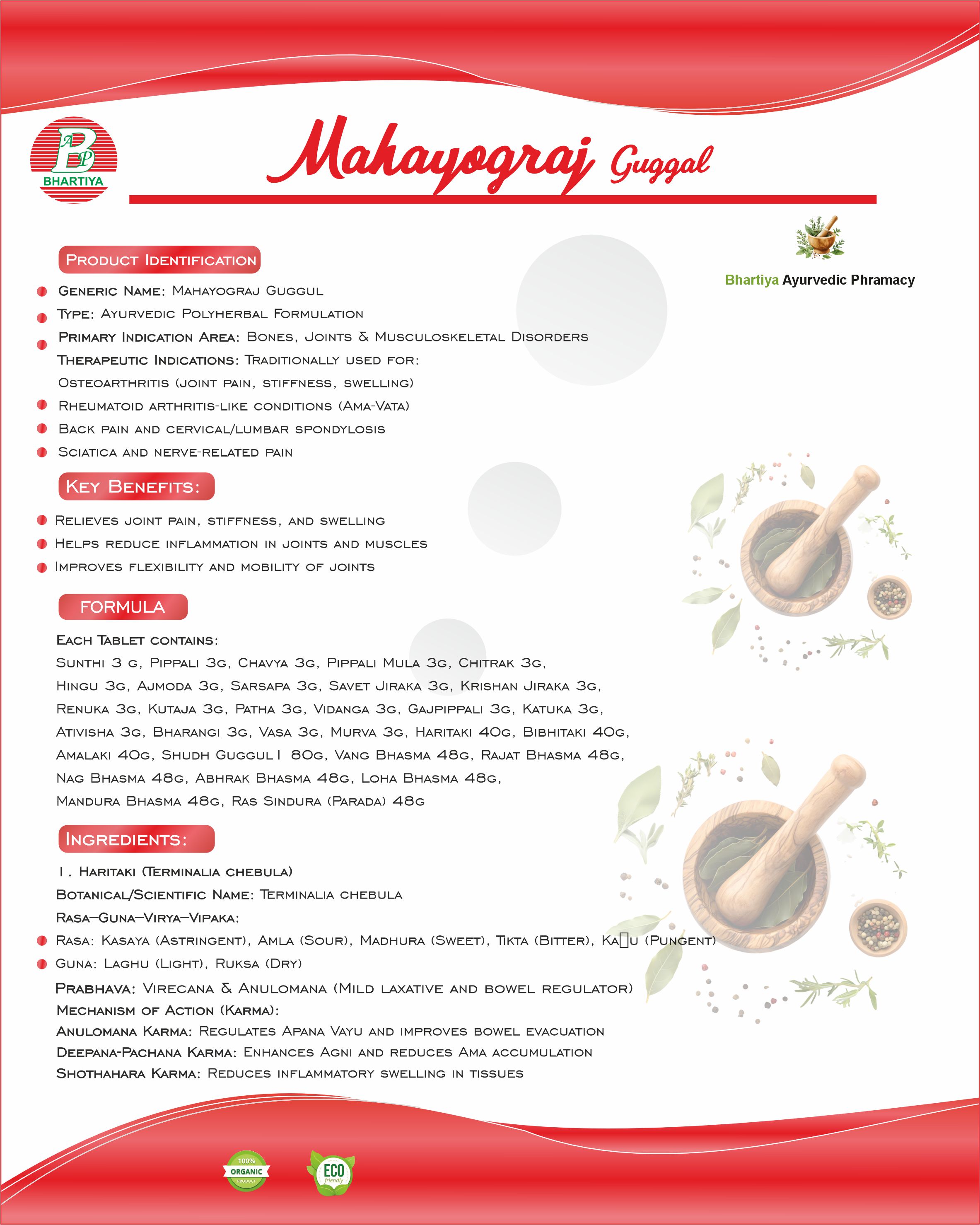
MHAYOGRAJ GUGGUL Product Identification • Generic Name: Mahayograj Guggul • Type: Ayurvedic Polyherbal Formulation • Primary Indication Area: Bones, Joints & Musculoskeletal Disorders • Therapeutic Indications: Traditionally used for: Osteoarthritis (joint pain, stiffness, swelling) • Rheumatoid arthritis-like conditions (Ama-Vata) • Back pain and cervical/lumbar spondylosis • Sciatica and nerve-related pain • Gout and inflammatory joint disorders • General weakness of bones, joints, and ligaments Key Benefits: • Relieves joint pain, stiffness, and swelling • Helps reduce inflammation in joints and muscles • Improves flexibility and mobility of joints • Supports nerve strength and reduces Vata imbalance • Aids in improving chronic degenerative bone and joint conditions FORMULA Each Tablet contains: Sunthi 3 g Pippali 3 g Chavya 3 g Pippali Mula 3 g Chitrak 3 g Hingu 3 g Ajmoda 3 g Sarsapa 3 g Savet Jiraka 3 g Krishan Jiraka 3 g Renuka 3 g Kutaja 3 g Patha 3 g Vidanga 3 g Gajpippali 3 g Katuka 3 g Ativisha 3 g Bharangi 3 g Vasa 3 g Murva 3 g Haritaki 40g Bibhitaki 40g Amalaki 40g Shudh Guggul 180g Vang Bhasma 48g Rajat Bhasma 48g Nag Bhasma 48g Abhrak Bhasma 48g Loha Bhasma 48g Mandura Bhasma 48g Ras Sindura (Parada) 48g Ingredients: 1. Haritaki (Terminalia chebula) • Botanical/Scientific Name: Terminalia chebula • Rasa–Guna–Vīrya–Vipāka: o Rasa: Kaṣāya (Astringent), Amla (Sour), Madhura (Sweet), Tikta (Bitter), Kaṭu (Pungent) o Guna: Laghu (Light), Rūkṣa (Dry) o Vīrya: Uṣṇa (Hot) o Vipāka: Madhura (Sweet) • Prabhāva: Virecana & Anulomana (Mild laxative and bowel regulator) Mechanism of Action (Karma): • Anulomana Karma: Regulates Apana Vayu and improves bowel evacuation • Deepana-Pachana Karma: Enhances Agni and reduces Ama accumulation • Shothahara Karma: Reduces inflammatory swelling in tissues 2. Bibhitaki (Terminalia bellirica) • Botanical/Scientific Name: Terminalia bellirica • Rasa–Guna–Vīrya–Vipāka: o Rasa: Kaṣāya (Astringent) o Guna: Laghu (Light), Rūkṣa (Dry) o Vīrya: Uṣṇa (Hot) o Vipāka: Madhura (Sweet) • Prabhāva: Kapha-Pitta Shamana Mechanism of Action (Karma): • Detoxifies body and reduces Ama • Improves bowel regularity • Reduces inflammation in joints and tissues 3. Amalaki (Emblica officinalis) • Botanical/Scientific Name: Emblica officinalis • Rasa–Guna–Vīrya–Vipāka: o Rasa: Amla (Sour dominant, all Rasas except Lavana) o Guna: Laghu (Light), Rūkṣa (Dry) o Vīrya: Śīta (Cooling) o Vipāka: Madhura (Sweet) • Prabhāva: Rasayana (Rejuvenator) Mechanism of Action (Karma): • Strong antioxidant and tissue rejuvenation • Supports cartilage and bone health • Reduces oxidative inflammation in joints 4. Sunthi (Zingiber officinale) • Botanical/Scientific Name: Zingiber officinale • Rasa–Guna–Vīrya–Vipāka: o Rasa: Kaṭu (Pungent) o Guna: Laghu (Light), Rūkṣa (Dry) o Vīrya: Uṣṇa (Hot) o Vipāka: Madhura (Sweet) • Prabhāva: Deepana & Shothahara Mechanism of Action (Karma): • Improves digestion and removes Ama • Reduces joint inflammation and pain • Enhances circulation in Vata disorders 5. Pippali (Piper longum) • Botanical/Scientific Name: Piper longum • Rasa–Guna–Vīrya–Vipāka: o Rasa: Kaṭu o Guna: Laghu, Snigdha o Vīrya: Uṣṇa o Vipāka: Madhura • Prabhāva: Yogavahi (bioenhancer) Mechanism of Action (Karma): • Enhances absorption of other herbs • Reduces Ama and metabolic toxins • Strengthens joints and respiratory system 6. Chavya (Piper chaba) • Botanical/Scientific Name: Piper chaba • Rasa–Guna–Vīrya–Vipāka: o Rasa: Kaṭu o Guna: Laghu, Rūkṣa o Vīrya: Uṣṇa o Vipāka: Kaṭu • Prabhāva: Deepana Mechanism of Action (Karma): • Stimulates digestive fire • Reduces intestinal Ama • Helps Vata-Kapha imbalance in joints 7. Pippali Mula (Piper longum root) • Botanical/Scientific Name: Piper longum (root) • Rasa–Guna–Vīrya–Vipāka: o Rasa: Kaṭu o Guna: Laghu, Rūkṣa o Vīrya: Uṣṇa o Vipāka: Kaṭu • Prabhāva: Vata-Kapha Shamana Mechanism of Action (Karma): • Improves deep tissue metabolism • Reduces joint stiffness • Clears Ama from joints 8. Chitrak (Plumbago zeylanica) • Botanical/Scientific Name: Plumbago zeylanica • Rasa–Guna–Vīrya–Vipāka: o Rasa: Kaṭu o Guna: Laghu, Rūkṣa, Tikṣṇa o Vīrya: Uṣṇa o Vipāka: Kaṭu • Prabhāva: Agni Deepana Mechanism of Action (Karma): • Strong digestive stimulant • Breaks Ama in deep tissues • Reduces chronic inflammation in joints 9. Hingu (Ferula foetida) • Botanical/Scientific Name: Ferula foetida • Rasa–Guna–Vīrya–Vipāka: o Rasa: Kaṭu o Guna: Laghu, Tikṣṇa, Snigdha o Vīrya: Uṣṇa o Vipāka: Kaṭu • Prabhāva: Vata Anulomana Mechanism of Action (Karma): • Relieves gas and Vata obstruction • Reduces nerve and joint pain • Improves gut-joint connection balance 10. Ajmoda (Apium leptophyllum) • Botanical/Scientific Name: Apium leptophyllum • Rasa–Guna–Vīrya–Vipāka: o Rasa: Kaṭu, Tikta o Guna: Laghu, Rūkṣa o Vīrya: Uṣṇa • Prabhāva: Shoolahara Mechanism of Action (Karma): • Reduces joint and muscular pain • Improves circulation • Relieves stiffness and cramps 11. Sarsapa (Brassica juncea) • Botanical/Scientific Name: Brassica juncea • Rasa–Guna–Vīrya–Vipāka: o Rasa: Kaṭu, Tikta o Guna: Laghu, Rūkṣa, Tikṣṇa o Vīrya: Uṣṇa • Prabhāva: Vedanasthapana Mechanism of Action (Karma): • Improves blood flow in joints • Reduces cold-induced pain • Decreases stiffness 12. Safed Jeeraka (Cuminum cyminum) • Botanical/Scientific Name: Cuminum cyminum • Rasa–Guna–Vīrya–Vipāka: o Rasa: Kaṭu, Tikta o Guna: Laghu, Rūkṣa o Vīrya: Uṣṇa • Prabhāva: Deepana Mechanism of Action (Karma): • Improves digestion and metabolism • Reduces Ama formation • Supports joint health indirectly 13. Krishna Jeeraka (Carum carvi) • Botanical/Scientific Name: Carum carvi • Rasa–Guna–Vīrya–Vipāka: o Rasa: Kaṭu, Tikta o Guna: Laghu o Vīrya: Uṣṇa • Prabhāva: Vata-Kapha Shamana Mechanism of Action (Karma): • Relieves intestinal spasms • Reduces bloating and gas • Supports pain relief in Vata disorders 14. Renuka • Botanical/Scientific Name: Vitex negundo (commonly associated) • Rasa–Guna–Vīrya–Vipāka: o Rasa: Tikta, Kaṭu o Guna: Laghu, Rūkṣa o Vīrya: Uṣṇa • Prabhāva: Shothahara Mechanism of Action (Karma): • Reduces inflammation in joints • Acts as mild analgesic • Helps in Vata-related swelling 15. Kutaja (Holarrhena antidysenterica) • Botanical/Scientific Name: Holarrhena antidysenterica • Rasa–Guna–Vīrya–Vipāka: o Rasa: Tikta, Kaṣāya o Guna: Laghu, Rūkṣa o Vīrya: Śīta • Prabhāva: Grahi (absorbent) Mechanism of Action (Karma): • Controls excessive bowel discharge • Detoxifies gut • Supports chronic inflammatory conditions 16. Patha (Cissampelos pareira) • Botanical/Scientific Name: Cissampelos pareira • Rasa–Guna–Vīrya–Vipāka: o Rasa: Tikta, Kaṣāya o Guna: Laghu, Rūkṣa o Vīrya: Uṣṇa • Prabhāva: Shothahara Mechanism of Action (Karma): • Reduces inflammation • Supports pain relief in joints • Helps Vata balance 17. Vidanga (Embelia ribes) • Botanical/Scientific Name: Embelia ribes • Rasa–Guna–Vīrya–Vipāka: o Rasa: Kaṭu, Tikta o Guna: Laghu, Rūkṣa o Vīrya: Uṣṇa • Prabhāva: Krimighna Mechanism of Action (Karma): • Removes toxins and parasites • Improves gut health • Reduces Ama-related joint pain 18. Gajpippali (Scindapsus officinalis) • Botanical/Scientific Name: Scindapsus officinalis • Rasa–Guna–Vīrya–Vipāka: o Rasa: Kaṭu o Guna: Laghu, Rūkṣa o Vīrya: Uṣṇa • Prabhāva: Deepana Mechanism of Action (Karma): • Improves digestion • Reduces Vata-Kapha imbalance • Supports joint metabolism 19. Katuka (Picrorhiza kurroa) • Botanical/Scientific Name: Picrorhiza kurroa • Rasa–Guna–Vīrya–Vipāka: o Rasa: Tikta o Guna: Laghu, Rūkṣa o Vīrya: Śīta • Prabhāva: Pitta Shamana Mechanism of Action (Karma): • Detoxifies liver and blood • Reduces systemic inflammation • Supports chronic arthritis conditions 20. Ativisha (Aconitum heterophyllum) • Botanical/Scientific Name: Aconitum heterophyllum • Rasa–Guna–Vīrya–Vipāka: o Rasa: Tikta, Kaṭu o Guna: Laghu, Rūkṣa o Vīrya: Śīta • Prabhāva: Jwaraghna Mechanism of Action (Karma): • Reduces systemic toxins • Supports immune regulation • Helps in chronic inflammatory disorders 21. Bharangi (Clerodendrum serratum) • Botanical/Scientific Name: Clerodendrum serratum • Rasa–Guna–Vīrya–Vipāka: o Rasa: Tikta, Kaṭu o Guna: Laghu, Rūkṣa o Vīrya: Uṣṇa • Prabhāva: Shothahara Mechanism of Action (Karma): • Reduces swelling and inflammation • Supports respiratory and joint health • Helps in Vata-Kapha imbalance 22. Vasa (Adhatoda vasica) • Botanical/Scientific Name: Adhatoda vasica • Rasa–Guna–Vīrya–Vipāka: o Rasa: Tikta, Kaṣāya o Guna: Laghu, Rūkṣa o Vīrya: Śīta • Prabhāva: Kapha Shamana Mechanism of Action (Karma): • Reduces Kapha and inflammation • Improves oxygenation and tissue repair • Supports chronic inflammatory conditions 23. Murva (Marsdenia tenacissima) • Botanical/Scientific Name: Marsdenia tenacissima • Rasa–Guna–Vīrya–Vipāka: o Rasa: Tikta o Guna: Laghu, Rūkṣa o Vīrya: Śīta • Prabhāva: Vata-Pitta Shamana Mechanism of Action (Karma): • Reduces burning and inflammation • Supports joint and nerve health • Helps in chronic Vata disorders 24. Shuddha Guggul (Commiphora mukul) • Botanical/Scientific Name: Commiphora mukul • Rasa–Guna–Vīrya–Vipāka: o Rasa: Tikta, Kaṭu, Kaṣāya o Guna: Laghu, Rūkṣa, Tikṣṇa o Vīrya: Uṣṇa • Prabhāva: Yogavahi & Lekhana Mechanism of Action (Karma): • Removes Ama and toxins from joints • Reduces inflammation and swelling • Restores joint mobility 25. Vang Bhasma (Tin calx) • Botanical/Scientific Name: Tin processed calcined preparation (SnO₂ based Bhasma) • Rasa–Guna–Vīrya–Vipāka: o Rasa: Kaṣāya, Tikta o Guna: Laghu (Light), Rūkṣa (Dry) o Vīrya: Śīta (Cooling) o Vipāka: Kaṭu (Pungent) • Prabhāva: Balya & Shukra Dhatu Poshaka Mechanism of Action (Karma): • Strengthens musculoskeletal tissues • Supports bone and joint mineral balance • Improves tissue regeneration in chronic degeneration 26. Rajat Bhasma (Silver calx) • Botanical/Scientific Name: Purified calcined silver preparation • Rasa–Guna–Vīrya–Vipāka: o Rasa: Madhura (Sweet), Kaṣāya o Guna: Snigdha (Unctuous), Laghu o Vīrya: Śīta (Cooling) o Vipāka: Madhura (Sweet) • Prabhāva: Medhya & Rasayana Mechanism of Action (Karma): • Supports nerve tissue regeneration • Reduces inflammation in chronic disorders • Enhances cellular repair and immunity 27. Nag Bhasma (Lead calx – detoxified form in classical Ayurveda) • Botanical/Scientific Name: Purified calcined lead preparation • Rasa–Guna–Vīrya–Vipāka: o Rasa: Kaṣāya, Tikta o Guna: Laghu, Rūkṣa o Vīrya: Uṣṇa o Vipāka: Kaṭu • Prabhāva: Asthi-Sandhi Balya Mechanism of Action (Karma): • Strengthens bone density and joints • Helps in chronic degenerative conditions • Supports Vata stabilization in musculoskeletal system 28. Abhrak Bhasma (Mica calx) • Botanical/Scientific Name: Purified calcined mica (Silicate mineral complex) • Rasa–Guna–Vīrya–Vipāka: o Rasa: Madhura, Tikta o Guna: Laghu, Snigdha o Vīrya: Śīta to Uṣṇa (balanced, Rasayana effect) o Vipāka: Madhura • Prabhāva: Rasayana (Rejuvenator) Mechanism of Action (Karma): • Promotes tissue regeneration and longevity • Strengthens nerves, bones, and muscles • Supports chronic degenerative disease recovery 29. Loha Bhasma (Iron calx) • Botanical/Scientific Name: Purified calcined iron preparation • Rasa–Guna–Vīrya–Vipāka: o Rasa: Kaṣāya, Tikta o Guna: Laghu, Rūkṣa o Vīrya: Uṣṇa o Vipāka: Kaṭu • Prabhāva: Raktavardhaka & Balya Mechanism of Action (Karma): • Improves blood formation and oxygen transport • Strengthens tissues and muscles • Supports recovery in chronic weakness 30. Mandura Bhasma (Iron oxide calx) Botanical/Scientific Name: Ferric oxide-based calcined preparation Rasa–Guna–Vīrya–Vipāka: o Rasa: Kaṣāya o Guna: Laghu, Rūkṣa o Vīrya: Uṣṇa o Vipāka: Kaṭu • Prabhāva: Raktashodhaka Mechanism of Action (Karma): • Purifies blood and removes metabolic toxins • Reduces inflammation in chronic disorders • Supports liver and tissue detox pathways 31. Ras Sindura (Parada-based preparation) • Botanical/Scientific Name: Purified Mercury–Sulfur compound (HgS based Ayurvedic preparation) • Rasa–Guna–Vīrya–Vipāka: o Rasa: Tikta, Kaṣāya o Guna: Laghu, Tikṣṇa o Vīrya: Uṣṇa o Vipāka: Kaṭu • Prabhāva: Yogavahi & Rasayana (very potent catalyst) Mechanism of Action (Karma): • Enhances potency of entire formulation • Supports deep tissue regeneration • Acts at microcellular level in chronic diseases • Helps in fast therapeutic action in Vata disorders Dosage of Triphala Guggul • Form: Tablet / Capsule • Dose: 1–2 tablets (250–500 mg each) • Frequency: Twice daily (BID) • Timing: After food • Anupana: Lukewarm water. mahayograj guggulu, mahayograj guggulu uses in hindi, mahayograj guggulu uses mahayograj guggulu benefits, mahayograj guggul, mahayograj guggulu ke fayde mahayograj guggulu price, mahayograj guggulu benefits in hindi, mahayograj guggulu ayurvedic medicine mahayograj guggulu amazon, mahayograj guggulu ayurveda, mahayograj guggulu ayurvedic mahayograj guggulu ayurvedic tablet, mahayograj guggul benefits in hindi mahayograj guggul benefits, mahayograj guggulu best brand, mahayograj guggulu buy online mahayograj guggul content, mahayograj guggul capsule, mahayograj guggul ingredients mahayograj guggul price, mahayograj guggul uses, mahayograj guggul dosage mahayograj guggulu fayde, mahayograj guggulu flipkart, mahayograj guggulu for arthritis mahayograj guggul ke fayde, mahayograj guggul ke fayde in hindi, mahayograj guggul gold mahayograj guggul ke ghatak, mahayograj guggul and yograj guggul, mahayograj guggul hindi mahayograj guggul uses hindi, swarna mahayograj guggul in hindi, mahayograj guggul kya hai mahayograj guggul benefits hindi, mahayograj guggul in hindi, mahayograj guggul ingredients in hindi mahayograj guggul in marathi, mahayograj guggul image, mahayograj guggulu ingredients mahayograj guggulu indicatio, mahayograj guggul khane ke fayde, mahayograj guggul ka kya kam hai mahayograj guggul ke bare mein bataiye, mahayograj guggul uses in hindi, mahayograj guggulu medicine mahayograj guggulu mrp, ayurvedic medicine mahayograj guggul, mahayograj guggul hindi mein mahayograj guggulu near me, mahayograj guggul botanical name, use of mahayograj guggul in hindi benefits of mahayograj guggul, uses of mahayograj guggul, content of mahayograj guggul composition of mahayograj guggul, ingredients of mahayograj guggul, dose of mahayograj guggul mahayograj guggulu price in india, mahayograj guggul tablet, mahayograj guggulu tablet uses mahayograj guggul vati, mahayograj guggul vati uses in hindi, mahayograj guggulu vati mahayograj guggulu when to take, mahayograj guggul rate, mahayograj guggul fayde where mahayograj guggal tablets, where mahayograj guggal benefits, when mahayograj guggal how to use when mahayograj guggal tablets, when mahayograj guggal how to take, when mahayograj guggal benefits how mahayograj guggal can be taken, how mahayograj guggal tablets, how mahayograj guggal mode of action how mahayograj guggal benefits, how mahayograj guggal himalaya, why mahayograj guggal tablets why mahayograj guggal when to take, why mahayograj guggal mode of action, why mahayograj guggal in hindi why mahayograj guggal how to use, who mahayograj guggal tablets, who mahayograj gug, gal scientific name who mahayograj guggal with gold, can mahayograj guggal how to use, can mahayograj guggal when to take can mahayograj guggal side effects, can mahayograj guggal content, does mahayograj guggal dosage