

Description
Product details
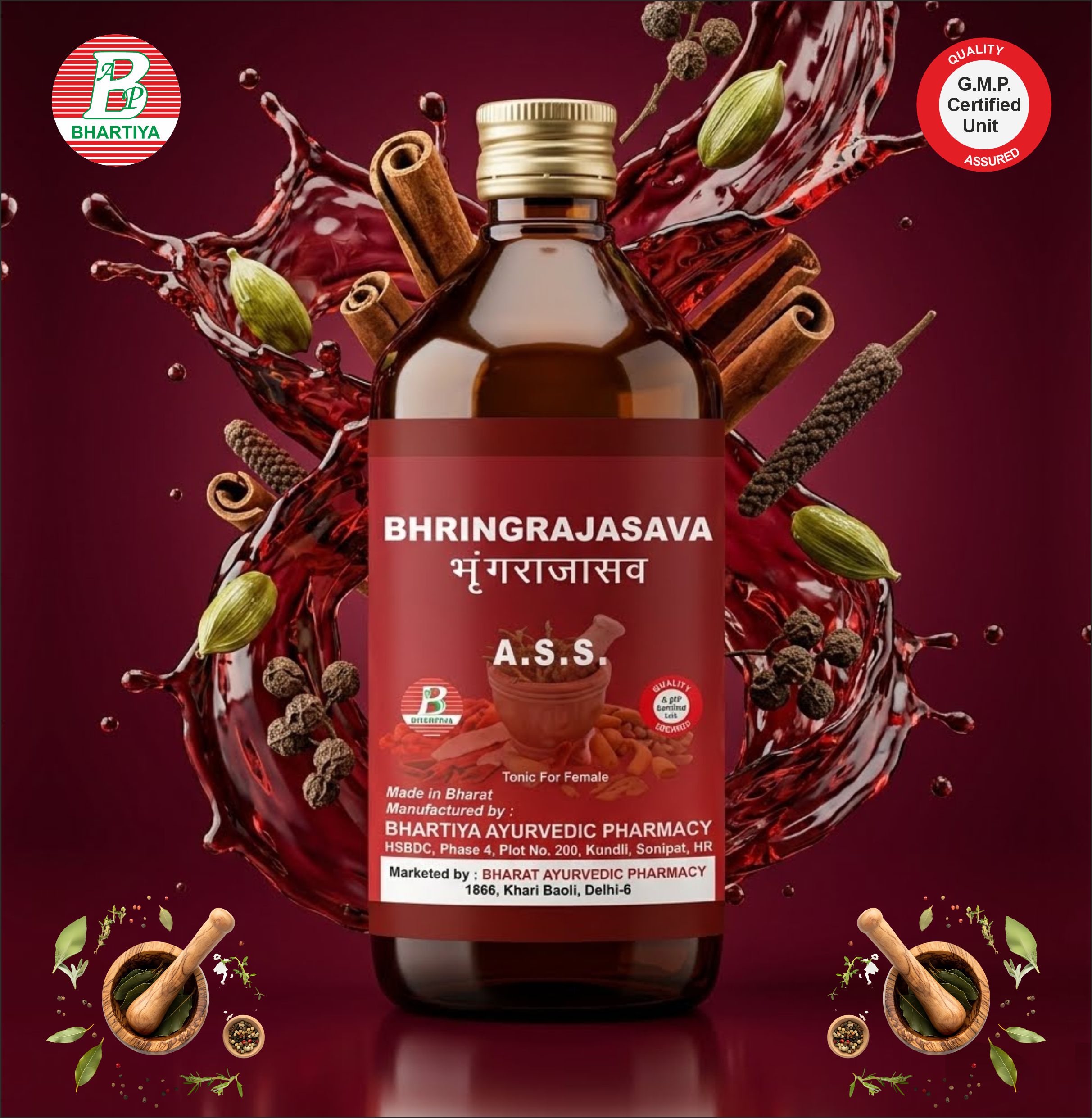
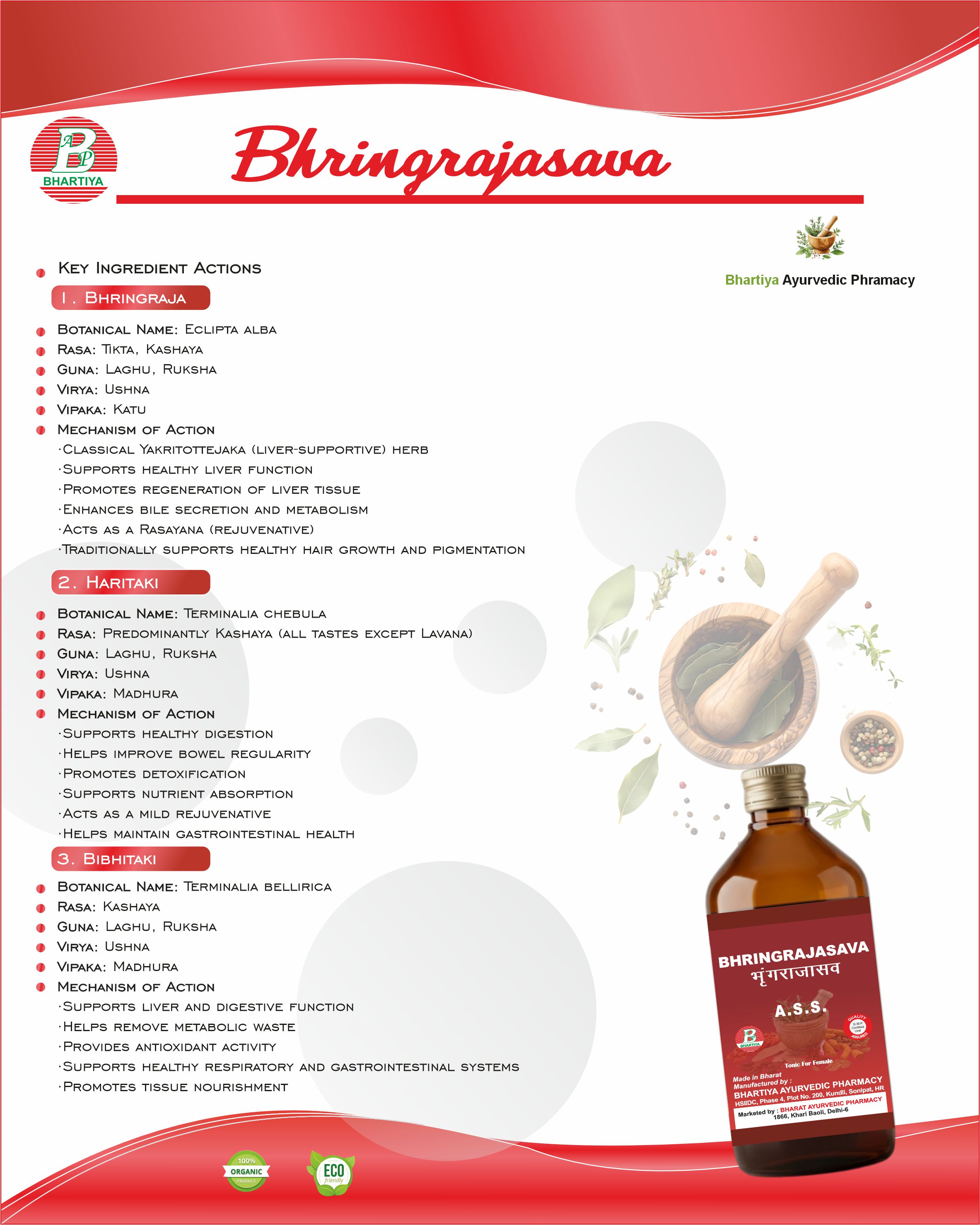
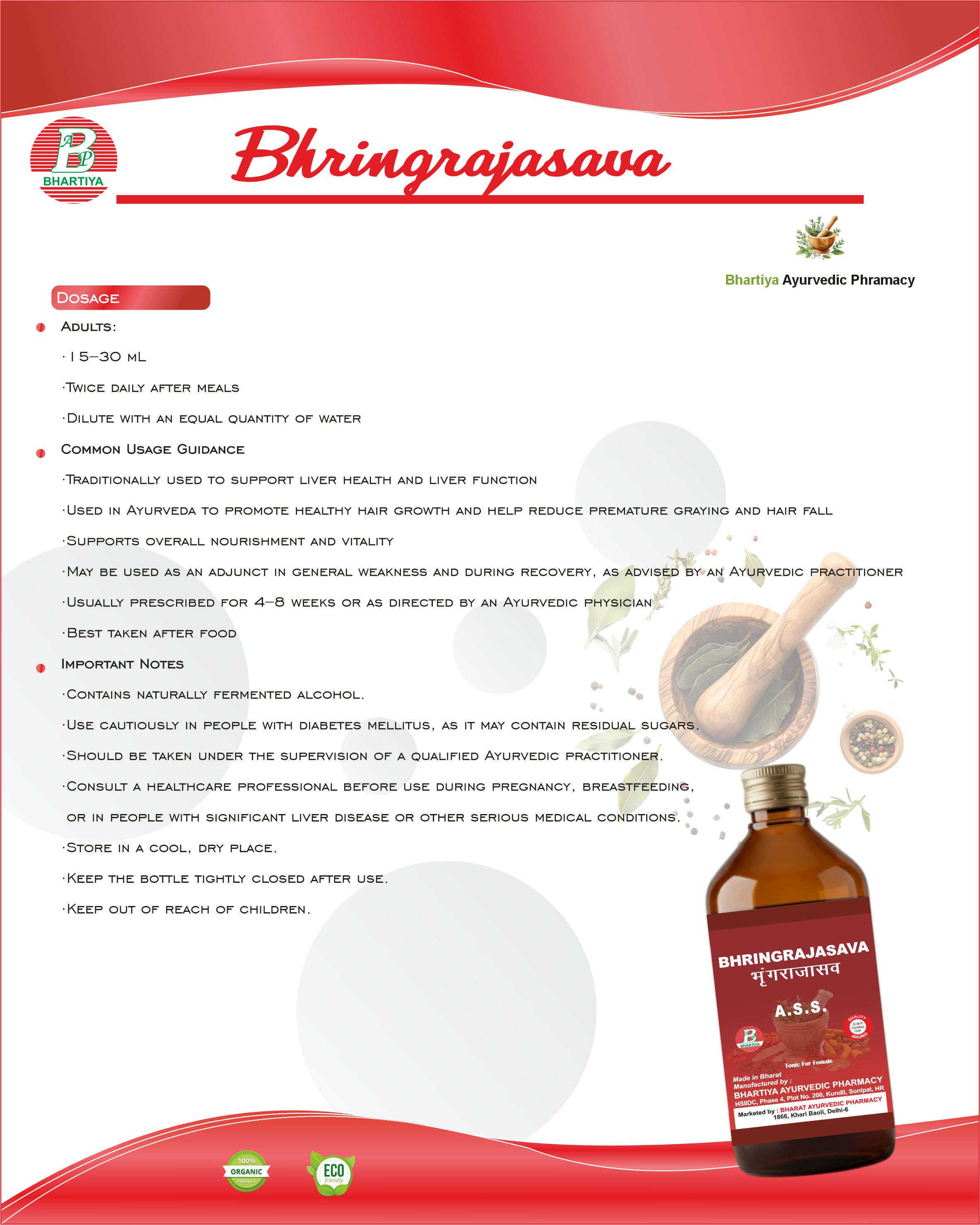
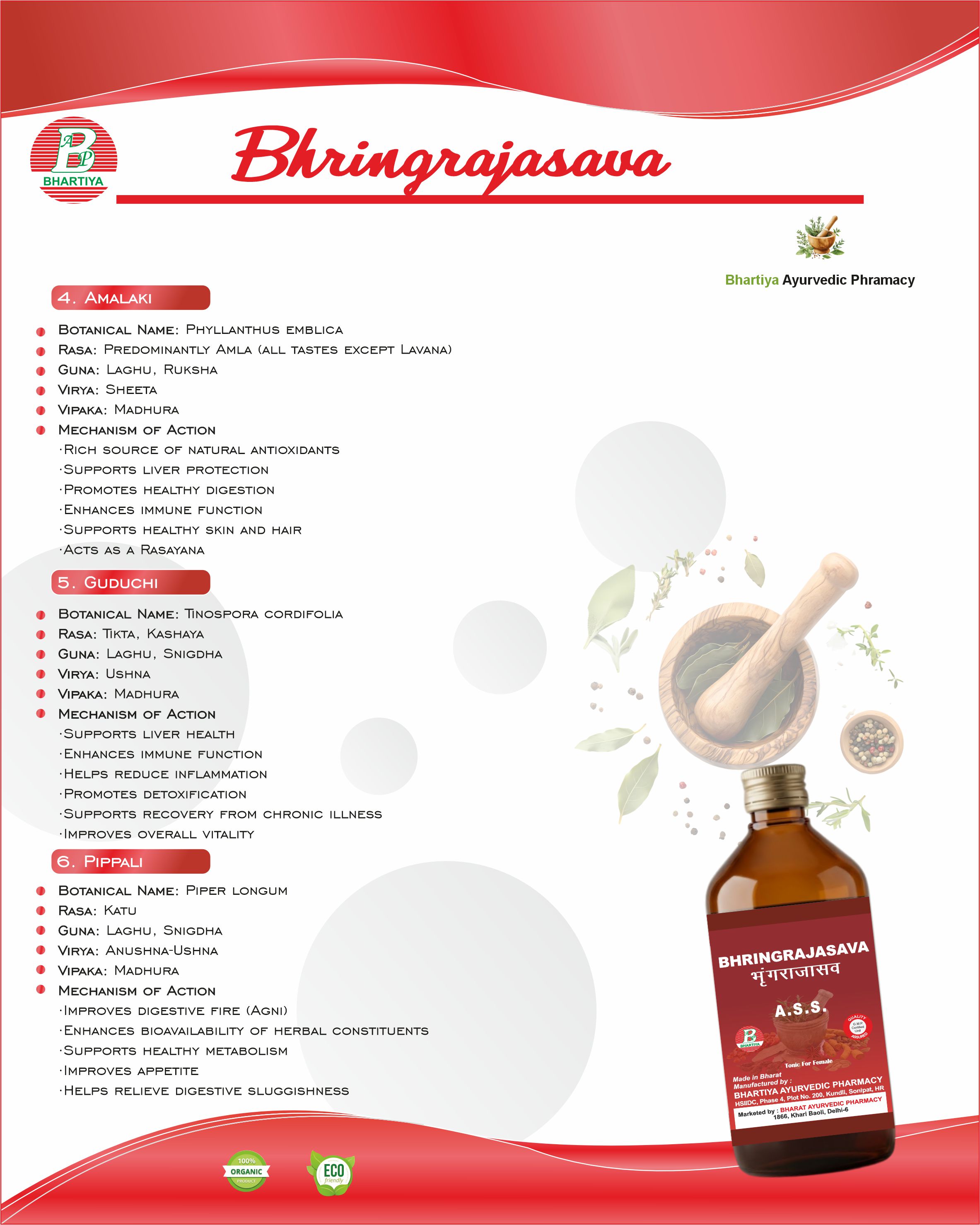
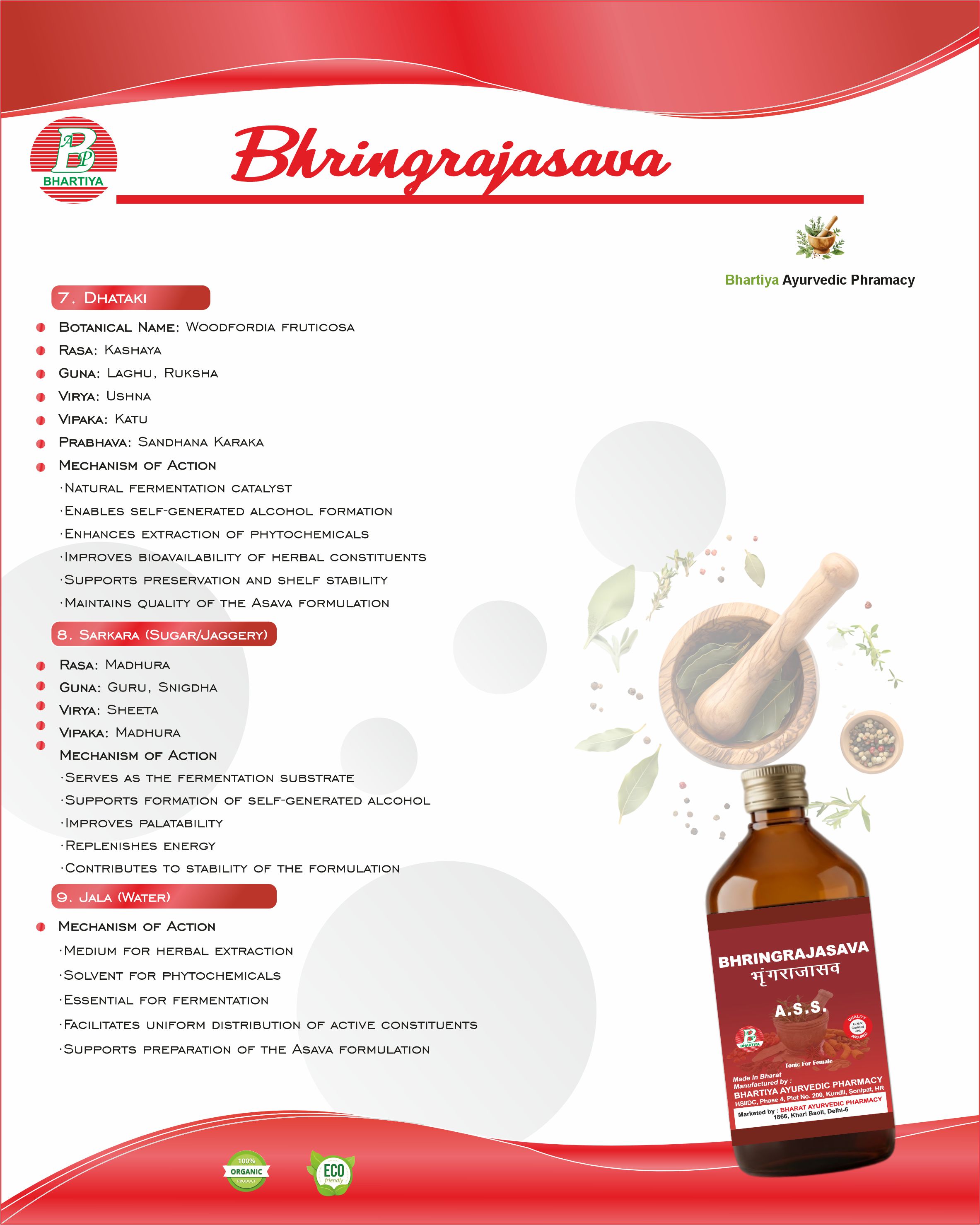
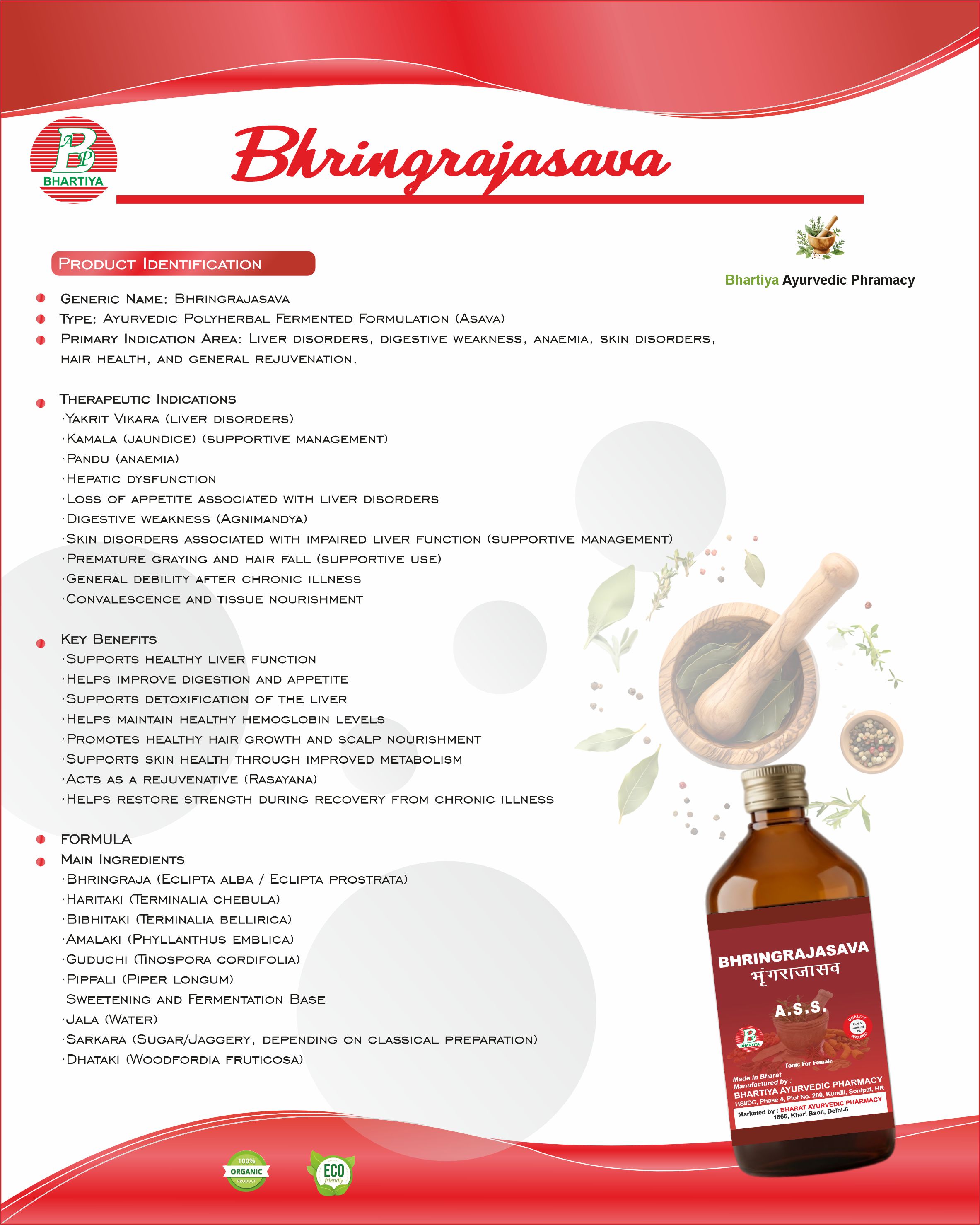
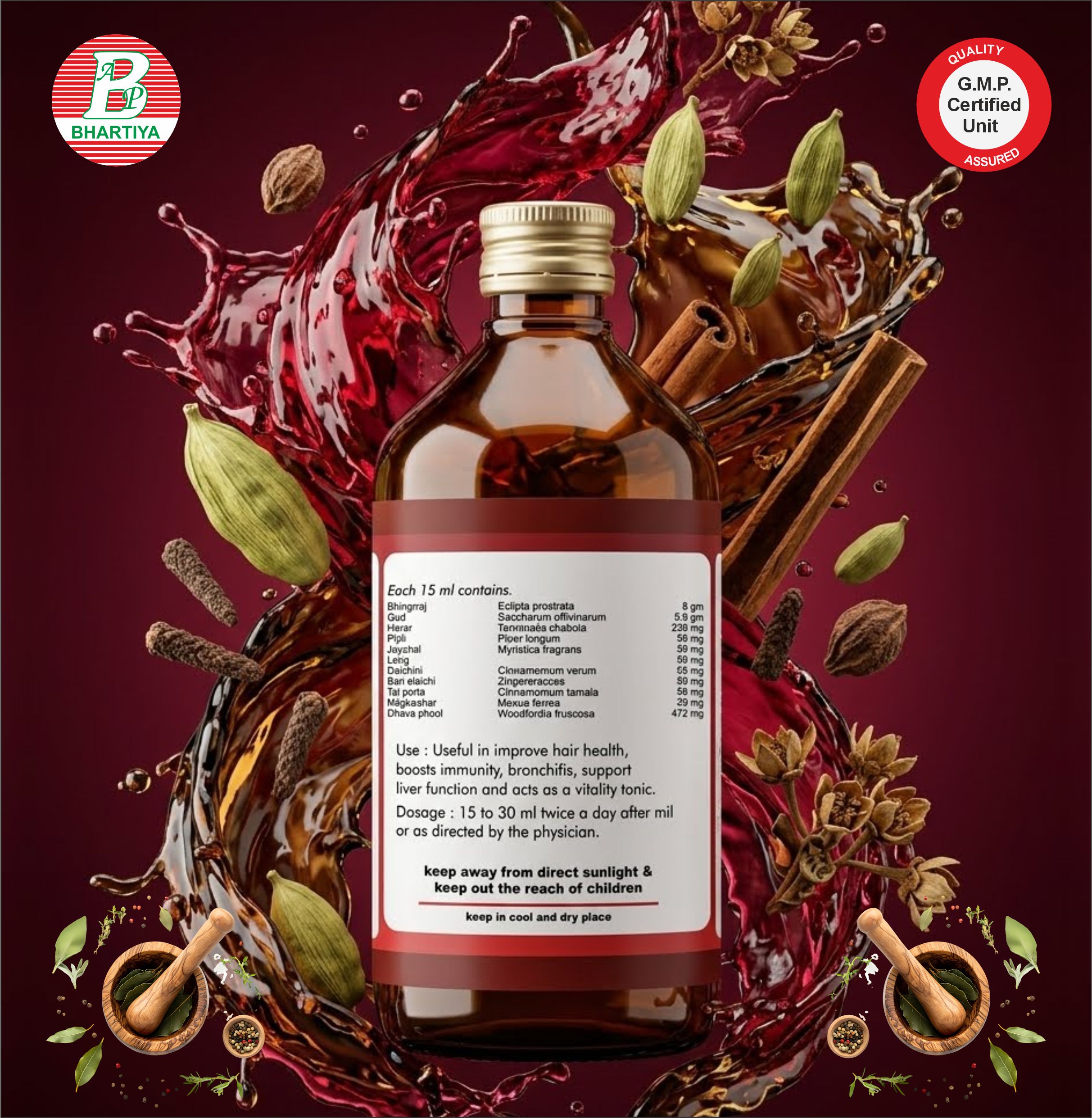
BHRINGRAJASAVA Product Identification Generic Name: Bhringrajasava Type: Ayurvedic Polyherbal Fermented Formulation (Asava) Primary Indication Area: Liver disorders, digestive weakness, anaemia, skin disorders, hair health, and general rejuvenation. Therapeutic Indications • Yakrit Vikara (liver disorders) • Kamala (jaundice) (supportive management) • Pandu (anaemia) • Hepatic dysfunction • Loss of appetite associated with liver disorders • Digestive weakness (Agnimandya) • Skin disorders associated with impaired liver function (supportive management) • Premature graying and hair fall (supportive use) • General debility after chronic illness • Convalescence and tissue nourishment Key Benefits • Supports healthy liver function • Helps improve digestion and appetite • Supports detoxification of the liver • Helps maintain healthy hemoglobin levels • Promotes healthy hair growth and scalp nourishment • Supports skin health through improved metabolism • Acts as a rejuvenative (Rasayana) • Helps restore strength during recovery from chronic illness FORMULA Main Ingredients • Bhringraja (Eclipta alba / Eclipta prostrata) • Haritaki (Terminalia chebula) • Bibhitaki (Terminalia bellirica) • Amalaki (Phyllanthus emblica) • Guduchi (Tinospora cordifolia) • Pippali (Piper longum) Sweetening and Fermentation Base • Jala (Water) • Sarkara (Sugar/Jaggery, depending on classical preparation) • Dhataki (Woodfordia fruticosa) Key Ingredient Actions 1. Bhringraja Botanical Name: Eclipta alba • Rasa: Tikta, Kashaya • Guna: Laghu, Ruksha • Virya: Ushna • Vipaka: Katu Mechanism of Action • Classical Yakritottejaka (liver-supportive) herb • Supports healthy liver function • Promotes regeneration of liver tissue • Enhances bile secretion and metabolism • Acts as a Rasayana (rejuvenative) • Traditionally supports healthy hair growth and pigmentation 2. Haritaki Botanical Name: Terminalia chebula • Rasa: Predominantly Kashaya (all tastes except Lavana) • Guna: Laghu, Ruksha • Virya: Ushna • Vipaka: Madhura Mechanism of Action • Supports healthy digestion • Helps improve bowel regularity • Promotes detoxification • Supports nutrient absorption • Acts as a mild rejuvenative • Helps maintain gastrointestinal health 3. Bibhitaki Botanical Name: Terminalia bellirica • Rasa: Kashaya • Guna: Laghu, Ruksha • Virya: Ushna • Vipaka: Madhura Mechanism of Action • Supports liver and digestive function • Helps remove metabolic waste • Provides antioxidant activity • Supports healthy respiratory and gastrointestinal systems • Promotes tissue nourishment 4. Amalaki Botanical Name: Phyllanthus emblica • Rasa: Predominantly Amla (all tastes except Lavana) • Guna: Laghu, Ruksha • Virya: Sheeta • Vipaka: Madhura Mechanism of Action • Rich source of natural antioxidants • Supports liver protection • Promotes healthy digestion • Enhances immune function • Supports healthy skin and hair • Acts as a Rasayana 5. Guduchi Botanical Name: Tinospora cordifolia • Rasa: Tikta, Kashaya • Guna: Laghu, Snigdha • Virya: Ushna • Vipaka: Madhura Mechanism of Action • Supports liver health • Enhances immune function • Helps reduce inflammation • Promotes detoxification • Supports recovery from chronic illness • Improves overall vitality 6. Pippali Botanical Name: Piper longum • Rasa: Katu • Guna: Laghu, Snigdha • Virya: Anushna-Ushna • Vipaka: Madhura Mechanism of Action • Improves digestive fire (Agni) • Enhances bioavailability of herbal constituents • Supports healthy metabolism • Improves appetite • Helps relieve digestive sluggishness 7. Dhataki Botanical Name: Woodfordia fruticosa • Rasa: Kashaya • Guna: Laghu, Ruksha • Virya: Ushna • Vipaka: Katu • Prabhava: Sandhana Karaka Mechanism of Action • Natural fermentation catalyst • Enables self-generated alcohol formation • Enhances extraction of phytochemicals • Improves bioavailability of herbal constituents • Supports preservation and shelf stability • Maintains quality of the Asava formulation 8. Sarkara (Sugar/Jaggery) • Rasa: Madhura • Guna: Guru, Snigdha • Virya: Sheeta • Vipaka: Madhura Mechanism of Action • Serves as the fermentation substrate • Supports formation of self-generated alcohol • Improves palatability • Replenishes energy • Contributes to stability of the formulation 9. Jala (Water) Mechanism of Action • Medium for herbal extraction • Solvent for phytochemicals • Essential for fermentation • Facilitates uniform distribution of active constituents • Supports preparation of the Asava formulation Dosage Adults: • 15–30 mL • Twice daily after meals • Dilute with an equal quantity of water Common Usage Guidance • Traditionally used to support liver health and liver function • Used in Ayurveda to promote healthy hair growth and help reduce premature graying and hair fall • Supports overall nourishment and vitality • May be used as an adjunct in general weakness and during recovery, as advised by an Ayurvedic practitioner • Usually prescribed for 4–8 weeks or as directed by an Ayurvedic physician • Best taken after food Important Notes • Contains naturally fermented alcohol. • Use cautiously in people with diabetes mellitus, as it may contain residual sugars. • Should be taken under the supervision of a qualified Ayurvedic practitioner. • Consult a healthcare professional before use during pregnancy, breastfeeding, or in people with significant liver disease or other serious medical conditions. • Store in a cool, dry place. • Keep the bottle tightly closed after use. • Keep out of reach of children.