

Description
Product details
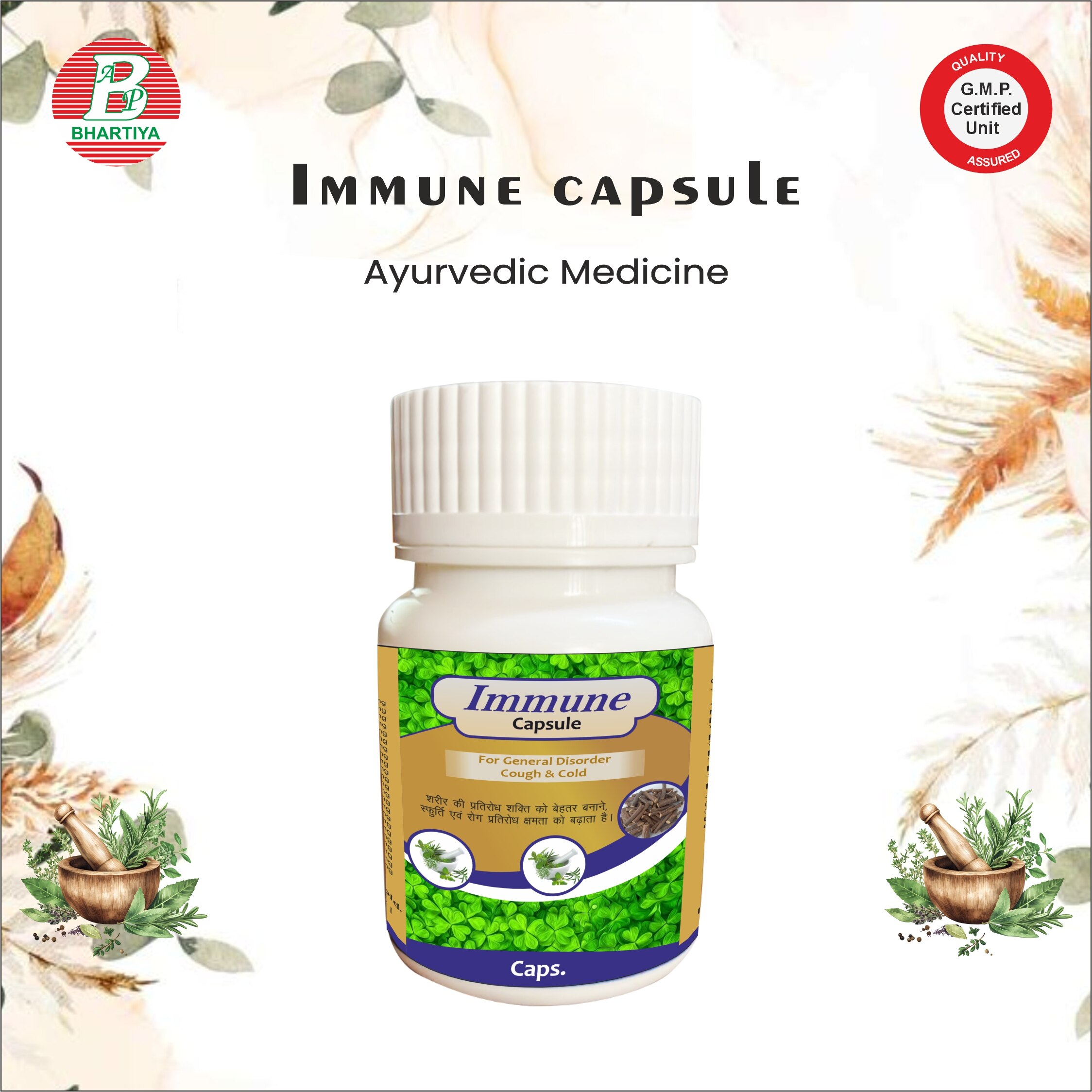
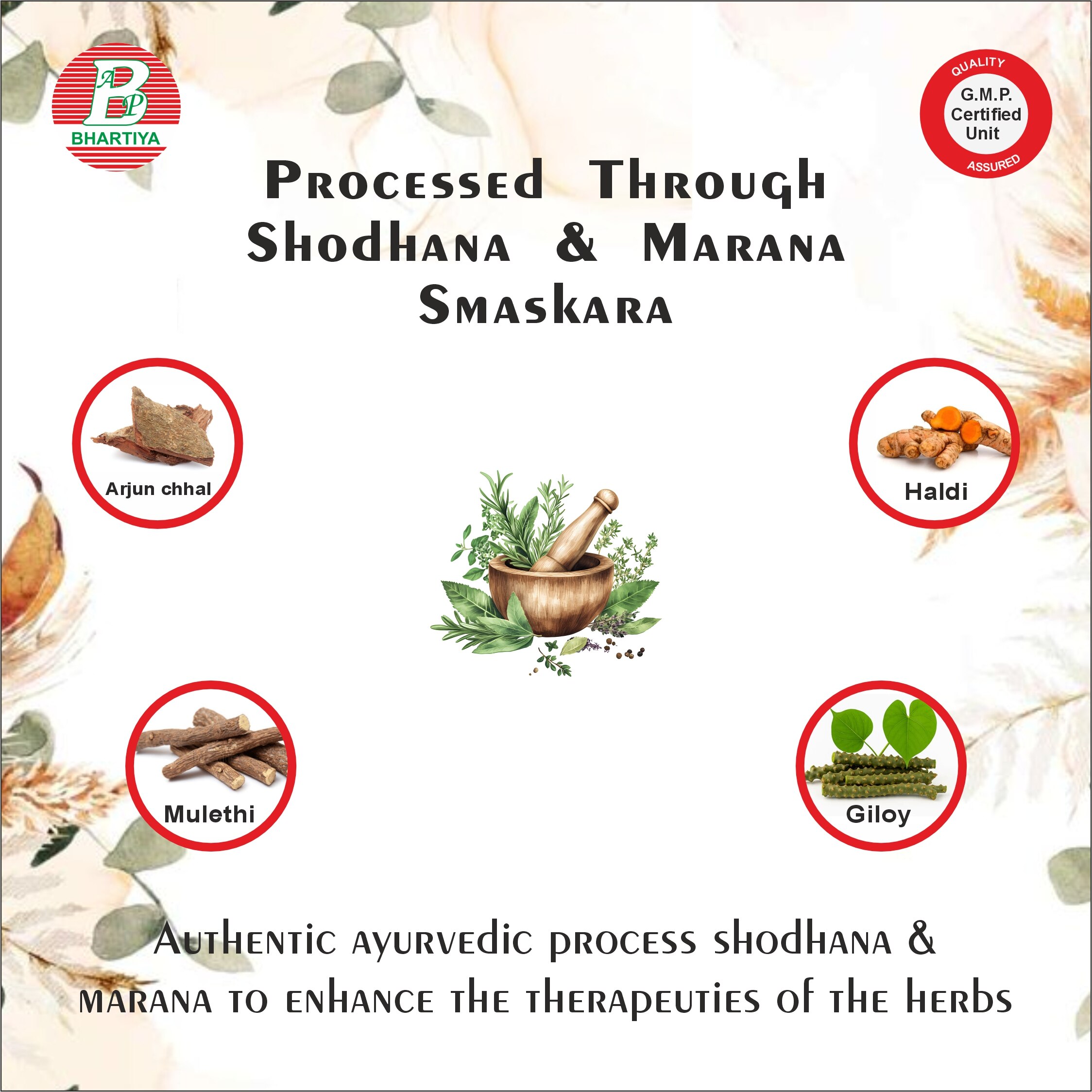
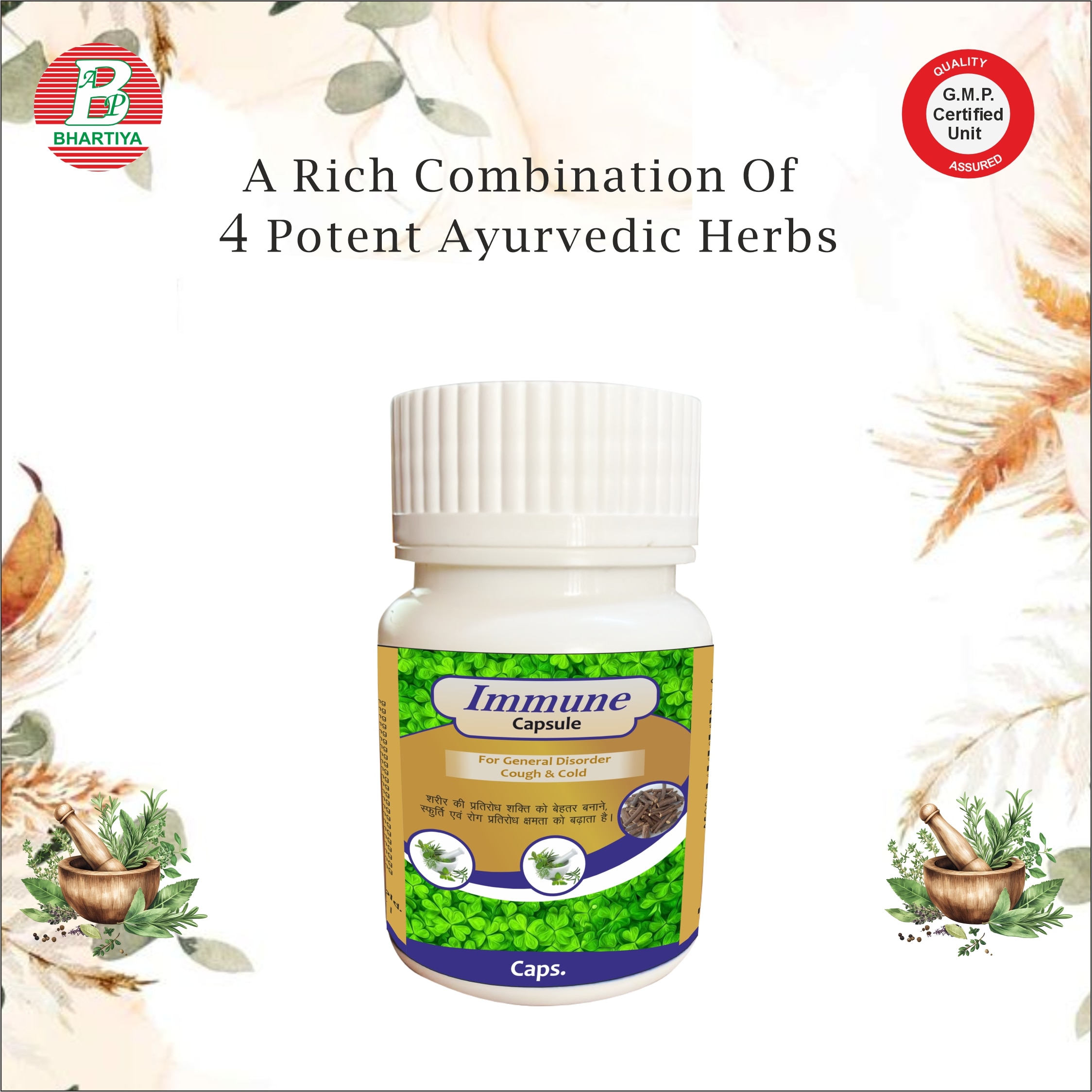
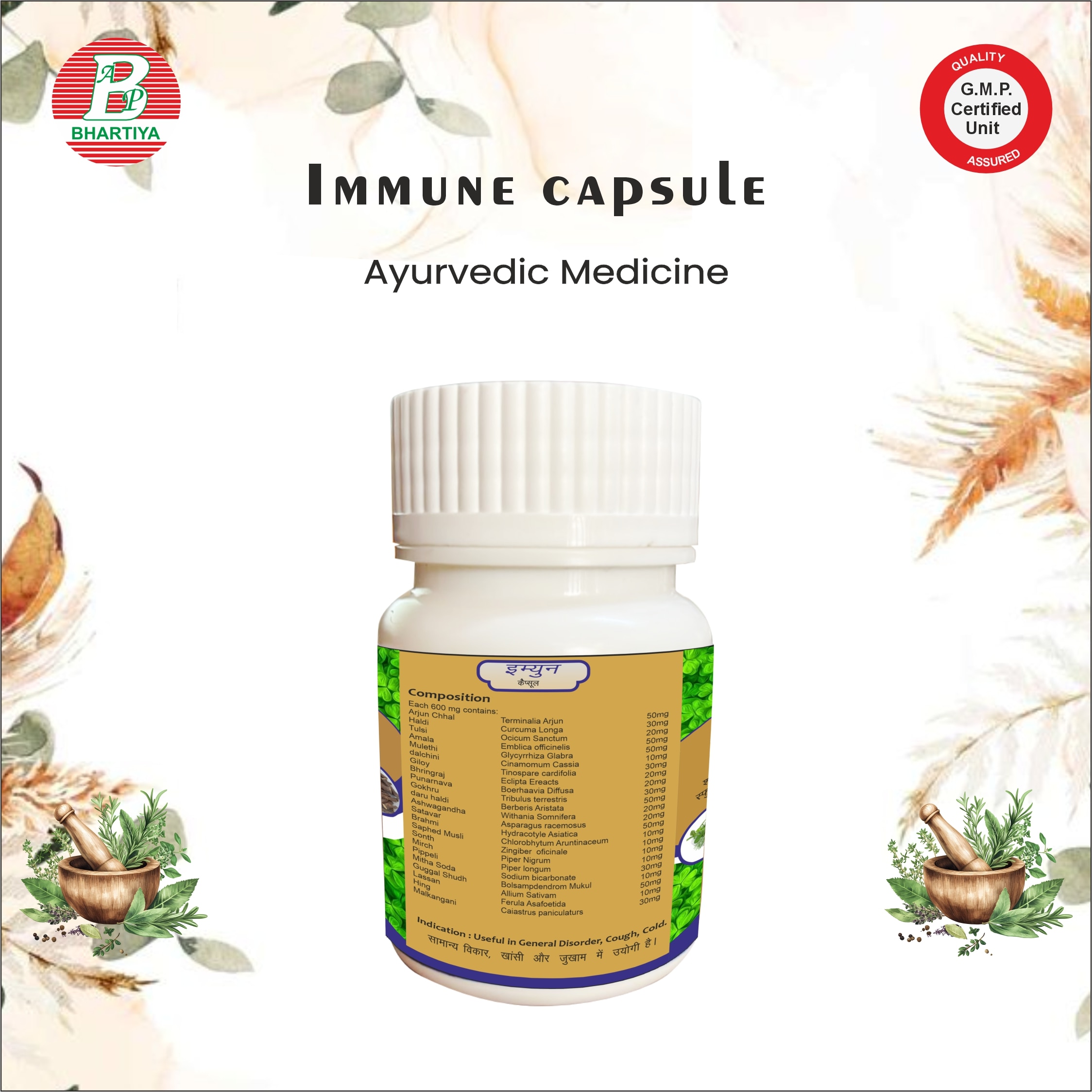
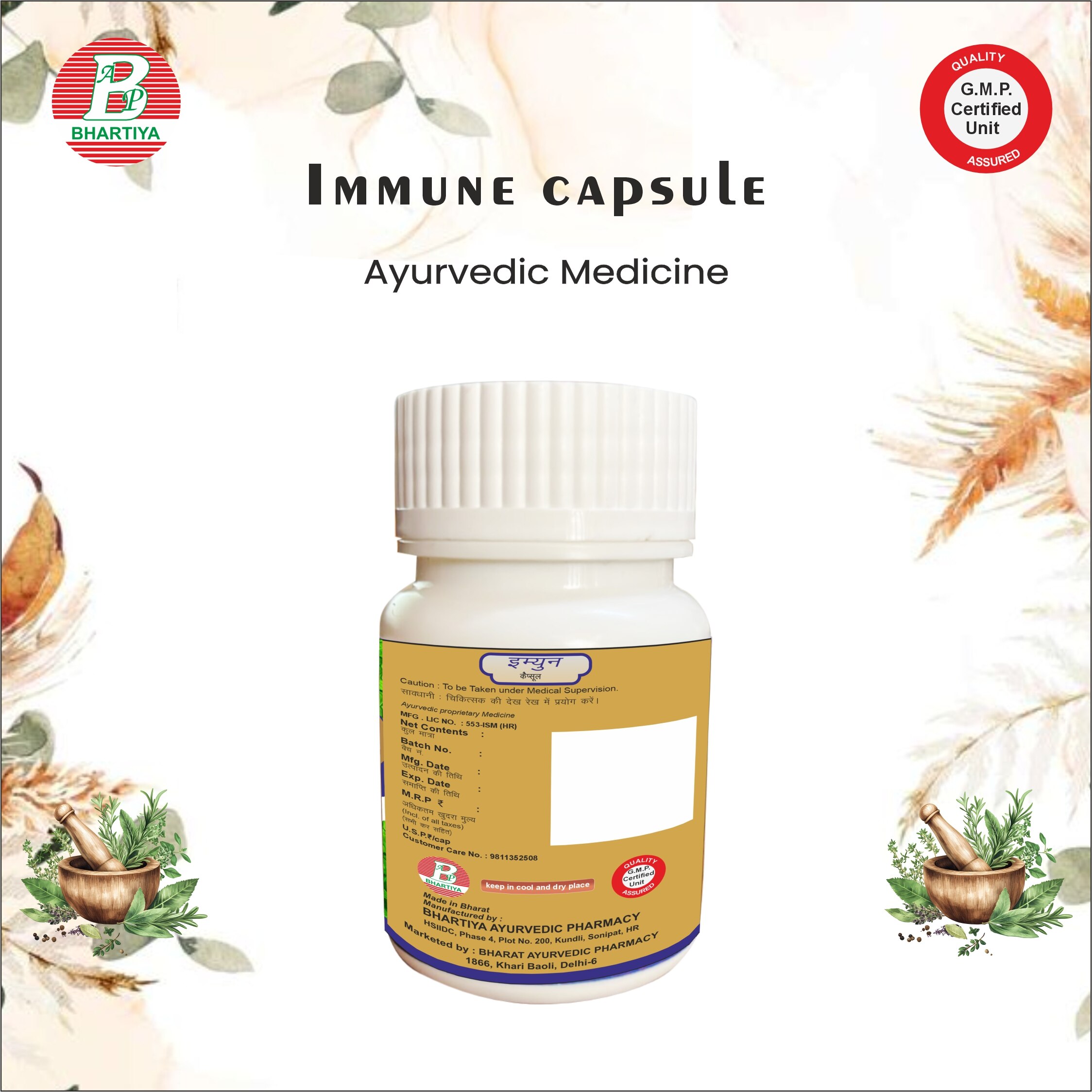
IMMUNE CAPSULE Product Identification • Generic Name: Immune Capsule • Type: Ayurvedic Patent Medicine • Primary Indication Area: Supports Immunity Therapeutic Indications • Useful in the management of weak immunity and frequent infections. Primary benefits: • Strengthens the body’s natural defense system • Supports resistance against common infections like cold, cough, and seasonal illnesses • Boosts energy and vitality • Supports respiratory and overall health Other benefits: • Rich in Antioxidants: The herbal ingredients in Immune Capsule help neutralize free radicals, protecting cells from oxidative stress and supporting long-term health. This helps slow down cellular damage and boosts overall vitality. • Supports Digestive Health: A healthy gut is closely linked to strong immunity. The capsule’s herbs help improve digestion, nutrient absorption, and bowel regularity, which indirectly strengthens the immune system. • Enhances Overall Well-being: By improving energy levels and reducing fatigue, it promotes better physical and mental performance during daily activities. • Supports Respiratory Health: Certain herbs in the formulation help maintain healthy lungs and respiratory function, reducing susceptibility to infections of the respiratory tract. • Balances Body Systems: Ayurvedic herbs help maintain harmony in body systems, promoting general wellness and resilience against stress and illness. • Natural & Gentle: Being herbal and Ayurvedic, it is usually well-tolerated and can be taken regularly as a supportive immunity booster. • May Reduce Frequency of Infections: Regular use may help lower the risk of recurrent minor infections, supporting long-term immune strength. Ingredients: Arjun Chhal • Botanical Name: Terminalia arjuna • Key Constituents: Key Constituents: • Tannins • Flavonoids • Saponins • Phenolic compounds Mechanism of action in immunity The antioxidants in Arjun bark fight harmful free radicals. o This keeps immune cells safe and healthy. 2. Boosts immune cells o Saponins and flavonoids help immune cells work better. o They increase antibody production and strengthen the body’s defense. Haldi (Turmeric) Botanical Name: Curcuma longa Key Constituents: • Curcumin • Volatile oils (like turmerone) • Flavonoids • Phenolic compounds Mechanism of Action in Immunity 1. Protects body cells o Curcumin is a strong antioxidant that fights free radicals. o Keeps immune cells healthy and prevents cellular damage. 2. Boosts immune response o Stimulates activation of immune cells like T-cells, B-cells, and natural killer (NK) cells. o Enhances antibody production. Tulsi (Holy Basil) Botanical Name: Ocimum sanctum / Ocimum tenuiflorum Key Constituents: Flavonoids, Phenolic acids, Eugenol, Tannins, Vitamins (C, A) Mechanism of Action as an Antioxidant – Biochemistry / Pharmacology 1. Stops Free Radicals: • Flavonoids and phenolic acids remove harmful molecules called free radicals, protecting cells from damage. 2. Protects Cell Membranes: • Compounds like eugenol prevent damage to cell membranes caused by oxidation. Amla (Indian Gooseberry) Botanical Name: Phyllanthus emblica / Emblica officinalis Key Constituents: Vitamin C, Flavonoids, Tannins, Phenolic compounds, Gallic acid Mechanism of Action as an Antioxidant – Biochemistry / Pharmacology 1. Free Radical Scavenging: • Vitamin C and flavonoids remove harmful free radicals, protecting cells from oxidative damage. 2. Protects Cell Membranes: • Phenolic compounds prevent damage to cell membranes and tissues caused by oxidation. Mulethi (Licorice) Botanical Name: Glycyrrhiza glabra Key Constituents: Glycyrrhizin, Flavonoids, Saponins, Tannins, Phenolic compounds Mechanism of Action in Immunity – Biochemistry / Pharmacology 1. Immune System Modulation: • Glycyrrhizin and flavonoids enhance activity of immune cells like macrophages, natural killer (NK) cells, and T-lymphocytes, helping the body fight infections. 2. Anti-Inflammatory Effect: • Suppresses pro-inflammatory cytokines (TNF-α, IL-1β, IL-6) and inhibits NF-κB signaling, reducing inflammation during infections. Dalchini (Cinnamon) Botanical Name: Cinnamomum verum / Cinnamomum zeylanicum Key Constituents: Cinnamaldehyde, Eugenol, Flavonoids, Tannins, Phenolic acids Mechanism of Action in Immunity – Biochemistry / Pharmacology 1. Immune Modulation: • Flavonoids and cinnamaldehyde enhance activity of immune cells like macrophages and T-lymphocytes, improving the body’s defense against infections. 2. Anti-Inflammatory Effect: • Suppresses pro-inflammatory cytokines (TNF-α, IL-1β, IL-6) and inhibits NF-κB signaling, reducing inflammation. Giloy (Tinospora cordifolia) Botanical Name: Tinospora cordifolia Key Constituents: Alkaloids (tinosporine), Glycosides, Steroids, Flavonoids, Polysaccharides Mechanism of Action in Immunity – Biochemistry / Pharmacology 1. Immune System Modulation: • Polysaccharides and glycosides enhance the activity of macrophages, T-lymphocytes, and natural killer (NK) cells, boosting the body’s defense against infections. 2. Anti-Inflammatory Effect: • Suppresses pro-inflammatory cytokines (TNF-α, IL-1β, IL-6) and inhibits NF-κB signaling, reducing tissue inflammation. Bhringraj (Eclipta alba) Botanical Name: Eclipta alba / Eclipta prostrata Key Constituents: Wedelolactone, Flavonoids, Alkaloids, Coumestans, Triterpenoids Mechanism of Action in Immunity – Biochemistry / Pharmacology 1. Immune System Modulation: • Flavonoids and wedelolactone enhance macrophage and lymphocyte activity, strengthening the body’s defense mechanisms. 2. Anti-Inflammatory Effect: • Inhibits pro-inflammatory cytokines (TNF-α, IL-1β, IL-6) and NF-κB signaling, reducing tissue inflammation. Punarnava (Boerhavia diffusa) Botanical Name: Boerhavia diffusa Key Constituents: Alkaloids (boeravinone), Flavonoids, Glycosides, Sterols, Phenolic compounds Mechanism of Action in Immunity – Biochemistry / Pharmacology 1. Immune System Modulation: • Flavonoids and glycosides enhance activity of macrophages and T-lymphocytes, strengthening the body’s defense against infections. 2. Anti-Inflammatory Effect: • Suppresses pro-inflammatory cytokines (TNF-α, IL-1β, IL-6) and inhibits NF-κB signaling, reducing tissue inflammation. Gokharu (Tribulus terrestris) Botanical Name: Tribulus terrestris Key Constituents: Saponins (protodioscin), Flavonoids, Alkaloids, Glycosides, Sterols Mechanism of Action in Immunity – Biochemistry / Pharmacology 1. Immune System Modulation: • Saponins and flavonoids enhance macrophage and lymphocyte activity, improving the body’s defense against infections. 2. Anti-Inflammatory Effect: • Suppresses pro-inflammatory cytokines (TNF-α, IL-1β, IL-6), reducing inflammation in tissues. Daruhaldi (Indian Barberry) Botanical Name: Berberis aristata Key Constituents: Berberine (alkaloid), Flavonoids, Tannins, Phenolic compounds Mechanism of Action in Immunity – Biochemistry / Pharmacology 1. Immune System Modulation: • Berberine and flavonoids enhance the activity of macrophages, natural killer (NK) cells, and lymphocytes, strengthening the body’s defense. 2. Anti-Inflammatory Effect: • Suppresses pro-inflammatory cytokines (TNF-α, IL-1β, IL-6) and inhibits NF-κB signaling, reducing tissue inflammation. 3. Antioxidant Support: • Flavonoids and phenolic compounds neutralize free radicals, protecting immune cells from oxidative stress. Ashwagandha (Indian Ginseng) Botanical Name: Withania somnifera Key Constituents: Withanolides, Alkaloids, Saponins, Flavonoids, Sterols Mechanism of Action in Immunity – Biochemistry / Pharmacology 1. Immune System Modulation: • Withanolides and flavonoids enhance activity of macrophages, natural killer (NK) cells, and T-lymphocytes, boosting the body’s defense. 2. Anti-Inflammatory Effect: • Suppresses pro-inflammatory cytokines (TNF-α, IL-1β, IL-6) and inhibits NF-κB signaling, reducing inflammation. Shatavari (Asparagus racemosus) Botanical Name: Asparagus racemosus Key Constituents: Shatavarins (steroidal saponins), Flavonoids, Alkaloids, Glycosides, Polysaccharides Mechanism of Action in Immunity – Biochemistry / Pharmacology 1. Immune System Modulation: • Shatavarins and polysaccharides enhance macrophage, T-lymphocyte, and natural killer (NK) cell activity, boosting the body’s defense against infections. 2. Anti-Inflammatory Effect: • Suppresses pro-inflammatory cytokines (TNF-α, IL-1β, IL-6) and inhibits NF-κB signaling, reducing tissue inflammation. Brahmi (Bacopa monnieri) Botanical Name: Bacopa monnieri Key Constituents: Bacosides (A and B), Flavonoids, Alkaloids, Saponins, Phenolic compounds Mechanism of Action in Immunity – Biochemistry / Pharmacology 1. Immune System Modulation: • Bacosides and flavonoids enhance macrophage and lymphocyte activity, strengthening the body’s defense against infections. 2. Anti-Inflammatory Effect: • Suppresses pro-inflammatory cytokines (TNF-α, IL-1β, IL-6) and inhibits NF-κB signaling, reducing tissue inflammation. Safed Musli (Chlorophytum borivilianum) Botanical Name: Chlorophytum borivilianum Key Constituents: Steroidal saponins, Flavonoids, Polysaccharides, Alkaloids, Glycosides Mechanism of Action in Immunity – Biochemistry / Pharmacology 1. Immune System Modulation: • Steroidal saponins and polysaccharides enhance activity of macrophages, T-lymphocytes, and natural killer (NK) cells, boosting the body’s defense. 2. Anti-Inflammatory Effect: • Suppresses pro-inflammatory cytokines (TNF-α, IL-1β, IL-6) and inhibits NF-κB signaling, reducing inflammation. Saunth (Dry Ginger) Botanical Name: Zingiber officinale Key Constituents: Gingerols, Shogaols, Flavonoids, Phenolic compounds, Volatile oils Mechanism of Action in Immunity – Biochemistry / Pharmacology 1. Immune System Modulation: • Gingerols and flavonoids enhance macrophage, T-lymphocyte, and natural killer (NK) cell activity, supporting the body’s defense. 2. Anti-Inflammatory Effect: • Inhibits pro-inflammatory cytokines (TNF-α, IL-1β, IL-6) and NF-κB signaling, reducing inflammation in tissues. Kali Mirch (Black Pepper) Botanical Name: Piper nigrum Key Constituents: Piperine, Alkaloids, Flavonoids, Volatile oils, Phenolic compounds Mechanism of Action in Immunity – Biochemistry / Pharmacology 1. Immune System Modulation: • Piperine and flavonoids enhance macrophage and lymphocyte activity, improving the body’s defense against infections. 2. Anti-Inflammatory Effect: • Inhibits pro-inflammatory cytokines (TNF-α, IL-1β, IL-6) and NF-κB signaling, reducing inflammation. Pippali (Long Pepper) Botanical Name: Piper longum Key Constituents: Piperine, Alkaloids, Flavonoids, Volatile oils, Phenolic compounds Mechanism of Action in Immunity – Biochemistry / Pharmacology 1. Immune System Modulation: • Piperine and flavonoids enhance macrophage, T-lymphocyte, and natural killer (NK) cell activity, boosting the body’s defense. 2. Anti-Inflammatory Effect: • Suppresses pro-inflammatory cytokines (TNF-α, IL-1β, IL-6) and inhibits NF-κB signaling, reducing inflammation. Mitha Soda (Sodium Bicarbonate) Chemical Name: Sodium Bicarbonate (NaHCO₃) Key Properties: Alkalinizing agent, buffering agent Mechanism of Action in Immunity / Body Defense – Biochemistry / Pharmacology 1. Acid-Base Balance: • Neutralizes excess stomach acid or blood acidity, maintaining pH balance which indirectly supports cellular functions, including immune cells. 2. Antioxidant Support (Indirect): • By maintaining pH, it helps prevent oxidative stress caused by acid-base imbalance in tissues. Shudh Guggul (Indian Bdellium / Commiphora mukul) Botanical Name: Commiphora mukul Key Constituents: Guggulsterones, Flavonoids, Triterpenoids, Resin Mechanism of Action in Immunity – Biochemistry / Pharmacology 1. Immune System Modulation: • Guggulsterones and flavonoids enhance macrophage and lymphocyte activity, boosting the body’s defense against infections. 2. Anti-Inflammatory Effect: • Suppresses pro-inflammatory cytokines (TNF-α, IL-1β, IL-6) and inhibits NF-κB signaling, reducing inflammation. Lahsun (Garlic) Botanical Name: Allium sativum Key Constituents: Allicin, Sulphur compounds, Flavonoids, Phenolic compounds, Saponins Mechanism of Action in Immunity – Biochemistry / Pharmacology 1. Immune System Modulation: • Allicin and sulfur compounds enhance activity of macrophages, natural killer (NK) cells, and lymphocytes, strengthening the body’s defense. 2. Anti-Inflammatory Effect: • Inhibits pro-inflammatory cytokines (TNF-α, IL-1β, IL-6) and NF-κB signaling, reducing tissue inflammation. Hing (Asafoetida) Botanical Name: Ferula asafoetida Key Constituents: Ferulic acid, Resin, Sulfur compounds, Flavonoids, Coumarins Mechanism of Action in Immunity – Biochemistry / Pharmacology 1. Immune System Modulation: • Sulfur compounds and flavonoids enhance activity of macrophages and lymphocytes, improving the body’s defense against infections. 2. Anti-Inflammatory Effect: • Inhibits pro-inflammatory cytokines (TNF-α, IL-1β, IL-6) and NF-κB signaling, reducing inflammation in tissues. Calastrus paniculatus (Jyotishmati / Clammy Milkweed) Botanical Name: Calastrus paniculatus Key Constituents: Alkaloids, Flavonoids, Glycosides, Sterols, Phenolic compounds Mechanism of Action in Immunity – Biochemistry / Pharmacology 1. Immune System Modulation: • Alkaloids and flavonoids enhance macrophage and lymphocyte activity, improving the body’s defense against infections. 2. Anti-Inflammatory Effect: • Suppresses pro-inflammatory cytokines (TNF-α, IL-1β, IL-6) and NF-κB signaling, reducing inflammation in tissues. indication : useful in general disorder, cough, cold. Dosage • Adults: 1–2 capsules twice daily • How to take: With plain water after meals • Duration: As directed by a physician • Precautions: o Consult a doctor if pregnant, lactating, or having chronic illnesses o Adjust dose based on age, severity, or individual health conditions