
YOGRAJ GUGGUL
Description
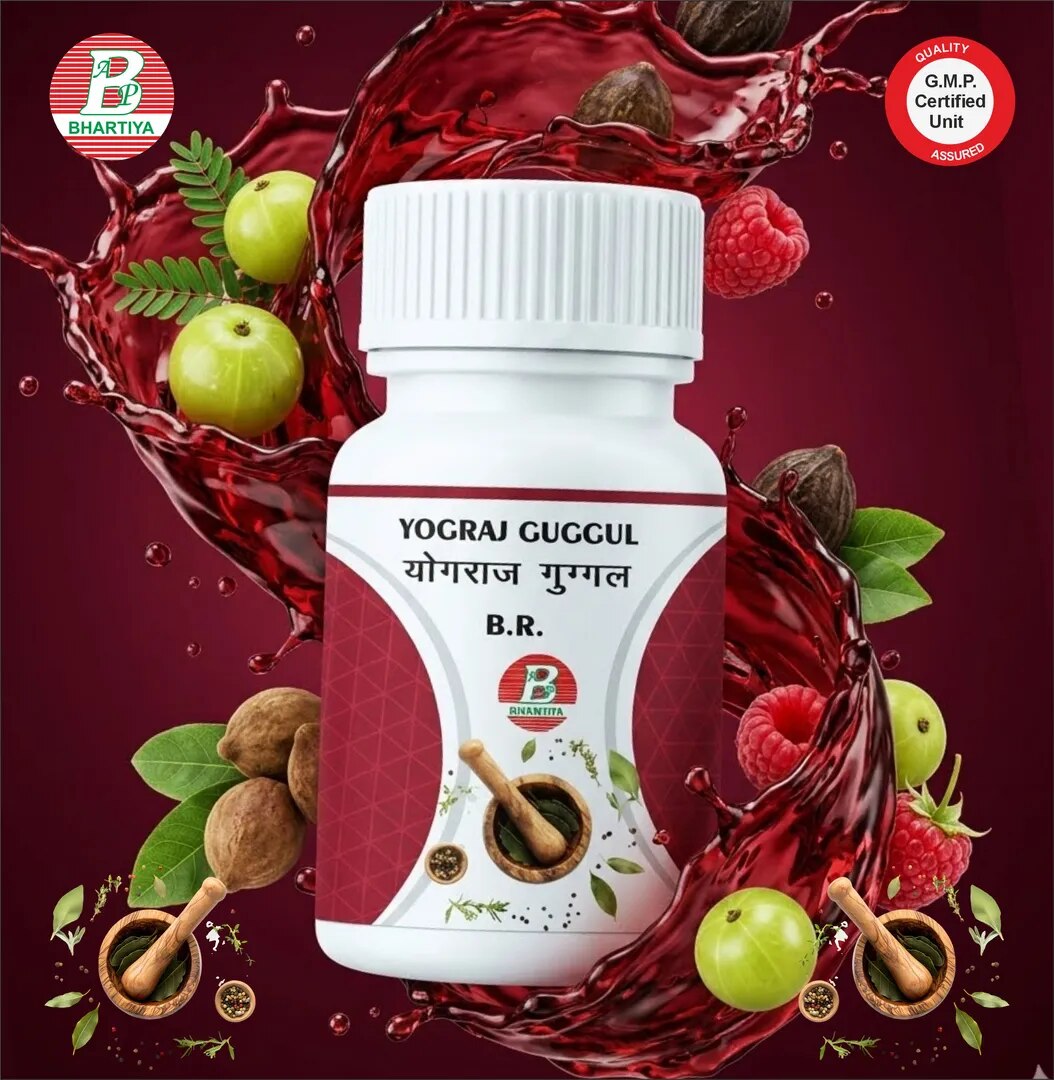
YOGRAJ GUGGUL
Product Identification
• Generic Name: Yograj Guggul
• Type: Ayurvedic Polyherbal Formulation
• Primary Indication Area: Chronic joint pain and stiffness (Sandhivata / osteoarthritis-type conditions)
• Especially when pain is caused by Vata imbalance (dryness, cracking, stiffness, movement restriction)
Therapeutic Indications: Traditionally used for:
• Osteoarthritis (Sandhivata) – joint pain, stiffness, restricted movement
• Rheumatoid arthritis-like conditions (Amavata) – inflammatory joint pain and swelling
• Sciatica (Gridhrasi) – radiating nerve pain from back to legs
• Cervical and lumbar spondylosis – chronic spine pain and stiffness
• Gout (Vatarakta) – uric acid–related inflammatory joint disorders
• Chronic back and neck pain (Kati & Greeva Shoola)
• General musculoskeletal weakness – bones, joints, ligaments, and muscles
Key Benefits:
Relieves joint pain and stiffness
• Helps reduce chronic pain in knees, hips, shoulders, and spine
Improves joint mobility
• Supports better movement in osteoarthritis and spondylosis
Reduces inflammation (traditional action)
• Useful in inflammatory joint conditions like Amavata and gout
Eases nerve pain
• Helps in sciatica and radiating neuropathic pain
Supports spine health
• Beneficial in cervical and lumbar spondylosis-related discomfort
Aids detoxification (Ama reduction in Ayurveda)
• Helps improve digestion and reduce toxin accumulation linked with joint issues
Strengthens musculoskeletal system (long-term use)
• Supports bones, ligaments, and overall Vata balance
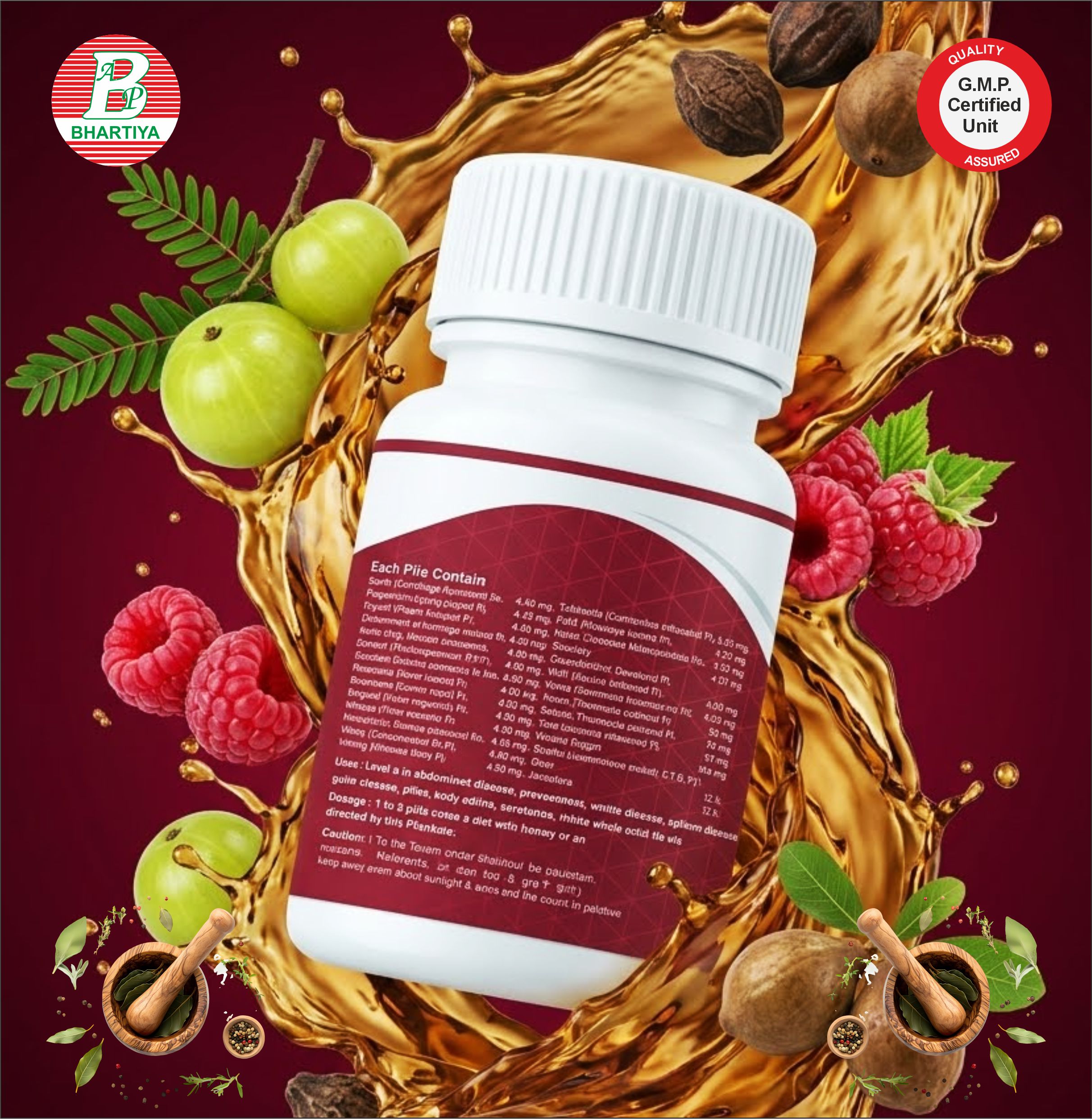
FORMULA
Each Tablet contains:
Chitraka 1 part
Pippalimula 1 part
Yavani 1 part
Krishna Jiraka 1 part
Vidanga 1 part
Ajmoda 1 part
Sveta Jiraka 1 part
Devdaru 1 part
Chavya 1 part
Ela 1 part
Saindhava Lavana 1 part
Kushta 1 part
Rasna 1 part
Gokshura 1 part
Dhanyka 1 part
Haritaki 1 part
Bibhitaki 1 part
Amalaki 1 part
Musta 1 part
Sunthi 1 part
Maricha 1 part
Pippali 1 part
Tvak 1 part
Usira 1 part
Yava Kshar 1 part
Talisa Patra 1 part
Tejpatra 1 part
Shudh Guggul 1 part
Goghrita 1 part
Ingredients:
1. Chitraka
Botanical/Scientific Name: Plumbago zeylanica
Rasa–Guna–Vīrya–Vipāka:
o Rasa: Kaṭu (Pungent)
o Guna: Laghu (Light), Rūkṣa (Dry), Tikṣṇa (Sharp)
o Vīrya: Uṣṇa (Hot)
o Vipāka: Kaṭu (Pungent)
• Prabhāva: Deepana–Pachana (Strong digestive stimulant)
Mechanism of Action (Karma):
• Strongly digests Ama (toxins)
• Reduces inflammatory swelling in joints
• Improves Agni and metabolism
• Clears obstructed Srotas (channels) in arthritis
2. Pippalimula
Botanical/Scientific Name: Piper longum (root)
Rasa–Guna–Vīrya–Vipāka:
o Rasa: Kaṭu (Pungent)
o Guna: Laghu, Rūkṣa
o Vīrya: Uṣṇa (Hot)
o Vipāka: Kaṭu
• Prabhāva: Deepana–Vata-Kapha Shamaka
Mechanism of Action (Karma):
• Improves digestion of Ama
• Reduces stiffness and heaviness in joints
• Pacifies Vata-Kapha in musculoskeletal system
• Supports pain reduction in chronic arthritis
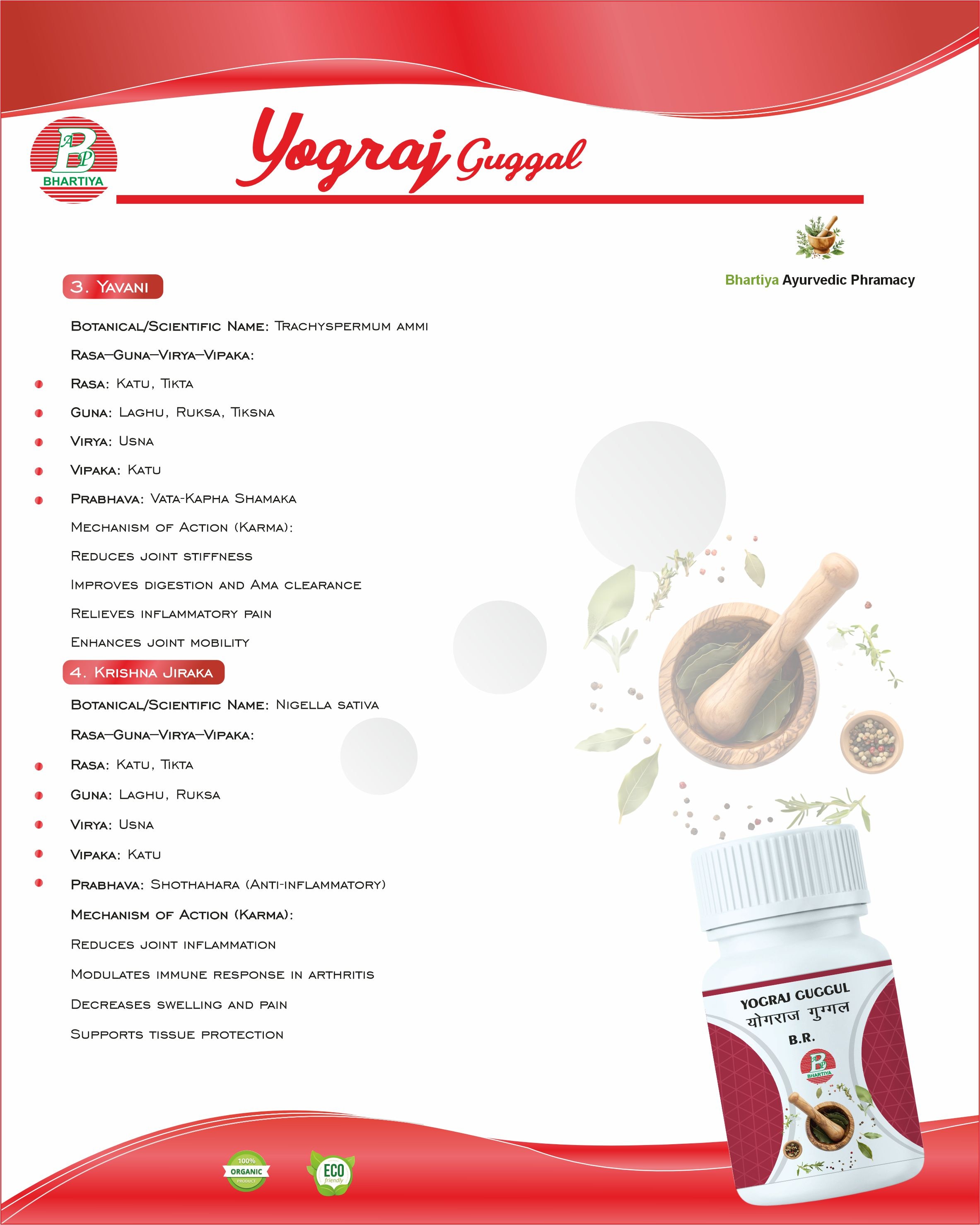
3. Yavani
Botanical/Scientific Name: Trachyspermum ammi
Rasa–Guna–Vīrya–Vipāka:
o Rasa: Kaṭu, Tikta
o Guna: Laghu, Rūkṣa, Tikṣṇa
o Vīrya: Uṣṇa
o Vipāka: Kaṭu
• Prabhāva: Vata-Kapha Shamaka
Mechanism of Action (Karma):
• Reduces joint stiffness
• Improves digestion and Ama clearance
• Relieves inflammatory pain
• Enhances joint mobility
4. Krishna Jiraka
Botanical/Scientific Name: Nigella sativa
Rasa–Guna–Vīrya–Vipāka:
o Rasa: Kaṭu, Tikta
o Guna: Laghu, Rūkṣa
o Vīrya: Uṣṇa
o Vipāka: Kaṭu
• Prabhāva: Shothahara (Anti-inflammatory)
Mechanism of Action (Karma):
• Reduces joint inflammation
• Modulates immune response in arthritis
• Decreases swelling and pain
• Supports tissue protection
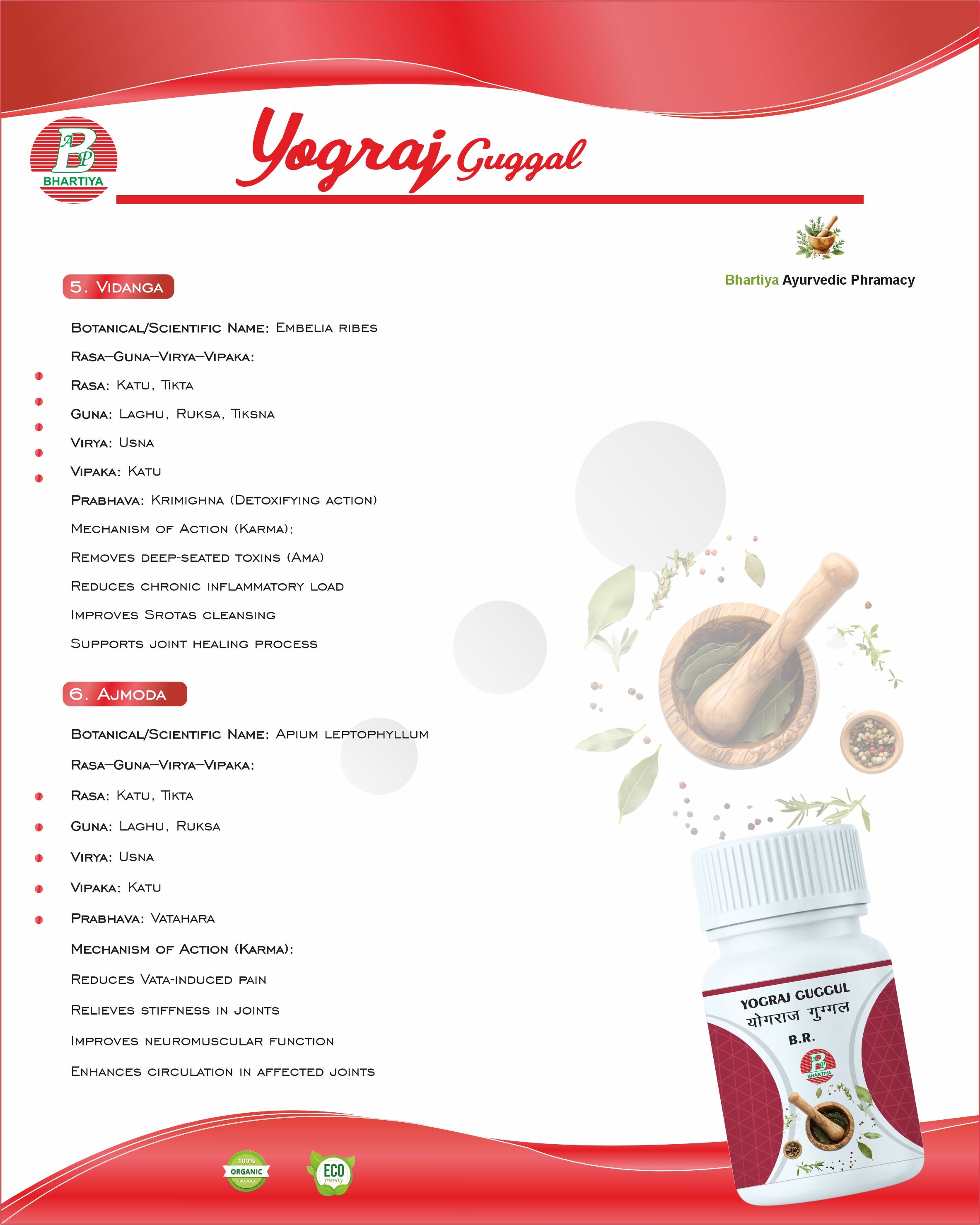
5. Vidanga
Botanical/Scientific Name: Embelia ribes
Rasa–Guna–Vīrya–Vipāka:
o Rasa: Kaṭu, Tikta
o Guna: Laghu, Rūkṣa, Tikṣṇa
o Vīrya: Uṣṇa
o Vipāka: Kaṭu
• Prabhāva: Krimighna (Detoxifying action)
Mechanism of Action (Karma):
• Removes deep-seated toxins (Ama)
• Reduces chronic inflammatory load
• Improves Srotas cleansing
• Supports joint healing process
6. Ajmoda
Botanical/Scientific Name: Apium leptophyllum
Rasa–Guna–Vīrya–Vipāka:
o Rasa: Kaṭu, Tikta
o Guna: Laghu, Rūkṣa
o Vīrya: Uṣṇa
o Vipāka: Kaṭu
• Prabhāva: Vatahara
Mechanism of Action (Karma):
• Reduces Vata-induced pain
• Relieves stiffness in joints
• Improves neuromuscular function
• Enhances circulation in affected joints
7. Sveta Jiraka
Botanical/Scientific Name: Cuminum cyminum
Rasa–Guna–Vīrya–Vipāka:
o Rasa: Kaṭu, Tikta
o Guna: Laghu, Rūkṣa
o Vīrya: Uṣṇa
o Vipāka: Kaṭu
• Prabhāva: Deepana
Mechanism of Action (Karma):
• Improves digestion of Ama
• Reduces joint heaviness
• Supports metabolic clearance
• Helps reduce stiffness
8. Devdaru
Botanical/Scientific Name: Cedrus deodara
Rasa–Guna–Vīrya–Vipāka:
o Rasa: Tikta, Kaṭu
o Guna: Laghu, Rūkṣa
o Vīrya: Uṣṇa
o Vipāka: Kaṭu
• Prabhāva: Vata-Kapha Shamaka
Mechanism of Action (Karma):
• Reduces joint pain and inflammation
• Improves blood circulation in joints
• Relieves stiffness in spine disorders
• Useful in sciatica-like pain
9. Chavya
Botanical/Scientific Name: Piper chaba
Rasa–Guna–Vīrya–Vipāka:
o Rasa: Kaṭu
o Guna: Laghu, Rūkṣa
o Vīrya: Uṣṇa
o Vipāka: Kaṭu
• Prabhāva: Deepana
Mechanism of Action (Karma):
• Enhances digestion of Ama
• Reduces Kapha-related heaviness
• Improves joint mobility
• Reduces chronic inflammatory pain
10. Ela
Botanical/Scientific Name: Elettaria cardamomum
Rasa–Guna–Vīrya–Vipāka:
o Rasa: Madhura, Tikta, Kaṭu
o Guna: Laghu, Snigdha
o Vīrya: Śīta
o Vipāka: Madhura
• Prabhāva: Hridya (cardio-protective, soothing)
Mechanism of Action (Karma):
• Improves circulation
• Reduces inflammatory stress
• Supports mild analgesic effect
• Enhances drug absorption
11. Saindhava Lavana
Botanical/Scientific Name: Rock salt
Rasa–Guna–Vīrya–Vipāka:
o Rasa: Lavaṇa (Salty)
o Guna: Snigdha, Sukshma
o Vīrya: Anuṣṇa-Śīta
o Vipāka: Madhura
• Prabhāva: Yogavahi
Mechanism of Action (Karma):
• Enhances penetration of medicines
• Improves Srotas opening
• Reduces stiffness
• Supports pain relief
12. Kushta
Botanical/Scientific Name: Saussurea lappa
Rasa–Guna–Vīrya–Vipāka:
o Rasa: Tikta, Kaṭu
o Guna: Laghu, Rūkṣa, Tikṣṇa
o Vīrya: Uṣṇa
o Vipāka: Kaṭu
• Prabhāva: Vata-Kapha Shamaka
Mechanism of Action (Karma):
• Reduces deep-seated joint pain
• Improves nerve-related pain (sciatica-like)
• Reduces stiffness and inflammation
• Enhances circulation in affected joints
13. Rasna
Botanical/Scientific Name: Pluchea lanceolata
Rasa–Guna–Vīrya–Vipāka:
o Rasa: Tikta, Kaṭu
o Guna: Laghu, Rūkṣa
o Vīrya: Uṣṇa
o Vipāka: Kaṭu
• Prabhāva: Vata-Shamaka
Mechanism of Action (Karma):
• Strong anti-arthritic action
• Reduces joint swelling and stiffness
• Relieves chronic musculoskeletal pain
• Improves mobility in spondylosis
14. Gokshura
Botanical/Scientific Name: Tribulus terrestris
Rasa–Guna–Vīrya–Vipāka:
o Rasa: Madhura, Tikta
o Guna: Guru (Heavy), Snigdha
o Vīrya: Śīta
o Vipāka: Madhura
• Prabhāva: Balya (strengthening)
Mechanism of Action (Karma):
• Strengthens bones and joints
• Improves ligament and tendon health
• Reduces degenerative weakness
• Supports long-term joint stability
15. Dhanyaka
Botanical/Scientific Name: Coriandrum sativum
Rasa–Guna–Vīrya–Vipāka:
o Rasa: Madhura, Tikta
o Guna: Laghu, Snigdha
o Vīrya: Śīta
o Vipāka: Madhura
• Prabhāva: Deepana-Pachana (mild)
Mechanism of Action (Karma):
• Reduces Ama formation
• Soothes inflammatory conditions
• Improves digestion in chronic arthritis
• Supports detoxification
16. Haritaki
Botanical/Scientific Name: Terminalia chebula
Rasa–Guna–Vīrya–Vipāka:
o Rasa: Kaṣāya, Amla, Madhura, Tikta, Kaṭu
o Guna: Laghu, Rūkṣa
o Vīrya: Uṣṇa
o Vipāka: Madhura
• Prabhāva: Anulomana
Mechanism of Action (Karma):
• Regulates Vata movement
• Reduces Ama accumulation
• Supports detoxification in chronic disease
• Reduces inflammatory swelling
17. Bibhitaki
Botanical/Scientific Name: Terminalia bellirica
Rasa–Guna–Vīrya–Vipāka:
o Rasa: Kaṣāya
o Guna: Laghu, Rūkṣa
o Vīrya: Uṣṇa
o Vipāka: Madhura
• Prabhāva: Kapha-Pitta Shamaka
Mechanism of Action (Karma):
• Reduces joint inflammation
• Clears toxins from tissues
• Improves metabolic balance
• Supports chronic arthritis recovery
18. Amalaki
Botanical/Scientific Name: Emblica officinalis
Rasa–Guna–Vīrya–Vipāka:
o Rasa: Amla, Madhura, Tikta, Kaṣāya
o Guna: Laghu, Rūkṣa
o Vīrya: Śīta
o Vipāka: Madhura
• Prabhāva: Rasayana
Mechanism of Action (Karma):
• Protects cartilage from degeneration
• Reduces oxidative stress in joints
• Strengthens bones and connective tissue
• Supports long-term joint health
19. Musta
Botanical/Scientific Name: Cyperus rotundus
Rasa–Guna–Vīrya–Vipāka:
o Rasa: Tikta, Kaṭu
o Guna: Laghu, Rūkṣa
o Vīrya: Śīta
o Vipāka: Kaṭu
• Prabhāva: Pachana
Mechanism of Action (Karma):
• Reduces Ama formation
• Improves digestion and metabolism
• Reduces inflammatory swelling
• Supports detoxification in arthritis
20. Sunthi
Botanical/Scientific Name: Zingiber officinale
Rasa–Guna–Vīrya–Vipāka:
o Rasa: Kaṭu
o Guna: Laghu, Snigdha
o Vīrya: Uṣṇa
o Vipāka: Madhura
• Prabhāva: Ama-Pachana
Mechanism of Action (Karma):
• Reduces stiffness and pain
• Improves circulation in joints
• Digests Ama and toxins
• Anti-inflammatory action
21. Maricha
Botanical/Scientific Name: Piper nigrum
Rasa–Guna–Vīrya–Vipāka:
o Rasa: Kaṭu
o Guna: Laghu, Rūkṣa, Tikṣṇa
o Vīrya: Uṣṇa
o Vipāka: Kaṭu
• Prabhāva: Yogavahi
Mechanism of Action (Karma):
• Enhances bioavailability of herbs
• Reduces Kapha and Ama
• Improves joint circulation
• Reduces chronic inflammation
22. Pippali
Botanical/Scientific Name: Piper longum
Rasa–Guna–Vīrya–Vipāka:
o Rasa: Kaṭu
o Guna: Laghu, Snigdha
o Vīrya: Uṣṇa
o Vipāka: Madhura
• Prabhāva: Rasayana
Mechanism of Action (Karma):
• Rejuvenates joint tissues
• Reduces Vata-Kapha imbalance
• Improves Agni and metabolism
• Supports chronic pain relief
23. Tvak
Botanical/Scientific Name: Cinnamomum zeylanicum
Rasa–Guna–Vīrya–Vipāka:
o Rasa: Kaṭu, Tikta, Madhura
o Guna: Laghu, Rūkṣa
o Vīrya: Uṣṇa
o Vipāka: Kaṭu
• Prabhāva: Shothahara
Mechanism of Action (Karma):
• Reduces inflammation in joints
• Improves blood circulation
• Relieves pain and stiffness
• Supports metabolic balance
24. Usira
Botanical/Scientific Name: Vetiveria zizanioides
Rasa–Guna–Vīrya–Vipāka:
o Rasa: Tikta, Madhura
o Guna: Laghu, Snigdha
o Vīrya: Śīta
o Vipāka: Madhura
• Prabhāva: Pitta Shamaka
Mechanism of Action (Karma):
• Reduces burning and inflammation
• Soothes joint tissues
• Detoxifies blood
• Supports cooling anti-inflammatory action
25. Yava Kshara
Botanical/Scientific Name: Alkali preparation from Hordeum vulgare (barley)
Rasa–Guna–Vīrya–Vipāka:
o Rasa: Katu, Lavana
o Guna: Tikshna, Sukshma, Laghu
o Vīrya: Ushna
o Vipāka: Katu
• Prabhāva: Lekhana (scraping action)
Mechanism of Action (Karma):
• Removes obstruction in Srotas (channels)
• Reduces stiffness due to Ama accumulation
• Improves mobility in joints
• Helps in metabolic clearance of toxins
26. Talisa Patra
Botanical/Scientific Name: Abies webbiana (or related species)
Rasa–Guna–Vīrya–Vipāka:
o Rasa: Katu, Tikta
o Guna: Laghu, Rūkṣa
o Vīrya: Ushna
o Vipāka: Katu
• Prabhāva: Kapha-Vata Shamaka
Mechanism of Action (Karma):
• Reduces chronic pain and stiffness
• Improves respiratory and metabolic function
• Helps in Ama digestion
• Supports anti-inflammatory activity
27. Tejpatra
Botanical/Scientific Name: Cinnamomum tamala
Rasa–Guna–Vīrya–Vipāka:
o Rasa: Katu, Tikta
o Guna: Laghu, Rūkṣa
o Vīrya: Ushna
o Vipāka: Katu
• Prabhāva: Deepana
Mechanism of Action (Karma):
• Improves Agni and digestion
• Reduces Ama-related joint stiffness
• Enhances circulation
• Helps in pain reduction
28. Shuddha Guggul
• Botanical/Scientific Name: Commiphora mukul (purified resin)
• Rasa–Guna–Vīrya–Vipāka:
o Rasa: Tikta, Katu
o Guna: Laghu, Rūkṣa, Sara
o Vīrya: Ushna
o Vipāka: Katu
• Prabhāva: Yogavahi, Lekhana
Mechanism of Action (Karma):
• Major anti-inflammatory action on joints
• Reduces swelling and synovial inflammation
• Clears lipid and toxin deposits in tissues
• Improves joint mobility and lubrication
29. Goghrita
Botanical/Scientific Name: Cow ghee (Clarified butter from cow milk)
Rasa–Guna–Vīrya–Vipāka:
o Rasa: Madhura
o Guna: Snigdha, Guru, Mridu
o Vīrya: Shita
o Vipāka: Madhura
• Prabhāva: Yogavahi, Rasayana
Mechanism of Action (Karma):
• Acts as carrier for deep tissue delivery of herbs
• Nourishes Asthi (bone) and Majja (marrow)
• Reduces dryness and Vata aggravation
• Enhances long-term tissue healing
Dosage of Triphala Guggul
• Form: Tablet / Capsule
• Dose: 1–2 tablets (250–500 mg each)
• Frequency: Twice daily (BID)
• Timing: After food
• Anupana: Lukewarm water.
yograj guggulu, yograj guggulu benefits in hindi, yograj guggulu tablet uses in hindi
yograj guggulu uses, yograj guggulu uses in hindi, yograj guggulu ke fayde
yograj guggulu kis kaam aata hai, yograj guggulu benefits, yograj guggulu ingredients
yograj guggulu ayurvedic medicine uses, yograj guggulu ayurvedic medicine
yograj guggulu amazon, yograj guggul botanical name, yograj guggulu composition
yograj guggulu dose per day, yograj guggulu dose, yograj guggul easy ayurveda
what is yograj guggul, what is yograj guggulu, yograj guggul use, how to take yograj guggulu
yograj guggulu easy ayurveda, yograj guggulu uses easy ayurveda
yograj guggulu for joint pain, yograj guggulu for piles, yograj guggulu flipkart
yograj guggulu for constipation, yograj guggulu how to use
yograj guggulu hamdard, yograj guggulu how to take
yograj guggul ingredients, yograj guggul in hindi, yograj guggul is used for
yograj guggul image, yograj guggulu indications, yograj guggulu is used for
yograj guggul ke fayde in hindi
yograj guggul ke fayde
yograj guggul kis kam aati hai
yograj guggul khane ke fayde
yograj guggul ke fayde aur nuksan
yograj guggulu lene ke fayde
yograj guggulu maha uses in hindi
yograj guggulu maha tablet uses in hindi
yograj guggulu medicine
yograj guggulu maha uses
yograj guggulu main ingredients
yograj guggul netmeds
yograj guggulu nagarjuna
yograj guggulu online
yograj guggul powder
yograj guggul patanjali uses
yograj guggul uses
yograj guggul use in hindi
yograj guggulu uses in hindi price
yograj guggulu uses hindi
yograj guggulu uses in english
how to consume yograj guggulu