
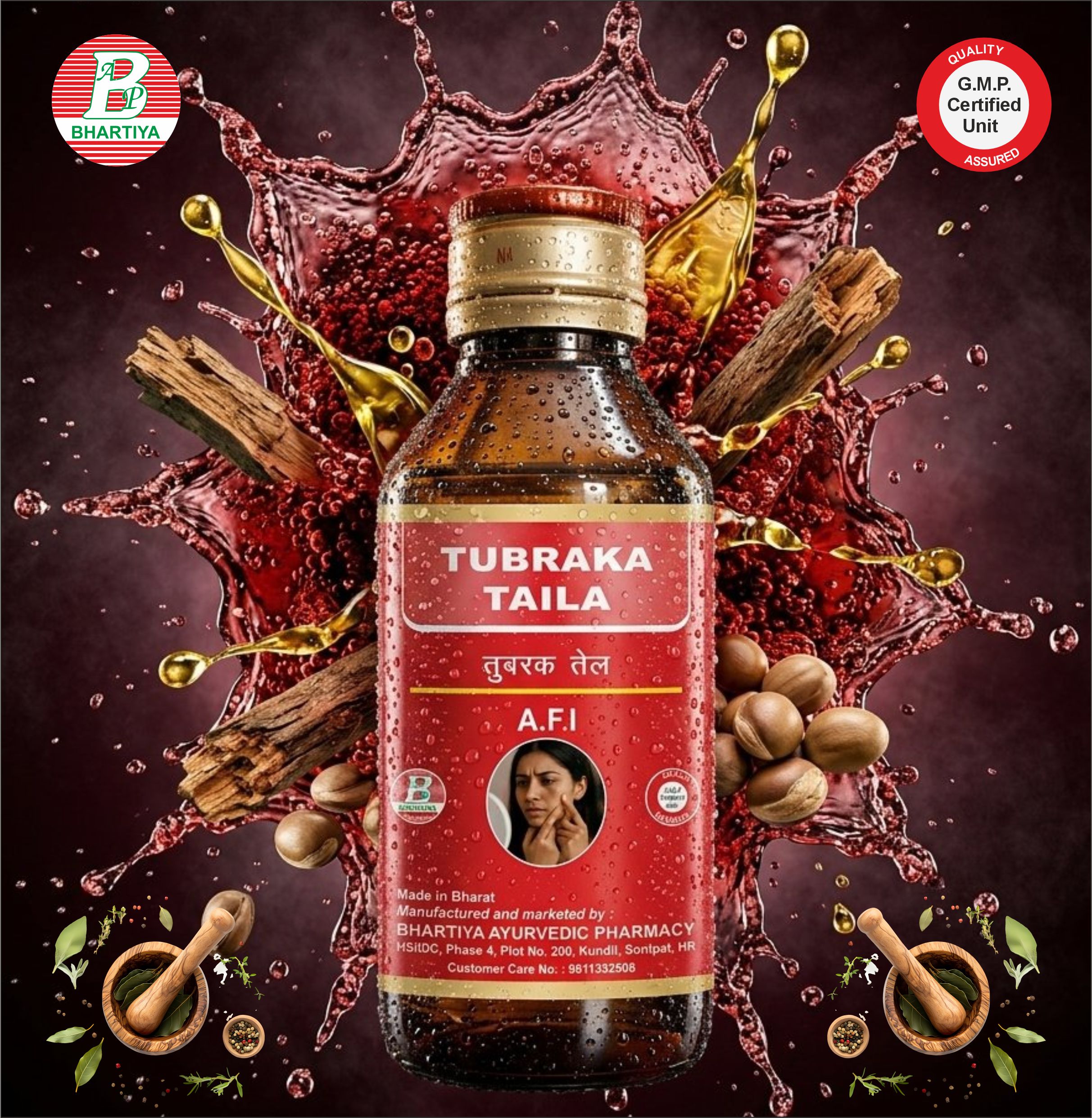
TUVARAKA TAILA
Description
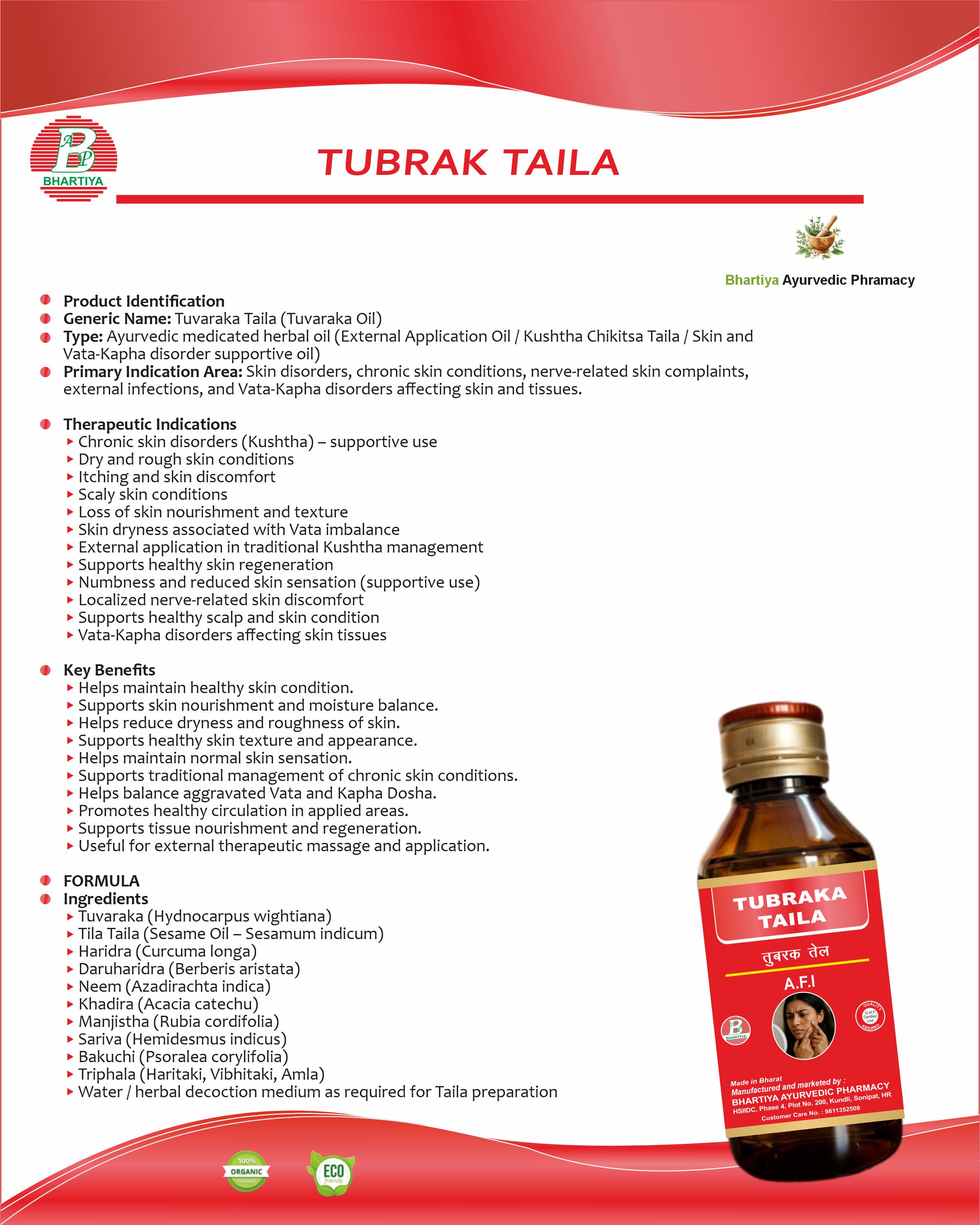
TUVARAKA TAILA
Product Identification
Generic Name: Tuvaraka Taila (Tuvaraka Oil)
Type: Ayurvedic medicated herbal oil (External Application Oil / Kushtha Chikitsa Taila / Skin and Vata-Kapha disorder supportive oil)
Primary Indication Area: Skin disorders, chronic skin conditions, nerve-related skin complaints, external infections, and Vata-Kapha disorders affecting skin and tissues.
Therapeutic Indications
• Chronic skin disorders (Kushtha) – supportive use
• Dry and rough skin conditions
• Itching and skin discomfort
• Scaly skin conditions
• Loss of skin nourishment and texture
• Skin dryness associated with Vata imbalance
• External application in traditional Kushtha management
• Supports healthy skin regeneration
• Numbness and reduced skin sensation (supportive use)
• Localized nerve-related skin discomfort
• Supports healthy scalp and skin condition
• Vata-Kapha disorders affecting skin tissues
Key Benefits
• Helps maintain healthy skin condition.
• Supports skin nourishment and moisture balance.
• Helps reduce dryness and roughness of skin.
• Supports healthy skin texture and appearance.
• Helps maintain normal skin sensation.
• Supports traditional management of chronic skin conditions.
• Helps balance aggravated Vata and Kapha Dosha.
• Promotes healthy circulation in applied areas.
• Supports tissue nourishment and regeneration.
• Useful for external therapeutic massage and application.
FORMULA
Ingredients
• Tuvaraka (Hydnocarpus wightiana)
• Tila Taila (Sesame Oil – Sesamum indicum)
• Haridra (Curcuma longa)
• Daruharidra (Berberis aristata)
• Neem (Azadirachta indica)
• Khadira (Acacia catechu)
• Manjistha (Rubia cordifolia)
• Sariva (Hemidesmus indicus)
• Bakuchi (Psoralea corylifolia)
• Triphala (Haritaki, Vibhitaki, Amla)
• Water / herbal decoction medium as required for Taila preparation
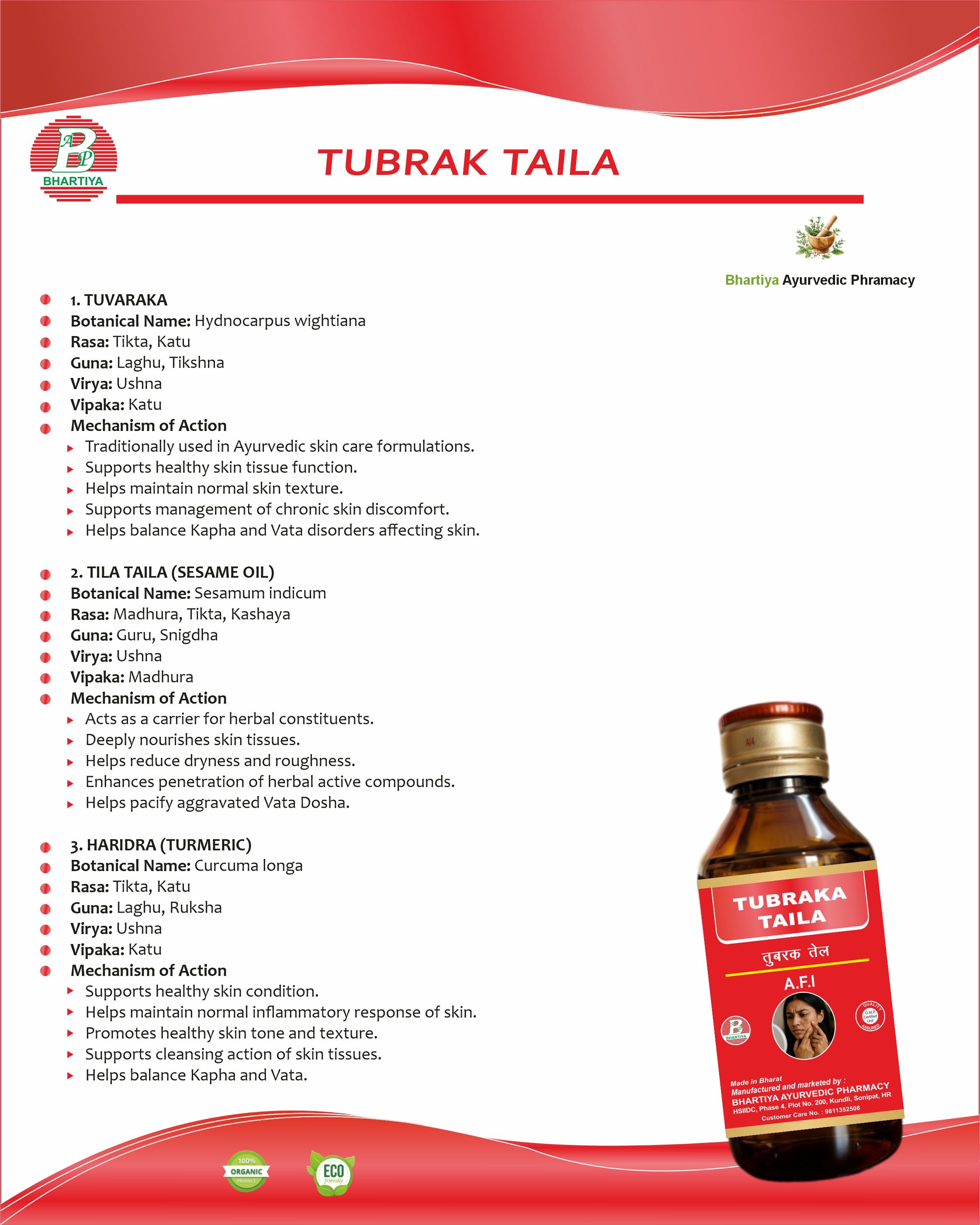
1. TUVARAKA
Botanical Name: Hydnocarpus wightiana
Rasa: Tikta, Katu
Guna: Laghu, Tikshna
Virya: Ushna
Vipaka: Katu
Mechanism of Action
• Traditionally used in Ayurvedic skin care formulations.
• Supports healthy skin tissue function.
• Helps maintain normal skin texture.
• Supports management of chronic skin discomfort.
• Helps balance Kapha and Vata disorders affecting skin.
2. TILA TAILA (SESAME OIL)
Botanical Name: Sesamum indicum
Rasa: Madhura, Tikta, Kashaya
Guna: Guru, Snigdha
Virya: Ushna
Vipaka: Madhura
Mechanism of Action
• Acts as a carrier for herbal constituents.
• Deeply nourishes skin tissues.
• Helps reduce dryness and roughness.
• Enhances penetration of herbal active compounds.
• Helps pacify aggravated Vata Dosha.
3. HARIDRA (TURMERIC)
Botanical Name: Curcuma longa
Rasa: Tikta, Katu
Guna: Laghu, Ruksha
Virya: Ushna
Vipaka: Katu
Mechanism of Action
• Supports healthy skin condition.
• Helps maintain normal inflammatory response of skin.
• Promotes healthy skin tone and texture.
• Supports cleansing action of skin tissues.
• Helps balance Kapha and Vata.
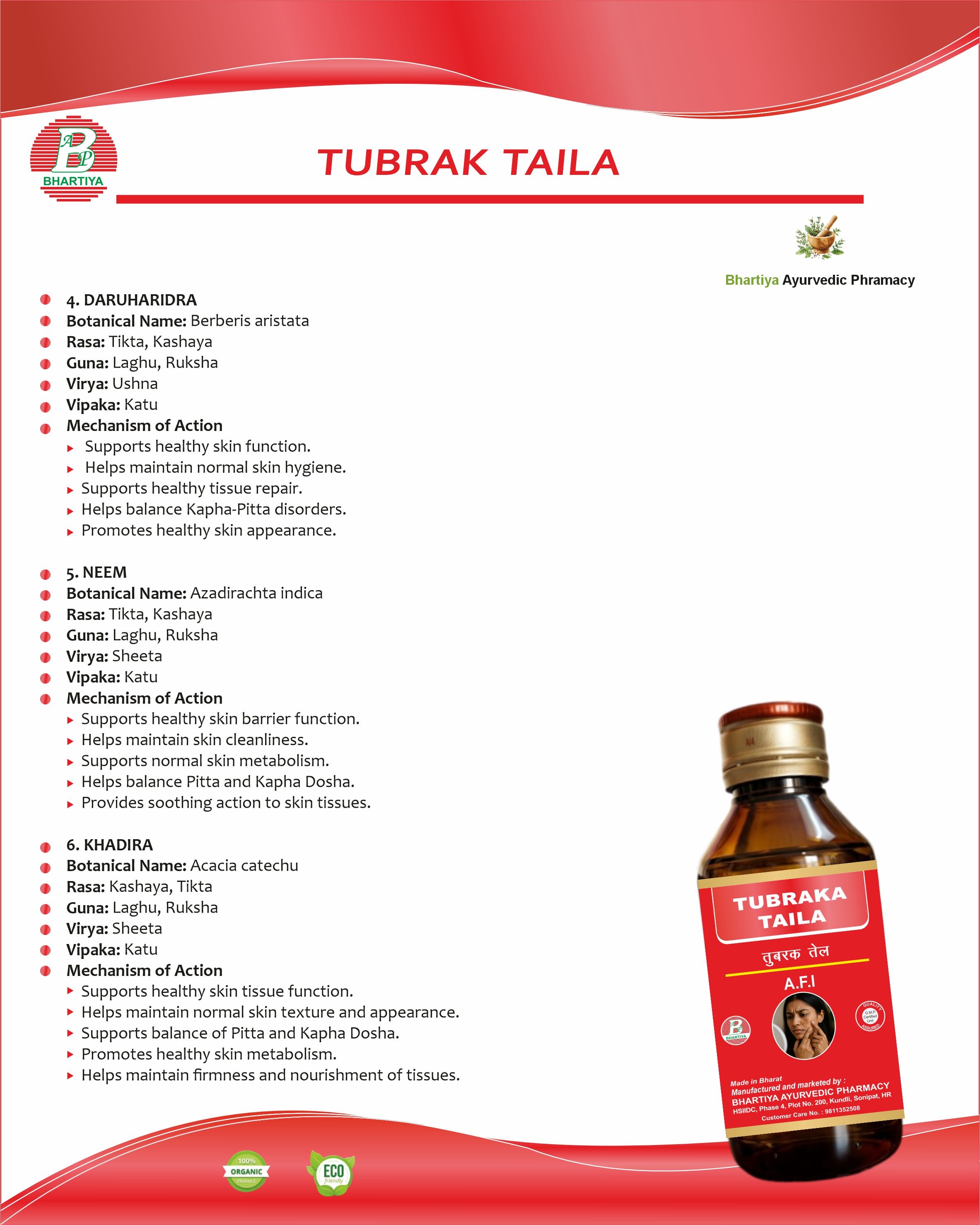
4. DARUHARIDRA
Botanical Name: Berberis aristata
Rasa: Tikta, Kashaya
Guna: Laghu, Ruksha
Virya: Ushna
Vipaka: Katu
Mechanism of Action
• Supports healthy skin function.
• Helps maintain normal skin hygiene.
• Supports healthy tissue repair.
• Helps balance Kapha-Pitta disorders.
• Promotes healthy skin appearance.
5. NEEM
Botanical Name: Azadirachta indica
Rasa: Tikta, Kashaya
Guna: Laghu, Ruksha
Virya: Sheeta
Vipaka: Katu
Mechanism of Action
• Supports healthy skin barrier function.
• Helps maintain skin cleanliness.
• Supports normal skin metabolism.
• Helps balance Pitta and Kapha Dosha.
• Provides soothing action to skin tissues.
6. KHADIRA
Botanical Name: Acacia catechu
Rasa: Kashaya, Tikta
Guna: Laghu, Ruksha
Virya: Sheeta
Vipaka: Katu
Mechanism of Action
• Supports healthy skin tissue function.
• Helps maintain normal skin texture and appearance.
• Supports balance of Pitta and Kapha Dosha.
• Promotes healthy skin metabolism.
• Helps maintain firmness and nourishment of tissues.
7. MANJISTHA
Botanical Name: Rubia cordifolia
Rasa: Tikta, Kashaya, Madhura
Guna: Guru, Ruksha
Virya: Ushna
Vipaka: Katu
Mechanism of Action
• Supports healthy blood and skin tissue function.
• Helps maintain normal skin complexion.
• Supports healthy circulation in skin tissues.
• Promotes tissue nourishment and regeneration.
• Helps balance Pitta and Kapha Dosha.
8. SARIVA
Botanical Name: Hemidesmus indicus
Rasa: Madhura, Tikta
Guna: Guru, Snigdha
Virya: Sheeta
Vipaka: Madhura
Mechanism of Action
• Supports healthy skin nourishment.
• Provides soothing action to skin tissues.
• Helps maintain normal skin moisture.
• Supports balance of Pitta and Vata Dosha.
• Promotes healthy tissue function.
9. BAKUCHI
Botanical Name: Psoralea corylifolia
Rasa: Tikta, Katu
Guna: Laghu, Ruksha
Virya: Ushna
Vipaka: Katu
Mechanism of Action
• Traditionally used in Ayurvedic skin care formulations.
• Supports healthy pigmentation and skin texture.
• Helps maintain normal skin tone.
• Supports healthy skin regeneration.
• Helps balance Kapha and Vata Dosha.
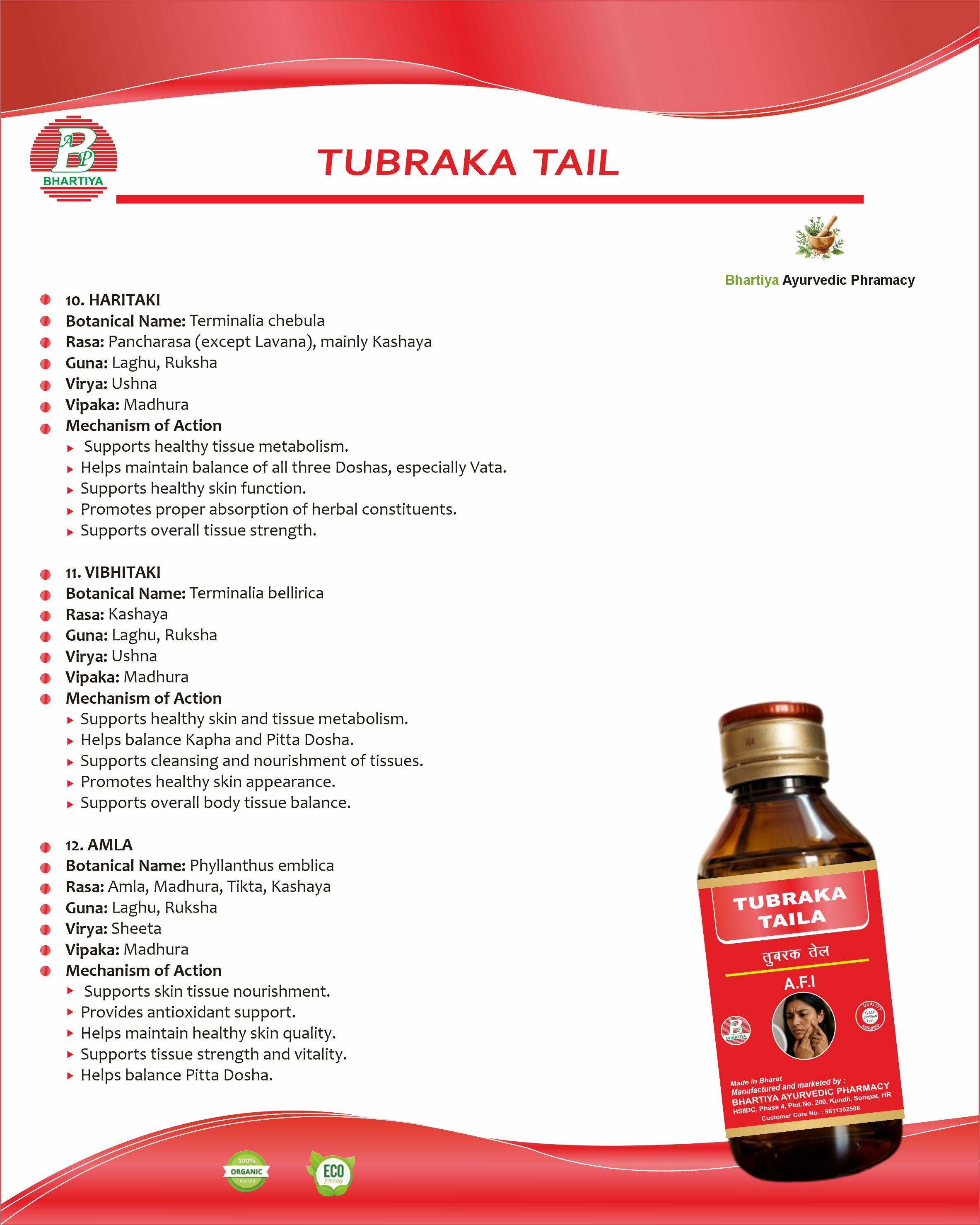
10. HARITAKI
Botanical Name: Terminalia chebula
Rasa: Pancharasa (except Lavana), mainly Kashaya
Guna: Laghu, Ruksha
Virya: Ushna
Vipaka: Madhura
Mechanism of Action
• Supports healthy tissue metabolism.
• Helps maintain balance of all three Doshas, especially Vata.
• Supports healthy skin function.
• Promotes proper absorption of herbal constituents.
• Supports overall tissue strength.
11. VIBHITAKI
Botanical Name: Terminalia bellirica
Rasa: Kashaya
Guna: Laghu, Ruksha
Virya: Ushna
Vipaka: Madhura
Mechanism of Action
• Supports healthy skin and tissue metabolism.
• Helps balance Kapha and Pitta Dosha.
• Supports cleansing and nourishment of tissues.
• Promotes healthy skin appearance.
• Supports overall body tissue balance.
12. AMLA
Botanical Name: Phyllanthus emblica
Rasa: Amla, Madhura, Tikta, Kashaya
Guna: Laghu, Ruksha
Virya: Sheeta
Vipaka: Madhura
Mechanism of Action
• Supports skin tissue nourishment.
• Provides antioxidant support.
• Helps maintain healthy skin quality.
• Supports tissue strength and vitality.
• Helps balance Pitta Dosha.
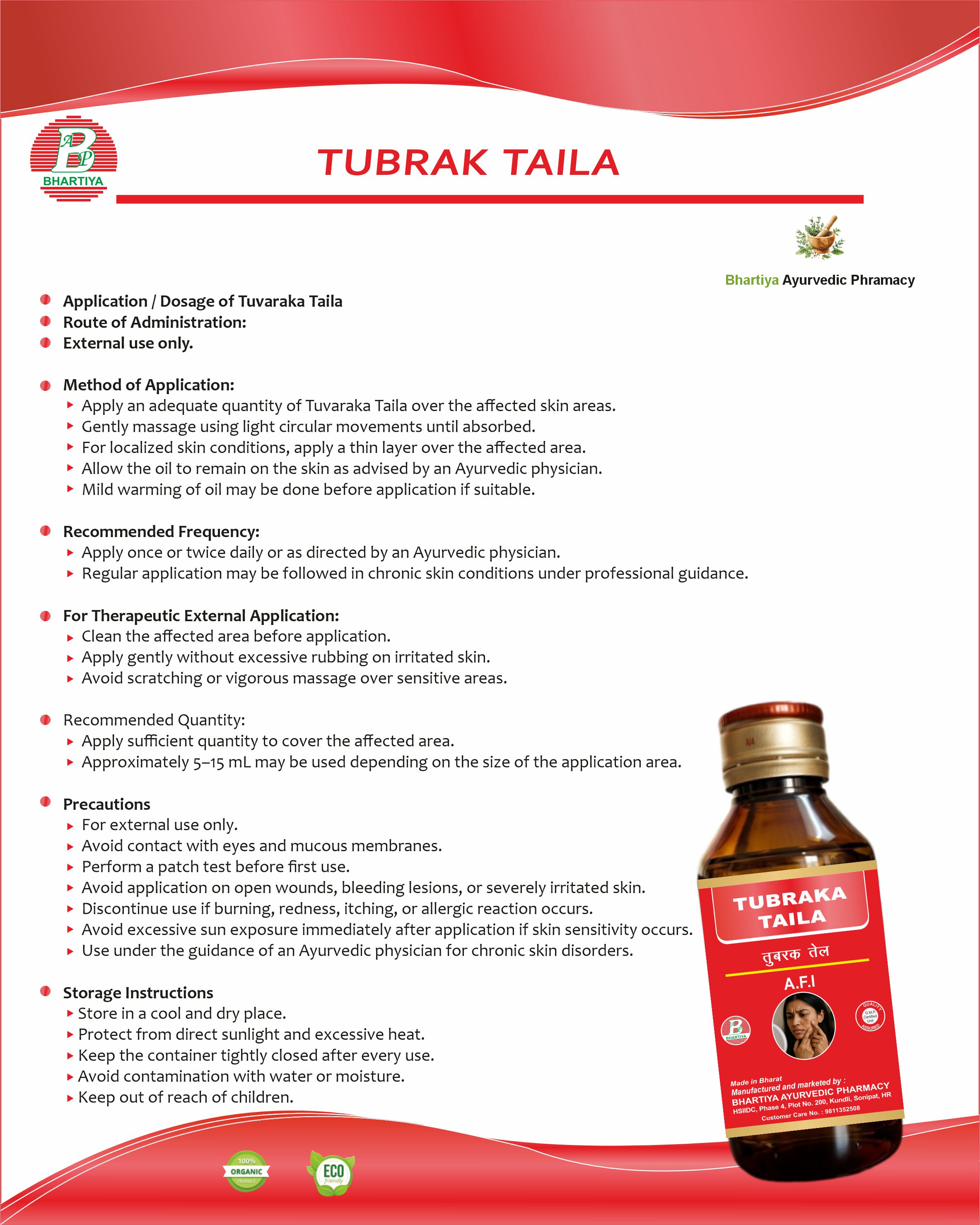
Application / Dosage of Tuvaraka Taila
Route of Administration:
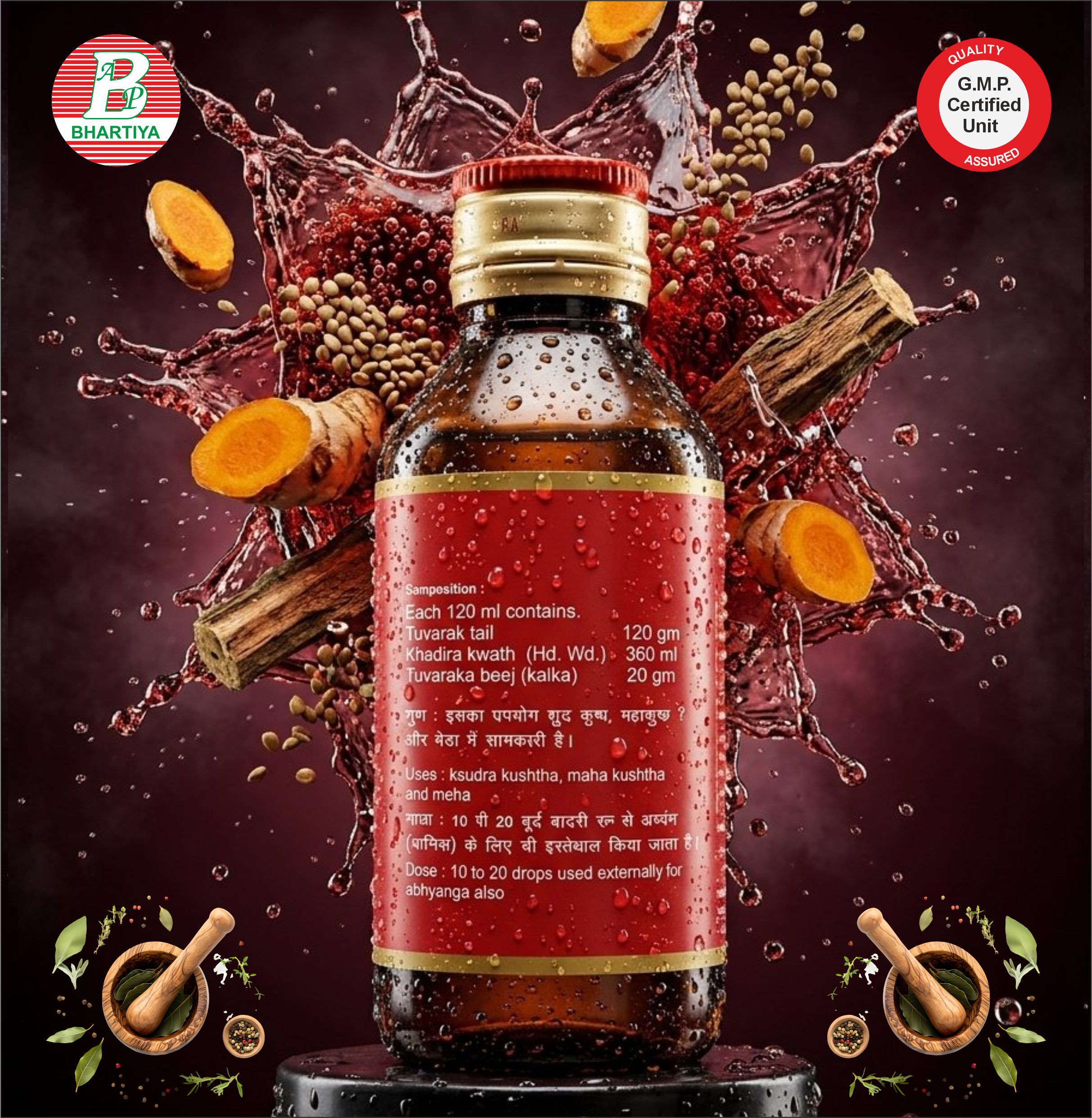
External use only.
Method of Application:
• Apply an adequate quantity of Tuvaraka Taila over the affected skin areas.
• Gently massage using light circular movements until absorbed.
• For localized skin conditions, apply a thin layer over the affected area.
• Allow the oil to remain on the skin as advised by an Ayurvedic physician.
• Mild warming of oil may be done before application if suitable.
Recommended Frequency:
• Apply once or twice daily or as directed by an Ayurvedic physician.
• Regular application may be followed in chronic skin conditions under professional guidance.
For Therapeutic External Application:
• Clean the affected area before application.
• Apply gently without excessive rubbing on irritated skin.
• Avoid scratching or vigorous massage over sensitive areas.
Recommended Quantity:
• Apply sufficient quantity to cover the affected area.
• Approximately 5–15 mL may be used depending on the size of the application area.
Precautions
• For external use only.
• Avoid contact with eyes and mucous membranes.
• Perform a patch test before first use.
• Avoid application on open wounds, bleeding lesions, or severely irritated skin.
• Discontinue use if burning, redness, itching, or allergic reaction occurs.
• Avoid excessive sun exposure immediately after application if skin sensitivity occurs.
• Use under the guidance of an Ayurvedic physician for chronic skin disorders.
Storage Instructions
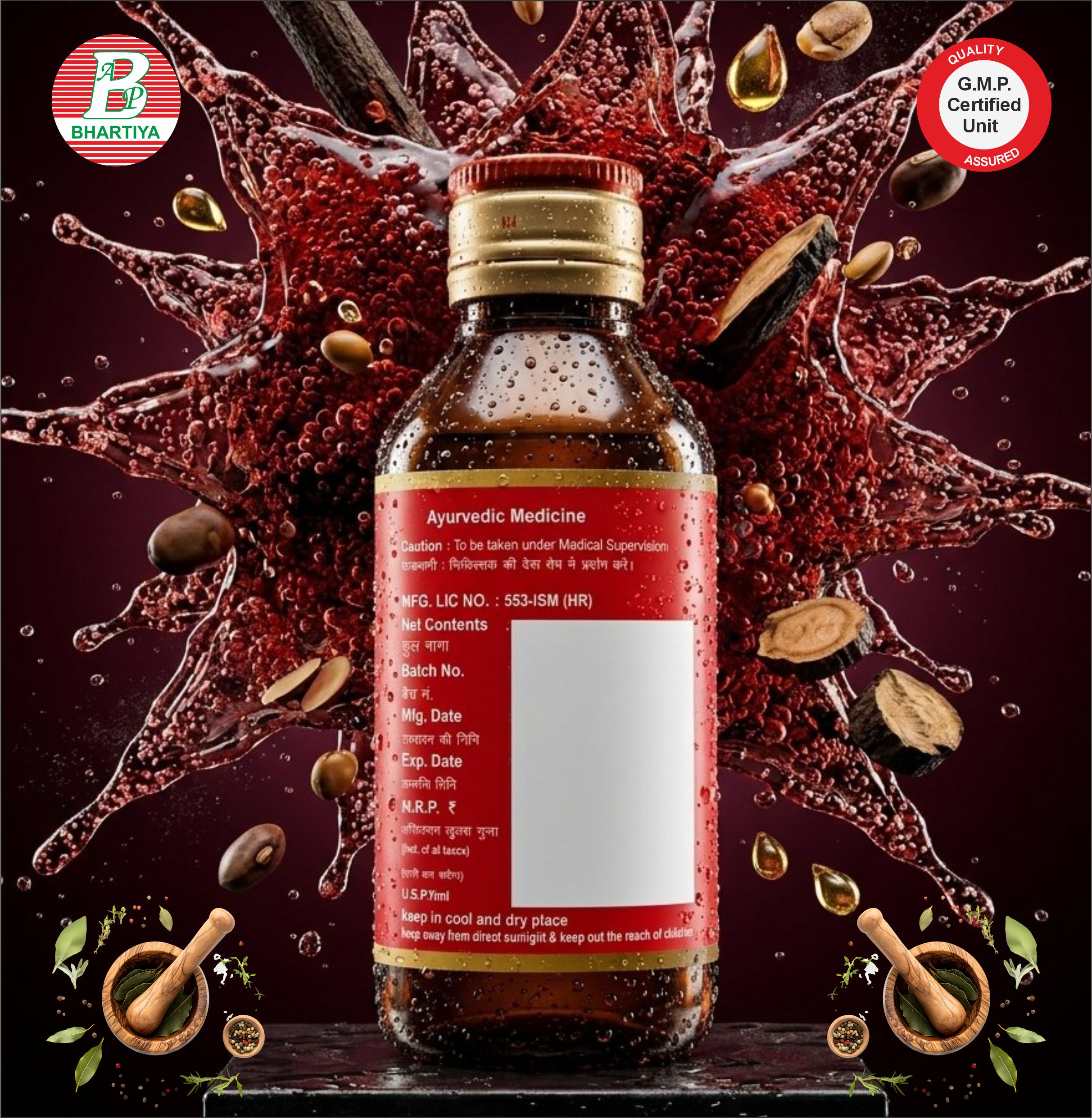
• Store in a cool and dry place.
• Protect from direct sunlight and excessive heat.
• Keep the container tightly closed after every use.
• Avoid contamination with water or moisture.
• Keep out of reach of children.