BHARTIYEAYURVEDICPHARMACY
Products
08048038922
919711305254
Chat with us


Chat with us on WhatsApp
×
This is your website preview.
Currently it only shows your basic business info. Start adding relevant business details such as description, images and products or services to gain your customers attention by using Boost 360 android app / iOS App / web portal.
Home
 wellness enriched
 wellness enriched
Items tagged with 'wellness enriched'
{
"products": [
{
"_id": "6a28ff79cc5f347db82c1ba4",
"fptag": "BHARTIYEAYURVEDICPHARMACY",
"merchantname": null,
"customwidgets": null,
"externalsourceid": null,
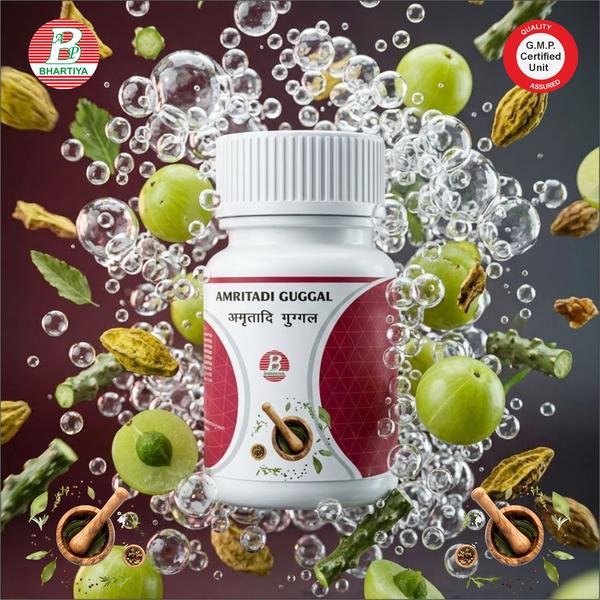
"name": "Amritadi Guggal",
"description": " AMRITADI GUGGUL\n\nProduct Identification\nGeneric Name: Amritadi Guggul\nType: Ayurvedic Polyherbal Formulation\nPrimary Indication Area: Gathiya (arthritis) – traditional Ayurvedic support for joint pain, stiffness, and inflammatory joint disorders.\nTherapeutic Indications: Traditionally used for managing gout (Vatarakta), skin diseases, chronic inflammation, ulcers, and metabolic toxin accumulation in the body.\nKey Benefits\n•\tHelps support joint health and mobility. \n•\tAssists in reducing joint pain and stiffness. \n•\tSupports management of arthritis-related symptoms. \n•\tHelps reduce Ama (metabolic toxins) according to Ayurvedic principles. \n•\tPromotes healthy digestion and metabolism. \n•\tSupports reduction of inflammation associated with joint disorders. \n•\tHelps maintain flexibility and comfort in joints. \n•\tSupports overall musculoskeletal health. Assists in maintaining healthy body weight and fat metabolism. \n•\tContributes to general wellness and physical comfort.\nFORMULA \nEach Tablet contains: \nGuduchi\t768 g\nShudha Guggul\t2.304 kg \nHaritaki\t768 g\nBibhitaki\t768 g\nAmalaki\t768 g\nVarsabhu\t768 g\nDanti\t24g \nChitraka mula\t24 g\nPippali\t24 g\nSunthi\t24 g\nHaritaki\t8 g\nBibhitaki\t8 g\nAmalaki \t8 g\nGuduchi\t24g\nDalchini\t24g\nVidanga\t24 g\nTrivrit \t12g\nWater\t12.288 l reduced 3.0721 L\n\nIngredients:\n1. Guduchi\nBotanical Name: Guduchi (Tinospora cordifolia)\n\n•\tRasa: Tikta, Kashaya \n•\tGuna: Laghu, Snigdha \n•\tVirya: Ushna \n•\tVipaka: Madhura \n•\tPrabhava: Rasayana, Tridosha Shamana \nMechanism in Arthritis (Gathiya):\n\n•\tReduces inflammatory mediators (Ayurvedic: Shothahara action) \n•\tHelps digest Ama (metabolic toxins linked to Amavata) \n•\tSupports immune modulation and joint tissue repair \n\n2. Shuddha Guggulu\nBotanical Name: Shuddha Guggulu (Commiphora mukul)\n\n•\tRasa: Tikta, Katu, Kashaya \n•\tGuna: Laghu, Ruksha, Tikshna \n•\tVirya: Ushna \n•\tVipaka: Katu \n•\tPrabhava: Lekhana, Yogavahi \nMechanism in Arthritis: \n\n•\tReduces joint swelling and stiffness (Shothahara) \n•\tHelps remove Ama from joints (Ama Pachana) \n•\tImproves mobility by clearing obstructed Srotas \n•\tSupports lipid and inflammatory balance in chronic arthritis \n\n3. Haritaki\nBotanical Name: Haritaki (Terminalia chebula)\n\n•\tRasa: Pancharasa (except Lavana) \n•\tGuna: Laghu, Ruksha \n•\tVirya: Ushna \n•\tVipaka: Madhura \n•\tPrabhava: Anulomana \nMechanism in Arthritis:\n\n•\tPromotes elimination of Ama via bowel cleansing \n•\tReduces systemic inflammatory load \n•\tSupports detoxification pathways linked to joint disease \n\n4. Bibhitaki\nBotanical Name: Bibhitaki (Terminalia bellirica)\n\n•\tRasa: Kashaya \n•\tGuna: Laghu, Ruksha \n•\tVirya: Ushna \n•\tVipaka: Madhura \n•\tPrabhava: Kapha-Pitta Shamaka \nMechanism in Arthritis:\n\n•\tReduces Kapha-related joint heaviness and stiffness \n•\tSupports reduction of inflammation and mucus-like accumulation in joints \n•\tHelps metabolic cleansing in chronic arthritis \n\n5. Amalaki\nBotanical Name: Amalaki (Emblica officinalis)\n\n•\tRasa: Pancharasa (dominant Amla) \n•\tGuna: Laghu, Ruksha \n•\tVirya: Shita \n•\tVipaka: Madhura \n•\tPrabhava: Rasayana \nMechanism in Arthritis:\n\n•\tAntioxidant support for joint tissues \n•\tReduces degenerative changes in joints \n•\tSupports tissue regeneration and immunity \n6.Varṣābhū\n Botanical Name: Trianthema portulacastrum\n\n• Rasa: Tikta, Kashaya\n• Guna: Laghu, Snigdha (sometimes described as Ruksha in some texts)\n• Virya: Ushna\n• Vipaka: Katu\n• Prabhava: Shothahara \nMechanism in Arthritis:\n\n•\tReduces swelling and fluid retention in joints\n•\tActs as anti-inflammatory and mild diuretic support\n•\tHelps in inflammatory and Kapha-Ama related joint stiffness\n•\t Improves joint comfort by reducing heaviness and edema\n\n7. Danti\n\nBotanical Name: Danti (Baliospermum montanum)\n\n•\tRasa: Tikta, Katu \n•\tGuna: Tikshna, Ruksha \n•\tVirya: Ushna \n•\tVipaka: Katu \n•\tPrabhava: Virechana (Purgative) \nMechanism in Arthritis:\n\n•\tEliminates deep-seated Ama through purgation \n•\tReduces chronic inflammatory load \n•\tUsed in cleansing therapy for Amavata \n\n8. Chitraka Mula\nBotanical Name: Chitraka Mula (Plumbago zeylanica)\n\n•\tRasa: Katu \n•\tGuna: Laghu, Ruksha, Tikshna \n•\tVirya: Ushna \n•\tVipaka: Katu \n•\tPrabhava: Deepana-Pachana \nMechanism in Arthritis:\n\n•\tImproves digestion of Ama (key in Amavata) \n•\tEnhances metabolic fire (Agni) \n•\tReduces stiffness by clearing metabolic toxins \n \n9. Pippali\nBotanical Name : Pippali (Piper longum)\n\n•\tRasa: Katu \n•\tGuna: Snigdha, Laghu \n•\tVirya: Ushna \n•\tVipaka: Madhura \n•\tPrabhava: Rasayana \nMechanism in Arthritis:\n\n•\tEnhances bioavailability of other herbs (Yogavahi support) \n•\tReduces inflammation and pain \n•\tSupports respiratory and systemic detox pathways \n\n10. Sunthi\nBotanical Name : Sunthi (Zingiber officinale)\n\n•\tRasa: Katu \n•\tGuna: Laghu, Ruksha \n•\tVirya: Ushna \n•\tVipaka: Madhura \n•\tPrabhava: Deepana, Shothahara \nMechanism in Arthritis :\n\n•\tStrong anti-inflammatory and analgesic support \n•\tImproves circulation in joints \n•\tReduces stiffness and Ama accumulation \n\n11. Dalchini\nBotanical Name : Dalchini (Cinnamomum verum)\n\n•\tRasa : Katu, Tikta, Madhura \n•\tGuna : Laghu, Tikshna \n•\tVirya : Ushna \n•\tVipaka : Katu \n•\tPrabhava : Shothahara \nMechanism in Arthritis :\n\n•\tReduces inflammation and oxidative stress \n•\tImproves blood circulation in joints \n•\tHelps reduce stiffness and pain \n\n12. Vidanga\nBotanical Name: Vidanga (Embelia ribes)\n\n•\tRasa: Katu, Kashaya \n•\tGuna: Ruksha, Tikshna \n•\tVirya: Ushna \n•\tVipaka: Katu \n•\tPrabhava: Krimighna \nMechanism in Arthritis:\n\n•\tRemoves Ama-related microbial/toxic burden \n•\tSupports detoxification in chronic joint disease \n•\tReduces inflammatory load indirectly \n\n13. Trivrit\nBotanical Name: Trivrit (Operculina turpethum)\n•\tRasa: Katu, Tikta \n•\tGuna: Laghu, Ruksha \n•\tVirya: Ushna \n•\tVipaka: Katu \n•\tPrabhava: Virechana \nMechanism in Arthritis:\n•\tEliminates deep Ama through purgation \n•\tUsed in classical Panchakarma support for Amavata \n•\tReduces chronic inflammatory accumulation \n \nStandard Adult Dosage\n•\t1–2 tablets (or 250–500 mg each) \n•\t2 times a day \n•\tBest taken after food \nAnupana (vehicle)\n\n•\tWarm water, or \n•\tDecoction like Nirgundi / Dashmool water (commonly used in joint disorders) \nDuration (general practice)\n\n•\tUsually 4–8 weeks, depending on condition severity \n•\tCan be continued longer under Ayurvedic supervision\n\namritadi guggulu, amritadi guggulu in hindi, amritadi guggulu uses\namritadi guggulu uses hindi, amritadi guggulu tablet uses in hindi\namritadi guggulu ingredients, amritadi guggulu ke fayde\namritadi guggulu benefits, amritadi guggulu price, amritadi guggulu tablet uses\namritadi guggulu ayurvedic medicine, amritadi guggulu benefits in hindi\namritadi guggulu contents, amritadi guggulu composition, amrita guggulu contents\namritadi guggulu dhootapapeshwar, amritadi guggulu dabur, amritadi guggulu dosage\namritadi guggulu dose, amrita guggulu easy ayurveda, amrutadi guggulu easy ayurveda\namritadi guggulu ke fayde in hindi, amritadi guggulu hindi, amritadi guggul hindi\namritadi guggulu indication, amritadi guggulu uses in hindi, amritadi guggulu kis kaam aati hai\namritadi guggal lucknow, amritadi guggal location, amritadi guggal lab, amritadi guggal last\namritadi guggulu medicine, uses of amritadi guggulu, use of amritadi guggulu in hindi\nbenefits of amritadi guggulu, ingredients of amritadi guggulu, amritadi guggulu preparation\namritadi guggal quality, amritadi guggal questions, amritadi guggulu reference\namritadi guggulu research paper, amritadi guggulu tablet, amrutadi guggul benefits\namrutadi guggul tablet, amrutadi guggul, tab amrita guggulu uses, tab amrutadi guggulu\ntab amrutadi guggulu uses, uses of amrutadi guggul, uses of amrutadi guggulu\namritadi guggulu use, uses of amrita guggulu, what is amrita in ayurveda\nwhat is the use of amritadi guggulu, amrita guggulu uses, amrita guggulu tablets\nwhere amritadi guggulu found, where amritadi guggulu, when amritadi guggulu\nwhen amritadi guggulu started, how amritadi guggulu works, how amritadi guggulu\nhow amritadi guggulu uses in hindi, how amritadi guggulu uses, why amritadi guggulu\nwhy amritadi guggulu is used, is amritadi guggulu, should amritadi guggulu increase, do amritadi guggulu",
"price": 240.0,
"discountamount": 120.0,
"currencycode": "INR",
"priority": 1000000,
"isfreeshipmentavailable": false,
"shipmentduration": 1,
"_keywords": null,
"isarchived": false,
"isavailable": true,
"applicationid": null,
"productindex": 137,
"imageuri": "https://productimages.withfloats.com/actual/6a28ff7b0966a060d35e4a26.jpg",
"tileimageuri": "https://productimages.withfloats.com/tile/6a28ff7b0966a060d35e4a26.jpg",
"images": null,
"totalqueries": 0,
"gpid": null,
"groupproductid": null,
"createdon": "2026-06-10T06:08:57.494Z",
"updatedon": "2026-06-10T12:22:21.21Z",
"buyonlinelink": null,
"producturl": "http://WWW.BHARTIYAAYURVEDICPHARMACY.COM/products/amritadi-guggal/137",
"availableunits": -1.0,
"iscodavailable": true,
"isprepaidonlineavailable": true,
"maxcodorders": -1,
"maxprepaidonlineorders": -1,
"uniquepaymenturl": null,
"brandname": "Bakula Fort",
"category": "Amritadi Guggal 100 GM X 40",
"tags": [],
"variants": false,
"keyspecification": null,
"otherspecifications": null,
"pickupaddressreferenceid": null,
"paymenttype": "AssuredPurchase",
"producttype": "products",
"hsncode": null,
"gstslab": 0.0,
"isnotforsale": false
},
{
"_id": "6a1936c2b229e486c3e86712",
"fptag": "BHARTIYEAYURVEDICPHARMACY",
"merchantname": null,
"customwidgets": null,
"externalsourceid": null,
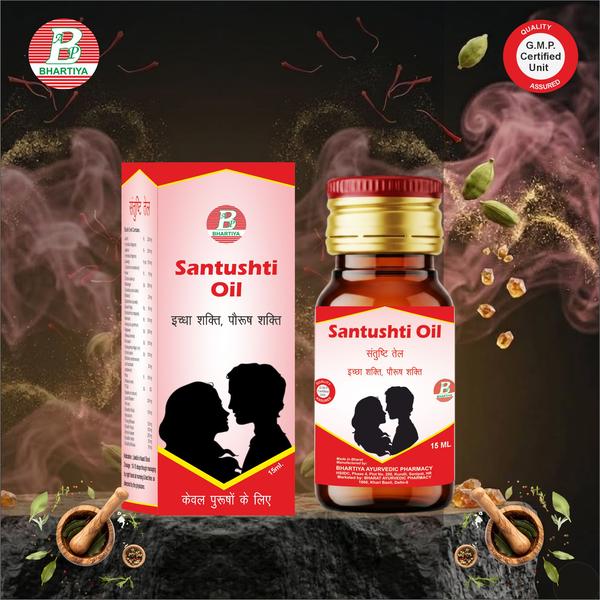
"name": "Santushti Tail",
"description": " SANTUSHTI OIL \n\nProduct Identification\n•\tGeneric Name: Santushti Oil\n•\tType: Ayurvedic Patent Medicine\n•\tPrimary Indication Area: Sexual health and vitality; may help improve stamina, libido, and overall reproductive wellness\n\n Therapeutic Indications\nSantushti Oil is indicated for the promotion of sexual health, enhancement of libido, improvement of stamina and vitality, and support for overall reproductive wellness. It may also help in reducing sexual fatigue and improving performance.\n\nKey benefits:\n•\tEnhances Sexual Vitality: Supports libido and overall sexual health.\n•\tImproves Stamina & Endurance: Helps reduce fatigue and boost energy levels.\n•\tSupports Reproductive Wellness: Promotes healthy reproductive function.\n•\tRelieves Stress & Fatigue: Provides rejuvenating effects on body and mind.\n•\tAyurvedic Formulation: Made from natural herbs to safely support male and female vitality.\n\n\nIngredient: \n Javitri (Nutmeg) \nBotanical Name: Myristica fragrans\nKey Constituents: Myristicin, elemicin, eugenol, essential oils, tannins\nTherapeutic Role in Sexual Health:\n1.\tAphrodisiac Effect:\no\tEnhances libido and sexual desire by stimulating the nervous system.\n2.\tImproves Stamina & Vitality:\no\tHelps reduce fatigue and promotes physical and sexual endurance.\n3.\tSupports Reproductive Health:\no\tTraditionally used to strengthen reproductive organs and improve overall sexual performance.\n4.\tMood & Stress Support:\no\tMild nervine and calming properties help relieve anxiety or stress that can impact sexual health.\n5.\tAyurvedic Perspective:\no\tUshna (hot) and Snigdha (unctuous) qualities help balance Vata and Kapha, enhancing vitality and energy.\nJaiphal (Nutmeg) \nBotanical Name: Myristica fragrans\nKey Constituents: Myristicin, elemicin, eugenol, essential oils, tannins\nTherapeutic Role in Sexual Health:\n1.\tAphrodisiac Activity:\no\tEnhances libido and sexual desire by stimulating the nervous system.\n2.\tImproves Stamina & Endurance:\no\tReduces fatigue and promotes physical and sexual energy.\n3.\tSupports Reproductive Wellness:\no\tStrengthens reproductive organs and improves overall sexual performance.\n4.\tMood & Stress Support:\no\tCalms the nervous system and helps relieve stress or anxiety affecting sexual health.\n5.\tAyurvedic Properties:\no\tRasa (taste): Sweet, pungent\no\tGuna (qualities): Ushna (hot), Snigdha (unctuous)\no\tDosha effect: Balances Vata and Kapha, supporting vitality and vigor\n\n Lavang (Clove) \nBotanical Name: Syzygium aromaticum\nKey Constituents: Eugenol, caryophyllene, tannins, flavonoids, essential oils\nTherapeutic Role in Sexual Health:\n1.\tAphrodisiac & Libido Support:\no\tStimulates circulation and nervous system activity to enhance sexual desire and performance.\n2.\tBoosts Stamina & Vitality:\no\tHelps reduce fatigue and improve energy, supporting endurance in sexual activity.\n3.\tSupports Reproductive Health:\no\tTraditionally used to strengthen reproductive organs and enhance overall sexual wellness.\n4.\tAntioxidant & Anti-inflammatory Effects:\no\tEugenol and flavonoids help protect tissues from oxidative stress, supporting general vitality.\n5.\tAyurvedic Perspective:\no\tRasa (taste): Pungent, sweet\no\tGuna (qualities): Ushna (hot), Tikshna (sharp)\no\tDosha effect: Balances Vata and Kapha; enhances circulation and warmth, promoting vigor\n Kesar (Saffron) \nBotanical Name: Crocus sativus\nKey Constituents: Crocin, crocetin, picrocrocin, Safranal\nTherapeutic Role in Sexual Health:\n1.\tAphrodisiac Effect:\no\tEnhances libido and sexual desire by stimulating nervous and reproductive systems.\n2.\tImproves Stamina & Vitality:\no\tReduces fatigue and boosts energy, supporting endurance in sexual activity.\n3.\tSupports Reproductive Wellness:\no\tPromotes healthy reproductive function and overall sexual performance.\n4.\tMood & Stress Support:\no\tCrocin and Safranal help improve mood, reduce stress, and relieve anxiety, which can positively influence sexual health.\n5.\tAyurvedic Perspective:\no\tRasa (taste): Sweet, slightly bitter\no\tGuna (qualities): Ushna (hot), Laghu (light), Snigdha (unctuous)\no\tDosha effect: Balances Vata and Kapha; enhances energy, vitality, and overall vigor\n\n Malkangni\nBotanical Name: Celestrus paniculatus\nCommon Names: Jyotishmati, Malkagni\nKey Constituents: Alkaloids (paniculatine), fatty acids, flavonoids, sterols, saponins\nTherapeutic Role in Sexual Health:\n1.\tAphrodisiac & Libido Support:\no\tTraditionally used to enhance sexual desire and performance.\n2.\tSupports Reproductive Health & Vitality:\no\tStrengthens reproductive organs and improves overall vigor.\n3.\tNervine & Cognitive Support:\no\tHelps improve memory, mental clarity, and reduces stress, indirectly supporting sexual health.\n4.\tStamina & Endurance:\no\tReduces fatigue and promotes physical and sexual energy.\n5.\tAyurvedic Perspective:\no\tRasa (taste): Bitter, pungent\no\tGuna (qualities): Ushna (hot), Laghu (light), Tikshna (sharp)\no\tDosha effect: Balances Vata and Kapha; enhances vitality, vigor, and nervous system strength\n\nBirbuti\n Botanical Name: Spilanthes acmella \nKey Constituents: Alkylamides (spilanthol), flavonoids, coumarins, essential oils\nTherapeutic Role in Sexual Health:\n1.\tAphrodisiac & Libido Support:\no\tTraditionally used to enhance sexual desire and performance.\n2.\tReproductive Health Support:\no\tStrengthens reproductive organs and improves vitality.\n3.\tStamina & Energy Enhancement:\no\tImproves physical and sexual endurance; reduces fatigue.\n4.\tCirculatory & Muscle Support:\no\tEnhances blood flow and improves tissue nourishment, supporting overall vitality.\n5.\tAyurvedic Perspective:\no\tRasa (taste): Pungent, slightly bitter\no\tGuna (qualities): Ushna (hot), Laghu (light), Tikshna (sharp)\no\tDosha effect: Balances Vata and Kapha; enhances energy, vitality, and sexual vigor\n\n\n Salam panja \nBotanical Name: Dactylorhiza hatagirea\nCommon Names: Himalayan Orchid, Rasna Bheda\nKey Constituents: Polysaccharides, glycosides, starches, phenolics, mucilage\nTherapeutic Role in Sexual Health:\n1.\tAphrodisiac & Libido Enhancement:\no\tTraditionally used to improve sexual desire and performance in both men and women.\n2.\tSupports Reproductive Health:\no\tStrengthens reproductive organs and enhances fertility and vigor.\n3.\tBoosts Stamina & Vitality:\no\tRejuvenates the body, reduces fatigue, and promotes endurance.\n4.\tMuscle & Tissue Rejuvenation:\no\tSupports recovery from weakness, improves circulation, and nourishes tissues.\n5.\tAyurvedic Perspective:\no\tRasa (taste): Sweet, slightly bitter\no\tGuna (qualities): Ushna (hot), Snigdha (unctuous), Laghu (light)\no\tDosha effect: Balances Vata and Kapha; promotes vitality, vigor, and sexual health\n\n Akarkara\nBotanical Name: Anacyclus pyrethrum \nCommon Names: Akar Pahal, Akarkara, Pellitory Root\nKey Constituents: Alkylamides (Anacyclin), pyrethrins, alkaloids, essential oils, saponins\nTherapeutic Role in Sexual Health:\n1.\tAphrodisiac & Libido Support:\no\tEnhances sexual desire, performance, and vitality.\n2.\tSupports Reproductive Health:\no\tStrengthens reproductive organs and improves fertility.\n3.\tStamina & Energy Booster:\no\tReduces fatigue and promotes physical and sexual endurance.\n4.\tNervine & Circulatory Support:\no\tStimulates nerve and blood circulation, supporting vitality and muscular health.\n5.\tAyurvedic Perspective:\no\tRasa (taste): Pungent, bitter\no\tGuna (qualities): Ushna (hot), Tikshna (sharp), Laghu (light)\no\tDosha effect: Balances Vata and Kapha; enhances vigor, stamina, and sexual health\n\n Nagkesar \nBotanical Name: Mesua ferrea\nCommon Names: Ironwood Tree, Nagkesar\nKey Constituents: Coumarins (mesuol, mesuagin), tannins, flavonoids, essential oils, resin\nTherapeutic Role in Sexual Health:\n1.\tAphrodisiac & Libido Support:\no\tEnhances sexual desire and performance.\n2.\tSupports Reproductive Health:\no\tStrengthens male reproductive organs and improves fertility and sexual vigor.\n3.\tStamina & Vitality Enhancement:\no\tReduces fatigue, boosts endurance, and promotes physical and sexual energy.\n4.\tAnti-inflammatory & Circulatory Support:\no\tImproves blood flow to reproductive tissues and supports muscular comfort.\n5.\tAyurvedic Perspective:\no\tRasa (taste): Bitter, astringent\no\tGuna (qualities): Ushna (hot), Tikshna (sharp)\no\tDosha effect: Balances Vata and Kapha; enhances vigor, vitality, and reproductive health\n\n Khursani Ajwain \nBotanical Name: Trachyspermum ammi\nCommon Names: Carom Seeds, Ajwain, Omam\nKey Constituents: Thymol, carvacrol, flavonoids, saponins, essential oils\nTherapeutic Role in Sexual Health:\n1.\tDigestive & Metabolic Support:\no\tImproves digestion and nutrient absorption, which supports overall vitality and energy.\n2.\tSupports Sexual Vitality Indirectly:\no\tBy enhancing digestive fire (Agni) and metabolism, it helps maintain stamina and vigor.\n3.\tStamina & Energy Booster:\no\tReduces lethargy and fatigue by improving overall metabolism.\n4.\tCirculatory & Muscle Support:\no\tThymol and essential oils enhance local circulation and tissue nourishment.\n5.\tAyurvedic Perspective:\no\tRasa (taste): Pungent, bitter\no\tGuna (qualities): Ushna (hot), Tikshna (sharp)\no\tDosha effect: Balances Kapha and Vata; enhances energy, vitality, and digestive health\n\n Choti Elaichi\nBotanical Name: Elettaria cardamomum\nCommon Names: Green Cardamom, Elaichi\nKey Constituents: Essential oils (cineole, terpinene, limonene), flavonoids, phenolic compounds, tannins\nTherapeutic Role in Sexual Health:\n1.\tAphrodisiac & Libido Support:\no\tEnhances sexual desire, performance, and vitality.\n2.\tSupports Reproductive Health:\no\tStrengthens reproductive organs and supports overall sexual wellness.\n3.\tStamina & Energy Booster:\no\tReduces fatigue, promotes endurance, and improves physical and sexual energy.\n4.\tDigestive & Metabolic Support:\no\tImproves digestion, nutrient absorption, and metabolism, which indirectly supports vitality.\n5.\tAyurvedic Perspective:\no\tRasa (taste): Sweet, pungent\no\tGuna (qualities): Ushna (hot), Snigdha (unctuous), Laghu (light)\no\tDosha effect: Balances Vata and Kapha; enhances vigor, stamina, and vitality\n\n Castoreum\nSource: Secretion from castor sacs of mature beavers (Castor fiber / Castor canadensis)\nKey Constituents: Phenols, esters, fatty acids, volatile oils, ketones\nTherapeutic Role in Sexual Health:\n1.\tAphrodisiac & Libido Enhancement:\no\tTraditionally used to stimulate sexual desire and enhance performance.\n2.\tReproductive Health Support:\no\tBelieved to strengthen reproductive organs and improve fertility.\n3.\tStamina & Vitality:\no\tEnhances physical endurance, reduces fatigue, and boosts overall energy.\n4.\tCirculatory & Nervine Support:\no\tPromotes circulation and tissue nourishment, supporting vitality.\n5.\tAyurvedic / Traditional Perspective:\no\tClassified as a rejuvenator and aphrodisiac in Rasayana formulations.\no\tOften used in small quantities due to potency.\n\n Pista\nBotanical Name: Pistacia vera\nCommon Names: Pistachio, Pista\nKey Constituents: Proteins, healthy fats (oleic, linoleic acids), vitamins (E, B6), minerals (magnesium, potassium), antioxidants\nTherapeutic Role in Sexual Health:\n1.\tAphrodisiac & Libido Support:\no\tTraditionally used to enhance sexual desire and performance.\n2.\tReproductive Health Support:\no\tStrengthens reproductive organs, enhances fertility, and supports overall sexual vigor.\n3.\tStamina & Energy Booster:\no\tProvides sustained energy, reduces fatigue, and improves physical and sexual endurance.\n4.\tNervine & Tissue Rejuvenation:\no\tNourishes tissues, supports nervous system health, and promotes overall vitality.\n5.\tAyurvedic Perspective:\no\tRasa (taste): Sweet, slightly astringent\no\tGuna (qualities): Snigdha (unctuous), Guru (heavy), Madhura (sweet)\no\tDosha effect: Balances Vata and Pitta; enhances strength, stamina, and reproductive health\n\n Til Tail\nBotanical Name: Sesamum indicum\nCommon Names: Sesame Oil, Til Oil\nKey Constituents: Unsaturated fatty acids (oleic, linoleic), sesamol, sesamin, vitamin E, minerals\nTherapeutic Role in Sexual Health:\n1.\tAphrodisiac & Libido Support:\no\tSupports sexual vigor and vitality by nourishing reproductive tissues.\n2.\tReproductive Health Support:\no\tStrengthens reproductive organs, enhances fertility, and improves sexual stamina.\n3.\tStamina & Energy Booster:\no\tProvides sustained energy, reduces fatigue, and supports physical and sexual endurance.\n4.\tNervine & Tissue Nourishment:\no\tDeeply penetrates tissues to rejuvenate muscles, joints, and nerves.\n5.\tAyurvedic Perspective:\no\tRasa (taste): Sweet, oily\no\tGuna (qualities): Snigdha (unctuous), Guru (heavy), Ushna (hot)\no\tDosha effect: Balances Vata and Pitta; enhances strength, stamina, and reproductive health\n\n Lauh Bhasma \n Scientific Name: Iron Ash\nSource: Calcined and purified iron prepared according to classical Ayurvedic methods\nKey Constituents: Elemental iron, trace minerals\nTherapeutic Role in Sexual Health:\n1.\tReproductive & Sexual Health Support:\no\tEnhances sexual vigor, libido, and performance.\no\tStrengthens male reproductive organs and supports fertility.\n2.\tStamina & Vitality Booster:\no\tImproves energy levels, reduces fatigue, and promotes physical and sexual endurance.\n3.\tHemopoietic & Tissue Rejuvenation:\no\tSupports red blood cell formation, improves circulation, and nourishes tissues.\n4.\tAyurvedic Perspective:\no\tRasa (taste): Kashaya (astringent), Tikta (bitter)\no\tGuna (qualities): Guru (heavy), Ruksha (dry), Ushna (hot)\no\tDosha effect: Balances Vata and Pitta; enhances strength, vitality, and reproductive health\n\n Shudh Shilajit \n Scientific Name: Purified Shilajit / Asphaltum\nSource: Exudate from Himalayan rocks, purified according to classical Ayurvedic methods\nKey Constituents: Fulvic acid, humic acid, dibenzo-alpha-pyrones, trace minerals\nTherapeutic Role in Sexual Health:\n1.\tAphrodisiac & Libido Enhancement:\no\tBoosts sexual desire, performance, and reproductive vitality.\n2.\tReproductive Health Support:\no\tStrengthens reproductive organs, supports fertility, and improves sperm quality in men.\n3.\tStamina & Energy Booster:\no\tReduces fatigue, enhances physical and sexual endurance, and improves overall vitality.\n4.\tNervine & Tissue Rejuvenation:\no\tSupports nervous system health, nourishes tissues, and promotes rejuvenation.\n5.\tAyurvedic Perspective:\no\tRasa (taste): Bitter, astringent\no\tGuna (qualities): Guru (heavy), Snigdha (unctuous), Ushna (hot)\no\tDosha effect: Balances Vata and Kapha; enhances strength, stamina, and reproductive health\n\nTrivang Bhasma – Ayurvedic Herbo-Mineral Preparation\nSource: Classical bhasma prepared from three purified metals/minerals according to Ayurvedic pharmacopeia\nKey Constituents: Trace elements of Tin, Lead, Zinc, along with minor mineral ash components\nTherapeutic Role in Sexual Health:\n1.\tAphrodisiac & Libido Enhancement:\no\tTraditionally used to boost sexual desire, performance, and reproductive vitality.\n2.\tReproductive Health Support:\no\tStrengthens reproductive organs, improves fertility, and enhances sexual stamina.\n3.\tStamina & Vitality Booster:\no\tImproves energy, reduces fatigue, and enhances physical and sexual endurance.\n4.\tTissue & Nervine Rejuvenation:\no\tSupports nervous system and tissue health, aiding rejuvenation and vitality.\n5.\tAyurvedic Perspective:\no\tRasa (taste): Astringent, metallic\no\tGuna (qualities): Guru (heavy), Ruksha (dry), Ushna (hot)\no\tDosha effect: Balances Vata and Kapha; enhances vigor, reproductive health, and overall strength\n\n Shudh Hingul \nScientific Name: Purified Cinnabar / Red Sulfur\nSource: Mercury-sulfur compound (Cinnabar / HgS) purified according to classical Ayurvedic methods\nKey Constituents: Mercuric sulphide (HgS) and trace minerals after purification\nTherapeutic Role in Sexual Health:\n1.\tAphrodisiac & Libido Support:\no\tEnhances sexual desire, performance, and vigor.\n2.\tReproductive Health Support:\no\tStrengthens reproductive organs and supports fertility.\n3.\tStamina & Vitality Booster:\no\tIncreases physical endurance, reduces fatigue, and promotes overall vitality.\n4.\tTissue & Nervine Rejuvenation:\no\tSupports nervous system health, tissue strength, and rejuvenation.\n5.\tAyurvedic Perspective:\no\tRasa (taste): Kashaya (astringent), Lavana (salty)\no\tGuna (qualities): Guru (heavy), Ushna (hot), Snigdha (unctuous)\no\tDosha effect: Balances Vata and Kapha; enhances strength, stamina, and reproductive health\n\n Abhrak Bhasma \nScientific Name: Purified Mica Ash\nSource: Calcined and purified natural mica (Abhrak) prepared according to classical Ayurvedic methods\nKey Constituents: Silicates of aluminum and magnesium, trace minerals, microelements\nTherapeutic Role in Sexual Health:\n1.\tAphrodisiac & Libido Enhancement:\no\tBoosts sexual desire, vigor, and performance.\n2.\tReproductive Health Support:\no\tStrengthens reproductive organs, enhances fertility, and improves sexual stamina.\n3.\tStamina & Energy Booster:\no\tImproves physical endurance, reduces fatigue, and promotes vitality.\n4.\tTissue & Nervine Rejuvenation:\no\tSupports nervous system health, tissue strength, and overall rejuvenation.\n5.\tAyurvedic Perspective:\no\tRasa (taste): Kashaya (astringent), Madhura (sweet)\no\tGuna (qualities): Guru (heavy), Snigdha (unctuous), Ushna (hot)\no\tDosha effect: Balances Vata and Kapha; enhances vigor, strength, and reproductive health\n\n Shudh Hartal \nScientific Name: Purified Cinnabar / Mercury Sulphide\nSource: Mercury-sulfur compound (Cinnabar / HgS) purified according to classical Ayurvedic procedures\nKey Constituents: Mercuric sulphide (HgS) with trace minerals after purification\nTherapeutic Role in Sexual Health:\n1.\tAphrodisiac & Libido Enhancement:\no\tBoosts sexual desire, performance, and vigor.\n2.\tReproductive Health Support:\no\tStrengthens reproductive organs and enhances fertility.\n3.\tStamina & Vitality Booster:\no\tReduces fatigue, improves endurance, and promotes overall vitality.\n4.\tTissue & Nervine Rejuvenation:\no\tSupports nervous system health, tissue strength, and rejuvenation.\n5.\tAyurvedic Perspective:\no\tRasa (taste): Kashaya (astringent), Lavana (salty)\no\tGuna (qualities): Guru (heavy), Ushna (hot), Snigdha (unctuous)\no\tDosha effect: Balances Vata and Kapha; enhances strength, stamina, and reproductive health\n\nShudh Bhilawa \nScientific Name: Purified Aconitum / Indian Monkshood\nSource: Root or tuber of Aconitum ferox purified according to classical Ayurvedic methods\nKey Constituents: Alkaloids (aconitine, mesaconitine), polysaccharides, trace minerals after purification\nTherapeutic Role in Sexual Health:\n1.\tAphrodisiac & Libido Enhancement:\no\tEnhances sexual desire, performance, and vigor.\n2.\tReproductive Health Support:\no\tStrengthens reproductive organs, improves fertility, and sexual stamina.\n3.\tStamina & Vitality Booster:\no\tImproves physical endurance, reduces fatigue, and boosts overall energy.\n4.\tTissue & Nervine Rejuvenation:\no\tSupports nervous system health, tissue strength, and overall rejuvenation.\n5.\tAyurvedic Perspective:\no\tRasa (taste): Tikta (bitter), Katu (pungent)\no\tGuna (qualities): Guru (heavy), Ushna (hot), Tikshna (sharp)\no\tDosha effect: Balances Vata and Kapha; enhances vigor, strength, and sexual health\n\n\n How to use:\nExternal Application (Topical Massage / Abhyanga)\n•\tMethod: Apply a few drops of the oil on the lower abdomen, lower back, thighs, or reproductive organs.\n•\tMassage: Gently massage in circular motions for 5–10 minutes.\n•\tFrequency: 1–2 times daily, preferably before bedtime.\n•\tBenefit: Improves local circulation, muscle relaxation, and sexual vitality; nourishes tissues and reproductive organs.\n\nsantushti tail taila, santushti tail bala, santushti tail bilaspur\nsantushti tail brand, santushti tail branches, santushti tail cooler\nsantushti tail cooler price, santushti tail company, santushti tail deoria uttar pradesh\nsantushti tail deoghar jharkhand, santushti tail export, santushti tail english\nsantushti tail equipment, santushti tail english translation, santushti tail enterprises\nsantushti tail english meaning, santushti tail english name, santushti tail english spelling\nsantushti tail feed, santushti tail fashion point, santushti tail franchise, santushti tail franchise price\nsantushti tail grinder, santushti tail gate, santushti tail gold, santushti tail ghaziabad\nsantushti tail gujarat, santushti tail gurugram, santushti tail gujarati, santushti tail hospital\nsantushti tail hindi, santushti tail house, santushti tail hospital sonipat, santushti tail hoti hai\nsantushti tail in english, santushti tail in hindi, santushti tail in delhi, santushti tail in marathi\nsantushti tail in malayalam, santushti tail in tamil, santushti tail in punjabi, santushti tail in telugu\nsantushti tail in bengali, santushti tail kundali, santushti tail kaise kare, santushti tail ka meaning in hindi\nsantushti tail ka hindi, santushti tail light, santushti tail limited, santushti tail light price, santushti tail machine\nsantushti tail machine price, santushti tail name, santushti tail name style, santushti tail najafgarh\nsantushti tail nagar, santushti tail online, santushti tail online shopping, santushti tail office address\nsantushti tail origin, santushti tail online order, santushti tail owner, santushti tail of hindi\nsantushti tail price, santushti tail product, santushti tail question, santushti tail question answer\nsantushti tail quotes in hindi, santushti tail uses in hindi, santushti tail uses",
"price": 270.0,
"discountamount": 135.0,
"currencycode": "INR",
"priority": 1000000,
"isfreeshipmentavailable": false,
"shipmentduration": 1,
"_keywords": null,
"isarchived": false,
"isavailable": true,
"applicationid": null,
"productindex": 134,
"imageuri": "https://productimages.withfloats.com/actual/6a1936c6b129782af24ef5c9.jpg",
"tileimageuri": "https://productimages.withfloats.com/tile/6a1936c6b129782af24ef5c9.jpg",
"images": null,
"totalqueries": 0,
"gpid": null,
"groupproductid": null,
"createdon": "2026-05-29T06:48:34.259Z",
"updatedon": "2026-05-29T06:48:34.259Z",
"buyonlinelink": null,
"producturl": "http://WWW.BHARTIYAAYURVEDICPHARMACY.COM//santushti-tail/134",
"availableunits": -1.0,
"iscodavailable": true,
"isprepaidonlineavailable": true,
"maxcodorders": -1,
"maxprepaidonlineorders": -1,
"uniquepaymenturl": null,
"brandname": "Bakula Fort",
"category": "Santushti Tail 15 ML X 30",
"tags": [],
"variants": false,
"keyspecification": null,
"otherspecifications": null,
"pickupaddressreferenceid": null,
"paymenttype": "AssuredPurchase",
"producttype": "products",
"hsncode": null,
"gstslab": 0.0,
"isnotforsale": false
},
{
"_id": "6a1567c2f928bdd5ed37ce54",
"fptag": "BHARTIYEAYURVEDICPHARMACY",
"merchantname": null,
"customwidgets": null,
"externalsourceid": null,
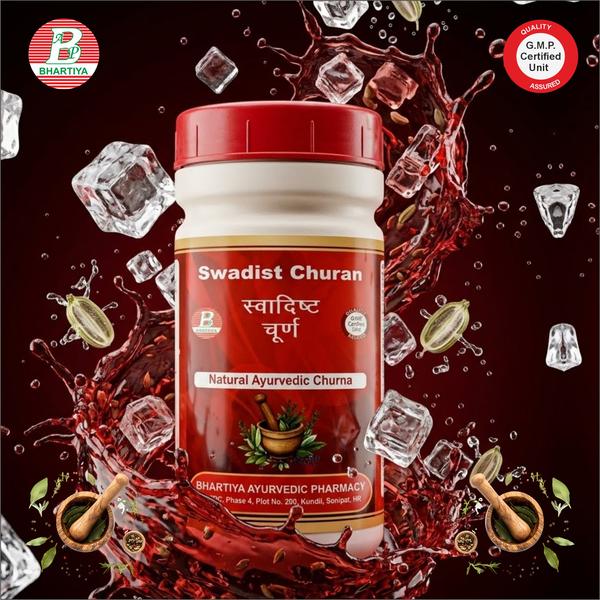
"name": "Swadist Churan",
"description": " SWADISHT CHURAN \n\nProduct Identification\n•\tGeneric Name: Swadisht Churan\n•\tType: Ayurvedic Patent Medicine\n•\tPrimary Indication Area: Nausea, vomiting, motion sickness, and digestive discomfort\n•\tTherapeutic Indications: \n•\tUsed in the management of nausea and vomiting\n•\tHelps relieve motion sickness\n•\tSupports digestion and alleviates gastrointestinal discomfort\n\n•\tKey benefits include:\n•\tRelieves nausea and vomiting.\n•\tReduces motion sickness and dizziness.\n•\tPromotes healthy digestion and prevents indigestion.\n•\tSoothes the stomach and reduces discomfort after meals.\n•\tHelps maintain overall gastrointestinal wellness.\n\nIngredients:\n Pippali (Long Pepper) \nBotanical Name: Piper longum\nKey Constituents:\n•\tAlkaloids (piperine) – digestive stimulant, enhances metabolism\n•\tEssential oils (sesquiterpenes, monoterpenes) – carminative, mild anti-inflammatory\n•\tResins & Polyphenols – antioxidant, gastroprotective\n•\tVitamins & Minerals – support overall digestive function \nMechanism of Action for Digestive Health, Nausea & Vomiting:\n1.\tDigestive Stimulant\no\tPiperine and essential oils stimulate gastric juice and enzyme secretion, improving digestion and nutrient absorption.\n2.\tCarminative & Anti-flatulent\no\tReduces gas, bloating, and abdominal discomfort, helping relieve nausea.\n3.\tGastroprotective & Antioxidant\no\tPolyphenols protect the stomach lining from irritation and oxidative damage.\n4.\tMild Anti-nausea Effect\no\tSoothes the gastrointestinal tract, reducing vomiting tendency.\n\n\n Kali Mirch (Black Pepper) \nBotanical Name: Piper nigrum\nKey Constituents:\n•\tPiperine – bioactive alkaloid; enhances digestion, absorption of nutrients, anti-inflammatory\n•\tEssential oils (e.g., limonene, pinene) – stimulate gastric secretions, antioxidant\n•\tFlavonoids & Polyphenols – antioxidant, gastroprotective\nMechanism of Action for Digestive Health & Nausea:\n1.\tDigestive Stimulant: Piperine and essential oils stimulate secretion of digestive enzymes and gastric juices, improving breakdown and absorption of nutrients.\n2.\tCarminative Effect: Reduces gas, bloating, and abdominal discomfort, which helps alleviate mild nausea.\n3.\tAnti-nausea & Gastroprotective: Antioxidants protect the stomach lining from irritation and oxidative stress.\n4.\tEnhances Bioavailability: Piperine increases absorption of other herbs and nutrients in formulations, improving overall therapeutic effect.\n5.\tDosha Balancing (Ayurvedic Perspective): Stimulates Agni (digestive fire), reduces Kapha stagnation, and alleviates heaviness, nausea, and digestive sluggishness.\n\n Elaichi Dana (Cardamom Seeds) \nBotanical Name: Elettaria cardamomum\nKey Constituents:\n•\tEssential oils (cineole, terpinene, limonene) – carminative, digestive stimulant\n•\tFlavonoids & Polyphenols – antioxidant, gastroprotective\n•\tAlkaloids & Terpenes – anti-inflammatory, mild analgesic effect\nMechanism of Action for Digestive Health, Nausea & Vomiting:\n1.\tDigestive Stimulant: Essential oils enhance gastric secretions and enzyme activity, improving digestion and appetite.\n2.\tCarminative & Anti-flatulent: Reduces gas, bloating, and abdominal discomfort, which helps alleviate nausea.\n3.\tGastroprotective & Antioxidant: Polyphenols and essential oils protect the stomach lining from irritation and oxidative stress.\n4.\tAnti-nausea Effect: Calms the stomach and helps relieve mild nausea and vomiting.\n5.\tDosha Balancing (Ayurvedic Perspective): Stimulates Agni (digestive fire), balances Kapha and Vata, reduces heaviness, nausea, bloating.\n Dhaniya (Coriander Seeds) \nBotanical Name: Coriandrum sativum\nKey Constituents:\n•\tEssential oils (linalool, geraniol, borneol) – carminative, digestive stimulant\n•\tFlavonoids & Polyphenols – antioxidant, gastroprotective\n•\tFatty acids – mild anti-inflammatory effect\n•\tVitamins & Minerals (vitamin C, calcium, potassium) – support general digestive health\nMechanism of Action for Digestive Health, Nausea & Vomiting:\n1.\tDigestive Stimulant: Essential oils enhance digestive enzyme secretion and gastric juices, improving digestion and nutrient absorption.\n2.\tCarminative & Anti-flatulent: Reduces gas, bloating, and abdominal discomfort, helping alleviate nausea.\n3.\tGastroprotective & Antioxidant: Polyphenols protect the stomach lining from irritation and oxidative damage.\n4.\tMild Anti-nausea Effect: Soothes the gastrointestinal tract, reducing the tendency for vomiting.\n5.\tDosha Balancing (Ayurvedic Perspective): Balances Vata and Kapha, stimulates Agni (digestive fire), and alleviates heaviness, indigestion, and nausea.\n\n Amchur (Dried Mango Powder) \nBotanical Name: Mangifera indica\nKey Constituents:\n•\tOrganic acids: Citric acid, tartaric acid – stimulate digestion and improve gastric secretions\n•\tPolyphenols & Flavonoids: Mangiferin, quercetin – antioxidant, gastroprotective\n•\tVitamin C (Ascorbic acid) – protects gastric lining, reduces oxidative stress\n•\tDietary fiber – supports bowel movement and toxin elimination\nMechanism of Action for Digestive Health, Nausea & Vomiting:\n1.\tDigestive Stimulant: Organic acids enhance digestive enzyme activity and gastric acid secretion, improving digestion and preventing bloating.\n2.\tAnti-nausea & Gastroprotective: Polyphenols and vitamin C protect the stomach lining, reduce irritation, and help calm nausea.\n3.\tMild Detoxifying & Laxative Effect: Dietary fiber promotes bowel clearance, removing undigested food that can trigger nausea or vomiting.\n4.\tDosha Balancing (Ayurvedic Perspective): Balances Pitta (reduces acidity/heartburn) and Kapha (prevents heaviness and digestive sluggishness).\n\n Jeera (Cumin Seeds) \nBotanical Name: Cuminum cyminum\nKey Constituents:\n•\tEssential oils (cuminaldehyde, cymene, terpenes) – carminative, digestive stimulant\n•\tFlavonoids & Polyphenols – antioxidant, anti-inflammatory\n•\tFatty acids – mild anti-inflammatory effect\n•\tVitamins & Minerals (iron, calcium, vitamin C) – support digestive health\nMechanism of Action for Digestive Health, Nausea & Vomiting:\n1.\tDigestive Stimulant: Essential oils enhance gastric juice and digestive enzyme secretion, improving digestion and nutrient absorption.\n2.\tCarminative & Anti-flatulent: Reduces gas, bloating, and abdominal discomfort, helping relieve nausea.\n3.\tGastroprotective & Antioxidant: Polyphenols protect the stomach lining from irritation and oxidative damage.\n4.\tMild Anti-nausea Effect: Soothes the gastrointestinal tract, reducing the tendency for vomiting.\n\nSatnimbu \nScientific Name: Citric acid \nChemical Name: 2-Hydroxy-1,2,3-propane-tricarboxylic acid\nKey Constituents:\n•\tOrganic acid – provides sour taste, pH regulator\n•\tCitric ions – antioxidant, chelating agent\n•\tTrace minerals (from natural sources) – support metabolic processes\nMechanism of Action for Digestive Health, Nausea & Vomiting:\n1.\tDigestive Stimulant\no\tEnhances gastric juice secretion, aiding digestion.\n2.\tAlkalizing & pH Balance\no\tHelps neutralize excessive stomach acidity, reducing irritation.\n3.\tMild Anti-nausea Effect\no\tSoothes the stomach lining, can reduce nausea in small amounts.\n4.\tAntioxidant & Chelating Action\no\tProtects gastrointestinal tissues from oxidative stress.\n\n Namak (Salt) \nBotanical / Mineral Name: Sodium Chloride (NaCl)\nKey Constituents:\n•\tSodium (Na⁺) – electrolyte balance, supports nerve and muscle function\n•\tChloride (Cl⁻) – essential for gastric acid (HCl) production\n•\tTrace minerals – may include potassium, magnesium, calcium (depending on source)\nMechanism of Action for Digestive Health:\n1.\tStimulates Gastric Acid Secretion: Chloride ions support hydrochloric acid (HCl) production, improving digestion and breakdown of food.\n2.\tEnhances Electrolyte Balance: Maintains fluid balance, which supports smooth functioning of gastrointestinal tract.\n3.\tImproves Digestive Efficiency: Helps activate digestive enzymes and promotes nutrient absorption.\n4.\tDosha Balancing (Ayurvedic Perspective): Traditionally Kapha-pacifying, supports digestion by enhancing Agni (digestive fire) and reducing heaviness in the stomach.\n5.\tAdjunct in Formulations: Often used in small quantities to improve taste and enhance bioavailability of other herbs in Ayurvedic formulations.\n\n Dalchini (Cinnamon) \nBotanical Name: Cinnamomum verum (true cinnamon) / Cinnamomum zeylanicum\nKey Constituents:\n•\tEssential oils (cinnamaldehyde, eugenol) – digestive stimulant, carminative, antimicrobial\n•\tPolyphenols & Flavonoids – antioxidant, gastroprotective\n•\tTannins – astringent, helps reduce gastric irritation\n•\tMucilage – soothes the gastrointestinal lining\nMechanism of Action for Digestive Health, Nausea & Vomiting:\n1.\tDigestive Stimulant: Essential oils enhance gastric juice and enzyme secretion, improving digestion and nutrient absorption.\n2.\tCarminative & Anti-flatulent: Reduces gas, bloating, and abdominal discomfort, helping relieve nausea.\n3.\tGastroprotective & Antioxidant: Polyphenols and mucilage protect the stomach lining from irritation and oxidative stress.\n4.\tMild Anti-nausea Effect: Soothes the gastrointestinal tract, reducing the tendency for vomiting.\n5.\tAntimicrobial Effect: Helps prevent mild infections or dysbiosis in the gut.\n6.\tDosha Balancing (Ayurvedic Perspective): Stimulates Agni (digestive fire), pacifies Kapha and Vata, reduces heaviness, indigestion, and nausea.\n\nSugar (Sharkara / Sugar) \nBotanical / Source: Saccharum officinarum (Sugarcane)\nKey Constituents:\n•\tSucrose – simple carbohydrate, provides quick energy\n•\tGlucose & Fructose (after digestion) – easily absorbed, boosts energy\n•\tTrace minerals (in unrefined sugar: calcium, iron, magnesium) – minor supportive role\nMechanism of Action for Digestive Health & Nausea:\n1.\tEnergy Supply: Quick absorption of glucose provides immediate energy, which can help relieve weakness or dizziness associated with nausea.\n2.\tSoothes the Stomach: Sweet taste has a mild carminative effect, calming gastric irritation.\n3.\tImproves Palatability of Formulations: Helps in masking bitter taste of other herbs, enhancing compliance in herbal digestive formulations.\n4.\tDosha Balancing (Ayurvedic Perspective): Balances Vata, provides mild soothing and cooling effect on the stomach, supports digestion and reduce discomfort.\n\nDosage:\n1.\tDose per intake \n•\tAdults: 5-10 gm \n•\tChildren: 2-5 gm\n2.\tFrequency: 2 times daily \n3.\tHow to take: With Plain Water\nPrecautions \n•\tDo not exceed the prescribed dose\n•\tConsult an Ayurvedic practitioner before use in:\no\tChildren\no\tElderly\no\tPatients with chronic illness\n•\tMonitor for any side effects (e.g., digestive discomfort)\n•\tMaintain proper diet and hydration to support bowel health.\n\n\n\nswadisht churan banane ki vidhi, swadisht churan ke fayde, swadisht pachan churan imc\nwhat is churan, swadisht churan amazon, swadisht churan ayurvedic, swadisht churan at home\nswadisht churan ayurveda, swadisht churan aata hai, swadisht churna, swadisht churan contents\n swadisht churan expiry date, swadisht churan english name, swadisht churan english\nswadisht churan expiry date check, swadisht churan gst rate, swadisht churan hindi\nswadisht churan herbal, swadisht churan hsn code, swadisht churan hindi mein\nswadisht churan hai, swadisht churan kaise banaen, swadisht churan logo\nswadisht churan lucknow, swadisht churan logo images, swadisht churan near me\n swadisht churan natural, swadisht churan narela, swadisht churan online\nswadisht churan online order, swadisht churan online shopping, swadisht churan owner\nswadisht pachak churna, swadisht churan quantity, swadisht churan qr code\nswadisht churan quality, swadisht churan recipe, swadisht churan recipe in hindi\nswadisht churan review, swadisht churan supplier, swadisht churan supplier in delhi\nhow to make rasayan churna at home, swadisht churan uses in hindi, swadisht churan upyog\nswadisht churan uses, swadishta virechan churna uses in hindi, swadisht churan website\nswadisht churan wholesale price, swadisht churan wholesale, what swadisht churan is best\nwhat swadisht churan in hindi, what swadisht churan kya kam aata hai, what swadisht churan uses\nwhat swadisht churan imc, what swadisht churan contents, what swadisht churan uses in hindi\nwhat swadisht churan vyas, where swadisht churan manufactured, where swadisht churan available\nwhere swadisht churan made, where swadisht churan in hindi, where swadisht churan uses\nwhere swadisht churan zandu, where swadisht churan contents, where swadisht churan benefits\nwhen swadisht churan in hindi, when swadisht churan uses, how swadisht churan works\nhow swadisht churan in hindi, how swadisht churan uses, why swadisht churan uses\nwhy swadisht churan in hindi, is swadisht churan contents, is swadisht churan kya kam aata hai\ncan swadisht churan in hindi, will swadisht churan uses, will swadisht churan contents\nwill swadisht churan in hindi, will swadisht churan kya kam aata hai, will swadisht churan uses in hindi\nwill swadisht churan ke fayde, do swadisht churan ke fayde, do swadisht churan kaise banaen\ndo swadisht churan in hindi, do swadisht churan uses, do swadisht churan imc\ndo swadisht churan contents, do swadisht churan uses in hindi, do swadisht churan kya kam aata hai\ndoes swadisht churan have sugar, does swadisht churan uses, does swadisht churan contents\ndoes swadisht churan in hindi, best swadisht churan online, best swadisht churan price\nbest swadisht churan in delhi, best swadisht churan in hindi, top swadisht churan price \ntop swadisht churan online, top swadisht churan in hindi, top swadisht churan uses\ntop swadisht churan uses in hindi",
"price": 90.0,
"discountamount": 45.0,
"currencycode": "INR",
"priority": 1000000,
"isfreeshipmentavailable": false,
"shipmentduration": 1,
"_keywords": null,
"isarchived": false,
"isavailable": true,
"applicationid": null,
"productindex": 130,
"imageuri": "https://productimages.withfloats.com/actual/6a1567c48516e391a0a824a3.jpg",
"tileimageuri": "https://productimages.withfloats.com/tile/6a1567c48516e391a0a824a3.jpg",
"images": null,
"totalqueries": 0,
"gpid": null,
"groupproductid": null,
"createdon": "2026-05-26T09:28:34.017Z",
"updatedon": "2026-05-26T09:28:34.017Z",
"buyonlinelink": null,
"producturl": "http://WWW.BHARTIYAAYURVEDICPHARMACY.COM//swadist-churan/130",
"availableunits": -1.0,
"iscodavailable": true,
"isprepaidonlineavailable": true,
"maxcodorders": -1,
"maxprepaidonlineorders": -1,
"uniquepaymenturl": null,
"brandname": "Bakula Fort",
"category": "Swadist Churan 100 gm X 40",
"tags": [],
"variants": false,
"keyspecification": null,
"otherspecifications": null,
"pickupaddressreferenceid": null,
"paymenttype": "AssuredPurchase",
"producttype": "products",
"hsncode": null,
"gstslab": 0.0,
"isnotforsale": false
},
{
"_id": "6a0aeed71c45b26e830de355",
"fptag": "BHARTIYEAYURVEDICPHARMACY",
"merchantname": null,
"customwidgets": null,
"externalsourceid": null,
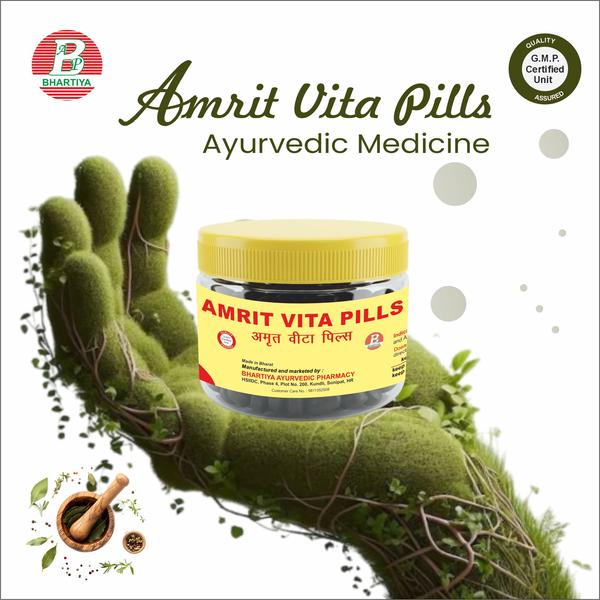
"name": "Amrit Vita Pill",
"description": " AMRIT VITA PILLS \n\nProduct Identification\n•\tGeneric Name: Amrit Vita Pills\n•\tType: Ayurvedic Patent Medicine\n•\tPrimary Indication Area: Supports respiratory health, particularly useful in bronchitis, cough, and asthma\n•\tTherapeutic Indications: support respiratory function, help in relieving cough, reducing congestion, and promoting lung health naturally\nKey benefits include:\n•\tRespiratory Support: Helps maintain healthy lung function and eases breathing.\n•\tBronchitis & Asthma Relief: Reduces symptoms like cough, congestion, and respiratory discomfort.\n•\tCough Management: Soothes the throat and reduces persistent coughing.\n•\tImmune Support: Strengthens the body’s natural defenses against infections.\n•\tAnti-inflammatory Action: Helps reduce mild inflammation in the respiratory tract.\n•\tOverall Vitality: Supports energy levels and general wellness.\n.\nIngredients:\nArjun Chhal (Terminalia arjuna Bark) \nBotanical Name: Terminalia arjuna\nAyurvedic Name: Arjuna Chhal / Arjuna Bark\nKey Phytoconstituents:\n•\tTriterpenoid saponins (Arjunic acid, Arjunolic acid) – strengthen heart muscles\n•\tFlavonoids & Polyphenols – antioxidant, anti-inflammatory\n•\tTannins – astringent, protect cardiac tissue\n•\tMinerals (Calcium, Magnesium) – support myocardial function\n•\tGlycosides – improve circulation and cardiac output\n\n1. Triggers & Immune Response\n•\tDust, pollen, infection → body’s immune cells (mast cells, eosinophils, neutrophils) get activated\n•\tThey release cytokines like IL-4, IL-5, IL-13 → cause inflammation and allergy reactions\n2. Mast Cell Reaction\n•\tMast cells release histamine, leukotrienes, prostaglandins\n•\tEffect: Smooth muscles around airways tighten → bronchoconstriction (wheeze)\n3. Mucus Overproduction\n•\tAirways make too much mucus (from goblet cells)\n•\tTriggered by IL-13, IL-9\n•\tEffect: Airway gets blocked → cough and difficulty breathing\n4. Oxidative Stress\n•\tImmune cells make free radicals (ROS)\n•\tEffect: Damage lung cells → worsen inflammation\n5. Chronic Changes (Airway Remodeling)\n•\tLong-term inflammation → airway thickens and stiffens\n•\tMediated by TGF-β → fibrosis and permanent narrowing\n6. Cough Reflex\n•\tIrritation of airway nerves → release Substance P\n•\tEffect: Triggers cough\n Bhringraj (Eclipta alba) \nPrimary Action: Supports respiratory mucosa, reduces inflammation, and protects against oxidative damage.\nKey Phytoconstituents:\n•\tCoumestans (Wedelolactone)\n•\tFlavonoids & Polyphenols\n•\tTriterpenoids & Glycosides\nMechanism / Biochemistry:\n1.\tAnti-inflammatory: Wedelolactone inhibits pro-inflammatory cytokines (IL-6, TNF-α) → reduces airway inflammation.\n2.\tAntioxidant: Polyphenols scavenge ROS, protecting bronchial epithelial cells.\n3.\tMucosal protection: Glycosides and triterpenoids soothe irritated respiratory lining.\n4.\tMild immunomodulatory: Helps regulate immune response to allergens and infections.\n\n Myristica malabarica \nBotanical Name: Myristica malabarica\nAyurvedic Name: Jaiphal / Myristica\nPrimary Indication Area:\n•\tSupports respiratory system, especially cough, bronchitis, and congestion\n•\tActs as expectorant, bronchodilator, and anti-inflammatory\n•\tRelieves cold, chest congestion, and mild asthma symptoms\nKey Phytoconstituents:\n•\tEssential oils: Myristicin, Elemicin, Safrole – volatile oils with bronchodilator and antimicrobial properties\n•\tFlavonoids & Polyphenols – antioxidant and anti-inflammatory\n•\tTannins – astringent, protective for mucosa\n•\tFatty oils / fixed oils – mild soothing effect on respiratory lining\n\nMechanism of Action / Biochemistry:\n1.\tBronchodilator Action:\no\tMyristicin and elemicin relax smooth muscles of bronchi → improves airflow\no\tUseful in wheeze and mild bronchospasm\n2.\tExpectorant / Mucus Clearance:\no\tVolatile oils thin mucus and stimulate productive cough\no\tHelps clear thick phlegm from airways\n3.\tAnti-inflammatory Action:\no\tFlavonoids and polyphenols inhibit pro-inflammatory mediators (TNF-α, IL-6)\no\tReduces airway swelling and irritation\n4.\tAntimicrobial Effect:\no\tEssential oils inhibit bacteria and viruses that cause respiratory infections\n5.\tAntioxidant & Protective:\no\tTannins and polyphenols scavenge ROS → protect airway epithelial cells from oxidative damage\n\n Vasa (Adhatoda vasica) \nBotanical Name: Adhatoda vasica\nAyurvedic Name: Vasa / Vasaka\nPrimary Indication Area:\n•\tSupports respiratory system\n•\tActs as bronchodilator, expectorant, and anti-inflammatory\n•\tUsed in cough, bronchitis, asthma, and congestion\nKey Phytoconstituents:\n•\tAlkaloids: Vasicine, Vasicinone – bronchodilator and expectorant\n•\tFlavonoids & Phenolics – antioxidant, anti-inflammatory\n•\tEssential oils – mild antimicrobial and soothing effect\n\nMechanism of Action / Biochemistry:\n1.\tBronchodilator Action:\no\tVasicine and Vasicinone relax bronchial smooth muscles → eases airflow\no\tHelps relieve wheeze and mild bronchospasm\n2.\tExpectorant / Mucus Clearance:\no\tStimulates respiratory glands → thins mucus\no\tPromotes productive cough, clearing phlegm\n3.\tAnti-inflammatory Action:\no\tFlavonoids and phenolics inhibit pro-inflammatory cytokines (IL-6, TNF-α)\no\tReduces airway swelling and irritation\n4.\tAntioxidant & Protective:\no\tScavenges ROS, protecting bronchial epithelium from oxidative stress\n5.\tMild Antimicrobial Action:\no\tEssential oils and alkaloids inhibit bacteria and viruses in the respiratory tract\n\n Apamarg (Achyranthes aspera) \nBotanical Name: Achyranthes aspera\nAyurvedic Name: Apamarg\nPrimary Indication Area:\n•\tSupports respiratory health\n•\tActs as expectorant, anti-inflammatory, and bronchodilator\n•\tHelps in cough, asthma, bronchitis, and phlegm clearance\nKey Phytoconstituents:\n•\tAlkaloids – stimulate respiratory tract, bronchodilator effect\n•\tSaponins – reduce airway inflammation and mucus viscosity\n•\tFlavonoids & Phenolics – antioxidant, anti-inflammatory\n•\tTannins – astringent, protective for mucosa\n•\tEssential oils – mild antimicrobial\n\nMechanism of Action / Biochemistry:\n1.\tBronchodilator Action:\no\tAlkaloids relax bronchial smooth muscles, improving airflow\no\tReduces wheeze and shortness of breath\n2.\tExpectorant / Mucus Clearance:\no\tSaponins and essential oils thin mucus and stimulate productive cough\no\tHelps clear thick phlegm from airways\n3.\tAnti-inflammatory Action:\no\tFlavonoids and phenolics inhibit pro-inflammatory cytokines (IL-6, TNF-α)\no\tReduces airway swelling and irritation\n4.\tAntioxidant & Protective:\no\tPolyphenols and flavonoids scavenge ROS, protecting respiratory epithelial cells\n5.\tAntimicrobial Effect:\no\tEssential oils and tannins inhibit bacteria and viruses in respiratory tract\n\n Baheda (Terminalia bellerica) \nBotanical Name: Terminalia bellerica\nAyurvedic Name: Baheda / Bibhitaki\nPrimary Indication Area:\n•\tSupports respiratory health\n•\tActs as expectorant, anti-inflammatory, and antioxidant\n•\tHelps in cough, asthma, bronchitis, and throat irritation\nKey Phytoconstituents:\n•\tTannins: Belleric acid, Ellagic acid – anti-inflammatory, antioxidant\n•\tPolyphenols & Flavonoids – reduce oxidative stress\n•\tMucilage & Polysaccharides – soothe irritated airways\n•\tFatty oils – mild protective effect on mucosa\n\nMechanism of Action / Biochemistry:\n1.\tAnti-inflammatory:\no\tPolyphenols and tannins inhibit pro-inflammatory cytokines (IL-6, TNF-α) → reduces airway swelling and irritation\n2.\tExpectorant / Mucus Clearance:\no\tMucilage and polysaccharides soothe respiratory lining\no\tHelps thin and clear mucus → productive cough\n3.\tAntioxidant / Protective:\no\tEllagic acid and tannins scavenge ROS → protect bronchial epithelial cells from oxidative damage\n4.\tMild Antimicrobial Effect:\no\tTannins may inhibit bacteria or viruses in the respiratory tract\n\n Somlata (Cynanchum viminale) \nBotanical Name: Cynanchum viminale (also called Sarcostemma viminale)\nAyurvedic Name: Somlata\nPrimary Indication Area:\n•\tSupports respiratory system\n•\tActs as expectorant, bronchodilator, and anti-inflammatory\n•\tHelps in cough, bronchitis, asthma, and phlegm-related respiratory issues\nKey Phytoconstituents:\n•\tAlkaloids – bronchodilator and expectorant action\n•\tSaponins – reduce mucus viscosity, anti-inflammatory\n•\tFlavonoids & Phenolics – antioxidant and anti-inflammatory\n•\tGlycosides – protect respiratory mucosa\n•\tTannins – astringent and protective\n\nMechanism of Action / Biochemistry:\n1.\tBronchodilator Action:\no\tAlkaloids relax bronchial smooth muscles, improving airflow\no\tHelps relieve wheeze and mild bronchospasm\n2.\tExpectorant / Mucus Clearance:\no\tSaponins and glycosides thin mucus → facilitate productive cough\no\tClears thick phlegm from airways\n3.\tAnti-inflammatory Action:\no\tFlavonoids and phenolics inhibit pro-inflammatory cytokines (IL-6, TNF-α)\no\tReduces airway edema and irritation\n4.\tAntioxidant & Protective:\no\tScavenges ROS, protecting airway epithelial cells from oxidative damage\n5.\tAntimicrobial / Mucosal Protection:\no\tTannins and glycosides help prevent infections and protect mucosa\n\n Harad (Terminalia chebula) \nBotanical Name: Terminalia chebula\nAyurvedic Name: Harad / Haritaki\nPrimary Indication Area:\n•\tSupports respiratory health\n•\tActs as expectorant, anti-inflammatory, and antioxidant\n•\tHelps in cough, asthma, bronchitis, and throat irritation\nKey Phytoconstituents:\n•\tTannins: Chebulinic acid, Chebulagic acid – anti-inflammatory, antioxidant\n•\tPolyphenols & Flavonoids – reduce oxidative stress\n•\tMucilage & Polysaccharides – soothe irritated airways\n•\tAnthraquinones – mild mucus-thinning effect\nMechanism of Action / Biochemistry:\n1.\tAnti-inflammatory:\no\tPolyphenols and tannins inhibit pro-inflammatory cytokines (IL-6, TNF-α) → reduces airway swelling and irritation\n2.\tExpectorant / Mucus Clearance:\no\tMucilage soothes airway lining\no\tAnthraquinones thin mucus, making cough productive\n3.\tAntioxidant / Protective:\no\tChebulinic and chebulagic acids scavenge ROS → protect bronchial epithelial cells from oxidative damage\n4.\tMild Antimicrobial Effect:\no\tTannins may reduce bacterial or viral infections in the respiratory tract\n\n Shudh Hingul (Ferula narthex) \nBotanical Name: Ferula narthex\nAyurvedic Name: Shudh Hingul\nPrimary Indication Area:\n•\tSupports respiratory system\n•\tActs as expectorant, bronchodilator, and anti-inflammatory\n•\tHelps in cough, asthma, bronchitis, and congestion\nKey Phytoconstituents:\n•\tResin / Essential oils: Ferulic acid, Umbelliferone – bronchodilator, anti-inflammatory\n•\tSesquiterpenes & Coumarins – antioxidant, antimicrobial\n•\tGum & Resin – soothes irritated mucosa\n•\tTannins – astringent and protective\nMechanism of Action / Biochemistry:\n1.\tBronchodilator Action:\no\tResin and essential oils relax bronchial smooth muscles, improving airflow\no\tHelps relieve wheeze and bronchospasm\n2.\tExpectorant / Mucus Clearance:\no\tGum and resin thin mucus, making cough productive\no\tClears thick phlegm from airways\n3.\tAnti-inflammatory Action:\no\tCoumarins and ferulic acid inhibit pro-inflammatory cytokines (IL-6, TNF-α)\no\tReduces airway swelling and irritation\n4.\tAntioxidant & Protective:\no\tSesquiterpenes and phenolics scavenge ROS, protecting bronchial epithelial cells\n5.\tAntimicrobial Effect:\no\tEssential oils inhibit bacteria and viruses in the respiratory tract\nDosage:\n1.\tDose per intake: 1-2 pills \n2.\tFrequency: 2 times daily\n3.\tTotal daily dose: 2-4 pills (depending on physician advice)\n4.\tHow to take: With plain water, preferably after meals\nPrecautions\n•\tDo not exceed the prescribed dose\n•\tConsult an Ayurvedic practitioner before use in:\no\tChildren\no\tElderly\no\tPatients with chronic illness\n•\tMonitor for any side effects (e.g., digestive discomfort)\n•\tMaintain proper diet and hydration to support bowel health\n\n\namritvita pills, amritvita pill aid, amritvita pill box\namritvita pill benefits, amritvita pill benefits in hindi\namritvita pill dehradun, amritvita pill extract\namritvita pill forte, amritvita pill gurugram\namritvita pill gummies, amritvita pill hospital\namritvita pill house, amritvita pill herbal\namritvita pill in hindi , amritvita pill in english\namritvita pill kit, amritvita pill khanna, amritvita pill machine\namritvita pill maker, amritvita pill machine price\namritvita pill normal, amritvita pill powder\namritvita pill pvt ltd, amritvita pill price\namritvita pill plus, amritvita pill power house\namritvita pill quetta contact number, amritvita pill recipe\namritvita pill recipe in hindi, amritvita pill pills\namritvita pill pills price, amritvita pill pills uses in hindi\namritvita pill pills review, amritvita pill tablet\namritvita pill tablet price, amritvita pill tree\namritvita pill tablet uses in hindi, amritvita pill tablet uses\namritvita pill vitamin, amritvita pill vihar, amritvita pill wellness\namritvita pill web series, amritvita pill zumba, amritvita pill zone\nwhat amritvita pills used for, best amritvita pills\nbest amritvita pillai, top amritvita pills, top amritvita pillai",
"price": 330.0,
"discountamount": 165.0,
"currencycode": "INR",
"priority": 1000000,
"isfreeshipmentavailable": false,
"shipmentduration": 1,
"_keywords": null,
"isarchived": false,
"isavailable": true,
"applicationid": null,
"productindex": 123,
"imageuri": "https://productimages.withfloats.com/actual/6a0aeedaa338f9b17482e0f1.jpg",
"tileimageuri": "https://productimages.withfloats.com/tile/6a0aeedaa338f9b17482e0f1.jpg",
"images": null,
"totalqueries": 0,
"gpid": null,
"groupproductid": null,
"createdon": "2026-05-18T10:49:59.771Z",
"updatedon": "2026-05-18T10:49:59.771Z",
"buyonlinelink": null,
"producturl": "http://WWW.BHARTIYAAYURVEDICPHARMACY.COM//amrit-vita-pill/123",
"availableunits": -1.0,
"iscodavailable": true,
"isprepaidonlineavailable": true,
"maxcodorders": -1,
"maxprepaidonlineorders": -1,
"uniquepaymenturl": null,
"brandname": "Bakula Fort",
"category": "Amrit Vita Pill 100 GM X 30",
"tags": [],
"variants": false,
"keyspecification": null,
"otherspecifications": null,
"pickupaddressreferenceid": null,
"paymenttype": "AssuredPurchase",
"producttype": "products",
"hsncode": null,
"gstslab": 0.0,
"isnotforsale": false
},
{
"_id": "69fb2001bc5d678f88b2f5b3",
"fptag": "BHARTIYEAYURVEDICPHARMACY",
"merchantname": null,
"customwidgets": null,
"externalsourceid": null,
"name": "Sipvit Fort Tablet",
"description": " SIPVIT FORT TABLET \n\nProduct Identification\n•\tGeneric Name: Sipvit Fort Tablet\n•\tType: Ayurvedic Patent Medicine\n•\tPrimary Indication Area: Supports male sexual health by improving erectile function, libido, stamina, and overall reproductive performance.\nTherapeutic Indications\n•\tSupports improvement of male sexual function by enhancing erectile performance, libido, stamina, and overall reproductive wellness\nKey benefits include:\n•\tSupports male sexual health by improving libido, erection quality, stamina, and overall sexual performance.\nPrimary Benefit:\n•\tSupports male sexual health by enhancing libido, erectile function, stamina, and overall reproductive vitality.\nAdditional Benefits:\n•\tImprove sperm production and quality — supporting fertility and reproductive outcomes. \n•\tEnhance libido and sexual desire — increasing interest in sexual activity. \n•\tSupport hormonal balance (e.g., testosterone) — important for energy, stamina, and erectile function. \n•\tBoost overall vitality and endurance during sexual activity\n\nIngredients:\n SAFED MUSLI (Chlorophytum borivilianum)\nBotanical Name: Chlorophytum borivilianum\nPart Used: Root (commonly used in Ayurvedic Vajikaran Rasayana)\nTraditional Use: Rejuvenator, aphrodisiac, strength & stamina tonic\n Mechanism of Action in Male Sexual Health (Biochemistry / Pharmacology)\n1.\tSpermatogenic Support & Sperm Quality\n• Root extracts have been shown to increase sperm count and motility in experimental models, indicating support for spermatogenesis and semen quality. \n2.\tAntioxidant Protection of Reproductive Cells\n• Phenolic compounds and antioxidants help reduce oxidative stress in sperm cells, protecting membranes and DNA, which promotes healthier sperm characteristics. \n\nSHATAVARI (Asparagus racemosus) \nBotanical Name: Asparagus racemosus\nFamily: Asparagaceae\nPart Used: Root\nTraditional Use: Rejuvenative tonic (Rasāyana), adaptogen, aphrodisiac, reproductive support\n Phytoconstituents Relevant to Sexual Health\nShatavari root contains:\n1.\tSteroidal saponins (Shatavarins I–IV) – major bioactives linked with hormonal and antioxidant actions. \n2.\tFlavonoids & polyphenols – antioxidant effects. \n3.\tAlkaloids & mucilage – tissue nourishment and soothing. \n\n Mechanism of Action in Male Sexual Health (Biochemistry / Pharmacology)\n1.\tAntioxidant Support & Sperm Protection\n• Shatavari’s saponins and flavonoids neutralize free radicals, protecting sperm from oxidative damage, which is crucial for healthy sperm count, motility, and morphology. \n2.\tSpermatogenic Enhancement\n• Experimental evidence suggests Shatavari may improve sperm count, motility, and seminal quality by reducing oxidative stress and nourishing reproductive tissues. \n\nMULETHI (Licorice) \nBotanical Name: Glycyrrhiza glabra\nPart Used: Root (Yashtimadhu)\nTraditional Use: Ayurvedic rasāyana for anti inflammatory, antioxidant, digestive support; also used in reproductive tonics in some formulations. \n Phytoconstituents Relevant to Male Sexual Health\n•\tGlycyrrhizin & Glycyrrhizic acid – saponin glycosides\n•\tFlavonoids (e.g., glabridin) and phenolic compounds – antioxidant effects \n Mechanism of Action in Male Sexual Health (Biochemistry / Pharmacology)\n1.\tAntioxidant Protection of Sperm & Testicular Tissue\n• Flavonoids like glabridin and other phenolics exert antioxidant effects, scavenging reactive oxygen species (ROS) that damage sperm DNA, cell membranes, and reduce sperm motility and quality. \n2.\tAnti Inflammatory Action\n• Licorice compounds can inhibit pro inflammatory pathways (e.g., NF κB), reducing testicular or reproductive inflammation, which may otherwise impair spermatogenesis and tissue health. \n\nGOKHARU / GOKSHURA (Tribulus terrestris) \nBotanical Name: Tribulus terrestris\nPart Used: Fruit / Herb\nTraditional Use: Ayurvedic aphrodisiac (Vrishya), reproductive tonic, urinary support\n Phytoconstituents Relevant to Male Sexual Health\n•\tSaponins (e.g., protodioscin) — thought to influence hormonal pathways. \n•\tFlavonoids and phenolic compounds — antioxidant effects.\n Mechanism of Action in Male Sexual Health (Biochemistry / Pharmacology)\n1.\tNitric Oxide Mediated Erectile Support\n• Gokshura extracts can promote relaxation of penile smooth muscle via NO related pathways, aiding blood flow and erection quality.\n2.\tAphrodisiac & Libido Enhancement\n• Human and experimental evidence shows increased sexual desire and function, likely via nervous endocrine modulation and local vascular effects. \n\n AMLA (Indian Gooseberry) \nBotanical Name: Phyllanthus emblica (syn. Emblica officinalis)\nPart Used: Fruit\nTraditional Use: Ayurvedic Rasayana (rejuvenator), general tonic for vitality and strength\n\n Phytoconstituents Relevant to Male Sexual Health\nAmla is rich in nutrients and bioactive compounds including:\n1.\tVitamin C (Ascorbic acid) – very high antioxidant content. \n2.\tPolyphenols & Tannins (emblicanin A/B, gallic acid, ellagic acid) – potent antioxidants.\n3.\tFlavonoids (quercetin, kaempferol) – antioxidant and anti inflammatory.\n4.\t Minerals including Zinc and amino acids – important for reproductive biochemistry. \n\n Mechanism of Action in Male Sexual Health (Biochemistry / Pharmacology)\n1.\tAntioxidant Protection of Reproductive Tissues\n• Amla’s vitamin C and polyphenols neutralize free radicals (ROS) and reduce oxidative stress, which is crucial for protecting sperm cells and testicular tissue from biochemical damage. \n2.\tSupport for Testosterone Production\n• By reducing oxidative damage in Leydig cells (testosterone producing cells), amla may help maintain testosterone levels, which are fundamental for libido and sexual function. \n\nHALDI (Turmeric) \nBotanical Name: Curcuma longa\nPart Used: Rhizome (root\n Mechanism of Action in Male Sexual Health (Biochemistry / Pharmacology)\n1.\tAntioxidant Protection of Reproductive Tissues\n• Curcumin, the main active compound in turmeric, is a powerful antioxidant that scavenges free radicals (ROS) and reduces oxidative stress in testicular and sperm cells — protecting sperm DNA and membranes from damage.\n2.\tSupports Sperm Quality & Protection\n• Curcumin helps improve sperm motility and density in animal studies and protects sperm structure by reducing lipid peroxidation and preserving membrane integrity. \n3.\tAnti Inflammatory & Cell Protective Actions\n• Curcumin’s anti inflammatory effect reduces inflammation in reproductive tissues and mitigates testicular damage from stress, toxins, or adverse conditions, helping maintain reproductive function. \n\nKAUNCH / KAUNCH BEEJ (Mucuna pruriens) \nBotanical Name: Mucuna pruriens\nPart Used: Seeds (Beej)\n Mechanism of Action in Male Sexual Health (Biochemistry / Pharmacology)\n1.\tDopamine Precursor (L DOPA) Boost\n• Kaunch seeds contain L DOPA, a biochemical precursor to dopamine — increasing dopamine levels in the brain helps enhance libido, arousal, and sexual desire. Higher dopamine can also support testosterone synthesis through the hypothalamic pituitary gonadal axis\n2.\tTestosterone & Hormonal Support\n• By modulating neurotransmitters and supporting luteinizing hormone (LH) release, Kaunch may help support natural testosterone production — the key hormone for male libido, energy, and reproductive function. \n\nVIDHARA (Elephant Creeper) \nBotanical Name: Argyreia speciosa (syn. Argyreia nervosa)\nFamily: Convolvulaceae\nPart Used: Roots, seeds, leaves (roots most commonly) \nTraditional Use: Ayurvedic Vajikarana (aphrodisiac) and rejuvenative tonic, used to support male sexual health, sperm quality, and vitality. \n\n Mechanism of Action in Male Sexual Health (Biochemistry / Pharmacology)\n1.\tAphrodisiac & Reproductive Stimulation\n• Vidhara is traditionally considered aphrodisiac (Vajikarana), and its root extracts are used to enhance libido, sexual vigor, and reproductive function in Ayurveda. \n2.\tSupport for Sperm Count & Quality\n• Ayurvedic uses include improving sperm count and supporting semen quality, likely through antioxidant and tissue nourishing effects on reproductive organs. \n\nKHARETI (Khareti / Atibala / Bala) \nBotanical Name: Sida cordifolia\nSanskrit Name: Balā (Bala)\nCommon English Name: Country Mallow\nParts Used: Roots, leaves, seeds, stems (traditional use) \n Mechanism of Action in Male Sexual Health (Biochemistry / Pharmacology)\n1.\tVajikarana (Aphrodisiac) & Reproductive Support\n• Khareti (Bala) is traditionally classified as a Vajikarana herb — meaning it supports libido, sexual desire, and reproductive vigor in males \n2.\tTestosterone & Hormone Related Support\n• By helping balance male hormones and nerve tone, it may enhance sexual drive and reproductive function. \n\nHARAD (Haritaki / Terminalia chebula) \nBotanical Name: Terminalia chebula\nPart Used: Fruit\n Mechanism of Action in Male Sexual Health (Biochemistry / Pharmacology)\n1.\tAstringent & Antioxidant Phytochemicals\n• Harad contains tannins (chebulinic acid, chebulagic acid), gallic acid, ellagic acid, and flavonoids — all strong antioxidants that protect cells from oxidative stress. These biochemical antioxidants help maintain general reproductive tissue health by neutralizing free radicals. \n2.\tTraditional Rasayana & Aphrodisiac Action (Short Term Use)\n• In classical Ayurvedic texts, Harad is described as Rasayana (rejuvenative) and in small doses can increase sexual energy and address premature ejaculation or nocturnal emissions due to its astringent and balancing effect on tissues. \n\nAKARKARA (Anacyclus pyrethrum) \nBotanical Name: Anacyclus pyrethrum\nPart Used: Root\nTraditional Use: Ayurvedic Vajikarana (aphrodisiac), reproductive tonic\n\n Mechanism of Action in Male Sexual Health (Biochemistry / Pharmacology)\n1.\tLibido & Aphrodisiac Stimulation\n• Contains Alkylamides and Anacyclin, which stimulate nerve centres and sexual desire, traditionally increasing libido and willingness for sexual activity. \n2.\tSpermatogenic & Testosterone Support\n• In experimental studies, extracts increased testosterone and androgen levels, and enhanced sperm count, motility, and viability by influencing hormone pathways and testicular function. \n\nLAJWANTI (Sensitive Plant / Mimosa pudica) \nBotanical Name: Mimosa pudica\nFamily: Fabaceae\nParts Used: Whole plant / seeds (traditionally)\n Mechanism of Action in Male Sexual Health (Biochemistry / Pharmacology)\n1.\tStrengthening & Nourishing Action\n• Traditionally, Lajwanti seed powder is regarded as balya (strength promoting) — believed to nourish reproductive tissues, support stamina, and help improve male reproductive vitality. \n2.\tAntioxidant & Anti Inflammatory Effects\n• Contains alkaloids, flavonoids, tannins, saponins, glycosides, phenolic acids, and sterols, which provide antioxidant and anti inflammatory actions — these helps protect cells from oxidative stress and may support general tissue health relevant to reproductive function. \n\nTALMAKHANA (Kokilaksha) \nBotanical Name: Hygrophila auriculata (syn. Hygrophila spinosa, Asteracantha longifolia)\nFamily: Acanthaceae\nPart Used: Seeds (primarily) / Roots & leaves also used traditionally \n\n Mechanism of Action in Male Sexual Health (Biochemistry / Pharmacology)\n1.\tAphrodisiac & Reproductive Support\n• Talmakhana is traditionally considered a Vrishya (aphrodisiac) herb in Ayurveda, used to enhance libido, sexual drive, and stamina in men. \n2.\tSupport for Sperm Quality & Hormonal Balance\n• In traditional practice, it is believed to improve sperm quality, semen strength, and reproductive function, possibly by supporting hormonal balance. \n\n VIDARIKAND (Indian Kudzu) \nBotanical Name: Pueraria tuberosa\nPart Used: Tuberous root\nTraditional Use: Rasayana (rejuvenator), Balya (strength promoting), Vrishya (aphrodisiac) herb in Ayurveda, used to support reproductive health and vitality. \n Mechanism of Action in Male Sexual Health (Biochemistry / Pharmacology)\n1.\tSpermatogenic & Reproductive Tissue Support\n• Vidarikand bioactive compounds nourish Shukra dhatu (semen) and reproductive tissues, traditionally increasing sperm count, motility, and semen quality. \n2.\tAndrogenic & Hormonal Modulation\n• Phytoestrogens and Isoflavonoids like puerarin, daidzein, genistein, and biochanin A may influence the hypothalamic–pituitary–gonadal axis, supporting release of FSH, LH, and testosterone, which are essential for libido and sexual performance.\n\nKALI MUSLI (Black Musli) \nBotanical Name: Curculigo orchioides\nPart Used: Rhizome / Root\n Mechanism of Action in Male Sexual Health (Biochemistry / Pharmacology)\n1.\tAphrodisiac (Vrishya) & Libido Support\n• Kali Musli is traditionally used in Ayurveda as a natural aphrodisiac that helps increase sexual desire and drive. \n2.\tSpermatogenic & Reproductive Function\n• It is associated with spermatogenic activity, helping improve sperm count, motility, and seminal quality, supporting male fertility. \n\n SEMAL MUSALI (Semal Root / Bombax ceiba) \nBotanical Equivalent: Bombax ceiba / Bombax mulabaricum\nParts Used: Root (musli), sometimes flower or bark used in formulations \n Mechanism of Action & Uses (Traditional / Ayurvedic Context)\n1.\tBalya (Strength Promoting) & Rejuvenative Action\n• Semal musali (root) is traditionally used as a balya (body strengthening) and nutritive tonic to support overall energy and vitality, similar to other Musali herbs. \n2.\tVrishya (Aphrodisiac / Reproductive Support)\n• In Ayurveda, Semal musali is considered to have vrishya (aphrodisiac) and balya effects that help with sexual weakness, seminal depletion, and reproductive debility — often used in shukrakshaya (semen loss) and weakness. \n\nKALI MIRCH (Black Pepper) \nBotanical Name: Piper nigrum\nPart Used: Dried fruit (peppercorn)\n Mechanism of Action in Male Sexual Health (Biochemistry / Pharmacology)\n1.\tImproves Blood Flow & Erections\n• Black pepper contains piperine, which can enhance circulation and vasodilation, supporting better blood flow — key for strong and sustained erections. \n2.\tSupports Testosterone & Hormonal Balance\n• Piperine may help boost natural testosterone levels and testicular function, which supports libido, sexual desire, and reproductive health. \n\nSALAM PANJA (Marsh Orchid / Dactylorhiza hatagirea) \nBotanical Name: Dactylorhiza hatagirea\nCommon Names: Salam Panja, Salab Panja, Hatta Haddi, Panchaule, Marsh Orchid\nPart Used: Tuberous roots (resembling hand/fingers) \n Mechanism of Action in Male Sexual Health (Biochemistry / Pharmacology)\n1.\tAphrodisiac & Libido Enhancing Action\n• Traditionally classified as a strong Vrishya (aphrodisiac) in Ayurvedic and Unani systems, the root extract is believed to enhance sexual desire and vigor. \n2.\tSupports Sperm Quality & Reproductive Function\n• Used to improve sperm count, motility, and semen quality, making it a traditional shukra dhatu (semen) nourishing herb. \n\nCHOTI ELAICHI (Cardamom) \nBotanical Name: Elettaria cardamomum\nPart Used: Seeds / pods\n Biochemistry / Mechanism of Action in Male Sexual Health\n1.\tImproved Blood Circulation\n• Cardamom contains essential oils that can improve blood circulation, which is important for delivering nutrients and oxygen to reproductive organs. Better circulation supports overall vitality and reproductive tissue health. \n2.\tAntioxidant Protection\n• Rich in antioxidants (e.g., cineole, terpenes, flavonoids), cardamom helps reduce oxidative stress, which can protect sperm cells and reproductive tissues from free radical damage.\n\nCHINI (Sugar – Dietary Sucrose) \nCommon Source: Table sugar, sweets, desserts, sugary drinks\nBotanical Equivalent: Derived from Saccharum officinarum (sugarcane) sugar\n Biochemistry / Mechanism of Action in Male Sexual Health\n1.\tNegative Impact on Sperm Quality\n• Higher dietary sugar intake is associated with lower sperm concentration and poorer semen quality, likely due to metabolic and oxidative effects of excess sugar. \n2.\tMetabolic Dysregulation & Sexual Function\n• Even slight elevations in blood sugar (below diabetes thresholds) can correlate with reduced sperm motility and impaired erectile function, indicating blood glucose regulation affects sexual physiology. \n\n LOHA BHASMA (Lauha Bhasma / Iron Bhasma) \nSource: Purified and calcined iron processed through Rasashastra methods in Ayurveda. \n Therapeutic Indication \nIron supplement to treat anaemia, improve energy, strength, and support male sexual health (via aphrodisiac and stamina enhancing properties). \n\nPrimary Benefit \nImproves iron status, reduces weakness/anaemia, and supports strength and libido. \nOther Benefits \n•\tBoosts haemoglobin and energy levels\n•\tEnhances overall vitality and stamina\n•\tActs as a rejuvenative (Rasayana)\n•\tMay improve male sexual function and stamina due to Vrishya and Balya properties\n•\tSupports digestion and immunity\n\n Shudh Shilajit (Pure Shilajit) \nSource: Natural mineral resin obtained from high-altitude Himalayan rocks, purified using classical Ayurvedic methods.\n\n Therapeutic Indication (Short):\nNatural rejuvenator that enhances energy, strength, immunity, and male vitality.\nPrimary Benefit:\nBoosts physical stamina, mental clarity, and overall vitality, while supporting sexual health.\nOther Benefits:\n•\tImproves energy levels and reduces fatigue\n•\tEnhances endurance and strength\n•\tActs as a Rasayana (rejuvenative tonic)\n•\tSupports male sexual health and fertility\n•\tPromotes cognitive function and immunity\n\n Trivang Bhasma \nSource: Calcined preparation of Tin (Vanga), Lead (Naga), and Zinc (Yashada) processed through classical Rasashastra methods in Ayurveda.\n Therapeutic Indication (Short):\nNatural mineral formulation used to support digestion, metabolism, reproductive health, and overall strength.\nPrimary Benefit:\nEnhances digestive power, metabolic balance, and sexual vitality.\n\nOther Benefits:\n•\tSupports male sexual health and fertility\n•\tImproves energy, stamina, and strength\n•\tActs as a rejuvenative (Rasayana)\n•\tHelps maintain healthy digestion and nutrient absorption\n•\tSupports immunity and overall well-being\n\nDosage:\n1.\tDose per intake: 2–3 tablets\n2.\tFrequency: Twice a day (morning & evening)\n3.\tTotal daily dose: 2–6 tablets per day-(For 500 mg tablets, this equals 1–3 g/day)\n4.\tHow to take: With water, preferably after meals to reduce gastric irritation and improve absorption\n5.\tPrecautions\no\tDo not exceed the prescribed dose\no\tMonitor for side effects\nConsult an Ayurvedic practitioner for:\no\tChildren\no\tElderly\no\tChronic illnesses\n\nsipvit fort tablet uses, sipvit fort tablets\nsipvit fort tablet uses in hindi, sipvit fort tablet price\nsipvit fort tablet amazon, sipvit fort tablet benefits\nsipvit fort tablet benefits in hindi, sipvit fort tablet brand name\nsipvit fort tablet buy online, sipvit fort tablet composition\nsipvit fort tablet content, sipvit fort tablet dosage\nsipvit fort tablet dose, sipvit fort tablet details\nsipvit fort tablet english, sipvit fort tablet expiry date\nsipvit fort tablet generic name, sipvit fort tablet gst rate\nsipvit fort tablet gst, sipvit fort tablet hindi\nsipvit fort tablet how to use, sipvit fort tablet how to take\nsipvit fort tablet in hindi, sipvit fort tablet ingredients\nsipvit fort tablet image, sipvit fort tablet india\nsipvit fort tablet ke fayde in hindi, sipvit fort tablet kis kaam aati hai\nsipvit fort tablet manufacturer, sipvit fort tablet mrp\nsipvit fort tablet manufacturers in india, sipvit fort tablet online\nsipvit fort tablet online shopping, sipvit fort tablet price in india\nsipvit fort tablet q10, sipvit fort tablet quantity\nsipvit fort tablet quality, sipvit fort tablet review\nsipvit fort tablet rate, sipvit fort tablet review in hindi\nsipvit fort tablet supplier\n\n",
"price": 96.0,
"discountamount": 48.0,
"currencycode": "INR",
"priority": 1000000,
"isfreeshipmentavailable": false,
"shipmentduration": 1,
"_keywords": null,
"isarchived": false,
"isavailable": true,
"applicationid": null,
"productindex": 113,
"imageuri": "https://productimages.withfloats.com/actual/69fb20053254637915078929.jpg",
"tileimageuri": "https://productimages.withfloats.com/tile/69fb20053254637915078929.jpg",
"images": null,
"totalqueries": 0,
"gpid": null,
"groupproductid": null,
"createdon": "2026-05-06T11:03:29.874Z",
"updatedon": "2026-05-06T11:03:29.874Z",
"buyonlinelink": null,
"producturl": "http://WWW.BHARTIYAAYURVEDICPHARMACY.COM//sipvit-fort-tablet/113",
"availableunits": -1.0,
"iscodavailable": true,
"isprepaidonlineavailable": true,
"maxcodorders": -1,
"maxprepaidonlineorders": -1,
"uniquepaymenturl": null,
"brandname": "Bakula Fort",
"category": "Sipvit Fort Tablet 100 TAB X 50",
"tags": [],
"variants": false,
"keyspecification": null,
"otherspecifications": null,
"pickupaddressreferenceid": null,
"paymenttype": "AssuredPurchase",
"producttype": "products",
"hsncode": null,
"gstslab": 0.0,
"isnotforsale": false
},
{
"_id": "69ef0f9f065b05a9a25529f1",
"fptag": "BHARTIYEAYURVEDICPHARMACY",
"merchantname": null,
"customwidgets": null,
"externalsourceid": null,
"name": "Livofit Tablet",
"description": " LIVOFIT TABLET \n\nProduct Identification\n•\tGeneric Name: Livofit Tablet\n•\tType: Ayurvedic Patent Medicine\n•\tPrimary Indication Area: liver-supporting (Yakrit Rasayana)\n•\tTherapeutic Indication\nSupports healthy liver function (Yakrit), aids detoxification, and improves digestion.\nKey benefits include:\nPrimary Benefit:\n•\tSupports and improves liver function by promoting detoxification and maintaining healthy liver cells.\nAdditional Benefits:\n•\tImproves digestion and appetite\n•\tSupports metabolism and nutrient absorption\n•\tMay help in mild liver stress or fatty liver conditions\n•\tPromotes overall wellness and recovery after liver-related strain\n\nIngredients:\n KUTAKI \nBotanical / Common Name: Picrorhiza kurroa\nKey Phytoconstituents:\n•\tIridoid glycosides (Picrosides I & II, Kutkoside) – primary active compounds\n•\tAndrosin\n•\tFlavonoids\n•\tPhenolic compounds\nMechanism of Action in Liver-Related Disorders (Biochemistry / Pharmacology)\n1.\tHepatoprotective Action\no\tPicrosides stabilize hepatocyte cell membranes and protect liver cells from toxin-induced damage.\no\tScavenges reactive oxygen species (ROS), reducing oxidative stress in liver tissue.\no\tEnhances antioxidant enzymes like superoxide dismutase (SOD), catalase, and glutathione peroxidase, supporting detoxification.\n2.\tAnti-inflammatory Effect\no\tInhibits pro-inflammatory cytokines (e.g., TNF-α, IL-1β) and reduces liver inflammation.\no\tHelps in conditions like hepatitis and other inflammatory liver disorders.\n3.\tBile Secretion & Digestive Support\no\tStimulates bile flow (choleretic effect), improving fat digestion and liver detoxification.\no\tSupports overall liver metabolism and digestion.\n4.\tAnti-fibrotic Activity\no\tModulates liver fibrogenesis pathways to prevent fibrosis and scarring in chronic liver injury.\n5.\tImmunomodulatory Effect\no\tEnhances liver immune defense by modulating Kupffer cell activity and reducing susceptibility to toxin-mediated injury.\n\n REVAND CHINI (Rhubarb) \nBotanical / Common Name: Rheum emodi / Rheum officinale\nMechanism of Action in Liver Support (Biochemistry / Pharmacology):\n1.\tHepatoprotection\no\tStabilizes hepatocyte cell membranes\no\tReduces oxidative stress via scavenging reactive oxygen species (ROS)\no\tEnhances antioxidant enzymes: SOD, catalase, glutathione peroxidase\n2.\tCholeretic Effect\no\tStimulates bile secretion\no\tAids in detoxification and fat digestion\n3.\tAnti-inflammatory Action\no\tInhibits pro-inflammatory cytokines (TNF-α, IL-1β)\no\tReduces liver inflammation and cellular injury\n4.\tAnti-fibrotic & Detoxification Support\no\tModulates liver detoxification pathways\no\tPrevents fibrosis and toxin accumulation\n5.\tDigestive / Laxative Support (Indirect Liver Benefit)\no\tPromotes bowel movements to reduce reabsorption of toxins\no\tDecreases liver workload\n\n RUMI MASTANGI (Rumi Mastagi / Mastic Gum) \nBotanical Name: Pistacia lentiscus\nForm: Resin (gum) obtained from the trunk of the tree\nKey Phytoconstituents\n•\tEssential oils: α-pinene, β-pinene, limonene, β-caryophyllene, β-myrcene\n•\tResin acids (masticonic acid and related compounds)\n•\tMinor constituents with antimicrobial, antioxidant, and anti-inflammatory activity\nMechanism of Action / Biochemistry (Liver & Digestive Support)\n1.\tGastrointestinal Protection\no\tForms a protective layer on stomach/intestinal mucosa (demulcent action)\no\tReduces hyperacidity, acid reflux, and gastric irritation\n2.\tDigestive Support\no\tCarminative and antispasmodic: relieves bloating, flatulence, and abdominal discomfort\no\tStimulates appetite and overall digestion\n3.\tAnti-inflammatory & Antimicrobial\no\tInhibits pro-inflammatory cytokines (reduces GI inflammation)\no\tAntimicrobial effects help manage gut pathogens and support oral hygiene\n4.\tLiver Support (Indirect)\no\tImproves digestion and toxin clearance, reducing liver workload\no\tAntioxidant components mitigate oxidative stress in liver cells\n5.\tAdditional Supportive Effects\no\tOral health: strengthens gums, reduces bad breath\no\tGeneral tonic effect: supports metabolic balance and overall wellness\n\n NISOTH \nBotanical / Common Name: Operculina turpethum\nPart Used: Root (dried)\nKey Phytoconstituents:\n•\tResin glycosides (turpethin / turpethinic acids) – primary active compounds\n•\tCoumarins (e.g., Scopoletin)\nMechanism of Action / Biochemistry (Liver & Digestive Support)\n1.\tPurgative / Detoxifying Action\no\tStrong natural purgative; facilitates bowel evacuation\no\tRemoves accumulated toxins from the digestive tract, reducing liver workload\n2.\tDigestive & Metabolic Support\no\tImproves digestion, relieves constipation, bloating, and abdominal distension\no\tSupports metabolism and “biliousness” clearance\n3.\tIndirect Liver Support\no\tBy cleansing gut and removing toxins, reduces burden on liver\no\tSupports liver function and detoxification\n4.\tSupport in Piles / Hemorrhoids & Constipation\no\tRelieves bowel irregularities\no\tReduces straining and pressure on rectal veins\n\n PUNARNAVA \nBotanical / Common Name: Boerhavia diffusa\nPart Used: Root / Whole plant\nKey Phytoconstituents:\n•\tAlkaloids (Punarnavine) – primary active compounds\n•\tFlavonoids\n•\tLignans\n•\tSterols\n•\tPhenolic compounds\nMechanism of Action / Biochemistry (Liver & Kidney Support)\n1.\tHepatoprotective Action\no\tProtects hepatocytes from oxidative stress and toxin-induced damage\no\tEnhances antioxidant enzymes (SOD, catalase, glutathione peroxidase)\no\tSupports liver detoxification and metabolism\n2.\tDiuretic / Fluid Regulation\no\tPromotes excretion of excess fluids (mild diuretic)\no\tReduces Edema and water retention without disturbing electrolytes\n3.\tAnti-inflammatory Action\no\tInhibits pro-inflammatory mediators (TNF-α, IL-1β)\no\tReduces liver and kidney inflammation\n4.\tDigestive & Metabolic Support\no\tSupports healthy digestion and metabolism\no\tHelps in managing metabolic load and systemic detoxification\n\n PUNARNAVA MANDUR \nComposition / Key Ingredients:\n•\tPunarnava (Boerhavia diffusa) – root extract / whole plant\n•\tMandur Bhasma (incinerated iron oxide) – primary mineral component\n•\tOther supporting herbal extracts depending on formulation\nMechanism of Action / Biochemistry (Liver, Blood & Digestive Support)\n1.\tHepatoprotective & Detoxification Support\no\tPunarnava flavonoids and alkaloids protect hepatocytes from oxidative stress and toxin-induced damage\no\tEnhances liver detoxification enzymes, supports metabolism\n2.\tHematinic / Blood Rejuvenation\no\tMandur Bhasma provides bioavailable iron to support haemoglobin synthesis and correct anaemia\no\tImproves oxygen transport and general vitality\n3.\tDiuretic / Edema Reduction\no\tPromotes excretion of excess fluid, reduces edema without electrolyte imbalance\no\tSupports kidney and circulatory health indirectly\n4.\tAnti-inflammatory & Digestive Support\no\tReduces inflammation in liver, kidney, and gastrointestinal tract\no\tSupports digestion and metabolic balance\nDosage:\n1.\tDose per intake: 1–2 tablets\n2.\tFrequency: Thrice a day\n3.\tTotal daily dose: 3–6 tablets per day\n4.\tHow to Take: Take the herbal tablet with 1–2 teaspoons of Ark Saunf water, preferably after meals, thrice daily.\n5.\tPurpose: Enhances digestion, reduces bloating and acidity, and supports liver detoxification.\n6.\tMechanism: Improves absorption of herbal medicines, has mild antioxidant and anti-inflammatory effects, and promotes bile flow.\n7.\tPrecautions\no\tDo not exceed the prescribed dose\no\tMonitor for side effects\nConsult an Ayurvedic practitioner for:\no\tChildren\no\tElderly\no\tChronic illnesses\n\n\nlivofit tablet uses, livofit tablet in hindi, livofit ds tablet\nlivofit ds tablet uses in hindi, livofit tablet kis kaam aati hai\nlivofit tablet benefits, livofit tablet benefits in hindi\nlivofit tablet uses in hindi, livofit capsules, livofit tablet gst rate\nlivofit tablet generic name, livofit tablet gst, livofit tablet green\nlivofit tablet jiomart, livofit tablet q10, livofit tablet quantity\nlivofit tablet quality, livofit tablet qr code scanner, livofit tablet tds\nlivofit tablet tab, livofit tablet tata 1mg, livofit tablet technical\nlivofit tablet technical data sheet, livofit tablet to use\nlivofit tablet tonic, livofit tablet telugu, livofit tablet tamil\nlivofit capsule uses in hindi, livofit tablet yoga, livofit uses\nwhen livofit tablet use, when livofit tablet given\nwhen livofit tablet dosage, when livofit tablet benefits\nwhen livofit tablet dose, when livofit tablet liver\nwhen livofit tablet side effects, when livofit tablet composition\nwhen livofit tablet ingredients, how livofit tablet works\nhow livofit tablets, how livofit tablet uses\nhow livofit tablet dosage, how livofit tablet uses in hindi\nhow livofit tablet for liver, how livofit tablet dose\nhow livofit tablet bodybuilding, how livofit tablet benefits\nhow livofit tablet ingredients, is livofit tablet good\nis livofit tablet safe, is livofit tablet benefits\nis livofit tablet vs liv 52, is livofit tablet liver\nis livofit tablet dosage, is livofit tablet review\nis livofit tablet ingredients, is livofit tablet composition\ncan livofit tablet uses, can livofit tablet for liver\ncan livofit tablet side effects, can livofit tablet dosage\ncan livofit tablet review, can livofit tablet benefits\ncan livofit tablet uses in hindi, can livofit tablet vs liv 52\ncan livofit tablet composition, will livofit tablet price\nwill livofit tablet uses, will livofit tablet side effects\nwill livofit tablet dosage, will livofit tablet bodybuilding\nwill livofit tablet review, will livofit tablet for liver\nwill livofit tablet dose, will livofit tablet benefits\ndo livofit tablets, do livofit tablet uses, do livofit tablet dosage\ndo livofit tablet dose, do livofit tablet uses in hindi\ndo livofit tablet for liver, do livofit tablet benefits\ndo livofit tablet bodybuilding, do livofit tablet side effects\ndo livofit tablet vs liv 52, best livofit tablet uses\nbest livofit tablet uses in hindi, best livofit tablet for liver\nbest livofit tablet benefits, best livofit tablet vs liv 52\nbest livofit tablet review, best livofit tablet bodybuilding\nbest livofit tablet dosage, best livofit tablet composition\ntop livofit tablets, top livofit tablet uses, top livofit tablet uses in hindi\ntop livofit tablet livertop livofit tablet composition, top livofit tablet vs liv 52\ntop livofit tablet price in india, top livofit tablet benefits, top livofit tablet review\ntop livofit tablet price",
"price": 135.0,
"discountamount": 54.0,
"currencycode": "INR",
"priority": 1000000,
"isfreeshipmentavailable": false,
"shipmentduration": 1,
"_keywords": null,
"isarchived": false,
"isavailable": true,
"applicationid": null,
"productindex": 106,
"imageuri": "https://productimages.withfloats.com/actual/69ef0fa131002699bd33e651.jpg",
"tileimageuri": "https://productimages.withfloats.com/tile/69ef0fa131002699bd33e651.jpg",
"images": null,
"totalqueries": 0,
"gpid": null,
"groupproductid": null,
"createdon": "2026-04-27T07:26:23.237Z",
"updatedon": "2026-04-27T07:26:23.237Z",
"buyonlinelink": null,
"producturl": "http://WWW.BHARTIYAAYURVEDICPHARMACY.COM//livofit-tablet/106",
"availableunits": -1.0,
"iscodavailable": true,
"isprepaidonlineavailable": true,
"maxcodorders": -1,
"maxprepaidonlineorders": -1,
"uniquepaymenturl": null,
"brandname": "Bakula Fort",
"category": "Livofit Tablet 100 Tab X 40",
"tags": [],
"variants": false,
"keyspecification": null,
"otherspecifications": null,
"pickupaddressreferenceid": null,
"paymenttype": "AssuredPurchase",
"producttype": "products",
"hsncode": null,
"gstslab": 0.0,
"isnotforsale": false
},
{
"_id": "69ec9dae2f7ef40477916976",
"fptag": "BHARTIYEAYURVEDICPHARMACY",
"merchantname": null,
"customwidgets": null,
"externalsourceid": null,
"name": "Leucorin Tablet",
"description": " LEUCORIN TABLET \n\nProduct Identification\n•\tGeneric Name: Leucorin Tablet\n•\tType: Ayurvedic Patent Medicine\n•\tPrimary Indication Area: managing leucorrhoea (white discharge) and rakt-pradar (heavy menstrual bleeding).\nTherapeutic Indications:\nManagement of leucorrhoea and rakt-pradar in women (Ayurvedic use).\n Primary Benefit:\n•\tRestoration of dosha balance in the reproductive system, leading to normalization of vaginal discharge, strengthening of the uterus, and improvement in overall gynecological health.”\nOther Benefits:\n•\tStrengthening of uterine muscles / tone of uterus — helps in cases of “untoned uterus” or uterine weakness. \n•\tSupport for general female health / vitality — helps alleviate general debility, weakness, lack of energy. \n•\tRelief from backache, pelvic pain or menstrual related discomfort — in some formulations the tablets are said to reduce back pain, weakness, and headaches that often accompany gynecological problems. \n•\tHelping with unspecified uterine bleeding / irregularities — some versions are claimed to help manage “unspecified uterine haemorrhage” or irregular menstrual cycles. \n•\tHolistic reproductive system support — by acting as a tonic for reproductive organs, improving overall uterine health, possibly aiding hormonal balance and reproductive wellness in long term. \n SAFEED MUSLI \nBotanical / Common Name: Chlorophytum borivilianum\nKey Phytoconstituents:\n•\tSteroidal saponins\n•\tPolysaccharides\n•\tGlycosides\nMechanism of Action in Female Reproductive Health – Biochemistry / Pharmacology\n1. Uterine Tonic / Hormonal Support\n•\tSteroidal saponins help regulate estrogen and progesterone levels.\n•\tSupports uterine and ovarian tissue health, improving menstrual regularity.\n2. Vaginal & Leucorrhoea Support\n•\tPolysaccharides and glycosides enhance mucosal integrity.\n•\tHelps reduce excessive discharge and strengthens reproductive tract tissues.\n3. Adaptogenic & General Reproductive Tonic Effect\n•\tImproves overall vitality and energy, indirectly supporting reproductive function.\n•\tProvides mild anti-inflammatory effects, supporting reproductive organ health.\n\n SUPARI (Areca Nut) – Female Reproductive Health \nBotanical / Common Name: Areca catechu\nKey Phytoconstituents:\n•\tAlkaloids (Arecoline, Arecaidine)\n•\tTannins\n•\tFlavonoids\n•\tPolyphenols\nMechanism of Action in Female Reproductive Health – Biochemistry / Pharmacology\n1.\tUterine & Menstrual Effects\no\tArecoline may mildly stimulate smooth muscle activity in the uterus.\no\tTraditionally used in some herbal systems to support menstrual flow, though clinical evidence is limited.\n2.\tDigestive & Metabolic Support for Reproductive Health\no\tTannins and alkaloids enhance digestion and nutrient absorption.\no\tImproved nutrition indirectly supports ovarian function and general reproductive health.\n3.\tAnti-parasitic & Vaginal Health Support\no\tPolyphenols have mild antimicrobial activity.\no\tMay help reduce genitourinary infections, supporting overall reproductive tract health.\nCaution:\n•\tExcessive or chronic use can be harmful (oral fibrosis, toxicity), so use must be carefully controlled.\n\n LODHRĀ (Symplocos racemosa) \nBotanical / Common Name: Symplocos racemosa\nKey Phytoconstituents:\n•\tTannins\n•\tFlavonoids\n•\tAlkaloids\n•\tGlycosides\nMechanism of Action in Female Reproductive Health – Biochemistry / Pharmacology\n1.\tUterine Tonic / Menstrual Support\no\tTannins have astringent properties that help strengthen uterine tissue.\no\tSupports healthy menstrual flow and can reduce excessive bleeding (menorrhagia).\n2.\tVaginal & Leucorrhoea Support\no\tFlavonoids and tannins enhance mucosal integrity.\no\tHelps reduce excessive discharge and promotes vaginal health.\n3.\tAnti-inflammatory & Reproductive Organ Protection\no\tMild anti-inflammatory and antioxidant effects protect uterine and ovarian tissue.\no\tSupports overall reproductive organ health and vitality.\n\n SAMUNDER SOKH (Hawaiian Baby Woodrose / Elephant Creeper) \nBotanical / Common Name: Argyreia nervosa (Burm. f.) Bojer\nKey Phytoconstituents:\n•\tErgoline alkaloids (Lysergic acid amides: LSA)\n•\tFlavonoids\n•\tGlycosides\n•\tTriterpenes\nMechanism of Action in Female Reproductive Health – Biochemistry / Pharmacology\n1.\tUterine & Menstrual Support\no\tAlkaloids may influence smooth muscle activity, potentially supporting uterine tone.\no\tTraditionally used in some systems to aid menstrual regulation, though clinical evidence is limited.\n2.\tAdaptogenic & General Reproductive Tonic Effect\no\tFlavonoids and glycosides provide mild adaptogenic effects, improving overall vitality and stamina.\no\tSupports reproductive organ health indirectly through systemic well-being.\n3.\tCaution\no\tErgoline alkaloids are psychoactive, so internal use should be strictly guided by traditional or medical supervision.\no\tNot recommended for routine consumption without professional oversight due to potential toxicity and hallucinogenic effects.\n HALDI (Turmeric) \nBotanical / Common Name: Curcuma longa\nKey Phytoconstituents:\n•\tCurcuminoids (Curcumin, Demethoxycurcumin, Bisdemethoxycurcumin)\n•\tVolatile oils (Turmerone, Zingiberene)\n•\tPolysaccharides\n•\tProteins\nMechanism of Action in Female Reproductive Health – Biochemistry / Pharmacology\n1.\tAnti-inflammatory & Uterine Support\no\tCurcumin inhibits pro-inflammatory pathways (NF-κB, COX-2), reducing uterine inflammation.\no\tSupports conditions like dysmenorrhea and general uterine health.\n2.\tHormonal & Menstrual Regulation\no\tCurcuminoids may indirectly influence estrogen and progesterone metabolism.\no\tHelps in regulating menstrual cycles and maintaining ovarian health.\n3.\tAntioxidant & Reproductive Organ Protection\no\tStrong antioxidant properties protect ovarian and uterine tissues from oxidative stress.\no\tSupports overall reproductive vitality and reduces tissue damage.\n\n AMLA (Indian Gooseberry) \nBotanical / Common Name: Phyllanthus emblica / Emblica officinalis\nKey Phytoconstituents:\n•\tVitamin C (Ascorbic acid)\n•\tTannins (Emblicanin A & B)\n•\tFlavonoids (Quercetin, Kaempferol)\n•\tPolyphenols\n•\tGallic acid\nMechanism of Action in Female Reproductive Health – Biochemistry / Pharmacology\n1.\tHormonal & Ovarian Support\no\tVitamin C and flavonoids support steroid hormone synthesis, aiding estrogen and progesterone balance.\no\tHelps in maintaining healthy ovarian function and fertility.\n2.\tAntioxidant & Tissue Protection\no\tStrong antioxidant activity protects uterine and ovarian tissues from oxidative stress.\no\tReduces cellular damage, supporting overall reproductive health.\n3.\tImmune & Vaginal Health Support\no\tPolyphenols and tannins enhance mucosal integrity.\no\tSupports vaginal health and may help reduce susceptibility to infections.\n ASHOK CHAAL (Ashoka Bark) \nBotanical / Common Name: Saraca asoca\nKey Phytoconstituents:\n•\tFlavonoids (Quercetin, Kaempferol)\n•\tTannins\n•\tGlycosides\n•\tSterols\n•\tCatechins\nMechanism of Action in Female Reproductive Health – Biochemistry / Pharmacology\n1.\tUterine Tonic / Menstrual Support\no\tFlavonoids and glycosides help strengthen uterine tissue.\no\tSupports healthy menstrual flow and reduces excessive bleeding (menorrhagia).\n2.\tVaginal & Leucorrhoea Support\no\tTannins and flavonoids improve mucosal integrity.\no\tHelps reduce excessive discharge and maintain vaginal health.\n3.\tAnti-inflammatory & Reproductive Organ Protection\no\tMild anti-inflammatory and antioxidant effects protect uterine and ovarian tissue.\no\tSupports overall reproductive organ health and fertility.\n SHITAL CHINI (Stevia / Sweet Leaf) \nBotanical / Common Name: Stevia rebaudiana\nKey Phytoconstituents:\n•\tSteviol glycosides (Stevioside, Rebaudioside A)\n•\tFlavonoids\n•\tPhenolic compounds\n•\tVitamins (A, C, B-complex)\nMechanism of Action in Female Reproductive Health – Biochemistry / Pharmacology\n1.\tMetabolic & Hormonal Support\no\tSteviol glycosides help regulate blood sugar levels, which indirectly supports hormonal balance, especially in conditions like PCOS.\n2.\tAntioxidant & Tissue Protection\no\tFlavonoids and phenolic compounds reduce oxidative stress in reproductive tissues.\no\tSupports ovarian and uterine health.\n3.\tAnti-inflammatory & Vaginal Health Support\no\tMild anti-inflammatory activity protects reproductive organs.\no\tHelps maintain overall vaginal mucosal health.\n\n SHATAVARI (Asparagus racemosus) \nBotanical / Common Name: Asparagus racemosus\nKey Phytoconstituents:\n•\tSteroidal saponins (Shatavarins)\n•\tPolysaccharides\n•\tFlavonoids\n•\tGlycosides\nMechanism of Action in Female Reproductive Health – Biochemistry / Pharmacology\n1.\tUterine Tonic / Hormonal Support\no\tSteroidal saponins help regulate estrogen and progesterone levels.\no\tSupports uterine and ovarian tissue health, improving menstrual regularity and fertility.\n2.\tVaginal & Leucorrhoea Support\no\tPolysaccharides and glycosides strengthen vaginal mucosa.\no\tHelps reduce excessive leucorrhoea and maintain reproductive tract integrity.\n3.\tAdaptogenic & General Reproductive Tonic Effect\no\tImproves overall vitality, stamina, and immunity, indirectly supporting reproductive function.\no\tMild anti-inflammatory and antioxidant effects protect reproductive organs.\n KUKUTANDTWAK BHASMA (Coconut Shell Calcined Ash / Eggshell Calcined Ash) \nAyurvedic / Traditional Name: Kukkutandtwak Bhasma\nKey Phytoconstituents / Components:\n•\tCalcium (from calcined eggshell or bone)\n•\tTrace minerals (Magnesium, Phosphorus, Zinc)\nMechanism of Action in Female Reproductive Health – Biochemistry / Pharmacology\n1.\tUterine & Menstrual Support\no\tProvides bioavailable calcium, which supports uterine muscle function and may help regulate menstrual cramps.\no\tHelps maintain normal menstrual cycles and uterine tone.\n2.\tBone & Reproductive Tissue Support\no\tCalcium and trace minerals strengthen skeletal system, indirectly supporting pelvic and reproductive organ health.\no\tImportant for pregnancy and lactation to prevent mineral deficiencies.\n3.\tGeneral Reproductive Tonic Effect\no\tSupports overall vitality, endurance, and metabolic functions related to reproduction.\no\tMay enhance fertility indirectly by improving mineral balance and tissue health.\n\n LOH BHASMA (Iron Bhasma) \nAyurvedic / Traditional Name: Loh Bhasma\nKey Components:\n•\tElemental Iron (Fe) in bioavailable form\n•\tTrace minerals depending on preparation\nMechanism of Action in Female Reproductive Health – Biochemistry / Pharmacology\n1.\tHematinic / Menstrual Support\no\tProvides bioavailable iron, essential for hemoglobin synthesis.\no\tHelps prevent anemia, which is common in women with heavy menstrual bleeding.\n2.\tUterine & General Reproductive Support\no\tAdequate iron improves oxygen delivery to reproductive tissues, supporting uterine and ovarian health.\no\tMay improve overall vitality and energy, indirectly enhancing reproductive function.\n3.\tFertility & Pregnancy Support\no\tMaintains iron levels during preconception and pregnancy, supporting fetal development and maternal health.\no\tEnhances general reproductive efficiency by preventing nutritional deficiencies.\nCaution: Excessive use may cause iron overload; dosage should follow Ayurvedic guidance.\n\n ABHRAK BHASMA (Mica Calx) \nAyurvedic / Traditional Name: Abhrak Bhasma\nKey Components:\n•\tBioactive Silica (from calcined mica)\n•\tTrace minerals (Magnesium, Iron, Calcium, Potassium)\nMechanism of Action in Female Reproductive Health – Biochemistry / Pharmacology\n1.\tUterine & Hormonal Support\no\tTrace minerals help maintain uterine and ovarian tissue health.\no\tSupports menstrual regularity and alleviates uterine weakness.\n2.\tAdaptogenic & Reproductive Tonic Effect\no\tImproves vitality, stamina, and energy, indirectly supporting reproductive function.\no\tActs as a rejuvenator (Rasayana) for female reproductive organs.\n3.\tAnti-inflammatory & Tissue Protection\no\tMild anti-inflammatory effects protect reproductive tissues.\no\tEnhances tissue regeneration and overall reproductive organ resilience.\nCaution: Use only in Ayurvedic-prepared doses; improper use may lead to heavy metal accumulation.\n\n VANG BHASMA (Tin Bhasma) \nAyurvedic / Traditional Name: Vang Bhasma\nKey Components:\n•\tBioactive Tin (Sn)\n•\tTrace minerals depending on preparation\nMechanism of Action in Female Reproductive Health – Biochemistry / Pharmacology\n1.\tUterine & Menstrual Support\no\tSupports uterine tissue health and may help in regulating menstrual cycles.\no\tTraditionally used to reduce menstrual irregularities and uterine weakness.\n2.\tReproductive Tonic & Fertility Support\no\tActs as a rejuvenator (Rasayana) for the female reproductive system.\no\tEnhances overall vitality, energy, and reproductive efficiency.\n3.\tAnti-inflammatory & Tissue Protection\no\tMild anti-inflammatory and antioxidant effects protect ovarian and uterine tissues.\no\tHelps maintain the integrity of reproductive organs.\nCaution: Should be used only in Ayurvedic-prepared doses, as improper use may lead to heavy metal accumulation.\n\n MUKTASHUKTI PISHTI (Pearl Calcium / Pearl Bhasma) \nAyurvedic / Traditional Name: Muktashukti Pishti\nKey Components:\n•\tCalcium carbonate (from pearls)\n•\tTrace minerals (Magnesium, Zinc, Iron)\nMechanism of Action in Female Reproductive Health – Biochemistry / Pharmacology\n1.\tUterine & Menstrual Support\no\tProvides bioavailable calcium, supporting uterine muscle tone and reducing menstrual cramps.\no\tHelps maintain regular menstrual cycles and uterine strength.\n2.\tBone & Reproductive Tissue Support\no\tCalcium and trace minerals strengthen the skeletal system, indirectly supporting pelvic and reproductive organ health.\no\tSupports pregnancy and lactation by preventing mineral deficiencies.\n3.\tGeneral Reproductive Tonic & Vitality Support\no\tEnhances overall vitality, endurance, and energy, indirectly promoting reproductive function.\no\tActs as a rejuvenator (Rasayana), improving reproductive organ health.\nCaution: Should be used in Ayurvedic-recommended doses; excessive use may cause hypercalcemia.\n PRAVAL PISHTI (Coral Calcium / Coral Bhasma) \nAyurvedic / Traditional Name: Praval Pishti\nKey Components:\n•\tCalcium carbonate (from coral)\n•\tTrace minerals (Magnesium, Zinc, Iron, Phosphorus)\nMechanism of Action in Female Reproductive Health – Biochemistry / Pharmacology\n1.\tUterine & Menstrual Support\no\tProvides bioavailable calcium, supporting uterine muscle function.\no\tHelps reduce menstrual cramps and maintain regular menstrual cycles.\n2.\tBone & Reproductive Tissue Support\no\tStrengthens the skeletal system, indirectly supporting pelvic and reproductive organ health.\no\tImportant during pregnancy and lactation to prevent mineral deficiencies.\n3.\tGeneral Reproductive Tonic & Vitality Support\no\tEnhances energy, vitality, and endurance, indirectly supporting reproductive health.\no\tActs as a rejuvenator (Rasayana), promoting overall reproductive organ strength.\nCaution: Should be used in Ayurvedic-recommended doses; excessive intake may cause hypercalcemia.\n\nDosage\n•\t2-2 tablets\n•\tThrice a day\n•\tWith lukewarm water or milk\nPrecautions\n•\tDo not exceed the prescribed dose.\n•\tFollow the timing and duration as advised by your healthcare professional.\n•\tMonitor for any adverse effects.\n\n\nleucorin tablet uses, leucorin tablet uses in hindi\nleucorin tablet for kids, leucorin tablet 15mg\nleucorin tablet price, leucorin tablet 10, leucorin tablet in hindi\nleucorin tablet ayurvedic, leucorin tablet kis kaam aati hai\nleucorin tablet benefits, leucorin tablet content\nleucorin tablet dose, leucorin tablet in egypt, leucorin tablet use\nleucorin 15mg tablet 10's, leucovorin tablet hindi, leucorin tablet uses hindi\nleucorin tablet ingredients, leucorin tablet india, leucorin tablet jiomart\nleucorin tablet japan, leucorin tablet job, leucorin tablet 15 mg\nleucorin tablet quality, leucorin tablet quantity, leucorin tablet review\nleucorin tablet rate, leucorin tablet rate in india\nleucorin tablet rescue, leucorin tablet uses in marathi\nleucorin tablet veterinary, leucorine tablet, leucorin tablet substitute\nwhen leucorin tablet use, when leucorin tablet 10's\nwhen leucorin tablet uses in hindi, when leucorin tablets 1mg\nwhen leucorin tablet in hindi, when leucorin tablets in india\nwhen leucorin tablet brand name, how leucorin tablets works\nhow leucorin tablet use, how leucorin tablet uses in hindi\nhow leucorin tablets in india, how leucorin tablets 1mg\nhow leucorin tablet 10's, how leucorin tablets price\nwill leucorin tablet price, will leucorin tablet use\nwill leucorin tablet 10's, will leucorin tablets 1mg\nwill leucorin tablets in india, will leucorin tablet uses in hindi\nbest leucorin tablets, best leucorin tablet use\nbest leucorin tablet uses in hindi, best leucorin tablet 10's\nbest leucorin tablet in hindi, best leucorin tablet brand name\nbest leucorin tablets price, best leucorin tablets 1mg\ntop leucorin tablet price, top leucorin tablet use\ntop leucorin tablet uses in hindi, top leucorin tablet in hindi\ntop leucorin tablet brand name, top leucorin tablet 10's\ntop leucorin tablets in india, top leucorin tablets 1mg",
"price": 165.0,
"discountamount": 66.0,
"currencycode": "INR",
"priority": 1000000,
"isfreeshipmentavailable": false,
"shipmentduration": 1,
"_keywords": null,
"isarchived": false,
"isavailable": true,
"applicationid": null,
"productindex": 105,
"imageuri": "https://productimages.withfloats.com/actual/69ec9db23f48c9346ee6f9ba.jpg",
"tileimageuri": "https://productimages.withfloats.com/tile/69ec9db23f48c9346ee6f9ba.jpg",
"images": null,
"totalqueries": 0,
"gpid": null,
"groupproductid": null,
"createdon": "2026-04-25T10:55:42.753Z",
"updatedon": "2026-04-25T10:55:42.753Z",
"buyonlinelink": null,
"producturl": "http://WWW.BHARTIYAAYURVEDICPHARMACY.COM//leucorin-tablet/105",
"availableunits": -1.0,
"iscodavailable": true,
"isprepaidonlineavailable": true,
"maxcodorders": -1,
"maxprepaidonlineorders": -1,
"uniquepaymenturl": null,
"brandname": "Bakula Fort",
"category": "Leucorin Tablet 100 Tab X 30",
"tags": [],
"variants": false,
"keyspecification": null,
"otherspecifications": null,
"pickupaddressreferenceid": null,
"paymenttype": "AssuredPurchase",
"producttype": "products",
"hsncode": null,
"gstslab": 0.0,
"isnotforsale": false
},
{
"_id": "69e9a9f55e0bb245ce3f19d2",
"fptag": "BHARTIYEAYURVEDICPHARMACY",
"merchantname": null,
"customwidgets": null,
"externalsourceid": null,
"name": "Kelson Tablet",
"description": " KELSON TABLET \n\nProduct Identification\n•\tGeneric Name: Kelson Tablet\n•\tType: Ayurvedic Patent Medicine\n•\tPrimary Indication Area: Calcium deficiency and bone health support”\nTherapeutic Indications:\n•\t“Support and management of calcium deficiency and maintenance of healthy bones and teeth”.\n Primary Benefit:\n•\t“Helps maintain healthy bones and teeth by supporting the body’s calcium levels and promoting overall bone strength.” \nOther Benefits:\n•\tSupports overall skeletal health – may help in maintaining proper bone structure and density.\n•\tMay reduce risk of bone weakness or fractures – especially in individuals with low calcium intake.\n•\tAids in proper growth and development – potentially useful in children and adolescents for bone and teeth development.\n•\tSupports general wellness related to mineral balance – as calcium plays a role in muscle function and metabolic processes.\n MUKTA SHUKTI PISTHI \nBotanical / Common Name: Classical Ayurvedic calcium-mineral formulation (Pearl oyster shell powder)\nKey Phytoconstituents / Components:\n•\tMukta Shukti (Pearl oyster shell / Calcium carbonate) – rich source of bioavailable calcium\n•\tSupporting Ayurvedic media (like rose water, aloe juice, sugar, or herbal juices used in trituration) – enhances absorption and palatability\nMechanism of Action in Calcium Deficiency / Bone Strength – Biochemistry / Pharmacology:\n1.\tCalcium Supplementation & Bone Mineralization\no\tProvides bioavailable calcium carbonate, essential for bone formation, maintenance of bone density, and strengthening teeth.\n2.\tVata & Pitta Balancing (Ayurvedic Action)\no\tCooling (Sheeta) and sweet (Madhura) properties help pacify Vata and Pitta, supporting skeletal and tissue health.\n3.\tRasayana / Rejuvenative Effect\no\tActs as a bone and tissue rejuvenator, promoting growth, strength, and structural integrity of bones.\n4.\tEnhanced Bioavailability\no\tTraditional Ayurvedic processing (triturating with herbal juices/media) increases calcium absorption, improving efficacy for deficiency correction.\n\n PRAVAL PISHTI \nBotanical / Common Name: Classical Ayurvedic calcium-mineral formulation (Coral calcium powder)\nKey Phytoconstituents / Components:\n•\tPraval (Coral / Calcium carbonate) – rich source of bioavailable calcium\n•\tSupporting Ayurvedic media (like rose water, aloe juice, or herbal juices used in trituration) – enhances absorption and palatability\nMechanism of Action in Calcium Deficiency / Bone Strength – Biochemistry / Pharmacology:\n1.\tCalcium Supplementation & Bone Mineralization\no\tProvides bioavailable calcium carbonate, essential for bone formation, maintaining bone density, and strengthening teeth.\n2.\tVata & Pitta Balancing (Ayurvedic Action)\no\tCooling (Sheeta) and sweet (Madhura) properties help pacify Vata and Pitta, supporting skeletal and tissue health.\n3.\tRasayana / Rejuvenative Effect\no\tActs as a bone and tissue rejuvenator, promoting growth, strength, and structural integrity of bones.\n4.\tEnhanced Bioavailability\no\tTraditional Ayurvedic processing (triturating with herbal juices/media) improves calcium absorption, making it effective for deficiency correction.\n GODANTI BHASMA \nBotanical / Common Name: Classical Ayurvedic calcium-mineral formulation (Calcinated Gypsum – Calcium Sulphate)\nKey Phytoconstituents / Components:\n•\tGodanti (Gypsum / Calcium Sulphate dihydrate) – provides bioavailable calcium and sulphate ions\n•\tSupporting Ayurvedic media (like Aloe vera juice, herbal decoctions, or rose water used in Bhasma preparation) – enhances absorption and therapeutic action\nMechanism of Action in Calcium Deficiency / Bone Strength – Biochemistry / Pharmacology:\n1.\tCalcium & Sulphate Supplementation\no\tSupplies bioavailable calcium for bone formation, bone density maintenance, and dental strength.\no\tSulphate ions contribute to connective tissue support and skeletal health.\n2.\tVata & Pitta Balancing (Ayurvedic Action)\no\tCooling (Sheeta) and sweet (Madhura) properties help pacify Vata and Pitta, supporting skeletal integrity and joint health.\n3.\tRasayana / Rejuvenative Effect\no\tActs as a rejuvenator for bones and teeth, supporting overall skeletal strength.\n4.\tEnhanced Bioavailability\no\tAyurvedic Bhasma preparation (calcination and trituration with herbal media) increases solubility and absorption, making it effective for calcium supplementation.\n SANGAJRAHAT BHASMA \nBotanical / Common Name: Classical Ayurvedic mineral formulation (Processed iron-based Bhasma, often from hematite or iron-containing ores)\nKey Phytoconstituents / Components:\n•\tSangajrahad / Iron-based Bhasma – provides bioavailable iron and trace minerals\n•\tSupporting Ayurvedic media (herbal decoctions, juices, or ghee used in Bhasma preparation) – enhances absorption and reduces toxicity\nMechanism of Action in Calcium Deficiency / Bone Strength – Biochemistry / Pharmacology:\n1.\tTrace Mineral & Iron Supplementation\no\tSupplies iron and other trace elements that indirectly support bone formation and mineralization.\n2.\tVata & Pitta Balancing (Ayurvedic Action)\no\tActs to pacify Vata and Pitta, which in Ayurveda is believed to strengthen bones, joints, and tissues.\n3.\tRasayana / Rejuvenative Effect\no\tPromotes overall skeletal health, vitality, and strength, supporting the body’s tissue regeneration.\n4.\tEnhanced Bioavailability\no\tTraditional Ayurvedic calcination and trituration makes minerals easily absorbable, minimizing heavy metal toxicity and improving therapeutic efficacy.\n\n SUGAR (SHARKARA) \nBotanical / Common Name: Saccharum officinarum – Refined sugar / Crystalline sugar\nKey Phytoconstituents / Components:\n•\tSucrose – primary carbohydrate\n•\tMinor components: glucose, fructose, and trace minerals (depending on source)\nMechanism of Action in Calcium Deficiency / Bone Strength – Biochemistry / Pharmacology:\n1.\tAnupana / Absorption Enhancer (Ayurvedic Role)\no\tUsed in Ayurvedic mineral and herbal formulations as a vehicle (Anupana) to improve palatability and bioavailability of minerals like calcium, iron, and Bhasmas.\n2.\tEnergy Source\no\tProvides quick energy that supports metabolic processes, indirectly aiding tissue building and bone formation.\n3.\tRasayana / Tonic Effect\no\tIn formulations, sugar can act as a mild rejuvenator, improving taste and assimilation of herbal-mineral medicines.\n\nDosage\n•\t1–2 tablets\n•\tTwice a day\n•\tWith milk\nPrecautions\n•\tDo not exceed the prescribed dose.\n•\tTake under medical supervision, especially in children, elderly, or patients with chronic illnesses.\n•\tMonitor for any adverse reaction\n\nkelsen tablet, kelson tablet amazon, kelson tablet amazon india\nkelson tablet a9, kelson tablet a7, kelson tablet company\nkelson tablet composition, kelson tablet catalogue pdf\nkelson tablet cover, kelson tablet catalogue, disento kinol tablet uses in english\nkelson tablet enzyme, kelson tablet enhancer, kelson tablet equipment\nkelson tablet engineering, kelson tablet free download, kelson tablet free\nkelson tablet for sale, kelson tablet gst rate, kelson tablet green\nkelson tablet gst, kelson tablet hsn code, kelson tablet how to use\nkelson tablet hd, kelson tablet hd images, kelson tablet india\nkelson tablet indiamart, kelson tablet image, kelson tablet japan\nkelson tablet jiomart, kelson tablet job, kelson tablet jio\nkelson tablet ka price kelson tablet ke bare mein jankari\nkelson tablet meaning, kelson tablet name, kelson tablet name meaning\nkelson tablet name origin, kelson tablet official, kelson tablet price\nkelson tablet record, kelson tablet storage, kelson tablet uses\nkelson, where kelson tablet is manufactured, where kelson tablet made\nwhere kelson tablet available, how kelson tablet works, why kelson tablet is used\nwho kelson tablets, who kelson tablet price, is kelson tablet price\nis kelson tablets, is kelson tablet good, can kelson tablet price\nwill kelson tablets, will kelson tablet price, do kelson tablets\ndo kelson tablet price, does kelson tablet work",
"price": 102.0,
"discountamount": 50.0,
"currencycode": "INR",
"priority": 1000000,
"isfreeshipmentavailable": false,
"shipmentduration": 1,
"_keywords": null,
"isarchived": false,
"isavailable": true,
"applicationid": null,
"productindex": 103,
"imageuri": "https://productimages.withfloats.com/actual/69e9a9f7eb5007173123335f.jpg",
"tileimageuri": "https://productimages.withfloats.com/tile/69e9a9f7eb5007173123335f.jpg",
"images": null,
"totalqueries": 0,
"gpid": null,
"groupproductid": null,
"createdon": "2026-04-23T05:11:17.512Z",
"updatedon": "2026-04-23T05:11:17.512Z",
"buyonlinelink": null,
"producturl": "http://WWW.BHARTIYAAYURVEDICPHARMACY.COM//kelson-tablet/103",
"availableunits": -1.0,
"iscodavailable": true,
"isprepaidonlineavailable": true,
"maxcodorders": -1,
"maxprepaidonlineorders": -1,
"uniquepaymenturl": null,
"brandname": "Bakula Fort",
"category": "Kelson Tablet 100 Tab X 40",
"tags": [],
"variants": false,
"keyspecification": null,
"otherspecifications": null,
"pickupaddressreferenceid": null,
"paymenttype": "AssuredPurchase",
"producttype": "products",
"hsncode": null,
"gstslab": 0.0,
"isnotforsale": false
},
{
"_id": "69e0c1e2e465145e2f0b7c4e",
"fptag": "BHARTIYEAYURVEDICPHARMACY",
"merchantname": null,
"customwidgets": null,
"externalsourceid": null,
"name": "Amrit Rasayan Vati",
"description": " AMRIT RASAYAN VATI \n\nProduct Identification\n•\tGeneric Name: Amrit Rasayan Vati \n•\tType: Ayurvedic Patent Medicine\n•\tPrimary Indication Area: General physical and mental weakness, nervous debility (Nadi Daurbalya), anaemia/low vitality, stress and anxiety, and post-illness weakness.\nTherapeutic Indications:\n•\tUsed as a Rasayana for management of general physical and mental debility, nervous weakness, anxiety and stress, anaemia/low vitality, fatigue, and convalescence after illness.\n Primary Benefit:\n•\tEnhances overall physical strength and mental vitality by reducing weakness, nervous debility, stress, and fatigue.\nOther Benefits:\n•\tNervous system support: Helps strengthen nerves, improves nerve function, and reduces symptoms of nervous debility (Nadi Daurbalya).\n•\tStress and anxiety relief: Calms the mind, supports emotional balance, and helps reduce mental fatigue and worry.\n•\tImproved stamina and energy: Enhances physical endurance, reduces tiredness, and supports daily activity levels.\n•\tPost-illness recovery: Aids faster recovery by restoring strength and vitality after chronic disease or prolonged weakness.\n•\tImmunity and rejuvenation: Acts as a Rasayana to improve immunity, delay fatigue, and promote overall well-being and longevity.\n\n JAVITRI (Mace) \nBotanical Name: Myristica fragrans (Aril of nutmeg)\nKey Phytoconstituents\n•\tEssential oils (Myristicin, Elemicin, Safrole – in trace/regulated amounts)\n•\tLignans\n•\tFlavonoids\n•\tPhenolic compounds\n•\tFixed oils\n\nMechanism of Action in Mental & Physical Weakness (Biochemistry / Pharmacology)\n1. Central Nervous System Stimulant & Neuroprotective Action (Mental Weakness)\no\tMyristicin and elemicin modulate neurotransmitters such as dopamine and serotonin.\no\tEnhances neuronal signaling, improving alertness, concentration, and cognitive performance.\no\tFlavonoids provide neuroprotective antioxidant effects, reducing oxidative stress in brain tissue.\n\n2. Adaptogenic & Anti-Stress Effect\no\tRegulates the hypothalamic–pituitary–adrenal (HPA) axis, helping the body adapt to mental and physical stress.\no\tReduces cortisol-induced fatigue, thereby improving stress tolerance and mental endurance.\n\nJAIPHAL (Nutmeg) \nBotanical Name: Myristica fragrans (Seed)\nKey Phytoconstituents:\n•\tEssential oils: Myristicin, Elemicin, Safrole (in trace amounts)\n•\tLignans\n•\tFlavonoids\n•\tPhenolic compounds\n•\tFixed oils\nMechanism of Action in Mental & Physical Weakness (Biochemistry / Pharmacology)\n1. CNS Stimulant and Neuroprotective Action\n•\tMyristicin and elemicin modulate dopaminergic and serotonergic neurotransmission.\n•\tImproves cognition, alertness, memory, and focus.\n•\tFlavonoids and lignans act as antioxidants, protecting neurons from oxidative stress.\n2. Anti-Stress and Adaptogenic Effect\n•\tModulates HPA axis, reducing stress-induced cortisol elevation.\n•\tEnhances resilience to mental and physical fatigue.\n\nSAFED MUSLI \nBotanical Name: Chlorophytum borivilianum\nKey Phytoconstituents:\n•\tSaponins (Steroidal saponins)\n•\tAlkaloids\n•\tPolysaccharides\n•\tGlycosides\n•\tProteins and amino acids\nMechanism of Action in Mental & Physical Weakness (Biochemistry / Pharmacology)\n1. Adaptogenic & Anti-Fatigue Action\n•\tSteroidal saponins enhance stress tolerance by modulating the HPA axis.\n•\tReduces cortisol-induced fatigue, improving endurance and physical stamina.\n2. Energy Metabolism Support\n•\tImproves mitochondrial function and ATP production in muscle cells.\n•\tEnhances physical performance and reduces lethargy.\n\nSHATAVARI \nBotanical Name: Asparagus racemosus\nKey Phytoconstituents:\n•\tSteroidal saponins (Shatavarins I–IV)\n•\tFlavonoids\n•\tPolysaccharides\n•\tAlkaloids\n•\tVitamins and minerals\nMechanism of Action in Mental & Physical Weakness (Biochemistry / Pharmacology)\n1. Adaptogenic & Anti-Stress Action\n•\tSteroidal saponins modulate the hypothalamic–pituitary–adrenal (HPA) axis.\n•\tReduces stress-induced cortisol elevation, improving physical stamina and mental resilience.\n2. Rejuvenative / Rasayana Effect\n•\tActs as a general tonic, supporting vitality, energy, and immunity.\n•\tPromotes tissue regeneration and recovery from debility or chronic illness.\n\nBRAHMI \nBotanical Name: Bacopa monnieri\nKey Phytoconstituents:\n•\tBacosides A and B (saponins)\n•\tAlkaloids (brahmine, herpestine)\n•\tFlavonoids\n•\tPhenolic compounds\nMechanism of Action in Mental & Physical Weakness (Biochemistry / Pharmacology)\n1. Cognitive Enhancer & Neuroprotective Action\n•\tBacosides enhance synaptic transmission, nerve impulse conduction, and neuroplasticity.\n•\tProtect neurons from oxidative stress, reducing mental fatigue.\n•\tImproves memory, attention, learning, and mental clarity.\n2. Adaptogenic & Anti-Stress Effect\n•\tModulates HPA axis, reducing cortisol levels.\n•\tEnhances resistance to stress-induced mental and physical fatigue.\n\nSHILAJIT (Shudh / Purified) \nBotanical / Mineral Source: Exudate from rocks of the Himalayas (organic-mineral complex)\nKey Phytoconstituents:\n•\tFulvic acid\n•\tHumic acid\n•\tDibenzo-alpha-pyrones\n•\tTrace minerals (iron, zinc, magnesium, copper, selenium)\n•\tAmino acids\nMechanism of Action in Mental & Physical Weakness (Biochemistry / Pharmacology)\n1. Energy Metabolism & Anti-Fatigue Action\n•\tEnhances mitochondrial ATP production, increasing cellular energy.\n•\tImproves physical endurance and reduces fatigue, supporting muscle performance.\n2. Adaptogenic & Anti-Stress Effect\n•\tModulates the hypothalamic–pituitary–adrenal (HPA) axis.\n•\tReduces stress-induced cortisol elevation, improving mental alertness and physical stamina.\n\n KALI MIRCH (Black Pepper) \nBotanical Name: Piper nigrum\nKey Phytoconstituents:\n•\tPiperine (alkaloid)\n•\tEssential oils (pinene, limonene, sabinene)\n•\tFlavonoids\n•\tPolyphenols\nMechanism of Action in Mental & Physical Weakness (Biochemistry / Pharmacology)\n1. Digestive Stimulant / Bioavailability Enhancer\n•\tPiperine stimulates digestive enzyme secretion, improving digestion and nutrient absorption.\n•\tEnhances bioavailability of nutrients and other phytoconstituents, indirectly supporting physical and mental strength.\n2. Metabolic & Thermogenic Action\n•\tStimulates thermogenesis, improving energy metabolism.\n•\tSupports fatigue reduction and physical endurance.\n\n PIPALI (Long Pepper) \nBotanical Name: Piper longum\nKey Phytoconstituents:\n•\tPiperine (alkaloid)\n•\tVolatile oils (limonene, pinene, caryophyllene)\n•\tPolyphenols\n•\tFlavonoids\nMechanism of Action in Mental & Physical Weakness (Biochemistry / Pharmacology)\n1. Digestive Stimulant / Deepana-Pachana\n•\tPiperine and volatile oils stimulate digestive enzyme secretion, improving digestion and nutrient absorption.\n•\tHelps prevent accumulation of undigested food, which can cause lethargy and weakness.\n2. Bioavailability Enhancer\n•\tPiperine enhances absorption of nutrients and other herbal constituents.\n•\tIndirectly boosts physical strength, energy, and mental function when used in polyherbal formulations.\n\nSAUNTH (Dry Ginger) \nBotanical Name: Zingiber officinale (Dried Rhizome)\nKey Phytoconstituents:\n•\tGingerols and Shogaols (phenolic compounds)\n•\tEssential oils (zingiberene, bisabolene)\n•\tPolyphenols\n•\tFlavonoids\nMechanism of Action in Mental & Physical Weakness (Biochemistry / Pharmacology)\n1. Digestive Stimulant / Deepana-Pachana\n•\tGingerols and shogaols stimulate digestive enzymes, improving digestion and nutrient absorption.\n•\tPrevents accumulation of undigested food, which can cause lethargy and weakness.\n2. Thermogenic & Metabolic Enhancement\n•\tIncreases thermogenesis, enhancing energy metabolism.\n•\tSupports physical stamina and reduces fatigue.\n\nASHWAGANDHA \nBotanical Name: Withania somnifera\nKey Phytoconstituents:\n•\tWithanolides (steroidal lactones)\n•\tAlkaloids (somniferine, withanine)\n•\tSaponins\n•\tIron and amino acids\n\nMechanism of Action in Mental & Physical Weakness (Biochemistry / Pharmacology)\n1. Adaptogenic & Anti-Stress Action\n•\tWithanolides modulate the hypothalamic–pituitary–adrenal (HPA) axis, reducing cortisol levels.\n•\tEnhances stress resilience, improving both mental and physical endurance.\n2. Energy Metabolism & Anti-Fatigue\n•\tSupports mitochondrial function and ATP production, increasing cellular energy.\n•\tReduces physical fatigue and improves stamina.\n\nAKARKARA \nBotanical Name: Anacyclus pyrethrum\nKey Phytoconstituents:\n•\tAlkylamides (pyrethrins, anacyclin)\n•\tN-alkylamides\n•\tEssential oils\n•\tStarch and mucilage\n\nMechanism of Action in Mental & Physical Weakness (Biochemistry / Pharmacology)\n1. Nervine Tonic & Neuroprotective Action\n•\tAlkylamides stimulate central and peripheral nervous system, enhancing nerve conduction and mental alertness.\n•\tSupports cognitive function, focus, and memory, reducing mental fatigue.\n2. Adaptogenic & Anti-Fatigue Effects\n•\tEnhances stress resilience by modulating the HPA axis.\n•\tReduces physical and mental fatigue, improving endurance and stamina.\n\nAMLA (AMALAKI / Indian Gooseberry) \nBotanical Name: Emblica officinalis\nKey Phytoconstituents:\n•\tVitamin C (Ascorbic acid)\n•\tTannins\n•\tFlavonoids\n•\tPolyphenols\n•\tSaponins\nMechanism of Action in Mental & Physical Weakness (Biochemistry / Pharmacology)\n1. Antioxidant & Free Radical Scavenging\n•\tHigh vitamin C and polyphenol content neutralize free radicals.\n•\tProtects cells, muscles, and neurons from oxidative stress, supporting vitality and cognitive function.\n2. Adaptogenic & Stress-Modulating Effects\n•\tReduces oxidative and physiological stress, improving mental resilience.\n•\tSupports stress-induced fatigue reduction and overall endurance.\n\nKESAR (Saffron) \nBotanical Name: Crocus sativus\nKey Phytoconstituents:\n•\tCrocin (carotenoid)\n•\tCrocetin\n•\tSafranal\n•\tPicrocrocin\n•\tFlavonoids\nMechanism of Action in Mental & Physical Weakness (Biochemistry / Pharmacology)\n1. Cognitive Enhancer & Neuroprotective Action\n•\tCrocin and crocetin protect neurons from oxidative stress and apoptosis.\n•\tImproves memory, learning, attention, and overall cognitive function.\n2. Mood Modulation / Antidepressant Effect\n•\tSafranal and crocin modulate serotonin, dopamine, and norepinephrine pathways.\n•\tReduces anxiety, stress, and mental fatigue, supporting mental clarity.\n\nLOH BHASMA \nComposition / Source: Calcined iron (processed iron oxide, Ayurvedic metallic preparation)\nKey Constituents:\n•\tIron in bioavailable ferric/ferrihydrite forms\n•\tTrace minerals (depending on preparation and processing)\n\nMechanism of Action in Mental & Physical Weakness (Biochemistry / Pharmacology)\n1. Hematinic / Hemoglobin Enhancer\n•\tProvides bioavailable iron, supporting hemoglobin synthesis.\n•\tImproves oxygen transport to tissues, reducing fatigue, weakness, and lethargy.\n2. Energy Metabolism & Anti-Fatigue\n•\tIron is essential for mitochondrial electron transport chain and ATP production.\n•\tEnhances physical stamina and endurance in states of debility or anemia.\n\nABHRAK BHASMA \nComposition / Source: Calcined and purified mica (Biotite / Muscovite) processed with herbal juices and ghee (Ayurvedic metallic preparation)\nKey Constituents:\n•\tSilica and alumino-silicates\n•\tTrace minerals (iron, magnesium, potassium, calcium)\n•\tNano- or micro-particles of mica enriched with herbal bioactives during preparation\n\nMechanism of Action in Mental & Physical Weakness (Biochemistry / Pharmacology)\n1. Rasayana / Rejuvenative Action\n•\tActs as a general tonic, improving physical strength, stamina, and vitality.\n•\tSupports post-illness recovery and reduces chronic fatigue.\n2. Nervine & Cognitive Support\n•\tTrace minerals and bioactive particles support neurotransmitter synthesis, improving memory, focus, and mental clarity.\n•\tReduces stress-related mental fatigue.\n\n VANG BHASMA \nComposition / Source: Purified and calcined Tin (Vanga) metal, processed with herbal decoctions and ghee (Ayurvedic metallic preparation)\nKey Constituents:\n•\tTin in bioavailable form (as oxide / organometallic complex)\n•\tTrace minerals incorporated during classical Ayurvedic processing\nMechanism of Action in Mental & Physical Weakness (Biochemistry / Pharmacology)\n1. Rasayana / Rejuvenative Action\n•\tActs as a general tonic, enhancing physical strength, vitality, and endurance.\n•\tSupports recovery from chronic debility and weakness.\n2. Nervine & Cognitive Support\n•\tTrace elements and bioactive complexes support neurotransmitter synthesis, improving memory, focus, and mental clarity.\n•\tReduces mental fatigue and stress-induced cognitive decline.\n\nMUKTA SHUKTI PISHTI \nComposition / Source: Calcined and purified pearl oyster shells (Calcium carbonate-based) processed with herbal juices and milk)\nKey Constituents:\n•\tCalcium carbonate (CaCO₃) in bioavailable form\n•\tTrace minerals: Magnesium, Zinc, Iron\n•\tAmino acids (from herbal processing)\nMechanism of Action in Mental & Physical Weakness (Biochemistry / Pharmacology)\n1. Calcium & Bone-Muscle Support\n•\tProvides bioavailable calcium, supporting bone density, muscle function, and neuromuscular coordination.\n•\tImproves physical strength and endurance in cases of debility.\n2. Nervine & Cognitive Support\n•\tCalcium and trace minerals help neurotransmitter release and synaptic function, improving mental clarity, memory, and focus.\n•\tReduces mental fatigue and weakness.\n\nPRAVAL PISHTI \nComposition / Source: Calcined and purified red coral (calcium carbonate-based) processed with herbal juices and milk)\nKey Constituents:\n•\tCalcium carbonate (CaCO₃) in bioavailable form\n•\tTrace minerals: Magnesium, Iron, Zinc\n•\tAmino acids (from herbal processing)\nMechanism of Action in Mental & Physical Weakness (Biochemistry / Pharmacology)\n1. Calcium & Bone-Muscle Support\n•\tProvides bioavailable calcium, supporting bone strength, neuromuscular function, and muscle endurance.\n•\tImproves physical stamina and recovery from weakness.\n2. Nervine & Cognitive Support\n•\tCalcium and trace minerals support neurotransmitter synthesis and synaptic function, improving mental clarity, focus, and memory.\n•\tReduces mental fatigue and stress-related cognitive weakness.\n\n SWARN MAKSHIK BHASMA \nComposition / Source: Calcined Swarn Makshik (Auriferous Pyrite, FeS₂ with trace gold and iron) processed with herbal decoctions and ghee according to classical Ayurvedic methods.\nKey Constituents:\n•\tIron (Fe²⁺/Fe³⁺ forms)\n•\tSulfur\n•\tTrace gold and other minerals incorporated during processing\nMechanism of Action in Mental & Physical Weakness (Biochemistry / Pharmacology)\n1. Hematopoietic / Hematinic Effect\n•\tProvides bioavailable iron, supporting hemoglobin synthesis and oxygen transport to tissues.\n•\tImproves physical stamina, muscle function, and recovery from fatigue.\n2. Rasayana / Rejuvenative Action\n•\tActs as a general tonic, enhancing vitality, endurance, and resistance to chronic debility.\n•\tSupports recovery from post-illness weakness and physical exhaustion.\n\nRAS SINDOOR \nComposition / Source: Ayurvedic herbo-mineral preparation of mercury (Parada), sulfur (Gandhaka), and other processed minerals, often purified and triturated with herbal decoctions.\nKey Constituents:\n•\tMercury (processed, as mercuric sulfide, HgS)\n•\tSulfur (Gandhaka)\n•\tTrace minerals incorporated during classical Ayurvedic processing\nMechanism of Action in Mental & Physical Weakness (Biochemistry / Pharmacology)\n1. Rasayana / Rejuvenative Action\n•\tActs as a general tonic, enhancing physical strength, vitality, and endurance.\n•\tSupports recovery from chronic debility, post-illness weakness, and fatigue.\n2. Nervine & Cognitive Support\n•\tTraditionally believed to enhance neurocognitive functions, improving memory, focus, and mental clarity.\n•\tMay indirectly support neurotransmitter balance through trace mineral effects.\n\nSWARN BHASMA (Gold Bhasma) \nComposition / Source: Purified and incinerated gold particles processed with herbal decoctions (Rasayana preparation)\nKey Constituents:\n•\tMetallic gold (Au) in nano- or micro-particulate bioavailable form\n•\tTrace minerals absorbed during classical processing\nMechanism of Action in Mental & Physical Weakness (Biochemistry / Pharmacology)\n1. Rasayana / Rejuvenative Action\n•\tActs as a general tonic, enhancing vitality, stamina, and physical strength.\n•\tSupports recovery from chronic debility, post-illness weakness, and fatigue.\n2. Nervine & Cognitive Support\n•\tTraditionally believed to enhance brain function, improving memory, concentration, and mental clarity.\n•\tSupports neuroprotection, possibly through antioxidant and bioactive trace mineral effects.\n\nDosage\n•\tAdults: 1–2 tablets twice daily\n•\tTiming: After meals (dinner or lunch)\n•\tAdjuvant: Take with warm milk or water\nPrecautions\n•\tDo not exceed the prescribed dose.\n•\tConsult a doctor before use in children, elderly, or patients with chronic illnesses.\n•\tMaintain hydration and a nutritious diet for optimal results.\n•\tUse as part of a comprehensive Rasayana / rejuvenative regimen.\n\n\namrit rasayan vati ke fayde, amrit rasayan benefits\namrit rasayan ingredients, amrit rasayan uses\namrit rasayan vati amazon, amrit rasayan vati benefits\namrit rasayan vati benefits in hindi, amrit rasayan vati content\namrit rasayan vati composition, amrit rasayan vati capsule\namrit rasayan vati churna, amrit rasayan vati dosage\namrit rasayan vati dose, amrit rasayan vati dose per day\namrit rasayan vati easy ayurveda, amrit rasayan vati expiry date\namrit rasayan vati extra power, amrit rasayan vati extra\namrit rasayan vati gst rate, amrit rasayan vati generic name\namrit rasayan vati goli, amrit rasayan vati hindi\namrit rasayan vati how to use, amrit rasayan vati ingredients\namrit rasayan vati in hindi, amrit rasayan vati ingredients in hindi\nअमृत रसायन के फायदे, amrit rasayan ke fayde\namrit rasayan kya hai, amrit rasayan khane ke fayde\namrit rasayan vati lucknow, amrit rasayan vati lucknow uttar pradesh\namrit rasayan vati manufacturer, amrit rasayan vati mrp\namrit rasayan vati medicine, amrit rasayan vati near me\namrit rasayan vati online, amrit rasayan vati online shopping\namrit rasayan vati online purchase, amrit rasayan vati original\namrit rasayan price, amrit rasayan vati quantity\namrit rasayan vati quality, amrit rasayan vati review\namrit rasayan vati review in hindi, amrit rasayan side effects\namrit rasayan syrup, amrit rasayan vati tablet\namrit rasayan vati tablet uses in hindi\namrit rasayan vati tablet uses, amrit rasayan vati uses\namrit rasayan vati vati, amrit rasayan vati vyas\namrit rasayan vati website, amrit rasayan vati weight loss\namrit rasayan vati with ashwagandha, amrit rasayan vati works\namrit rasayan vati yantra, amrit rasayan vati yoga\namrit rasayan vati zepto, amrit rasayan vati zudio\namrit rasayan how to use, haridwar amrit vati\namrit rasayan benefits in hindi, rasayan amrit ke fayde\namrit rasayan, amrit rasayan review\nrasayan amrit price, what amrit rasayan vati used for\nwhere amrit rasayan vati available, where amrit rasayan vati manufactured\nwhere amrit rasayan vati found, where amrit rasayan vati made\nhow amrit rasayan vati works, who amrit rasayan vati uses in hindi\nwho amrit rasayan vati price, who amrit rasayan vati in hindi\nis amrit rasayan vati good, can amrit rasayan vati work\nwill amrit rasayan vati work, do amrit rasayan vati uses in hindi\ndoes amrit rasayan vati work, was amrit rasayan vati good\nbest amrit rasayan vati in india, best amrit rasayan vati uses in hindi\ntop amrit rasayan vati uses in hindi",
"price": 207.0,
"discountamount": 100.0,
"currencycode": "INR",
"priority": 1000000,
"isfreeshipmentavailable": false,
"shipmentduration": 1,
"_keywords": null,
"isarchived": false,
"isavailable": true,
"applicationid": null,
"productindex": 89,
"imageuri": "https://productimages.withfloats.com/actual/69e0c1e5ae12ae6a19635abf.jpg",
"tileimageuri": "https://productimages.withfloats.com/tile/69e0c1e5ae12ae6a19635abf.jpg",
"images": null,
"totalqueries": 0,
"gpid": null,
"groupproductid": null,
"createdon": "2026-04-16T11:02:58.799Z",
"updatedon": "2026-04-16T11:02:58.799Z",
"buyonlinelink": null,
"producturl": "http://WWW.BHARTIYAAYURVEDICPHARMACY.COM//amrit-rasayan-vati/89",
"availableunits": -1.0,
"iscodavailable": true,
"isprepaidonlineavailable": true,
"maxcodorders": -1,
"maxprepaidonlineorders": -1,
"uniquepaymenturl": null,
"brandname": "Bakula Fort",
"category": "Amrit Rasayan Vati 30tab X 207",
"tags": [],
"variants": false,
"keyspecification": null,
"otherspecifications": null,
"pickupaddressreferenceid": null,
"paymenttype": "AssuredPurchase",
"producttype": "products",
"hsncode": null,
"gstslab": 0.0,
"isnotforsale": false
}
],
"hasmoreitems": false,
"isapirequest": false,
"totalresults": 27,
"query": null,
"floatingpoint": null
}