BHARTIYEAYURVEDICPHARMACY
Products
08048126861
919711305254
Chat with us


Chat with us on WhatsApp
×
This is your website preview.
Currently it only shows your basic business info. Start adding relevant business details such as description, images and products or services to gain your customers attention by using Boost 360 android app / iOS App / web portal.
Home
 wellbeing enriched
 wellbeing enriched
Items tagged with 'wellbeing enriched'
{
"products": [
{
"_id": "6a9e742ea7631b74ef933f9a",
"fptag": "BHARTIYEAYURVEDICPHARMACY",
"merchantname": null,
"customwidgets": null,
"externalsourceid": null,
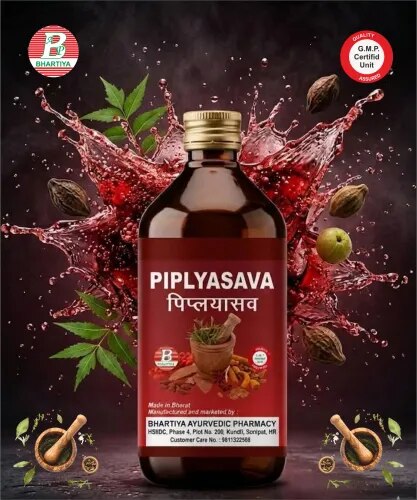
"name": "PIPPALYADYASAVA",
"description": " PIPPALYADYASAVA \n\nProduct Identification\nGeneric Name: Pippalyadyasava \nType: Ayurvedic Polyherbal Fermented Formulation (Asava)\nPrimary Indication Area: Digestive disorders, anaemia, liver dysfunction, splenic disorders, metabolic weakness, and chronic debility.\n\nTherapeutic Indications\n• Pandu (anaemia)\n• Agnimandya (poor digestive fire)\n• Grahani disorders (malabsorption syndrome)\n• Loss of appetite\n• Chronic indigestion (Ajirna)\n• Hepatic dysfunction (supportive management)\n• Splenic enlargement (supportive use)\n• General weakness and fatigue\n• Chronic metabolic disorders\n• post-illness debility\n\nKey Benefits\n• Supports healthy digestion and metabolism\n• Improves appetite and nutrient absorption\n• Helps support hemoglobin formation\n• Promotes liver and spleen health\n• Reduces Ama (metabolic toxins) accumulation\n• Enhances strength and vitality\n• Supports recovery from chronic illness\n• Acts as a rejuvenative digestive tonic\n\nFORMULA\nMain Ingredients\n• Pippali (Piper longum)\n• Maricha (Piper nigrum)\n• Haridra (Curcuma longa)\n• Chavya (Piper retrofractum / Piper chaba)\n• Chitraka (Plumbago zeylanica)\n• Musta (Cyperus rotundus)\n• Vidanga (Embelia ribes)\n• Puga (Areca catechu)\n• Lodhra (Symplocos racemosa)\n• Patha (Cissampelos pareira)\n• Amalaki (Phyllanthus emblica)\n• Eluka (Prunus avium)\n• Ushira (Vetiveria zizanioides)\n• Sveta Chandana (Santalum album)\n• Kustha (Saussurea lappa)\n• Lavanga (Syzygium aromaticum)\n• Tagara (Valeriana wallichii)\n• Jatamansi (Nardostachys jatamansi)\n• Tvak (Cinnamomum verum)\n• Ela (Elettaria cardamomum)\n• Tejapatra (Cinnamomum tamala)\n• Priyangu (Callicarpa macrophylla)\n• Nagakesara (Mesua ferrea)\nSweetening and Fermentation Base\n• Guda (Jaggery)\n• Dhataki (Woodfordia fruticosa)\n• Draksha (Vitis vinifera)\n\nKey Ingredient Actions\n1. Pippali\nBotanical Name: Piper longum \nRasa: Katu\n Guna: Laghu, Snigdha\nVirya: Anushna-Ushna\nVipaka: Madhura\nMechanism of Action:\n• Enhances bioavailability (Yogavahi action)\n• Improves digestion and metabolism\n• Supports nutrient absorption\n• Helps reduce Ama accumulation\n• Promotes appetite\n• Supports overall vitality\n\n2. Maricha\nBotanical Name: Piper nigrum \nRasa: Katu\n Guna: Laghu, Tikshna\n Virya: Ushna\n Vipaka: Katu\nMechanism of Action:\n• Improves digestion and absorption\n• Enhances bioavailability of herbs\n• Stimulates metabolism\n• Reduces Ama accumulation\n• Supports appetite\n• Acts as a digestive stimulant\n\n3. Haridra\nBotanical Name: Curcuma longa \nRasa: Tikta, Katu\n Guna: Laghu, Ruksha\nVirya: Ushna\n Vipaka: Katu\nMechanism of Action:\n• Supports liver function and detoxification\n• Provides antioxidant activity\n• Helps reduce inflammation\n• Supports healthy metabolism\n• Assists blood purification\n• Promotes tissue healing\n\n4. Chavya\nBotanical Name: Piper retrofractum \nRasa: Katu\nGuna: Laghu, Tikshna\nVirya: Ushna\n Vipaka: Katu\nMechanism of Action:\n• Stimulates digestive fire (Agni)\n• Improves appetite and metabolism\n• Helps reduce abdominal discomfort\n• Supports nutrient assimilation\n• Reduces Ama formation\n• Promotes digestive health\n\n5. Chitraka\nBotanical Name: Plumbago zeylanica \nRasa: Katu\n Guna: Laghu, Tikshna, Ruksha\nVirya: Ushna\nVipaka: Katu\nMechanism of Action:\n• Strong digestive stimulant (Deepana)\n• Enhances metabolism and Agni\n• Helps digest Ama\n• Improves nutrient absorption\n• Relieves chronic indigestion\n• Supports gastrointestinal function\n\n6. Musta\nBotanical Name: Cyperus rotundus \nRasa: Tikta, Katu, Kashaya\nGuna: Laghu, Ruksha\nVirya: Sheeta\nVipaka: Katu\nMechanism of Action:\n• Supports digestive regulation\n• Helps reduce gastrointestinal disturbances\n• Promotes appetite and metabolism\n• Reduces Ama formation\n• Supports liver function\n• Contributes to digestive balance\n\n7. Vidanga\nBotanical Name: Embelia ribes \nRasa: Katu, Kashaya\nGuna: Laghu, Ruksha, Tikshna\nVirya: Ushna\n Vipaka: Katu\nMechanism of Action:\n• Supports detoxification\n• Helps eliminate intestinal parasites\n• Improves digestive efficiency\n• Reduces toxin accumulation\n• Supports metabolic balance\n• Promotes nutrient utilization\n\n8. Puga\nBotanical Name: Areca catechu \nRasa: Kashaya\n Guna: Laghu, Ruksha\n Virya: Sheeta\nVipaka: Katu\nMechanism of Action:\n• Supports digestive health\n• Helps improve intestinal tone\n• Assists bowel regulation\n• Supports absorption of nutrients\n• Helps reduce excessive intestinal secretions\n• Promotes gastrointestinal stability\n\n9. Lodhra\nBotanical Name: Symplocos racemosa \nRasa: Kashaya\n Guna: Laghu, Ruksha\nVirya: Sheeta\nVipaka: Katu\nMechanism of Action:\n• Supports tissue healing\n• Helps reduce inflammation\n• Promotes mucosal integrity\n• Supports blood purification\n• Assists metabolic balance\n• Enhances tissue stability\n\n10. Patha\nBotanical Name: Cissampelos pareira\nRasa: Tikta, Kashaya\nGuna: Laghu, Ruksha\nVirya: Ushna\nVipaka: Katu\nMechanism of Action:\n• Supports digestion and detoxification\n• Helps reduce inflammatory conditions\n• Promotes metabolic balance\n• Supports liver function\n• Assists elimination of toxins\n• Enhances digestive health\n\n11. Amalaki\nBotanical Name: Phyllanthus emblica L.\nRasa: Pancha Rasa (dominant Amla)\n Guna: Laghu, Ruksha\n Virya: Sheeta\n Vipaka: Madhura\nMechanism of Action:\n• Rich antioxidant and Rasayana herb\n• Support nutrient absorption\n• Enhances immunity and vitality\n• Promotes healthy blood formation\n• Supports liver function\n• Reduces oxidative stress\n\n12. Eluka\nBotanical Name: Prunus avium\nRasa: Madhura, Katu\n Guna: Laghu\nVirya: Sheeta\n Vipaka: Madhura\nMechanism of Action:\n• Improves digestion and reduces Ama\n• Supports detoxification\n• Enhances absorption of herbs\n• Mild carminative effect\n• Promotes appetite\n• Supports gastrointestinal comfort\n\n13. Ushira\nBotanical Name: Vetiveria zizanioides \nRasa: Tikta, Madhura\n Guna: Laghu, Ruksha\n Virya: Sheeta\nVipaka: Katu\nMechanism of Action:\n• Supports cooling and detoxification\n• Promotes tissue nourishment\n• Helps reduce Pitta aggravation\n• Supports liver function\n• Assists blood purification\n• Enhances overall vitality\n\n14. Sveta Chandana\nBotanical Name: Santalum album \nRasa: Tikta, Madhura\n Guna: Laghu, Ruksha\nVirya: Sheeta\n Vipaka: Katu\nMechanism of Action:\n• Cooling and soothing effect\n• Supports detoxification\n• Helps maintain tissue health\n• Promotes metabolic balance\n• Supports urinary and systemic health\n• Reduces Pitta-related disturbances\n\n15. Kustha\nBotanical Name: Saussurea lappa \nRasa: Tikta, Katu\nGuna: Laghu, Tikshna\nVirya: Ushna\nVipaka: Katu\nMechanism of Action:\n• Supports digestion and metabolism\n• Helps reduce Ama accumulation\n• Promotes appetite\n• Supports respiratory and digestive health\n• Enhances circulation\n• Assists detoxification\n\n16. Lavanga\nBotanical Name: Syzygium aromaticum \nRasa: Katu, Tikta\nGuna: Laghu, Tikshna\nVirya: Ushna\n Vipaka: Katu\nMechanism of Action:\n• Supports digestion and metabolism\n• Possesses antimicrobial activity\n• Helps reduce gastrointestinal discomfort\n• Promotes circulation\n• Supports detoxification\n• Enhances digestive efficiency\n\n17. Tagara\nBotanical Name: Valeriana wallichii \nRasa: Tikta, Katu\nGuna: Laghu, Snigdha\nVirya: Ushna\n Vipaka: Katu\nMechanism of Action:\n• Supports nervous system balance\n• Helps reduce stress-related digestive disturbances\n• Promotes relaxation\n• Supports restorative health\n• Enhances recovery from chronic illness\n• Contributes to overall wellbeing\n\n18. Jatamansi\nBotanical Name: Nardostachys jatamansi \nRasa: Tikta, Kashaya\n Guna: Laghu, Snigdha\n Virya: Sheeta\n Vipaka: Katu\nMechanism of Action:\n• Supports nervous system health\n• Promotes mental calmness\n• Provides antioxidant activity\n• Helps reduce stress-related weakness\n• Supports recovery and rejuvenation\n• Enhances overall vitality\n\n19. Tvak\nBotanical Name: Cinnamomum verum \nRasa: Katu, Tikta, Madhura\n Guna: Laghu, Tikshna\nVirya: Ushna\n Vipaka: Katu\nMechanism of Action:\n• Improves circulation and metabolism\n• Supports digestion and absorption\n• Possesses antioxidant activity\n• Helps reduce Ama formation\n• Promotes appetite\n• Supports gastrointestinal health\n\n20. Ela\nBotanical Name: Elettaria cardamomum \nRasa: Madhura, Katu\n Guna: Laghu\n Virya: Sheeta\n Vipaka: Madhura\nMechanism of Action:\n• Improves digestion and reduces Ama\n• Supports detoxification\n• Enhances herbal absorption\n• Promotes appetite\n• Mild carminative effect\n• Supports gastrointestinal comfort\n\n21. Tejapatra\nBotanical Name: Cinnamomum tamala \nRasa: Katu, Tikta\nGuna: Laghu, Tikshna\n Virya: Ushna\nVipaka: Katu\nMechanism of Action:\n• Digestive stimulant\n• Supports metabolism and Agni\n• Helps reduce Ama formation\n• Promotes appetite\n• Supports digestive balance\n• Possesses antimicrobial activity\n\n22. Priyangu\nBotanical Name: Callicarpa macrophylla \nRasa: Kashaya, Madhura\n Guna: Laghu, Ruksha\n Virya: Sheeta\nVipaka: Katu\nMechanism of Action:\n• Supports tissue stability\n• Helps maintain metabolic balance\n• Provides cooling action\n• Supports digestive and systemic health\n• Assists blood purification\n• Promotes overall wellbeing\n\n23. Nagakesara\nBotanical Name: Mesua ferrea \nRasa: Kashaya, Tikta\n Guna: Laghu, Ruksha\n Virya: Sheeta\n Vipaka: Katu\nMechanism of Action:\n• Supports tissue healing and repair\n• Helps reduce inflammation\n• Promotes digestive stability\n• Supports blood health\n• Enhances tissue nourishment\n• Contributes to overall vitality\n\n24. Dhataki\nBotanical Name: Woodfordia fruticosa \nRasa: Kashaya\nGuna: Laghu, Ruksha\n Virya: Ushna\nVipaka: Katu\nPrabhava: Sandhana Karaka\nMechanism of Action:\n• Natural fermentation catalyst\n• Enables alcohol formation in Asava preparations\n• Enhances extraction of active phytochemicals\n• Improves bioavailability of herbal constituents\n• Supports preservation and shelf stability\n• Maintains quality of fermented formulation\n\n25. Guda (Jaggery)\nRasa: Madhura\n Guna: Guru, Snigdha\n Virya: Ushna\nVipaka: Madhura\nMechanism of Action:\n• Provides substrate for fermentation\n• Supports self-generated alcohol formation\n• Improves palatability\n• Supplies nutritive minerals\n• Helps restore strength and vitality\n• Contributes to formulation stability\n\n26. Draksha\nBotanical Name: Vitis vinifera \nRasa: Madhura\n Guna: Guru, Snigdha\nVirya: Sheeta\n Vipaka: Madhura\nMechanism of Action:\n• Nourishing and restorative tonic\n• Supports recovery from debility\n• Provides antioxidant activity\n• Promotes tissue nourishment\n• Supports healthy digestion and metabolism\n• Enhances overall vitality\n\nDosage\nAdults\n• 15–30 mL\n• Twice daily after meals\n• Dilute with equal quantity of water\n\nCommon Usage Guidance\n• Traditionally used in anemia, digestive weakness, and metabolic disorders\n• Supports restoration of digestive strength and nutrient assimilation\n• Helps reduce Ama-related disorders\n• Usually prescribed for 4–12 weeks or as directed by an Ayurvedic physician\n• Best taken after food\n\nImportant Notes\n• Contains naturally fermented alcohol\n• Use cautiously in diabetes mellitus (due to jaggery content)\n• Should be taken under Ayurvedic supervision in chronic metabolic disorders\n• Avoid self-medication in severe systemic illnesses\n• Store in a cool, dry place\n• Keep tightly closed after use\n• Keep out of reach of children\n\n",
"price": 170.0,
"discountamount": 85.0,
"currencycode": "INR",
"priority": 1000000,
"isfreeshipmentavailable": false,
"shipmentduration": 1,
"_keywords": null,
"isarchived": false,
"isavailable": true,
"applicationid": null,
"productindex": 174,
"imageuri": "https://productimages.withfloats.com/actual/6a9e742f8362aae9e28b0db9.jpg",
"tileimageuri": "https://productimages.withfloats.com/tile/6a9e742f8362aae9e28b0db9.jpg",
"images": null,
"totalqueries": 0,
"gpid": null,
"groupproductid": null,
"createdon": "2026-09-07T08:22:06.074Z",
"updatedon": "2026-09-07T08:22:06.074Z",
"buyonlinelink": null,
"producturl": "http://WWW.BHARTIYAAYURVEDICPHARMACY.COM/products/pippalyadyasava/174",
"availableunits": -1.0,
"iscodavailable": true,
"isprepaidonlineavailable": true,
"maxcodorders": -1,
"maxprepaidonlineorders": -1,
"uniquepaymenturl": null,
"brandname": "Bakula Fort",
"category": "PIPPALYADYASAVA 450 X 40",
"tags": [],
"variants": false,
"keyspecification": null,
"otherspecifications": null,
"pickupaddressreferenceid": null,
"paymenttype": "AssuredPurchase",
"producttype": "products",
"hsncode": null,
"gstslab": 0.0,
"isnotforsale": false
},
{
"_id": "69e5c24a6a4eaecd8ae023b4",
"fptag": "BHARTIYEAYURVEDICPHARMACY",
"merchantname": null,
"customwidgets": null,
"externalsourceid": null,
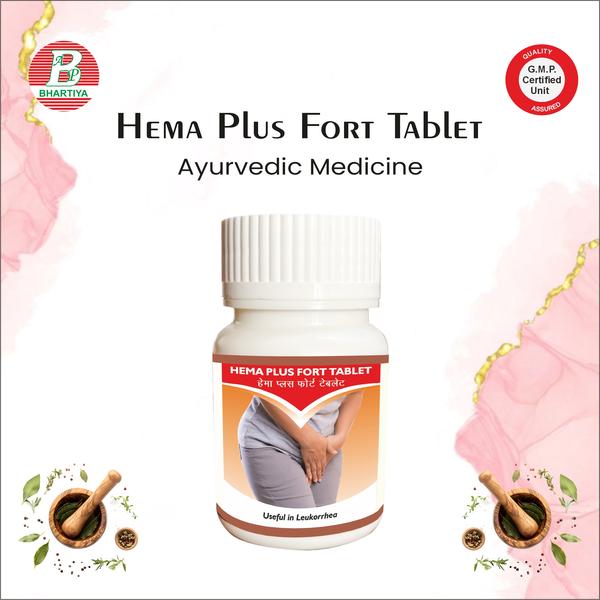
"name": "Hema Plus Fort Tablet",
"description": " HEMA PLUS FORT TABLET \n\nProduct Identification\n•\tGeneric Name: Hema Plus Fort Tablet\n•\tType: Ayurvedic Patent Medicine\n•\tPrimary Indication Area: To prevent or treat iron deficiency and anaemia, especially due to menstrual blood loss.\nTherapeutic Indications\nUsed for the prevention and treatment of iron-deficiency anaemia and to restore normal haemoglobin and iron levels in individuals with low iron stores, particularly due to menstrual blood loss, pregnancy, or dietary deficiency.\nKey benefits include:\n•\tHelps replenish iron lost during menstruation, reducing fatigue, weakness, and symptoms of iron-deficiency anaemia associated with heavy or prolonged periods.\n\nPrimary Benefit:\n•\tRestores iron levels and reduces fatigue caused by menstrual blood loss.\nAdditional Benefits:\n•\tSupports overall blood health by maintaining healthy haemoglobin and iron stores.\n•\tReduces fatigue and weakness associated with chronic blood or nutrient loss.\n•\tBoosts immunity and general wellbeing, which can be affected by prolonged or heavy menstrual bleeding.\n•\tHelps in recovery from nutritional deficiencies caused by excessive menstrual flow or prolonged discharge.\n\nIngredients:\n Kutaj Chaal \n•\tBotanical Name: Holarrhena antidysenterica\n•\tFamily: Apocynaceae\n•\tPart Used: Bark (Chaal)\n•\tTraditional Use: Ayurvedic remedy for diarrhea, dysentery, and digestive disorders\n Phytoconstituents\nThe bark contains several bioactive compounds that are responsible for its therapeutic actions:\n1.\tAlkaloids – e.g., holarrhenine, conessine, kurchine\no\tAntimicrobial, antispasmodic, anti-inflammatory\n2.\tTannins\no\tAstringent properties, reduce intestinal secretions and inflammation\n3.\tFlavonoids\no\tAntioxidant and anti-inflammatory effects\n4.\tGlycosides and Sterols\no\tContribute to digestive support and reduce smooth muscle spasms\n5.\tOther minor constituents – trace saponins, resins, and phenolic compounds\n\n Mechanism of Action in Menstrual Problems\nKutaj Chaal does not act directly on menstrual bleeding or hormones, but it supports menstrual health indirectly through the following mechanisms:\n1.\tReduces menstrual-associated diarrhea or loose stools\no\tAlkaloids and tannins normalize intestinal motility that may be elevated due to prostaglandins during menstruation\n2.\tEases abdominal and uterine cramps\no\tSpasmolytic (smooth muscle relaxant) action helps relieve uterine and gastrointestinal cramps\n3.\tSupports digestion and nutrient absorption\no\tBy improving gastrointestinal function, it ensures better nutrient availability, which is crucial during periods when appetite or digestion may be affected\n4.\tAnti-inflammatory effects\no\tFlavonoids and alkaloids reduce inflammatory mediators that contribute to pain and discomfort\n5.\tAstringent action\no\tTannins may slightly reduce excessive secretions and support overall gastrointestinal comfort\n Amla \n•\tBotanical Name: Phyllanthus emblica (syn. Emblica officinalis)\n•\tFamily: Phyllanthaceae\n•\tPart Used: Fruit\n•\tTraditional Use: Widely used in Ayurveda for rejuvenation, digestion, immunity, and blood health\n\n Phytoconstituents\nAmla is rich in bioactive compounds:\n1.\tVitamin C (Ascorbic acid) – very high concentration, antioxidant, immune support\n2.\tTannins – astringent, anti-inflammatory, help reduce secretions\n3.\tFlavonoids & Polyphenols – antioxidant and anti-inflammatory\n4.\tGallic acid & Ellagic acid – anti-inflammatory and hepatoprotective\n5.\tAmino acids, minerals (iron, calcium, phosphorous) – support overall metabolic and hematological health.\n\n Mechanism of Action in Menstrual Problems\nAmla supports menstrual health indirectly through multiple mechanisms:\n1.\tBlood and iron support\no\tRich in vitamin C and minerals like iron, it enhances haemoglobin formation and reduces anaemia, especially during heavy menstrual bleeding.\n2.\tAnti-inflammatory and antioxidant effects\no\tReduces oxidative stress and inflammation, which can help alleviate menstrual cramps and discomfort.\n3.\tDigestive support\no\tImproves digestion and nutrient absorption, ensuring better overall health during menstruation.\n4.\tImmune and hormonal balance support\no\tBy reducing oxidative stress and improving metabolic function, Amla may indirectly help maintain hormonal balance.\n Babul Chaal \n•\tBotanical Name: Acacia catechu\n•\tFamily: Fabaceae\n•\tPart Used: Bark (Chaal)\n•\tTraditional Use: Ayurvedic medicine for astringent, anti-inflammatory, digestive, and antimicrobial purposes\n Phytoconstituents\nBabul bark contains several bioactive compounds:\n1.\tCatechin and Epicatechin – flavonoids with antioxidant and anti-inflammatory effects\n2.\tTannins (up to 40–50%) – strong astringent properties, reduce secretions and inflammation\n3.\tGlycosides – may contribute to anti-inflammatory and tissue-healing effects\n4.\tPhenolic compounds – support antimicrobial and antioxidant activity\n Mechanism of Action in Menstrual Problems\nBabul Chaal does not directly regulate hormones or menstrual flow, but it can provide supportive benefits:\n1.\tAstringent effect\no\tTannins help reduce excessive secretions (e.g., leucorrhoea/white discharge)\no\tMay support uterine tonicity and reduce mild bleeding in traditional use\n2.\tAnti-inflammatory and antioxidant action\no\tReduces abdominal discomfort and cramps associated with menstruation\n3.\tDigestive support\no\tImproves digestion, reducing bloating or mild GI upset that can occur during menstruation\n4.\tHemostatic property (traditional use)\no\tTraditionally, it is believed to help control mild bleeding due to its astringent nature, though clinical evidence is limited\n Geru \n•\tBotanical Name / Mineral Identity: Geru is red ochre or red clay, mainly composed of ferric oxide (Fe₂O₃).\n•\tTraditional Use: In Ayurveda, it is used as a mineral remedy (Ras) for bleeding disorders, uterine health, and wound healing.\n Phytoconstituents / Composition\nGeru is primarily mineral-based, containing:\n1.\tIron Oxide (Fe₂O₃) – may contribute to mild iron supplementation\n2.\tAluminum and Silicates – support tissue healing and astringent properties\n3.\tTrace elements like calcium and magnesium\nNote: Unlike herbs, Geru is a mineral (Ras) preparation, so its effects are largely aesthetic, astringent, or supportive in traditional use rather than biochemical in the classic sense.\n\n Mechanism of Action in Menstrual Problems (Traditional / Ayurvedic View)\n1.\tAstringent and Hemostatic effect\no\tHelps control mild uterine bleeding or excessive menstrual flow in traditional formulations\no\tSupports uterine tonicity\n2.\tIron content\no\tMay provide minor support in preventing anaemia due to blood loss (though not as potent as iron supplements like Hema Plus)\n3.\tTissue healing and cooling effect\no\tUsed in some formulations for soothing inflammation or irritation in the reproductive tract\n\nDosage:\n1.\tDose per intake: 2–3 tablets\n2.\tFrequency: Twice a day (morning & evening)\n3.\tTotal daily dose: 2–6 tablets per day-(For 500 mg tablets, this equals 1–3 g/day)\n4.\tHow to take: With water, preferably after meals to reduce gastric irritation and improve absorption\n5.\tPrecautions\no\tDo not exceed the prescribed dose\no\tMonitor for side effects\nConsult an Ayurvedic practitioner for:\no\tChildren\no\tElderly\no\tChronic illnesses\n\n\nhema plus forte tablet uses in hindi, hema plus forte tablet\nhema plus tablet, hema plus capsule, hem plus tablet\nhema plus fort tablet amazon, hema plus fort tablet action\nhema plus fort tablet benefits, hema plus fort tablet benefits in hindi\nhema plus fort tablet brand name, hema plus fort tablet buy online\nhema plus fort tablet composition, hema plus fort tablet content\nhema plus fort tablet company, hema plus fort tablet company name\nhema plus fort tablet dosage, hema plus fort tablet dose\nhema plus fort tablet details, hema plus fort tablet dose per day\nhema plus fort tablet download, hema plus fort tablet english\nhema plus fort tablet expiry date, hema plus fort tablet flipkart\nhema plus fort tablet for hair growth, hema plus fort tablet generic name\nhema plus fort tablet gst rate, hema plus fort tablet gold\nhema plus fort tablet good or bad, hema plus fort tablet gst\nhema plus fort tablet jiomart, hema plus fort tablet junior\nhema plus fort tablet ke fayde in hindi, hema plus fort tablet kis kaam aati hai\nhema plus fort tablet ke fayde, hema plus fort tablet list\nhema plus fort tablet login, hema plus fort tablet lab\nhema plus fort tablet mrp, hema plus fort tablet manufacturer\nhema plus fort tablet name, hema plus fort tablet new\nhema plus fort tablet online shopping, hema plus fort tablet online\nhema plus fort tablet online order, hema plus fort tablet price\nhema plus fort tablet price in india, hema plus fort tablet quantity\nhema plus fort tablet quality, hema plus fort tablet q10\nhema plus fort tablet review, hema plus fort tablet rate\nhema plus fort tablet review in hindi, hema plus fort tablet side effects\nhema plus fort tablet side effects in hindi, hema plus fort tablet se kya hota hai\nhema plus fort tablet tablet, hema plus fort tablet tata 1mg\nhema plus fort tablet veterinary, hema plus fort tablet website\nhema plus fort tablet which company, hema plus fort tablet weight gainer\nhema plus fort tablet watch, hema plus fort tablet zinc\nwhy hema plus fort tablet uses in hindi, who hema plus fort tablet uses\nis hema plus fort tablet good, is hema plus fort tablet do\nwill hema plus fort tablets, will hema plus fort tablet uses\nwill hema plus fort tablet do, do hema plus fort tablet uses\ndo hema plus fort tablets, do hema plus fort tablet uses in hindi\ndoes hema plus fort tablet uses, does hema plus fort tablet work\ndoes hema plus fort tablet uses in hindi, does hema plus fort tablet do\nwas hema plus fort tablet good, was hema plus fort tablet in india\nbest hemo plus forte tablet uses in hindi, best hemo plus forte tablet uses\nbest hemo plus forte tablet price, top hema plus fort tablets\ntop hema plus fort tablet uses in hindi, top hema plus fort tablet uses\ntop hema plus fort tablet price",
"price": 84.0,
"discountamount": 42.0,
"currencycode": "INR",
"priority": 1000000,
"isfreeshipmentavailable": false,
"shipmentduration": 1,
"_keywords": null,
"isarchived": false,
"isavailable": true,
"applicationid": null,
"productindex": 98,
"imageuri": "https://productimages.withfloats.com/actual/69e5c24c25698ec472744d2a.jpg",
"tileimageuri": "https://productimages.withfloats.com/tile/69e5c24c25698ec472744d2a.jpg",
"images": null,
"totalqueries": 0,
"gpid": null,
"groupproductid": null,
"createdon": "2026-04-20T06:06:02.385Z",
"updatedon": "2026-04-20T06:06:02.385Z",
"buyonlinelink": null,
"producturl": "http://WWW.BHARTIYAAYURVEDICPHARMACY.COM//hema-plus-fort-tablet/98",
"availableunits": -1.0,
"iscodavailable": true,
"isprepaidonlineavailable": true,
"maxcodorders": -1,
"maxprepaidonlineorders": -1,
"uniquepaymenturl": null,
"brandname": "Bakul Fort",
"category": "Hema Plus Fort Tablet 100 Tab X 50",
"tags": [],
"variants": false,
"keyspecification": null,
"otherspecifications": null,
"pickupaddressreferenceid": null,
"paymenttype": "AssuredPurchase",
"producttype": "products",
"hsncode": null,
"gstslab": 0.0,
"isnotforsale": false
},
{
"_id": "69e0c1e2e465145e2f0b7c4e",
"fptag": "BHARTIYEAYURVEDICPHARMACY",
"merchantname": null,
"customwidgets": null,
"externalsourceid": null,
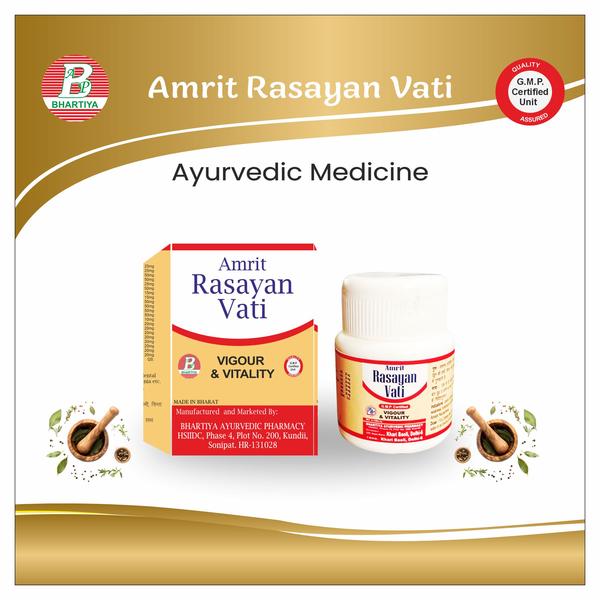
"name": "Amrit Rasayan Vati",
"description": " AMRIT RASAYAN VATI \n\nProduct Identification\n•\tGeneric Name: Amrit Rasayan Vati \n•\tType: Ayurvedic Patent Medicine\n•\tPrimary Indication Area: General physical and mental weakness, nervous debility (Nadi Daurbalya), anaemia/low vitality, stress and anxiety, and post-illness weakness.\nTherapeutic Indications:\n•\tUsed as a Rasayana for management of general physical and mental debility, nervous weakness, anxiety and stress, anaemia/low vitality, fatigue, and convalescence after illness.\n Primary Benefit:\n•\tEnhances overall physical strength and mental vitality by reducing weakness, nervous debility, stress, and fatigue.\nOther Benefits:\n•\tNervous system support: Helps strengthen nerves, improves nerve function, and reduces symptoms of nervous debility (Nadi Daurbalya).\n•\tStress and anxiety relief: Calms the mind, supports emotional balance, and helps reduce mental fatigue and worry.\n•\tImproved stamina and energy: Enhances physical endurance, reduces tiredness, and supports daily activity levels.\n•\tPost-illness recovery: Aids faster recovery by restoring strength and vitality after chronic disease or prolonged weakness.\n•\tImmunity and rejuvenation: Acts as a Rasayana to improve immunity, delay fatigue, and promote overall well-being and longevity.\n\n JAVITRI (Mace) \nBotanical Name: Myristica fragrans (Aril of nutmeg)\nKey Phytoconstituents\n•\tEssential oils (Myristicin, Elemicin, Safrole – in trace/regulated amounts)\n•\tLignans\n•\tFlavonoids\n•\tPhenolic compounds\n•\tFixed oils\n\nMechanism of Action in Mental & Physical Weakness (Biochemistry / Pharmacology)\n1. Central Nervous System Stimulant & Neuroprotective Action (Mental Weakness)\no\tMyristicin and elemicin modulate neurotransmitters such as dopamine and serotonin.\no\tEnhances neuronal signaling, improving alertness, concentration, and cognitive performance.\no\tFlavonoids provide neuroprotective antioxidant effects, reducing oxidative stress in brain tissue.\n\n2. Adaptogenic & Anti-Stress Effect\no\tRegulates the hypothalamic–pituitary–adrenal (HPA) axis, helping the body adapt to mental and physical stress.\no\tReduces cortisol-induced fatigue, thereby improving stress tolerance and mental endurance.\n\nJAIPHAL (Nutmeg) \nBotanical Name: Myristica fragrans (Seed)\nKey Phytoconstituents:\n•\tEssential oils: Myristicin, Elemicin, Safrole (in trace amounts)\n•\tLignans\n•\tFlavonoids\n•\tPhenolic compounds\n•\tFixed oils\nMechanism of Action in Mental & Physical Weakness (Biochemistry / Pharmacology)\n1. CNS Stimulant and Neuroprotective Action\n•\tMyristicin and elemicin modulate dopaminergic and serotonergic neurotransmission.\n•\tImproves cognition, alertness, memory, and focus.\n•\tFlavonoids and lignans act as antioxidants, protecting neurons from oxidative stress.\n2. Anti-Stress and Adaptogenic Effect\n•\tModulates HPA axis, reducing stress-induced cortisol elevation.\n•\tEnhances resilience to mental and physical fatigue.\n\nSAFED MUSLI \nBotanical Name: Chlorophytum borivilianum\nKey Phytoconstituents:\n•\tSaponins (Steroidal saponins)\n•\tAlkaloids\n•\tPolysaccharides\n•\tGlycosides\n•\tProteins and amino acids\nMechanism of Action in Mental & Physical Weakness (Biochemistry / Pharmacology)\n1. Adaptogenic & Anti-Fatigue Action\n•\tSteroidal saponins enhance stress tolerance by modulating the HPA axis.\n•\tReduces cortisol-induced fatigue, improving endurance and physical stamina.\n2. Energy Metabolism Support\n•\tImproves mitochondrial function and ATP production in muscle cells.\n•\tEnhances physical performance and reduces lethargy.\n\nSHATAVARI \nBotanical Name: Asparagus racemosus\nKey Phytoconstituents:\n•\tSteroidal saponins (Shatavarins I–IV)\n•\tFlavonoids\n•\tPolysaccharides\n•\tAlkaloids\n•\tVitamins and minerals\nMechanism of Action in Mental & Physical Weakness (Biochemistry / Pharmacology)\n1. Adaptogenic & Anti-Stress Action\n•\tSteroidal saponins modulate the hypothalamic–pituitary–adrenal (HPA) axis.\n•\tReduces stress-induced cortisol elevation, improving physical stamina and mental resilience.\n2. Rejuvenative / Rasayana Effect\n•\tActs as a general tonic, supporting vitality, energy, and immunity.\n•\tPromotes tissue regeneration and recovery from debility or chronic illness.\n\nBRAHMI \nBotanical Name: Bacopa monnieri\nKey Phytoconstituents:\n•\tBacosides A and B (saponins)\n•\tAlkaloids (brahmine, herpestine)\n•\tFlavonoids\n•\tPhenolic compounds\nMechanism of Action in Mental & Physical Weakness (Biochemistry / Pharmacology)\n1. Cognitive Enhancer & Neuroprotective Action\n•\tBacosides enhance synaptic transmission, nerve impulse conduction, and neuroplasticity.\n•\tProtect neurons from oxidative stress, reducing mental fatigue.\n•\tImproves memory, attention, learning, and mental clarity.\n2. Adaptogenic & Anti-Stress Effect\n•\tModulates HPA axis, reducing cortisol levels.\n•\tEnhances resistance to stress-induced mental and physical fatigue.\n\nSHILAJIT (Shudh / Purified) \nBotanical / Mineral Source: Exudate from rocks of the Himalayas (organic-mineral complex)\nKey Phytoconstituents:\n•\tFulvic acid\n•\tHumic acid\n•\tDibenzo-alpha-pyrones\n•\tTrace minerals (iron, zinc, magnesium, copper, selenium)\n•\tAmino acids\nMechanism of Action in Mental & Physical Weakness (Biochemistry / Pharmacology)\n1. Energy Metabolism & Anti-Fatigue Action\n•\tEnhances mitochondrial ATP production, increasing cellular energy.\n•\tImproves physical endurance and reduces fatigue, supporting muscle performance.\n2. Adaptogenic & Anti-Stress Effect\n•\tModulates the hypothalamic–pituitary–adrenal (HPA) axis.\n•\tReduces stress-induced cortisol elevation, improving mental alertness and physical stamina.\n\n KALI MIRCH (Black Pepper) \nBotanical Name: Piper nigrum\nKey Phytoconstituents:\n•\tPiperine (alkaloid)\n•\tEssential oils (pinene, limonene, sabinene)\n•\tFlavonoids\n•\tPolyphenols\nMechanism of Action in Mental & Physical Weakness (Biochemistry / Pharmacology)\n1. Digestive Stimulant / Bioavailability Enhancer\n•\tPiperine stimulates digestive enzyme secretion, improving digestion and nutrient absorption.\n•\tEnhances bioavailability of nutrients and other phytoconstituents, indirectly supporting physical and mental strength.\n2. Metabolic & Thermogenic Action\n•\tStimulates thermogenesis, improving energy metabolism.\n•\tSupports fatigue reduction and physical endurance.\n\n PIPALI (Long Pepper) \nBotanical Name: Piper longum\nKey Phytoconstituents:\n•\tPiperine (alkaloid)\n•\tVolatile oils (limonene, pinene, caryophyllene)\n•\tPolyphenols\n•\tFlavonoids\nMechanism of Action in Mental & Physical Weakness (Biochemistry / Pharmacology)\n1. Digestive Stimulant / Deepana-Pachana\n•\tPiperine and volatile oils stimulate digestive enzyme secretion, improving digestion and nutrient absorption.\n•\tHelps prevent accumulation of undigested food, which can cause lethargy and weakness.\n2. Bioavailability Enhancer\n•\tPiperine enhances absorption of nutrients and other herbal constituents.\n•\tIndirectly boosts physical strength, energy, and mental function when used in polyherbal formulations.\n\nSAUNTH (Dry Ginger) \nBotanical Name: Zingiber officinale (Dried Rhizome)\nKey Phytoconstituents:\n•\tGingerols and Shogaols (phenolic compounds)\n•\tEssential oils (zingiberene, bisabolene)\n•\tPolyphenols\n•\tFlavonoids\nMechanism of Action in Mental & Physical Weakness (Biochemistry / Pharmacology)\n1. Digestive Stimulant / Deepana-Pachana\n•\tGingerols and shogaols stimulate digestive enzymes, improving digestion and nutrient absorption.\n•\tPrevents accumulation of undigested food, which can cause lethargy and weakness.\n2. Thermogenic & Metabolic Enhancement\n•\tIncreases thermogenesis, enhancing energy metabolism.\n•\tSupports physical stamina and reduces fatigue.\n\nASHWAGANDHA \nBotanical Name: Withania somnifera\nKey Phytoconstituents:\n•\tWithanolides (steroidal lactones)\n•\tAlkaloids (somniferine, withanine)\n•\tSaponins\n•\tIron and amino acids\n\nMechanism of Action in Mental & Physical Weakness (Biochemistry / Pharmacology)\n1. Adaptogenic & Anti-Stress Action\n•\tWithanolides modulate the hypothalamic–pituitary–adrenal (HPA) axis, reducing cortisol levels.\n•\tEnhances stress resilience, improving both mental and physical endurance.\n2. Energy Metabolism & Anti-Fatigue\n•\tSupports mitochondrial function and ATP production, increasing cellular energy.\n•\tReduces physical fatigue and improves stamina.\n\nAKARKARA \nBotanical Name: Anacyclus pyrethrum\nKey Phytoconstituents:\n•\tAlkylamides (pyrethrins, anacyclin)\n•\tN-alkylamides\n•\tEssential oils\n•\tStarch and mucilage\n\nMechanism of Action in Mental & Physical Weakness (Biochemistry / Pharmacology)\n1. Nervine Tonic & Neuroprotective Action\n•\tAlkylamides stimulate central and peripheral nervous system, enhancing nerve conduction and mental alertness.\n•\tSupports cognitive function, focus, and memory, reducing mental fatigue.\n2. Adaptogenic & Anti-Fatigue Effects\n•\tEnhances stress resilience by modulating the HPA axis.\n•\tReduces physical and mental fatigue, improving endurance and stamina.\n\nAMLA (AMALAKI / Indian Gooseberry) \nBotanical Name: Emblica officinalis\nKey Phytoconstituents:\n•\tVitamin C (Ascorbic acid)\n•\tTannins\n•\tFlavonoids\n•\tPolyphenols\n•\tSaponins\nMechanism of Action in Mental & Physical Weakness (Biochemistry / Pharmacology)\n1. Antioxidant & Free Radical Scavenging\n•\tHigh vitamin C and polyphenol content neutralize free radicals.\n•\tProtects cells, muscles, and neurons from oxidative stress, supporting vitality and cognitive function.\n2. Adaptogenic & Stress-Modulating Effects\n•\tReduces oxidative and physiological stress, improving mental resilience.\n•\tSupports stress-induced fatigue reduction and overall endurance.\n\nKESAR (Saffron) \nBotanical Name: Crocus sativus\nKey Phytoconstituents:\n•\tCrocin (carotenoid)\n•\tCrocetin\n•\tSafranal\n•\tPicrocrocin\n•\tFlavonoids\nMechanism of Action in Mental & Physical Weakness (Biochemistry / Pharmacology)\n1. Cognitive Enhancer & Neuroprotective Action\n•\tCrocin and crocetin protect neurons from oxidative stress and apoptosis.\n•\tImproves memory, learning, attention, and overall cognitive function.\n2. Mood Modulation / Antidepressant Effect\n•\tSafranal and crocin modulate serotonin, dopamine, and norepinephrine pathways.\n•\tReduces anxiety, stress, and mental fatigue, supporting mental clarity.\n\nLOH BHASMA \nComposition / Source: Calcined iron (processed iron oxide, Ayurvedic metallic preparation)\nKey Constituents:\n•\tIron in bioavailable ferric/ferrihydrite forms\n•\tTrace minerals (depending on preparation and processing)\n\nMechanism of Action in Mental & Physical Weakness (Biochemistry / Pharmacology)\n1. Hematinic / Hemoglobin Enhancer\n•\tProvides bioavailable iron, supporting hemoglobin synthesis.\n•\tImproves oxygen transport to tissues, reducing fatigue, weakness, and lethargy.\n2. Energy Metabolism & Anti-Fatigue\n•\tIron is essential for mitochondrial electron transport chain and ATP production.\n•\tEnhances physical stamina and endurance in states of debility or anemia.\n\nABHRAK BHASMA \nComposition / Source: Calcined and purified mica (Biotite / Muscovite) processed with herbal juices and ghee (Ayurvedic metallic preparation)\nKey Constituents:\n•\tSilica and alumino-silicates\n•\tTrace minerals (iron, magnesium, potassium, calcium)\n•\tNano- or micro-particles of mica enriched with herbal bioactives during preparation\n\nMechanism of Action in Mental & Physical Weakness (Biochemistry / Pharmacology)\n1. Rasayana / Rejuvenative Action\n•\tActs as a general tonic, improving physical strength, stamina, and vitality.\n•\tSupports post-illness recovery and reduces chronic fatigue.\n2. Nervine & Cognitive Support\n•\tTrace minerals and bioactive particles support neurotransmitter synthesis, improving memory, focus, and mental clarity.\n•\tReduces stress-related mental fatigue.\n\n VANG BHASMA \nComposition / Source: Purified and calcined Tin (Vanga) metal, processed with herbal decoctions and ghee (Ayurvedic metallic preparation)\nKey Constituents:\n•\tTin in bioavailable form (as oxide / organometallic complex)\n•\tTrace minerals incorporated during classical Ayurvedic processing\nMechanism of Action in Mental & Physical Weakness (Biochemistry / Pharmacology)\n1. Rasayana / Rejuvenative Action\n•\tActs as a general tonic, enhancing physical strength, vitality, and endurance.\n•\tSupports recovery from chronic debility and weakness.\n2. Nervine & Cognitive Support\n•\tTrace elements and bioactive complexes support neurotransmitter synthesis, improving memory, focus, and mental clarity.\n•\tReduces mental fatigue and stress-induced cognitive decline.\n\nMUKTA SHUKTI PISHTI \nComposition / Source: Calcined and purified pearl oyster shells (Calcium carbonate-based) processed with herbal juices and milk)\nKey Constituents:\n•\tCalcium carbonate (CaCO₃) in bioavailable form\n•\tTrace minerals: Magnesium, Zinc, Iron\n•\tAmino acids (from herbal processing)\nMechanism of Action in Mental & Physical Weakness (Biochemistry / Pharmacology)\n1. Calcium & Bone-Muscle Support\n•\tProvides bioavailable calcium, supporting bone density, muscle function, and neuromuscular coordination.\n•\tImproves physical strength and endurance in cases of debility.\n2. Nervine & Cognitive Support\n•\tCalcium and trace minerals help neurotransmitter release and synaptic function, improving mental clarity, memory, and focus.\n•\tReduces mental fatigue and weakness.\n\nPRAVAL PISHTI \nComposition / Source: Calcined and purified red coral (calcium carbonate-based) processed with herbal juices and milk)\nKey Constituents:\n•\tCalcium carbonate (CaCO₃) in bioavailable form\n•\tTrace minerals: Magnesium, Iron, Zinc\n•\tAmino acids (from herbal processing)\nMechanism of Action in Mental & Physical Weakness (Biochemistry / Pharmacology)\n1. Calcium & Bone-Muscle Support\n•\tProvides bioavailable calcium, supporting bone strength, neuromuscular function, and muscle endurance.\n•\tImproves physical stamina and recovery from weakness.\n2. Nervine & Cognitive Support\n•\tCalcium and trace minerals support neurotransmitter synthesis and synaptic function, improving mental clarity, focus, and memory.\n•\tReduces mental fatigue and stress-related cognitive weakness.\n\n SWARN MAKSHIK BHASMA \nComposition / Source: Calcined Swarn Makshik (Auriferous Pyrite, FeS₂ with trace gold and iron) processed with herbal decoctions and ghee according to classical Ayurvedic methods.\nKey Constituents:\n•\tIron (Fe²⁺/Fe³⁺ forms)\n•\tSulfur\n•\tTrace gold and other minerals incorporated during processing\nMechanism of Action in Mental & Physical Weakness (Biochemistry / Pharmacology)\n1. Hematopoietic / Hematinic Effect\n•\tProvides bioavailable iron, supporting hemoglobin synthesis and oxygen transport to tissues.\n•\tImproves physical stamina, muscle function, and recovery from fatigue.\n2. Rasayana / Rejuvenative Action\n•\tActs as a general tonic, enhancing vitality, endurance, and resistance to chronic debility.\n•\tSupports recovery from post-illness weakness and physical exhaustion.\n\nRAS SINDOOR \nComposition / Source: Ayurvedic herbo-mineral preparation of mercury (Parada), sulfur (Gandhaka), and other processed minerals, often purified and triturated with herbal decoctions.\nKey Constituents:\n•\tMercury (processed, as mercuric sulfide, HgS)\n•\tSulfur (Gandhaka)\n•\tTrace minerals incorporated during classical Ayurvedic processing\nMechanism of Action in Mental & Physical Weakness (Biochemistry / Pharmacology)\n1. Rasayana / Rejuvenative Action\n•\tActs as a general tonic, enhancing physical strength, vitality, and endurance.\n•\tSupports recovery from chronic debility, post-illness weakness, and fatigue.\n2. Nervine & Cognitive Support\n•\tTraditionally believed to enhance neurocognitive functions, improving memory, focus, and mental clarity.\n•\tMay indirectly support neurotransmitter balance through trace mineral effects.\n\nSWARN BHASMA (Gold Bhasma) \nComposition / Source: Purified and incinerated gold particles processed with herbal decoctions (Rasayana preparation)\nKey Constituents:\n•\tMetallic gold (Au) in nano- or micro-particulate bioavailable form\n•\tTrace minerals absorbed during classical processing\nMechanism of Action in Mental & Physical Weakness (Biochemistry / Pharmacology)\n1. Rasayana / Rejuvenative Action\n•\tActs as a general tonic, enhancing vitality, stamina, and physical strength.\n•\tSupports recovery from chronic debility, post-illness weakness, and fatigue.\n2. Nervine & Cognitive Support\n•\tTraditionally believed to enhance brain function, improving memory, concentration, and mental clarity.\n•\tSupports neuroprotection, possibly through antioxidant and bioactive trace mineral effects.\n\nDosage\n•\tAdults: 1–2 tablets twice daily\n•\tTiming: After meals (dinner or lunch)\n•\tAdjuvant: Take with warm milk or water\nPrecautions\n•\tDo not exceed the prescribed dose.\n•\tConsult a doctor before use in children, elderly, or patients with chronic illnesses.\n•\tMaintain hydration and a nutritious diet for optimal results.\n•\tUse as part of a comprehensive Rasayana / rejuvenative regimen.\n\n\namrit rasayan vati ke fayde, amrit rasayan benefits\namrit rasayan ingredients, amrit rasayan uses\namrit rasayan vati amazon, amrit rasayan vati benefits\namrit rasayan vati benefits in hindi, amrit rasayan vati content\namrit rasayan vati composition, amrit rasayan vati capsule\namrit rasayan vati churna, amrit rasayan vati dosage\namrit rasayan vati dose, amrit rasayan vati dose per day\namrit rasayan vati easy ayurveda, amrit rasayan vati expiry date\namrit rasayan vati extra power, amrit rasayan vati extra\namrit rasayan vati gst rate, amrit rasayan vati generic name\namrit rasayan vati goli, amrit rasayan vati hindi\namrit rasayan vati how to use, amrit rasayan vati ingredients\namrit rasayan vati in hindi, amrit rasayan vati ingredients in hindi\nअमृत रसायन के फायदे, amrit rasayan ke fayde\namrit rasayan kya hai, amrit rasayan khane ke fayde\namrit rasayan vati lucknow, amrit rasayan vati lucknow uttar pradesh\namrit rasayan vati manufacturer, amrit rasayan vati mrp\namrit rasayan vati medicine, amrit rasayan vati near me\namrit rasayan vati online, amrit rasayan vati online shopping\namrit rasayan vati online purchase, amrit rasayan vati original\namrit rasayan price, amrit rasayan vati quantity\namrit rasayan vati quality, amrit rasayan vati review\namrit rasayan vati review in hindi, amrit rasayan side effects\namrit rasayan syrup, amrit rasayan vati tablet\namrit rasayan vati tablet uses in hindi\namrit rasayan vati tablet uses, amrit rasayan vati uses\namrit rasayan vati vati, amrit rasayan vati vyas\namrit rasayan vati website, amrit rasayan vati weight loss\namrit rasayan vati with ashwagandha, amrit rasayan vati works\namrit rasayan vati yantra, amrit rasayan vati yoga\namrit rasayan vati zepto, amrit rasayan vati zudio\namrit rasayan how to use, haridwar amrit vati\namrit rasayan benefits in hindi, rasayan amrit ke fayde\namrit rasayan, amrit rasayan review\nrasayan amrit price, what amrit rasayan vati used for\nwhere amrit rasayan vati available, where amrit rasayan vati manufactured\nwhere amrit rasayan vati found, where amrit rasayan vati made\nhow amrit rasayan vati works, who amrit rasayan vati uses in hindi\nwho amrit rasayan vati price, who amrit rasayan vati in hindi\nis amrit rasayan vati good, can amrit rasayan vati work\nwill amrit rasayan vati work, do amrit rasayan vati uses in hindi\ndoes amrit rasayan vati work, was amrit rasayan vati good\nbest amrit rasayan vati in india, best amrit rasayan vati uses in hindi\ntop amrit rasayan vati uses in hindi",
"price": 207.0,
"discountamount": 100.0,
"currencycode": "INR",
"priority": 1000000,
"isfreeshipmentavailable": false,
"shipmentduration": 1,
"_keywords": null,
"isarchived": false,
"isavailable": true,
"applicationid": null,
"productindex": 89,
"imageuri": "https://productimages.withfloats.com/actual/69e0c1e5ae12ae6a19635abf.jpg",
"tileimageuri": "https://productimages.withfloats.com/tile/69e0c1e5ae12ae6a19635abf.jpg",
"images": null,
"totalqueries": 0,
"gpid": null,
"groupproductid": null,
"createdon": "2026-04-16T11:02:58.799Z",
"updatedon": "2026-04-16T11:02:58.799Z",
"buyonlinelink": null,
"producturl": "http://WWW.BHARTIYAAYURVEDICPHARMACY.COM//amrit-rasayan-vati/89",
"availableunits": -1.0,
"iscodavailable": true,
"isprepaidonlineavailable": true,
"maxcodorders": -1,
"maxprepaidonlineorders": -1,
"uniquepaymenturl": null,
"brandname": "Bakula Fort",
"category": "Amrit Rasayan Vati 30tab X 207",
"tags": [],
"variants": false,
"keyspecification": null,
"otherspecifications": null,
"pickupaddressreferenceid": null,
"paymenttype": "AssuredPurchase",
"producttype": "products",
"hsncode": null,
"gstslab": 0.0,
"isnotforsale": false
},
{
"_id": "6aae78b4f5218a27d43f132d",
"fptag": "BHARTIYEAYURVEDICPHARMACY",
"merchantname": null,
"customwidgets": null,
"externalsourceid": null,
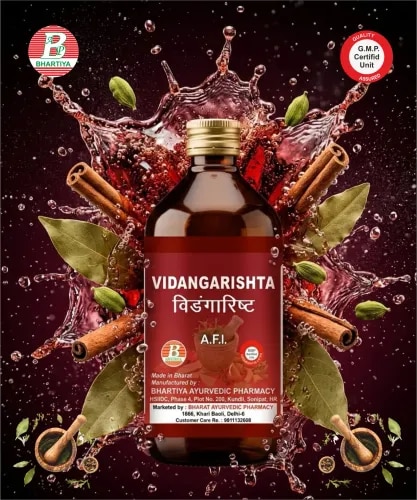
"name": "VIDANGARISHTA",
"description": " VIDANGARISHTA\n\n\nProduct Identification\nGeneric Name: Vidangarishta (Vidangarishtam)\nType: Ayurvedic Polyherbal Fermented Formulation (Arishta)\nPrimary Indication Area: Intestinal worms (Krimi), digestive disorders, malabsorption, abdominal discomfort, metabolic toxins (Ama), skin disorders of parasitic origin, and general digestive weakness\n\nTherapeutic Indications\n• Intestinal worm infestation (Krimi Roga)\n• Abdominal pain and bloating\n• Indigestion (Ajeerna)\n• Loss of appetite (Agni mandya)\n• Malabsorption syndrome (supportive)\n• Skin disorders due to toxins and parasites\n• General debility due to chronic infection\n• Gas and abdominal distension (Adhmana)\n• Weak digestion in children and adults\n• Detoxification of gastrointestinal tract\n\nKey Benefits\n• Helps eliminate intestinal worms naturally\n• Improves digestive fire (Agni)\n• Reduces abdominal bloating and discomfort\n• Supports gut cleansing and detoxification\n• Improves appetite and nutrient absorption\n• Helps reduce toxin (Ama) accumulation\n• Supports healthy skin by purifying blood and gut\n• Enhances overall digestive strength\n• Acts as mild anti-parasitic Ayurvedic tonic\n• Improves metabolic balance\n\nFORMULA \nMain Ingredients: \nVidanga (Embelia ribes) \nPippali (Piper longum) \nRasna (Pluchea lanceolata/) \nKutaja Chhal (Holarrhena antidysenterica – bark) \nKutaja Phala (Holarrhena antidysenterica – seed/fruit) \nPatha (Cissampelos pareira) \nElavaluka (Prunus cerasus)\nAmalaki (Emblica officinalis) \nMadhu (Honey) \nDhataki (Woodfordia fruticosa) \nTvak (Cinnamon bark – Cinnamomum verum) \nEla (Cardamom – Elettaria cardamomum) \nTejpatra (Cinnamomum tamala) \nPriyangu (Callicarpa macrophylla) \nKachnar (Bauhinia variegata) \nLodhra (Symplocos racemosa) \nSunthi (Zingiber officinale) \nMaricha (Piper nigrum) \nPippali (Piper longum)\n\n1. Vidanga\nBotanical Name: Embelia ribes\n• Rasa: Katu, Kashaya\n• Guna: Laghu, Ruksha\n• Virya: Ushna\n• Vipaka: Katu\nMechanism of Action:\n• Strong anti-helminthic (anti-worm) activity\n• Eliminates intestinal parasites and toxins\n• Improves digestive fire (Agni)\n• Cleanses gastrointestinal tract\n\n2. Pippali\nBotanical Name: Piper longum\n• Rasa: Katu\n• Guna: Laghu, Snigdha, Tikshna\n• Virya: Ushna\n• Vipaka: Madhura\nMechanism of Action:\n• Enhances digestion and bioavailability of herbs\n• Helps destroy intestinal parasites\n• Improves gut absorption\n• Stimulates metabolic activity\n\n3. Rasna\nBotanical Name: Pluchea lanceolata\n• Rasa: Tikta, Katu\n• Guna: Laghu, Ruksha\n• Virya: Ushna\n• Vipaka: Katu\nMechanism of Action:\n• Reduces inflammation in digestive tract\n• Supports detoxification of toxins (Ama)\n• Improves metabolic balance\n• Helps relieve abdominal discomfort\n\n4. Kutaja Chhal\nBotanical Name: Holarrhena antidysenterica (Bark)\n• Rasa: Tikta, Kashaya\n• Guna: Laghu, Ruksha\n• Virya: Sheeta\n• Vipaka: Katu\nMechanism of Action:\n• Strong anti-diarrheal and anti-dysenteric action\n• Controls intestinal infections\n• Strengthens gut mucosa\n• Reduces intestinal inflammation\n\n5. Kutaja Phala\nBotanical Name: Holarrhena antidysenterica (Seeds)\n• Rasa: Tikta, Kashaya\n• Guna: Laghu, Ruksha\n• Virya: Sheeta\n• Vipaka: Katu\nMechanism of Action:\n• Acts against intestinal worms and microbes\n• Supports gut cleansing\n• Controls dysentery and loose stools\n• Strengthens intestinal function\n\n6. Patha\nBotanical Name: Cissampelos pareira\n• Rasa: Tikta, Kashaya\n• Guna: Laghu, Ruksha\n• Virya: Sheeta\n• Vipaka: Katu\nMechanism of Action:\n• Supports removal of intestinal toxins\n• Helps reduce abdominal inflammation\n• Acts as mild anti-parasitic agent\n• Improves digestive clarity\n\n7. Elavaluka\nBotanical Name: Prunus cerasus (Wild cherry – regional variation)\n• Rasa: Kashaya, Madhura\n• Guna: Laghu\n• Virya: Sheeta\n• Vipaka: Madhura\nMechanism of Action:\n• Supports gut soothing action\n• Reduces intestinal irritation\n• Helps improve digestion comfort\n• Mild anti-inflammatory effect\n\n8. Amalaki\nBotanical Name: Emblica officinalis\n• Rasa: Pancharasa (dominant Amla & Madhura)\n• Guna: Laghu, Ruksha\n• Virya: Sheeta\n• Vipaka: Madhura\nMechanism of Action:\n• Powerful antioxidant and rejuvenator\n• Supports gut and liver detoxification\n• Improves immunity and digestion\n• Reduces toxin accumulation\n\n9. Madhu\nBotanical Name: Honey (Apis species)\n• Rasa: Madhura, Kashaya\n• Guna: Laghu, Ruksha\n• Virya: Sheeta\n• Vipaka: Madhura\nMechanism of Action:\n• Enhances absorption of herbal constituents\n• Supports intestinal healing\n• Acts as natural preservative\n• Improves bioavailability of formulation\n\n10. Dhataki\nBotanical Name: Woodfordia fruticosa\n• Rasa: Kashaya\n• Guna: Laghu, Ruksha\n• Virya: Ushna\n• Vipaka: Katu\nMechanism of Action:\n• Natural fermentation catalyst\n• Promotes alcoholic fermentation in Arishta\n• Enhances extraction of phytochemicals\n• Improves bioavailability\n\n11. Tvak\nBotanical Name: Cinnamomum verum\n• Rasa: Katu, Tikta\n• Guna: Laghu, Ruksha, Tikshna\n• Virya: Ushna\n• Vipaka: Katu\nMechanism of Action:\n• Improves digestion and circulation\n• Helps reduce microbial load\n• Supports metabolic balance\n• Reduces digestive sluggishness\n\n12. Ela\nBotanical Name: Elettaria cardamomum\n• Rasa: Katu, Madhura\n• Guna: Laghu, Snigdha\n• Virya: Sheeta\n• Vipaka: Madhura\nMechanism of Action:\n• Improves digestion and reduces bloating\n• Supports gut comfort\n• Mild calming effect on digestion\n• Enhances absorption\n\n13. Tejpatra\nBotanical Name: Cinnamomum tamala\n• Rasa: Katu, Tikta\n• Guna: Laghu, Ruksha\n• Virya: Ushna\n• Vipaka: Katu\nMechanism of Action:\n• Stimulates digestion\n• Helps reduce intestinal toxins\n• Supports antimicrobial action\n• Improves metabolic fire (Agni)\n\n14. Priyangu\nBotanical Name: Callicarpa macrophylla\n• Rasa: Kashaya\n• Guna: Laghu, Ruksha\n• Virya: Sheeta\n• Vipaka: Katu\nMechanism of Action:\n• Acts as intestinal astringent\n• Helps control diarrhea\n• Supports gut mucosal healing\n• Reduces inflammation\n\n15. Kachnar\nBotanical Name: Bauhinia variegata\n• Rasa: Kashaya, Tikta\n• Guna: Laghu, Ruksha\n• Virya: Sheeta\n• Vipaka: Katu\nMechanism of Action:\n• Supports detoxification\n• Helps reduce glandular and metabolic swelling\n• Improves digestion balance\n• Mild antimicrobial effect\n\n16. Lodhra\nBotanical Name: Symplocos racemosa\n• Rasa: Kashaya\n• Guna: Laghu, Ruksha\n• Virya: Sheeta\n• Vipaka: Katu\nMechanism of Action:\n• Strong astringent action on gut\n• Controls diarrhea and excessive secretions\n• Supports mucosal healing\n• Reduces inflammation\n\n17. Sunthi\nBotanical Name: Zingiber officinale\n• Rasa: Katu\n• Guna: Laghu, Ruksha\n• Virya: Ushna\n• Vipaka: Madhura\nMechanism of Action:\n• Improves digestion and appetite\n• Reduces abdominal gas and bloating\n• Enhances circulation\n• Helps eliminate toxins (Ama)\n\n18. Maricha\nBotanical Name: Piper nigrum\n• Rasa: Katu\n• Guna: Laghu, Ruksha, Tikshna\n• Virya: Ushna\n• Vipaka: Katu\nMechanism of Action:\n• Strong digestive stimulant\n• Helps kill intestinal parasites\n• Improves bioavailability of herbs\n• Enhances metabolism\n\n\nDOSAGE OF VIDANGARISHTA\nAdults:\n• 15–30 mL\n• Twice daily\nAdministration:\n• After meals\n• Diluted with equal quantity of water\n\nChildren (if prescribed by physician):\n• 5–10 mL\n• Twice daily\n• Only under Ayurvedic supervision\n\nCommon Duration of Use:\n• 2–6 weeks (or as directed by Ayurvedic physician)\n\nGeneral Guidance:\n• Shake well before use\n• Take after food for better digestion and tolerance\n• Do not exceed recommended dose without medical advice\n\n\n\n\nvidangarishta uses\nvidangarishta syrup\nvidangarishta benefits in hindi\nvidangarishta benefits\nvidangarishta syrup uses\nvidangarishta in hindi\nvidangarishta ingredients\nvidangarishta price\nvidangarishta ayurvedic medicine uses\nvidangarishta ayurvedic\nvidangarishta article\nvidangarishta ayurvedic syrup\nvidangarishta ayurvedic medicine\nvidangarishta easy ayurveda\nvidangarishta buy online\nvidangarishta best company\nvidangarishta contents\nvidangarishta churna\nvidangarishta for constipation\nuse of vidangarishta\nvidangarishta dosage\nbenefits of vidangarishta\nvidangarishta fayde\nvidangarishta for weight loss\nvidangarishta ke fayde in hindi\nvidangarishta used for\nvidangarishta gold\nvidangarishta how many days\nvidangarishta how to take\nvidangarishta uses hindi\nvidangarishta syrup how to use\nvidangarishta ingredients in hindi\nvidangarishta is used for\nvidangarishta indication\nvidangarishta in pregnancy\nvidangarishta uses in hindi\nvidangarishta juice\nvidangarishta syrup ke fayde\nvidangarishta for kids\nvidangarishta medicine\nmultani vidangarishta\nvidangarishta near me\nvidangarishta 450 ml\nvidangarishta online\nuses of vidangarishta\nuse of vidangarishta syrup\nuse of vidangarishta in hindi\ningredients of vidangarishta\ndosage of vidangarishta\nbenefits of vidangarishta syrup\nvidangarishta syrup price\nvidangarishta use in hindi\nvidangarishta syrup uses in hindi",
"price": 165.0,
"discountamount": 82.0,
"currencycode": "INR",
"priority": 1000000,
"isfreeshipmentavailable": false,
"shipmentduration": 1,
"_keywords": null,
"isarchived": false,
"isavailable": true,
"applicationid": null,
"productindex": 180,
"imageuri": "https://productimages.withfloats.com/actual/6aae78b6331f0ea7dd0a79ce.jpg",
"tileimageuri": "https://productimages.withfloats.com/tile/6aae78b6331f0ea7dd0a79ce.jpg",
"images": null,
"totalqueries": 0,
"gpid": null,
"groupproductid": null,
"createdon": "2026-09-19T11:57:40.423Z",
"updatedon": "2026-09-19T11:57:40.423Z",
"buyonlinelink": null,
"producturl": "http://WWW.BHARTIYAAYURVEDICPHARMACY.COM//vidangarishta/180",
"availableunits": -1.0,
"iscodavailable": true,
"isprepaidonlineavailable": true,
"maxcodorders": -1,
"maxprepaidonlineorders": -1,
"uniquepaymenturl": null,
"brandname": "Bakula Fort",
"category": "VIDANGARISHTA 450 ML X 40",
"tags": [],
"variants": false,
"keyspecification": null,
"otherspecifications": null,
"pickupaddressreferenceid": null,
"paymenttype": "AssuredPurchase",
"producttype": "products",
"hsncode": null,
"gstslab": 0.0,
"isnotforsale": false
},
{
"_id": "6aacf3df39025c05eda56271",
"fptag": "BHARTIYEAYURVEDICPHARMACY",
"merchantname": null,
"customwidgets": null,
"externalsourceid": null,
"name": "SARASVATARISHTA",
"description": " SARASVATARISHTA\n\nProduct Identification\nGeneric Name: Sarasvatarishta (Sarasvatarishtam)\nType: Ayurvedic Polyherbal Fermented Formulation (Arishta)\nPrimary Indication Area: Cognitive disorders, memory impairment, speech disorders, epilepsy support, anxiety, stress-related neurological weakness, and general brain tonic\n\nTherapeutic Indications\n• Memory loss (Smriti Mandya)\n• Impaired concentration and cognition\n• Speech disorders (Vakgraha / Vaksambandhi vikara)\n• Epilepsy (Apasmara – supportive management)\n• Anxiety and stress-related conditions\n• Insomnia and disturbed sleep\n• Intellectual fatigue and mental exhaustion\n• Neurodegenerative weakness (supportive)\n• Learning difficulties in children (traditional use)\n• General brain and nerve weakness\n\nKey Benefits\n• Enhances memory, learning ability, and retention\n• Supports healthy brain and nervous system function\n• Helps reduce anxiety, stress, and mental fatigue\n• Promotes better speech clarity and cognitive processing\n• Supports calming of the mind and improved sleep quality\n• Acts as a classical Medhya Rasayana (brain tonic)\n• Improves focus, intelligence, and mental stamina\n• Supports neurological balance and emotional stability\n\nFORMULA \nMAIN INGREDIENTS : \n1.Brahmi (Bacopa monnieri) \n2.Shatavari (Asparagus racemosus) \n3.Vidari (Pueraria tuberosa) \n4.Haritaki (Terminalia chebula) \n5.Ushira / Vetiver (Vetiveria zizanioides) \n6.Shunthi (Zingiber officinale) \n7.Mishreya / Saunf (Foeniculum vulgare) \n8.Renuka (Vitex agnus-castus) \n9.Trivrit (Operculina turpethum) \n10.Pippali (Piper longum) \n11.Lavanga (Syzygium aromaticum) \n12.Vacha (Acorus calamus) \n13.Kushtha (Saussurea lappa) \n14.Ashwagandha (Withania somnifera) \n15.Bibhitaki (Terminalia bellirica) \n16.Guduchi (Tinospora cordifolia) \n17.Ela (Elettaria cardamomum) \n18.Vidanga (Embelia ribes) \n19.Tvak (Cinnamomum verum) \n20.Swarna Patri (Cassia angustifolia / Senna) \n21.Dhataki (Woodfordia fruticosa) \n22.Madhu (Honey) \n23.Sharkara / Sita (Cane sugar) \n\n1. Brahmi\nBotanical Name: Bacopa monnieri\n• Rasa: Tikta, Kashaya\n• Guna: Laghu, Snigdha\n• Virya: Sheeta\n• Vipaka: Madhura\nMechanism of Action:\n• Enhances memory formation and recall\n• Supports neurotransmitter balance\n• Reduces anxiety and mental stress\n• Improves cognitive processing and learning ability\n\n2. Shatavari\nBotanical Name: Asparagus racemosus\n• Rasa: Madhura, Tikta\n• Guna: Guru, Snigdha\n• Virya: Sheeta\n• Vipaka: Madhura\nMechanism of Action:\n• Supports nervous system nourishment\n• Reduces stress and mental fatigue\n• Improves hormonal balance and vitality\n• Acts as a rejuvenative tonic\n\n3. Vidari\nBotanical Name: Pueraria tuberosa\n• Rasa: Madhura\n• Guna: Guru, Snigdha\n• Virya: Sheeta\n• Vipaka: Madhura\nMechanism of Action:\n• Improves strength and physical stamina\n• Supports brain nourishment\n• Reduces fatigue and weakness\n• Acts as a Rasayana (rejuvenator)\n\n4. Haritaki\nBotanical Name: Terminalia chebula\n• Rasa: Pancharasa (except Lavana)\n• Guna: Laghu, Ruksha\n• Virya: Ushna\n• Vipaka: Madhura\nMechanism of Action:\n• Supports detoxification of body and mind channels\n• Improves digestion and absorption\n• Enhances cognitive clarity indirectly\n• Acts as a mild rejuvenative\n\n5. Ushira\nBotanical Name: Vetiveria zizanioides\n• Rasa: Tikta, Madhura\n• Guna: Laghu, Ruksha\n• Virya: Sheeta\n• Vipaka: Madhura\nMechanism of Action:\n• Calms nervous system and reduces stress\n• Cools excessive mental agitation\n• Supports relaxation and sleep\n• Purifies blood and body channels\n\n6. Shunthi\nBotanical Name: Zingiber officinale\n• Rasa: Katu\n• Guna: Laghu, Ruksha\n• Virya: Ushna\n• Vipaka: Madhura\nMechanism of Action:\n• Improves digestion and metabolic activity\n• Enhances circulation to brain\n• Reduces Ama-related mental dullness\n• Supports cognitive alertness\n\n7. Mishreya (Saunf)\nBotanical Name: Foeniculum vulgare\n• Rasa: Madhura, Katu\n• Guna: Laghu\n• Virya: Sheeta\n• Vipaka: Madhura\nMechanism of Action:\n• Improves digestion and gut-brain balance\n• Reduces bloating and discomfort\n• Supports calmness of mind\n• Mild anxiolytic effect\n\n8. Renuka\nBotanical Name: Vitex agnus-castus\n• Rasa: Tikta, Katu\n• Guna: Laghu, Ruksha\n• Virya: Ushna\n• Vipaka: Katu\nMechanism of Action:\n• Supports hormonal regulation\n• Helps balance nervous system activity\n• Reduces stress-related irritability\n• Traditionally used in reproductive and neuro balance\n\n9. Trivrit\nBotanical Name: Operculina turpethum\n• Rasa: Katu, Tikta\n• Guna: Laghu, Ruksha\n• Virya: Ushna\n• Vipaka: Katu\nMechanism of Action:\n• Acts as a strong detoxifying herb\n• Removes accumulated toxins (Ama)\n• Supports gut and metabolic cleansing\n• Improves systemic clarity\n\n10. Pippali\nBotanical Name: Piper longum\n• Rasa: Katu\n• Guna: Laghu, Snigdha, Tikshna\n• Virya: Ushna\n• Vipaka: Madhura\nMechanism of Action:\n• Enhances bioavailability of herbs\n• Improves digestion and respiration\n• Supports brain circulation\n• Acts as rejuvenative stimulant\n\n11. Lavanga\nBotanical Name: Syzygium aromaticum\n• Rasa: Katu, Tikta\n• Guna: Laghu, Tikshna\n• Virya: Ushna\n• Vipaka: Katu\nMechanism of Action:\n• Improves digestion and metabolism\n• Provides antioxidant support\n• Enhances circulation\n• Supports mental alertness\n\n12. Vacha\nBotanical Name: Acorus calamus\n• Rasa: Katu, Tikta\n• Guna: Laghu, Tikshna\n• Virya: Ushna\n• Vipaka: Katu\nMechanism of Action:\n• Enhances speech and cognition\n• Stimulates nervous system\n• Improves memory and focus\n• Used in neurological disorders\n\n13. Kushtha\nBotanical Name: Saussurea lappa\n• Rasa: Tikta, Katu\n• Guna: Laghu, Ruksha\n• Virya: Ushna\n• Vipaka: Katu\nMechanism of Action:\n• Stimulates mental clarity\n• Improves circulation to brain\n• Reduces lethargy\n• Supports cognitive stimulation\n\n14. Ashwagandha\nBotanical Name: Withania somnifera\n• Rasa: Tikta, Kashaya, Madhura\n• Guna: Guru, Snigdha\n• Virya: Ushna\n• Vipaka: Madhura\nMechanism of Action:\n• Reduces stress and anxiety\n• Improves memory and cognition\n• Enhances nervous system strength\n• Acts as adaptogenic Rasayana\n\n15. Bibhitaki\nBotanical Name: Terminalia bellirica\n• Rasa: Kashaya\n• Guna: Laghu, Ruksha\n• Virya: Sheeta\n• Vipaka: Madhura\nMechanism of Action:\n• Detoxifies body channels\n• Supports respiratory and brain oxygenation\n• Improves systemic balance\n• Reduces metabolic toxins\n\n16. Guduchi\nBotanical Name: Tinospora cordifolia\n• Rasa: Tikta, Kashaya\n• Guna: Laghu, Snigdha\n• Virya: Ushna\n• Vipaka: Madhura\nMechanism of Action:\n• Immunomodulatory and neuroprotective\n• Reduces stress-induced inflammation\n• Enhances mental resilience\n• Supports detoxification\n\n17. Ela\nBotanical Name: Elettaria cardamomum\n• Rasa: Katu, Madhura\n• Guna: Laghu, Snigdha\n• Virya: Sheeta\n• Vipaka: Madhura\nMechanism of Action:\n• Improves digestion\n• Reduces mental stress\n• Supports circulation\n• Acts as mild aromatic nervine\n\n18. Vidanga\nBotanical Name: Embelia ribes\n• Rasa: Katu, Kashaya\n• Guna: Laghu, Ruksha\n• Virya: Ushna\n• Vipaka: Katu\nMechanism of Action:\n• Removes intestinal toxins\n• Supports metabolic clarity\n• Improves gut-brain axis health\n• Reduces Ama\n\n19. Tvak (Cinnamon)\nBotanical Name: Cinnamomum verum\n• Rasa: Katu, Tikta\n• Guna: Laghu, Ruksha, Tikshna\n• Virya: Ushna\n• Vipaka: Katu\nMechanism of Action:\n• Improves circulation\n• Enhances metabolism\n• Supports cognitive alertness\n• Reduces fatigue\n\n20. Swarna Patri (Senna leaf)\nBotanical Name: Cassia angustifolia\n• Rasa: Tikta, Katu\n• Guna: Laghu, Ruksha\n• Virya: Ushna\n• Vipaka: Katu\nMechanism of Action:\n• Supports bowel cleansing\n• Removes metabolic toxins\n• Improves systemic detoxification\n• Reduces Ama load\n\n21. Dhataki\nBotanical Name: Woodfordia fruticosa\n• Rasa: Kashaya\n• Guna: Laghu, Ruksha\n• Virya: Ushna\n• Vipaka: Katu\nMechanism of Action:\n• Natural fermentation catalyst\n• Enhances bioavailability\n• Supports preservation\n• Aids fermentation process\n\n22. Madhu\nBotanical Name: Honey (Apis species)\n• Rasa: Madhura, Kashaya\n• Guna: Laghu, Ruksha\n• Virya: Sheeta\n• Vipaka: Madhura\nMechanism of Action:\n• Enhances absorption of herbs\n• Supports preservation\n• Improves bioavailability\n• Provides mild neuro-nutritive support\n\n23. Sita (Sharkara)\nBotanical Name: Saccharum officinarum (Cane sugar)\n• Rasa: Madhura\n• Guna: Guru, Snigdha\n• Virya: Sheeta\n• Vipaka: Madhura\nMechanism of Action:\n• Acts as fermentation substrate\n• Enhances palatability\n• Supports energy formation\n• Aids preparation stability\n\nDOSAGE OF SARASVATARISHTA\nAdults:\n• 15–30 mL\n• Twice daily\nAdministration:\n• After meals\n• Diluted with equal quantity of water before use\n\nChildren (if prescribed by physician):\n• 5–10 mL\n• Twice daily\n• Only under strict Ayurvedic supervision\n\nCommon Duration of Use:\n• 4–8 weeks (or as directed by Ayurvedic physician)\n\nGeneral Guidance:\n• Best taken after food to improve digestion and absorption\n• Shake well before use\n• Do not exceed recommended dose without medical advice\n\n\n\n saraswatarishta\nsaraswatarishta benefits in hindi\nsaraswatarishta uses in hindi\nsaraswatarishta price\nsaraswatarishta syrup\nsaraswatarishta ke fayde\nsaraswatarishta syrup benefits in hindi\nsaraswatarishta ayurvedic medicine\nsaraswatarishta ayurvedic\nsaraswatarishta ayurveda\nsaraswatarishta ayurvedic medicine uses in hindi\nsaraswatarishta ayurvedic syrup\nsaraswatarishta ayurvedic medicine uses\nsaraswatarishta amazon\nsaraswatarishta benefits\nsaraswatarishta benefits and side effects\nsaraswatarishta best brand\nsaraswatarishta brain tonic\nsaraswatarishta composition\nsaraswatarishta contents\nsaraswatarishta churna\nsaraswatarishta contains alcohol\nsaraswatarishta dosage\nsaraswatarishta dose per day\nsaraswatarishta empty stomach\nsaraswatarishta effects\nsaraswatarishta easy\nsaraswatarishta hindi\nsaraswatarishta how to take\nsaraswatarishta how long does it take\nsaraswatarishta hindi use\nsaraswatarishta how to use\nsaraswatarishta health benefits\nsaraswatarishta how long does it take to work\nsaraswatarishta ingredients\nsaraswatarishta ingredients in hindi\nsaraswatarishta in hindi\nsaraswatarishta is used for\nsaraswatarishta indication\nsaraswatarishta in hindi use\nsaraswatarishta in kannada\nsaraswatarishta uses\nsaraswatarishta kerala ayurveda\nsaraswatarishta kya hai\nsaraswatarishta kaise use kare\nsaraswatarishta liquid\nsaraswatarishta lene ke fayde\nsaraswatarishta kaise le\nsaraswatarishta kis liye hota hai\nsaraswatarishta medicine uses\nsaraswatarishta meaning in hindi\nsaraswatarishta near me\nbest quality saraswatarishta\nsaraswatarishta syrup price\nsaraswatarishta reviews\nsaraswatarishta reference\nsaraswatarishta rate\nsaraswatarishta syrup benefits\nsaraswatarishta syrup uses in hindi\nsaraswatarishta syrup uses\nsaraswatarishta syrup ingredients\nsaraswatarishta syrup with gold\nsaraswatarishta tablet uses in hindi\nsaraswatarishta tablet uses\nsaraswatarishta tonic\nsaraswatarishta tonic uses\nsaraswatarishta tonic ke fayde\nsaraswatarishta taste",
"price": 170.0,
"discountamount": 85.0,
"currencycode": "INR",
"priority": 1000000,
"isfreeshipmentavailable": false,
"shipmentduration": 1,
"_keywords": null,
"isarchived": false,
"isavailable": true,
"applicationid": null,
"productindex": 179,
"imageuri": "https://productimages.withfloats.com/actual/6aacf3e1391bf699b872fc5d.jpg",
"tileimageuri": "https://productimages.withfloats.com/tile/6aacf3e1391bf699b872fc5d.jpg",
"images": null,
"totalqueries": 0,
"gpid": null,
"groupproductid": null,
"createdon": "2026-09-18T08:18:39.665Z",
"updatedon": "2026-09-18T08:18:39.665Z",
"buyonlinelink": null,
"producturl": "http://WWW.BHARTIYAAYURVEDICPHARMACY.COM//sarasvatarishta/179",
"availableunits": -1.0,
"iscodavailable": true,
"isprepaidonlineavailable": true,
"maxcodorders": -1,
"maxprepaidonlineorders": -1,
"uniquepaymenturl": null,
"brandname": "Bakula Fort",
"category": "SARASVATARISHTA 450 ML X 40",
"tags": [],
"variants": false,
"keyspecification": null,
"otherspecifications": null,
"pickupaddressreferenceid": null,
"paymenttype": "AssuredPurchase",
"producttype": "products",
"hsncode": null,
"gstslab": 0.0,
"isnotforsale": false
},
{
"_id": "6aa913756515661c912cbae4",
"fptag": "BHARTIYEAYURVEDICPHARMACY",
"merchantname": null,
"customwidgets": null,
"externalsourceid": null,
"name": "PATRANGASAVA",
"description": " PATRANGASAVA\n\n\n\nProduct Identification\nGeneric Name: Patrangasava (Patrang Asava)\nType: Ayurvedic Polyherbal Fermented Formulation (Asava)\nPrimary Indication Area: Gynecological disorders, excessive menstrual bleeding, leucorrhoea, anaemia, menstrual irregularities, and uterine health.\n\nTherapeutic Indications\nMenorrhagia (Asrigdara/Raktapradara) \nMetrorrhagia \nDysfunctional uterine bleeding (supportive) \nLeucorrhoea (Shweta Pradara) \nIrregular menstruation \nDysmenorrhea (painful menstruation) \nPostpartum weakness \nIron-deficiency anaemia (supportive) \nGeneral debility in women \nUterine weakness \n\nKey Benefits\nSupports healthy menstrual function \nHelps reduce excessive menstrual bleeding \nSupports uterine tone and endometrial health \nHelps manage leucorrhoea \nImproves hemoglobin and overall vitality (supportive) \nEnhances digestion and metabolism \nActs as a women's reproductive health tonic \nHelps restore strength after childbirth and chronic blood loss \n\nFORMULA\n1.Patang Kashtha (Caesalpinia sappan)\n2.Khair Saar (Acacia catechu)\n3.Vasa Moola (Justicia adhatoda)\n4.Somal Phool (Botanical identity to be confirmed as per formulation)\n5.Khareti (Sida cordifolia)\n6.Sariva (Hemidesmus indicus)\n7.Anantmool / Shyamlata (Ichnocarpus frutescens)\n8.Gudhal (Hibiscus rosa-sinensis)\n9.Aam Guthli (Mangifera indica)\n10.Daruhaldi (Berberis aristata)\n11.Chirayata (Swertia chirayita)\n12.Post Ke Dode (Papaver somniferum)\n13.Safed Jeera (Cuminum cyminum)\n14.Loh Churna (Purified Iron Powder)\n15.Rasont / Rasanjana (Extract of Berberis aristata)\n16.Bhringraj (Eclipta alba / Eclipta prostrata)\n17.Bael Giri (Aegle marmelos)\n18.Dalchini (Cinnamomum verum)\n19.Kesar (Crocus sativus)\n20.Lavang (Syzygium aromaticum)\n21.Munakka (Vitis vinifera)\n22.Dhataki (Woodfordia fruticosa)\n23.Khand (Cane Sugar)\n24.Shahad (Honey)\n\n\n1. Patang Kashtha\nBotanical Name: Caesalpinia sappan\nRasa: Kashaya, Tikta \nGuna: Laghu, Ruksha \nVirya: Ushna \nVipaka: Katu \nMechanism of Action:\nSupports healthy uterine function \nHelps reduce excessive menstrual bleeding \nPurifies blood and improves circulation \nTraditionally used in gynecological disorders \n\n2. Khair Saar\nBotanical Name: Acacia catechu\nRasa: Kashaya \nGuna: Laghu, Ruksha \nVirya: Sheeta \nVipaka: Katu \nMechanism of Action:\nStrong astringent action \nHelps control excessive uterine bleeding \nSupports healing of reproductive tissues \nImproves vaginal health \n\n3. Vasa Moola\nBotanical Name: Justicia adhatoda\nRasa: Tikta, Kashaya \nGuna: Laghu, Ruksha \nVirya: Sheeta \nVipaka: Katu \nMechanism of Action:\nHelps reduce excessive bleeding \nSupports healthy inflammatory response \nPromotes tissue healing \nMaintains reproductive tract health \n\n4. Semal Phool\nBotanical Name: Bombax ceiba\nRasa: Traditionally Kashaya, Tikta \nGuna: Laghu \nVirya: Sheeta \nVipaka: Katu \nMechanism of Action:\nTraditionally supports female reproductive health \nHelps regulate menstrual function \nSupports tissue healing \nAssists in maintaining uterine health \n\n5. Khareti\nBotanical Name: Sida cordifolia\nRasa: Madhura, Tikta \nGuna: Guru, Snigdha \nVirya: Sheeta \nVipaka: Madhura \nMechanism of Action:\nNourishes reproductive tissues \nSupports recovery from weakness \nImproves strength and vitality \nHelps reduce fatigue \n\n6. Sariva\nBotanical Name: Hemidesmus indicus\nRasa: Madhura, Tikta \nGuna: Guru, Snigdha \nVirya: Sheeta \nVipaka: Madhura \nMechanism of Action:\nPurifies blood \nSupports healthy skin and circulation \nHelps reduce burning sensation \nPromotes detoxification \n\n7. Anantmool (Shyamlata)\nBotanical Name: Ichnocarpus frutescens\nRasa: Madhura, Tikta \nGuna: Guru, Snigdha \nVirya: Sheeta \nVipaka: Madhura \nMechanism of Action:\nActs as a rejuvenative tonic \nSupports reproductive health \nImproves vitality \nHelps maintain hormonal balance \n\n8. Gudhal\nBotanical Name: Hibiscus rosa-sinensis\nRasa: Kashaya, Madhura \nGuna: Laghu, Snigdha \nVirya: Sheeta \nVipaka: Madhura \nMechanism of Action:\nSupports healthy menstrual flow \nHelps reduce excessive bleeding \nProvides antioxidant activity \nPromotes uterine health \n\n9. Aam Guthli\nBotanical Name: Mangifera indica\nRasa: Kashaya \nGuna: Laghu, Ruksha \nVirya: Sheeta \nVipaka: Katu \nMechanism of Action:\nHelps control excessive bleeding \nSupports intestinal health \nImproves digestion \nProvides astringent action \n\n10. Daruhaldi\nBotanical Name: Berberis aristata\nRasa: Tikta, Kashaya \nGuna: Laghu, Ruksha \nVirya: Ushna \nVipaka: Katu \nMechanism of Action:\nSupports healthy inflammatory response \nPromotes liver function \nPurifies blood \nSupports tissue healing \n\n11. Chirayata\nBotanical Name: Swertia chirayita\nRasa: Tikta \nGuna: Laghu, Ruksha \nVirya: Sheeta \nVipaka: Katu \nMechanism of Action:\nImproves digestion \nSupports liver function \nHelps reduce Ama \nPromotes metabolic balance \n\n12. Post Ke Dode\nBotanical Name: Papaver somniferum\nRasa: Madhura, Tikta \nGuna: Guru, Snigdha \nVirya: Sheeta \nVipaka: Madhura \nMechanism of Action:\nTraditionally supports pain relief \nHelps reduce pelvic discomfort \nPromotes relaxation \nSupports recovery in weakness \n\n13. Safed Jeera\nBotanical Name: Cuminum cyminum\nRasa: Katu, Tikta \nGuna: Laghu, Ruksha \nVirya: Ushna \nVipaka: Katu \nMechanism of Action:\nImproves digestion \nReduces bloating \nEnhances appetite \nSupports metabolism \n\n14. Loh Churna\nBotanical Name: Purified Iron Powder\nRasa: — \nGuna: Guru \nVirya: Ushna \nVipaka: Katu \nMechanism of Action:\nSupports hemoglobin formation \nHelps manage anemia \nImproves strength and vitality \nSupports healthy blood production \n\n15. Rasont\nBotanical Name: Extract of Berberis aristata\nRasa: Tikta, Kashaya \nGuna: Laghu \nVirya: Ushna \nVipaka: Katu \nMechanism of Action:\nSupports healthy inflammatory response \nPromotes tissue healing \nSupports liver function \nEnhances blood purification \n\n16. Bhringraj\nBotanical Name: Eclipta alba (Eclipta prostrata)\nRasa: Tikta, Kashaya \nGuna: Laghu, Ruksha \nVirya: Ushna \nVipaka: Katu \nMechanism of Action:\nSupports liver health \nPurifies blood \nImproves vitality \nPromotes tissue nourishment \n\n17. Bael Giri\nBotanical Name: Aegle marmelos\nRasa: Kashaya, Tikta \nGuna: Guru \nVirya: Ushna \nVipaka: Katu \nMechanism of Action:\nSupports digestive health \nHelps manage diarrhea \nImproves gut function \nReduces abdominal discomfort \n\n18. Dalchini\nBotanical Name: Cinnamomum verum\nRasa: Katu, Tikta \nGuna: Laghu, Ruksha, Tikshna \nVirya: Ushna \nVipaka: Katu \nMechanism of Action:\nImproves circulation \nEnhances digestion \nSupports metabolism \nReduces Ama formation \n\n19. Kesar\nBotanical Name: Crocus sativus\nRasa: Tikta, Katu \nGuna: Laghu, Snigdha \nVirya: Ushna \nVipaka: Katu \nMechanism of Action:\nSupports female reproductive health \nPromotes healthy circulation \nActs as an antioxidant \nImproves vitality \n\n20. Lavang\nBotanical Name: Syzygium aromaticum\nRasa: Katu, Tikta \nGuna: Laghu, Tikshna \nVirya: Ushna \nVipaka: Katu \nMechanism of Action:\nImproves digestion \nProvides antioxidant support \nReduces abdominal discomfort \nSupports circulation \n\n21. Munakka\nBotanical Name: Vitis vinifera\nRasa: Madhura \nGuna: Guru, Snigdha \nVirya: Sheeta \nVipaka: Madhura \nMechanism of Action:\nNourishes body tissues \nSupports blood formation \nImproves strength \nActs as a mild rejuvenative \n\n22. Dhataki\nBotanical Name: Woodfordia fruticosa\nRasa: Kashaya \nGuna: Laghu, Ruksha \nVirya: Ushna \nVipaka: Katu \nMechanism of Action:\nNatural fermentation catalyst \nEnhances extraction of phytochemicals \nImproves bioavailability \nSupports preservation of formulation \n\n23. Khand\nBotanical Name: Cane Sugar\nRasa: Madhura \nGuna: Guru, Snigdha \nVirya: Sheeta \nVipaka: Madhura \nMechanism of Action:\nFermentation substrate \nImproves formulation stability \nEnhances palatability \nProvides energy source for fermentation \n\n24. Shahad\nBotanical Name: Honey (Apis spp.)\nRasa: Madhura, Kashaya \nGuna: Laghu, Ruksha \nVirya: Sheeta \nVipaka: Madhura \nMechanism of Action:\nSupports natural preservation \nImproves palatability \nEnhances herbal delivery \nSupports wound healing and immunity\n\nDosage\nAdults:\n15–30 mL \nTwice daily after meals \nDilute with an equal quantity of water before administration. \nCommon Usage Guidance\nTraditionally administered for gynecological disorders such as excessive menstrual bleeding, leucorrhoea, and menstrual irregularities. \nSupports uterine health, blood nourishment, and female reproductive wellness. \nUsually prescribed for 4–8 weeks or as directed by an Ayurvedic physician, depending on the condition. \nBest taken after meals to enhance digestion and minimize gastric discomfort. \nImportant Notes\nContains naturally self-generated alcohol due to the fermentation process. \nUse with caution in individuals with diabetes mellitus, as the formulation contains sugar/honey. \nShould be taken under the supervision of a qualified Ayurvedic physician. \nNot recommended during pregnancy, unless specifically prescribed by a healthcare professional. \nPersistent or heavy abnormal uterine bleeding should be medically evaluated and not managed by self-medication alone. \nStore in a cool, dry place away from direct sunlight. \nKeep the bottle tightly closed after use. \nKeep out of reach of children.\n\n\n\npatrangasava syrup uses\npatrangasava uses in hindi\npatrangasava syrup\npatrangasava benefits\npatrangasava benefits in hindi\npatrangasava uses\npatrangasava syrup uses in hindi price\npatrangasava syrup uses in hindi\npatrangasava ayurvedic medicine\npatrangasava ayurvedic\npatrangasava ayurvedic syrup\npatrangasava amazon\nayurvedic patrangasava uses\npatrangasava easy ayurveda\npatrangasava syrup amazon\npatrangasava kis kaam aata hai\npatrangasava content\npatrangasava composition\nuse of patrangasava\npatrangasava dosage\npatrangasava divya\npatrangasava dose\npatrangasava syrup side effects\npatrangasava uses in english\npatrangasava fayde\npatrangasava ke fayde in hindi\npatrangasava used for\npatrangasava syrup ke fayde in hindi\npatrangasava syrup ke fayde\npatrangasava peene ke fayde\nregenwaterput kuisen\npatrangasava hindi\npatrangasava how to use\npatrangasava kya hai\npatrangasava uses hindi\npatrangasava syrup hindi\npatrangasava uses in hindi side effects\npatrangasava ingredients in hindi\npatrangasava syrup uses hindi\npatrangasava se kya hota hai\npatrangasava ingredients\npatrangasava in hindi\npatrangasava in pregnancy\npatrangasava is used for \npatrangasava ka upyog\npatrangasava kis kaam mein aata hai\npatrangasava liquid\npatrangasava ke labh\npatrangasava myupchar\npatrangasava medicine\npatrangasava online\nbenefits of patrangasava\nuses of patrangasava syrup\nuse of patrangasava in hindi\nbenefits of patrangasava in hindi\npatrangasava price\npatrangasava syrup price\npatrangasava reviews\npatrangasava syrup ingredients\npatrangasava tonic",
"price": 210.0,
"discountamount": 105.0,
"currencycode": "INR",
"priority": 1000000,
"isfreeshipmentavailable": false,
"shipmentduration": 1,
"_keywords": null,
"isarchived": false,
"isavailable": true,
"applicationid": null,
"productindex": 178,
"imageuri": "https://productimages.withfloats.com/actual/6aa91376f339c5e568d7c0fd.jpg",
"tileimageuri": "https://productimages.withfloats.com/tile/6aa91376f339c5e568d7c0fd.jpg",
"images": null,
"totalqueries": 0,
"gpid": null,
"groupproductid": null,
"createdon": "2026-09-15T09:44:21.155Z",
"updatedon": "2026-09-15T09:44:21.155Z",
"buyonlinelink": null,
"producturl": "http://WWW.BHARTIYAAYURVEDICPHARMACY.COM//patrangasava/178",
"availableunits": -1.0,
"iscodavailable": true,
"isprepaidonlineavailable": true,
"maxcodorders": -1,
"maxprepaidonlineorders": -1,
"uniquepaymenturl": null,
"brandname": "Bakula Fort",
"category": "PATRANGASAVA 450 ML X 40",
"tags": [],
"variants": false,
"keyspecification": null,
"otherspecifications": null,
"pickupaddressreferenceid": null,
"paymenttype": "AssuredPurchase",
"producttype": "products",
"hsncode": null,
"gstslab": 0.0,
"isnotforsale": false
},
{
"_id": "6aa51087f831aa987fdd54bf",
"fptag": "BHARTIYEAYURVEDICPHARMACY",
"merchantname": null,
"customwidgets": null,
"externalsourceid": null,
"name": "MUSTAKARISHTA",
"description": " MUSTAKARISHTA\n\n\nProduct Identification\nGeneric Name: Mustakarishta (Mustakarishtam)\nType: Ayurvedic Polyherbal Fermented Formulation (Arishta)\nPrimary Indication Area: Digestive disorders, diarrhea, indigestion, abdominal discomfort, metabolic imbalance, and gastrointestinal health.\n\nTherapeutic Indications\n• Atisara (diarrhea)\n• Grahani disorders (malabsorption syndrome)\n• Agnimandya (poor digestive fire)\n• Ajirna (indigestion)\n• Abdominal pain and discomfort\n• Flatulence and bloating\n• Loss of appetite\n• Chronic digestive weakness\n• Ama-related gastrointestinal disorders\n• post-infectious digestive debility\n\nKey Benefits\n• Supports healthy digestion and metabolism\n• Helps control diarrhea and loose stools\n• Reduces bloating and abdominal discomfort\n• Improves appetite and digestive fire (Agni)\n• Supports elimination of Ama (metabolic toxins)\n• Promotes intestinal health and recovery\n• Enhances nutrient absorption\n• Acts as a restorative digestive tonic\n\nFORMULA\nMain Ingredients\n• Mustaka (Cyperus rotundus)\n• Yavani (Trachyspermum ammi)\n• Sunthi (Zingiber officinale)\n• Maricha (Piper nigrum)\n• Lavanga (Syzygium aromaticum)\n• Methi (Trigonella foenum-graecum)\n• Chitraka (Plumbago zeylanica)\n• Sveta Jiraka (Cuminum cyminum)\nSweetening and Fermentation Base\n• Guda (Jaggery)\n• Dhataki (Woodfordia fruticosa)\n\nKey Ingredient Actions\n1. Mustaka\nBotanical Name: Cyperus rotundus L.\nRasa: Tikta, Katu, Kashaya\nGuna: Laghu, Ruksha\n Virya: Sheeta\nVipaka: Katu\nMechanism of Action:\n• Supports digestive regulation\n• Helps control diarrhea and intestinal disturbances\n• Reduces Ama formation\n• Improves appetite and digestion\n• Relieves abdominal discomfort\n• Promotes gastrointestinal balance\n\n2. Yavani\nBotanical Name: Trachyspermum ammi \nRasa: Katu\n Guna: Laghu, Ruksha, Tikshna\nVirya: Ushna\n Vipaka: Katu\nMechanism of Action:\n• Stimulates digestive fire (Agni)\n• Reduces bloating and flatulence\n• Improves nutrient assimilation\n• Helps digest Ama\n• Supports gastrointestinal health\n• Promotes appetite\n\n3. Sunthi\nBotanical Name: Zingiber officinale Roscoe\nRasa: Katu\nGuna: Laghu, Snigdha\nVirya: Ushna\nVipaka: Madhura\nMechanism of Action:\n• Enhances digestion and metabolism\n• Improves appetite\n• Helps reduce Ama accumulation\n• Relieves indigestion and nausea\n• Supports healthy gastrointestinal function\n• Promotes nutrient absorption\n\n4. Maricha\nBotanical Name: Piper nigrum L.\nRasa: Katu\n Guna: Laghu, Tikshna\n Virya: Ushna\n Vipaka: Katu\nMechanism of Action:\n• Improves digestion and absorption\n• Enhances bioavailability of herbal constituents\n• Stimulates metabolism\n• Reduces Ama accumulation\n• Supports appetite\n• Acts as a digestive stimulant\n\n5. Lavanga\nBotanical Name: Syzygium aromaticum \nRasa: Katu, Tikta\nGuna: Laghu, Tikshna\n Virya: Ushna\n Vipaka: Katu\nMechanism of Action:\n• Supports digestion and metabolism\n• Helps reduce intestinal discomfort\n• Possesses antimicrobial activity\n• Relieves bloating and gas\n• Supports gastrointestinal health\n• Promotes digestive efficiency\n\n6. Methi\nBotanical Name: Trigonella foenum-graecum L.\nRasa: Tikta, Katu\nGuna: Guru, Snigdha\n Virya: Ushna\n Vipaka: Katu\nMechanism of Action:\n• Supports digestive function\n• Helps soothe the gastrointestinal tract\n• Promotes appetite and metabolism\n• Supports healthy bowel function\n• Reduces digestive weakness\n• Assists recovery from chronic digestive disorders\n\n7. Chitraka\nBotanical Name: Plumbago zeylanica L.\nRasa: Katu\n Guna: Laghu, Tikshna, Ruksha\n Virya: Ushna\n Vipaka: Katu\nMechanism of Action:\n• Strong digestive stimulant (Deepana)\n• Enhances metabolism and Agni\n• Helps digest Ama\n• Improves nutrient absorption\n• Relieves chronic indigestion\n• Supports gastrointestinal function\n\n8. Sveta Jiraka\nBotanical Name: Cuminum cyminum L.\nRasa: Katu, Tikta\nGuna: Laghu, Ruksha\nVirya: Ushna\nVipaka: Katu\nMechanism of Action:\n• Improves digestion and appetite\n• Reduces bloating and abdominal discomfort\n• Supports assimilation of nutrients\n• Helps regulate bowel function\n• Promotes digestive balance\n• Supports gastrointestinal health\n\n9. Dhataki\nBotanical Name: Woodfordia fruticosa \nRasa: Kashaya\n Guna: Laghu, Ruksha\n Virya: Ushna\n Vipaka: Katu\nPrabhava: Sandhana Karaka\nMechanism of Action:\n• Natural fermentation catalyst\n• Enables alcohol formation in Arishta preparations\n• Enhances extraction of active phytochemicals\n• Improves bioavailability of herbal constituents\n• Supports preservation and shelf stability\n• Maintains quality of fermented formulation\n\n10. Guda (Jaggery)\nRasa: Madhura\n Guna: Guru, Snigdha\n Virya: Ushna\nVipaka: Madhura\nMechanism of Action:\n• Provides substrate for fermentation\n• Supports self-generated alcohol formation\n• Improves palatability\n• Supplies nutritive minerals\n• Helps restore strength and vitality\n• Contributes to formulation stability\n\nDosage\nAdults\n• 15–30 mL\n• Twice daily after meals\n• Dilute with equal quantity of water\n\nCommon Usage Guidance\n• Traditionally used in digestive disorders and Grahani conditions\n• Supports restoration of digestive strength and appetite\n• Helps reduce Ama-related gastrointestinal complaints\n• Usually prescribed for 4–8 weeks or as directed by an Ayurvedic physician\n• Best taken after food\n\nImportant Notes\n• Contains naturally fermented alcohol\n• Use cautiously in diabetes mellitus (due to jaggery content)\n• Should be taken under Ayurvedic supervision in chronic gastrointestinal disorders\n• Avoid self-medication in severe abdominal conditions\n• Store in a cool, dry place\n• Keep tightly closed after use\n• Keep out of reach of children\n\n\n\nmustakarishta ingredients, mustakarishta syrup, mustakarishta uses\nmustakarishta benefits, mustakarishta price, mustakarishta syrup price, mustakarishta tonic\nmustakarishta and kutajarishta, mustakarishta ayurvedic medicine\nmustakarishta ayurvedic medicine uses, mustakarishta ayurvedic syrup\nmustakarishta ayurvedic, mustakarishta syrup benefits\nmustakarishta content, mustakarishta dosage\nmustakarishta uses in english, mustakarishta ke fayde in hindi\nmustakarishta used for, mustakarishta how to use\nmustakarishta hindi, mustakarishta uses hindi\nmustakarishta syrup in hindi, mustakarishta syrup uses hindi\nmustakarishta in hindi, mustakarishta indication\nmustakarishta uses in hindi, mustakarishta syrup uses in hindi\nmustakarishta medicine\nmustakarishta online\nuses of mustakarishta\nbenefits of mustakarishta\n\nbenefits of mustakarishta syrup\nuse of mustakarishta in hindi\nuse of mustakarishta syrup\nmustakarishta tablet\nmustakarishta use in hindi\nmustakarishta syrup uses\nayurvedic medicine mustakarishta\nayurvedic mustakarishta\nkutajarishta and mustakarishta\nwhat is the use of mustakarishta\nsyp mustakarishta\nsyp mustakarishta uses in hindi\n",
"price": 170.0,
"discountamount": 85.0,
"currencycode": "INR",
"priority": 1000000,
"isfreeshipmentavailable": false,
"shipmentduration": 1,
"_keywords": null,
"isarchived": false,
"isavailable": true,
"applicationid": null,
"productindex": 177,
"imageuri": "https://productimages.withfloats.com/actual/6aa510895c326ac62628f217.jpg",
"tileimageuri": "https://productimages.withfloats.com/tile/6aa510895c326ac62628f217.jpg",
"images": null,
"totalqueries": 0,
"gpid": null,
"groupproductid": null,
"createdon": "2026-09-12T08:42:47.607Z",
"updatedon": "2026-09-12T08:42:47.607Z",
"buyonlinelink": null,
"producturl": "http://WWW.BHARTIYAAYURVEDICPHARMACY.COM//mustakarishta/177",
"availableunits": -1.0,
"iscodavailable": true,
"isprepaidonlineavailable": true,
"maxcodorders": -1,
"maxprepaidonlineorders": -1,
"uniquepaymenturl": null,
"brandname": "Bakula Fort",
"category": "MUSTAKARISHTA 450 ML x 40",
"tags": [],
"variants": false,
"keyspecification": null,
"otherspecifications": null,
"pickupaddressreferenceid": null,
"paymenttype": "AssuredPurchase",
"producttype": "products",
"hsncode": null,
"gstslab": 0.0,
"isnotforsale": false
},
{
"_id": "6aa3b6f78f7f531609233873",
"fptag": "BHARTIYEAYURVEDICPHARMACY",
"merchantname": null,
"customwidgets": null,
"externalsourceid": null,
"name": "JIRAKADYARISHTA",
"description": " JIRAKADYARISHTA\n\n\nProduct Identification\nGeneric Name: Jirakadyarishta \nType: Ayurvedic Polyherbal Fermented Formulation (Arishta)\nPrimary Indication Area: Postpartum care, digestive support, gynecological health, and restorative tonic.\n\nTherapeutic Indications\n• Postpartum weakness and recovery\n• Impaired digestion after childbirth\n• Loss of appetite (Aruchi)\n• General debility and fatigue\n• Anaemia associated with postpartum blood loss\n• Irregular digestion and Agnimandya\n• Supportive management of leucorrhea (Shweta Pradara)\n• Uterine recovery after delivery\n• Nutritional deficiency and weakness\n• Lactation support (as an adjunct under supervision)\n\nKey Benefits\n• Supports postpartum recovery and strength\n• Improves digestion and appetite\n• Promotes healthy uterine involution\n• Helps restore vitality after childbirth\n• Supports healthy blood formation\n• Reduces fatigue and weakness\n• Enhances nutrient assimilation\n• Supports reproductive health\n• Acts as a restorative tonic for women\n\nFormula\nMain Ingredients\n• Jiraka (Cuminum cyminum)\n• Jala (Water) – for decoction preparation\nSweetening and Fermentation Base\n• Guda (Jaggery)\n• Dhataki Pushpa (Woodfordia fruticosa)\nPrakshepa Dravyas\n• Shunthi (Zingiber officinale)\n• Jatiphala (Myristica fragrans)\n• Musta (Cyperus rotundus)\n• Tvak (Cinnamomum verum)\n• Ela (Elettaria cardamomum)\n• Tejapatra (Cinnamomum tamala)\n• Nagakesara (Mesua ferrea)\n• Yavani (Trachyspermum ammi)\n• Kankola (Piper cubeba)\n• Lavanga (Syzygium aromaticum)\n\nKey Ingredient Actions\n1. Jiraka (Cuminum cyminum)\nRasa: Katu, Tikta\nGuna: Laghu, Ruksha\nVirya: Ushna\n Vipaka: Katu\nMechanism of Action\n• Enhances digestive fire (Agni)\n• Improves appetite\n• Reduces bloating and flatulence\n• Supports postpartum digestion\n• Promotes nutrient absorption\n\n2. Shunthi (Zingiber officinale)\nRasa: Katu\nGuna: Laghu, Ruksha\nVirya: Ushna\nVipaka: Madhura\nMechanism of Action\n• Improves digestion and metabolism\n• Reduces indigestion and abdominal discomfort\n• Supports circulation\n• Helps alleviate nausea\n• Promotes recovery from weakness\n\n3. Jatiphala (Myristica fragrans)\nRasa: Tikta, Katu, Kashaya\nGuna: Laghu, Tikshna\n Virya: Ushna\nVipaka: Katu\nMechanism of Action\n• Supports digestive function\n• Helps reduce loose stools\n• Improves appetite\n• Provides calming and restorative effects\n• Supports postpartum recovery\n\n4. Musta (Cyperus rotundus)\nRasa: Tikta, Katu, Kashaya\n Guna: Laghu, Ruksha\n Virya: Sheeta\n Vipaka: Katu\nMechanism of Action\n• Supports healthy digestion\n• Helps regulate bowel function\n• Reduces gastrointestinal discomfort\n• Supports women's health\n• Promotes overall balance\n\n5. Tvak (Cinnamomum verum)\nRasa: Katu, Tikta, Madhura\nGuna: Laghu, Tikshna\nVirya: Ushna\nVipaka: Katu\nMechanism of Action\n• Stimulates digestion and appetite\n• Supports circulation\n• Reduces abdominal discomfort\n• Provides antioxidant activity\n• Enhances palatability\n\n6. Ela (Elettaria cardamomum)\nRasa: Madhura, Katu\n Guna: Laghu\n Virya: Sheeta\n Vipaka: Madhura\nMechanism of Action\n• Reduces bloating and nausea\n• Supports digestive comfort\n• Freshens breath and improves taste\n• Promotes appetite\n• Supports respiratory comfort\n\n7. Tejapatra (Cinnamomum tamala)\nRasa: Katu, Tikta\nGuna: Laghu, Tikshna\nVirya: Ushna\nVipaka: Katu\nMechanism of Action\n• Improves digestion\n• Reduces gas and abdominal discomfort\n• Supports metabolism\n• Enhances appetite\n• Provides aromatic digestive support\n\n8. Nagakesara (Mesua ferrea)\nRasa: Kashaya, Tikta\nGuna: Laghu, Ruksha\n Virya: Sheeta\n Vipaka: Katu\nMechanism of Action\n• Supports blood health\n• Promotes tissue repair\n• Provides restorative support\n• Helps maintain female reproductive health\n• Supports overall vitality\n\n9. Yavani (Trachyspermum ammi)\nRasa: Katu\nGuna: Laghu, Ruksha, Tikshna\nVirya: Ushna\nVipaka: Katu\nMechanism of Action\n• Relieves gas and bloating\n• Improves digestive strength\n• Supports intestinal comfort\n• Enhances appetite\n• Helps reduce colicky pain\n\n10. Kankola (Piper cubeba)\nRasa: Katu\nGuna: Laghu, Tikshna\nVirya: Ushna\n Vipaka: Katu\nMechanism of Action\n• Supports digestion and metabolism\n• Improves circulation\n• Acts as a mild stimulant and tonic\n• Supports respiratory health\n• Enhances absorption of nutrients\n\n11. Lavanga (Syzygium aromaticum)\nRasa: Katu, Tikta\n Guna: Laghu, Tikshna\nVirya: Ushna\nVipaka: Katu\nMechanism of Action\n• Stimulates digestion\n• Reduces nausea and abdominal discomfort\n• Provides antioxidant support\n• Supports oral and digestive health\n• Improves appetite\n\n12. Dhataki (Woodfordia fruticosa)\nRasa: Kashaya\nGuna: Laghu, Ruksha\nVirya: Ushna\nVipaka: Katu\nPrabhava: Sandhana Karaka\nMechanism of Action\n• Natural fermentation catalyst\n• Facilitates self-generated alcohol formation\n• Enhances extraction of herbal constituents\n• Improves formulation stability\n• Increases bioavailability\nDosage\nAdults\n• 15–30 mL twice daily after meals\n• Dilute with an equal quantity of water\nPostpartum Use\n• Commonly administered as 15–30 mL twice daily after food, as directed by an Ayurvedic physician\nDuration\n• Usually prescribed for 4–12 weeks depending on the individual's condition, digestive status, and recovery needs\nAdministration\n• Shake well before use if recommended by the manufacturer\n• Take after meals to support digestion and reduce gastric irritation\n• Can be taken with an equal quantity of lukewarm water\nSpecial Precautions\n• Use under medical supervision during the postpartum period\n• Contains jaggery and naturally generated alcohol due to fermentation\n• Use cautiously in individuals with diabetes mellitus\n• Keep out of reach of children\n• Store in a cool, dry place away from direct sunlight\n\n\njirakadyarishta medicine use\njirakadyarishtam how to take\njirakadyarishtam benefits\njirakadyarishta price\njirakadyarishtam ingredients\njeerakadyarishta ingredients\njirakadyarishta medicine",
"price": 170.0,
"discountamount": 85.0,
"currencycode": "INR",
"priority": 1000000,
"isfreeshipmentavailable": false,
"shipmentduration": 1,
"_keywords": null,
"isarchived": false,
"isavailable": true,
"applicationid": null,
"productindex": 176,
"imageuri": "https://productimages.withfloats.com/actual/6aa3b6f9030b13de01f0840b.jpg",
"tileimageuri": "https://productimages.withfloats.com/tile/6aa3b6f9030b13de01f0840b.jpg",
"images": null,
"totalqueries": 0,
"gpid": null,
"groupproductid": null,
"createdon": "2026-09-11T08:08:23.682Z",
"updatedon": "2026-09-11T08:08:23.682Z",
"buyonlinelink": null,
"producturl": "http://WWW.BHARTIYAAYURVEDICPHARMACY.COM//jirakadyarishta/176",
"availableunits": -1.0,
"iscodavailable": true,
"isprepaidonlineavailable": true,
"maxcodorders": -1,
"maxprepaidonlineorders": -1,
"uniquepaymenturl": null,
"brandname": "Bakula FOrt",
"category": "JIRAKADYARISHTA 450 ML X 40",
"tags": [],
"variants": false,
"keyspecification": null,
"otherspecifications": null,
"pickupaddressreferenceid": null,
"paymenttype": "AssuredPurchase",
"producttype": "products",
"hsncode": null,
"gstslab": 0.0,
"isnotforsale": false
},
{
"_id": "6aa14233d555b883cd377ce6",
"fptag": "BHARTIYEAYURVEDICPHARMACY",
"merchantname": null,
"customwidgets": null,
"externalsourceid": null,
"name": "MAHA RASNADI KWATH",
"description": " MAHA RASNADI KWATH \n\nProduct Identification\nGeneric Name: Maha Rasnadi Kwath\nType: Ayurvedic Polyherbal Decoction (Kwath/Kashaya)\nPrimary Indication Area: Joint disorders, musculoskeletal health, inflammatory conditions, arthritis, neurological disorders associated with Vata imbalance, back pain, sciatica, and post-illness weakness.\n\nTherapeutic Indications (Traditional Ayurvedic Uses)\n• Amavata (Rheumatoid arthritis)\n• Sandhivata (Osteoarthritis)\n• Katigraha (Low back pain)\n• Gridhrasi (Sciatica)\n• Manyastambha (Cervical spondylosis/neck stiffness)\n• Pakshaghata (Hemiplegia/paralytic disorders)\n• Vatarakta (Gout)\n• Asthi-Sandhi Shoola (Bone and joint pain)\n• Musculoskeletal stiffness associated with Vata disorders\n• General weakness and restricted mobility\n\nKey Benefits\n• Supports healthy joint function\n• Helps maintain mobility and flexibility\n• Supports musculoskeletal health\n• Helps reduce joint stiffness\n• Supports healthy inflammatory balance according to Ayurvedic principles\n• Promotes comfort in muscles and joints\n• Supports nervous system function\n• Helps maintain healthy circulation in musculoskeletal tissues\n• Provides antioxidant and rejuvenative herbal support\n• Supports overall physical strength and mobility\n\nFormula\nFORMULA\nMain Ingredients\n• Rasna Patra (Pluchea lanceolata – leaves)\n• Dhamasa (Fagonia cretica)\n• Erandmool (Ricinus communis – root)\n• Devdaru (Cedrus deodara)\n• Kachur (Curcuma zedoaria)\n• Vacha (Acorus calamus)\n• Vasa (Justicia adhatoda)\n• Saunth (Zingiber officinale – dry ginger)\n• Harad (Terminalia chebula)\n• Nagarmotha (Cyperus rotundus)\n• Punarnava Mool (Boerhavia diffusa – root)\n• Giloy (Tinospora cordifolia)\n• Vidara (Pueraria tuberosa / Ipomoea digitata – regional variation)\n• Saunf (Foeniculum vulgare)\n• Gokshuru (Tribulus terrestris)\n• Ashwagandha (Withania somnifera)\n• Atis (Aconitum heterophyllum)\n• Amla (Emblica officinalis / Phyllanthus emblica)\n• Shatavari (Asparagus racemosus)\n• Pippali (Piper longum)\n• Piyavasa \n• Dhaniya (Coriandrum sativum)\n• Choti Kateri (Solanum surattense)\n• Badi Kateri (Solanum indicum)\n• Dhataki (Woodfordia fruticosa \n1. Rasna Patra\nBotanical Name: Pluchea lanceolata\n• Rasa: Tikta, Katu\n• Guna: Laghu, Ruksha\n• Virya: Ushna\n• Vipaka: Katu\nMechanism / Properties\n• Strong Vata-pacifying herb\n• Anti-inflammatory and analgesic action\n• Supports joint, nerve, and muscular pain relief\n• Reduces stiffness and swelling\n\n2. Dhamasa\nBotanical Name: Fagonia cretica\n• Rasa: Tikta, Kashaya\n• Guna: Laghu, Ruksha\n• Virya: Sheeta\n• Vipaka: Katu\nMechanism\n• Blood purifying (Rakta shodhana) action\n• Supports liver detoxification\n• Anti-inflammatory and antioxidant activity\n• Used in skin and metabolic disorders\n\n3. Erandmool\nBotanical Name: Ricinus communis (root)\n• Rasa: Madhura, Katu\n• Guna: Guru, Snigdha\n• Virya: Ushna\n• Vipaka: Madhura\nMechanism\n• Strong Vata shamak action\n• Analgesic and anti-inflammatory\n• Helps relieve constipation and urinary obstruction\n• Supports pain and swelling reduction\n\n4. Devdaru\nBotanical Name: Cedrus deodara\n• Rasa: Tikta, Kashaya\n• Guna: Laghu, Tikshna\n• Virya: Ushna\n• Vipaka: Katu\nMechanism\n• Potent anti-inflammatory and analgesic\n• Reduces obstruction in channels (Srotoshodhana)\n• Supports urinary and musculoskeletal health\n• Relieves swelling and pain\n\n5. Kachur\nBotanical Name: Curcuma zedoaria\n• Rasa: Tikta, Katu\n• Guna: Laghu, Ruksha\n• Virya: Ushna\n• Vipaka: Katu\nMechanism\n• Digestive stimulant (Agni deepana)\n• Anti-inflammatory and anti-microbial\n• Reduces Ama (toxins)\n• Supports metabolic cleansing\n\n6. Vacha\nBotanical Name: Acorus calamus\n• Rasa: Katu, Tikta\n• Guna: Laghu, Tikshna\n• Virya: Ushna\n• Vipaka: Katu\nMechanism\n• Srotoshodhana (channel cleansing)\n• Nervine stimulant\n• Anti-inflammatory and detoxifying\n• Supports neurological balance\n\n7. Vasa\nBotanical Name: Justicia adhatoda\n• Rasa: Tikta, Kashaya\n• Guna: Laghu, Ruksha\n• Virya: Sheeta\n• Vipaka: Katu\nMechanism\n• Hemostatic (controls bleeding)\n• Anti-inflammatory and bronchodilator\n• Supports blood purification\n• Tissue protective action\n\n8. Saunth\nBotanical Name: Zingiber officinale (dry ginger)\n• Rasa: Katu\n• Guna: Laghu, Snigdha\n• Virya: Ushna\n• Vipaka: Madhura\nMechanism\n• Enhances digestion and absorption\n• Anti-inflammatory and carminative\n• Reduces Ama formation\n• Improves circulation\n\n9. Harad\nBotanical Name: Terminalia chebula\n• Rasa: Pancharasa (except Lavana)\n• Guna: Laghu, Ruksha\n• Virya: Ushna\n• Vipaka: Madhura\nMechanism\n• Mild laxative and detoxifying\n• Rasayana (rejuvenator)\n• Supports digestion and gut health\n• Antioxidant action\n\n10. Nagarmotha\nBotanical Name: Cyperus rotundus\n• Rasa: Tikta, Katu, Kashaya\n• Guna: Laghu, Ruksha\n• Virya: Sheeta\n• Vipaka: Katu\nMechanism\n• Digestive and metabolic regulator\n• Anti-inflammatory\n• Supports urinary balance\n• Reduces Kapha and Ama\n\n11. Punarnava Mool\nBotanical Name: Boerhavia diffusa\n• Rasa: Tikta, Madhura, Kashaya\n• Guna: Laghu, Ruksha\n• Virya: Ushna\n• Vipaka: Katu\nMechanism\n• Natural diuretic (Mutrala)\n• Reduces edema and swelling\n• Supports kidney function\n• Anti-inflammatory\n\n12. Giloy\nBotanical Name: Tinospora cordifolia\n• Rasa: Tikta, Kashaya\n• Guna: Laghu, Snigdha\n• Virya: Ushna\n• Vipaka: Madhura\nMechanism\n• Immunomodulator\n• Detoxifying and anti-inflammatory\n• Supports fever and infection resistance\n• Rasayana herb\n\n13. Vidara\nBotanical Name: Pueraria tuberosa / Ipomoea digitata\n• Rasa: Madhura\n• Guna: Guru, Snigdha\n• Virya: Sheeta\n• Vipaka: Madhura\nMechanism\n• Rejuvenative tonic\n• Strengthens tissues and vitality\n• Supports Vata disorders\n• Nutritive and restorative\n\n14. Saunf\nBotanical Name: Foeniculum vulgare\n• Rasa: Madhura, Katu\n• Guna: Laghu, Snigdha\n• Virya: Sheeta\n• Vipaka: Madhura\nMechanism\n• Carminative and digestive\n• Mild diuretic\n• Reduces bloating and acidity\n• Soothes urinary tract\n\n15. Gokshura\nBotanical Name: Tribulus terrestris\n• Rasa: Madhura\n• Guna: Guru, Snigdha\n• Virya: Sheeta\n• Vipaka: Madhura\nMechanism\n• Strong urinary tonic\n• Supports kidney and bladder health\n• Promotes smooth urine flow\n• Aphrodisiac and rejuvenative\n\n16. Ashwagandha\nBotanical Name: Withania somnifera\n• Rasa: Tikta, Kashaya\n• Guna: Guru, Snigdha\n• Virya: Ushna\n• Vipaka: Madhura\nMechanism\n• Adaptogen (stress reducer)\n• Strengthens nervous system\n• Improves vitality and stamina\n• Vata balancing Rasayana\n\n17. Atis\nBotanical Name: Aconitum heterophyllum\n• Rasa: Tikta, Kashaya\n• Guna: Laghu, Ruksha\n• Virya: Ushna (mild)\n• Vipaka: Katu\nMechanism\n• Digestive stimulant\n• Antipyretic (fever reducing)\n• Anti-inflammatory\n• Helps toxin reduction\n\n18. Amla\nBotanical Name: Phyllanthus emblica\n• Rasa: Amla (sour dominant)\n• Guna: Laghu, Ruksha\n• Virya: Sheeta\n• Vipaka: Madhura\nMechanism\n• Strong antioxidant (Vitamin C rich)\n• Rasayana (rejuvenator)\n• Supports immunity\n• Tissue repair and regeneration\n\n19. Shatavari\nBotanical Name: Asparagus racemosus\n• Rasa: Madhura, Tikta\n• Guna: Guru, Snigdha\n• Virya: Sheeta\n• Vipaka: Madhura\nMechanism\n• Female reproductive tonic\n• Hormonal balancing support\n• Cooling and nutritive\n• Supports lactation and fertility health\n\n20. Pippali\nBotanical Name: Piper longum\n• Rasa: Katu\n• Guna: Laghu, Snigdha\n• Virya: Anushna-Ushna\n• Vipaka: Madhura\nMechanism\n• Bioavailability enhancer (Yogavahi)\n• Improves digestion and metabolism\n• Respiratory and urinary support\n• Detox enhancing herb\n\n21. Piyavasa\nBotanical Name: (Regionally variable; often hepatoprotective bitter herb)\n• Rasa: Tikta, Kashaya\n• Guna: Laghu, Ruksha\n• Virya: Sheeta/Ushna (varies)\n• Vipaka: Katu\nMechanism\n• Liver detox support\n• Bitter tonic action\n• Supports metabolic balance\n• Anti-inflammatory\n\n22. Dhaniya\nBotanical Name: Coriandrum sativum\n• Rasa: Madhura, Tikta\n• Guna: Laghu\n• Virya: Sheeta\n• Vipaka: Madhura\nMechanism\n• Cooling diuretic\n• Reduces burning urination\n• Digestive soothing\n• Anti-inflammatory\n\n23. Choti Kateri\nBotanical Name: Solanum surattense\n• Rasa: Tikta, Katu\n• Guna: Laghu, Ruksha\n• Virya: Ushna\n• Vipaka: Katu\nMechanism\n• Respiratory and urinary support\n• Anti-inflammatory\n• Vata-Kapha balancing\n• Pain relief support\n\n24. Badi Kateri\nBotanical Name: Solanum indicum\n• Rasa: Tikta, Katu\n• Guna: Laghu, Ruksha\n• Virya: Ushna\n• Vipaka: Katu\nMechanism\n• Anti-inflammatory and analgesic\n• Supports respiratory health\n• Reduces swelling and pain\n• Channel cleansing action\n\n25. Dhataki\nBotanical Name: Woodfordia fruticosa\n• Rasa: Kashaya\n• Guna: Laghu, Ruksha\n• Virya: Ushna\n• Vipaka: Katu\n• Prabhava: Sandhana Karaka\nMechanism\n• Natural fermentation catalyst\n• Enables Asava/Kwath preparation\n• Improves bioavailability\n• Preserves formulation stability\n\nDosage of Maharasnadi Kwath (Pravahi)\nAdults\n• Dose: 15–30 mL\n• Frequency: Twice daily (BID)\n• Administration: After meals\n• Anupana (vehicle): Equal quantity of lukewarm water\n\nGeneral Clinical Practice Range (Ayurvedic Use)\n• Mild conditions: 15 mL BD\n• Moderate conditions: 20–30 mL BD\n• Chronic Vata disorders / pain conditions: 25–30 mL BD (as advised)\n\nDuration\n• Usually 2–6 weeks\n• Can be extended up to 8 weeks under Ayurvedic supervision\n\nImportant Usage Notes\n• Shake well before use (as herbal sediment may settle)\n• Best taken after food to improve tolerance\n• Avoid self-medication in chronic kidney disease or severe urinary obstruction\n• Use cautiously in diabetes (may contain natural sugars from fermentation)\n• Not recommended during pregnancy without physician advice\n\n\n\n\n\nmaha rasnadi kwath uses in hindi\nmaha rasnadi kwath uses\nmaharasnadi kwatham\nmaha rasnadi kwath easy ayurveda\nrasnadi kashayam ingredients\nrasnadi kashayam benefits\nrasnadi ghritam uses\nmaharasnadi kwath amazon\nmaharasnadi kwath ayurvedic medicine\nmaharasnadi kwath ayurvedic\nmaharasnadi kwath ayurveda\nmaharasnadi kwath pravahi ayurvedic medicine\nmaharasnadi kwath benefits\nmaharasnadi kwath benefits in hindi\nmaharasnadi kwath botanical name\nmaharasnadi kwath buy online\nmaharasnadi kwath churna uses in hindi\nmaharasnadi kwath contents\nmaharasnadi kwath composition\nmaharasnadi kwath capsules\nmaharasnadi kwath kis chij ki dava hai\nmaharasnadi kwath dosage\ndivya maharasnadi kwath\ndabur maharasnadi kwath kadha\nmaharasnadi kwath easy ayurveda\nmaharasnadi kwath ke fayde\nmaharasnadi kwath ke fayde in hindi\nmaharasnadi kwath ghan\nmaharasnadi kwath how to use\nmaharasnadi kwath kya hai\nmaharasnadi kwath uses hindi\nmaharasnadi kwath benefits hindi\nmaharasnadi kwath ingredients\nmaharasnadi kwath in hindi\nmaharasnadi kwath ingredients in hindi\nmaharasnadi kwath indication\nmaharasnadi kwath is used for\nmaharasnadi kwath jiva ayurveda\nmaharasnadi kwath jiva\nmaharasnadi kwath kis kaam aata hai\nmaharasnadi kwath kaise use kare\nmaharasnadi kwath kya kam karta hai\nmaharasnadi kwath liquid\nmaharasnadi kwath ke labh\nmaharasnadi kwath medicine\nmaharasnadi kwath 200 ml\nmaharasnadi kwath hindi mein\nmaharasnadi kwath online\nuses of maharasnadi kwath\nbenefits of maharasnadi kwath\ningredients of maharasnadi kwath\nuses of maharasnadi kwath in hindi\nmaharasnadi kwath price\nmaharasnadi kwath peene ke fayde\nmaha rasnadi kwath q10\nmaharasnadi kwath reference\nmaharasnadi kwath review\nmaharasnadi kwath research paper\nmaharasnadi kwath syrup uses in hindi\nmaharasnadi kwath syrup uses\nmaharasnadi kwath syrup\nhow maha rasnadi kwath works\nhow maha rasnadi kwath is made\nhow maha rasnadi kwath use\nwhy maha rasnadi kwath useful",
"price": 210.0,
"discountamount": 105.0,
"currencycode": "INR",
"priority": 1000000,
"isfreeshipmentavailable": false,
"shipmentduration": 1,
"_keywords": null,
"isarchived": false,
"isavailable": true,
"applicationid": null,
"productindex": 175,
"imageuri": "https://productimages.withfloats.com/actual/6aa14237850fddb69be31772.jpg",
"tileimageuri": "https://productimages.withfloats.com/tile/6aa14237850fddb69be31772.jpg",
"images": null,
"totalqueries": 0,
"gpid": null,
"groupproductid": null,
"createdon": "2026-09-09T11:25:39.849Z",
"updatedon": "2026-09-09T11:25:39.849Z",
"buyonlinelink": null,
"producturl": "http://WWW.BHARTIYAAYURVEDICPHARMACY.COM//maha-rasnadi-kwath/175",
"availableunits": -1.0,
"iscodavailable": true,
"isprepaidonlineavailable": true,
"maxcodorders": -1,
"maxprepaidonlineorders": -1,
"uniquepaymenturl": null,
"brandname": "Bakula Fort",
"category": "MAHA RASNADI KWATH 450 ML X 40",
"tags": [],
"variants": false,
"keyspecification": null,
"otherspecifications": null,
"pickupaddressreferenceid": null,
"paymenttype": "AssuredPurchase",
"producttype": "products",
"hsncode": null,
"gstslab": 0.0,
"isnotforsale": false
}
],
"hasmoreitems": false,
"isapirequest": false,
"totalresults": 27,
"query": null,
"floatingpoint": null
}