BHARTIYEAYURVEDICPHARMACY
Products
08048126861
919711305254
Chat with us


Chat with us on WhatsApp
×
This is your website preview.
Currently it only shows your basic business info. Start adding relevant business details such as description, images and products or services to gain your customers attention by using Boost 360 android app / iOS App / web portal.
Home
 traditional oil for pain relief
 traditional oil for pain relief
Items tagged with 'traditional oil for pain relief'
{
"products": [
{
"_id": "69ef38584005da95bb6b6559",
"fptag": "BHARTIYEAYURVEDICPHARMACY",
"merchantname": null,
"customwidgets": null,
"externalsourceid": null,
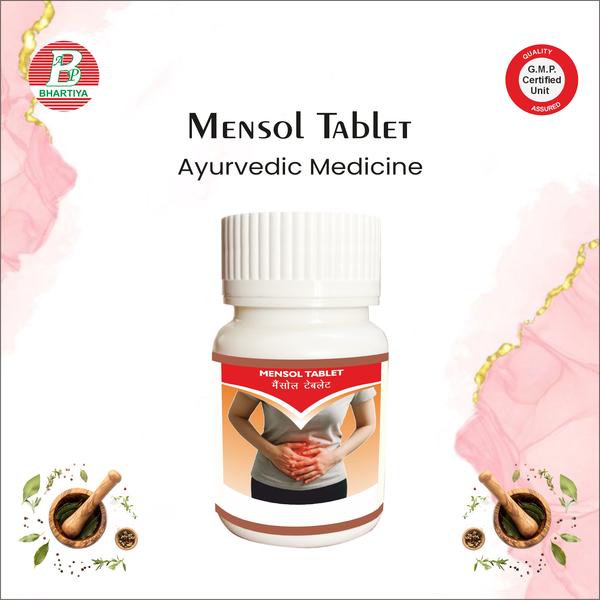
"name": "Mensol Tablet",
"description": " MENSOL TABLET \n\nProduct Identification\n•\tGeneric Name: Mensol Tablet\n•\tType: Ayurvedic Patent Medicine\n•\tPrimary Indication Area: Menstrual pain relief (dysmenorrhea)\nTherapeutic Indications:\n•\tRelief from menstrual cramps, helping reduce lower abdominal pain, uterine spasms, and the discomfort experienced during the menstrual cycle.\n Primary Benefit:\n•\tProvides relief from menstrual cramps and reduces lower abdominal pain during menstruation.\nOther Benefits:\n•\tSupports a smoother and more regulated menstrual flow by helping reduce clotting, easing heaviness, and promoting a more comfortable overall menstrual experience.\n\n ASHOK CHHAL \nBotanical / Scientific Name: Saraca asoca (Roxb.) De Wilde / Saraca indica (often used interchangeably) \nKey Phytoconstituents:\n•\tTannins\n•\tFlavonoids (catechin, quercetin, epicatechin)\n•\tGlycosides (crystalline uterine active glycosides)\n•\tSaponins\n•\tPhenolic compounds\n•\tSterols / Phytosterols (e.g., β sitosterol) \nMechanism of Action – Menstrual Problems\n1.\tUterine Tonification & Uterotonic Action\no\tActive glycosides and phytosterols stimulate healthy uterine muscle activity.\no\tHelps normalize menstrual flow and supports uterine contractions without strong tonic spasm, aiding in regular cycles and effective shedding. \n2.\tAnti menorrhagic / Astringent Action\no\tTannins and astringent constituents help reduce excessive bleeding.\no\tUseful in menorrhagia / dysfunctional uterine bleeding by tightening tissues and supporting hemostasis. \n3.\tAnti inflammatory & Analgesic Effects\no\tFlavonoids and phenolic compounds reduce local inflammation and pain mediators.\no\tHelps relieve dysmenorrhea (menstrual cramps) and pelvic discomfort. \n4.\tHormonal Modulation & Endometrial Support\no\tPhytosterols like β sitosterol may mimic/modulate estrogenic pathways, supporting endometrial repair and hormonal balance.\no\tSupports regular cycles and reproductive tissue health. \n5.\tAntioxidant & Tissue Protective Activity\no\tFlavonoids and phenolic antioxidants help scavenge free radicals, reducing oxidative stress in uterine tissues.\no\tSupports overall uterine and menstrual health. \n SHUDH HING (Asafoetida)\nBotanical Name: Ferula asafoetida\nKey Phytoconstituents:\n•\tResin (Ferulic acid derivatives)\n•\tVolatile oils (umbelliferone, α-pinene)\n•\tCoumarins\n•\tSesquiterpenes\n•\tSulphur compounds\nMechanism of Action – Menstrual Problems\n1. Antispasmodic / Uterine Spasm Relief\n•\tVolatile oils and coumarins relax uterine smooth muscles.\n•\tReduces cramping, spasms, and lower abdominal pain during menses.\n2. Blood Circulation Enhancer\n•\tSulphur compounds improve pelvic and uterine blood flow.\n•\tHelps relieve congestion, heaviness, and delayed/obstructed menses.\n3. Emmenagogue Action (Flow-Enhancing)\n•\tCoumarins stimulate mild uterine activity.\n•\tSupports smooth menstrual flow, useful in scanty or irregular periods.\n4. Anti-inflammatory Effect\n•\tFerulic acid derivatives decrease inflammatory mediators in pelvic tissues.\n•\tHelps reduce pelvic discomfort, bloating, and tenderness.\n5. Carminative / Digestive Support Linked to Menstrual Comfort\n•\tReduces gas, abdominal bloating, and digestive discomfort that often worsen cramps.\n•\tSupports overall menstrual comfort.\n HARA KASISA (Green Vitriol / Ferrous Sulphate)\nKey Phytoconstituents / Chemical Components:\n•\tFerrous sulphate (FeSO₄)\n•\tIron salts\n•\tSulphur compounds\n\nMechanism of Action – Menstrual Problems\n1. Hematinic / Iron-Supplementing Action\n•\tProvides readily absorbable iron.\n•\tHelps correct iron-deficiency anaemia, which is a major cause of fatigue and weakness during menstruation.\n•\tImproves haemoglobin levels, enhancing overall menstrual strength.\n2. Anti-menorrhagia Effect (Controls Excessive Bleeding)\n•\tIron salts support better blood clotting and stabilize vascular integrity.\n•\tHelps reduce heavy menstrual bleeding (menorrhagia) and associated dizziness or weakness.\n3. Uterine Tissue Support\n•\tAdequate iron promotes healthy endometrial regeneration.\n•\tSupports proper menstrual shedding and balanced uterine function.\n4. Energy & Vitality Enhancement\n•\tImproves oxygen delivery to tissues.\n•\tHelps reduce fatigue, lethargy, and weakness commonly associated with heavy menstrual blood loss.\n5. Restores Strength After Blood Loss\n•\tIron replenishment aids recovery after heavy or prolonged periods.\n•\tHelps build Rakta Dhatu (blood tissue) in traditional Ayurvedic view.\n\n ALUA (Aloe vera / Aloe barbadensis)\nKey Phytoconstituents:\n•\tAnthraquinones (aloin, emodin)\n•\tPolysaccharides (acemannan)\n•\tGlycoproteins\n•\tSaponins\n•\tFlavonoids\n•\tVitamins (A, C, E, B-complex)\n•\tMinerals (calcium, magnesium, zinc, iron)\nMechanism of Action – Menstrual & Reproductive Support\n1. Anti-inflammatory Effect\n•\tAnthraquinones and flavonoids reduce uterine inflammation.\n•\tHelps relieve pelvic discomfort and dysmenorrhea.\n2. Uterotonic / Emmenagogue Action\n•\tStimulates uterine tissue tone, promoting smoother menstrual flow.\n•\tUseful in cases of irregular or scanty menstruation.\n3. Hematinic / Blood-Building Action\n•\tMinerals and vitamins support blood regeneration.\n•\tHelps reduce weakness, fatigue, and anaemia associated with heavy menstrual bleeding.\n4. Analgesic / Spasm Relief\n•\tGlycoproteins and saponins help relax uterine spasms.\n•\tReduces cramps and lower abdominal pain during menstruation.\n5. Adaptogenic / General Wellness\n•\tPolysaccharides and vitamins support overall vitality.\n•\tEnhances systemic resilience during menstrual cycles.\n BEER BUTI \nBotanical / Scientific Name: Rivea hypocrateriformis\n(medicinal plant used traditionally in local Indian systems) \nKey Phytoconstituents:\n• Tannins\n• Alkaloids\n• Flavonoids\n• Carbohydrates (phytochemicals detected) \nMechanism of Action – Menstrual Problems / Uterine Support\n1.\tUterotonic / Emmenagogue Effect\no\tAlkaloids may promote healthy uterine muscle tone and activity.\no\tSupports proper menstrual flow and regulation.\n2.\tAnti inflammatory Action\no\tFlavonoids help reduce inflammation in pelvic and uterine tissues.\n3.\tAstringent / Hemostatic Action\no\tTannins provide astringent properties that may help modulate excessive bleeding or discharge.\n4.\tAnalgesic / Spasm Relief\no\tAlkaloids and flavonoids assist in reducing uterine spasms and menstrual pain.\n5.\tGeneral Wellness Support\no\tFlavonoids provide antioxidant support, aiding resilience during menstrual cycles.\nDosage \n 1–1 tablet twice a day for menstrual problems (dysmenorrhea, irregular/irritating flow) — preferably with warm milk or water, or as directed by your physician\nPrecautions – \nDo not exceed the prescribed dose.\n• Consult a doctor before use in children, elderly, pregnant or breastfeeding women, and patients with chronic illnesses.\n• Use as part of a comprehensive menstrual management plan (diet, hydration, rest).\n• Stop use and consult a physician if unusual symptoms occur (e.g., gastrointestinal upset, allergic reactions).\n• Follow the product label instructions specific to the formulation you are using\n\n\n\nmensol tablet uses, mensol tablet ayurvedic\nmensol tablet for periods, mensol tablet use in hindi\nmensol tablet price, mensol tablet in hindi\nmensol tablet benefits, mensol tablet uses in marathi\nimugest tablet benefits, mensol ayurvedic tablet uses\nmensol ayurvedic tablet uses in hindi, mensol tablet kis kaam aati hai\ncan we take multivitamin tablets during periods, mensol tablet uses in tamil\nmensol tablet uses in hindi, mensol tablet composition, mensol tablet uses in english\nmensol tablet gst rate, mensol tablet generic name, mensol tablet gst\nmensol tablet hindi, mensol tablet uses hindi, mensol tablet uses in\nnew mensol tablet uses in hindi, mensol tablet jiomart, mensol tablet login\nmensol tablet list, mensol tablet logo, mensol tablet list pdf, mensol tablet quantity\nmensol tablet quality, mensol tablet q10, mensol tablet review, mensol tablet rate\nmensol tablet review in hindi, mansol tablet uses in hindi, mansol tablet uses\nmensol tablet wholesale, mensol tablet wholesale price, mensol tablet weight\nmensol tablet which company, mensol tablet zepto, can mensol tablet kashmir\ncan mensol tablet uses in hindi, can mensol tablet benefits, will mensol tablet benefits\nwill mensol tablet ayurvedic, will mensol tablet kashmir, will mensol tablet uses in hindi\ndo mensol tablet work, do mensol tablet uses, do mensol tablet side effects\ndo mensol tablet uses in tamil, do mensol tablet uses in hindi, do mensol tablet ayurvedic\ndo mensol tablet curewell, do mensol tablet kashmir, do mensol tablet benefits\ndoes mensol tablet work, top mensol tablet uses, top mensol tablet kashmir\ntop mensol tablet uses in hindi, top mensol tablet uses in tamil\ntop mensol tablet curewell, top mensol tablet ayurvedic, top mensol tablet in hindi",
"price": 102.0,
"discountamount": 50.0,
"currencycode": "INR",
"priority": 1000000,
"isfreeshipmentavailable": false,
"shipmentduration": 1,
"_keywords": null,
"isarchived": false,
"isavailable": true,
"applicationid": null,
"productindex": 107,
"imageuri": "https://productimages.withfloats.com/actual/69ef385a3a6d113bfbff68fc.jpg",
"tileimageuri": "https://productimages.withfloats.com/tile/69ef385a3a6d113bfbff68fc.jpg",
"images": null,
"totalqueries": 0,
"gpid": null,
"groupproductid": null,
"createdon": "2026-04-27T10:20:08.582Z",
"updatedon": "2026-04-27T10:20:08.582Z",
"buyonlinelink": null,
"producturl": "http://WWW.BHARTIYAAYURVEDICPHARMACY.COM/products/mensol-tablet/107",
"availableunits": -1.0,
"iscodavailable": true,
"isprepaidonlineavailable": true,
"maxcodorders": -1,
"maxprepaidonlineorders": -1,
"uniquepaymenturl": null,
"brandname": "Bakula Fort",
"category": "Mensol Tablet 100 Tab X 50",
"tags": [],
"variants": false,
"keyspecification": null,
"otherspecifications": null,
"pickupaddressreferenceid": null,
"paymenttype": "AssuredPurchase",
"producttype": "products",
"hsncode": null,
"gstslab": 0.0,
"isnotforsale": false
},
{
"_id": "69e1c462654012fd93ca2eae",
"fptag": "BHARTIYEAYURVEDICPHARMACY",
"merchantname": null,
"customwidgets": null,
"externalsourceid": null,
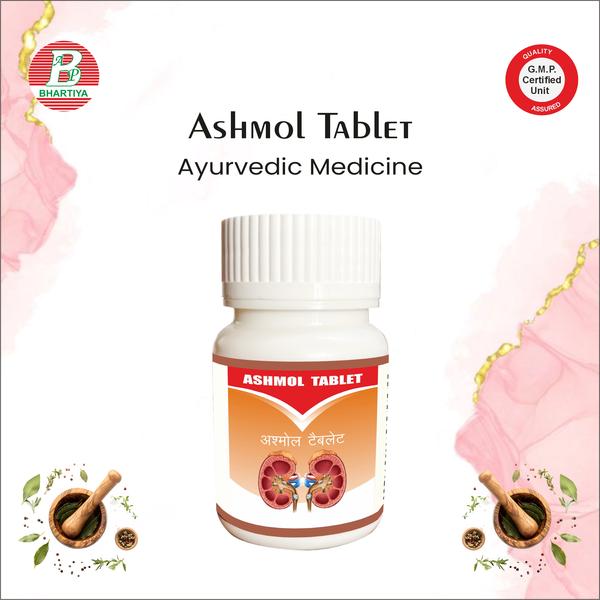
"name": "Ashmol Tablet",
"description": " ASHMOL TABLET \n\nProduct Identification\n•\tGeneric Name: Ashmol Tablet\n•\tType: Ayurvedic Patent Medicine\n•\tPrimary Indication Area: kidney stone treatment is to relieve pain and help pass or remove stones from the kidneys and urinary tract.\nTherapeutic Indications:\nPain relief, facilitation of stone passage, and prevention of stone recurrence. \nPrimary Benefit:\n•\tRelieves pain and helps pass or remove stones.\nOther Benefits:\n•\tPrevents recurrence of stones if proper medication or lifestyle changes are followed\n•\tReduces risk of urinary tract infections caused by stagnant stones\n•\tProtects kidney function by preventing obstruction and damage\n•\tMay improve urine flow and general urinary health\n HARAD \nBotanical / Common Name: Terminalia chebula\nKey Phytoconstituents:\n•\tTannins\n•\tFlavonoids\n•\tPolyphenols / Phenolic compounds\n•\tSugars / Mucilage\nMechanism of Action in Kidney Stones – Biochemistry / Pharmacology:\n1.\tInhibition of Stone Formation\no\tTannins and flavonoids bind calcium and oxalate ions, preventing calcium oxalate crystal aggregation.\no\tReduces formation of larger stones from small crystals.\n2.\tDiuretic Effect / Stone Flushing\no\tIncreases urine output, helping flush out small stones.\no\tReduces crystal retention in kidneys and ureters.\n3.\tAntioxidant / Renal Protective Effect\no\tPolyphenols and flavonoids scavenge reactive oxygen species (ROS).\no\tProtects renal tissue from oxidative damage that promotes stone formation.\n4.\tUrinary Alkalinization\no\tMildly increases urine pH, reducing uric acid stone formation.\n5.\tAnti-inflammatory Effect\no\tReduces inflammation in the urinary tract caused by stone irritation.\n\n BABOOL \nBotanical / Common Name: Acacia nilotica\nKey Phytoconstituents:\n•\tTannins\n•\tFlavonoids \n•\tSaponins\n•\tGlycosides\n•\tPolyphenolic compounds\nMechanism of Action – Biochemistry / Pharmacology:\n1.\tAntimicrobial / Oral Health Effect\no\tTannins and flavonoids exhibit antibacterial activity, reducing microbial growth in oral and gastrointestinal tract.\no\tHelps in prevention of infections and inflammation.\n2.\tAstringent Effect\no\tTannins precipitate proteins on mucosal surfaces, producing an astringent action.\no\tUseful in diarrhea, bleeding gums, and wound healing.\n3.\tAnti-inflammatory Effect\no\tPolyphenolic compounds reduce inflammation by inhibiting inflammatory mediators.\no\tProtects tissues from irritation and oxidative stress.\n4.\tAntioxidant Effect\no\tFlavonoids and polyphenols scavenge free radicals, protecting cells from oxidative damage.\n5.\tGastrointestinal Benefits\no\tSaponins and tannins strengthen gut mucosa, reduce diarrhea, and help maintain digestive health.\n\n\nSHUDH GUGGAL \nBotanical / Common Name: Commiphora mukul\nKey Phytoconstituents:\n•\tGuggulsterones (E- and Z- guggulsterone)\n•\tResinous compounds\n•\tEssential oils\n•\tSterols\nMechanism of Action – Biochemistry / Pharmacology:\n1.\tLipid-Lowering / Hypolipidemic Effect\no\tGuggulsterones modulate cholesterol metabolism by activating bile acid synthesis.\no\tReduces LDL cholesterol and triglycerides; increases HDL cholesterol.\n2.\tAnti-inflammatory Effect\no\tInhibits NF-κB pathway, reducing production of inflammatory mediators.\no\tUseful in arthritis, joint pain, and inflammatory conditions.\n3.\tAnti-oxidant Effect\no\tResin and phytosterols scavenge free radicals, protecting cells from oxidative stress.\n4.\tThyroid Stimulant / Metabolic Effect\no\tGuggulsterones may stimulate thyroid activity, enhancing metabolic rate and fat metabolism.\n5.\tCholagogue / Digestive Support\no\tPromotes bile secretion, aiding digestion and fat absorption.\n\n HAJRUL YAHOOD BHASMA \nBotanical / Common Name: mineral based Ayurvedic Bhasma (calcined stone)\nKey Phytoconstituents / Composition:\n•\tCalcium silicate / Lime silicate (from fossil stone)\n•\tMineral oxides (post calcination residues)\n(Hajrul Yahood is processed through purification and heating to form a fine, digestible powder) \nMechanism of Action in Kidney Stone / Urinary System – Biochemistry / Pharmacology:\n1.\tLithontriptic (Stone Dissolving) Action\no\tPromotes breakdown and dissolution of urinary calculi (stones), helping them reduce in size or pass through urine.\no\tUsed traditionally to manage kidney stones and assist expulsion along the urinary tract. \n2.\tDiuretic Effect / Urine Flow Promotion\no\tIncreases urine production and flow, facilitating the flushing out of small crystals or stones.\no\tHelps reduce urinary retention and complete bladder emptying. \n3.\tAnodyne / Pain Reducing Effect\no\tHas properties to alleviate renal colic (stone related pain) and discomfort during urination.\no\tMinimizes burning sensation and dysuria (painful urination). \n4.\tAntipruritic / Mucosal Protective Action\no\tTraditionally used externally for skin irritation (itching, ringworm) due to its calming effect on tissues.\no\tInternally, it supports mucosal health in the urinary tract. \n5.\tPitta & Kapha Pacification (Ayurvedic property)\no\tCooling (sheet) virya and astringent action help balance Pitta and Kapha doshas associated with excess heat and fluid imbalance in the GI and urinary systems. \n\n GHRIT KUMARI \nBotanical / Common Name: Aloe vera\nKey Phytoconstituents:\n•\tAnthraquinones (aloin, emodin)\n•\tPolysaccharides (acemannan)\n•\tSaponins\n•\tGlycoproteins\n•\tVitamins and minerals\nMechanism of Action – Biochemistry / Pharmacology:\n1.\tMild Laxative / Gastrointestinal Effect\no\tAnthraquinones stimulate intestinal peristalsis, easing bowel movements.\no\tPolysaccharides increase water content in stools, reducing constipation and straining.\n2.\tAnti-inflammatory Effect\no\tGlycoproteins and polysaccharides inhibit inflammatory mediators, soothing GI mucosa and reducing irritation.\n3.\tWound Healing / Tissue Regeneration\no\tPolysaccharides and glycoproteins promote cell proliferation, collagen synthesis, and tissue repair.\no\tHelps heal ulcers and minor GI lesions.\n4.\tAntioxidant Effect\no\tVitamins (A, C, E) and phenolic compounds scavenge free radicals, protecting tissues from oxidative damage.\n5.\tImmune Modulatory Effect\no\tPolysaccharides stimulate macrophages and cytokine activity, supporting immune defense in the GI tract.\nDosage\nDose: 2–3 tablets, twice a day (morning and evening)\n•\tAnupan: Water, preferably after food\n•\tPrecautions:\no\tOnly relieves pain, does not dissolve or remove stones\no\tMaintain hydration and follow dietary measures\no\tConsult a doctor if pain is severe, persistent, or with blood in urine/fever. \n\n\n\nashmol tablet amazon, ashmol tablet amazon india\nashmol tablet benefits, ashmol tablet buy online\nashmol tablet buy, ashmol tablet brand name\nashmol tablet composition, ashmol tablet company\nashmol tablet content, ashmol tablet composition pdf\nashmol tablet download, ashmol tablet dose\nashmol tablet dosage, ashmol tablet dose per day\nashmol tablet englis, ashmol tablet expiry date\nashmol tablet flipkart, ashmol tablet free download\nashmol tablet for hair, ashmol tablet for skin\nashmol tablet ghaziabad, ashmol tablet google\nashmol tablet ghaziabad uttar pradesh, ashmol tablet hindi\nashmol tablet holder, ashmol tablet how to use\nashmol tablet hsn code, ashmol tablet hd images\nashmol tablet indiamart, ashmol tablet india\nashmol tablet in hindi , ashmol tablet image\nashmol tablet jiomart, ashmol tablet jaipur\nashmol tablet ke fayde in hindi, ashmol tablet kya hai\nashmol tablet kis kaam aati hai, ashmol tablet ke fayde\nashmol tablet kya kam karta hai, ashmol tablet login\nashmol tablet list, ashmol tablet list pdf\nashmol tablet label, ashmolean museum tablets\nashmol tablet uses, ashmol tablet name\nashmol tablet new, ashmol tablet online shopping\nashmol tablet online, ashmol tablet order\nashmol tablet order online, ashmol tablet price\nashmol tablet price in india, ashmol tablet quality\nashmol tablet review, ashmol tablet rate\nashmol tablet review in hindi, ashmol tablet side effects\nashmol tablet supplier, ashmol tablet tablet\nasmol 500 uses in hindi, ashmol tablet video\nashmol tablet website, acimol+tablet+uses\nwhere ashmol tablet manufactured\nwhere ashmol tablet found, where ashmol tablet uses\nwhen ashmol tablet will start, when ashmol tablet launched\nwhen ashmol tablet uses, how ashmol tablet is used\nwhy ashmol tablet uses, who ashmol tablets\nwho ashmol tablet uses, is ashmol tablet good\ncan ashmol tablet uses, will ashmol tablet uses\ndo ashmol tablet uses, does ashmol tablets work\nwas ashmol tablet uses, best ashmol tablets\nbest ashmol tablet in india, top ashmol tablets\ntop ashmol tablet in india, top ashmol tablet uses",
"price": 105.0,
"discountamount": 50.0,
"currencycode": "INR",
"priority": 1000000,
"isfreeshipmentavailable": false,
"shipmentduration": 1,
"_keywords": null,
"isarchived": false,
"isavailable": true,
"applicationid": null,
"productindex": 91,
"imageuri": "https://productimages.withfloats.com/actual/69e1c46454763944d8952bf5.jpg",
"tileimageuri": "https://productimages.withfloats.com/tile/69e1c46454763944d8952bf5.jpg",
"images": null,
"totalqueries": 0,
"gpid": null,
"groupproductid": null,
"createdon": "2026-04-17T05:25:54.596Z",
"updatedon": "2026-04-17T05:25:54.596Z",
"buyonlinelink": null,
"producturl": "http://WWW.BHARTIYAAYURVEDICPHARMACY.COM//ashmol-tablet/91",
"availableunits": -1.0,
"iscodavailable": true,
"isprepaidonlineavailable": true,
"maxcodorders": -1,
"maxprepaidonlineorders": -1,
"uniquepaymenturl": null,
"brandname": "Bakula Fort",
"category": "Ashmol Tablet 100 Tab X 40",
"tags": [],
"variants": false,
"keyspecification": null,
"otherspecifications": null,
"pickupaddressreferenceid": null,
"paymenttype": "AssuredPurchase",
"producttype": "products",
"hsncode": null,
"gstslab": 0.0,
"isnotforsale": false
},
{
"_id": "69e0a9e5ba41faa29e085f5f",
"fptag": "BHARTIYEAYURVEDICPHARMACY",
"merchantname": null,
"customwidgets": null,
"externalsourceid": null,
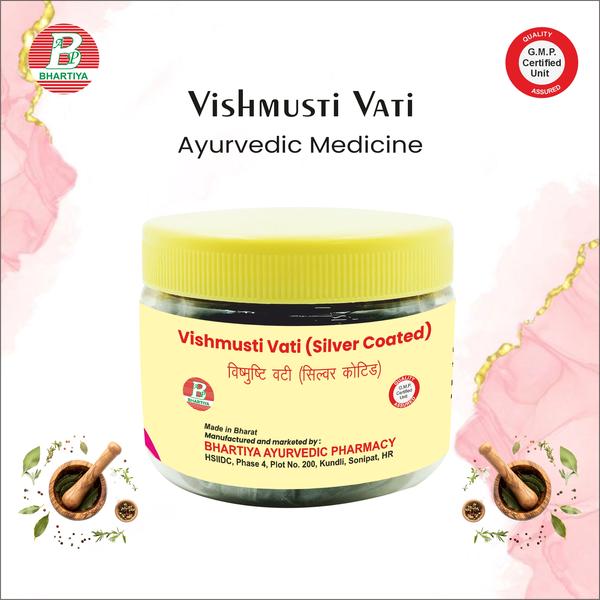
"name": "Vashmusti Vati",
"description": " VISHMUSHTI VATI (SILVER COATED) \n\nProduct Identification\n•\tGeneric Name: Vishmushti Vati\n•\tType: Ayurvedic Patent Medicine\n•\tPrimary Indication Area: All Types of Joint Pain (Gathiya / Vat Roga)\n•\tTherapeutic Indications Management of joint pain of all types, including Vata-related disorders (Gathiya / Vat Roga). \nKey benefits include:\n1.\tPain Relief\no\tHelps reduce joint pain, soreness, and discomfort caused by Vata imbalance.\n2.\tReduces Stiffness & Swelling\no\tImproves joint flexibility and eases swelling associated with arthritis or Gathiya.\n3.\tSupports Joint Mobility\no\tEnhances ease of movement and overall joint function.\n4.\tStrengthens Muscles & Bones\no\tHelps improve muscle tone around joints and supports bone health.\n5.\tAnti-fatigue & Vitality Support\no\tReduces weakness and tiredness caused by chronic joint pain.\no\tPromotes overall strength and rejuvenation.\no\t\n\nIngredients:\n SHUDH HINGUL \nAyurvedic Name: Shuddha Hingul / Hingula Bhasma\nMineral Source: Cinnabar (purified mercury sulphide)\nPrimary Use: Vata Roga & Joint Pain (Gathiya) support in classical Ayurvedic formulations\n\nKey Phytoconstituents\n•\tPurified Mercuric Sulphide (HgS) transformed into nano sized bio assimilable particles through classical Shodhana–Marana processes\n•\t Trace mineral complexes with elements like Zn, Cu, Fe formed during purification and incineration\n•\tSynergistic adjuvants (when processed with herbal decoctions such as Triphala, Guduchi, Nirgundi) to support detoxification and absorption\nMechanism of Action\n(Biochemistry / Pharmacological Basis for Joint Pain — Vata Roga / Gathiya)\n1.\tNano Particle Bio Assimilation & Immune Modulation\n\n•\tProperly purified mercuric sulphide (HgS) in Shuddha Hingul Bhasma forms extremely fine particles that cross intestinal mucosa more efficiently and interact with immune cells, stimulating macrophage activity and encouraging a balanced immune response in chronic inflammatory environments. \n2.\tAnti Inflammatory & Dosha Regulation\n•\tThrough traditional Ayurvedic mechanisms, the ushna (heating) potency and deep penetrating action of Hingul help pacify aggravated Vata dosha, which is a major contributor to stiffness, pain, and erratic neural signals in joint disorders. \n•\t Trace sulfur compounds and other mineral complexes may contribute mild anti inflammatory effects, reducing local discomfort \n3.\tDetoxification & Metabolic Balance (Ama Clearance)\n\n•\tHangul’s classical action includes enhancing agni (metabolic fire) and clearing ama (toxic metabolic by products) from tissues and srotas (channels), which in Ayurveda are thought to exacerbate joint pain and stiffness when accumulated. \n4.\tTissue Nourishment & Support\n\n•\tBy harmonizing metabolism and supporting reticuloendothelial system activity, fine bhasma particles may help improve nutrient delivery and tissue nourishment, indirectly supporting joint comfort and resilience. \n\nIngredients:\n JAYPHAL (Nutmeg) \nBotanical Name: Myristica fragrans\nAyurvedic Names: Jaiphal, Jatiphala, Jatisasya\nPrimary Use: Joint pain relief (Vata Roga), anti inflammatory and musculoskeletal support\n\nKey Phytoconstituents\nMyristicin – aromatic compound with anti inflammatory and mild analgesic properties\nElemicin – contributes to anti inflammatory and antioxidant effects\nTrimyristin & fatty acids – support metabolic functions\nEugenol, sabinene, α pinene & other volatile oils – anti inflammatory, analgesic and antioxidant constituents\n Phenolic compounds & lignans – support free radical neutralization and tissue protection\n\nMechanism of Action\n(Biochemistry / Pharmacological Basis for Joint Pain — Vata Roga / Gathiya)\n1.\tAnti Inflammatory & Analgesic Action\n•\tCompounds such as myristicin, eugenol, sabinene, β pinene and α pinene exhibit anti inflammatory and pain relieving effects, which help reduce joint swelling, soreness, and discomfort typical of Vata related joint disorders. \n2.\tAntioxidant & Tissue Protection\n•\tPhenolic compounds and lignans in Jaiphal neutralize free radicals, protecting joint tissues from oxidative stress that can worsen chronic inflammation and joint degeneration. \n3.\tVata Pacification & Nervine Modulation\n•\tIn Ayurvedic pharmacology, Jayphal’s hot (ushna) potency and pungent taste help balance aggravated Vata dosha, which contributes to pain, stiffness, and erratic neural signals in joint discomfort. \n4.\tMuscle Relaxation & Circulatory Support\n•\tNutmeg’s volatile oils may promote local blood flow and muscle relaxation, which can relieve stiffness and improve mobility around affected joints. \n\n JAVITRI (Mace) \nBotanical Name: Myristica fragrans (aril of nutmeg seed)\nAyurvedic Use: Traditionally used as a digestive, anti inflammatory and mild analgesic agent; balances Vata & Kapha doshas in classical systems and used for joint muscle discomfort support. \n\nKey Phytoconstituents\n Myristicin – an aromatic phenylpropene compound responsible for medicinal effects. \n Elemicin – contributes to anti inflammatory and antioxidant properties. \n Safrole and other volatile oils (terpenes) – support anti inflammatory and circulatory effects. \n Phenolic compounds & flavonoids (antioxidant activity). \n Minerals such as iron, magnesium and trace nutrients that support metabolic functions. \n\nMechanism of Action\n(Biochemistry / Pharmacological Basis for Joint Pain — Vata Roga / Gathiya)\n1.\tAnti Inflammatory & Pain Modulating Action\n\n•\tConstituents such as myristicin, elemicin and other volatile oils exert anti inflammatory and mild analgesic effects, reducing inflammatory mediators that contribute to joint pain and stiffness. \n2.\tAntioxidant & Tissue Protection\n\n•\tPhenolic compounds and flavonoids neutralize free radicals and oxidative stress, helping protect joint tissues from damage and degeneration. \n3.\tVata Pacifying & Nervine Support\n\n•\tIn Ayurveda, Javitri’s hot (ushna) potency and pungent taste help balance aggravated Vata dosha, which is often implicated in joint stiffness, erratic neural signals, and discomfort. \n4.\tCirculatory & Muscle Comfort Support\n\n•\tVolatile oils may enhance local circulation and support muscle relaxation, helping relieve stiffness and improve comfort around joints and connective tissues. \n\n LAVANG (Clove) \nBotanical Name: Syzygium aromaticum\nAyurvedic Name: Lavang / Laung\nPrimary Use: Analgesic & anti inflammatory support; soothing discomfort associated with joint pain and Vata imbalance\nKey Phytoconstituents\n• Eugenol – major active compound with analgesic and anti inflammatory effects\n• β Caryophyllene, chavibetol, eugenyl acetate – synergistic volatile compounds contributing to anti inflammatory and pain modulating actions\n• Other phenolic compounds and antioxidants that support tissue protection and oxidative balance \n\nMechanism of Action\n(Biochemistry / Pharmacological Basis for Joint Pain — Vata Roga / Gathiya)\n1.\tAnti Inflammatory & Pain Relieving Action\n\n•\tEugenol inhibits inflammatory mediators (such as prostaglandins via cyclooxygenase pathways) and reduces local inflammation, helping relieve discomfort in stiff or sore joints.\n• Its mildly anaesthetic action modulates nerve impulses, providing soothing relief in affected areas. \n2.\tAntioxidant & Tissue Protection\n\n•\tPhenolic compounds and flavonoid like constituents neutralize free radicals and oxidative stress, which can exacerbate chronic inflammatory conditions like joint pain.\n• This supports cellular protection and may slow degenerative changes in connective tissues. \n3.\tCirculation & Vata Balance Support\n\n•\tLavang’s warming effect (ushna virya) and pungent aroma help improve local circulation and penetrate tissues, which is believed in Ayurveda to help pacify aggravated Vata dosha, a key factor in joint stiffness and erratic neural signalling. \n4.\tMuscle Relaxation & Comfort\n•\tThe volatile oil components contribute to muscle relaxation and improved microcirculation around joints, aiding in reduced stiffness and enhanced comfort.\n\n•\tWhen used topically (e.g., in warm oil massage), these effects are particularly noticeable.\n\n KALI MIRCH (Black Pepper) \nBotanical Name: Piper nigrum\nAyurvedic Name: Kali Mirch / Marica\nPrimary Use: Support for joint discomfort, inflammation and Vata Roga (joint pain)\n\nKey Phytoconstituents\n• Piperine — the principal alkaloid responsible for most pharmacological activity\n• Essential oils: limonene, α pinene, β pinene, sabinene, caryophyllene\n• Phenolic compounds & flavonoids — contribute antioxidant activity\n• Trace nutrients and lignans that support biological actions \n\nMechanism of Action\n(Biochemistry / Pharmacological Basis for Joint Pain — Vata Roga / Gathiya)\n1.\tAnti Inflammatory & Pain Modulation\n\n•\tPiperine and related alkaloids inhibit pro inflammatory pathways (e.g., NF κB, COX, and inflammatory cytokines) that drive joint inflammation and pain in arthritis models.\n• In cell studies, piperine reduced production of inflammatory mediators such as NO, PGE₂ and cytokines (IL 6, TNF α) and inhibited enzymes that break down cartilage matrix. \n2.\tAnti Oxidant & Tissue Protection\n\n•\tPhenolic compounds and flavonoids in black pepper neutralize free radicals that can exacerbate chronic joint degeneration and inflammatory tissue damage.\n• This helps protect joint connective tissues and supports cellular resilience. \n3.\tVata Pacifying & Circulation Enhancement\n\n•\tIn Ayurvedic terms, the ushna (warming) and Tikshna (penetrating) qualities of Kali Mirch help pacify aggravated Vata dosha, improving comfort, reducing stiffness, and enhancing micro circulation around joints.\n• Topical preparations (oil or paste with carrier oil) are traditionally used to ease soreness and warmth in joint areas. \n4.\tBioavailability & Synergistic Support\n\n•\tPiperine enhances the bioavailability of other compounds (e.g., curcumin, phenolics) by inhibiting certain metabolic enzymes, which may increase effectiveness of joint support herbs\n\n SUDH KUCHLA \nAyurvedic Name: Shuddha Kuchla (Purified Strychnos nux vomica)\nBotanical Source: Seeds of Strychnos nux vomica (detoxified via classical Shodhana processes)\nPrimary Use: Supports Vata Roga & Joint Pain (Gathiya) through metabolic balance, neuromuscular stimulation, and Vata pacification\n\nKey Phytoconstituents\n• Alkaloids (notably strychnine and brucine) — the primary bioactive compounds remaining after purification that influence nervous and muscular responses. \n• Other trace constituents influenced by processing — contributing to digestion, metabolic fire (agni) enhancement, and detoxification support.\n\nMechanism of Action\n(Biochemistry / Pharmacological Basis for Joint Pain — Vata Roga / Gathiya /)\n1.\tNeuromuscular Stimulation & Pain Modulation\n\n•\tPurified alkaloids in Sudh Kuchla act on the central and peripheral nervous system, stimulating nerve activity in a controlled manner to improve nerve muscle coordination and reduce erratic Vata related neural signals that contribute to joint discomfort. \n•\t This neuromodulation can indirectly help reduce sensations of stiffness and weakness in chronic joint conditions.\n2.\tAnti Inflammatory & Vata Balance\n\n•\tThrough classical Ayurvedic properties (bitter, pungent taste with warming potency), Sudh Kuchla pacifies aggravated Vata dosha, a key driver of joint pain and stiffness in Vata dominant disorders like Gathiya.\n3.\tDigestive Fire (Agni) & Detoxification Support\n\n•\tWarming virya (ushna potency) of Sudh Kuchla supports metabolic fire (agni), which aids in digestion and clears metabolic by products (ama) that are believed in Ayurveda to worsen joint pain and tissue congestion. \n4.\tMuscle & Tissue Support\n\n•\tBy stimulating metabolic activity and nervous regulation, Sudh Kuchla may contribute to improved nutrient delivery and deep tissue nourishment, indirectly supporting resilience in musculoskeletal structures during joint stress. \n\n\nDosage:\n1.\tDose per intake: 1–2 pills\n2.\tFrequency: 2 times daily\n3.\tTotal daily dose: 2–4 pills (depending on physician advice)\n4.\tHow to take: With milk, preferably after meals\n\nPrecautions\n•\tDo not exceed the prescribed dose\n•\tConsult an Ayurvedic practitioner before use in:\no\tChildren\no\tElderly\no\tPatients with chronic illness\n•\tMonitor for any side effects (e.g., digestive discomfort)\n•\tMaintain proper diet and hydration to support bowel health\n\n\nvishamushti vati uses, vishamushti vati\nvishamushti vati ingredients, vishamushti vati benefits\nvishamushti vati price, vishamushti vati tablet\nvishamushti vati uses in hindi, vishamushti vati benefits in hindi\nvishamushti vati in hindi, vishamushti vati easy ayurveda\nvishamushti vati use, vishamushti vati composition\nvishmusti vati flipkart, vishmusti vati goli\nvishmusti vati jankari in hindi, vishmusti vati jankari\nvishmusti vati ke fayde, vishmusti vati ke fayde in hindi\nvishmusti vati khane ke fayde, vishmusti vati kya kam karta hai\nvishmusti vati manufacturer, vishmusti vati mrp\nvishmusti vati near me, use of vishamushti vati\nvishmusti vati quality, vishmusti vati quantity\nvishamushti vati side effects, vishmusti vati website\nvishmusti vati works, uses of vishamushti vati\nwhat vishmusti vati uses in hindi, what vishmusti vati uses\nwhere vishmusti vati manufactured, where vishmusti vati available\nwhen vishmusti vati uses in hindi, when vishmusti vati uses\nwho vishmusti vati uses in hindi, can vishmusti vati uses in hindi\nwill vishmusti vati uses in hindi, was vishmusti vati uses in hindi\nbest vishamushti vati in hindi, best vishamushti vati uses",
"price": 990.0,
"discountamount": 495.0,
"currencycode": "INR",
"priority": 1000000,
"isfreeshipmentavailable": false,
"shipmentduration": 1,
"_keywords": null,
"isarchived": false,
"isavailable": true,
"applicationid": null,
"productindex": 88,
"imageuri": "https://productimages.withfloats.com/actual/69e0a9f3c32735ec39db6df9.jpg",
"tileimageuri": "https://productimages.withfloats.com/tile/69e0a9f3c32735ec39db6df9.jpg",
"images": null,
"totalqueries": 0,
"gpid": null,
"groupproductid": null,
"createdon": "2026-04-16T09:20:37.839Z",
"updatedon": "2026-04-16T09:20:37.839Z",
"buyonlinelink": null,
"producturl": "http://WWW.BHARTIYAAYURVEDICPHARMACY.COM//vashmusti-vati/88",
"availableunits": -1.0,
"iscodavailable": true,
"isprepaidonlineavailable": true,
"maxcodorders": -1,
"maxprepaidonlineorders": -1,
"uniquepaymenturl": null,
"brandname": "Bakula Fort",
"category": "Vashmusti Vati 100gm X 20",
"tags": [],
"variants": false,
"keyspecification": null,
"otherspecifications": null,
"pickupaddressreferenceid": null,
"paymenttype": "AssuredPurchase",
"producttype": "products",
"hsncode": null,
"gstslab": 0.0,
"isnotforsale": false
},
{
"_id": "6985b8fb911df6d4b0db36c4",
"fptag": "BHARTIYEAYURVEDICPHARMACY",
"merchantname": null,
"customwidgets": null,
"externalsourceid": null,
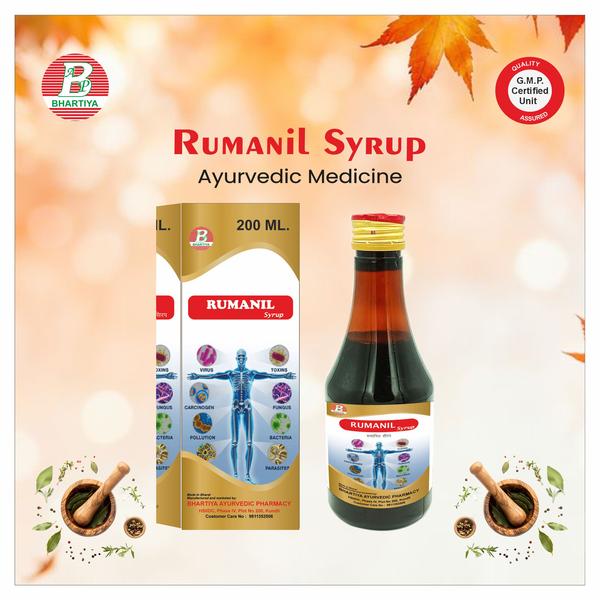
"name": "Rumanil Syrup",
"description": " RUMANIL SYRUP \n\nProduct Identification\n•\tGeneric Name: Rumanil Syrup\n•\tType: Ayurvedic Patent Medicine\n•\tPrimary Indication Area: Joint health, musculoskeletal support, and relief from pain and inflammation. \n Therapeutic Indications\n•\tProvides relief from joint pain and stiffness.\n•\tSupports mobility and flexibility of joints.\n•\tReduces inflammation and discomfort associated with arthritis or minor injuries.\n•\tHelps in strengthening bones and muscles.\n\nKey benefits:\n1.\tRelieves Joint Pain – Helps reduce discomfort in knees, elbows, shoulders, and other joints.\n2.\tReduces Inflammation – Herbal ingredients work to calm swelling and tenderness.\n3.\tImproves Flexibility & Mobility – Supports easier movement and reduces stiffness.\n4.\tStrengthens Muscles & Bones – Contributes to overall musculoskeletal health.\n5.\tSupports Arthritis Management – May help with symptoms of osteoarthritis or mild joint disorders.\n6.\tNatural & Ayurvedic – Use traditionally formulations long term use\n \nIngredient: \n Guggulu (Commiphora mukul)\nKey Phytoconstituents:\n1.\tGuggulsterones (E & Z isomers) – main active compounds\n2.\tSterols & Diterpenoids – anti-inflammatory activity\n3.\tResins – provide therapeutic effects\n4.\tEssential oils – minor anti-inflammatory and analgesic effects\n\nMechanism of Action in Joint Health\n1.\tAnti-inflammatory\no\tGuggulsterones inhibit pro-inflammatory mediators (like TNF-α, IL-1β, and COX enzymes).\no\tReduces swelling, stiffness, and tenderness in joints.\n2.\tAnalgesic (Pain Relief)\no\tReduces pain associated with osteoarthritis, rheumatoid arthritis, and minor joint injuries.\n\nSalai Guggul (Boswellia serrata)\nBotanical Name: Boswellia serrata\nCommon Name: Indian Frankincense\nKey Phytoconstituents:\n1.\tBoswellic Acids (α, β, acetyl-boswellic acids) – main active anti-inflammatory compounds\n2.\tTriterpenoids – support anti-inflammatory activity\n3.\tEssential Oils – minor analgesic and anti-inflammatory effects\n\nMechanism of Action in Joint Health\n1.\tAnti-inflammatory\no\tBoswellic acids inhibit 5-lipoxygenase (5-LOX), reducing leukotriene synthesis.\no\tHelps control inflammation in arthritis, tendinitis, and joint swelling.\n2.\tAnalgesic (Pain Relief)\no\tReduces pain associated with osteoarthritis and rheumatoid arthritis.\n\nChobchini (Smilax china)\nBotanical Name: Smilax china\nCommon Name: Chobchini\nKey Phytoconstituents:\n1.\tSaponins – main bioactive compounds, contribute to anti-inflammatory and detoxifying effects.\n2.\tFlavonoids – provide antioxidant and anti-inflammatory properties.\n3.\tSteroids & Triterpenoids – support anti-inflammatory and immune-modulatory activity.\n4.\tPolyphenols – help reduce oxidative stress and support joint health.\nMechanism of Action in Joint Health:\n1. Anti-inflammatory Effects\n•\tSaponins and flavonoids inhibit pro-inflammatory mediators, reducing joint inflammation and swelling.\n•\tHelpful in conditions like arthritis and gout.\n2. Analgesic (Pain Relief)\n•\tReduces pain and discomfort associated with inflamed joints\n\nAshwagandha (Withania somnifera)\nBotanical Name: Withania somnifera\nCommon Name: Ashwagandha, Indian Ginseng, Winter Cherry\nKey Phytoconstituents:\n1.\tWithanolides – steroidal lactones responsible for anti-inflammatory, adaptogenic, and immunomodulatory effects.\n2.\tAlkaloids – contribute to stress reduction and neuroprotective activity.\n3.\tSaponins – support anti-inflammatory and antioxidant actions.\n4.\tPolyphenols – provide antioxidant and tissue-protective effects.\nMechanism of Action in Joint Health:\n1. Anti-inflammatory Effects\n•\tWithanolides and saponins inhibit inflammatory cytokines (e.g., TNF-α, IL-1β) and oxidative stress in joints.\n•\tHelps in arthritis, tendinitis, and joint swelling.\n2. Analgesic (Pain Relief)\n•\tReduces pain and discomfort in osteoarthritis and rheumatoid arthritis.\n\nHaldi (Curcuma longa)\nBotanical Name: Curcuma longa\nCommon Name: Turmeric, Haldi\nKey Phytoconstituents:\n1.\tCurcuminoids (Curcumin, Desmethoxycurcumin, Bisdemethoxycurcumin) – primary anti-inflammatory and antioxidant compounds.\n2.\tVolatile Oils (Turmerone, Atlantone, Zingiberene) – provide minor analgesic and anti-inflammatory effects.\n3.\tPolysaccharides & Phenolics – support joint health through antioxidant and tissue-protective effects.\nMechanism of Action in Joint Health:\n1. Anti-inflammatory Effects\n•\tCurcumin inhibits NF-κB, COX-2, and 5-LOX pathways, reducing pro-inflammatory cytokines and mediators.\n•\tHelps manage arthritis, joint swelling, and tendinitis.\n2. Analgesic (Pain Relief)\n•\tReduces pain and stiffness associated with osteoarthritis and rheumatoid arthritis.\n\nNirgundi (Vitex negundo)\nBotanical Name: Vitex negundo\nCommon Name: Nirgundi, Five-leaved Chaste Tree\nKey Phytoconstituents:\n1.\tFlavonoids (Negundoside, Casticin, Vitexin) – contribute to anti-inflammatory and antioxidant effects.\n2.\tIridoid glycosides – provide analgesic and anti-inflammatory activity.\n3.\tEssential oils (α-pinene, β-caryophyllene, cineole) – minor analgesic and anti-inflammatory effects.\n4.\tTriterpenoids & Steroids – support joint health by modulating inflammation.\nMechanism of Action in Joint Health:\n1. Anti-inflammatory Effects\n•\tFlavonoids and iridoid glycosides inhibit inflammatory mediators like prostaglandins and leukotrienes.\n•\tHelps manage arthritis, joint swelling, and muscle inflammation.\n2. Analgesic (Pain Relief)\n•\tReduces pain associated with osteoarthritis, rheumatoid arthritis, and general joint discomfort.\n\nRasna (Pluchea lanceolata / Pluchea indica)\nBotanical Name: Pluchea lanceolata (commonly) / Pluchea indica\nCommon Name: Rasna\nKey Phytoconstituents:\n1.\tFlavonoids (Quercetin, Kaempferol derivatives) – provide anti-inflammatory and antioxidant effects.\n2.\tTerpenoids & Essential Oils – contribute analgesic and anti-inflammatory activity.\n3.\tAlkaloids & Phenolics – support anti-inflammatory and tissue-protective functions.\nMechanism of Action in Joint Health:\n1. Anti-inflammatory Effects\n•\tInhibits pro-inflammatory mediators like prostaglandins and leukotrienes.\n•\tEffective in arthritis, joint swelling, and musculoskeletal inflammation.\n2. Analgesic (Pain Relief)\n•\tReduces joint pain and discomfort associated with osteoarthritis and rheumatic conditions.\n\nSaunth (Zingiber officinale, dried ginger)\nBotanical Name: Zingiber officinale\nCommon Name: Saunth, Dried Ginger\nKey Phytoconstituents:\n1.\tGingerols & Shogaols – primary anti-inflammatory and analgesic compounds.\n2.\tVolatile Oils (Zingiberene, β-bisabolene, α-Curcumene) – support pain relief and anti-inflammatory effects.\n3.\tResins & Phenolic Compounds – provide antioxidant and tissue-protective activity.\nMechanism of Action in Joint Health:\n1. Anti-inflammatory Effects\n•\tGingerols and shogaols inhibit COX and 5-LOX pathways, reducing pro-inflammatory prostaglandins and leukotrienes.\n•\tHelps manage arthritis, joint swelling, and tendon inflammation.\n2. Analgesic (Pain Relief)\n•\tReduces joint pain and stiffness associated with osteoarthritis and rheumatoid arthritis.\n\nErandmool (Ricinus communis)\nBotanical Name: Ricinus communis\nCommon Name: Castor Root, Erandmool\nKey Phytoconstituents:\n1.\tRicinoleic Acid – primary anti-inflammatory and analgesic compound.\n2.\tFlavonoids & Phenolic Compounds – provide antioxidant and tissue-protective effects.\n3.\tTriterpenoids & Sterols – support anti-inflammatory activity and joint tissue protection.\nMechanism of Action in Joint Health:\n1. Anti-inflammatory Effects\n•\tRicinoleic acid and triterpenoids modulate inflammatory mediators like prostaglandins and cytokines.\n•\tReduces joint swelling and inflammation in arthritis and musculoskeletal conditions.\n2. Analgesic (Pain Relief)\n•\tProvides pain relief in osteoarthritis, rheumatoid arthritis, and general joint discomfort.\n\nMulethi (Glycyrrhiza glabra)\nBotanical Name: Glycyrrhiza glabra\nCommon Name: Mulethi, Licorice Root\nKey Phytoconstituents:\n1.\tGlycyrrhizin – primary anti-inflammatory and tissue-protective compound.\n2.\tFlavonoids (Liquiritin, Isoliquiritin, Glabridin) – antioxidant and anti-inflammatory effects.\n3.\tSaponins & Phenolics – support cartilage protection and analgesic activity’s\nMechanism of Action in Joint Health:\n1. Anti-inflammatory Effects\n•\tGlycyrrhizin and flavonoids modulate inflammatory cytokines and inhibit COX/LOX pathways.\n•\tHelps reduce arthritis-related inflammation, joint swelling, and musculoskeletal pain.\n2. Analgesic (Pain Relief)\n•\tReduces pain and discomfort in osteoarthritis and rheumatoid arthritis.\n\nSuranjan (Colchicum luteum / Colchicum autumnale)\nBotanical Name: Colchicum luteum (commonly in Ayurveda) / Colchicum autumnale\nCommon Name: Suranjan\nKey Phytoconstituents:\n1.\tColchicine – primary anti-inflammatory and anti-gout compound.\n2.\tAlkaloids & Phenolics – support anti-inflammatory and antioxidant effects.\n3.\tFlavonoids & Saponins – provide tissue-protective and mild analgesic effects.\nMechanism of Action in Joint Health:\n1. Anti-inflammatory Effects\n•\tColchicine inhibits microtubule polymerization, reducing neutrophil migration and inflammatory mediator release.\n•\tHighly effective in gouty arthritis, joint swelling, and acute inflammation.\n2. Analgesic (Pain Relief)\n•\tReduces pain in joints, especially in gout and acute inflammatory episodes.\n\n\nrumanil medicine, rumanil medicine in hindi\nrumanil syrup amazon, rumanil syrup amazon india\nrumanil syrup benefits, rumanil syrup benefits in hindi\nrumanil syrup buy online, rumanil syrup company name\nrumanil syrup composition, rumanil syrup content\nrumanil syrup dosage, rumanil syrup dose, rumanil syrup english\nrumanil syrup expiry date, rumanil syrup expiry date check\nrumanil syrup flipkart, rumanil syrup generic\nrumanil syrup generic name, rumanil syrup gst rate\nrumanil syrup gst rate and hsn code, rumanil syrup jan aushadhi\nrumanil syrup jiomart, rumanil syrup ke fayde\nrumanil syrup ke fayde in hindi, rumanil syrup manufacturer\nrumanil syrup manufacturers in india, rumanil syrup mrp\nrumanil syrup name, rumanil syrup news in hindi\nrumanil syrup online, rumanil syrup online order\nrumanil syrup online purchase, rumanil syrup online shopping\nrumanil syrup pric, rumanil syrup price in india\nrumanil syrup quality, rumanil syrup quantity\nrumanil syrup rate, rumanil syrup review\nrumanil syrup side effects, rumanil syrup side effects in hindi\nrumanil tablet hindi",
"price": 210.0,
"discountamount": 105.0,
"currencycode": "INR",
"priority": 1000000,
"isfreeshipmentavailable": false,
"shipmentduration": 1,
"_keywords": null,
"isarchived": false,
"isavailable": true,
"applicationid": null,
"productindex": 38,
"imageuri": "https://productimages.withfloats.com/actual/6985b8fee34c104b18ad342c.jpg",
"tileimageuri": "https://productimages.withfloats.com/tile/6985b8fee34c104b18ad342c.jpg",
"images": null,
"totalqueries": 0,
"gpid": null,
"groupproductid": null,
"createdon": "2026-02-06T09:48:43.96Z",
"updatedon": "2026-02-19T03:28:26.086Z",
"buyonlinelink": null,
"producturl": "http://WWW.BHARTIYAAYURVEDICPHARMACY.COM//rumanil-syrup/38",
"availableunits": -1.0,
"iscodavailable": true,
"isprepaidonlineavailable": true,
"maxcodorders": -1,
"maxprepaidonlineorders": -1,
"uniquepaymenturl": null,
"brandname": "Bakula Fort",
"category": "Rumanil Syrup 200 ML X 24",
"tags": [],
"variants": false,
"keyspecification": null,
"otherspecifications": null,
"pickupaddressreferenceid": null,
"paymenttype": "AssuredPurchase",
"producttype": "products",
"hsncode": null,
"gstslab": 0.0,
"isnotforsale": false
},
{
"_id": "6982fd57fa5708ebdc6e87eb",
"fptag": "BHARTIYEAYURVEDICPHARMACY",
"merchantname": null,
"customwidgets": null,
"externalsourceid": null,
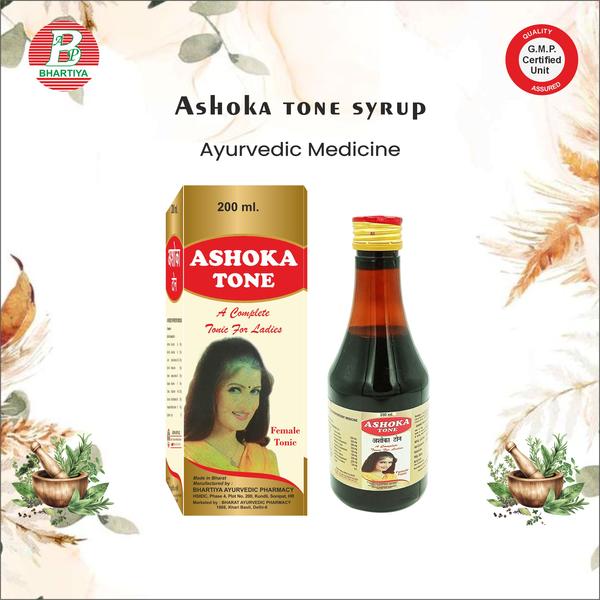
"name": "Ashoka Tone Syrup",
"description": " ASHOKATONE SYRUP \n\nProduct Identification\n•\tGeneric Name: Ashokatone Syrup\n•\tType: Ayurvedic Patent Medicine\n•\tPrimary Indication Area: Female reproductive health, menstrual disorders, uterine health\n Therapeutic Indications\nFor relief from menstrual disorders, uterine health support, and general female reproductive wellness.\nKey benefits:\n•\tRegulates menstrual cycle and reduces menstrual discomfort\n•\tControls excessive menstrual bleeding\n•\tSupports uterine health and reproductive wellness\n•\tHelps balance female hormones naturally\n•\tPromotes overall gynecological well-being\n \nIngredient: \n Ashok chhal \nBotanical Name: Terminalia arjuna \nKey Phytoconstituents: \n\n1.\tTriterpenoids / Triterpenoid Glycosides\no\tArjunolic acid\no\tArjunic acid\no\tArjunetin\n2.\tFlavonoids\no\tLuteolin\no\tQuercetin\no\tKaempferol\n3.\tTannins / Polyphenols\no\tPyrogallol-type tannins\no\tEllagic acid\n4.\tSaponins\n5.\tMinerals\no\tCalcium, magnesium, potassium\n\nMechanism of Action in Female Reproductive health\n•\tUterotonic / Menstrual Regulation\no\tHelps normalize menstrual cycles and reduce heavy menstrual bleeding (menorrhagia).\no\tMechanism: Tannins and flavonoids act on the uterine muscles, promoting tonicity and regulating contractions.\n•\tAnti-inflammatory / Antioxidant\no\tReduces inflammation in the endometrium, which helps with dysmenorrhea (painful menstruation).\no\tAntioxidants protect reproductive tissues from oxidative stress.\n•\tEndometrial Health\no\tPromotes healthy endometrial lining, supporting fertility and implantation.\n•\tHormonal Modulation (Indirect)\no\tHelps regulate estrogen and progesterone balance indirectly via uterine tissue support.\no\tMay support follicular maturation and ovarian function in traditional use.\n•\tManagement of Menorrhagia and Fibroids (Ayurvedic use)\no\tTraditionally used to control excessive bleeding due to its mild astringent (tannic) properties.\no\tHelps strengthen uterine walls and reduce bleeding.\n\n Babul Chhal\nBotanical Name: Acacia nilotica\n1. Key Phytoconstituents\n1.\tTannins / Polyphenols\no\tGallotannins\no\tCatechins\n2.\tFlavonoids\no\tKaempferol\no\tQuercetin\n3.\tAlkaloids\n4.\tSaponins\n5.\tVolatile oils\n6.\tMinerals\no\tCalcium, magnesium, potassium\n\nMechanism of Action in Female Reproductive Health\n•\tAstringent / Hemostatic\no\tReduces excessive uterine bleeding (menorrhagia) due to high tannin content.\no\tStrengthens uterine walls.\n•\tUterotonic / Menstrual Regulation\no\tSupports normalization of menstrual cycles by improving uterine tone.\n•\tAnti-inflammatory / Antioxidant\no\tReduces inflammation in reproductive tissues.\no\tProtects against oxidative stress.\n•\tManagement of Dysmenorrhea\no\tRelieves menstrual pain due to mild uterine muscle support and anti-inflammatory effects.\n•\tFertility Support (Traditional Use)\no\tPromotes reproductive tissue health and may support endometrial lining.\n\n Lodhra Chhal \nBotanical Name: Symplocos racemosa\n Key Phytoconstituents\n1.\tTannins / Polyphenols\no\tLodhretannin\no\tGallic acid\n2.\tFlavonoids\no\tQuercetin\no\tKaempferol\n3.\tAlkaloids\n4.\tSaponins\n5.\tGlycosides\n6.\tMinerals\no\tCalcium, magnesium, potassium\n\nMechanism of Action in Female Reproductive Health\n•\tAstringent / Hemostatic\no\tControls excessive uterine bleeding (menorrhagia) due to high tannin content.\no\tStrengthens uterine walls.\n•\tUterotonic / Menstrual Regulation\no\tHelps normalize menstrual cycles and regulate uterine contractions.\n•\tAnti-inflammatory / Antioxidant\no\tReduces inflammation in the endometrium.\no\tProtects reproductive tissues from oxidative stress.\n•\tManagement of Dysmenorrhea\no\tRelieves menstrual pain through uterine muscle support and anti-inflammatory effects.\n•\tEndometrial Health / Fertility Support\no\tPromotes healthy endometrial lining, supporting fertility and implantation.\n\n Marodphali Chhal \nBotanical Name: Helicteres isora\nKey Phytoconstituents\n•\tPolyphenols & Tannins: High levels of ellagitannins and condensed tannins (15–20% in fruit) provide astringent and antidiarrheal effects.\n•\tPhenolic Acids: Contains gallic acid, ellagic acid, caffeic acid, and p-coumaric acid, which act as powerful antioxidants.\n•\tFlavonoids: Primarily quercetin, kaempferol glycosides, and specialized compounds like isoscutellarein derivatives.\n•\tTriterpenoids & Sterols: Includes betulinic acid, oleanolic acid, and βbeta 𝛽-sitosterol, which support anti-inflammatory and liver health.\n•\tCucurbitacins: Notable compounds Cucurbitacin B and isocucurbitacin B are found in the roots, linked to potential anticancer activities.\n•\tGlycosides: Contains anthraquinone, cardiac, and rosmarinic acid glycosides.\n•\tNutrients: Rich in minerals (calcium, phosphorus, iron) and mucilage in seeds, which soothes the digestive tract. \nMechanism of Action in Female Reproductive Health\n•\tUterotonic / Menstrual Regulation\no\tSupports normalization of menstrual cycles and regulates uterine contractions.\n•\tAstringent / Hemostatic\no\tReduces excessive uterine bleeding (menorrhagia) due to tannins.\no\tStrengthens uterine walls.\n•\tAnti-inflammatory / Antioxidant\no\tProtects endometrial tissue and reduces inflammation in reproductive organs.\n•\tManagement of Dysmenorrhea\no\tRelieves menstrual pain through uterine muscle support and anti-inflammatory action.\n•\tEndometrial Health / Fertility Support\no\tPromotes healthy endometrial lining, supporting fertility and implantation.\n\n Shatavari Chhal \nBotanical Name: Asparagus racemosus\n Key Phytoconstituents\n1.\tSteroidal saponins (Shatavarins)\no\tShatavarin I, II, III\n2.\tFlavonoids\no\tQuercetin\no\tKaempferol\n3.\tAlkaloids\n4.\tTannins / Polyphenols\n5.\tGlycosides\n6.\tPolysaccharides\n7.\tMinerals\no\tCalcium, magnesium, potassium\n\nMechanism of Action in Female Reproductive Health\n•\tGalactagogue / Uterine Tonic\no\tSupports lactation and strengthens uterine tissues postpartum.\n•\tHormonal Modulation / Adaptogenic\no\tBalances estrogen and progesterone, supporting menstrual regularity and fertility.\n•\tUterotonic / Menstrual Regulation\no\tHelps normalize menstrual cycles and uterine contractions.\n•\tAnti-inflammatory / Antioxidant\no\tProtects reproductive tissues from oxidative stress and reduces endometrial inflammation.\n•\tEndometrial Health / Fertility Support\no\tPromotes healthy endometrial lining, follicular development, and implantation.\n•\tManagement of Dysmenorrhea & Menorrhagia\no\tReduces pain and controls excessive bleeding through saponins and uterine support.\n\n Nagkesar Chhal \nBotanical Name: Mesua ferrea\nKey Phytoconstituents\n1.\tXanthones\no\tMesuaxanthone\n2.\tCoumarins\no\tMesuol\no\tMesuagin\n3.\tFlavonoids\no\tQuercetin\no\tKaempferol\n4.\tTannins / Polyphenols\n5.\tEssential oils\n6.\tFatty acids\n7.\tMinerals\no\tCalcium, magnesium, potassium\n\nMechanism of Action in Female Reproductive Health\n•\tAstringent / Hemostatic\no\tControls excessive uterine bleeding (menorrhagia) due to tannins and polyphenols.\no\tStrengthens uterine walls.\n•\tUterotonic / Menstrual Regulation\no\tSupports normalization of menstrual cycles and regulates uterine contractions.\n•\tAnti-inflammatory / Antioxidant\no\tReduces endometrial inflammation and oxidative stress in reproductive tissues.\n•\tManagement of Dysmenorrhea\no\tRelieves menstrual pain via uterine support and anti-inflammatory action.\n•\tEndometrial Health / Fertility Support\no\tPromotes healthy endometrial lining, supporting implantation and fertility\n\n Chandan Chhal \nBotanical Name: Santalum album\n Key Phytoconstituents\n1.\tEssential oils / Volatile oils\no\tα-santalol\no\tβ-santalol\n2.\tFlavonoids\no\tQuercetin\no\tKaempferol\n3.\tTannins / Polyphenols\n4.\tSesquiterpenes\n5.\tResins\n6.\tMinerals\no\tCalcium, magnesium, potassium\n\nMechanism of Action in Female Reproductive Health\n•\tAnti-inflammatory / Cooling Effect\no\tReduces endometrial inflammation and soothes reproductive tissues.\n•\tAstringent / Mild Hemostatic\no\tHelps control mild excessive bleeding (menorrhagia).\n•\tUterine Tonic\no\tSupports uterine health and tonicity.\n•\tManagement of Dysmenorrhea\no\tRelieves menstrual pain through anti-inflammatory and smooth muscle calming effects.\n•\tEndometrial Health / Fertility Support\no\tPromotes healthy uterine lining, indirectly supporting fertility.\n\n Semal Chhal \nBotanical Name: Bombax ceiba\n1. Key Phytoconstituents\n1.\tFlavonoids\no\tQuercetin\no\tKaempferol\n2.\tTannins / Polyphenols\no\tGallic acid\no\tEllagic acid\n3.\tSaponins\n4.\tAlkaloids\n5.\tGum / Mucilage\n6.\tMinerals\no\tCalcium, magnesium, potassium\n\nMechanism of Action in Female Reproductive Health\n•\tAstringent / Hemostatic\no\tControls excessive uterine bleeding (menorrhagia) due to tannins.\no\tStrengthens uterine walls.\n•\tUterotonic / Menstrual Regulation\no\tHelps normalize menstrual cycles and regulates uterine contractions.\n•\tAnti-inflammatory / Antioxidant\no\tReduces inflammation in the endometrium and protects reproductive tissues from oxidative stress.\n•\tManagement of Dysmenorrhea\no\tRelieves menstrual pain through uterine support and anti-inflammatory action.\n•\tEndometrial Health / Fertility Support\no\tPromotes healthy endometrial lining, supporting implantation and fertility.\n\n Ashwagandha Chhal \nBotanical Name: Withania somnifera\n1. Key Phytoconstituents\n1.\tWithanolides (steroidal lactones)\no\tWithaferin A\no\tWithanolide D, E, and F\n2.\tAlkaloids\no\tSomniferine\no\tAnaferine\n3.\tSaponins\n4.\tFlavonoids\no\tQuercetin\no\tKaempferol\n5.\tTannins / Polyphenols\n6.\tIron, Calcium, Magnesium\n\nMechanism of Action in Female Reproductive Health\n•\tAdaptogenic / Hormonal Modulator\no\tHelps balance estrogen and progesterone, supporting menstrual regularity and ovarian function.\n•\tUterotonic / Reproductive Tonic\no\tSupports uterine health and promotes healthy uterine tone.\n•\tAnti-inflammatory / Antioxidant\no\tReduces endometrial inflammation and oxidative stress in reproductive tissues.\n•\tManagement of Dysmenorrhea\no\tAlleviates menstrual pain via anti-inflammatory and smooth muscle relaxant effects.\n•\tFertility Support\no\tPromotes healthy endometrial lining, supports follicular development, and improves reproductive tissue health.\n•\tStress & Ovulatory Support\no\tReduces stress-induced reproductive dysfunction due to adaptogenic effects.\n\n Sugar Base (Guda / Sugar Syrup)\n Key Phytoconstituents\n1.\tSucrose / Glucose / Fructose – main carbohydrate content\n2.\tMinerals\no\tCalcium, magnesium, potassium\no\tIron (in jaggery-based preparations)\n3.\tTrace Vitamins\no\tB-complex vitamins (in jaggery)\n4.\tPolyphenols\no\tAntioxidants (especially in unrefined jaggery)\nMechanism of Action in Female Reproductive Health\n•\tCarrier / Base for Herbal Formulations\no\tHelps deliver active phytoconstituents of herbal medicines effectively.\no\tImproves palatability and stability of formulations like Lehyas, Avalehas, and Churnas.\n•\tEnergy & Nutritional Support\no\tProvides immediate energy, important in postpartum care and anemia associated with menorrhagia.\n•\tMild Uterine Support (Indirect)\no\tWhen combined with herbs like Ashok, Shatavari, or Lodhra in Lehyas, it enhances absorption and supports reproductive tissue health.\n•\tHematopoietic Support\no\tJaggery-based sugar aids iron absorption, helpful in menstrual blood loss recovery.\nDose:\nDosage Instructions\n•\tAmount: 15–30 ml per dose\n•\tDilution: Mix with an equal amount of water (so if you take 15 ml of syrup, mix with 15 ml water)\n•\tFrequency: 3 times a day\n•\tTiming: After meals\nNotes / Precautions\n1.\tConsistency: Take it at the same times each day for best results.\n2.\tMonitor effects: If you experience any digestive discomfort, nausea, or allergic reactions, stop and consult a healthcare professional.\n3.\tMedical conditions: If you have chronic illnesses, are pregnant, or breastfeeding, check with a doctor before use.\n4.\tStorage: Keep in a cool, dry place and shake well before use.\n\n\nashoka cordial syrup uses, ashoka for tonic\nashoka rate syrup, ashoka syrup benefits\nashoka syrup in hindi, ashoka tone\nashoka tone syrup, ashoka tone syrup age limit\nashoka tone syrup amazon, ashoka tone syrup ayurvedic\nashoka tone syrup benefits, ashoka tone syrup benefits in hindi\nashoka tone syrup cold, ashoka tone syrup company name\nashoka tone syrup composition, ashoka tone syrup compound\nashoka tone syrup dosage, ashoka tone syrup dose\nashoka tone syrup expiry date, ashoka tone syrup flipkart\nashoka tone syrup generic name, ashoka tone syrup jpg\nashoka tone syrup ke fayde, ashoka tone syrup ke fayde in hindi\nashoka tone syrup kis kaam aata hai, ashoka tone syrup kis kaam aati hai\nashoka tone syrup login, ashoka tone syrup m\nashoka tone syrup meaning in hindi, ashoka tone syrup medicine\nashoka tone syrup mg, ashoka tone syrup mg road\nashoka tone syrup mrp, ashoka tone syrup name\nashoka tone syrup near me, ashoka tone syrup news\nashoka tone syrup news in hindi, ashoka tone syrup online\nashoka tone syrup online order, ashoka tone syrup online purchase\nashoka tone syrup online shopping, ashoka tone syrup plus tonic\nashoka tone syrup pm price, ashoka tone syrup price\nashoka tone syrup price in india, ashoka tone syrup qr code\nashoka tone syrup qr code scanner, ashoka tone syrup quantity\nashoka tone syrup rate, ashoka tone syrup recipe\nashoka tone syrup result, ashoka tone syrup review\nashoka tone syrup review in hindi, ashoka tone syrup right\nashoka tone syrup se kya hota hai, ashoka tone syrup side effects\nashoka tone syrup side effects in hindi, ashoka tone syrup sirup\nashoka tone syrup special, ashoka tone syrup sugar free\nashoka tone syrup super, ashoka tone syrup super tonic\nashoka tone syrup tonic uses, ashoka tone syrup tonlc\nashoka tone syrup uses in hindi, ashoka tone syrup zudio price\nashoka tonic in hindi, ashoka tonic syrup\nashoka tonic syrup uses in hindi, ashoka tonic uses",
"price": 180.0,
"discountamount": 90.0,
"currencycode": "INR",
"priority": 1000000,
"isfreeshipmentavailable": false,
"shipmentduration": 1,
"_keywords": null,
"isarchived": false,
"isavailable": true,
"applicationid": null,
"productindex": 33,
"imageuri": "https://productimages.withfloats.com/actual/6982fd59626b016e5e3a46a7.jpg",
"tileimageuri": "https://productimages.withfloats.com/tile/6982fd59626b016e5e3a46a7.jpg",
"images": null,
"totalqueries": 0,
"gpid": null,
"groupproductid": null,
"createdon": "2026-02-04T08:03:35.977Z",
"updatedon": "2026-02-19T06:38:12.323Z",
"buyonlinelink": null,
"producturl": "http://WWW.BHARTIYAAYURVEDICPHARMACY.COM//ashoka-tone-syrup/33",
"availableunits": -1.0,
"iscodavailable": true,
"isprepaidonlineavailable": true,
"maxcodorders": -1,
"maxprepaidonlineorders": -1,
"uniquepaymenturl": null,
"brandname": "Bakula Fort ",
"category": "Ashoka Tone Syrup 200 ML X 24",
"tags": [],
"variants": false,
"keyspecification": null,
"otherspecifications": null,
"pickupaddressreferenceid": null,
"paymenttype": "AssuredPurchase",
"producttype": "products",
"hsncode": null,
"gstslab": 0.0,
"isnotforsale": false
},
{
"_id": "6a54d89bb0195150594aa5d3",
"fptag": "BHARTIYEAYURVEDICPHARMACY",
"merchantname": null,
"customwidgets": null,
"externalsourceid": null,
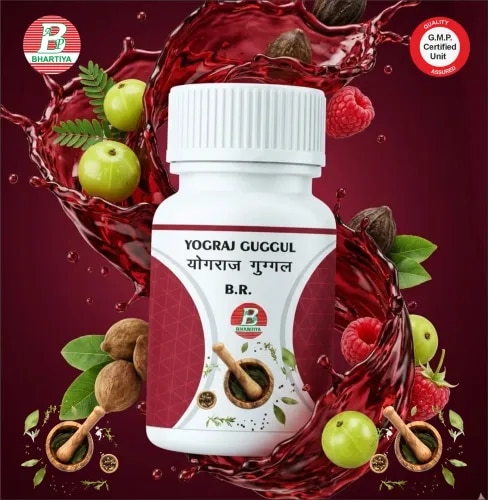
"name": "YOGRAJ GUGGUL",
"description": "\n YOGRAJ GUGGUL\n\nProduct Identification \n•\tGeneric Name: Yograj Guggul\n•\tType: Ayurvedic Polyherbal Formulation\n•\tPrimary Indication Area: Chronic joint pain and stiffness (Sandhivata / osteoarthritis-type conditions) \n•\t Especially when pain is caused by Vata imbalance (dryness, cracking, stiffness, movement restriction)\nTherapeutic Indications: Traditionally used for:\n•\tOsteoarthritis (Sandhivata) – joint pain, stiffness, restricted movement \n•\tRheumatoid arthritis-like conditions (Amavata) – inflammatory joint pain and swelling \n•\tSciatica (Gridhrasi) – radiating nerve pain from back to legs \n•\tCervical and lumbar spondylosis – chronic spine pain and stiffness \n•\tGout (Vatarakta) – uric acid–related inflammatory joint disorders \n•\tChronic back and neck pain (Kati & Greeva Shoola) \n•\tGeneral musculoskeletal weakness – bones, joints, ligaments, and muscles\n\nKey Benefits:\n Relieves joint pain and stiffness \n•\tHelps reduce chronic pain in knees, hips, shoulders, and spine \nImproves joint mobility \n•\tSupports better movement in osteoarthritis and spondylosis \nReduces inflammation (traditional action) \n•\tUseful in inflammatory joint conditions like Amavata and gout \n Eases nerve pain \n•\tHelps in sciatica and radiating neuropathic pain \n Supports spine health \n•\tBeneficial in cervical and lumbar spondylosis-related discomfort \n Aids detoxification (Ama reduction in Ayurveda) \n•\tHelps improve digestion and reduce toxin accumulation linked with joint issues \nStrengthens musculoskeletal system (long-term use) \n•\tSupports bones, ligaments, and overall Vata balance\nFORMULA\nEach Tablet contains: \nChitraka \t1 part \nPippalimula\t1 part \nYavani\t1 part \nKrishna Jiraka \t1 part \nVidanga\t1 part \nAjmoda\t1 part \nSveta Jiraka\t1 part \nDevdaru \t1 part \nChavya \t1 part \nEla\t1 part \nSaindhava Lavana \t1 part \nKushta\t1 part \nRasna \t1 part \nGokshura\t1 part \nDhanyka \t1 part \nHaritaki\t1 part \nBibhitaki\t1 part \nAmalaki\t1 part \nMusta \t1 part \nSunthi \t1 part \nMaricha \t1 part \nPippali\t1 part \nTvak\t1 part \nUsira\t1 part \nYava Kshar \t1 part \nTalisa Patra \t1 part \nTejpatra\t1 part \nShudh Guggul\t1 part \nGoghrita \t1 part \n\n \nIngredients:\n1. Chitraka\n Botanical/Scientific Name: Plumbago zeylanica\n Rasa–Guna–Vīrya–Vipāka:\no Rasa: Kaṭu (Pungent)\no Guna: Laghu (Light), Rūkṣa (Dry), Tikṣṇa (Sharp)\no Vīrya: Uṣṇa (Hot)\no Vipāka: Kaṭu (Pungent)\n• Prabhāva: Deepana–Pachana (Strong digestive stimulant)\nMechanism of Action (Karma):\n• Strongly digests Ama (toxins)\n• Reduces inflammatory swelling in joints\n• Improves Agni and metabolism\n• Clears obstructed Srotas (channels) in arthritis\n\n2. Pippalimula\nBotanical/Scientific Name: Piper longum (root)\nRasa–Guna–Vīrya–Vipāka:\no Rasa: Kaṭu (Pungent)\no Guna: Laghu, Rūkṣa\no Vīrya: Uṣṇa (Hot)\no Vipāka: Kaṭu\n• Prabhāva: Deepana–Vata-Kapha Shamaka\nMechanism of Action (Karma):\n• Improves digestion of Ama\n• Reduces stiffness and heaviness in joints\n• Pacifies Vata-Kapha in musculoskeletal system\n• Supports pain reduction in chronic arthritis\n\n3. Yavani\nBotanical/Scientific Name: Trachyspermum ammi\nRasa–Guna–Vīrya–Vipāka:\no Rasa: Kaṭu, Tikta\no Guna: Laghu, Rūkṣa, Tikṣṇa\no Vīrya: Uṣṇa\no Vipāka: Kaṭu\n• Prabhāva: Vata-Kapha Shamaka\nMechanism of Action (Karma):\n• Reduces joint stiffness\n• Improves digestion and Ama clearance\n• Relieves inflammatory pain\n• Enhances joint mobility\n\n4. Krishna Jiraka\n Botanical/Scientific Name: Nigella sativa\nRasa–Guna–Vīrya–Vipāka:\no Rasa: Kaṭu, Tikta\no Guna: Laghu, Rūkṣa\no Vīrya: Uṣṇa\no Vipāka: Kaṭu\n• Prabhāva: Shothahara (Anti-inflammatory)\nMechanism of Action (Karma):\n• Reduces joint inflammation\n• Modulates immune response in arthritis\n• Decreases swelling and pain\n• Supports tissue protection\n\n5. Vidanga\n Botanical/Scientific Name: Embelia ribes\n Rasa–Guna–Vīrya–Vipāka:\no Rasa: Kaṭu, Tikta\no Guna: Laghu, Rūkṣa, Tikṣṇa\no Vīrya: Uṣṇa\no Vipāka: Kaṭu\n• Prabhāva: Krimighna (Detoxifying action)\nMechanism of Action (Karma):\n• Removes deep-seated toxins (Ama)\n• Reduces chronic inflammatory load\n• Improves Srotas cleansing\n• Supports joint healing process\n\n6. Ajmoda\n Botanical/Scientific Name: Apium leptophyllum\n Rasa–Guna–Vīrya–Vipāka:\no Rasa: Kaṭu, Tikta\no Guna: Laghu, Rūkṣa\no Vīrya: Uṣṇa\no Vipāka: Kaṭu\n• Prabhāva: Vatahara\nMechanism of Action (Karma):\n• Reduces Vata-induced pain\n• Relieves stiffness in joints\n• Improves neuromuscular function\n• Enhances circulation in affected joints\n\n7. Sveta Jiraka\n Botanical/Scientific Name: Cuminum cyminum\n Rasa–Guna–Vīrya–Vipāka:\no Rasa: Kaṭu, Tikta\no Guna: Laghu, Rūkṣa\no Vīrya: Uṣṇa\no Vipāka: Kaṭu\n• Prabhāva: Deepana\nMechanism of Action (Karma):\n• Improves digestion of Ama\n• Reduces joint heaviness\n• Supports metabolic clearance\n• Helps reduce stiffness\n\n8. Devdaru\nBotanical/Scientific Name: Cedrus deodara\nRasa–Guna–Vīrya–Vipāka:\no Rasa: Tikta, Kaṭu\no Guna: Laghu, Rūkṣa\no Vīrya: Uṣṇa\no Vipāka: Kaṭu\n• Prabhāva: Vata-Kapha Shamaka\nMechanism of Action (Karma):\n• Reduces joint pain and inflammation\n• Improves blood circulation in joints\n• Relieves stiffness in spine disorders\n• Useful in sciatica-like pain\n\n9. Chavya\nBotanical/Scientific Name: Piper chaba\nRasa–Guna–Vīrya–Vipāka:\no Rasa: Kaṭu\no Guna: Laghu, Rūkṣa\no Vīrya: Uṣṇa\no Vipāka: Kaṭu\n• Prabhāva: Deepana\nMechanism of Action (Karma):\n• Enhances digestion of Ama\n• Reduces Kapha-related heaviness\n• Improves joint mobility\n• Reduces chronic inflammatory pain\n\n10. Ela\nBotanical/Scientific Name: Elettaria cardamomum\nRasa–Guna–Vīrya–Vipāka:\no Rasa: Madhura, Tikta, Kaṭu\no Guna: Laghu, Snigdha\no Vīrya: Śīta\no Vipāka: Madhura\n• Prabhāva: Hridya (cardio-protective, soothing)\nMechanism of Action (Karma):\n• Improves circulation\n• Reduces inflammatory stress\n• Supports mild analgesic effect\n• Enhances drug absorption\n\n11. Saindhava Lavana\nBotanical/Scientific Name: Rock salt\nRasa–Guna–Vīrya–Vipāka:\no Rasa: Lavaṇa (Salty)\no Guna: Snigdha, Sukshma\no Vīrya: Anuṣṇa-Śīta\no Vipāka: Madhura\n• Prabhāva: Yogavahi\nMechanism of Action (Karma):\n• Enhances penetration of medicines\n• Improves Srotas opening\n• Reduces stiffness\n• Supports pain relief\n12. Kushta\nBotanical/Scientific Name: Saussurea lappa\nRasa–Guna–Vīrya–Vipāka:\no Rasa: Tikta, Kaṭu\no Guna: Laghu, Rūkṣa, Tikṣṇa\no Vīrya: Uṣṇa\no Vipāka: Kaṭu\n• Prabhāva: Vata-Kapha Shamaka\nMechanism of Action (Karma):\n• Reduces deep-seated joint pain\n• Improves nerve-related pain (sciatica-like)\n• Reduces stiffness and inflammation\n• Enhances circulation in affected joints\n\n13. Rasna\nBotanical/Scientific Name: Pluchea lanceolata\nRasa–Guna–Vīrya–Vipāka:\no Rasa: Tikta, Kaṭu\no Guna: Laghu, Rūkṣa\no Vīrya: Uṣṇa\no Vipāka: Kaṭu\n• Prabhāva: Vata-Shamaka\nMechanism of Action (Karma):\n• Strong anti-arthritic action\n• Reduces joint swelling and stiffness\n• Relieves chronic musculoskeletal pain\n• Improves mobility in spondylosis\n\n14. Gokshura\n Botanical/Scientific Name: Tribulus terrestris\nRasa–Guna–Vīrya–Vipāka:\no Rasa: Madhura, Tikta\no Guna: Guru (Heavy), Snigdha\no Vīrya: Śīta\no Vipāka: Madhura\n• Prabhāva: Balya (strengthening)\nMechanism of Action (Karma):\n• Strengthens bones and joints\n• Improves ligament and tendon health\n• Reduces degenerative weakness\n• Supports long-term joint stability\n\n15. Dhanyaka\nBotanical/Scientific Name: Coriandrum sativum\nRasa–Guna–Vīrya–Vipāka:\no Rasa: Madhura, Tikta\no Guna: Laghu, Snigdha\no Vīrya: Śīta\no Vipāka: Madhura\n• Prabhāva: Deepana-Pachana (mild)\nMechanism of Action (Karma):\n• Reduces Ama formation\n• Soothes inflammatory conditions\n• Improves digestion in chronic arthritis\n• Supports detoxification\n\n16. Haritaki\nBotanical/Scientific Name: Terminalia chebula\nRasa–Guna–Vīrya–Vipāka:\no Rasa: Kaṣāya, Amla, Madhura, Tikta, Kaṭu\no Guna: Laghu, Rūkṣa\no Vīrya: Uṣṇa\no Vipāka: Madhura\n• Prabhāva: Anulomana\nMechanism of Action (Karma):\n• Regulates Vata movement\n• Reduces Ama accumulation\n• Supports detoxification in chronic disease\n• Reduces inflammatory swelling\n\n17. Bibhitaki\nBotanical/Scientific Name: Terminalia bellirica\nRasa–Guna–Vīrya–Vipāka:\no Rasa: Kaṣāya\no Guna: Laghu, Rūkṣa\no Vīrya: Uṣṇa\no Vipāka: Madhura\n• Prabhāva: Kapha-Pitta Shamaka \nMechanism of Action (Karma):\n• Reduces joint inflammation\n• Clears toxins from tissues\n• Improves metabolic balance\n• Supports chronic arthritis recovery\n\n18. Amalaki\nBotanical/Scientific Name: Emblica officinalis\nRasa–Guna–Vīrya–Vipāka:\no Rasa: Amla, Madhura, Tikta, Kaṣāya\no Guna: Laghu, Rūkṣa\no Vīrya: Śīta\no Vipāka: Madhura\n• Prabhāva: Rasayana\nMechanism of Action (Karma):\n• Protects cartilage from degeneration\n• Reduces oxidative stress in joints\n• Strengthens bones and connective tissue\n• Supports long-term joint health\n\n19. Musta\nBotanical/Scientific Name: Cyperus rotundus\nRasa–Guna–Vīrya–Vipāka:\no Rasa: Tikta, Kaṭu\no Guna: Laghu, Rūkṣa\no Vīrya: Śīta\no Vipāka: Kaṭu\n• Prabhāva: Pachana\nMechanism of Action (Karma):\n• Reduces Ama formation\n• Improves digestion and metabolism\n• Reduces inflammatory swelling\n• Supports detoxification in arthritis\n\n20. Sunthi\nBotanical/Scientific Name: Zingiber officinale\nRasa–Guna–Vīrya–Vipāka:\no Rasa: Kaṭu\no Guna: Laghu, Snigdha\no Vīrya: Uṣṇa\no Vipāka: Madhura\n• Prabhāva: Ama-Pachana\nMechanism of Action (Karma):\n• Reduces stiffness and pain\n• Improves circulation in joints\n• Digests Ama and toxins\n• Anti-inflammatory action\n\n21. Maricha\nBotanical/Scientific Name: Piper nigrum\nRasa–Guna–Vīrya–Vipāka:\no Rasa: Kaṭu\no Guna: Laghu, Rūkṣa, Tikṣṇa\no Vīrya: Uṣṇa\no Vipāka: Kaṭu\n• Prabhāva: Yogavahi\nMechanism of Action (Karma):\n• Enhances bioavailability of herbs\n• Reduces Kapha and Ama\n• Improves joint circulation\n• Reduces chronic inflammation\n\n22. Pippali\nBotanical/Scientific Name: Piper longum\nRasa–Guna–Vīrya–Vipāka:\no Rasa: Kaṭu\no Guna: Laghu, Snigdha\no Vīrya: Uṣṇa\no Vipāka: Madhura\n• Prabhāva: Rasayana\nMechanism of Action (Karma):\n• Rejuvenates joint tissues\n• Reduces Vata-Kapha imbalance\n• Improves Agni and metabolism\n• Supports chronic pain relief\n\n23. Tvak\nBotanical/Scientific Name: Cinnamomum zeylanicum\nRasa–Guna–Vīrya–Vipāka:\no Rasa: Kaṭu, Tikta, Madhura\no Guna: Laghu, Rūkṣa\no Vīrya: Uṣṇa\no Vipāka: Kaṭu\n• Prabhāva: Shothahara\nMechanism of Action (Karma):\n• Reduces inflammation in joints\n• Improves blood circulation\n• Relieves pain and stiffness\n• Supports metabolic balance\n\n24. Usira\nBotanical/Scientific Name: Vetiveria zizanioides\nRasa–Guna–Vīrya–Vipāka:\no Rasa: Tikta, Madhura\no Guna: Laghu, Snigdha\no Vīrya: Śīta\no Vipāka: Madhura\n• Prabhāva: Pitta Shamaka\nMechanism of Action (Karma):\n• Reduces burning and inflammation\n• Soothes joint tissues\n• Detoxifies blood\n• Supports cooling anti-inflammatory action\n25. Yava Kshara\nBotanical/Scientific Name: Alkali preparation from Hordeum vulgare (barley)\nRasa–Guna–Vīrya–Vipāka:\no Rasa: Katu, Lavana\no Guna: Tikshna, Sukshma, Laghu\no Vīrya: Ushna\no Vipāka: Katu\n• Prabhāva: Lekhana (scraping action)\nMechanism of Action (Karma):\n• Removes obstruction in Srotas (channels)\n• Reduces stiffness due to Ama accumulation\n• Improves mobility in joints\n• Helps in metabolic clearance of toxins\n\n26. Talisa Patra\nBotanical/Scientific Name: Abies webbiana (or related species)\nRasa–Guna–Vīrya–Vipāka:\no Rasa: Katu, Tikta\no Guna: Laghu, Rūkṣa\no Vīrya: Ushna\no Vipāka: Katu\n• Prabhāva: Kapha-Vata Shamaka\nMechanism of Action (Karma):\n• Reduces chronic pain and stiffness\n• Improves respiratory and metabolic function\n• Helps in Ama digestion\n• Supports anti-inflammatory activity\n\n27. Tejpatra\nBotanical/Scientific Name: Cinnamomum tamala\nRasa–Guna–Vīrya–Vipāka:\no Rasa: Katu, Tikta\no Guna: Laghu, Rūkṣa\no Vīrya: Ushna\no Vipāka: Katu\n• Prabhāva: Deepana\nMechanism of Action (Karma):\n• Improves Agni and digestion\n• Reduces Ama-related joint stiffness\n• Enhances circulation\n• Helps in pain reduction\n\n28. Shuddha Guggul\n• Botanical/Scientific Name: Commiphora mukul (purified resin)\n• Rasa–Guna–Vīrya–Vipāka:\no Rasa: Tikta, Katu\no Guna: Laghu, Rūkṣa, Sara\no Vīrya: Ushna\no Vipāka: Katu\n• Prabhāva: Yogavahi, Lekhana\nMechanism of Action (Karma):\n• Major anti-inflammatory action on joints\n• Reduces swelling and synovial inflammation\n• Clears lipid and toxin deposits in tissues\n• Improves joint mobility and lubrication\n\n29. Goghrita\nBotanical/Scientific Name: Cow ghee (Clarified butter from cow milk)\nRasa–Guna–Vīrya–Vipāka:\no Rasa: Madhura\no Guna: Snigdha, Guru, Mridu\no Vīrya: Shita\no Vipāka: Madhura\n• Prabhāva: Yogavahi, Rasayana\nMechanism of Action (Karma):\n• Acts as carrier for deep tissue delivery of herbs\n• Nourishes Asthi (bone) and Majja (marrow)\n• Reduces dryness and Vata aggravation\n• Enhances long-term tissue healing\n\nDosage of Triphala Guggul\n•\tForm: Tablet / Capsule \n•\tDose: 1–2 tablets (250–500 mg each) \n•\tFrequency: Twice daily (BID) \n•\tTiming: After food \n•\tAnupana: Lukewarm water.\n\n\nyograj guggulu, yograj guggulu benefits in hindi, yograj guggulu tablet uses in hindi\nyograj guggulu uses, yograj guggulu uses in hindi, yograj guggulu ke fayde\nyograj guggulu kis kaam aata hai, yograj guggulu benefits, yograj guggulu ingredients\nyograj guggulu ayurvedic medicine uses, yograj guggulu ayurvedic medicine\nyograj guggulu amazon, yograj guggul botanical name, yograj guggulu composition\nyograj guggulu dose per day, yograj guggulu dose, yograj guggul easy ayurveda\nwhat is yograj guggul, what is yograj guggulu, yograj guggul use, how to take yograj guggulu\nyograj guggulu easy ayurveda, yograj guggulu uses easy ayurveda\nyograj guggulu for joint pain, yograj guggulu for piles, yograj guggulu flipkart\nyograj guggulu for constipation, yograj guggulu how to use\nyograj guggulu hamdard, yograj guggulu how to take\nyograj guggul ingredients, yograj guggul in hindi, yograj guggul is used for\nyograj guggul image, yograj guggulu indications, yograj guggulu is used for\nyograj guggul ke fayde in hindi\nyograj guggul ke fayde\nyograj guggul kis kam aati hai\nyograj guggul khane ke fayde\nyograj guggul ke fayde aur nuksan\nyograj guggulu lene ke fayde\nyograj guggulu maha uses in hindi\nyograj guggulu maha tablet uses in hindi\nyograj guggulu medicine\nyograj guggulu maha uses\nyograj guggulu main ingredients\nyograj guggul netmeds\nyograj guggulu nagarjuna\nyograj guggulu online\nyograj guggul powder\nyograj guggul patanjali uses\nyograj guggul uses\nyograj guggul use in hindi\nyograj guggulu uses in hindi price\nyograj guggulu uses hindi\nyograj guggulu uses in english\nhow to consume yograj guggulu",
"price": 240.0,
"discountamount": 120.0,
"currencycode": "INR",
"priority": 1000000,
"isfreeshipmentavailable": false,
"shipmentduration": 1,
"_keywords": null,
"isarchived": false,
"isavailable": true,
"applicationid": null,
"productindex": 153,
"imageuri": "https://productimages.withfloats.com/actual/6a54d89de9337cfefeb42897.jpg",
"tileimageuri": "https://productimages.withfloats.com/tile/6a54d89de9337cfefeb42897.jpg",
"images": null,
"totalqueries": 0,
"gpid": null,
"groupproductid": null,
"createdon": "2026-07-13T12:22:51.679Z",
"updatedon": "2026-07-13T12:22:51.679Z",
"buyonlinelink": null,
"producturl": "http://WWW.BHARTIYAAYURVEDICPHARMACY.COM//yograj-guggul/153",
"availableunits": -1.0,
"iscodavailable": true,
"isprepaidonlineavailable": true,
"maxcodorders": -1,
"maxprepaidonlineorders": -1,
"uniquepaymenturl": null,
"brandname": "Bakula Fort",
"category": "YOGRAJ GUGGUL 100 gm X 40",
"tags": [],
"variants": false,
"keyspecification": null,
"otherspecifications": null,
"pickupaddressreferenceid": null,
"paymenttype": "AssuredPurchase",
"producttype": "products",
"hsncode": null,
"gstslab": 0.0,
"isnotforsale": false
},
{
"_id": "6a54780390386be4ae5e2b59",
"fptag": "BHARTIYEAYURVEDICPHARMACY",
"merchantname": null,
"customwidgets": null,
"externalsourceid": null,
"name": "SAPTVISH GUGGUL",
"description": "\n SAPTVISH GUGGUL\n\nProduct Identification \n•\tGeneric Name: Saptvish Guggul\n•\tType: Ayurvedic Polyherbal Formulation\n•\tPrimary Indication Area: Saptvish Guggul is primarily used as a supportive Ayurvedic medicine in Bhagandar (fistula-in-ano/nasoor) for reducing pain and inflammation.\n\nTherapeutic Indications: \nSaptvish Guggul is traditionally used as an adjuvant in Bhagandar (fistula-in-ano / nasoor) for:\n•\tRelief of pain (nasoor dard) in the anal region \n•\tReduction of local inflammation and swelling \n•\tSupport in managing Vata-related symptoms (throbbing, pricking, radiating pain) \n•\tHelp in reducing discomfort associated with pus discharge and chronic infection \n•\tSupportive role in wound healing and tissue recovery \n•\tAdjunct therapy along with primary treatments like Ksharasutra or surgical management \n\nKey Benefits:\n•\tHelps reduce pain (nasoor dard) in the affected area \n•\tSupports reduction of local inflammation and swelling \n•\tProvides relief in Vata-type symptoms like throbbing, pricking, and burning pain \n•\tAssists in improving comfort in chronic fistula conditions \n•\tMay support better local healing response as an adjuvant \n•\tUseful as a supportive therapy alongside Ksharasutra or surgical treatment \n\nEach Tablet contains: \nSunthi\t1part \nMaricha\t1part \nPippali\t1part \nHaritaki\t1part \nBibhitaki\t1part \nAmalaki\t1part \nMusta\t1part \nVidanga\t1part \nGuduchi \t1part \nChitrak \t1part \nSati \t1part \nEla \t1part \nPippalimula\t1part \nHapsua\t1part \nDevdaru \t1part \nTumburu\t1part \nPushkar \t1part \nChavya\t1part \nRakt Indera Varuni\t1part \nHaridra\t1part \nDaruharidra\t1part \nVida Lavana\t1part \nSauvarchala Lavana\t1part \nYava Kshar \t1part \nSajji Kshar\t1part \nSaindhava Lavana\t1part \nGajapippali\t1part \nShudh Guggul\t54 parts\n\n \nIngredients:\n\n1. Sunthi (Zingiber officinale)\n•\tBotanical/Scientific Name: Zingiber officinale \n•\tRasa–Guna–Vīrya–Vipāka: \no\tRasa: Kaṭu (Pungent) \no\tGuna: Laghu (Light), Rūkṣa (Dry) \no\tVīrya: Uṣṇa (Hot) \no\tVipāka: Madhura (Sweet) \n•\tPrabhāva:\nDeepana, Pachana, Shothahara \n•\tMechanism of Action (Karma): \no\tDeepana Karma: Improves Agni and reduces Ama (toxins) \no\tShothahara Karma: Reduces inflammation and tissue swelling in fistula area \no\tVedana Sthapana Karma: Helps reduce pain and discomfort in nasoor condition \n\n2. Maricha (Piper nigrum)\n•\tBotanical/Scientific Name: Piper nigrum \n•\tRasa–Guna–Vīrya–Vipāka: \no\tRasa: Kaṭu (Pungent) \no\tGuna: Laghu, Rūkṣa, Tikṣṇa \no\tVīrya: Uṣṇa \no\tVipāka: Kaṭu \n•\tPrabhāva:\nDeepana, Krimighna \n•\tMechanism of Action (Karma): \no\tDeepana-Pachana Karma: Enhances digestion and clears Ama \no\tKrimighna Karma: Helps reduce infection tendency in chronic wounds \no\tShothahara Karma: Reduces swelling in fistulous tract \n\n3. Pippali (Piper longum)\n•\tBotanical/Scientific Name: Piper longum \n•\tRasa–Guna–Vīrya–Vipāka: \no\tRasa: Kaṭu \no\tGuna: Laghu, Snigdha \no\tVīrya: Anuṣṇa-Uṣṇa (mild heating) \no\tVipāka: Madhura \n•\tPrabhāva:\nRasayana, Deepana \n•\tMechanism of Action (Karma): \no\tAgni Deepana: Improves metabolism and tissue repair \no\tRasayana Karma: Supports regeneration of damaged tissues in chronic fistula \no\tVata Shamana: Reduces pain and stiffness in nasoor region \n\n4. Haritaki (Terminalia chebula)\n•\tBotanical/Scientific Name: Terminalia chebula \n•\tRasa–Guna–Vīrya–Vipāka: \no\tRasa: Pancha Rasa (all except Lavana) \no\tGuna: Laghu, Rūkṣa \no\tVīrya: Uṣṇa \no\tVipāka: Madhura \n•\tPrabhāva:\nAnulomana, Virechana \n•\tMechanism of Action (Karma): \no\tAnulomana Karma: Improves bowel clearance, reduces pressure in anorectal region \no\tShothahara Karma: Reduces inflammatory swelling \no\tVrana Shodhana support: Helps detoxification in chronic infection conditions \n\n5. Bibhitaki (Terminalia bellirica)\n•\tBotanical/Scientific Name: Terminalia bellirica \n•\tRasa–Guna–Vīrya–Vipāka: \no\tRasa: Kaṣāya \no\tGuna: Laghu, Rūkṣa \no\tVīrya: Uṣṇa \no\tVipāka: Madhura \n•\tPrabhāva:\nKrimighna, Shothahara \n•\tMechanism of Action (Karma): \no\tKrimighna Karma: Helps reduce microbial load in chronic discharge \no\tShothahara Karma: Reduces swelling and induration \no\tVrana Shodhana support: Cleanses chronic infected tissue environment \n\n6. Amalaki (Emblica officinalis)\n•\tBotanical/Scientific Name: Emblica officinalis \n•\tRasa–Guna–Vīrya–Vipāka: \no\tRasa: Pancha Rasa (predominantly Amla) \no\tGuna: Guru, Ruksha \no\tVīrya: Sheeta \no\tVipāka: Madhura \n•\tPrabhāva:\nRasayana, Pittashamaka \n•\tMechanism of Action (Karma): \no\tRasayana Karma: Promotes tissue repair and healing \no\tPitta Shamana: Reduces burning and inflammation in fistula region \no\tVrana Ropana support: Enhances wound healing process \n\n7. Musta (Cyperus rotundus)\n•\tBotanical/Scientific Name: Cyperus rotundus \n•\tRasa–Guna–Vīrya–Vipāka: \no\tRasa: Tikta, Kaṭu \no\tGuna: Laghu, Rūkṣa \no\tVīrya: Sheeta \no\tVipāka: Kaṭu \n•\tPrabhāva:\nDeepana, Pachana \n•\tMechanism of Action (Karma): \no\tDeepana-Pachana: Reduces Ama and supports metabolism \no\tShothahara: Reduces inflammatory swelling \no\tKrimighna support: Helps control infection tendency \n\n8. Vidanga (Embelia ribes)\n•\tBotanical/Scientific Name: Embelia ribes \n•\tRasa–Guna–Vīrya–Vipāka: \no\tRasa: Kaṭu \no\tGuna: Laghu, Rūkṣa, Tikṣṇa \no\tVīrya: Uṣṇa \no\tVipāka: Kaṭu \n•\tPrabhāva:\nKrimighna (strong anti-parasitic/anti-infective) \n•\tMechanism of Action (Karma): \no\tKrimighna Karma: Controls microbial/infective tendency in chronic sinus \no\tShodhana Karma: Helps cleanse infected fistulous tract \no\tShothahara support: Reduces swelling and pus formation tendency \n\n9. Guduchi (Tinospora cordifolia)\n•\tBotanical/Scientific Name: Tinospora cordifolia \n•\tRasa–Guna–Vīrya–Vipāka: \no\tRasa: Tikta, Kaṣāya \no\tGuna: Laghu, Snigdha \no\tVīrya: Uṣṇa \no\tVipāka: Madhura \n•\tPrabhāva:\nRasayana, Immunomodulator \n•\tMechanism of Action (Karma): \no\tRasayana Karma: Enhances tissue regeneration and healing \no\tShothahara Karma: Reduces chronic inflammation in fistula tract \no\tOjas Vardhaka: Improves resistance to recurrent infection \n\n10. Chitrak (Plumbago zeylanica)\n•\tBotanical/Scientific Name: Plumbago zeylanica \n•\tRasa–Guna–Vīrya–Vipāka: \no\tRasa: Kaṭu \no\tGuna: Laghu, Rūkṣa, Tikṣṇa \no\tVīrya: Uṣṇa \no\tVipāka: Kaṭu \n•\tPrabhāva:\nAgni Deepana, Ama Pachana \n•\tMechanism of Action (Karma): \no\tDeepana Karma: Improves digestion and metabolic clearance \no\tShothahara Karma: Reduces inflammatory swelling \no\tShodhana Karma: Helps remove deep-seated toxins contributing to chronic disease \n\n11. Sati (Hedychium spicatum)\n•\tBotanical/Scientific Name: Hedychium spicatum \n•\tRasa–Guna–Vīrya–Vipāka: \no\tRasa: Tikta, Kaṭu \no\tGuna: Laghu, Rūkṣa, Tikṣṇa \no\tVīrya: Uṣṇa \no\tVipāka: Kaṭu \n•\tPrabhāva:\nShothahara, Vedana Sthapana \n•\tMechanism of Action (Karma): \no\tShothahara Karma: Reduces swelling and inflammatory induration \no\tVedana Sthapana Karma: Relieves pain in chronic fistulous tract \no\tKrimighna support: Helps reduce infective tendency in nasoor \n\n12. Ela (Elettaria cardamomum)\n•\tBotanical/Scientific Name: Elettaria cardamomum \n•\tRasa–Guna–Vīrya–Vipāka: \no\tRasa: Tikta, Madhura, Kaṭu \no\tGuna: Laghu, Snigdha \no\tVīrya: Sheeta \no\tVipāka: Madhura \n•\tPrabhāva:\nDeepana, Rochana \n•\tMechanism of Action (Karma): \no\tDeepana-Pachana Karma: Improves digestion and reduces Ama \no\tShothahara support: Helps reduce systemic inflammatory load \no\tSrotoshodhana: Clears subtle channel obstruction contributing to chronic disease \n\n13. Pippalimula (Root of Piper longum)\n•\tBotanical/Scientific Name: Piper longum (root) \n•\tRasa–Guna–Vīrya–Vipāka: \no\tRasa: Kaṭu \no\tGuna: Laghu, Rūkṣa \no\tVīrya: Uṣṇa \no\tVipāka: Madhura \n•\tPrabhāva:\nDeepana, Vata Shamana \n•\tMechanism of Action (Karma): \no\tAgni Deepana: Improves digestion and tissue metabolism \no\tVata Shamana: Reduces pain and nerve-related discomfort in nasoor \no\tShothahara: Helps reduce chronic inflammatory swelling \n\n14. Hapusha (Juniperus communis)\n•\tBotanical/Scientific Name: Juniperus communis \n•\tRasa–Guna–Vīrya–Vipāka: \no\tRasa: Tikta, Kaṭu \no\tGuna: Laghu, Rūkṣa \no\tVīrya: Uṣṇa \no\tVipāka: Kaṭu \n•\tPrabhāva:\nKrimighna, Shothahara \n•\tMechanism of Action (Karma): \no\tKrimighna Karma: Helps control microbial infection tendency \no\tShothahara Karma: Reduces swelling in chronic sinus tract \no\tShodhana support: Assists detoxification of chronic infected tissue \n\n15. Devdaru (Cedrus deodara)\n•\tBotanical/Scientific Name: Cedrus deodara \n•\tRasa–Guna–Vīrya–Vipāka: \no\tRasa: Tikta, Kaṭu \no\tGuna: Laghu, Rūkṣa, Tikṣṇa \no\tVīrya: Uṣṇa \no\tVipāka: Kaṭu \n•\tPrabhāva:\nShothahara, Vedana Sthapana \n•\tMechanism of Action (Karma): \no\tAnti-inflammatory action: Reduces swelling and induration \no\tPain-relieving action: Helps in chronic fistula pain \no\tVrana Shodhana support: Assists in cleansing unhealthy tissue \n\n16. Tumburu (Zanthoxylum armatum)\n•\tBotanical/Scientific Name: Zanthoxylum armatum \n•\tRasa–Guna–Vīrya–Vipāka: \no\tRasa: Kaṭu, Tikta \no\tGuna: Laghu, Rūkṣa, Tikṣṇa \no\tVīrya: Uṣṇa \no\tVipāka: Kaṭu \n•\tPrabhāva:\nKrimighna, Shothahara \n•\tMechanism of Action (Karma): \no\tKrimighna Karma: Helps reduce infective organisms in chronic wound \no\tShothahara Karma: Reduces swelling and pus formation \no\tVedana Sthapana: Relieves local pain and burning sensation \n\n17. Pushkar (Inula racemosa)\n•\tBotanical/Scientific Name: Inula racemosa \n•\tRasa–Guna–Vīrya–Vipāka: \no\tRasa: Tikta, Kaṭu \no\tGuna: Laghu, Rūkṣa \no\tVīrya: Uṣṇa \no\tVipāka: Kaṭu \n•\tPrabhāva:\nShothahara, Hridya (supportive circulation action) \n•\tMechanism of Action (Karma): \no\tShothahara Karma: Reduces chronic inflammatory swelling \no\tImproves microcirculation: Supports healing in damaged tissue \no\tVata Shamana: Helps reduce pain and stiffness \n\n18. Chavya (Piper retrofractum)\n•\tBotanical/Scientific Name: Piper retrofractum \n•\tRasa–Guna–Vīrya–Vipāka: \no\tRasa: Kaṭu \no\tGuna: Laghu, Rūkṣa, Tikṣṇa \no\tVīrya: Uṣṇa \no\tVipāka: Kaṭu \n•\tPrabhāva:\nDeepana, Krimighna \n•\tMechanism of Action (Karma): \no\tDeepana Karma: Enhances metabolism and reduces Ama \no\tKrimighna Karma: Helps control infection in chronic sinus tract \no\tShothahara support: Reduces swelling and discharge tendency \n\n19. Rakt Indra Varuni (classical identification varies)\n•\tBotanical/Scientific Name: Classical Ayurvedic herb (exact botanical varies by region) \n•\tRasa–Guna–Vīrya–Vipāka: \no\tRasa: Tikta, Kaṭu \no\tGuna: Laghu, Rūkṣa \no\tVīrya: Uṣṇa \no\tVipāka: Kaṭu \n•\tPrabhāva:\nShothahara, Vrana Shodhana \n•\tMechanism of Action (Karma): \no\tVrana Shodhana: Helps cleanse chronic infected tissue \no\tShothahara: Reduces swelling and inflammatory discharge \no\tSupport in nasoor: Assists in reducing chronic sinus activity \n\n20. Haridra (Curcuma longa)\n•\tBotanical/Scientific Name: Curcuma longa \n•\tRasa–Guna–Vīrya–Vipāka: \no\tRasa: Tikta, Kaṭu \no\tGuna: Laghu, Rūkṣa \no\tVīrya: Uṣṇa \no\tVipāka: Kaṭu \n•\tPrabhāva:\nKrimighna, Vrana Ropana \n•\tMechanism of Action (Karma): \no\tAnti-inflammatory action: Reduces swelling and pain \no\tAntimicrobial action: Controls infection in fistula tract \no\tVrana Ropana: Promotes healing of chronic wounds \n21. Daruharidra (Berberis aristata)\n•\tBotanical/Scientific Name: Berberis aristata \n•\tRasa–Guna–Vīrya–Vipāka: \no\tRasa: Tikta, Kaṣāya \no\tGuna: Laghu, Rūkṣa \no\tVīrya: Uṣṇa \no\tVipāka: Kaṭu \n•\tPrabhāva:\nKrimighna, Vrana Shodhana \n•\tMechanism of Action (Karma): \no\tAntimicrobial action: Helps control infection in fistula tract \no\tVrana Shodhana: Cleanses chronic discharging wound \no\tShothahara: Reduces swelling and induration \n\n22. Vida Lavana\n•\tRasa–Guna–Vīrya–Vipāka: \no\tRasa: Lavana (Salty), Tikta \no\tGuna: Laghu, Tikṣṇa \no\tVīrya: Uṣṇa \no\tVipāka: Madhura \n•\tPrabhāva:\nLekhana, Shothahara \n•\tMechanism of Action (Karma): \no\tLekhana Karma: Helps scraping and clearing blocked channels in chronic sinus \no\tShothahara: Reduces swelling and fluid accumulation \no\tSrotoshodhana: Improves drainage in fistulous tract \n\n23. Sauvarchala Lavana\n•\tRasa–Guna–Vīrya–Vipāka: \no\tRasa: Lavana, Tikta \no\tGuna: Laghu, Snigdha, Tikṣṇa \no\tVīrya: Uṣṇa \no\tVipāka: Madhura \n•\tPrabhāva:\nDeepana, Srotoshodhana \n•\tMechanism of Action (Karma): \no\tDeepana Karma: Improves digestion and reduces Ama \no\tSrotoshodhana: Clears obstructed channels in chronic disease \no\tShothahara: Reduces inflammatory swelling \n\n24. Yava Kshar\n•\tRasa–Guna–Vīrya–Vipāka: \no\tRasa: Tikta, Kaṭu \no\tGuna: Laghu, Tikṣṇa \no\tVīrya: Uṣṇa \no\tVipāka: Kaṭu \n•\tPrabhāva:\nLekhana, Ksharana (tissue debridement action) \n•\tMechanism of Action (Karma): \no\tKsharana Karma: Helps remove unhealthy tissue in chronic sinus tract \no\tLekhana Karma: Clears blockage and promotes drainage \no\tVrana Shodhana: Supports cleansing of fistulous tract \n\n25. Sajji Kshar\n•\tRasa–Guna–Vīrya–Vipāka: \no\tRasa: Tikta, Kaṭu \no\tGuna: Laghu, Rūkṣa, Tikṣṇa \no\tVīrya: Uṣṇa \no\tVipāka: Kaṭu \n•\tPrabhāva:\nKsharana, Shodhana \n•\tMechanism of Action (Karma): \no\tKsharana Karma: Helps chemical debridement of fistula tract \no\tShodhana Karma: Cleans infected tissue and discharge pathway \no\tShothahara: Reduces swelling \n\n26. Saindhava Lavana\n•\tRasa–Guna–Vīrya–Vipāka: \no\tRasa: Lavana (mild), Madhura \no\tGuna: Laghu, Snigdha \no\tVīrya: Sheeta \no\tVipāka: Madhura \n•\tPrabhāva:\nTridosha Shamana \n•\tMechanism of Action (Karma): \no\tSoftening action: Helps tissue relaxation and healing support \no\tVata Shamana: Reduces pain and stiffness \no\tImproves absorption: Enhances penetration of other herbs \n\n27. Gajapippali (Scindapsus officinalis)\n•\tBotanical/Scientific Name: Scindapsus officinalis \n•\tRasa–Guna–Vīrya–Vipāka: \no\tRasa: Kaṭu \no\tGuna: Laghu, Rūkṣa, Tikṣṇa \no\tVīrya: Uṣṇa \no\tVipāka: Kaṭu \n•\tPrabhāva:\nDeepana, Krimighna \n•\tMechanism of Action (Karma): \no\tDeepana-Pachana: Improves digestion and toxin clearance \no\tKrimighna: Reduces infective tendency in chronic wounds \no\tShothahara: Helps reduce swelling in fistula \n\n28. Shuddh Guggul (Commiphora wightii)\n•\tBotanical/Scientific Name: Commiphora wightii (Purified resin) \n•\tRasa–Guna–Vīrya–Vipāka: \no\tRasa: Tikta, Kaṭu, Kashaya \no\tGuna: Laghu, Rūkṣa, Sara \no\tVīrya: Uṣṇa \no\tVipāka: Kaṭu \n•\tPrabhāva:\nShothahara, Yogavahi (carrier action) \n•\tMechanism of Action (Karma): \no\tShothahara Karma: Strong anti-inflammatory action in chronic fistula \no\tVrana Ropana: Supports tissue healing and regeneration \no\tYogavahi Karma: Enhances delivery and action of all other herbs \no\tVata Shamana: Reduces pain, stiffness, and chronic inflammation in Bhagandar\n\nDosage of Triphala Guggul\n•\tForm: Tablet / Capsule \n•\tDose: 1–2 tablets (250–500 mg each) \n•\tFrequency: Twice daily (BID) \n•\tTiming: After food \n•\tAnupana: Lukewarm water.\n\nsaptvinshati guggul\nsaptvinshati guggul uses\nsaptavinshati guggulu in hindi\nsaptavinshati guggulu ingredients\nsaptavinshati guggulu ke fayde\nsaptvinshati guggul price\nsaptvinshati guggul content\nsaptvinshati guggul tablet\nsaptavishanti guggul ke fayde\nsaptvisanti guggul ke fayde\nsaptavishanti guggul uses\nsaptavishanti guggul\nsaptvish guggul benefits\nsaptvisanti guggul content\nsaptvisanti guggul uses in hindi\nsaptvinshati guggul uses in hindi\nsaptvish guggul extract\nsaptvinshati guggul ke fayde\nsaptvisanti guggul hindi mein\nsaptvinshati guggul hindi\nsaptvisanti guggul in hindi\nsaptvinshati guggul use in hindi\nsaptvinshati guggul uses hindi\nuse of saptvinshati guggul\nhow much guggul to take for weight loss\nsaptvinshati guggul reference\nsaptavinshati guggulu reference\nsaptvisanti guggul tablet\ndivya saptvinshati guggul uses\nsaptvish guggul weather\nsaptvish guggul waterfall\nsaptashati guggul ke fayde\nsaptashati guggulu uses in hindi\ntab saptavinshati guggulu\nsaptvinshati guggul ingredients\nsaptavinshati guggulu benefits in hindi\nuses of saptvinshati guggul\nuses of saptavinshati guggulu\n",
"price": 240.0,
"discountamount": 120.0,
"currencycode": "INR",
"priority": 1000000,
"isfreeshipmentavailable": false,
"shipmentduration": 1,
"_keywords": null,
"isarchived": false,
"isavailable": true,
"applicationid": null,
"productindex": 150,
"imageuri": "https://productimages.withfloats.com/actual/6a5478052f06e172057b708e.jpg",
"tileimageuri": "https://productimages.withfloats.com/tile/6a5478052f06e172057b708e.jpg",
"images": null,
"totalqueries": 0,
"gpid": null,
"groupproductid": null,
"createdon": "2026-07-13T05:30:43.473Z",
"updatedon": "2026-07-13T05:30:43.473Z",
"buyonlinelink": null,
"producturl": "http://WWW.BHARTIYAAYURVEDICPHARMACY.COM//saptvish-guggul/150",
"availableunits": -1.0,
"iscodavailable": true,
"isprepaidonlineavailable": true,
"maxcodorders": -1,
"maxprepaidonlineorders": -1,
"uniquepaymenturl": null,
"brandname": "Bakula Fort",
"category": "SAPTVISH GUGGUL 100 gm X 40",
"tags": [],
"variants": false,
"keyspecification": null,
"otherspecifications": null,
"pickupaddressreferenceid": null,
"paymenttype": "AssuredPurchase",
"producttype": "products",
"hsncode": null,
"gstslab": 0.0,
"isnotforsale": false
},
{
"_id": "69f1a13e2c0925e46b69752e",
"fptag": "BHARTIYEAYURVEDICPHARMACY",
"merchantname": null,
"customwidgets": null,
"externalsourceid": null,
"name": "Pileen Tablet",
"description": " PILEEN TABLET \n\nProduct Identification\n•\tGeneric Name: Pileen Tablet\n•\tType: Ayurvedic Patent Medicine\n•\tPrimary Indication Area: Piles, severe bleeding hemorrhoids. \nTherapeutic Indications:\nTo relieve pain, swelling, and bleeding; prevent constipation and straining; and, if needed, provide surgical intervention to manage persistent or severe cases.\nPrimary Benefit:\n•\tProvides effective symptomatic relief from pain, swelling, and bleeding associated with piles (hemorrhoids).\n•\tOther Benefits:\n• Helps improve bowel comfort and reduces straining during defecation.\n• Supports overall anorectal health and prevents recurrence of hemorrhoids.\n• Can be used as an adjunct to other hemorrhoids therapies under medical supervision.\nIngredients:\n\n DARUHALDI \nBotanical / Common Name: Berberis aristata (Indian Barberry)\nKey Phytoconstituents:\n•\tBerberine (alkaloid)\n•\tTannins\n•\tFlavonoids\n•\tPhenolic compounds\nMechanism of Action in Piles / Severe Bleeding Hemorrhoids – Biochemistry / Pharmacology:\n1.\tAnti-inflammatory & Analgesic Effects\no\tBerberine and flavonoids reduce inflammation in swollen hemorrhoidal veins.\no\tProvides relief from pain, burning, and discomfort during bowel movements.\n2.\tHemostatic & Vascular Protective Effects\no\tBerberine strengthens capillaries and reduces vascular fragility.\no\tHelps minimize bleeding associated with piles.\n3.\tAntimicrobial & Healing Properties\no\tTannins and phenolic compounds prevent secondary infections in inflamed hemorrhoidal tissue.\no\tPromotes tissue repair and faster healing of ulcerated or bleeding areas.\n4.\tDigestive Support\no\tImproves digestion and bowel regularity.\no\tReduces constipation and straining, major triggers for hemorrhoids.\n\n REETHA \nBotanical / Common Name: Sapindus mukorossi (Soapnut)\nKey Phytoconstituents:\n•\tSaponins\n•\tFlavonoids\n•\tTannins\n•\tPhenolic compounds\nMechanism of Action in Piles / Severe Bleeding Hemorrhoids – Biochemistry / Pharmacology:\n1.\tAnti-inflammatory & Analgesic Effects\no\tSaponins and flavonoids reduce inflammation and soothe irritated hemorrhoidal tissue.\no\tRelieves pain, burning, and discomfort during bowel movements.\n2.\tMild Laxative & Digestive Support\no\tSaponins help in softening stools and improving bowel movement consistency.\no\tReduces straining, which is a major trigger for piles and bleeding.\n3.\tAntimicrobial & Healing Properties\no\tFlavonoids and phenolic compounds prevent secondary infections in hemorrhoidal tissue.\no\tSupports faster healing of inflamed or ulcerated areas.\n4.\tVascular Protective Effects\no\tStrengthens capillaries and blood vessels in the anorectal region.\no\tHelps reduce bleeding and swelling associated with hemorrhoids.\n KATHA \nBotanical / Common Name: Acacia catechu (Catechu)\nKey Phytoconstituents:\n•\tTannins\n•\tCatechins\n•\tFlavonoids\n•\tPhenolic compounds\nMechanism of Action in Piles / Severe Bleeding Hemorrhoids – Biochemistry / Pharmacology:\n1.\tAstringent & Hemostatic Effects\no\tTannins and catechins cause contraction of tissues and capillaries.\no\tHelps control bleeding and reduces oozing from hemorrhoids.\n2.\tAnti-inflammatory & Analgesic Effects\no\tFlavonoids reduce inflammation and swelling in the anal region.\no\tProvides relief from pain, burning, and discomfort during bowel movements.\n3.\tAntimicrobial & Healing Properties\no\tPhenolic compounds prevent secondary infections in inflamed hemorrhoidal tissue.\no\tPromotes faster healing of ulcerated or bleeding areas.\n4.\tProtective & Soothing Effect on Anal Mucosa\no\tCreates a protective layer over the affected tissue.\no\tReduces irritation and promotes tissue repair.\n\n VIRAHIKAND \nBotanical / Common Name: Operculina turpethum\nKey Phytoconstituents:\n•\tGlycosides (turpethin, turpethic acid)\n•\tResin\n•\tStarch\n•\tFlavonoids\nMechanism of Action in Piles / Severe Bleeding Hemorrhoids – Biochemistry / Pharmacology:\n1.\tMild Laxative & Bowel Regulator\no\tGlycosides and resin stimulate bowel movement, helping relieve constipation.\no\tReduces straining, a major trigger for piles and bleeding.\n2.\tAnti-inflammatory & Analgesic Effects\no\tFlavonoids reduce inflammation in swollen hemorrhoidal veins.\no\tProvides relief from pain, burning, and discomfort during defecation.\n3.\tDetoxifying & Purifying Effects\no\tPromotes cleansing of the intestines and supports smooth bowel function.\no\tHelps prevent accumulation of toxins that may aggravate hemorrhoids.\n4.\tSupportive Healing Properties\no\tImproves tissue repair and assists in faster recovery of inflamed anorectal mucosa.\n ALOE \nBotanical / Common Name: Aloe vera\nKey Phytoconstituents:\n•\tAnthraquinones (aloin, emodin)\n•\tPolysaccharides (acemannan)\n•\tSaponins\n•\tFlavonoids\nMechanism of Action in Piles / Severe Bleeding Hemorrhoids – Biochemistry / Pharmacology:\n1.\tMild Laxative & Bowel Regulator\no\tAnthraquinones stimulate bowel movements and help relieve constipation.\no\tReduces straining, a major cause of hemorrhoids and bleeding.\n2.\tAnti-inflammatory & Analgesic Effects\no\tPolysaccharides and flavonoids reduce inflammation and swelling in hemorrhoidal veins.\no\tProvides relief from pain, burning, and discomfort during defecation.\n3.\tWound Healing & Tissue Repair\no\tAloe polysaccharides promote repair of damaged anorectal mucosa.\no\tSupports faster healing of ulcerated or bleeding hemorrhoids.\n4.\tAntimicrobial & Soothing Properties\no\tSaponins and flavonoids prevent secondary infections.\no\tCreates a protective layer over inflamed tissue, reducing irritation.\n SANAYA \nBotanical / Common Name: Trichosanthes dioica (Pointed Gourd)\nKey Phytoconstituents:\n•\tSaponins\n•\tFlavonoids\n•\tGlycosides\n•\tVitamins and minerals\nMechanism of Action in Piles / Severe Bleeding Hemorrhoids – Biochemistry / Pharmacology:\n1.\tMild Laxative & Digestive Support\no\tSaponins and glycosides help soften stools and improve bowel movement.\no\tReduces straining during defecation, a major cause of hemorrhoids and bleeding.\n2.\tAnti-inflammatory & Analgesic Effects\no\tFlavonoids reduce inflammation and swelling in hemorrhoidal veins.\no\tProvides relief from pain, burning, and discomfort.\n3.\tTissue Healing & Protective Effect\no\tSupports repair of inflamed anorectal mucosa.\no\tCreates a soothing effect on the affected area, reducing irritation.\n4.\tHydrating & Nutritional Support\no\tVitamins and minerals help maintain overall anorectal tissue health.\no\tSupports recovery during hemorrhoidal flare-ups.\n JAIPHAL \nBotanical / Common Name: Myristica fragrans (Nutmeg)\nKey Phytoconstituents:\n•\tEssential oils (myristicin, safrole)\n•\tFixed oils\n•\tLignans\n•\tFlavonoids\nMechanism of Action in Piles / Severe Bleeding Hemorrhoids – Biochemistry / Pharmacology:\n1.\tDigestive Support & Mild Laxative Effect\no\tEssential oils and lignans help improve digestion and bowel regularity.\no\tReduces constipation and straining, major triggers for hemorrhoids.\n2.\tAnti-inflammatory & Analgesic Effects\no\tFlavonoids and essential oils reduce inflammation and swelling in hemorrhoidal veins.\no\tProvides relief from pain, burning, and discomfort during defecation.\n3.\tAntimicrobial & Protective Effect\no\tHelps prevent secondary infections in inflamed anorectal tissue.\no\tSupports tissue integrity and healing of ulcerated or bleeding areas.\n4.\tMild Circulatory & Hemostatic Support\no\tEnhances local microcirculation, which may aid in reducing congestion and bleeding in hemorrhoids.\n\nDosage\n•\t1–2 tablets, twice a day with water, preferably after meals.\nPrecautions\n•\tDo not exceed the prescribed dose.\n•\tConsult a doctor before use in children, elderly, or patients with chronic illnesses.\n•\tMaintain adequate hydration and a fibre-rich diet for optimal effect.\n•\tUse as part of a comprehensive management plan for piles and hemorrhoids.\n\n\n\npileen tablet uses, pileen tablet uses in hindi\npileen tablet price, pileen tablet benefits\npileen tablet dosage, pileen tablet amazon\npileen tablet alternative, pileen tablet amazon india\npileen tablet ad, pileen tablet composition\npileen tablet content, pileen tablet company\npileen tablet composition pdf, pileen tablet company name\npileen tablet effects, pileen tablet flipkart\npileen tablet flipkart price, pileen tablet journal\npileen tablet jan aushadhi kendra, pileen tablet jiomart\npileen tablet junior, pileen tablet khane ke fayde\npileen tablet ke fayde in hindi, pileen tablet ke fayde\npileen tablet login, pileen tablet list\npileen tablet logo, pileen tablet mrp\npileen tablet manufacturer, pileen tablet name\npileen tablet new, pileen tablet new packaging\npileen tablet online, pileen tablet online shopping\npileen tablet online order, pileen tablets review\npileen tablet tab, pileen tablet tablet, pileen tablet technical\npileen tablet website, pileen tablet which company\npileen tablets uses in hindi, what pileen tablets uses in hindi\nwhat pileen tablets review, what pileen tablets ingredients",
"price": 99.0,
"discountamount": 48.0,
"currencycode": "INR",
"priority": 1000000,
"isfreeshipmentavailable": false,
"shipmentduration": 1,
"_keywords": null,
"isarchived": false,
"isavailable": true,
"applicationid": null,
"productindex": 109,
"imageuri": "https://productimages.withfloats.com/actual/69f1a1405b471bf13f6c5ff8.jpg",
"tileimageuri": "https://productimages.withfloats.com/tile/69f1a1405b471bf13f6c5ff8.jpg",
"images": null,
"totalqueries": 0,
"gpid": null,
"groupproductid": null,
"createdon": "2026-04-29T06:12:14.473Z",
"updatedon": "2026-04-29T06:12:14.473Z",
"buyonlinelink": null,
"producturl": "http://WWW.BHARTIYAAYURVEDICPHARMACY.COM//pileen-tablet/109",
"availableunits": -1.0,
"iscodavailable": true,
"isprepaidonlineavailable": true,
"maxcodorders": -1,
"maxprepaidonlineorders": -1,
"uniquepaymenturl": null,
"brandname": "Bakula Fort",
"category": "Pileen Tablet 100 Tab X 50",
"tags": [],
"variants": false,
"keyspecification": null,
"otherspecifications": null,
"pickupaddressreferenceid": null,
"paymenttype": "AssuredPurchase",
"producttype": "products",
"hsncode": null,
"gstslab": 0.0,
"isnotforsale": false
},
{
"_id": "69ec9dae2f7ef40477916976",
"fptag": "BHARTIYEAYURVEDICPHARMACY",
"merchantname": null,
"customwidgets": null,
"externalsourceid": null,
"name": "Leucorin Tablet",
"description": " LEUCORIN TABLET \n\nProduct Identification\n•\tGeneric Name: Leucorin Tablet\n•\tType: Ayurvedic Patent Medicine\n•\tPrimary Indication Area: managing leucorrhoea (white discharge) and rakt-pradar (heavy menstrual bleeding).\nTherapeutic Indications:\nManagement of leucorrhoea and rakt-pradar in women (Ayurvedic use).\n Primary Benefit:\n•\tRestoration of dosha balance in the reproductive system, leading to normalization of vaginal discharge, strengthening of the uterus, and improvement in overall gynecological health.”\nOther Benefits:\n•\tStrengthening of uterine muscles / tone of uterus — helps in cases of “untoned uterus” or uterine weakness. \n•\tSupport for general female health / vitality — helps alleviate general debility, weakness, lack of energy. \n•\tRelief from backache, pelvic pain or menstrual related discomfort — in some formulations the tablets are said to reduce back pain, weakness, and headaches that often accompany gynecological problems. \n•\tHelping with unspecified uterine bleeding / irregularities — some versions are claimed to help manage “unspecified uterine haemorrhage” or irregular menstrual cycles. \n•\tHolistic reproductive system support — by acting as a tonic for reproductive organs, improving overall uterine health, possibly aiding hormonal balance and reproductive wellness in long term. \n SAFEED MUSLI \nBotanical / Common Name: Chlorophytum borivilianum\nKey Phytoconstituents:\n•\tSteroidal saponins\n•\tPolysaccharides\n•\tGlycosides\nMechanism of Action in Female Reproductive Health – Biochemistry / Pharmacology\n1. Uterine Tonic / Hormonal Support\n•\tSteroidal saponins help regulate estrogen and progesterone levels.\n•\tSupports uterine and ovarian tissue health, improving menstrual regularity.\n2. Vaginal & Leucorrhoea Support\n•\tPolysaccharides and glycosides enhance mucosal integrity.\n•\tHelps reduce excessive discharge and strengthens reproductive tract tissues.\n3. Adaptogenic & General Reproductive Tonic Effect\n•\tImproves overall vitality and energy, indirectly supporting reproductive function.\n•\tProvides mild anti-inflammatory effects, supporting reproductive organ health.\n\n SUPARI (Areca Nut) – Female Reproductive Health \nBotanical / Common Name: Areca catechu\nKey Phytoconstituents:\n•\tAlkaloids (Arecoline, Arecaidine)\n•\tTannins\n•\tFlavonoids\n•\tPolyphenols\nMechanism of Action in Female Reproductive Health – Biochemistry / Pharmacology\n1.\tUterine & Menstrual Effects\no\tArecoline may mildly stimulate smooth muscle activity in the uterus.\no\tTraditionally used in some herbal systems to support menstrual flow, though clinical evidence is limited.\n2.\tDigestive & Metabolic Support for Reproductive Health\no\tTannins and alkaloids enhance digestion and nutrient absorption.\no\tImproved nutrition indirectly supports ovarian function and general reproductive health.\n3.\tAnti-parasitic & Vaginal Health Support\no\tPolyphenols have mild antimicrobial activity.\no\tMay help reduce genitourinary infections, supporting overall reproductive tract health.\nCaution:\n•\tExcessive or chronic use can be harmful (oral fibrosis, toxicity), so use must be carefully controlled.\n\n LODHRĀ (Symplocos racemosa) \nBotanical / Common Name: Symplocos racemosa\nKey Phytoconstituents:\n•\tTannins\n•\tFlavonoids\n•\tAlkaloids\n•\tGlycosides\nMechanism of Action in Female Reproductive Health – Biochemistry / Pharmacology\n1.\tUterine Tonic / Menstrual Support\no\tTannins have astringent properties that help strengthen uterine tissue.\no\tSupports healthy menstrual flow and can reduce excessive bleeding (menorrhagia).\n2.\tVaginal & Leucorrhoea Support\no\tFlavonoids and tannins enhance mucosal integrity.\no\tHelps reduce excessive discharge and promotes vaginal health.\n3.\tAnti-inflammatory & Reproductive Organ Protection\no\tMild anti-inflammatory and antioxidant effects protect uterine and ovarian tissue.\no\tSupports overall reproductive organ health and vitality.\n\n SAMUNDER SOKH (Hawaiian Baby Woodrose / Elephant Creeper) \nBotanical / Common Name: Argyreia nervosa (Burm. f.) Bojer\nKey Phytoconstituents:\n•\tErgoline alkaloids (Lysergic acid amides: LSA)\n•\tFlavonoids\n•\tGlycosides\n•\tTriterpenes\nMechanism of Action in Female Reproductive Health – Biochemistry / Pharmacology\n1.\tUterine & Menstrual Support\no\tAlkaloids may influence smooth muscle activity, potentially supporting uterine tone.\no\tTraditionally used in some systems to aid menstrual regulation, though clinical evidence is limited.\n2.\tAdaptogenic & General Reproductive Tonic Effect\no\tFlavonoids and glycosides provide mild adaptogenic effects, improving overall vitality and stamina.\no\tSupports reproductive organ health indirectly through systemic well-being.\n3.\tCaution\no\tErgoline alkaloids are psychoactive, so internal use should be strictly guided by traditional or medical supervision.\no\tNot recommended for routine consumption without professional oversight due to potential toxicity and hallucinogenic effects.\n HALDI (Turmeric) \nBotanical / Common Name: Curcuma longa\nKey Phytoconstituents:\n•\tCurcuminoids (Curcumin, Demethoxycurcumin, Bisdemethoxycurcumin)\n•\tVolatile oils (Turmerone, Zingiberene)\n•\tPolysaccharides\n•\tProteins\nMechanism of Action in Female Reproductive Health – Biochemistry / Pharmacology\n1.\tAnti-inflammatory & Uterine Support\no\tCurcumin inhibits pro-inflammatory pathways (NF-κB, COX-2), reducing uterine inflammation.\no\tSupports conditions like dysmenorrhea and general uterine health.\n2.\tHormonal & Menstrual Regulation\no\tCurcuminoids may indirectly influence estrogen and progesterone metabolism.\no\tHelps in regulating menstrual cycles and maintaining ovarian health.\n3.\tAntioxidant & Reproductive Organ Protection\no\tStrong antioxidant properties protect ovarian and uterine tissues from oxidative stress.\no\tSupports overall reproductive vitality and reduces tissue damage.\n\n AMLA (Indian Gooseberry) \nBotanical / Common Name: Phyllanthus emblica / Emblica officinalis\nKey Phytoconstituents:\n•\tVitamin C (Ascorbic acid)\n•\tTannins (Emblicanin A & B)\n•\tFlavonoids (Quercetin, Kaempferol)\n•\tPolyphenols\n•\tGallic acid\nMechanism of Action in Female Reproductive Health – Biochemistry / Pharmacology\n1.\tHormonal & Ovarian Support\no\tVitamin C and flavonoids support steroid hormone synthesis, aiding estrogen and progesterone balance.\no\tHelps in maintaining healthy ovarian function and fertility.\n2.\tAntioxidant & Tissue Protection\no\tStrong antioxidant activity protects uterine and ovarian tissues from oxidative stress.\no\tReduces cellular damage, supporting overall reproductive health.\n3.\tImmune & Vaginal Health Support\no\tPolyphenols and tannins enhance mucosal integrity.\no\tSupports vaginal health and may help reduce susceptibility to infections.\n ASHOK CHAAL (Ashoka Bark) \nBotanical / Common Name: Saraca asoca\nKey Phytoconstituents:\n•\tFlavonoids (Quercetin, Kaempferol)\n•\tTannins\n•\tGlycosides\n•\tSterols\n•\tCatechins\nMechanism of Action in Female Reproductive Health – Biochemistry / Pharmacology\n1.\tUterine Tonic / Menstrual Support\no\tFlavonoids and glycosides help strengthen uterine tissue.\no\tSupports healthy menstrual flow and reduces excessive bleeding (menorrhagia).\n2.\tVaginal & Leucorrhoea Support\no\tTannins and flavonoids improve mucosal integrity.\no\tHelps reduce excessive discharge and maintain vaginal health.\n3.\tAnti-inflammatory & Reproductive Organ Protection\no\tMild anti-inflammatory and antioxidant effects protect uterine and ovarian tissue.\no\tSupports overall reproductive organ health and fertility.\n SHITAL CHINI (Stevia / Sweet Leaf) \nBotanical / Common Name: Stevia rebaudiana\nKey Phytoconstituents:\n•\tSteviol glycosides (Stevioside, Rebaudioside A)\n•\tFlavonoids\n•\tPhenolic compounds\n•\tVitamins (A, C, B-complex)\nMechanism of Action in Female Reproductive Health – Biochemistry / Pharmacology\n1.\tMetabolic & Hormonal Support\no\tSteviol glycosides help regulate blood sugar levels, which indirectly supports hormonal balance, especially in conditions like PCOS.\n2.\tAntioxidant & Tissue Protection\no\tFlavonoids and phenolic compounds reduce oxidative stress in reproductive tissues.\no\tSupports ovarian and uterine health.\n3.\tAnti-inflammatory & Vaginal Health Support\no\tMild anti-inflammatory activity protects reproductive organs.\no\tHelps maintain overall vaginal mucosal health.\n\n SHATAVARI (Asparagus racemosus) \nBotanical / Common Name: Asparagus racemosus\nKey Phytoconstituents:\n•\tSteroidal saponins (Shatavarins)\n•\tPolysaccharides\n•\tFlavonoids\n•\tGlycosides\nMechanism of Action in Female Reproductive Health – Biochemistry / Pharmacology\n1.\tUterine Tonic / Hormonal Support\no\tSteroidal saponins help regulate estrogen and progesterone levels.\no\tSupports uterine and ovarian tissue health, improving menstrual regularity and fertility.\n2.\tVaginal & Leucorrhoea Support\no\tPolysaccharides and glycosides strengthen vaginal mucosa.\no\tHelps reduce excessive leucorrhoea and maintain reproductive tract integrity.\n3.\tAdaptogenic & General Reproductive Tonic Effect\no\tImproves overall vitality, stamina, and immunity, indirectly supporting reproductive function.\no\tMild anti-inflammatory and antioxidant effects protect reproductive organs.\n KUKUTANDTWAK BHASMA (Coconut Shell Calcined Ash / Eggshell Calcined Ash) \nAyurvedic / Traditional Name: Kukkutandtwak Bhasma\nKey Phytoconstituents / Components:\n•\tCalcium (from calcined eggshell or bone)\n•\tTrace minerals (Magnesium, Phosphorus, Zinc)\nMechanism of Action in Female Reproductive Health – Biochemistry / Pharmacology\n1.\tUterine & Menstrual Support\no\tProvides bioavailable calcium, which supports uterine muscle function and may help regulate menstrual cramps.\no\tHelps maintain normal menstrual cycles and uterine tone.\n2.\tBone & Reproductive Tissue Support\no\tCalcium and trace minerals strengthen skeletal system, indirectly supporting pelvic and reproductive organ health.\no\tImportant for pregnancy and lactation to prevent mineral deficiencies.\n3.\tGeneral Reproductive Tonic Effect\no\tSupports overall vitality, endurance, and metabolic functions related to reproduction.\no\tMay enhance fertility indirectly by improving mineral balance and tissue health.\n\n LOH BHASMA (Iron Bhasma) \nAyurvedic / Traditional Name: Loh Bhasma\nKey Components:\n•\tElemental Iron (Fe) in bioavailable form\n•\tTrace minerals depending on preparation\nMechanism of Action in Female Reproductive Health – Biochemistry / Pharmacology\n1.\tHematinic / Menstrual Support\no\tProvides bioavailable iron, essential for hemoglobin synthesis.\no\tHelps prevent anemia, which is common in women with heavy menstrual bleeding.\n2.\tUterine & General Reproductive Support\no\tAdequate iron improves oxygen delivery to reproductive tissues, supporting uterine and ovarian health.\no\tMay improve overall vitality and energy, indirectly enhancing reproductive function.\n3.\tFertility & Pregnancy Support\no\tMaintains iron levels during preconception and pregnancy, supporting fetal development and maternal health.\no\tEnhances general reproductive efficiency by preventing nutritional deficiencies.\nCaution: Excessive use may cause iron overload; dosage should follow Ayurvedic guidance.\n\n ABHRAK BHASMA (Mica Calx) \nAyurvedic / Traditional Name: Abhrak Bhasma\nKey Components:\n•\tBioactive Silica (from calcined mica)\n•\tTrace minerals (Magnesium, Iron, Calcium, Potassium)\nMechanism of Action in Female Reproductive Health – Biochemistry / Pharmacology\n1.\tUterine & Hormonal Support\no\tTrace minerals help maintain uterine and ovarian tissue health.\no\tSupports menstrual regularity and alleviates uterine weakness.\n2.\tAdaptogenic & Reproductive Tonic Effect\no\tImproves vitality, stamina, and energy, indirectly supporting reproductive function.\no\tActs as a rejuvenator (Rasayana) for female reproductive organs.\n3.\tAnti-inflammatory & Tissue Protection\no\tMild anti-inflammatory effects protect reproductive tissues.\no\tEnhances tissue regeneration and overall reproductive organ resilience.\nCaution: Use only in Ayurvedic-prepared doses; improper use may lead to heavy metal accumulation.\n\n VANG BHASMA (Tin Bhasma) \nAyurvedic / Traditional Name: Vang Bhasma\nKey Components:\n•\tBioactive Tin (Sn)\n•\tTrace minerals depending on preparation\nMechanism of Action in Female Reproductive Health – Biochemistry / Pharmacology\n1.\tUterine & Menstrual Support\no\tSupports uterine tissue health and may help in regulating menstrual cycles.\no\tTraditionally used to reduce menstrual irregularities and uterine weakness.\n2.\tReproductive Tonic & Fertility Support\no\tActs as a rejuvenator (Rasayana) for the female reproductive system.\no\tEnhances overall vitality, energy, and reproductive efficiency.\n3.\tAnti-inflammatory & Tissue Protection\no\tMild anti-inflammatory and antioxidant effects protect ovarian and uterine tissues.\no\tHelps maintain the integrity of reproductive organs.\nCaution: Should be used only in Ayurvedic-prepared doses, as improper use may lead to heavy metal accumulation.\n\n MUKTASHUKTI PISHTI (Pearl Calcium / Pearl Bhasma) \nAyurvedic / Traditional Name: Muktashukti Pishti\nKey Components:\n•\tCalcium carbonate (from pearls)\n•\tTrace minerals (Magnesium, Zinc, Iron)\nMechanism of Action in Female Reproductive Health – Biochemistry / Pharmacology\n1.\tUterine & Menstrual Support\no\tProvides bioavailable calcium, supporting uterine muscle tone and reducing menstrual cramps.\no\tHelps maintain regular menstrual cycles and uterine strength.\n2.\tBone & Reproductive Tissue Support\no\tCalcium and trace minerals strengthen the skeletal system, indirectly supporting pelvic and reproductive organ health.\no\tSupports pregnancy and lactation by preventing mineral deficiencies.\n3.\tGeneral Reproductive Tonic & Vitality Support\no\tEnhances overall vitality, endurance, and energy, indirectly promoting reproductive function.\no\tActs as a rejuvenator (Rasayana), improving reproductive organ health.\nCaution: Should be used in Ayurvedic-recommended doses; excessive use may cause hypercalcemia.\n PRAVAL PISHTI (Coral Calcium / Coral Bhasma) \nAyurvedic / Traditional Name: Praval Pishti\nKey Components:\n•\tCalcium carbonate (from coral)\n•\tTrace minerals (Magnesium, Zinc, Iron, Phosphorus)\nMechanism of Action in Female Reproductive Health – Biochemistry / Pharmacology\n1.\tUterine & Menstrual Support\no\tProvides bioavailable calcium, supporting uterine muscle function.\no\tHelps reduce menstrual cramps and maintain regular menstrual cycles.\n2.\tBone & Reproductive Tissue Support\no\tStrengthens the skeletal system, indirectly supporting pelvic and reproductive organ health.\no\tImportant during pregnancy and lactation to prevent mineral deficiencies.\n3.\tGeneral Reproductive Tonic & Vitality Support\no\tEnhances energy, vitality, and endurance, indirectly supporting reproductive health.\no\tActs as a rejuvenator (Rasayana), promoting overall reproductive organ strength.\nCaution: Should be used in Ayurvedic-recommended doses; excessive intake may cause hypercalcemia.\n\nDosage\n•\t2-2 tablets\n•\tThrice a day\n•\tWith lukewarm water or milk\nPrecautions\n•\tDo not exceed the prescribed dose.\n•\tFollow the timing and duration as advised by your healthcare professional.\n•\tMonitor for any adverse effects.\n\n\nleucorin tablet uses, leucorin tablet uses in hindi\nleucorin tablet for kids, leucorin tablet 15mg\nleucorin tablet price, leucorin tablet 10, leucorin tablet in hindi\nleucorin tablet ayurvedic, leucorin tablet kis kaam aati hai\nleucorin tablet benefits, leucorin tablet content\nleucorin tablet dose, leucorin tablet in egypt, leucorin tablet use\nleucorin 15mg tablet 10's, leucovorin tablet hindi, leucorin tablet uses hindi\nleucorin tablet ingredients, leucorin tablet india, leucorin tablet jiomart\nleucorin tablet japan, leucorin tablet job, leucorin tablet 15 mg\nleucorin tablet quality, leucorin tablet quantity, leucorin tablet review\nleucorin tablet rate, leucorin tablet rate in india\nleucorin tablet rescue, leucorin tablet uses in marathi\nleucorin tablet veterinary, leucorine tablet, leucorin tablet substitute\nwhen leucorin tablet use, when leucorin tablet 10's\nwhen leucorin tablet uses in hindi, when leucorin tablets 1mg\nwhen leucorin tablet in hindi, when leucorin tablets in india\nwhen leucorin tablet brand name, how leucorin tablets works\nhow leucorin tablet use, how leucorin tablet uses in hindi\nhow leucorin tablets in india, how leucorin tablets 1mg\nhow leucorin tablet 10's, how leucorin tablets price\nwill leucorin tablet price, will leucorin tablet use\nwill leucorin tablet 10's, will leucorin tablets 1mg\nwill leucorin tablets in india, will leucorin tablet uses in hindi\nbest leucorin tablets, best leucorin tablet use\nbest leucorin tablet uses in hindi, best leucorin tablet 10's\nbest leucorin tablet in hindi, best leucorin tablet brand name\nbest leucorin tablets price, best leucorin tablets 1mg\ntop leucorin tablet price, top leucorin tablet use\ntop leucorin tablet uses in hindi, top leucorin tablet in hindi\ntop leucorin tablet brand name, top leucorin tablet 10's\ntop leucorin tablets in india, top leucorin tablets 1mg",
"price": 165.0,
"discountamount": 66.0,
"currencycode": "INR",
"priority": 1000000,
"isfreeshipmentavailable": false,
"shipmentduration": 1,
"_keywords": null,
"isarchived": false,
"isavailable": true,
"applicationid": null,
"productindex": 105,
"imageuri": "https://productimages.withfloats.com/actual/69ec9db23f48c9346ee6f9ba.jpg",
"tileimageuri": "https://productimages.withfloats.com/tile/69ec9db23f48c9346ee6f9ba.jpg",
"images": null,
"totalqueries": 0,
"gpid": null,
"groupproductid": null,
"createdon": "2026-04-25T10:55:42.753Z",
"updatedon": "2026-04-25T10:55:42.753Z",
"buyonlinelink": null,
"producturl": "http://WWW.BHARTIYAAYURVEDICPHARMACY.COM//leucorin-tablet/105",
"availableunits": -1.0,
"iscodavailable": true,
"isprepaidonlineavailable": true,
"maxcodorders": -1,
"maxprepaidonlineorders": -1,
"uniquepaymenturl": null,
"brandname": "Bakula Fort",
"category": "Leucorin Tablet 100 Tab X 30",
"tags": [],
"variants": false,
"keyspecification": null,
"otherspecifications": null,
"pickupaddressreferenceid": null,
"paymenttype": "AssuredPurchase",
"producttype": "products",
"hsncode": null,
"gstslab": 0.0,
"isnotforsale": false
}
],
"hasmoreitems": false,
"isapirequest": false,
"totalresults": 27,
"query": null,
"floatingpoint": null
}