BHARTIYEAYURVEDICPHARMACY
Products
08048126861
919711305254
Chat with us


Chat with us on WhatsApp
×
This is your website preview.
Currently it only shows your basic business info. Start adding relevant business details such as description, images and products or services to gain your customers attention by using Boost 360 android app / iOS App / web portal.
Home
 support thyroid health
 support thyroid health
Items tagged with 'support thyroid health'
{
"products": [
{
"_id": "6a58bbe06552478ea1d9eb13",
"fptag": "BHARTIYEAYURVEDICPHARMACY",
"merchantname": null,
"customwidgets": null,
"externalsourceid": null,
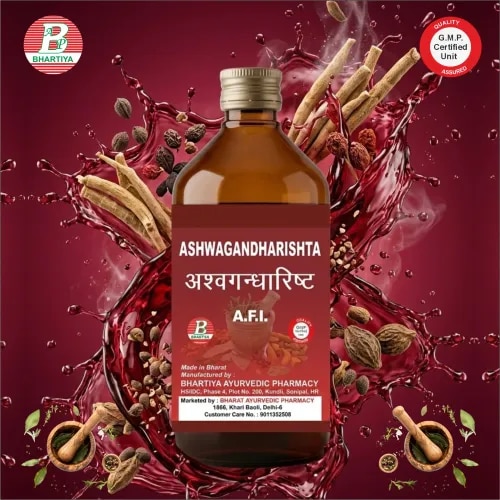
"name": "ASHWAGANDHARISHTA",
"description": " ASHWAGANDHARISHTA\n\n\nProduct Identification\nGeneric Name: Ashwagandharishta\nType: Ayurvedic Polyherbal Fermented Formulation (Arishta)\nPrimary Indication Area: Primarily used as a rejuvenative (Rasayana) and adaptogenic tonic for improving physical strength, mental well-being, nervous system health, vitality, and recovery from chronic weakness. It is commonly indicated in fatigue, stress, anxiety, debility, insomnia, convalescence, reduced immunity, sexual weakness, and age-related decline in strength and stamina.\n\nTherapeutic Indications\n•\tGeneral debility (Daurbalya) \n•\tChronic fatigue and physical exhaustion \n•\tStress and anxiety (Chittodvega) \n•\tNervous exhaustion \n•\tInsomnia and disturbed sleep \n•\tMuscle weakness and reduced stamina \n•\tAge-related decline in vitality \n•\tConvalescence following prolonged illness \n•\tReduced immunity \n•\tSexual weakness and reproductive debility (supportive therapy) \n•\tMild cognitive impairment associated with stress \n•\tLoss of appetite associated with chronic weakness \n\nKey Benefits\n•\tSupports healthy nervous system function and stress adaptation \n•\tPromotes physical strength, stamina, and endurance \n•\tHelps reduce fatigue and improves energy levels \n•\tSupports restful sleep and relaxation \n•\tEnhances mental clarity, memory, and concentration \n•\tSupports healthy immune function \n•\tActs as a rejuvenative (Rasayana) for overall vitality and longevity \n•\tSupports healthy reproductive function and vitality \n•\tHelps improve recovery following chronic illness and prolonged weakness \n•\tProvides antioxidant protection against oxidative stress \n\nFORMULA\nEach part contains:\n•\tAshwagandha (Withania somnifera) Root – 2.400 kg \n•\tMusali (Chlorophytum borivilianum) – 960 g \n•\tManjistha (Rubia cordifolia) – 480 g \n•\tHaritaki (Terminalia chebula) – 480 g \n•\tHaridra (Curcuma longa) – 480 g \n•\tDaruharidra (Berberis aristata) – 480 g \n•\tRasna (Pluchea lanceolata) – 480 g \n•\tVidari (Pueraria tuberosa) – 480 g \n•\tArjuna (Terminalia arjuna) – 480 g \n•\tMusta (Cyperus rotundus) – 480 g \n•\tChitraka (Plumbago zeylanica) – 384 g \n•\tTrivrit (Operculina turpethum) – 480 g \n•\tSveta Sariva (Hemidesmus indicus)-384 g\n•\tKrsna Sariva (Cyrptolepis buchanani)-384 g \n•\tShweta Chandana (Santalum album) – 384 g \n•\tRakta Chandana (Pterocarpus santalinus) – 384 g \n•\tVacha (Acorus calamus) – 384 g \n•\tWater – 98.304 L, reduced to 12.288 L \nPrakshepa Dravyas\n•\tMadhu (Honey) – 14.400 K g \n•\tDhataki Pushpa (Woodfordia fruticosa) – 768 g \n•\tShunthi (Zingiber officinale) – 96 g \n•\tMaricha (Piper nigrum) – 96 g\n•\tPippali (Piper longum) – 96 g\n•\tTvak (Cinnamomum verum) – 96 g\n•\tEla (Elettaria cardamomum) – 96 g\n•\tTejapatra (Cinnamomum tamala) – 96 g\n•\tPriyangu (Callicarpa macrophylla) – 96 g\n•\tNagakesara (Mesua ferrea) – 96 g\n\nIngredients\n1. Ashwagandha\nBotanical Name: Withania somnifera\n•\tRasa: Tikta, Kashaya, Madhura \n•\tGuna: Laghu, Snigdha \n•\tVirya: Ushna \n•\tVipaka: Madhura \n•\tPrabhava: Balya, Rasayana \nMechanism of Action\n•\tSupports adaptation to physical and mental stress. \n•\tEnhances muscle strength and endurance. \n•\tSupports healthy nervous system function. \n•\tPromotes restful sleep and relaxation. \n•\tProvides antioxidant and immunomodulatory activity. \n\n2. Musali\nBotanical Name: Chlorophytum borivilianum\n•\tRasa: Madhura \n•\tGuna: Guru, Snigdha \n•\tVirya: Sheeta \n•\tVipaka: Madhura \n•\tPrabhava: Vrishya, Balya \nMechanism of Action\n•\tImproves physical strength and stamina. \n•\tSupports reproductive health. \n•\tNourishes body tissues (Dhatus). \n•\tHelps reduce fatigue and debility. \n•\tActs as a rejuvenative tonic. \n\n3. Manjistha\nBotanical Name: Rubia cordifolia\n•\tRasa: Tikta, Kashaya, Madhura \n•\tGuna: Guru, Ruksha \n•\tVirya: Ushna \n•\tVipaka: Katu \n•\tPrabhava: Raktashodhaka \nMechanism of Action\n•\tSupports healthy blood purification. \n•\tPromotes healthy circulation. \n•\tProvides antioxidant protection. \n•\tHelps maintain normal inflammatory responses. \n•\tSupports skin and tissue health. \n\n4. Haritaki\nBotanical Name: Terminalia chebula\n•\tRasa: Pancharasa (except Lavana), predominantly Kashaya \n•\tGuna: Laghu, Ruksha \n•\tVirya: Ushna \n•\tVipaka: Madhura \n•\tPrabhava: Rasayana \nMechanism of Action\n•\tSupports digestion and metabolism. \n•\tPromotes bowel regularity. \n•\tEnhances nutrient absorption. \n•\tHelps eliminate metabolic waste. \n•\tActs as a rejuvenative. \n\n5. Haridra\nBotanical Name: Curcuma longa\n•\tRasa: Tikta, Katu \n•\tGuna: Laghu, Ruksha \n•\tVirya: Ushna \n•\tVipaka: Katu \n•\tPrabhava: Vishaghna \nMechanism of Action\n•\tSupports healthy inflammatory balance. \n•\tProvides antioxidant activity. \n•\tSupports liver function. \n•\tEnhances immune response. \n•\tProtects tissues from oxidative stress. \n\n6. Daruharidra\nBotanical Name: Berberis aristata\n•\tRasa: Tikta, Kashaya \n•\tGuna: Laghu, Ruksha \n•\tVirya: Ushna \n•\tVipaka: Katu \n•\tPrabhava: Krimighna \nMechanism of Action\n•\tSupports liver and metabolic health. \n•\tHelps maintain healthy blood glucose metabolism. \n•\tProvides antimicrobial activity. \n•\tSupports immune function. \n•\tPromotes healthy inflammatory balance. \n\n7. Rasna\nBotanical Name: Pluchea lanceolata\n•\tRasa: Tikta, Katu \n•\tGuna: Laghu, Snigdha \n•\tVirya: Ushna \n•\tVipaka: Katu \n•\tPrabhava: Vatahara \nMechanism of Action\n•\tSupports joint and muscle health. \n•\tHelps reduce stiffness. \n•\tPromotes mobility. \n•\tSupports recovery from muscular fatigue. \n•\tHelps maintain healthy inflammatory response. \n\n8. Vidari\nBotanical Name: Pueraria tuberosa\n•\tRasa: Madhura \n•\tGuna: Guru, Snigdha \n•\tVirya: Sheeta \n•\tVipaka: Madhura \n•\tPrabhava: Balya, Rasayana \nMechanism of Action\n•\tNourishes body tissues. \n•\tImproves stamina and vitality. \n•\tSupports reproductive health. \n•\tHelps recovery from chronic weakness. \n•\tPromotes overall rejuvenation. \n\n9. Arjuna\nBotanical Name: Terminalia arjuna\n•\tRasa: Kashaya \n•\tGuna: Laghu, Ruksha \n•\tVirya: Sheeta \n•\tVipaka: Katu \n•\tPrabhava: Hridya \nMechanism of Action\n•\tSupports healthy cardiac muscle function. \n•\tPromotes efficient circulation. \n•\tMaintains vascular integrity. \n•\tProvides antioxidant protection. \n•\tSupports cardiovascular wellness. \n\n10. Musta\nBotanical Name: Cyperus rotundus\n•\tRasa: Tikta, Katu, Kashaya \n•\tGuna: Laghu, Ruksha \n•\tVirya: Sheeta \n•\tVipaka: Katu \n•\tPrabhava: Deepana, Pachana \nMechanism of Action\n•\tSupports digestion and appetite. \n•\tPromotes healthy metabolism. \n•\tHelps relieve digestive discomfort. \n•\tMaintains gastrointestinal balance. \n•\tSupports nutrient assimilation. \n\n11. Chitraka\nBotanical Name: Plumbago zeylanica\n•\tRasa: Katu \n•\tGuna: Laghu, Tikshna, Ruksha \n•\tVirya: Ushna \n•\tVipaka: Katu \n•\tPrabhava: Deepana, Pachana \nMechanism of Action\n•\tStimulates digestive fire (Agni). \n•\tImproves digestion and nutrient absorption. \n•\tReduces Ama (metabolic toxins). \n•\tSupports healthy metabolism. \n•\tEnhances bioavailability of herbal constituents. \n\n12. Trivrit\nBotanical Name: Operculina turpethum\n•\tRasa: Tikta, Katu \n•\tGuna: Laghu, Snigdha, Tikshna \n•\tVirya: Ushna \n•\tVipaka: Katu \n•\tPrabhava: Rechana \nMechanism of Action\n•\tSupports natural detoxification. \n•\tPromotes bowel regularity. \n•\tHelps eliminate metabolic waste. \n•\tSupports digestive health. \n•\tMaintains healthy metabolism. \n\n13. Sveta Sariva\nBotanical Name: Hemidesmus indicus\n•\tRasa: Madhura, Tikta \n•\tGuna: Guru, Snigdha \n•\tVirya: Sheeta \n•\tVipaka: Madhura \n•\tPrabhava: Raktaprasadana \nMechanism of Action\n•\tSupports blood purification. \n•\tProvides cooling and rejuvenating effects. \n•\tHelps maintain healthy skin. \n•\tSupports immune function. \n•\tPromotes overall vitality. \n\n14. Krishna Sariva\nBotanical Name: Cryptolepis buchanani\n•\tRasa: Tikta, Kashaya \n•\tGuna: Guru, Snigdha \n•\tVirya: Sheeta \n•\tVipaka: Madhura \n•\tPrabhava: Balya \nMechanism of Action\n•\tSupports healthy joints and muscles. \n•\tHelps maintain normal inflammatory responses. \n•\tPromotes tissue nourishment. \n•\tSupports musculoskeletal health. \n•\tProvides antioxidant protection. \n\n15. Shweta Chandana\nBotanical Name: Santalum album\n•\tRasa: Tikta, Madhura \n•\tGuna: Laghu, Ruksha \n•\tVirya: Sheeta \n•\tVipaka: Katu \n•\tPrabhava: Pittashamaka \nMechanism of Action\n•\tProvides cooling effects. \n•\tSupports urinary health. \n•\tPromotes mental calmness. \n•\tHelps balance Pitta. \n•\tProvides antioxidant activity. \n\n16. Rakta Chandana\nBotanical Name: Pterocarpus santalinus\n•\tRasa: Tikta, Kashaya \n•\tGuna: Laghu, Ruksha \n•\tVirya: Sheeta \n•\tVipaka: Katu \n•\tPrabhava: Raktaprasadana \nMechanism of Action\n•\tSupports healthy circulation. \n•\tProvides antioxidant protection. \n•\tHelps maintain skin health. \n•\tSupports tissue healing. \n•\tHelps maintain normal inflammatory balance. \n\n17. Vacha\nBotanical Name: Acorus calamus\n•\tRasa: Katu, Tikta \n•\tGuna: Laghu, Tikshna \n•\tVirya: Ushna \n•\tVipaka: Katu \n•\tPrabhava: Medhya \nMechanism of Action\n•\tSupports cognitive function. \n•\tEnhances memory and concentration. \n•\tSupports nervous system health. \n•\tHelps reduce mental fatigue. \n•\tPromotes mental clarity. \n Prakshepa Dravyas\n1. Madhu (Honey)\nSource: Honey \n•\tRasa: Madhura, Kashaya Anurasa \n•\tGuna: Laghu, Ruksha \n•\tVirya: Sheeta \n•\tVipaka: Madhura \n•\tPrabhava: Yogavahi \nMechanism of Action\n•\tActs as a Yogavahi, enhancing the delivery and absorption of herbal constituents. \n•\tSupports tissue nourishment and rejuvenation. \n•\tProvides antioxidant and antimicrobial properties. \n•\tImproves the palatability of the formulation. \n•\tHelps preserve the fermented preparation. \n\n2. Dhataki Pushpa\nBotanical Name: Woodfordia fruticosa\n•\tRasa: Kashaya \n•\tGuna: Laghu, Ruksha \n•\tVirya: Sheeta \n•\tVipaka: Katu \n•\tPrabhava: Sandhaniya, Yogavahi \nMechanism of Action\n•\tActs as the natural fermenting agent in Arishta preparation. \n•\tFacilitates the formation of self-generated alcohol for efficient extraction of phytoconstituents. \n•\tImproves bioavailability of herbal constituents. \n•\tSupports preservation and stability of the formulation. \n•\tEnhances overall therapeutic efficacy through improved absorption. \n\n3. Shunthi\nBotanical Name: Zingiber officinale (Dry Rhizome)\n•\tRasa: Katu \n•\tGuna: Laghu, Snigdha \n•\tVirya: Ushna \n•\tVipaka: Madhura \n•\tPrabhava: Deepana, Pachana \nMechanism of Action\n•\tStimulates digestive fire (Agni). \n•\tImproves digestion and nutrient absorption. \n•\tHelps reduce Ama (metabolic toxins). \n•\tSupports healthy circulation and metabolism. \n•\tEnhances bioavailability of herbal constituents. \n\n4. Maricha\nBotanical Name: Piper nigrum\n•\tRasa: Katu \n•\tGuna: Laghu, Tikshna \n•\tVirya: Ushna \n•\tVipaka: Katu \n•\tPrabhava: Deepana, Lekhana \nMechanism of Action\n•\tStimulates digestion and metabolism. \n•\tEnhances intestinal absorption of phytoconstituents. \n•\tSupports respiratory health. \n•\tPromotes healthy circulation. \n•\tProvides antioxidant activity. \n\n5. Pippali\nBotanical Name: Piper longum\n•\tRasa: Katu \n•\tGuna: Laghu, Snigdha, Tikshna \n•\tVirya: Anushna (Mildly Ushna) \n•\tVipaka: Madhura \n•\tPrabhava: Rasayana \nMechanism of Action\n•\tSupports respiratory and digestive health. \n•\tEnhances absorption and bioavailability of herbal compounds. \n•\tPromotes rejuvenation and vitality. \n•\tSupports immune function. \n•\tHelps improve endurance and recovery. \n\n6. Tvak\nBotanical Name: Cinnamomum verum (Syn. Cinnamomum zeylanicum)\n•\tRasa: Katu, Tikta, Madhura \n•\tGuna: Laghu, Ruksha, Tikshna \n•\tVirya: Ushna \n•\tVipaka: Katu \n•\tPrabhava: Hridya \nMechanism of Action\n•\tSupports healthy digestion and metabolism. \n•\tPromotes healthy blood circulation. \n•\tProvides antioxidant activity. \n•\tHelps maintain healthy blood glucose metabolism. \n•\tImproves aroma and taste of the formulation. \n\n7. Ela\nBotanical Name: Elettaria cardamomum\n•\tRasa: Katu, Madhura \n•\tGuna: Laghu, Ruksha \n•\tVirya: Sheeta \n•\tVipaka: Madhura \n•\tPrabhava: Hridya \nMechanism of Action\n•\tSupports healthy digestion. \n•\tHelps reduce bloating and indigestion. \n•\tSupports respiratory health. \n•\tProvides antioxidant activity. \n•\tImproves aroma and palatability. \n\n8. Tejapatra\nBotanical Name: Cinnamomum tamala\n•\tRasa: Katu, Tikta, Kashaya \n•\tGuna: Laghu, Ruksha \n•\tVirya: Ushna \n•\tVipaka: Katu \n•\tPrabhava: Deepana \nMechanism of Action\n•\tStimulates appetite and digestion. \n•\tSupports healthy metabolism. \n•\tPromotes circulation. \n•\tProvides antioxidant protection. \n•\tEnhances the aromatic quality of the formulation. \n\n9. Priyangu\nBotanical Name: Callicarpa macrophylla\n•\tRasa: Kashaya, Madhura \n•\tGuna: Laghu, Ruksha \n•\tVirya: Sheeta \n•\tVipaka: Katu \n•\tPrabhava: Pittashamaka \nMechanism of Action\n•\tSupports healthy skin and blood. \n•\tHelps maintain normal inflammatory responses. \n•\tProvides antioxidant activity. \n•\tPromotes tissue healing. \n•\tContributes to the rejuvenative effects of the formulation. \n\n10. Nagakesara\nBotanical Name: Mesua ferrea\n•\tRasa: Kashaya, Tikta \n•\tGuna: Laghu, Ruksha \n•\tVirya: Sheeta \n•\tVipaka: Katu \n•\tPrabhava: Grahi, Raktastambhaka \nMechanism of Action\n•\tSupports healthy circulation and vascular integrity. \n•\tHelps maintain normal inflammatory responses. \n•\tProvides antioxidant protection. \n•\tSupports digestive health. \n•\tContributes to tissue repair and rejuvenation.\n Dosage\n•\tAdults: 15–30 ml \n•\tTwice daily after meals \n•\tDilute with an equal quantity of water (1:1 dilution is commonly recommended) \nCommon Usage Guidance\n•\tTake after meals to improve digestion and absorption. \n•\tShake well before use. \n•\tCan be used regularly as a Rasayana (rejuvenative) and adaptogenic tonic under the supervision of a qualified Ayurvedic physician. \n•\tThe duration of therapy generally ranges from 4–12 weeks, depending on the individual's condition and the physician's advice. \nImportant Notes\n•\tNot recommended during pregnancy or lactation unless advised by a qualified healthcare professional. \n•\tUse cautiously in individuals taking sedatives, antidiabetic medications, antihypertensive drugs, thyroid medications, or immunosuppressants, as Ashwagandha may influence their effects. \n•\tPatients with chronic medical conditions should use this formulation under the supervision of a qualified Ayurvedic physician or healthcare professional. \n•\tThis is a naturally fermented preparation and contains a small amount of self-generated alcohol, which enhances the extraction and absorption of herbal constituents. \n•\tDo not exceed the recommended dosage. \n•\tStore in a cool, dry place away from direct sunlight and keep the container tightly closed after use.\n\n\nashwagandharishta ke fayde\nashwagandharishta syrup benefits in hindi\nashwagandharishta syrup\nashwagandharishta kis kaam aati hai\nashwagandharishta benefits in hindi\nashwagandharishta uses in hindi\nashwagandharishta ayurvedic medicine uses\nashwagandharishta ayurveda\nashwagandharishta ayurvedic medicine uses in hindi\nashwagandharishta ayurvedic syrup uses in hindi\nashwagandharishta composition\nashwagandharishta expiry date\nashwagandharishta empty stomach\nashwagandharishta uses easy ayurveda\nashwagandharishta syrup expiry date\nashwagandharishta for women\nashwagandharishta fayde\nashwagandharishta flipkart\nashwagandharishta for weight gain\nashwagandharishta for heart\nashwagandharishta fayde in hindi\nashwagandharishta ke gun\nashwagandharishta hindi use\nashwagandharishta hindi mein\nashwagandharishta how to take\nashwagandharishta hai\nashwagandharishta how long to take\nashwagandharishta how to use\nashwagandharishta hamdard\nashwagandharishta in hindi\nashwagandharishta ingredients\nashwagandharishta ingredients in hindi\nashwagandharishta image\nashwagandharishta india\nashwagandharishta kaise piya jata hai\nashwagandharishta ke fayde hindi mein\nashwagandharishta kis kaam mein aata hai\nashwagandharishta mein kya-kya hota hai\nashwagandharishta mein kya-kya hai\nashwagandharishta meaning in hindi\nashwagandharishta me kya hota hai\nashwagandharishta near me\nashwagandharishta online\nashwagandharishta online buy\nashwagandharishta online price\nashwagandharishta peene ke fayde\nashwagandharishta price\nashwagandharishta peene se kya hota hai\nashwagandharishta powder\nashwagandharishta peene se kya-kya fayda hai\nashwagandharishta rate\nashwagandharishta ras\nashwagandharishta syrup kis kaam aata hai\nashwagandharishta special\nashwagandharishta syrup uses in hindi\nashwagandharishta syrup benefits\nashwagandharishta syrup uses\nashwagandharishta special benefits\nashwagandharishta syrup price",
"price": 192.0,
"discountamount": 96.0,
"currencycode": "INR",
"priority": 1000000,
"isfreeshipmentavailable": false,
"shipmentduration": 1,
"_keywords": null,
"isarchived": false,
"isavailable": true,
"applicationid": null,
"productindex": 158,
"imageuri": "https://productimages.withfloats.com/actual/6a58bbe4096fa165252ea2c3.jpg",
"tileimageuri": "https://productimages.withfloats.com/tile/6a58bbe4096fa165252ea2c3.jpg",
"images": null,
"totalqueries": 0,
"gpid": null,
"groupproductid": null,
"createdon": "2026-07-16T11:09:20.636Z",
"updatedon": "2026-07-16T11:09:20.636Z",
"buyonlinelink": null,
"producturl": "http://WWW.BHARTIYAAYURVEDICPHARMACY.COM/products/ashwagandharishta/158",
"availableunits": -1.0,
"iscodavailable": true,
"isprepaidonlineavailable": true,
"maxcodorders": -1,
"maxprepaidonlineorders": -1,
"uniquepaymenturl": null,
"brandname": "Bakula Fort",
"category": "ASHWAGANDHARISHTA 450 Ml X 40",
"tags": [],
"variants": false,
"keyspecification": null,
"otherspecifications": null,
"pickupaddressreferenceid": null,
"paymenttype": "AssuredPurchase",
"producttype": "products",
"hsncode": null,
"gstslab": 0.0,
"isnotforsale": false
},
{
"_id": "6a2a6438ca14d0e0bc75da96",
"fptag": "BHARTIYEAYURVEDICPHARMACY",
"merchantname": null,
"customwidgets": null,
"externalsourceid": null,
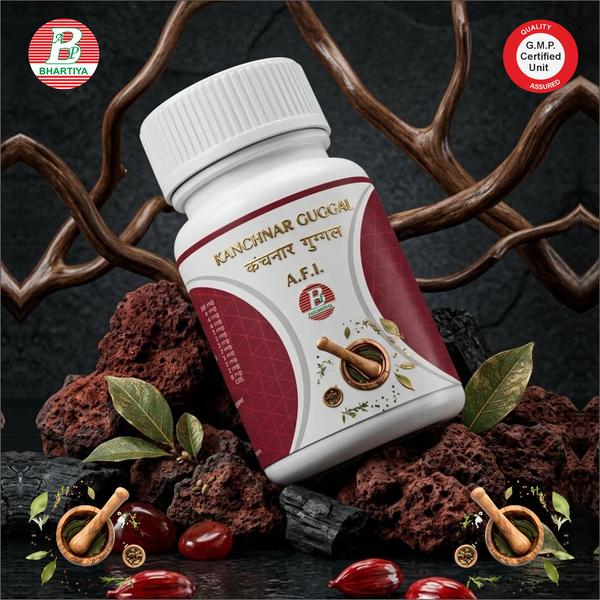
"name": "Kanchnar Guggal",
"description": " KACHNAR GUGGUL\n\nProduct Identification\n•\tGeneric Name: Kachnar Guggul \n•\t Type: Ayurvedic Polyherbal Formulation \n•\tPrimary Indication Area: Glandular disorders, thyroid support, lymphatic congestion, and abnormal growths. \n•\tTherapeutic Indications: Traditionally used for managing enlarged lymph nodes, thyroid enlargement (Galaganda), cysts, fibroids, lipomas, and other Kapha-related swellings.\n\nKey Benefits:\n•\tThyroid Support: Helps maintain healthy thyroid function and manage thyroid enlargement. \n•\tReduces Swelling: Supports the reduction of glandular and lymphatic swellings. \n•\tManages Cysts & Fibroids: Traditionally used for benign growths such as cysts, fibroids, and lipomas. \n•\tLymphatic Health: Promotes healthy lymphatic drainage and detoxification. \n•\tKapha Balance: Helps balance excess Kapha and supports metabolic health. \n•\tAnti-inflammatory Action: Helps relieve inflammation and discomfort associated with swellings. \n\nFORMULA\nEach Tablet contains: \nKachnar Tvak\t480\nGuggul \t996 g\nHaritaki \t96g\nBibhitaki \t96g\nAmalaki \t96g\nDry Ginger \t48g\nBlack Pepper \t48g\nLong Pepper \t48g\nVaruna \t12g\nCardamom \t48g\nCinnamon \t12g\nTejapatra \t12g\n\nIngredients:\n1. Kachnar Tvak (Bauhinia variegata) \nBotanical/Scientific Name: Bauhinia variegata Linn.\nRasa–Guna–Vīrya–Vipāka:\n• Rasa: Kaṣāya (Astringent), Tikta (Bitter)\n• Guna: Laghu (Light), Rūkṣa (Dry)\n• Vīrya: Śīta (Cooling)\n• Vipāka: Kaṭu (Pungent)\nPrabhāva: Granthi-Śothahara (Helps reduce glandular swellings and abnormal growths)\nMechanism of Action (Karma)\n1.\tGranthi-Nāśaka Karma\no Helps reduce glandular enlargements, nodules, cysts, and abnormal tissue growths. \n2.\tŚothahara Karma\no Assists in reducing inflammation and localized swellings. \n3.\tKapha-Medo Hara Karma\no Helps alleviate excess Kapha and unhealthy tissue accumulation. \n4.\tRakta Śodhaka Karma\no Supports blood purification and healthy tissue metabolism. \n5.\tLekhana Karma\no Helps in the reduction of excess tissue growth and metabolic congestion.\n\n2. Guggul (Commiphora mukul) \nBotanical/Scientific Name: Commiphora mukul\n•\tRasa–Guna–Vīrya–Vipāka:\n• Rasa: Tikta (Bitter), Kaṭu (Pungent), Kaṣāya (Astringent)\n• Guna: Laghu (Light), Rūkṣa (Dry), Tikṣṇa (Sharp), Sara (Mobile)\n• Vīrya: Uṣṇa (Hot)\n• Vipāka: Kaṭu (Pungent)\nPrabhāva: Lekhana, Yogavāhī (Scraping and bio-enhancing action)\nMechanism of Action (Karma)\n1.\tLekhana Karma\no Helps reduce excess fat, Kapha accumulation, and abnormal tissue growths. \n2.\tŚothahara Karma\no Reduces inflammation and swelling. \n3.\tĀma Pachana Karma\no Helps digest metabolic toxins (Ama). \n4.\tSrotoshodhana Karma\no Cleanses body channels and improves circulation. \n5.\tYogavāhī Karma\no Enhances the potency of other herbs in the formulation. \n\n3. Haritaki (Terminalia chebula) \nBotanical/Scientific Name: Terminalia chebula\nRasa–Guna–Vīrya–Vipāka:\n• Rasa: Pancharasa (except Lavana), predominance Kaṣāya\n• Guna: Laghu (Light), Rūkṣa (Dry)\n• Vīrya: Uṣṇa (Hot)\n• Vipāka: Madhura (Sweet)\nPrabhāva: Tridoṣa Śāmaka\nMechanism of Action (Karma)\n1.\tDeepana Karma\no Improves digestive fire. \n2.\tPachana Karma\no Helps digest and remove Ama (toxins). \n3.\tAnulomana Karma\no Supports proper bowel movement and detoxification. \n4.\tRasāyana Karma\no Rejuvenates tissues and supports longevity. \n\n4. Bibhitaki (Terminalia bellirica) \nBotanical/Scientific Name: Terminalia bellirica\nRasa–Guna–Vīrya–Vipāka:\n• Rasa: Kaṣāya (Astringent)\n• Guna: Laghu (Light), Rūkṣa (Dry)\n• Vīrya: Śīta (Cooling)\n• Vipāka: Madhura (Sweet)\nPrabhāva: Kapha-Pitta Śāmaka\nMechanism of Action (Karma)\n1.\tKapha Hara Karma\no Reduces mucus and congestion. \n2.\tShothahara Karma\no Reduces inflammation and swelling. \n3.\tShwasahara Karma\no Supports respiratory health. \n4.\tPachana Karma\no Aids digestion and detoxification. \n\n5. Amalaki (Emblica officinalis) \nBotanical/Scientific Name: Emblica officinalis\nRasa–Guna–Vīrya–Vipāka:\n• Rasa: Pancharasa (predominantly Amla)\n• Guna: Guru (Heavy), Rūkṣa (Dry)\n• Vīrya: Śīta (Cooling)\n• Vipāka: Madhura (Sweet)\nPrabhāva: Rasāyana (Rejuvenative)\nMechanism of Action (Karma)\n1.\tRasāyana Karma\no Rejuvenates body tissues and supports longevity. \n2.\tAntioxidant Karma\no Protects cells from oxidative stress. \n3.\tRakta Śodhaka Karma\no Purifies blood and supports skin/tissue health. \n4.\tImmunity Enhancer Karma\no Strengthens natural defense system. \n\n6. Shunthi (Zingiber officinale) \n\nBotanical/Scientific Name: Zingiber officinale (Dry Ginger)\nRasa–Guna–Vīrya–Vipāka:\n• Rasa: Kaṭu (Pungent)\n• Guna: Laghu (Light), Snigdha (Unctuous)\n• Vīrya: Uṣṇa (Hot)\n• Vipāka: Madhura (Sweet)\nPrabhāva: Deepana–Pachana\nMechanism of Action (Karma)\n1.\tAgni Deepana Karma\no Enhances digestive fire. \n2.\tAma Pachana Karma\no Helps remove toxins. \n3.\tŚothahara Karma\no Reduces inflammation. \n4.\tShwasahara Karma\no Supports respiratory health. \n\n7.Maricha (Black Pepper) \n\nBotanical/Scientific Name: Piper nigrum\nRasa–Guna–Vīrya–Vipāka:\n• Rasa: Kaṭu (Pungent)\n• Guna: Laghu (Light), Rūkṣa (Dry), Tikṣṇa (Sharp)\n• Vīrya: Uṣṇa (Hot)\n• Vipāka: Kaṭu (Pungent)\nPrabhāva: Yogavāhī (Bio-enhancer)\nMechanism of Action (Karma)\n1.\tDeepana Karma\no Improves digestion and metabolism. \n2.\tBioavailability Enhancer Karma\no Increases absorption of other herbs. \n3.\tKapha Hara Karma\no Reduces mucus and congestion. \n\n8. Pippali (Piper longum) \n\nBotanical/Scientific Name: Piper longum\nRasa–Guna–Vīrya–Vipāka:\n• Rasa: Kaṭu (Pungent)\n• Guna: Laghu (Light), Snigdha (Unctuous)\n• Vīrya: Uṣṇa (Hot)\n• Vipāka: Madhura (Sweet)\nPrabhāva: Rasāyana, Shwasahara\nMechanism of Action (Karma)\n1.\tShwasahara Karma\no Supports respiratory function and clears Kapha. \n2.\tAgni Deepana Karma\no Improves digestion. \n3.\tKapha Hara Karma\no Reduces congestion. \n4.\tRasāyana Karma\no Rejuvenates body tissues. \n\n9. Varuna (Crataeva nurvala) \n\nBotanical/Scientific Name: Crataeva nurvala\nRasa–Guna–Vīrya–Vipāka:\n• Rasa: Tikta (Bitter), Kaṣāya (Astringent)\n• Guna: Laghu (Light), Rūkṣa (Dry)\n• Vīrya: Śīta (Cooling)\n• Vipāka: Kaṭu (Pungent)\nPrabhāva: Granthi-Śothahara\nMechanism of Action (Karma)\n1.\tGranthi Hara Karma\no Helps reduce cysts and glandular swellings. \n2.\tMutrala Karma\no Supports urinary tract cleansing. \n3.\tŚothahara Karma\no Reduces inflammation and swelling. \n\n10. Ela (Cardamom) \n\nBotanical/Scientific Name: Elettaria cardamomum\nRasa–Guna–Vīrya–Vipāka:\n• Rasa: Madhura (Sweet), Kaṭu (Pungent), Tikta (Bitter)\n• Guna: Laghu (Light), Snigdha (Unctuous)\n• Vīrya: Śīta (Cooling)\n• Vipāka: Madhura (Sweet)\nPrabhāva: Hṛdya, Dīpana\nMechanism of Action (Karma)\n1.\tDeepana Karma\no Improves digestion. \n2.\tHṛdya Karma\no Supports heart health. \n3.\tShwasahara Karma\no Improves respiration. \n\n11. Tvak (Cinnamon) \n\nBotanical/Scientific Name: Cinnamomum zeylanicum\nRasa–Guna–Vīrya–Vipāka:\n• Rasa: Kaṭu (Pungent), Tikta (Bitter), Madhura (Sweet)\n• Guna: Laghu (Light), Rūkṣa (Dry), Tikṣṇa (Sharp)\n• Vīrya: Uṣṇa (Hot)\n• Vipāka: Kaṭu (Pungent)\nPrabhāva: Agni Deepana\nMechanism of Action (Karma)\n1.\tAgni Deepana Karma\no Enhances metabolism. \n2.\tKapha Hara Karma\no Reduces congestion. \n3.\tRakta Sancharana Karma\no Improves blood circulation. \n\n12. Tejapatra (Indian Bay Leaf) \n\nBotanical/Scientific Name: Cinnamomum tamala\nRasa–Guna–Vīrya–Vipāka:\n• Rasa: Kaṭu (Pungent), Tikta (Bitter)\n• Guna: Laghu (Light), Rūkṣa (Dry)\n• Vīrya: Uṣṇa (Hot)\n• Vipāka: Kaṭu (Pungent)\nPrabhāva: Kapha-Vāta Śāmaka\nMechanism of Action (Karma)\n1.\tDeepana Karma\no Improves digestion. \n2.\tKapha Hara Karma\no Reduces mucus and congestion. \n3.\tSrotoshodhana Karma\no Clears blocked channels and supports detoxification. \n\nGeneral Ayurvedic dosage (adults):\nTablet/Capsule: 1–2 tablets (250–500 mg each)\n Frequency: 2 times a day\n Timing: After food (usually with lukewarm water)\n\nkanchnar guggulu uses, kanchnar guggulu, kanchnar guggul\nkanchnar guggul benefits in hindi, kanchnar guggulu uses in hindi\nkanchnar guggul price, kanchnar guggul benefits, kanchnar guggulu tablet\nkanchnar guggul ke fayde, kanchnar guggulu amazon, kanchnar guggul ayurvedic medicine\nkanchnar guggul ayurvedic medicine uses in hindi, kanchnar guggul and guggul\nkanchnar guggul ayurvedic, kanchnar guggul ayurveda, kanchnar guggul ayurvedic tablet\nkanchnar guggul buy online, kanchnar guggul benefits for female, kanchnar guggul benefits for male\nkanchnar guggul before or after meal, kanchnar guggul composition, kanchnar guggul capsule\nkanchnar guggul content, kanchnar guggul dosage, kanchnar guggul dose, kanchnar guggul dose per day\nkanchnar guggul english name, kanchnar guggul effects, kanchnar guggul in english, what is kanchnar guggul\nkanchnar guggul for weight loss, kanchnar guggul for men, kanchnar guggul fayde in hindi, kanchnar guggul goli\nkanchnar guggul gutika, kanchnar guggul guti uses in hindi, kanchnar guggul goli ke fayde\nkanchnar guggul ganth ke fayde, kanchnar guggul good for liver, kanchnar guggul hindi, kanchnar guggulu himalaya\nkanchnar guggul how to take, kanchnar guggul herb, kanchnar guggul how to use, kanchnar guggul how many days to take\nkanchnar guggul hindi use, kanchnar guggul in hindi, kanchnar guggul ingredients, kanchnar guggul image\nkanchnar guggul is used for, kanchnar guggul in hindi benefits, kanchnar guggul jadi buti, kanchnar guggul for joint pain\ndoes kanchanar guggulu work, kanchnar guggul zandu, kanchnar juice, kanchnar guggul kaise khaye\nkanchnar guggul kis kam aata hai, kanchnar guggul khane ke fayde, kanchnar guggul kya hai\nkanchnar guggul ka kya kam hai, kanchnar guggul lene ka tarika, kanchnar guggul lene ke fayde\nkanchnar guggul medicine uses, kanchnar guggul me kya hota hai, kanchnar guggul made of\nkanchnar guggul mrp, kanchnar guggul medicine price, kanchnar guggul marathi\nkanchnar guggul near me, kanchnar guggul botanical name, kanchnar guggul scientific name\nkanchnar guggul online, kanchnar guggul order online, kanchnar guggul original\nkanchnar guggul on amazon, kanchnar guggul order, benefits of kanchnar guggul\nuses of kanchnar guggul",
"price": 240.0,
"discountamount": 120.0,
"currencycode": "INR",
"priority": 1000000,
"isfreeshipmentavailable": false,
"shipmentduration": 1,
"_keywords": null,
"isarchived": false,
"isavailable": true,
"applicationid": null,
"productindex": 140,
"imageuri": "https://productimages.withfloats.com/actual/6a2a643b0209063e1ab45dd6.jpg",
"tileimageuri": "https://productimages.withfloats.com/tile/6a2a643b0209063e1ab45dd6.jpg",
"images": null,
"totalqueries": 0,
"gpid": null,
"groupproductid": null,
"createdon": "2026-06-11T07:31:04.377Z",
"updatedon": "2026-06-11T07:31:04.377Z",
"buyonlinelink": null,
"producturl": "http://WWW.BHARTIYAAYURVEDICPHARMACY.COM//kanchnar-guggal/140",
"availableunits": -1.0,
"iscodavailable": true,
"isprepaidonlineavailable": true,
"maxcodorders": -1,
"maxprepaidonlineorders": -1,
"uniquepaymenturl": null,
"brandname": "Bakula Fort",
"category": "Kanchnar Guggal 100 gm X 40",
"tags": [],
"variants": false,
"keyspecification": null,
"otherspecifications": null,
"pickupaddressreferenceid": null,
"paymenttype": "AssuredPurchase",
"producttype": "products",
"hsncode": null,
"gstslab": 0.0,
"isnotforsale": false
},
{
"_id": "69e1c462654012fd93ca2eae",
"fptag": "BHARTIYEAYURVEDICPHARMACY",
"merchantname": null,
"customwidgets": null,
"externalsourceid": null,
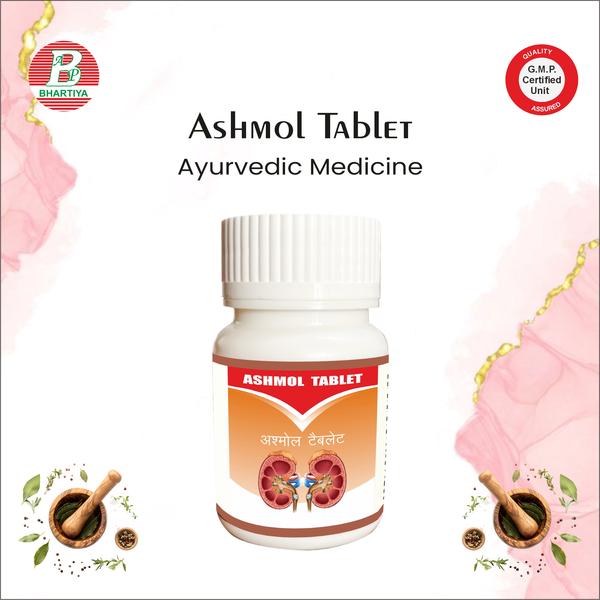
"name": "Ashmol Tablet",
"description": " ASHMOL TABLET \n\nProduct Identification\n•\tGeneric Name: Ashmol Tablet\n•\tType: Ayurvedic Patent Medicine\n•\tPrimary Indication Area: kidney stone treatment is to relieve pain and help pass or remove stones from the kidneys and urinary tract.\nTherapeutic Indications:\nPain relief, facilitation of stone passage, and prevention of stone recurrence. \nPrimary Benefit:\n•\tRelieves pain and helps pass or remove stones.\nOther Benefits:\n•\tPrevents recurrence of stones if proper medication or lifestyle changes are followed\n•\tReduces risk of urinary tract infections caused by stagnant stones\n•\tProtects kidney function by preventing obstruction and damage\n•\tMay improve urine flow and general urinary health\n HARAD \nBotanical / Common Name: Terminalia chebula\nKey Phytoconstituents:\n•\tTannins\n•\tFlavonoids\n•\tPolyphenols / Phenolic compounds\n•\tSugars / Mucilage\nMechanism of Action in Kidney Stones – Biochemistry / Pharmacology:\n1.\tInhibition of Stone Formation\no\tTannins and flavonoids bind calcium and oxalate ions, preventing calcium oxalate crystal aggregation.\no\tReduces formation of larger stones from small crystals.\n2.\tDiuretic Effect / Stone Flushing\no\tIncreases urine output, helping flush out small stones.\no\tReduces crystal retention in kidneys and ureters.\n3.\tAntioxidant / Renal Protective Effect\no\tPolyphenols and flavonoids scavenge reactive oxygen species (ROS).\no\tProtects renal tissue from oxidative damage that promotes stone formation.\n4.\tUrinary Alkalinization\no\tMildly increases urine pH, reducing uric acid stone formation.\n5.\tAnti-inflammatory Effect\no\tReduces inflammation in the urinary tract caused by stone irritation.\n\n BABOOL \nBotanical / Common Name: Acacia nilotica\nKey Phytoconstituents:\n•\tTannins\n•\tFlavonoids \n•\tSaponins\n•\tGlycosides\n•\tPolyphenolic compounds\nMechanism of Action – Biochemistry / Pharmacology:\n1.\tAntimicrobial / Oral Health Effect\no\tTannins and flavonoids exhibit antibacterial activity, reducing microbial growth in oral and gastrointestinal tract.\no\tHelps in prevention of infections and inflammation.\n2.\tAstringent Effect\no\tTannins precipitate proteins on mucosal surfaces, producing an astringent action.\no\tUseful in diarrhea, bleeding gums, and wound healing.\n3.\tAnti-inflammatory Effect\no\tPolyphenolic compounds reduce inflammation by inhibiting inflammatory mediators.\no\tProtects tissues from irritation and oxidative stress.\n4.\tAntioxidant Effect\no\tFlavonoids and polyphenols scavenge free radicals, protecting cells from oxidative damage.\n5.\tGastrointestinal Benefits\no\tSaponins and tannins strengthen gut mucosa, reduce diarrhea, and help maintain digestive health.\n\n\nSHUDH GUGGAL \nBotanical / Common Name: Commiphora mukul\nKey Phytoconstituents:\n•\tGuggulsterones (E- and Z- guggulsterone)\n•\tResinous compounds\n•\tEssential oils\n•\tSterols\nMechanism of Action – Biochemistry / Pharmacology:\n1.\tLipid-Lowering / Hypolipidemic Effect\no\tGuggulsterones modulate cholesterol metabolism by activating bile acid synthesis.\no\tReduces LDL cholesterol and triglycerides; increases HDL cholesterol.\n2.\tAnti-inflammatory Effect\no\tInhibits NF-κB pathway, reducing production of inflammatory mediators.\no\tUseful in arthritis, joint pain, and inflammatory conditions.\n3.\tAnti-oxidant Effect\no\tResin and phytosterols scavenge free radicals, protecting cells from oxidative stress.\n4.\tThyroid Stimulant / Metabolic Effect\no\tGuggulsterones may stimulate thyroid activity, enhancing metabolic rate and fat metabolism.\n5.\tCholagogue / Digestive Support\no\tPromotes bile secretion, aiding digestion and fat absorption.\n\n HAJRUL YAHOOD BHASMA \nBotanical / Common Name: mineral based Ayurvedic Bhasma (calcined stone)\nKey Phytoconstituents / Composition:\n•\tCalcium silicate / Lime silicate (from fossil stone)\n•\tMineral oxides (post calcination residues)\n(Hajrul Yahood is processed through purification and heating to form a fine, digestible powder) \nMechanism of Action in Kidney Stone / Urinary System – Biochemistry / Pharmacology:\n1.\tLithontriptic (Stone Dissolving) Action\no\tPromotes breakdown and dissolution of urinary calculi (stones), helping them reduce in size or pass through urine.\no\tUsed traditionally to manage kidney stones and assist expulsion along the urinary tract. \n2.\tDiuretic Effect / Urine Flow Promotion\no\tIncreases urine production and flow, facilitating the flushing out of small crystals or stones.\no\tHelps reduce urinary retention and complete bladder emptying. \n3.\tAnodyne / Pain Reducing Effect\no\tHas properties to alleviate renal colic (stone related pain) and discomfort during urination.\no\tMinimizes burning sensation and dysuria (painful urination). \n4.\tAntipruritic / Mucosal Protective Action\no\tTraditionally used externally for skin irritation (itching, ringworm) due to its calming effect on tissues.\no\tInternally, it supports mucosal health in the urinary tract. \n5.\tPitta & Kapha Pacification (Ayurvedic property)\no\tCooling (sheet) virya and astringent action help balance Pitta and Kapha doshas associated with excess heat and fluid imbalance in the GI and urinary systems. \n\n GHRIT KUMARI \nBotanical / Common Name: Aloe vera\nKey Phytoconstituents:\n•\tAnthraquinones (aloin, emodin)\n•\tPolysaccharides (acemannan)\n•\tSaponins\n•\tGlycoproteins\n•\tVitamins and minerals\nMechanism of Action – Biochemistry / Pharmacology:\n1.\tMild Laxative / Gastrointestinal Effect\no\tAnthraquinones stimulate intestinal peristalsis, easing bowel movements.\no\tPolysaccharides increase water content in stools, reducing constipation and straining.\n2.\tAnti-inflammatory Effect\no\tGlycoproteins and polysaccharides inhibit inflammatory mediators, soothing GI mucosa and reducing irritation.\n3.\tWound Healing / Tissue Regeneration\no\tPolysaccharides and glycoproteins promote cell proliferation, collagen synthesis, and tissue repair.\no\tHelps heal ulcers and minor GI lesions.\n4.\tAntioxidant Effect\no\tVitamins (A, C, E) and phenolic compounds scavenge free radicals, protecting tissues from oxidative damage.\n5.\tImmune Modulatory Effect\no\tPolysaccharides stimulate macrophages and cytokine activity, supporting immune defense in the GI tract.\nDosage\nDose: 2–3 tablets, twice a day (morning and evening)\n•\tAnupan: Water, preferably after food\n•\tPrecautions:\no\tOnly relieves pain, does not dissolve or remove stones\no\tMaintain hydration and follow dietary measures\no\tConsult a doctor if pain is severe, persistent, or with blood in urine/fever. \n\n\n\nashmol tablet amazon, ashmol tablet amazon india\nashmol tablet benefits, ashmol tablet buy online\nashmol tablet buy, ashmol tablet brand name\nashmol tablet composition, ashmol tablet company\nashmol tablet content, ashmol tablet composition pdf\nashmol tablet download, ashmol tablet dose\nashmol tablet dosage, ashmol tablet dose per day\nashmol tablet englis, ashmol tablet expiry date\nashmol tablet flipkart, ashmol tablet free download\nashmol tablet for hair, ashmol tablet for skin\nashmol tablet ghaziabad, ashmol tablet google\nashmol tablet ghaziabad uttar pradesh, ashmol tablet hindi\nashmol tablet holder, ashmol tablet how to use\nashmol tablet hsn code, ashmol tablet hd images\nashmol tablet indiamart, ashmol tablet india\nashmol tablet in hindi , ashmol tablet image\nashmol tablet jiomart, ashmol tablet jaipur\nashmol tablet ke fayde in hindi, ashmol tablet kya hai\nashmol tablet kis kaam aati hai, ashmol tablet ke fayde\nashmol tablet kya kam karta hai, ashmol tablet login\nashmol tablet list, ashmol tablet list pdf\nashmol tablet label, ashmolean museum tablets\nashmol tablet uses, ashmol tablet name\nashmol tablet new, ashmol tablet online shopping\nashmol tablet online, ashmol tablet order\nashmol tablet order online, ashmol tablet price\nashmol tablet price in india, ashmol tablet quality\nashmol tablet review, ashmol tablet rate\nashmol tablet review in hindi, ashmol tablet side effects\nashmol tablet supplier, ashmol tablet tablet\nasmol 500 uses in hindi, ashmol tablet video\nashmol tablet website, acimol+tablet+uses\nwhere ashmol tablet manufactured\nwhere ashmol tablet found, where ashmol tablet uses\nwhen ashmol tablet will start, when ashmol tablet launched\nwhen ashmol tablet uses, how ashmol tablet is used\nwhy ashmol tablet uses, who ashmol tablets\nwho ashmol tablet uses, is ashmol tablet good\ncan ashmol tablet uses, will ashmol tablet uses\ndo ashmol tablet uses, does ashmol tablets work\nwas ashmol tablet uses, best ashmol tablets\nbest ashmol tablet in india, top ashmol tablets\ntop ashmol tablet in india, top ashmol tablet uses",
"price": 105.0,
"discountamount": 50.0,
"currencycode": "INR",
"priority": 1000000,
"isfreeshipmentavailable": false,
"shipmentduration": 1,
"_keywords": null,
"isarchived": false,
"isavailable": true,
"applicationid": null,
"productindex": 91,
"imageuri": "https://productimages.withfloats.com/actual/69e1c46454763944d8952bf5.jpg",
"tileimageuri": "https://productimages.withfloats.com/tile/69e1c46454763944d8952bf5.jpg",
"images": null,
"totalqueries": 0,
"gpid": null,
"groupproductid": null,
"createdon": "2026-04-17T05:25:54.596Z",
"updatedon": "2026-04-17T05:25:54.596Z",
"buyonlinelink": null,
"producturl": "http://WWW.BHARTIYAAYURVEDICPHARMACY.COM//ashmol-tablet/91",
"availableunits": -1.0,
"iscodavailable": true,
"isprepaidonlineavailable": true,
"maxcodorders": -1,
"maxprepaidonlineorders": -1,
"uniquepaymenturl": null,
"brandname": "Bakula Fort",
"category": "Ashmol Tablet 100 Tab X 40",
"tags": [],
"variants": false,
"keyspecification": null,
"otherspecifications": null,
"pickupaddressreferenceid": null,
"paymenttype": "AssuredPurchase",
"producttype": "products",
"hsncode": null,
"gstslab": 0.0,
"isnotforsale": false
},
{
"_id": "69a16506696ba164ff83ed1b",
"fptag": "BHARTIYEAYURVEDICPHARMACY",
"merchantname": null,
"customwidgets": null,
"externalsourceid": null,
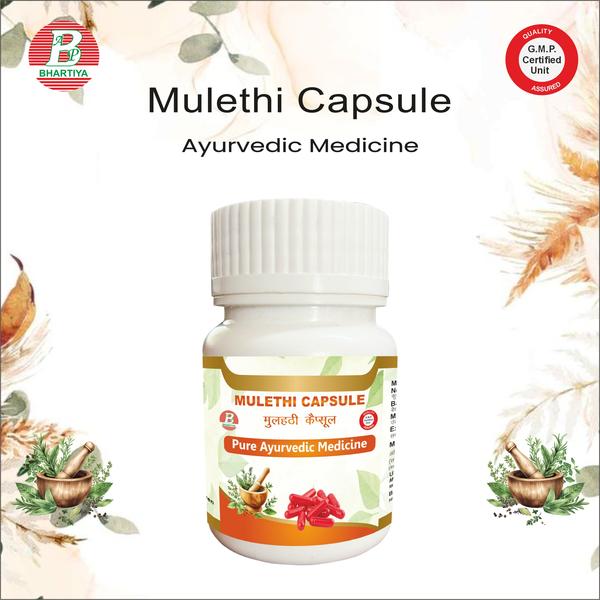
"name": "Mulethi Capsule",
"description": " MULETHI \n\n\n MULETHI (Glycyrrhiza glabra L.) \nThe Sweet Root — “Yashtimadhu” (The Compassionate Healer)\n\nMulethi, also known as Yashtimadhu, is a revered herb in Ayurveda, celebrated for its sweetness, cooling properties, and therapeutic versatility. Known as a demulcent, expectorant, and rejuvenative, it is used for respiratory, digestive, endocrine, liver, and skin health. It balances Vata and Pitta, while supporting immunity, vitality, and longevity.\n\n ANCIENT STORY & TRADITIONAL SIGNIFICANCE OF MULETHI (Yashtimadhu) \nSanskrit Name: Yashtimadhu – “Yashti” means root, “Madhu” means sweet; literally “Sweet Root.”\nSymbolism: Sweetness, nourishment, healing, and vitality.\n\nMythological & Historical References\n1.\tVedic References:\no\tMulethi finds mention in the Rigveda and Atharvaveda as a medicinal plant with restorative properties.\no\tIt was considered sacred and used in rituals to purify the body and maintain health.\no\tSweetness of Mulethi symbolizes Ahimsa (compassion) and Sattva (purity) in Ayurvedic philosophy.\n2.\tAyurvedic Classics:\no\tCharaka Samhita: Yashtimadhu is described as Madhura, Shita, Rasayana, suitable for balancing Vata and Pitta, nourishing Ojas, and promoting longevity.\no\tSushruta Samhita: Prescribes Mulethi for respiratory disorders, throat diseases, ulcers, and digestive issues.\no\tBhavaprakasha Nighantu: Calls it the “sweetest of roots,” a divine healer that restores strength, immunity, and vitality.\n3.\tLegendary Story (Folk & Mythological Tradition):\no\tOnce, during the cosmic churning of the ocean (Samudra Manthan), the gods were seeking nectar for immortality.\no\tAmongst the divine plants that emerged, Yashtimadhu (Mulethi) was gifted by the gods to humans as a herb of longevity and protection.\no\tIt is said that Sage Agastya, the revered Ayurvedic seer, first discovered its sweet root in the Vindhya forests and prescribed it as a remedy for throat, digestion, and vitality, making it a staple Rasayana in Ayurveda.\no\tBecause of its sweetness and healing power, Mulethi was also offered to deities and kings, symbolizing health, grace, and divine nourishment.\n\nAncient Uses & Cultural Significance\n•\tRoyal Medicine: Kings and warriors used Mulethi root as a daily tonic to enhance stamina, strength, and immunity.\n•\tSpiritual Practice: Used in Ayurvedic tonics during meditation and rituals to maintain balance of the doshas and clarity of mind.\n•\tSacred Offering: In temples, Mulethi was considered sacred and sometimes mixed in honey or ghee as prasadam for devotees.\n•\tThroat and Voice Care: Ancient singers and priests chewed Mulethi root to soothe the throat and strengthen the voice for chanting and recitations.\n\nSummary of Ancient Wisdom\n•\tNature: Sweet, cooling, nourishing, rejuvenative\n•\tPurpose: Promotes longevity, vitality, immunity, and respiratory wellness\n•\tSpiritual Symbolism: Sweetness of life, harmony, and divine health\n•\tCultural Legacy: From Vedic times to classical Ayurveda, Mulethi has been revered as a miraculous root that protects life and supports human well-being\n\n BOTANICAL INFORMATION OF MULETHI\nScientific Name: Glycyrrhiza glabra L.\nSynonyms: Glycyrrhiza glandulifera, Glycyrrhiza inflata\nFamily: Fabaceae (Leguminosae)\nOrder: Fabales\nGenus: Glycyrrhiza\nSpecies: glabra\nCommon Names\n•\tSanskrit: Yashtimadhu, Mula, Madhura\n•\tHindi: Mulethi\n•\tEnglish: Licorice\n•\tTamil: Athimadhuram\n•\tTelugu: Athimadhuram\n•\tMalayalam: Athimadhuram\n•\tKannada: Athimadhura\n•\tGujarati/Marathi: Mulethi\n•\tBengali: Mulethi\n SYNONYMS IN CLASSICAL AYURVEDIC NIGHANTUS\n•\tCharaka Samhita: Yashtimadhu – Balances Vata & Pitta, Rasayana for throat and digestion\n•\tSushruta Samhita: Mula, Madhura – Healing, demulcent, and rejuvenative\n•\tBhavaprakasha Nighantu: Madhura, Rasayana, Hrudya – Enhances strength and longevity\n•\tDhanvantari Nighantu: Yashtimadhu, Mula – Sweet root for vitality and respiratory wellness\n MORPHOLOGY OF MULETHI\n•\tPlant Type: Perennial herb or small shrub, Height: 1–2 m\n•\tStem: Erect, branched, woody at base\n•\tLeaves: Pinnate, 7–17 leaflets, oblong-elliptic\n•\tFlowers: Small, purple to pale violet, in racemes\n•\tFruit: Legume (pod), oblong, 1–2 cm, containing small seeds\n•\tRoot: Long, cylindrical, brown exterior, yellow interior, sweet taste, medicinal\n ECOLOGICAL PREFERENCES\n•\tClimate: Tropical and subtropical, tolerates semi-arid conditions\n•\tSoil: Well-drained loamy, sandy, or calcareous soils; prefers alkaline soils\n•\tHabitat: Cultivated fields, wastelands, gardens\n•\tAltitude: Sea level to 1,500 m\n GEOGRAPHICAL DISTRIBUTION\nIndia: Punjab, Haryana, Uttar Pradesh, Gujarat, Rajasthan\nOutside India: Afghanistan, Iran, Iraq, Turkey, China, Mediterranean region\nNaturalized: Worldwide in temperate and subtropical regions\n CLASSICAL AYURVEDIC PROPERTIES (RASA–GUNA–VIRYA–VIPAKA)\n•\tRasa (Taste): Madhura (sweet), Laghu tikta (slightly bitter)\n•\tGuna (Qualities): Snigdha (unctuous), Guru (heavy)\n•\tVirya (Potency): Śīta (cooling)\n•\tVipaka (post-digestive effect): Madhura (sweet)\n•\tDosha Effects: Balances Vata & Pitta; reduces dryness, supports Ojas\n THERAPEUTIC ACTIONS ACCORDING TO AYURVEDA (KARMA)\n1.\tRasayana (Rejuvenative): Strengthens body, restores vitality\n2.\tHridya (Cardioprotective): Supports heart and circulation\n3.\tKashaya / Pranahara (Respiratory Health): Reduces cough, throat irritation, asthma\n4.\tMedhya: Supports intellect and memory indirectly by nourishing tissues\n5.\tJvarahara: Reduces fever\n6.\tKledahara / Deepana: Promotes digestion, mucosa soothing\n7.\tTwachya (Skin Health): Anti-inflammatory, promotes healing\n8.\tMutravirechana (Diuretic): Mild diuretic effect\n9.\tShukra / Reproductive Health: Enhances vitality\n INDICATIONS\n•\tRespiratory System: Cough, cold, bronchitis, asthma, sore throat\n•\tDigestive System: Gastritis, heartburn, peptic ulcers, acidity\n•\tEndocrine / Metabolism: Supports adrenal and thyroid function\n•\tLiver & Kidney Health: Hepatoprotective, detoxifying\n•\tSkin & Hair: Anti-inflammatory, wound healing, anti-aging\n•\tImmunity & Vitality: Chronic fatigue, stress, weakness\n MODERN PHARMACOLOGY & PHYTOCHEMISTRY\nMajor Constituents:\n•\tGlycyrrhizin (sweet triterpene saponin)\n•\tFlavonoids: Liquiritin, Isoliquiritin\n•\tPolysaccharides, Sterols, Coumarins, Amino acids, Minerals\nPharmacological Actions:\n•\tAnti-inflammatory, Antioxidant, Immunomodulatory\n•\tDemulcent, Expectorant, Anti-ulcer, Hepatoprotective\n•\tAdaptogenic, Antiviral, Anti-allergic\n CULTIVATION DETAILS\n•\tPropagation: Seeds, stem cuttings\n•\tSowing Time: March–May\n•\tSpacing: 30–45 cm between plants\n•\tIrrigation: Moderate; drought-tolerant once established\n•\tFertilization: Organic manure preferred\n•\tHarvesting: Roots harvested 2–3 years after planting\n CLASSICAL DOSAGE (According to Ayurvedic Granthas)\n•\tChurna (Powder): 1–3 g twice daily\n•\tSwarasa (Juice): 5–10 ml\n•\tKwatha (Decoction): 20–40 ml\n•\tAvaleha / Lehyam: 10–15 g\n•\tOil / Thaila: External use for skin or hair\n CLASSICAL AYURVEDIC FORMULATIONS CONTAINING MULETHI\n1.\tYashtimadhu Churna: Respiratory and digestive tonic\n2.\tDashamoola Kashaya: Anti-inflammatory, stress reduction\n3.\tSitopaladi Churna: Cough, cold, respiratory wellness\n4.\tMulethi Avaleha / Lehyam: Rejuvenative, throat and digestive health\n5.\tHerbal Decoctions / Oils: Skin and hair applications\n SAFETY & PRECAUTIONS\n•\tGenerally safe in classical doses\n•\tExcessive consumption may cause water retention, hypertension, or hypokalemia\n•\tCaution in:\no\tHypertensive patients\no\tPregnant or lactating women (large doses)\no\tKidney disease\n\n MULETHI (Glycyrrhiza glabra) FORMULATIONS – BHARTIYA AYURVEDIC PHARMACY\nBhartiya Ayurvedic Pharmacy prepares a range of Mulethi formulations following classical Ayurvedic principles described in Charaka Samhita, Sushruta Samhita, Bhavaprakasha Nighantu, and other Ayurvedic texts. Each product is designed to retain the full therapeutic, rejuvenative, and demulcent properties of Mulethi, supporting respiratory, digestive, liver, and overall vitality.\n\n\n 1. Mulethi Capsule\nDescription:\nMulethi Capsule contains standardized extract in a convenient, easy-to-swallow form. Ideal for respiratory, digestive, and immune support.\nKey Actions:\n•\tDemulcent and expectorant\n•\tAntioxidant and anti-inflammatory\n•\tRejuvenative and immunity-enhancing\n•\tSupports liver, kidney, and digestive health\nDosage:\n•\t1–2 capsules twice daily with warm water after meals\nPrecautions:\n•\tAvoid overdose\n•\tMonitor blood pressure in hypertensive patients\n•\tUse under supervision if pregnant or lactating\n\n 2. Mulethi Powder (Churna)\nDescription:\nPure, finely powdered Mulethi root for traditional use. Can be consumed with honey, water, or ghee.\nKey Actions:\n•\tRasayana and demulcent\n•\tSupports respiratory and digestive health\n•\tEnhances liver and kidney detoxification\n•\tPromotes throat and skin health\nDosage:\n•\t1–3 g daily with warm water, honey, or as advised\nPrecautions:\n•\tAvoid excessive intake in hypertension or edema\n•\tDiabetics should consult before use\n\n\n\nbenefits mulethi, best mulethi powder, best mulethi powder for eating\nmulethi capsule amazon, mulethi capsule ayurvedic, mulethi capsule benefits\nmulethi capsule benefits in hindi, mulethi capsule composition\nmulethi capsule contains, mulethi capsule daily dose, mulethi capsule dosage\nmulethi capsule dose, mulethi capsule dose per day, mulethi capsule english\nmulethi capsule english name, mulethi capsule expiry date, mulethi capsule extract\nmulethi capsule ghar par kaise banaye, mulethi capsule good for skin\nmulethi capsule gst rate, mulethi capsule image, mulethi capsule in english\nmulethi capsule in hindi, mulethi capsule ingredients, mulethi capsule jan aushadhi\nmulethi capsule jan aushadhi kendra, mulethi capsule jiomart, mulethi capsule ke fayde\nmulethi capsule lagane ke fayde, mulethi capsule lagane se kya hota hai\nmulethi capsule lene ke fayde, mulethi capsule life, mulethi capsule life pharmacy\nmulethi capsule manufacturer, mulethi capsule manufacturers in india\nmulethi capsule mrp, mulethi capsule name, mulethi capsule near me\nmulethi capsule nutrition facts, mulethi capsule on amazon\nmulethi capsule on flipkart, mulethi capsule online\nmulethi capsule online order, mulethi capsule online shopping\nmulethi capsule qualification, mulethi capsule quality\nmulethi capsule quantity, mulethi capsule rate\nmulethi capsule result, mulethi capsule review\nmulethi capsule se kya hota hai, mulethi capsule side effects\nmulethi capsule side effects in hindi, mulethi capsule vs powder\nmulethi capsule water, mulethi capsule wholesale\nmulethi capsule with milk, mulethi capsule with milk benefits\nmulethi capsule youtube, mulethi consumption\nmulethi expiry date",
"price": 300.0,
"discountamount": 150.0,
"currencycode": "INR",
"priority": 1000000,
"isfreeshipmentavailable": false,
"shipmentduration": 1,
"_keywords": null,
"isarchived": false,
"isavailable": true,
"applicationid": null,
"productindex": 66,
"imageuri": "https://productimages.withfloats.com/actual/69a1650826088bebd41af280.jpg",
"tileimageuri": "https://productimages.withfloats.com/tile/69a1650826088bebd41af280.jpg",
"images": null,
"totalqueries": 0,
"gpid": null,
"groupproductid": null,
"createdon": "2026-02-27T09:33:58.793Z",
"updatedon": "2026-02-27T09:33:58.793Z",
"buyonlinelink": null,
"producturl": "http://WWW.BHARTIYAAYURVEDICPHARMACY.COM//mulethi-capsule/66",
"availableunits": -1.0,
"iscodavailable": true,
"isprepaidonlineavailable": true,
"maxcodorders": -1,
"maxprepaidonlineorders": -1,
"uniquepaymenturl": null,
"brandname": "Bakula Fort",
"category": "Mulethi capsule 60 - Cap X 24",
"tags": [],
"variants": false,
"keyspecification": null,
"otherspecifications": null,
"pickupaddressreferenceid": null,
"paymenttype": "AssuredPurchase",
"producttype": "products",
"hsncode": null,
"gstslab": 0.0,
"isnotforsale": false
},
{
"_id": "698adcb79b2383ec7eecb3fe",
"fptag": "BHARTIYEAYURVEDICPHARMACY",
"merchantname": null,
"customwidgets": null,
"externalsourceid": null,
"name": "Leucorin Capsule",
"description": " LEUCORIN CAPSULE \n\n\nProduct Identification\n•\tGeneric Name: Leucorin Capsule\n•\tType: Ayurvedic Patent Medicine\n\nTherapeutic Indications \n•\tHelps manage excessive vaginal discharge, restores vaginal health, and balances hormonal and metabolic functions.\nPrimary Benefits\n•\tHelps reduce excessive vaginal discharge\n•\tRestores normal vaginal health and hygiene\n•\tSupports hormonal balance\n•\tStrengthens reproductive and urinary tract health\n•\tPromotes overall female reproductive wellness\n\nOther Benefits\n•\tImproves Immunity: Supports the body’s natural defense mechanisms, helping prevent recurrent infections.\n•\tSupports Digestive Health: Aids proper digestion and nutrient absorption, which can indirectly help maintain reproductive health.\n•\tEnhances Energy & Vitality: Helps reduce fatigue and general weakness often associated with prolonged leucorrhoea.\n•\tPromotes Hormonal Balance: Helps regulate the endocrine system, which can improve menstrual health and overall reproductive function.\n•\tMaintains Urinary Tract Health: Supports healthy urinary function, reducing the risk of associated irritation or infections.\n\nIngredients:\n Safed Musali (White Musli) \n•\tBotanical Name: Chlorophytum borivilianum\n•\tKey Constituents: Steroidal saponins, Alkaloids, Flavonoids, Polysaccharides, Proteins, Amino acids\nMechanism of Action in Women’s Health – Biochemistry / Pharmacology\n•\tActs as a reproductive tonic, nourishing uterus and vaginal tissues\n•\tRegulates hormonal balance (estrogen and progesterone), supporting menstrual and reproductive health\n•\tExhibits anti-inflammatory and antimicrobial effects, helping prevent infections\n•\tBoosts immunity to reduce recurrent reproductive tract infections\n•\tEnhances energy, vitality, and overall well-being, supporting systemic and reproductive health\n\n Shatavari \n•\tBotanical Name: Asparagus racemosus\n•\tKey Constituents: Steroidal saponins (Shatavarins), Flavonoids, Alkaloids, Polysaccharides, Proteins\nMechanism of Action in Women’s Health – Biochemistry / Pharmacology\n•\tActs as a female reproductive tonic, nourishing uterus and ovaries\n•\tRegulates hormonal balance (estrogen and progesterone), supporting menstrual and lactational health\n•\tExhibits anti-inflammatory and antioxidant effects, protecting reproductive tissues\n\nArjun Chhal (Arjuna Bark) \n•\tBotanical Name: Terminalia arjuna\n•\tKey Constituents: Tannins, Flavonoids, Glycosides, Saponins, Polyphenols, Minerals\nMechanism of Action in Women’s Health – Biochemistry / Pharmacology\n•\tSupports cardiovascular health, improving circulation and heart function\n•\tExhibits antioxidant and anti-inflammatory effects, protecting blood vessels and tissues\n•\tHelps maintain healthy blood pressure and lipid levels, indirectly supporting metabolic and reproductive health\n\n Mulethi (Licorice) \n•\tBotanical Name: Glycyrrhiza glabra\n•\tKey Constituents: Glycyrrhizin, Flavonoids, Saponins, Coumarins, Polysaccharides\nMechanism of Action in Women’s Health – Biochemistry / Pharmacology\n•\tExhibits anti-inflammatory and soothing effects, supporting reproductive tract health\n•\tHelps maintain hormonal balance, particularly estrogen, aiding menstrual and reproductive function\n\n Gokharu (Tribulus terrestris) \n Botanical Name: Tribulus terrestris\nKey Constituents: Saponins (Protodioscin, Tribulosides), Flavonoids, Alkaloids, Sterols\nMechanism of Action in Women’s Health – Biochemistry / Pharmacology\n•\tSupports hormonal balance by modulating luteinizing hormone (LH) and ovarian steroidogenesis, aiding menstrual and reproductive function\n•\tExhibits anti-inflammatory effects, reducing pelvic and systemic inflammation.\n•\tActs as a mild adaptogen, enhancing energy, stamina, and resilience to metabolic or hormonal stress\n\nAmla (Indian Gooseberry) \nBotanical Name: Phyllanthus emblica\n Key Constituents: Vitamin C, Tannins, Flavonoids, Polyphenols, Gallic Acid\nMechanism of Action in Women’s Health – Biochemistry / Pharmacology\n•\tPotent antioxidant, reducing oxidative stress and protecting reproductive and systemic tissue\n•\t Supports hormonal balance by enhancing adrenal and thyroid function, indirectly regulating menstrual cycles\n•\tExhibits anti-inflammatory effects, helping reduce menstrual and pelvic discomfort\n\nKaunch beej (Mucuna pruriens) \n Botanical Name: Mucuna pruriens\n Key Constituents: L-DOPA, Alkaloids, Flavonoids, Saponins, Proteins\nMechanism of Action in Women’s Health – Biochemistry / Pharmacology\n \n•\tSupports hormonal balance by modulating dopamine levels, which can influence prolactin and ovarian function, aiding menstrual and reproductive health\n•\t Exhibits mild adaptogenic and anti-stress effects, enhancing energy, vitality, and resilience to metabolic or hormonal stress\n•\t Acts as a reproductive tonic, promoting ovarian function and fertility\nVidhara (Shatavari, Asparagus racemosus) \n Botanical Name: Asparagus racemosus\nKey Constituents: Saponins (Shatavarins), Flavonoids, Alkaloids, Glycosides, Polysaccharides\nMechanism of Action in Women’s Health – Biochemistry / Pharmacology\n \n•\tSupports hormonal balance, particularly estrogen, aiding menstrual regulation, reproductive health, and fertility\n\n•\tExhibits galactagogue activity, enhancing lactation in postpartum women via prolactin modulation\n•\tActs as a mild adaptogen, improving energy, vitality, and resilience to hormonal or metabolic stress\n•\tShows anti-inflammatory and antioxidant effects, protecting reproductive tissues and reducing menstrual or pelvic discomfort\n\nBala (Sida cordifolia) \n Botanical Name: Sida cordifolia\nKey Constituents: Alkaloids (Ephedrine, Sidanol), Flavonoids, Sterols, Glycosides, Saponins\nMechanism of Action in Women’s Health – Biochemistry / Pharmacology\n• Supports reproductive health by strengthening uterine and ovarian function\n• Exhibits hormonal modulatory effects, aiding menstrual regulation and fertility\n• Acts as a mild adaptogen, enhancing energy, vitality, and resilience to hormonal or metabolic stress\n\nBombax malabaricum (Semal / Silk Cotton Tree) Botanical Name: Bombax malabaricum\n Key Constituents: Flavonoids, Tannins, Saponins, Polysaccharides, Sterols\nMechanism of Action in Women’s Health – Biochemistry / Pharmacology\n•\tSupports reproductive health by promoting uterine and ovarian function\n•\t Exhibits anti-inflammatory and soothing effects, reducing menstrual and pelvic discomfort\n•\t Acts as a hormonal modulator, aiding menstrual regulation and fertility\n\nLajwanti (Mimosa pudica)\nBotanical Name: Mimosa pudica\nKey Constituents: Alkaloids, Flavonoids, Tannins, Saponins, Polysaccharides\n\nMechanism of Action – Women’s Health (Biochemistry / Pharmacology)\n•\tUterine & Ovarian Support: Promotes reproductive organ function.\n•\tAnti-inflammatory: Reduces menstrual cramps and pelvic discomfort.\n•\tHormonal Modulation: Aids menstrual regulation and fertility.\n•\tAntioxidant: Protects reproductive tissues from oxidative stress.\n\nHygrophila spinosa (Talmakhana / Kokilaksha)\nBotanical Name: Hygrophila spinosa\nKey Constituents: Alkaloids, Flavonoids, Saponins, Sterols, Glycosides\n\nMechanism of Action – Women’s Health (Biochemistry / Pharmacology)\n•\tReproductive Support: Promotes uterine and ovarian function, supports fertility.\n•\tAnti-inflammatory: Reduces menstrual cramps and pelvic discomfort.\n•\tHormonal Modulation: Aids in menstrual cycle regulation.\n\n\n Daruhaldi (Berberis aristata)\nBotanical Name: Berberis aristata\nKey Constituents: Berberine, Alkaloids, Flavonoids, Tannins, Phenolic compounds\n\nMechanism of Action – Women’s Health (Biochemistry / Pharmacology)\n•\tReproductive Support: Promotes uterine and ovarian function.\n•\tAnti-inflammatory: Reduces menstrual cramps, pelvic discomfort, and inflammation.\n•\tHormonal Modulation: Aids in menstrual cycle regulation and fertility support.\n\nDevdaru (Cedrus deodara)\nBotanical Name: Cedrus deodara\nKey Constituents: α-Pinene, Limonene, Cedrol, Flavonoids, Tannins, Resinous compounds\n\nMechanism of Action – Women’s Health (Biochemistry / Pharmacology)\n•\tReproductive Support: Promotes uterine and ovarian function.\n•\tAnti-inflammatory: Reduces menstrual cramps and pelvic discomfort.\n•\tHormonal Modulation: Supports menstrual regulation and fertility.\n•\tAntioxidant: Protects reproductive tissues from oxidative stress.\n\nShudh Guggul (Commiphora mukul)\nBotanical Name: Commiphora mukul\nKey Constituents: Guggulsterones, Resin, Flavonoids, Tannins, Volatile oils\n\nMechanism of Action – Women’s Health (Biochemistry / Pharmacology)\n•\tReproductive Support: Promotes uterine and ovarian function.\n•\tAnti-inflammatory: Reduces menstrual cramps and pelvic discomfort.\n•\tHormonal Modulation: Aids menstrual regulation and supports fertility.\n•\tAntioxidant: Protects reproductive tissues from oxidative stress.\n\nKali Mirch (Black Pepper)\nBotanical Name: Piper nigrum\nKey Constituents: Piperine, Volatile oils, Alkaloids, Flavonoids\n\nMechanism of Action – Women’s Health (Biochemistry / Pharmacology)\n•\tReproductive Support: Promotes uterine and ovarian function.\n•\tAnti-inflammatory: Reduces menstrual cramps and pelvic discomfort.\n•\tHormonal Modulation: Supports menstrual regulation and fertility.\n\nAloe (Aloe vera)\nBotanical Name: Aloe vera\nKey Constituents: Anthraquinones, Polysaccharides, Saponins, Flavonoids, Vitamins\n\nMechanism of Action – Women’s Health (Biochemistry / Pharmacology)\n•\tReproductive Support: Promotes uterine and ovarian function.\n•\tAnti-inflammatory: Reduces menstrual cramps and pelvic discomfort.\n•\tHormonal Modulation: Supports menstrual regulation and fertility.\n\n Lodhra (Symplocos racemosa)\nBotanical Name: Symplocos racemosa\nKey Constituents: Tannins, Flavonoids, Glycosides, Alkaloids, Saponins\n\nMechanism of Action – Women’s Health (Biochemistry / Pharmacology)\n•\tReproductive Support: Glycosides and flavonoids modulate estrogen receptor activity → support uterine and ovarian function.\n•\tAnti-inflammatory: Tannins and flavonoids inhibit prostaglandin synthesis → reduce menstrual cramps and pelvic discomfort.\n•\tHormonal Modulation: Alkaloids and glycosides help regulate menstrual cycle and fertility.\n•\tAntioxidant: Flavonoids and tannins scavenge free radicals → protect ovarian and uterine tissues from oxidative stress\n\n Dhataki (Woodfordia fruticosa)\nBotanical Name: Woodfordia fruticosa\nKey Constituents: Flavonoids, Tannins, Glycosides, Anthocyanins, Volatile oils\n\nMechanism of Action – Women’s Health (Biochemistry / Pharmacology)\n•\tReproductive Support: Flavonoids and glycosides may modulate estrogen receptor activity → support uterine and ovarian function.\n•\tAnti-inflammatory: Tannins and flavonoids inhibit prostaglandin synthesis → reduce menstrual cramps and pelvic discomfort.\n•\tHormonal Modulation: Glycosides help in regulating menstrual cycle and fertility.\n\n\nBhringraj (Eclipta alba / Eclipta prostrata)\nBotanical Name: Eclipta alba\nKey Constituents: Alkaloids, Coumestans (Wedelolactone), Flavonoids, Tannins, Saponins\n\nMechanism of Action – Women’s Health (Biochemistry / Pharmacology)\n•\tReproductive Support: Modulates estrogen receptors → promotes uterine & ovarian function.\n•\tAnti-inflammatory: Inhibits COX-2 & prostaglandin synthesis → reduces menstrual cramps.\n•\tHormonal Modulation: Influences steroidogenesis → balances estrogen & progesterone\n\n Vacha (Acorus calamus)\nBotanical Name: Acorus calamus\nKey Constituents: β-Asarone, α-Asarone, Essential oils, Flavonoids, Tannins\n\nMechanism of Action – Women’s Health (Biochemistry / Pharmacology)\n•\tReproductive Support: β-Asarone may modulate estrogen receptor signaling → supports uterine and ovarian function.\n•\tAnti-inflammatory: Inhibits prostaglandin synthesis → reduces menstrual cramps and pelvic discomfort.\n•\tHormonal Modulation: Influences steroidogenesis → helps in menstrual regulation and fertility.\n•\tAntioxidant: Flavonoids and essential oils scavenge ROS → protect reproductive tissues.\n\nTejpatra (Cinnamomum tamala)\nBotanical Name: Cinnamomum tamala\nKey Constituents: Essential oils (Cinnamaldehyde, Eugenol), Tannins, Flavonoids\n\nMechanism of Action – Women’s Health (Biochemistry / Pharmacology)\n•\tReproductive Support: Cinnamaldehyde may modulate estrogen receptor activity → supports uterine and ovarian function.\n•\tAnti-inflammatory: Inhibits prostaglandin synthesis → reduces menstrual cramps and pelvic discomfort.\n•\tHormonal Modulation: Flavonoids influence steroidogenesis → aid in menstrual regulation and fertility.\n•\tAntioxidant: Essential oils and flavonoids scavenge ROS → protect reproductive tissues.\n\n Dalchini (Cinnamomum verum / Cinnamon)\nBotanical Name: Cinnamomum verum\nKey Constituents: Cinnamaldehyde, Eugenol, Tannins, Flavonoids, Volatile oils\n\nMechanism of Action – Women’s Health (Biochemistry / Pharmacology)\n•\tReproductive Support: Cinnamaldehyde and flavonoids modulate estrogen receptor signaling → support uterine and ovarian function.\n•\tAnti-inflammatory: Inhibits prostaglandin synthesis → reduces menstrual cramps and pelvic discomfort.\n•\tHormonal Modulation: Flavonoids influence steroidogenesis → aid menstrual regulation and fertility.\n\nMethi Dana (Fenugreek seeds)\nBotanical Name: Trigonella foenum-graecum\nKey Constituents: Saponins (Diosgenin), Alkaloids, Flavonoids, Fiber, Mucilage\n\nMechanism of Action – Leucorrhoea / Women’s Health (Biochemistry / Pharmacology)\n•\tHormonal Modulation: Diosgenin acts as a phytoestrogen → supports estrogen balance and strengthens vaginal mucosa.\n•\tAnti-inflammatory: Flavonoids inhibit prostaglandin synthesis → reduce inflammation in vaginal and uterine tissues.\n•\tAntioxidant: Saponins and flavonoids scavenge reactive oxygen species (ROS) → protect reproductive tissues from oxidative stress.\n\n Aamguthli (Mango seeds)\nBotanical Name: Mangifera indica\nKey Constituents: Tannins, Polyphenols, Flavonoids, Fatty acids, Mangiferin\n\nMechanism of Action – leucorrhoea / Women’s Health (Biochemistry / Pharmacology)\n•\tAstringent & Reproductive Support: Tannins and polyphenols → tighten vaginal mucosa and reduce excessive discharge.\n•\tAnti-inflammatory: Flavonoids inhibit prostaglandin synthesis → reduce inflammation in vaginal and uterine tissues.\n•\tAntioxidant: Mangiferin and polyphenols scavenge reactive oxygen species (ROS) → protect reproductive tissues from oxidative stress.\n\nSaunth (Dry Ginger)\nBotanical Name: Zingiber officinale\nKey Constituents: Gingerols, Shogaols, Zingerone, Volatile oils, Flavonoids\n\nMechanism of Action – Leucorrhea / Women’s Health (Biochemistry / Pharmacology)\n•\tAnti-inflammatory: Gingerols and shogaols inhibit prostaglandin and cytokine (TNF-α, IL-1β, IL-6) production → reduce vaginal and uterine inflammation.\n•\tAntioxidant: Gingerols and shogaols scavenge reactive oxygen species (ROS) → protect reproductive tissues from oxidative stress.\n•\tHormonal Modulation: Active compounds may support estrogen receptor activity → help normalize vaginal mucosa and secretions.\n\n Ashwagandha (Withania somnifera)\nBotanical Name: Withania somnifera\nKey Constituents: Withanolides, Alkaloids, Saponins, Flavonoids, Iron\n\nMechanism of Action – Women’s Health (Biochemistry / Pharmacology)\n•\tReproductive Support: Withanolides modulate estrogen and progesterone receptor signaling → support ovarian and uterine function.\n•\tAdaptogenic & Hormonal Modulation: Reduces stress-induced cortisol → indirectly normalizes menstrual cycles and improves fertility.\n•\tAnti-inflammatory: Inhibits pro-inflammatory cytokines (TNF-α, IL-1β) → reduces pelvic discomfort and uterine inflammation.\n\nPippali (Piper longum)\nBotanical Name: Piper longum\nKey Constituents: Piperine, Volatile oils, Alkaloids, Flavonoids\n\nMechanism of Action – Women’s Health (Biochemistry / Pharmacology)\n•\tReproductive Support: Piperine may modulate estrogen receptor activity → supports uterine and ovarian function.\n•\tAnti-inflammatory: Inhibits prostaglandin synthesis → reduces menstrual cramps and pelvic inflammation.\n•\tHormonal Modulation: Influences steroidogenesis → aids menstrual regulation and fertility.\n•\tAntioxidant: Flavonoids and piperine scavenge ROS → protect reproductive tissues.\n\n Vidhara (Acorus calamus)\nBotanical Name: Acorus calamus\nKey Constituents: α-Asarone, β-Asarone, Volatile oils, Flavonoids, Tannins\n\nMechanism of Action – Women’s Health (Biochemistry / Pharmacology)\n•\tReproductive Support: α- and β-Asarone modulate estrogen receptor activity → support uterine and ovarian function.\n•\tAnti-inflammatory: Inhibits prostaglandin synthesis → reduces menstrual cramps and pelvic inflammation.\n•\tHormonal Modulation: Influences steroidogenesis → aids menstrual regulation and fertility.\n•\tAntioxidant: Flavonoids and volatile oils scavenge ROS → protect reproductive tissues.\n\n Lahsun (Garlic)\nBotanical Name: Allium sativum\nKey Constituents: Allicin, Sulfur compounds, Flavonoids, Saponins\n\nMechanism of Action – Women’s Health (Biochemistry / Pharmacology)\n•\tReproductive Support: Sulfur compounds may improve uterine and ovarian microcirculation → support reproductive tissue function.\n•\tAnti-inflammatory: Inhibits prostaglandin synthesis and NF-κB pathway → reduces pelvic inflammation and menstrual cramps.\n•\tHormonal Modulation: Flavonoids and organosulfur compounds may influence steroidogenesis → aid menstrual regulation and fertility.\n\nBelgiri (Aegle marmelos)\nBotanical Name: Aegle marmelos\nKey Constituents: Alkaloids (e.g., Marmeline), Tannins, Flavonoids, Coumarins, Essential oils\n\nMechanism of Action – Women’s Health (Biochemistry / Pharmacology)\n•\tReproductive Support: Alkaloids and flavonoids modulate estrogen receptor activity → support uterine and ovarian function.\n•\tAnti-inflammatory: Tannins and coumarins inhibit prostaglandin synthesis → reduce menstrual cramps and pelvic inflammation.\n•\tHormonal Modulation: Flavonoids influence steroidogenesis → help regulate menstrual cycles and fertility.\n\nNaagkesar (Mesua ferrea)\nBotanical Name: Mesua ferrea\nKey Constituents: Xanthones, Coumarins, Flavonoids, Tannins, Essential oils\n\nMechanism of Action – Women’s Health (Biochemistry / Pharmacology)\n•\tReproductive Support: Xanthones and flavonoids modulate estrogen receptor activity → support uterine and ovarian function.\n•\tAnti-inflammatory: Inhibits prostaglandin synthesis and cytokine release → reduces menstrual cramps and pelvic inflammation.\n•\tHormonal Modulation: Coumarins influence steroidogenesis → aid menstrual regulation and fertility.\n\n Dhania (Coriandrum sativum)\nBotanical Name: Coriandrum sativum\nKey Constituents: Essential oils (Linalool, Geraniol), Flavonoids, Tannins, Alkaloids\n\nMechanism of Action – Women’s Health (Biochemistry / Pharmacology)\n•\tReproductive Support: Linalool and flavonoids may modulate estrogen receptor activity → support uterine and ovarian function.\n•\tAnti-inflammatory: Inhibits prostaglandin synthesis → reduces menstrual cramps and pelvic inflammation.\n•\tHormonal Modulation: Flavonoids influence steroidogenesis → help in menstrual regulation and fertility.\n\nCæsalpinia sappan (Sappan wood)\nBotanical Name: Cæsalpinia sappan\nKey Constituents: Brazilein, Flavonoids, Tannins, Phenolic compounds, Saponins\n\nMechanism of Action – Women’s Health (Biochemistry / Pharmacology)\n•\tReproductive Support: Brazilein and flavonoids may modulate estrogen receptor activity → support uterine and ovarian function.\n•\tAnti-inflammatory: Inhibits prostaglandin synthesis and NF-κB pathway → reduces menstrual cramps and pelvic inflammation.\n•\tHormonal Modulation: Phenolic compounds influence steroidogenesis → aid menstrual regulation and fertility.\n\n\n Ashoka (Saraca asoca)\nBotanical Name: Saraca asoca\nKey Constituents: Flavonoids, Tannins, Catechins, Glycosides, Saponins\n\nMechanism of Action – Women’s Health (Biochemistry / Pharmacology)\n•\tReproductive Support: Flavonoids and glycosides modulate estrogen receptor activity → support uterine and ovarian function.\n•\tAnti-inflammatory: Inhibits prostaglandin synthesis → reduces menstrual cramps and pelvic inflammation.\n•\tHormonal Modulation: Glycosides influence steroidogenesis → help regulate menstrual cycles and fertility.\n\nJeera (Cuminum cyminum)\nBotanical Name: Cuminum cyminum\nKey Constituents: Essential oils (Cumin aldehyde, Limonene), Flavonoids, Alkaloids, Tannins\nMechanism of Action – Women’s Health (Biochemistry / Pharmacology)\n•\tReproductive Support: Cumin aldehyde and flavonoids may modulate estrogen receptor activity → support uterine and ovarian function.\n•\tAnti-inflammatory: Inhibits prostaglandin synthesis → reduces menstrual cramps and pelvic inflammation.\n•\tHormonal Modulation: Flavonoids influence steroidogenesis → aid in menstrual regulation and fertility.\n\nAnantmool (Hemidesmus indicus)\nBotanical Name: Hemidesmus indicus\nKey Constituents: Saponins, Flavonoids, Tannins, Coumarins, Essential oils\n\nMechanism of Action – Women’s Health (Biochemistry / Pharmacology)\n•\tReproductive Support: Flavonoids and saponins may modulate estrogen receptor activity → support uterine and ovarian function.\n•\tAnti-inflammatory: Inhibits prostaglandin synthesis → reduces menstrual cramps and pelvic inflammation.\n•\tHormonal Modulation: Coumarins influence steroidogenesis → aid menstrual regulation and fertility.\n•\tAntioxidant: Flavonoids and essential oils scavenge ROS → protect reproductive tissues from oxidative stress.\n\nChavya (Piper chaba)\nBotanical Name: Piper chaba\nKey Constituents: Piperine, Essential oils, Alkaloids, Flavonoids\nMechanism of Action – Women’s Health (Biochemistry / Pharmacology)\n•\tReproductive Support: Piperine modulates estrogen receptor activity → supports uterine and ovarian function.\n•\tAnti-inflammatory: Inhibits prostaglandin synthesis → reduces menstrual cramps and pelvic inflammation.\n•\tHormonal Modulation: Influences steroidogenesis → helps in menstrual regulation and fertility.\n\n Artoon (Oraxylum indicum / Sonapatha)\nBotanical Name: Oroxylum indicum\nKey Constituents: Flavonoids (Baicalein, Chrysin), Tannins, Alkaloids, Phenolic compounds\nMechanism of Action – Women’s Health (Biochemistry / Pharmacology)\n•\tReproductive Support: Flavonoids modulate estrogen receptor activity → support uterine and ovarian function.\n•\tAnti-inflammatory: Inhibits prostaglandin synthesis → reduces menstrual cramps and pelvic inflammation.\n•\tHormonal Modulation: Flavonoids and phenolic compounds influence steroidogenesis → aid menstrual regulation and fertility.\n\nPatha (Cissampelos pareira)\nBotanical Name: Cissampelos pareira\nKey Constituents: Alkaloids (Bebeerine, Cissampeline), Flavonoids, Tannins, Saponins\nMechanism of Action – Women’s Health (Biochemistry / Pharmacology)\n•\tReproductive Support: Alkaloids modulate estrogen receptor activity → support uterine and ovarian function.\n•\tAnti-inflammatory: Inhibits prostaglandin synthesis → reduces menstrual cramps and pelvic inflammation.\n•\tHormonal Modulation: Alkaloids influence steroidogenesis → aid menstrual regulation and fertility.\n\n Piper cubeba (Cubeb)\nBotanical Name: Piper cubeba\nKey Constituents: Piperine, Cubebin, Essential oils, Flavonoids, Alkaloids\nMechanism of Action – Women’s Health (Biochemistry / Pharmacology)\n•\tReproductive Support: Piperine and cubebin modulate estrogen receptor activity → support uterine and ovarian function.\n•\tAnti-inflammatory: Inhibits prostaglandin synthesis → reduces menstrual cramps and pelvic inflammation.\n•\tHormonal Modulation: Influences steroidogenesis → aids menstrual regulation and fertility.\n•\tAntioxidant: Flavonoids and essential oils scavenge ROS → protect reproductive tissues from oxidative stress.\n\nNisoth (Ipomoea turpethum)\nBotanical Name: Ipomoea turpethum\nKey Constituents: Resin glycosides, Alkaloids, Flavonoids, Starch, Phenolic compounds\nMechanism of Action – Women’s Health (Biochemistry / Pharmacology)\n•\tReproductive Support: Resin glycosides and flavonoids modulate estrogen receptor activity → support uterine and ovarian function.\n•\tAnti-inflammatory: Inhibits prostaglandin synthesis → reduces menstrual cramps and pelvic inflammation.\n•\tHormonal Modulation: Alkaloids influence steroidogenesis → aid menstrual regulation and fertility.\n\n Sugar (Sugarcane)\nBotanical Name: Saccharum officinarum\nKey Constituents: Sucrose, Glucose, Fructose, Polyphenols, Flavonoids, Minerals\nMechanism of Action – Women’s Health (Biochemistry / Pharmacology)\n•\tEnergy & Vitality: Provides quick metabolic energy → reduces fatigue and supports systemic wellness.\n•\tReproductive Support: Polyphenols and flavonoids may modulate estrogen receptor activity → indirectly support uterine and ovarian function.\n•\tAntioxidant: Polyphenols and flavonoids scavenge ROS → protect reproductive tissues from oxidative stress.\n\n Lauha Bhasma (Incinerated Iron)\nComposition: Primarily Iron (Fe), along with trace minerals\nMechanism of Action – Women’s Health (Biochemistry / Pharmacology)\n•\tReproductive Support / Hematopoiesis: Supplies bioavailable iron → supports hemoglobin synthesis → improves oxygen delivery to reproductive tissues.\n•\tEnergy & Vitality: Corrects iron-deficiency anemia → reduces fatigue and boosts systemic energy.\n•\tHormonal Support: Adequate iron is essential for proper synthesis of steroid hormones → indirectly supports menstrual regulation and fertility.\n\n Shudh Shilajit (Purified Shilajit)\nComposition: Fulvic acid, Humic acid, Minerals (Iron, Zinc, Magnesium), Dibenzo-α-pyrones, Amino acids\nMechanism of Action – Women’s Health (Biochemistry / Pharmacology)\n•\tReproductive Support: Fulvic acid and minerals modulate estrogen receptor activity → support uterine and ovarian function.\n•\tHormonal Modulation: Enhances steroidogenesis → helps in menstrual regulation and fertility.\n•\tAnti-inflammatory: Inhibits prostaglandin synthesis and cytokine activity → reduces menstrual cramps and pelvic inflammation.\n\nUse : useful in general weakness,\nleucorrhoea & white discharge\n\nDosage \nForm: Capsule\n•\tDose: 1–2 capsules, twice daily\nAdministration Guidelines (Point-wise):\n1.\tTiming: Take after meals (commonly after breakfast and dinner) to aid digestion and absorption.\n2.\tWith Vehicle: Can be taken with warm water, milk, or honey as per preference or practitioner advice.\n3.\tCourse Duration: Usually recommended for 2–3 months, depending on individual health and response.\n4.\tPrecautions:\no\tConsult a qualified Ayurvedic practitioner before starting.\no\tMonitor blood sugar levels regularly, especially if on antidiabetic medications.\n5.\tMonitoring: Regular checkups for blood glucose and overall metabolic health are advised during prolonged use.\n\n\nleuco care capsule uses, leucoril capsules, leucorin capsule\nleucorin capsule amazon india, leucorin capsule available in india\nleucorin capsule available near me, leucorin capsule benefits\nleucorin capsule benefits in hindi, leucorin capsule blinkit\nleucorin capsule buy, leucorin capsule buy online\nleucorin capsule delhi, leucorin capsule excel sheet\nleucorin capsule flipkart, leucorin capsule gst rate\nleucorin capsule jan aushadhi kendra, leucorin capsule jiomart\nleucorin capsule kaisa hota hai, leucorin capsule ke fayde\nleucorin capsule ke fayde in hindi, leucorin capsule lagane ke fayde\nleucorin capsule latest price, leucorin capsule life\nleucorin capsule list, leucorin capsule manual\nleucorin capsule manufacturer, leucorin capsule name\nleucorin capsule name list, leucorin capsule near me\nleucorin capsule new, leucorin capsule number\nleucorin capsule on amazon, leucorin capsule online\nleucorin capsule online order, leucorin capsule online shopping\nleucorin capsule price, leucorin capsule price in india\nleucorin capsule quality, leucorin capsule quantity\nleucorin capsule rate, leucorin capsule review\nleucorin capsule review in hindi, leucorin capsule se kya hota hai\nleucorin capsule size, leucorin capsule size chart\nleucorin capsule spare parts, leucorin capsule test report\nleucorin capsule time period, leucorin capsule uses\nleucorin capsule uses in hindi, leucorine capsule uses in hindi",
"price": 480.0,
"discountamount": 240.0,
"currencycode": "INR",
"priority": 1000000,
"isfreeshipmentavailable": false,
"shipmentduration": 1,
"_keywords": null,
"isarchived": false,
"isavailable": true,
"applicationid": null,
"productindex": 47,
"imageuri": "https://productimages.withfloats.com/actual/698adcb96d55d349f7588826.jpg",
"tileimageuri": "https://productimages.withfloats.com/tile/698adcb96d55d349f7588826.jpg",
"images": null,
"totalqueries": 0,
"gpid": null,
"groupproductid": null,
"createdon": "2026-02-10T07:22:31.619Z",
"updatedon": "2026-02-18T08:48:29.382Z",
"buyonlinelink": null,
"producturl": "http://WWW.BHARTIYAAYURVEDICPHARMACY.COM//leucorin-capsule/47",
"availableunits": -1.0,
"iscodavailable": true,
"isprepaidonlineavailable": true,
"maxcodorders": -1,
"maxprepaidonlineorders": -1,
"uniquepaymenturl": null,
"brandname": "Bkula Fort",
"category": "lLeucorin Capsule 50 Cap X 12",
"tags": [],
"variants": false,
"keyspecification": null,
"otherspecifications": null,
"pickupaddressreferenceid": null,
"paymenttype": "AssuredPurchase",
"producttype": "products",
"hsncode": null,
"gstslab": 0.0,
"isnotforsale": false
},
{
"_id": "69806ac2c52bdc1fe0c2abc7",
"fptag": "BHARTIYEAYURVEDICPHARMACY",
"merchantname": null,
"customwidgets": null,
"externalsourceid": null,
"name": "ASHWAGANDHA TABLET",
"description": "ASHWAGANDHA (Withania somnifera / Indian Ginseng) \n The Rejuvenating, Strength-Giving & Adaptogenic Herb of Ayurveda\n\nAshwagandha, also known as Indian Ginseng, is a highly revered herb in Ayurveda, valued for its adaptogenic, rejuvenating, and restorative properties. The name “Ashwagandha” means “smell of horse,” signifying its ability to impart strength, vitality, and stamina. In Ayurveda, it is described as Balya, Rasayana, Medhya, Vajikarana, Jwaraghna, and Chakshushya. It is widely used for stress, anxiety, fatigue, low immunity, sexual weakness, cognitive enhancement, inflammation, and chronic diseases.\n BOTANICAL INFORMATION\n•\tScientific Name: Withania somnifera\n•\tFamily: Solanaceae\n•\tOrder: Solanales\n•\tGenus: Withania\n•\tSpecies: somnifera\n•\tCommon Names:\no\tSanskrit – Ashwagandha, Rasayana\no\tHindi – Ashwagandha\no\tEnglish – Indian Ginseng, Winter Cherry\no\tTamil – Amukkara\no\tTelugu – Ksheeravallari\no\tMalayalam – Amukkara\no\tKannada – Aswagandha\no\tBengali – Aswagandha\n•\tTypes / Varieties:\n1.\tShweta (White root variety)\n2.\tRaktapushpi (Red-flowered variety)\n3.\tSita (Medicinal root-rich variety)\n SYNONYMS FROM AYURVEDIC NIGHANTUS\n•\tBhavaprakasha: Ashwagandha, Rasayana, Vajikarana\n•\tDhanvantari Nighantu: Ashwagandha, Mahashweta\n•\tKaiyadeva Nighantu: Ashwagandha, Balya, Medhya\n•\tRaja Nighantu: Ashwagandha, Vajikarana\n MORPHOLOGY\n•\tPlant Type: Erect, woody perennial shrub\n•\tStem: Woody, pale green to brown, slightly hairy\n•\tLeaves: Simple, ovate, gray-green, soft, slightly hairy\n•\tFlowers: Small, greenish-yellow, bell-shaped\n•\tRoots: Thick, tuberous, aromatic\n•\tFruits: Small red berries containing seeds\n ECOLOGICAL PREFERENCES\n•\tClimate: Tropical & subtropical\n•\tSoil: Well-drained, sandy-loamy\n•\tSunlight: Full sun to partial shade\n•\tMoisture: Moderate\n•\tAltitude: Up to 1500 m\n•\tHabitat: Cultivated fields, home gardens, wild areas\n\n DISTRIBUTION\nWidely found throughout India, particularly in Madhya Pradesh, Rajasthan, Uttar Pradesh, and southern states. Also present in Nepal, Sri Lanka, and parts of Africa; cultivated worldwide due to medicinal importance.\n CLASSICAL AYURVEDIC PROPERTIES\n•\tRasa: Madhura (sweet), Tikta (bitter)\n•\tGuna: Guru (heavy), Snigdha (unctuous)\n•\tVirya: Ushna (hot)\n•\tVipaka: Madhura (sweet)\n•\tDosha Effect: Vata-Kapha shamaka\n•\tKarma (Therapeutic Actions):\nBalya, Rasayana, Medhya, Vajikarana, Jwaraghna, Chakshushya, Shothahara, Agnivardhana\n HISTORICAL REFERENCES & STORIES\n•\tVedic Era: Mentioned as a strength-giving and rejuvenating herb.\n•\tCharaka Samhita: Used for weakness, Vata disorders, low immunity, cognitive enhancement.\n•\tSushruta Samhita: Recommended for chronic diseases, wounds, debility, and sexual weakness.\n•\tBhavaprakasha Nighantu: Praised for Balya, Rasayana, Medhya, Vajikarana effects.\n•\tStory: Traditionally given to warriors before battle to enhance vitality and stamina.\n MODERN PHYTOCHEMISTRY\nContains Withanolides, Withaferin A, Alkaloids (Withanine), Saponins, Flavonoids, Steroidal lactones, Iron, and Amino acids.\n CULTIVATION\n•\tPropagated by seeds or root cuttings.\n•\tRequires well-drained soil, sunlight, and moderate irrigation.\n•\tHarvested after 150–180 days for root use.\n CLASSICAL DOSAGE (ACCORDING TO GRANATHAS)\n•\tAshwagandha Churna (Powder): 3–6 g, twice daily\n•\tAshwagandha Swarasa (Juice): 10–20 ml, 1–2 times daily\n•\tAshwagandha Kwatha (Decoction): 30–50 ml, twice daily\n•\tAshwagandha Patra (Leaves): 5–10 fresh leaves daily\n•\tAshwagandha Ark: 10–20 ml daily\n•\tAshwagandha Tablet / Capsule: 1–2 tablets/capsules twice daily with warm water after meals\n\n THERAPEUTIC INDICATIONS\nWeakness, fatigue, stress, anxiety, insomnia, low immunity, sexual debility, arthritis, Vata disorders, cognitive decline, chronic fever, inflammation, heart weakness.\n SAFETY & PRECAUTIONS\n•\tGenerally safe in recommended doses.\n•\tAvoid high doses during pregnancy and lactation.\n•\tCaution in hyperthyroidism or gastric ulcers.\n•\tSuitable for long-term use in small doses.\nClassical Formulations: Ashwagandha with Ghee, Milk, Honey, Chyawanprash, Guduchi, Shatavari – used for rejuvenation, immunity, stress relief, and strength.\n Ashwagandha Formulations by Bhartiya Ayurvedic Pharmacy\nAt Bhartiya Ayurvedic Pharmacy, we prepare a range of Ashwagandha (Withania somnifera) formulations following classical Ayurvedic methods as described in Charaka Samhita, Sushruta Samhita, Bhavaprakasha Nighantu, and other Ayurvedic Granthas. Each product is crafted to retain the therapeutic potency, purity, and efficacy of the herb, ensuring benefits for stress relief, immunity, sexual and cognitive health, and overall rejuvenation.\n1. ASHWAGANDHA TABLET\n•\tDosage: 1–2 tablets twice daily after meals\nIndications\n•\tFatigue and general weakness\n•\tStress and anxiety\n•\tLow immunity and recurrent infections\n•\tArthritis and Vata disorders\n•\tSexual weakness and reproductive health support\n•\tCognitive enhancement, memory and concentration\n•\tChronic debility and convalescence after illness\n\n\nashwagandha powder best hai ya tablet, ashwagandha powder le ya tablet\nashwagandha powder ya tablet, ashwagandha tablet, ashwagandha tablet acha hai ya powder\nashwagandha tablet amway, ashwagandha tablet any side effects, ashwagandha tablet at night\nashwagandha tablet awpl, ashwagandha tablet awpl price, ashwagandha tablet ayurvedic\nashwagandha tablet before or after food, ashwagandha tablet benefits, ashwagandha tablet benefits for female\nashwagandha tablet benefits for male, ashwagandha tablet benefits for women in hindi\nashwagandha tablet benefits hindi, ashwagandha tablet best brand, ashwagandha tablet best quality\nashwagandha tablet best time to take, ashwagandha tablet blinkit\nashwagandha tablet can be taken with water, ashwagandha tablet can take daily\nashwagandha tablet can take with milk, ashwagandha tablet composition\nashwagandha tablet consume time, ashwagandha tablet consumption\nashwagandha tablet dosage, ashwagandha tablet dose for adults\nashwagandha tablet dose per day, ashwagandha tablet doses\nashwagandha tablet eating time, ashwagandha tablet effects\nashwagandha tablet everyday, ashwagandha tablet expiry\nashwagandha tablet expiry date, ashwagandha tablet fayde\nashwagandha tablet flipkart, ashwagandha tablet for gym\nashwagandha tablet for hair growth, ashwagandha tablet for men\nashwagandha tablet generic, ashwagandha tablet gold\nashwagandha tablet good for, ashwagandha tablet good for health\nashwagandha tablet gym, ashwagandha tablet hindi\nashwagandha tablet how to take, ashwagandha tablet how to use\nashwagandha tablet image, ashwagandha tablet in hindi\nashwagandha tablet india, ashwagandha tablet indication\nashwagandha tablet ingredients, ashwagandha tablet jan aushadhi\nashwagandha tablet jeena sikho, ashwagandha tablet jiomart\nashwagandha tablet kab khana chahiye, ashwagandha tablet kaise le\nashwagandha tablet ke fayde, ashwagandha tablet ke fayde in hindi\nashwagandha tablet khane ke fayde, ashwagandha tablet kitne din khana chahiye, \nashwagandha tablet kya kam karti hai, ashwagandha tablet label\nashwagandha tablet lene ka sahi samay, ashwagandha tablet lene ka tarika\nashwagandha tablet lene ke fayde, ashwagandha tablet low price\nashwagandha tablet mb, ashwagandha tablet modicare\nashwagandha tablet near me, ashwagandha tablet nutrition\nashwagandha tablet or powder which is best\nashwagandha tablet or powder which is better\nashwagandha tablet price in india\nashwagandha tablet quantity per day\nashwagandha tablet reduce blood pressure\nashwagandha tablet research paper\nashwagandha tablet se kya hota hai",
"price": 270.0,
"discountamount": 135.0,
"currencycode": "INR",
"priority": 1000000,
"isfreeshipmentavailable": false,
"shipmentduration": 1,
"_keywords": null,
"isarchived": false,
"isavailable": true,
"applicationid": null,
"productindex": 25,
"imageuri": "https://productimages.withfloats.com/actual/69806ac30c444cec450f6658.jpg",
"tileimageuri": "https://productimages.withfloats.com/tile/69806ac30c444cec450f6658.jpg",
"images": null,
"totalqueries": 0,
"gpid": null,
"groupproductid": null,
"createdon": "2026-02-02T09:13:38.386Z",
"updatedon": "2026-02-20T05:07:19.839Z",
"buyonlinelink": null,
"producturl": "http://WWW.BHARTIYAAYURVEDICPHARMACY.COM//ashwagandha-tablet/25",
"availableunits": -1.0,
"iscodavailable": true,
"isprepaidonlineavailable": true,
"maxcodorders": 0,
"maxprepaidonlineorders": 0,
"uniquepaymenturl": null,
"brandname": "BAKULA FORT ",
"category": "ASHWAGANDHA TABLET 100 - TAB X 24",
"tags": [],
"variants": false,
"keyspecification": null,
"otherspecifications": null,
"pickupaddressreferenceid": null,
"paymenttype": "AssuredPurchase",
"producttype": "products",
"hsncode": null,
"gstslab": 0.0,
"isnotforsale": false
},
{
"_id": "6789ef6d4b7106aab3c2dcd8",
"fptag": "BHARTIYEAYURVEDICPHARMACY",
"merchantname": null,
"customwidgets": null,
"externalsourceid": null,
"name": "Thyrocare Granules 100 gm",
"description": "Thyrocare Granules are a natural herbal supplement formulated to support thyroid health and promote hormonal balance. Packed with essential nutrients and plant-based extracts, these granules help enhance metabolism, improve energy levels, and support overall well-being. Thyrocare Granules are easy to consume, safe, and effective, making them a trusted choice for maintaining a healthy thyroid function.\n\n\nthyrocare best offer, thyrocare best package\nthyrocare granules app, thyrocare granules benefits\nthyrocare granules benefits in hindi, thyrocare granules buy\nthyrocare granules buy online, thyrocare granules coupon code\nthyrocare granules customer care number, thyrocare granules download\nthyrocare granules flipkart, thyrocare granules gainer\nthyrocare granules gst, thyrocare granules gst number\nthyrocare granules gurgaon, thyrocare granules how to use\nthyrocare granules hr contact number, thyrocare granules india\nthyrocare granules jaipur, thyrocare granules ke fayde in hindi\nthyrocare granules kit, thyrocare granules login\nthyrocare granules machine, thyrocare granules machine price\nthyrocare granules manufacturer, thyrocare granules medicine\nthyrocare granules near me, thyrocare granules noida\nthyrocare granules online, thyrocare granules order\nthyrocare granules order online, thyrocare granules order tracking\nthyrocare granules price, thyrocare granules price list\nthyrocare granules qr code, thyrocare granules rate\nthyrocare granules review, thyrocare granules sale\nthyrocare granules share, thyrocare granules share price\nthyrocare granules supplier, thyrocare granules supplier login\nthyrocare granules syrup, thyrocare granules udaipur\nthyrocare granules ujjain, thyrocare granules uses in hindi\nthyrocare granules website, thyrocare granules website login\nthyrocare granules weight loss, thyrocare granules where to buy",
"price": 390.0,
"discountamount": 195.0,
"currencycode": "INR",
"priority": 1000000,
"isfreeshipmentavailable": false,
"shipmentduration": 1,
"_keywords": [
"trusted choice",
"effective making",
"consume safe",
"plantbased extracts",
"essential nutrients",
"support thyroid health",
"wellbeing thyrocare granules",
"thyrocare granulesthyrocare granules",
"healthy thyroid function"
],
"isarchived": false,
"isavailable": true,
"applicationid": null,
"productindex": 7,
"imageuri": "https://productimages.withfloats.com/actual/6789ffb60640f3627a28b772.png",
"tileimageuri": "https://productimages.withfloats.com/tile/6789ffb60640f3627a28b772.png",
"images": null,
"totalqueries": 0,
"gpid": null,
"groupproductid": null,
"createdon": "2025-01-17T05:49:33.995Z",
"updatedon": "2026-02-21T09:59:58.313Z",
"buyonlinelink": null,
"producturl": "http://WWW.BHARTIYAAYURVEDICPHARMACY.COM//thyrocare-granules-100-gm/7",
"availableunits": -1.0,
"iscodavailable": true,
"isprepaidonlineavailable": true,
"maxcodorders": 0,
"maxprepaidonlineorders": 0,
"uniquepaymenturl": null,
"brandname": "Bhartiya Ayurvedic Pharmacy",
"category": "Thyrocare Granules 100 gm X 12",
"tags": [],
"variants": false,
"keyspecification": null,
"otherspecifications": null,
"pickupaddressreferenceid": null,
"paymenttype": "AssuredPurchase",
"producttype": "products",
"hsncode": null,
"gstslab": 0.001,
"isnotforsale": false
},
{
"_id": "6ae1d791ee6b0efb375427bd",
"fptag": "BHARTIYEAYURVEDICPHARMACY",
"merchantname": null,
"customwidgets": null,
"externalsourceid": null,
"name": "KAPARDIKA BHASMA",
"description": " KAPARDIKA BHASMA \n \n\n\nGeneric Name: Kapardika Bhasma (Kaparda Bhasma / Cowrie Shell Bhasma)\nType: Ayurvedic Mineral Preparation (Bhasma Kalpana)\nPrimary Indication Area\nKapardika Bhasma is a classical Ayurvedic mineral preparation made from Kapardika (Cowrie Shell) through traditional Bhasma procedures involving Shodhana (purification), Bhavana (levigation), and Marana (incineration) under expert supervision.\n\nTraditional Ayurvedic Indications\nKapardika Bhasma is traditionally used in Ayurvedic formulations associated with:\n• Amlapitta (acid imbalance and hyperacidity-related conditions according to Ayurveda)\n• Grahani-related supportive formulations (digestive functional disorders in classical descriptions)\n• Ajirna (indigestion-related conditions)\n• Aruchi (reduced appetite and taste-related conditions)\n• Agnimandya (reduced digestive strength according to Ayurveda)\n• Shoola (abdominal pain and colic-related conditions in classical descriptions)\n• Parinama Shoola (pain associated with digestion-related disturbances)\n• Gulma-related supportive formulations (abdominal mass-like conditions described in Ayurveda)\n• Atisara-related supportive formulations (digestive disturbance-associated conditions)\n• Kasa-related supportive formulations (cough-associated conditions in classical descriptions)\n• General weakness and debility-associated conditions\n• Pitta-related disorders according to Ayurvedic principles\n• Digestive and metabolic supportive formulations\n• Rasayana (rejuvenative) formulations in classical Ayurvedic practice\n\nTraditional Benefits\n• Traditionally used to support digestion, appetite, and gastrointestinal balance according to Ayurvedic principles.\n• Supports traditional concepts related to Agni (digestive fire), Pitta balance, and physiological harmony.\n• Traditionally considered a calcium-rich mineral preparation used in classical Ayurvedic formulations.\n• Used as an ingredient in various Ayurvedic formulations.\n• Properly prepared Bhasma is traditionally valued for its fine and processed form.\n\nFORMULA (Ingredients)\n1. Kapardika (Cowrie Shell)\n(Purified and incinerated Kapardika prepared according to classical Ayurvedic Bhasma procedures)\n2. Nimbu Swarasa (Lemon Juice)\n(Used as a Shodhana and Bhavana Dravya in traditional preparation methods)\n3. Kumari Swarasa (Aloe Vera Juice)\n(Used as Bhavana Dravya according to certain classical preparation methods)\n4. Kanjika (Sour Fermented Rice Water)\n(Used in some traditional purification procedures)\n5. Other Suitable Bhavana Dravyas\n(Herbal liquids may vary according to classical reference and manufacturer’s preparation method)\n\nINGREDIENT DETAIL WITH MECHANISM OF ACTION\n1. Kapardika (Cowrie Shell)\nSource:\nKapardika is a naturally occurring marine shell-derived substance used in classical Ayurvedic preparations after purification and repeated processing.\nAyurvedic Properties\nRasa: Madhura, Kashaya (classical descriptions may vary)\n Guna: Laghu, Ruksha\n Virya: Sheet\n Vipaka: Madhura\nMechanism of Action (Traditional Ayurvedic Perspective)\n• Acts as a traditionally processed mineral-origin preparation used in Ayurvedic formulations.\n• Supports traditional concepts related to Agni (digestive strength), Pitta balance, and gastrointestinal health.\n• The Bhasma process involves purification, repeated herbal processing, and controlled incineration to obtain a fine calcined preparation.\n• Traditionally used to support digestion, metabolism, and physiological balance according to Ayurvedic principles.\n• The final properties depend on proper Shodhana, Marana procedures, quality of raw material, and manufacturing standards.\n\nDosage (Adults) – Kapardika Bhasma\n• Use only under the guidance of a qualified Ayurvedic physician.\n• Dosage depends on age, health condition, digestive capacity, and individual requirements.\n• Duration of use should be determined by an Ayurvedic practitioner.\n\nAnupana (Adjuvant)\nSuitable Anupana may include:\n• Honey\n• Cow milk\n• Ghee\n• Mishri (sugar candy)\n• Warm water\n• Buttermilk\n• Herbal vehicle as advised by an Ayurvedic physician\n\nDirections for Use\n• Take Kapardika Bhasma only after consultation with a qualified Ayurvedic physician.\n• Use properly purified and processed Bhasma prepared according to classical methods.\n• Follow recommended dosage and duration.\n• Store in a dry place away from moisture and contamination.\n• Avoid self-medication with mineral-based Ayurvedic preparations.\n\nNote\nKapardika Bhasma is a classical Ayurvedic mineral preparation. Traditional Ayurvedic descriptions are based on classical principles and should not be considered established clinical claims. Proper identification of Kapardika, purification (Shodhana), incineration (Marana), quality testing, and professional supervision are essential for appropriate use.\n\n",
"price": 177.0,
"discountamount": 88.0,
"currencycode": "INR",
"priority": 1000000,
"isfreeshipmentavailable": false,
"shipmentduration": 1,
"_keywords": null,
"isarchived": false,
"isavailable": true,
"applicationid": null,
"productindex": 193,
"imageuri": "https://productimages.withfloats.com/actual/6ae1d793ee02acb90efa72c7.jpg",
"tileimageuri": "https://productimages.withfloats.com/tile/6ae1d793ee02acb90efa72c7.jpg",
"images": null,
"totalqueries": 0,
"gpid": null,
"groupproductid": null,
"createdon": "2026-10-28T11:08:01.595Z",
"updatedon": "2026-10-28T11:08:01.595Z",
"buyonlinelink": null,
"producturl": "http://WWW.BHARTIYAAYURVEDICPHARMACY.COM//kapardika-bhasma/193",
"availableunits": -1.0,
"iscodavailable": true,
"isprepaidonlineavailable": true,
"maxcodorders": -1,
"maxprepaidonlineorders": -1,
"uniquepaymenturl": null,
"brandname": "Bakula Fort",
"category": "KAPARDIKA BHASMA 100 gm X 30",
"tags": [],
"variants": false,
"keyspecification": null,
"otherspecifications": null,
"pickupaddressreferenceid": null,
"paymenttype": "AssuredPurchase",
"producttype": "products",
"hsncode": null,
"gstslab": 0.0,
"isnotforsale": false
},
{
"_id": "6adddd4c0a75a1f71e8c2d0a",
"fptag": "BHARTIYEAYURVEDICPHARMACY",
"merchantname": null,
"customwidgets": null,
"externalsourceid": null,
"name": "MAYUR PUCH BHASMA",
"description": " \n MAYUR PUCH BHASMA\n\n\nGeneric Name: Mayur Puch Bhasma (Mayur Puccha Bhasma / Peacock Feather Bhasma)\nType: Ayurvedic Mineral Preparation (Bhasma Kalpana)\n\nPrimary Indication Area\nMayur Puch Bhasma is a classical Ayurvedic preparation made from purified Mayur Puccha (Peacock Feathers) through traditional Bhasma procedures involving Shodhana (purification), Bhavana (levigation), and Marana (incineration) under expert supervision. It is traditionally used in Ayurvedic formulations to support digestive health, respiratory wellness, and general physiological balance according to Ayurvedic principles.\nTraditional Ayurvedic Indications\n• Chhardi (vomiting-associated conditions)\n• Hikka (hiccup-associated conditions)\n• Kasa (cough-associated conditions)\n• Shwasa (respiratory supportive formulations)\n• Agnimandya (reduced digestive strength according to Ayurveda)\n• Grahani (digestive disorders described in Ayurveda)\n• General debility and weakness-associated conditions\n• Pediatric supportive formulations in classical Ayurvedic practice (only under physician supervision)\n• Rasayana (rejuvenative) formulations according to Ayurveda\n• Supportive care in conditions requiring traditionally processed Ayurvedic strengthening formulations\nTraditional Benefits\n• Traditionally used to support digestive health and respiratory wellness according to Ayurvedic principles.\n• Supports traditional Rasayana approaches for maintaining physiological balance.\n• Traditionally considered a nourishing preparation in classical Ayurveda.\n• Used as an ingredient in various Ayurvedic formulations.\n• Properly prepared Bhasma is traditionally valued for its fine and processed form.\nFormula (Ingredients)\n1. Mayur Puch Bhasma\n(Purified and incinerated Mayur Puccha prepared according to classical Ayurvedic Shodhana, Bhavana, and Marana procedures.)\n\nIngredient Detail with Traditional Mechanism of Action\n1. Mayur Puccha (Peacock Feathers)\nSource:\nMayur Puccha is obtained from naturally shed peacock feathers and is traditionally used in Ayurvedic preparations after purification and repeated processing.\nAyurvedic Properties\nRasa: Kashaya, Tikta (classical descriptions may vary)\nGuna: Laghu, Ruksha\nVirya: Sheeta\nVipaka: Katu\nTraditional Mechanism of Action\n• Acts as a traditionally processed preparation used in Ayurvedic formulations.\n• Supports traditional concepts of Agni (digestive strength), respiratory health, and Rasayana effects.\n• The Bhasma process involves purification, repeated herbal processing, and controlled incineration to obtain a fine calcined preparation.\n• Traditionally used to support digestion, respiratory comfort, vitality, and physiological balance according to Ayurvedic principles.\n• The final properties depend on proper Shodhana, Bhavana, Marana procedures, quality of raw material, and manufacturing standards.\n\nDosage\nAdults\nTraditional dosage: 125 mg–250 mg, once or twice daily after meals, or as directed by a qualified Ayurvedic physician.\nThe dosage may vary depending on:\n• Age\n• Individual constitution (Prakriti)\n• Digestive strength (Agni)\n• Health condition\n• Nature and severity of the condition\n• Physician's clinical judgment\nChildren\nUse only if specifically prescribed by a qualified Ayurvedic physician. The dose should be individualized according to age, body weight, and clinical condition.\n\nAnupana (Adjuvant)\nSuitable Anupana may include:\n• Honey\n• Cow ghee\n• Cow milk\n• Warm water\n• Ginger juice (Ardraka Swarasa), where traditionally advised by an Ayurvedic physician\n• Herbal vehicle as advised by an Ayurvedic physician\n\nDirections for Use\n• Take Mayur Puch Bhasma only under the supervision of a qualified Ayurvedic physician.\n• Consume with the recommended Anupana.\n• Preferably take after meals or as directed by the physician.\n• Follow the prescribed dosage and duration of use.\n• Do not exceed the recommended dosage unless advised by the physician.\n• Store in a cool, dry place away from moisture, heat, direct sunlight, and contamination.\n• Keep out of reach of children.\n\nPrecautions\n• Use only after proper classical Shodhana, Bhavana, and Marana procedures.\n• Avoid self-medication because this is a traditionally processed Ayurvedic preparation.\n• Pregnant and breastfeeding women should use only if advised by a qualified Ayurvedic physician.\n• Patients with serious medical conditions should consult their physician before use.\n• Discontinue use and seek medical advice if any unusual symptoms occur.\n\nStorage\n• Store in a tightly closed container.\n• Protect from moisture, heat, and direct sunlight.\n• Store at room temperature in a clean and dry place.\n\nNote\nMayur Puch Bhasma is a classical Ayurvedic preparation and should only be manufactured after proper Shodhana, Bhavana, and Marana procedures as described in Ayurvedic literature. It should be used only under the supervision of a qualified Ayurvedic physician.\n\n",
"price": 780.0,
"discountamount": 390.0,
"currencycode": "INR",
"priority": 1000000,
"isfreeshipmentavailable": false,
"shipmentduration": 1,
"_keywords": null,
"isarchived": false,
"isavailable": true,
"applicationid": null,
"productindex": 191,
"imageuri": "https://productimages.withfloats.com/actual/6adddd4f856f4f5536d2fa9b.jpg",
"tileimageuri": "https://productimages.withfloats.com/tile/6adddd4f856f4f5536d2fa9b.jpg",
"images": null,
"totalqueries": 0,
"gpid": null,
"groupproductid": null,
"createdon": "2026-10-25T10:43:24.864Z",
"updatedon": "2026-10-25T10:43:24.864Z",
"buyonlinelink": null,
"producturl": "http://WWW.BHARTIYAAYURVEDICPHARMACY.COM//mayur-puch-bhasma/191",
"availableunits": -1.0,
"iscodavailable": true,
"isprepaidonlineavailable": true,
"maxcodorders": -1,
"maxprepaidonlineorders": -1,
"uniquepaymenturl": null,
"brandname": "Bakula Fort",
"category": "MAYUR PUCH BHASMA 100 Gm X 30",
"tags": [],
"variants": false,
"keyspecification": null,
"otherspecifications": null,
"pickupaddressreferenceid": null,
"paymenttype": "AssuredPurchase",
"producttype": "products",
"hsncode": null,
"gstslab": 0.0,
"isnotforsale": false
}
],
"hasmoreitems": false,
"isapirequest": false,
"totalresults": 27,
"query": null,
"floatingpoint": null
}