BHARTIYEAYURVEDICPHARMACY
Products
08048126861
919711305254
Chat with us


Chat with us on WhatsApp
×
This is your website preview.
Currently it only shows your basic business info. Start adding relevant business details such as description, images and products or services to gain your customers attention by using Boost 360 android app / iOS App / web portal.
Home
 penetrates deep
 penetrates deep
Items tagged with 'penetrates deep'
{
"products": [
{
"_id": "678f31eb0333e23bfc87249b",
"fptag": "BHARTIYEAYURVEDICPHARMACY",
"merchantname": null,
"customwidgets": null,
"externalsourceid": null,
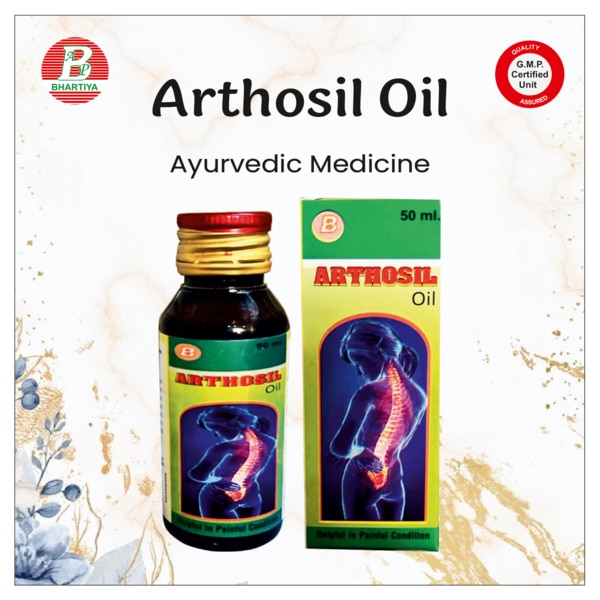
"name": "Arthosil Oil - 50ml",
"description": "Arthosil Oil is a natural remedy designed to provide relief from joint pain, stiffness, and inflammation. Enriched with powerful herbal ingredients, it penetrates deep into the affected areas, promoting improved mobility and comfort. Ideal for arthritis, sprains, or muscle aches, Arthosil Oil offers a soothing, non-greasy solution for long-lasting relief, helping you regain an active and pain-free lifestyle.\n\n\nArthosil oil amazon, arthosil oil benefits, arthosil oil benefits in hindi\narthosil oil buy online, arthosil oil company, arthosil oil composition\narthosil oil content, arthosil oil dealers in sonipat\narthosil oil dealers in sonipat haryana, arthosil oil expiry date\narthosil oil flipkart, arthosil oil for hair, arthosil oil for skin\narthosil oil generic name, arthosil oil gst number\narthosil oil gst rate, arthosil oil hindi, arthosil oil how to use\narthosil oil jaipur, arthosil oil jiomart, arthosil oil kaise use kare\narthosil oil ke fayde, arthosil oil ke fayde in hindi\narthosil oil kya kam karta hai, arthosil oil logo, arthosil oil logo png\narthosil oil manufacturers, arthosil oil mrp, arthosil oil name\narthosil oil near me, arthosil oil near sonipat haryana\narthosil oil new packaging, arthosil oil online\narthosil oil online order, arthosil oil online shopping\narthosil oil original, arthosil oil qr code, arthosil oil qr code scanner\narthosil oil quantity, arthosil oil rate, arthosil oil review\narthosil oil review in hindi, arthosil oil uses in hindi\narthosil oil website, arthosil oil wholesale price",
"price": 150.0,
"discountamount": 75.0,
"currencycode": "INR",
"priority": 1000000,
"isfreeshipmentavailable": false,
"shipmentduration": 1,
"_keywords": [
"painfree lifestyle",
"arthritis sprains",
"comfort ideal",
"penetrates deep",
"inflammation enriched",
"provide relief",
"longlasting relief helping",
"soothing nongreasy solution",
"powerful herbal ingredients",
"joint pain stiffness",
"natural remedy designed",
"arthosil oilarthosil oil"
],
"isarchived": false,
"isavailable": true,
"applicationid": null,
"productindex": 14,
"imageuri": "https://productimages.withfloats.com/actual/678f31f4b549721a6e70dd81.png",
"tileimageuri": "https://productimages.withfloats.com/tile/678f31f4b549721a6e70dd81.png",
"images": null,
"totalqueries": 0,
"gpid": null,
"groupproductid": null,
"createdon": "2025-01-21T05:34:35.146Z",
"updatedon": "2026-02-21T04:44:15.461Z",
"buyonlinelink": null,
"producturl": "http://WWW.BHARTIYAAYURVEDICPHARMACY.COM/products/arthosil-oil-50ml/14",
"availableunits": -1.0,
"iscodavailable": true,
"isprepaidonlineavailable": true,
"maxcodorders": 0,
"maxprepaidonlineorders": 0,
"uniquepaymenturl": null,
"brandname": "Bakula Fort ",
"category": "Arthosil Oil - 50ml X 30",
"tags": [],
"variants": false,
"keyspecification": null,
"otherspecifications": null,
"pickupaddressreferenceid": null,
"paymenttype": "AssuredPurchase",
"producttype": "products",
"hsncode": null,
"gstslab": 0.001,
"isnotforsale": false
},
{
"_id": "6aa14233d555b883cd377ce6",
"fptag": "BHARTIYEAYURVEDICPHARMACY",
"merchantname": null,
"customwidgets": null,
"externalsourceid": null,
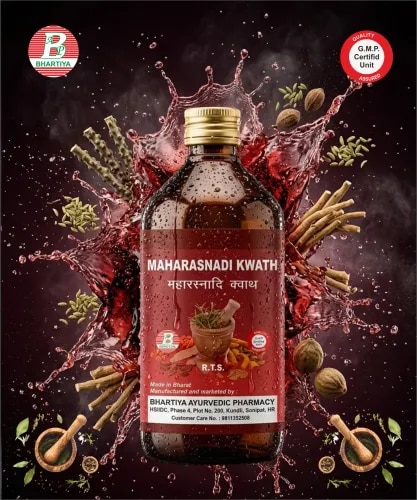
"name": "MAHA RASNADI KWATH",
"description": " MAHA RASNADI KWATH \n\nProduct Identification\nGeneric Name: Maha Rasnadi Kwath\nType: Ayurvedic Polyherbal Decoction (Kwath/Kashaya)\nPrimary Indication Area: Joint disorders, musculoskeletal health, inflammatory conditions, arthritis, neurological disorders associated with Vata imbalance, back pain, sciatica, and post-illness weakness.\n\nTherapeutic Indications (Traditional Ayurvedic Uses)\n• Amavata (Rheumatoid arthritis)\n• Sandhivata (Osteoarthritis)\n• Katigraha (Low back pain)\n• Gridhrasi (Sciatica)\n• Manyastambha (Cervical spondylosis/neck stiffness)\n• Pakshaghata (Hemiplegia/paralytic disorders)\n• Vatarakta (Gout)\n• Asthi-Sandhi Shoola (Bone and joint pain)\n• Musculoskeletal stiffness associated with Vata disorders\n• General weakness and restricted mobility\n\nKey Benefits\n• Supports healthy joint function\n• Helps maintain mobility and flexibility\n• Supports musculoskeletal health\n• Helps reduce joint stiffness\n• Supports healthy inflammatory balance according to Ayurvedic principles\n• Promotes comfort in muscles and joints\n• Supports nervous system function\n• Helps maintain healthy circulation in musculoskeletal tissues\n• Provides antioxidant and rejuvenative herbal support\n• Supports overall physical strength and mobility\n\nFormula\nFORMULA\nMain Ingredients\n• Rasna Patra (Pluchea lanceolata – leaves)\n• Dhamasa (Fagonia cretica)\n• Erandmool (Ricinus communis – root)\n• Devdaru (Cedrus deodara)\n• Kachur (Curcuma zedoaria)\n• Vacha (Acorus calamus)\n• Vasa (Justicia adhatoda)\n• Saunth (Zingiber officinale – dry ginger)\n• Harad (Terminalia chebula)\n• Nagarmotha (Cyperus rotundus)\n• Punarnava Mool (Boerhavia diffusa – root)\n• Giloy (Tinospora cordifolia)\n• Vidara (Pueraria tuberosa / Ipomoea digitata – regional variation)\n• Saunf (Foeniculum vulgare)\n• Gokshuru (Tribulus terrestris)\n• Ashwagandha (Withania somnifera)\n• Atis (Aconitum heterophyllum)\n• Amla (Emblica officinalis / Phyllanthus emblica)\n• Shatavari (Asparagus racemosus)\n• Pippali (Piper longum)\n• Piyavasa \n• Dhaniya (Coriandrum sativum)\n• Choti Kateri (Solanum surattense)\n• Badi Kateri (Solanum indicum)\n• Dhataki (Woodfordia fruticosa \n1. Rasna Patra\nBotanical Name: Pluchea lanceolata\n• Rasa: Tikta, Katu\n• Guna: Laghu, Ruksha\n• Virya: Ushna\n• Vipaka: Katu\nMechanism / Properties\n• Strong Vata-pacifying herb\n• Anti-inflammatory and analgesic action\n• Supports joint, nerve, and muscular pain relief\n• Reduces stiffness and swelling\n\n2. Dhamasa\nBotanical Name: Fagonia cretica\n• Rasa: Tikta, Kashaya\n• Guna: Laghu, Ruksha\n• Virya: Sheeta\n• Vipaka: Katu\nMechanism\n• Blood purifying (Rakta shodhana) action\n• Supports liver detoxification\n• Anti-inflammatory and antioxidant activity\n• Used in skin and metabolic disorders\n\n3. Erandmool\nBotanical Name: Ricinus communis (root)\n• Rasa: Madhura, Katu\n• Guna: Guru, Snigdha\n• Virya: Ushna\n• Vipaka: Madhura\nMechanism\n• Strong Vata shamak action\n• Analgesic and anti-inflammatory\n• Helps relieve constipation and urinary obstruction\n• Supports pain and swelling reduction\n\n4. Devdaru\nBotanical Name: Cedrus deodara\n• Rasa: Tikta, Kashaya\n• Guna: Laghu, Tikshna\n• Virya: Ushna\n• Vipaka: Katu\nMechanism\n• Potent anti-inflammatory and analgesic\n• Reduces obstruction in channels (Srotoshodhana)\n• Supports urinary and musculoskeletal health\n• Relieves swelling and pain\n\n5. Kachur\nBotanical Name: Curcuma zedoaria\n• Rasa: Tikta, Katu\n• Guna: Laghu, Ruksha\n• Virya: Ushna\n• Vipaka: Katu\nMechanism\n• Digestive stimulant (Agni deepana)\n• Anti-inflammatory and anti-microbial\n• Reduces Ama (toxins)\n• Supports metabolic cleansing\n\n6. Vacha\nBotanical Name: Acorus calamus\n• Rasa: Katu, Tikta\n• Guna: Laghu, Tikshna\n• Virya: Ushna\n• Vipaka: Katu\nMechanism\n• Srotoshodhana (channel cleansing)\n• Nervine stimulant\n• Anti-inflammatory and detoxifying\n• Supports neurological balance\n\n7. Vasa\nBotanical Name: Justicia adhatoda\n• Rasa: Tikta, Kashaya\n• Guna: Laghu, Ruksha\n• Virya: Sheeta\n• Vipaka: Katu\nMechanism\n• Hemostatic (controls bleeding)\n• Anti-inflammatory and bronchodilator\n• Supports blood purification\n• Tissue protective action\n\n8. Saunth\nBotanical Name: Zingiber officinale (dry ginger)\n• Rasa: Katu\n• Guna: Laghu, Snigdha\n• Virya: Ushna\n• Vipaka: Madhura\nMechanism\n• Enhances digestion and absorption\n• Anti-inflammatory and carminative\n• Reduces Ama formation\n• Improves circulation\n\n9. Harad\nBotanical Name: Terminalia chebula\n• Rasa: Pancharasa (except Lavana)\n• Guna: Laghu, Ruksha\n• Virya: Ushna\n• Vipaka: Madhura\nMechanism\n• Mild laxative and detoxifying\n• Rasayana (rejuvenator)\n• Supports digestion and gut health\n• Antioxidant action\n\n10. Nagarmotha\nBotanical Name: Cyperus rotundus\n• Rasa: Tikta, Katu, Kashaya\n• Guna: Laghu, Ruksha\n• Virya: Sheeta\n• Vipaka: Katu\nMechanism\n• Digestive and metabolic regulator\n• Anti-inflammatory\n• Supports urinary balance\n• Reduces Kapha and Ama\n\n11. Punarnava Mool\nBotanical Name: Boerhavia diffusa\n• Rasa: Tikta, Madhura, Kashaya\n• Guna: Laghu, Ruksha\n• Virya: Ushna\n• Vipaka: Katu\nMechanism\n• Natural diuretic (Mutrala)\n• Reduces edema and swelling\n• Supports kidney function\n• Anti-inflammatory\n\n12. Giloy\nBotanical Name: Tinospora cordifolia\n• Rasa: Tikta, Kashaya\n• Guna: Laghu, Snigdha\n• Virya: Ushna\n• Vipaka: Madhura\nMechanism\n• Immunomodulator\n• Detoxifying and anti-inflammatory\n• Supports fever and infection resistance\n• Rasayana herb\n\n13. Vidara\nBotanical Name: Pueraria tuberosa / Ipomoea digitata\n• Rasa: Madhura\n• Guna: Guru, Snigdha\n• Virya: Sheeta\n• Vipaka: Madhura\nMechanism\n• Rejuvenative tonic\n• Strengthens tissues and vitality\n• Supports Vata disorders\n• Nutritive and restorative\n\n14. Saunf\nBotanical Name: Foeniculum vulgare\n• Rasa: Madhura, Katu\n• Guna: Laghu, Snigdha\n• Virya: Sheeta\n• Vipaka: Madhura\nMechanism\n• Carminative and digestive\n• Mild diuretic\n• Reduces bloating and acidity\n• Soothes urinary tract\n\n15. Gokshura\nBotanical Name: Tribulus terrestris\n• Rasa: Madhura\n• Guna: Guru, Snigdha\n• Virya: Sheeta\n• Vipaka: Madhura\nMechanism\n• Strong urinary tonic\n• Supports kidney and bladder health\n• Promotes smooth urine flow\n• Aphrodisiac and rejuvenative\n\n16. Ashwagandha\nBotanical Name: Withania somnifera\n• Rasa: Tikta, Kashaya\n• Guna: Guru, Snigdha\n• Virya: Ushna\n• Vipaka: Madhura\nMechanism\n• Adaptogen (stress reducer)\n• Strengthens nervous system\n• Improves vitality and stamina\n• Vata balancing Rasayana\n\n17. Atis\nBotanical Name: Aconitum heterophyllum\n• Rasa: Tikta, Kashaya\n• Guna: Laghu, Ruksha\n• Virya: Ushna (mild)\n• Vipaka: Katu\nMechanism\n• Digestive stimulant\n• Antipyretic (fever reducing)\n• Anti-inflammatory\n• Helps toxin reduction\n\n18. Amla\nBotanical Name: Phyllanthus emblica\n• Rasa: Amla (sour dominant)\n• Guna: Laghu, Ruksha\n• Virya: Sheeta\n• Vipaka: Madhura\nMechanism\n• Strong antioxidant (Vitamin C rich)\n• Rasayana (rejuvenator)\n• Supports immunity\n• Tissue repair and regeneration\n\n19. Shatavari\nBotanical Name: Asparagus racemosus\n• Rasa: Madhura, Tikta\n• Guna: Guru, Snigdha\n• Virya: Sheeta\n• Vipaka: Madhura\nMechanism\n• Female reproductive tonic\n• Hormonal balancing support\n• Cooling and nutritive\n• Supports lactation and fertility health\n\n20. Pippali\nBotanical Name: Piper longum\n• Rasa: Katu\n• Guna: Laghu, Snigdha\n• Virya: Anushna-Ushna\n• Vipaka: Madhura\nMechanism\n• Bioavailability enhancer (Yogavahi)\n• Improves digestion and metabolism\n• Respiratory and urinary support\n• Detox enhancing herb\n\n21. Piyavasa\nBotanical Name: (Regionally variable; often hepatoprotective bitter herb)\n• Rasa: Tikta, Kashaya\n• Guna: Laghu, Ruksha\n• Virya: Sheeta/Ushna (varies)\n• Vipaka: Katu\nMechanism\n• Liver detox support\n• Bitter tonic action\n• Supports metabolic balance\n• Anti-inflammatory\n\n22. Dhaniya\nBotanical Name: Coriandrum sativum\n• Rasa: Madhura, Tikta\n• Guna: Laghu\n• Virya: Sheeta\n• Vipaka: Madhura\nMechanism\n• Cooling diuretic\n• Reduces burning urination\n• Digestive soothing\n• Anti-inflammatory\n\n23. Choti Kateri\nBotanical Name: Solanum surattense\n• Rasa: Tikta, Katu\n• Guna: Laghu, Ruksha\n• Virya: Ushna\n• Vipaka: Katu\nMechanism\n• Respiratory and urinary support\n• Anti-inflammatory\n• Vata-Kapha balancing\n• Pain relief support\n\n24. Badi Kateri\nBotanical Name: Solanum indicum\n• Rasa: Tikta, Katu\n• Guna: Laghu, Ruksha\n• Virya: Ushna\n• Vipaka: Katu\nMechanism\n• Anti-inflammatory and analgesic\n• Supports respiratory health\n• Reduces swelling and pain\n• Channel cleansing action\n\n25. Dhataki\nBotanical Name: Woodfordia fruticosa\n• Rasa: Kashaya\n• Guna: Laghu, Ruksha\n• Virya: Ushna\n• Vipaka: Katu\n• Prabhava: Sandhana Karaka\nMechanism\n• Natural fermentation catalyst\n• Enables Asava/Kwath preparation\n• Improves bioavailability\n• Preserves formulation stability\n\nDosage of Maharasnadi Kwath (Pravahi)\nAdults\n• Dose: 15–30 mL\n• Frequency: Twice daily (BID)\n• Administration: After meals\n• Anupana (vehicle): Equal quantity of lukewarm water\n\nGeneral Clinical Practice Range (Ayurvedic Use)\n• Mild conditions: 15 mL BD\n• Moderate conditions: 20–30 mL BD\n• Chronic Vata disorders / pain conditions: 25–30 mL BD (as advised)\n\nDuration\n• Usually 2–6 weeks\n• Can be extended up to 8 weeks under Ayurvedic supervision\n\nImportant Usage Notes\n• Shake well before use (as herbal sediment may settle)\n• Best taken after food to improve tolerance\n• Avoid self-medication in chronic kidney disease or severe urinary obstruction\n• Use cautiously in diabetes (may contain natural sugars from fermentation)\n• Not recommended during pregnancy without physician advice\n\n\n\n\n\nmaha rasnadi kwath uses in hindi\nmaha rasnadi kwath uses\nmaharasnadi kwatham\nmaha rasnadi kwath easy ayurveda\nrasnadi kashayam ingredients\nrasnadi kashayam benefits\nrasnadi ghritam uses\nmaharasnadi kwath amazon\nmaharasnadi kwath ayurvedic medicine\nmaharasnadi kwath ayurvedic\nmaharasnadi kwath ayurveda\nmaharasnadi kwath pravahi ayurvedic medicine\nmaharasnadi kwath benefits\nmaharasnadi kwath benefits in hindi\nmaharasnadi kwath botanical name\nmaharasnadi kwath buy online\nmaharasnadi kwath churna uses in hindi\nmaharasnadi kwath contents\nmaharasnadi kwath composition\nmaharasnadi kwath capsules\nmaharasnadi kwath kis chij ki dava hai\nmaharasnadi kwath dosage\ndivya maharasnadi kwath\ndabur maharasnadi kwath kadha\nmaharasnadi kwath easy ayurveda\nmaharasnadi kwath ke fayde\nmaharasnadi kwath ke fayde in hindi\nmaharasnadi kwath ghan\nmaharasnadi kwath how to use\nmaharasnadi kwath kya hai\nmaharasnadi kwath uses hindi\nmaharasnadi kwath benefits hindi\nmaharasnadi kwath ingredients\nmaharasnadi kwath in hindi\nmaharasnadi kwath ingredients in hindi\nmaharasnadi kwath indication\nmaharasnadi kwath is used for\nmaharasnadi kwath jiva ayurveda\nmaharasnadi kwath jiva\nmaharasnadi kwath kis kaam aata hai\nmaharasnadi kwath kaise use kare\nmaharasnadi kwath kya kam karta hai\nmaharasnadi kwath liquid\nmaharasnadi kwath ke labh\nmaharasnadi kwath medicine\nmaharasnadi kwath 200 ml\nmaharasnadi kwath hindi mein\nmaharasnadi kwath online\nuses of maharasnadi kwath\nbenefits of maharasnadi kwath\ningredients of maharasnadi kwath\nuses of maharasnadi kwath in hindi\nmaharasnadi kwath price\nmaharasnadi kwath peene ke fayde\nmaha rasnadi kwath q10\nmaharasnadi kwath reference\nmaharasnadi kwath review\nmaharasnadi kwath research paper\nmaharasnadi kwath syrup uses in hindi\nmaharasnadi kwath syrup uses\nmaharasnadi kwath syrup\nhow maha rasnadi kwath works\nhow maha rasnadi kwath is made\nhow maha rasnadi kwath use\nwhy maha rasnadi kwath useful",
"price": 210.0,
"discountamount": 105.0,
"currencycode": "INR",
"priority": 1000000,
"isfreeshipmentavailable": false,
"shipmentduration": 1,
"_keywords": null,
"isarchived": false,
"isavailable": true,
"applicationid": null,
"productindex": 175,
"imageuri": "https://productimages.withfloats.com/actual/6aa14237850fddb69be31772.jpg",
"tileimageuri": "https://productimages.withfloats.com/tile/6aa14237850fddb69be31772.jpg",
"images": null,
"totalqueries": 0,
"gpid": null,
"groupproductid": null,
"createdon": "2026-09-09T11:25:39.849Z",
"updatedon": "2026-09-09T11:25:39.849Z",
"buyonlinelink": null,
"producturl": "http://WWW.BHARTIYAAYURVEDICPHARMACY.COM//maha-rasnadi-kwath/175",
"availableunits": -1.0,
"iscodavailable": true,
"isprepaidonlineavailable": true,
"maxcodorders": -1,
"maxprepaidonlineorders": -1,
"uniquepaymenturl": null,
"brandname": "Bakula Fort",
"category": "MAHA RASNADI KWATH 450 ML X 40",
"tags": [],
"variants": false,
"keyspecification": null,
"otherspecifications": null,
"pickupaddressreferenceid": null,
"paymenttype": "AssuredPurchase",
"producttype": "products",
"hsncode": null,
"gstslab": 0.0,
"isnotforsale": false
},
{
"_id": "6a6069dca338caae77fcc9a0",
"fptag": "BHARTIYEAYURVEDICPHARMACY",
"merchantname": null,
"customwidgets": null,
"externalsourceid": null,
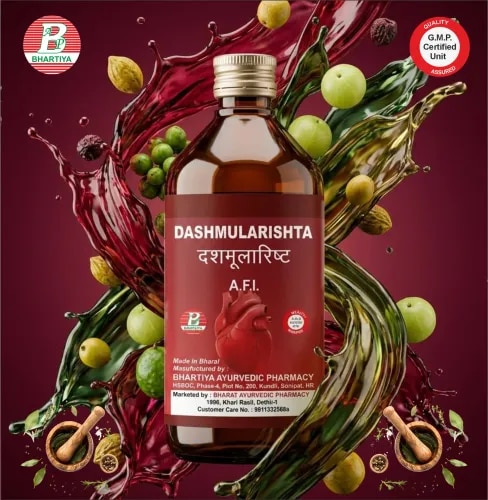
"name": "DASHMULARISHTA",
"description": " DASHMULARISHTA\n\n\nProduct Identification\nGeneric Name: Dashmularishta\nType: Ayurvedic Polyherbal Fermented Formulation (Arishta)\nPrimary Indication Area: Primarily used as a rejuvenative and restorative tonic for postpartum care, Vata disorders, inflammatory conditions, musculoskeletal weakness, nervous system disorders, and recovery following chronic illness. It is widely indicated for general debility, fever recovery, respiratory weakness, digestive impairment, and gynecological disorders associated with Vata imbalance.\n\nTherapeutic Indications\n•\tGeneral debility (Daurbalya) \n•\tPostpartum care (Sutika Paricharya) \n•\tVata disorders (Vatavyadhi) \n•\tChronic inflammatory conditions \n•\tMusculoskeletal weakness \n•\tJoint pain and stiffness \n•\tLow back pain \n•\tNeuralgia and neuropathic discomfort \n•\tConvalescence following prolonged illness \n•\tRespiratory weakness and chronic cough \n•\tFever recovery \n•\tDigestive weakness and poor appetite \n•\tGynecological disorders associated with Vata imbalance \n•\tFatigue and reduced stamina \n•\tAge-related decline in strength and vitality \n\nKey Benefits\n•\tSupports healthy musculoskeletal and nervous system function. \n•\tPromotes recovery following childbirth and prolonged illness. \n•\tHelps reduce inflammation and joint discomfort. \n•\tImproves physical strength and endurance. \n•\tSupports healthy respiratory function. \n•\tEnhances digestion and metabolism. \n•\tPromotes healthy immune function. \n•\tSupports uterine health during the postpartum period. \n•\tActs as a Rasayana for restoring vitality. \n•\tProvides antioxidant protection against oxidative stress. \n\nFORMULA\nEach part contains:\n•\tBilva (Aegle marmelos) \n•\tShyonaka (Oroxylum indicum) \n•\tGambhari (Gmelina arborea) \n•\tPatala (Stereospermum suaveolens) \n•\tAgnimantha (Clerodendrum phlomidis) \n•\tShalaparni (Desmodium gangeticum) \n•\tPrishniparni (Uraria picta) \n•\tBrihati (Solanum indicum) \n•\tKantakari (Solanum xanthocarpum)\n•\tGokshura (Tribulus terrestris) \n•\tChitraka (Plumbago zeylanica) \n•\tPushkara (Inula racemosa) \n•\tLodhra (Symplocos racemosa) \n•\tGuduchi (Tinospora cordifolia) \n•\tAmalaki (Phyllanthus emblica) \n•\tDhanvayasa (Fagonia cretica) \n•\tKhadira (Acacia catechu) \n•\tKustha (Saussurea lappa) \n•\tManjistha (Rubia cordifolia) \n•\tDevadaru (Cedrus deodara) \n•\tVidanga (Embelia ribes) \n•\tMadhuka (Glycyrrhiza glabra) \n•\tBharangi (Clerodendrum serratum) \n•\tKapitha (Limonia acidissima / Feronia limonia) \n•\tBibhitaki (Terminalia bellirica) \n•\tPunarnava (Boerhavia diffusa) \n•\tChavya (Piper retrofractum) \n•\tJatamansi (Nardostachys jatamansi) \n•\tPriyangu (Callicarpa macrophylla) \n•\tSariva (Hemidesmus indicus) \n•\tKala Jeera (Carum carvi / Nigella sativa (regional use)) \n•\tTrivrit (Operculina turpethum) \n•\tNirgundi (Vitex negundo) \n•\tRasna (Pluchea lanceolata) \n•\tHaridra (Curcuma longa) \n•\tSatpushpa (Anethum sowa / Anethum graveolens) \n•\tPadmaka (Prunus cerasoides) \n•\tNagakesara (Mesua ferrea) \n•\tMusta (Cyperus rotundus) \n•\tIndrayava (Holarrhena antidysenterica) \n•\tKarkatashringi (Pistacia integerrima) \n•\tJivaka (Microstylis wallichii) \n•\tRishabhaka (Microstylis muscifera) \n•\tMeda (Polygonatum cirrhifolium) \n•\tKakoli (Fritillaria roylei) \n•\tKshirakakoli (Roscoea purpurea) \n•\tRiddhi (Habenaria intermedia) \n•\tVriddhi (Habenaria edgeworthii) \n•\tDraksha (Vitis vinifera) \n•\tKatphala (Myrica nagi) \n•\tPuga (Areca catechu) \n•\tGuda (Jaggery) \n•\tMadhu (Honey) \n•\tDhataki (Woodfordia fruticosa) \n•\tLavanga (Syzygium aromaticum) \n•\tTvak (Cinnamomum verum) \n•\tEla (Elettaria cardamomum) \n•\tTejapatra (Cinnamomum tamala) \n•\tPippali (Piper longum) \n•\tHaridra (Curcuma longa) \n•\tSveta Chandana (Santalum album) \n•\tPippali root\n\n\n1. Bilva\nBotanical Name: Aegle marmelos\n•\tRasa: Kashaya, Tikta \n•\tGuna: Laghu, Ruksha \n•\tVirya: Ushna \n•\tVipaka: Katu \n•\tPrabhava: Vata-Kapha Shamaka \nMechanism of Action\n•\tReduces inflammatory mediators in gut and joints \n•\tRegulates Vata in neuromuscular system \n•\tSupports digestive motility and Agni \n•\tAnti-inflammatory and mild analgesic activity \n•\tHelps in post-illness weakness recovery \n\n2. Shyonaka\nBotanical Name: Oroxylum indicum\n•\tRasa: Tikta, Kashaya \n•\tGuna: Laghu, Ruksha \n•\tVirya: Ushna \n•\tVipaka: Katu \nMechanism of Action\n•\tReduces cytokine-mediated inflammation \n•\tSupports respiratory and musculoskeletal recovery \n•\tAntioxidant and tissue-protective action \n•\tHelps in Vata-induced pain conditions \n\n3. Gambhari\nBotanical Name: Gmelina arborea\n•\tRasa: Madhura, Kashaya \n•\tGuna: Guru, Snigdha \n•\tVirya: Sheeta \n•\tVipaka: Madhura \n•\tPrabhava: Rasayana \nMechanism of Action\n•\tPromotes tissue regeneration and strength \n•\tSupports post-partum recovery \n•\tImmunomodulatory and restorative effect \n•\tAnti-inflammatory and nutritive action \n\n4. Patala\nBotanical Name: Stereospermum suaveolens\n•\tRasa: Tikta, Kashaya \n•\tGuna: Laghu, Ruksha \n•\tVirya: Ushna \n•\tVipaka: Katu \nMechanism of Action\n•\tReduces neuromuscular inflammation \n•\tSupports respiratory function \n•\tAnalgesic activity in Vata disorders \n•\tImproves tissue repair mechanisms \n\n5. Agnimantha\nBotanical Name: Clerodendrum phlomidis\n•\tRasa: Katu, Tikta \n•\tGuna: Laghu, Ruksha \n•\tVirya: Ushna \n•\tVipaka: Katu \nMechanism of Action\n•\tStimulates digestive enzymes and Agni \n•\tReduces Ama accumulation \n•\tAnti-inflammatory in joints and muscles \n•\tEnhances metabolic clearance \n\n6. Shalaparni\nBotanical Name: Desmodium gangeticum\n•\tRasa: Madhura, Tikta \n•\tGuna: Snigdha, Laghu \n•\tVirya: Ushna \n•\tVipaka: Madhura \nMechanism of Action\n•\tNeuroprotective and muscle-strengthening \n•\tReduces fatigue and weakness \n•\tSupports immune modulation \n•\tEnhances recovery from chronic illness \n\n7. Prishniparni\nBotanical Name: Uraria picta\n•\tRasa: Madhura, Tikta \n•\tGuna: Snigdha, Laghu \n•\tVirya: Ushna \n•\tVipaka: Madhura \nMechanism of Action\n•\tImproves neuromuscular strength \n•\tSupports postpartum tissue repair \n•\tAnti-inflammatory and rejuvenative \n•\tEnhances stamina and vitality \n\n8. Brihati\nBotanical Name: Solanum indicum\n•\tRasa: Tikta, Katu \n•\tGuna: Laghu, Ruksha \n•\tVirya: Ushna \n•\tVipaka: Katu \nMechanism of Action\n•\tReduces inflammatory pain \n•\tSupports respiratory health \n•\tHelps in Vata-Kapha imbalance disorders \n•\tImproves metabolic function \n\n9. Kantakari\nBotanical Name: Solanum xanthocarpum\n•\tRasa: Tikta, Katu \n•\tGuna: Laghu, Ruksha \n•\tVirya: Ushna \n•\tVipaka: Katu \nMechanism of Action\n•\tBronchodilator and expectorant action \n•\tReduces respiratory inflammation \n•\tSupports Vata-Kapha balance \n•\tImproves oxygenation and vitality \n\n10. Gokshura\nBotanical Name: Tribulus terrestris\n•\tRasa: Madhura \n•\tGuna: Snigdha, Guru \n•\tVirya: Sheeta \n•\tVipaka: Madhura \nMechanism of Action\n•\tDiuretic and urinary system support \n•\tEnhances muscle strength and stamina \n•\tImproves reproductive function \n•\tAnti-fatigue and anabolic support \n\n11. Chitraka\nBotanical Name: Plumbago zeylanica\n•\tRasa: Katu \n•\tGuna: Laghu, Tikshna \n•\tVirya: Ushna \n•\tVipaka: Katu \nMechanism of Action\n•\tPotent digestive stimulant (Agni deepana) \n•\tReduces Ama accumulation \n•\tImproves nutrient absorption \n•\tEnhances metabolic rate \n\n12. Pushkara\nBotanical Name: Inula racemosa\n•\tRasa: Tikta, Katu \n•\tGuna: Laghu, Ruksha \n•\tVirya: Ushna \n•\tVipaka: Katu \nMechanism of Action\n•\tCardiorespiratory stimulant \n•\tImproves oxygen utilization \n•\tAnti-inflammatory and bronchodilator \n•\tSupports endurance \n\n13. Lodhra\nBotanical Name: Symplocos racemosa\n•\tRasa: Kashaya \n•\tGuna: Laghu, Ruksha \n•\tVirya: Sheeta \n•\tVipaka: Katu \nMechanism of Action\n•\tUterine tonic and anti-inflammatory \n•\tSupports tissue tightening and healing \n•\tReduces excessive secretions \n•\tImproves reproductive health \n\n14. Guduchi\nBotanical Name: Tinospora cordifolia\n•\tRasa: Tikta, Kashaya \n•\tGuna: Laghu, Snigdha \n•\tVirya: Ushna \n•\tVipaka: Madhura \nMechanism of Action\n•\tStrong immunomodulator \n•\tAnti-inflammatory and antipyretic \n•\tEnhances detoxification pathways \n•\tSupports chronic disease recovery \n\n15. Amalaki\nBotanical Name: Phyllanthus emblica\n•\tRasa: Amla Pradhana Pancharasa \n•\tGuna: Laghu, Ruksha \n•\tVirya: Sheeta \n•\tVipaka: Madhura \nMechanism of Action\n•\tPotent antioxidant (vitamin C rich) \n•\tAnti-aging and Rasayana effect \n•\tSupports immunity and tissue repair \n•\tEnhances digestion and metabolism\n16. Dhanvayasa\nBotanical Name: Fagonia cretica / Alhagi pseudalhagi\n•\tRasa: Tikta, Kashaya \n•\tGuna: Laghu, Ruksha \n•\tVirya: Sheeta \n•\tVipaka: Katu \nMechanism\n•\tAnti-inflammatory and blood-purifying activity \n•\tSupports detoxification and tissue repair \n•\tHelps reduce chronic inflammatory states \n\n17. Khadira\nBotanical Name: Acacia catechu\n•\tRasa: Kashaya \n•\tGuna: Ruksha, Laghu \n•\tVirya: Sheeta \n•\tVipaka: Katu \nMechanism\n•\tStrong antioxidant and antimicrobial action \n•\tSupports skin, blood and metabolic health \n•\tReduces chronic inflammation \n\n18. Kustha\nBotanical Name: Saussurea lappa\n•\tRasa: Tikta, Katu \n•\tGuna: Laghu, Tikshna \n•\tVirya: Ushna \n•\tVipaka: Katu \nMechanism\n•\tAnti-inflammatory and analgesic \n•\tSupports Vata disorders (pain, stiffness) \n•\tImproves neuromuscular function \n\n19. Manjistha\nBotanical Name: Rubia cordifolia\n•\tRasa: Tikta, Kashaya \n•\tGuna: Guru, Ruksha \n•\tVirya: Ushna \n•\tVipaka: Katu \nMechanism\n•\tBlood purification and lymphatic drainage \n•\tAnti-inflammatory and antioxidant \n•\tSupports skin and tissue repair \n\n20. Devadaru\nBotanical Name: Cedrus deodara\n•\tRasa: Tikta, Katu \n•\tGuna: Laghu, Ruksha \n•\tVirya: Ushna \n•\tVipaka: Katu \nMechanism\n•\tPotent anti-inflammatory action \n•\tRelieves joint and muscle pain \n•\tSupports respiratory clearance \n\n21. Vidanga\nBotanical Name: Embelia ribes\n•\tRasa: Katu \n•\tGuna: Laghu, Ruksha \n•\tVirya: Ushna \n•\tVipaka: Katu \nMechanism\n•\tAnthelmintic and antimicrobial \n•\tImproves gut health and metabolism \n•\tReduces Ama accumulation \n\n22. Madhuka\nBotanical Name: Glycyrrhiza glabra\n•\tRasa: Madhura \n•\tGuna: Guru, Snigdha \n•\tVirya: Sheeta \n•\tVipaka: Madhura \nMechanism\n•\tAnti-inflammatory and demulcent \n•\tSupports respiratory and gastric mucosa \n•\tImmunomodulatory and rejuvenative \n\n23. Bharangi\nBotanical Name: Clerodendrum serratum\n•\tRasa: Tikta, Katu \n•\tGuna: Laghu, Ruksha \n•\tVirya: Ushna \n•\tVipaka: Katu \nMechanism\n•\tRespiratory anti-inflammatory \n•\tBronchodilator effect \n•\tSupports cough and asthma conditions \n\n24. Kapitha\nBotanical Name: Limonia acidissima\n•\tRasa: Kashaya \n•\tGuna: Guru, Ruksha \n•\tVirya: Sheeta \n•\tVipaka: Katu \nMechanism\n•\tDigestive and gut stabilizing \n•\tAntimicrobial and anti-diarrheal \n•\tSupports intestinal health \n\n25. Bibhitaki\nBotanical Name: Terminalia bellirica\n•\tRasa: Kashaya \n•\tGuna: Ruksha, Laghu \n•\tVirya: Ushna \n•\tVipaka: Madhura \nMechanism\n•\tDetoxification and bowel regulation \n•\tAntioxidant and anti-inflammatory \n•\tSupports respiratory health \n\n26. Punarnava\nBotanical Name: Boerhavia diffusa\n•\tRasa: Tikta, Kashaya \n•\tGuna: Laghu, Ruksha \n•\tVirya: Ushna \n•\tVipaka: Katu \nMechanism\n•\tDiuretic and anti-edema action \n•\tKidney and fluid balance support \n•\tAnti-inflammatory activity \n\n27. Chavya\nBotanical Name: Piper retrofractum\n•\tRasa: Katu \n•\tGuna: Laghu, Tikshna \n•\tVirya: Ushna \n•\tVipaka: Katu \nMechanism\n•\tDigestive stimulant (Deepana) \n•\tImproves metabolism and Agni \n•\tReduces Ama formation \n\n28. Jatamansi\nBotanical Name: Nardostachys jatamansi\n•\tRasa: Tikta, Kashaya \n•\tGuna: Laghu, Snigdha \n•\tVirya: Sheeta \n•\tVipaka: Katu \nMechanism\n•\tNervine sedative and neuroprotective \n•\tReduces stress and anxiety \n•\tSupports sleep and mental balance \n\n29. Priyangu\nBotanical Name: Callicarpa macrophylla\n•\tRasa: Kashaya, Madhura \n•\tGuna: Laghu, Ruksha \n•\tVirya: Sheeta \n•\tVipaka: Katu \nMechanism\n•\tBlood purification and wound healing \n•\tAnti-inflammatory and cooling \n•\tSupports tissue repair \n\n30. Sariva\nBotanical Name: Hemidesmus indicus\n•\tRasa: Madhura, Tikta \n•\tGuna: Guru, Snigdha \n•\tVirya: Sheeta \n•\tVipaka: Madhura \nMechanism\n•\tBlood detoxification \n•\tCooling and anti-inflammatory \n•\tSupports skin and immune health \n\n31. Kala Jeera\nBotanical Name: Nigella sativa / Carum carvi (variant usage)\n•\tRasa: Katu, Tikta \n•\tGuna: Laghu, Ruksha \n•\tVirya: Ushna \n•\tVipaka: Katu \nMechanism\n•\tAnti-inflammatory and antioxidant \n•\tImproves digestion and immunity \n•\tSupports metabolic balance \n\n32. Trivrit\nBotanical Name: Operculina turpethum\n•\tRasa: Katu, Tikta \n•\tGuna: Ruksha, Laghu \n•\tVirya: Ushna \n•\tVipaka: Katu \nMechanism\n•\tStrong purgative (Rechana) \n•\tDetoxification and bowel cleansing \n•\tRemoves accumulated toxins \n\n33. Nirgundi\nBotanical Name: Vitex negundo\n•\tRasa: Katu, Tikta \n•\tGuna: Laghu, Ruksha \n•\tVirya: Ushna \n•\tVipaka: Katu \nMechanism\n•\tAnti-inflammatory and analgesic \n•\tUseful in joint pain and Vata disorders \n•\tMuscle relaxant activity \n\n34. Rasna\nBotanical Name: Pluchea lanceolata\n•\tRasa: Tikta, Katu \n•\tGuna: Snigdha, Laghu \n•\tVirya: Ushna \n•\tVipaka: Katu \nMechanism\n•\tStrong anti-arthritic action \n•\tReduces stiffness and pain \n•\tSupports neuromuscular health \n\n35. Haridra\nBotanical Name: Curcuma longa\n•\tRasa: Tikta, Katu \n•\tGuna: Laghu, Ruksha \n•\tVirya: Ushna \n•\tVipaka: Katu \nMechanism\n•\tAnti-inflammatory and antioxidant \n•\tImmunomodulatory activity \n•\tTissue healing and detox support \n\n36. Satpushpa\nBotanical Name: Anethum sowa / Anethum graveolens\n•\tRasa: Katu \n•\tGuna: Laghu \n•\tVirya: Ushna \n•\tVipaka: Katu \nMechanism\n•\tDigestive stimulant \n•\tReduces bloating and gas \n•\tSupports metabolism \n\n37. Padmaka\nBotanical Name: Prunus cerasoides\n•\tRasa: Kashaya \n•\tGuna: Laghu \n•\tVirya: Sheeta \n•\tVipaka: Katu \nMechanism\n•\tAnti-inflammatory and cooling \n•\tSupports blood purification \n•\tTissue soothing action \n\n38. Nagakesara\nBotanical Name: Mesua ferrea\n•\tRasa: Kashaya, Tikta \n•\tGuna: Laghu, Ruksha \n•\tVirya: Sheeta \n•\tVipaka: Katu \nMechanism\n•\tHemostatic and anti-inflammatory \n•\tSupports uterine and vascular health \n•\tAntioxidant activity \n\n39. Musta\nBotanical Name: Cyperus rotundus\n•\tRasa: Tikta, Katu \n•\tGuna: Laghu, Ruksha \n•\tVirya: Sheeta \n•\tVipaka: Katu \nMechanism\n•\tDigestive regulator \n•\tAnti-diarrheal and metabolic balance \n•\tReduces Ama \n\n40. Indrayava\nBotanical Name: Holarrhena antidysenterica\n•\tRasa: Tikta, Kashaya \n•\tGuna: Laghu, Ruksha \n•\tVirya: Sheeta \n•\tVipaka: Katu \nMechanism\n•\tStrong anti-diarrheal action \n•\tGut antimicrobial activity \n•\tRestores intestinal balance \n\n41. Karkatashringi\nBotanical Name: Pistacia integerrima\n•\tRasa: Kashaya \n•\tGuna: Laghu, Ruksha \n•\tVirya: Sheeta \n•\tVipaka: Katu \nMechanism\n•\tRespiratory anti-inflammatory \n•\tReduces cough and bronchial irritation \n•\tSupports lung function \n42. Jivaka\nBotanical Name: Microstylis wallichii\n•\tRasa: Madhura \n•\tGuna: Guru, Snigdha \n•\tVirya: Sheeta \n•\tVipaka: Madhura \nMechanism\n•\tRasayana and tissue-building action \n•\tImproves strength and vitality \n•\tSupports reproductive and neuromuscular health \n\n43. Rishabhaka\nBotanical Name: Microstylis muscifera\n•\tRasa: Madhura \n•\tGuna: Guru, Snigdha \n•\tVirya: Sheeta \n•\tVipaka: Madhura \nMechanism\n•\tRejuvenative and anabolic support \n•\tEnhances stamina and recovery \n•\tSupports muscle and nerve repair \n\n44. Meda\nBotanical Name: Polygonatum cirrhifolium\n•\tRasa: Madhura \n•\tGuna: Guru, Snigdha \n•\tVirya: Sheeta \n•\tVipaka: Madhura \nMechanism\n•\tNourishing and restorative \n•\tImproves tissue regeneration \n•\tSupports energy metabolism \n\n45. Kakoli\nBotanical Name: Fritillaria roylei\n•\tRasa: Madhura \n•\tGuna: Guru, Snigdha \n•\tVirya: Sheeta \n•\tVipaka: Madhura \nMechanism\n•\tPotent Rasayana herb \n•\tImproves strength and immunity \n•\tSupports nervous system recovery \n\n46. Kshirakakoli\nBotanical Name: Roscoea purpurea\n•\tRasa: Madhura \n•\tGuna: Guru, Snigdha \n•\tVirya: Sheeta \n•\tVipaka: Madhura \nMechanism\n•\tDeep tissue nourishment \n•\tEnhances vitality and stamina \n•\tSupports postpartum recovery \n\n47. Riddhi\nBotanical Name: Habenaria intermedia\n•\tRasa: Madhura \n•\tGuna: Guru, Snigdha \n•\tVirya: Sheeta \n•\tVipaka: Madhura \nMechanism\n•\tStrength promoter (Balya) \n•\tEnhances tissue growth and recovery \n•\tSupports immunity and endurance \n\n48. Vriddhi\nBotanical Name: Habenaria edgeworthii\n•\tRasa: Madhura \n•\tGuna: Guru, Snigdha \n•\tVirya: Sheeta \n•\tVipaka: Madhura \nMechanism\n•\tGrowth and regenerative support \n•\tImproves physical strength \n•\tRasayana for chronic weakness \n\n49. Draksha\nBotanical Name: Vitis vinifera\n•\tRasa: Madhura \n•\tGuna: Guru, Snigdha \n•\tVirya: Sheeta \n•\tVipaka: Madhura \nMechanism\n•\tAntioxidant and cardiotonic support \n•\tImproves energy and hydration \n•\tSupports liver and digestion \n\n50. Katphala\nBotanical Name: Myrica nagi\n•\tRasa: Kashaya \n•\tGuna: Laghu, Ruksha \n•\tVirya: Ushna \n•\tVipaka: Katu \nMechanism\n•\tAntimicrobial and digestive stimulant \n•\tSupports respiratory clearance \n•\tReduces Ama formation \n\n51. Puga\nBotanical Name: Areca catechu\n•\tRasa: Kashaya, Madhura \n•\tGuna: Laghu \n•\tVirya: Ushna \n•\tVipaka: Katu \nMechanism\n•\tAstringent and digestive support \n•\tImproves oral and gut health \n•\tMild stimulant action \n\n52. Guda\nBotanical Name: Saccharum officinarum (Jaggery)\n•\tRasa: Madhura \n•\tGuna: Guru, Snigdha \n•\tVirya: Ushna \n•\tVipaka: Madhura \nMechanism\n•\tFermentation substrate \n•\tEnergy provider \n•\tEnhances bioavailability of herbs \n\n53. Madhu\nBotanical Name: Honey (Apis mellifera product)\n•\tRasa: Madhura, Kashaya \n•\tGuna: Laghu, Ruksha \n•\tVirya: Sheeta \n•\tVipaka: Madhura \nMechanism\n•\tBioavailability enhancer (Yogavahi) \n•\tAntimicrobial and antioxidant \n•\tSupports fermentation stability \n\n54. Dhataki\nBotanical Name: Woodfordia fruticosa\n•\tRasa: Kashaya \n•\tGuna: Laghu, Ruksha \n•\tVirya: Sheeta \n•\tVipaka: Katu \nMechanism\n•\tNatural fermentation catalyst \n•\tEnhances alcohol formation \n•\tImproves extraction of phytochemicals \n\n55. Lavanga\nBotanical Name: Syzygium aromaticum\n•\tRasa: Katu, Tikta \n•\tGuna: Laghu, Tikshna \n•\tVirya: Ushna \n•\tVipaka: Katu \nMechanism\n•\tStrong antimicrobial action \n•\tDigestive stimulant \n•\tAnalgesic and carminative \n\n56. Tvak\nBotanical Name: Cinnamomum verum\n•\tRasa: Katu, Tikta \n•\tGuna: Laghu \n•\tVirya: Ushna \n•\tVipaka: Katu \nMechanism\n•\tImproves circulation and metabolism \n•\tAnti-inflammatory and antioxidant \n•\tSupports digestive fire \n\n57. Ela\nBotanical Name: Elettaria cardamomum\n•\tRasa: Madhura, Katu \n•\tGuna: Laghu \n•\tVirya: Sheeta \n•\tVipaka: Madhura \nMechanism\n•\tDigestive carminative \n•\tReduces bloating and gas \n•\tAromatic bioenhancer \n\n58. Tejapatra\nBotanical Name: Cinnamomum tamala\n•\tRasa: Katu, Tikta \n•\tGuna: Laghu \n•\tVirya: Ushna \n•\tVipaka: Katu \nMechanism\n•\tMetabolic stimulant \n•\tAnti-inflammatory activity \n•\tImproves digestion \n\n59. Pippali\nBotanical Name: Piper longum\n•\tRasa: Katu \n•\tGuna: Laghu, Tikshna \n•\tVirya: Ushna \n•\tVipaka: Madhura \nMechanism\n•\tBioavailability enhancer (Yogavahi) \n•\tRespiratory stimulant \n•\tImproves digestion and absorption\n42. Jivaka\nBotanical Name: Microstylis wallichii\n•\tRasa: Madhura \n•\tGuna: Guru, Snigdha \n•\tVirya: Sheeta \n•\tVipaka: Madhura \nMechanism\n•\tRasayana and tissue-building action \n•\tImproves strength and vitality \n•\tSupports reproductive and neuromuscular health \n\n43. Rishabhaka\nBotanical Name: Microstylis muscifera\n•\tRasa: Madhura \n•\tGuna: Guru, Snigdha \n•\tVirya: Sheeta \n•\tVipaka: Madhura \nMechanism\n•\tRejuvenative and anabolic support \n•\tEnhances stamina and recovery \n•\tSupports muscle and nerve repair \n\n44. Meda\nBotanical Name: Polygonatum cirrhifolium\n•\tRasa: Madhura \n•\tGuna: Guru, Snigdha \n•\tVirya: Sheeta \n•\tVipaka: Madhura \nMechanism\n•\tNourishing and restorative \n•\tImproves tissue regeneration \n•\tSupports energy metabolism \n\n45. Kakoli\nBotanical Name: Fritillaria roylei\n•\tRasa: Madhura \n•\tGuna: Guru, Snigdha \n•\tVirya: Sheeta \n•\tVipaka: Madhura \nMechanism\n•\tPotent Rasayana herb \n•\tImproves strength and immunity \n•\tSupports nervous system recovery \n\n46. Kshirakakoli\nBotanical Name: Roscoea purpurea\n•\tRasa: Madhura \n•\tGuna: Guru, Snigdha \n•\tVirya: Sheeta \n•\tVipaka: Madhura \nMechanism\n•\tDeep tissue nourishment \n•\tEnhances vitality and stamina \n•\tSupports postpartum recovery \n\n47. Riddhi\nBotanical Name: Habenaria intermedia\n•\tRasa: Madhura \n•\tGuna: Guru, Snigdha \n•\tVirya: Sheeta \n•\tVipaka: Madhura \nMechanism\n•\tStrength promoter (Balya) \n•\tEnhances tissue growth and recovery \n•\tSupports immunity and endurance \n\n48. Vriddhi\nBotanical Name: Habenaria edgeworthii\n•\tRasa: Madhura \n•\tGuna: Guru, Snigdha \n•\tVirya: Sheeta \n•\tVipaka: Madhura \nMechanism\n•\tGrowth and regenerative support \n•\tImproves physical strength \n•\tRasayana for chronic weakness \n\n49. Draksha\nBotanical Name: Vitis vinifera\n•\tRasa: Madhura \n•\tGuna: Guru, Snigdha \n•\tVirya: Sheeta \n•\tVipaka: Madhura \nMechanism\n•\tAntioxidant and cardiotonic support \n•\tImproves energy and hydration \n•\tSupports liver and digestion \n\n50. Katphala\nBotanical Name: Myrica nagi\n•\tRasa: Kashaya \n•\tGuna: Laghu, Ruksha \n•\tVirya: Ushna \n•\tVipaka: Katu \nMechanism\n•\tAntimicrobial and digestive stimulant \n•\tSupports respiratory clearance \n•\tReduces Ama formation \n\n51. Puga\nBotanical Name: Areca catechu\n•\tRasa: Kashaya, Madhura \n•\tGuna: Laghu \n•\tVirya: Ushna \n•\tVipaka: Katu \nMechanism\n•\tAstringent and digestive support \n•\tImproves oral and gut health \n•\tMild stimulant action \n\n52. Guda\nBotanical Name: Saccharum officinarum (Jaggery)\n•\tRasa: Madhura \n•\tGuna: Guru, Snigdha \n•\tVirya: Ushna \n•\tVipaka: Madhura \nMechanism\n•\tFermentation substrate \n•\tEnergy provider \n•\tEnhances bioavailability of herbs \n\n53. Madhu\nBotanical Name: Honey (Apis mellifera product)\n•\tRasa: Madhura, Kashaya \n•\tGuna: Laghu, Ruksha \n•\tVirya: Sheeta \n•\tVipaka: Madhura \nMechanism\n•\tBioavailability enhancer (Yogavahi) \n•\tAntimicrobial and antioxidant \n•\tSupports fermentation stability \n\n54. Dhataki\nBotanical Name: Woodfordia fruticosa\n•\tRasa: Kashaya \n•\tGuna: Laghu, Ruksha \n•\tVirya: Sheeta \n•\tVipaka: Katu \nMechanism\n•\tNatural fermentation catalyst \n•\tEnhances alcohol formation \n•\tImproves extraction of phytochemicals \n\n55. Lavanga\nBotanical Name: Syzygium aromaticum\n•\tRasa: Katu, Tikta \n•\tGuna: Laghu, Tikshna \n•\tVirya: Ushna \n•\tVipaka: Katu \nMechanism\n•\tStrong antimicrobial action \n•\tDigestive stimulant \n•\tAnalgesic and carminative \n\n56. Tvak\nBotanical Name: Cinnamomum verum\n•\tRasa: Katu, Tikta \n•\tGuna: Laghu \n•\tVirya: Ushna \n•\tVipaka: Katu \nMechanism\n•\tImproves circulation and metabolism \n•\tAnti-inflammatory and antioxidant \n•\tSupports digestive fire \n\n57. Ela\nBotanical Name: Elettaria cardamomum\n•\tRasa: Madhura, Katu \n•\tGuna: Laghu \n•\tVirya: Sheeta \n•\tVipaka: Madhura \nMechanism\n•\tDigestive carminative \n•\tReduces bloating and gas \n•\tAromatic bioenhancer \n\n58. Tejapatra\nBotanical Name: Cinnamomum tamala\n•\tRasa: Katu, Tikta \n•\tGuna: Laghu \n•\tVirya: Ushna \n•\tVipaka: Katu \nMechanism\n•\tMetabolic stimulant \n•\tAnti-inflammatory activity \n•\tImproves digestion \n\n59. Pippali\nBotanical Name: Piper longum\n•\tRasa: Katu \n•\tGuna: Laghu, Tikshna \n•\tVirya: Ushna \n•\tVipaka: Madhura \nMechanism\n•\tBioavailability enhancer (Yogavahi) \n•\tRespiratory stimulant \n•\tImproves digestion and absorption\n60. Karkatashringi\nBotanical Name: Pistacia integerrima\n•\tRasa: Kashaya \n•\tGuna: Laghu, Ruksha \n•\tVirya: Sheeta \n•\tVipaka: Katu \nMechanism\n•\tStrong respiratory anti-inflammatory action \n•\tReduces cough, bronchial irritation and asthma symptoms \n•\tSupports lung tissue healing \n\n61. Satpushpa\nBotanical Name: Anethum sowa\n•\tRasa: Katu \n•\tGuna: Laghu \n•\tVirya: Ushna \n•\tVipaka: Katu \nMechanism\n•\tCarminative and digestive stimulant \n•\tReduces gas, bloating and indigestion \n•\tSupports Agni and metabolism \n\n62. Padmaka\nBotanical Name: Prunus cerasoides\n•\tRasa: Kashaya \n•\tGuna: Laghu \n•\tVirya: Sheeta \n•\tVipaka: Katu \nMechanism\n•\tAnti-inflammatory and cooling effect \n•\tBlood purifier and tissue soothing action \n•\tSupports Pitta balance \n\n63. Nagakesara\nBotanical Name: Mesua ferrea\n•\tRasa: Kashaya, Tikta \n•\tGuna: Laghu, Ruksha \n•\tVirya: Sheeta \n•\tVipaka: Katu \nMechanism\n•\tHemostatic and anti-inflammatory \n•\tSupports uterine and vascular health \n•\tAntioxidant and wound healing activity \n\n64. Musta\nBotanical Name: Cyperus rotundus\n•\tRasa: Tikta, Katu \n•\tGuna: Laghu, Ruksha \n•\tVirya: Sheeta \n•\tVipaka: Katu \nMechanism\n•\tDigestive regulator and anti-diarrheal \n•\tReduces Ama formation \n•\tSupports gut microbial balance \n\n65. Indrayava\nBotanical Name: Holarrhena antidysenterica\n•\tRasa: Tikta, Kashaya \n•\tGuna: Laghu, Ruksha \n•\tVirya: Sheeta \n•\tVipaka: Katu \nMechanism\n•\tStrong anti-diarrheal and antimicrobial action \n•\tRestores intestinal mucosa integrity \n•\tSupports gut infection control \n\n66. Nirgundi\nBotanical Name: Vitex negundo\n•\tRasa: Katu, Tikta \n•\tGuna: Laghu, Ruksha \n•\tVirya: Ushna \n•\tVipaka: Katu \nMechanism\n•\tPowerful anti-inflammatory and analgesic \n•\tRelieves joint pain, swelling and stiffness \n•\tVata pacifying action \n\n67. Rasna\nBotanical Name: Pluchea lanceolata\n•\tRasa: Tikta, Katu \n•\tGuna: Snigdha, Laghu \n•\tVirya: Ushna \n•\tVipaka: Katu \nMechanism\n•\tAnti-arthritic and neuromuscular relaxant \n•\tReduces inflammation and stiffness \n•\tSupports Vata disorders \n\n68. Jivaka\nBotanical Name: Microstylis wallichii\n•\tRasa: Madhura \n•\tGuna: Guru, Snigdha \n•\tVirya: Sheeta \n•\tVipaka: Madhura \nMechanism\n•\tPotent Rasayana (rejuvenator) \n•\tImproves strength, stamina and tissue repair \n•\tSupports reproductive and nerve health \n\n69. Rishabhaka\nBotanical Name: Microstylis muscifera\n•\tRasa: Madhura \n•\tGuna: Guru, Snigdha \n•\tVirya: Sheeta \n•\tVipaka: Madhura \nMechanism\n•\tAnabolic and restorative action \n•\tEnhances muscle and nerve regeneration \n•\tImproves vitality and endurance \n\n70. Meda\nBotanical Name: Polygonatum cirrhifolium\n•\tRasa: Madhura \n•\tGuna: Guru, Snigdha \n•\tVirya: Sheeta \n•\tVipaka: Madhura \nMechanism\n•\tDeep nutritive and rejuvenative herb \n•\tImproves tissue building and energy metabolism \n•\tSupports chronic weakness recovery \n\n71. Kakoli / Kshirakakoli \nBotanical Name: Fritillaria roylei / Roscoea purpurea (group substitute in practice)\n•\tRasa: Madhura \n•\tGuna: Guru, Snigdha \n•\tVirya: Sheeta \n•\tVipaka: Madhura \nMechanism\n•\tStrong Rasayana and immunomodulator \n•\tEnhances strength, stamina and recovery \n•\tSupports neuromuscular and reproductive systems \n•\tDeep tissue nourishment and anti-aging effect\n\n1. Adult Dose\n•\t15–30 mL \n•\tTwice daily \n\n2. How to Take\n•\tDilute with equal quantity of water (1:1) \n•\tBest taken after meals \n•\tCommonly taken in morning and evening \n\n3. Therapeutic Duration\n•\tUsually 4–12 weeks \n•\tMay be extended in chronic conditions under physician supervision \n\n4. Special Situations\n•\tPostpartum care: 15–30 mL twice daily for 2–6 weeks (as advised) \n•\tGeneral debility: 15–20 mL twice daily \n•\tChronic Vata disorders: 20–30 mL twice daily \n\n5. Caution\n•\tUse under supervision in: \no\tPregnancy (generally avoided unless prescribed) \no\tDiabetes (contains jaggery fermentation) \no\tHypertension / cardiac patients on medication \n•\tAvoid self-medication in chronic diseases\n\n",
"price": 192.0,
"discountamount": 96.0,
"currencycode": "INR",
"priority": 1000000,
"isfreeshipmentavailable": false,
"shipmentduration": 1,
"_keywords": null,
"isarchived": false,
"isavailable": true,
"applicationid": null,
"productindex": 164,
"imageuri": "https://productimages.withfloats.com/actual/6a6069de406ff2e16e248d2f.jpg",
"tileimageuri": "https://productimages.withfloats.com/tile/6a6069de406ff2e16e248d2f.jpg",
"images": null,
"totalqueries": 0,
"gpid": null,
"groupproductid": null,
"createdon": "2026-07-22T06:57:32.507Z",
"updatedon": "2026-07-22T06:57:32.507Z",
"buyonlinelink": null,
"producturl": "http://WWW.BHARTIYAAYURVEDICPHARMACY.COM//dashmularishta/164",
"availableunits": -1.0,
"iscodavailable": true,
"isprepaidonlineavailable": true,
"maxcodorders": -1,
"maxprepaidonlineorders": -1,
"uniquepaymenturl": null,
"brandname": "Bakula Fort",
"category": "DASHMULARISHTA 450 ML X 40",
"tags": [],
"variants": false,
"keyspecification": null,
"otherspecifications": null,
"pickupaddressreferenceid": null,
"paymenttype": "AssuredPurchase",
"producttype": "products",
"hsncode": null,
"gstslab": 0.0,
"isnotforsale": false
},
{
"_id": "6a5869bc5a2a63b638185da4",
"fptag": "BHARTIYEAYURVEDICPHARMACY",
"merchantname": null,
"customwidgets": null,
"externalsourceid": null,
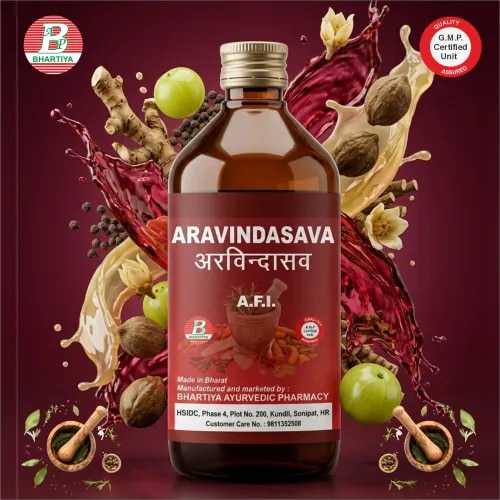
"name": "ARVINDASAVA",
"description": " \n ARVINDASAVA \n\n\nProduct Identification\nGeneric Name: Arvindasava\nType: Ayurvedic Polyherbal Formulation\nPrimary Indication Area: Primarily used as a pediatric growth-promoting and digestive tonic, indicated in children’s debility, poor appetite, delayed growth, recurrent digestive disturbances, and developmental weakness.\nTherapeutic Indications: \n•\tChronic constipation (mild to moderate laxative action) \n•\tHemorrhoids (Arsha / piles)—especially when associated with constipation and straining \n•\tIndigestion (Agnimandya) \n•\tAbdominal bloating and gas (flatulence) \n•\tGastrointestinal sluggishness / irregular bowel movements \n•\tGrahani (IBS-like conditions)—support in malabsorption and unstable digestion \n•\tLoss of appetite related to poor digestion \n•\tMild abdominal discomfort due to digestive imbalance\nKey Benefits\n•\tImproves appetite (Deepana effect) – enhances digestive fire in children and supports regular eating habits \n•\tPromotes healthy growth and development – supports physical weight gain and tissue nourishment \n•\tEnhances digestion and absorption – improves breakdown and utilization of nutrients \n•\tBoosts immunity – strengthens natural resistance against frequent infections \n•\tReduces general weakness and fatigue – improves energy levels in debilitated children \n•\tSupports healthy bowel function – helps regulate digestion and relieve mild constipation or indigestion \n•\tImproves overall vitality (Balya action) – acts as a general tonic for pediatric health \n•\tSupports recovery after illness – helps restore strength and appetite after infections or weakness \n•\tMild hematinic support – may help improve mild nutritional deficiency states \n•\tEnhances overall pediatric well-being – supports balanced growth and development patterns\nFORMULA \nEach part contains:\nArvinda (kamala)\t48 g\nUsira \t48 g\nGambhari \t48 g\nNilotpala (Utpala)\t48 g\nManjistha\t48 g\nEla \t48 g\nBala \t48 g\nJatamansi \t48 g\nMusta \t48 g\nSveta Sariva \t48 g\nHaritaki \t48 g\nBibhitaki \t48 g\nVach\t48 g\nAmalaki \t48 g\nSati \t48 g\nTrivrit \t48 g\nNili \t48 g\nPatala \t48 g\nParpata \t48 g\nArjuna \t48 g\nMadhuka\t48 g\nYasti\t48 g\nMurva \t48 g\nDraksha \t960 g\nDhataki \t768 g\nWater \t24.576 L\nSarkara \t4.800 kg \nMadhu \t2.400 kg \n\n\n\n\n\n\n\n\n\nIngredients:\n1. Arvinda (Nelumbo nucifera / Kamala)\n\n•\tRasa: Madhura, Kashaya\n•\tGuna: Guru, Snigdha\n•\t Virya: Sheeta\n•\t Vipaka: Madhura\n•\tPrabhava: Balya, Rasayana\nMechanism of Action:\n\n•\tPromotes growth and nourishment in children\n•\tEnhances tissue strength and vitality\n•\t Supports mental calmness and emotional balance\n•\tActs as primary rejuvenative herb in formulation\n•\tImproves immunity and resistance\n\n2. Usira (Vetiveria zizanioides)\n•\tRasa: Tikta, Madhura\n•\t Guna: Laghu, Ruksha\n•\tVirya: Sheeta\n•\t Vipaka: Madhura\n•\t Prabhava: Pitta shamaka, Stambhana\nMechanism of Action:\n\n•\tCools excessive body heat and inflammation\n•\t Reduces irritability and Pitta disorders\n•\t Supports skin and blood purification\n•\t Calms nervous system and improves stability\n•\t Helps detoxification via sweat and urine\n\n3. Gambhari (Gmelina arborea)\n•\tRasa: Madhura, Tikta\n•\t Guna: Guru, Snigdha\n•\tVirya: Sheeta\n•\tVipaka: Madhura\n•\t Prabhava: Balya, Rasayana\nMechanism of Action:\n\n•\tStrengthens tissues and muscle growth\n•\tReduces fatigue and weakness\n•\t Supports recovery after illness\n•\tEnhances nourishment in children\n•\t Balances Vata-induced debility\n\n4. Nilotpala (Nymphaea nouchali)\n\n•\tRasa: Madhura, Kashaya\n•\t Guna: Laghu, Snigdha\n•\tVirya: Sheeta\n•\t Vipaka: Madhura\n•\tPrabhava: Hridya, Medhya\nMechanism of Action:\n\n•\tCalms mind and reduces stress\n•\t Improves emotional balance\n•\t Supports cardiac and nervous system health\n•\t Enhances cognitive stability in children\n•\t Reduces Pitta-related irritation\n\n5. Manjistha (Rubia cordifolia)\n\n•\tRasa: Tikta, Kashaya\n•\tGuna: Guru, Ruksha\n•\t Virya: Ushna\n•\t Vipaka: Katu\n•\t Prabhava: Raktashodhaka\nMechanism of Action:\n\n•\tPurifies blood and lymphatic system\n•\t Improves skin health and complexion\n•\t Reduces chronic inflammation\n•\t Supports detoxification pathways\n•\tEnhances metabolic clearance\n\n6. Ela (Elettaria cardamomum)\n•\tRasa: Katu, Madhura\n•\t Guna: Laghu, Snigdha\n•\tVirya: Sheeta\n•\tVipaka: Madhura\n•\t Prabhava: Deepana, Hridya\nMechanism of Action:\n\n•\tImproves digestion and appetite\n•\t Reduces gas and bloating\n•\tSupports respiratory clarity\n•\t Enhances palatability of formulation\n•\t Calms digestive tract\n\n7. Bala (Sida cordifolia)\n•\tRasa: Madhura\n•\tGuna: Guru, Snigdha\n•\tVirya: Sheeta\n•\t Vipaka: Madhura\n•\tPrabhava: Balya, Vatahara\nMechanism of Action:\n•\tIncreases strength and muscle tone\n•\t Supports neuromuscular development\n•\t Reduces fatigue and weakness\n•\tEnhances growth in children\n•\t Balances Vata disorders\n\n8. Jatamansi (Nardostachys jatamansi)\n•\tRasa: Tikta, Kashaya\n•\t Guna: Laghu, Snigdha\n•\tVirya: Sheeta\n•\tVipaka: Katu\n•\tPrabhava: Medhya, Nidra janana\nMechanism of Action:\n\n•\tCalms nervous system and anxiety\n•\tImproves sleep quality\n•\t Enhances cognitive stability\n•\t Reduces stress-related imbalance\n•\t Supports brain function\n\n9. Musta (Cyperus rotundus)\n•\tRasa: Tikta, Katu\n•\t Guna: Laghu, Ruksha\n•\t Virya: Sheet\n•\t Vipaka: Katu\n•\t Prabhava: Deepana, Pachana\nMechanism of Action:\n\n•\tImproves digestion and metabolism\n•\t Reduces diarrhea and bloating\n•\t Controls gut inflammation\n•\t Prevents Ama formation\n•\t Supports digestive balance\n10. Sveta Sariva (Hemidesmus indicus)\n\n•\tRasa: Madhura, Tikta\n•\t Guna: Guru, Snigdha\n•\t Virya: Sheeta\n•\tVipaka: Madhura\n•\tPrabhava: Raktashodhaka, Pitta shamaka\nMechanism of Action:\n\n•\tPurifies blood and lymph\n•\t Reduces skin disorders and itching\n•\t Cools internal inflammation\n•\tSupports detoxification pathways\n•\tImproves complexion and skin health\n\n11. Haritaki (Terminalia chebula)\n\n•\tRasa: Pancha rasa (except Lavana)\n•\tGuna: Laghu, Ruksha\n•\tVirya: Ushna\n•\tVipaka: Madhura\n•\t Prabhava: Anulomana, Rasayana\nMechanism of Action:\n\n•\tRegulates bowel movement\n•\tRemoves accumulated toxins (Ama)\n•\t Improves digestion and absorption\n•\tSupports long-term gut health\n•\tEnhances immunity and resilience\n\n12. Bibhitaki (Terminalia bellirica)\n•\tRasa: Kashaya\n•\tGuna: Laghu, Ruksha\n•\tVirya: Ushna\n•\tVipaka: Madhura\n•\t Prabhava: Kapha-Pitta shamaka\nMechanism of Action:\n\n•\tCleanses respiratory and digestive channels\n•\t Reduces mucus and congestion\n•\tSupports detoxification of body fluids\n•\tImproves metabolic clearance\n•\t Enhances gut and respiratory health\n\n13. Vacha (Acorus calamus)\n•\tRasa: Katu, Tikta\n•\tGuna: Laghu, Tikshna\n•\tVirya: Ushna\n•\tVipaka: Katu\n•\t Prabhava: Medhya, Lekhana\nMechanism of Action:\n\n•\tEnhances cognitive function and speech\n•\t Improves digestion and appetite\n•\t Clears mental dullness\n•\tSupports nervous system stimulation\n•\t Helps in toxin removal\n\n14. Amalaki (Emblica officinalis)\n•\tRasa: Amla pradhana\n•\t Guna: Laghu, Ruksha\n•\tVirya: Sheeta\n•\tVipaka: Madhura\n•\tPrabhava: Rasayana\nMechanism of Action:\n\n•\tStrong antioxidant and rejuvenator\n•\t Improves immunity and tissue repair\n•\t Supports digestion and metabolism\n•\tEnhances growth and vitality\n•\t Protects liver and systemic health\n\n15. Sati (Hedychium spicatum)\n•\tRasa: Katu, Tikta\n•\t Guna: Laghu, Ruksha\n•\t Virya: Ushna\n•\tVipaka: Katu\n•\t Prabhava: Deepana, Shwasahara\nMechanism of Action:\n\n•\tImproves digestion and metabolism\n•\tSupports respiratory clearance\n•\t Reduces congestion and mucus\n•\t Enhances appetite\n•\t Helps in toxin metabolism\n\n16. Trivrit (Operculina turpethum)\n\n•\tRasa: Katu, Tikta\n•\tGuna: Laghu, Ruksha\n•\t Virya: Ushna\n•\t Vipaka: Katu\n•\tPrabhava: Rechana (purgative)\nMechanism of Action:\n\n•\tSupports bowel cleansing\n•\t Removes deep-seated toxins\n•\t Improves gut detoxification\n•\t Helps in metabolic clearance\n•\t Balances Pitta disorders\n\n17. Nili (Indigofera tinctoria)\n•\tRasa: Tikta\n•\t Guna: Laghu, Ruksha\n•\tVirya: Sheeta\n•\tVipaka: Katu\n•\t Prabhava: Raktashodhaka\nMechanism of Action:\n\n•\tPurifies blood and skin\n•\t Reduces inflammatory conditions\n•\t Supports liver detoxification\n•\tImproves complexion\n•\t Helps in chronic skin disorders\n18. Patala (Stereospermum suaveolens)\n\n•\tRasa: Tikta, Kashaya\n•\tGuna: Laghu\n•\t Virya: Ushna\n•\t Vipaka: Katu\n•\tPrabhava: Vata-Kapha shamaka\nMechanism of Action:\n\n•\tReduces body pain and stiffness\n•\tSupports anti-inflammatory activity\n•\t Improves circulation and tissue flow\n•\tHelps in detoxification of metabolic waste\n•\t Balances Vata-related discomfort\n\n19. Parpata (Fumaria indica)\n•\tRasa: Tikta\n•\t Guna: Laghu, Ruksha\n•\tVirya: Sheeta\n•\t Vipaka: Katu\n•\tPrabhava: Raktashodhaka\nMechanism of Action:\n\n•\tPurifies blood and liver detox pathways\n•\t Reduces skin inflammation and eruptions\n•\t Supports bile regulation and metabolism\n•\t Helps in chronic fever-like conditions\n•\t Clears internal heat (Pitta balance)\n\n20. Arjuna (Terminalia arjuna)\n•\tRasa: Kashaya\n•\t Guna: Laghu, Ruksha\n•\tVirya: Sheeta\n•\tVipaka: Katu\n•\tPrabhava: Hridya, Balya\nMechanism of Action:\n\n•\tStrengthens heart and muscle tissue\n•\t Improves endurance and vitality\n•\t Supports circulation and oxygenation\n•\t Enhances recovery from weakness\n•\tActs as systemic tonic\n\n21. Madhuka (Glycyrrhiza glabra / Yashtimadhu variant in some texts)\n\n•\tRasa: Madhura\n•\t Guna: Guru, Snigdha\n•\tVirya: Sheeta\n•\t Vipaka: Madhura\n•\tPrabhava: Varnya, Balya\nMechanism of Action:\n\n•\tSoothes mucosal and digestive lining\n•\t Reduces inflammation and irritation\n•\t Supports respiratory and throat health\n•\t Enhances tissue nourishment\n•\tImproves immunity and vitality\n\n22. Yashti (Glycyrrhiza glabra)\n•\tRasa: Madhura\n•\tGuna: Guru, Snigdha\n•\tVirya: Sheeta\n•\t Vipaka: Madhura\n•\t Prabhava: Rasayana, Varnya\nMechanism of Action:\n\n•\tSupports hormonal and metabolic balance\n•\t Improves digestion and gut healing\n•\tReduces inflammation in tissues\n•\tEnhances immunity and strength\n•\tPromotes recovery and rejuvenation\n\n23. Murva (Marsdenia tenacissima)\n•\tRasa: Tikta, Kashaya\n•\t Guna: Laghu, Ruksha\n•\tVirya: Ushna\n•\t Vipaka: Katu\n•\t Prabhava: Krimighna, Raktashodhaka\nMechanism of Action:\n\n•\tSupports detoxification of blood\n•\t Helps in microbial and parasitic balance\n•\tImproves liver and metabolic function\n•\tReduces inflammatory load\n•\tSupports skin and tissue cleansing\n\n24. Draksha (Vitis vinifera)\n•\tRasa: Madhura\n•\tGuna: Snigdha, Guru\n•\t Virya: Sheeta\n•\tVipaka: Madhura\n•\tPrabhava: Balya, Hridya\nMechanism of Action:\n•\tProvides natural energy and nourishment\n•\t Improves digestion and strength\n•\tSupports blood formation\n•\tEnhances recovery from weakness\n•\tActs as mild rejuvenator\n\n25. Dhataki (Woodfordia fruticosa)\n•\tRasa: Kashaya\n•\t Guna: Laghu, Ruksha\n•\tVirya: Ushna\n•\tVipaka: Katu\n•\t Prabhava: Sandhana karaka\nMechanism of Action:\n\n•\tInitiates fermentation process\n•\t Enhances extraction of herbal actives\n•\t Improves potency and stability\n•\tActs as natural fermenting agent\nSupports formation of therapeutic alcohol base\n\n26. Water (Jala)\n\n•\tRasa: Madhura (natural quality)\n•\t Guna: Laghu, Snigdha\n•\tVirya: Sheeta\n•\tVipaka: Madhura\n•\t Prabhava: Anupana, Yogavahi\nMechanism of Action:\n\n•\tActs as extraction medium\n•\t Supports decoction and fermentation\n•\t Enhances bioavailability of herbs\n•\t Maintains formulation consistency\n•\t Helps in proper herbal infusion\n\n27. Sarkara (Sugar)\n\n•\tRasa: Madhura\n•\tGuna: Guru\n•\t Virya: Sheeta\n•\t Vipaka: Madhura\n•\t Prabhava: Yogavahi, Sandhana karaka\nMechanism of Action:\n•\tProvides fermentation substrate\n•\tEnhances palatability of formulation\n•\t Supports energy and nourishment\n•\t Improves extraction of herbal actives\n•\t Stabilizes fermentation process\n\n28. Madhu (Honey)\n\n•\tRasa: Madhura, Kashaya\n•\t Guna: Laghu, Ruksha\n•\tVirya: Sheeta\n•\t Vipaka: Madhura\n•\t Prabhava: Yogavahi, Lekhana\nMechanism of Action:\n\n•\tEnhances delivery of herbal compounds\n•\t Supports immune modulation\n•\tImproves digestion and absorption\n•\t Acts as natural preservative\n•\t Aids detoxification and channel cleansing\n\nDosage of Arvindasava\nAdults\n• 15–30 ml\n• Twice daily (BID)\nChildren\n• 3–6 ml\n• Twice daily\nInfants (special case only)\n• 10–20 drops\n• 2–3 times daily (only under strict Ayurvedic supervision)\n\nHow to Take\n• Always after food (post-meal)\n• Mix with equal quantity of water (1:1 dilution)\n• Shake well before use\n\nDuration\n• Commonly 4–12 weeks depending on condition\n• Can be continued longer in children for growth support under supervision\n\nImportant Precautions\n•\tAvoid taking on an empty stomach (may cause gastric irritation)\n•\tUse caution in diabetes (contains sugar/jaggery base\n•\tDo not exceed recommended dose\n•\t Prefer physician supervision for infants and chronic illness\n\n",
"price": 192.0,
"discountamount": 96.0,
"currencycode": "INR",
"priority": 1000000,
"isfreeshipmentavailable": false,
"shipmentduration": 1,
"_keywords": null,
"isarchived": false,
"isavailable": true,
"applicationid": null,
"productindex": 156,
"imageuri": "https://productimages.withfloats.com/actual/6a5869be1b18f4defa166f50.jpg",
"tileimageuri": "https://productimages.withfloats.com/tile/6a5869be1b18f4defa166f50.jpg",
"images": null,
"totalqueries": 0,
"gpid": null,
"groupproductid": null,
"createdon": "2026-07-16T05:18:52.273Z",
"updatedon": "2026-07-16T05:18:52.273Z",
"buyonlinelink": null,
"producturl": "http://WWW.BHARTIYAAYURVEDICPHARMACY.COM//arvindasava/156",
"availableunits": -1.0,
"iscodavailable": true,
"isprepaidonlineavailable": true,
"maxcodorders": -1,
"maxprepaidonlineorders": -1,
"uniquepaymenturl": null,
"brandname": "Bakula Fort",
"category": "ARVINDASAVA 450 ML X 40",
"tags": [],
"variants": false,
"keyspecification": null,
"otherspecifications": null,
"pickupaddressreferenceid": null,
"paymenttype": "AssuredPurchase",
"producttype": "products",
"hsncode": null,
"gstslab": 0.0,
"isnotforsale": false
},
{
"_id": "6a561f68ba51bfe9b2d247c4",
"fptag": "BHARTIYEAYURVEDICPHARMACY",
"merchantname": null,
"customwidgets": null,
"externalsourceid": null,
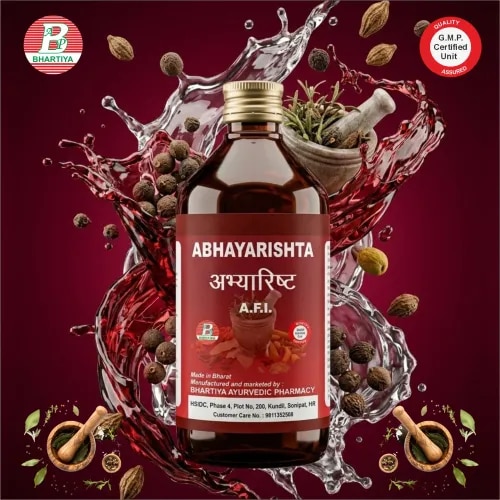
"name": "ABHYARISHTA",
"description": " \n ABHYARISHTA\n\n\n\nProduct Identification\nGeneric Name: Abhyarishta \nType: Ayurvedic Polyherbal Formulation\nPrimary Indication Area: Primarily used as a mild laxative for chronic constipation, and also indicated in hemorrhoids (piles), abdominal bloating, and indigestion-related bowel irregularities.\n\nTherapeutic Indications: \n•\tChronic constipation (mild to moderate laxative action) \n•\tHemorrhoids (Arsha / piles)—especially when associated with constipation and straining \n•\tIndigestion (Agnimandya) \n•\tAbdominal bloating and gas (flatulence) \n•\tGastrointestinal sluggishness / irregular bowel movements \n•\tGrahani (IBS-like conditions)—support in malabsorption and unstable digestion \n•\tLoss of appetite related to poor digestion \n•\tMild abdominal discomfort due to digestive imbalance\nKey Benefits\n•\tNatural bowel regulation – helps relieve constipation by promoting gentle, regular bowel movements \n•\tImproves digestion (Agni support) – enhances digestive fire and reduces heaviness after meals \n•\tReduces abdominal bloating and gas – helps ease discomfort caused by indigestion and fermentation \n•\tSupports hemorrhoids management – by reducing straining and improving stool consistency \n•\tDetoxifying action – helps clear accumulated waste (Ama) from the digestive tract \n•\tMild and gradual action – suitable for long-term digestive support compared to harsh laxatives \n•\tImproves appetite indirectly – by correcting sluggish digestion \n•\tBalances gut function – supports overall intestinal tone and regularity\nFORMULA \nEach part contains:\nHaritaki \t4.800 kg\nDraksha\t2.400 kg \nVidanga\t480 g\nMadhuka Kusum \t480 g\nWater\t49.152 L reduced to 12.288 L\nGuda\t4.800 kg \nGokshura\t96 g\nTrivrit\t96 g\nDhaniya\t96 g\nIndra Varuni\t96 g\nChavya\t96 g\nMishreya \t96 g\nSunthi \t96 g\nDanti \t96 g\nSalmali \t96 g\n\n\n\n\n\n\n\n\nIngredients:\n1.\tHaritaki \nBotanical Name: Terminalia chebula\n•\tRasa: Pancha rasa (except Lavana), Kashaya Pradhan \n•\tGuna: Laghu, Ruksha \n•\tVirya: Ushna \n•\tVipaka: Madhura \n•\tPrabhava: Anulomana, Tridoshahara \nMechanism of Action \n•\tRegulates Apana Vata to ensure proper downward movement of stool \n•\tSoftens hardened faecal matter by increasing intestinal lubrication \n•\tEnhances peristaltic movement without causing irritation \n•\tClears accumulated Ama from colon and digestive tract \n•\tSupports long-term bowel regularity and colon tone restoration \n\n2. Draksha (Vitis vinifera)\n•\tRasa: Madhura, Kashaya \n•\tGuna: Guru, Snigdha \n•\tVirya: Sheeta \n•\tVipaka: Madhura \n•\tPrabhava: Mridu Virechana, Rasayana \nMechanism of Action \n•\tIncreases water content in intestinal lumen, softening stool consistency \n•\tProvides natural bulk and lubrication for smoother bowel evacuation \n•\tSoothes inflamed mucosa and reduces irritation in GI tract \n•\tHelps reduce burning sensation associated with hyperacidity or constipation \n•\tSupports gentle cleansing without disturbing gut flora balance \n\n3. Vidanga Embelia ribes)\n•\tRasa: Katu, Kashaya \n•\tGuna: Laghu, Ruksha \n•\tVirya: Ushna \n•\tVipaka: Katu \n•\tPrabhava: Krimighna \nMechanism of Action \n•\tEliminates intestinal parasites that disrupt digestion and absorption \n•\tReduces microbial imbalance responsible for fermentation and gas formation \n•\tEnhances digestive enzyme activity by reducing Ama load \n•\tImproves intestinal cleanliness leading to better nutrient absorption \n•\tRestores healthy gut ecology by suppressing pathogenic organisms \n\n4. Madhuka Kusum \nBotanical Name: Madhuca longifolia\n•\tRasa: Madhura \n•\tGuna: Guru, Snigdha \n•\tVirya: Sheeta \n•\tVipaka: Madhura \n•\tPrabhava: Pittashamak, Varnya \nMechanism of Action \n•\tCoats and protects gastric and intestinal mucosa from irritation \n•\tReduces excess gastric acid secretion and inflammatory response \n•\tPromotes regeneration of damaged gut epithelial lining \n•\tImproves digestion by reducing burning and hypersensitivity in gut \n•\tStabilizes digestive tract environment for smoother functioning \n\n5. Gokshura \nBotanical Name: Tribulus terrestris\n•\tRasa: Madhura, Tikta \n•\tGuna: Guru, Snigdha \n•\tVirya: Sheeta \n•\tVipaka: Madhura \n•\tPrabhava: Mutrala, Balya \nMechanism of action \n•\tSupports elimination of metabolic waste through urinary excretion pathways \n•\tReduces systemic inflammation that indirectly affects digestion \n•\tHelps maintain electrolyte and fluid balance influencing bowel consistency \n•\tImproves tissue nourishment, indirectly strengthening gut function \n•\tSupports detoxification by reducing toxin recirculation in system \n\n6. Trivrit \nBotanical Name: Operculina turpethum\n•\tRasa: Katu, Tikta \n•\tGuna: Laghu, Ruksha \n•\tVirya: Ushna \n•\tVipaka: Katu \n•\tPrabhava: Prabal Virechana \nMechanism of action \n•\tStrongly stimulates intestinal motility leading to purgation \n•\tActivates peristalsis to clear impacted faecal matter \n•\tBreaks down deep-seated Ama accumulation in lower GI tract \n•\tReduces chronic Vata obstruction causing constipation \n•\tFacilitates complete bowel evacuation in resistant cases \n\n7. Dhaniya (Coriander) \nBotanical Name: Coriandrum sativum\n•\tRasa: Madhura, Tikta, Kashaya \n•\tGuna: Laghu, Snigdha \n•\tVirya: Sheeta \n•\tVipaka: Madhura \n•\tPrabhava: Shoolahara \nMechanism of action \n•\tRelaxes intestinal smooth muscles reducing spasms and cramping \n•\tInhibits excessive gas formation in intestines \n•\tEnhances secretion of digestive enzymes in a balanced manner \n•\tCalms irritated gut lining and reduces inflammation \n•\tSupports smooth digestion without excessive heat or irritation \n\n8. Indra Varuni \nBotanical Name: Citrullus colocynthis\n•\tRasa: Tikta, Katu \n•\tGuna: Laghu, Ruksha \n•\tVirya: Ushna \n•\tVipaka: Katu \n•\tPrabhava: Tikshna Virechana \nMechanism of action \n•\tStimulates strong intestinal contractions for evacuation \n•\tClears obstructed bowel passages in chronic constipation \n•\tPromotes detoxification by inducing purgation of accumulated waste \n•\tReduces intestinal stagnation and heaviness \n•\tActs on deeper intestinal channels for cleansing action \n\n9. Chavya \nBotanical Name: Piper retrofractum\n•\tRasa: Katu \n•\tGuna: Laghu, Ruksha \n•\tVirya: Ushna \n•\tVipaka: Katu \n•\tPrabhava: Deepana, Pachana \nMechanism of action\n•\tStimulates gastric secretions and digestive enzyme release \n•\tEnhances breakdown of heavy and undigested food \n•\tImproves intestinal motility and absorption efficiency \n•\tReduces Ama accumulation by accelerating metabolism \n•\tStrengthens Agni for sustained digestive performance \n\n10. Mishreya (Fennel) \nBotanical Name: Foeniculum vulgare\n•\tRasa: Madhura \n•\tGuna: Laghu, Snigdha \n•\tVirya: Sheeta \n•\tVipaka: Madhura \n•\tPrabhava: Shoolahara \nMechanism of action \n•\tRelaxes intestinal muscles to relieve gas and bloating \n•\tPrevents excessive fermentation in gut lumen \n•\tEnhances bile flow supporting fat digestion \n•\tReduces colic pain and abdominal discomfort \n•\tPromotes smooth and non-irritating digestion \n\n11. Sunthi \nBotanical Name: Zingiber officinale\n•\tRasa: Katu \n•\tGuna: Laghu, Ruksha \n•\tVirya: Ushna \n•\tVipaka: Madhura \n•\tPrabhava: Ama Pachana \nMechanism of action \n•\tActivates Agni leading to improved digestion and metabolism \n•\tBreaks down Ama (metabolic toxins) and prevents accumulation \n•\tStimulates gastrointestinal motility and enzyme secretion \n•\tReduces gas formation by enhancing food breakdown \n•\tImproves absorption of nutrients from digested food \n\n12. Danti \nBotanical Name: Baliospermum montanum\n•\tRasa: Katu, Tikta \n•\tGuna: Laghu, Ruksha \n•\tVirya: Ushna \n•\tVipaka: Katu \n•\tPrabhava: Prabal Virechana \nMechanism of action \n•\tInduces strong purgation by stimulating intestinal secretions \n•\tClears stubborn faecal accumulation in colon \n•\tRelieves chronic constipation by activating bowel evacuation reflex \n•\tReduces deep-seated Ama and metabolic congestion \n•\tRestores bowel clearance in resistant digestive sluggishness \n\n13. Salmali \nBotanical Name: Bombax ceiba\n•\tRasa: Madhura, Kashaya \n•\tGuna: Guru, Snigdha \n•\tVirya: Sheeta \n•\tVipaka: Madhura \n•\tPrabhava: Sandhaniya \nMechanism of action\n•\tProtects and repairs intestinal mucosal lining \n•\tReduces irritation caused by strong purgative herbs \n•\tSupports stool softening through gentle lubricating effect \n•\tEnhances gut tissue strength and resilience \n•\tPromotes healing after detoxification or purgation \n\nDosage\n•\tAdults: 15–30 ml \n•\tTwice daily after meals (generally after lunch and dinner) \n•\tWith equal quantity of water (1:1 dilution is commonly recommended) \nCommon usage guidance\n•\tTake after food to reduce gastric irritation and improve digestion \n•\tCan be used regularly for constipation, indigestion, and piles-related discomfort \n•\tDuration typically varies from 2–6 weeks depending on condition severity \nImportant notes\n•\tNot recommended for self-use in pregnancy or severe diarrhea \n•\tDose may be reduced in weak digestion or sensitive individuals \n•\tStrong purgative herbs in the formulation mean long-term unsupervised use should be avoided\n\n\n\nabhayarishta, abhayarishta syrup, abhayarishta uses in hindi\nabhayarishta syrup uses, abhayarishta uses, abhayarishta ke fayde\nabhayarishta benefits in hindi, abhayarishta syrup benefits in hindi\nabhayarishta kis kaam aati hai, abhayarishta ayurvedic\nabhayarishta ayurvedic medicine, abhayarishta ayurvedic medicine uses in hindi\nabhayarishta ayurvedic syrup, abhayarishta ayurvedic syrup uses in hindi\nabhayarishta ayurvedic dawai kya kam aati hai, abhayarishta composition\nabhayarishta contents, abhayarishta composition in hindi, abhayarishta content in hindi\nabhayarishta che fayde, abhayarishta dose per day, abhayarishta dosage\nabhayarishta dose for adults, abhayarishta expiry date, abhayarishta on empty stomach\nabhayarishta for piles, abhayarishta for constipation, abhayarishta for liver\nabhayarishta fayde, abhayarishta for weight loss, abhayarishta good for piles\nabhayarishta good for liver, abhayarishta ke gun, abhayarishta hindi\nabhayarishta how to use, abhayarishta how to take, abhayarishta hindi use\nabhayarishta hamdard, abhayarishta in hindi, abhayarishta in hindi use\nabhayarishta is used for, abhayarishta indication, abhayarishta lene ka tarika\nabhayarishta lene ke fayde, abhayarishta liquid, abhayarishta liquid uses\nabhayarishta lene ka sahi tarika, abhayarishta liquid uses in hindi\nabhayarishta lene ke nuksan, abhayarishtam uses in hindi\nabhayarishtam syrup, abhayarishtam syrup uses, abhayarishtam syrup uses in hindi\ncan abhayarishta cure piles, can abhayarishta be taken daily, can abhayarishta cure constipation\ncan abhayarishta cause acidity",
"price": 189.0,
"discountamount": 94.0,
"currencycode": "INR",
"priority": 1000000,
"isfreeshipmentavailable": false,
"shipmentduration": 1,
"_keywords": null,
"isarchived": false,
"isavailable": true,
"applicationid": null,
"productindex": 154,
"imageuri": "https://productimages.withfloats.com/actual/6a561f6a16003965fcd6095f.jpg",
"tileimageuri": "https://productimages.withfloats.com/tile/6a561f6a16003965fcd6095f.jpg",
"images": null,
"totalqueries": 0,
"gpid": null,
"groupproductid": null,
"createdon": "2026-07-14T11:37:12.717Z",
"updatedon": "2026-07-14T11:37:12.717Z",
"buyonlinelink": null,
"producturl": "http://WWW.BHARTIYAAYURVEDICPHARMACY.COM//abhyarishta/154",
"availableunits": -1.0,
"iscodavailable": true,
"isprepaidonlineavailable": true,
"maxcodorders": -1,
"maxprepaidonlineorders": -1,
"uniquepaymenturl": null,
"brandname": "Bakula Fort",
"category": "ABHYARISHTA 450 ML X 40",
"tags": [],
"variants": false,
"keyspecification": null,
"otherspecifications": null,
"pickupaddressreferenceid": null,
"paymenttype": "AssuredPurchase",
"producttype": "products",
"hsncode": null,
"gstslab": 0.0,
"isnotforsale": false
},
{
"_id": "6a54d89bb0195150594aa5d3",
"fptag": "BHARTIYEAYURVEDICPHARMACY",
"merchantname": null,
"customwidgets": null,
"externalsourceid": null,
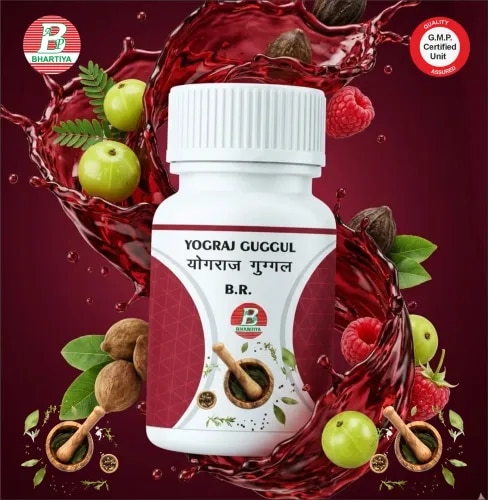
"name": "YOGRAJ GUGGUL",
"description": "\n YOGRAJ GUGGUL\n\nProduct Identification \n•\tGeneric Name: Yograj Guggul\n•\tType: Ayurvedic Polyherbal Formulation\n•\tPrimary Indication Area: Chronic joint pain and stiffness (Sandhivata / osteoarthritis-type conditions) \n•\t Especially when pain is caused by Vata imbalance (dryness, cracking, stiffness, movement restriction)\nTherapeutic Indications: Traditionally used for:\n•\tOsteoarthritis (Sandhivata) – joint pain, stiffness, restricted movement \n•\tRheumatoid arthritis-like conditions (Amavata) – inflammatory joint pain and swelling \n•\tSciatica (Gridhrasi) – radiating nerve pain from back to legs \n•\tCervical and lumbar spondylosis – chronic spine pain and stiffness \n•\tGout (Vatarakta) – uric acid–related inflammatory joint disorders \n•\tChronic back and neck pain (Kati & Greeva Shoola) \n•\tGeneral musculoskeletal weakness – bones, joints, ligaments, and muscles\n\nKey Benefits:\n Relieves joint pain and stiffness \n•\tHelps reduce chronic pain in knees, hips, shoulders, and spine \nImproves joint mobility \n•\tSupports better movement in osteoarthritis and spondylosis \nReduces inflammation (traditional action) \n•\tUseful in inflammatory joint conditions like Amavata and gout \n Eases nerve pain \n•\tHelps in sciatica and radiating neuropathic pain \n Supports spine health \n•\tBeneficial in cervical and lumbar spondylosis-related discomfort \n Aids detoxification (Ama reduction in Ayurveda) \n•\tHelps improve digestion and reduce toxin accumulation linked with joint issues \nStrengthens musculoskeletal system (long-term use) \n•\tSupports bones, ligaments, and overall Vata balance\nFORMULA\nEach Tablet contains: \nChitraka \t1 part \nPippalimula\t1 part \nYavani\t1 part \nKrishna Jiraka \t1 part \nVidanga\t1 part \nAjmoda\t1 part \nSveta Jiraka\t1 part \nDevdaru \t1 part \nChavya \t1 part \nEla\t1 part \nSaindhava Lavana \t1 part \nKushta\t1 part \nRasna \t1 part \nGokshura\t1 part \nDhanyka \t1 part \nHaritaki\t1 part \nBibhitaki\t1 part \nAmalaki\t1 part \nMusta \t1 part \nSunthi \t1 part \nMaricha \t1 part \nPippali\t1 part \nTvak\t1 part \nUsira\t1 part \nYava Kshar \t1 part \nTalisa Patra \t1 part \nTejpatra\t1 part \nShudh Guggul\t1 part \nGoghrita \t1 part \n\n \nIngredients:\n1. Chitraka\n Botanical/Scientific Name: Plumbago zeylanica\n Rasa–Guna–Vīrya–Vipāka:\no Rasa: Kaṭu (Pungent)\no Guna: Laghu (Light), Rūkṣa (Dry), Tikṣṇa (Sharp)\no Vīrya: Uṣṇa (Hot)\no Vipāka: Kaṭu (Pungent)\n• Prabhāva: Deepana–Pachana (Strong digestive stimulant)\nMechanism of Action (Karma):\n• Strongly digests Ama (toxins)\n• Reduces inflammatory swelling in joints\n• Improves Agni and metabolism\n• Clears obstructed Srotas (channels) in arthritis\n\n2. Pippalimula\nBotanical/Scientific Name: Piper longum (root)\nRasa–Guna–Vīrya–Vipāka:\no Rasa: Kaṭu (Pungent)\no Guna: Laghu, Rūkṣa\no Vīrya: Uṣṇa (Hot)\no Vipāka: Kaṭu\n• Prabhāva: Deepana–Vata-Kapha Shamaka\nMechanism of Action (Karma):\n• Improves digestion of Ama\n• Reduces stiffness and heaviness in joints\n• Pacifies Vata-Kapha in musculoskeletal system\n• Supports pain reduction in chronic arthritis\n\n3. Yavani\nBotanical/Scientific Name: Trachyspermum ammi\nRasa–Guna–Vīrya–Vipāka:\no Rasa: Kaṭu, Tikta\no Guna: Laghu, Rūkṣa, Tikṣṇa\no Vīrya: Uṣṇa\no Vipāka: Kaṭu\n• Prabhāva: Vata-Kapha Shamaka\nMechanism of Action (Karma):\n• Reduces joint stiffness\n• Improves digestion and Ama clearance\n• Relieves inflammatory pain\n• Enhances joint mobility\n\n4. Krishna Jiraka\n Botanical/Scientific Name: Nigella sativa\nRasa–Guna–Vīrya–Vipāka:\no Rasa: Kaṭu, Tikta\no Guna: Laghu, Rūkṣa\no Vīrya: Uṣṇa\no Vipāka: Kaṭu\n• Prabhāva: Shothahara (Anti-inflammatory)\nMechanism of Action (Karma):\n• Reduces joint inflammation\n• Modulates immune response in arthritis\n• Decreases swelling and pain\n• Supports tissue protection\n\n5. Vidanga\n Botanical/Scientific Name: Embelia ribes\n Rasa–Guna–Vīrya–Vipāka:\no Rasa: Kaṭu, Tikta\no Guna: Laghu, Rūkṣa, Tikṣṇa\no Vīrya: Uṣṇa\no Vipāka: Kaṭu\n• Prabhāva: Krimighna (Detoxifying action)\nMechanism of Action (Karma):\n• Removes deep-seated toxins (Ama)\n• Reduces chronic inflammatory load\n• Improves Srotas cleansing\n• Supports joint healing process\n\n6. Ajmoda\n Botanical/Scientific Name: Apium leptophyllum\n Rasa–Guna–Vīrya–Vipāka:\no Rasa: Kaṭu, Tikta\no Guna: Laghu, Rūkṣa\no Vīrya: Uṣṇa\no Vipāka: Kaṭu\n• Prabhāva: Vatahara\nMechanism of Action (Karma):\n• Reduces Vata-induced pain\n• Relieves stiffness in joints\n• Improves neuromuscular function\n• Enhances circulation in affected joints\n\n7. Sveta Jiraka\n Botanical/Scientific Name: Cuminum cyminum\n Rasa–Guna–Vīrya–Vipāka:\no Rasa: Kaṭu, Tikta\no Guna: Laghu, Rūkṣa\no Vīrya: Uṣṇa\no Vipāka: Kaṭu\n• Prabhāva: Deepana\nMechanism of Action (Karma):\n• Improves digestion of Ama\n• Reduces joint heaviness\n• Supports metabolic clearance\n• Helps reduce stiffness\n\n8. Devdaru\nBotanical/Scientific Name: Cedrus deodara\nRasa–Guna–Vīrya–Vipāka:\no Rasa: Tikta, Kaṭu\no Guna: Laghu, Rūkṣa\no Vīrya: Uṣṇa\no Vipāka: Kaṭu\n• Prabhāva: Vata-Kapha Shamaka\nMechanism of Action (Karma):\n• Reduces joint pain and inflammation\n• Improves blood circulation in joints\n• Relieves stiffness in spine disorders\n• Useful in sciatica-like pain\n\n9. Chavya\nBotanical/Scientific Name: Piper chaba\nRasa–Guna–Vīrya–Vipāka:\no Rasa: Kaṭu\no Guna: Laghu, Rūkṣa\no Vīrya: Uṣṇa\no Vipāka: Kaṭu\n• Prabhāva: Deepana\nMechanism of Action (Karma):\n• Enhances digestion of Ama\n• Reduces Kapha-related heaviness\n• Improves joint mobility\n• Reduces chronic inflammatory pain\n\n10. Ela\nBotanical/Scientific Name: Elettaria cardamomum\nRasa–Guna–Vīrya–Vipāka:\no Rasa: Madhura, Tikta, Kaṭu\no Guna: Laghu, Snigdha\no Vīrya: Śīta\no Vipāka: Madhura\n• Prabhāva: Hridya (cardio-protective, soothing)\nMechanism of Action (Karma):\n• Improves circulation\n• Reduces inflammatory stress\n• Supports mild analgesic effect\n• Enhances drug absorption\n\n11. Saindhava Lavana\nBotanical/Scientific Name: Rock salt\nRasa–Guna–Vīrya–Vipāka:\no Rasa: Lavaṇa (Salty)\no Guna: Snigdha, Sukshma\no Vīrya: Anuṣṇa-Śīta\no Vipāka: Madhura\n• Prabhāva: Yogavahi\nMechanism of Action (Karma):\n• Enhances penetration of medicines\n• Improves Srotas opening\n• Reduces stiffness\n• Supports pain relief\n12. Kushta\nBotanical/Scientific Name: Saussurea lappa\nRasa–Guna–Vīrya–Vipāka:\no Rasa: Tikta, Kaṭu\no Guna: Laghu, Rūkṣa, Tikṣṇa\no Vīrya: Uṣṇa\no Vipāka: Kaṭu\n• Prabhāva: Vata-Kapha Shamaka\nMechanism of Action (Karma):\n• Reduces deep-seated joint pain\n• Improves nerve-related pain (sciatica-like)\n• Reduces stiffness and inflammation\n• Enhances circulation in affected joints\n\n13. Rasna\nBotanical/Scientific Name: Pluchea lanceolata\nRasa–Guna–Vīrya–Vipāka:\no Rasa: Tikta, Kaṭu\no Guna: Laghu, Rūkṣa\no Vīrya: Uṣṇa\no Vipāka: Kaṭu\n• Prabhāva: Vata-Shamaka\nMechanism of Action (Karma):\n• Strong anti-arthritic action\n• Reduces joint swelling and stiffness\n• Relieves chronic musculoskeletal pain\n• Improves mobility in spondylosis\n\n14. Gokshura\n Botanical/Scientific Name: Tribulus terrestris\nRasa–Guna–Vīrya–Vipāka:\no Rasa: Madhura, Tikta\no Guna: Guru (Heavy), Snigdha\no Vīrya: Śīta\no Vipāka: Madhura\n• Prabhāva: Balya (strengthening)\nMechanism of Action (Karma):\n• Strengthens bones and joints\n• Improves ligament and tendon health\n• Reduces degenerative weakness\n• Supports long-term joint stability\n\n15. Dhanyaka\nBotanical/Scientific Name: Coriandrum sativum\nRasa–Guna–Vīrya–Vipāka:\no Rasa: Madhura, Tikta\no Guna: Laghu, Snigdha\no Vīrya: Śīta\no Vipāka: Madhura\n• Prabhāva: Deepana-Pachana (mild)\nMechanism of Action (Karma):\n• Reduces Ama formation\n• Soothes inflammatory conditions\n• Improves digestion in chronic arthritis\n• Supports detoxification\n\n16. Haritaki\nBotanical/Scientific Name: Terminalia chebula\nRasa–Guna–Vīrya–Vipāka:\no Rasa: Kaṣāya, Amla, Madhura, Tikta, Kaṭu\no Guna: Laghu, Rūkṣa\no Vīrya: Uṣṇa\no Vipāka: Madhura\n• Prabhāva: Anulomana\nMechanism of Action (Karma):\n• Regulates Vata movement\n• Reduces Ama accumulation\n• Supports detoxification in chronic disease\n• Reduces inflammatory swelling\n\n17. Bibhitaki\nBotanical/Scientific Name: Terminalia bellirica\nRasa–Guna–Vīrya–Vipāka:\no Rasa: Kaṣāya\no Guna: Laghu, Rūkṣa\no Vīrya: Uṣṇa\no Vipāka: Madhura\n• Prabhāva: Kapha-Pitta Shamaka \nMechanism of Action (Karma):\n• Reduces joint inflammation\n• Clears toxins from tissues\n• Improves metabolic balance\n• Supports chronic arthritis recovery\n\n18. Amalaki\nBotanical/Scientific Name: Emblica officinalis\nRasa–Guna–Vīrya–Vipāka:\no Rasa: Amla, Madhura, Tikta, Kaṣāya\no Guna: Laghu, Rūkṣa\no Vīrya: Śīta\no Vipāka: Madhura\n• Prabhāva: Rasayana\nMechanism of Action (Karma):\n• Protects cartilage from degeneration\n• Reduces oxidative stress in joints\n• Strengthens bones and connective tissue\n• Supports long-term joint health\n\n19. Musta\nBotanical/Scientific Name: Cyperus rotundus\nRasa–Guna–Vīrya–Vipāka:\no Rasa: Tikta, Kaṭu\no Guna: Laghu, Rūkṣa\no Vīrya: Śīta\no Vipāka: Kaṭu\n• Prabhāva: Pachana\nMechanism of Action (Karma):\n• Reduces Ama formation\n• Improves digestion and metabolism\n• Reduces inflammatory swelling\n• Supports detoxification in arthritis\n\n20. Sunthi\nBotanical/Scientific Name: Zingiber officinale\nRasa–Guna–Vīrya–Vipāka:\no Rasa: Kaṭu\no Guna: Laghu, Snigdha\no Vīrya: Uṣṇa\no Vipāka: Madhura\n• Prabhāva: Ama-Pachana\nMechanism of Action (Karma):\n• Reduces stiffness and pain\n• Improves circulation in joints\n• Digests Ama and toxins\n• Anti-inflammatory action\n\n21. Maricha\nBotanical/Scientific Name: Piper nigrum\nRasa–Guna–Vīrya–Vipāka:\no Rasa: Kaṭu\no Guna: Laghu, Rūkṣa, Tikṣṇa\no Vīrya: Uṣṇa\no Vipāka: Kaṭu\n• Prabhāva: Yogavahi\nMechanism of Action (Karma):\n• Enhances bioavailability of herbs\n• Reduces Kapha and Ama\n• Improves joint circulation\n• Reduces chronic inflammation\n\n22. Pippali\nBotanical/Scientific Name: Piper longum\nRasa–Guna–Vīrya–Vipāka:\no Rasa: Kaṭu\no Guna: Laghu, Snigdha\no Vīrya: Uṣṇa\no Vipāka: Madhura\n• Prabhāva: Rasayana\nMechanism of Action (Karma):\n• Rejuvenates joint tissues\n• Reduces Vata-Kapha imbalance\n• Improves Agni and metabolism\n• Supports chronic pain relief\n\n23. Tvak\nBotanical/Scientific Name: Cinnamomum zeylanicum\nRasa–Guna–Vīrya–Vipāka:\no Rasa: Kaṭu, Tikta, Madhura\no Guna: Laghu, Rūkṣa\no Vīrya: Uṣṇa\no Vipāka: Kaṭu\n• Prabhāva: Shothahara\nMechanism of Action (Karma):\n• Reduces inflammation in joints\n• Improves blood circulation\n• Relieves pain and stiffness\n• Supports metabolic balance\n\n24. Usira\nBotanical/Scientific Name: Vetiveria zizanioides\nRasa–Guna–Vīrya–Vipāka:\no Rasa: Tikta, Madhura\no Guna: Laghu, Snigdha\no Vīrya: Śīta\no Vipāka: Madhura\n• Prabhāva: Pitta Shamaka\nMechanism of Action (Karma):\n• Reduces burning and inflammation\n• Soothes joint tissues\n• Detoxifies blood\n• Supports cooling anti-inflammatory action\n25. Yava Kshara\nBotanical/Scientific Name: Alkali preparation from Hordeum vulgare (barley)\nRasa–Guna–Vīrya–Vipāka:\no Rasa: Katu, Lavana\no Guna: Tikshna, Sukshma, Laghu\no Vīrya: Ushna\no Vipāka: Katu\n• Prabhāva: Lekhana (scraping action)\nMechanism of Action (Karma):\n• Removes obstruction in Srotas (channels)\n• Reduces stiffness due to Ama accumulation\n• Improves mobility in joints\n• Helps in metabolic clearance of toxins\n\n26. Talisa Patra\nBotanical/Scientific Name: Abies webbiana (or related species)\nRasa–Guna–Vīrya–Vipāka:\no Rasa: Katu, Tikta\no Guna: Laghu, Rūkṣa\no Vīrya: Ushna\no Vipāka: Katu\n• Prabhāva: Kapha-Vata Shamaka\nMechanism of Action (Karma):\n• Reduces chronic pain and stiffness\n• Improves respiratory and metabolic function\n• Helps in Ama digestion\n• Supports anti-inflammatory activity\n\n27. Tejpatra\nBotanical/Scientific Name: Cinnamomum tamala\nRasa–Guna–Vīrya–Vipāka:\no Rasa: Katu, Tikta\no Guna: Laghu, Rūkṣa\no Vīrya: Ushna\no Vipāka: Katu\n• Prabhāva: Deepana\nMechanism of Action (Karma):\n• Improves Agni and digestion\n• Reduces Ama-related joint stiffness\n• Enhances circulation\n• Helps in pain reduction\n\n28. Shuddha Guggul\n• Botanical/Scientific Name: Commiphora mukul (purified resin)\n• Rasa–Guna–Vīrya–Vipāka:\no Rasa: Tikta, Katu\no Guna: Laghu, Rūkṣa, Sara\no Vīrya: Ushna\no Vipāka: Katu\n• Prabhāva: Yogavahi, Lekhana\nMechanism of Action (Karma):\n• Major anti-inflammatory action on joints\n• Reduces swelling and synovial inflammation\n• Clears lipid and toxin deposits in tissues\n• Improves joint mobility and lubrication\n\n29. Goghrita\nBotanical/Scientific Name: Cow ghee (Clarified butter from cow milk)\nRasa–Guna–Vīrya–Vipāka:\no Rasa: Madhura\no Guna: Snigdha, Guru, Mridu\no Vīrya: Shita\no Vipāka: Madhura\n• Prabhāva: Yogavahi, Rasayana\nMechanism of Action (Karma):\n• Acts as carrier for deep tissue delivery of herbs\n• Nourishes Asthi (bone) and Majja (marrow)\n• Reduces dryness and Vata aggravation\n• Enhances long-term tissue healing\n\nDosage of Triphala Guggul\n•\tForm: Tablet / Capsule \n•\tDose: 1–2 tablets (250–500 mg each) \n•\tFrequency: Twice daily (BID) \n•\tTiming: After food \n•\tAnupana: Lukewarm water.\n\n\nyograj guggulu, yograj guggulu benefits in hindi, yograj guggulu tablet uses in hindi\nyograj guggulu uses, yograj guggulu uses in hindi, yograj guggulu ke fayde\nyograj guggulu kis kaam aata hai, yograj guggulu benefits, yograj guggulu ingredients\nyograj guggulu ayurvedic medicine uses, yograj guggulu ayurvedic medicine\nyograj guggulu amazon, yograj guggul botanical name, yograj guggulu composition\nyograj guggulu dose per day, yograj guggulu dose, yograj guggul easy ayurveda\nwhat is yograj guggul, what is yograj guggulu, yograj guggul use, how to take yograj guggulu\nyograj guggulu easy ayurveda, yograj guggulu uses easy ayurveda\nyograj guggulu for joint pain, yograj guggulu for piles, yograj guggulu flipkart\nyograj guggulu for constipation, yograj guggulu how to use\nyograj guggulu hamdard, yograj guggulu how to take\nyograj guggul ingredients, yograj guggul in hindi, yograj guggul is used for\nyograj guggul image, yograj guggulu indications, yograj guggulu is used for\nyograj guggul ke fayde in hindi\nyograj guggul ke fayde\nyograj guggul kis kam aati hai\nyograj guggul khane ke fayde\nyograj guggul ke fayde aur nuksan\nyograj guggulu lene ke fayde\nyograj guggulu maha uses in hindi\nyograj guggulu maha tablet uses in hindi\nyograj guggulu medicine\nyograj guggulu maha uses\nyograj guggulu main ingredients\nyograj guggul netmeds\nyograj guggulu nagarjuna\nyograj guggulu online\nyograj guggul powder\nyograj guggul patanjali uses\nyograj guggul uses\nyograj guggul use in hindi\nyograj guggulu uses in hindi price\nyograj guggulu uses hindi\nyograj guggulu uses in english\nhow to consume yograj guggulu",
"price": 240.0,
"discountamount": 120.0,
"currencycode": "INR",
"priority": 1000000,
"isfreeshipmentavailable": false,
"shipmentduration": 1,
"_keywords": null,
"isarchived": false,
"isavailable": true,
"applicationid": null,
"productindex": 153,
"imageuri": "https://productimages.withfloats.com/actual/6a54d89de9337cfefeb42897.jpg",
"tileimageuri": "https://productimages.withfloats.com/tile/6a54d89de9337cfefeb42897.jpg",
"images": null,
"totalqueries": 0,
"gpid": null,
"groupproductid": null,
"createdon": "2026-07-13T12:22:51.679Z",
"updatedon": "2026-07-13T12:22:51.679Z",
"buyonlinelink": null,
"producturl": "http://WWW.BHARTIYAAYURVEDICPHARMACY.COM//yograj-guggul/153",
"availableunits": -1.0,
"iscodavailable": true,
"isprepaidonlineavailable": true,
"maxcodorders": -1,
"maxprepaidonlineorders": -1,
"uniquepaymenturl": null,
"brandname": "Bakula Fort",
"category": "YOGRAJ GUGGUL 100 gm X 40",
"tags": [],
"variants": false,
"keyspecification": null,
"otherspecifications": null,
"pickupaddressreferenceid": null,
"paymenttype": "AssuredPurchase",
"producttype": "products",
"hsncode": null,
"gstslab": 0.0,
"isnotforsale": false
},
{
"_id": "6a547e7778188a142c486bcf",
"fptag": "BHARTIYEAYURVEDICPHARMACY",
"merchantname": null,
"customwidgets": null,
"externalsourceid": null,
"name": "TRAYODASANG GUGGUL",
"description": "\n TRAYODASANG GUGGUL\n\nProduct Identification \n•\tGeneric Name: Trayodasang Guggulu \n•\tType: Ayurvedic Polyherbal Formulation\n•\tPrimary Indication Area: Musculoskeletal and joint health support\n•\tTherapeutic Indications: Used in Ayurveda for conditions associated with Vāta imbalance, including:\n•\tJoint pain and stiffness \n•\tNeuromuscular weakness \n•\tDegenerative joint conditions \n•\tInflammatory musculoskeletal disorders \n•\tSupport in recovery from musculoskeletal injury and nerve-related discomfort\nKey Benefits:\n•\tJoint Pain Relief: Helps reduce discomfort associated with Vāta imbalance in joints and muscles\n•\tReduces Stiffness: Supports improved flexibility and mobility in stiff joints\n•\tNerve & Musculoskeletal Support: Traditionally used to support neuromuscular function and strength Anti-Inflammatory Action (Traditional): Helps manage swelling and inflammatory conditions in joints and tissues\n•\tSupports Degenerative Conditions: Used in Ayurveda for age-related joint wear and musculoskeletal weakness\n•\tImproves Movement Comfort: Aids in smoother movement by balancing Vāta in the body\n•\tRecovery Support: Traditionally used as supportive therapy in musculoskeletal injury and weakness\n•\tStrengthens Body Tissues: Supports overall bone, joint, and connective tissue health\n•\tVāta Balancing Effect: Helps restore functional balance in Vāta-dominant disorders\n•\tGeneral Mobility Support: Promotes ease of movement and physical stability\nFORMULA\nEach Tablet contains: \nBaboola\t1 part\nAshvagandha\t1 part\nHapsua\t1 part\nGuduchi\t1 part\nShatavari\t1 part\nGokshura\t1 part\nVrddhadarka\t1 part\nRasna\t1 part\nSatahva\t1 part\nSati\t1 part\nYavani\t1 part\nSunthi \t1 part\nShudh Guggul\t1 part\nGoghrita\t1 part\n\n\n\n\n\n\n\nIngredients:\n1. Babool\n•Botanical/Scientific Name: Vachellia nilotica\n• Rasa–Guna–Vīrya–Vipāka:\n•\tRasa: Kaṣāya (Astringent) \n•\tGuna: Rūkṣa (Dry), Laghu (Light) \n•\tVīrya: Śīta (Cooling) \n•\tVipāka: Kaṭu (Pungent) \n• Prabhāva: Sandhāna (Supports tissue binding and healing)\nMechanism of Action (Karma):\n•\tŚotha-Hara Karma: Helps reduce inflammation and swelling in musculoskeletal tissues\n•\tSandhāna Karma: Promotes tissue repair and supports structural healing\n•\tRakta-Stambhana Karma: Helps control minor bleeding and supports vascular stability\n•\tKapha-Pitta Śāmaka Karma: Balances Kapha and Pitta involved in inflammatory conditions\n\n2. Ashwagandha\n• Botanical/Scientific Name: Withania somnifera\n• Rasa–Guna–Vīrya–Vipāka:\n•\tRasa: Tikta (Bitter), Kaṣāya (Astringent) \n•\tGuna: Laghu (Light), Snigdha (Oily) \n•\tVīrya: Uṣṇa (Hot) \n•\tVipāka: Madhura (Sweet) \n• Prabhāva: Balya–Rasāyana (Strength-promoting and rejuvenating herb)\nMechanism of Action (Karma):\n•\tBṛṃhaṇa Karma: Promotes tissue nourishment, muscle strength, and recovery from weakness.\n• Vāta-Hara Karma: Reduces Vāta-related pain, stiffness, and neuromuscular discomfort\n• Rasāyana Karma: Supports long-term rejuvenation of bones, muscles, and nerves\n• Balya Karma: Improves physical strength, stamina, and functional recovery\n\n3. Hapusa\n• Botanical/Scientific Name: Juniperus communis\n• Rasa–Guna–Vīrya–Vipāka:\n•\tRasa: Tikta (Bitter), Kaṭu (Pungent) \n•\tGuna: Laghu (Light), Rūkṣa (Dry), Tīkṣṇa (Sharp) \n•\tVīrya: Uṣṇa (Hot) \n•\tVipāka: Kaṭu (Pungent) \n• Prabhāva: Śothaghna (Anti-inflammatory action)\nMechanism of Action (Karma):\n•\tŚotha-Hara Karma: Reduces swelling and inflammatory conditions in joints and tissues\n• Vedana-Hara Karma: Helps relieve pain and discomfort in musculoskeletal disorders\n• Āma-Pācana Karma: Assists in digestion of metabolic toxins contributing to inflammation\n• Srotoshodhana Karma: Clears obstructed channels, improving circulation and healing\n4. Guduchi\n• Botanical/Scientific Name: Tinospora cordifolia\n• Rasa–Guna–Vīrya–Vipāka:\n•\tRasa: Tikta (Bitter), Kaṣāya (Astringent) \n•\tGuna: Laghu (Light), Snigdha (Unctuous) \n•\tVīrya: Uṣṇa (Hot) \n•\tVipāka: Madhura (Sweet) \n• Prabhāva: Rasāyana (Deep rejuvenative and immunomodulatory herb)\nMechanism of Action (Karma):\n•\tRasāyana Karma: Promotes tissue regeneration, vitality, and long-term musculoskeletal health\n• Vāta-Pitta-Kapha Śāmaka Karma: Balances all three Doṣas, especially in inflammatory and degenerative conditions\n• Śotha-Hara Karma: Reduces inflammation, swelling, and tissue irritation\n• Āma-Pācana Karma: Helps detoxify and metabolize accumulated Āma contributing to joint disorders\n\n5. Shatavari\n• Botanical/Scientific Name: Asparagus racemosus\n• Rasa–Guna–Vīrya–Vipāka:\n•\tRasa: Madhura (Sweet), Tikta (Bitter) \n•\tGuna: Guru (Heavy), Snigdha (Unctuous) \n•\tVīrya: Śīta (Cooling) \n•\tVipāka: Madhura (Sweet) \n• Prabhāva: Stanyajanana–Rasāyana (Nourishing and rejuvenating tonic herb)\nMechanism of Action (Karma):\n•\tBṛṃhaṇa Karma: Supports tissue building, nourishment, and strength\n• Rasāyana Karma: Promotes regeneration and rejuvenation of bones and connective tissues\n• Pitta-Śāmaka Karma: Reduces heat, inflammation, and burning sensations in tissues\n• Balya Karma: Improves strength, stamina, and recovery capacity\n8. Rasna\n• Botanical/Scientific Name: Pluchea lanceolata\n• Rasa–Guna–Vīrya–Vipāka:\n•\tRasa: Tikta (Bitter), Kaṭu (Pungent) \n•\tGuna: Laghu (Light), Rūkṣa (Dry), Tīkṣṇa (Sharp) \n•\tVīrya: Uṣṇa (Hot) \n•\tVipāka: Kaṭu (Pungent) \n• Prabhāva: Vāta-Kapha Hara (Special action on musculoskeletal and joint disorders)\nMechanism of Action (Karma):\n•\tVāta-Śāmaka Karma: Reduces pain, stiffness, and nerve-related discomfort\n• Śotha-Hara Karma: Helps reduce inflammation and swelling in joints and tissues\n• Vedana-Hara Karma: Relieves musculoskeletal pain and tenderness\n• Srotoshodhana Karma: Clears obstructed channels, improving circulation and mobility\n\n9. Satahva (Shatapushpa)\n• Botanical/Scientific Name: Anethum sowa\n• Rasa–Guna–Vīrya–Vipāka:\n•\tRasa: Kaṭu (Pungent), Tikta (Bitter) \n•\tGuna: Laghu (Light), Snigdha (Oily) \n•\tVīrya: Uṣṇa (Hot) \n•\tVipāka: Madhura (Sweet) \n• Prabhāva: Deepana–Pācana (Improves digestion and metabolism)\nMechanism of Action (Karma):\n•\tĀma-Pācana Karma: Helps digest metabolic toxins that contribute to joint stiffness and inflammation\n• Vāta-Anulomana Karma: Supports proper movement of Vāta, reducing pain and obstruction\n• Śotha-Hara Karma: Reduces mild swelling and tissue congestion\n• Srotoshodhana Karma: Improves channel clearance and nutrient flow to tissues\n10. Sati\n• Botanical/Scientific Name: Hedychium spicatum\n• Rasa–Guna–Vīrya–Vipāka:\n•\tRasa: Tikta (Bitter), Kaṭu (Pungent) \n•\tGuna: Laghu (Light), Rūkṣa (Dry), Tīkṣṇa (Sharp) \n•\tVīrya: Uṣṇa (Hot) \n•\tVipāka: Kaṭu (Pungent) \n• Prabhāva: Vāta-Kapha Hara (Special action in pain and inflammatory conditions)\nMechanism of Action (Karma):\n•\tVāta-Śāmaka Karma: Reduces nerve pain, stiffness, and muscular tightness\n• Śotha-Hara Karma: Helps reduce swelling and inflammatory responses\n• Vedana-Hara Karma: Alleviates musculoskeletal pain and discomfort\n• Srotoshodhana Karma: Clears obstructed channels and improves tissue flow\n\n11. Yavani\n• Botanical/Scientific Name: Trachyspermum ammi\n• Rasa–Guna–Vīrya–Vipāka:\n•\tRasa: Kaṭu (Pungent), Tikta (Bitter) \n•\tGuna: Laghu (Light), Rūkṣa (Dry), Tīkṣṇa (Sharp) \n•\tVīrya: Uṣṇa (Hot) \n•\tVipāka: Kaṭu (Pungent) \n• Prabhāva: Deepana–Pācana (Strong digestive and metabolic stimulant)\nMechanism of Action (Karma):\n•\tĀma-Pācana Karma: Helps eliminate metabolic toxins contributing to joint stiffness and inflammation\n• Vāta-Anulomana Karma: Regulates Vāta movement, reducing pain and obstruction\n• Śotha-Hara Karma: Assists in reducing mild swelling and tissue inflammation\n• Srotoshodhana Karma: Improves microchannel clearance and nutrient circulation\n12. Sunthi (Dry Ginger)\n• Botanical/Scientific Name: Zingiber officinale\n• Rasa–Guna–Vīrya–Vipāka:\n•\tRasa: Kaṭu (Pungent) \n•\tGuna: Laghu (Light), Snigdha (Slightly unctuous), Tīkṣṇa (Sharp) \n•\tVīrya: Uṣṇa (Hot) \n•\tVipāka: Madhura (Sweet) \n• Prabhāva: Āma-Pācana (Strong toxin-digesting and bio-clearing action)\nMechanism of Action (Karma):\n•\tĀma-Pācana Karma: Digests metabolic toxins responsible for joint pain, stiffness, and inflammation\n• Vāta-Kapha Hara Karma: Balances Vāta and Kapha, reducing pain, heaviness, and swelling\n• Śotha-Hara Karma: Helps reduce inflammatory swelling in muscles and joints\n• Vedana-Hara Karma: Alleviates musculoskeletal pain and discomfort\n\n13. Shuddha Guggul\n• Botanical/Scientific Name: Commiphora mukul\n• Rasa–Guna–Vīrya–Vipāka:\n•\tRasa: Tikta (Bitter), Kaṭu (Pungent), Kaṣāya (Astringent) \n•\tGuna: Laghu (Light), Rūkṣa (Dry), Tīkṣṇa (Sharp) \n•\tVīrya: Uṣṇa (Hot) \n•\tVipāka: Kaṭu (Pungent) \n• Prabhāva: Lekhana (Scraping action on pathological accumulations)\nMechanism of Action (Karma):\n•\tVāta-Kapha Hara Karma: Reduces pain, stiffness, and swelling in joints and muscles\n• Śotha-Hara Karma: Helps control inflammation in musculoskeletal conditions\n• Lekhana Karma: Removes deep-seated toxins and pathological deposits from tissues\n• Asthi-Sandhi Bala Karma: Supports strength and stability of bones and joints\n• Srotoshodhana Karma: Clears blocked channels and improves tissue nutrition\n14. Goghrita\n• Botanical/Scientific Name: ghee\n• Rasa–Guna–Vīrya–Vipāka:\n•\tRasa: Madhura (Sweet) \n•\tGuna: Snigdha (Unctuous), Guru (Heavy), Mridu (Soft) \n•\tVīrya: Śīta (Cooling) \n•\tVipāka: Madhura (Sweet) \n• Prabhāva: Yogavāhī & Rasāyana (Enhances action of herbs and promotes tissue nourishment)\nMechanism of Action (Karma):\n•\tYogavāhī Karma: Enhances absorption, potency, and delivery of co-administered herbal ingredients\n• Rasāyana Karma: Promotes rejuvenation and nourishment of bones, nerves, and connective tissues\n• Vāta-Pitta Śāmaka Karma: Balances Vāta and Pitta, reducing pain, inflammation, and burning sensations\n• Bṛṃhaṇa Karma: Supports tissue building, strength, and recovery in degenerative conditions\n• Smṛti & Medhya Support: Traditionally supports nervous system function and mental clarity\n\nDosage of Trayodasang Guggulu\n• Adult Dose: 250 mg – 1 g per dose\n• Frequency: 2–3 times daily\n• Common Use: 1–2 tablets (500 mg each) twice daily\n• Anupāna (Vehicle):\n•\tWarm water \n•\tWarm milk \n•\tAs directed by physician \n• Timing: After meals\n• Duration: As per condition and physician advice\n• Precaution: Use under medical supervision in pregnancy, lactation, and sensitive digestion cases\n\ntrayodashang guggulu uses in hindi, trayodashang guggulu, trayodashang guggulu benefits in hindi\ntrayodashang guggulu uses, trayodashang guggulu benefits, trayodashang guggulu uses in hindi ingredients\ntrayodashang guggulu tablet uses in hindi, trayodashang guggulu in hindi, trayodashang guggulu ingredients\ntrayodashang guggulu uses in hindi price, trayodashang guggulu amazon, trayodashang guggulu ayurvedic medicine\ntrayodashang guggulu ayurvedic, trayodashang guggulu ayur times, trayodashang guggulu before or after food\ntrayodashang guggulu best company, trayodashang guggulu benefits in english, trayodashang guggulu buy\ntrayodashang guggulu content, trayodashang guggulu composition, trayodashang guggulu contains\ntrayodashang guggulu cost, trayodashang guggulu dosage, trayodashang guggulu dawai\ntrayodashang guggulu uses in english, trayodashang guggulu fayde, trayodashang guggulu for what\ntrayodashang guggulu hindi, trayodashang guggulu how to take, trayodashang guggulu himalaya\ntrayodashang guggulu ingredients in hindi, trayodashang guggulu indication, trayodashang guggulu is used for\ntrayodashang guggulu images, trayodashang guggulu kis kaam aata hai, trayodashang guggulu ka use,\ntrayodashang guggulu khane ke fayde, trayodashang guggulu mrp, trayodashang guggulu main ingredients\ntrayodashang guggulu medicine use, trayodashang guggulu multani, trayodashang guggulu near me\ntrayodashang guggulu online, trayodashang guggulu online shopping, benefits of trayodashang guggulu\ntrayodashang guggulu price, trayodashang guggulu preparation, trayodashang guggulu price in india\ntrayodashang guggulu when to take, trayodashang guggulu syrup, trayodashang guggulu tablet\ntrayodashang guggulu tablet uses, trayodashang guggulu tablet price,trayodashang guggulu tab\ntriphala guggulu tablet uses, triphala guggulu tablet uses in hindi, trayodashang guggulu kaise use kare\nbenefits of trayodashang guggul, what is trayodashang guggulu, does trayodasang guggulu when to take\ndoes trayodasang guggulu benefits, does trayodasang guggulu dosage, does trayodasang guggulu how to use\ndoes trayodasang guggulu in hindi, was trayodasang guggulu benefits, top trayodasang guggulu uses\ntop trayodasang guggulu uses in hindi, top trayodasang guggulu flipkart",
"price": 294.0,
"discountamount": 147.0,
"currencycode": "INR",
"priority": 1000000,
"isfreeshipmentavailable": false,
"shipmentduration": 1,
"_keywords": null,
"isarchived": false,
"isavailable": true,
"applicationid": null,
"productindex": 151,
"imageuri": "https://productimages.withfloats.com/actual/6a547e78bd72d329583f799c.jpg",
"tileimageuri": "https://productimages.withfloats.com/tile/6a547e78bd72d329583f799c.jpg",
"images": null,
"totalqueries": 0,
"gpid": null,
"groupproductid": null,
"createdon": "2026-07-13T05:58:15.196Z",
"updatedon": "2026-07-13T05:58:15.196Z",
"buyonlinelink": null,
"producturl": "http://WWW.BHARTIYAAYURVEDICPHARMACY.COM//trayodasang-guggul/151",
"availableunits": -1.0,
"iscodavailable": true,
"isprepaidonlineavailable": true,
"maxcodorders": -1,
"maxprepaidonlineorders": -1,
"uniquepaymenturl": null,
"brandname": "Bakula Fort",
"category": "TRAYODASANG GUGGUL 100gm X 40",
"tags": [],
"variants": false,
"keyspecification": null,
"otherspecifications": null,
"pickupaddressreferenceid": null,
"paymenttype": "AssuredPurchase",
"producttype": "products",
"hsncode": null,
"gstslab": 0.0,
"isnotforsale": false
},
{
"_id": "6a54780390386be4ae5e2b59",
"fptag": "BHARTIYEAYURVEDICPHARMACY",
"merchantname": null,
"customwidgets": null,
"externalsourceid": null,
"name": "SAPTVISH GUGGUL",
"description": "\n SAPTVISH GUGGUL\n\nProduct Identification \n•\tGeneric Name: Saptvish Guggul\n•\tType: Ayurvedic Polyherbal Formulation\n•\tPrimary Indication Area: Saptvish Guggul is primarily used as a supportive Ayurvedic medicine in Bhagandar (fistula-in-ano/nasoor) for reducing pain and inflammation.\n\nTherapeutic Indications: \nSaptvish Guggul is traditionally used as an adjuvant in Bhagandar (fistula-in-ano / nasoor) for:\n•\tRelief of pain (nasoor dard) in the anal region \n•\tReduction of local inflammation and swelling \n•\tSupport in managing Vata-related symptoms (throbbing, pricking, radiating pain) \n•\tHelp in reducing discomfort associated with pus discharge and chronic infection \n•\tSupportive role in wound healing and tissue recovery \n•\tAdjunct therapy along with primary treatments like Ksharasutra or surgical management \n\nKey Benefits:\n•\tHelps reduce pain (nasoor dard) in the affected area \n•\tSupports reduction of local inflammation and swelling \n•\tProvides relief in Vata-type symptoms like throbbing, pricking, and burning pain \n•\tAssists in improving comfort in chronic fistula conditions \n•\tMay support better local healing response as an adjuvant \n•\tUseful as a supportive therapy alongside Ksharasutra or surgical treatment \n\nEach Tablet contains: \nSunthi\t1part \nMaricha\t1part \nPippali\t1part \nHaritaki\t1part \nBibhitaki\t1part \nAmalaki\t1part \nMusta\t1part \nVidanga\t1part \nGuduchi \t1part \nChitrak \t1part \nSati \t1part \nEla \t1part \nPippalimula\t1part \nHapsua\t1part \nDevdaru \t1part \nTumburu\t1part \nPushkar \t1part \nChavya\t1part \nRakt Indera Varuni\t1part \nHaridra\t1part \nDaruharidra\t1part \nVida Lavana\t1part \nSauvarchala Lavana\t1part \nYava Kshar \t1part \nSajji Kshar\t1part \nSaindhava Lavana\t1part \nGajapippali\t1part \nShudh Guggul\t54 parts\n\n \nIngredients:\n\n1. Sunthi (Zingiber officinale)\n•\tBotanical/Scientific Name: Zingiber officinale \n•\tRasa–Guna–Vīrya–Vipāka: \no\tRasa: Kaṭu (Pungent) \no\tGuna: Laghu (Light), Rūkṣa (Dry) \no\tVīrya: Uṣṇa (Hot) \no\tVipāka: Madhura (Sweet) \n•\tPrabhāva:\nDeepana, Pachana, Shothahara \n•\tMechanism of Action (Karma): \no\tDeepana Karma: Improves Agni and reduces Ama (toxins) \no\tShothahara Karma: Reduces inflammation and tissue swelling in fistula area \no\tVedana Sthapana Karma: Helps reduce pain and discomfort in nasoor condition \n\n2. Maricha (Piper nigrum)\n•\tBotanical/Scientific Name: Piper nigrum \n•\tRasa–Guna–Vīrya–Vipāka: \no\tRasa: Kaṭu (Pungent) \no\tGuna: Laghu, Rūkṣa, Tikṣṇa \no\tVīrya: Uṣṇa \no\tVipāka: Kaṭu \n•\tPrabhāva:\nDeepana, Krimighna \n•\tMechanism of Action (Karma): \no\tDeepana-Pachana Karma: Enhances digestion and clears Ama \no\tKrimighna Karma: Helps reduce infection tendency in chronic wounds \no\tShothahara Karma: Reduces swelling in fistulous tract \n\n3. Pippali (Piper longum)\n•\tBotanical/Scientific Name: Piper longum \n•\tRasa–Guna–Vīrya–Vipāka: \no\tRasa: Kaṭu \no\tGuna: Laghu, Snigdha \no\tVīrya: Anuṣṇa-Uṣṇa (mild heating) \no\tVipāka: Madhura \n•\tPrabhāva:\nRasayana, Deepana \n•\tMechanism of Action (Karma): \no\tAgni Deepana: Improves metabolism and tissue repair \no\tRasayana Karma: Supports regeneration of damaged tissues in chronic fistula \no\tVata Shamana: Reduces pain and stiffness in nasoor region \n\n4. Haritaki (Terminalia chebula)\n•\tBotanical/Scientific Name: Terminalia chebula \n•\tRasa–Guna–Vīrya–Vipāka: \no\tRasa: Pancha Rasa (all except Lavana) \no\tGuna: Laghu, Rūkṣa \no\tVīrya: Uṣṇa \no\tVipāka: Madhura \n•\tPrabhāva:\nAnulomana, Virechana \n•\tMechanism of Action (Karma): \no\tAnulomana Karma: Improves bowel clearance, reduces pressure in anorectal region \no\tShothahara Karma: Reduces inflammatory swelling \no\tVrana Shodhana support: Helps detoxification in chronic infection conditions \n\n5. Bibhitaki (Terminalia bellirica)\n•\tBotanical/Scientific Name: Terminalia bellirica \n•\tRasa–Guna–Vīrya–Vipāka: \no\tRasa: Kaṣāya \no\tGuna: Laghu, Rūkṣa \no\tVīrya: Uṣṇa \no\tVipāka: Madhura \n•\tPrabhāva:\nKrimighna, Shothahara \n•\tMechanism of Action (Karma): \no\tKrimighna Karma: Helps reduce microbial load in chronic discharge \no\tShothahara Karma: Reduces swelling and induration \no\tVrana Shodhana support: Cleanses chronic infected tissue environment \n\n6. Amalaki (Emblica officinalis)\n•\tBotanical/Scientific Name: Emblica officinalis \n•\tRasa–Guna–Vīrya–Vipāka: \no\tRasa: Pancha Rasa (predominantly Amla) \no\tGuna: Guru, Ruksha \no\tVīrya: Sheeta \no\tVipāka: Madhura \n•\tPrabhāva:\nRasayana, Pittashamaka \n•\tMechanism of Action (Karma): \no\tRasayana Karma: Promotes tissue repair and healing \no\tPitta Shamana: Reduces burning and inflammation in fistula region \no\tVrana Ropana support: Enhances wound healing process \n\n7. Musta (Cyperus rotundus)\n•\tBotanical/Scientific Name: Cyperus rotundus \n•\tRasa–Guna–Vīrya–Vipāka: \no\tRasa: Tikta, Kaṭu \no\tGuna: Laghu, Rūkṣa \no\tVīrya: Sheeta \no\tVipāka: Kaṭu \n•\tPrabhāva:\nDeepana, Pachana \n•\tMechanism of Action (Karma): \no\tDeepana-Pachana: Reduces Ama and supports metabolism \no\tShothahara: Reduces inflammatory swelling \no\tKrimighna support: Helps control infection tendency \n\n8. Vidanga (Embelia ribes)\n•\tBotanical/Scientific Name: Embelia ribes \n•\tRasa–Guna–Vīrya–Vipāka: \no\tRasa: Kaṭu \no\tGuna: Laghu, Rūkṣa, Tikṣṇa \no\tVīrya: Uṣṇa \no\tVipāka: Kaṭu \n•\tPrabhāva:\nKrimighna (strong anti-parasitic/anti-infective) \n•\tMechanism of Action (Karma): \no\tKrimighna Karma: Controls microbial/infective tendency in chronic sinus \no\tShodhana Karma: Helps cleanse infected fistulous tract \no\tShothahara support: Reduces swelling and pus formation tendency \n\n9. Guduchi (Tinospora cordifolia)\n•\tBotanical/Scientific Name: Tinospora cordifolia \n•\tRasa–Guna–Vīrya–Vipāka: \no\tRasa: Tikta, Kaṣāya \no\tGuna: Laghu, Snigdha \no\tVīrya: Uṣṇa \no\tVipāka: Madhura \n•\tPrabhāva:\nRasayana, Immunomodulator \n•\tMechanism of Action (Karma): \no\tRasayana Karma: Enhances tissue regeneration and healing \no\tShothahara Karma: Reduces chronic inflammation in fistula tract \no\tOjas Vardhaka: Improves resistance to recurrent infection \n\n10. Chitrak (Plumbago zeylanica)\n•\tBotanical/Scientific Name: Plumbago zeylanica \n•\tRasa–Guna–Vīrya–Vipāka: \no\tRasa: Kaṭu \no\tGuna: Laghu, Rūkṣa, Tikṣṇa \no\tVīrya: Uṣṇa \no\tVipāka: Kaṭu \n•\tPrabhāva:\nAgni Deepana, Ama Pachana \n•\tMechanism of Action (Karma): \no\tDeepana Karma: Improves digestion and metabolic clearance \no\tShothahara Karma: Reduces inflammatory swelling \no\tShodhana Karma: Helps remove deep-seated toxins contributing to chronic disease \n\n11. Sati (Hedychium spicatum)\n•\tBotanical/Scientific Name: Hedychium spicatum \n•\tRasa–Guna–Vīrya–Vipāka: \no\tRasa: Tikta, Kaṭu \no\tGuna: Laghu, Rūkṣa, Tikṣṇa \no\tVīrya: Uṣṇa \no\tVipāka: Kaṭu \n•\tPrabhāva:\nShothahara, Vedana Sthapana \n•\tMechanism of Action (Karma): \no\tShothahara Karma: Reduces swelling and inflammatory induration \no\tVedana Sthapana Karma: Relieves pain in chronic fistulous tract \no\tKrimighna support: Helps reduce infective tendency in nasoor \n\n12. Ela (Elettaria cardamomum)\n•\tBotanical/Scientific Name: Elettaria cardamomum \n•\tRasa–Guna–Vīrya–Vipāka: \no\tRasa: Tikta, Madhura, Kaṭu \no\tGuna: Laghu, Snigdha \no\tVīrya: Sheeta \no\tVipāka: Madhura \n•\tPrabhāva:\nDeepana, Rochana \n•\tMechanism of Action (Karma): \no\tDeepana-Pachana Karma: Improves digestion and reduces Ama \no\tShothahara support: Helps reduce systemic inflammatory load \no\tSrotoshodhana: Clears subtle channel obstruction contributing to chronic disease \n\n13. Pippalimula (Root of Piper longum)\n•\tBotanical/Scientific Name: Piper longum (root) \n•\tRasa–Guna–Vīrya–Vipāka: \no\tRasa: Kaṭu \no\tGuna: Laghu, Rūkṣa \no\tVīrya: Uṣṇa \no\tVipāka: Madhura \n•\tPrabhāva:\nDeepana, Vata Shamana \n•\tMechanism of Action (Karma): \no\tAgni Deepana: Improves digestion and tissue metabolism \no\tVata Shamana: Reduces pain and nerve-related discomfort in nasoor \no\tShothahara: Helps reduce chronic inflammatory swelling \n\n14. Hapusha (Juniperus communis)\n•\tBotanical/Scientific Name: Juniperus communis \n•\tRasa–Guna–Vīrya–Vipāka: \no\tRasa: Tikta, Kaṭu \no\tGuna: Laghu, Rūkṣa \no\tVīrya: Uṣṇa \no\tVipāka: Kaṭu \n•\tPrabhāva:\nKrimighna, Shothahara \n•\tMechanism of Action (Karma): \no\tKrimighna Karma: Helps control microbial infection tendency \no\tShothahara Karma: Reduces swelling in chronic sinus tract \no\tShodhana support: Assists detoxification of chronic infected tissue \n\n15. Devdaru (Cedrus deodara)\n•\tBotanical/Scientific Name: Cedrus deodara \n•\tRasa–Guna–Vīrya–Vipāka: \no\tRasa: Tikta, Kaṭu \no\tGuna: Laghu, Rūkṣa, Tikṣṇa \no\tVīrya: Uṣṇa \no\tVipāka: Kaṭu \n•\tPrabhāva:\nShothahara, Vedana Sthapana \n•\tMechanism of Action (Karma): \no\tAnti-inflammatory action: Reduces swelling and induration \no\tPain-relieving action: Helps in chronic fistula pain \no\tVrana Shodhana support: Assists in cleansing unhealthy tissue \n\n16. Tumburu (Zanthoxylum armatum)\n•\tBotanical/Scientific Name: Zanthoxylum armatum \n•\tRasa–Guna–Vīrya–Vipāka: \no\tRasa: Kaṭu, Tikta \no\tGuna: Laghu, Rūkṣa, Tikṣṇa \no\tVīrya: Uṣṇa \no\tVipāka: Kaṭu \n•\tPrabhāva:\nKrimighna, Shothahara \n•\tMechanism of Action (Karma): \no\tKrimighna Karma: Helps reduce infective organisms in chronic wound \no\tShothahara Karma: Reduces swelling and pus formation \no\tVedana Sthapana: Relieves local pain and burning sensation \n\n17. Pushkar (Inula racemosa)\n•\tBotanical/Scientific Name: Inula racemosa \n•\tRasa–Guna–Vīrya–Vipāka: \no\tRasa: Tikta, Kaṭu \no\tGuna: Laghu, Rūkṣa \no\tVīrya: Uṣṇa \no\tVipāka: Kaṭu \n•\tPrabhāva:\nShothahara, Hridya (supportive circulation action) \n•\tMechanism of Action (Karma): \no\tShothahara Karma: Reduces chronic inflammatory swelling \no\tImproves microcirculation: Supports healing in damaged tissue \no\tVata Shamana: Helps reduce pain and stiffness \n\n18. Chavya (Piper retrofractum)\n•\tBotanical/Scientific Name: Piper retrofractum \n•\tRasa–Guna–Vīrya–Vipāka: \no\tRasa: Kaṭu \no\tGuna: Laghu, Rūkṣa, Tikṣṇa \no\tVīrya: Uṣṇa \no\tVipāka: Kaṭu \n•\tPrabhāva:\nDeepana, Krimighna \n•\tMechanism of Action (Karma): \no\tDeepana Karma: Enhances metabolism and reduces Ama \no\tKrimighna Karma: Helps control infection in chronic sinus tract \no\tShothahara support: Reduces swelling and discharge tendency \n\n19. Rakt Indra Varuni (classical identification varies)\n•\tBotanical/Scientific Name: Classical Ayurvedic herb (exact botanical varies by region) \n•\tRasa–Guna–Vīrya–Vipāka: \no\tRasa: Tikta, Kaṭu \no\tGuna: Laghu, Rūkṣa \no\tVīrya: Uṣṇa \no\tVipāka: Kaṭu \n•\tPrabhāva:\nShothahara, Vrana Shodhana \n•\tMechanism of Action (Karma): \no\tVrana Shodhana: Helps cleanse chronic infected tissue \no\tShothahara: Reduces swelling and inflammatory discharge \no\tSupport in nasoor: Assists in reducing chronic sinus activity \n\n20. Haridra (Curcuma longa)\n•\tBotanical/Scientific Name: Curcuma longa \n•\tRasa–Guna–Vīrya–Vipāka: \no\tRasa: Tikta, Kaṭu \no\tGuna: Laghu, Rūkṣa \no\tVīrya: Uṣṇa \no\tVipāka: Kaṭu \n•\tPrabhāva:\nKrimighna, Vrana Ropana \n•\tMechanism of Action (Karma): \no\tAnti-inflammatory action: Reduces swelling and pain \no\tAntimicrobial action: Controls infection in fistula tract \no\tVrana Ropana: Promotes healing of chronic wounds \n21. Daruharidra (Berberis aristata)\n•\tBotanical/Scientific Name: Berberis aristata \n•\tRasa–Guna–Vīrya–Vipāka: \no\tRasa: Tikta, Kaṣāya \no\tGuna: Laghu, Rūkṣa \no\tVīrya: Uṣṇa \no\tVipāka: Kaṭu \n•\tPrabhāva:\nKrimighna, Vrana Shodhana \n•\tMechanism of Action (Karma): \no\tAntimicrobial action: Helps control infection in fistula tract \no\tVrana Shodhana: Cleanses chronic discharging wound \no\tShothahara: Reduces swelling and induration \n\n22. Vida Lavana\n•\tRasa–Guna–Vīrya–Vipāka: \no\tRasa: Lavana (Salty), Tikta \no\tGuna: Laghu, Tikṣṇa \no\tVīrya: Uṣṇa \no\tVipāka: Madhura \n•\tPrabhāva:\nLekhana, Shothahara \n•\tMechanism of Action (Karma): \no\tLekhana Karma: Helps scraping and clearing blocked channels in chronic sinus \no\tShothahara: Reduces swelling and fluid accumulation \no\tSrotoshodhana: Improves drainage in fistulous tract \n\n23. Sauvarchala Lavana\n•\tRasa–Guna–Vīrya–Vipāka: \no\tRasa: Lavana, Tikta \no\tGuna: Laghu, Snigdha, Tikṣṇa \no\tVīrya: Uṣṇa \no\tVipāka: Madhura \n•\tPrabhāva:\nDeepana, Srotoshodhana \n•\tMechanism of Action (Karma): \no\tDeepana Karma: Improves digestion and reduces Ama \no\tSrotoshodhana: Clears obstructed channels in chronic disease \no\tShothahara: Reduces inflammatory swelling \n\n24. Yava Kshar\n•\tRasa–Guna–Vīrya–Vipāka: \no\tRasa: Tikta, Kaṭu \no\tGuna: Laghu, Tikṣṇa \no\tVīrya: Uṣṇa \no\tVipāka: Kaṭu \n•\tPrabhāva:\nLekhana, Ksharana (tissue debridement action) \n•\tMechanism of Action (Karma): \no\tKsharana Karma: Helps remove unhealthy tissue in chronic sinus tract \no\tLekhana Karma: Clears blockage and promotes drainage \no\tVrana Shodhana: Supports cleansing of fistulous tract \n\n25. Sajji Kshar\n•\tRasa–Guna–Vīrya–Vipāka: \no\tRasa: Tikta, Kaṭu \no\tGuna: Laghu, Rūkṣa, Tikṣṇa \no\tVīrya: Uṣṇa \no\tVipāka: Kaṭu \n•\tPrabhāva:\nKsharana, Shodhana \n•\tMechanism of Action (Karma): \no\tKsharana Karma: Helps chemical debridement of fistula tract \no\tShodhana Karma: Cleans infected tissue and discharge pathway \no\tShothahara: Reduces swelling \n\n26. Saindhava Lavana\n•\tRasa–Guna–Vīrya–Vipāka: \no\tRasa: Lavana (mild), Madhura \no\tGuna: Laghu, Snigdha \no\tVīrya: Sheeta \no\tVipāka: Madhura \n•\tPrabhāva:\nTridosha Shamana \n•\tMechanism of Action (Karma): \no\tSoftening action: Helps tissue relaxation and healing support \no\tVata Shamana: Reduces pain and stiffness \no\tImproves absorption: Enhances penetration of other herbs \n\n27. Gajapippali (Scindapsus officinalis)\n•\tBotanical/Scientific Name: Scindapsus officinalis \n•\tRasa–Guna–Vīrya–Vipāka: \no\tRasa: Kaṭu \no\tGuna: Laghu, Rūkṣa, Tikṣṇa \no\tVīrya: Uṣṇa \no\tVipāka: Kaṭu \n•\tPrabhāva:\nDeepana, Krimighna \n•\tMechanism of Action (Karma): \no\tDeepana-Pachana: Improves digestion and toxin clearance \no\tKrimighna: Reduces infective tendency in chronic wounds \no\tShothahara: Helps reduce swelling in fistula \n\n28. Shuddh Guggul (Commiphora wightii)\n•\tBotanical/Scientific Name: Commiphora wightii (Purified resin) \n•\tRasa–Guna–Vīrya–Vipāka: \no\tRasa: Tikta, Kaṭu, Kashaya \no\tGuna: Laghu, Rūkṣa, Sara \no\tVīrya: Uṣṇa \no\tVipāka: Kaṭu \n•\tPrabhāva:\nShothahara, Yogavahi (carrier action) \n•\tMechanism of Action (Karma): \no\tShothahara Karma: Strong anti-inflammatory action in chronic fistula \no\tVrana Ropana: Supports tissue healing and regeneration \no\tYogavahi Karma: Enhances delivery and action of all other herbs \no\tVata Shamana: Reduces pain, stiffness, and chronic inflammation in Bhagandar\n\nDosage of Triphala Guggul\n•\tForm: Tablet / Capsule \n•\tDose: 1–2 tablets (250–500 mg each) \n•\tFrequency: Twice daily (BID) \n•\tTiming: After food \n•\tAnupana: Lukewarm water.\n\nsaptvinshati guggul\nsaptvinshati guggul uses\nsaptavinshati guggulu in hindi\nsaptavinshati guggulu ingredients\nsaptavinshati guggulu ke fayde\nsaptvinshati guggul price\nsaptvinshati guggul content\nsaptvinshati guggul tablet\nsaptavishanti guggul ke fayde\nsaptvisanti guggul ke fayde\nsaptavishanti guggul uses\nsaptavishanti guggul\nsaptvish guggul benefits\nsaptvisanti guggul content\nsaptvisanti guggul uses in hindi\nsaptvinshati guggul uses in hindi\nsaptvish guggul extract\nsaptvinshati guggul ke fayde\nsaptvisanti guggul hindi mein\nsaptvinshati guggul hindi\nsaptvisanti guggul in hindi\nsaptvinshati guggul use in hindi\nsaptvinshati guggul uses hindi\nuse of saptvinshati guggul\nhow much guggul to take for weight loss\nsaptvinshati guggul reference\nsaptavinshati guggulu reference\nsaptvisanti guggul tablet\ndivya saptvinshati guggul uses\nsaptvish guggul weather\nsaptvish guggul waterfall\nsaptashati guggul ke fayde\nsaptashati guggulu uses in hindi\ntab saptavinshati guggulu\nsaptvinshati guggul ingredients\nsaptavinshati guggulu benefits in hindi\nuses of saptvinshati guggul\nuses of saptavinshati guggulu\n",
"price": 240.0,
"discountamount": 120.0,
"currencycode": "INR",
"priority": 1000000,
"isfreeshipmentavailable": false,
"shipmentduration": 1,
"_keywords": null,
"isarchived": false,
"isavailable": true,
"applicationid": null,
"productindex": 150,
"imageuri": "https://productimages.withfloats.com/actual/6a5478052f06e172057b708e.jpg",
"tileimageuri": "https://productimages.withfloats.com/tile/6a5478052f06e172057b708e.jpg",
"images": null,
"totalqueries": 0,
"gpid": null,
"groupproductid": null,
"createdon": "2026-07-13T05:30:43.473Z",
"updatedon": "2026-07-13T05:30:43.473Z",
"buyonlinelink": null,
"producturl": "http://WWW.BHARTIYAAYURVEDICPHARMACY.COM//saptvish-guggul/150",
"availableunits": -1.0,
"iscodavailable": true,
"isprepaidonlineavailable": true,
"maxcodorders": -1,
"maxprepaidonlineorders": -1,
"uniquepaymenturl": null,
"brandname": "Bakula Fort",
"category": "SAPTVISH GUGGUL 100 gm X 40",
"tags": [],
"variants": false,
"keyspecification": null,
"otherspecifications": null,
"pickupaddressreferenceid": null,
"paymenttype": "AssuredPurchase",
"producttype": "products",
"hsncode": null,
"gstslab": 0.0,
"isnotforsale": false
},
{
"_id": "6a48a645d538d47d741fbf2b",
"fptag": "BHARTIYEAYURVEDICPHARMACY",
"merchantname": null,
"customwidgets": null,
"externalsourceid": null,
"name": "Panchtika Ghrit Guggul",
"description": " PANCHATIKTA GHRIT GUGGUL\n\nProduct Identification\nGeneric Name: Panchatikta Ghrit Guggul\nType: Classical Ayurvedic herbo-mineral formulation\nPrimary Indication Area: Used for chronic skin disorders and inflammatory conditions, especially those involving vitiated Vata and Kapha doshas.\nTherapeutic Indications: Management of Vata-dominant disorders such as osteoarthritis (Sandhivata), rheumatoid arthritis (Amavata), gout (Vatarakta), chronic joint pain, stiffness, inflammation, musculoskeletal weakness, and associated anemia (Pandu). \nKey Benefits\n1. Supports skin health\n•\tHelps manage chronic skin conditions like eczema and psoriasis \n•\tReduces itching, redness, and inflammation \n•\tPromotes healing of long-standing skin lesions \n2. Anti-inflammatory action\n•\tHelps reduce swelling and pain in joints and tissues \n•\tUseful in inflammatory disorders affecting skin and bones \n3. Joint and bone support\n•\tTraditionally used in arthritis and degenerative joint conditions \n•\tMay help improve mobility and reduce stiffness \n4. Detoxification (Rakta & Twak Shodhana)\n•\tAids in purification of blood and skin tissues (as per Ayurvedic concept) \n•\tHelps remove accumulated toxins linked to chronic skin disorders \n5. Tissue healing and regeneration\n•\tSupports recovery of damaged skin and deeper tissues \n•\tHelps in chronic, slow-healing conditions \n6. Balancing doshas\n•\tPrimarily helps balance Vata and Kapha doshas, which are often linked with skin and joint disorders\n\nFORMULA \nEach Tablet contains: \nNeem Chhal \t40 tola\nVasa\t40 tola\nPatol Patra\t40 tola\nChoti Kateli\t40 tola\nShudh Guggul\t20 tola\nGoghrita\t128 tola\nPatha\t1 tola\nVaividang\t1 tola\nDevdaru\t1 tola\nGajapippali\t1 tola\nSajji kshar\t1 tola\nVajrakshar\t1 tola\nSaunth \t1 tola\nHaldi\t1 tola\nSaunf\t1 tola\nChavya\t1 tola\nKuth\t1 tola\nMalkangni\t1 tola\nKali Mirch \t1 tola\nInderjo\t1 tola\nJeera\t1 tola\nChitrak moola\t1 tola\nKutaki\t1 tola\nShudh Bhilava\t1 tola\nVach \t1 tola\nPippalimula\t1 tola\nManjeeth\t1 tola\nAtis\t1 tola\nHaritaki\t1 tola\nBibhitaki\t1 tola\nAmalaki \t1 tola\nAjwain \t1 tola\nWater\t\n\t\n\n\n\n\n\n\n\n\n\nIngredients:\n1. Neem Chhal\nBotanical name: Azadirachta indica\n•\tRasa: Tikta, Kashaya \n•\tGuna: Laghu, Ruksha, Tikshna \n•\tVirya: Shita \n•\tVipaka: Katu \n•\tPrabhava: Rakta shodhaka, Twak shodhaka \n Mechanism in Vata Vikara:\n•\tClears Vata–Rakta dushti in skin and blood \n•\tReduces chronic inflammation and itching \n•\tDetoxifies Twak and Rakta srotas \n•\tControls degenerative skin Vata disorders \n\n2. Vasa\nBotanical name: Adhatoda vasica\n•\tRasa: Tikta, Kashaya \n•\tGuna: Laghu, Ruksha \n•\tVirya: Shita \n•\tVipaka: Katu \n•\tPrabhava: Shwasahara, Rakta shodhaka \n Mechanism in Vata Vikara:\n•\tReduces inflammatory mediators in skin and mucosa \n•\tStabilizes Vata-driven irritation and burning \n•\tSupports tissue repair in chronic inflammation \n\n3. Patola Patra\nBotanical name: Trichosanthes dioica\n•\tRasa: Tikta, Kashaya \n•\tGuna: Laghu, Ruksha \n•\tVirya: Shita \n•\tVipaka: Katu \n•\tPrabhava: Kushthaghna, Twak shodhaka \n Mechanism in Vata Vikara:\n•\tRemoves Ama from liver–skin axis \n•\tClears obstructed skin microchannels (Srotas) \n•\tReduces chronic dermal inflammation \n\n4. Choti Kateli (Kantakari)\nBotanical name: Solanum surattense (also Solanum xanthocarpum)\n•\tRasa: Tikta, Katu \n•\tGuna: Laghu, Ruksha \n•\tVirya: Ushna \n•\tVipaka: Katu \n•\tPrabhava: Shothahara, Vata-Kapha shamaka \n Mechanism in Vata Vikara:\n•\tClears Kapha obstruction blocking Vata flow \n•\tImproves microcirculation in joints and skin \n•\tReduces stiffness and inflammatory pain \n\n5. Shudh Guggul\nBotanical name: Commiphora wightii\n•\tRasa: Tikta, Katu, Kashaya \n•\tGuna: Laghu, Ruksha, Tikshna \n•\tVirya: Ushna \n•\tVipaka: Katu \n•\tPrabhava: Yogavahi, Lekhana, Medohara \n Mechanism in Vata Vikara:\n•\tDeep tissue penetration (Yogavahi action) \n•\tRemoves Ama from Asthi–Majja–Sandhi system \n•\tImproves synovial lubrication and joint mobility \n•\tEnhances delivery of all co-actives \n\n6. Goghrita\nBotanical/Source: Cow (Bos indicus) clarified butter\n•\tRasa: Madhura \n•\tGuna: Snigdha, Sukshma \n•\tVirya: Shita \n•\tVipaka: Madhura \n•\tPrabhava: Rasayana, Medhya \n Mechanism in Vata Vikara:\n•\tLubricates dry Vata tissues \n•\tNourishes nerves and joints \n•\tActs as deep tissue carrier (Anupana) \n\n7. Patha\nBotanical name: Cissampelos pareira\n•\tRasa: Tikta, Kashaya \n•\tGuna: Laghu, Ruksha \n•\tVirya: Ushna \n•\tVipaka: Katu \n•\tPrabhava: Deepana \n Mechanism in Vata Vikara:\n•\tClears gut-origin Ama causing systemic Vata disorder \n•\tImproves metabolic detox pathways \n\n8. Vaividang\nBotanical name: Embelia ribes\n•\tRasa: Katu, Tikta \n•\tGuna: Laghu, Ruksha \n•\tVirya: Ushna \n•\tVipaka: Katu \n•\tPrabhava: Krimighna \n Mechanism in Vata Vikara:\n•\tEliminates microbial toxins aggravating Vata-Rakta \n•\tPurifies blood and skin channels \n\n9. Devdaru\nBotanical name: Cedrus deodara\n•\tRasa: Tikta, Katu \n•\tGuna: Laghu, Ruksha \n•\tVirya: Ushna \n•\tVipaka: Katu \n•\tPrabhava: Shothahara \n Mechanism in Vata Vikara:\n•\tReduces deep joint inflammation \n•\tImproves circulation in stiff tissues \n\n10. Gajapippali\nBotanical name: Scindapsus officinalis\n•\tRasa: Katu \n•\tGuna: Laghu, Snigdha \n•\tVirya: Ushna \n•\tVipaka: Madhura \n•\tPrabhava: Deepana \n Mechanism in Vata Vikara:\n•\tEnhances Agni, reduces Ama accumulation \n•\tImproves systemic metabolic balance \n11. Sajji Kshar\nBotanical/Source: Alkaline ash of plant salts (Kshara preparations)\n•\tRasa: Lavana, Kshariya \n•\tGuna: Tikshna, Ushna, Sukshma \n•\tVirya: Ushna \n•\tVipaka: Katu \n•\tPrabhava: Chedana, Lekhana (scraping) \n Mechanism in Vata Vikara:\n•\tBreaks deep srotorodha (channel obstruction) \n•\tRemoves Kapha-induced blockage aggravating Vata pain \n•\tEnhances penetration of herbal actives in deep tissues \n\n12. Vajra Kshar\nBotanical/Source: Strong alkaline mineral/ash preparation (Kshara)\n•\tRasa: Kshariya \n•\tGuna: Tikshna, Ushna \n•\tVirya: Ushna \n•\tVipaka: Katu \n•\tPrabhava: Chedana, Bhedana \n Mechanism in Vata Vikara:\n•\tDissolves hard, chronic tissue accumulations \n•\tClears obstructed microchannels (Srotas) \n•\tSupports deep detoxification in chronic Vata disorders \n\n13. Saunth (Dry Ginger)\nBotanical name: Zingiber officinale\n•\tRasa: Katu \n•\tGuna: Laghu, Snigdha \n•\tVirya: Ushna \n•\tVipaka: Madhura \n•\tPrabhava: Deepana, Pachana \n Mechanism in Vata Vikara:\n•\tImproves Agni, reduces Ama formation \n•\tPrevents systemic Vata aggravation from gut toxins \n•\tEnhances absorption of co-herbs \n\n14. Haldi\nBotanical name: Curcuma longa\n•\tRasa: Tikta, Katu \n•\tGuna: Ruksha, Laghu \n•\tVirya: Ushna \n•\tVipaka: Katu \n•\tPrabhava: Rakta shodhaka, Vranaropaka \n Mechanism in Vata Vikara:\n•\tReduces inflammatory cytokines in tissues \n•\tSupports healing in chronic degenerative Vata conditions \n•\tPurifies blood contributing to skin disorders \n\n15. Saunf\nBotanical name: Foeniculum vulgare\n•\tRasa: Madhura, Katu \n•\tGuna: Laghu, Snigdha \n•\tVirya: Shita \n•\tVipaka: Madhura \n•\tPrabhava: Deepana, Hridya \n Mechanism in Vata Vikara:\n•\tCalms gut-origin Vata imbalance \n•\tImproves digestion and reduces bloating-induced Vata disturbance \n\n16. Chavya\nBotanical name: Piper chaba\n•\tRasa: Katu \n•\tGuna: Laghu, Ruksha \n•\tVirya: Ushna \n•\tVipaka: Katu \n•\tPrabhava: Deepana, Pachana \n Mechanism in Vata Vikara:\n•\tBreaks Ama responsible for chronic Vata disorders \n•\tEnhances metabolic clearance in tissues \n\n17. Kuth\nBotanical name: Saussurea lappa\n•\tRasa: Tikta, Katu \n•\tGuna: Laghu, Ruksha \n•\tVirya: Ushna \n•\tVipaka: Katu \n•\tPrabhava: Vedanahara (pain relieving) \n Mechanism in Vata Vikara:\n•\tReduces deep-seated Vata pain in joints and nerves \n•\tImproves circulation in blocked channels \n\n18. Malkangni\nBotanical name: Celastrus paniculatus\n•\tRasa: Tikta, Katu \n•\tGuna: Snigdha, Tikshna \n•\tVirya: Ushna \n•\tVipaka: Katu \n•\tPrabhava: Medhya, Majja prasadana \n Mechanism in Vata Vikara:\n•\tNourishes nervous system (Majja dhatu) \n•\tImproves nerve conduction in degenerative Vata conditions \n\n19. Kali Mirch\nBotanical name: Piper nigrum\n•\tRasa: Katu \n•\tGuna: Laghu, Tikshna \n•\tVirya: Ushna \n•\tVipaka: Katu \n•\tPrabhava: Yogavahi \n Mechanism in Vata Vikara:\n•\tEnhances bioavailability of all herbs \n•\tImproves microcirculation and tissue penetration \n\n20. Inderjo\nBotanical name: Holarrhena antidysenterica\n•\tRasa: Tikta, Kashaya \n•\tGuna: Laghu, Ruksha \n•\tVirya: Shita \n•\tVipaka: Katu \n•\tPrabhava: Grahi, Krimighna \n Mechanism in Vata Vikara:\n•\tRemoves gut toxins causing systemic Vata aggravation \n•\tStabilizes bowel-related Vata disturbances \n\n21. Jeera\nBotanical name: Cuminum cyminum\n•\tRasa: Katu, Tikta \n•\tGuna: Laghu \n•\tVirya: Ushna \n•\tVipaka: Katu \n•\tPrabhava: Deepana \n Mechanism in Vata Vikara:\n•\tImproves digestion and prevents Ama formation \n•\tStabilizes gut-origin Vata imbalance \n\n22. Chitrak Moola\nBotanical name: Plumbago zeylanica\n•\tRasa: Katu \n•\tGuna: Laghu, Tikshna \n•\tVirya: Ushna \n•\tVipaka: Katu \n•\tPrabhava: Agni deepana, Lekhana \n Mechanism in Vata Vikara:\n•\tStrong metabolic stimulant removing deep Ama \n•\tClears obstructed channels in chronic diseases \n\n23. Kutaki\nBotanical name: Picrorhiza kurroa\n•\tRasa: Tikta \n•\tGuna: Laghu, Ruksha \n•\tVirya: Shita \n•\tVipaka: Katu \n•\tPrabhava: Rechana, Yakrit uttejaka \n Mechanism in Vata Vikara:\n•\tDetoxifies liver → reduces systemic inflammatory Vata disorders \n•\tClears metabolic toxins affecting skin and joints \n\n24. Vach\nBotanical name: Acorus calamus\n•\tRasa: Katu, Tikta \n•\tGuna: Laghu, Tikshna \n•\tVirya: Ushna \n•\tVipaka: Katu \n•\tPrabhava: Medhya, Srotoshodhana \n Mechanism in Vata Vikara:\n•\tClears nervous system stagnation \n•\tImproves neural conduction in Vata disorders \n\n25. Pippalimula\nBotanical name: Piper longum (root)\n•\tRasa: Katu \n•\tGuna: Laghu \n•\tVirya: Ushna \n•\tVipaka: Madhura \n•\tPrabhava: Deepana \n Mechanism in Vata Vikara:\n•\tEnhances digestion and systemic metabolism \n•\tReduces Ama-induced Vata blockage \n\n26. Manjistha\nBotanical name: Rubia cordifolia\n•\tRasa: Tikta, Kashaya \n•\tGuna: Laghu, Ruksha \n•\tVirya: Ushna \n•\tVipaka: Katu \n•\tPrabhava: Rakta shodhaka \n Mechanism in Vata Vikara:\n•\tPowerful blood purifier \n•\tClears Vata-Rakta disorders in skin and joints \n\n27. Atis\nBotanical name: Aconitum heterophyllum\n•\tRasa: Tikta \n•\tGuna: Laghu \n•\tVirya: Shita \n•\tVipaka: Katu \n•\tPrabhava: Jwaraghna \n Mechanism in Vata Vikara:\n•\tReduces inflammatory heat contributing to Vata imbalance \n•\tSupports systemic detoxification \n\n28. Haritaki\nBotanical name: Terminalia chebula\n•\tRasa: Pancharasa (except Lavana) \n•\tGuna: Laghu, Ruksha \n•\tVirya: Ushna \n•\tVipaka: Madhura \n•\tPrabhava: Anulomana \n Mechanism in Vata Vikara:\n•\tRegulates Vata movement in gut and system \n•\tRemoves systemic Ama contributing to Vata disorders \n\n29. Bibhitaki\nBotanical name: Terminalia bellirica\n•\tRasa: Kashaya \n•\tGuna: Laghu, Ruksha \n•\tVirya: Ushna \n•\tVipaka: Madhura \n•\tPrabhava: Kapha shodhaka \n Mechanism in Vata Vikara:\n•\tClears Kapha obstruction that worsens Vata pain \n•\tImproves respiratory and systemic detox pathways \n\n30. Amalaki\nBotanical name: Emblica officinalis\n•\tRasa: Amla Pradhan \n•\tGuna: Laghu, Ruksha \n•\tVirya: Shita \n•\tVipaka: Madhura \n•\tPrabhava: Rasayana \n Mechanism in Vata Vikara:\n•\tNourishes depleted Asthi–Majja system \n•\tReduces oxidative degeneration in chronic Vata disorders \n\n31. Ajwain\nBotanical name: Trachyspermum ammi\n•\tRasa: Katu \n•\tGuna: Laghu, Ruksha \n•\tVirya: Ushna \n•\tVipaka: Katu \n•\tPrabhava: Deepana, Krimighna \n Mechanism in Vata Vikara:\n•\tImproves digestion and prevents Ama formation \n•\tReduces gut-origin Vata disorders \n\nGeneral Ayurvedic Dosage for Panchtikta Ghrit Guggulu (Adults)\nPanchatikta Ghrit Guggul\n•\tTablet: 1–2 tablets (250–500 mg each) \n•\tFrequency: 2 times daily (BD) or 2–3 times daily as per condition \n•\tTiming: After meals (morning and evening preferred) \n\n Anupana (Vehicle)\n•\tLukewarm water: General use \n•\tMilk: Vata-dominant weakness, joint pain, degenerative conditions \n•\tHoney: Skin diseases, inflammation, Ama conditions \n \npanchatikta ghrit guggul youtube\npanchatikta ghrit guggul yojana\npanchatikta ghrit guggul youtube video\npanchatikta guggulu ghrita tablet\nguggulu panchatikta ghrita\nkottakkal panchatikta ghrita guggulu\nuses of panchatikta guggulu ghrita\nuses of panchatikta guggulu\nwhen to take guggul\nwhere panchatikta ghrit guggulu\nwhere panchatikta ghrit guggulu uses in hindi\nwhere panchatikta ghrit guggulu uses\nwhen panchatikta ghrit guggulu\nwhen panchatikta ghrit guggulu uses in hindi\nwhen panchatikta ghrit guggulu uses\nhow to take panchatikta ghrita guggulu\nhow long can you take guggul\nhow to take panchatikta ghrita guggulu tablets\npanchatikta guggulu benefits\nwhen should i take guggul\nwho panchatikta ghrit guggulu\nwho panchatikta ghrit guggulu uses in hindi\nwho panchatikta ghrit guggulu uses\nwho panchatikta ghrit guggulu benefits\ncan panchatikta ghrit guggulu\ncan panchatikta ghrit guggulu uses in hindi\ncan panchatikta ghrit guggulu uses\ncan panchatikta ghrit guggulu benefits",
"price": 240.0,
"discountamount": 120.0,
"currencycode": "INR",
"priority": 1000000,
"isfreeshipmentavailable": false,
"shipmentduration": 1,
"_keywords": null,
"isarchived": false,
"isavailable": true,
"applicationid": null,
"productindex": 147,
"imageuri": "https://productimages.withfloats.com/actual/6a48a647e01c4bbe746debe8.jpg",
"tileimageuri": "https://productimages.withfloats.com/tile/6a48a647e01c4bbe746debe8.jpg",
"images": null,
"totalqueries": 0,
"gpid": null,
"groupproductid": null,
"createdon": "2026-07-04T06:20:53.183Z",
"updatedon": "2026-07-04T06:20:53.183Z",
"buyonlinelink": null,
"producturl": "http://WWW.BHARTIYAAYURVEDICPHARMACY.COM//panchtika-ghrit-guggul/147",
"availableunits": -1.0,
"iscodavailable": true,
"isprepaidonlineavailable": true,
"maxcodorders": -1,
"maxprepaidonlineorders": -1,
"uniquepaymenturl": null,
"brandname": "Bakula Fort",
"category": "Panchtika Ghrit Guggul 100 gm X 30",
"tags": [],
"variants": false,
"keyspecification": null,
"otherspecifications": null,
"pickupaddressreferenceid": null,
"paymenttype": "AssuredPurchase",
"producttype": "products",
"hsncode": null,
"gstslab": 0.0,
"isnotforsale": false
}
],
"hasmoreitems": false,
"isapirequest": false,
"totalresults": 27,
"query": null,
"floatingpoint": null
}