BHARTIYEAYURVEDICPHARMACY
Products
08048126861
919711305254
Chat with us


Chat with us on WhatsApp
×
This is your website preview.
Currently it only shows your basic business info. Start adding relevant business details such as description, images and products or services to gain your customers attention by using Boost 360 android app / iOS App / web portal.
Home
 mansha village
 mansha village
Items tagged with 'mansha village'
{
"products": [
{
"_id": "69a26b42696ba164ff83edc2",
"fptag": "BHARTIYEAYURVEDICPHARMACY",
"merchantname": null,
"customwidgets": null,
"externalsourceid": null,
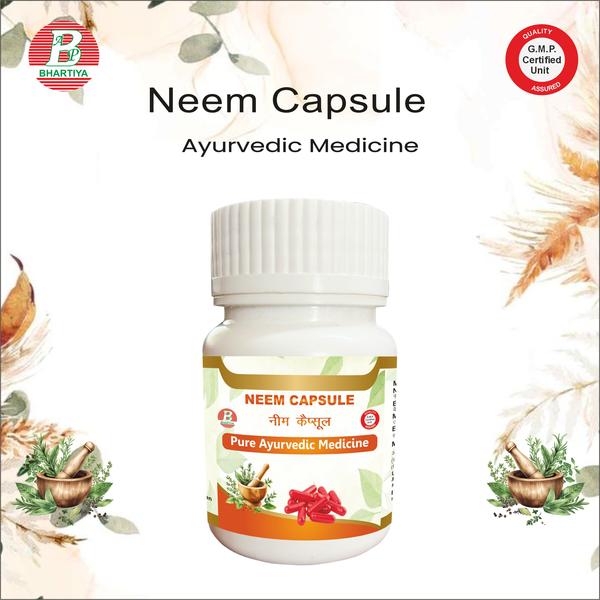
"name": "Neem capsule",
"description": "\n NEEM (Azadirachta indica A. Juss.) \n The Divine Medicinal Tree — “Nimba” (The Bitter Guardian)\nNeem, known as Nimba in Sanskrit, is one of the most revered medicinal trees in Ayurveda. Celebrated for its antimicrobial, blood-purifying, and detoxifying properties, it has been used since Vedic times for health, hygiene, and longevity. Neem is considered a Pittashamaka and Rasayana, supporting immunity, skin, liver, and overall vitality. Classical texts praise Neem as the “Sarva Roga Nivarini” — capable of preventing or alleviating multiple diseases.\n\n BOTANICAL INFORMATION OF NEEM\n•\tScientific Name: Azadirachta indica A. Juss.\n•\tSynonyms: Melia azadirachta L., Nimba\n•\tFamily: Meliaceae\n•\tOrder: Sapindales\n•\tGenus: Azadirachta\n•\tSpecies: indica\n•\tCommon Names:\no\tSanskrit: Nimba, Nimbaka, Arishta, Sarva Roga Nivaraka\no\tHindi: Neem\no\tEnglish: Indian Lilac\no\tTamil: Veppam, Vembu\no\tTelugu: Vepa\no\tMalayalam: Veppu, Vempu\no\tKannada: Bevu\no\tMarathi/Gujarati: Neem\n SYNONYMS IN CLASSICAL AYURVEDIC TEXTS\n•\tCharaka Samhita: Nimba, Sarvoshadhi\n•\tSushruta Samhita: Nimb, Raktaprasadaka\n•\tBhavaprakasha Nighantu: Nimba, Arishta, Sarva Roga Nivaraka\n•\tDhanvantari Nighantu: Nimba, Raktashodhaka\nNeem is traditionally associated with blood purification, detoxification, longevity, and prevention of skin and systemic disorders.\n\n MORPHOLOGY OF NEEM\n•\tTree: Medium to large deciduous, height 15–20 m, spreading crown\n•\tBark: Grey-brown, rough, longitudinal fissures\n•\tLeaves: Pinnate, 20–40 cm long, leaflets 20–30 pairs, ovate-lanceolate, serrated margins\n•\tFlowers: Small, white, fragrant, axillary panicles\n•\tFruit: Drupe, ovoid, green turning yellow on ripening, 1–2 cm long, bitter-sweet\n•\tSeed: One hard seed per fruit\n ECOLOGICAL PREFERENCES\n•\tClimate: Tropical and subtropical, drought-resistant\n•\tSoil: Adaptable to a range of soils, grows well in poor, sandy, or rocky soil\n•\tHabitat: Open forests, village groves, roadsides\n•\tAltitude: Sea level to 1,500 m\n GEOGRAPHICAL DISTRIBUTION\n•\tIndia: Widely distributed, majorly in Rajasthan, Gujarat, Maharashtra, Tamil Nadu, Karnataka, Andhra Pradesh\n•\tOutside India: Myanmar, Bangladesh, Pakistan, Southeast Asia, tropical Africa\n CLASSICAL AYURVEDIC PROPERTIES (RASA–GUNA–VIRYA–VIPAKA)\n•\tRasa (Taste): Tikta (bitter), Kashaya (astringent)\n•\tGuna (Qualities): Laghu (light), Ruksha (dry)\n•\tVirya (Potency): Śīta (cooling)\n•\tVipaka (post-digestive effect): Katu (pungent)\n•\tDosha Effects: Tridoshaghna, especially Pittahara and Kapha-shamaka\n THERAPEUTIC ACTIONS ACCORDING TO AYURVEDA (KARMA)\n1.\tRaktashodhaka: Purifies blood, detoxifying\n2.\tKushthaghna: Treats skin disorders, eczema, acne, leprosy\n3.\tJwaraghna: Antipyretic, reduces fever\n4.\tKaphapittahara: Balances doshas, reduces inflammation\n5.\tKantya / Keshya: Promotes hair and skin health\n6.\tDantya: Oral hygiene, treats dental infections and gingivitis\n7.\tVrishya: Enhances reproductive health and vitality\n8.\tVishaghna: Anti-parasitic, kills microbes and intestinal worms\n INDICATIONS\n•\tSkin & Hair: Acne, eczema, psoriasis, dandruff, hair fall\n•\tDigestive System: Dyspepsia, constipation, intestinal worms\n•\tMetabolism & Immunity: Detoxification, immunity enhancement\n•\tOral Health: Gingivitis, dental caries, halitosis\n•\tBlood Disorders: Purifies blood, improves circulation\n•\tFever & Infections: Malaria, viral infections, minor fevers\n MODERN PHARMACOLOGY & PHYTOCHEMISTRY\n•\tMajor Constituents: Nimbin, Nimbidin, Azadirachtin, Quercetin, Nimbolide, Flavonoids, Tannins, Vitamins, Minerals\n•\tPharmacological Actions:\no\tAntibacterial, Antiviral, Antifungal\no\tAnti-inflammatory\no\tImmunomodulatory\no\tAntipyretic\no\tHepatoprotective\no\tAntidiabetic\no\tAntioxidant\n CULTIVATION DETAILS\n•\tPropagation: Seeds, stem cuttings\n•\tSowing Time: June–July (monsoon)\n•\tSpacing: 8–10 m between trees\n•\tIrrigation: Moderate, drought-tolerant once established\n•\tFertilization: Organic manure preferred\n•\tHarvesting: Leaves and fruits collected as required\n CLASSICAL DOSAGE (According to Ayurvedic Granthas)\n•\tChurna (Powder): 1–3 g\n•\tSwarasa (Juice): 10–20 ml\n•\tKwatha (Decoction): 40–60 ml\n•\tAvaleha (Paste/Lehyam): 5–10 g\n•\tOil (Thaila): Topical for skin and hair\n CLASSICAL AYURVEDIC FORMULATIONS CONTAINING NEEM\n1.\tNimbadi Churna – Skin disorders, immunity\n2.\tNimbadi Kwatha – Blood purification, fever\n3.\tNimbadi Thaila – Hair and scalp treatment\n4.\tNimbamrit Rasayana – Rejuvenative, detoxifying\n5.\tNimbadi Gutika – Digestive and metabolic support\n6.\tNimba Patra Swarasa – Oral health, dental car\n HISTORICAL & CLASSICAL SIGNIFICANCE\n•\tNeem is referred to as “Divine Tree” in Charaka, Sushruta, and Bhavaprakasha Nighantu.\n•\tKnown as Sarva Roga Nivarini — capable of preventing numerous diseases.\n•\tIn ancient Indian texts, neem twigs were used for dental hygiene, and leaves for blood purification.\n•\tUsed in Rasayana therapy, especially for skin, blood, and immunity-related disorders.\n•\tIn folklore, neem is regarded as sacred and protective, planted near homes for health and well-being.\n NEEM (Azadirachta indica A. Juss.) FORMULATIONS – BHARTIYA AYURVEDIC PHARMACY\n\nBhartiya Ayurvedic Pharmacy prepares a range of Neem formulations following classical Ayurvedic principles described in Charaka Samhita, Sushruta Samhita, Bhavaprakasha Nighantu, and other Ayurvedic texts. Each product is designed to retain the full blood-purifying, antimicrobial, skin-protective, and immunity-enhancing properties of Neem.\n\n 1. Neem Tablet\nDescription:\nNeem Tablet is a modern, convenient dosage form containing standardized Neem (Azadirachta indica) extract. Ideal for daily use, it supports detoxification, immunity, and skin health.\nKey Actions:\n•\tTridoshic Rasayana: Balances Vata, Pitta, Kapha\n•\tBlood purifier and detoxifier\n•\tSupports skin health and wound healing\n•\tDigestive and metabolic support\n•\tImmunity enhancer\nDosage:\n•\t1–2 tablets twice daily after meals with warm water, or as directed\nPrecautions:\n•\tAvoid excessive use in diarrhea or loose stools\n•\tPregnant and lactating women should use under supervision\n•\tMonitor blood sugar in diabetics\n 2. Neem Capsule\nDescription:\nNeem Capsule is a convenient, easy-to-swallow form containing concentrated Neem extract. Suitable for those who prefer capsules over tablets or powders.\nKey Actions:\n•\tAntimicrobial, antiviral, and antiparasitic\n•\tAnti-inflammatory and antioxidant\n•\tSupports liver function and metabolism\n•\tBoosts immunity and vitality\nDosage:\n•\t1–2 capsules twice daily with warm water after meals\nPrecautions:\n•\tAvoid overdose\n•\tUse under supervision if pregnant, lactating, or on anti-diabetic medications\n 3. Neem Oil (Taila)\nDescription:\nNeem Oil is a classical Ayurvedic topical preparation, cold-pressed from Neem seeds, used for skin and hair disorders.\nKey Actions:\n•\tAnti-inflammatory and antimicrobial\n•\tTreats acne, eczema, psoriasis, fungal infections\n•\tPromotes hair growth and prevents dandruff\n•\tSoothes itching and skin irritation\nDosage / Usage:\n•\tApply externally on affected areas 1–2 times daily\n•\tCan be mixed with coconut or sesame oil for massage\nPrecautions:\n•\tFor external use only\n•\tAvoid contact with eyes\n•\tTest patch for allergic reactions before extensive use\n 4. Nimbadi Churna\nDescription:\nNimbadi Churna is a classical powdered formulation containing Neem leaves and other synergistic herbs. Used traditionally for skin disorders, fever, blood purification, and digestive support.\nKey Actions:\n•\tMild laxative and digestive tonic\n•\tBlood purifier and detoxifying\n•\tAnti-inflammatory and antimicrobial\n•\tSupports immunity and metabolic health\nDosage:\n•\t1–3 g daily with warm water, honey, or ghee, preferably at bedtime or as advised\nPrecautions:\n•\tAvoid excessive use leading to loose stools\n•\tUse under practitioner supervision in elderly, children, or weak patients\n•\tMonitor blood sugar if diabetic\n SAFETY & PRECAUTIONS\n•\tSafe for long-term use when taken in classical doses\n•\tAvoid excessive consumption in dehydration or diarrhea\n•\tUse cautiously in pregnancy and lactation\n•\tMay reduce blood sugar: monitor if diabetic\n\n\n\nayurveda neem capsule, ayurvedic neem capsule\nbenefits of neem capsule, best neem capsule\nbest neem capsules in india, best neem supplement\nbest organic neem capsules, best time to take neem capsule\ncan i take neem capsules, can neem be consumed daily\ncan you take neem capsules everyday, do neem capsules expire\nhow long can i take neem capsules, how long to take neem capsules\nhow to make neem capsules at home, how to take neem capsules\nis neem capsules good for acne, is neem capsules good for diabetes\nis neem capsules good for skin, is neem capsules safe\nneem capsule amazon, neem capsule ayurvedic\nneem capsule benefits, neem capsule benefits in hindi\nneem capsule dosage, neem capsule dp price\nneem capsule empty stomach, neem capsule for acne\nneem capsule for men, neem capsule for skin\nneem capsule hindi, neem capsule hsn code\nneem capsule india, neem capsule kab khana chahiye\nneem capsule ke fayde, neem capsule khane ke fayde\nneem capsule kis kaam aata hai, neem capsule near me\nneem capsule online, neem capsule price\nneem capsule uses, neem capsule uses in hindi\nneem capsules acne, neem capsules benefits\nneem capsules benefits for men, neem capsules benefits for skin\nneem capsules benefits in hindi, neem capsules blood purifier\nneem capsules for acne reviews, neem capsules for hair growth\nneem capsules health benefits, neem capsules price online\nneem seed capsule",
"price": 270.0,
"discountamount": 135.0,
"currencycode": "INR",
"priority": 1000000,
"isfreeshipmentavailable": false,
"shipmentduration": 1,
"_keywords": null,
"isarchived": false,
"isavailable": true,
"applicationid": null,
"productindex": 67,
"imageuri": "https://productimages.withfloats.com/actual/69a26b4a1a54b14cdf0a25ce.jpg",
"tileimageuri": "https://productimages.withfloats.com/tile/69a26b4a1a54b14cdf0a25ce.jpg",
"images": null,
"totalqueries": 0,
"gpid": null,
"groupproductid": null,
"createdon": "2026-02-28T04:12:50.22Z",
"updatedon": "2026-02-28T04:12:50.22Z",
"buyonlinelink": null,
"producturl": "http://WWW.BHARTIYAAYURVEDICPHARMACY.COM/products/neem-capsule/67",
"availableunits": -1.0,
"iscodavailable": true,
"isprepaidonlineavailable": true,
"maxcodorders": -1,
"maxprepaidonlineorders": -1,
"uniquepaymenturl": null,
"brandname": "Bakula fort",
"category": "Neem capsule 60 - cap X 24",
"tags": [],
"variants": false,
"keyspecification": null,
"otherspecifications": null,
"pickupaddressreferenceid": null,
"paymenttype": "AssuredPurchase",
"producttype": "products",
"hsncode": null,
"gstslab": 0.0,
"isnotforsale": false
},
{
"_id": "698ea823ae21e6001288f3ef",
"fptag": "BHARTIYEAYURVEDICPHARMACY",
"merchantname": null,
"customwidgets": null,
"externalsourceid": null,
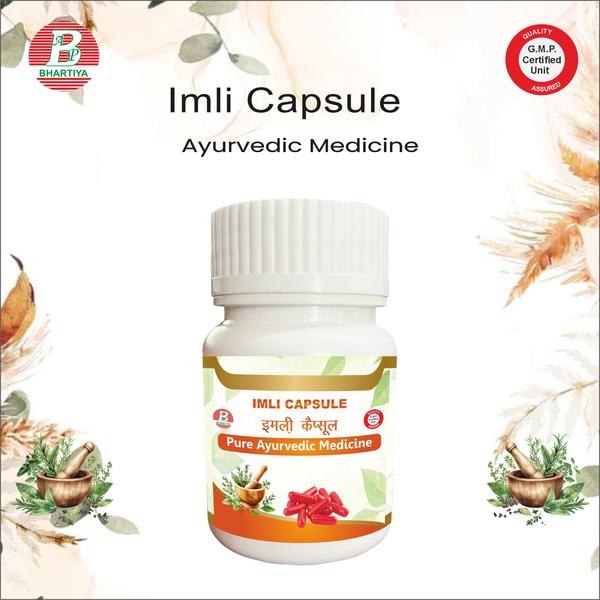
"name": "Imali Capsule",
"description": " IMLI \n\n\n IMLI (Tamarindus indica L.) \nThe Digestive & Metabolic Fruit — “Tamarind”\nImli, commonly known as Tamarind, is a widely used fruit in Ayurveda and traditional medicine. It is valued for its digestive, cooling, detoxifying, and rejuvenative properties. Rich in organic acids, polyphenols, and dietary fiber, Imli supports digestion, metabolism, liver function, cardiovascular health, and overall vitality.\n\n CLASSICAL AYURVEDIC REFERENCES\n1.\tCharaka Samhita\n•\tMentioned in Sutra Sthana and Kalpa Sthana as a digestive and metabolism-supporting fruit.\n•\tDescribed as Madhura-Amla-Kashaya in taste, pacifying Vata and Pitta.\n2.\tSushruta Samhita\n•\tEmphasized in Kalpa Sthana as a natural laxative and liver-supporting herb.\n•\tUsed in formulations for Vata-Pitta disorders, constipation, and digestive sluggishness.\n3.\tBhavaprakasha Nighantu\n•\tReferred to as Imli / Tamarind, supporting Agni (digestive fire), Medha (intellect), and Ojas (vitality).\n•\tRecommended in Rasayana and Hrudya formulations, often combined with honey or ghee.\n\n CLASSICAL STORY / ANECDOTE\nImli is often praised in Ayurvedic texts as the “King of Digestive Fruits” for its ability to restore Agni (digestive fire) and eliminate Ama (toxins).\nTraditionally, sages recommended Imli to strengthen digestion and metabolism, particularly during hot seasons, by consuming the pulp with water or in churna form to rejuvenate the body and maintain vitality.\n\n BOTANICAL INFORMATION OF IMLI\n•\tScientific Name: Tamarindus indica L.\n•\tFamily: Fabaceae\n•\tOrder: Fabales\n•\tGenus: Tamarindus\n•\tSpecies: indica\n•\tCommon Names:\no\tSanskrit: Imli, Amli, Chinta\no\tHindi: Imli\no\tEnglish: Tamarind\no\tTamil: Puli\no\tTelugu: Chintapandu\no\tMalayalam: Puliyam\no\tKannada: Hunase Hannu\no\tBengali: Tentul\n\n SYNONYMS IN CLASSICAL AYURVEDIC NIGHANTUS\n•\tCharaka Samhita: Imli – Digestive, Vata-Pitta pacifying\n•\tSushruta Samhita: Imli – Hrudya, Medhya, Vata-Pitta balancing\n•\tBhavaprakasha Nighantu: Imli, Chinta – Rasayana, Agni vardhaka, Detoxifier\n\n MORPHOLOGY OF IMLI\n•\tPlant Type: Large evergreen tree\n•\tHeight: 12–18 m\n•\tLeaves: Pinnate, 6–12 pairs of leaflets, small and oblong\n•\tFlowers: Small, yellowish-brown, clustered, fragrant\n•\tFruit: Leguminous pod, brown, elongated, pulpy, tangy-sweet\n•\tSeeds: Hard, shiny brown, 1–2 cm, embedded in pulp\n\n ECOLOGICAL PREFERENCES\n•\tClimate: Tropical and subtropical; tolerates heat and drought\n•\tSoil: Well-drained sandy, loamy, or red soils\n•\tHabitat: Fields, gardens, village premises; native to Indian subcontinent\n•\tAltitude: Sea level to 1,200 m\n\n GEOGRAPHICAL DISTRIBUTION\n•\tIndia: Tamil Nadu, Kerala, Karnataka, Maharashtra, Andhra Pradesh\n•\tOutside India: Sri Lanka, Africa, Southeast Asia, Caribbean, Latin America\n\n CLASSICAL AYURVEDIC PROPERTIES (RASA–GUNA–VIRYA–VIPAKA)\n•\tRasa (Taste): Madhura (sweet), Amla (sour), Kashaya (astringent)\n•\tGuna (Qualities): Snigdha (unctuous), Laghu (light)\n•\tVirya (Potency): Śīta (cooling)\n•\tVipaka (post-digestive effect): Madhura (sweet)\n•\tDosha Effects: Vata-Pitta hara, Kapha samana in moderation\n\n THERAPEUTIC ACTIONS (KARMA)\n1.\tDipana & Pachana: Enhances digestive fire, prevents constipation\n2.\tMedhya: Supports memory and intellect\n3.\tHrudya: Strengthens heart and circulation\n4.\tRasayana: Promotes overall vitality and rejuvenation\n5.\tVata-Pittahara: Balances Vata and Pitta disorders\n6.\tKeshya: Supports hair health\n7.\tLekhana & Raktaprasadana: Detoxifies blood, reduces toxins\n\n INDICATIONS\nWITH AACHARYA AND GRANTHS\nHere’s a detailed Imli (Tamarindus indica) monograph in the same format as Alsi, including classical Ayurvedic references and acharya/granth citations:\n IMLI (Tamarindus indica L.) \nThe Digestive and Metabolic Fruit — “Tamarind”\nImli, commonly known as Tamarind, is a widely used fruit in Ayurveda and traditional medicine. It is valued for its digestive, metabolism-supporting, cooling, and rejuvenative properties. Rich in organic acids, vitamins (A, C, B), minerals, and antioxidants, Imli supports digestion, liver function, heart health, metabolism, and overall vitality.\n\n CLASSICAL AYURVEDIC REFERENCES\n1.\tCharaka Samhita\no\tMentioned in Kalpa Sthana (Charaka Kalpa 6/28–30) as a sweet, sour, and nourishing fruit beneficial for digestive fire (Agni) and metabolism.\no\tUsed in formulations for Medhya (intellect) and Rasayana (rejuvenation).\n2.\tSushruta Samhita\no\tListed in Kalpa Sthana (Sushruta 52/18–20) for constipation, digestive sluggishness, and liver support.\no\tEmphasized as Snigdha (unctuous), Madhura (sweet), and Tikta (bitter) — suitable for Rasayana and mild laxative therapies.\n3.\tBhavaprakasha Nighantu\no\tReferred to as Imli / Amli, promoting Ojas, digestion, and rejuvenation.\no\tMentioned in Hrudya, Medhya, and Virechana formulations — often used with ghee, honey, or warm water.\n4.\tOther Classical Anecdotes\no\tAyurvedic texts describe Imli as a “pachana phala” — the fruit that digests and metabolizes food efficiently.\no\tTraditionally, sages recommended Imli to warriors and kings as a digestive and metabolism-supporting Rasayana, often combined with other herbs for enhanced rejuvenation.\n\n BOTANICAL INFORMATION OF IMLI\n•\tScientific Name: Tamarindus indica L.\n•\tFamily: Fabaceae (Leguminosae)\n•\tOrder: Fabales\n•\tGenus: Tamarindus\n•\tSpecies: indica\n•\tCommon Names:\no\tSanskrit: Imli, Amli, Chinta Phala\no\tHindi: Imli\no\tEnglish: Tamarind\no\tTamil: Puli\no\tTelugu: Chintapandu\no\tMalayalam: Puli\no\tKannada: Hunase Hannu\no\tBengali: Tentul\n\n SYNONYMS IN CLASSICAL AYURVEDIC NIGHANTUS\n•\tCharaka Samhita: Imli – Pachana, Medhya\n•\tSushruta Samhita: Imli – Virechana, Hrudya, Medhya\n•\tBhavaprakasha Nighantu: Amli, Imli – Rasayana, Pachana, Ojasvardhaka\n\n MORPHOLOGY OF IMLI\n•\tTree Type: Medium to large deciduous tree, 12–18 m height\n•\tBark: Brown, rough, fibrous\n•\tLeaves: Pinnate, alternate, leaflets small and oblong\n•\tFlowers: Yellowish, small, in clusters\n•\tFruit: Long, curved pods containing sticky, brown pulp\n•\tSeeds: Hard, glossy, dark brown\n\n ECOLOGICAL PREFERENCES\n•\tClimate: Tropical and subtropical, tolerates dry conditions\n•\tSoil: Well-drained loamy, clay, or sandy soils\n•\tHabitat: Fields, gardens, village premises; native to Indian subcontinent\n•\tAltitude: Sea level to 1,200 m\n\n GEOGRAPHICAL DISTRIBUTION\n•\tIndia: Maharashtra, Tamil Nadu, Karnataka, Andhra Pradesh, Gujarat\n•\tOutside India: Sri Lanka, Africa, Southeast Asia, Caribbean\n\n CLASSICAL AYURVEDIC PROPERTIES (RASA–GUNA–VIRYA–VIPAKA)\n•\tRasa (Taste): Madhura (sweet), Amla (sour), Tikta (bitter)\n•\tGuna (Qualities): Snigdha (unctuous), Laghu (light)\n•\tVirya (Potency): Śīta (cooling)\n•\tVipaka (post-digestive effect): Madhura (sweet)\n•\tDosha Effects: Tridoshaghna (balances all three); especially Vata-Pitta hara\n\n THERAPEUTIC ACTIONS (KARMA)\n1.\tPachana & Dipana: Enhances digestive fire, prevents acidity\n2.\tMedhya: Supports memory, intellect, and brain tissue\n3.\tHrudya: Supports heart and circulation\n4.\tRasayana: Promotes rejuvenation, Ojas, and vitality\n5.\tVatahara: Relieves constipation, joint stiffness\n6.\tLekhana: Mild lipid-lowering effect\n7.\tVrishya: Supports reproductive health and Shukra dhatu\n\n INDICATIONS\n•\tDigestive System: Constipation, sluggish digestion, hyperacidity\n•\tMetabolism: Obesity, mild dyslipidemia\n•\tNervous System: Fatigue, stress\n•\tReproductive & Urinary System: Supports fertility\n•\tSkin & Hair: Nourishes skin, mild detoxification\n MODERN PHARMACOLOGY & PHYTOCHEMISTRY\n•\tMajor Constituents:\no\tOrganic acids: tartaric, citric, malic\no\tPolyphenols: flavonoids, phenolic acids\no\tVitamins: A, C, B-complex\no\tMinerals: K, Mg, Ca, Fe\n•\tPharmacological Actions:\no\tDigestive tonic, mild laxative\no\tAntioxidant\no\tHepatoprotective\no\tAnti-inflammatory\no\tAnti-obesity and metabolic modulator\n\n CULTIVATION DETAILS\n•\tPropagation: Seeds (most common), grafting\n•\tSowing Time: May–June (monsoon)\n•\tSpacing: 10–12 m between plants\n•\tIrrigation: Moderate, drought-tolerant once mature\n•\tFertilization: Organic manure preferred\n•\tHarvesting: Fruits harvested November–March\n\n CLASSICAL DOSAGE (According to Ayurvedic Granthas)\n•\tPulp / Fresh Fruit: 10–20 g/day, chewed or in decoction\n•\tPowdered Fruit / Churna: 3–6 g/day\n•\tJuice / Paste: As per therapeutic need, especially for digestive support\n•\tSeed / Oil: 1–5 g/day, used in formulations for digestion and skin\n\n IMLI FORMULATIONS – BHARTIYA AYURVEDIC PHARMACY\nBhartiya Ayurvedic Pharmacy prepares Imli formulations following classical Ayurvedic principles described in Charaka Samhita, Sushruta Samhita, Bhavaprakasha Nighantu, and other texts. Each product retains digestive, metabolism-supporting, and rejuvenative properties, promoting overall vitality.\nKey Uses of Imli Formulations:\n•\tDigestive support: Relieves constipation, enhances Agni\n•\tMetabolic balance: Supports healthy weight and lipid profile\n•\tLiver support: Detoxification and mild hepatoprotection\n•\tRasayana: Promotes vitality and rejuvenation\n•\tSkin & Hair: Mild detoxification and nourishment\n\n IMLI CAPSULE\nBhartiya Ayurvedic Pharmacy offers Imli Capsules prepared according to classical Ayurvedic principles. Each capsule contains premium quality Tamarind pulp or extract, retaining full digestive, metabolism-supporting, and rejuvenative properties.\nKey Benefits:\n•\tSupports digestion and bowel regularity\n•\tPromotes metabolic balance and weight management\n•\tMild liver support and detoxification\n•\tActs as a Rasayana, enhancing vitality\n•\tSupports healthy skin and hair\nDosage:\n•\tAdults: 1–2 capsules twice daily with warm water\n•\tCan be combined with warm water or milk for enhanced effect\nSafety & Precautions:\n•\tSafe for long-term use when taken as per dosage\n•\tMay cause mild laxative effect in sensitive individuals\n•\tMonitor if taking antidiabetic or laxative medications\nFormulation Highlights:\n•\t100% natural Imli (Tamarindus indica) pulp/extract\n•\tFree from artificial colors, preservatives, and additives\n•\tPrepared using Ayurvedic-inspired processing methods\nSuggested Use:\n•\tIdeal for adults seeking digestive, metabolic, and Rasayana support\n•\tConvenient capsule form for daily use\n\n\nbest imli, best imli candy, best imli in india, capsule c care, capsule image\ndoes imli cause acidity, does imli cause gas, does imli expire, does imli have vitamin c\ndoes imli help in digestion, does imli help lose weight, does imli increase weight, e imli\nhow imli is made, i am capsule, i imli, imali capsule at home, imali capsule ayurvedic\nimali capsule company name, imali capsule contains, imali capsule daily use\nimali capsule daily use in hindi, imali capsule dainik bhaskar, imali capsule delhi\nimali capsule english name, imali capsule expiry date, imali capsule hindi\nimali capsule how to use, imali capsule in english, imali capsule in hindi\nimali capsule jiomart, imali capsule ke fayde, imali capsule ke fayde in hindi\nimali capsule khane ke fayde, imali capsule manufacturer, imali capsule manufacturers in india\nimali capsule meesho, imali capsule name, imali capsule near me, imali capsule online\nimali capsule online order, imali capsule online shopping, imali capsule online shopping india\nimali capsule price, imali capsule rate, imali capsule recipe, imali capsule se kya hota hai\nimali capsule side effects, imali capsule side effects in hindi, imali capsule uses\nimali capsule uses in hindi\nimli capsule\nimli capsules\nimli cause cough\nwhat is imli",
"price": 300.0,
"discountamount": 150.0,
"currencycode": "INR",
"priority": 1000000,
"isfreeshipmentavailable": false,
"shipmentduration": 1,
"_keywords": null,
"isarchived": false,
"isavailable": true,
"applicationid": null,
"productindex": 60,
"imageuri": "https://productimages.withfloats.com/actual/698ea825e8395ed6920a532a.jpg",
"tileimageuri": "https://productimages.withfloats.com/tile/698ea825e8395ed6920a532a.jpg",
"images": null,
"totalqueries": 0,
"gpid": null,
"groupproductid": null,
"createdon": "2026-02-13T04:27:15.232Z",
"updatedon": "2026-02-17T10:23:47.696Z",
"buyonlinelink": null,
"producturl": "http://WWW.BHARTIYAAYURVEDICPHARMACY.COM//imali-capsule/60",
"availableunits": -1.0,
"iscodavailable": true,
"isprepaidonlineavailable": true,
"maxcodorders": -1,
"maxprepaidonlineorders": -1,
"uniquepaymenturl": null,
"brandname": "Bakula Fort",
"category": "Imali Capsule 60 Cap X 24",
"tags": [],
"variants": false,
"keyspecification": null,
"otherspecifications": null,
"pickupaddressreferenceid": null,
"paymenttype": "AssuredPurchase",
"producttype": "products",
"hsncode": null,
"gstslab": 0.0,
"isnotforsale": false
},
{
"_id": "698b1826061c704326857527",
"fptag": "BHARTIYEAYURVEDICPHARMACY",
"merchantname": null,
"customwidgets": null,
"externalsourceid": null,
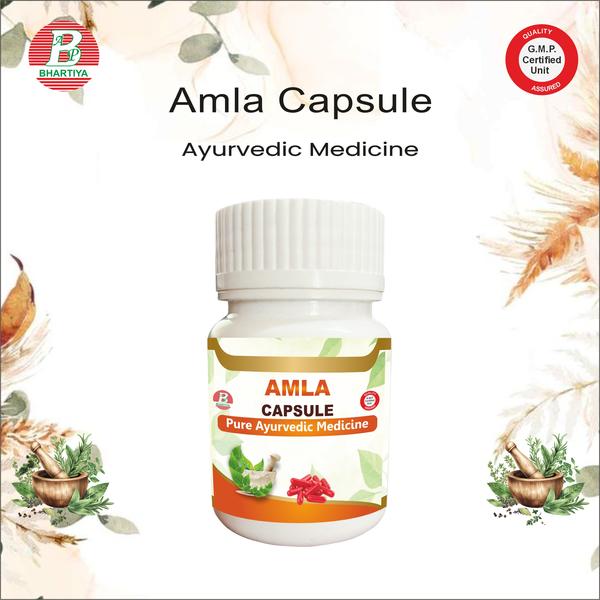
"name": "Amla Capsule",
"description": " (AMLA (Emblica officinalis Gaertn.) \n The Supreme Rasayana — “Dhatri Phala” (The Nourishing Mother Fruit)\nĀmla, also known as Āmalakī, is one of the most celebrated herbs in Ayurveda, recognized as a prime Rasayana (rejuvenative) and Pittashamaka. Considered sacred and synonymous with longevity, it is used for rejuvenation, metabolism, immunity, skin, hair, digestion, eyesight, and vitality.\nIt is among the richest natural sources of Vitamin C, in a unique heat-stable and bioavailable form preserved by tannins such as Emblicanin A & B.\nAyurvedic texts describe Amla as a divine herb, equal to nectar, and capable of restoring youth, strength, and Ojas.\n\n BOTANICAL INFORMATION OF AMLA\nScientific Name: Emblica officinalis Gaertn.\nSynonyms: Phyllanthus emblica Linn.\nFamily: Phyllanthaceae (formerly Euphorbiaceae)\nOrder: Malpighiales\nGenus: Phyllanthus\nSpecies: emblica\nCommon Names\n•\tSanskrit: Āmalakī, Dhatri, Shiva, Amrutaphala, Vayasya\n•\tHindi: Amla\n•\tEnglish: Indian Gooseberry\n•\tTamil: Nellikai\n•\tTelugu: Usirikaya\n•\tMalayalam: Nellikka\n•\tKannada: Nellikayi\n•\tGujarati/Marathi: Amla\n•\tBengali: Amloki\n\n SYNONYMS IN CLASSICAL AYURVEDIC NIGHANTUS\nCharaka Samhita\n•\tDhatri, Amalaki – Supreme Rasayana for long life\nSushruta Samhita\n•\tVayasya, Shreyasi, Kshaya Apaha\nBhavaprakasha Nighantu\n•\tAmruta, Shiva, Shreyasi, Amalaki\nDhanvantari Nighantu\n•\tTishya, Vayasya, Dhatri Phala\n•\tThese synonyms emphasize longevity, nourishment, rejuvenation, and divine purity.\n\n MORPHOLOGY OF AMLA\nTree-Medium-sized deciduous tree, Height: 8–20 crooked trunk, spreading crown\nBark-Thin, greyish or reddish-brown, Exfoliating in irregular flakes\nLeaves-Simple, subsessile, linear-oblong, closely arranged along branchlets, resembling compound leaves\nFlowers-Greenish-yellow, Unisexual, axillary clusters\nFruit-Nearly spherical, smooth, light green,6 vertical stripes, extremely sour and astringent, highly nutritious and medicinal.\nSeed -Hard, six-triangular\n ECOLOGICAL PREFERENCES\nClimate: Tropical and subtropical, highly drought-resistant, Tolerates high temperatures\nSoil: Grows in poor, alkaline, calcareous, or sandy soils, Thrives in well-drained loamy soil\nHabitat: Dry deciduous forests, Fields, gardens, village premises, Native to Indian subcontinent\nAltitude-Sea level to 1,500 m\n\n GEOGRAPHICAL DISTRIBUTION\n India\n•\tWidely distributed throughout\n•\tMajor states: UP, MP, Rajasthan, Gujarat, Maharashtra, Tamil Nadu, Kerala\nOutside India\n•\tSri Lanka, Nepal, Bangladesh, Pakistan\n•\tChina, Myanmar, Thailand\n•\tNaturalized in Southeast Asia and tropical regions worldwide\n\n CLASSICAL AYURVEDIC PROPERTIES (RASA–GUNA–VIRYA–VIPAKA)\nRasa (Taste): Pancharasa (five tastes): Amla (sour) predominates Madhura (sweet), Kashaya (astringent), Tikta (bitter), Katu (pungent)No Lavana (salty)\nGuna (Qualities): Laghu (light), Ruksha (dry)\nVirya (Potency): Śīta (cooling)\nVipaka (post-digestive effect): Madhura (sweet)\nDosha Effects: Tridoshaghna (balances all three) Especially Pittashamaka Balances Vata & Kapha too\n THERAPEUTIC ACTIONS ACCORDING TO AYURVEDA (KARMA)\n1. Rasayana (Rejuvenative)-Restores youth, vitality, Ojas, Promotes longevity\n2. ChakshushyaImproves eyesight, Used in Tripahala for eye therapies\n3. Dipana & Pachana-Enhances digestive fire gently, Prevents acidity despite sour taste\n4. Medhya-Enhances memory, intellect, Nourishes brain tissues\n5. Hridya-Strengthens heart, Improves circulation\n6. Vrishya / Reproductive Health-Promotes fertility, Nourishes Shukra dhatu\n7. Keshya-Strengthens hair roots, Prevents greying & hair fall\n8. Raktaprasadana-Purifies blood, Detoxifying\n9. Lekhana & Kapha-pittahara-Reduces excessive Pitta, Clears Kapha from channels\n INDICATIONS\nDigestive System-Acidity, Indigestion, Constipation, Hyperacidity, IBS, Loss of appetite\nRespiratory System-Cough, Cold, Allergies, Asthma (as part of formulations)\nReproductive & Urinary System-Semen quality improvement, Strengthens bladder\nSkin & Hair-Brightens complexion, Anti-aging, reduces pigmentation, Promotes hair growth\nMetabolism-Diabetes, Obesity, High cholesterol\nNervous System-Memory loss, Fatigue, Stress\n MODERN PHARMACOLOGY & PHYTOCHEMISTRY\nMajor Constituents\n•\tVitamin C (highly stable)\n•\tTannins: Emblicanin A &, Gallotannins, Ellagitannins\n•\tPhenolics: Gallic acid, Ellagic acid, Chebulinic acid\n•\tFlavonoids: Quercetin, Kaempferol, Amino acids, minerals\nPharmacological Actions\n•\tAdaptogenic\n•\tAntioxidant\n•\tAnti-inflammatory\n•\tImmunomodulatory\n•\tHepatoprotective\n•\tAnti-ulcer\n•\tAntidiabetic\n•\tAnti-aging\n\n CULTIVATION DETAILS\nPropagation-Seeds (most common), Vegetative cuttings\nSowing Time-June–July (monsoon)\nSpacing-8–10 m between plants\nIrrigation-Moderate, tolerates drought once mature\nFertilization-Organic manure preferred\nHarvesting-Fruits harvested November–March, Leaves and bark collected as required\n CLASSICAL DOSAGE (According to Ayurvedic Granthas)\nChurna (Powder): 2–5 g twice daily\nSwarasa (Fresh juice): 10–20 ml\nKwatha (Decoction): 40–60 ml\nAvaleha (paste/lehyam): 10–15 g\nCapsules / Tablets: As per preparation\nOil (Thaila): External use\nGhrita: Internal rejuvenation\n CLASSICAL AYURVEDIC FORMULATIONS CONTAINING AMLA\n1. Chyawanprash-Primary Rasayana formulation, Rejuvenation, immunity\n2. Tripahala Churna-Digestive, detoxifying, eye tonic\n3. Amalaki Rasayana-Anti-aging, brain tonic, immunity\n4. Dhatri Rasayana-Pitta balance, digestion\n5. Brahma Rasayana-Brain and nerve rejuvenative\n6. Dhatryarishta-Digestive and hepatoprotective\n7. Amla Oil (Thaila)\n•\tUsed for hair growth, cooling\n Amla (Phyllanthus emblica/Emblica officinalis) Formulations – Bhartiya Ayurvedic Pharmacy\nBhartiya Ayurvedic Pharmacy prepares a range of Amla formulations following classical Ayurvedic principles described in Charaka Samhita, Sushruta Samhita, Bhav Prakash Nighantu, and other Ayurvedic texts. Each product is designed to retain the full rejuvenative, antioxidant, and digestive properties of Amla, supporting immunity, digestion, liver health, and overall vitality.\n 1. Amla Tablet\nDescription:\nAmla Tablet is a modern, convenient dosage form containing standardized Amla (Phyllanthus emblica) extract. Ideal for daily use, it retains Amla’s rejuvenative, antioxidant, and digestive properties.\nKey Actions:\n•\tTridoshic Rasayana: Balances Vata, Pitta, Kapha\n•\tSupports immunity and vitality\n•\tEnhances digestion and bowel regularity\n•\tImproves liver and kidney health\n•\tPromotes skin and hair health\nDosage:\n•\t1–2 tablets twice daily after meals with warm water, or as directed\nPrecautions:\n•\tAvoid excessive use in diarrhea or loose stools\n•\tDiabetics should monitor blood sugar\n 2. Amla Capsule\nDescription:\nAmla Capsule is a convenient, easy-to-swallow form containing Amla extract. Suitable for those who prefer capsules over tablets or powders.\nKey Actions:\n•\tRejuvenative and immunity-boosting\n•\tAntioxidant properties reduce oxidative stress\n•\tSupports digestive health\n•\tPromotes liver and kidney function\nDosage:\n•\t1–2 capsules twice daily with warm water after meals\nPrecautions:\n•\tAvoid overdose\n•\tUse under supervision if pregnant or lactating\n 3. Amlakyadi Loh (Amlakyadi Loh Bhasma)\nDescription:\nA herbo-mineral Ayurvedic formulation combining Amla and metallic/mineral preparations (Loh Bhasma – iron ash). Traditionally used for blood disorders, anaemia, and general debility.\nKey Actions:\n•\tHematinic: Supports red blood cell formation\n•\tRejuvenative: Enhances strength, vitality, and metabolism\n•\tImproves immunity\n•\tSupports liver function\nDosage:\n•\t1–2 tablets once or twice daily after meals with warm water or milk, as directed by an Ayurvedic practitioner\nPrecautions:\n•\tMonitor iron levels during prolonged use\n•\tAvoid in cases of iron overload or gastric sensitivity\n 4. Amla Powder (Amla Churna)\nDescription:\nPure, finely powdered Amla for traditional use. Can be consumed with honey, ghee, or water.\nKey Actions:\n•\tRasayana and rejuvenative\n•\tSupports digestion and bowel movements\n•\tEnhances liver and kidney detoxification\n•\tImproves immunity, skin, and hair health\nDosage:\n•\t1–3 g daily with water, honey, or as advised\nPrecautions:\n•\tAvoid excess intake in diarrhea\n•\tDiabetics should consult before use\n Amlaki Rasayana (Semi-Solid / Avaleha Form)\nDescription:\nClassical semi-solid Rasayana prepared from Amla (Phyllanthus emblica), sometimes with other rejuvenative herbs, preserving full potency and bioactive constituents.\nKey Actions:\n•\tRejuvenative (Rasayana) and immunity booster\n•\tEnhances digestion and nutrient absorption\n•\tDetoxifies liver and kidneys\n•\tPromotes healthy skin and hair\n•\tSupports respiratory health and longevity\nDosage:\n•\t5–10 g (1 teaspoon) twice daily with warm milk, water, or honey\nPrecautions:\n•\tAvoid in diarrhea or loose stools\n•\tDiabetics should monitor sugar if sweetened\n•\tUse under supervision during pregnancy or chronic illness\nBenefits:\n•\tVitality and strength\n•\tDigestive, liver, and kidney support\n•\tAntioxidant and anti-aging effects\n•\tOverall rejuvenation and longevity\n 6. Tripahala Churna\nDescription:\nA classical Ayurvedic powder containing Haritaki, Bibhitaki, and Amla, used for digestion, detoxification, and bowel regulation.\nKey Actions:\n•\tMild laxative: Supports regular bowel movements\n•\tRejuvenative: Improves immunity and vitality\n•\tDetoxifying: Cleanses liver, kidneys, and digestive tract\n•\tBalances Vata and Pitta doshas\nDosage:\n•\t1–3 g daily with warm water, honey, or ghee, preferably at bedtime or as advised\nPrecautions:\n•\tAvoid excessive use leading to loose stools\n•\tConsult practitioner for prolonged use in elderly or weak patients\n SAFETY & PRECAUTIONS\nSafe for long-term use when taken in classical doses\nHighly safe fruit for children, elderly, and pregnant women (dietary form)\nPrecautions:\n•\tExcess consumption may increase dryness (Vata)\n•\tUse cautiously in:\n• Severe hypoglycemia\n• Chronic diarrhea\n•\tAvoid cold Amla juice in Kapha prakriti people during heavy winter\n\namla ayurvedic capsule, amla bhringraj capsule, amla c capsules\namla capsule, amla capsule benefits, amla capsule ke fayde\namla capsule khane ke fayde, amla capsule kis kaam aata hai\namla capsule price, amla capsule quality, amla capsule quantity\namla capsule uses, amla capsule vestige, amla capsules amazon\namla capsules benefits, amla capsules benefits in hindi\namla capsules benefits in tamil, amla capsules chemist warehouse\namla capsules dosage per day, amla capsules for hair\namla capsules for hair growth, amla capsules how to use\namla capsules in hindi, amla capsules india, amla capsules near me\namla capsules organic, amla capsules organic india, amla capsules review\namla capsules side effects, amla capsules uk\namla capsules used for, amla capsules uses\namla capsules uses in hindi, amla capsules vestige in hindi\namla capsules vestige price, amla capsules vestige uses\namla capsules vestige uses in hindi, amla extract capsule\namla fruit capsule, amla hair capsules, amla in capsule\namla ke capsule, amla powder capsule, amla powder capsules benefits\namla powder or capsules, amla powder vs capsule\nbest amla capsule, best amla capsules in india, best amla supplement\nbest organic amla capsules, does amla delay period, does amla have any side effects\ni am capsule, is amla candy healthy, is amla capsules good, is amla cause cold\nwhat is amla capsules, where does amla grow in india, where is amla",
"price": 210.0,
"discountamount": 105.0,
"currencycode": "INR",
"priority": 1000000,
"isfreeshipmentavailable": false,
"shipmentduration": 1,
"_keywords": null,
"isarchived": false,
"isavailable": true,
"applicationid": null,
"productindex": 50,
"imageuri": "https://productimages.withfloats.com/actual/698b18283d7b82b108fcb293.jpg",
"tileimageuri": "https://productimages.withfloats.com/tile/698b18283d7b82b108fcb293.jpg",
"images": null,
"totalqueries": 0,
"gpid": null,
"groupproductid": null,
"createdon": "2026-02-10T11:36:06.219Z",
"updatedon": "2026-02-18T06:08:59.904Z",
"buyonlinelink": null,
"producturl": "http://WWW.BHARTIYAAYURVEDICPHARMACY.COM//amla-capsule/50",
"availableunits": -1.0,
"iscodavailable": true,
"isprepaidonlineavailable": true,
"maxcodorders": -1,
"maxprepaidonlineorders": -1,
"uniquepaymenturl": null,
"brandname": "",
"category": "Amla Capsule 60 Cap X 24",
"tags": [],
"variants": false,
"keyspecification": null,
"otherspecifications": null,
"pickupaddressreferenceid": null,
"paymenttype": "AssuredPurchase",
"producttype": "products",
"hsncode": null,
"gstslab": 0.0,
"isnotforsale": false
},
{
"_id": "69807c784901f373b5ec8723",
"fptag": "BHARTIYEAYURVEDICPHARMACY",
"merchantname": null,
"customwidgets": null,
"externalsourceid": null,
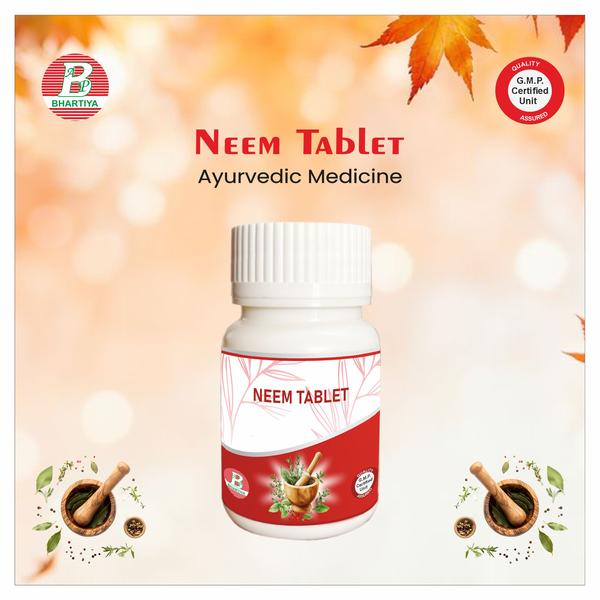
"name": "NEEM TABLET",
"description": "NEEM (Azadirachta indica A. Juss.) \n The Divine Medicinal Tree — “Nimba” (The Bitter Guardian)\nNeem, known as Nimba in Sanskrit, is one of the most revered medicinal trees in Ayurveda. Celebrated for its antimicrobial, blood-purifying, and detoxifying properties, it has been used since Vedic times for health, hygiene, and longevity. Neem is considered a Pittashamaka and Rasayana, supporting immunity, skin, liver, and overall vitality. Classical texts praise Neem as the “Sarva Roga Nivarini” — capable of preventing or alleviating multiple diseases.\n\n BOTANICAL INFORMATION OF NEEM\n•\tScientific Name: Azadirachta indica A. Juss.\n•\tSynonyms: Melia azadirachta L., Nimba\n•\tFamily: Meliaceae\n•\tOrder: Sapindales\n•\tGenus: Azadirachta\n•\tSpecies: indica\n\n•\tCommon Names:\no\tSanskrit: Nimba, Nimbaka, Arishta, Sarva Roga Nivaraka\no\tHindi: Neem\no\tEnglish: Indian Lilac\no\tTamil: Veppam, Vembu\no\tTelugu: Vepa\no\tMalayalam: Veppu, Vempu\no\tKannada: Bevu\no\tMarathi/Gujarati: Neem\n SYNONYMS IN CLASSICAL AYURVEDIC TEXTS\n•\tCharaka Samhita: Nimba, Sarvoshadhi\n•\tSushruta Samhita: Nimb, Raktaprasadaka\n•\tBhavaprakasha Nighantu: Nimba, Arishta, Sarva Roga Nivaraka\n•\tDhanvantari Nighantu: Nimba, Raktashodhaka\nNeem is traditionally associated with blood purification, detoxification, longevity, and prevention of skin and systemic disorders.\n\n MORPHOLOGY OF NEEM\n•\tTree: Medium to large deciduous, height 15–20 m, spreading crown\n•\tBark: Grey-brown, rough, longitudinal fissures\n•\tLeaves: Pinnate, 20–40 cm long, leaflets 20–30 pairs, ovate-lanceolate, serrated margins\n•\tFlowers: Small, white, fragrant, axillary panicles\n•\tFruit: Drupe, ovoid, green turning yellow on ripening, 1–2 cm long, bitter-sweet\n•\tSeed: One hard seed per fruit\n ECOLOGICAL PREFERENCES\n•\tClimate: Tropical and subtropical, drought-resistant\n•\tSoil: Adaptable to a range of soils, grows well in poor, sandy, or rocky soil\n•\tHabitat: Open forests, village groves, roadsides\n•\tAltitude: Sea level to 1,500 m\n GEOGRAPHICAL DISTRIBUTION\n•\tIndia: Widely distributed, majorly in Rajasthan, Gujarat, Maharashtra, Tamil Nadu, Karnataka, Andhra Pradesh\n•\tOutside India: Myanmar, Bangladesh, Pakistan, Southeast Asia, tropical Africa\n CLASSICAL AYURVEDIC PROPERTIES (RASA–GUNA–VIRYA–VIPAKA)\n•\tRasa (Taste): Tikta (bitter), Kashaya (astringent)\n•\tGuna (Qualities): Laghu (light), Ruksha (dry)\n•\tVirya (Potency): Śīta (cooling)\n•\tVipaka (post-digestive effect): Katu (pungent)\n•\tDosha Effects: Tridoshaghna, especially Pittahara and Kapha-shamaka\n THERAPEUTIC ACTIONS ACCORDING TO AYURVEDA (KARMA)\n1.\tRaktashodhaka: Purifies blood, detoxifying\n2.\tKushthaghna: Treats skin disorders, eczema, acne, leprosy\n3.\tJwaraghna: Antipyretic, reduces fever\n4.\tKaphapittahara: Balances doshas, reduces inflammation\n5.\tKantya / Keshya: Promotes hair and skin health\n6.\tDantya: Oral hygiene, treats dental infections and gingivitis\n7.\tVrishya: Enhances reproductive health and vitality\n8.\tVishaghna: Anti-parasitic, kills microbes and intestinal worms\n INDICATIONS\n•\tSkin & Hair: Acne, eczema, psoriasis, dandruff, hair fall\n•\tDigestive System: Dyspepsia, constipation, intestinal worms\n•\tMetabolism & Immunity: Detoxification, immunity enhancement\n•\tOral Health: Gingivitis, dental caries, halitosis\n•\tBlood Disorders: Purifies blood, improves circulation\n•\tFever & Infections: Malaria, viral infections, minor fevers\n MODERN PHARMACOLOGY & PHYTOCHEMISTRY\n•\tMajor Constituents: Nimbin, Nimbidin, Azadirachtin, Quercetin, Nimbolide, Flavonoids, Tannins, Vitamins, Minerals\n•\tPharmacological Actions:\no\tAntibacterial, Antiviral, Antifungal\no\tAnti-inflammatory\no\tImmunomodulatory\no\tAntipyretic\no\tHepatoprotective\no\tAntidiabetic\no\tAntioxidant\n CULTIVATION DETAILS\n•\tPropagation: Seeds, stem cuttings\n•\tSowing Time: June–July (monsoon)\n•\tSpacing: 8–10 m between trees\n•\tIrrigation: Moderate, drought-tolerant once established\n•\tFertilization: Organic manure preferred\n•\tHarvesting: Leaves and fruits collected as required\n CLASSICAL DOSAGE (According to Ayurvedic Granthas)\n•\tChurna (Powder): 1–3 g\n•\tSwarasa (Juice): 10–20 ml\n•\tKwatha (Decoction): 40–60 ml\n•\tAvaleha (Paste/Lehyam): 5–10 g\n•\tOil (Thaila): Topical for skin and hair\n CLASSICAL AYURVEDIC FORMULATIONS CONTAINING NEEM\n1.\tNimbadi Churna – Skin disorders, immunity\n2.\tNimbadi Kwatha – Blood purification, fever\n3.\tNimbadi Thaila – Hair and scalp treatment\n4.\tNimbamrit Rasayana – Rejuvenative, detoxifying\n5.\tNimbadi Gutika – Digestive and metabolic support\n6.\tNimba Patra Swarasa – Oral health, dental car\n HISTORICAL & CLASSICAL SIGNIFICANCE\n•\tNeem is referred to as “Divine Tree” in Charaka, Sushruta, and Bhavaprakasha Nighantu.\n•\tKnown as Sarva Roga Nivarini — capable of preventing numerous diseases.\n•\tIn ancient Indian texts, neem twigs were used for dental hygiene, and leaves for blood purification.\n•\tUsed in Rasayana therapy, especially for skin, blood, and immunity-related disorders.\n•\tIn folklore, neem is regarded as sacred and protective, planted near homes for health and well-being.\n NEEM (Azadirachta indica A. Juss.) FORMULATIONS – BHARTIYA AYURVEDIC PHARMACY\n\nBhartiya Ayurvedic Pharmacy prepares a range of Neem formulations following classical Ayurvedic principles described in Charaka Samhita, Sushruta Samhita, Bhavaprakasha Nighantu, and other Ayurvedic texts. Each product is designed to retain the full blood-purifying, antimicrobial, skin-protective, and immunity-enhancing properties of Neem.\n\n 1. Neem Tablet\nDescription:\nNeem Tablet is a modern, convenient dosage form containing standardized Neem (Azadirachta indica) extract. Ideal for daily use, it supports detoxification, immunity, and skin health.\nKey Actions:\n•\tTridoshic Rasayana: Balances Vata, Pitta, Kapha\n•\tBlood purifier and detoxifier\n•\tSupports skin health and wound healing\n•\tDigestive and metabolic support\n•\tImmunity enhancer\nDosage:\n•\t1–2 tablets twice daily after meals with warm water, or as directed\nPrecautions:\n•\tAvoid excessive use in diarrhea or loose stools\n•\tPregnant and lactating women should use under supervision\n•\tMonitor blood sugar in diabetics\n\n\nayurveda neem tablet, ayurvedic neem tablet, benefit of neem tablet\nbenefits of eating neem tablet, benefits of taking neem tablet\nbest neem tablet, best neem tablets for skin\nbest neem tablets in india, best time to have neem tablet\nbest time to take neem tablets for acne, best time to.eat neem tablet\ncan i take neem tablet at night, does neem tablets have side effects\nhow to consume neem tablets, how to make neem tablet at home\nhow to take neem tablet, how to use neem tablet, jiva ayurveda neem tablet\njiva ayurveda neem tablets, neem ke tablet, neem ki tablet ka naam\nneem ki tablet ke fayde, neem ki tablet khane ke fayde\nneem leaf tablet, neem tablet ayurvedic, neem tablet benefits\nneem tablet daily, neem tablet dosage, neem tablet for acne\nneem tablet for cold, neem tablet for constipation\nneem tablet for skin, neem tablet health benefits, neem tablet hindi\nneem tablet in hindi, neem tablet kab khana chahiye, neem tablet kaise khaye\nneem tablet ke fayde, neem tablet ke fayde in hindi, neem tablet khane ke fayde\nneem tablet kis kaam aati hai, neem tablet lene ke fayde, neem tablet near me'\nneem tablet online, neem tablet price, neem tablet uses in hindi\nneem tablets best time to take, neem tablets when to take, neem tulsi tablet\nuse of neem tablet, what are the benefits of neem tablets\nwhat are the side effects of neem tablets, what does neem tablets do\nwhat is neem tablets good for, what is neem tablets used for\nwhat is the best time to take neem tablets, what is the use of neem tablet\nwhen should i take neem tablets, when to eat neem tablet\nwhen to take neem tablet, where is neem tree found in india",
"price": 72.0,
"discountamount": 36.0,
"currencycode": "INR",
"priority": 1000000,
"isfreeshipmentavailable": false,
"shipmentduration": 1,
"_keywords": null,
"isarchived": false,
"isavailable": true,
"applicationid": null,
"productindex": 28,
"imageuri": "https://productimages.withfloats.com/actual/69807c794015c55d0dde735b.jpg",
"tileimageuri": "https://productimages.withfloats.com/tile/69807c794015c55d0dde735b.jpg",
"images": null,
"totalqueries": 0,
"gpid": null,
"groupproductid": null,
"createdon": "2026-02-02T10:29:12.734Z",
"updatedon": "2026-02-19T11:48:38.122Z",
"buyonlinelink": null,
"producturl": "http://WWW.BHARTIYAAYURVEDICPHARMACY.COM//neem-tablet/28",
"availableunits": -1.0,
"iscodavailable": true,
"isprepaidonlineavailable": true,
"maxcodorders": 0,
"maxprepaidonlineorders": -1,
"uniquepaymenturl": null,
"brandname": "BAKULA FORT",
"category": "NEEM TABLET 100 - TAB X 24",
"tags": [],
"variants": false,
"keyspecification": null,
"otherspecifications": null,
"pickupaddressreferenceid": null,
"paymenttype": "AssuredPurchase",
"producttype": "products",
"hsncode": null,
"gstslab": 0.0,
"isnotforsale": false
},
{
"_id": "6a7b09867c3863faf5f35940",
"fptag": "BHARTIYEAYURVEDICPHARMACY",
"merchantname": null,
"customwidgets": null,
"externalsourceid": null,
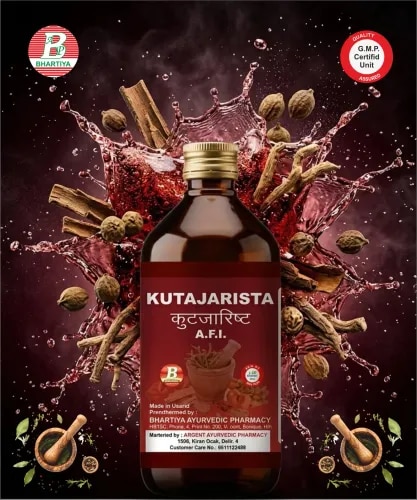
"name": "KUTJARISHTA",
"description": " KUTAJARISHTA\n\n\nProduct Identification \nGeneric Name: Kutajarishta (Kutajarishtam)\nType: Ayurvedic Polyherbal Fermented Formulation (Arishta)\nPrimary Indication Area: Diarrheal disorders, dysentery, irritable bowel conditions, digestive health, and intestinal detoxification.\n\nTherapeutic Indications\n• Atisara (diarrhea)\n• Pravahika (dysentery)\n• Chronic loose stools\n• irritable bowel syndrome with diarrhea (supportive management)\n• Grahani disorders (malabsorption syndrome)\n• Amoebic dysentery (supportive use)\n• Intestinal infections (supportive management)\n• Excess mucus in stools\n• post-infectious bowel weakness\n• Digestive debility associated with chronic diarrhea\n\nKey Benefits\n• Helps control diarrhea and dysentery\n• Supports restoration of normal bowel function\n• Reduces intestinal inflammation\n• Helps decrease mucus in stools\n• Supports healthy gut microbiota balance\n• Improves digestive strength (Agni)\n• Promotes intestinal healing and recovery\n• Acts as a restorative gastrointestinal tonic\n\nFORMULA\nMain Ingredients\n• Kutaja (Holarrhena antidysenterica)\n• Draksha (Vitis vinifera)\n• Madhuka (Madhuca longifolia)\n• Gambhari (Gmelina arborea)\nSweetening and Fermentation Base\n• Jala (Water)\n• Sarkara (Sugar)\n• Dhataki (Woodfordia fruticosa)\n\nKey Ingredient Actions\n1. Kutaja\nBotanical Name: Holarrhena antidysenterica \nRasa: Tikta, Kashaya\nGuna: Laghu, Ruksha\n Virya: Sheeta\nVipaka: Katu\nMechanism of Action:\n• Classical Atisaraghna (anti-diarrheal) herb\n• Helps control excessive bowel movements\n• Reduces intestinal inflammation\n• Supports management of dysentery and Grahani\n• Antimicrobial activity against intestinal pathogens\n• Promotes restoration of normal intestinal function\n\n2. Draksha\nBotanical Name: Vitis vinifera L.\nRasa: Madhura\n Guna: Guru, Snigdha\n Virya: Sheeta\n Vipaka: Madhura\nMechanism of Action:\n• Nourishing and restorative tonic\n• Helps replenish fluids and strength lost during diarrhea\n• Provides antioxidant support\n• Supports intestinal healing\n• Reduces dehydration-associated weakness\n• Promotes tissue nourishment and recovery\n\n3. Madhuka\nBotanical Name: Madhuca longifolia \nRasa: Madhura\nGuna: Guru, Snigdha\nVirya: Sheeta\nVipaka: Madhura\nMechanism of Action:\n• Provides nourishment and strength\n• Supports recovery from chronic gastrointestinal disorders\n• Helps soothe irritated intestinal mucosa\n• Promotes tissue healing and restoration\n• Supports overall digestive stability\n• Contributes to the fermentation process\n\n4. Gambhari\nBotanical Name: Gmelina arborea Roxb.\nRasa: Madhura, Kashaya\nGuna: Guru, Snigdha\n Virya: Sheeta\n Vipaka: Madhura\nMechanism of Action:\n• Supports intestinal healing and recovery\n• Helps reduce inflammatory conditions of the gut\n• Nourishes weakened tissues\n• Acts as a mild Rasayana (rejuvenative)\n• Supports recovery from chronic bowel disorders\n• Promotes gastrointestinal strength\n\n5. Dhataki\nBotanical Name: Woodfordia fruticosa (L.) Kurz\nRasa: Kashaya\n Guna: Laghu, Ruksha\n Virya: Ushna\nVipaka: Katu\n Prabhava: Sandhana Karaka\nMechanism of Action:\n• Natural fermentation catalyst\n• Enables alcohol formation in Arishta preparations\n• Enhances extraction of active phytochemicals\n• Improves bioavailability of herbal constituents\n• Supports preservation and shelf stability\n• Maintains quality of fermented formulation\n\n6. Sarkara (Sugar)\nRasa: Madhura\n Guna: Guru, Snigdha\n Virya: Sheeta\n Vipaka: Madhura\nMechanism of Action:\n• Provides substrate for fermentation\n• Improves palatability\n• Supports energy replenishment\n• Facilitates self-generated alcohol formation\n• Contributes to stability of the formulation\n\n7. Jala (Water)\nMechanism of Action:\n• Medium for herbal decoction preparation\n• Solvent for extraction of phytochemicals\n• Essential for fermentation process\n• Supports uniform distribution of active constituents\n• Facilitates preparation of the Arishta formulation\n\nDosage\nAdults\n• 15–30 mL\n• Twice daily after meals\n• Dilute with equal quantity of water\n\nkutjarishta use in hindi, kutjarishta use, kutjarishta price\nkutjarishta syrup, kutjarishta hindi, kutjarishta tablet\nkutajarishta ayurvedic medicine, kutajarishta ayurvedic syrup\nkutajarishta ayurvedic syrup in hindi, kutajarishta ayurvedic medicine uses\nkutajarishta ayurvedic, kutajarishtam amazon, kutajarishta ayurvedic aushadhi\nkutajarishta aushadhi, kutajarishta benefits in hindi, kutajarishta benefits\nkutajarishta before or after food, kutajarishta best company, kutajarishta composition\nkutajarishta contents, kutajarishta churna, kutajarishta cause constipation\nkutajarishta constipation, does kutajarishta cause constipation\ncan kutajarishta cure ibs, does kutajarishta contain alcohol, kutjarishta dosage\npatanjali divya kutjarishta, kutajarishta expiry date, kutajarishta in english\nbaidyanath kutajarishta ingredients, kutajarishta for ibs, kutajarishta for kids\nkutajarishta for constipation, kutajarishta for liver, kutajarishta for acidity\nkutajarishta for loose motion, kutajarishta for piles, kutajarishta for fatty liver\nkutajarishta for stomach infection, kutjarishta use hindi, kutajarishta syrup hindi\nkutjarishta use in hindi price, kutajarishta ingredients, kutajarishta in hindi\nkutajarishta ingredients in hindi, kutajarishta in constipation\nkutajarishta in pregnancy, kutjarishta ke nuksan, kutjarishta ke fayde in hindi\nkutajarishta ke, kutjarishta kadha, kutjarishta me kya hota hai, kutajarishta kya kam karta hai\nkutajarishta lene ke fayde, kutajarishta lene ka tarika, kutajarishta ke labh\nkutajarishta kab lena chahiye, kutajarishta kis liye hota hai, kutajarishta kis liye hai\nkutajarishta how long to take, kutajarishta me kya hota hai, kutajarishta medicine use in hindi\nkutajarishta multani, kutajarishta mrp, kutajarishta mode of action, kutajarishta near me\nkutajarishta online, benefits of kutjarishta, use of kutjarishta, dabur kutajarishta online\nuses of kutajarishta, ingredients of kutajarishta, benefits of kutajarishta syrup\nkutajarishta syrup price, kutajarishta reviews, kutajarishta research update\nkutajarishta research paper, kutajarishta reference, kutajarishta rate\nkutajarishta ramdev, kutajarishta syrup uses, kutajarishta syrup uses in hindi\nkutajarishta syrup benefits, kutajarishta uses, kutajarishta use hindi\nkutajarishta usage, kutajarishta when to take, how kutajarishta works\nkutajarishta used for, what does kutajarishta do, which kutajarishta is best\nkutajarishta for worms, how to use kutajarishta, how to take kutajarishta\ncan kutajarishta be given to kids, can kutajarishta cause constipation\ncan kutajarishta be taken daily",
"price": 165.0,
"discountamount": 82.0,
"currencycode": "INR",
"priority": 1000000,
"isfreeshipmentavailable": false,
"shipmentduration": 1,
"_keywords": null,
"isarchived": false,
"isavailable": true,
"applicationid": null,
"productindex": 168,
"imageuri": "https://productimages.withfloats.com/actual/6a7b0988a17759ddd0ad1917.jpg",
"tileimageuri": "https://productimages.withfloats.com/tile/6a7b0988a17759ddd0ad1917.jpg",
"images": null,
"totalqueries": 0,
"gpid": null,
"groupproductid": null,
"createdon": "2026-08-11T11:37:42.446Z",
"updatedon": "2026-08-11T12:11:44.451Z",
"buyonlinelink": null,
"producturl": "http://WWW.BHARTIYAAYURVEDICPHARMACY.COM//kutjarishta/168",
"availableunits": -1.0,
"iscodavailable": true,
"isprepaidonlineavailable": true,
"maxcodorders": -1,
"maxprepaidonlineorders": -1,
"uniquepaymenturl": null,
"brandname": "BAKULA FORT",
"category": "KUTJARISHTA 450 ML X 40",
"tags": [],
"variants": false,
"keyspecification": null,
"otherspecifications": null,
"pickupaddressreferenceid": null,
"paymenttype": "AssuredPurchase",
"producttype": "products",
"hsncode": null,
"gstslab": 0.0,
"isnotforsale": false
},
{
"_id": "6a7afd282a5df640d9fd3af9",
"fptag": "BHARTIYEAYURVEDICPHARMACY",
"merchantname": null,
"customwidgets": null,
"externalsourceid": null,
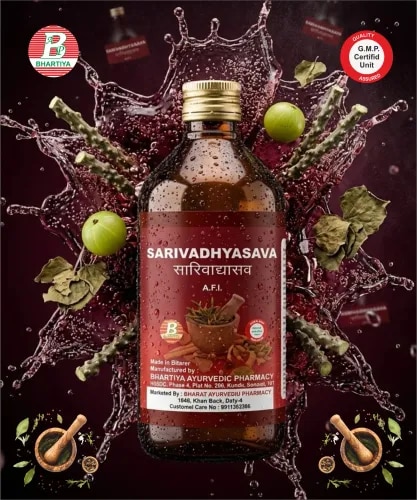
"name": "SARIVADYASAVA",
"description": " SARIVADYASAVA \n\n\nProduct Identification\nGeneric Name: Sarivadyasava\nType: Ayurvedic Polyherbal Fermented Formulation (Asava)\nPrimary Indication Area: Skin disorders, blood purification, urinary disorders, burning sensation, Pitta imbalance, and chronic inflammatory conditions.\n\nTherapeutic Indications\n• Kushta (skin disorders)\n• Twak vikara (chronic skin diseases)\n• Raktadushti (vitiated blood)\n• Daha (burning sensation)\n• Mutrakrichra (difficulty in urination)\n• Mutravaha disorders (urinary tract disorders)\n• Pittaja disorders\n• Chronic inflammatory conditions\n• Pruritus (itching)\n• Acne and recurrent skin eruptions\n• General weakness associated with chronic skin diseases\n\nKey Benefits\n• Supports healthy blood purification (Rakta Shodhana)\n• Helps maintain healthy skin and complexion\n• Reduces burning sensation and excess Pitta\n• Supports urinary tract health\n• Promotes natural detoxification\n• Helps reduce itching and inflammatory skin conditions\n• Supports immunity and tissue nourishment\n• Acts as a cooling rejuvenative tonic\n\nFORMULA\n1. Sariva\nBotanical Name: Hemidesmus indicus\nRasa: Madhura, Tikta\nGuna: Guru, Snigdha\n Virya: Sheeta\nVipaka: Madhura\n\nMechanism of Action:\n• Excellent blood purifier (Rakta Shodhaka)\n• Reduces Pitta and burning sensation\n• Supports healthy skin\n• Acts as a cooling rejuvenative\n\n2. Musta\nBotanical Name: Cyperus rotundus\nRasa: Tikta, Katu, Kashaya\nGuna: Laghu, Ruksha\nVirya: Sheeta\n Vipaka: Katu\n\nMechanism of Action:\n• Improves digestion and metabolism\n• Reduces Ama accumulation\n• Supports urinary health\n• Helps reduce inflammation\n\n3. Lodhra\nBotanical Name: Symplocos racemosa\nRasa: Kashaya\n Guna: Laghu, Ruksha\n Virya: Sheeta\n Vipaka: Katu\n\nMechanism of Action:\n• Supports healthy skin tissues\n• Reduces inflammation and discharge\n• Helps purify blood\n• Promotes wound healing\n\n4. Nyagrodha\nBotanical Name: Ficus benghalensis\nRasa: Kashaya\n Guna: Guru, Ruksha\nVirya: Sheeta\n Vipaka: Katu\n\nMechanism of Action:\n• Supports tissue healing\n• Helps reduce excessive Pitta\n• Promotes healthy skin\n• Supports blood purification\n\n5. Asvatha\nBotanical Name: Ficus religiosa\nRasa: Kashaya\nGuna: Guru, Ruksha\nVirya: Sheeta\nVipaka: Katu\n\nMechanism of Action:\n• Supports wound healing\n• Helps reduce inflammation\n• Promotes healthy blood circulation\n• Supports skin health\n\n6. Sati\nBotanical Name: Hedychium spicatum\nRasa: Katu, Tikta\n Guna: Laghu, Tikshna\nVirya: Ushna\nVipaka: Katu\n\nMechanism of Action:\n• Improves digestion\n• Reduces Ama formation\n• Supports respiratory and metabolic balance\n• Enhances bioavailability of herbs\n\n7. Sveta Sariva\nBotanical Name: Ichnocarpus frutescens\nRasa: Madhura, Tikta\n Guna: Guru, Snigdha\nVirya: Sheeta\n Vipaka: Madhura\n\nMechanism of Action:\n• Supports blood purification\n• Reduces burning sensation\n• Promotes healthy skin\n• Acts as a cooling tonic\n\n8. Padmaka\nBotanical Name: Prunus cerasoides\nRasa: Kashaya, Tikta\n Guna: Laghu, Ruksha\n Virya: Sheeta\n Vipaka: Katu\n\nMechanism of Action:\n• Supports healthy complexion\n• Helps reduce Pitta disorders\n• Promotes skin nourishment\n• Acts as an antioxidant\n\n9. Bala\nBotanical Name: Sida cordifolia\nRasa: Madhura\nGuna: Guru, Snigdha\nVirya: Sheeta\n Vipaka: Madhura\n\nMechanism of Action:\n• Strengthens body tissues\n• Supports recovery in chronic illness\n• Acts as a rejuvenative\n• Helps maintain vitality\n\n10. Patha\nBotanical Name: Cissampelos pareira\nRasa: Tikta, Kashaya\n Guna: Laghu, Ruksha\nVirya: Ushna\nVipaka: Katu\n\nMechanism of Action:\n• Supports urinary health\n• Reduces inflammation\n• Helps detoxification\n• Supports healthy digestion\n\n11. Amalaki\nBotanical Name: Phyllanthus emblica\nRasa: Pancha Rasa (predominantly Amla)\nGuna: Laghu, Ruksha\n Virya: Sheeta\n Vipaka: Madhura\n\nMechanism of Action:\n• Strong antioxidant and rejuvenative\n• Supports immunity\n• Helps purify blood\n• Supports healthy skin\n\n12. Guduchi\nBotanical Name: Tinospora cordifolia\nRasa: Tikta, Kashaya\n Guna: Laghu, Snigdha\n Virya: Ushna\nVipaka: Madhura\n\nMechanism of Action:\n• Supports immune function\n• Helps detoxification\n• Reduces inflammation\n• Promotes liver health\n\n13. Usira\nBotanical Name: Vetiveria zizanioides\nRasa: Tikta, Madhura\n Guna: Laghu, Ruksha\nVirya: Sheeta\nVipaka: Katu\n\nMechanism of Action:\n• Cooling and refreshing herb\n• Reduces burning sensation\n• Supports urinary health\n• Promotes blood purification\n\n14. Sveta Chandana\nBotanical Name: Santalum album\nRasa: Tikta, Madhura\nGuna: Laghu, Ruksha\nVirya: Sheeta\nVipaka: Katu\n\nMechanism of Action:\n• Reduces heat and burning sensation\n• Supports urinary comfort\n• Promotes healthy skin\n• Acts as a cooling tonic\n\n15. Rakta Chandana\nBotanical Name: Pterocarpus santalinus\nRasa: Tikta, Kashaya\nGuna: Laghu, Ruksha\nVirya: Sheeta\nVipaka: Katu\n\nMechanism of Action:\n• Supports blood purification\n• Helps reduce inflammation\n• Promotes skin health\n• Reduces excess Pitta\n\n16. Yavani\nBotanical Name: Trachyspermum ammi\nRasa: Katu\n Guna: Laghu, Ruksha, Tikshna\nVirya: Ushna\nVipaka: Katu\nMechanism of Action:\n• Improves digestion\n• Reduces gas and bloating\n• Supports metabolism\n• Helps digest Ama\n\n17. Kutaki\nBotanical Name: Picrorhiza kurroa\nRasa: Tikta\nGuna: Laghu, Ruksha\nVirya: Sheeta\n Vipaka: Katu\n\nMechanism of Action:\n• Supports liver function\n• Promotes detoxification\n• Improves digestion\n• Helps purify blood\n\n18. Tejpatra\nBotanical Name: Cinnamomum tamala\nRasa: Katu, Tikta\n Guna: Laghu, Ruksha\n Virya: Ushna\n Vipaka: Katu\n\nMechanism of Action:\n• Supports digestion and metabolism\n• Reduces gas and heaviness\n• Improves Agni\n• Helps digest Ama\n\n19. Sthuilaila\nBotanical Name: Amomum subulatum\nRasa: Tikta, Katu\nGuna: Laghu, Tikshna\nVirya: Ushna\nVipaka: Katu\n\nMechanism of Action:\n• Supports digestion\n• Reduces inflammation\n• Helps detoxification\n• Supports skin health\n\n20. Swernpatri\nBotanical Name: Cassia angustifolia\nRasa: Tikta, Kashaya\nGuna: Laghu, Ruksha\nVirya: Ushna\nVipaka: Katu\n\nMechanism of Action:\n• Mild natural laxative\n• Supports bowel cleansing\n• Helps eliminate toxins\n• Promotes detoxification\n\n21. Haritaki\nBotanical Name: Terminalia chebula\nRasa: Pancha Rasa (except Lavana)\nGuna: Laghu, Ruksha\nVirya: Ushna\nVipaka: Madhura\n\nMechanism of Action:\n• Mild laxative and detoxifier\n• Supports bowel cleansing\n• Improves digestion\n• Promotes elimination of toxins\n\n22. Guda\nBotanical Name: Jaggery\nRasa: Madhura\nGuna: Guru, Snigdha\n Virya: Ushna\n Vipaka: Madhura\n\nMechanism of Action:\n• Fermentation base\n• Provides energy substrate\n• Improves formulation stability\n• Enhances palatability\n\n23. Dhataki\nBotanical Name: Woodfordia fruticosa\nRasa: Kashaya\nGuna: Laghu, Ruksha\nVirya: Ushna\n Vipaka: Katu\n\nMechanism of Action:\n• Natural fermentation catalyst\n• Enhances extraction of phytochemicals\n• Improves bioavailability\n• Supports preservation of formulation\n\n24. Draksha\nBotanical Name: Vitis vinifera\nRasa: Madhura\n Guna: Guru, Snigdha\n Virya: Sheeta\n Vipaka: Madhura\nMechanism of Action:\n• Nourishes body tissues\n• Provides antioxidant support\n• Helps reduce burning sensation\n• Acts as a rejuvenative tonic\n\nDosage\nAdults:\n• 15–30 mL\n• Twice daily after meals\n• Dilute with equal quantity of water\n\nCommon Usage Guidance\n• Traditionally used in skin and blood disorders\n• Supports blood purification and healthy complexion\n• Helps reduce burning sensation and Pitta imbalance\n• Supports urinary health and detoxification\n• Usually prescribed for 4–8 weeks under Ayurvedic supervision\n• Best taken after food\n\nImportant Notes\n• Contains naturally fermented alcohol\n• Use cautiously in diabetes mellitus\n• Should be taken under Ayurvedic supervision\n• Avoid self-medication in severe systemic illness\n• Store in a cool, dry place\n• Keep tightly closed after use\n• Keep out of reach of children\n\n\nsarivadyasava uses in hindi, sarivadyasava uses, sarivadyasava syrup\nsarivadyasava benefits in hindi, sarivadyasava syrup side effects\nsarivadyasava syrup uses, sarivadyasava ingredients, sarivadyasava benefits\nsarivadyasava in hindi, sarivadyasava ayurvedic medicine, sarivadyasava ayurvedic\nsarivadyasava ayurvedic medicine uses in hindi, sarivadyasava amazon\nsarivadyasava easy ayurveda, sarivadyasava composition, sarivadyasava dosage\nsarivadyasava dabur uses, divya sarivadyasava, sarivadyasava uses in english\nsarivadyasava for skin in hindi, sarivadyasava for skin, sarivadyasava uses for skin\nsarivadyasava ke fayde, sarivadyasava used for, sarivadyasava hindi\nsarivadyasava how to take, sarivadyasava how to use, sarivadyasava uses hindi\nsarivadyasava syrup hindi, sarivadyasava syrup uses hindi, sarivadyasava ingredients in hindi\nsarivadyasava indication, sarivadyasava in pregnancy, sarivadyasava uses in ayurveda\nbaidyanath sarivadyasava ingredients, sarivadyasava jiva ayurveda\nsarivadyasava kaise use kare, sarivadyasava kadha uses, sarivadyasava kis kaam aati hai\nkerala ayurveda sarivadyasava, sarivadyasava kashayam, sarivadyasava medicine\nuse of sarivadyasava in hindi, ingredients of sarivadyasava, use of sarivadyasava syrup\nsarivadyasava price, sarivadyasava syrup price, sarivadyasava review\nsarivadyasava syrup benefits, sarivadyasava syrup benefits in hindi\nsarivadyasava tablet, sarivadyasava tablet uses in hindi\nsarivadyasava taste, how to take sarivadyasava, how to use sarivadyasava syrup\nhow to use sarivadyasava, sarivadyasava syrup uses in hindi, what is sarivadyasava used for",
"price": 165.0,
"discountamount": 82.0,
"currencycode": "INR",
"priority": 1000000,
"isfreeshipmentavailable": false,
"shipmentduration": 1,
"_keywords": null,
"isarchived": false,
"isavailable": true,
"applicationid": null,
"productindex": 167,
"imageuri": "https://productimages.withfloats.com/actual/6a7afd2abe4e6975bb0ae21f.jpg",
"tileimageuri": "https://productimages.withfloats.com/tile/6a7afd2abe4e6975bb0ae21f.jpg",
"images": null,
"totalqueries": 0,
"gpid": null,
"groupproductid": null,
"createdon": "2026-08-11T10:44:56.779Z",
"updatedon": "2026-08-11T10:44:56.779Z",
"buyonlinelink": null,
"producturl": "http://WWW.BHARTIYAAYURVEDICPHARMACY.COM//sarivadyasava/167",
"availableunits": -1.0,
"iscodavailable": true,
"isprepaidonlineavailable": true,
"maxcodorders": -1,
"maxprepaidonlineorders": -1,
"uniquepaymenturl": null,
"brandname": "BALULA FORT",
"category": "SARIVADYASAVA 450 ML X 40",
"tags": [],
"variants": false,
"keyspecification": null,
"otherspecifications": null,
"pickupaddressreferenceid": null,
"paymenttype": "AssuredPurchase",
"producttype": "products",
"hsncode": null,
"gstslab": 0.0,
"isnotforsale": false
},
{
"_id": "6a7af152dc4cc98142dd8d64",
"fptag": "BHARTIYEAYURVEDICPHARMACY",
"merchantname": null,
"customwidgets": null,
"externalsourceid": null,
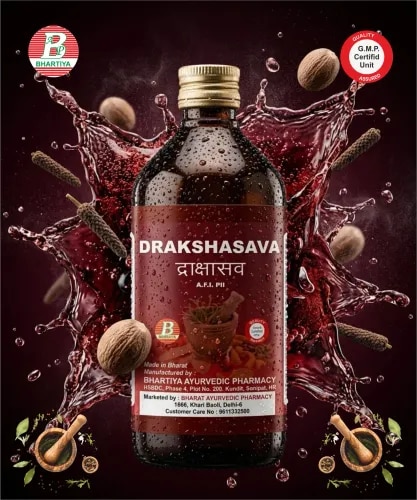
"name": "DRAKSHAASAVA",
"description": " DRAKSHAASAVA\n \n\nProduct Identification\nGeneric Name: Drakshaasava (Drakshasava)\nType: Ayurvedic Polyherbal Fermented Formulation (Asava)\nPrimary Indication Area: Digestive tonic, restorative tonic, blood-supportive tonic, and rejuvenative formulation.\n\nTherapeutic Indications\n• General debility and fatigue\n• Loss of appetite (Aruchi)\n• Chronic indigestion and weak digestion (Agnimandya)\n• Anaemia and weakness associated with chronic illness\n• Convalescence after fever and infection\n• Mild constipation associated with debility\n• Nutritional deficiency and poor strength\n• Respiratory weakness and chronic cough (supportive use)\n• Elderly weakness and recovery support\n• Low body weight and poor vitality\n\nKey Benefits\n• Acts as a nourishing and restorative tonic\n• Improves digestion and appetite\n• Supports healthy blood formation\n• Enhances strength and vitality\n• Helps reduce fatigue and exhaustion\n• Supports healthy bowel function\n• Promotes recovery after illness\n• Supports respiratory health\n• Improves overall nutritional status\n\nFORMULA\nMain Ingredients\n• Draksha (Vitis vinifera – Raisins) – 4.800 kg\n• Water – sufficient quantity for extraction\nSweetening and Fermentation Base\n• Guda (Jaggery) – 9.600–14.400 kg (as per reference)\n• Madhu (Honey) – quantity as per classical reference (where applicable)\n• Dhataki Pushpa (Woodfordia fruticosa) – 768 g\nPrakshepa Dravyas\n• Tvak (Cinnamomum verum) – 48 g\n• Ela (Elettaria cardamomum) – 48 g\n• Patra (Cinnamomum tamala) – 48 g\n• Nagakesara (Mesua ferrea) – 48 g\n• Maricha (Piper nigrum) – 48 g\n• Pippali (Piper longum) – 48 g\n• Shunthi (Zingiber officinale) – 48 g\n\nKey Ingredient Actions\n1.Draksha (Vitis vinifera)\n\nRasa: Madhura\nGuna: Guru, Snigdha\nVirya: Sheeta\n Vipaka: Madhura\n Prabhava: Brimhana, Raktavardhaka\nMechanism of Action:\n• Provides nourishment and energy\n• Supports blood health and vitality\n• Helps reduce fatigue and weakness\n• Mild laxative action supports bowel regularity\n• Supports respiratory and cardiovascular health\n\n2. Shunthi (Zingiber officinale)\nRasa: Katu\n Guna: Laghu, Ruksha\nVirya: Ushna\nVipaka: Madhura\nMechanism of Action:\n• Improves digestion and appetite\n• Enhances circulation\n• Reduces bloating and indigestion\n• Supports respiratory function\n• Improves nutrient assimilation\n\n3. Pippali (Piper longum)\nRasa: Katu\n Guna: Laghu, Snigdha\n Virya: Anushna-Ushna\n Vipaka: Madhura\nMechanism of Action:\n• Enhances digestive strength\n• Improves bioavailability of herbal constituents\n• Supports respiratory health\n• Helps reduce chronic weakness\n• Acts as rejuvenative support\n\n4. Maricha (Piper nigrum)\nRasa: Katu\nGuna: Laghu, Tikshna\nVirya: Ushna\n Vipaka: Katu\nMechanism of Action:\n• Stimulates digestion and metabolism\n• Improves nutrient absorption\n• Reduces Ama (metabolic toxins)\n• Supports respiratory clearance\n• Enhances circulation\n\n5. Tvak (Cinnamomum verum)\nRasa: Katu, Tikta, Madhura\n Guna: Laghu, Tikshna\n Virya: Ushna\nVipaka: Katu\nMechanism of Action:\n• Improves digestion and appetite\n• Supports circulation\n• Provides antioxidant activity\n• Reduces abdominal discomfort\n• Enhances flavor and palatability\n\n6. Ela (Elettaria cardamomum)\nRasa: Madhura, Katu\nGuna: Laghu\nVirya: Sheeta\nVipaka: Madhura\nMechanism of Action:\n• Reduces bloating and nausea\n• Improves digestion\n• Supports respiratory comfort\n• Enhances aroma and taste\n• Promotes appetite\n\n7. Nagakesara (Mesua ferrea)\nRasa: Kashaya, Tikta\n Guna: Laghu, Ruksha\nVirya: Sheeta\nVipaka: Katu\nMechanism of Action:\n• Supports blood health\n• Helps maintain tissue integrity\n• Reduces inflammation\n• Supports overall vitality\n• Provides restorative support\n\n8. Dhataki (Woodfordia fruticosa)\nRasa: Kashaya\nGuna: Laghu, Ruksha\n Virya: Ushna\n Vipaka: Katu\n Prabhava: Sandhana Karaka\nMechanism of Action:\n• Natural fermentation catalyst\n• Supports self-generated alcohol formation\n• Improves extraction of active constituents\n• Enhances stability and shelf life\n• Increases bioavailability\n\nDosage\n• Adults: 15–30 ml\n• Twice daily after meals\n• Dilute with equal quantity of water\n\nCommon Usage Guidance\n• Used as a restorative tonic after illness\n• Beneficial in weakness, fatigue, and poor digestion\n• Supports healthy blood formation and vitality\n• Commonly prescribed for 4–12 weeks depending on condition\n• Best taken after food\n\nImportant Notes\n• Contains jaggery, honey, and naturally generated alcohol due to fermentation\n• Use cautiously in diabetes\n• Not recommended during pregnancy unless prescribed by a qualified practitioner\n• Should be used under Ayurvedic supervision in chronic illnesses\n• Store in a cool, dry place and keep tightly closed\n• Keep out of reach of children\n• Shake well before use if recommended by the manufacturer\n\n\n\ndrakshasava, drakshasava uses in hindi, drakshasava benefits in hindi\ndrakshasava uses, drakshasava syrup, drakshasava price\ndrakshasava syrup uses, drakshasava benefits, drakshasava ayurvedic medicine\ndrakshasava ayurvedic medicine uses in hindi, drakshasava ayurvedic\ndrakshasava ayurvedic syrup, drakshasava ayurvedic medicine hindi\ndrakshasava amazon, drakshasava ayurvedic medicine uses\ndrakshasava buy online, drakshasava best brand, drakshasava benefits in english\ndrakshasava contains alcohol, drakshasava churna, drakshasava che fayde\ndrakshasava for child, drakshasava dabur syrup uses in hindi, drakshasava dose\ndrakshasava in english, when to take drakshasava, drakshasava for liver\ndrakshasava for skin, drakshasava for weight gain, drakshasava for kids\ndrakshasava for weight loss, drakshasava fayde, drakshasava for acidity\n drakshasava for cough, drakshasava glass bottle, drakshasava how to take,\ndrakshasava hindi use, drakshasava use, benefits of drakshasava in hindi\ndrakshasava kya hai, drakshasava ingredients, drakshasava in hindi\ndrakshasava ingredients in hindi, drakshasava indication, drakshasava images\ndrakshasava in cough, drakshasava juice, drakshasava ke fayde, drakshasava ke upyog\ndrakshasava ke labh, drakshasava ke fayde in hindi, drakshasava kis kaam aata hai\ndrakshasava kya kam karta hai, drakshasava lohasava syrup, drakshasava lene ke fayde\ndrakshasava meaning in hindi, drakshasava medicine uses in hindi, drakshasava marathi\ndrakshasava medicine, drakshasava meaning, drakshasava medicine uses, drakshasava mrp\ndrakshasava near me, drakshasava syrup near me, drakshasava online, benefits of drakshasava\nuses of drakshasava, benefits of drakshasava syrup, drakshasava price in india\ndrakshasava rate, drakshasava syrup benefits, drakshasava syrup in hindi\ndrakshasava syrup price, what does drakshasava do, where drakshasava\nwhen drakshasava, how to take drakshasava, why drakshasava\nwho drakshasava, is drakshasava good for sleep, is drakshasava good for liver\nis drakshasava good for diabetes, is drakshasava alcohol\nis drakshasava and draksharishta same, is drakshasava wine\nis drakshasava good for cough, is drakshasava good for acidity\nis drakshasava good for health, can we take drakshasava daily\nshould drakshasava, will drakshasava, was drakshasava\nbest drakshasava syrup, best drakshasava, top drakshasava",
"price": 170.0,
"discountamount": 135.0,
"currencycode": "INR",
"priority": 1000000,
"isfreeshipmentavailable": false,
"shipmentduration": 1,
"_keywords": null,
"isarchived": false,
"isavailable": true,
"applicationid": null,
"productindex": 166,
"imageuri": "https://productimages.withfloats.com/actual/6a7af1547d36c41d87d8e5de.jpg",
"tileimageuri": "https://productimages.withfloats.com/tile/6a7af1547d36c41d87d8e5de.jpg",
"images": null,
"totalqueries": 0,
"gpid": null,
"groupproductid": null,
"createdon": "2026-08-11T09:54:26.703Z",
"updatedon": "2026-08-11T12:11:05.313Z",
"buyonlinelink": null,
"producturl": "http://WWW.BHARTIYAAYURVEDICPHARMACY.COM//drakshaasava/166",
"availableunits": -1.0,
"iscodavailable": true,
"isprepaidonlineavailable": true,
"maxcodorders": -1,
"maxprepaidonlineorders": -1,
"uniquepaymenturl": null,
"brandname": "BAKULA FORT",
"category": "DRAKSHAASAVA 450 ML X 170",
"tags": [],
"variants": false,
"keyspecification": null,
"otherspecifications": null,
"pickupaddressreferenceid": null,
"paymenttype": "AssuredPurchase",
"producttype": "products",
"hsncode": null,
"gstslab": 0.0,
"isnotforsale": false
},
{
"_id": "6a7ac6626f0de6a685d521bd",
"fptag": "BHARTIYEAYURVEDICPHARMACY",
"merchantname": null,
"customwidgets": null,
"externalsourceid": null,
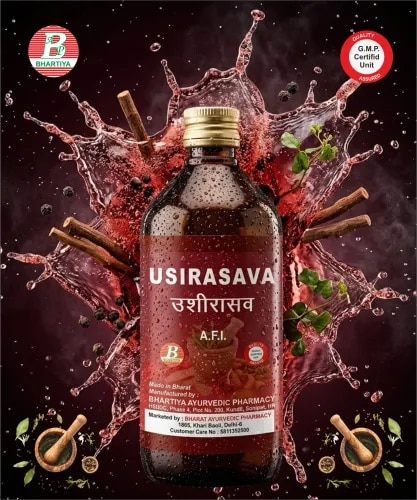
"name": "USHIRASAVA",
"description": " USHIRASAVA \n\n\n\nGeneric Name: Ushirasava\nType: Ayurvedic Polyherbal Fermented Formulation (Asava)\nPrimary Indication Area: Bleeding disorders, burning sensation, Pitta disorders, skin diseases, urinary disorders, blood vitiation, and inflammatory conditions.\n\nTherapeutic Indications\n• Raktapitta (bleeding disorders)\n• Daha (burning sensation)\n• Pittaja disorders\n• Raktadushti (vitiated blood)\n• Twak vikara (skin disorders)\n• Mutrakrichra (difficulty in urination)\n• Mutravaha disorders (urinary tract disorders)\n• Excessive body heat\n• Chronic inflammatory conditions\n• Pruritus (itching)\n• General debility associated with Pitta disorders\n\nKey Benefits\n• Supports healthy blood purification (Rakta Shodhana)\n• Helps reduce excessive body heat and burning sensation\n• Supports urinary tract health\n• Promotes healthy skin and complexion\n• Helps maintain Pitta balance\n• Supports natural detoxification\n• Helps reduce inflammatory conditions\n• Acts as a cooling rejuvenative tonic\n\nFORMULA\n1. Ushira\nBotanical Name: Vetiveria zizanioides\nRasa: Tikta, Madhura\nGuna: Laghu, Ruksha\n Virya: Sheeta\n Vipaka: Katu\nMechanism of Action:\n• Strong cooling herb\n• Reduces burning sensation and excess Pitta\n• Supports urinary health\n• Purifies blood\n\n2. Harivera\nBotanical Name: Pavonia odorata\nRasa: Tikta, Madhura\nGuna: Laghu, Ruksha\nVirya: Sheeta\nVipaka: Katu\nMechanism of Action:\n• Cooling and refreshing herb\n• Supports blood purification\n• Reduces body heat\n• Promotes urinary comfort\n\n3. Padma\nBotanical Name: Nelumbo nucifera\nRasa: Madhura, Kashaya\nGuna: Laghu, Snigdha\n Virya: Sheeta\nVipaka: Madhura\nMechanism of Action:\n• Supports healthy blood circulation\n• Reduces burning sensation\n• Promotes skin health\n• Helps balance Pitta\n\n4. Gambhari\nBotanical Name: Gmelina arborea\nRasa: Madhura, Kashaya\n Guna: Guru, Snigdha\nVirya: Sheeta\n Vipaka: Madhura\nMechanism of Action:\n• Nourishes body tissues\n• Supports rejuvenation\n• Helps reduce inflammation\n• Promotes overall vitality\n\n5. Utpala\nBotanical Name: Nymphaea stellata\nRasa: Tikta, Kashaya, Madhura\n Guna: Laghu, Snigdha\n Virya: Sheeta\nVipaka: Madhura\nMechanism of Action:\n• Cooling and soothing herb\n• Helps reduce burning sensation\n• Supports blood purification\n• Promotes skin health\n\n6. Priyangu\nBotanical Name: Callicarpa macrophylla\nRasa: Kashaya, Madhura\nGuna: Laghu, Ruksha\nVirya: Sheeta\n Vipaka: Katu\nMechanism of Action:\n• Supports healthy skin\n• Reduces inflammation\n• Helps control excessive sweating\n• Supports blood purification\n\n7. Padmaka\nBotanical Name: Prunus cerasoides\nRasa: Kashaya, Tikta\n Guna: Laghu, Ruksha\nVirya: Sheeta\nVipaka: Katu\nMechanism of Action:\n• Supports healthy complexion\n• Helps reduce Pitta disorders\n• Promotes skin nourishment\n• Acts as an antioxidant\n\n8. Lodhra\nBotanical Name: Symplocos racemosa\nRasa: Kashaya\nGuna: Laghu, Ruksha\n Virya: Sheeta\nVipaka: Katu\nMechanism of Action:\n• Supports healthy skin tissues\n• Reduces inflammation and discharge\n• Helps purify blood\n• Promotes wound healing\n\n9. Manjistha\nBotanical Name: Rubia cordifolia\nRasa: Tikta, Kashaya, Madhura\n Guna: Guru, Ruksha\n Virya: Ushna\nVipaka: Katu\nMechanism of Action:\n• Powerful blood purifier\n• Supports healthy skin\n• Reduces inflammation\n• Promotes detoxification\n\n10. Dhanvayasaka\nBotanical Name: Fagonia cretica\nRasa: Tikta, Kashaya\n Guna: Laghu, Ruksha\nVirya: Sheeta\nVipaka: Katu\nMechanism of Action:\n• Supports blood purification\n• Helps reduce inflammation\n• Promotes skin health\n• Supports detoxification\n\n11. Patha\nBotanical Name: Cissampelos pareira\nRasa: Tikta, Kashaya\nGuna: Laghu, Ruksha\nVirya: Ushna\n Vipaka: Katu\nMechanism of Action:\n• Supports urinary health\n• Reduces inflammation\n• Helps detoxification\n• Supports healthy digestion\n\n12. Kiratatikta\nBotanical Name: Swertia chirata\nRasa: Tikta\n Guna: Laghu, Ruksha\nVirya: Sheeta\n Vipaka: Katu\nMechanism of Action:\n• Supports liver function\n• Purifies blood\n• Reduces fever and inflammation\n• Improves metabolism\n\n13. Nyagrodha\nBotanical Name: Ficus benghalensis\nRasa: Kashaya\n Guna: Guru, Ruksha\nVirya: Sheeta\n Vipaka: Katu\nMechanism of Action:\n• Supports tissue healing\n• Helps reduce excessive Pitta\n• Promotes healthy skin\n• Supports blood purification\n\n14. Udumbara\nBotanical Name: Ficus racemosa\nRasa: Kashaya, Madhura\n Guna: Guru, Ruksha\nVirya: Sheeta\nVipaka: Madhura\nMechanism of Action:\n• Helps control bleeding disorders\n• Supports wound healing\n• Promotes healthy skin\n• Reduces inflammation\n\n15. Sati\nBotanical Name: Hedychium spicatum\nRasa: Katu, Tikta\n Guna: Laghu, Tikshna\n Virya: Ushna\n Vipaka: Katu\nMechanism of Action:\n• Improves digestion\n• Reduces Ama formation\n• Supports respiratory and metabolic balance\n• Enhances bioavailability of herbs\n\n16. Parpata\nBotanical Name: Fumaria parviflora\nRasa: Tikta\n Guna: Laghu, Ruksha\n Virya: Sheeta\nVipaka: Katu\nMechanism of Action:\n• Supports liver function\n• Purifies blood\n• Reduces burning sensation\n• Promotes skin health\n\n17. Pundarika\nBotanical Name: Nelumbo nucifera (White Lotus)\nRasa: Madhura, Kashaya\nGuna: Laghu, Snigdha\n Virya: Sheeta\n Vipaka: Madhura\nMechanism of Action:\n• Cooling and soothing herb\n• Supports blood purification\n• Reduces Pitta disorders\n• Promotes healthy complexion\n\n18. Patola\nBotanical Name: Trichosanthes dioica\nRasa: Tikta\n Guna: Laghu, Ruksha\n Virya: Ushna\nVipaka: Katu\nMechanism of Action:\n• Supports healthy skin\n• Purifies blood\n• Helps detoxification\n• Improves digestion\n\n19. Kachnar\nBotanical Name: Bauhinia variegata\nRasa: Kashaya\n Guna: Laghu, Ruksha\nVirya: Sheeta\n Vipaka: Katu\nMechanism of Action:\n• Supports glandular health\n• Helps reduce inflammatory swelling\n• Promotes detoxification\n• Supports skin health\n\n20. Jambu\nBotanical Name: Syzygium cumini\nRasa: Kashaya, Madhura\n Guna: Laghu, Ruksha\n Virya: Sheeta\nVipaka: Katu\nMechanism of Action:\n• Supports blood purification\n• Helps regulate metabolism\n• Promotes urinary health\n• Supports healthy skin\n\n21. Salmali\nBotanical Name: Bombax ceiba\nRasa: Kashaya, Madhura\n Guna: Guru, Snigdha\nVirya: Sheeta\nVipaka: Madhura\nMechanism of Action:\n• Supports tissue healing\n• Helps reduce bleeding tendencies\n• Promotes skin health\n• Provides rejuvenative support\n\n22. Draksha\nBotanical Name: Vitis vinifera\nRasa: Madhura\n Guna: Guru, Snigdha\n Virya: Sheeta\nVipaka: Madhura\nMechanism of Action:\n• Nourishes body tissues\n• Provides antioxidant support\n• Helps reduce burning sensation\n• Acts as a rejuvenative tonic\n\n23. Dhataki\nBotanical Name: Woodfordia fruticosa\nRasa: Kashaya\n Guna: Laghu, Ruksha\n Virya: Ushna\n Vipaka: Katu\nMechanism of Action:\n• Natural fermentation catalyst\n• Enhances extraction of phytochemicals\n• Improves bioavailability\n• Supports preservation of formulation\n\n24. Sarkara\nBotanical Name: Sugar\nRasa: Madhura\n Guna: Guru, Snigdha\nVirya: Sheeta\nVipaka: Madhura\nMechanism of Action:\n• Fermentation substrate\n• Improves palatability\n• Provides formulation stability\n• Supports natural fermentation\n\n25. Madhu\nBotanical Name: Honey\nRasa: Madhura, Kashaya\nGuna: Laghu, Ruksha\n Virya: Sheeta\n Vipaka: Madhura\nMechanism of Action:\n• Supports natural fermentation\n• Enhances bioavailability\n• Acts as a Yogavahi (catalytic carrier)\n• Promotes tissue nourishment\n\n26. Maricha\nBotanical Name: Piper nigrum\nRasa: Katu\nGuna: Laghu, Tikshna\nVirya: Ushna\n Vipaka: Katu\nMechanism of Action:\n• Improves digestion and metabolism\n• Enhances bioavailability of herbal constituents\n• Reduces Ama accumulation\n• Supports detoxification\n\nDosage\nAdults:\n• 15–30 mL\n• Twice daily after meals\n• Dilute with equal quantity of water\n\nCommon Usage Guidance\n• Traditionally used in bleeding disorders and Pitta disorders\n• Supports blood purification and healthy skin\n• Helps reduce burning sensation and excessive body heat\n• Supports urinary health and natural detoxification\n• Usually prescribed for 4–8 weeks under Ayurvedic supervision\n• Best taken after food\n\nImportant Notes\n• Contains naturally fermented alcohol\n• Use cautiously in diabetes mellitus\n• Should be taken under Ayurvedic supervision\n• Avoid self-medication in severe bleeding disorders or systemic illness\n• Store in a cool, dry place\n• Keep tightly closed after use\n• Keep out of reach of children\n\nushirasava syrup, ushirasava syrup uses, ushirasava syrup uses in hindi\nushirasava uses, ushirasava uses in hindi, ushirasava syrup benefits\nushirasava ingredients, ushirasava ayurvedic medicine uses\nushirasava and chandanasava, ushirasava ayurvedic syrup\nushirasava ayurvedic, ushirasava ayurvedic medicine\nushirasava amazon, ushirasava ayur times, ushirasava ayurvedic medicine uses in kannada\nushirasava benefits in hindi, ushirasava benefits, ushirasava contents\nchandanasava ushirasava, benefits of ushirasava, ushirasava dhootapapeshwar\nushirasava dosage, ushirasava dose, ushirasava dawa ke fayde\ndivya ushirasava benefits, ushirasava uses in english, ushirasava for acidity\nushirasava for skin, ushirasava uses for skin, ushirasava uses for piles\nushirasava ke fayde, ushirasava ke fayde in hindi, ushirasava used for\nushirasava syrup ke fayde in hindi, ushirasava syrup ke fayde\nushirasava hindi, ushirasava how to use, ushirasava how to take\nushirasava uses hindi, ushirasava benefits hindi, ushirasava syrup hindi\nushirasava kya hai, ushirasava ingredients in hindi, ushirasava meaning in hindi\nushirasava in hindi, ushirasava indication, ushirasava in uti, ushirasava in ayurveda\nbaidyanath jhansi ushirasava, benefits of juani, ushirasava kadha, ushirasava kis kaam aati hai\nushirasava kadha uses, ushirasava near me, ushirasava online, uses of ushirasava\nuse of ushirasava syrup, use of ushirasava in hindi, ingredients of ushirasava\nbenefits of ushirasava in hindi, benefits of ushirasava syrup, ushirasava price\nushirasava planet ayurveda, ushirasava preparation, ushirasava syrup price\nushirasava reference, ushirasava research article, ushirasava unjha\nayurvedic medicine ushirasava, ayurvedic ushirasava, divya ushirasava uses\nsyp ushirasava uses in hindi, sandu ushirasava benefits, syrup ushirasava uses",
"price": 210.0,
"discountamount": 105.0,
"currencycode": "INR",
"priority": 1000000,
"isfreeshipmentavailable": false,
"shipmentduration": 1,
"_keywords": null,
"isarchived": false,
"isavailable": true,
"applicationid": null,
"productindex": 165,
"imageuri": "https://productimages.withfloats.com/actual/6a7ac667756b497df898fbeb.jpg",
"tileimageuri": "https://productimages.withfloats.com/tile/6a7ac667756b497df898fbeb.jpg",
"images": null,
"totalqueries": 0,
"gpid": null,
"groupproductid": null,
"createdon": "2026-08-11T06:51:14.369Z",
"updatedon": "2026-08-11T06:56:26.648Z",
"buyonlinelink": null,
"producturl": "http://WWW.BHARTIYAAYURVEDICPHARMACY.COM//ushirasava/165",
"availableunits": -1.0,
"iscodavailable": true,
"isprepaidonlineavailable": true,
"maxcodorders": -1,
"maxprepaidonlineorders": -1,
"uniquepaymenturl": null,
"brandname": "BAKULA FORT",
"category": "USHIRASAVA 450 ML X 40",
"tags": [],
"variants": false,
"keyspecification": null,
"otherspecifications": null,
"pickupaddressreferenceid": null,
"paymenttype": "AssuredPurchase",
"producttype": "products",
"hsncode": null,
"gstslab": 0.0,
"isnotforsale": false
},
{
"_id": "6a6069dca338caae77fcc9a0",
"fptag": "BHARTIYEAYURVEDICPHARMACY",
"merchantname": null,
"customwidgets": null,
"externalsourceid": null,
"name": "DASHMULARISHTA",
"description": " DASHMULARISHTA\n\n\nProduct Identification\nGeneric Name: Dashmularishta\nType: Ayurvedic Polyherbal Fermented Formulation (Arishta)\nPrimary Indication Area: Primarily used as a rejuvenative and restorative tonic for postpartum care, Vata disorders, inflammatory conditions, musculoskeletal weakness, nervous system disorders, and recovery following chronic illness. It is widely indicated for general debility, fever recovery, respiratory weakness, digestive impairment, and gynecological disorders associated with Vata imbalance.\n\nTherapeutic Indications\n•\tGeneral debility (Daurbalya) \n•\tPostpartum care (Sutika Paricharya) \n•\tVata disorders (Vatavyadhi) \n•\tChronic inflammatory conditions \n•\tMusculoskeletal weakness \n•\tJoint pain and stiffness \n•\tLow back pain \n•\tNeuralgia and neuropathic discomfort \n•\tConvalescence following prolonged illness \n•\tRespiratory weakness and chronic cough \n•\tFever recovery \n•\tDigestive weakness and poor appetite \n•\tGynecological disorders associated with Vata imbalance \n•\tFatigue and reduced stamina \n•\tAge-related decline in strength and vitality \n\nKey Benefits\n•\tSupports healthy musculoskeletal and nervous system function. \n•\tPromotes recovery following childbirth and prolonged illness. \n•\tHelps reduce inflammation and joint discomfort. \n•\tImproves physical strength and endurance. \n•\tSupports healthy respiratory function. \n•\tEnhances digestion and metabolism. \n•\tPromotes healthy immune function. \n•\tSupports uterine health during the postpartum period. \n•\tActs as a Rasayana for restoring vitality. \n•\tProvides antioxidant protection against oxidative stress. \n\nFORMULA\nEach part contains:\n•\tBilva (Aegle marmelos) \n•\tShyonaka (Oroxylum indicum) \n•\tGambhari (Gmelina arborea) \n•\tPatala (Stereospermum suaveolens) \n•\tAgnimantha (Clerodendrum phlomidis) \n•\tShalaparni (Desmodium gangeticum) \n•\tPrishniparni (Uraria picta) \n•\tBrihati (Solanum indicum) \n•\tKantakari (Solanum xanthocarpum)\n•\tGokshura (Tribulus terrestris) \n•\tChitraka (Plumbago zeylanica) \n•\tPushkara (Inula racemosa) \n•\tLodhra (Symplocos racemosa) \n•\tGuduchi (Tinospora cordifolia) \n•\tAmalaki (Phyllanthus emblica) \n•\tDhanvayasa (Fagonia cretica) \n•\tKhadira (Acacia catechu) \n•\tKustha (Saussurea lappa) \n•\tManjistha (Rubia cordifolia) \n•\tDevadaru (Cedrus deodara) \n•\tVidanga (Embelia ribes) \n•\tMadhuka (Glycyrrhiza glabra) \n•\tBharangi (Clerodendrum serratum) \n•\tKapitha (Limonia acidissima / Feronia limonia) \n•\tBibhitaki (Terminalia bellirica) \n•\tPunarnava (Boerhavia diffusa) \n•\tChavya (Piper retrofractum) \n•\tJatamansi (Nardostachys jatamansi) \n•\tPriyangu (Callicarpa macrophylla) \n•\tSariva (Hemidesmus indicus) \n•\tKala Jeera (Carum carvi / Nigella sativa (regional use)) \n•\tTrivrit (Operculina turpethum) \n•\tNirgundi (Vitex negundo) \n•\tRasna (Pluchea lanceolata) \n•\tHaridra (Curcuma longa) \n•\tSatpushpa (Anethum sowa / Anethum graveolens) \n•\tPadmaka (Prunus cerasoides) \n•\tNagakesara (Mesua ferrea) \n•\tMusta (Cyperus rotundus) \n•\tIndrayava (Holarrhena antidysenterica) \n•\tKarkatashringi (Pistacia integerrima) \n•\tJivaka (Microstylis wallichii) \n•\tRishabhaka (Microstylis muscifera) \n•\tMeda (Polygonatum cirrhifolium) \n•\tKakoli (Fritillaria roylei) \n•\tKshirakakoli (Roscoea purpurea) \n•\tRiddhi (Habenaria intermedia) \n•\tVriddhi (Habenaria edgeworthii) \n•\tDraksha (Vitis vinifera) \n•\tKatphala (Myrica nagi) \n•\tPuga (Areca catechu) \n•\tGuda (Jaggery) \n•\tMadhu (Honey) \n•\tDhataki (Woodfordia fruticosa) \n•\tLavanga (Syzygium aromaticum) \n•\tTvak (Cinnamomum verum) \n•\tEla (Elettaria cardamomum) \n•\tTejapatra (Cinnamomum tamala) \n•\tPippali (Piper longum) \n•\tHaridra (Curcuma longa) \n•\tSveta Chandana (Santalum album) \n•\tPippali root\n\n\n1. Bilva\nBotanical Name: Aegle marmelos\n•\tRasa: Kashaya, Tikta \n•\tGuna: Laghu, Ruksha \n•\tVirya: Ushna \n•\tVipaka: Katu \n•\tPrabhava: Vata-Kapha Shamaka \nMechanism of Action\n•\tReduces inflammatory mediators in gut and joints \n•\tRegulates Vata in neuromuscular system \n•\tSupports digestive motility and Agni \n•\tAnti-inflammatory and mild analgesic activity \n•\tHelps in post-illness weakness recovery \n\n2. Shyonaka\nBotanical Name: Oroxylum indicum\n•\tRasa: Tikta, Kashaya \n•\tGuna: Laghu, Ruksha \n•\tVirya: Ushna \n•\tVipaka: Katu \nMechanism of Action\n•\tReduces cytokine-mediated inflammation \n•\tSupports respiratory and musculoskeletal recovery \n•\tAntioxidant and tissue-protective action \n•\tHelps in Vata-induced pain conditions \n\n3. Gambhari\nBotanical Name: Gmelina arborea\n•\tRasa: Madhura, Kashaya \n•\tGuna: Guru, Snigdha \n•\tVirya: Sheeta \n•\tVipaka: Madhura \n•\tPrabhava: Rasayana \nMechanism of Action\n•\tPromotes tissue regeneration and strength \n•\tSupports post-partum recovery \n•\tImmunomodulatory and restorative effect \n•\tAnti-inflammatory and nutritive action \n\n4. Patala\nBotanical Name: Stereospermum suaveolens\n•\tRasa: Tikta, Kashaya \n•\tGuna: Laghu, Ruksha \n•\tVirya: Ushna \n•\tVipaka: Katu \nMechanism of Action\n•\tReduces neuromuscular inflammation \n•\tSupports respiratory function \n•\tAnalgesic activity in Vata disorders \n•\tImproves tissue repair mechanisms \n\n5. Agnimantha\nBotanical Name: Clerodendrum phlomidis\n•\tRasa: Katu, Tikta \n•\tGuna: Laghu, Ruksha \n•\tVirya: Ushna \n•\tVipaka: Katu \nMechanism of Action\n•\tStimulates digestive enzymes and Agni \n•\tReduces Ama accumulation \n•\tAnti-inflammatory in joints and muscles \n•\tEnhances metabolic clearance \n\n6. Shalaparni\nBotanical Name: Desmodium gangeticum\n•\tRasa: Madhura, Tikta \n•\tGuna: Snigdha, Laghu \n•\tVirya: Ushna \n•\tVipaka: Madhura \nMechanism of Action\n•\tNeuroprotective and muscle-strengthening \n•\tReduces fatigue and weakness \n•\tSupports immune modulation \n•\tEnhances recovery from chronic illness \n\n7. Prishniparni\nBotanical Name: Uraria picta\n•\tRasa: Madhura, Tikta \n•\tGuna: Snigdha, Laghu \n•\tVirya: Ushna \n•\tVipaka: Madhura \nMechanism of Action\n•\tImproves neuromuscular strength \n•\tSupports postpartum tissue repair \n•\tAnti-inflammatory and rejuvenative \n•\tEnhances stamina and vitality \n\n8. Brihati\nBotanical Name: Solanum indicum\n•\tRasa: Tikta, Katu \n•\tGuna: Laghu, Ruksha \n•\tVirya: Ushna \n•\tVipaka: Katu \nMechanism of Action\n•\tReduces inflammatory pain \n•\tSupports respiratory health \n•\tHelps in Vata-Kapha imbalance disorders \n•\tImproves metabolic function \n\n9. Kantakari\nBotanical Name: Solanum xanthocarpum\n•\tRasa: Tikta, Katu \n•\tGuna: Laghu, Ruksha \n•\tVirya: Ushna \n•\tVipaka: Katu \nMechanism of Action\n•\tBronchodilator and expectorant action \n•\tReduces respiratory inflammation \n•\tSupports Vata-Kapha balance \n•\tImproves oxygenation and vitality \n\n10. Gokshura\nBotanical Name: Tribulus terrestris\n•\tRasa: Madhura \n•\tGuna: Snigdha, Guru \n•\tVirya: Sheeta \n•\tVipaka: Madhura \nMechanism of Action\n•\tDiuretic and urinary system support \n•\tEnhances muscle strength and stamina \n•\tImproves reproductive function \n•\tAnti-fatigue and anabolic support \n\n11. Chitraka\nBotanical Name: Plumbago zeylanica\n•\tRasa: Katu \n•\tGuna: Laghu, Tikshna \n•\tVirya: Ushna \n•\tVipaka: Katu \nMechanism of Action\n•\tPotent digestive stimulant (Agni deepana) \n•\tReduces Ama accumulation \n•\tImproves nutrient absorption \n•\tEnhances metabolic rate \n\n12. Pushkara\nBotanical Name: Inula racemosa\n•\tRasa: Tikta, Katu \n•\tGuna: Laghu, Ruksha \n•\tVirya: Ushna \n•\tVipaka: Katu \nMechanism of Action\n•\tCardiorespiratory stimulant \n•\tImproves oxygen utilization \n•\tAnti-inflammatory and bronchodilator \n•\tSupports endurance \n\n13. Lodhra\nBotanical Name: Symplocos racemosa\n•\tRasa: Kashaya \n•\tGuna: Laghu, Ruksha \n•\tVirya: Sheeta \n•\tVipaka: Katu \nMechanism of Action\n•\tUterine tonic and anti-inflammatory \n•\tSupports tissue tightening and healing \n•\tReduces excessive secretions \n•\tImproves reproductive health \n\n14. Guduchi\nBotanical Name: Tinospora cordifolia\n•\tRasa: Tikta, Kashaya \n•\tGuna: Laghu, Snigdha \n•\tVirya: Ushna \n•\tVipaka: Madhura \nMechanism of Action\n•\tStrong immunomodulator \n•\tAnti-inflammatory and antipyretic \n•\tEnhances detoxification pathways \n•\tSupports chronic disease recovery \n\n15. Amalaki\nBotanical Name: Phyllanthus emblica\n•\tRasa: Amla Pradhana Pancharasa \n•\tGuna: Laghu, Ruksha \n•\tVirya: Sheeta \n•\tVipaka: Madhura \nMechanism of Action\n•\tPotent antioxidant (vitamin C rich) \n•\tAnti-aging and Rasayana effect \n•\tSupports immunity and tissue repair \n•\tEnhances digestion and metabolism\n16. Dhanvayasa\nBotanical Name: Fagonia cretica / Alhagi pseudalhagi\n•\tRasa: Tikta, Kashaya \n•\tGuna: Laghu, Ruksha \n•\tVirya: Sheeta \n•\tVipaka: Katu \nMechanism\n•\tAnti-inflammatory and blood-purifying activity \n•\tSupports detoxification and tissue repair \n•\tHelps reduce chronic inflammatory states \n\n17. Khadira\nBotanical Name: Acacia catechu\n•\tRasa: Kashaya \n•\tGuna: Ruksha, Laghu \n•\tVirya: Sheeta \n•\tVipaka: Katu \nMechanism\n•\tStrong antioxidant and antimicrobial action \n•\tSupports skin, blood and metabolic health \n•\tReduces chronic inflammation \n\n18. Kustha\nBotanical Name: Saussurea lappa\n•\tRasa: Tikta, Katu \n•\tGuna: Laghu, Tikshna \n•\tVirya: Ushna \n•\tVipaka: Katu \nMechanism\n•\tAnti-inflammatory and analgesic \n•\tSupports Vata disorders (pain, stiffness) \n•\tImproves neuromuscular function \n\n19. Manjistha\nBotanical Name: Rubia cordifolia\n•\tRasa: Tikta, Kashaya \n•\tGuna: Guru, Ruksha \n•\tVirya: Ushna \n•\tVipaka: Katu \nMechanism\n•\tBlood purification and lymphatic drainage \n•\tAnti-inflammatory and antioxidant \n•\tSupports skin and tissue repair \n\n20. Devadaru\nBotanical Name: Cedrus deodara\n•\tRasa: Tikta, Katu \n•\tGuna: Laghu, Ruksha \n•\tVirya: Ushna \n•\tVipaka: Katu \nMechanism\n•\tPotent anti-inflammatory action \n•\tRelieves joint and muscle pain \n•\tSupports respiratory clearance \n\n21. Vidanga\nBotanical Name: Embelia ribes\n•\tRasa: Katu \n•\tGuna: Laghu, Ruksha \n•\tVirya: Ushna \n•\tVipaka: Katu \nMechanism\n•\tAnthelmintic and antimicrobial \n•\tImproves gut health and metabolism \n•\tReduces Ama accumulation \n\n22. Madhuka\nBotanical Name: Glycyrrhiza glabra\n•\tRasa: Madhura \n•\tGuna: Guru, Snigdha \n•\tVirya: Sheeta \n•\tVipaka: Madhura \nMechanism\n•\tAnti-inflammatory and demulcent \n•\tSupports respiratory and gastric mucosa \n•\tImmunomodulatory and rejuvenative \n\n23. Bharangi\nBotanical Name: Clerodendrum serratum\n•\tRasa: Tikta, Katu \n•\tGuna: Laghu, Ruksha \n•\tVirya: Ushna \n•\tVipaka: Katu \nMechanism\n•\tRespiratory anti-inflammatory \n•\tBronchodilator effect \n•\tSupports cough and asthma conditions \n\n24. Kapitha\nBotanical Name: Limonia acidissima\n•\tRasa: Kashaya \n•\tGuna: Guru, Ruksha \n•\tVirya: Sheeta \n•\tVipaka: Katu \nMechanism\n•\tDigestive and gut stabilizing \n•\tAntimicrobial and anti-diarrheal \n•\tSupports intestinal health \n\n25. Bibhitaki\nBotanical Name: Terminalia bellirica\n•\tRasa: Kashaya \n•\tGuna: Ruksha, Laghu \n•\tVirya: Ushna \n•\tVipaka: Madhura \nMechanism\n•\tDetoxification and bowel regulation \n•\tAntioxidant and anti-inflammatory \n•\tSupports respiratory health \n\n26. Punarnava\nBotanical Name: Boerhavia diffusa\n•\tRasa: Tikta, Kashaya \n•\tGuna: Laghu, Ruksha \n•\tVirya: Ushna \n•\tVipaka: Katu \nMechanism\n•\tDiuretic and anti-edema action \n•\tKidney and fluid balance support \n•\tAnti-inflammatory activity \n\n27. Chavya\nBotanical Name: Piper retrofractum\n•\tRasa: Katu \n•\tGuna: Laghu, Tikshna \n•\tVirya: Ushna \n•\tVipaka: Katu \nMechanism\n•\tDigestive stimulant (Deepana) \n•\tImproves metabolism and Agni \n•\tReduces Ama formation \n\n28. Jatamansi\nBotanical Name: Nardostachys jatamansi\n•\tRasa: Tikta, Kashaya \n•\tGuna: Laghu, Snigdha \n•\tVirya: Sheeta \n•\tVipaka: Katu \nMechanism\n•\tNervine sedative and neuroprotective \n•\tReduces stress and anxiety \n•\tSupports sleep and mental balance \n\n29. Priyangu\nBotanical Name: Callicarpa macrophylla\n•\tRasa: Kashaya, Madhura \n•\tGuna: Laghu, Ruksha \n•\tVirya: Sheeta \n•\tVipaka: Katu \nMechanism\n•\tBlood purification and wound healing \n•\tAnti-inflammatory and cooling \n•\tSupports tissue repair \n\n30. Sariva\nBotanical Name: Hemidesmus indicus\n•\tRasa: Madhura, Tikta \n•\tGuna: Guru, Snigdha \n•\tVirya: Sheeta \n•\tVipaka: Madhura \nMechanism\n•\tBlood detoxification \n•\tCooling and anti-inflammatory \n•\tSupports skin and immune health \n\n31. Kala Jeera\nBotanical Name: Nigella sativa / Carum carvi (variant usage)\n•\tRasa: Katu, Tikta \n•\tGuna: Laghu, Ruksha \n•\tVirya: Ushna \n•\tVipaka: Katu \nMechanism\n•\tAnti-inflammatory and antioxidant \n•\tImproves digestion and immunity \n•\tSupports metabolic balance \n\n32. Trivrit\nBotanical Name: Operculina turpethum\n•\tRasa: Katu, Tikta \n•\tGuna: Ruksha, Laghu \n•\tVirya: Ushna \n•\tVipaka: Katu \nMechanism\n•\tStrong purgative (Rechana) \n•\tDetoxification and bowel cleansing \n•\tRemoves accumulated toxins \n\n33. Nirgundi\nBotanical Name: Vitex negundo\n•\tRasa: Katu, Tikta \n•\tGuna: Laghu, Ruksha \n•\tVirya: Ushna \n•\tVipaka: Katu \nMechanism\n•\tAnti-inflammatory and analgesic \n•\tUseful in joint pain and Vata disorders \n•\tMuscle relaxant activity \n\n34. Rasna\nBotanical Name: Pluchea lanceolata\n•\tRasa: Tikta, Katu \n•\tGuna: Snigdha, Laghu \n•\tVirya: Ushna \n•\tVipaka: Katu \nMechanism\n•\tStrong anti-arthritic action \n•\tReduces stiffness and pain \n•\tSupports neuromuscular health \n\n35. Haridra\nBotanical Name: Curcuma longa\n•\tRasa: Tikta, Katu \n•\tGuna: Laghu, Ruksha \n•\tVirya: Ushna \n•\tVipaka: Katu \nMechanism\n•\tAnti-inflammatory and antioxidant \n•\tImmunomodulatory activity \n•\tTissue healing and detox support \n\n36. Satpushpa\nBotanical Name: Anethum sowa / Anethum graveolens\n•\tRasa: Katu \n•\tGuna: Laghu \n•\tVirya: Ushna \n•\tVipaka: Katu \nMechanism\n•\tDigestive stimulant \n•\tReduces bloating and gas \n•\tSupports metabolism \n\n37. Padmaka\nBotanical Name: Prunus cerasoides\n•\tRasa: Kashaya \n•\tGuna: Laghu \n•\tVirya: Sheeta \n•\tVipaka: Katu \nMechanism\n•\tAnti-inflammatory and cooling \n•\tSupports blood purification \n•\tTissue soothing action \n\n38. Nagakesara\nBotanical Name: Mesua ferrea\n•\tRasa: Kashaya, Tikta \n•\tGuna: Laghu, Ruksha \n•\tVirya: Sheeta \n•\tVipaka: Katu \nMechanism\n•\tHemostatic and anti-inflammatory \n•\tSupports uterine and vascular health \n•\tAntioxidant activity \n\n39. Musta\nBotanical Name: Cyperus rotundus\n•\tRasa: Tikta, Katu \n•\tGuna: Laghu, Ruksha \n•\tVirya: Sheeta \n•\tVipaka: Katu \nMechanism\n•\tDigestive regulator \n•\tAnti-diarrheal and metabolic balance \n•\tReduces Ama \n\n40. Indrayava\nBotanical Name: Holarrhena antidysenterica\n•\tRasa: Tikta, Kashaya \n•\tGuna: Laghu, Ruksha \n•\tVirya: Sheeta \n•\tVipaka: Katu \nMechanism\n•\tStrong anti-diarrheal action \n•\tGut antimicrobial activity \n•\tRestores intestinal balance \n\n41. Karkatashringi\nBotanical Name: Pistacia integerrima\n•\tRasa: Kashaya \n•\tGuna: Laghu, Ruksha \n•\tVirya: Sheeta \n•\tVipaka: Katu \nMechanism\n•\tRespiratory anti-inflammatory \n•\tReduces cough and bronchial irritation \n•\tSupports lung function \n42. Jivaka\nBotanical Name: Microstylis wallichii\n•\tRasa: Madhura \n•\tGuna: Guru, Snigdha \n•\tVirya: Sheeta \n•\tVipaka: Madhura \nMechanism\n•\tRasayana and tissue-building action \n•\tImproves strength and vitality \n•\tSupports reproductive and neuromuscular health \n\n43. Rishabhaka\nBotanical Name: Microstylis muscifera\n•\tRasa: Madhura \n•\tGuna: Guru, Snigdha \n•\tVirya: Sheeta \n•\tVipaka: Madhura \nMechanism\n•\tRejuvenative and anabolic support \n•\tEnhances stamina and recovery \n•\tSupports muscle and nerve repair \n\n44. Meda\nBotanical Name: Polygonatum cirrhifolium\n•\tRasa: Madhura \n•\tGuna: Guru, Snigdha \n•\tVirya: Sheeta \n•\tVipaka: Madhura \nMechanism\n•\tNourishing and restorative \n•\tImproves tissue regeneration \n•\tSupports energy metabolism \n\n45. Kakoli\nBotanical Name: Fritillaria roylei\n•\tRasa: Madhura \n•\tGuna: Guru, Snigdha \n•\tVirya: Sheeta \n•\tVipaka: Madhura \nMechanism\n•\tPotent Rasayana herb \n•\tImproves strength and immunity \n•\tSupports nervous system recovery \n\n46. Kshirakakoli\nBotanical Name: Roscoea purpurea\n•\tRasa: Madhura \n•\tGuna: Guru, Snigdha \n•\tVirya: Sheeta \n•\tVipaka: Madhura \nMechanism\n•\tDeep tissue nourishment \n•\tEnhances vitality and stamina \n•\tSupports postpartum recovery \n\n47. Riddhi\nBotanical Name: Habenaria intermedia\n•\tRasa: Madhura \n•\tGuna: Guru, Snigdha \n•\tVirya: Sheeta \n•\tVipaka: Madhura \nMechanism\n•\tStrength promoter (Balya) \n•\tEnhances tissue growth and recovery \n•\tSupports immunity and endurance \n\n48. Vriddhi\nBotanical Name: Habenaria edgeworthii\n•\tRasa: Madhura \n•\tGuna: Guru, Snigdha \n•\tVirya: Sheeta \n•\tVipaka: Madhura \nMechanism\n•\tGrowth and regenerative support \n•\tImproves physical strength \n•\tRasayana for chronic weakness \n\n49. Draksha\nBotanical Name: Vitis vinifera\n•\tRasa: Madhura \n•\tGuna: Guru, Snigdha \n•\tVirya: Sheeta \n•\tVipaka: Madhura \nMechanism\n•\tAntioxidant and cardiotonic support \n•\tImproves energy and hydration \n•\tSupports liver and digestion \n\n50. Katphala\nBotanical Name: Myrica nagi\n•\tRasa: Kashaya \n•\tGuna: Laghu, Ruksha \n•\tVirya: Ushna \n•\tVipaka: Katu \nMechanism\n•\tAntimicrobial and digestive stimulant \n•\tSupports respiratory clearance \n•\tReduces Ama formation \n\n51. Puga\nBotanical Name: Areca catechu\n•\tRasa: Kashaya, Madhura \n•\tGuna: Laghu \n•\tVirya: Ushna \n•\tVipaka: Katu \nMechanism\n•\tAstringent and digestive support \n•\tImproves oral and gut health \n•\tMild stimulant action \n\n52. Guda\nBotanical Name: Saccharum officinarum (Jaggery)\n•\tRasa: Madhura \n•\tGuna: Guru, Snigdha \n•\tVirya: Ushna \n•\tVipaka: Madhura \nMechanism\n•\tFermentation substrate \n•\tEnergy provider \n•\tEnhances bioavailability of herbs \n\n53. Madhu\nBotanical Name: Honey (Apis mellifera product)\n•\tRasa: Madhura, Kashaya \n•\tGuna: Laghu, Ruksha \n•\tVirya: Sheeta \n•\tVipaka: Madhura \nMechanism\n•\tBioavailability enhancer (Yogavahi) \n•\tAntimicrobial and antioxidant \n•\tSupports fermentation stability \n\n54. Dhataki\nBotanical Name: Woodfordia fruticosa\n•\tRasa: Kashaya \n•\tGuna: Laghu, Ruksha \n•\tVirya: Sheeta \n•\tVipaka: Katu \nMechanism\n•\tNatural fermentation catalyst \n•\tEnhances alcohol formation \n•\tImproves extraction of phytochemicals \n\n55. Lavanga\nBotanical Name: Syzygium aromaticum\n•\tRasa: Katu, Tikta \n•\tGuna: Laghu, Tikshna \n•\tVirya: Ushna \n•\tVipaka: Katu \nMechanism\n•\tStrong antimicrobial action \n•\tDigestive stimulant \n•\tAnalgesic and carminative \n\n56. Tvak\nBotanical Name: Cinnamomum verum\n•\tRasa: Katu, Tikta \n•\tGuna: Laghu \n•\tVirya: Ushna \n•\tVipaka: Katu \nMechanism\n•\tImproves circulation and metabolism \n•\tAnti-inflammatory and antioxidant \n•\tSupports digestive fire \n\n57. Ela\nBotanical Name: Elettaria cardamomum\n•\tRasa: Madhura, Katu \n•\tGuna: Laghu \n•\tVirya: Sheeta \n•\tVipaka: Madhura \nMechanism\n•\tDigestive carminative \n•\tReduces bloating and gas \n•\tAromatic bioenhancer \n\n58. Tejapatra\nBotanical Name: Cinnamomum tamala\n•\tRasa: Katu, Tikta \n•\tGuna: Laghu \n•\tVirya: Ushna \n•\tVipaka: Katu \nMechanism\n•\tMetabolic stimulant \n•\tAnti-inflammatory activity \n•\tImproves digestion \n\n59. Pippali\nBotanical Name: Piper longum\n•\tRasa: Katu \n•\tGuna: Laghu, Tikshna \n•\tVirya: Ushna \n•\tVipaka: Madhura \nMechanism\n•\tBioavailability enhancer (Yogavahi) \n•\tRespiratory stimulant \n•\tImproves digestion and absorption\n42. Jivaka\nBotanical Name: Microstylis wallichii\n•\tRasa: Madhura \n•\tGuna: Guru, Snigdha \n•\tVirya: Sheeta \n•\tVipaka: Madhura \nMechanism\n•\tRasayana and tissue-building action \n•\tImproves strength and vitality \n•\tSupports reproductive and neuromuscular health \n\n43. Rishabhaka\nBotanical Name: Microstylis muscifera\n•\tRasa: Madhura \n•\tGuna: Guru, Snigdha \n•\tVirya: Sheeta \n•\tVipaka: Madhura \nMechanism\n•\tRejuvenative and anabolic support \n•\tEnhances stamina and recovery \n•\tSupports muscle and nerve repair \n\n44. Meda\nBotanical Name: Polygonatum cirrhifolium\n•\tRasa: Madhura \n•\tGuna: Guru, Snigdha \n•\tVirya: Sheeta \n•\tVipaka: Madhura \nMechanism\n•\tNourishing and restorative \n•\tImproves tissue regeneration \n•\tSupports energy metabolism \n\n45. Kakoli\nBotanical Name: Fritillaria roylei\n•\tRasa: Madhura \n•\tGuna: Guru, Snigdha \n•\tVirya: Sheeta \n•\tVipaka: Madhura \nMechanism\n•\tPotent Rasayana herb \n•\tImproves strength and immunity \n•\tSupports nervous system recovery \n\n46. Kshirakakoli\nBotanical Name: Roscoea purpurea\n•\tRasa: Madhura \n•\tGuna: Guru, Snigdha \n•\tVirya: Sheeta \n•\tVipaka: Madhura \nMechanism\n•\tDeep tissue nourishment \n•\tEnhances vitality and stamina \n•\tSupports postpartum recovery \n\n47. Riddhi\nBotanical Name: Habenaria intermedia\n•\tRasa: Madhura \n•\tGuna: Guru, Snigdha \n•\tVirya: Sheeta \n•\tVipaka: Madhura \nMechanism\n•\tStrength promoter (Balya) \n•\tEnhances tissue growth and recovery \n•\tSupports immunity and endurance \n\n48. Vriddhi\nBotanical Name: Habenaria edgeworthii\n•\tRasa: Madhura \n•\tGuna: Guru, Snigdha \n•\tVirya: Sheeta \n•\tVipaka: Madhura \nMechanism\n•\tGrowth and regenerative support \n•\tImproves physical strength \n•\tRasayana for chronic weakness \n\n49. Draksha\nBotanical Name: Vitis vinifera\n•\tRasa: Madhura \n•\tGuna: Guru, Snigdha \n•\tVirya: Sheeta \n•\tVipaka: Madhura \nMechanism\n•\tAntioxidant and cardiotonic support \n•\tImproves energy and hydration \n•\tSupports liver and digestion \n\n50. Katphala\nBotanical Name: Myrica nagi\n•\tRasa: Kashaya \n•\tGuna: Laghu, Ruksha \n•\tVirya: Ushna \n•\tVipaka: Katu \nMechanism\n•\tAntimicrobial and digestive stimulant \n•\tSupports respiratory clearance \n•\tReduces Ama formation \n\n51. Puga\nBotanical Name: Areca catechu\n•\tRasa: Kashaya, Madhura \n•\tGuna: Laghu \n•\tVirya: Ushna \n•\tVipaka: Katu \nMechanism\n•\tAstringent and digestive support \n•\tImproves oral and gut health \n•\tMild stimulant action \n\n52. Guda\nBotanical Name: Saccharum officinarum (Jaggery)\n•\tRasa: Madhura \n•\tGuna: Guru, Snigdha \n•\tVirya: Ushna \n•\tVipaka: Madhura \nMechanism\n•\tFermentation substrate \n•\tEnergy provider \n•\tEnhances bioavailability of herbs \n\n53. Madhu\nBotanical Name: Honey (Apis mellifera product)\n•\tRasa: Madhura, Kashaya \n•\tGuna: Laghu, Ruksha \n•\tVirya: Sheeta \n•\tVipaka: Madhura \nMechanism\n•\tBioavailability enhancer (Yogavahi) \n•\tAntimicrobial and antioxidant \n•\tSupports fermentation stability \n\n54. Dhataki\nBotanical Name: Woodfordia fruticosa\n•\tRasa: Kashaya \n•\tGuna: Laghu, Ruksha \n•\tVirya: Sheeta \n•\tVipaka: Katu \nMechanism\n•\tNatural fermentation catalyst \n•\tEnhances alcohol formation \n•\tImproves extraction of phytochemicals \n\n55. Lavanga\nBotanical Name: Syzygium aromaticum\n•\tRasa: Katu, Tikta \n•\tGuna: Laghu, Tikshna \n•\tVirya: Ushna \n•\tVipaka: Katu \nMechanism\n•\tStrong antimicrobial action \n•\tDigestive stimulant \n•\tAnalgesic and carminative \n\n56. Tvak\nBotanical Name: Cinnamomum verum\n•\tRasa: Katu, Tikta \n•\tGuna: Laghu \n•\tVirya: Ushna \n•\tVipaka: Katu \nMechanism\n•\tImproves circulation and metabolism \n•\tAnti-inflammatory and antioxidant \n•\tSupports digestive fire \n\n57. Ela\nBotanical Name: Elettaria cardamomum\n•\tRasa: Madhura, Katu \n•\tGuna: Laghu \n•\tVirya: Sheeta \n•\tVipaka: Madhura \nMechanism\n•\tDigestive carminative \n•\tReduces bloating and gas \n•\tAromatic bioenhancer \n\n58. Tejapatra\nBotanical Name: Cinnamomum tamala\n•\tRasa: Katu, Tikta \n•\tGuna: Laghu \n•\tVirya: Ushna \n•\tVipaka: Katu \nMechanism\n•\tMetabolic stimulant \n•\tAnti-inflammatory activity \n•\tImproves digestion \n\n59. Pippali\nBotanical Name: Piper longum\n•\tRasa: Katu \n•\tGuna: Laghu, Tikshna \n•\tVirya: Ushna \n•\tVipaka: Madhura \nMechanism\n•\tBioavailability enhancer (Yogavahi) \n•\tRespiratory stimulant \n•\tImproves digestion and absorption\n60. Karkatashringi\nBotanical Name: Pistacia integerrima\n•\tRasa: Kashaya \n•\tGuna: Laghu, Ruksha \n•\tVirya: Sheeta \n•\tVipaka: Katu \nMechanism\n•\tStrong respiratory anti-inflammatory action \n•\tReduces cough, bronchial irritation and asthma symptoms \n•\tSupports lung tissue healing \n\n61. Satpushpa\nBotanical Name: Anethum sowa\n•\tRasa: Katu \n•\tGuna: Laghu \n•\tVirya: Ushna \n•\tVipaka: Katu \nMechanism\n•\tCarminative and digestive stimulant \n•\tReduces gas, bloating and indigestion \n•\tSupports Agni and metabolism \n\n62. Padmaka\nBotanical Name: Prunus cerasoides\n•\tRasa: Kashaya \n•\tGuna: Laghu \n•\tVirya: Sheeta \n•\tVipaka: Katu \nMechanism\n•\tAnti-inflammatory and cooling effect \n•\tBlood purifier and tissue soothing action \n•\tSupports Pitta balance \n\n63. Nagakesara\nBotanical Name: Mesua ferrea\n•\tRasa: Kashaya, Tikta \n•\tGuna: Laghu, Ruksha \n•\tVirya: Sheeta \n•\tVipaka: Katu \nMechanism\n•\tHemostatic and anti-inflammatory \n•\tSupports uterine and vascular health \n•\tAntioxidant and wound healing activity \n\n64. Musta\nBotanical Name: Cyperus rotundus\n•\tRasa: Tikta, Katu \n•\tGuna: Laghu, Ruksha \n•\tVirya: Sheeta \n•\tVipaka: Katu \nMechanism\n•\tDigestive regulator and anti-diarrheal \n•\tReduces Ama formation \n•\tSupports gut microbial balance \n\n65. Indrayava\nBotanical Name: Holarrhena antidysenterica\n•\tRasa: Tikta, Kashaya \n•\tGuna: Laghu, Ruksha \n•\tVirya: Sheeta \n•\tVipaka: Katu \nMechanism\n•\tStrong anti-diarrheal and antimicrobial action \n•\tRestores intestinal mucosa integrity \n•\tSupports gut infection control \n\n66. Nirgundi\nBotanical Name: Vitex negundo\n•\tRasa: Katu, Tikta \n•\tGuna: Laghu, Ruksha \n•\tVirya: Ushna \n•\tVipaka: Katu \nMechanism\n•\tPowerful anti-inflammatory and analgesic \n•\tRelieves joint pain, swelling and stiffness \n•\tVata pacifying action \n\n67. Rasna\nBotanical Name: Pluchea lanceolata\n•\tRasa: Tikta, Katu \n•\tGuna: Snigdha, Laghu \n•\tVirya: Ushna \n•\tVipaka: Katu \nMechanism\n•\tAnti-arthritic and neuromuscular relaxant \n•\tReduces inflammation and stiffness \n•\tSupports Vata disorders \n\n68. Jivaka\nBotanical Name: Microstylis wallichii\n•\tRasa: Madhura \n•\tGuna: Guru, Snigdha \n•\tVirya: Sheeta \n•\tVipaka: Madhura \nMechanism\n•\tPotent Rasayana (rejuvenator) \n•\tImproves strength, stamina and tissue repair \n•\tSupports reproductive and nerve health \n\n69. Rishabhaka\nBotanical Name: Microstylis muscifera\n•\tRasa: Madhura \n•\tGuna: Guru, Snigdha \n•\tVirya: Sheeta \n•\tVipaka: Madhura \nMechanism\n•\tAnabolic and restorative action \n•\tEnhances muscle and nerve regeneration \n•\tImproves vitality and endurance \n\n70. Meda\nBotanical Name: Polygonatum cirrhifolium\n•\tRasa: Madhura \n•\tGuna: Guru, Snigdha \n•\tVirya: Sheeta \n•\tVipaka: Madhura \nMechanism\n•\tDeep nutritive and rejuvenative herb \n•\tImproves tissue building and energy metabolism \n•\tSupports chronic weakness recovery \n\n71. Kakoli / Kshirakakoli \nBotanical Name: Fritillaria roylei / Roscoea purpurea (group substitute in practice)\n•\tRasa: Madhura \n•\tGuna: Guru, Snigdha \n•\tVirya: Sheeta \n•\tVipaka: Madhura \nMechanism\n•\tStrong Rasayana and immunomodulator \n•\tEnhances strength, stamina and recovery \n•\tSupports neuromuscular and reproductive systems \n•\tDeep tissue nourishment and anti-aging effect\n\n1. Adult Dose\n•\t15–30 mL \n•\tTwice daily \n\n2. How to Take\n•\tDilute with equal quantity of water (1:1) \n•\tBest taken after meals \n•\tCommonly taken in morning and evening \n\n3. Therapeutic Duration\n•\tUsually 4–12 weeks \n•\tMay be extended in chronic conditions under physician supervision \n\n4. Special Situations\n•\tPostpartum care: 15–30 mL twice daily for 2–6 weeks (as advised) \n•\tGeneral debility: 15–20 mL twice daily \n•\tChronic Vata disorders: 20–30 mL twice daily \n\n5. Caution\n•\tUse under supervision in: \no\tPregnancy (generally avoided unless prescribed) \no\tDiabetes (contains jaggery fermentation) \no\tHypertension / cardiac patients on medication \n•\tAvoid self-medication in chronic diseases\n\n",
"price": 192.0,
"discountamount": 96.0,
"currencycode": "INR",
"priority": 1000000,
"isfreeshipmentavailable": false,
"shipmentduration": 1,
"_keywords": null,
"isarchived": false,
"isavailable": true,
"applicationid": null,
"productindex": 164,
"imageuri": "https://productimages.withfloats.com/actual/6a6069de406ff2e16e248d2f.jpg",
"tileimageuri": "https://productimages.withfloats.com/tile/6a6069de406ff2e16e248d2f.jpg",
"images": null,
"totalqueries": 0,
"gpid": null,
"groupproductid": null,
"createdon": "2026-07-22T06:57:32.507Z",
"updatedon": "2026-07-22T06:57:32.507Z",
"buyonlinelink": null,
"producturl": "http://WWW.BHARTIYAAYURVEDICPHARMACY.COM//dashmularishta/164",
"availableunits": -1.0,
"iscodavailable": true,
"isprepaidonlineavailable": true,
"maxcodorders": -1,
"maxprepaidonlineorders": -1,
"uniquepaymenturl": null,
"brandname": "Bakula Fort",
"category": "DASHMULARISHTA 450 ML X 40",
"tags": [],
"variants": false,
"keyspecification": null,
"otherspecifications": null,
"pickupaddressreferenceid": null,
"paymenttype": "AssuredPurchase",
"producttype": "products",
"hsncode": null,
"gstslab": 0.0,
"isnotforsale": false
}
],
"hasmoreitems": false,
"isapirequest": false,
"totalresults": 27,
"query": null,
"floatingpoint": null
}