BHARTIYEAYURVEDICPHARMACY
Products
08048126861
919711305254
Chat with us


Chat with us on WhatsApp
×
This is your website preview.
Currently it only shows your basic business info. Start adding relevant business details such as description, images and products or services to gain your customers attention by using Boost 360 android app / iOS App / web portal.
Home
 female benefits
 female benefits
Items tagged with 'female benefits'
{
"products": [
{
"_id": "6aa913756515661c912cbae4",
"fptag": "BHARTIYEAYURVEDICPHARMACY",
"merchantname": null,
"customwidgets": null,
"externalsourceid": null,
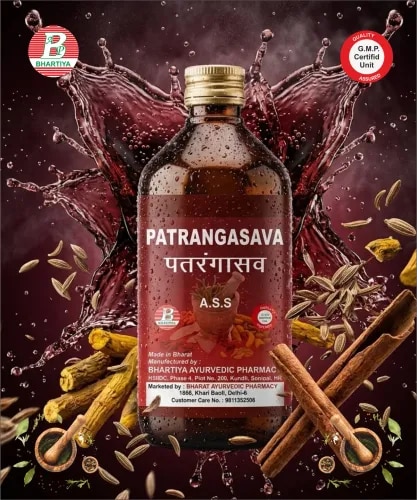
"name": "PATRANGASAVA",
"description": " PATRANGASAVA\n\n\n\nProduct Identification\nGeneric Name: Patrangasava (Patrang Asava)\nType: Ayurvedic Polyherbal Fermented Formulation (Asava)\nPrimary Indication Area: Gynecological disorders, excessive menstrual bleeding, leucorrhoea, anaemia, menstrual irregularities, and uterine health.\n\nTherapeutic Indications\nMenorrhagia (Asrigdara/Raktapradara) \nMetrorrhagia \nDysfunctional uterine bleeding (supportive) \nLeucorrhoea (Shweta Pradara) \nIrregular menstruation \nDysmenorrhea (painful menstruation) \nPostpartum weakness \nIron-deficiency anaemia (supportive) \nGeneral debility in women \nUterine weakness \n\nKey Benefits\nSupports healthy menstrual function \nHelps reduce excessive menstrual bleeding \nSupports uterine tone and endometrial health \nHelps manage leucorrhoea \nImproves hemoglobin and overall vitality (supportive) \nEnhances digestion and metabolism \nActs as a women's reproductive health tonic \nHelps restore strength after childbirth and chronic blood loss \n\nFORMULA\n1.Patang Kashtha (Caesalpinia sappan)\n2.Khair Saar (Acacia catechu)\n3.Vasa Moola (Justicia adhatoda)\n4.Somal Phool (Botanical identity to be confirmed as per formulation)\n5.Khareti (Sida cordifolia)\n6.Sariva (Hemidesmus indicus)\n7.Anantmool / Shyamlata (Ichnocarpus frutescens)\n8.Gudhal (Hibiscus rosa-sinensis)\n9.Aam Guthli (Mangifera indica)\n10.Daruhaldi (Berberis aristata)\n11.Chirayata (Swertia chirayita)\n12.Post Ke Dode (Papaver somniferum)\n13.Safed Jeera (Cuminum cyminum)\n14.Loh Churna (Purified Iron Powder)\n15.Rasont / Rasanjana (Extract of Berberis aristata)\n16.Bhringraj (Eclipta alba / Eclipta prostrata)\n17.Bael Giri (Aegle marmelos)\n18.Dalchini (Cinnamomum verum)\n19.Kesar (Crocus sativus)\n20.Lavang (Syzygium aromaticum)\n21.Munakka (Vitis vinifera)\n22.Dhataki (Woodfordia fruticosa)\n23.Khand (Cane Sugar)\n24.Shahad (Honey)\n\n\n1. Patang Kashtha\nBotanical Name: Caesalpinia sappan\nRasa: Kashaya, Tikta \nGuna: Laghu, Ruksha \nVirya: Ushna \nVipaka: Katu \nMechanism of Action:\nSupports healthy uterine function \nHelps reduce excessive menstrual bleeding \nPurifies blood and improves circulation \nTraditionally used in gynecological disorders \n\n2. Khair Saar\nBotanical Name: Acacia catechu\nRasa: Kashaya \nGuna: Laghu, Ruksha \nVirya: Sheeta \nVipaka: Katu \nMechanism of Action:\nStrong astringent action \nHelps control excessive uterine bleeding \nSupports healing of reproductive tissues \nImproves vaginal health \n\n3. Vasa Moola\nBotanical Name: Justicia adhatoda\nRasa: Tikta, Kashaya \nGuna: Laghu, Ruksha \nVirya: Sheeta \nVipaka: Katu \nMechanism of Action:\nHelps reduce excessive bleeding \nSupports healthy inflammatory response \nPromotes tissue healing \nMaintains reproductive tract health \n\n4. Semal Phool\nBotanical Name: Bombax ceiba\nRasa: Traditionally Kashaya, Tikta \nGuna: Laghu \nVirya: Sheeta \nVipaka: Katu \nMechanism of Action:\nTraditionally supports female reproductive health \nHelps regulate menstrual function \nSupports tissue healing \nAssists in maintaining uterine health \n\n5. Khareti\nBotanical Name: Sida cordifolia\nRasa: Madhura, Tikta \nGuna: Guru, Snigdha \nVirya: Sheeta \nVipaka: Madhura \nMechanism of Action:\nNourishes reproductive tissues \nSupports recovery from weakness \nImproves strength and vitality \nHelps reduce fatigue \n\n6. Sariva\nBotanical Name: Hemidesmus indicus\nRasa: Madhura, Tikta \nGuna: Guru, Snigdha \nVirya: Sheeta \nVipaka: Madhura \nMechanism of Action:\nPurifies blood \nSupports healthy skin and circulation \nHelps reduce burning sensation \nPromotes detoxification \n\n7. Anantmool (Shyamlata)\nBotanical Name: Ichnocarpus frutescens\nRasa: Madhura, Tikta \nGuna: Guru, Snigdha \nVirya: Sheeta \nVipaka: Madhura \nMechanism of Action:\nActs as a rejuvenative tonic \nSupports reproductive health \nImproves vitality \nHelps maintain hormonal balance \n\n8. Gudhal\nBotanical Name: Hibiscus rosa-sinensis\nRasa: Kashaya, Madhura \nGuna: Laghu, Snigdha \nVirya: Sheeta \nVipaka: Madhura \nMechanism of Action:\nSupports healthy menstrual flow \nHelps reduce excessive bleeding \nProvides antioxidant activity \nPromotes uterine health \n\n9. Aam Guthli\nBotanical Name: Mangifera indica\nRasa: Kashaya \nGuna: Laghu, Ruksha \nVirya: Sheeta \nVipaka: Katu \nMechanism of Action:\nHelps control excessive bleeding \nSupports intestinal health \nImproves digestion \nProvides astringent action \n\n10. Daruhaldi\nBotanical Name: Berberis aristata\nRasa: Tikta, Kashaya \nGuna: Laghu, Ruksha \nVirya: Ushna \nVipaka: Katu \nMechanism of Action:\nSupports healthy inflammatory response \nPromotes liver function \nPurifies blood \nSupports tissue healing \n\n11. Chirayata\nBotanical Name: Swertia chirayita\nRasa: Tikta \nGuna: Laghu, Ruksha \nVirya: Sheeta \nVipaka: Katu \nMechanism of Action:\nImproves digestion \nSupports liver function \nHelps reduce Ama \nPromotes metabolic balance \n\n12. Post Ke Dode\nBotanical Name: Papaver somniferum\nRasa: Madhura, Tikta \nGuna: Guru, Snigdha \nVirya: Sheeta \nVipaka: Madhura \nMechanism of Action:\nTraditionally supports pain relief \nHelps reduce pelvic discomfort \nPromotes relaxation \nSupports recovery in weakness \n\n13. Safed Jeera\nBotanical Name: Cuminum cyminum\nRasa: Katu, Tikta \nGuna: Laghu, Ruksha \nVirya: Ushna \nVipaka: Katu \nMechanism of Action:\nImproves digestion \nReduces bloating \nEnhances appetite \nSupports metabolism \n\n14. Loh Churna\nBotanical Name: Purified Iron Powder\nRasa: — \nGuna: Guru \nVirya: Ushna \nVipaka: Katu \nMechanism of Action:\nSupports hemoglobin formation \nHelps manage anemia \nImproves strength and vitality \nSupports healthy blood production \n\n15. Rasont\nBotanical Name: Extract of Berberis aristata\nRasa: Tikta, Kashaya \nGuna: Laghu \nVirya: Ushna \nVipaka: Katu \nMechanism of Action:\nSupports healthy inflammatory response \nPromotes tissue healing \nSupports liver function \nEnhances blood purification \n\n16. Bhringraj\nBotanical Name: Eclipta alba (Eclipta prostrata)\nRasa: Tikta, Kashaya \nGuna: Laghu, Ruksha \nVirya: Ushna \nVipaka: Katu \nMechanism of Action:\nSupports liver health \nPurifies blood \nImproves vitality \nPromotes tissue nourishment \n\n17. Bael Giri\nBotanical Name: Aegle marmelos\nRasa: Kashaya, Tikta \nGuna: Guru \nVirya: Ushna \nVipaka: Katu \nMechanism of Action:\nSupports digestive health \nHelps manage diarrhea \nImproves gut function \nReduces abdominal discomfort \n\n18. Dalchini\nBotanical Name: Cinnamomum verum\nRasa: Katu, Tikta \nGuna: Laghu, Ruksha, Tikshna \nVirya: Ushna \nVipaka: Katu \nMechanism of Action:\nImproves circulation \nEnhances digestion \nSupports metabolism \nReduces Ama formation \n\n19. Kesar\nBotanical Name: Crocus sativus\nRasa: Tikta, Katu \nGuna: Laghu, Snigdha \nVirya: Ushna \nVipaka: Katu \nMechanism of Action:\nSupports female reproductive health \nPromotes healthy circulation \nActs as an antioxidant \nImproves vitality \n\n20. Lavang\nBotanical Name: Syzygium aromaticum\nRasa: Katu, Tikta \nGuna: Laghu, Tikshna \nVirya: Ushna \nVipaka: Katu \nMechanism of Action:\nImproves digestion \nProvides antioxidant support \nReduces abdominal discomfort \nSupports circulation \n\n21. Munakka\nBotanical Name: Vitis vinifera\nRasa: Madhura \nGuna: Guru, Snigdha \nVirya: Sheeta \nVipaka: Madhura \nMechanism of Action:\nNourishes body tissues \nSupports blood formation \nImproves strength \nActs as a mild rejuvenative \n\n22. Dhataki\nBotanical Name: Woodfordia fruticosa\nRasa: Kashaya \nGuna: Laghu, Ruksha \nVirya: Ushna \nVipaka: Katu \nMechanism of Action:\nNatural fermentation catalyst \nEnhances extraction of phytochemicals \nImproves bioavailability \nSupports preservation of formulation \n\n23. Khand\nBotanical Name: Cane Sugar\nRasa: Madhura \nGuna: Guru, Snigdha \nVirya: Sheeta \nVipaka: Madhura \nMechanism of Action:\nFermentation substrate \nImproves formulation stability \nEnhances palatability \nProvides energy source for fermentation \n\n24. Shahad\nBotanical Name: Honey (Apis spp.)\nRasa: Madhura, Kashaya \nGuna: Laghu, Ruksha \nVirya: Sheeta \nVipaka: Madhura \nMechanism of Action:\nSupports natural preservation \nImproves palatability \nEnhances herbal delivery \nSupports wound healing and immunity\n\nDosage\nAdults:\n15–30 mL \nTwice daily after meals \nDilute with an equal quantity of water before administration. \nCommon Usage Guidance\nTraditionally administered for gynecological disorders such as excessive menstrual bleeding, leucorrhoea, and menstrual irregularities. \nSupports uterine health, blood nourishment, and female reproductive wellness. \nUsually prescribed for 4–8 weeks or as directed by an Ayurvedic physician, depending on the condition. \nBest taken after meals to enhance digestion and minimize gastric discomfort. \nImportant Notes\nContains naturally self-generated alcohol due to the fermentation process. \nUse with caution in individuals with diabetes mellitus, as the formulation contains sugar/honey. \nShould be taken under the supervision of a qualified Ayurvedic physician. \nNot recommended during pregnancy, unless specifically prescribed by a healthcare professional. \nPersistent or heavy abnormal uterine bleeding should be medically evaluated and not managed by self-medication alone. \nStore in a cool, dry place away from direct sunlight. \nKeep the bottle tightly closed after use. \nKeep out of reach of children.\n\n\n\npatrangasava syrup uses\npatrangasava uses in hindi\npatrangasava syrup\npatrangasava benefits\npatrangasava benefits in hindi\npatrangasava uses\npatrangasava syrup uses in hindi price\npatrangasava syrup uses in hindi\npatrangasava ayurvedic medicine\npatrangasava ayurvedic\npatrangasava ayurvedic syrup\npatrangasava amazon\nayurvedic patrangasava uses\npatrangasava easy ayurveda\npatrangasava syrup amazon\npatrangasava kis kaam aata hai\npatrangasava content\npatrangasava composition\nuse of patrangasava\npatrangasava dosage\npatrangasava divya\npatrangasava dose\npatrangasava syrup side effects\npatrangasava uses in english\npatrangasava fayde\npatrangasava ke fayde in hindi\npatrangasava used for\npatrangasava syrup ke fayde in hindi\npatrangasava syrup ke fayde\npatrangasava peene ke fayde\nregenwaterput kuisen\npatrangasava hindi\npatrangasava how to use\npatrangasava kya hai\npatrangasava uses hindi\npatrangasava syrup hindi\npatrangasava uses in hindi side effects\npatrangasava ingredients in hindi\npatrangasava syrup uses hindi\npatrangasava se kya hota hai\npatrangasava ingredients\npatrangasava in hindi\npatrangasava in pregnancy\npatrangasava is used for \npatrangasava ka upyog\npatrangasava kis kaam mein aata hai\npatrangasava liquid\npatrangasava ke labh\npatrangasava myupchar\npatrangasava medicine\npatrangasava online\nbenefits of patrangasava\nuses of patrangasava syrup\nuse of patrangasava in hindi\nbenefits of patrangasava in hindi\npatrangasava price\npatrangasava syrup price\npatrangasava reviews\npatrangasava syrup ingredients\npatrangasava tonic",
"price": 210.0,
"discountamount": 105.0,
"currencycode": "INR",
"priority": 1000000,
"isfreeshipmentavailable": false,
"shipmentduration": 1,
"_keywords": null,
"isarchived": false,
"isavailable": true,
"applicationid": null,
"productindex": 178,
"imageuri": "https://productimages.withfloats.com/actual/6aa91376f339c5e568d7c0fd.jpg",
"tileimageuri": "https://productimages.withfloats.com/tile/6aa91376f339c5e568d7c0fd.jpg",
"images": null,
"totalqueries": 0,
"gpid": null,
"groupproductid": null,
"createdon": "2026-09-15T09:44:21.155Z",
"updatedon": "2026-09-15T09:44:21.155Z",
"buyonlinelink": null,
"producturl": "http://WWW.BHARTIYAAYURVEDICPHARMACY.COM/products/patrangasava/178",
"availableunits": -1.0,
"iscodavailable": true,
"isprepaidonlineavailable": true,
"maxcodorders": -1,
"maxprepaidonlineorders": -1,
"uniquepaymenturl": null,
"brandname": "Bakula Fort",
"category": "PATRANGASAVA 450 ML X 40",
"tags": [],
"variants": false,
"keyspecification": null,
"otherspecifications": null,
"pickupaddressreferenceid": null,
"paymenttype": "AssuredPurchase",
"producttype": "products",
"hsncode": null,
"gstslab": 0.0,
"isnotforsale": false
},
{
"_id": "6aa3b6f78f7f531609233873",
"fptag": "BHARTIYEAYURVEDICPHARMACY",
"merchantname": null,
"customwidgets": null,
"externalsourceid": null,
"name": "JIRAKADYARISHTA",
"description": " JIRAKADYARISHTA\n\n\nProduct Identification\nGeneric Name: Jirakadyarishta \nType: Ayurvedic Polyherbal Fermented Formulation (Arishta)\nPrimary Indication Area: Postpartum care, digestive support, gynecological health, and restorative tonic.\n\nTherapeutic Indications\n• Postpartum weakness and recovery\n• Impaired digestion after childbirth\n• Loss of appetite (Aruchi)\n• General debility and fatigue\n• Anaemia associated with postpartum blood loss\n• Irregular digestion and Agnimandya\n• Supportive management of leucorrhea (Shweta Pradara)\n• Uterine recovery after delivery\n• Nutritional deficiency and weakness\n• Lactation support (as an adjunct under supervision)\n\nKey Benefits\n• Supports postpartum recovery and strength\n• Improves digestion and appetite\n• Promotes healthy uterine involution\n• Helps restore vitality after childbirth\n• Supports healthy blood formation\n• Reduces fatigue and weakness\n• Enhances nutrient assimilation\n• Supports reproductive health\n• Acts as a restorative tonic for women\n\nFormula\nMain Ingredients\n• Jiraka (Cuminum cyminum)\n• Jala (Water) – for decoction preparation\nSweetening and Fermentation Base\n• Guda (Jaggery)\n• Dhataki Pushpa (Woodfordia fruticosa)\nPrakshepa Dravyas\n• Shunthi (Zingiber officinale)\n• Jatiphala (Myristica fragrans)\n• Musta (Cyperus rotundus)\n• Tvak (Cinnamomum verum)\n• Ela (Elettaria cardamomum)\n• Tejapatra (Cinnamomum tamala)\n• Nagakesara (Mesua ferrea)\n• Yavani (Trachyspermum ammi)\n• Kankola (Piper cubeba)\n• Lavanga (Syzygium aromaticum)\n\nKey Ingredient Actions\n1. Jiraka (Cuminum cyminum)\nRasa: Katu, Tikta\nGuna: Laghu, Ruksha\nVirya: Ushna\n Vipaka: Katu\nMechanism of Action\n• Enhances digestive fire (Agni)\n• Improves appetite\n• Reduces bloating and flatulence\n• Supports postpartum digestion\n• Promotes nutrient absorption\n\n2. Shunthi (Zingiber officinale)\nRasa: Katu\nGuna: Laghu, Ruksha\nVirya: Ushna\nVipaka: Madhura\nMechanism of Action\n• Improves digestion and metabolism\n• Reduces indigestion and abdominal discomfort\n• Supports circulation\n• Helps alleviate nausea\n• Promotes recovery from weakness\n\n3. Jatiphala (Myristica fragrans)\nRasa: Tikta, Katu, Kashaya\nGuna: Laghu, Tikshna\n Virya: Ushna\nVipaka: Katu\nMechanism of Action\n• Supports digestive function\n• Helps reduce loose stools\n• Improves appetite\n• Provides calming and restorative effects\n• Supports postpartum recovery\n\n4. Musta (Cyperus rotundus)\nRasa: Tikta, Katu, Kashaya\n Guna: Laghu, Ruksha\n Virya: Sheeta\n Vipaka: Katu\nMechanism of Action\n• Supports healthy digestion\n• Helps regulate bowel function\n• Reduces gastrointestinal discomfort\n• Supports women's health\n• Promotes overall balance\n\n5. Tvak (Cinnamomum verum)\nRasa: Katu, Tikta, Madhura\nGuna: Laghu, Tikshna\nVirya: Ushna\nVipaka: Katu\nMechanism of Action\n• Stimulates digestion and appetite\n• Supports circulation\n• Reduces abdominal discomfort\n• Provides antioxidant activity\n• Enhances palatability\n\n6. Ela (Elettaria cardamomum)\nRasa: Madhura, Katu\n Guna: Laghu\n Virya: Sheeta\n Vipaka: Madhura\nMechanism of Action\n• Reduces bloating and nausea\n• Supports digestive comfort\n• Freshens breath and improves taste\n• Promotes appetite\n• Supports respiratory comfort\n\n7. Tejapatra (Cinnamomum tamala)\nRasa: Katu, Tikta\nGuna: Laghu, Tikshna\nVirya: Ushna\nVipaka: Katu\nMechanism of Action\n• Improves digestion\n• Reduces gas and abdominal discomfort\n• Supports metabolism\n• Enhances appetite\n• Provides aromatic digestive support\n\n8. Nagakesara (Mesua ferrea)\nRasa: Kashaya, Tikta\nGuna: Laghu, Ruksha\n Virya: Sheeta\n Vipaka: Katu\nMechanism of Action\n• Supports blood health\n• Promotes tissue repair\n• Provides restorative support\n• Helps maintain female reproductive health\n• Supports overall vitality\n\n9. Yavani (Trachyspermum ammi)\nRasa: Katu\nGuna: Laghu, Ruksha, Tikshna\nVirya: Ushna\nVipaka: Katu\nMechanism of Action\n• Relieves gas and bloating\n• Improves digestive strength\n• Supports intestinal comfort\n• Enhances appetite\n• Helps reduce colicky pain\n\n10. Kankola (Piper cubeba)\nRasa: Katu\nGuna: Laghu, Tikshna\nVirya: Ushna\n Vipaka: Katu\nMechanism of Action\n• Supports digestion and metabolism\n• Improves circulation\n• Acts as a mild stimulant and tonic\n• Supports respiratory health\n• Enhances absorption of nutrients\n\n11. Lavanga (Syzygium aromaticum)\nRasa: Katu, Tikta\n Guna: Laghu, Tikshna\nVirya: Ushna\nVipaka: Katu\nMechanism of Action\n• Stimulates digestion\n• Reduces nausea and abdominal discomfort\n• Provides antioxidant support\n• Supports oral and digestive health\n• Improves appetite\n\n12. Dhataki (Woodfordia fruticosa)\nRasa: Kashaya\nGuna: Laghu, Ruksha\nVirya: Ushna\nVipaka: Katu\nPrabhava: Sandhana Karaka\nMechanism of Action\n• Natural fermentation catalyst\n• Facilitates self-generated alcohol formation\n• Enhances extraction of herbal constituents\n• Improves formulation stability\n• Increases bioavailability\nDosage\nAdults\n• 15–30 mL twice daily after meals\n• Dilute with an equal quantity of water\nPostpartum Use\n• Commonly administered as 15–30 mL twice daily after food, as directed by an Ayurvedic physician\nDuration\n• Usually prescribed for 4–12 weeks depending on the individual's condition, digestive status, and recovery needs\nAdministration\n• Shake well before use if recommended by the manufacturer\n• Take after meals to support digestion and reduce gastric irritation\n• Can be taken with an equal quantity of lukewarm water\nSpecial Precautions\n• Use under medical supervision during the postpartum period\n• Contains jaggery and naturally generated alcohol due to fermentation\n• Use cautiously in individuals with diabetes mellitus\n• Keep out of reach of children\n• Store in a cool, dry place away from direct sunlight\n\n\njirakadyarishta medicine use\njirakadyarishtam how to take\njirakadyarishtam benefits\njirakadyarishta price\njirakadyarishtam ingredients\njeerakadyarishta ingredients\njirakadyarishta medicine",
"price": 170.0,
"discountamount": 85.0,
"currencycode": "INR",
"priority": 1000000,
"isfreeshipmentavailable": false,
"shipmentduration": 1,
"_keywords": null,
"isarchived": false,
"isavailable": true,
"applicationid": null,
"productindex": 176,
"imageuri": "https://productimages.withfloats.com/actual/6aa3b6f9030b13de01f0840b.jpg",
"tileimageuri": "https://productimages.withfloats.com/tile/6aa3b6f9030b13de01f0840b.jpg",
"images": null,
"totalqueries": 0,
"gpid": null,
"groupproductid": null,
"createdon": "2026-09-11T08:08:23.682Z",
"updatedon": "2026-09-11T08:08:23.682Z",
"buyonlinelink": null,
"producturl": "http://WWW.BHARTIYAAYURVEDICPHARMACY.COM//jirakadyarishta/176",
"availableunits": -1.0,
"iscodavailable": true,
"isprepaidonlineavailable": true,
"maxcodorders": -1,
"maxprepaidonlineorders": -1,
"uniquepaymenturl": null,
"brandname": "Bakula FOrt",
"category": "JIRAKADYARISHTA 450 ML X 40",
"tags": [],
"variants": false,
"keyspecification": null,
"otherspecifications": null,
"pickupaddressreferenceid": null,
"paymenttype": "AssuredPurchase",
"producttype": "products",
"hsncode": null,
"gstslab": 0.0,
"isnotforsale": false
},
{
"_id": "6a58c88a6b70b63c19a36f6b",
"fptag": "BHARTIYEAYURVEDICPHARMACY",
"merchantname": null,
"customwidgets": null,
"externalsourceid": null,
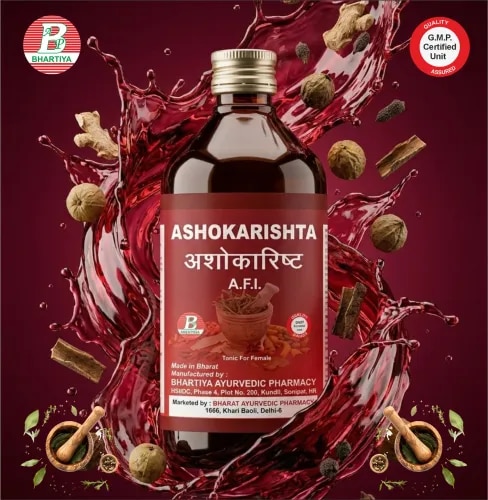
"name": "ASHOKARISHTA",
"description": " \n ASHOKARISHTA\n\n\nProduct Identification\nGeneric Name: Ashokarishta\nType: Ayurvedic Polyherbal Fermented Formulation (Arishta)\nPrimary Indication Area: Primarily used as a uterine tonic, hemostatic, and hormonal regulator, indicated in gynecological disorders and menstrual irregularities.\n\nTherapeutic Indications:\n• Heavy menstrual bleeding (Asrigdara)\n• Irregular menstruation (Anartava)\n• Dysmenorrhea (Painful menstruation)\n• Uterine weakness and reproductive system debility\n• Leucorrhea (white discharge)\n• Hormonal imbalance related menstrual disorders\n• Postpartum uterine recovery support\n• Pelvic inflammatory conditions (supportive)\n• Anaemia associated with heavy bleeding\n\nKey Benefits\n• Uterine tonic – strengthens uterine muscles and endometrium\n• Hormonal regulation – helps balance menstrual cycle\n• Anti-haemorrhagic support – reduces excessive bleeding\n• Anti-inflammatory action – supports pelvic health\n• Improves reproductive health and fertility support\n• Reduces menstrual pain and cramps\n• Restorative tonic – improves strength after blood loss\n• Balances Pitta and Vata in reproductive system\n \nFORMULA \nMain Decoction Drugs (Kwatha Dravyas):\n• Ashoka (Saraca asoca) - 4.800 kg\n• Amra (Mangifera indica – bark/seed as per classical usage) - 480 g\n• Daruharidra (Berberis aristata) - 480 g\n• Haritaki (Terminalia chebula) - 480 g\n• Bibhitaki (Terminalia bellirica) - 480 g\n• Amalaki (Emblica officinalis) - 480 g\n• Vasa (Adhatoda vasica) - 480 g\n• Utpala (Nymphaea alba / Nymphaea stellata) - 480 g\n• Shveta Jiraka (Cuminum cyminum) - 480 g\n• Musta (Cyperus rotundus) - 480 g\n\nPrakshepa Dravyas (Added after decoction):\n• Sunthi (Zingiber officinale) - 48 g\n• Shveta Jiraka (Cuminum cyminum) - 48 g\n• Musta (Cyperus rotundus) - 48 g\n• Dhataki pushpa (Woodfordia fruticosa) - 48 g\n• Daruharidra (Berberis aristata) - 48 g\n• Utpala (Nymphaea alba) - 48 g\n• Candan Shveta (Santalum album – white sandalwood) - 48 g\n\nFermentation Base:\n• Guda (Jaggery) - 14.400 kg\n• Water (for decoction & fermentation) - 49152 L reduced to 12.288 L\n\n1. Ashoka (Saraca asoca)\n•\tRasa: Kashaya, Tikta\n•\tGuna: Laghu, Ruksha\n•\tVirya: Sheeta\n•\tVipaka: Katu\n•\tPrabhava: Stambhana, Garbhashaya balya\nMechanism of Action:\n•\tStrengthens uterine musculature and endometrium\n•\t Controls excessive menstrual bleeding\n•\tRegulates hormonal fluctuations\n•\tReduces pelvic inflammation and pain\n•\tImproves uterine tone and stability\n\n2. Amra (Mangifera indica)\n•\tRasa: Kashaya, Madhura\n•\tGuna: Guru, Ruksha\n•\t Virya: Sheeta\n•\tVipaka: Madhura\n•\t Prabhava: Stambhana\nMechanism of Action:\n•\tHelps control excessive bleeding\n•\tSupports tissue healing in reproductive tract\n•\t Provides mild nutritive and cooling effect\n•\t Reduces Pitta-related inflammation\n•\tImproves mucosal stability\n\n3. Daruharidra (Berberis aristata)\n•\tRasa: Tikta, Kashaya\n•\t Guna: Laghu, Ruksha\n•\tVirya: Ushna\n•\tVipaka: Katu\n•\t Prabhava: Raktashodhaka\nMechanism of Action:\n•\tPurifies blood and reduces toxins\n•\t Anti-inflammatory effect on uterine tissues\n•\tSupports microbial balance in reproductive tract\n•\t Improves liver-hormonal metabolism\n•\tReduces abnormal discharge\n\n4. Haritaki (Terminalia chebula)\n•\tRasa: Pancharasa (except Lavana)\n•\tGuna: Laghu, Ruksha\n•\tVirya: Ushna\n•\t Vipaka: Madhura\n•\tPrabhava: Anulomana\nMechanism of Action:\n\n•\tImproves detoxification and bowel regulation\n•\tBalances Vata affecting menstruation\n•\t Enhances nutrient absorption\n•\t Supports metabolic cleansing\n•\t Reduces systemic toxin load\n\n5. Bibhitaki (Terminalia bellirica)\n•\tRasa: Kashaya\n•\tGuna: Ruksha\n•\t Virya: Ushna\n•\tVipaka: Madhura\n•\tPrabhava: Kapha shodhana\nMechanism of Action:\n•\tSupports metabolic detoxification\n•\tImproves liver function\n•\t Reduces inflammatory congestion\n•\t Helps in hormonal clearance\n•\t Purifies blood and tissues\n\n6. Amalaki (Emblica officinalis)\n•\tRasa: Amla pradhana pancharasa\n•\tGuna: Laghu, Ruksha\n•\t Virya: Sheeta\n•\t Vipaka: Madhura\n•\tPrabhava: Rasayana\nMechanism of Action:\n•\tImproves iron absorption and anaemia support\n•\tEnhances tissue regeneration\n•\t Reduces oxidative stress\n•\tSupports hormonal balance\n•\tStrengthens immunity\n\n7. Vasa (Adhatoda vasica)\n•\tRasa: Tikta, Kashaya\n•\t Guna: Laghu, Ruksha\n•\tVirya: Sheeta\n•\tVipaka: Katu\n•\tPrabhava: Raktastambhana\nMechanism of Action:\n•\tControls bleeding tendency\n•\tPurifies blood and reduces inflammation\n•\tSupports respiratory and systemic detox\n•\tStabilizes vascular fragility\n•\tHelps in Pitta-related disorders\n\n8. Utpala (Nymphaea alba / Nymphaea stellata)\n•\tRasa: Tikta, Kashaya\n•\tGuna: Laghu, Snigdha\n•\tVirya: Sheeta\n•\tVipaka: Katu\n•\tPrabhava: Pitta shamana\nMechanism of Action:\n•\tReduces uterine inflammation and burning\n•\tControls excessive bleeding\n•\tProvides cooling effect on reproductive system\n•\tSupports hormonal balance\n•\tCalms Pitta-related disorders\n\n9. Musta (Cyperus rotundus)\n•\tRasa: Tikta, Katu\n•\tGuna: Laghu, Ruksha\n•\tVirya: Sheeta\n•\t Vipaka: Katu\n•\tPrabhava: Deepana, Pachana\nMechanism of Action:\n•\tImproves digestion and metabolism\n•\tReduces abdominal discomfort\n•\tControls excess discharge\n•\tSupports detoxification\n•\tBalances gut-reproductive axis\n\n10. Sunthi (Zingiber officinale)\n•\tRasa: Katu\n•\tGuna: Laghu, Ruksha\n•\tVirya: Ushna\n•\tVipaka: Madhura\n•\tPrabhava: Ama pachana\nMechanism of Action:\n•\tImproves circulation and uterine blood flow\n•\t Reduces menstrual cramps\n•\tBreaks down metabolic toxins (Ama)\n•\tEnhances digestion\n•\tSupports pain relief\n\n11. Shveta Jiraka (Cuminum cyminum)\n•\tRasa: Katu, Tikta\n•\tGuna: Laghu, Ruksha\n•\tVirya: Ushna\n•\tVipaka: Katu\n•\t Prabhava: Deepana, Pachana\nMechanism of Action:\n•\tStimulates digestion and metabolism\n•\t Reduces bloating and abdominal pain\n•\tImproves nutrient absorption\n•\tSupports uterine and pelvic circulation\n•\t Enhances digestive fire (Agni)\n\n12. Dhataki (Woodfordia fruticosa)\n•\tRasa: Kashaya\n•\tGuna: Laghu, Ruksha\n•\tVirya: Ushna\n•\tVipaka: Katu\n•\tPrabhava: Sandhana karaka\nMechanism of Action:\n•\tActs as natural fermenting agent\n•\tEnhances bioavailability of herbal actives\n•\tStabilizes fermentation process\n•\t Improves absorption of constituents\n•\tSupports gut microbial activity\n\n13. Candan Shveta (Santalum album – White Sandalwood)\n•\tRasa: Tikta, Madhura\n•\tGuna: Laghu, Snigdha\n•\tVirya: Sheeta\n•\tVipaka: Katu\n•\t Prabhava: Pitta shamana\nMechanism of Action:\n•\tProvides cooling effect on uterus\n•\t Reduces inflammation and burning sensation\n•\t Supports hormonal balance\n•\t Calms excessive Pitta activity\n•\tImproves pelvic comfort\n\nDosage\n• Adults: 15–30 ml\n• Twice daily after meals\n• With equal quantity of water (1:1 dilution)\n\nCommon Usage Guidance\n• Used in menstrual disorders and uterine weakness\n• Supports hormonal balance and reproductive health\n• Typically used for 4–8 weeks\n• Best taken after food\n\nImportant Notes\n• Use cautiously in pregnancy unless prescribed\n• Avoid in uncontrolled diabetes (contains jaggery)\n• Not suitable for acute heavy bleeding without supervision\n• Should be taken under Ayurvedic supervision in chronic cases\n\nashokarishta syrup\nashokarishta syrup benefits\nashokarishta ke fayde\nashokarishta syrup uses\nashokarishta peene ke fayde\nashokarishta syrup price\nashokarishta dawai kis kaam aati hai\nashokarishta ayurvedic dawai\nashokarishta ayurvedic medicine\nashokarishta ayurvedic\nashokarishta ayurvedic syrup\nashokarishta ayurvedic medicine uses in hindi\nashokarishta amazon\nashokarishta ayurvedic medicine uses\nashokarishta benefits\nashokarishta benefits in hindi\nashokarishta benefits for female\nashokarishta benefits for periods\nashokarishta benefits for female in hindi\nashokarishta benefits for periods in hindi\nashokarishta dawai ke fayde\nashokarishta dose per day\nashokarishta dava kis kaam aati hai\nashokarishta dawa peene ke fayde\nashokarishta dawa\nashokarishta expiry date\nashokarishta expiry period\nashokarishta eating time\nashokarishta fayde\nashokarishta for pregnancy\nashokarishta flipkart\nashokarishta how to use\nashokarishta how to take\nashokarishta hamdard\nashokarishta hai\nashokarishta how to consume\nashokarishta in hindi\nashokarishta ingredients in hindi\nashokarishta is used for\nashokarishta ke kya-kya fayde hain\nashokarishta kaise le\nashokarishta lene ka tarika\nashokarishta lene ka sahi tarika\nashokarishta liquid medicine\nashokarishta liquid uses\nashokarishta medicine in hindi\nashokarishta medicine price\nashokarishta mahilaon ke liye\nashokarishta near me\nashokarishta uses for female in hindi\nashokarishta uses for female\nashokarishta uses and benefits\nashokarishta uses and benefits in hindi\nashokarishta upyog\n",
"price": 189.0,
"discountamount": 94.0,
"currencycode": "INR",
"priority": 1000000,
"isfreeshipmentavailable": false,
"shipmentduration": 1,
"_keywords": null,
"isarchived": false,
"isavailable": true,
"applicationid": null,
"productindex": 159,
"imageuri": "https://productimages.withfloats.com/actual/6a58c88d742a7643118b552d.jpg",
"tileimageuri": "https://productimages.withfloats.com/tile/6a58c88d742a7643118b552d.jpg",
"images": null,
"totalqueries": 0,
"gpid": null,
"groupproductid": null,
"createdon": "2026-07-16T12:03:22.659Z",
"updatedon": "2026-07-16T12:03:22.659Z",
"buyonlinelink": null,
"producturl": "http://WWW.BHARTIYAAYURVEDICPHARMACY.COM//ashokarishta/159",
"availableunits": -1.0,
"iscodavailable": true,
"isprepaidonlineavailable": true,
"maxcodorders": -1,
"maxprepaidonlineorders": -1,
"uniquepaymenturl": null,
"brandname": "Bakula Fort",
"category": "ASHOKARISHTA 450 ML X 40",
"tags": [],
"variants": false,
"keyspecification": null,
"otherspecifications": null,
"pickupaddressreferenceid": null,
"paymenttype": "AssuredPurchase",
"producttype": "products",
"hsncode": null,
"gstslab": 0.0,
"isnotforsale": false
},
{
"_id": "6a2a6438ca14d0e0bc75da96",
"fptag": "BHARTIYEAYURVEDICPHARMACY",
"merchantname": null,
"customwidgets": null,
"externalsourceid": null,
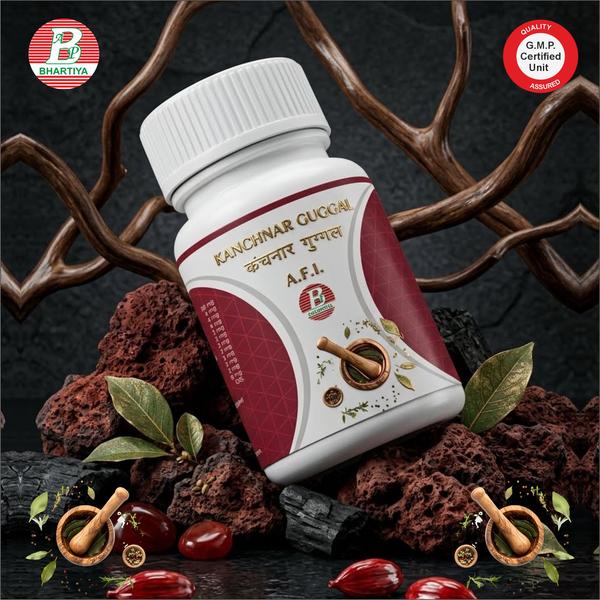
"name": "Kanchnar Guggal",
"description": " KACHNAR GUGGUL\n\nProduct Identification\n•\tGeneric Name: Kachnar Guggul \n•\t Type: Ayurvedic Polyherbal Formulation \n•\tPrimary Indication Area: Glandular disorders, thyroid support, lymphatic congestion, and abnormal growths. \n•\tTherapeutic Indications: Traditionally used for managing enlarged lymph nodes, thyroid enlargement (Galaganda), cysts, fibroids, lipomas, and other Kapha-related swellings.\n\nKey Benefits:\n•\tThyroid Support: Helps maintain healthy thyroid function and manage thyroid enlargement. \n•\tReduces Swelling: Supports the reduction of glandular and lymphatic swellings. \n•\tManages Cysts & Fibroids: Traditionally used for benign growths such as cysts, fibroids, and lipomas. \n•\tLymphatic Health: Promotes healthy lymphatic drainage and detoxification. \n•\tKapha Balance: Helps balance excess Kapha and supports metabolic health. \n•\tAnti-inflammatory Action: Helps relieve inflammation and discomfort associated with swellings. \n\nFORMULA\nEach Tablet contains: \nKachnar Tvak\t480\nGuggul \t996 g\nHaritaki \t96g\nBibhitaki \t96g\nAmalaki \t96g\nDry Ginger \t48g\nBlack Pepper \t48g\nLong Pepper \t48g\nVaruna \t12g\nCardamom \t48g\nCinnamon \t12g\nTejapatra \t12g\n\nIngredients:\n1. Kachnar Tvak (Bauhinia variegata) \nBotanical/Scientific Name: Bauhinia variegata Linn.\nRasa–Guna–Vīrya–Vipāka:\n• Rasa: Kaṣāya (Astringent), Tikta (Bitter)\n• Guna: Laghu (Light), Rūkṣa (Dry)\n• Vīrya: Śīta (Cooling)\n• Vipāka: Kaṭu (Pungent)\nPrabhāva: Granthi-Śothahara (Helps reduce glandular swellings and abnormal growths)\nMechanism of Action (Karma)\n1.\tGranthi-Nāśaka Karma\no Helps reduce glandular enlargements, nodules, cysts, and abnormal tissue growths. \n2.\tŚothahara Karma\no Assists in reducing inflammation and localized swellings. \n3.\tKapha-Medo Hara Karma\no Helps alleviate excess Kapha and unhealthy tissue accumulation. \n4.\tRakta Śodhaka Karma\no Supports blood purification and healthy tissue metabolism. \n5.\tLekhana Karma\no Helps in the reduction of excess tissue growth and metabolic congestion.\n\n2. Guggul (Commiphora mukul) \nBotanical/Scientific Name: Commiphora mukul\n•\tRasa–Guna–Vīrya–Vipāka:\n• Rasa: Tikta (Bitter), Kaṭu (Pungent), Kaṣāya (Astringent)\n• Guna: Laghu (Light), Rūkṣa (Dry), Tikṣṇa (Sharp), Sara (Mobile)\n• Vīrya: Uṣṇa (Hot)\n• Vipāka: Kaṭu (Pungent)\nPrabhāva: Lekhana, Yogavāhī (Scraping and bio-enhancing action)\nMechanism of Action (Karma)\n1.\tLekhana Karma\no Helps reduce excess fat, Kapha accumulation, and abnormal tissue growths. \n2.\tŚothahara Karma\no Reduces inflammation and swelling. \n3.\tĀma Pachana Karma\no Helps digest metabolic toxins (Ama). \n4.\tSrotoshodhana Karma\no Cleanses body channels and improves circulation. \n5.\tYogavāhī Karma\no Enhances the potency of other herbs in the formulation. \n\n3. Haritaki (Terminalia chebula) \nBotanical/Scientific Name: Terminalia chebula\nRasa–Guna–Vīrya–Vipāka:\n• Rasa: Pancharasa (except Lavana), predominance Kaṣāya\n• Guna: Laghu (Light), Rūkṣa (Dry)\n• Vīrya: Uṣṇa (Hot)\n• Vipāka: Madhura (Sweet)\nPrabhāva: Tridoṣa Śāmaka\nMechanism of Action (Karma)\n1.\tDeepana Karma\no Improves digestive fire. \n2.\tPachana Karma\no Helps digest and remove Ama (toxins). \n3.\tAnulomana Karma\no Supports proper bowel movement and detoxification. \n4.\tRasāyana Karma\no Rejuvenates tissues and supports longevity. \n\n4. Bibhitaki (Terminalia bellirica) \nBotanical/Scientific Name: Terminalia bellirica\nRasa–Guna–Vīrya–Vipāka:\n• Rasa: Kaṣāya (Astringent)\n• Guna: Laghu (Light), Rūkṣa (Dry)\n• Vīrya: Śīta (Cooling)\n• Vipāka: Madhura (Sweet)\nPrabhāva: Kapha-Pitta Śāmaka\nMechanism of Action (Karma)\n1.\tKapha Hara Karma\no Reduces mucus and congestion. \n2.\tShothahara Karma\no Reduces inflammation and swelling. \n3.\tShwasahara Karma\no Supports respiratory health. \n4.\tPachana Karma\no Aids digestion and detoxification. \n\n5. Amalaki (Emblica officinalis) \nBotanical/Scientific Name: Emblica officinalis\nRasa–Guna–Vīrya–Vipāka:\n• Rasa: Pancharasa (predominantly Amla)\n• Guna: Guru (Heavy), Rūkṣa (Dry)\n• Vīrya: Śīta (Cooling)\n• Vipāka: Madhura (Sweet)\nPrabhāva: Rasāyana (Rejuvenative)\nMechanism of Action (Karma)\n1.\tRasāyana Karma\no Rejuvenates body tissues and supports longevity. \n2.\tAntioxidant Karma\no Protects cells from oxidative stress. \n3.\tRakta Śodhaka Karma\no Purifies blood and supports skin/tissue health. \n4.\tImmunity Enhancer Karma\no Strengthens natural defense system. \n\n6. Shunthi (Zingiber officinale) \n\nBotanical/Scientific Name: Zingiber officinale (Dry Ginger)\nRasa–Guna–Vīrya–Vipāka:\n• Rasa: Kaṭu (Pungent)\n• Guna: Laghu (Light), Snigdha (Unctuous)\n• Vīrya: Uṣṇa (Hot)\n• Vipāka: Madhura (Sweet)\nPrabhāva: Deepana–Pachana\nMechanism of Action (Karma)\n1.\tAgni Deepana Karma\no Enhances digestive fire. \n2.\tAma Pachana Karma\no Helps remove toxins. \n3.\tŚothahara Karma\no Reduces inflammation. \n4.\tShwasahara Karma\no Supports respiratory health. \n\n7.Maricha (Black Pepper) \n\nBotanical/Scientific Name: Piper nigrum\nRasa–Guna–Vīrya–Vipāka:\n• Rasa: Kaṭu (Pungent)\n• Guna: Laghu (Light), Rūkṣa (Dry), Tikṣṇa (Sharp)\n• Vīrya: Uṣṇa (Hot)\n• Vipāka: Kaṭu (Pungent)\nPrabhāva: Yogavāhī (Bio-enhancer)\nMechanism of Action (Karma)\n1.\tDeepana Karma\no Improves digestion and metabolism. \n2.\tBioavailability Enhancer Karma\no Increases absorption of other herbs. \n3.\tKapha Hara Karma\no Reduces mucus and congestion. \n\n8. Pippali (Piper longum) \n\nBotanical/Scientific Name: Piper longum\nRasa–Guna–Vīrya–Vipāka:\n• Rasa: Kaṭu (Pungent)\n• Guna: Laghu (Light), Snigdha (Unctuous)\n• Vīrya: Uṣṇa (Hot)\n• Vipāka: Madhura (Sweet)\nPrabhāva: Rasāyana, Shwasahara\nMechanism of Action (Karma)\n1.\tShwasahara Karma\no Supports respiratory function and clears Kapha. \n2.\tAgni Deepana Karma\no Improves digestion. \n3.\tKapha Hara Karma\no Reduces congestion. \n4.\tRasāyana Karma\no Rejuvenates body tissues. \n\n9. Varuna (Crataeva nurvala) \n\nBotanical/Scientific Name: Crataeva nurvala\nRasa–Guna–Vīrya–Vipāka:\n• Rasa: Tikta (Bitter), Kaṣāya (Astringent)\n• Guna: Laghu (Light), Rūkṣa (Dry)\n• Vīrya: Śīta (Cooling)\n• Vipāka: Kaṭu (Pungent)\nPrabhāva: Granthi-Śothahara\nMechanism of Action (Karma)\n1.\tGranthi Hara Karma\no Helps reduce cysts and glandular swellings. \n2.\tMutrala Karma\no Supports urinary tract cleansing. \n3.\tŚothahara Karma\no Reduces inflammation and swelling. \n\n10. Ela (Cardamom) \n\nBotanical/Scientific Name: Elettaria cardamomum\nRasa–Guna–Vīrya–Vipāka:\n• Rasa: Madhura (Sweet), Kaṭu (Pungent), Tikta (Bitter)\n• Guna: Laghu (Light), Snigdha (Unctuous)\n• Vīrya: Śīta (Cooling)\n• Vipāka: Madhura (Sweet)\nPrabhāva: Hṛdya, Dīpana\nMechanism of Action (Karma)\n1.\tDeepana Karma\no Improves digestion. \n2.\tHṛdya Karma\no Supports heart health. \n3.\tShwasahara Karma\no Improves respiration. \n\n11. Tvak (Cinnamon) \n\nBotanical/Scientific Name: Cinnamomum zeylanicum\nRasa–Guna–Vīrya–Vipāka:\n• Rasa: Kaṭu (Pungent), Tikta (Bitter), Madhura (Sweet)\n• Guna: Laghu (Light), Rūkṣa (Dry), Tikṣṇa (Sharp)\n• Vīrya: Uṣṇa (Hot)\n• Vipāka: Kaṭu (Pungent)\nPrabhāva: Agni Deepana\nMechanism of Action (Karma)\n1.\tAgni Deepana Karma\no Enhances metabolism. \n2.\tKapha Hara Karma\no Reduces congestion. \n3.\tRakta Sancharana Karma\no Improves blood circulation. \n\n12. Tejapatra (Indian Bay Leaf) \n\nBotanical/Scientific Name: Cinnamomum tamala\nRasa–Guna–Vīrya–Vipāka:\n• Rasa: Kaṭu (Pungent), Tikta (Bitter)\n• Guna: Laghu (Light), Rūkṣa (Dry)\n• Vīrya: Uṣṇa (Hot)\n• Vipāka: Kaṭu (Pungent)\nPrabhāva: Kapha-Vāta Śāmaka\nMechanism of Action (Karma)\n1.\tDeepana Karma\no Improves digestion. \n2.\tKapha Hara Karma\no Reduces mucus and congestion. \n3.\tSrotoshodhana Karma\no Clears blocked channels and supports detoxification. \n\nGeneral Ayurvedic dosage (adults):\nTablet/Capsule: 1–2 tablets (250–500 mg each)\n Frequency: 2 times a day\n Timing: After food (usually with lukewarm water)\n\nkanchnar guggulu uses, kanchnar guggulu, kanchnar guggul\nkanchnar guggul benefits in hindi, kanchnar guggulu uses in hindi\nkanchnar guggul price, kanchnar guggul benefits, kanchnar guggulu tablet\nkanchnar guggul ke fayde, kanchnar guggulu amazon, kanchnar guggul ayurvedic medicine\nkanchnar guggul ayurvedic medicine uses in hindi, kanchnar guggul and guggul\nkanchnar guggul ayurvedic, kanchnar guggul ayurveda, kanchnar guggul ayurvedic tablet\nkanchnar guggul buy online, kanchnar guggul benefits for female, kanchnar guggul benefits for male\nkanchnar guggul before or after meal, kanchnar guggul composition, kanchnar guggul capsule\nkanchnar guggul content, kanchnar guggul dosage, kanchnar guggul dose, kanchnar guggul dose per day\nkanchnar guggul english name, kanchnar guggul effects, kanchnar guggul in english, what is kanchnar guggul\nkanchnar guggul for weight loss, kanchnar guggul for men, kanchnar guggul fayde in hindi, kanchnar guggul goli\nkanchnar guggul gutika, kanchnar guggul guti uses in hindi, kanchnar guggul goli ke fayde\nkanchnar guggul ganth ke fayde, kanchnar guggul good for liver, kanchnar guggul hindi, kanchnar guggulu himalaya\nkanchnar guggul how to take, kanchnar guggul herb, kanchnar guggul how to use, kanchnar guggul how many days to take\nkanchnar guggul hindi use, kanchnar guggul in hindi, kanchnar guggul ingredients, kanchnar guggul image\nkanchnar guggul is used for, kanchnar guggul in hindi benefits, kanchnar guggul jadi buti, kanchnar guggul for joint pain\ndoes kanchanar guggulu work, kanchnar guggul zandu, kanchnar juice, kanchnar guggul kaise khaye\nkanchnar guggul kis kam aata hai, kanchnar guggul khane ke fayde, kanchnar guggul kya hai\nkanchnar guggul ka kya kam hai, kanchnar guggul lene ka tarika, kanchnar guggul lene ke fayde\nkanchnar guggul medicine uses, kanchnar guggul me kya hota hai, kanchnar guggul made of\nkanchnar guggul mrp, kanchnar guggul medicine price, kanchnar guggul marathi\nkanchnar guggul near me, kanchnar guggul botanical name, kanchnar guggul scientific name\nkanchnar guggul online, kanchnar guggul order online, kanchnar guggul original\nkanchnar guggul on amazon, kanchnar guggul order, benefits of kanchnar guggul\nuses of kanchnar guggul",
"price": 240.0,
"discountamount": 120.0,
"currencycode": "INR",
"priority": 1000000,
"isfreeshipmentavailable": false,
"shipmentduration": 1,
"_keywords": null,
"isarchived": false,
"isavailable": true,
"applicationid": null,
"productindex": 140,
"imageuri": "https://productimages.withfloats.com/actual/6a2a643b0209063e1ab45dd6.jpg",
"tileimageuri": "https://productimages.withfloats.com/tile/6a2a643b0209063e1ab45dd6.jpg",
"images": null,
"totalqueries": 0,
"gpid": null,
"groupproductid": null,
"createdon": "2026-06-11T07:31:04.377Z",
"updatedon": "2026-06-11T07:31:04.377Z",
"buyonlinelink": null,
"producturl": "http://WWW.BHARTIYAAYURVEDICPHARMACY.COM//kanchnar-guggal/140",
"availableunits": -1.0,
"iscodavailable": true,
"isprepaidonlineavailable": true,
"maxcodorders": -1,
"maxprepaidonlineorders": -1,
"uniquepaymenturl": null,
"brandname": "Bakula Fort",
"category": "Kanchnar Guggal 100 gm X 40",
"tags": [],
"variants": false,
"keyspecification": null,
"otherspecifications": null,
"pickupaddressreferenceid": null,
"paymenttype": "AssuredPurchase",
"producttype": "products",
"hsncode": null,
"gstslab": 0.0,
"isnotforsale": false
},
{
"_id": "6a293330031f91c411b6d96f",
"fptag": "BHARTIYEAYURVEDICPHARMACY",
"merchantname": null,
"customwidgets": null,
"externalsourceid": null,
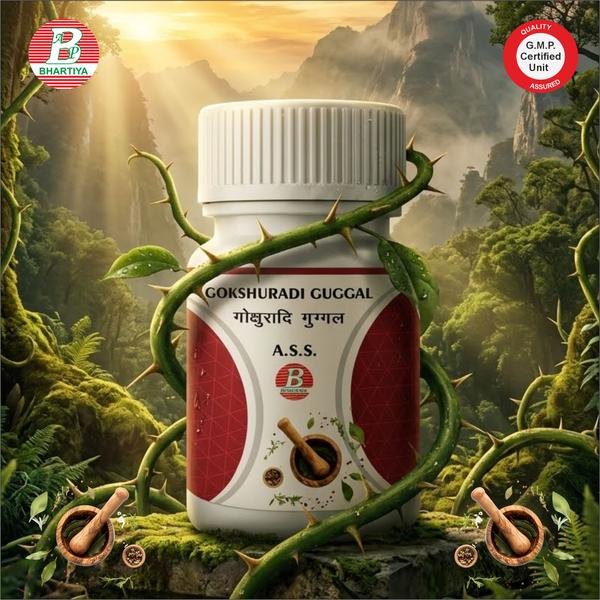
"name": "Gokshuradi Guggal",
"description": "\n GOKSHURADI GUGGUL\n\nProduct Identification \n•\tGeneric Name: Gokshuradi Guggul\n•\tType: Ayurvedic Polyherbal Formulation\n•\tPrimary Indication Area: Prameha (urinary disorders including diabetes mellitus support)\nTherapeutic Indications: Traditionally used for managing:\no\tPrameha (Madhumeha / diabetes-like conditions) – supports metabolic and urinary system balance \no\tMutravikara (urinary disorders) – helps in regulating urinary frequency and function \no\tMedo-dosha imbalance (lipid/metabolic disorders) – supports fat metabolism and weight-related metabolic issues \no\tKapha-vata disorders – helps in balancing doshas associated with metabolic syndrome \no\tGeneral metabolic weakness – used as a supportive formulation in chronic metabolic conditions\n\nKey Benefits:\n•\tSupports management of Prameha (diabetes-related metabolic imbalance)\nTraditionally used to help maintain balance in urinary and metabolic functions associated with Prameha.\nSrotas support)\nSupports healthy urinary frequency and flow, often affected in metabolic disorders.\n•\tPromotes healthy lipid and fat metabolism\nHelps manage “Medo-dosha” imbalance, which is linked with obesity and insulin resistance in Ayurveda.\n•\tSupports blood sugar balance (adjunct role)\nMay help in maintaining glucose metabolism as a supportive Ayurvedic formulation (not a standalone diabetes treatment).\n•\tReduces Kapha-related metabolic heaviness\nTraditionally used to address sluggish metabolism, heaviness, and water retention tendencies.\n•\tSupports detoxification and removal of metabolic wastes (Ama reduction)\nHelps improve digestion and metabolic processing, which is considered important in Prameha management.\n•\tSupports kidney and urinary tract health\nGokshura content traditionally supports renal and urinary system function\nFORMULA\nEach Tablet contains: \nGokshura \t1.344 kg\nShuddha Guggulu\t336g\nAmalaki \t48g\nHaritaki\t48g\nBibhitaki\t48g\nSunthi\t48g\nMarich\t48g\nPippali\t48g\nMusta\t48g\nWater\t8.0641 reduced to 4.0321\n\n 1. Gokshura (Tribulus terrestris)\n• Botanical/Scientific Name: Tribulus terrestris\n\nRasa–Guna–Vīrya–Vipāka:\n• Rasa: Madhura (Sweet), Kaṣāya (Astringent)\n• Guna: Guru (Heavy), Snigdha (Unctuous)\n• Vīrya: Śīta (Cooling)\n• Vipāka: Madhura (Sweet)\n\nPrabhāva:\n• Mutrala / Vrishya – Supports urinary system health and metabolic balance in Prameha\nMechanism of Action (Karma):\n• Mutravaha Srotas Shodhana Karma: Supports urinary tract function and regulates urinary frequency\n• Balya Karma: Improves strength and tissue nourishment\n• Kapha-Medo Hara Karma: Helps in reducing Kapha and fat-related metabolic imbalance\n\n2. Shuddha Guggulu (Commiphora mukul)\n• Botanical/Scientific Name: Commiphora mukul\n\nRasa–Guna–Vīrya–Vipāka:\n• Rasa: Tikta (Bitter), Kaṭu (Pungent)\n• Guna: Laghu (Light), Rūkṣa (Dry), Sara (Mobile)\n• Vīrya: Uṣṇa (Hot)\n• Vipāka: Kaṭu (Pungent)\n\nPrabhāva:\n• Yogavāhi / Lekhana – Enhances bioavailability and scrapes metabolic toxins (Medo-dosha)\n\nMechanism of Action (Karma):\n• Medo-Hara Karma: Reduces excess fat and supports lipid metabolism\n• Shothahara Karma: Reduces inflammation and swelling\n• Yogavāhi Karma: Enhances delivery and action of other herbs in the formulation\n\n3. Amalaki (Emblica officinalis)\n• Botanical/Scientific Name: Emblica officinalis\n\nRasa–Guna–Vīrya–Vipāka:\n• Rasa: Pancha Rasa (All tastes except Lavana), mainly Amla dominant\n• Guna: Laghu (Light), Ruksha (Dry)\n• Vīrya: Śīta (Cooling)\n• Vipāka: Madhura (Sweet)\n\nPrabhāva:\n• Rasayana – Potent rejuvenator and antioxidant support\n\nMechanism of Action (Karma):\n• Rasayana Karma: Supports tissue regeneration and immunity\n• Antioxidant Karma: Reduces oxidative stress in metabolic disorders\n• Pitta-Shamana Karma: Helps regulate heat and metabolic imbalance\n\n4. Haritaki (Terminalia chebula)\n• Botanical/Scientific Name: Terminalia chebula\n\nRasa–Guna–Vīrya–Vipāka:\n• Rasa: Pancha Rasa (all except Lavana)\n• Guna: Laghu (Light), Ruksha (Dry)\n• Vīrya: Uṣṇa (Hot)\n• Vipāka: Madhura (Sweet)\n\nPrabhāva:\n• Anulomana – Promotes proper bowel movement and detoxification\n\nMechanism of Action (Karma):\n• Deepana-Pachana Karma: Improves digestion and metabolic efficiency\n• Anulomana Karma: Supports proper elimination of waste\n• Ama-Pachana Karma: Reduces metabolic toxins linked with Prameha\n\n5. Bibhitaki (Terminalia bellirica)\n• Botanical/Scientific Name: Terminalia bellirica\n\nRasa–Guna–Vīrya–Vipāka:\n• Rasa: Kaṣāya (Astringent)\n• Guna: Laghu (Light), Ruksha (Dry)\n• Vīrya: Uṣṇa (Hot)\n• Vipāka: Madhura (Sweet)\n\nPrabhāva:\n• Kapha-Hara – Reduces excess mucus and metabolic congestion\n\nMechanism of Action (Karma):\n• Kapha-Medo Hara Karma: Helps in lipid and metabolic regulation\n• Detoxifying Karma: Supports removal of accumulated toxins\n• Metabolic Balancing Karma: Supports healthy digestion and metabolism\n\n6. Sunthi (Zingiber officinale)\n• Botanical/Scientific Name: Zingiber officinale\n\nRasa–Guna–Vīrya–Vipāka:\n• Rasa: Kaṭu (Pungent)\n• Guna: Laghu (Light), Snigdha (Slightly unctuous)\n• Vīrya: Uṣṇa (Hot)\n• Vipāka: Madhura (Sweet)\n\nPrabhāva:\n• Deepana-Pachana – Strong digestive and metabolic stimulant\n\nMechanism of Action (Karma):\n• Agni-Deepana Karma: Enhances digestive and metabolic fire\n• Shothahara Karma: Reduces inflammation\n• Bioavailability Enhancement Karma: Improves absorption of other herbs\n\n7. Marich (Piper nigrum)\n• Botanical/Scientific Name: Piper nigrum\n\nRasa–Guna–Vīrya–Vipāka:\n• Rasa: Kaṭu (Pungent)\n• Guna: Laghu (Light), Ruksha (Dry), Tikshna (Sharp)\n• Vīrya: Uṣṇa (Hot)\n• Vipāka: Kaṭu (Pungent)\n\nPrabhāva:\n• Yogavāhi – Enhances potency and absorption of other ingredients\n\nMechanism of Action (Karma):\n• Agni-Deepana Karma: Improves metabolism and digestion\n• Kapha-Hara Karma: Reduces excess Kapha and heaviness\n• Bioenhancer Karma: Increases bioavailability of active compounds\n\n8. Pippali (Piper longum)\n• Botanical/Scientific Name: Piper longum\n\nRasa–Guna–Vīrya–Vipāka:\n• Rasa: Kaṭu (Pungent)\n• Guna: Laghu (Light), Snigdha (Unctuous)\n• Vīrya: Uṣṇa (Hot)\n• Vipāka: Madhura (Sweet)\n\nPrabhāva:\n• Rasayana – Rejuvenative and bioenhancing herb\n\nMechanism of Action (Karma):\n• Agni-Deepana Karma: Enhances metabolic activity\n• Rasayana Karma: Supports tissue nourishment and strength\n• Vata-Kapha Shamana Karma: Balances doshas linked to metabolic disorders\n\n9. Musta (Cyperus rotundus)\n• Botanical/Scientific Name: Cyperus rotundus\n\nRasa–Guna–Vīrya–Vipāka:\n• Rasa: Tikta (Bitter), Kaṣāya (Astringent)\n• Guna: Laghu (Light), Ruksha (Dry)\n• Vīrya: Śīta (Cooling)\n• Vipāka: Kaṭu (Pungent)\n\nPrabhāva:\n• Tridosha Shamana – Balances all three doshas, especially Pitta and Kapha\n\nMechanism of Action (Karma):\n• Deepana-Pachana Karma: Improves digestion and metabolic regulation\n• Prameha Hara Karma: Supports management of urinary and metabolic disorders\n• Stambhana Karma: Helps regulate excessive secretions and fluid imbalance\n\nGeneral Ayurvedic dosage (adults):\nTablet/Capsule: 1–2 tablets (250–500 mg each)\n Frequency: 2 times a day\n Timing: After food (usually with lukewarm water)\n\n\n\ngokshuradi guggulu, gokshuradi guggulu benefits in hindi\ngokshuradi guggulu uses, gokshuradi guggulu uses in hindi\ngokshuradi guggulu ingredients, gokshuradi guggulu uses for male\ngokshuradi guggulu ingredients in hindi, gokshuradi guggulu benefits for male\ngokshuradi guggulu price, gokshuradi guggulu and chandraprabha vati\ngokshuradi guggulu ayurvedic medicine, gokshuradi guggulu amazon\ngokshuradi guggulu ayurvedic medicine uses, gokshuradi guggulu ayurvedic tablet\ngokshuradi guggulu benefits, gokshuradi guggulu benefits for female\ngokshuradi guggulu benefits for male in hindi, gokshuradi guggulu best brand\ngokshuradi guggulu before or after food, gokshuradi guggulu contents\ngokshuradi guggulu composition, gokshuradi guggulu dosage\ngokshuradi guggulu divya, gokshuradi guggulu ds tablet uses\ngokshuradi guggulu dose per day, gokshuradi guggulu easy ayurveda\ngokshuradi guggulu easy, gokshuradi guggulu uses easy ayurveda\ngokshuradi guggulu for weight loss, gokshuradi guggulu fayde in hindi\ngokshuradi guggulu goli, gokshuradi guggulu goli ke fayde\nwhat is gokshuradi guggulu good for, gokshuradi guggulu how to take\ngokshuradi guggulu hindi use, gokshuradi guggulu how long to take\ngokshuradi guggulu how to use, gokshuradi guggulu health benefits\ngokshuradi guggulu helps in weight loss, gokshuradi guggulu in hindi\ngokshuradi guggulu is used for, gokshuradi guggulu indication\nwhat is gokshuradi guggulu used for, what is gokshuradi guggulu\ngokshuradi guggulu ke fayde, gokshuradi guggulu ke fayde in hindi\ngokshuradi guggulu kis kaam aati hai, gokshuradi guggulu kaise khaye\ngokshuradi guggulu lene ka tarika, gokshuradi guggulu lene ke fayde\ngokshuradi guggulu kab lena chahiye, gokshuradi guggulu kis liye hota hai\ngokshuradi guggulu medicine, gokshuradi guggulu mrp, gokshuradi guggulu medicine uses\ngokshuradi guggulu near me, gokshuradi guggulu scientific name, gokshuradi guggulu botanical name\ngokshuradi guggulu online, benefits of gokshuradi guggulu, uses of gokshuradi guggulu\ningredients of gokshuradi guggulu, uses of gokshuradi guggulu in hindi, benefits of gokshuradi guggulu in hindi\ndosage of gokshuradi guggulu, gokshuradi guggulu plant, gokshuradi guggulu powder\ngokshuradi guggulu price in india, gokshuradi guggulu review, gokshuradi guggulu rate\ngokshuradi guggulu tablet, gokshuradi guggulu tablets benefits, gokshuradi guggulu tablet uses\ngokshuradi guggulu tablet uses in hindi, gokshuradi guggulu tablet ke fayde\ngokshuradi guggulu tablet price, gokshuradi guggulu tablets benefits in hindi\ngokshuradi guggulu tablet dosage, gokshuradi guggulu when to take\ngokshuradi guggul tablet, tablet gokshuradi guggulu, is gokshuradi guggulu good for kidney",
"price": 240.0,
"discountamount": 120.0,
"currencycode": "INR",
"priority": 1000000,
"isfreeshipmentavailable": false,
"shipmentduration": 1,
"_keywords": null,
"isarchived": false,
"isavailable": true,
"applicationid": null,
"productindex": 138,
"imageuri": "https://productimages.withfloats.com/actual/6a293335373107961f76938d.jpg",
"tileimageuri": "https://productimages.withfloats.com/tile/6a293335373107961f76938d.jpg",
"images": null,
"totalqueries": 0,
"gpid": null,
"groupproductid": null,
"createdon": "2026-06-10T09:49:36.351Z",
"updatedon": "2026-06-10T09:49:36.351Z",
"buyonlinelink": null,
"producturl": "http://WWW.BHARTIYAAYURVEDICPHARMACY.COM//gokshuradi-guggal/138",
"availableunits": -1.0,
"iscodavailable": true,
"isprepaidonlineavailable": true,
"maxcodorders": -1,
"maxprepaidonlineorders": -1,
"uniquepaymenturl": null,
"brandname": "Bakula Fort",
"category": "Gokshuradi Guggal 100 gm X 40",
"tags": [],
"variants": false,
"keyspecification": null,
"otherspecifications": null,
"pickupaddressreferenceid": null,
"paymenttype": "AssuredPurchase",
"producttype": "products",
"hsncode": null,
"gstslab": 0.0,
"isnotforsale": false
},
{
"_id": "6a1936c2b229e486c3e86712",
"fptag": "BHARTIYEAYURVEDICPHARMACY",
"merchantname": null,
"customwidgets": null,
"externalsourceid": null,
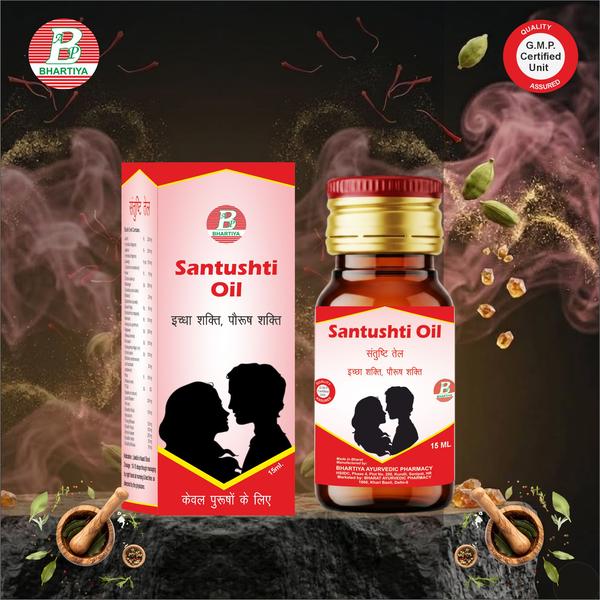
"name": "Santushti Tail",
"description": " SANTUSHTI OIL \n\nProduct Identification\n•\tGeneric Name: Santushti Oil\n•\tType: Ayurvedic Patent Medicine\n•\tPrimary Indication Area: Sexual health and vitality; may help improve stamina, libido, and overall reproductive wellness\n\n Therapeutic Indications\nSantushti Oil is indicated for the promotion of sexual health, enhancement of libido, improvement of stamina and vitality, and support for overall reproductive wellness. It may also help in reducing sexual fatigue and improving performance.\n\nKey benefits:\n•\tEnhances Sexual Vitality: Supports libido and overall sexual health.\n•\tImproves Stamina & Endurance: Helps reduce fatigue and boost energy levels.\n•\tSupports Reproductive Wellness: Promotes healthy reproductive function.\n•\tRelieves Stress & Fatigue: Provides rejuvenating effects on body and mind.\n•\tAyurvedic Formulation: Made from natural herbs to safely support male and female vitality.\n\n\nIngredient: \n Javitri (Nutmeg) \nBotanical Name: Myristica fragrans\nKey Constituents: Myristicin, elemicin, eugenol, essential oils, tannins\nTherapeutic Role in Sexual Health:\n1.\tAphrodisiac Effect:\no\tEnhances libido and sexual desire by stimulating the nervous system.\n2.\tImproves Stamina & Vitality:\no\tHelps reduce fatigue and promotes physical and sexual endurance.\n3.\tSupports Reproductive Health:\no\tTraditionally used to strengthen reproductive organs and improve overall sexual performance.\n4.\tMood & Stress Support:\no\tMild nervine and calming properties help relieve anxiety or stress that can impact sexual health.\n5.\tAyurvedic Perspective:\no\tUshna (hot) and Snigdha (unctuous) qualities help balance Vata and Kapha, enhancing vitality and energy.\nJaiphal (Nutmeg) \nBotanical Name: Myristica fragrans\nKey Constituents: Myristicin, elemicin, eugenol, essential oils, tannins\nTherapeutic Role in Sexual Health:\n1.\tAphrodisiac Activity:\no\tEnhances libido and sexual desire by stimulating the nervous system.\n2.\tImproves Stamina & Endurance:\no\tReduces fatigue and promotes physical and sexual energy.\n3.\tSupports Reproductive Wellness:\no\tStrengthens reproductive organs and improves overall sexual performance.\n4.\tMood & Stress Support:\no\tCalms the nervous system and helps relieve stress or anxiety affecting sexual health.\n5.\tAyurvedic Properties:\no\tRasa (taste): Sweet, pungent\no\tGuna (qualities): Ushna (hot), Snigdha (unctuous)\no\tDosha effect: Balances Vata and Kapha, supporting vitality and vigor\n\n Lavang (Clove) \nBotanical Name: Syzygium aromaticum\nKey Constituents: Eugenol, caryophyllene, tannins, flavonoids, essential oils\nTherapeutic Role in Sexual Health:\n1.\tAphrodisiac & Libido Support:\no\tStimulates circulation and nervous system activity to enhance sexual desire and performance.\n2.\tBoosts Stamina & Vitality:\no\tHelps reduce fatigue and improve energy, supporting endurance in sexual activity.\n3.\tSupports Reproductive Health:\no\tTraditionally used to strengthen reproductive organs and enhance overall sexual wellness.\n4.\tAntioxidant & Anti-inflammatory Effects:\no\tEugenol and flavonoids help protect tissues from oxidative stress, supporting general vitality.\n5.\tAyurvedic Perspective:\no\tRasa (taste): Pungent, sweet\no\tGuna (qualities): Ushna (hot), Tikshna (sharp)\no\tDosha effect: Balances Vata and Kapha; enhances circulation and warmth, promoting vigor\n Kesar (Saffron) \nBotanical Name: Crocus sativus\nKey Constituents: Crocin, crocetin, picrocrocin, Safranal\nTherapeutic Role in Sexual Health:\n1.\tAphrodisiac Effect:\no\tEnhances libido and sexual desire by stimulating nervous and reproductive systems.\n2.\tImproves Stamina & Vitality:\no\tReduces fatigue and boosts energy, supporting endurance in sexual activity.\n3.\tSupports Reproductive Wellness:\no\tPromotes healthy reproductive function and overall sexual performance.\n4.\tMood & Stress Support:\no\tCrocin and Safranal help improve mood, reduce stress, and relieve anxiety, which can positively influence sexual health.\n5.\tAyurvedic Perspective:\no\tRasa (taste): Sweet, slightly bitter\no\tGuna (qualities): Ushna (hot), Laghu (light), Snigdha (unctuous)\no\tDosha effect: Balances Vata and Kapha; enhances energy, vitality, and overall vigor\n\n Malkangni\nBotanical Name: Celestrus paniculatus\nCommon Names: Jyotishmati, Malkagni\nKey Constituents: Alkaloids (paniculatine), fatty acids, flavonoids, sterols, saponins\nTherapeutic Role in Sexual Health:\n1.\tAphrodisiac & Libido Support:\no\tTraditionally used to enhance sexual desire and performance.\n2.\tSupports Reproductive Health & Vitality:\no\tStrengthens reproductive organs and improves overall vigor.\n3.\tNervine & Cognitive Support:\no\tHelps improve memory, mental clarity, and reduces stress, indirectly supporting sexual health.\n4.\tStamina & Endurance:\no\tReduces fatigue and promotes physical and sexual energy.\n5.\tAyurvedic Perspective:\no\tRasa (taste): Bitter, pungent\no\tGuna (qualities): Ushna (hot), Laghu (light), Tikshna (sharp)\no\tDosha effect: Balances Vata and Kapha; enhances vitality, vigor, and nervous system strength\n\nBirbuti\n Botanical Name: Spilanthes acmella \nKey Constituents: Alkylamides (spilanthol), flavonoids, coumarins, essential oils\nTherapeutic Role in Sexual Health:\n1.\tAphrodisiac & Libido Support:\no\tTraditionally used to enhance sexual desire and performance.\n2.\tReproductive Health Support:\no\tStrengthens reproductive organs and improves vitality.\n3.\tStamina & Energy Enhancement:\no\tImproves physical and sexual endurance; reduces fatigue.\n4.\tCirculatory & Muscle Support:\no\tEnhances blood flow and improves tissue nourishment, supporting overall vitality.\n5.\tAyurvedic Perspective:\no\tRasa (taste): Pungent, slightly bitter\no\tGuna (qualities): Ushna (hot), Laghu (light), Tikshna (sharp)\no\tDosha effect: Balances Vata and Kapha; enhances energy, vitality, and sexual vigor\n\n\n Salam panja \nBotanical Name: Dactylorhiza hatagirea\nCommon Names: Himalayan Orchid, Rasna Bheda\nKey Constituents: Polysaccharides, glycosides, starches, phenolics, mucilage\nTherapeutic Role in Sexual Health:\n1.\tAphrodisiac & Libido Enhancement:\no\tTraditionally used to improve sexual desire and performance in both men and women.\n2.\tSupports Reproductive Health:\no\tStrengthens reproductive organs and enhances fertility and vigor.\n3.\tBoosts Stamina & Vitality:\no\tRejuvenates the body, reduces fatigue, and promotes endurance.\n4.\tMuscle & Tissue Rejuvenation:\no\tSupports recovery from weakness, improves circulation, and nourishes tissues.\n5.\tAyurvedic Perspective:\no\tRasa (taste): Sweet, slightly bitter\no\tGuna (qualities): Ushna (hot), Snigdha (unctuous), Laghu (light)\no\tDosha effect: Balances Vata and Kapha; promotes vitality, vigor, and sexual health\n\n Akarkara\nBotanical Name: Anacyclus pyrethrum \nCommon Names: Akar Pahal, Akarkara, Pellitory Root\nKey Constituents: Alkylamides (Anacyclin), pyrethrins, alkaloids, essential oils, saponins\nTherapeutic Role in Sexual Health:\n1.\tAphrodisiac & Libido Support:\no\tEnhances sexual desire, performance, and vitality.\n2.\tSupports Reproductive Health:\no\tStrengthens reproductive organs and improves fertility.\n3.\tStamina & Energy Booster:\no\tReduces fatigue and promotes physical and sexual endurance.\n4.\tNervine & Circulatory Support:\no\tStimulates nerve and blood circulation, supporting vitality and muscular health.\n5.\tAyurvedic Perspective:\no\tRasa (taste): Pungent, bitter\no\tGuna (qualities): Ushna (hot), Tikshna (sharp), Laghu (light)\no\tDosha effect: Balances Vata and Kapha; enhances vigor, stamina, and sexual health\n\n Nagkesar \nBotanical Name: Mesua ferrea\nCommon Names: Ironwood Tree, Nagkesar\nKey Constituents: Coumarins (mesuol, mesuagin), tannins, flavonoids, essential oils, resin\nTherapeutic Role in Sexual Health:\n1.\tAphrodisiac & Libido Support:\no\tEnhances sexual desire and performance.\n2.\tSupports Reproductive Health:\no\tStrengthens male reproductive organs and improves fertility and sexual vigor.\n3.\tStamina & Vitality Enhancement:\no\tReduces fatigue, boosts endurance, and promotes physical and sexual energy.\n4.\tAnti-inflammatory & Circulatory Support:\no\tImproves blood flow to reproductive tissues and supports muscular comfort.\n5.\tAyurvedic Perspective:\no\tRasa (taste): Bitter, astringent\no\tGuna (qualities): Ushna (hot), Tikshna (sharp)\no\tDosha effect: Balances Vata and Kapha; enhances vigor, vitality, and reproductive health\n\n Khursani Ajwain \nBotanical Name: Trachyspermum ammi\nCommon Names: Carom Seeds, Ajwain, Omam\nKey Constituents: Thymol, carvacrol, flavonoids, saponins, essential oils\nTherapeutic Role in Sexual Health:\n1.\tDigestive & Metabolic Support:\no\tImproves digestion and nutrient absorption, which supports overall vitality and energy.\n2.\tSupports Sexual Vitality Indirectly:\no\tBy enhancing digestive fire (Agni) and metabolism, it helps maintain stamina and vigor.\n3.\tStamina & Energy Booster:\no\tReduces lethargy and fatigue by improving overall metabolism.\n4.\tCirculatory & Muscle Support:\no\tThymol and essential oils enhance local circulation and tissue nourishment.\n5.\tAyurvedic Perspective:\no\tRasa (taste): Pungent, bitter\no\tGuna (qualities): Ushna (hot), Tikshna (sharp)\no\tDosha effect: Balances Kapha and Vata; enhances energy, vitality, and digestive health\n\n Choti Elaichi\nBotanical Name: Elettaria cardamomum\nCommon Names: Green Cardamom, Elaichi\nKey Constituents: Essential oils (cineole, terpinene, limonene), flavonoids, phenolic compounds, tannins\nTherapeutic Role in Sexual Health:\n1.\tAphrodisiac & Libido Support:\no\tEnhances sexual desire, performance, and vitality.\n2.\tSupports Reproductive Health:\no\tStrengthens reproductive organs and supports overall sexual wellness.\n3.\tStamina & Energy Booster:\no\tReduces fatigue, promotes endurance, and improves physical and sexual energy.\n4.\tDigestive & Metabolic Support:\no\tImproves digestion, nutrient absorption, and metabolism, which indirectly supports vitality.\n5.\tAyurvedic Perspective:\no\tRasa (taste): Sweet, pungent\no\tGuna (qualities): Ushna (hot), Snigdha (unctuous), Laghu (light)\no\tDosha effect: Balances Vata and Kapha; enhances vigor, stamina, and vitality\n\n Castoreum\nSource: Secretion from castor sacs of mature beavers (Castor fiber / Castor canadensis)\nKey Constituents: Phenols, esters, fatty acids, volatile oils, ketones\nTherapeutic Role in Sexual Health:\n1.\tAphrodisiac & Libido Enhancement:\no\tTraditionally used to stimulate sexual desire and enhance performance.\n2.\tReproductive Health Support:\no\tBelieved to strengthen reproductive organs and improve fertility.\n3.\tStamina & Vitality:\no\tEnhances physical endurance, reduces fatigue, and boosts overall energy.\n4.\tCirculatory & Nervine Support:\no\tPromotes circulation and tissue nourishment, supporting vitality.\n5.\tAyurvedic / Traditional Perspective:\no\tClassified as a rejuvenator and aphrodisiac in Rasayana formulations.\no\tOften used in small quantities due to potency.\n\n Pista\nBotanical Name: Pistacia vera\nCommon Names: Pistachio, Pista\nKey Constituents: Proteins, healthy fats (oleic, linoleic acids), vitamins (E, B6), minerals (magnesium, potassium), antioxidants\nTherapeutic Role in Sexual Health:\n1.\tAphrodisiac & Libido Support:\no\tTraditionally used to enhance sexual desire and performance.\n2.\tReproductive Health Support:\no\tStrengthens reproductive organs, enhances fertility, and supports overall sexual vigor.\n3.\tStamina & Energy Booster:\no\tProvides sustained energy, reduces fatigue, and improves physical and sexual endurance.\n4.\tNervine & Tissue Rejuvenation:\no\tNourishes tissues, supports nervous system health, and promotes overall vitality.\n5.\tAyurvedic Perspective:\no\tRasa (taste): Sweet, slightly astringent\no\tGuna (qualities): Snigdha (unctuous), Guru (heavy), Madhura (sweet)\no\tDosha effect: Balances Vata and Pitta; enhances strength, stamina, and reproductive health\n\n Til Tail\nBotanical Name: Sesamum indicum\nCommon Names: Sesame Oil, Til Oil\nKey Constituents: Unsaturated fatty acids (oleic, linoleic), sesamol, sesamin, vitamin E, minerals\nTherapeutic Role in Sexual Health:\n1.\tAphrodisiac & Libido Support:\no\tSupports sexual vigor and vitality by nourishing reproductive tissues.\n2.\tReproductive Health Support:\no\tStrengthens reproductive organs, enhances fertility, and improves sexual stamina.\n3.\tStamina & Energy Booster:\no\tProvides sustained energy, reduces fatigue, and supports physical and sexual endurance.\n4.\tNervine & Tissue Nourishment:\no\tDeeply penetrates tissues to rejuvenate muscles, joints, and nerves.\n5.\tAyurvedic Perspective:\no\tRasa (taste): Sweet, oily\no\tGuna (qualities): Snigdha (unctuous), Guru (heavy), Ushna (hot)\no\tDosha effect: Balances Vata and Pitta; enhances strength, stamina, and reproductive health\n\n Lauh Bhasma \n Scientific Name: Iron Ash\nSource: Calcined and purified iron prepared according to classical Ayurvedic methods\nKey Constituents: Elemental iron, trace minerals\nTherapeutic Role in Sexual Health:\n1.\tReproductive & Sexual Health Support:\no\tEnhances sexual vigor, libido, and performance.\no\tStrengthens male reproductive organs and supports fertility.\n2.\tStamina & Vitality Booster:\no\tImproves energy levels, reduces fatigue, and promotes physical and sexual endurance.\n3.\tHemopoietic & Tissue Rejuvenation:\no\tSupports red blood cell formation, improves circulation, and nourishes tissues.\n4.\tAyurvedic Perspective:\no\tRasa (taste): Kashaya (astringent), Tikta (bitter)\no\tGuna (qualities): Guru (heavy), Ruksha (dry), Ushna (hot)\no\tDosha effect: Balances Vata and Pitta; enhances strength, vitality, and reproductive health\n\n Shudh Shilajit \n Scientific Name: Purified Shilajit / Asphaltum\nSource: Exudate from Himalayan rocks, purified according to classical Ayurvedic methods\nKey Constituents: Fulvic acid, humic acid, dibenzo-alpha-pyrones, trace minerals\nTherapeutic Role in Sexual Health:\n1.\tAphrodisiac & Libido Enhancement:\no\tBoosts sexual desire, performance, and reproductive vitality.\n2.\tReproductive Health Support:\no\tStrengthens reproductive organs, supports fertility, and improves sperm quality in men.\n3.\tStamina & Energy Booster:\no\tReduces fatigue, enhances physical and sexual endurance, and improves overall vitality.\n4.\tNervine & Tissue Rejuvenation:\no\tSupports nervous system health, nourishes tissues, and promotes rejuvenation.\n5.\tAyurvedic Perspective:\no\tRasa (taste): Bitter, astringent\no\tGuna (qualities): Guru (heavy), Snigdha (unctuous), Ushna (hot)\no\tDosha effect: Balances Vata and Kapha; enhances strength, stamina, and reproductive health\n\nTrivang Bhasma – Ayurvedic Herbo-Mineral Preparation\nSource: Classical bhasma prepared from three purified metals/minerals according to Ayurvedic pharmacopeia\nKey Constituents: Trace elements of Tin, Lead, Zinc, along with minor mineral ash components\nTherapeutic Role in Sexual Health:\n1.\tAphrodisiac & Libido Enhancement:\no\tTraditionally used to boost sexual desire, performance, and reproductive vitality.\n2.\tReproductive Health Support:\no\tStrengthens reproductive organs, improves fertility, and enhances sexual stamina.\n3.\tStamina & Vitality Booster:\no\tImproves energy, reduces fatigue, and enhances physical and sexual endurance.\n4.\tTissue & Nervine Rejuvenation:\no\tSupports nervous system and tissue health, aiding rejuvenation and vitality.\n5.\tAyurvedic Perspective:\no\tRasa (taste): Astringent, metallic\no\tGuna (qualities): Guru (heavy), Ruksha (dry), Ushna (hot)\no\tDosha effect: Balances Vata and Kapha; enhances vigor, reproductive health, and overall strength\n\n Shudh Hingul \nScientific Name: Purified Cinnabar / Red Sulfur\nSource: Mercury-sulfur compound (Cinnabar / HgS) purified according to classical Ayurvedic methods\nKey Constituents: Mercuric sulphide (HgS) and trace minerals after purification\nTherapeutic Role in Sexual Health:\n1.\tAphrodisiac & Libido Support:\no\tEnhances sexual desire, performance, and vigor.\n2.\tReproductive Health Support:\no\tStrengthens reproductive organs and supports fertility.\n3.\tStamina & Vitality Booster:\no\tIncreases physical endurance, reduces fatigue, and promotes overall vitality.\n4.\tTissue & Nervine Rejuvenation:\no\tSupports nervous system health, tissue strength, and rejuvenation.\n5.\tAyurvedic Perspective:\no\tRasa (taste): Kashaya (astringent), Lavana (salty)\no\tGuna (qualities): Guru (heavy), Ushna (hot), Snigdha (unctuous)\no\tDosha effect: Balances Vata and Kapha; enhances strength, stamina, and reproductive health\n\n Abhrak Bhasma \nScientific Name: Purified Mica Ash\nSource: Calcined and purified natural mica (Abhrak) prepared according to classical Ayurvedic methods\nKey Constituents: Silicates of aluminum and magnesium, trace minerals, microelements\nTherapeutic Role in Sexual Health:\n1.\tAphrodisiac & Libido Enhancement:\no\tBoosts sexual desire, vigor, and performance.\n2.\tReproductive Health Support:\no\tStrengthens reproductive organs, enhances fertility, and improves sexual stamina.\n3.\tStamina & Energy Booster:\no\tImproves physical endurance, reduces fatigue, and promotes vitality.\n4.\tTissue & Nervine Rejuvenation:\no\tSupports nervous system health, tissue strength, and overall rejuvenation.\n5.\tAyurvedic Perspective:\no\tRasa (taste): Kashaya (astringent), Madhura (sweet)\no\tGuna (qualities): Guru (heavy), Snigdha (unctuous), Ushna (hot)\no\tDosha effect: Balances Vata and Kapha; enhances vigor, strength, and reproductive health\n\n Shudh Hartal \nScientific Name: Purified Cinnabar / Mercury Sulphide\nSource: Mercury-sulfur compound (Cinnabar / HgS) purified according to classical Ayurvedic procedures\nKey Constituents: Mercuric sulphide (HgS) with trace minerals after purification\nTherapeutic Role in Sexual Health:\n1.\tAphrodisiac & Libido Enhancement:\no\tBoosts sexual desire, performance, and vigor.\n2.\tReproductive Health Support:\no\tStrengthens reproductive organs and enhances fertility.\n3.\tStamina & Vitality Booster:\no\tReduces fatigue, improves endurance, and promotes overall vitality.\n4.\tTissue & Nervine Rejuvenation:\no\tSupports nervous system health, tissue strength, and rejuvenation.\n5.\tAyurvedic Perspective:\no\tRasa (taste): Kashaya (astringent), Lavana (salty)\no\tGuna (qualities): Guru (heavy), Ushna (hot), Snigdha (unctuous)\no\tDosha effect: Balances Vata and Kapha; enhances strength, stamina, and reproductive health\n\nShudh Bhilawa \nScientific Name: Purified Aconitum / Indian Monkshood\nSource: Root or tuber of Aconitum ferox purified according to classical Ayurvedic methods\nKey Constituents: Alkaloids (aconitine, mesaconitine), polysaccharides, trace minerals after purification\nTherapeutic Role in Sexual Health:\n1.\tAphrodisiac & Libido Enhancement:\no\tEnhances sexual desire, performance, and vigor.\n2.\tReproductive Health Support:\no\tStrengthens reproductive organs, improves fertility, and sexual stamina.\n3.\tStamina & Vitality Booster:\no\tImproves physical endurance, reduces fatigue, and boosts overall energy.\n4.\tTissue & Nervine Rejuvenation:\no\tSupports nervous system health, tissue strength, and overall rejuvenation.\n5.\tAyurvedic Perspective:\no\tRasa (taste): Tikta (bitter), Katu (pungent)\no\tGuna (qualities): Guru (heavy), Ushna (hot), Tikshna (sharp)\no\tDosha effect: Balances Vata and Kapha; enhances vigor, strength, and sexual health\n\n\n How to use:\nExternal Application (Topical Massage / Abhyanga)\n•\tMethod: Apply a few drops of the oil on the lower abdomen, lower back, thighs, or reproductive organs.\n•\tMassage: Gently massage in circular motions for 5–10 minutes.\n•\tFrequency: 1–2 times daily, preferably before bedtime.\n•\tBenefit: Improves local circulation, muscle relaxation, and sexual vitality; nourishes tissues and reproductive organs.\n\nsantushti tail taila, santushti tail bala, santushti tail bilaspur\nsantushti tail brand, santushti tail branches, santushti tail cooler\nsantushti tail cooler price, santushti tail company, santushti tail deoria uttar pradesh\nsantushti tail deoghar jharkhand, santushti tail export, santushti tail english\nsantushti tail equipment, santushti tail english translation, santushti tail enterprises\nsantushti tail english meaning, santushti tail english name, santushti tail english spelling\nsantushti tail feed, santushti tail fashion point, santushti tail franchise, santushti tail franchise price\nsantushti tail grinder, santushti tail gate, santushti tail gold, santushti tail ghaziabad\nsantushti tail gujarat, santushti tail gurugram, santushti tail gujarati, santushti tail hospital\nsantushti tail hindi, santushti tail house, santushti tail hospital sonipat, santushti tail hoti hai\nsantushti tail in english, santushti tail in hindi, santushti tail in delhi, santushti tail in marathi\nsantushti tail in malayalam, santushti tail in tamil, santushti tail in punjabi, santushti tail in telugu\nsantushti tail in bengali, santushti tail kundali, santushti tail kaise kare, santushti tail ka meaning in hindi\nsantushti tail ka hindi, santushti tail light, santushti tail limited, santushti tail light price, santushti tail machine\nsantushti tail machine price, santushti tail name, santushti tail name style, santushti tail najafgarh\nsantushti tail nagar, santushti tail online, santushti tail online shopping, santushti tail office address\nsantushti tail origin, santushti tail online order, santushti tail owner, santushti tail of hindi\nsantushti tail price, santushti tail product, santushti tail question, santushti tail question answer\nsantushti tail quotes in hindi, santushti tail uses in hindi, santushti tail uses",
"price": 270.0,
"discountamount": 135.0,
"currencycode": "INR",
"priority": 1000000,
"isfreeshipmentavailable": false,
"shipmentduration": 1,
"_keywords": null,
"isarchived": false,
"isavailable": true,
"applicationid": null,
"productindex": 134,
"imageuri": "https://productimages.withfloats.com/actual/6a1936c6b129782af24ef5c9.jpg",
"tileimageuri": "https://productimages.withfloats.com/tile/6a1936c6b129782af24ef5c9.jpg",
"images": null,
"totalqueries": 0,
"gpid": null,
"groupproductid": null,
"createdon": "2026-05-29T06:48:34.259Z",
"updatedon": "2026-05-29T06:48:34.259Z",
"buyonlinelink": null,
"producturl": "http://WWW.BHARTIYAAYURVEDICPHARMACY.COM//santushti-tail/134",
"availableunits": -1.0,
"iscodavailable": true,
"isprepaidonlineavailable": true,
"maxcodorders": -1,
"maxprepaidonlineorders": -1,
"uniquepaymenturl": null,
"brandname": "Bakula Fort",
"category": "Santushti Tail 15 ML X 30",
"tags": [],
"variants": false,
"keyspecification": null,
"otherspecifications": null,
"pickupaddressreferenceid": null,
"paymenttype": "AssuredPurchase",
"producttype": "products",
"hsncode": null,
"gstslab": 0.0,
"isnotforsale": false
},
{
"_id": "69ec9dae2f7ef40477916976",
"fptag": "BHARTIYEAYURVEDICPHARMACY",
"merchantname": null,
"customwidgets": null,
"externalsourceid": null,
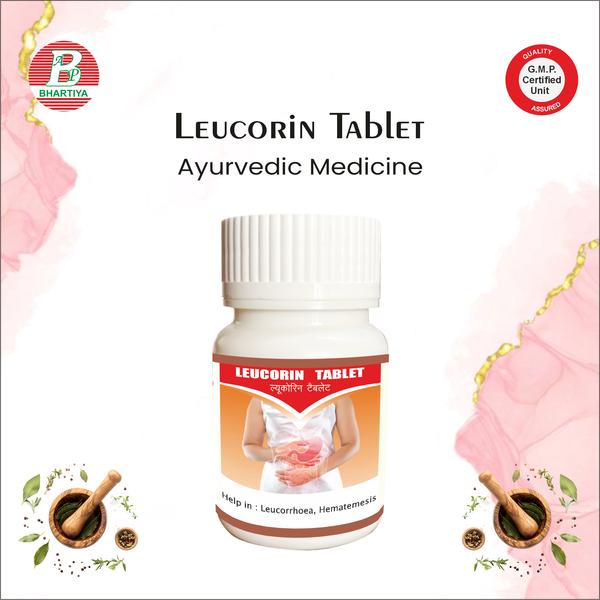
"name": "Leucorin Tablet",
"description": " LEUCORIN TABLET \n\nProduct Identification\n•\tGeneric Name: Leucorin Tablet\n•\tType: Ayurvedic Patent Medicine\n•\tPrimary Indication Area: managing leucorrhoea (white discharge) and rakt-pradar (heavy menstrual bleeding).\nTherapeutic Indications:\nManagement of leucorrhoea and rakt-pradar in women (Ayurvedic use).\n Primary Benefit:\n•\tRestoration of dosha balance in the reproductive system, leading to normalization of vaginal discharge, strengthening of the uterus, and improvement in overall gynecological health.”\nOther Benefits:\n•\tStrengthening of uterine muscles / tone of uterus — helps in cases of “untoned uterus” or uterine weakness. \n•\tSupport for general female health / vitality — helps alleviate general debility, weakness, lack of energy. \n•\tRelief from backache, pelvic pain or menstrual related discomfort — in some formulations the tablets are said to reduce back pain, weakness, and headaches that often accompany gynecological problems. \n•\tHelping with unspecified uterine bleeding / irregularities — some versions are claimed to help manage “unspecified uterine haemorrhage” or irregular menstrual cycles. \n•\tHolistic reproductive system support — by acting as a tonic for reproductive organs, improving overall uterine health, possibly aiding hormonal balance and reproductive wellness in long term. \n SAFEED MUSLI \nBotanical / Common Name: Chlorophytum borivilianum\nKey Phytoconstituents:\n•\tSteroidal saponins\n•\tPolysaccharides\n•\tGlycosides\nMechanism of Action in Female Reproductive Health – Biochemistry / Pharmacology\n1. Uterine Tonic / Hormonal Support\n•\tSteroidal saponins help regulate estrogen and progesterone levels.\n•\tSupports uterine and ovarian tissue health, improving menstrual regularity.\n2. Vaginal & Leucorrhoea Support\n•\tPolysaccharides and glycosides enhance mucosal integrity.\n•\tHelps reduce excessive discharge and strengthens reproductive tract tissues.\n3. Adaptogenic & General Reproductive Tonic Effect\n•\tImproves overall vitality and energy, indirectly supporting reproductive function.\n•\tProvides mild anti-inflammatory effects, supporting reproductive organ health.\n\n SUPARI (Areca Nut) – Female Reproductive Health \nBotanical / Common Name: Areca catechu\nKey Phytoconstituents:\n•\tAlkaloids (Arecoline, Arecaidine)\n•\tTannins\n•\tFlavonoids\n•\tPolyphenols\nMechanism of Action in Female Reproductive Health – Biochemistry / Pharmacology\n1.\tUterine & Menstrual Effects\no\tArecoline may mildly stimulate smooth muscle activity in the uterus.\no\tTraditionally used in some herbal systems to support menstrual flow, though clinical evidence is limited.\n2.\tDigestive & Metabolic Support for Reproductive Health\no\tTannins and alkaloids enhance digestion and nutrient absorption.\no\tImproved nutrition indirectly supports ovarian function and general reproductive health.\n3.\tAnti-parasitic & Vaginal Health Support\no\tPolyphenols have mild antimicrobial activity.\no\tMay help reduce genitourinary infections, supporting overall reproductive tract health.\nCaution:\n•\tExcessive or chronic use can be harmful (oral fibrosis, toxicity), so use must be carefully controlled.\n\n LODHRĀ (Symplocos racemosa) \nBotanical / Common Name: Symplocos racemosa\nKey Phytoconstituents:\n•\tTannins\n•\tFlavonoids\n•\tAlkaloids\n•\tGlycosides\nMechanism of Action in Female Reproductive Health – Biochemistry / Pharmacology\n1.\tUterine Tonic / Menstrual Support\no\tTannins have astringent properties that help strengthen uterine tissue.\no\tSupports healthy menstrual flow and can reduce excessive bleeding (menorrhagia).\n2.\tVaginal & Leucorrhoea Support\no\tFlavonoids and tannins enhance mucosal integrity.\no\tHelps reduce excessive discharge and promotes vaginal health.\n3.\tAnti-inflammatory & Reproductive Organ Protection\no\tMild anti-inflammatory and antioxidant effects protect uterine and ovarian tissue.\no\tSupports overall reproductive organ health and vitality.\n\n SAMUNDER SOKH (Hawaiian Baby Woodrose / Elephant Creeper) \nBotanical / Common Name: Argyreia nervosa (Burm. f.) Bojer\nKey Phytoconstituents:\n•\tErgoline alkaloids (Lysergic acid amides: LSA)\n•\tFlavonoids\n•\tGlycosides\n•\tTriterpenes\nMechanism of Action in Female Reproductive Health – Biochemistry / Pharmacology\n1.\tUterine & Menstrual Support\no\tAlkaloids may influence smooth muscle activity, potentially supporting uterine tone.\no\tTraditionally used in some systems to aid menstrual regulation, though clinical evidence is limited.\n2.\tAdaptogenic & General Reproductive Tonic Effect\no\tFlavonoids and glycosides provide mild adaptogenic effects, improving overall vitality and stamina.\no\tSupports reproductive organ health indirectly through systemic well-being.\n3.\tCaution\no\tErgoline alkaloids are psychoactive, so internal use should be strictly guided by traditional or medical supervision.\no\tNot recommended for routine consumption without professional oversight due to potential toxicity and hallucinogenic effects.\n HALDI (Turmeric) \nBotanical / Common Name: Curcuma longa\nKey Phytoconstituents:\n•\tCurcuminoids (Curcumin, Demethoxycurcumin, Bisdemethoxycurcumin)\n•\tVolatile oils (Turmerone, Zingiberene)\n•\tPolysaccharides\n•\tProteins\nMechanism of Action in Female Reproductive Health – Biochemistry / Pharmacology\n1.\tAnti-inflammatory & Uterine Support\no\tCurcumin inhibits pro-inflammatory pathways (NF-κB, COX-2), reducing uterine inflammation.\no\tSupports conditions like dysmenorrhea and general uterine health.\n2.\tHormonal & Menstrual Regulation\no\tCurcuminoids may indirectly influence estrogen and progesterone metabolism.\no\tHelps in regulating menstrual cycles and maintaining ovarian health.\n3.\tAntioxidant & Reproductive Organ Protection\no\tStrong antioxidant properties protect ovarian and uterine tissues from oxidative stress.\no\tSupports overall reproductive vitality and reduces tissue damage.\n\n AMLA (Indian Gooseberry) \nBotanical / Common Name: Phyllanthus emblica / Emblica officinalis\nKey Phytoconstituents:\n•\tVitamin C (Ascorbic acid)\n•\tTannins (Emblicanin A & B)\n•\tFlavonoids (Quercetin, Kaempferol)\n•\tPolyphenols\n•\tGallic acid\nMechanism of Action in Female Reproductive Health – Biochemistry / Pharmacology\n1.\tHormonal & Ovarian Support\no\tVitamin C and flavonoids support steroid hormone synthesis, aiding estrogen and progesterone balance.\no\tHelps in maintaining healthy ovarian function and fertility.\n2.\tAntioxidant & Tissue Protection\no\tStrong antioxidant activity protects uterine and ovarian tissues from oxidative stress.\no\tReduces cellular damage, supporting overall reproductive health.\n3.\tImmune & Vaginal Health Support\no\tPolyphenols and tannins enhance mucosal integrity.\no\tSupports vaginal health and may help reduce susceptibility to infections.\n ASHOK CHAAL (Ashoka Bark) \nBotanical / Common Name: Saraca asoca\nKey Phytoconstituents:\n•\tFlavonoids (Quercetin, Kaempferol)\n•\tTannins\n•\tGlycosides\n•\tSterols\n•\tCatechins\nMechanism of Action in Female Reproductive Health – Biochemistry / Pharmacology\n1.\tUterine Tonic / Menstrual Support\no\tFlavonoids and glycosides help strengthen uterine tissue.\no\tSupports healthy menstrual flow and reduces excessive bleeding (menorrhagia).\n2.\tVaginal & Leucorrhoea Support\no\tTannins and flavonoids improve mucosal integrity.\no\tHelps reduce excessive discharge and maintain vaginal health.\n3.\tAnti-inflammatory & Reproductive Organ Protection\no\tMild anti-inflammatory and antioxidant effects protect uterine and ovarian tissue.\no\tSupports overall reproductive organ health and fertility.\n SHITAL CHINI (Stevia / Sweet Leaf) \nBotanical / Common Name: Stevia rebaudiana\nKey Phytoconstituents:\n•\tSteviol glycosides (Stevioside, Rebaudioside A)\n•\tFlavonoids\n•\tPhenolic compounds\n•\tVitamins (A, C, B-complex)\nMechanism of Action in Female Reproductive Health – Biochemistry / Pharmacology\n1.\tMetabolic & Hormonal Support\no\tSteviol glycosides help regulate blood sugar levels, which indirectly supports hormonal balance, especially in conditions like PCOS.\n2.\tAntioxidant & Tissue Protection\no\tFlavonoids and phenolic compounds reduce oxidative stress in reproductive tissues.\no\tSupports ovarian and uterine health.\n3.\tAnti-inflammatory & Vaginal Health Support\no\tMild anti-inflammatory activity protects reproductive organs.\no\tHelps maintain overall vaginal mucosal health.\n\n SHATAVARI (Asparagus racemosus) \nBotanical / Common Name: Asparagus racemosus\nKey Phytoconstituents:\n•\tSteroidal saponins (Shatavarins)\n•\tPolysaccharides\n•\tFlavonoids\n•\tGlycosides\nMechanism of Action in Female Reproductive Health – Biochemistry / Pharmacology\n1.\tUterine Tonic / Hormonal Support\no\tSteroidal saponins help regulate estrogen and progesterone levels.\no\tSupports uterine and ovarian tissue health, improving menstrual regularity and fertility.\n2.\tVaginal & Leucorrhoea Support\no\tPolysaccharides and glycosides strengthen vaginal mucosa.\no\tHelps reduce excessive leucorrhoea and maintain reproductive tract integrity.\n3.\tAdaptogenic & General Reproductive Tonic Effect\no\tImproves overall vitality, stamina, and immunity, indirectly supporting reproductive function.\no\tMild anti-inflammatory and antioxidant effects protect reproductive organs.\n KUKUTANDTWAK BHASMA (Coconut Shell Calcined Ash / Eggshell Calcined Ash) \nAyurvedic / Traditional Name: Kukkutandtwak Bhasma\nKey Phytoconstituents / Components:\n•\tCalcium (from calcined eggshell or bone)\n•\tTrace minerals (Magnesium, Phosphorus, Zinc)\nMechanism of Action in Female Reproductive Health – Biochemistry / Pharmacology\n1.\tUterine & Menstrual Support\no\tProvides bioavailable calcium, which supports uterine muscle function and may help regulate menstrual cramps.\no\tHelps maintain normal menstrual cycles and uterine tone.\n2.\tBone & Reproductive Tissue Support\no\tCalcium and trace minerals strengthen skeletal system, indirectly supporting pelvic and reproductive organ health.\no\tImportant for pregnancy and lactation to prevent mineral deficiencies.\n3.\tGeneral Reproductive Tonic Effect\no\tSupports overall vitality, endurance, and metabolic functions related to reproduction.\no\tMay enhance fertility indirectly by improving mineral balance and tissue health.\n\n LOH BHASMA (Iron Bhasma) \nAyurvedic / Traditional Name: Loh Bhasma\nKey Components:\n•\tElemental Iron (Fe) in bioavailable form\n•\tTrace minerals depending on preparation\nMechanism of Action in Female Reproductive Health – Biochemistry / Pharmacology\n1.\tHematinic / Menstrual Support\no\tProvides bioavailable iron, essential for hemoglobin synthesis.\no\tHelps prevent anemia, which is common in women with heavy menstrual bleeding.\n2.\tUterine & General Reproductive Support\no\tAdequate iron improves oxygen delivery to reproductive tissues, supporting uterine and ovarian health.\no\tMay improve overall vitality and energy, indirectly enhancing reproductive function.\n3.\tFertility & Pregnancy Support\no\tMaintains iron levels during preconception and pregnancy, supporting fetal development and maternal health.\no\tEnhances general reproductive efficiency by preventing nutritional deficiencies.\nCaution: Excessive use may cause iron overload; dosage should follow Ayurvedic guidance.\n\n ABHRAK BHASMA (Mica Calx) \nAyurvedic / Traditional Name: Abhrak Bhasma\nKey Components:\n•\tBioactive Silica (from calcined mica)\n•\tTrace minerals (Magnesium, Iron, Calcium, Potassium)\nMechanism of Action in Female Reproductive Health – Biochemistry / Pharmacology\n1.\tUterine & Hormonal Support\no\tTrace minerals help maintain uterine and ovarian tissue health.\no\tSupports menstrual regularity and alleviates uterine weakness.\n2.\tAdaptogenic & Reproductive Tonic Effect\no\tImproves vitality, stamina, and energy, indirectly supporting reproductive function.\no\tActs as a rejuvenator (Rasayana) for female reproductive organs.\n3.\tAnti-inflammatory & Tissue Protection\no\tMild anti-inflammatory effects protect reproductive tissues.\no\tEnhances tissue regeneration and overall reproductive organ resilience.\nCaution: Use only in Ayurvedic-prepared doses; improper use may lead to heavy metal accumulation.\n\n VANG BHASMA (Tin Bhasma) \nAyurvedic / Traditional Name: Vang Bhasma\nKey Components:\n•\tBioactive Tin (Sn)\n•\tTrace minerals depending on preparation\nMechanism of Action in Female Reproductive Health – Biochemistry / Pharmacology\n1.\tUterine & Menstrual Support\no\tSupports uterine tissue health and may help in regulating menstrual cycles.\no\tTraditionally used to reduce menstrual irregularities and uterine weakness.\n2.\tReproductive Tonic & Fertility Support\no\tActs as a rejuvenator (Rasayana) for the female reproductive system.\no\tEnhances overall vitality, energy, and reproductive efficiency.\n3.\tAnti-inflammatory & Tissue Protection\no\tMild anti-inflammatory and antioxidant effects protect ovarian and uterine tissues.\no\tHelps maintain the integrity of reproductive organs.\nCaution: Should be used only in Ayurvedic-prepared doses, as improper use may lead to heavy metal accumulation.\n\n MUKTASHUKTI PISHTI (Pearl Calcium / Pearl Bhasma) \nAyurvedic / Traditional Name: Muktashukti Pishti\nKey Components:\n•\tCalcium carbonate (from pearls)\n•\tTrace minerals (Magnesium, Zinc, Iron)\nMechanism of Action in Female Reproductive Health – Biochemistry / Pharmacology\n1.\tUterine & Menstrual Support\no\tProvides bioavailable calcium, supporting uterine muscle tone and reducing menstrual cramps.\no\tHelps maintain regular menstrual cycles and uterine strength.\n2.\tBone & Reproductive Tissue Support\no\tCalcium and trace minerals strengthen the skeletal system, indirectly supporting pelvic and reproductive organ health.\no\tSupports pregnancy and lactation by preventing mineral deficiencies.\n3.\tGeneral Reproductive Tonic & Vitality Support\no\tEnhances overall vitality, endurance, and energy, indirectly promoting reproductive function.\no\tActs as a rejuvenator (Rasayana), improving reproductive organ health.\nCaution: Should be used in Ayurvedic-recommended doses; excessive use may cause hypercalcemia.\n PRAVAL PISHTI (Coral Calcium / Coral Bhasma) \nAyurvedic / Traditional Name: Praval Pishti\nKey Components:\n•\tCalcium carbonate (from coral)\n•\tTrace minerals (Magnesium, Zinc, Iron, Phosphorus)\nMechanism of Action in Female Reproductive Health – Biochemistry / Pharmacology\n1.\tUterine & Menstrual Support\no\tProvides bioavailable calcium, supporting uterine muscle function.\no\tHelps reduce menstrual cramps and maintain regular menstrual cycles.\n2.\tBone & Reproductive Tissue Support\no\tStrengthens the skeletal system, indirectly supporting pelvic and reproductive organ health.\no\tImportant during pregnancy and lactation to prevent mineral deficiencies.\n3.\tGeneral Reproductive Tonic & Vitality Support\no\tEnhances energy, vitality, and endurance, indirectly supporting reproductive health.\no\tActs as a rejuvenator (Rasayana), promoting overall reproductive organ strength.\nCaution: Should be used in Ayurvedic-recommended doses; excessive intake may cause hypercalcemia.\n\nDosage\n•\t2-2 tablets\n•\tThrice a day\n•\tWith lukewarm water or milk\nPrecautions\n•\tDo not exceed the prescribed dose.\n•\tFollow the timing and duration as advised by your healthcare professional.\n•\tMonitor for any adverse effects.\n\n\nleucorin tablet uses, leucorin tablet uses in hindi\nleucorin tablet for kids, leucorin tablet 15mg\nleucorin tablet price, leucorin tablet 10, leucorin tablet in hindi\nleucorin tablet ayurvedic, leucorin tablet kis kaam aati hai\nleucorin tablet benefits, leucorin tablet content\nleucorin tablet dose, leucorin tablet in egypt, leucorin tablet use\nleucorin 15mg tablet 10's, leucovorin tablet hindi, leucorin tablet uses hindi\nleucorin tablet ingredients, leucorin tablet india, leucorin tablet jiomart\nleucorin tablet japan, leucorin tablet job, leucorin tablet 15 mg\nleucorin tablet quality, leucorin tablet quantity, leucorin tablet review\nleucorin tablet rate, leucorin tablet rate in india\nleucorin tablet rescue, leucorin tablet uses in marathi\nleucorin tablet veterinary, leucorine tablet, leucorin tablet substitute\nwhen leucorin tablet use, when leucorin tablet 10's\nwhen leucorin tablet uses in hindi, when leucorin tablets 1mg\nwhen leucorin tablet in hindi, when leucorin tablets in india\nwhen leucorin tablet brand name, how leucorin tablets works\nhow leucorin tablet use, how leucorin tablet uses in hindi\nhow leucorin tablets in india, how leucorin tablets 1mg\nhow leucorin tablet 10's, how leucorin tablets price\nwill leucorin tablet price, will leucorin tablet use\nwill leucorin tablet 10's, will leucorin tablets 1mg\nwill leucorin tablets in india, will leucorin tablet uses in hindi\nbest leucorin tablets, best leucorin tablet use\nbest leucorin tablet uses in hindi, best leucorin tablet 10's\nbest leucorin tablet in hindi, best leucorin tablet brand name\nbest leucorin tablets price, best leucorin tablets 1mg\ntop leucorin tablet price, top leucorin tablet use\ntop leucorin tablet uses in hindi, top leucorin tablet in hindi\ntop leucorin tablet brand name, top leucorin tablet 10's\ntop leucorin tablets in india, top leucorin tablets 1mg",
"price": 165.0,
"discountamount": 66.0,
"currencycode": "INR",
"priority": 1000000,
"isfreeshipmentavailable": false,
"shipmentduration": 1,
"_keywords": null,
"isarchived": false,
"isavailable": true,
"applicationid": null,
"productindex": 105,
"imageuri": "https://productimages.withfloats.com/actual/69ec9db23f48c9346ee6f9ba.jpg",
"tileimageuri": "https://productimages.withfloats.com/tile/69ec9db23f48c9346ee6f9ba.jpg",
"images": null,
"totalqueries": 0,
"gpid": null,
"groupproductid": null,
"createdon": "2026-04-25T10:55:42.753Z",
"updatedon": "2026-04-25T10:55:42.753Z",
"buyonlinelink": null,
"producturl": "http://WWW.BHARTIYAAYURVEDICPHARMACY.COM//leucorin-tablet/105",
"availableunits": -1.0,
"iscodavailable": true,
"isprepaidonlineavailable": true,
"maxcodorders": -1,
"maxprepaidonlineorders": -1,
"uniquepaymenturl": null,
"brandname": "Bakula Fort",
"category": "Leucorin Tablet 100 Tab X 30",
"tags": [],
"variants": false,
"keyspecification": null,
"otherspecifications": null,
"pickupaddressreferenceid": null,
"paymenttype": "AssuredPurchase",
"producttype": "products",
"hsncode": null,
"gstslab": 0.0,
"isnotforsale": false
},
{
"_id": "698adfc6f761d69d72856b22",
"fptag": "BHARTIYEAYURVEDICPHARMACY",
"merchantname": null,
"customwidgets": null,
"externalsourceid": null,
"name": "Aloe Capsule",
"description": " ALOE\n\n The Cooling Healer — “Ghritakumari / Kumari”\nAloe is one of the most revered medicinal plants in Ayurveda and traditional systems worldwide. Known for its Sheetala (cooling), Mridu (gentle), Deepana-Pachana (digestive), and Rasayana properties, Aloe supports digestion, liver function, skin health, hormonal balance, and overall rejuvenation. It is especially valued for its Pitta-pacifying and wound-healing actions.\n\n CLASSICAL AYURVEDIC REFERENCES\n1. Charaka Samhita\n•\tDescribed in Chikitsa Sthana as Bhedana, Deepana, Yakrit-uttejaka (mild purgative, digestive, liver stimulant).\n•\tUsed in Virechana therapies for Pitta disorders.\n•\tConsidered beneficial in Yakrit vikara (liver disorders), Arsha (piles), and Udara roga.\n2. Sushruta Samhita\n•\tMentioned for Vrana-ropana (wound healing), Daha prashamana (relieves burning sensation).\n•\tUsed externally for burns, ulcers, skin diseases, and inflammation.\n3. Bhavaprakasha Nighantu\n•\tListed under Guduchyadi varga.\n•\tDescribed as Kumari – Balya, Rasayana, Pittahara, Yonidoshahara.\n•\tHighly praised for female reproductive health and rejuvenation.\n\n CLASSICAL STORY / TRADITIONAL ANALOGY\nIn Ayurvedic tradition, Kumari symbolizes eternal youth and regeneration.\nAncient physicians compared Aloe to Amrita for the skin and liver, stating that just as the moon cools the earth, Aloe cools the overheated Pitta in the body.\nSages prescribed Aloe juice regularly to Rishis, women, and kings for:\n•\tMaintaining youthfulness\n•\tSupporting digestion and liver health\n•\tEnhancing vitality and longevity\n\n BOTANICAL INFORMATION OF ALOE\n•\tScientific Name: Aloe vera (L.) Burm.f.\n•\tFamily: Asphodelaceae\n•\tOrder: Asparagales\n•\tGenus: Aloe\n•\tSpecies: vera\nCommon Names\n•\tSanskrit: Kumari, Ghritakumari\n•\tHindi: Ghritkumari\n•\tEnglish: Aloe vera\n•\tTamil: Kathalai\n•\tTelugu: Kalabanda\n•\tMalayalam: Kattarvazha\n•\tKannada: Lolisara\n•\tBengali: Ghritokumari\n\n SYNONYMS IN CLASSICAL NIGHANTUS\n•\tKumari – Promoter of youth and fertility\n•\tGhritakumari – Cooling like ghee, rejuvenating\n•\tVisala – Wide therapeutic utility\n•\tKanyasara – Essential for female health\n\n MORPHOLOGY OF ALOE\n•\tPlant Type: Perennial succulent herb\n•\tHeight: 30–60 cm\n•\tLeaves: Thick, fleshy, lance-shaped with serrated margins\n•\tGel: Transparent, mucilaginous inner pulp\n•\tFlowers: Yellow tubular flowers on long spikes\n•\tRoots: Fibrous\n\n ECOLOGICAL PREFERENCES\n•\tClimate: Tropical to subtropical, dry climate\n•\tSoil: Sandy, well-drained soil\n•\tSunlight: Full sun to partial shade\n•\tWater Requirement: Low (drought tolerant)\n•\tAltitude: Sea level to 1,500 m\n\n GEOGRAPHICAL DISTRIBUTION\n•\tIndia: Rajasthan, Gujarat, Maharashtra, Tamil Nadu, Andhra Pradesh\n•\tWorldwide: Africa, Middle East, USA, Mexico, Mediterranean regions\n\n AYURVEDIC PROPERTIES (RASA–GUNA–VIRYA–VIPAKA)\n•\tRasa: Tikta (bitter), Madhura (sweet)\n•\tGuna: Guru (heavy), Snigdha (unctuous), Picchila (slimy)\n•\tVirya: Śīta (cooling)\n•\tVipaka: Madhura\n•\tDosha Effect:\no\tPitta hara (strong)\no\tVata pacifying (when used with ghee)\no\tKapha increasing in excess\n\n THERAPEUTIC ACTIONS (KARMA)\n1.\tRasayana – Rejuvenative, anti-aging\n2.\tYakrit-uttejaka – Liver stimulant\n3.\tDeepana–Pachana – Improves digestion & metabolism\n4.\tVirechana – Mild purgative\n5.\tVrana-ropana – Heals wounds and burns\n6.\tTwachya – Improves skin health\n7.\tYonidoshahara – Supports female reproductive health\n\n INDICATIONS\n•\tDigestive: Constipation, acidity, IBS, poor digestion\n•\tLiver: Fatty liver, hepatitis, sluggish liver\n•\tSkin: Burns, wounds, acne, eczema, psoriasis\n•\tFemale Health: PCOS, menstrual irregularities, uterine health\n•\tMetabolic: Diabetes, obesity (Pitta-related)\n•\tInflammatory Conditions: Burning sensation, ulcers\n\n MODERN PHYTOCHEMISTRY & PHARMACOLOGY\nMajor Constituents\n•\tPolysaccharides (Acemannan)\n•\tAnthraquinones (Aloin, Emodin – in latex)\n•\tVitamins A, C, E, B12\n•\tMinerals (Zn, Mg, Ca)\n•\tAmino acids & enzymes\nPharmacological Actions\n•\tAnti-inflammatory\n•\tHepatoprotective\n•\tImmunomodulatory\n•\tAntioxidant\n•\tWound healing\n•\tMild laxative (latex portion)\n\n CULTIVATION DETAILS\n•\tPropagation: Offshoots (suckers)\n•\tPlanting Time: February–March / July–August\n•\tSpacing: 45 × 45 cm\n•\tIrrigation: Minimal\n•\tHarvesting: Leaves after 8–10 months\n\n CLASSICAL DOSAGE\n•\tFresh Juice (Swarasa): 10–20 ml/day\n•\tGel (Pulp): 5–10 g/day\n•\tPowder (Churna): 250–500 mg\n•\tProcessed Aloe (Kumari Asava, Ghrita): As prescribed\n\n ALOE FORMULATIONS – BHARTIYA AYURVEDIC PHARMACY\nBhartiya Ayurvedic Pharmacy prepares Aloe (Kumari) formulations strictly according to classical Ayurvedic texts such as Charaka Samhita, Sushruta Samhita, and Bhavaprakasha Nighantu. These formulations preserve Aloe’s cooling, rejuvenating, liver-supportive, and skin-healing properties.\nKey Uses\n•\tLiver detox & digestive balance\n•\tSkin and hair nourishment\n•\tFemale reproductive health\n•\tMetabolic and Pitta disorders\n•\tRasayana & longevity support\n \n ALOE CAPSULE\nBhartiya Ayurvedic Pharmacy Aloe Capsules are prepared using purified Aloe extract/powder, following classical Ayurvedic processing methods.\nKey Benefits\n•\tSupports liver and digestive health\n•\tHelps regulate bowel movements\n•\tPromotes healthy skin and hair\n•\tSupports hormonal and reproductive balance\n•\tActs as a natural Rasayana\nDosage\n•\tAdults: 1–2 capsules twice daily with lukewarm water\n•\tBest taken on empty stomach or as advised by physician\nSafety & Precautions\n•\tSafe for long-term use under guidance\n•\tAvoid during pregnancy unless prescribed\n•\tExcess use may cause loose stools\nFormulation Highlights\n•\t100% pure Aloe vera\n•\tNo preservatives or additives\n•\tClassical Ayurvedic processing\n\naloe capsule, aloe capsule benefits, aloe capsule jan aushadhi kendra\naloe capsule zepto, aloe capsules, aloe capsules benefits\naloe capsules for constipation, aloe capsules for face\naloe capsules for weight loss, aloe capsules near me\naloe capsules side effects, aloe kare capsule, aloe vera capsule benefits\naloe vera capsule dosage, aloe vera capsule for constipation\naloe vera capsule for face, aloe vera capsule image\naloe vera capsule ke fayde, aloe vera capsule khane ke fayde\naloe vera capsule side effects, aloe vera capsule supplement\naloe vera capsule uses, aloe vera capsule uses in hindi\naloe vera capsules, aloe vera capsules benefits\naloe vera capsules benefits and side effects, aloe vera capsules benefits for skin\naloe vera capsules benefits in hindi, aloe vera capsules chemist\naloe vera capsules chemist warehouse, aloe vera capsules clicks\naloe vera capsules constipation, aloe vera capsules for face\naloe vera capsules green world, aloe vera capsules health benefits\naloe vera capsules how to use, aloe vera capsules in hindi\naloe vera capsules kenya, aloe vera capsules my recharge\naloe vera capsules nearby, aloe vera capsules now\naloe vera capsules on amazon, aloe vera capsules organic\naloe vera capsules reviews, aloe vera capsules uses\naloe vera capsules uses in hindi, aloe vera capsules vestige\naloe vera capsules vestige uses, aloe vera capsules vestige uses in hindi\naloe vera capsules vs liquid, aloe vera capsules weight loss\naloe vera e capsule, aloe vera en capsule, aloe vera extract capsule\naloe vera gel capsule, aloe vera gel capsule benefits\naloe vera gel capsules near me, aloe vera gel capsules nearby\naloe vera hair care capsule, aloe vera in capsule\naloe vera leaf capsules benefits, aloe vera plus capsule\naloe vera plus capsule green world, aloe vera soft capsule\nbest aloe vera capsule, does aloe vera come in capsules\nhow long does it take for aloe vera capsules to work\nhow to make aloe vera capsules, how to take aloe vera capsules\nhow to take vestige aloe vera capsules",
"price": 330.0,
"discountamount": 165.0,
"currencycode": "INR",
"priority": 1000000,
"isfreeshipmentavailable": false,
"shipmentduration": 1,
"_keywords": null,
"isarchived": false,
"isavailable": true,
"applicationid": null,
"productindex": 48,
"imageuri": "https://productimages.withfloats.com/actual/698adfc8d20238f3b55f7d38.jpg",
"tileimageuri": "https://productimages.withfloats.com/tile/698adfc8d20238f3b55f7d38.jpg",
"images": null,
"totalqueries": 0,
"gpid": null,
"groupproductid": null,
"createdon": "2026-02-10T07:35:34.359Z",
"updatedon": "2026-02-18T07:55:42.794Z",
"buyonlinelink": null,
"producturl": "http://WWW.BHARTIYAAYURVEDICPHARMACY.COM//aloe-capsule/48",
"availableunits": -1.0,
"iscodavailable": true,
"isprepaidonlineavailable": true,
"maxcodorders": -1,
"maxprepaidonlineorders": -1,
"uniquepaymenturl": null,
"brandname": "Bakula Fort",
"category": "Aloe Capsule 30 Cap X 24",
"tags": [],
"variants": false,
"keyspecification": null,
"otherspecifications": null,
"pickupaddressreferenceid": null,
"paymenttype": "AssuredPurchase",
"producttype": "products",
"hsncode": null,
"gstslab": 0.0,
"isnotforsale": false
},
{
"_id": "698adcb79b2383ec7eecb3fe",
"fptag": "BHARTIYEAYURVEDICPHARMACY",
"merchantname": null,
"customwidgets": null,
"externalsourceid": null,
"name": "Leucorin Capsule",
"description": " LEUCORIN CAPSULE \n\n\nProduct Identification\n•\tGeneric Name: Leucorin Capsule\n•\tType: Ayurvedic Patent Medicine\n\nTherapeutic Indications \n•\tHelps manage excessive vaginal discharge, restores vaginal health, and balances hormonal and metabolic functions.\nPrimary Benefits\n•\tHelps reduce excessive vaginal discharge\n•\tRestores normal vaginal health and hygiene\n•\tSupports hormonal balance\n•\tStrengthens reproductive and urinary tract health\n•\tPromotes overall female reproductive wellness\n\nOther Benefits\n•\tImproves Immunity: Supports the body’s natural defense mechanisms, helping prevent recurrent infections.\n•\tSupports Digestive Health: Aids proper digestion and nutrient absorption, which can indirectly help maintain reproductive health.\n•\tEnhances Energy & Vitality: Helps reduce fatigue and general weakness often associated with prolonged leucorrhoea.\n•\tPromotes Hormonal Balance: Helps regulate the endocrine system, which can improve menstrual health and overall reproductive function.\n•\tMaintains Urinary Tract Health: Supports healthy urinary function, reducing the risk of associated irritation or infections.\n\nIngredients:\n Safed Musali (White Musli) \n•\tBotanical Name: Chlorophytum borivilianum\n•\tKey Constituents: Steroidal saponins, Alkaloids, Flavonoids, Polysaccharides, Proteins, Amino acids\nMechanism of Action in Women’s Health – Biochemistry / Pharmacology\n•\tActs as a reproductive tonic, nourishing uterus and vaginal tissues\n•\tRegulates hormonal balance (estrogen and progesterone), supporting menstrual and reproductive health\n•\tExhibits anti-inflammatory and antimicrobial effects, helping prevent infections\n•\tBoosts immunity to reduce recurrent reproductive tract infections\n•\tEnhances energy, vitality, and overall well-being, supporting systemic and reproductive health\n\n Shatavari \n•\tBotanical Name: Asparagus racemosus\n•\tKey Constituents: Steroidal saponins (Shatavarins), Flavonoids, Alkaloids, Polysaccharides, Proteins\nMechanism of Action in Women’s Health – Biochemistry / Pharmacology\n•\tActs as a female reproductive tonic, nourishing uterus and ovaries\n•\tRegulates hormonal balance (estrogen and progesterone), supporting menstrual and lactational health\n•\tExhibits anti-inflammatory and antioxidant effects, protecting reproductive tissues\n\nArjun Chhal (Arjuna Bark) \n•\tBotanical Name: Terminalia arjuna\n•\tKey Constituents: Tannins, Flavonoids, Glycosides, Saponins, Polyphenols, Minerals\nMechanism of Action in Women’s Health – Biochemistry / Pharmacology\n•\tSupports cardiovascular health, improving circulation and heart function\n•\tExhibits antioxidant and anti-inflammatory effects, protecting blood vessels and tissues\n•\tHelps maintain healthy blood pressure and lipid levels, indirectly supporting metabolic and reproductive health\n\n Mulethi (Licorice) \n•\tBotanical Name: Glycyrrhiza glabra\n•\tKey Constituents: Glycyrrhizin, Flavonoids, Saponins, Coumarins, Polysaccharides\nMechanism of Action in Women’s Health – Biochemistry / Pharmacology\n•\tExhibits anti-inflammatory and soothing effects, supporting reproductive tract health\n•\tHelps maintain hormonal balance, particularly estrogen, aiding menstrual and reproductive function\n\n Gokharu (Tribulus terrestris) \n Botanical Name: Tribulus terrestris\nKey Constituents: Saponins (Protodioscin, Tribulosides), Flavonoids, Alkaloids, Sterols\nMechanism of Action in Women’s Health – Biochemistry / Pharmacology\n•\tSupports hormonal balance by modulating luteinizing hormone (LH) and ovarian steroidogenesis, aiding menstrual and reproductive function\n•\tExhibits anti-inflammatory effects, reducing pelvic and systemic inflammation.\n•\tActs as a mild adaptogen, enhancing energy, stamina, and resilience to metabolic or hormonal stress\n\nAmla (Indian Gooseberry) \nBotanical Name: Phyllanthus emblica\n Key Constituents: Vitamin C, Tannins, Flavonoids, Polyphenols, Gallic Acid\nMechanism of Action in Women’s Health – Biochemistry / Pharmacology\n•\tPotent antioxidant, reducing oxidative stress and protecting reproductive and systemic tissue\n•\t Supports hormonal balance by enhancing adrenal and thyroid function, indirectly regulating menstrual cycles\n•\tExhibits anti-inflammatory effects, helping reduce menstrual and pelvic discomfort\n\nKaunch beej (Mucuna pruriens) \n Botanical Name: Mucuna pruriens\n Key Constituents: L-DOPA, Alkaloids, Flavonoids, Saponins, Proteins\nMechanism of Action in Women’s Health – Biochemistry / Pharmacology\n \n•\tSupports hormonal balance by modulating dopamine levels, which can influence prolactin and ovarian function, aiding menstrual and reproductive health\n•\t Exhibits mild adaptogenic and anti-stress effects, enhancing energy, vitality, and resilience to metabolic or hormonal stress\n•\t Acts as a reproductive tonic, promoting ovarian function and fertility\nVidhara (Shatavari, Asparagus racemosus) \n Botanical Name: Asparagus racemosus\nKey Constituents: Saponins (Shatavarins), Flavonoids, Alkaloids, Glycosides, Polysaccharides\nMechanism of Action in Women’s Health – Biochemistry / Pharmacology\n \n•\tSupports hormonal balance, particularly estrogen, aiding menstrual regulation, reproductive health, and fertility\n\n•\tExhibits galactagogue activity, enhancing lactation in postpartum women via prolactin modulation\n•\tActs as a mild adaptogen, improving energy, vitality, and resilience to hormonal or metabolic stress\n•\tShows anti-inflammatory and antioxidant effects, protecting reproductive tissues and reducing menstrual or pelvic discomfort\n\nBala (Sida cordifolia) \n Botanical Name: Sida cordifolia\nKey Constituents: Alkaloids (Ephedrine, Sidanol), Flavonoids, Sterols, Glycosides, Saponins\nMechanism of Action in Women’s Health – Biochemistry / Pharmacology\n• Supports reproductive health by strengthening uterine and ovarian function\n• Exhibits hormonal modulatory effects, aiding menstrual regulation and fertility\n• Acts as a mild adaptogen, enhancing energy, vitality, and resilience to hormonal or metabolic stress\n\nBombax malabaricum (Semal / Silk Cotton Tree) Botanical Name: Bombax malabaricum\n Key Constituents: Flavonoids, Tannins, Saponins, Polysaccharides, Sterols\nMechanism of Action in Women’s Health – Biochemistry / Pharmacology\n•\tSupports reproductive health by promoting uterine and ovarian function\n•\t Exhibits anti-inflammatory and soothing effects, reducing menstrual and pelvic discomfort\n•\t Acts as a hormonal modulator, aiding menstrual regulation and fertility\n\nLajwanti (Mimosa pudica)\nBotanical Name: Mimosa pudica\nKey Constituents: Alkaloids, Flavonoids, Tannins, Saponins, Polysaccharides\n\nMechanism of Action – Women’s Health (Biochemistry / Pharmacology)\n•\tUterine & Ovarian Support: Promotes reproductive organ function.\n•\tAnti-inflammatory: Reduces menstrual cramps and pelvic discomfort.\n•\tHormonal Modulation: Aids menstrual regulation and fertility.\n•\tAntioxidant: Protects reproductive tissues from oxidative stress.\n\nHygrophila spinosa (Talmakhana / Kokilaksha)\nBotanical Name: Hygrophila spinosa\nKey Constituents: Alkaloids, Flavonoids, Saponins, Sterols, Glycosides\n\nMechanism of Action – Women’s Health (Biochemistry / Pharmacology)\n•\tReproductive Support: Promotes uterine and ovarian function, supports fertility.\n•\tAnti-inflammatory: Reduces menstrual cramps and pelvic discomfort.\n•\tHormonal Modulation: Aids in menstrual cycle regulation.\n\n\n Daruhaldi (Berberis aristata)\nBotanical Name: Berberis aristata\nKey Constituents: Berberine, Alkaloids, Flavonoids, Tannins, Phenolic compounds\n\nMechanism of Action – Women’s Health (Biochemistry / Pharmacology)\n•\tReproductive Support: Promotes uterine and ovarian function.\n•\tAnti-inflammatory: Reduces menstrual cramps, pelvic discomfort, and inflammation.\n•\tHormonal Modulation: Aids in menstrual cycle regulation and fertility support.\n\nDevdaru (Cedrus deodara)\nBotanical Name: Cedrus deodara\nKey Constituents: α-Pinene, Limonene, Cedrol, Flavonoids, Tannins, Resinous compounds\n\nMechanism of Action – Women’s Health (Biochemistry / Pharmacology)\n•\tReproductive Support: Promotes uterine and ovarian function.\n•\tAnti-inflammatory: Reduces menstrual cramps and pelvic discomfort.\n•\tHormonal Modulation: Supports menstrual regulation and fertility.\n•\tAntioxidant: Protects reproductive tissues from oxidative stress.\n\nShudh Guggul (Commiphora mukul)\nBotanical Name: Commiphora mukul\nKey Constituents: Guggulsterones, Resin, Flavonoids, Tannins, Volatile oils\n\nMechanism of Action – Women’s Health (Biochemistry / Pharmacology)\n•\tReproductive Support: Promotes uterine and ovarian function.\n•\tAnti-inflammatory: Reduces menstrual cramps and pelvic discomfort.\n•\tHormonal Modulation: Aids menstrual regulation and supports fertility.\n•\tAntioxidant: Protects reproductive tissues from oxidative stress.\n\nKali Mirch (Black Pepper)\nBotanical Name: Piper nigrum\nKey Constituents: Piperine, Volatile oils, Alkaloids, Flavonoids\n\nMechanism of Action – Women’s Health (Biochemistry / Pharmacology)\n•\tReproductive Support: Promotes uterine and ovarian function.\n•\tAnti-inflammatory: Reduces menstrual cramps and pelvic discomfort.\n•\tHormonal Modulation: Supports menstrual regulation and fertility.\n\nAloe (Aloe vera)\nBotanical Name: Aloe vera\nKey Constituents: Anthraquinones, Polysaccharides, Saponins, Flavonoids, Vitamins\n\nMechanism of Action – Women’s Health (Biochemistry / Pharmacology)\n•\tReproductive Support: Promotes uterine and ovarian function.\n•\tAnti-inflammatory: Reduces menstrual cramps and pelvic discomfort.\n•\tHormonal Modulation: Supports menstrual regulation and fertility.\n\n Lodhra (Symplocos racemosa)\nBotanical Name: Symplocos racemosa\nKey Constituents: Tannins, Flavonoids, Glycosides, Alkaloids, Saponins\n\nMechanism of Action – Women’s Health (Biochemistry / Pharmacology)\n•\tReproductive Support: Glycosides and flavonoids modulate estrogen receptor activity → support uterine and ovarian function.\n•\tAnti-inflammatory: Tannins and flavonoids inhibit prostaglandin synthesis → reduce menstrual cramps and pelvic discomfort.\n•\tHormonal Modulation: Alkaloids and glycosides help regulate menstrual cycle and fertility.\n•\tAntioxidant: Flavonoids and tannins scavenge free radicals → protect ovarian and uterine tissues from oxidative stress\n\n Dhataki (Woodfordia fruticosa)\nBotanical Name: Woodfordia fruticosa\nKey Constituents: Flavonoids, Tannins, Glycosides, Anthocyanins, Volatile oils\n\nMechanism of Action – Women’s Health (Biochemistry / Pharmacology)\n•\tReproductive Support: Flavonoids and glycosides may modulate estrogen receptor activity → support uterine and ovarian function.\n•\tAnti-inflammatory: Tannins and flavonoids inhibit prostaglandin synthesis → reduce menstrual cramps and pelvic discomfort.\n•\tHormonal Modulation: Glycosides help in regulating menstrual cycle and fertility.\n\n\nBhringraj (Eclipta alba / Eclipta prostrata)\nBotanical Name: Eclipta alba\nKey Constituents: Alkaloids, Coumestans (Wedelolactone), Flavonoids, Tannins, Saponins\n\nMechanism of Action – Women’s Health (Biochemistry / Pharmacology)\n•\tReproductive Support: Modulates estrogen receptors → promotes uterine & ovarian function.\n•\tAnti-inflammatory: Inhibits COX-2 & prostaglandin synthesis → reduces menstrual cramps.\n•\tHormonal Modulation: Influences steroidogenesis → balances estrogen & progesterone\n\n Vacha (Acorus calamus)\nBotanical Name: Acorus calamus\nKey Constituents: β-Asarone, α-Asarone, Essential oils, Flavonoids, Tannins\n\nMechanism of Action – Women’s Health (Biochemistry / Pharmacology)\n•\tReproductive Support: β-Asarone may modulate estrogen receptor signaling → supports uterine and ovarian function.\n•\tAnti-inflammatory: Inhibits prostaglandin synthesis → reduces menstrual cramps and pelvic discomfort.\n•\tHormonal Modulation: Influences steroidogenesis → helps in menstrual regulation and fertility.\n•\tAntioxidant: Flavonoids and essential oils scavenge ROS → protect reproductive tissues.\n\nTejpatra (Cinnamomum tamala)\nBotanical Name: Cinnamomum tamala\nKey Constituents: Essential oils (Cinnamaldehyde, Eugenol), Tannins, Flavonoids\n\nMechanism of Action – Women’s Health (Biochemistry / Pharmacology)\n•\tReproductive Support: Cinnamaldehyde may modulate estrogen receptor activity → supports uterine and ovarian function.\n•\tAnti-inflammatory: Inhibits prostaglandin synthesis → reduces menstrual cramps and pelvic discomfort.\n•\tHormonal Modulation: Flavonoids influence steroidogenesis → aid in menstrual regulation and fertility.\n•\tAntioxidant: Essential oils and flavonoids scavenge ROS → protect reproductive tissues.\n\n Dalchini (Cinnamomum verum / Cinnamon)\nBotanical Name: Cinnamomum verum\nKey Constituents: Cinnamaldehyde, Eugenol, Tannins, Flavonoids, Volatile oils\n\nMechanism of Action – Women’s Health (Biochemistry / Pharmacology)\n•\tReproductive Support: Cinnamaldehyde and flavonoids modulate estrogen receptor signaling → support uterine and ovarian function.\n•\tAnti-inflammatory: Inhibits prostaglandin synthesis → reduces menstrual cramps and pelvic discomfort.\n•\tHormonal Modulation: Flavonoids influence steroidogenesis → aid menstrual regulation and fertility.\n\nMethi Dana (Fenugreek seeds)\nBotanical Name: Trigonella foenum-graecum\nKey Constituents: Saponins (Diosgenin), Alkaloids, Flavonoids, Fiber, Mucilage\n\nMechanism of Action – Leucorrhoea / Women’s Health (Biochemistry / Pharmacology)\n•\tHormonal Modulation: Diosgenin acts as a phytoestrogen → supports estrogen balance and strengthens vaginal mucosa.\n•\tAnti-inflammatory: Flavonoids inhibit prostaglandin synthesis → reduce inflammation in vaginal and uterine tissues.\n•\tAntioxidant: Saponins and flavonoids scavenge reactive oxygen species (ROS) → protect reproductive tissues from oxidative stress.\n\n Aamguthli (Mango seeds)\nBotanical Name: Mangifera indica\nKey Constituents: Tannins, Polyphenols, Flavonoids, Fatty acids, Mangiferin\n\nMechanism of Action – leucorrhoea / Women’s Health (Biochemistry / Pharmacology)\n•\tAstringent & Reproductive Support: Tannins and polyphenols → tighten vaginal mucosa and reduce excessive discharge.\n•\tAnti-inflammatory: Flavonoids inhibit prostaglandin synthesis → reduce inflammation in vaginal and uterine tissues.\n•\tAntioxidant: Mangiferin and polyphenols scavenge reactive oxygen species (ROS) → protect reproductive tissues from oxidative stress.\n\nSaunth (Dry Ginger)\nBotanical Name: Zingiber officinale\nKey Constituents: Gingerols, Shogaols, Zingerone, Volatile oils, Flavonoids\n\nMechanism of Action – Leucorrhea / Women’s Health (Biochemistry / Pharmacology)\n•\tAnti-inflammatory: Gingerols and shogaols inhibit prostaglandin and cytokine (TNF-α, IL-1β, IL-6) production → reduce vaginal and uterine inflammation.\n•\tAntioxidant: Gingerols and shogaols scavenge reactive oxygen species (ROS) → protect reproductive tissues from oxidative stress.\n•\tHormonal Modulation: Active compounds may support estrogen receptor activity → help normalize vaginal mucosa and secretions.\n\n Ashwagandha (Withania somnifera)\nBotanical Name: Withania somnifera\nKey Constituents: Withanolides, Alkaloids, Saponins, Flavonoids, Iron\n\nMechanism of Action – Women’s Health (Biochemistry / Pharmacology)\n•\tReproductive Support: Withanolides modulate estrogen and progesterone receptor signaling → support ovarian and uterine function.\n•\tAdaptogenic & Hormonal Modulation: Reduces stress-induced cortisol → indirectly normalizes menstrual cycles and improves fertility.\n•\tAnti-inflammatory: Inhibits pro-inflammatory cytokines (TNF-α, IL-1β) → reduces pelvic discomfort and uterine inflammation.\n\nPippali (Piper longum)\nBotanical Name: Piper longum\nKey Constituents: Piperine, Volatile oils, Alkaloids, Flavonoids\n\nMechanism of Action – Women’s Health (Biochemistry / Pharmacology)\n•\tReproductive Support: Piperine may modulate estrogen receptor activity → supports uterine and ovarian function.\n•\tAnti-inflammatory: Inhibits prostaglandin synthesis → reduces menstrual cramps and pelvic inflammation.\n•\tHormonal Modulation: Influences steroidogenesis → aids menstrual regulation and fertility.\n•\tAntioxidant: Flavonoids and piperine scavenge ROS → protect reproductive tissues.\n\n Vidhara (Acorus calamus)\nBotanical Name: Acorus calamus\nKey Constituents: α-Asarone, β-Asarone, Volatile oils, Flavonoids, Tannins\n\nMechanism of Action – Women’s Health (Biochemistry / Pharmacology)\n•\tReproductive Support: α- and β-Asarone modulate estrogen receptor activity → support uterine and ovarian function.\n•\tAnti-inflammatory: Inhibits prostaglandin synthesis → reduces menstrual cramps and pelvic inflammation.\n•\tHormonal Modulation: Influences steroidogenesis → aids menstrual regulation and fertility.\n•\tAntioxidant: Flavonoids and volatile oils scavenge ROS → protect reproductive tissues.\n\n Lahsun (Garlic)\nBotanical Name: Allium sativum\nKey Constituents: Allicin, Sulfur compounds, Flavonoids, Saponins\n\nMechanism of Action – Women’s Health (Biochemistry / Pharmacology)\n•\tReproductive Support: Sulfur compounds may improve uterine and ovarian microcirculation → support reproductive tissue function.\n•\tAnti-inflammatory: Inhibits prostaglandin synthesis and NF-κB pathway → reduces pelvic inflammation and menstrual cramps.\n•\tHormonal Modulation: Flavonoids and organosulfur compounds may influence steroidogenesis → aid menstrual regulation and fertility.\n\nBelgiri (Aegle marmelos)\nBotanical Name: Aegle marmelos\nKey Constituents: Alkaloids (e.g., Marmeline), Tannins, Flavonoids, Coumarins, Essential oils\n\nMechanism of Action – Women’s Health (Biochemistry / Pharmacology)\n•\tReproductive Support: Alkaloids and flavonoids modulate estrogen receptor activity → support uterine and ovarian function.\n•\tAnti-inflammatory: Tannins and coumarins inhibit prostaglandin synthesis → reduce menstrual cramps and pelvic inflammation.\n•\tHormonal Modulation: Flavonoids influence steroidogenesis → help regulate menstrual cycles and fertility.\n\nNaagkesar (Mesua ferrea)\nBotanical Name: Mesua ferrea\nKey Constituents: Xanthones, Coumarins, Flavonoids, Tannins, Essential oils\n\nMechanism of Action – Women’s Health (Biochemistry / Pharmacology)\n•\tReproductive Support: Xanthones and flavonoids modulate estrogen receptor activity → support uterine and ovarian function.\n•\tAnti-inflammatory: Inhibits prostaglandin synthesis and cytokine release → reduces menstrual cramps and pelvic inflammation.\n•\tHormonal Modulation: Coumarins influence steroidogenesis → aid menstrual regulation and fertility.\n\n Dhania (Coriandrum sativum)\nBotanical Name: Coriandrum sativum\nKey Constituents: Essential oils (Linalool, Geraniol), Flavonoids, Tannins, Alkaloids\n\nMechanism of Action – Women’s Health (Biochemistry / Pharmacology)\n•\tReproductive Support: Linalool and flavonoids may modulate estrogen receptor activity → support uterine and ovarian function.\n•\tAnti-inflammatory: Inhibits prostaglandin synthesis → reduces menstrual cramps and pelvic inflammation.\n•\tHormonal Modulation: Flavonoids influence steroidogenesis → help in menstrual regulation and fertility.\n\nCæsalpinia sappan (Sappan wood)\nBotanical Name: Cæsalpinia sappan\nKey Constituents: Brazilein, Flavonoids, Tannins, Phenolic compounds, Saponins\n\nMechanism of Action – Women’s Health (Biochemistry / Pharmacology)\n•\tReproductive Support: Brazilein and flavonoids may modulate estrogen receptor activity → support uterine and ovarian function.\n•\tAnti-inflammatory: Inhibits prostaglandin synthesis and NF-κB pathway → reduces menstrual cramps and pelvic inflammation.\n•\tHormonal Modulation: Phenolic compounds influence steroidogenesis → aid menstrual regulation and fertility.\n\n\n Ashoka (Saraca asoca)\nBotanical Name: Saraca asoca\nKey Constituents: Flavonoids, Tannins, Catechins, Glycosides, Saponins\n\nMechanism of Action – Women’s Health (Biochemistry / Pharmacology)\n•\tReproductive Support: Flavonoids and glycosides modulate estrogen receptor activity → support uterine and ovarian function.\n•\tAnti-inflammatory: Inhibits prostaglandin synthesis → reduces menstrual cramps and pelvic inflammation.\n•\tHormonal Modulation: Glycosides influence steroidogenesis → help regulate menstrual cycles and fertility.\n\nJeera (Cuminum cyminum)\nBotanical Name: Cuminum cyminum\nKey Constituents: Essential oils (Cumin aldehyde, Limonene), Flavonoids, Alkaloids, Tannins\nMechanism of Action – Women’s Health (Biochemistry / Pharmacology)\n•\tReproductive Support: Cumin aldehyde and flavonoids may modulate estrogen receptor activity → support uterine and ovarian function.\n•\tAnti-inflammatory: Inhibits prostaglandin synthesis → reduces menstrual cramps and pelvic inflammation.\n•\tHormonal Modulation: Flavonoids influence steroidogenesis → aid in menstrual regulation and fertility.\n\nAnantmool (Hemidesmus indicus)\nBotanical Name: Hemidesmus indicus\nKey Constituents: Saponins, Flavonoids, Tannins, Coumarins, Essential oils\n\nMechanism of Action – Women’s Health (Biochemistry / Pharmacology)\n•\tReproductive Support: Flavonoids and saponins may modulate estrogen receptor activity → support uterine and ovarian function.\n•\tAnti-inflammatory: Inhibits prostaglandin synthesis → reduces menstrual cramps and pelvic inflammation.\n•\tHormonal Modulation: Coumarins influence steroidogenesis → aid menstrual regulation and fertility.\n•\tAntioxidant: Flavonoids and essential oils scavenge ROS → protect reproductive tissues from oxidative stress.\n\nChavya (Piper chaba)\nBotanical Name: Piper chaba\nKey Constituents: Piperine, Essential oils, Alkaloids, Flavonoids\nMechanism of Action – Women’s Health (Biochemistry / Pharmacology)\n•\tReproductive Support: Piperine modulates estrogen receptor activity → supports uterine and ovarian function.\n•\tAnti-inflammatory: Inhibits prostaglandin synthesis → reduces menstrual cramps and pelvic inflammation.\n•\tHormonal Modulation: Influences steroidogenesis → helps in menstrual regulation and fertility.\n\n Artoon (Oraxylum indicum / Sonapatha)\nBotanical Name: Oroxylum indicum\nKey Constituents: Flavonoids (Baicalein, Chrysin), Tannins, Alkaloids, Phenolic compounds\nMechanism of Action – Women’s Health (Biochemistry / Pharmacology)\n•\tReproductive Support: Flavonoids modulate estrogen receptor activity → support uterine and ovarian function.\n•\tAnti-inflammatory: Inhibits prostaglandin synthesis → reduces menstrual cramps and pelvic inflammation.\n•\tHormonal Modulation: Flavonoids and phenolic compounds influence steroidogenesis → aid menstrual regulation and fertility.\n\nPatha (Cissampelos pareira)\nBotanical Name: Cissampelos pareira\nKey Constituents: Alkaloids (Bebeerine, Cissampeline), Flavonoids, Tannins, Saponins\nMechanism of Action – Women’s Health (Biochemistry / Pharmacology)\n•\tReproductive Support: Alkaloids modulate estrogen receptor activity → support uterine and ovarian function.\n•\tAnti-inflammatory: Inhibits prostaglandin synthesis → reduces menstrual cramps and pelvic inflammation.\n•\tHormonal Modulation: Alkaloids influence steroidogenesis → aid menstrual regulation and fertility.\n\n Piper cubeba (Cubeb)\nBotanical Name: Piper cubeba\nKey Constituents: Piperine, Cubebin, Essential oils, Flavonoids, Alkaloids\nMechanism of Action – Women’s Health (Biochemistry / Pharmacology)\n•\tReproductive Support: Piperine and cubebin modulate estrogen receptor activity → support uterine and ovarian function.\n•\tAnti-inflammatory: Inhibits prostaglandin synthesis → reduces menstrual cramps and pelvic inflammation.\n•\tHormonal Modulation: Influences steroidogenesis → aids menstrual regulation and fertility.\n•\tAntioxidant: Flavonoids and essential oils scavenge ROS → protect reproductive tissues from oxidative stress.\n\nNisoth (Ipomoea turpethum)\nBotanical Name: Ipomoea turpethum\nKey Constituents: Resin glycosides, Alkaloids, Flavonoids, Starch, Phenolic compounds\nMechanism of Action – Women’s Health (Biochemistry / Pharmacology)\n•\tReproductive Support: Resin glycosides and flavonoids modulate estrogen receptor activity → support uterine and ovarian function.\n•\tAnti-inflammatory: Inhibits prostaglandin synthesis → reduces menstrual cramps and pelvic inflammation.\n•\tHormonal Modulation: Alkaloids influence steroidogenesis → aid menstrual regulation and fertility.\n\n Sugar (Sugarcane)\nBotanical Name: Saccharum officinarum\nKey Constituents: Sucrose, Glucose, Fructose, Polyphenols, Flavonoids, Minerals\nMechanism of Action – Women’s Health (Biochemistry / Pharmacology)\n•\tEnergy & Vitality: Provides quick metabolic energy → reduces fatigue and supports systemic wellness.\n•\tReproductive Support: Polyphenols and flavonoids may modulate estrogen receptor activity → indirectly support uterine and ovarian function.\n•\tAntioxidant: Polyphenols and flavonoids scavenge ROS → protect reproductive tissues from oxidative stress.\n\n Lauha Bhasma (Incinerated Iron)\nComposition: Primarily Iron (Fe), along with trace minerals\nMechanism of Action – Women’s Health (Biochemistry / Pharmacology)\n•\tReproductive Support / Hematopoiesis: Supplies bioavailable iron → supports hemoglobin synthesis → improves oxygen delivery to reproductive tissues.\n•\tEnergy & Vitality: Corrects iron-deficiency anemia → reduces fatigue and boosts systemic energy.\n•\tHormonal Support: Adequate iron is essential for proper synthesis of steroid hormones → indirectly supports menstrual regulation and fertility.\n\n Shudh Shilajit (Purified Shilajit)\nComposition: Fulvic acid, Humic acid, Minerals (Iron, Zinc, Magnesium), Dibenzo-α-pyrones, Amino acids\nMechanism of Action – Women’s Health (Biochemistry / Pharmacology)\n•\tReproductive Support: Fulvic acid and minerals modulate estrogen receptor activity → support uterine and ovarian function.\n•\tHormonal Modulation: Enhances steroidogenesis → helps in menstrual regulation and fertility.\n•\tAnti-inflammatory: Inhibits prostaglandin synthesis and cytokine activity → reduces menstrual cramps and pelvic inflammation.\n\nUse : useful in general weakness,\nleucorrhoea & white discharge\n\nDosage \nForm: Capsule\n•\tDose: 1–2 capsules, twice daily\nAdministration Guidelines (Point-wise):\n1.\tTiming: Take after meals (commonly after breakfast and dinner) to aid digestion and absorption.\n2.\tWith Vehicle: Can be taken with warm water, milk, or honey as per preference or practitioner advice.\n3.\tCourse Duration: Usually recommended for 2–3 months, depending on individual health and response.\n4.\tPrecautions:\no\tConsult a qualified Ayurvedic practitioner before starting.\no\tMonitor blood sugar levels regularly, especially if on antidiabetic medications.\n5.\tMonitoring: Regular checkups for blood glucose and overall metabolic health are advised during prolonged use.\n\n\nleuco care capsule uses, leucoril capsules, leucorin capsule\nleucorin capsule amazon india, leucorin capsule available in india\nleucorin capsule available near me, leucorin capsule benefits\nleucorin capsule benefits in hindi, leucorin capsule blinkit\nleucorin capsule buy, leucorin capsule buy online\nleucorin capsule delhi, leucorin capsule excel sheet\nleucorin capsule flipkart, leucorin capsule gst rate\nleucorin capsule jan aushadhi kendra, leucorin capsule jiomart\nleucorin capsule kaisa hota hai, leucorin capsule ke fayde\nleucorin capsule ke fayde in hindi, leucorin capsule lagane ke fayde\nleucorin capsule latest price, leucorin capsule life\nleucorin capsule list, leucorin capsule manual\nleucorin capsule manufacturer, leucorin capsule name\nleucorin capsule name list, leucorin capsule near me\nleucorin capsule new, leucorin capsule number\nleucorin capsule on amazon, leucorin capsule online\nleucorin capsule online order, leucorin capsule online shopping\nleucorin capsule price, leucorin capsule price in india\nleucorin capsule quality, leucorin capsule quantity\nleucorin capsule rate, leucorin capsule review\nleucorin capsule review in hindi, leucorin capsule se kya hota hai\nleucorin capsule size, leucorin capsule size chart\nleucorin capsule spare parts, leucorin capsule test report\nleucorin capsule time period, leucorin capsule uses\nleucorin capsule uses in hindi, leucorine capsule uses in hindi",
"price": 480.0,
"discountamount": 240.0,
"currencycode": "INR",
"priority": 1000000,
"isfreeshipmentavailable": false,
"shipmentduration": 1,
"_keywords": null,
"isarchived": false,
"isavailable": true,
"applicationid": null,
"productindex": 47,
"imageuri": "https://productimages.withfloats.com/actual/698adcb96d55d349f7588826.jpg",
"tileimageuri": "https://productimages.withfloats.com/tile/698adcb96d55d349f7588826.jpg",
"images": null,
"totalqueries": 0,
"gpid": null,
"groupproductid": null,
"createdon": "2026-02-10T07:22:31.619Z",
"updatedon": "2026-02-18T08:48:29.382Z",
"buyonlinelink": null,
"producturl": "http://WWW.BHARTIYAAYURVEDICPHARMACY.COM//leucorin-capsule/47",
"availableunits": -1.0,
"iscodavailable": true,
"isprepaidonlineavailable": true,
"maxcodorders": -1,
"maxprepaidonlineorders": -1,
"uniquepaymenturl": null,
"brandname": "Bkula Fort",
"category": "lLeucorin Capsule 50 Cap X 12",
"tags": [],
"variants": false,
"keyspecification": null,
"otherspecifications": null,
"pickupaddressreferenceid": null,
"paymenttype": "AssuredPurchase",
"producttype": "products",
"hsncode": null,
"gstslab": 0.0,
"isnotforsale": false
}
],
"hasmoreitems": false,
"isapirequest": false,
"totalresults": 27,
"query": null,
"floatingpoint": null
}