BHARTIYEAYURVEDICPHARMACY
Products
08048126861
919711305254
Chat with us


Chat with us on WhatsApp
×
This is your website preview.
Currently it only shows your basic business info. Start adding relevant business details such as description, images and products or services to gain your customers attention by using Boost 360 android app / iOS App / web portal.
Home
 ellagic acid
 ellagic acid
Items tagged with 'ellagic acid'
{
"products": [
{
"_id": "6a0d871a8613ca78d7401948",
"fptag": "BHARTIYEAYURVEDICPHARMACY",
"merchantname": null,
"customwidgets": null,
"externalsourceid": null,
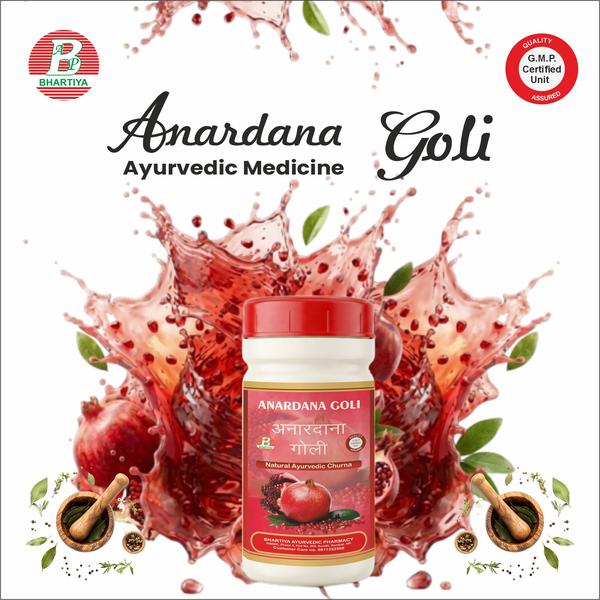
"name": "Anardana Goli",
"description": " ANARDANA GOLI \n\nProduct Identification\n•\tGeneric Name: Anardana Goli\n•\tType: Ayurvedic Patent Medicine\n•\tPrimary Indication Area: Improves digestion and stimulates appetite.\n•\tTherapeutic Indications: Helps improve digestion, increase appetite, boost vitality, and reduce weakness.\n\nKey benefits include:\n1. Digestive Support\n•\tAnardana Goli contains ingredients that are considered “Agnivardhaka” in Ayurveda, meaning they strengthen digestive fire (Agni).\n•\tStrong digestive fire ensures that food is properly broken down and nutrients are absorbed efficiently.\n•\tImproved digestion reduces issues like bloating, heaviness, or indigestion, which often suppress appetite.\n2. Appetite Stimulation\n•\tBy improving digestion, the body naturally signals hunger, leading to better appetite.\n•\tIt helps people who have poor appetite due to weakness, stress, or overexertion.\n•\tRegular use may lead to steady and healthy hunger cues, making it easier to eat balanced meals.\n3. Additional Benefits Linked to Digestion & Appetite\n•\tIncreased nutrient absorption → more energy and stamina\n•\tReduced digestive discomfort → enhanced overall well-being\n•\tSupports healthy metabolism, which can maintain proper body weight and vitality\n\nIngredients:\n Anardana \nBotanical Name: Punica granatum\nCommon Names: Anardana (India), Dried Pomegranate Seeds\n\nKey Nutrients / Phytochemicals\n•\tPolyphenols (punicalagins, ellagic acid) – potent antioxidants\n•\tVitamins: Vitamin C, some B-complex vitamins\n•\tMinerals: Potassium, iron, calcium, magnesium\n•\tFiber\n•\tStimulation of Digestive Enzymes\no\tOrganic acids in Anardana (like citric and malic acid) stimulate the secretion of saliva, gastric juices, and pancreatic enzymes.\no\tThis improves breakdown of food, especially proteins and fats.\n•\tEnhancement of Agni (Digestive Fire)\no\tIn Ayurvedic terms, Anardana strengthens Agni, helping proper digestion, nutrient absorption, and assimilation.\n•\tCarminative Effect\no\tReduces gas formation and bloating.\no\tThe mild aromatic compounds help relax intestinal muscles and aid smooth digestion.\n•\tMild Laxative & Stool Softening\no\tDietary fiber in Anardana adds bulk to stool.\no\tHelps in preventing constipation and promoting regular bowel movements.\n•\tReduction of Acidity & Indigestion\no\tOrganic acids balance stomach pH.\no\tHelps prevent fermentation of undigested food, reducing acidity, heartburn, and bloating.\n\n\n Kala Namak (Black Salt) \nBotanical/Source Name: Naturally occurring rock salt, mainly from the Himalayan region (mineral salt, not plant-based).\nCommon Names: Black Salt, Himalayan Black Salt, Kala Namak\n\nKey Constituents / Components\n•\tSodium chloride (NaCl) – main component\n•\tIron sulphide (gives the characteristic dark colour and sulphurous smell)\n•\tTrace minerals: potassium, magnesium, calcium, sulfur compounds\n\nDigestive Mechanism of Action\n1.\tStimulation of Digestive Enzymes & Saliva\no\tThe sulfur compounds and salts in Kala Namak stimulate salivary glands and gastric juices, improving breakdown of food.\no\tEnhances enzyme activity in the stomach, especially for protein digestion.\n2.\tEnhancement of Agni (Digestive Fire)\no\tIn Ayurveda, Kala Namak is considered Ushna (hot in potency) and Deepana (enhances Agni).\no\tPromotes proper digestion, assimilation of nutrients, and prevents Aama (undigested toxins) formation.\n3.\tCarminative & Gas-Relieving Effect\no\tHelps reduce flatulence, bloating, and heaviness in the stomach.\no\tMild action on intestinal muscles supports smooth movement of food.\n4.\tMild Laxative / Gut-Regulating Effect\no\tSupports bowel regularity in small doses.\no\tCan reduce constipation and improve stool consistency.\n5.\tAcidity & Heartburn Relief\no\tUnlike regular salt, Kala Namak neutralizes excess stomach acid due to its unique mineral composition.\no\tHelps maintain pH balance in the stomach, reducing acidity-related discomfort.\n\n Kali Mirch (Black Pepper) \nBotanical Name: Piper nigrum\nCommon Names: Black Pepper, Kali Mirch\n\nKey Phytochemicals\n•\tPiperine – main active compound, gives pungency\n•\tEssential oils (limonene, pinene) – contribute to digestive and carminative effects\n•\tAlkaloids and trace minerals\n\nDigestive Mechanism of Action\n1.\tStimulation of Digestive Enzymes\no\tPiperine in black pepper stimulates the secretion of saliva, gastric juices, bile, and pancreatic enzymes.\no\tEnhances breakdown and absorption of proteins, fats, and carbohydrates.\n2.\tEnhancement of Agni (Digestive Fire)\no\tIn Ayurveda, Kali Mirch is Ushna (hot) and Laghu (light), enhancing Agni.\no\tHelps in digestion of heavy or oily foods and prevents Aama (undigested toxins).\n3.\tCarminative Effect\no\tReduces gas formation, bloating, and flatulence.\no\tHelps relax intestinal muscles and improve bowel movement.\n4.\tImproved Nutrient Absorption\no\tPiperine enhances bioavailability of nutrients and other herbs.\no\tSupports efficient absorption of fat-soluble vitamins and minerals.\n5.\tGut Motility & Mild Laxative Action\no\tStimulates peristalsis, aiding smooth bowel movements.\no\tHelps prevent mild constipation.\n\n Amchur (Dried Mango Powder) \nBotanical Name: Mangifera indica (unripe mango)\nCommon Names: Amchur, Amchoor, Mango Powder\n\nKey Phytochemicals / Nutrients\n•\tOrganic acids: citric acid, malic acid, tartaric acid – provide sour taste\n•\tPolyphenols and flavonoids – antioxidant effect\n•\tVitamins: Vitamin C, small amounts of B-complex\n•\tMinerals: Potassium, magnesium\n\nDigestive Mechanism of Action\n1.\tStimulation of Digestive Enzymes\no\tOrganic acids in Amchur stimulate salivary and gastric secretions, enhancing breakdown of carbohydrates, proteins, and fats.\n2.\tEnhancement of Agni (Digestive Fire)\no\tIn Ayurveda, Amchur is Deepana (stimulates Agni) and Pachana (aids digestion).\no\tHelps digest heavy, oily, or kapha-aggravating foods.\n3.\tCarminative Effect\no\tReduces gas formation, bloating, and flatulence due to its sour and slightly astringent properties.\no\tSupports smooth movement of food in the intestines.\n4.\tAppetizer & Acid-Balancer\no\tImproves appetite by enhancing taste and stimulating digestive secretions.\no\tBalances mild acidity due to regulation of gastric pH.\n5.\tMild Laxative / Gut-Regulating Effect\no\tSlightly promotes bowel movements due to its fiber content and organic acids.\n Namak (Common Salt / Table Salt) \nChemical Composition: Mainly Sodium Chloride (NaCl)\nOther Components: Trace minerals (depending on source)\n\nDigestive Mechanism of Action\n1.\tStimulation of Digestive Secretions\no\tSalt stimulates salivary glands, promoting saliva production.\no\tIncreases secretion of gastric juices, which helps in breaking down food, especially proteins.\n2.\tEnhancement of Agni (Digestive Fire)\no\tIn Ayurveda, small amounts of salt are Deepana (stimulate Agni), aiding digestion and assimilation of nutrients.\n3.\tElectrolyte Balance\no\tMaintains osmotic balance in the gut, helping smooth movement of food through intestines.\n4.\tMild Appetite Stimulant\no\tImproves taste perception, which indirectly encourages better digestion by promoting chewing and salivation.\n5.\tGut Motility Support\no\tHelps maintain water balance in intestines, preventing constipation and aiding smooth bowel movements in normal amounts.\n\n Pippali (Long Pepper) \nBotanical Name: Piper longum\nCommon Names: Pippali, Long Pepper\n\nKey Phytochemicals\n•\tPiperine – main pungent compound\n•\tEssential oils – contribute to digestive and carminative effects\n•\tAlkaloids and volatile oils\n\nDigestive Mechanism of Action\n1.\tStimulation of Digestive Enzymes\no\tPiperine and essential oils stimulate secretion of saliva, gastric juices, and pancreatic enzymes.\no\tEnhances digestion of proteins, fats, and carbohydrates.\n2.\tEnhancement of Agni (Digestive Fire)\no\tIn Ayurveda, Pippali is Ushna (hot), Laghu (light), and Deepana (stimulates Agni).\no\tHelps digest heavy, kapha-aggravating foods and prevents formation of Aama (toxins from undigested food).\n3.\tCarminative Effect\no\tReduces bloating, gas formation, and flatulence.\no\tRelaxes intestinal muscles, aiding smooth movement of food.\n4.\tAppetite Stimulant\no\tImproves taste perception and digestive excitement, which indirectly enhances nutrient breakdown and assimilation.\n5.\tGut Motility & Mild Laxative Action\no\tStimulates peristalsis, supporting regular bowel movements.\no\tMildly laxative in nature, helps prevent constipation\n\n Gulkand (Rose Petal Preserve) \nBotanical Name: Rosa damascena (Damask Rose)\nCommon Names: Gulkand, Rose Petal Preserve\n\nKey Constituents / Phytochemicals\n•\tNatural sugars (from rose petals and sugar) – provide mild energy\n•\tFlavonoids and phenolic compounds – antioxidants\n•\tVolatile oils – aromatic and carminative properties\n•\tTrace minerals: iron, calcium\n\nDigestive Mechanism of Action\n1.\tEnhancement of Agni (Digestive Fire)\no\tGulkand is Deepana (stimulates digestion) and Pachana (aids digestion of heavy foods) in Ayurveda.\no\tHelps digest fatty or heavy meals and reduces formation of Aama (undigested toxins).\n2.\tCarminative Effect\no\tAromatic compounds and rose oils reduce gas, bloating, and flatulence.\no\tHelps smooth intestinal motility.\n3.\tCooling Digestive Tonic\no\tBalances Pitta and excess heat in the digestive tract while supporting digestion.\no\tMildly soothing for acidity and hyperacidity.\n4.\tAppetite Stimulant\no\tSweet taste and aroma improve appetite, increasing salivation and digestive enzyme secretion.\n5.\tGut-Regulating Effect\no\tSugar content provides mild bulk and energy for smooth bowel movement.\no\tMay prevent constipation in moderate use.\n\n Sugar (Sharkara / Saccharose / Table Sugar) \nChemical Composition: Mainly Sucrose (C12H22O11)\nSource: Sugarcane, sugar beet\n\nDigestive Mechanism of Action\n1.\tEnergy Source for Digestion\no\tSugar provides readily available glucose, which supplies quick energy for metabolic processes, including the digestive system.\n2.\tStimulation of Saliva & Taste\no\tSweet taste stimulates salivation, which begins pre-digestion of carbohydrates.\no\tEnhances the appetite indirectly by making food more palatable.\n3.\tMild Laxative / Gut-Regulating Effect (in moderate amounts)\no\tSugar can retain water in the intestines, softening stool slightly and supporting bowel movement.\n4.\tEnhancement of Digestive Enzyme Activity\no\tSimple sugars can activate carbohydrate-digesting enzymes (amylase) in saliva and pancreas.\n5.\tCooling Effect (in Ayurveda)\no\tSugar is considered Shita (cooling), which can soothe Pitta-related digestive irritation (like mild acidity).\n\n\n AMLA (Amalaki) \n1.\tDose:\no\t2–3 goli (tablets/lozenges) three times a day.\n2.\tTiming:\no\tTake after meals (breakfast, lunch, and dinner).\n3.\tMode of Intake:\no\tChew or slowly suck the goli for better digestive effect.\no\tCan be taken with lukewarm water if needed.\n4.\tPurpose:\no\tImproves digestion.\no\tReduces bloating, gas, and mild acidity.\n5.\tPrecautions:\no\tDo not take on an empty stomach.\no\tPeople with diabetes should monitor blood sugar.\no\tAvoid excessive intake to prevent loose stools or acidity.\n6.\tDuration:\no\tCan be used safely for 1–2 months or as advised by an Ayurvedic practitioner.\n\n\n\nanardana goli benefits, anardana goli benefits in hindi\nanardana goli khane ke fayde, anardana goli uses\nanardana goli ingredients, anardana goli recipe\nanardana goli amazon, anardana goli at home\nhow to make anardana goli at home, ayurvedic anardana goli\nwhat is anardana goli, is anardana goli good for health\nanardana goli buy online, anardana goli bottle\nanardana goli buy, anardana churan benefits\nanardana goli calories, anardana goli candy\nanardana goli contents, anardana chatpati goli\ncalories in anardana churan, anardana goli red colour\nanardana goli digestive, anardana goli dosage\nanardana goli in english, anardana goli for digestion\nanardana goli flipkart, anardana goli for kids\nanardana goli nutritional facts, anardana goli used for\nanardana goli gst rate, anardana churan goliyan\nanardana goli how to use, anardana goli health benefits\nanardana goli hindi, anardana churan hsn code\nis anardana goli healthy, anardana goli kya hota hai\nanardana goli in pregnancy, anardana goli india\nanardana goli indiamart, anardana goli in hindi\nanardana churan in pregnancy, anardana goli jiomart\nanardana goli jar, anardana goli kaise banti hai\nanardana goli kaise banate hain, anardana goli khatta meetha\nanardana ki goli, anardana churan ke fayde, anardana churan kaise banta hai\nanardana goli manufacturers, anardana goli making machine\nanardana goli manufacturers in india, anardana goli making\nanardana goli near me, anardana churan near me\nanardana goli shop near me, anardana churan online\nbuy anardana goli online, anardana goli pouch\nanardana goli powder, anardana goli price per kg\nanardana goli quantity, anardana goli qr code\nanardana goli q10, anardana goli qartulad\nanardana goli red, anardana churan recipe\njeera goli red, anardana churan recipe in hindi\nanardana churan goli recipe, anardana goli shadani\nanardana goli taste, anardana goli tablet\nanardana goli uses in hindi, anardana goli uses malayalam\nanardana churan uses, anardana goli kaise banaen\nanardana goli wholesale market, anardana goli wholesale\nanardana goli wholesale price, best anardana goli in india\nbenefits of eating anardana goli, why anardana goli healthy\nwhy anardana goli good for health, why anardana goli means\nwhy anardana goli good for digestion, who anardana goli price\nwho anardana goli in delhi, who anardana goli in a day\nwho anardana goli kaise banate hain, who anardana goli kaise banti hai\nwho anardana goli banane ka tarika, who anardana goli means\nwho anardana goli is made, who anardana goli good for health\nbest anardana goli brand, best anardana churan\nbest anardana brand",
"price": 108.0,
"discountamount": 54.0,
"currencycode": "INR",
"priority": 1000000,
"isfreeshipmentavailable": false,
"shipmentduration": 1,
"_keywords": null,
"isarchived": false,
"isavailable": true,
"applicationid": null,
"productindex": 125,
"imageuri": "https://productimages.withfloats.com/actual/6a0d871d881b69a5d83cfec8.jpg",
"tileimageuri": "https://productimages.withfloats.com/tile/6a0d871d881b69a5d83cfec8.jpg",
"images": null,
"totalqueries": 0,
"gpid": null,
"groupproductid": null,
"createdon": "2026-05-20T10:04:10.77Z",
"updatedon": "2026-05-20T10:04:10.77Z",
"buyonlinelink": null,
"producturl": "http://WWW.BHARTIYAAYURVEDICPHARMACY.COM/products/anardana-goli/125",
"availableunits": -1.0,
"iscodavailable": true,
"isprepaidonlineavailable": true,
"maxcodorders": -1,
"maxprepaidonlineorders": -1,
"uniquepaymenturl": null,
"brandname": "Bakula Fort",
"category": "Anardana Goli 100 GM X 40",
"tags": [],
"variants": false,
"keyspecification": null,
"otherspecifications": null,
"pickupaddressreferenceid": null,
"paymenttype": "AssuredPurchase",
"producttype": "products",
"hsncode": null,
"gstslab": 0.0,
"isnotforsale": false
},
{
"_id": "6a0d472f21349ee368625e5d",
"fptag": "BHARTIYEAYURVEDICPHARMACY",
"merchantname": null,
"customwidgets": null,
"externalsourceid": null,
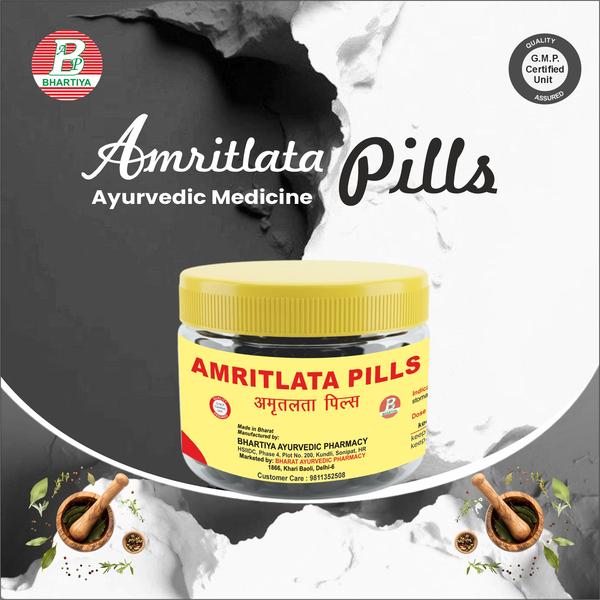
"name": "Amritlata Pill",
"description": " ANARDANA GOLI \n\nProduct Identification\n•\tGeneric Name: Anardana Goli\n•\tType: Ayurvedic Patent Medicine\n•\tPrimary Indication Area: Improves digestion and stimulates appetite.\n•\tTherapeutic Indications: Helps improve digestion, increase appetite, boost vitality, and reduce weakness.\n\nKey benefits include:\n1. Digestive Support\n•\tAnardana Goli contains ingredients that are considered “Agnivardhaka” in Ayurveda, meaning they strengthen digestive fire (Agni).\n•\tStrong digestive fire ensures that food is properly broken down and nutrients are absorbed efficiently.\n•\tImproved digestion reduces issues like bloating, heaviness, or indigestion, which often suppress appetite.\n2. Appetite Stimulation\n•\tBy improving digestion, the body naturally signals hunger, leading to better appetite.\n•\tIt helps people who have poor appetite due to weakness, stress, or overexertion.\n•\tRegular use may lead to steady and healthy hunger cues, making it easier to eat balanced meals.\n3. Additional Benefits Linked to Digestion & Appetite\n•\tIncreased nutrient absorption → more energy and stamina\n•\tReduced digestive discomfort → enhanced overall well-being\n•\tSupports healthy metabolism, which can maintain proper body weight and vitality\n\nIngredients:\n Anardana \nBotanical Name: Punica granatum\nCommon Names: Anardana (India), Dried Pomegranate Seeds\n\nKey Nutrients / Phytochemicals\n•\tPolyphenols (punicalagins, ellagic acid) – potent antioxidants\n•\tVitamins: Vitamin C, some B-complex vitamins\n•\tMinerals: Potassium, iron, calcium, magnesium\n•\tFiber\n•\tStimulation of Digestive Enzymes\no\tOrganic acids in Anardana (like citric and malic acid) stimulate the secretion of saliva, gastric juices, and pancreatic enzymes.\no\tThis improves breakdown of food, especially proteins and fats.\n•\tEnhancement of Agni (Digestive Fire)\no\tIn Ayurvedic terms, Anardana strengthens Agni, helping proper digestion, nutrient absorption, and assimilation.\n•\tCarminative Effect\no\tReduces gas formation and bloating.\no\tThe mild aromatic compounds help relax intestinal muscles and aid smooth digestion.\n•\tMild Laxative & Stool Softening\no\tDietary fiber in Anardana adds bulk to stool.\no\tHelps in preventing constipation and promoting regular bowel movements.\n•\tReduction of Acidity & Indigestion\no\tOrganic acids balance stomach pH.\no\tHelps prevent fermentation of undigested food, reducing acidity, heartburn, and bloating.\n\n\n Kala Namak (Black Salt) \nBotanical/Source Name: Naturally occurring rock salt, mainly from the Himalayan region (mineral salt, not plant-based).\nCommon Names: Black Salt, Himalayan Black Salt, Kala Namak\n\nKey Constituents / Components\n•\tSodium chloride (NaCl) – main component\n•\tIron sulphide (gives the characteristic dark colour and sulphurous smell)\n•\tTrace minerals: potassium, magnesium, calcium, sulfur compounds\n\nDigestive Mechanism of Action\n1.\tStimulation of Digestive Enzymes & Saliva\no\tThe sulfur compounds and salts in Kala Namak stimulate salivary glands and gastric juices, improving breakdown of food.\no\tEnhances enzyme activity in the stomach, especially for protein digestion.\n2.\tEnhancement of Agni (Digestive Fire)\no\tIn Ayurveda, Kala Namak is considered Ushna (hot in potency) and Deepana (enhances Agni).\no\tPromotes proper digestion, assimilation of nutrients, and prevents Aama (undigested toxins) formation.\n3.\tCarminative & Gas-Relieving Effect\no\tHelps reduce flatulence, bloating, and heaviness in the stomach.\no\tMild action on intestinal muscles supports smooth movement of food.\n4.\tMild Laxative / Gut-Regulating Effect\no\tSupports bowel regularity in small doses.\no\tCan reduce constipation and improve stool consistency.\n5.\tAcidity & Heartburn Relief\no\tUnlike regular salt, Kala Namak neutralizes excess stomach acid due to its unique mineral composition.\no\tHelps maintain pH balance in the stomach, reducing acidity-related discomfort.\n\n Kali Mirch (Black Pepper) \nBotanical Name: Piper nigrum\nCommon Names: Black Pepper, Kali Mirch\n\nKey Phytochemicals\n•\tPiperine – main active compound, gives pungency\n•\tEssential oils (limonene, pinene) – contribute to digestive and carminative effects\n•\tAlkaloids and trace minerals\n\nDigestive Mechanism of Action\n1.\tStimulation of Digestive Enzymes\no\tPiperine in black pepper stimulates the secretion of saliva, gastric juices, bile, and pancreatic enzymes.\no\tEnhances breakdown and absorption of proteins, fats, and carbohydrates.\n2.\tEnhancement of Agni (Digestive Fire)\no\tIn Ayurveda, Kali Mirch is Ushna (hot) and Laghu (light), enhancing Agni.\no\tHelps in digestion of heavy or oily foods and prevents Aama (undigested toxins).\n3.\tCarminative Effect\no\tReduces gas formation, bloating, and flatulence.\no\tHelps relax intestinal muscles and improve bowel movement.\n4.\tImproved Nutrient Absorption\no\tPiperine enhances bioavailability of nutrients and other herbs.\no\tSupports efficient absorption of fat-soluble vitamins and minerals.\n5.\tGut Motility & Mild Laxative Action\no\tStimulates peristalsis, aiding smooth bowel movements.\no\tHelps prevent mild constipation.\n\n Amchur (Dried Mango Powder) \nBotanical Name: Mangifera indica (unripe mango)\nCommon Names: Amchur, Amchoor, Mango Powder\n\nKey Phytochemicals / Nutrients\n•\tOrganic acids: citric acid, malic acid, tartaric acid – provide sour taste\n•\tPolyphenols and flavonoids – antioxidant effect\n•\tVitamins: Vitamin C, small amounts of B-complex\n•\tMinerals: Potassium, magnesium\n\nDigestive Mechanism of Action\n1.\tStimulation of Digestive Enzymes\no\tOrganic acids in Amchur stimulate salivary and gastric secretions, enhancing breakdown of carbohydrates, proteins, and fats.\n2.\tEnhancement of Agni (Digestive Fire)\no\tIn Ayurveda, Amchur is Deepana (stimulates Agni) and Pachana (aids digestion).\no\tHelps digest heavy, oily, or kapha-aggravating foods.\n3.\tCarminative Effect\no\tReduces gas formation, bloating, and flatulence due to its sour and slightly astringent properties.\no\tSupports smooth movement of food in the intestines.\n4.\tAppetizer & Acid-Balancer\no\tImproves appetite by enhancing taste and stimulating digestive secretions.\no\tBalances mild acidity due to regulation of gastric pH.\n5.\tMild Laxative / Gut-Regulating Effect\no\tSlightly promotes bowel movements due to its fiber content and organic acids.\n Namak (Common Salt / Table Salt) \nChemical Composition: Mainly Sodium Chloride (NaCl)\nOther Components: Trace minerals (depending on source)\n\nDigestive Mechanism of Action\n1.\tStimulation of Digestive Secretions\no\tSalt stimulates salivary glands, promoting saliva production.\no\tIncreases secretion of gastric juices, which helps in breaking down food, especially proteins.\n2.\tEnhancement of Agni (Digestive Fire)\no\tIn Ayurveda, small amounts of salt are Deepana (stimulate Agni), aiding digestion and assimilation of nutrients.\n3.\tElectrolyte Balance\no\tMaintains osmotic balance in the gut, helping smooth movement of food through intestines.\n4.\tMild Appetite Stimulant\no\tImproves taste perception, which indirectly encourages better digestion by promoting chewing and salivation.\n5.\tGut Motility Support\no\tHelps maintain water balance in intestines, preventing constipation and aiding smooth bowel movements in normal amounts.\n\n Pippali (Long Pepper) \nBotanical Name: Piper longum\nCommon Names: Pippali, Long Pepper\n\nKey Phytochemicals\n•\tPiperine – main pungent compound\n•\tEssential oils – contribute to digestive and carminative effects\n•\tAlkaloids and volatile oils\n\nDigestive Mechanism of Action\n1.\tStimulation of Digestive Enzymes\no\tPiperine and essential oils stimulate secretion of saliva, gastric juices, and pancreatic enzymes.\no\tEnhances digestion of proteins, fats, and carbohydrates.\n2.\tEnhancement of Agni (Digestive Fire)\no\tIn Ayurveda, Pippali is Ushna (hot), Laghu (light), and Deepana (stimulates Agni).\no\tHelps digest heavy, kapha-aggravating foods and prevents formation of Aama (toxins from undigested food).\n3.\tCarminative Effect\no\tReduces bloating, gas formation, and flatulence.\no\tRelaxes intestinal muscles, aiding smooth movement of food.\n4.\tAppetite Stimulant\no\tImproves taste perception and digestive excitement, which indirectly enhances nutrient breakdown and assimilation.\n5.\tGut Motility & Mild Laxative Action\no\tStimulates peristalsis, supporting regular bowel movements.\no\tMildly laxative in nature, helps prevent constipation\n\n Gulkand (Rose Petal Preserve) \nBotanical Name: Rosa damascena (Damask Rose)\nCommon Names: Gulkand, Rose Petal Preserve\n\nKey Constituents / Phytochemicals\n•\tNatural sugars (from rose petals and sugar) – provide mild energy\n•\tFlavonoids and phenolic compounds – antioxidants\n•\tVolatile oils – aromatic and carminative properties\n•\tTrace minerals: iron, calcium\n\nDigestive Mechanism of Action\n1.\tEnhancement of Agni (Digestive Fire)\no\tGulkand is Deepana (stimulates digestion) and Pachana (aids digestion of heavy foods) in Ayurveda.\no\tHelps digest fatty or heavy meals and reduces formation of Aama (undigested toxins).\n2.\tCarminative Effect\no\tAromatic compounds and rose oils reduce gas, bloating, and flatulence.\no\tHelps smooth intestinal motility.\n3.\tCooling Digestive Tonic\no\tBalances Pitta and excess heat in the digestive tract while supporting digestion.\no\tMildly soothing for acidity and hyperacidity.\n4.\tAppetite Stimulant\no\tSweet taste and aroma improve appetite, increasing salivation and digestive enzyme secretion.\n5.\tGut-Regulating Effect\no\tSugar content provides mild bulk and energy for smooth bowel movement.\no\tMay prevent constipation in moderate use.\n\n Sugar (Sharkara / Saccharose / Table Sugar) \nChemical Composition: Mainly Sucrose (C12H22O11)\nSource: Sugarcane, sugar beet\n\nDigestive Mechanism of Action\n1.\tEnergy Source for Digestion\no\tSugar provides readily available glucose, which supplies quick energy for metabolic processes, including the digestive system.\n2.\tStimulation of Saliva & Taste\no\tSweet taste stimulates salivation, which begins pre-digestion of carbohydrates.\no\tEnhances the appetite indirectly by making food more palatable.\n3.\tMild Laxative / Gut-Regulating Effect (in moderate amounts)\no\tSugar can retain water in the intestines, softening stool slightly and supporting bowel movement.\n4.\tEnhancement of Digestive Enzyme Activity\no\tSimple sugars can activate carbohydrate-digesting enzymes (amylase) in saliva and pancreas.\n5.\tCooling Effect (in Ayurveda)\no\tSugar is considered Shita (cooling), which can soothe Pitta-related digestive irritation (like mild acidity).\n\n\n AMLA (Amalaki) \n1.\tDose:\no\t2–3 goli (tablets/lozenges) three times a day.\n2.\tTiming:\no\tTake after meals (breakfast, lunch, and dinner).\n3.\tMode of Intake:\no\tChew or slowly suck the goli for better digestive effect.\no\tCan be taken with lukewarm water if needed.\n4.\tPurpose:\no\tImproves digestion.\no\tReduces bloating, gas, and mild acidity.\n5.\tPrecautions:\no\tDo not take on an empty stomach.\no\tPeople with diabetes should monitor blood sugar.\no\tAvoid excessive intake to prevent loose stools or acidity.\n6.\tDuration:\no\tCan be used safely for 1–2 months or as advised by an Ayurvedic practitioner.\n\n\n\namritlata pills price, amritlata pills price in india, amritlata pills amazon\namritlata pills amazon india, amritlata pills amazon price, amritlata pills buy online\namritlata pills buy, amritlata pills bottle, amritlata pills buy online india\namritlata pills company, amritlata pills cost, amritlata pills cost in india\namritlata pills cost price, amritlata pills company details\namritlata pills delhi, amritlata pills english name, amritlata pills english\namritlata pills flipkart, amritlata pills for sale, amritlata pills gst number\namritlata pills gst rate, amritlata pills gst, amritlata pills hindi, amritlata pills himachal pradesh\namritlata pills in hindi, amritlata pills image, amritlata pills indiamart\namritlata pills journal, amritlata pills ke fayde, amritlata pills ke fayde in hindi\namritlata pills kya hai in hindi, amritlata pills linkedin, amritlata pills list\namritlata pills life, amritlata pills manufacturer, amritlata pills manufacturers in india\namritlata pills narela, amritlata pills online shopping, amritlata pills online\namritlata pills online order, amritlata pills quantity, amritlata pills q10\namritlata pills review, amritlata pills rate, amritlata pills supplier\namritlata pills supplier in delhi, amritlata pills tablet, amritlata pills uses\namritlata pills vs, amritlata pills wholesale, amritlata pills wholesale price\namritlata pills zepto, top amritlata pills price in india",
"price": 330.0,
"discountamount": 165.0,
"currencycode": "INR",
"priority": 1000000,
"isfreeshipmentavailable": false,
"shipmentduration": 1,
"_keywords": null,
"isarchived": false,
"isavailable": true,
"applicationid": null,
"productindex": 124,
"imageuri": "https://productimages.withfloats.com/actual/6a0d47311c6b4360d8faaff4.jpg",
"tileimageuri": "https://productimages.withfloats.com/tile/6a0d47311c6b4360d8faaff4.jpg",
"images": null,
"totalqueries": 0,
"gpid": null,
"groupproductid": null,
"createdon": "2026-05-20T05:31:27.893Z",
"updatedon": "2026-05-20T05:31:27.893Z",
"buyonlinelink": null,
"producturl": "http://WWW.BHARTIYAAYURVEDICPHARMACY.COM//amritlata-pill/124",
"availableunits": -1.0,
"iscodavailable": true,
"isprepaidonlineavailable": true,
"maxcodorders": -1,
"maxprepaidonlineorders": -1,
"uniquepaymenturl": null,
"brandname": "Bakula Fort",
"category": "Amritlata Pill 100 GM X 40",
"tags": [],
"variants": false,
"keyspecification": null,
"otherspecifications": null,
"pickupaddressreferenceid": null,
"paymenttype": "AssuredPurchase",
"producttype": "products",
"hsncode": null,
"gstslab": 0.0,
"isnotforsale": false
},
{
"_id": "69fb2001bc5d678f88b2f5b3",
"fptag": "BHARTIYEAYURVEDICPHARMACY",
"merchantname": null,
"customwidgets": null,
"externalsourceid": null,
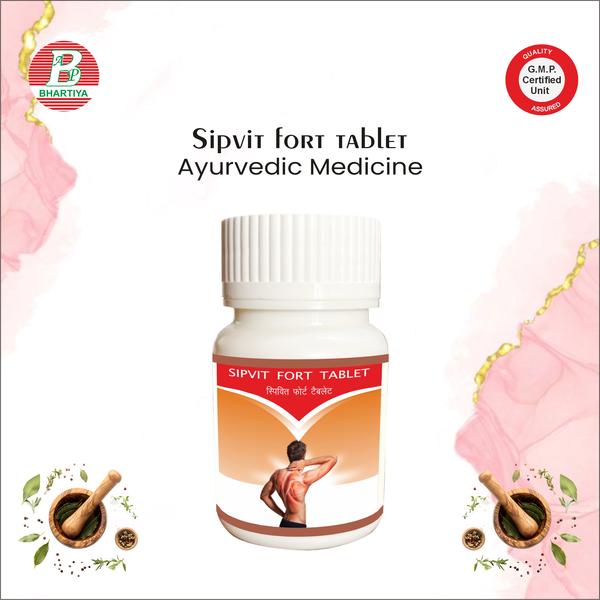
"name": "Sipvit Fort Tablet",
"description": " SIPVIT FORT TABLET \n\nProduct Identification\n•\tGeneric Name: Sipvit Fort Tablet\n•\tType: Ayurvedic Patent Medicine\n•\tPrimary Indication Area: Supports male sexual health by improving erectile function, libido, stamina, and overall reproductive performance.\nTherapeutic Indications\n•\tSupports improvement of male sexual function by enhancing erectile performance, libido, stamina, and overall reproductive wellness\nKey benefits include:\n•\tSupports male sexual health by improving libido, erection quality, stamina, and overall sexual performance.\nPrimary Benefit:\n•\tSupports male sexual health by enhancing libido, erectile function, stamina, and overall reproductive vitality.\nAdditional Benefits:\n•\tImprove sperm production and quality — supporting fertility and reproductive outcomes. \n•\tEnhance libido and sexual desire — increasing interest in sexual activity. \n•\tSupport hormonal balance (e.g., testosterone) — important for energy, stamina, and erectile function. \n•\tBoost overall vitality and endurance during sexual activity\n\nIngredients:\n SAFED MUSLI (Chlorophytum borivilianum)\nBotanical Name: Chlorophytum borivilianum\nPart Used: Root (commonly used in Ayurvedic Vajikaran Rasayana)\nTraditional Use: Rejuvenator, aphrodisiac, strength & stamina tonic\n Mechanism of Action in Male Sexual Health (Biochemistry / Pharmacology)\n1.\tSpermatogenic Support & Sperm Quality\n• Root extracts have been shown to increase sperm count and motility in experimental models, indicating support for spermatogenesis and semen quality. \n2.\tAntioxidant Protection of Reproductive Cells\n• Phenolic compounds and antioxidants help reduce oxidative stress in sperm cells, protecting membranes and DNA, which promotes healthier sperm characteristics. \n\nSHATAVARI (Asparagus racemosus) \nBotanical Name: Asparagus racemosus\nFamily: Asparagaceae\nPart Used: Root\nTraditional Use: Rejuvenative tonic (Rasāyana), adaptogen, aphrodisiac, reproductive support\n Phytoconstituents Relevant to Sexual Health\nShatavari root contains:\n1.\tSteroidal saponins (Shatavarins I–IV) – major bioactives linked with hormonal and antioxidant actions. \n2.\tFlavonoids & polyphenols – antioxidant effects. \n3.\tAlkaloids & mucilage – tissue nourishment and soothing. \n\n Mechanism of Action in Male Sexual Health (Biochemistry / Pharmacology)\n1.\tAntioxidant Support & Sperm Protection\n• Shatavari’s saponins and flavonoids neutralize free radicals, protecting sperm from oxidative damage, which is crucial for healthy sperm count, motility, and morphology. \n2.\tSpermatogenic Enhancement\n• Experimental evidence suggests Shatavari may improve sperm count, motility, and seminal quality by reducing oxidative stress and nourishing reproductive tissues. \n\nMULETHI (Licorice) \nBotanical Name: Glycyrrhiza glabra\nPart Used: Root (Yashtimadhu)\nTraditional Use: Ayurvedic rasāyana for anti inflammatory, antioxidant, digestive support; also used in reproductive tonics in some formulations. \n Phytoconstituents Relevant to Male Sexual Health\n•\tGlycyrrhizin & Glycyrrhizic acid – saponin glycosides\n•\tFlavonoids (e.g., glabridin) and phenolic compounds – antioxidant effects \n Mechanism of Action in Male Sexual Health (Biochemistry / Pharmacology)\n1.\tAntioxidant Protection of Sperm & Testicular Tissue\n• Flavonoids like glabridin and other phenolics exert antioxidant effects, scavenging reactive oxygen species (ROS) that damage sperm DNA, cell membranes, and reduce sperm motility and quality. \n2.\tAnti Inflammatory Action\n• Licorice compounds can inhibit pro inflammatory pathways (e.g., NF κB), reducing testicular or reproductive inflammation, which may otherwise impair spermatogenesis and tissue health. \n\nGOKHARU / GOKSHURA (Tribulus terrestris) \nBotanical Name: Tribulus terrestris\nPart Used: Fruit / Herb\nTraditional Use: Ayurvedic aphrodisiac (Vrishya), reproductive tonic, urinary support\n Phytoconstituents Relevant to Male Sexual Health\n•\tSaponins (e.g., protodioscin) — thought to influence hormonal pathways. \n•\tFlavonoids and phenolic compounds — antioxidant effects.\n Mechanism of Action in Male Sexual Health (Biochemistry / Pharmacology)\n1.\tNitric Oxide Mediated Erectile Support\n• Gokshura extracts can promote relaxation of penile smooth muscle via NO related pathways, aiding blood flow and erection quality.\n2.\tAphrodisiac & Libido Enhancement\n• Human and experimental evidence shows increased sexual desire and function, likely via nervous endocrine modulation and local vascular effects. \n\n AMLA (Indian Gooseberry) \nBotanical Name: Phyllanthus emblica (syn. Emblica officinalis)\nPart Used: Fruit\nTraditional Use: Ayurvedic Rasayana (rejuvenator), general tonic for vitality and strength\n\n Phytoconstituents Relevant to Male Sexual Health\nAmla is rich in nutrients and bioactive compounds including:\n1.\tVitamin C (Ascorbic acid) – very high antioxidant content. \n2.\tPolyphenols & Tannins (emblicanin A/B, gallic acid, ellagic acid) – potent antioxidants.\n3.\tFlavonoids (quercetin, kaempferol) – antioxidant and anti inflammatory.\n4.\t Minerals including Zinc and amino acids – important for reproductive biochemistry. \n\n Mechanism of Action in Male Sexual Health (Biochemistry / Pharmacology)\n1.\tAntioxidant Protection of Reproductive Tissues\n• Amla’s vitamin C and polyphenols neutralize free radicals (ROS) and reduce oxidative stress, which is crucial for protecting sperm cells and testicular tissue from biochemical damage. \n2.\tSupport for Testosterone Production\n• By reducing oxidative damage in Leydig cells (testosterone producing cells), amla may help maintain testosterone levels, which are fundamental for libido and sexual function. \n\nHALDI (Turmeric) \nBotanical Name: Curcuma longa\nPart Used: Rhizome (root\n Mechanism of Action in Male Sexual Health (Biochemistry / Pharmacology)\n1.\tAntioxidant Protection of Reproductive Tissues\n• Curcumin, the main active compound in turmeric, is a powerful antioxidant that scavenges free radicals (ROS) and reduces oxidative stress in testicular and sperm cells — protecting sperm DNA and membranes from damage.\n2.\tSupports Sperm Quality & Protection\n• Curcumin helps improve sperm motility and density in animal studies and protects sperm structure by reducing lipid peroxidation and preserving membrane integrity. \n3.\tAnti Inflammatory & Cell Protective Actions\n• Curcumin’s anti inflammatory effect reduces inflammation in reproductive tissues and mitigates testicular damage from stress, toxins, or adverse conditions, helping maintain reproductive function. \n\nKAUNCH / KAUNCH BEEJ (Mucuna pruriens) \nBotanical Name: Mucuna pruriens\nPart Used: Seeds (Beej)\n Mechanism of Action in Male Sexual Health (Biochemistry / Pharmacology)\n1.\tDopamine Precursor (L DOPA) Boost\n• Kaunch seeds contain L DOPA, a biochemical precursor to dopamine — increasing dopamine levels in the brain helps enhance libido, arousal, and sexual desire. Higher dopamine can also support testosterone synthesis through the hypothalamic pituitary gonadal axis\n2.\tTestosterone & Hormonal Support\n• By modulating neurotransmitters and supporting luteinizing hormone (LH) release, Kaunch may help support natural testosterone production — the key hormone for male libido, energy, and reproductive function. \n\nVIDHARA (Elephant Creeper) \nBotanical Name: Argyreia speciosa (syn. Argyreia nervosa)\nFamily: Convolvulaceae\nPart Used: Roots, seeds, leaves (roots most commonly) \nTraditional Use: Ayurvedic Vajikarana (aphrodisiac) and rejuvenative tonic, used to support male sexual health, sperm quality, and vitality. \n\n Mechanism of Action in Male Sexual Health (Biochemistry / Pharmacology)\n1.\tAphrodisiac & Reproductive Stimulation\n• Vidhara is traditionally considered aphrodisiac (Vajikarana), and its root extracts are used to enhance libido, sexual vigor, and reproductive function in Ayurveda. \n2.\tSupport for Sperm Count & Quality\n• Ayurvedic uses include improving sperm count and supporting semen quality, likely through antioxidant and tissue nourishing effects on reproductive organs. \n\nKHARETI (Khareti / Atibala / Bala) \nBotanical Name: Sida cordifolia\nSanskrit Name: Balā (Bala)\nCommon English Name: Country Mallow\nParts Used: Roots, leaves, seeds, stems (traditional use) \n Mechanism of Action in Male Sexual Health (Biochemistry / Pharmacology)\n1.\tVajikarana (Aphrodisiac) & Reproductive Support\n• Khareti (Bala) is traditionally classified as a Vajikarana herb — meaning it supports libido, sexual desire, and reproductive vigor in males \n2.\tTestosterone & Hormone Related Support\n• By helping balance male hormones and nerve tone, it may enhance sexual drive and reproductive function. \n\nHARAD (Haritaki / Terminalia chebula) \nBotanical Name: Terminalia chebula\nPart Used: Fruit\n Mechanism of Action in Male Sexual Health (Biochemistry / Pharmacology)\n1.\tAstringent & Antioxidant Phytochemicals\n• Harad contains tannins (chebulinic acid, chebulagic acid), gallic acid, ellagic acid, and flavonoids — all strong antioxidants that protect cells from oxidative stress. These biochemical antioxidants help maintain general reproductive tissue health by neutralizing free radicals. \n2.\tTraditional Rasayana & Aphrodisiac Action (Short Term Use)\n• In classical Ayurvedic texts, Harad is described as Rasayana (rejuvenative) and in small doses can increase sexual energy and address premature ejaculation or nocturnal emissions due to its astringent and balancing effect on tissues. \n\nAKARKARA (Anacyclus pyrethrum) \nBotanical Name: Anacyclus pyrethrum\nPart Used: Root\nTraditional Use: Ayurvedic Vajikarana (aphrodisiac), reproductive tonic\n\n Mechanism of Action in Male Sexual Health (Biochemistry / Pharmacology)\n1.\tLibido & Aphrodisiac Stimulation\n• Contains Alkylamides and Anacyclin, which stimulate nerve centres and sexual desire, traditionally increasing libido and willingness for sexual activity. \n2.\tSpermatogenic & Testosterone Support\n• In experimental studies, extracts increased testosterone and androgen levels, and enhanced sperm count, motility, and viability by influencing hormone pathways and testicular function. \n\nLAJWANTI (Sensitive Plant / Mimosa pudica) \nBotanical Name: Mimosa pudica\nFamily: Fabaceae\nParts Used: Whole plant / seeds (traditionally)\n Mechanism of Action in Male Sexual Health (Biochemistry / Pharmacology)\n1.\tStrengthening & Nourishing Action\n• Traditionally, Lajwanti seed powder is regarded as balya (strength promoting) — believed to nourish reproductive tissues, support stamina, and help improve male reproductive vitality. \n2.\tAntioxidant & Anti Inflammatory Effects\n• Contains alkaloids, flavonoids, tannins, saponins, glycosides, phenolic acids, and sterols, which provide antioxidant and anti inflammatory actions — these helps protect cells from oxidative stress and may support general tissue health relevant to reproductive function. \n\nTALMAKHANA (Kokilaksha) \nBotanical Name: Hygrophila auriculata (syn. Hygrophila spinosa, Asteracantha longifolia)\nFamily: Acanthaceae\nPart Used: Seeds (primarily) / Roots & leaves also used traditionally \n\n Mechanism of Action in Male Sexual Health (Biochemistry / Pharmacology)\n1.\tAphrodisiac & Reproductive Support\n• Talmakhana is traditionally considered a Vrishya (aphrodisiac) herb in Ayurveda, used to enhance libido, sexual drive, and stamina in men. \n2.\tSupport for Sperm Quality & Hormonal Balance\n• In traditional practice, it is believed to improve sperm quality, semen strength, and reproductive function, possibly by supporting hormonal balance. \n\n VIDARIKAND (Indian Kudzu) \nBotanical Name: Pueraria tuberosa\nPart Used: Tuberous root\nTraditional Use: Rasayana (rejuvenator), Balya (strength promoting), Vrishya (aphrodisiac) herb in Ayurveda, used to support reproductive health and vitality. \n Mechanism of Action in Male Sexual Health (Biochemistry / Pharmacology)\n1.\tSpermatogenic & Reproductive Tissue Support\n• Vidarikand bioactive compounds nourish Shukra dhatu (semen) and reproductive tissues, traditionally increasing sperm count, motility, and semen quality. \n2.\tAndrogenic & Hormonal Modulation\n• Phytoestrogens and Isoflavonoids like puerarin, daidzein, genistein, and biochanin A may influence the hypothalamic–pituitary–gonadal axis, supporting release of FSH, LH, and testosterone, which are essential for libido and sexual performance.\n\nKALI MUSLI (Black Musli) \nBotanical Name: Curculigo orchioides\nPart Used: Rhizome / Root\n Mechanism of Action in Male Sexual Health (Biochemistry / Pharmacology)\n1.\tAphrodisiac (Vrishya) & Libido Support\n• Kali Musli is traditionally used in Ayurveda as a natural aphrodisiac that helps increase sexual desire and drive. \n2.\tSpermatogenic & Reproductive Function\n• It is associated with spermatogenic activity, helping improve sperm count, motility, and seminal quality, supporting male fertility. \n\n SEMAL MUSALI (Semal Root / Bombax ceiba) \nBotanical Equivalent: Bombax ceiba / Bombax mulabaricum\nParts Used: Root (musli), sometimes flower or bark used in formulations \n Mechanism of Action & Uses (Traditional / Ayurvedic Context)\n1.\tBalya (Strength Promoting) & Rejuvenative Action\n• Semal musali (root) is traditionally used as a balya (body strengthening) and nutritive tonic to support overall energy and vitality, similar to other Musali herbs. \n2.\tVrishya (Aphrodisiac / Reproductive Support)\n• In Ayurveda, Semal musali is considered to have vrishya (aphrodisiac) and balya effects that help with sexual weakness, seminal depletion, and reproductive debility — often used in shukrakshaya (semen loss) and weakness. \n\nKALI MIRCH (Black Pepper) \nBotanical Name: Piper nigrum\nPart Used: Dried fruit (peppercorn)\n Mechanism of Action in Male Sexual Health (Biochemistry / Pharmacology)\n1.\tImproves Blood Flow & Erections\n• Black pepper contains piperine, which can enhance circulation and vasodilation, supporting better blood flow — key for strong and sustained erections. \n2.\tSupports Testosterone & Hormonal Balance\n• Piperine may help boost natural testosterone levels and testicular function, which supports libido, sexual desire, and reproductive health. \n\nSALAM PANJA (Marsh Orchid / Dactylorhiza hatagirea) \nBotanical Name: Dactylorhiza hatagirea\nCommon Names: Salam Panja, Salab Panja, Hatta Haddi, Panchaule, Marsh Orchid\nPart Used: Tuberous roots (resembling hand/fingers) \n Mechanism of Action in Male Sexual Health (Biochemistry / Pharmacology)\n1.\tAphrodisiac & Libido Enhancing Action\n• Traditionally classified as a strong Vrishya (aphrodisiac) in Ayurvedic and Unani systems, the root extract is believed to enhance sexual desire and vigor. \n2.\tSupports Sperm Quality & Reproductive Function\n• Used to improve sperm count, motility, and semen quality, making it a traditional shukra dhatu (semen) nourishing herb. \n\nCHOTI ELAICHI (Cardamom) \nBotanical Name: Elettaria cardamomum\nPart Used: Seeds / pods\n Biochemistry / Mechanism of Action in Male Sexual Health\n1.\tImproved Blood Circulation\n• Cardamom contains essential oils that can improve blood circulation, which is important for delivering nutrients and oxygen to reproductive organs. Better circulation supports overall vitality and reproductive tissue health. \n2.\tAntioxidant Protection\n• Rich in antioxidants (e.g., cineole, terpenes, flavonoids), cardamom helps reduce oxidative stress, which can protect sperm cells and reproductive tissues from free radical damage.\n\nCHINI (Sugar – Dietary Sucrose) \nCommon Source: Table sugar, sweets, desserts, sugary drinks\nBotanical Equivalent: Derived from Saccharum officinarum (sugarcane) sugar\n Biochemistry / Mechanism of Action in Male Sexual Health\n1.\tNegative Impact on Sperm Quality\n• Higher dietary sugar intake is associated with lower sperm concentration and poorer semen quality, likely due to metabolic and oxidative effects of excess sugar. \n2.\tMetabolic Dysregulation & Sexual Function\n• Even slight elevations in blood sugar (below diabetes thresholds) can correlate with reduced sperm motility and impaired erectile function, indicating blood glucose regulation affects sexual physiology. \n\n LOHA BHASMA (Lauha Bhasma / Iron Bhasma) \nSource: Purified and calcined iron processed through Rasashastra methods in Ayurveda. \n Therapeutic Indication \nIron supplement to treat anaemia, improve energy, strength, and support male sexual health (via aphrodisiac and stamina enhancing properties). \n\nPrimary Benefit \nImproves iron status, reduces weakness/anaemia, and supports strength and libido. \nOther Benefits \n•\tBoosts haemoglobin and energy levels\n•\tEnhances overall vitality and stamina\n•\tActs as a rejuvenative (Rasayana)\n•\tMay improve male sexual function and stamina due to Vrishya and Balya properties\n•\tSupports digestion and immunity\n\n Shudh Shilajit (Pure Shilajit) \nSource: Natural mineral resin obtained from high-altitude Himalayan rocks, purified using classical Ayurvedic methods.\n\n Therapeutic Indication (Short):\nNatural rejuvenator that enhances energy, strength, immunity, and male vitality.\nPrimary Benefit:\nBoosts physical stamina, mental clarity, and overall vitality, while supporting sexual health.\nOther Benefits:\n•\tImproves energy levels and reduces fatigue\n•\tEnhances endurance and strength\n•\tActs as a Rasayana (rejuvenative tonic)\n•\tSupports male sexual health and fertility\n•\tPromotes cognitive function and immunity\n\n Trivang Bhasma \nSource: Calcined preparation of Tin (Vanga), Lead (Naga), and Zinc (Yashada) processed through classical Rasashastra methods in Ayurveda.\n Therapeutic Indication (Short):\nNatural mineral formulation used to support digestion, metabolism, reproductive health, and overall strength.\nPrimary Benefit:\nEnhances digestive power, metabolic balance, and sexual vitality.\n\nOther Benefits:\n•\tSupports male sexual health and fertility\n•\tImproves energy, stamina, and strength\n•\tActs as a rejuvenative (Rasayana)\n•\tHelps maintain healthy digestion and nutrient absorption\n•\tSupports immunity and overall well-being\n\nDosage:\n1.\tDose per intake: 2–3 tablets\n2.\tFrequency: Twice a day (morning & evening)\n3.\tTotal daily dose: 2–6 tablets per day-(For 500 mg tablets, this equals 1–3 g/day)\n4.\tHow to take: With water, preferably after meals to reduce gastric irritation and improve absorption\n5.\tPrecautions\no\tDo not exceed the prescribed dose\no\tMonitor for side effects\nConsult an Ayurvedic practitioner for:\no\tChildren\no\tElderly\no\tChronic illnesses\n\nsipvit fort tablet uses, sipvit fort tablets\nsipvit fort tablet uses in hindi, sipvit fort tablet price\nsipvit fort tablet amazon, sipvit fort tablet benefits\nsipvit fort tablet benefits in hindi, sipvit fort tablet brand name\nsipvit fort tablet buy online, sipvit fort tablet composition\nsipvit fort tablet content, sipvit fort tablet dosage\nsipvit fort tablet dose, sipvit fort tablet details\nsipvit fort tablet english, sipvit fort tablet expiry date\nsipvit fort tablet generic name, sipvit fort tablet gst rate\nsipvit fort tablet gst, sipvit fort tablet hindi\nsipvit fort tablet how to use, sipvit fort tablet how to take\nsipvit fort tablet in hindi, sipvit fort tablet ingredients\nsipvit fort tablet image, sipvit fort tablet india\nsipvit fort tablet ke fayde in hindi, sipvit fort tablet kis kaam aati hai\nsipvit fort tablet manufacturer, sipvit fort tablet mrp\nsipvit fort tablet manufacturers in india, sipvit fort tablet online\nsipvit fort tablet online shopping, sipvit fort tablet price in india\nsipvit fort tablet q10, sipvit fort tablet quantity\nsipvit fort tablet quality, sipvit fort tablet review\nsipvit fort tablet rate, sipvit fort tablet review in hindi\nsipvit fort tablet supplier\n\n",
"price": 96.0,
"discountamount": 48.0,
"currencycode": "INR",
"priority": 1000000,
"isfreeshipmentavailable": false,
"shipmentduration": 1,
"_keywords": null,
"isarchived": false,
"isavailable": true,
"applicationid": null,
"productindex": 113,
"imageuri": "https://productimages.withfloats.com/actual/69fb20053254637915078929.jpg",
"tileimageuri": "https://productimages.withfloats.com/tile/69fb20053254637915078929.jpg",
"images": null,
"totalqueries": 0,
"gpid": null,
"groupproductid": null,
"createdon": "2026-05-06T11:03:29.874Z",
"updatedon": "2026-05-06T11:03:29.874Z",
"buyonlinelink": null,
"producturl": "http://WWW.BHARTIYAAYURVEDICPHARMACY.COM//sipvit-fort-tablet/113",
"availableunits": -1.0,
"iscodavailable": true,
"isprepaidonlineavailable": true,
"maxcodorders": -1,
"maxprepaidonlineorders": -1,
"uniquepaymenturl": null,
"brandname": "Bakula Fort",
"category": "Sipvit Fort Tablet 100 TAB X 50",
"tags": [],
"variants": false,
"keyspecification": null,
"otherspecifications": null,
"pickupaddressreferenceid": null,
"paymenttype": "AssuredPurchase",
"producttype": "products",
"hsncode": null,
"gstslab": 0.0,
"isnotforsale": false
},
{
"_id": "69f041bb3d0dd66733f9e574",
"fptag": "BHARTIYEAYURVEDICPHARMACY",
"merchantname": null,
"customwidgets": null,
"externalsourceid": null,
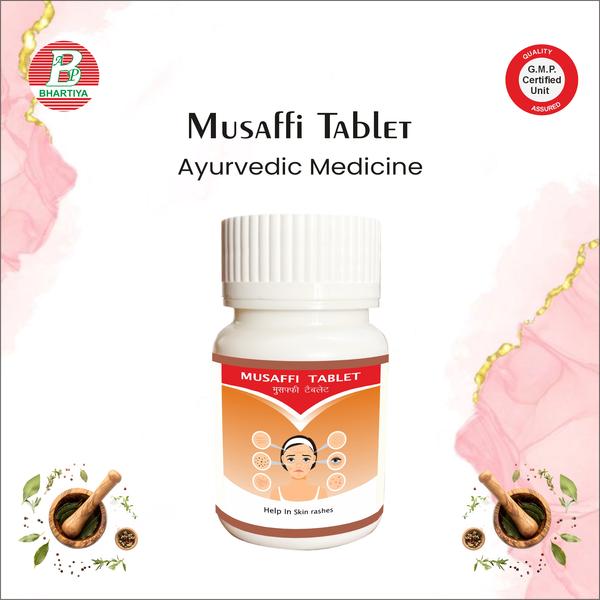
"name": "Musaffi Tablet",
"description": " \n MUSAFFI TABLET \n\n\nProduct Identification\n• Generic Name: Musaffi Tablet\n• Type: Ayurvedic Patent Medicine\n• Primary Indication Area: Blood purification, detoxification, and support in blood-related disorders (Rakt Vikar).\nTherapeutic Indications\nMusaffi Tablet is used to support blood health by purifying the blood, managing blood disorders (Rakt Vikar), and promoting overall vitality.\nKey Benefits:\nPrimary Benefit:\n• Supports blood purification and helps in the management of blood-related disorders by improving the quality of blood.\nOther Benefits:\n• Enhances energy and overall vitality.\n• Supports skin health by improving blood quality.\n• Promotes general well-being and immunity.\n\n CHOBCHINI \nBotanical / Common Name: Gymnema sylvestre\nKey Phytoconstituents:\n•\tGymnemic acids\n•\tSaponins\n•\tFlavonoids\n•\tAlkaloids\nMechanism of Action in Rakt Vikar (Blood Disorders / Anaemia) – Biochemistry / Pharmacology:\n1.\tBlood Purification & Detoxification\no\tGymnemic acids and flavonoids exhibit antioxidant properties, reducing oxidative stress on blood cells.\no\tHelps in cleansing the blood by neutralizing free radicals, which supports overall blood health.\n2.\tHematopoietic Support\no\tSaponins and flavonoids support haemoglobin synthesis and improve red blood cell (RBC) count.\no\tEnhances the quality and quantity of blood, aiding in the management of anaemia and other blood disorders.\n\nKUTAKI \nBotanical / Common Name: Picrorhiza kurroa\nKey Phytoconstituents:\n•\tPicrosides (Picrosides I & II)\n•\tKutkoside\n•\tIridoid glycosides\n•\tFlavonoids\nMechanism of Action in Rakt Vikar (Blood Disorders / Anaemia) – Biochemistry / Pharmacology:\n1.\tHepatoprotective & Blood Purification Effects\no\tPicrosides and iridoid glycosides support liver function, enhancing detoxification.\no\tImproved liver function aids in purifying the blood and removing metabolic toxins.\n2.\tHematopoietic Support\no\tFlavonoids and kutakoside promote RBC production and haemoglobin synthesis.\no\tHelps improve blood quality and manage anaemia associated with blood disorders.\n\nHARAD \nBotanical / Common Name: Terminalia chebula\nKey Phytoconstituents:\n•\tTannins (chebulinic acid, chebulagic acid)\n•\tFlavonoids\n•\tPhenolic compounds\n•\tGlycosides\nMechanism of Action in Rakt Vikar (Blood Disorders / Anaemia) – Biochemistry / Pharmacology:\n1.\tBlood Purification & Detoxification\no\tTannins and phenolic compounds exhibit antioxidant activity, helping neutralize free radicals in blood.\no\tSupports detoxification and improves overall blood quality.\n2.\tHematopoietic Support\no\tPromotes RBC formation and haemoglobin synthesis.\no\tSupports management of anaemia and other blood-related disorders.\n\nBAHEDA \nBotanical / Common Name: Terminalia belerica\nKey Phytoconstituents:\n•\tTannins (gallic acid, ellagic acid)\n•\tFlavonoids\n•\tGlycosides\n•\tPhenolic compounds\nMechanism of Action in Rakt Vikar (Blood Disorders / Anaemia) – Biochemistry / Pharmacology:\n1.\tBlood Purification & Detoxification\no\tTannins and phenolic compounds act as antioxidants, reducing oxidative stress on blood cells.\no\tSupports cleansing of blood and removal of toxins, improving blood quality.\n2.\tHematopoietic Support\no\tPromotes red blood cell formation and haemoglobin synthesis.\no\tHelps manage anaemia and strengthens overall blood health.\n\nAMLA \nBotanical / Common Name: Phyllanthus emblica\nKey Phytoconstituents:\n•\tVitamin C (ascorbic acid)\n•\tTannins (gallic acid, ellagic acid)\n•\tFlavonoids\n•\tPolyphenols\nMechanism of Action in Rakt Vikar (Blood Disorders / Anaemia) – Biochemistry / Pharmacology:\n1.\tAntioxidant & Blood Purification\no\tVitamin C, tannins, and polyphenols reduce oxidative stress on blood cells.\no\tSupports detoxification and improves the quality of blood.\n2.\tHematopoietic Support\no\tEnhances iron absorption and supports haemoglobin synthesis, aiding in anaemia management.\no\tImproves red blood cell count and overall blood health.\n\nDARUHALDI \nBotanical / Common Name: Berberis aristata\nKey Phytoconstituents:\n•\tBerberine (alkaloid)\n•\tTannins\n•\tFlavonoids\n•\tPhenolic compounds\nMechanism of Action in Rakt Vikar (Blood Disorders / Anaemia) – Biochemistry / Pharmacology:\n1.\tBlood Purification & Detoxification\no\tBerberine and flavonoids act as antioxidants, reducing oxidative stress on blood cells.\no\tSupports liver function and detoxification, indirectly improving blood quality.\n2.\tHematopoietic Support\no\tStimulates red blood cell formation and haemoglobin synthesis.\no\tAids in managing anaemia and other blood disorders.\n\nGORAKHMUNDI \nBotanical / Common Name: Sphaeranthus indicus\nKey Phytoconstituents:\n•\tSesquiterpene lactones (sphaerantholide)\n•\tFlavonoids\n•\tEssential oils\n•\tAlkaloids\nMechanism of Action in Rakt Vikar (Blood Disorders / Anaemia) – Biochemistry / Pharmacology:\n1.\tBlood Purification & Detoxification\no\tFlavonoids and sesquiterpene lactones reduce oxidative stress and help cleanse the blood.\no\tSupports liver and metabolic function, indirectly improving blood quality.\n2.\tHematopoietic Support\no\tStimulates red blood cell production and improves haemoglobin levels.\no\tAids in managing anaemia and related blood disorders.\n\nAFSTEEN \nBotanical / Common Name: Clerodendrum serratum (or related species)\nKey Phytoconstituents:\n•\tFlavonoids\n•\tAlkaloids\n•\tPhenolic compounds\n•\tTriterpenoids\nMechanism of Action in Rakt Vikar (Blood Disorders / Anaemia) – Biochemistry / Pharmacology:\n1.\tBlood Purification & Detoxification\no\tFlavonoids and phenolic compounds act as antioxidants, reducing oxidative stress in blood.\no\tSupports liver function and detoxification, enhancing overall blood quality.\n2.\tHematopoietic Support\no\tAlkaloids and triterpenoids aid in RBC formation and haemoglobin synthesis.\no\tHelps improve blood quality and manage anaemia.\n\nPITPAPDA \nBotanical / Common Name: Fumaria indica\nKey Phytoconstituents:\n•\tAlkaloids (fumarin, protopine)\n•\tFlavonoids\n•\tTannins\n•\tPhenolic compounds\nMechanism of Action in Rakt Vikar (Blood Disorders / Anaemia) – Biochemistry / Pharmacology:\n1.\tBlood Purification & Detoxification\no\tAlkaloids and flavonoids exhibit antioxidant activity, helping to cleanse the blood and reduce oxidative stress on blood cells.\no\tSupports liver function and metabolic detoxification, improving overall blood quality.\n2.\tHematopoietic Support\no\tPromotes RBC formation and hemoglobin synthesis.\no\tSupports management of anemia and enhances overall blood health.\n\nNILOPHER \nBotanical / Common Name: Nymphaea alba (White Water Lily)\nKey Phytoconstituents:\n•\tFlavonoids\n•\tAlkaloids\n•\tTannins\n•\tPhenolic compounds\nMechanism of Action in Rakt Vikar (Blood Disorders / Anaemia) – Biochemistry / Pharmacology:\n1.\tBlood Purification & Detoxification\no\tFlavonoids and tannins act as antioxidants, reducing oxidative stress on blood cells.\no\tSupports detoxification pathways, enhancing blood quality and overall vitality.\n2.\tHematopoietic Support\no\tAlkaloids and phenolic compounds promote RBC formation and hemoglobin synthesis.\no\tHelps in managing anemia and improving overall blood health.\n\nMANJEETH \nBotanical / Common Name: Rubia cordifolia\nKey Phytoconstituents:\n•\tAnthraquinones (alizarin, purpurin)\n•\tIridoid glycosides\n•\tFlavonoids\n•\tTannins\nMechanism of Action in Rakt Vikar (Blood Disorders / Anaemia) – Biochemistry / Pharmacology:\n1.\tBlood Purification & Detoxification\no\tAnthraquinones and flavonoids act as antioxidants, neutralizing free radicals and cleansing the blood.\no\tSupports liver and kidney function, indirectly improving blood quality.\n2.\tHematopoietic Support\no\tPromotes RBC formation and enhances hemoglobin synthesis.\no\tHelps in managing anemia and other blood-related disorders.\n\nGULAB PHOOL \nBotanical / Common Name: Rosa indica\nKey Phytoconstituents:\n•\tFlavonoids (quercetin, kaempferol)\n•\tTannins\n•\tVolatile oils (rose oil)\n•\tPhenolic compounds\nMechanism of Action in Rakt Vikar (Blood Disorders / Anaemia) – Biochemistry / Pharmacology:\n1.\tBlood Purification & Detoxification\no\tFlavonoids and phenolic compounds act as antioxidants, reducing oxidative stress on blood cells.\no\tSupports detoxification and improves blood quality.\n2.\tHematopoietic Support\no\tPromotes RBC formation and supports hemoglobin synthesis.\no\tHelps in managing anemia and enhancing overall blood health.\n\nREVAND CHINI \nBotanical / Common Name: Rheum emodi (Himalayan Rhubarb)\nKey Phytoconstituents:\n•\tAnthraquinones (emodin, chrysophanol)\n•\tTannins\n•\tFlavonoids\n•\tStilbenes\nMechanism of Action in Rakt Vikar (Blood Disorders / Anaemia) – Biochemistry / Pharmacology:\n1.\tBlood Purification & Detoxification\no\tAnthraquinones and flavonoids exhibit antioxidant activity, reducing oxidative stress on blood cells.\no\tSupports detoxification and cleansing of blood, improving overall blood quality.\n2.\tHematopoietic Support\no\tPromotes RBC formation and hemoglobin synthesis.\no\tHelps manage anemia and supports healthy blood composition.\n\nANANTMOOL \nBotanical Name: Hemidesmus indicus\nCommon Name: Indian Sarsaparilla\n\nKey Phytoconstituents\n•\tSaponins\n•\tFlavonoids\n•\tTannins\n•\tEssential oils\nMechanism of Action in Rakt Vikar (Blood Disorders / Anaemia)\n1. Blood Purification & Detoxification\n•\tSaponins and flavonoids act as powerful antioxidants, reducing oxidative stress and supporting the removal of circulating toxins.\n•\tEnhances liver and kidney function, promoting efficient detoxification and improved blood quality.\n2. Hematopoietic Support\n•\tSupports erythropoiesis (RBC formation) and hemoglobin synthesis.\n•\tHelps in managing anemia and contributes to improved overall blood composition.\n\nGILOY (Guduchi) \nBotanical Name: Tinospora cordifolia\nFamily: Menispermaceae\n\nKey Phytoconstituents\n•\tAlkaloids (berberine, tinosporin, magnoflorine)\n•\tDiterpenoid lactones (tinosporide, cordifolide)\n•\tGlycosides\n•\tPolysaccharides\n•\tPhenolics & Flavonoids\n\nMechanism of Action in Rakt Vikar (Blood Disorders / Anaemia)\n1. Blood Purification & Detoxification\n•\tPotent antioxidant and free-radical scavenging action from phenolics and flavonoids.\n•\tEnhances hepatic detoxification enzymes, supporting liver-based blood purification.\n•\tReduces circulating toxins (ama) and improves blood quality.\n\n2. Hematopoietic Support\n•\tStimulates bone marrow activity, increasing RBC and WBC production.\n•\tImproves hemoglobin synthesis and overall blood profile.\n•\tBeneficial in mild to moderate anemia due to its Rasayana (rejuvenative) effect.\n\nDosage:\nDose per Intake: 1–2 tablets\nFrequency: Twice a day (morning and evening)\nTotal Daily Dose: 2–4 tablets per day\nAnupan (Vehicle / Medium):\n•\tPreferred: Take with water\n•\tTiming: Preferably after meals to reduce gastric irritation\nPrecautions:\n•\tDo not exceed the prescribed dose\n•\tMonitor for any side effects\nConsult an Ayurvedic Practitioner Before Use in:\n•\tChildren\n•\tElderly\n•\tIndividuals with chronic illnesses\n\n\nmusaffi tablets, musaffi khoon tablet, musaffi khoon tablet uses\nmusaffi tablet amazon, musaffi tablet amazon india\nmusaffi tablet available in delhi, musaffi tablet available in india\nmusaffi tablet ajeeb uses in hindi, musaffi tablet benefits\nmusaffi tablet benefits in hindi, musaffi tablet buy online\nmusaffi tablet buy, musaffi tablet composition, musaffi tablet company\nmusaffi tablet content, musaffi tablet cost, musaffi tablet company name\nmusaffi tablet download, musaffi tablet dosage, musaffi tablet dose\nmusaffi tablet english, musaffi tablet expiry date, musaffi tablet export\nmusaffi tablet flipkart, musaffi tablet free download, musaffi tablet fayde in hindi\nmusaffi tablet gold, musaffi tablet good, musaffi tablet google, musaffi tablet in india\nmusaffi tablet in hindi, musaffi tablet in english, musaffi tablet jiomart\nmusaffi tablet login, musaffi tablet list pdf, musaffi tablet life science\nmusaffi tablet manufacturer, musaffi tablet meaning, musaffi tablet manufacturers in india\nmusaffi tablet manufacturing company, musaffi tablet medicine\nmusaffi tablet name, musaffi tablet near me, musaffi tablet nutrition\nmusaffi tablet name in india, musaffi tablet online, musaffi tablet online shopping\nmusaffi tablet online order, musaffi tablet price, musaffi tablet price in india\nmusaffi tablet qatar, musaffi tablet q10, musaffi tablet quality\nmusaffi tablet review, musaffi tablet review in hindi, musaffi tablet rate\nmusaffi tablet recipe, musaffi tablet tablet, musaffi tablet tab\nmusaffi tablet weight loss, musaffi tablet zamzam, ayurvedic musaffi syrup",
"price": 102.0,
"discountamount": 51.0,
"currencycode": "INR",
"priority": 1000000,
"isfreeshipmentavailable": false,
"shipmentduration": 1,
"_keywords": null,
"isarchived": false,
"isavailable": true,
"applicationid": null,
"productindex": 108,
"imageuri": "https://productimages.withfloats.com/actual/69f041bd7824e0f41855c98a.jpg",
"tileimageuri": "https://productimages.withfloats.com/tile/69f041bd7824e0f41855c98a.jpg",
"images": null,
"totalqueries": 0,
"gpid": null,
"groupproductid": null,
"createdon": "2026-04-28T05:12:27.341Z",
"updatedon": "2026-04-28T05:12:27.341Z",
"buyonlinelink": null,
"producturl": "http://WWW.BHARTIYAAYURVEDICPHARMACY.COM//musaffi-tablet/108",
"availableunits": -1.0,
"iscodavailable": true,
"isprepaidonlineavailable": true,
"maxcodorders": -1,
"maxprepaidonlineorders": -1,
"uniquepaymenturl": null,
"brandname": "Bakula Fort",
"category": "Musaffi Tablet 100 Tab X 102",
"tags": [],
"variants": false,
"keyspecification": null,
"otherspecifications": null,
"pickupaddressreferenceid": null,
"paymenttype": "AssuredPurchase",
"producttype": "products",
"hsncode": null,
"gstslab": 0.0,
"isnotforsale": false
},
{
"_id": "69e842228f2729d8ac82ed01",
"fptag": "BHARTIYEAYURVEDICPHARMACY",
"merchantname": null,
"customwidgets": null,
"externalsourceid": null,
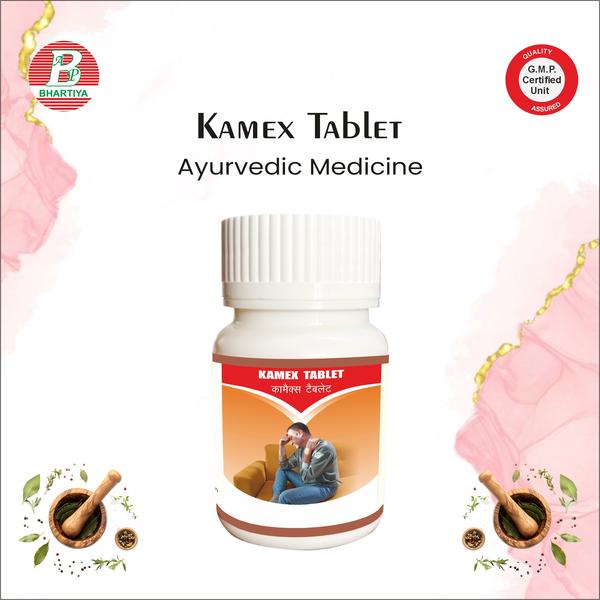
"name": "Kamex Tablet",
"description": " KAMEX TABLET \n\nProduct Identification\n•\tGeneric Name: Kamex Tablet\n•\tType: Ayurvedic Patent Medicine\n•\tPrimary Indication Area: Enhancement of male sexual health — specifically libido, stamina, erectile function, and overall sexual performance.\nTherapeutic Indications:\n•\tLow libido / reduced sexual desire\n•\tErectile dysfunction / weak erections\n•\tPremature ejaculation (in some formulations)\n•\tPoor sperm quality or low sperm count\n•\tGeneral weakness, debility, and reduced stamina\n•\tSupport for male reproductive health and vitality\n Primary Benefit:\n•\tEnhances male sexual performance by improving libido, erectile function, and overall sexual stamina.\nOther Benefits:\n1.\tImprovement in Sperm Quality and Count\no\tHerbal constituents like Gokhru and Safed Musli act as antioxidants, reducing oxidative stress in testes.\no\tProtects sperm DNA and membranes, enhancing motility, viability, and overall sperm health.\no\tSupports fertility in men with low sperm count or poor semen parameters.\n2.\tReduction of Sexual Fatigue / Debility\no\tAdaptogens such as Ashwagandha and Akarkara improve energy metabolism and stress resilience.\no\tHelps in reducing post-coital fatigue, improving sexual endurance and performance.\no\tSupports overall physical and mental stamina, indirectly enhancing sexual vigor.\n\n SEMAL MUSLI (Safed Musli) \nBotanical / Common Name: Chlorophytum borivilianum / Safed Musli / Semal Musli\nKey Phytoconstituents:\n•\tSteroidal saponins (safedosides, borivilianosides)\n•\tFlavonoids\n•\tAlkaloids\n•\tGlycosides\n•\tPolysaccharides\nMechanism of Action / Biochemistry in Male Sexual Health:\n1.\tAphrodisiac / Libido Enhancement\no\tSteroidal saponins stimulate CNS pathways, enhancing sexual desire.\no\tModulates dopamine and serotonin, improving sexual motivation.\n2.\tTestosterone & Androgen Support\no\tPromotes Leydig cell activity, enhancing testosterone synthesis.\no\tSupports erectile function and secondary sexual characteristics.\n\n SHATAVARI (Asparagus racemosus) \nBotanical / Common Name: Asparagus racemosus / Shatavari\nKey Phytoconstituents:\n•\tSteroidal saponins (Shatavarins I, II, III)\n•\tFlavonoids\n•\tAlkaloids\n•\tPolysaccharides\nMechanism of Action / Biochemistry in Male Sexual Health:\n1.\tAphrodisiac / Libido Support\no\tSteroidal saponins stimulate CNS pathways, enhancing sexual desire.\no\tImproves dopamine and serotonin signaling, which supports sexual motivation.\n2.\tTestosterone & Androgen Modulation\no\tSupports Leydig cell function, promoting testosterone synthesis.\no\tHelps in maintaining erectile function and secondary sexual characteristics.\n\nARJUN CHHAL (Terminalia arjuna) \nBotanical / Common Name: Terminalia arjuna / Arjun Bark\nKey Phytoconstituents:\n•\tTannins (Arjunic acid, Arjunolic acid)\n•\tFlavonoids (quercetin, luteolin)\n•\tGlycosides\n•\tSaponins\n•\tMinerals (calcium, magnesium, potassium)\nMechanism of Action / Biochemistry in Male Sexual Health:\n1.\tCardioprotective & Circulatory Support\no\tImproves cardiac output and blood flow via vasodilatory effects.\no\tEnhances penile perfusion, supporting erectile function.\n2.\tAntioxidant & Tissue Protection\no\tFlavonoids and tannins scavenge free radicals, reducing oxidative stress in reproductive tissues.\no\tSupports testicular health and sperm protection.\n\nMULETHI (Glycyrrhiza glabra) \nBotanical / Common Name: Glycyrrhiza glabra / Licorice / Mulethi\nKey Phytoconstituents:\n•\tGlycyrrhizin\n•\tFlavonoids (liquiritin, isoliquiritin)\n•\tSaponins\n•\tPolysaccharides\n•\tCoumarins\nMechanism of Action / Biochemistry in Male Sexual Health:\n1.\tHormonal Modulation\no\tGlycyrrhizin may influence testosterone metabolism indirectly, supporting sexual function.\no\tHelps in balancing androgenic activity in males.\n2.\tAnti-inflammatory & Antioxidant Effects\no\tReduces oxidative stress in testes and reproductive tissues.\no\tProtects sperm DNA and cell membranes, supporting fertility.\n\nGOKHRU BEEJ (Tribulus terrestris) \nBotanical / Common Name: Tribulus terrestris / Gokhru seeds\nKey Phytoconstituents:\n•\tSteroidal saponins (protodioscin)\n•\tFlavonoids\n•\tAlkaloids\n•\tGlycosides\n•\tTannins\nMechanism of Action / Biochemistry in Male Sexual Health:\n1.\tLibido & Sexual Desire Enhancement\no\tSteroidal saponins stimulate CNS pathways and dopamine release, enhancing sexual desire.\n2.\tTestosterone & Androgen Support\no\tProtodioscin may increase endogenous testosterone levels, supporting erectile function and sexual stamina.\n\nAMLA (Emblica officinalis) \nBotanical / Common Name: Emblica officinalis / Indian Gooseberry / Amla\nKey Phytoconstituents:\n•\tVitamin C (ascorbic acid)\n•\tTannins\n•\tFlavonoids\n•\tPhenolic compounds\n•\tGallic acid and ellagic acid\nMechanism of Action / Biochemistry in Male Sexual Health:\n1.\tAntioxidant Protection\no\tRich in Vitamin C and phenolics, Amla reduces oxidative stress in testes and seminal fluid.\no\tProtects sperm DNA and membranes, improving fertility.\n2.\tTestosterone Support\no\tEnhances Leydig cell function indirectly by reducing oxidative damage, supporting testosterone production\n\nHALDI (Curcuma longa) \nBotanical / Common Name: Curcuma longa / Turmeric / Haldi\nKey Phytoconstituents:\n•\tCurcuminoids (curcumin, demethoxycurcumin)\n•\tVolatile oils (turmerone, zingiberene)\n•\tPolysaccharides\n•\tPhenolic compounds\nMechanism of Action / Biochemistry in Male Sexual Health:\n1.\tAntioxidant Protection\no\tCurcumin scavenges free radicals in testes and reproductive tissues.\no\tProtects sperm DNA and membranes, improving fertility.\n2.\tAnti-inflammatory Effects\no\tReduces inflammation in reproductive organs, aiding tissue health.\no\tSupports erectile tissue integrity.\n\nKAUNCH BEEJ (Mucuna pruriens)\nBotanical / Common Name: Mucuna pruriens / Velvet Bean / Kaunch Beej\nKey Phytoconstituents:\n•\tL-DOPA (levodopa)\n•\tAlkaloids\n•\tFlavonoids\n•\tTannins\n•\tProteins and amino acids\nMechanism of Action / Biochemistry in Male Sexual Health:\n1.\tLibido & Sexual Desire Enhancement\no\tL-DOPA stimulates dopamine pathways in the CNS, enhancing sexual desire and motivation.\n2.\tTestosterone & Androgen Support\no\tL-DOPA stimulates pituitary function, increasing LH secretion, which boosts testosterone production in testes.\no\tSupports erectile function and sexual stamina.\n\nASHWAGANDHA (Withania somnifera) \nBotanical / Common Name: Withania somnifera / Indian Ginseng / Ashwagandha\nKey Phytoconstituents:\n•\tWithanolides (withaferin A, withanolide D)\n•\tAlkaloids (somniferine, withanine)\n•\tSaponins\n•\tSteroidal lactones\nMechanism of Action / Biochemistry in Male Sexual Health:\n1.\tLibido & Sexual Performance Enhancement\no\tWithanolides improve testosterone levels by stimulating Leydig cell activity.\no\tEnhances erectile function, sexual desire, and stamina.\n2.\tStress & Cortisol Reduction\no\tAdaptogenic properties reduce stress hormone cortisol, which can impair sexual function.\no\tSupports mental relaxation and sexual motivation.\n\nVIDHARA (Chlorophytum borivilianum) \nBotanical / Common Name: Chlorophytum borivilianum / Safed Musli / Vidhara\nKey Phytoconstituents:\n•\tSaponins (steroidal saponins)\n•\tPolysaccharides\n•\tAlkaloids\n•\tProteins and amino acids\n•\tFlavonoids\nMechanism of Action / Biochemistry in Male Sexual Health:\n1.\tAphrodisiac / Libido Enhancement\no\tSteroidal saponins stimulate CNS pathways and dopaminergic activity, increasing sexual desire.\n2.\tTestosterone & Androgen Support\no\tEnhances testosterone levels, supporting erectile function and sexual stamina.\n\nSIDA CORDIFOLIA \nBotanical / Common Name: Sida cordifolia / Bala / Country Mallow\nKey Phytoconstituents:\n•\tAlkaloids (ephedrine, pseudoephedrine)\n•\tFlavonoids\n•\tSterols\n•\tGlycosides\n•\tPolysaccharides\nMechanism of Action / Biochemistry in Male Sexual Health:\n1.\tLibido & Sexual Performance Enhancement\no\tAlkaloids stimulate CNS activity, enhancing sexual desire and motivation.\n2.\tTestosterone & Androgen Support\no\tSterols and alkaloids support endogenous testosterone production, aiding erectile function and stamina.\n\nVIDARIKAND (Pueraria tuberosa) \nBotanical / Common Name: Pueraria tuberosa / Vidarikand / Indian Kudzu\nKey Phytoconstituents:\n•\tIsoflavonoids (puerarin, daidzein, genistein)\n•\tSteroidal saponins\n•\tPolysaccharides\n•\tAlkaloids\n•\tPhenolic compounds\nMechanism of Action / Biochemistry in Male Sexual Health:\n1.\tLibido & Sexual Performance Enhancement\no\tIsoflavonoids and saponins stimulate CNS pathways, increasing sexual desire and motivation.\n2.\tTestosterone & Androgen Support\no\tEnhances testosterone production, supporting erectile function and sexual stamina.\n\nDALCHINI (Cinnamon) \nBotanical / Common Name: Cinnamomum verum / Cinnamomum zeylanicum / Dalchini\nKey Phytoconstituents:\n•\tCinnamaldehyde\n•\tEugenol\n•\tTannins\n•\tFlavonoids\n•\tCoumarins\nMechanism of Action / Biochemistry in Male Sexual Health:\n1.\tLibido & Sexual Performance Enhancement\no\tEugenol and cinnamaldehyde improve blood flow and stimulate sexual desire.\n2.\tTestosterone & Androgen Support\no\tMay support testosterone levels indirectly by improving circulation and reducing oxidative stress.\n\n ALSI (Flaxseed) \nBotanical / Common Name: Linum usitatissimum / Flaxseed / Alsi\nKey Phytoconstituents:\n•\tAlpha-linolenic acid (ALA – omega-3 fatty acid)\n•\tLignans (phytoestrogens)\n•\tFiber\n•\tProteins\n•\tVitamins and minerals (magnesium, zinc)\nMechanism of Action / Biochemistry in Male Sexual Health:\n1.\tHormonal Balance & Testosterone Support\no\tOmega-3 fatty acids and lignans help modulate hormonal balance, indirectly supporting testosterone levels and sexual function.\n2.\tSperm Quality & Fertility\no\tAntioxidants and essential fatty acids improve sperm count, motility, morphology, and DNA integrity.\n\nACACIA NILOTICA (Babool) \nBotanical / Common Name: Acacia nilotica / Babool / Gum Arabic Tree\nKey Phytoconstituents:\n•\tTannins\n•\tFlavonoids\n•\tSaponins\n•\tAlkaloids\n•\tGlycosides\nMechanism of Action / Biochemistry in Male Sexual Health:\n1.\tLibido & Sexual Performance Enhancement\no\tSaponins and flavonoids stimulate CNS pathways, enhancing sexual desire and vigor.\n2.\tTestosterone & Androgen Support\no\tBioactive compounds support testosterone production, aiding erectile function and sexual stamina.\n\nSAUNTH (Dry Ginger) \nBotanical / Common Name: Zingiber officinale / Dry Ginger / Saunth\nKey Phytoconstituents:\n•\tGingerols\n•\tShogaols\n•\tEssential oils\n•\tFlavonoids\n•\tTannins\nMechanism of Action / Biochemistry in Male Sexual Health:\n1.\tLibido & Sexual Performance Enhancement\no\tGingerols and shogaols improve blood circulation, stimulating sexual desire and vigor.\n2.\tTestosterone & Androgen Support\no\tAntioxidant activity reduces oxidative stress, indirectly supporting testosterone levels and erectile function.\n\n SILVER FOIL (Rajata Bhasma) \nAyurvedic / Common Name: Rajata Bhasma / Silver Ash / Silver Foil\nKey Phytoconstituents / Components:\n•\tSilver (Ag) in bioavailable calcinated form\n•\tTrace minerals\nMechanism of Action / Biochemistry in Male Sexual Health:\n1.\tRejuvenation & Rasayana Effect\no\tActs as a Rasayana, enhancing vitality, strength, and overall energy, indirectly supporting sexual performance.\n2.\tSupports Testosterone & Reproductive Function\no\tTrace silver compounds may help maintain healthy reproductive function, supporting libido and stamina.\n\nDosage\n•\tAdults: 1–2 tablets, twice a day\n•\tChildren: 1 tablet, twice a day (only if prescribed by a physician)\n•\tAdministration: Swallow with plain water or warm milk\n•\tTiming: After meals, preferably morning and evening\n Precautions / Anupan\n•\tDo not exceed recommended dose\n•\tConsult a doctor for children, elderly, or chronic illness\n•\tWatch for allergic reactions: rash, nausea, abdominal discomfort\n•\tCheck for drug interactions (BP, diabetes, anticoagulants)\n•\tMaintain healthy lifestyle: diet, hydration, exercise, avoid smoking/alcohol\n•\tUse under supervision for long-term use or underlying conditions\n\n\n\nkamax tablet, kamex tablet amazon, kamex tablet alternative in india\nkamex tablet amazon india, kamex tablet benefits, kamex tablet brand name\nkamex tablet buy, kamex tablet benefits in hindi, kamex tablet buy online\nkamex tablet company, kamex tablet composition, kamex tablet content\nkamex tablet company details, kamex tablet catalogue pdf\nkamex tablet download, kamex tablet dosage, kamex tablet dose\nkamex tablet dose per day, kamex tablet expiry date\nkamex tablet free download, kamex tablet gold\nkamex tablet gst rate, kamex tablet generic name\nkamex tablet good or bad, kamex tablet hindi\nkamex tablet how to use, kamex tablet holder\nkamex tablet hsn code, kamex tablet india\nkamex tablet indiamart, kamex tablet in hindi\nkamex tablet image, kamex tablet jiomart\nkamex tablet jio, kamex tablet job\nkamex tablet ke fayde in hindi, kamex tablet kis kaam aati hai\nkamex tablet ke fayde, kamex tablet kya kam karta hai\nkamex tablet list, kamex tablet logo, kamex tablet login\nkamex tablet label, kamex tablet list pdf, kamex tablet manufacturer\nkamex tablet mrp, kamex tablet manufacturing company\nkamex tablet meaning, kamex tablet name, kamex tablet new\nkamex tablet online shopping, kamex tablet online\nkamex tablet owner, kamex tablet owner name\nkamex tablet price, kamex tablet price in india\nkamex tablet quality, kamex tablet quantity\nkamex tablet review, kamex tablet rate\nkamex tablet review in hindi, kamex tablet tablet\nkamex tablet uses in hindi, kamex tablet uses\nkamex tablet which company, kamex tablet zepto\ndoes kamex tablet work, best kamex tablet in india\nbest kamex tablets, top kamex tablets\ntop kamex tablet price, top kamex tablet in india",
"price": 600.0,
"discountamount": 300.0,
"currencycode": "INR",
"priority": 1000000,
"isfreeshipmentavailable": false,
"shipmentduration": 1,
"_keywords": null,
"isarchived": false,
"isavailable": true,
"applicationid": null,
"productindex": 100,
"imageuri": "https://productimages.withfloats.com/actual/69e842241d606e6417ad199e.jpg",
"tileimageuri": "https://productimages.withfloats.com/tile/69e842241d606e6417ad199e.jpg",
"images": null,
"totalqueries": 0,
"gpid": null,
"groupproductid": null,
"createdon": "2026-04-22T03:36:02.685Z",
"updatedon": "2026-04-22T04:27:20.006Z",
"buyonlinelink": null,
"producturl": "http://WWW.BHARTIYAAYURVEDICPHARMACY.COM//kamex-tablet/100",
"availableunits": -1.0,
"iscodavailable": true,
"isprepaidonlineavailable": true,
"maxcodorders": -1,
"maxprepaidonlineorders": -1,
"uniquepaymenturl": null,
"brandname": "Bakula Fort",
"category": "Kamex Tablet 100 gm X 20",
"tags": [],
"variants": false,
"keyspecification": null,
"otherspecifications": null,
"pickupaddressreferenceid": null,
"paymenttype": "AssuredPurchase",
"producttype": "products",
"hsncode": null,
"gstslab": 0.0,
"isnotforsale": false
},
{
"_id": "69e08903ef2bb462c498463f",
"fptag": "BHARTIYEAYURVEDICPHARMACY",
"merchantname": null,
"customwidgets": null,
"externalsourceid": null,
"name": "SURYAPRABHA PILLS",
"description": " SURYAPRABHA PILLS (SILVER COATED) \n\nProduct Identification\n•\tGeneric Name: Suryaprabha Pills\n•\tType: Ayurvedic Patent Medicine\n•\tPrimary Indication Area: Diabetes (Prameha / Blood Sugar Imbalance)\nTherapeutic Indications: The management of diabetes (Prameha / high blood sugar) and to support metabolic health, digestive strength, and overall vitality.\n\nKey benefits include:\n•\tBlood Sugar Support: Helps maintain healthy glucose levels.\n•\tDigestive & Metabolic Support: Enhances digestion, nutrient absorption, and metabolism.\n•\tPancreatic & Liver Health: Supports proper insulin function and detoxification.\n•\tStamina & Vitality: Helps combat fatigue and weakness associated with diabetes.\n•\tRasayana (Rejuvenation): Supports overall tissue nourishment and long-term health.\n\nIngredients:\n Giloy (Tinospora cordifolia) \nAyurvedic Name: Giloy / Guduchi\nPrimary Uses in Diabetes: Helps regulate blood glucose, improves insulin sensitivity, and protects organs from diabetic complications.\nKey Phytoconstituents\n•\tAlkaloids (e.g., berberine, magnoflorine)\n•\tDiterpenoid lactones (e.g., Tinosporide)\n•\tGlycosides\n•\tFlavonoids\n•\tSteroids\n•\tPolysaccharides\nThese compounds contribute to its antidiabetic, antioxidant, and immunomodulatory effects.\nMechanism of Action in Diabetes\n1. Insulin Sensitization & Secretion\n•\tGiloy stimulates pancreatic beta cells → increases insulin secretion.\n•\tImproves insulin receptor sensitivity on target tissues (muscle and adipose), enhancing glucose uptake.\n•\tAlkaloids like berberine mimic insulin action by activating AMPK pathway, which helps lower blood glucose.\n2. Carbohydrate Metabolism Regulation\n•\tModulates key enzymes:\no\tIncreases glucokinase activity → promotes glucose utilization in the liver.\no\tInhibits glucose-6-phosphatase & fructose-1,6-bisphosphatase → reduces hepatic gluconeogenesis.\n•\tThis leads to lower fasting and postprandial blood glucose.\n\nHaldi / Turmeric (Curcuma longa) \nAyurvedic Name: Haridra / Haldi\nPrimary Uses: Anti-inflammatory, antioxidant, digestive support, liver protection, and metabolic health (including blood sugar support).\nKey Phytoconstituents\n•\tCurcuminoids: Curcumin (major active compound), desmethoxycurcumin, bisdemethoxycurcumin\n•\tVolatile oils: Turmerone, zingiberene, atlantone\n•\tProteins & sugars\n•\tMinerals: Iron, calcium\nBiochemical & Pharmacological Actions\n1. Anti-inflammatory\n•\tCurcumin inhibits NF-κB pathway, reducing pro-inflammatory cytokines: TNF-α, IL-1β, IL-6.\n•\tSuppresses COX-2 and LOX enzymes, reducing prostaglandin and leukotriene production.\n•\tHelps in arthritis, inflammation, and chronic metabolic inflammation.\n2. Antioxidant\n•\tCurcumin neutralizes free radicals (ROS and RNS).\n•\tUpregulates endogenous antioxidant enzymes: SOD, catalase, glutathione peroxidase.\n•\tProtects tissues (liver, pancreas, kidneys, and heart) from oxidative stress.\n\nAtis (Aconitum heterophyllum) \nPrimary Role in Diabetes (Ayurvedic / Biochemical Basis):\nAtis is considered a mild hypoglycaemic and metabolism-supportive herb in traditional use, mainly through digestive and metabolic regulation. Modern research is limited, but biochemical mechanisms can be inferred.\nKey Phytochemicals Relevant to Diabetes\n•\tNon-toxic alkaloids (stimulatory to metabolism)\n•\tPhenolic compounds (antioxidant effects)\n•\tCarbohydrates and starch (support energy metabolism)\n•\tTannins (reduce oxidative gut stress)\nMechanisms of Action – Biochemical Basis\n1. Digestive & Metabolic Support\n•\tEnhances Agni (digestive fire) → indirectly supports carbohydrate digestion and absorption.\n•\tBetter digestion → improved glucose homeostasis because nutrients are metabolized efficiently.\n2. Antioxidant Action\n•\tPhenolic compounds neutralize free radicals generated by high blood sugar.\n•\tProtects pancreatic β-cells from oxidative damage → maintains insulin production.\n\nDaru Haldi (Berberis aristata) \nAyurvedic Name: Daruharidra / Daruhaldi\nPrimary Uses: Diabetes (Madhumeha), metabolic disorders, liver protection, antioxidant support\nKey Phytochemicals\n•\tAlkaloids: Berberine (major active compound), palmatine, jatrorrhizine\n•\tPolyphenols and flavonoids\n•\tTannins\n•\tOrganic acids\nBerberine is the primary active compound responsible for most antidiabetic effects.\nBiochemical Mechanisms in Diabetes\n1. Insulin Sensitization\n•\tBerberine activates AMPK (AMP-activated protein kinase) → acts like an “energy sensor” in cells.\n•\tIncreases glucose uptake in muscle and adipose tissue → lowers blood sugar.\n•\tImproves insulin receptor expression and sensitivity.\n2. Inhibition of Gluconeogenesis\n•\tReduces hepatic glucose production by inhibiting gluconeogenic enzymes:\no\tGlucose-6-phosphatase\no\tPhosphoenolpyruvate carboxykinase (PEPCK)\n•\tLeads to lower fasting blood glucose.\n\nPippali (Piper longum) \nAyurvedic Name: Pippali\nPrimary Uses: Diabetes (Madhumeha), digestive support, respiratory support, metabolism booster\nKey Phytochemicals\n•\tAlkaloids: Piperine (main active compound)\n•\tEssential oils: Caryophyllene, Pinene\n•\tFlavonoids, phenolic compounds\n•\tLignans\nPiperine is the primary bioactive compound responsible for most pharmacological effects.\nBiochemical Mechanisms in Diabetes\n1. Improves Insulin Sensitivity\n•\tPiperine enhances insulin receptor activity → increases glucose uptake in muscles and adipose tissue.\n•\tActs as a cellular sensitizer, making tissues respond better to insulin.\n2. Enhances Glucose Metabolism\n•\tStimulates glycolytic enzymes → promotes breakdown of glucose for energy.\n•\tReduces hepatic gluconeogenesis → less glucose is released into blood by the liver.\n\nChitrak (Plumbago zeylanica) \nAyurvedic Name: Chitraka\nPrimary Uses in Diabetes (Madhumeha): Digestive and metabolic support, improving glucose utilization, stimulating pancreatic function, and enhancing fat metabolism.\nKey Phytochemicals\n•\tPlumbagin (primary bioactive naphthoquinone)\n•\tAlkaloids\n•\tFlavonoids and phenolic compounds\n•\tEssential oils\nPlumbagin is the main compound responsible for antidiabetic effects.\nBiochemical Mechanisms in Diabetes\n1. Enhances Glucose Uptake\n•\tPlumbagin stimulates glucose transporter (GLUT4) translocation in muscle and adipose tissue.\n•\tImproves peripheral glucose utilization, lowering blood sugar.\n2. Stimulates Pancreatic Function\n•\tMildly supports pancreatic β-cell activity → helps maintain insulin secretion.\n•\tProtects β-cells from oxidative stress-induced damage.\n\nHarad (Terminalia chebula) \nAyurvedic Name: Haritaki / Harad\nPrimary Uses in Diabetes (Madhumeha): Blood sugar regulation, antioxidant support, lipid metabolism improvement, and digestive/metabolic balance.\nKey Phytochemicals\n•\tTannins: Chebulinic acid, chebulagic acid, gallic acid\n•\tFlavonoids and phenolic compounds\n•\tOrganic acids\n•\tPolysaccharides\nMost antidiabetic effects are attributed to tannins and polyphenols.\nBiochemical Mechanisms in Diabetes\n1. Improves Insulin Sensitivity\n•\tPolyphenols and tannins enhance insulin receptor activity on muscle and adipose tissues.\n•\tPromotes glucose uptake by cells → lowers blood sugar.\n2. Reduces Hepatic Glucose Production\n•\tInhibits gluconeogenic enzymes (glucose-6-phosphatase, PEPCK) → reduces fasting blood glucose.\n•\tHelps regulate hepatic glucose output.\n\nAmla (Phyllanthus emblica) \nAyurvedic Name: Amla / Amalaki\nPrimary Uses in Diabetes (Madhumeha): Blood sugar regulation, antioxidant protection, lipid metabolism improvement, and pancreatic β-cell protection.\nKey Phytochemicals\n•\tVitamin C (Ascorbic acid) – very high content\n•\tTannins: Emblicanin A & B, punigluconin, pedunculagin\n•\tFlavonoids and polyphenols\n•\tGallic acid and ellagic acid\nThe antioxidant compounds and tannins are responsible for most antidiabetic effects.\nBiochemical Mechanisms in Diabetes\n1. Enhances Insulin Secretion & β-Cell Protection\n•\tAntioxidants in Amla protect pancreatic β-cells from oxidative stress.\n•\tSupports insulin secretion in mild diabetes.\n2. Improves Insulin Sensitivity\n•\tPolyphenols improve insulin receptor activity on muscle and adipose tissues.\n•\tEnhances peripheral glucose uptake → lowers blood sugar.\n\nChavya (Piper chaba) \nAyurvedic Name: Chavya\nPrimary Uses in Diabetes (Madhumeha): Blood sugar regulation, digestive/metabolic support, and insulin sensitization.\nKey Phytochemicals\n•\tAlkaloids: Piperine (main active compound)\n•\tEssential oils: Caryophyllene, pinene\n•\tFlavonoids and polyphenols\n•\tLignans\nPiperine is the main bioactive compound responsible for most antidiabetic effects\nBiochemical Mechanisms in Diabetes\n1. Enhances Insulin Sensitivity\n•\tPiperine improves insulin receptor activity in muscle and adipose tissue.\n•\tIncreases glucose uptake → lowers blood sugar.\n2. Stimulates Glucose Metabolism\n•\tEnhances glycolytic enzyme activity → better glucose utilization by cells.\n•\tReduces hepatic gluconeogenesis → less glucose released into blood.\n\nVaividang (Embelia ribes) \nAyurvedic Name: Vaividang / Vidanga\nPrimary Uses in Diabetes (Madhumeha): Blood sugar regulation, antioxidant protection, lipid metabolism improvement, and digestive/metabolic support.\nKey Phytochemicals\n•\tAlkaloids: Embelin (main active compound)\n•\tFlavonoids and phenolic compounds\n•\tTannins and glycosides\n•\tEssential oils\nEmbelin is the major bioactive molecule responsible for antidiabetic effects.\nBiochemical Mechanisms in Diabetes\n1. Enhances Insulin Sensitivity\n•\tEmbelin improves insulin receptor activity in peripheral tissues (muscle and adipose).\n•\tIncreases glucose uptake, lowering blood sugar.\n2. Stimulates Glucose Metabolism\n•\tPromotes glycolytic enzyme activity → better glucose utilization in tissues.\n•\tReduces hepatic gluconeogenesis → decreases blood glucose release from liver.\n\nSaunth / Shunthi (Zingiber officinale, dry ginger) \nAyurvedic Name: Saunth / Shunthi\nPrimary Uses in Diabetes (Madhumeha): Blood sugar regulation, insulin sensitization, antioxidant protection, and metabolic support.\nKey Phytochemicals\n•\tGingerols and Shogaols (major bioactive compounds)\n•\tPolyphenols and flavonoids\n•\tEssential oils (zingiberene, bisabolene)\n•\tDiarylheptanoids\nGingerols and Shogaols are mainly responsible for antidiabetic effects.\nBiochemical Mechanisms in Diabetes\n1. Enhances Insulin Sensitivity\n•\tGingerol and shogaol improve insulin receptor signaling in muscle and adipose tissue.\n•\tEnhances glucose uptake by cells, reducing blood sugar.\n2. Reduces Hepatic Glucose Production\n•\tInhibits gluconeogenic enzymes like glucose-6-phosphatase and PEPCK.\n•\tLeads to lower fasting blood glucose.\n\nSajji kshar (Alkaline Salt / Kshara) \nAyurvedic Name: Sajji kshar / Kshara\nPrimary Uses in Diabetes (Madhumeha):\n•\tDigestive support and enhancing metabolism\n•\tBlood sugar balance\n•\tAcid-base regulation in the body\nKey Biochemical Properties\n•\tAlkaline nature (basic pH)\n•\tSodium ions and carbonate ions\n•\tNo direct organic phytochemicals (inorganic compound)\nSajji kshar is not a herb but an alkaline mineral-based therapeutic agent used in Ayurveda to correct metabolic imbalances.\nBiochemical Mechanisms Relevant to Diabetes\n1. Supports Digestive Enzymes & Metabolism\n•\tAlkaline environment improves digestive enzyme activity → better breakdown and absorption of nutrients.\n•\tHelps regulate glucose metabolism indirectly by improving digestion (Agni).\n2. Neutralizes Excess Acidity\n•\tIn diabetes, acid-base imbalance and metabolic acidosis may occur in uncontrolled cases.\n•\tSajji kshar helps maintain systemic pH balance, which supports enzymatic reactions for carbohydrate metabolism.\n\nSaindha Namak (Rock Salt / Himalayan Salt) \nAyurvedic Name: Saindha Namak / Lavana\nPrimary Uses in Diabetes (Madhumeha):\n•\tSupports digestion and metabolism\n•\tEnhances nutrient absorption\n•\tElectrolyte and mineral balance\nKey Biochemical Properties\n•\tSodium chloride – primary component\n•\tTrace minerals: potassium, magnesium, calcium, iron\n•\tAlkaline-forming salts (helps balance pH in tissues)\nSaindha Namak is not an organic herb, but a mineral salt used in Ayurveda to improve digestion and metabolic balance, which is important in diabetes management.\n\nBiochemical Mechanisms Relevant to Diabetes\n1. Digestive & Metabolic Support\n•\tEnhances Agni (digestive fire) → improves enzymatic breakdown of carbohydrates.\n•\tBetter digestion → improved glucose absorption and utilization.\n2. Electrolyte & Mineral Balance\n•\tProvides sodium, potassium, and trace minerals → helps maintain cellular osmolarity and enzyme function.\n•\tProper electrolyte balance supports insulin signaling and glucose transport in tissues.\n\nKala Namak (Black Salt) \nAyurvedic Name: Kala Namak / Black Salt\nPrimary Uses in Diabetes (Madhumeha):\n•\tDigestive and metabolic support\n•\tElectrolyte and mineral balance\n•\tMild alkalizing effect → helps in metabolic homeostasis\nKey Biochemical Properties\n•\tMain components: Sodium chloride, sodium sulphate, trace minerals (iron, magnesium, potassium)\n•\tContains sulfur compounds → gives characteristic taste and mild therapeutic action\n•\tMildly alkaline → supports acid-base balance\nKala Namak is a mineral-based adjunct in Ayurveda, not a direct herb, but plays an important role in metabolic regulation and diabetes support.\n\nBiochemical Mechanisms Relevant to Diabetes\n1. Digestive & Metabolic Support\n•\tImproves Agni (digestive fire) → enhances carbohydrate breakdown and absorption.\n•\tProper digestion → more stable blood glucose levels.\n2. Electrolyte & Mineral Balance\n•\tProvides sodium, potassium, and magnesium → supports cellular osmolarity, insulin signaling, and enzyme activity.\n\nDantimool (Baliospermum montanum) \nAyurvedic Name: Dantimool / Danti\nPrimary Uses in Diabetes (Madhumeha):\n•\tBlood sugar regulation\n•\tDigestive and metabolic support\n•\tLipid metabolism improvement\n•\tMild detoxification of blood\nKey Phytochemicals\n•\tAlkaloids: Baliospermin, solanifolamine\n•\tFlavonoids and phenolic compounds\n•\tGlycosides\n•\tFatty acids\nThe alkaloids and flavonoids are mainly responsible for metabolic and antidiabetic effects.\nBiochemical Mechanisms in Diabetes\n1. Digestive & Metabolic Support\n•\tImproves Agni (digestive fire) → enhances carbohydrate breakdown and nutrient absorption.\n•\tBetter digestion → improves glucose metabolism and stabilizes blood sugar levels.\n2. Enhances Glucose Utilization\n•\tStimulates glycolytic enzymes → promotes cellular glucose utilization.\n•\tReduces hepatic gluconeogenesis, lowering fasting blood sugar.\n\nTejpatra (Cinnamomum tamala) \nAyurvedic Name: Tejpatra / Indian Bay Leaf\nPrimary Uses in Diabetes (Madhumeha):\n•\tBlood sugar regulation\n•\tInsulin sensitization\n•\tAntioxidant protection\n•\tLipid metabolism support\nKey Phytochemicals\n•\tEssential oils: Eugenol, cinnamaldehyde, linalool\n•\tPolyphenols\n•\tFlavonoids\n•\tTannins\nThe cinnamaldehyde and polyphenols are mainly responsible for antidiabetic effects.\nBiochemical Mechanisms in Diabetes\n1. Enhances Insulin Sensitivity\n•\tPolyphenols and cinnamaldehyde improve insulin receptor activity in muscle and adipose tissue.\n•\tEnhances glucose uptake by cells, reducing postprandial blood sugar.\n2. Reduces Hepatic Glucose Production\n•\tInhibits gluconeogenic enzymes (glucose-6-phosphatase, PEPCK) → lowers fasting blood glucose.\n\nNagarmotha (Cyperus rotundus) \nAyurvedic Name: Nagarmotha / Musta-moola\nPrimary Uses in Diabetes (Madhumeha):\n•\tBlood sugar regulation\n•\tInsulin sensitization\n•\tDigestive and metabolic support\n•\tLipid metabolism improvement\nKey Phytochemicals\n•\tEssential oils: Cyperene, α-cyperone, β-selinene\n•\tFlavonoids and phenolic compounds\n•\tTannins\n•\tAlkaloids and glycosides\nThe α-cyperone, flavonoids, and phenolic compounds are mainly responsible for antidiabetic effects.\nBiochemical Mechanisms in Diabetes\n1. Enhances Insulin Sensitivity\n•\tFlavonoids and α-cyperone improve insulin receptor activity in muscle and adipose tissue.\n•\tEnhances glucose uptake by peripheral tissues, reducing postprandial blood sugar.\n2. Reduces Hepatic Glucose Production\n•\tInhibits gluconeogenic enzymes (glucose-6-phosphatase, PEPCK) → lowers fasting blood glucose.\n\nShudh Guggul (Commiphora mukul) \nAyurvedic Name: Guggul / Shudh Guggul\nPrimary Uses in Diabetes (Madhumeha):\n•\tBlood sugar regulation\n•\tLipid metabolism improvement\n•\tInsulin sensitization\n•\tAnti-inflammatory and antioxidant effects\n\nKey Phytochemicals\n•\tGuggulsterones (E & Z) – primary active compounds\n•\tFlavonoids and polyphenols\n•\tTerpenoids and volatile oils\n•\tResin compounds\nGuggulsterones are mainly responsible for antidiabetic and lipid-lowering effects.\nBiochemical Mechanisms in Diabetes\n1. Enhances Insulin Sensitivity\n•\tGuggulsterones improve insulin receptor signaling in peripheral tissues (muscle and adipose).\n•\tEnhances glucose uptake, lowering postprandial blood sugar.\n2. Regulates Hepatic Glucose Metabolism\n•\tModulates gluconeogenic enzymes in the liver → reduces fasting blood glucose.\n•\tSupports glycolysis, promoting cellular glucose utilization.\n\nShudh Shilajeet (Purified Shilajit) \nAyurvedic Name: Shilajeet / Shilajit\nPrimary Uses in Diabetes (Madhumeha):\n•\tBlood sugar regulation\n•\tInsulin sensitization\n•\tAntioxidant and anti-inflammatory support\n•\tEnergy metabolism enhancement\nKey Biochemical Constituents\n•\tFulvic acid – major bioactive compound\n•\tHumic acids\n•\tTrace minerals: zinc, iron, magnesium, copper\n•\tDibenzo-α-pyrones (antioxidant compounds)\n•\tAmino acids and phenolic compounds\nFulvic acid and dibenzo-α-pyrones are mainly responsible for antidiabetic effects.\nBiochemical Mechanisms in Diabetes\n1. Enhances Insulin Sensitivity\n•\tFulvic acid improves insulin receptor activity in muscle and adipose tissue.\n•\tEnhances glucose uptake, lowering blood sugar.\n2. Regulates Hepatic Glucose Metabolism\n•\tInhibits gluconeogenic enzymes (glucose-6-phosphatase, PEPCK) → reduces fasting blood glucose.\n•\tStimulates glycolysis → improves cellular glucose utilization.\n\nLoh Bhasma (Iron Ash) \nAyurvedic Name: Loh Bhasma\nPrimary Uses in Diabetes (Madhumeha):\n•\tSupports Hemoglobin and iron metabolism\n•\tEnhances energy and stamina\n•\tImproves glucose metabolism indirectly\n•\tAntioxidant and tissue-protective effects\n\nKey Biochemical Properties\n•\tInorganic Iron (Fe³⁺/Fe²⁺) – main active component\n•\tTrace minerals retained during preparation\n•\tHighly bioavailable form after Ayurvedic calcination (Bhasmikarana)\nLoh Bhasma is a mineral-based Ayurvedic preparation that primarily improves haematological and metabolic functions, indirectly supporting glucose homeostasis.\nBiochemical Mechanisms Relevant to Diabetes\n1. Supports Red Blood Cells & Oxygen Transport\n•\tIncreases Hemoglobin synthesis → better oxygen delivery to tissues.\n•\tEnhanced tissue oxygenation improves glucose utilization in muscles and organs.\n2. Energy & Metabolic Support\n•\tIron is a cofactor for enzymes in the electron transport chain and oxidative phosphorylation.\n•\tImproves ATP production, which enhances glucose metabolism and cellular energy.\n\nDosage & Administration\n•\tDose per intake: 1–2 pills\n•\tFrequency: 2–3 times daily\n•\tTotal daily dose: 2–6 pills (as per physician advice)\n•\tHow to take: With warm water, preferably after meals\n\nPrecautions\n•\tDo not exceed prescribed dose\n•\tConsult Ayurvedic practitioner before use in:\no\tChildren\no\tElderly\no\tChronic illness patients\n•\tMonitor for digestive discomfort\n•\tMaintain proper diet, hydration, and lifestyle for diabetes management\n\n\nsuryaprabha tablet, suryaprabha tablet uses, suryaprabha pills amazon\nsuryaprabha pills buy, suryaprabha pills buy online, suryaprabha pills benefits\nsuryaprabha pills brand, suryaprabha pills benefits in hindi\nsuryaprabha pills bibwewadi pune, suryaprabha pills company\nsuryaprabha pills contact number, suryaprabha pills content\nsuryaprabha pills chemist, suryaprabha pills contact details\nsuryaprabha pills contact no, suryaprabha pills channel\nsuryaprabha pills delhi, suryaprabha pills details\nsuryaprabha pills distributor, suryaprabha pills email id\nsuryaprabha pills energy, suryaprabha pills enterprises\nsuryaprabha pills education, suryaprabha pills energy private limited\nsuryaprabha pills effects, suryaprabha pills edit\nsuryaprabha pills for hair, suryaprabha pills for skin\nsuryaprabha pills for weight loss, suryaprabha pills group\nsuryaprabha pills gst number, suryaprabha pills granules\nsuryaprabha pills gulika uses, suryaprabha pills gulika\nsuryaprabha pills gulika benefits, suryaprabha pills gulika side effects\nsuryaprabha pills hyderabad, suryaprabha pills hindi\nsuryaprabha pills himachal pradesh, suryaprabha pills hospital\nsuryaprabha pills holidays, suryaprabha pills home\nsuryaprabha pills hospital pune, suryaprabha pills hot latest\nsuryaprabha pills in hindi, suryaprabha pills industries\nsuryaprabha pills indiamart, suryaprabha pills ingredients\nsuryaprabha pills in malayalam, suryaprabha pills instagram\nsuryaprabha pills in tamil, suryaprabha pills in perambalur\nsuryaprabha pills jee advanced, suryaprabha pills ke fayde\nsuryaprabha pills ke fayde in hindi, suryaprabha pills khanna\nsuryaprabha pills limited, suryaprabha pills linkedin\nsuryaprabha pills login, suryaprabha pills latest\nsuryaprabha pills manufacturer, suryaprabha pills manufacturing company\nsuryaprabha pills malayalam, suryaprabha pills matrimony\nsuryaprabha pills model, suryaprabha pills news\nsuryaprabha pills name, suryaprabha pills net worth\nsuryaprabha pills network, suryaprabha pills new delhi\nsuryaprabha pills nursing home, suryaprabha pills owner\nsuryaprabha pills online, suryaprabha pills online shopping\nsuryaprabha pills owner name, suryaprabha pills online order\nsuryaprabha pills oil, suryaprabha pills official\nsuryaprabha pills photography, suryaprabha pills photoshoot\nsuryaprabha pills pune, suryaprabha pills review\nsuryaprabha pills research, suryaprabha pills reels\nsuryaprabha pills supplier, suryaprabha pills share price\nsuryaprabha pills today, suryaprabha vati uses\nsuryaprabha pills veterinary, suryaprabha pills vs\nsuryaprabha pills vati uses, suryaprabha pills vati\nsuryaprabha pills vlogs, suryaprabha pills vahanam\nsuryaprabha pills vahanam images, suryaprabha pills website\nsuryaprabha pills wholesale, suryaprabha pills zepto\nayurvedic medicine suryaprabha, sooryaprabha tablet\ndoes suryaprabha pills work, does suryaprabha pills uses\nwas suryaprabha pills good, was suryaprabha pills uses\nwas suryaprabha pills uses in malayalam\nbest suryaprabha pills in india, best suryaprabha pills uses\nbest suryaprabha pills uses in malayalam",
"price": 450.0,
"discountamount": 225.0,
"currencycode": "INR",
"priority": 1000000,
"isfreeshipmentavailable": false,
"shipmentduration": 1,
"_keywords": null,
"isarchived": false,
"isavailable": true,
"applicationid": null,
"productindex": 87,
"imageuri": "https://productimages.withfloats.com/actual/69e08924c32735ec39db6c8e.jpg",
"tileimageuri": "https://productimages.withfloats.com/tile/69e08924c32735ec39db6c8e.jpg",
"images": null,
"totalqueries": 0,
"gpid": null,
"groupproductid": null,
"createdon": "2026-04-16T07:00:19.771Z",
"updatedon": "2026-04-16T07:00:19.771Z",
"buyonlinelink": null,
"producturl": "http://WWW.BHARTIYAAYURVEDICPHARMACY.COM//suryaprabha-pills/87",
"availableunits": -1.0,
"iscodavailable": true,
"isprepaidonlineavailable": true,
"maxcodorders": -1,
"maxprepaidonlineorders": -1,
"uniquepaymenturl": null,
"brandname": "Bakula Fort",
"category": "SURYAPRABHA PILLS 100gm X 30",
"tags": [],
"variants": false,
"keyspecification": null,
"otherspecifications": null,
"pickupaddressreferenceid": null,
"paymenttype": "AssuredPurchase",
"producttype": "products",
"hsncode": null,
"gstslab": 0.0,
"isnotforsale": false
},
{
"_id": "6982fd57fa5708ebdc6e87eb",
"fptag": "BHARTIYEAYURVEDICPHARMACY",
"merchantname": null,
"customwidgets": null,
"externalsourceid": null,
"name": "Ashoka Tone Syrup",
"description": " ASHOKATONE SYRUP \n\nProduct Identification\n•\tGeneric Name: Ashokatone Syrup\n•\tType: Ayurvedic Patent Medicine\n•\tPrimary Indication Area: Female reproductive health, menstrual disorders, uterine health\n Therapeutic Indications\nFor relief from menstrual disorders, uterine health support, and general female reproductive wellness.\nKey benefits:\n•\tRegulates menstrual cycle and reduces menstrual discomfort\n•\tControls excessive menstrual bleeding\n•\tSupports uterine health and reproductive wellness\n•\tHelps balance female hormones naturally\n•\tPromotes overall gynecological well-being\n \nIngredient: \n Ashok chhal \nBotanical Name: Terminalia arjuna \nKey Phytoconstituents: \n\n1.\tTriterpenoids / Triterpenoid Glycosides\no\tArjunolic acid\no\tArjunic acid\no\tArjunetin\n2.\tFlavonoids\no\tLuteolin\no\tQuercetin\no\tKaempferol\n3.\tTannins / Polyphenols\no\tPyrogallol-type tannins\no\tEllagic acid\n4.\tSaponins\n5.\tMinerals\no\tCalcium, magnesium, potassium\n\nMechanism of Action in Female Reproductive health\n•\tUterotonic / Menstrual Regulation\no\tHelps normalize menstrual cycles and reduce heavy menstrual bleeding (menorrhagia).\no\tMechanism: Tannins and flavonoids act on the uterine muscles, promoting tonicity and regulating contractions.\n•\tAnti-inflammatory / Antioxidant\no\tReduces inflammation in the endometrium, which helps with dysmenorrhea (painful menstruation).\no\tAntioxidants protect reproductive tissues from oxidative stress.\n•\tEndometrial Health\no\tPromotes healthy endometrial lining, supporting fertility and implantation.\n•\tHormonal Modulation (Indirect)\no\tHelps regulate estrogen and progesterone balance indirectly via uterine tissue support.\no\tMay support follicular maturation and ovarian function in traditional use.\n•\tManagement of Menorrhagia and Fibroids (Ayurvedic use)\no\tTraditionally used to control excessive bleeding due to its mild astringent (tannic) properties.\no\tHelps strengthen uterine walls and reduce bleeding.\n\n Babul Chhal\nBotanical Name: Acacia nilotica\n1. Key Phytoconstituents\n1.\tTannins / Polyphenols\no\tGallotannins\no\tCatechins\n2.\tFlavonoids\no\tKaempferol\no\tQuercetin\n3.\tAlkaloids\n4.\tSaponins\n5.\tVolatile oils\n6.\tMinerals\no\tCalcium, magnesium, potassium\n\nMechanism of Action in Female Reproductive Health\n•\tAstringent / Hemostatic\no\tReduces excessive uterine bleeding (menorrhagia) due to high tannin content.\no\tStrengthens uterine walls.\n•\tUterotonic / Menstrual Regulation\no\tSupports normalization of menstrual cycles by improving uterine tone.\n•\tAnti-inflammatory / Antioxidant\no\tReduces inflammation in reproductive tissues.\no\tProtects against oxidative stress.\n•\tManagement of Dysmenorrhea\no\tRelieves menstrual pain due to mild uterine muscle support and anti-inflammatory effects.\n•\tFertility Support (Traditional Use)\no\tPromotes reproductive tissue health and may support endometrial lining.\n\n Lodhra Chhal \nBotanical Name: Symplocos racemosa\n Key Phytoconstituents\n1.\tTannins / Polyphenols\no\tLodhretannin\no\tGallic acid\n2.\tFlavonoids\no\tQuercetin\no\tKaempferol\n3.\tAlkaloids\n4.\tSaponins\n5.\tGlycosides\n6.\tMinerals\no\tCalcium, magnesium, potassium\n\nMechanism of Action in Female Reproductive Health\n•\tAstringent / Hemostatic\no\tControls excessive uterine bleeding (menorrhagia) due to high tannin content.\no\tStrengthens uterine walls.\n•\tUterotonic / Menstrual Regulation\no\tHelps normalize menstrual cycles and regulate uterine contractions.\n•\tAnti-inflammatory / Antioxidant\no\tReduces inflammation in the endometrium.\no\tProtects reproductive tissues from oxidative stress.\n•\tManagement of Dysmenorrhea\no\tRelieves menstrual pain through uterine muscle support and anti-inflammatory effects.\n•\tEndometrial Health / Fertility Support\no\tPromotes healthy endometrial lining, supporting fertility and implantation.\n\n Marodphali Chhal \nBotanical Name: Helicteres isora\nKey Phytoconstituents\n•\tPolyphenols & Tannins: High levels of ellagitannins and condensed tannins (15–20% in fruit) provide astringent and antidiarrheal effects.\n•\tPhenolic Acids: Contains gallic acid, ellagic acid, caffeic acid, and p-coumaric acid, which act as powerful antioxidants.\n•\tFlavonoids: Primarily quercetin, kaempferol glycosides, and specialized compounds like isoscutellarein derivatives.\n•\tTriterpenoids & Sterols: Includes betulinic acid, oleanolic acid, and βbeta 𝛽-sitosterol, which support anti-inflammatory and liver health.\n•\tCucurbitacins: Notable compounds Cucurbitacin B and isocucurbitacin B are found in the roots, linked to potential anticancer activities.\n•\tGlycosides: Contains anthraquinone, cardiac, and rosmarinic acid glycosides.\n•\tNutrients: Rich in minerals (calcium, phosphorus, iron) and mucilage in seeds, which soothes the digestive tract. \nMechanism of Action in Female Reproductive Health\n•\tUterotonic / Menstrual Regulation\no\tSupports normalization of menstrual cycles and regulates uterine contractions.\n•\tAstringent / Hemostatic\no\tReduces excessive uterine bleeding (menorrhagia) due to tannins.\no\tStrengthens uterine walls.\n•\tAnti-inflammatory / Antioxidant\no\tProtects endometrial tissue and reduces inflammation in reproductive organs.\n•\tManagement of Dysmenorrhea\no\tRelieves menstrual pain through uterine muscle support and anti-inflammatory action.\n•\tEndometrial Health / Fertility Support\no\tPromotes healthy endometrial lining, supporting fertility and implantation.\n\n Shatavari Chhal \nBotanical Name: Asparagus racemosus\n Key Phytoconstituents\n1.\tSteroidal saponins (Shatavarins)\no\tShatavarin I, II, III\n2.\tFlavonoids\no\tQuercetin\no\tKaempferol\n3.\tAlkaloids\n4.\tTannins / Polyphenols\n5.\tGlycosides\n6.\tPolysaccharides\n7.\tMinerals\no\tCalcium, magnesium, potassium\n\nMechanism of Action in Female Reproductive Health\n•\tGalactagogue / Uterine Tonic\no\tSupports lactation and strengthens uterine tissues postpartum.\n•\tHormonal Modulation / Adaptogenic\no\tBalances estrogen and progesterone, supporting menstrual regularity and fertility.\n•\tUterotonic / Menstrual Regulation\no\tHelps normalize menstrual cycles and uterine contractions.\n•\tAnti-inflammatory / Antioxidant\no\tProtects reproductive tissues from oxidative stress and reduces endometrial inflammation.\n•\tEndometrial Health / Fertility Support\no\tPromotes healthy endometrial lining, follicular development, and implantation.\n•\tManagement of Dysmenorrhea & Menorrhagia\no\tReduces pain and controls excessive bleeding through saponins and uterine support.\n\n Nagkesar Chhal \nBotanical Name: Mesua ferrea\nKey Phytoconstituents\n1.\tXanthones\no\tMesuaxanthone\n2.\tCoumarins\no\tMesuol\no\tMesuagin\n3.\tFlavonoids\no\tQuercetin\no\tKaempferol\n4.\tTannins / Polyphenols\n5.\tEssential oils\n6.\tFatty acids\n7.\tMinerals\no\tCalcium, magnesium, potassium\n\nMechanism of Action in Female Reproductive Health\n•\tAstringent / Hemostatic\no\tControls excessive uterine bleeding (menorrhagia) due to tannins and polyphenols.\no\tStrengthens uterine walls.\n•\tUterotonic / Menstrual Regulation\no\tSupports normalization of menstrual cycles and regulates uterine contractions.\n•\tAnti-inflammatory / Antioxidant\no\tReduces endometrial inflammation and oxidative stress in reproductive tissues.\n•\tManagement of Dysmenorrhea\no\tRelieves menstrual pain via uterine support and anti-inflammatory action.\n•\tEndometrial Health / Fertility Support\no\tPromotes healthy endometrial lining, supporting implantation and fertility\n\n Chandan Chhal \nBotanical Name: Santalum album\n Key Phytoconstituents\n1.\tEssential oils / Volatile oils\no\tα-santalol\no\tβ-santalol\n2.\tFlavonoids\no\tQuercetin\no\tKaempferol\n3.\tTannins / Polyphenols\n4.\tSesquiterpenes\n5.\tResins\n6.\tMinerals\no\tCalcium, magnesium, potassium\n\nMechanism of Action in Female Reproductive Health\n•\tAnti-inflammatory / Cooling Effect\no\tReduces endometrial inflammation and soothes reproductive tissues.\n•\tAstringent / Mild Hemostatic\no\tHelps control mild excessive bleeding (menorrhagia).\n•\tUterine Tonic\no\tSupports uterine health and tonicity.\n•\tManagement of Dysmenorrhea\no\tRelieves menstrual pain through anti-inflammatory and smooth muscle calming effects.\n•\tEndometrial Health / Fertility Support\no\tPromotes healthy uterine lining, indirectly supporting fertility.\n\n Semal Chhal \nBotanical Name: Bombax ceiba\n1. Key Phytoconstituents\n1.\tFlavonoids\no\tQuercetin\no\tKaempferol\n2.\tTannins / Polyphenols\no\tGallic acid\no\tEllagic acid\n3.\tSaponins\n4.\tAlkaloids\n5.\tGum / Mucilage\n6.\tMinerals\no\tCalcium, magnesium, potassium\n\nMechanism of Action in Female Reproductive Health\n•\tAstringent / Hemostatic\no\tControls excessive uterine bleeding (menorrhagia) due to tannins.\no\tStrengthens uterine walls.\n•\tUterotonic / Menstrual Regulation\no\tHelps normalize menstrual cycles and regulates uterine contractions.\n•\tAnti-inflammatory / Antioxidant\no\tReduces inflammation in the endometrium and protects reproductive tissues from oxidative stress.\n•\tManagement of Dysmenorrhea\no\tRelieves menstrual pain through uterine support and anti-inflammatory action.\n•\tEndometrial Health / Fertility Support\no\tPromotes healthy endometrial lining, supporting implantation and fertility.\n\n Ashwagandha Chhal \nBotanical Name: Withania somnifera\n1. Key Phytoconstituents\n1.\tWithanolides (steroidal lactones)\no\tWithaferin A\no\tWithanolide D, E, and F\n2.\tAlkaloids\no\tSomniferine\no\tAnaferine\n3.\tSaponins\n4.\tFlavonoids\no\tQuercetin\no\tKaempferol\n5.\tTannins / Polyphenols\n6.\tIron, Calcium, Magnesium\n\nMechanism of Action in Female Reproductive Health\n•\tAdaptogenic / Hormonal Modulator\no\tHelps balance estrogen and progesterone, supporting menstrual regularity and ovarian function.\n•\tUterotonic / Reproductive Tonic\no\tSupports uterine health and promotes healthy uterine tone.\n•\tAnti-inflammatory / Antioxidant\no\tReduces endometrial inflammation and oxidative stress in reproductive tissues.\n•\tManagement of Dysmenorrhea\no\tAlleviates menstrual pain via anti-inflammatory and smooth muscle relaxant effects.\n•\tFertility Support\no\tPromotes healthy endometrial lining, supports follicular development, and improves reproductive tissue health.\n•\tStress & Ovulatory Support\no\tReduces stress-induced reproductive dysfunction due to adaptogenic effects.\n\n Sugar Base (Guda / Sugar Syrup)\n Key Phytoconstituents\n1.\tSucrose / Glucose / Fructose – main carbohydrate content\n2.\tMinerals\no\tCalcium, magnesium, potassium\no\tIron (in jaggery-based preparations)\n3.\tTrace Vitamins\no\tB-complex vitamins (in jaggery)\n4.\tPolyphenols\no\tAntioxidants (especially in unrefined jaggery)\nMechanism of Action in Female Reproductive Health\n•\tCarrier / Base for Herbal Formulations\no\tHelps deliver active phytoconstituents of herbal medicines effectively.\no\tImproves palatability and stability of formulations like Lehyas, Avalehas, and Churnas.\n•\tEnergy & Nutritional Support\no\tProvides immediate energy, important in postpartum care and anemia associated with menorrhagia.\n•\tMild Uterine Support (Indirect)\no\tWhen combined with herbs like Ashok, Shatavari, or Lodhra in Lehyas, it enhances absorption and supports reproductive tissue health.\n•\tHematopoietic Support\no\tJaggery-based sugar aids iron absorption, helpful in menstrual blood loss recovery.\nDose:\nDosage Instructions\n•\tAmount: 15–30 ml per dose\n•\tDilution: Mix with an equal amount of water (so if you take 15 ml of syrup, mix with 15 ml water)\n•\tFrequency: 3 times a day\n•\tTiming: After meals\nNotes / Precautions\n1.\tConsistency: Take it at the same times each day for best results.\n2.\tMonitor effects: If you experience any digestive discomfort, nausea, or allergic reactions, stop and consult a healthcare professional.\n3.\tMedical conditions: If you have chronic illnesses, are pregnant, or breastfeeding, check with a doctor before use.\n4.\tStorage: Keep in a cool, dry place and shake well before use.\n\n\nashoka cordial syrup uses, ashoka for tonic\nashoka rate syrup, ashoka syrup benefits\nashoka syrup in hindi, ashoka tone\nashoka tone syrup, ashoka tone syrup age limit\nashoka tone syrup amazon, ashoka tone syrup ayurvedic\nashoka tone syrup benefits, ashoka tone syrup benefits in hindi\nashoka tone syrup cold, ashoka tone syrup company name\nashoka tone syrup composition, ashoka tone syrup compound\nashoka tone syrup dosage, ashoka tone syrup dose\nashoka tone syrup expiry date, ashoka tone syrup flipkart\nashoka tone syrup generic name, ashoka tone syrup jpg\nashoka tone syrup ke fayde, ashoka tone syrup ke fayde in hindi\nashoka tone syrup kis kaam aata hai, ashoka tone syrup kis kaam aati hai\nashoka tone syrup login, ashoka tone syrup m\nashoka tone syrup meaning in hindi, ashoka tone syrup medicine\nashoka tone syrup mg, ashoka tone syrup mg road\nashoka tone syrup mrp, ashoka tone syrup name\nashoka tone syrup near me, ashoka tone syrup news\nashoka tone syrup news in hindi, ashoka tone syrup online\nashoka tone syrup online order, ashoka tone syrup online purchase\nashoka tone syrup online shopping, ashoka tone syrup plus tonic\nashoka tone syrup pm price, ashoka tone syrup price\nashoka tone syrup price in india, ashoka tone syrup qr code\nashoka tone syrup qr code scanner, ashoka tone syrup quantity\nashoka tone syrup rate, ashoka tone syrup recipe\nashoka tone syrup result, ashoka tone syrup review\nashoka tone syrup review in hindi, ashoka tone syrup right\nashoka tone syrup se kya hota hai, ashoka tone syrup side effects\nashoka tone syrup side effects in hindi, ashoka tone syrup sirup\nashoka tone syrup special, ashoka tone syrup sugar free\nashoka tone syrup super, ashoka tone syrup super tonic\nashoka tone syrup tonic uses, ashoka tone syrup tonlc\nashoka tone syrup uses in hindi, ashoka tone syrup zudio price\nashoka tonic in hindi, ashoka tonic syrup\nashoka tonic syrup uses in hindi, ashoka tonic uses",
"price": 180.0,
"discountamount": 90.0,
"currencycode": "INR",
"priority": 1000000,
"isfreeshipmentavailable": false,
"shipmentduration": 1,
"_keywords": null,
"isarchived": false,
"isavailable": true,
"applicationid": null,
"productindex": 33,
"imageuri": "https://productimages.withfloats.com/actual/6982fd59626b016e5e3a46a7.jpg",
"tileimageuri": "https://productimages.withfloats.com/tile/6982fd59626b016e5e3a46a7.jpg",
"images": null,
"totalqueries": 0,
"gpid": null,
"groupproductid": null,
"createdon": "2026-02-04T08:03:35.977Z",
"updatedon": "2026-02-19T06:38:12.323Z",
"buyonlinelink": null,
"producturl": "http://WWW.BHARTIYAAYURVEDICPHARMACY.COM//ashoka-tone-syrup/33",
"availableunits": -1.0,
"iscodavailable": true,
"isprepaidonlineavailable": true,
"maxcodorders": -1,
"maxprepaidonlineorders": -1,
"uniquepaymenturl": null,
"brandname": "Bakula Fort ",
"category": "Ashoka Tone Syrup 200 ML X 24",
"tags": [],
"variants": false,
"keyspecification": null,
"otherspecifications": null,
"pickupaddressreferenceid": null,
"paymenttype": "AssuredPurchase",
"producttype": "products",
"hsncode": null,
"gstslab": 0.0,
"isnotforsale": false
},
{
"_id": "6aa14233d555b883cd377ce6",
"fptag": "BHARTIYEAYURVEDICPHARMACY",
"merchantname": null,
"customwidgets": null,
"externalsourceid": null,
"name": "MAHA RASNADI KWATH",
"description": " MAHA RASNADI KWATH \n\nProduct Identification\nGeneric Name: Maha Rasnadi Kwath\nType: Ayurvedic Polyherbal Decoction (Kwath/Kashaya)\nPrimary Indication Area: Joint disorders, musculoskeletal health, inflammatory conditions, arthritis, neurological disorders associated with Vata imbalance, back pain, sciatica, and post-illness weakness.\n\nTherapeutic Indications (Traditional Ayurvedic Uses)\n• Amavata (Rheumatoid arthritis)\n• Sandhivata (Osteoarthritis)\n• Katigraha (Low back pain)\n• Gridhrasi (Sciatica)\n• Manyastambha (Cervical spondylosis/neck stiffness)\n• Pakshaghata (Hemiplegia/paralytic disorders)\n• Vatarakta (Gout)\n• Asthi-Sandhi Shoola (Bone and joint pain)\n• Musculoskeletal stiffness associated with Vata disorders\n• General weakness and restricted mobility\n\nKey Benefits\n• Supports healthy joint function\n• Helps maintain mobility and flexibility\n• Supports musculoskeletal health\n• Helps reduce joint stiffness\n• Supports healthy inflammatory balance according to Ayurvedic principles\n• Promotes comfort in muscles and joints\n• Supports nervous system function\n• Helps maintain healthy circulation in musculoskeletal tissues\n• Provides antioxidant and rejuvenative herbal support\n• Supports overall physical strength and mobility\n\nFormula\nFORMULA\nMain Ingredients\n• Rasna Patra (Pluchea lanceolata – leaves)\n• Dhamasa (Fagonia cretica)\n• Erandmool (Ricinus communis – root)\n• Devdaru (Cedrus deodara)\n• Kachur (Curcuma zedoaria)\n• Vacha (Acorus calamus)\n• Vasa (Justicia adhatoda)\n• Saunth (Zingiber officinale – dry ginger)\n• Harad (Terminalia chebula)\n• Nagarmotha (Cyperus rotundus)\n• Punarnava Mool (Boerhavia diffusa – root)\n• Giloy (Tinospora cordifolia)\n• Vidara (Pueraria tuberosa / Ipomoea digitata – regional variation)\n• Saunf (Foeniculum vulgare)\n• Gokshuru (Tribulus terrestris)\n• Ashwagandha (Withania somnifera)\n• Atis (Aconitum heterophyllum)\n• Amla (Emblica officinalis / Phyllanthus emblica)\n• Shatavari (Asparagus racemosus)\n• Pippali (Piper longum)\n• Piyavasa \n• Dhaniya (Coriandrum sativum)\n• Choti Kateri (Solanum surattense)\n• Badi Kateri (Solanum indicum)\n• Dhataki (Woodfordia fruticosa \n1. Rasna Patra\nBotanical Name: Pluchea lanceolata\n• Rasa: Tikta, Katu\n• Guna: Laghu, Ruksha\n• Virya: Ushna\n• Vipaka: Katu\nMechanism / Properties\n• Strong Vata-pacifying herb\n• Anti-inflammatory and analgesic action\n• Supports joint, nerve, and muscular pain relief\n• Reduces stiffness and swelling\n\n2. Dhamasa\nBotanical Name: Fagonia cretica\n• Rasa: Tikta, Kashaya\n• Guna: Laghu, Ruksha\n• Virya: Sheeta\n• Vipaka: Katu\nMechanism\n• Blood purifying (Rakta shodhana) action\n• Supports liver detoxification\n• Anti-inflammatory and antioxidant activity\n• Used in skin and metabolic disorders\n\n3. Erandmool\nBotanical Name: Ricinus communis (root)\n• Rasa: Madhura, Katu\n• Guna: Guru, Snigdha\n• Virya: Ushna\n• Vipaka: Madhura\nMechanism\n• Strong Vata shamak action\n• Analgesic and anti-inflammatory\n• Helps relieve constipation and urinary obstruction\n• Supports pain and swelling reduction\n\n4. Devdaru\nBotanical Name: Cedrus deodara\n• Rasa: Tikta, Kashaya\n• Guna: Laghu, Tikshna\n• Virya: Ushna\n• Vipaka: Katu\nMechanism\n• Potent anti-inflammatory and analgesic\n• Reduces obstruction in channels (Srotoshodhana)\n• Supports urinary and musculoskeletal health\n• Relieves swelling and pain\n\n5. Kachur\nBotanical Name: Curcuma zedoaria\n• Rasa: Tikta, Katu\n• Guna: Laghu, Ruksha\n• Virya: Ushna\n• Vipaka: Katu\nMechanism\n• Digestive stimulant (Agni deepana)\n• Anti-inflammatory and anti-microbial\n• Reduces Ama (toxins)\n• Supports metabolic cleansing\n\n6. Vacha\nBotanical Name: Acorus calamus\n• Rasa: Katu, Tikta\n• Guna: Laghu, Tikshna\n• Virya: Ushna\n• Vipaka: Katu\nMechanism\n• Srotoshodhana (channel cleansing)\n• Nervine stimulant\n• Anti-inflammatory and detoxifying\n• Supports neurological balance\n\n7. Vasa\nBotanical Name: Justicia adhatoda\n• Rasa: Tikta, Kashaya\n• Guna: Laghu, Ruksha\n• Virya: Sheeta\n• Vipaka: Katu\nMechanism\n• Hemostatic (controls bleeding)\n• Anti-inflammatory and bronchodilator\n• Supports blood purification\n• Tissue protective action\n\n8. Saunth\nBotanical Name: Zingiber officinale (dry ginger)\n• Rasa: Katu\n• Guna: Laghu, Snigdha\n• Virya: Ushna\n• Vipaka: Madhura\nMechanism\n• Enhances digestion and absorption\n• Anti-inflammatory and carminative\n• Reduces Ama formation\n• Improves circulation\n\n9. Harad\nBotanical Name: Terminalia chebula\n• Rasa: Pancharasa (except Lavana)\n• Guna: Laghu, Ruksha\n• Virya: Ushna\n• Vipaka: Madhura\nMechanism\n• Mild laxative and detoxifying\n• Rasayana (rejuvenator)\n• Supports digestion and gut health\n• Antioxidant action\n\n10. Nagarmotha\nBotanical Name: Cyperus rotundus\n• Rasa: Tikta, Katu, Kashaya\n• Guna: Laghu, Ruksha\n• Virya: Sheeta\n• Vipaka: Katu\nMechanism\n• Digestive and metabolic regulator\n• Anti-inflammatory\n• Supports urinary balance\n• Reduces Kapha and Ama\n\n11. Punarnava Mool\nBotanical Name: Boerhavia diffusa\n• Rasa: Tikta, Madhura, Kashaya\n• Guna: Laghu, Ruksha\n• Virya: Ushna\n• Vipaka: Katu\nMechanism\n• Natural diuretic (Mutrala)\n• Reduces edema and swelling\n• Supports kidney function\n• Anti-inflammatory\n\n12. Giloy\nBotanical Name: Tinospora cordifolia\n• Rasa: Tikta, Kashaya\n• Guna: Laghu, Snigdha\n• Virya: Ushna\n• Vipaka: Madhura\nMechanism\n• Immunomodulator\n• Detoxifying and anti-inflammatory\n• Supports fever and infection resistance\n• Rasayana herb\n\n13. Vidara\nBotanical Name: Pueraria tuberosa / Ipomoea digitata\n• Rasa: Madhura\n• Guna: Guru, Snigdha\n• Virya: Sheeta\n• Vipaka: Madhura\nMechanism\n• Rejuvenative tonic\n• Strengthens tissues and vitality\n• Supports Vata disorders\n• Nutritive and restorative\n\n14. Saunf\nBotanical Name: Foeniculum vulgare\n• Rasa: Madhura, Katu\n• Guna: Laghu, Snigdha\n• Virya: Sheeta\n• Vipaka: Madhura\nMechanism\n• Carminative and digestive\n• Mild diuretic\n• Reduces bloating and acidity\n• Soothes urinary tract\n\n15. Gokshura\nBotanical Name: Tribulus terrestris\n• Rasa: Madhura\n• Guna: Guru, Snigdha\n• Virya: Sheeta\n• Vipaka: Madhura\nMechanism\n• Strong urinary tonic\n• Supports kidney and bladder health\n• Promotes smooth urine flow\n• Aphrodisiac and rejuvenative\n\n16. Ashwagandha\nBotanical Name: Withania somnifera\n• Rasa: Tikta, Kashaya\n• Guna: Guru, Snigdha\n• Virya: Ushna\n• Vipaka: Madhura\nMechanism\n• Adaptogen (stress reducer)\n• Strengthens nervous system\n• Improves vitality and stamina\n• Vata balancing Rasayana\n\n17. Atis\nBotanical Name: Aconitum heterophyllum\n• Rasa: Tikta, Kashaya\n• Guna: Laghu, Ruksha\n• Virya: Ushna (mild)\n• Vipaka: Katu\nMechanism\n• Digestive stimulant\n• Antipyretic (fever reducing)\n• Anti-inflammatory\n• Helps toxin reduction\n\n18. Amla\nBotanical Name: Phyllanthus emblica\n• Rasa: Amla (sour dominant)\n• Guna: Laghu, Ruksha\n• Virya: Sheeta\n• Vipaka: Madhura\nMechanism\n• Strong antioxidant (Vitamin C rich)\n• Rasayana (rejuvenator)\n• Supports immunity\n• Tissue repair and regeneration\n\n19. Shatavari\nBotanical Name: Asparagus racemosus\n• Rasa: Madhura, Tikta\n• Guna: Guru, Snigdha\n• Virya: Sheeta\n• Vipaka: Madhura\nMechanism\n• Female reproductive tonic\n• Hormonal balancing support\n• Cooling and nutritive\n• Supports lactation and fertility health\n\n20. Pippali\nBotanical Name: Piper longum\n• Rasa: Katu\n• Guna: Laghu, Snigdha\n• Virya: Anushna-Ushna\n• Vipaka: Madhura\nMechanism\n• Bioavailability enhancer (Yogavahi)\n• Improves digestion and metabolism\n• Respiratory and urinary support\n• Detox enhancing herb\n\n21. Piyavasa\nBotanical Name: (Regionally variable; often hepatoprotective bitter herb)\n• Rasa: Tikta, Kashaya\n• Guna: Laghu, Ruksha\n• Virya: Sheeta/Ushna (varies)\n• Vipaka: Katu\nMechanism\n• Liver detox support\n• Bitter tonic action\n• Supports metabolic balance\n• Anti-inflammatory\n\n22. Dhaniya\nBotanical Name: Coriandrum sativum\n• Rasa: Madhura, Tikta\n• Guna: Laghu\n• Virya: Sheeta\n• Vipaka: Madhura\nMechanism\n• Cooling diuretic\n• Reduces burning urination\n• Digestive soothing\n• Anti-inflammatory\n\n23. Choti Kateri\nBotanical Name: Solanum surattense\n• Rasa: Tikta, Katu\n• Guna: Laghu, Ruksha\n• Virya: Ushna\n• Vipaka: Katu\nMechanism\n• Respiratory and urinary support\n• Anti-inflammatory\n• Vata-Kapha balancing\n• Pain relief support\n\n24. Badi Kateri\nBotanical Name: Solanum indicum\n• Rasa: Tikta, Katu\n• Guna: Laghu, Ruksha\n• Virya: Ushna\n• Vipaka: Katu\nMechanism\n• Anti-inflammatory and analgesic\n• Supports respiratory health\n• Reduces swelling and pain\n• Channel cleansing action\n\n25. Dhataki\nBotanical Name: Woodfordia fruticosa\n• Rasa: Kashaya\n• Guna: Laghu, Ruksha\n• Virya: Ushna\n• Vipaka: Katu\n• Prabhava: Sandhana Karaka\nMechanism\n• Natural fermentation catalyst\n• Enables Asava/Kwath preparation\n• Improves bioavailability\n• Preserves formulation stability\n\nDosage of Maharasnadi Kwath (Pravahi)\nAdults\n• Dose: 15–30 mL\n• Frequency: Twice daily (BID)\n• Administration: After meals\n• Anupana (vehicle): Equal quantity of lukewarm water\n\nGeneral Clinical Practice Range (Ayurvedic Use)\n• Mild conditions: 15 mL BD\n• Moderate conditions: 20–30 mL BD\n• Chronic Vata disorders / pain conditions: 25–30 mL BD (as advised)\n\nDuration\n• Usually 2–6 weeks\n• Can be extended up to 8 weeks under Ayurvedic supervision\n\nImportant Usage Notes\n• Shake well before use (as herbal sediment may settle)\n• Best taken after food to improve tolerance\n• Avoid self-medication in chronic kidney disease or severe urinary obstruction\n• Use cautiously in diabetes (may contain natural sugars from fermentation)\n• Not recommended during pregnancy without physician advice\n\n\n\n\n\nmaha rasnadi kwath uses in hindi\nmaha rasnadi kwath uses\nmaharasnadi kwatham\nmaha rasnadi kwath easy ayurveda\nrasnadi kashayam ingredients\nrasnadi kashayam benefits\nrasnadi ghritam uses\nmaharasnadi kwath amazon\nmaharasnadi kwath ayurvedic medicine\nmaharasnadi kwath ayurvedic\nmaharasnadi kwath ayurveda\nmaharasnadi kwath pravahi ayurvedic medicine\nmaharasnadi kwath benefits\nmaharasnadi kwath benefits in hindi\nmaharasnadi kwath botanical name\nmaharasnadi kwath buy online\nmaharasnadi kwath churna uses in hindi\nmaharasnadi kwath contents\nmaharasnadi kwath composition\nmaharasnadi kwath capsules\nmaharasnadi kwath kis chij ki dava hai\nmaharasnadi kwath dosage\ndivya maharasnadi kwath\ndabur maharasnadi kwath kadha\nmaharasnadi kwath easy ayurveda\nmaharasnadi kwath ke fayde\nmaharasnadi kwath ke fayde in hindi\nmaharasnadi kwath ghan\nmaharasnadi kwath how to use\nmaharasnadi kwath kya hai\nmaharasnadi kwath uses hindi\nmaharasnadi kwath benefits hindi\nmaharasnadi kwath ingredients\nmaharasnadi kwath in hindi\nmaharasnadi kwath ingredients in hindi\nmaharasnadi kwath indication\nmaharasnadi kwath is used for\nmaharasnadi kwath jiva ayurveda\nmaharasnadi kwath jiva\nmaharasnadi kwath kis kaam aata hai\nmaharasnadi kwath kaise use kare\nmaharasnadi kwath kya kam karta hai\nmaharasnadi kwath liquid\nmaharasnadi kwath ke labh\nmaharasnadi kwath medicine\nmaharasnadi kwath 200 ml\nmaharasnadi kwath hindi mein\nmaharasnadi kwath online\nuses of maharasnadi kwath\nbenefits of maharasnadi kwath\ningredients of maharasnadi kwath\nuses of maharasnadi kwath in hindi\nmaharasnadi kwath price\nmaharasnadi kwath peene ke fayde\nmaha rasnadi kwath q10\nmaharasnadi kwath reference\nmaharasnadi kwath review\nmaharasnadi kwath research paper\nmaharasnadi kwath syrup uses in hindi\nmaharasnadi kwath syrup uses\nmaharasnadi kwath syrup\nhow maha rasnadi kwath works\nhow maha rasnadi kwath is made\nhow maha rasnadi kwath use\nwhy maha rasnadi kwath useful",
"price": 210.0,
"discountamount": 105.0,
"currencycode": "INR",
"priority": 1000000,
"isfreeshipmentavailable": false,
"shipmentduration": 1,
"_keywords": null,
"isarchived": false,
"isavailable": true,
"applicationid": null,
"productindex": 175,
"imageuri": "https://productimages.withfloats.com/actual/6aa14237850fddb69be31772.jpg",
"tileimageuri": "https://productimages.withfloats.com/tile/6aa14237850fddb69be31772.jpg",
"images": null,
"totalqueries": 0,
"gpid": null,
"groupproductid": null,
"createdon": "2026-09-09T11:25:39.849Z",
"updatedon": "2026-09-09T11:25:39.849Z",
"buyonlinelink": null,
"producturl": "http://WWW.BHARTIYAAYURVEDICPHARMACY.COM//maha-rasnadi-kwath/175",
"availableunits": -1.0,
"iscodavailable": true,
"isprepaidonlineavailable": true,
"maxcodorders": -1,
"maxprepaidonlineorders": -1,
"uniquepaymenturl": null,
"brandname": "Bakula Fort",
"category": "MAHA RASNADI KWATH 450 ML X 40",
"tags": [],
"variants": false,
"keyspecification": null,
"otherspecifications": null,
"pickupaddressreferenceid": null,
"paymenttype": "AssuredPurchase",
"producttype": "products",
"hsncode": null,
"gstslab": 0.0,
"isnotforsale": false
},
{
"_id": "6a7b09867c3863faf5f35940",
"fptag": "BHARTIYEAYURVEDICPHARMACY",
"merchantname": null,
"customwidgets": null,
"externalsourceid": null,
"name": "KUTJARISHTA",
"description": " KUTAJARISHTA\n\n\nProduct Identification \nGeneric Name: Kutajarishta (Kutajarishtam)\nType: Ayurvedic Polyherbal Fermented Formulation (Arishta)\nPrimary Indication Area: Diarrheal disorders, dysentery, irritable bowel conditions, digestive health, and intestinal detoxification.\n\nTherapeutic Indications\n• Atisara (diarrhea)\n• Pravahika (dysentery)\n• Chronic loose stools\n• irritable bowel syndrome with diarrhea (supportive management)\n• Grahani disorders (malabsorption syndrome)\n• Amoebic dysentery (supportive use)\n• Intestinal infections (supportive management)\n• Excess mucus in stools\n• post-infectious bowel weakness\n• Digestive debility associated with chronic diarrhea\n\nKey Benefits\n• Helps control diarrhea and dysentery\n• Supports restoration of normal bowel function\n• Reduces intestinal inflammation\n• Helps decrease mucus in stools\n• Supports healthy gut microbiota balance\n• Improves digestive strength (Agni)\n• Promotes intestinal healing and recovery\n• Acts as a restorative gastrointestinal tonic\n\nFORMULA\nMain Ingredients\n• Kutaja (Holarrhena antidysenterica)\n• Draksha (Vitis vinifera)\n• Madhuka (Madhuca longifolia)\n• Gambhari (Gmelina arborea)\nSweetening and Fermentation Base\n• Jala (Water)\n• Sarkara (Sugar)\n• Dhataki (Woodfordia fruticosa)\n\nKey Ingredient Actions\n1. Kutaja\nBotanical Name: Holarrhena antidysenterica \nRasa: Tikta, Kashaya\nGuna: Laghu, Ruksha\n Virya: Sheeta\nVipaka: Katu\nMechanism of Action:\n• Classical Atisaraghna (anti-diarrheal) herb\n• Helps control excessive bowel movements\n• Reduces intestinal inflammation\n• Supports management of dysentery and Grahani\n• Antimicrobial activity against intestinal pathogens\n• Promotes restoration of normal intestinal function\n\n2. Draksha\nBotanical Name: Vitis vinifera L.\nRasa: Madhura\n Guna: Guru, Snigdha\n Virya: Sheeta\n Vipaka: Madhura\nMechanism of Action:\n• Nourishing and restorative tonic\n• Helps replenish fluids and strength lost during diarrhea\n• Provides antioxidant support\n• Supports intestinal healing\n• Reduces dehydration-associated weakness\n• Promotes tissue nourishment and recovery\n\n3. Madhuka\nBotanical Name: Madhuca longifolia \nRasa: Madhura\nGuna: Guru, Snigdha\nVirya: Sheeta\nVipaka: Madhura\nMechanism of Action:\n• Provides nourishment and strength\n• Supports recovery from chronic gastrointestinal disorders\n• Helps soothe irritated intestinal mucosa\n• Promotes tissue healing and restoration\n• Supports overall digestive stability\n• Contributes to the fermentation process\n\n4. Gambhari\nBotanical Name: Gmelina arborea Roxb.\nRasa: Madhura, Kashaya\nGuna: Guru, Snigdha\n Virya: Sheeta\n Vipaka: Madhura\nMechanism of Action:\n• Supports intestinal healing and recovery\n• Helps reduce inflammatory conditions of the gut\n• Nourishes weakened tissues\n• Acts as a mild Rasayana (rejuvenative)\n• Supports recovery from chronic bowel disorders\n• Promotes gastrointestinal strength\n\n5. Dhataki\nBotanical Name: Woodfordia fruticosa (L.) Kurz\nRasa: Kashaya\n Guna: Laghu, Ruksha\n Virya: Ushna\nVipaka: Katu\n Prabhava: Sandhana Karaka\nMechanism of Action:\n• Natural fermentation catalyst\n• Enables alcohol formation in Arishta preparations\n• Enhances extraction of active phytochemicals\n• Improves bioavailability of herbal constituents\n• Supports preservation and shelf stability\n• Maintains quality of fermented formulation\n\n6. Sarkara (Sugar)\nRasa: Madhura\n Guna: Guru, Snigdha\n Virya: Sheeta\n Vipaka: Madhura\nMechanism of Action:\n• Provides substrate for fermentation\n• Improves palatability\n• Supports energy replenishment\n• Facilitates self-generated alcohol formation\n• Contributes to stability of the formulation\n\n7. Jala (Water)\nMechanism of Action:\n• Medium for herbal decoction preparation\n• Solvent for extraction of phytochemicals\n• Essential for fermentation process\n• Supports uniform distribution of active constituents\n• Facilitates preparation of the Arishta formulation\n\nDosage\nAdults\n• 15–30 mL\n• Twice daily after meals\n• Dilute with equal quantity of water\n\nkutjarishta use in hindi, kutjarishta use, kutjarishta price\nkutjarishta syrup, kutjarishta hindi, kutjarishta tablet\nkutajarishta ayurvedic medicine, kutajarishta ayurvedic syrup\nkutajarishta ayurvedic syrup in hindi, kutajarishta ayurvedic medicine uses\nkutajarishta ayurvedic, kutajarishtam amazon, kutajarishta ayurvedic aushadhi\nkutajarishta aushadhi, kutajarishta benefits in hindi, kutajarishta benefits\nkutajarishta before or after food, kutajarishta best company, kutajarishta composition\nkutajarishta contents, kutajarishta churna, kutajarishta cause constipation\nkutajarishta constipation, does kutajarishta cause constipation\ncan kutajarishta cure ibs, does kutajarishta contain alcohol, kutjarishta dosage\npatanjali divya kutjarishta, kutajarishta expiry date, kutajarishta in english\nbaidyanath kutajarishta ingredients, kutajarishta for ibs, kutajarishta for kids\nkutajarishta for constipation, kutajarishta for liver, kutajarishta for acidity\nkutajarishta for loose motion, kutajarishta for piles, kutajarishta for fatty liver\nkutajarishta for stomach infection, kutjarishta use hindi, kutajarishta syrup hindi\nkutjarishta use in hindi price, kutajarishta ingredients, kutajarishta in hindi\nkutajarishta ingredients in hindi, kutajarishta in constipation\nkutajarishta in pregnancy, kutjarishta ke nuksan, kutjarishta ke fayde in hindi\nkutajarishta ke, kutjarishta kadha, kutjarishta me kya hota hai, kutajarishta kya kam karta hai\nkutajarishta lene ke fayde, kutajarishta lene ka tarika, kutajarishta ke labh\nkutajarishta kab lena chahiye, kutajarishta kis liye hota hai, kutajarishta kis liye hai\nkutajarishta how long to take, kutajarishta me kya hota hai, kutajarishta medicine use in hindi\nkutajarishta multani, kutajarishta mrp, kutajarishta mode of action, kutajarishta near me\nkutajarishta online, benefits of kutjarishta, use of kutjarishta, dabur kutajarishta online\nuses of kutajarishta, ingredients of kutajarishta, benefits of kutajarishta syrup\nkutajarishta syrup price, kutajarishta reviews, kutajarishta research update\nkutajarishta research paper, kutajarishta reference, kutajarishta rate\nkutajarishta ramdev, kutajarishta syrup uses, kutajarishta syrup uses in hindi\nkutajarishta syrup benefits, kutajarishta uses, kutajarishta use hindi\nkutajarishta usage, kutajarishta when to take, how kutajarishta works\nkutajarishta used for, what does kutajarishta do, which kutajarishta is best\nkutajarishta for worms, how to use kutajarishta, how to take kutajarishta\ncan kutajarishta be given to kids, can kutajarishta cause constipation\ncan kutajarishta be taken daily",
"price": 165.0,
"discountamount": 82.0,
"currencycode": "INR",
"priority": 1000000,
"isfreeshipmentavailable": false,
"shipmentduration": 1,
"_keywords": null,
"isarchived": false,
"isavailable": true,
"applicationid": null,
"productindex": 168,
"imageuri": "https://productimages.withfloats.com/actual/6a7b0988a17759ddd0ad1917.jpg",
"tileimageuri": "https://productimages.withfloats.com/tile/6a7b0988a17759ddd0ad1917.jpg",
"images": null,
"totalqueries": 0,
"gpid": null,
"groupproductid": null,
"createdon": "2026-08-11T11:37:42.446Z",
"updatedon": "2026-08-11T12:11:44.451Z",
"buyonlinelink": null,
"producturl": "http://WWW.BHARTIYAAYURVEDICPHARMACY.COM//kutjarishta/168",
"availableunits": -1.0,
"iscodavailable": true,
"isprepaidonlineavailable": true,
"maxcodorders": -1,
"maxprepaidonlineorders": -1,
"uniquepaymenturl": null,
"brandname": "BAKULA FORT",
"category": "KUTJARISHTA 450 ML X 40",
"tags": [],
"variants": false,
"keyspecification": null,
"otherspecifications": null,
"pickupaddressreferenceid": null,
"paymenttype": "AssuredPurchase",
"producttype": "products",
"hsncode": null,
"gstslab": 0.0,
"isnotforsale": false
}
],
"hasmoreitems": false,
"isapirequest": false,
"totalresults": 27,
"query": null,
"floatingpoint": null
}