BHARTIYEAYURVEDICPHARMACY
Products
08048126861
919711305254
Chat with us


Chat with us on WhatsApp
×
This is your website preview.
Currently it only shows your basic business info. Start adding relevant business details such as description, images and products or services to gain your customers attention by using Boost 360 android app / iOS App / web portal.
Home
 drink ashwagandha powder
 drink ashwagandha powder
Items tagged with 'drink ashwagandha powder'
{
"products": [
{
"_id": "6a58bbe06552478ea1d9eb13",
"fptag": "BHARTIYEAYURVEDICPHARMACY",
"merchantname": null,
"customwidgets": null,
"externalsourceid": null,
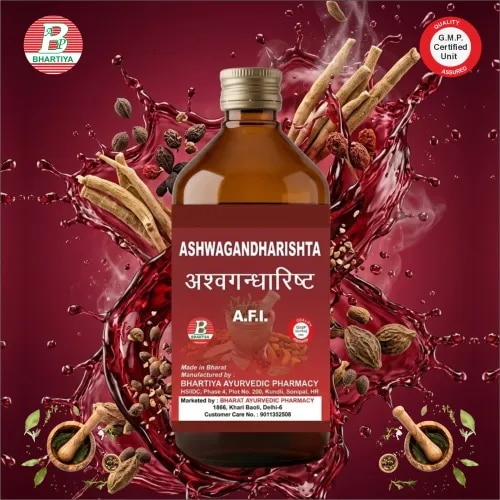
"name": "ASHWAGANDHARISHTA",
"description": " ASHWAGANDHARISHTA\n\n\nProduct Identification\nGeneric Name: Ashwagandharishta\nType: Ayurvedic Polyherbal Fermented Formulation (Arishta)\nPrimary Indication Area: Primarily used as a rejuvenative (Rasayana) and adaptogenic tonic for improving physical strength, mental well-being, nervous system health, vitality, and recovery from chronic weakness. It is commonly indicated in fatigue, stress, anxiety, debility, insomnia, convalescence, reduced immunity, sexual weakness, and age-related decline in strength and stamina.\n\nTherapeutic Indications\n•\tGeneral debility (Daurbalya) \n•\tChronic fatigue and physical exhaustion \n•\tStress and anxiety (Chittodvega) \n•\tNervous exhaustion \n•\tInsomnia and disturbed sleep \n•\tMuscle weakness and reduced stamina \n•\tAge-related decline in vitality \n•\tConvalescence following prolonged illness \n•\tReduced immunity \n•\tSexual weakness and reproductive debility (supportive therapy) \n•\tMild cognitive impairment associated with stress \n•\tLoss of appetite associated with chronic weakness \n\nKey Benefits\n•\tSupports healthy nervous system function and stress adaptation \n•\tPromotes physical strength, stamina, and endurance \n•\tHelps reduce fatigue and improves energy levels \n•\tSupports restful sleep and relaxation \n•\tEnhances mental clarity, memory, and concentration \n•\tSupports healthy immune function \n•\tActs as a rejuvenative (Rasayana) for overall vitality and longevity \n•\tSupports healthy reproductive function and vitality \n•\tHelps improve recovery following chronic illness and prolonged weakness \n•\tProvides antioxidant protection against oxidative stress \n\nFORMULA\nEach part contains:\n•\tAshwagandha (Withania somnifera) Root – 2.400 kg \n•\tMusali (Chlorophytum borivilianum) – 960 g \n•\tManjistha (Rubia cordifolia) – 480 g \n•\tHaritaki (Terminalia chebula) – 480 g \n•\tHaridra (Curcuma longa) – 480 g \n•\tDaruharidra (Berberis aristata) – 480 g \n•\tRasna (Pluchea lanceolata) – 480 g \n•\tVidari (Pueraria tuberosa) – 480 g \n•\tArjuna (Terminalia arjuna) – 480 g \n•\tMusta (Cyperus rotundus) – 480 g \n•\tChitraka (Plumbago zeylanica) – 384 g \n•\tTrivrit (Operculina turpethum) – 480 g \n•\tSveta Sariva (Hemidesmus indicus)-384 g\n•\tKrsna Sariva (Cyrptolepis buchanani)-384 g \n•\tShweta Chandana (Santalum album) – 384 g \n•\tRakta Chandana (Pterocarpus santalinus) – 384 g \n•\tVacha (Acorus calamus) – 384 g \n•\tWater – 98.304 L, reduced to 12.288 L \nPrakshepa Dravyas\n•\tMadhu (Honey) – 14.400 K g \n•\tDhataki Pushpa (Woodfordia fruticosa) – 768 g \n•\tShunthi (Zingiber officinale) – 96 g \n•\tMaricha (Piper nigrum) – 96 g\n•\tPippali (Piper longum) – 96 g\n•\tTvak (Cinnamomum verum) – 96 g\n•\tEla (Elettaria cardamomum) – 96 g\n•\tTejapatra (Cinnamomum tamala) – 96 g\n•\tPriyangu (Callicarpa macrophylla) – 96 g\n•\tNagakesara (Mesua ferrea) – 96 g\n\nIngredients\n1. Ashwagandha\nBotanical Name: Withania somnifera\n•\tRasa: Tikta, Kashaya, Madhura \n•\tGuna: Laghu, Snigdha \n•\tVirya: Ushna \n•\tVipaka: Madhura \n•\tPrabhava: Balya, Rasayana \nMechanism of Action\n•\tSupports adaptation to physical and mental stress. \n•\tEnhances muscle strength and endurance. \n•\tSupports healthy nervous system function. \n•\tPromotes restful sleep and relaxation. \n•\tProvides antioxidant and immunomodulatory activity. \n\n2. Musali\nBotanical Name: Chlorophytum borivilianum\n•\tRasa: Madhura \n•\tGuna: Guru, Snigdha \n•\tVirya: Sheeta \n•\tVipaka: Madhura \n•\tPrabhava: Vrishya, Balya \nMechanism of Action\n•\tImproves physical strength and stamina. \n•\tSupports reproductive health. \n•\tNourishes body tissues (Dhatus). \n•\tHelps reduce fatigue and debility. \n•\tActs as a rejuvenative tonic. \n\n3. Manjistha\nBotanical Name: Rubia cordifolia\n•\tRasa: Tikta, Kashaya, Madhura \n•\tGuna: Guru, Ruksha \n•\tVirya: Ushna \n•\tVipaka: Katu \n•\tPrabhava: Raktashodhaka \nMechanism of Action\n•\tSupports healthy blood purification. \n•\tPromotes healthy circulation. \n•\tProvides antioxidant protection. \n•\tHelps maintain normal inflammatory responses. \n•\tSupports skin and tissue health. \n\n4. Haritaki\nBotanical Name: Terminalia chebula\n•\tRasa: Pancharasa (except Lavana), predominantly Kashaya \n•\tGuna: Laghu, Ruksha \n•\tVirya: Ushna \n•\tVipaka: Madhura \n•\tPrabhava: Rasayana \nMechanism of Action\n•\tSupports digestion and metabolism. \n•\tPromotes bowel regularity. \n•\tEnhances nutrient absorption. \n•\tHelps eliminate metabolic waste. \n•\tActs as a rejuvenative. \n\n5. Haridra\nBotanical Name: Curcuma longa\n•\tRasa: Tikta, Katu \n•\tGuna: Laghu, Ruksha \n•\tVirya: Ushna \n•\tVipaka: Katu \n•\tPrabhava: Vishaghna \nMechanism of Action\n•\tSupports healthy inflammatory balance. \n•\tProvides antioxidant activity. \n•\tSupports liver function. \n•\tEnhances immune response. \n•\tProtects tissues from oxidative stress. \n\n6. Daruharidra\nBotanical Name: Berberis aristata\n•\tRasa: Tikta, Kashaya \n•\tGuna: Laghu, Ruksha \n•\tVirya: Ushna \n•\tVipaka: Katu \n•\tPrabhava: Krimighna \nMechanism of Action\n•\tSupports liver and metabolic health. \n•\tHelps maintain healthy blood glucose metabolism. \n•\tProvides antimicrobial activity. \n•\tSupports immune function. \n•\tPromotes healthy inflammatory balance. \n\n7. Rasna\nBotanical Name: Pluchea lanceolata\n•\tRasa: Tikta, Katu \n•\tGuna: Laghu, Snigdha \n•\tVirya: Ushna \n•\tVipaka: Katu \n•\tPrabhava: Vatahara \nMechanism of Action\n•\tSupports joint and muscle health. \n•\tHelps reduce stiffness. \n•\tPromotes mobility. \n•\tSupports recovery from muscular fatigue. \n•\tHelps maintain healthy inflammatory response. \n\n8. Vidari\nBotanical Name: Pueraria tuberosa\n•\tRasa: Madhura \n•\tGuna: Guru, Snigdha \n•\tVirya: Sheeta \n•\tVipaka: Madhura \n•\tPrabhava: Balya, Rasayana \nMechanism of Action\n•\tNourishes body tissues. \n•\tImproves stamina and vitality. \n•\tSupports reproductive health. \n•\tHelps recovery from chronic weakness. \n•\tPromotes overall rejuvenation. \n\n9. Arjuna\nBotanical Name: Terminalia arjuna\n•\tRasa: Kashaya \n•\tGuna: Laghu, Ruksha \n•\tVirya: Sheeta \n•\tVipaka: Katu \n•\tPrabhava: Hridya \nMechanism of Action\n•\tSupports healthy cardiac muscle function. \n•\tPromotes efficient circulation. \n•\tMaintains vascular integrity. \n•\tProvides antioxidant protection. \n•\tSupports cardiovascular wellness. \n\n10. Musta\nBotanical Name: Cyperus rotundus\n•\tRasa: Tikta, Katu, Kashaya \n•\tGuna: Laghu, Ruksha \n•\tVirya: Sheeta \n•\tVipaka: Katu \n•\tPrabhava: Deepana, Pachana \nMechanism of Action\n•\tSupports digestion and appetite. \n•\tPromotes healthy metabolism. \n•\tHelps relieve digestive discomfort. \n•\tMaintains gastrointestinal balance. \n•\tSupports nutrient assimilation. \n\n11. Chitraka\nBotanical Name: Plumbago zeylanica\n•\tRasa: Katu \n•\tGuna: Laghu, Tikshna, Ruksha \n•\tVirya: Ushna \n•\tVipaka: Katu \n•\tPrabhava: Deepana, Pachana \nMechanism of Action\n•\tStimulates digestive fire (Agni). \n•\tImproves digestion and nutrient absorption. \n•\tReduces Ama (metabolic toxins). \n•\tSupports healthy metabolism. \n•\tEnhances bioavailability of herbal constituents. \n\n12. Trivrit\nBotanical Name: Operculina turpethum\n•\tRasa: Tikta, Katu \n•\tGuna: Laghu, Snigdha, Tikshna \n•\tVirya: Ushna \n•\tVipaka: Katu \n•\tPrabhava: Rechana \nMechanism of Action\n•\tSupports natural detoxification. \n•\tPromotes bowel regularity. \n•\tHelps eliminate metabolic waste. \n•\tSupports digestive health. \n•\tMaintains healthy metabolism. \n\n13. Sveta Sariva\nBotanical Name: Hemidesmus indicus\n•\tRasa: Madhura, Tikta \n•\tGuna: Guru, Snigdha \n•\tVirya: Sheeta \n•\tVipaka: Madhura \n•\tPrabhava: Raktaprasadana \nMechanism of Action\n•\tSupports blood purification. \n•\tProvides cooling and rejuvenating effects. \n•\tHelps maintain healthy skin. \n•\tSupports immune function. \n•\tPromotes overall vitality. \n\n14. Krishna Sariva\nBotanical Name: Cryptolepis buchanani\n•\tRasa: Tikta, Kashaya \n•\tGuna: Guru, Snigdha \n•\tVirya: Sheeta \n•\tVipaka: Madhura \n•\tPrabhava: Balya \nMechanism of Action\n•\tSupports healthy joints and muscles. \n•\tHelps maintain normal inflammatory responses. \n•\tPromotes tissue nourishment. \n•\tSupports musculoskeletal health. \n•\tProvides antioxidant protection. \n\n15. Shweta Chandana\nBotanical Name: Santalum album\n•\tRasa: Tikta, Madhura \n•\tGuna: Laghu, Ruksha \n•\tVirya: Sheeta \n•\tVipaka: Katu \n•\tPrabhava: Pittashamaka \nMechanism of Action\n•\tProvides cooling effects. \n•\tSupports urinary health. \n•\tPromotes mental calmness. \n•\tHelps balance Pitta. \n•\tProvides antioxidant activity. \n\n16. Rakta Chandana\nBotanical Name: Pterocarpus santalinus\n•\tRasa: Tikta, Kashaya \n•\tGuna: Laghu, Ruksha \n•\tVirya: Sheeta \n•\tVipaka: Katu \n•\tPrabhava: Raktaprasadana \nMechanism of Action\n•\tSupports healthy circulation. \n•\tProvides antioxidant protection. \n•\tHelps maintain skin health. \n•\tSupports tissue healing. \n•\tHelps maintain normal inflammatory balance. \n\n17. Vacha\nBotanical Name: Acorus calamus\n•\tRasa: Katu, Tikta \n•\tGuna: Laghu, Tikshna \n•\tVirya: Ushna \n•\tVipaka: Katu \n•\tPrabhava: Medhya \nMechanism of Action\n•\tSupports cognitive function. \n•\tEnhances memory and concentration. \n•\tSupports nervous system health. \n•\tHelps reduce mental fatigue. \n•\tPromotes mental clarity. \n Prakshepa Dravyas\n1. Madhu (Honey)\nSource: Honey \n•\tRasa: Madhura, Kashaya Anurasa \n•\tGuna: Laghu, Ruksha \n•\tVirya: Sheeta \n•\tVipaka: Madhura \n•\tPrabhava: Yogavahi \nMechanism of Action\n•\tActs as a Yogavahi, enhancing the delivery and absorption of herbal constituents. \n•\tSupports tissue nourishment and rejuvenation. \n•\tProvides antioxidant and antimicrobial properties. \n•\tImproves the palatability of the formulation. \n•\tHelps preserve the fermented preparation. \n\n2. Dhataki Pushpa\nBotanical Name: Woodfordia fruticosa\n•\tRasa: Kashaya \n•\tGuna: Laghu, Ruksha \n•\tVirya: Sheeta \n•\tVipaka: Katu \n•\tPrabhava: Sandhaniya, Yogavahi \nMechanism of Action\n•\tActs as the natural fermenting agent in Arishta preparation. \n•\tFacilitates the formation of self-generated alcohol for efficient extraction of phytoconstituents. \n•\tImproves bioavailability of herbal constituents. \n•\tSupports preservation and stability of the formulation. \n•\tEnhances overall therapeutic efficacy through improved absorption. \n\n3. Shunthi\nBotanical Name: Zingiber officinale (Dry Rhizome)\n•\tRasa: Katu \n•\tGuna: Laghu, Snigdha \n•\tVirya: Ushna \n•\tVipaka: Madhura \n•\tPrabhava: Deepana, Pachana \nMechanism of Action\n•\tStimulates digestive fire (Agni). \n•\tImproves digestion and nutrient absorption. \n•\tHelps reduce Ama (metabolic toxins). \n•\tSupports healthy circulation and metabolism. \n•\tEnhances bioavailability of herbal constituents. \n\n4. Maricha\nBotanical Name: Piper nigrum\n•\tRasa: Katu \n•\tGuna: Laghu, Tikshna \n•\tVirya: Ushna \n•\tVipaka: Katu \n•\tPrabhava: Deepana, Lekhana \nMechanism of Action\n•\tStimulates digestion and metabolism. \n•\tEnhances intestinal absorption of phytoconstituents. \n•\tSupports respiratory health. \n•\tPromotes healthy circulation. \n•\tProvides antioxidant activity. \n\n5. Pippali\nBotanical Name: Piper longum\n•\tRasa: Katu \n•\tGuna: Laghu, Snigdha, Tikshna \n•\tVirya: Anushna (Mildly Ushna) \n•\tVipaka: Madhura \n•\tPrabhava: Rasayana \nMechanism of Action\n•\tSupports respiratory and digestive health. \n•\tEnhances absorption and bioavailability of herbal compounds. \n•\tPromotes rejuvenation and vitality. \n•\tSupports immune function. \n•\tHelps improve endurance and recovery. \n\n6. Tvak\nBotanical Name: Cinnamomum verum (Syn. Cinnamomum zeylanicum)\n•\tRasa: Katu, Tikta, Madhura \n•\tGuna: Laghu, Ruksha, Tikshna \n•\tVirya: Ushna \n•\tVipaka: Katu \n•\tPrabhava: Hridya \nMechanism of Action\n•\tSupports healthy digestion and metabolism. \n•\tPromotes healthy blood circulation. \n•\tProvides antioxidant activity. \n•\tHelps maintain healthy blood glucose metabolism. \n•\tImproves aroma and taste of the formulation. \n\n7. Ela\nBotanical Name: Elettaria cardamomum\n•\tRasa: Katu, Madhura \n•\tGuna: Laghu, Ruksha \n•\tVirya: Sheeta \n•\tVipaka: Madhura \n•\tPrabhava: Hridya \nMechanism of Action\n•\tSupports healthy digestion. \n•\tHelps reduce bloating and indigestion. \n•\tSupports respiratory health. \n•\tProvides antioxidant activity. \n•\tImproves aroma and palatability. \n\n8. Tejapatra\nBotanical Name: Cinnamomum tamala\n•\tRasa: Katu, Tikta, Kashaya \n•\tGuna: Laghu, Ruksha \n•\tVirya: Ushna \n•\tVipaka: Katu \n•\tPrabhava: Deepana \nMechanism of Action\n•\tStimulates appetite and digestion. \n•\tSupports healthy metabolism. \n•\tPromotes circulation. \n•\tProvides antioxidant protection. \n•\tEnhances the aromatic quality of the formulation. \n\n9. Priyangu\nBotanical Name: Callicarpa macrophylla\n•\tRasa: Kashaya, Madhura \n•\tGuna: Laghu, Ruksha \n•\tVirya: Sheeta \n•\tVipaka: Katu \n•\tPrabhava: Pittashamaka \nMechanism of Action\n•\tSupports healthy skin and blood. \n•\tHelps maintain normal inflammatory responses. \n•\tProvides antioxidant activity. \n•\tPromotes tissue healing. \n•\tContributes to the rejuvenative effects of the formulation. \n\n10. Nagakesara\nBotanical Name: Mesua ferrea\n•\tRasa: Kashaya, Tikta \n•\tGuna: Laghu, Ruksha \n•\tVirya: Sheeta \n•\tVipaka: Katu \n•\tPrabhava: Grahi, Raktastambhaka \nMechanism of Action\n•\tSupports healthy circulation and vascular integrity. \n•\tHelps maintain normal inflammatory responses. \n•\tProvides antioxidant protection. \n•\tSupports digestive health. \n•\tContributes to tissue repair and rejuvenation.\n Dosage\n•\tAdults: 15–30 ml \n•\tTwice daily after meals \n•\tDilute with an equal quantity of water (1:1 dilution is commonly recommended) \nCommon Usage Guidance\n•\tTake after meals to improve digestion and absorption. \n•\tShake well before use. \n•\tCan be used regularly as a Rasayana (rejuvenative) and adaptogenic tonic under the supervision of a qualified Ayurvedic physician. \n•\tThe duration of therapy generally ranges from 4–12 weeks, depending on the individual's condition and the physician's advice. \nImportant Notes\n•\tNot recommended during pregnancy or lactation unless advised by a qualified healthcare professional. \n•\tUse cautiously in individuals taking sedatives, antidiabetic medications, antihypertensive drugs, thyroid medications, or immunosuppressants, as Ashwagandha may influence their effects. \n•\tPatients with chronic medical conditions should use this formulation under the supervision of a qualified Ayurvedic physician or healthcare professional. \n•\tThis is a naturally fermented preparation and contains a small amount of self-generated alcohol, which enhances the extraction and absorption of herbal constituents. \n•\tDo not exceed the recommended dosage. \n•\tStore in a cool, dry place away from direct sunlight and keep the container tightly closed after use.\n\n\nashwagandharishta ke fayde\nashwagandharishta syrup benefits in hindi\nashwagandharishta syrup\nashwagandharishta kis kaam aati hai\nashwagandharishta benefits in hindi\nashwagandharishta uses in hindi\nashwagandharishta ayurvedic medicine uses\nashwagandharishta ayurveda\nashwagandharishta ayurvedic medicine uses in hindi\nashwagandharishta ayurvedic syrup uses in hindi\nashwagandharishta composition\nashwagandharishta expiry date\nashwagandharishta empty stomach\nashwagandharishta uses easy ayurveda\nashwagandharishta syrup expiry date\nashwagandharishta for women\nashwagandharishta fayde\nashwagandharishta flipkart\nashwagandharishta for weight gain\nashwagandharishta for heart\nashwagandharishta fayde in hindi\nashwagandharishta ke gun\nashwagandharishta hindi use\nashwagandharishta hindi mein\nashwagandharishta how to take\nashwagandharishta hai\nashwagandharishta how long to take\nashwagandharishta how to use\nashwagandharishta hamdard\nashwagandharishta in hindi\nashwagandharishta ingredients\nashwagandharishta ingredients in hindi\nashwagandharishta image\nashwagandharishta india\nashwagandharishta kaise piya jata hai\nashwagandharishta ke fayde hindi mein\nashwagandharishta kis kaam mein aata hai\nashwagandharishta mein kya-kya hota hai\nashwagandharishta mein kya-kya hai\nashwagandharishta meaning in hindi\nashwagandharishta me kya hota hai\nashwagandharishta near me\nashwagandharishta online\nashwagandharishta online buy\nashwagandharishta online price\nashwagandharishta peene ke fayde\nashwagandharishta price\nashwagandharishta peene se kya hota hai\nashwagandharishta powder\nashwagandharishta peene se kya-kya fayda hai\nashwagandharishta rate\nashwagandharishta ras\nashwagandharishta syrup kis kaam aata hai\nashwagandharishta special\nashwagandharishta syrup uses in hindi\nashwagandharishta syrup benefits\nashwagandharishta syrup uses\nashwagandharishta special benefits\nashwagandharishta syrup price",
"price": 192.0,
"discountamount": 96.0,
"currencycode": "INR",
"priority": 1000000,
"isfreeshipmentavailable": false,
"shipmentduration": 1,
"_keywords": null,
"isarchived": false,
"isavailable": true,
"applicationid": null,
"productindex": 158,
"imageuri": "https://productimages.withfloats.com/actual/6a58bbe4096fa165252ea2c3.jpg",
"tileimageuri": "https://productimages.withfloats.com/tile/6a58bbe4096fa165252ea2c3.jpg",
"images": null,
"totalqueries": 0,
"gpid": null,
"groupproductid": null,
"createdon": "2026-07-16T11:09:20.636Z",
"updatedon": "2026-07-16T11:09:20.636Z",
"buyonlinelink": null,
"producturl": "http://WWW.BHARTIYAAYURVEDICPHARMACY.COM/products/ashwagandharishta/158",
"availableunits": -1.0,
"iscodavailable": true,
"isprepaidonlineavailable": true,
"maxcodorders": -1,
"maxprepaidonlineorders": -1,
"uniquepaymenturl": null,
"brandname": "Bakula Fort",
"category": "ASHWAGANDHARISHTA 450 Ml X 40",
"tags": [],
"variants": false,
"keyspecification": null,
"otherspecifications": null,
"pickupaddressreferenceid": null,
"paymenttype": "AssuredPurchase",
"producttype": "products",
"hsncode": null,
"gstslab": 0.0,
"isnotforsale": false
},
{
"_id": "69fb2001bc5d678f88b2f5b3",
"fptag": "BHARTIYEAYURVEDICPHARMACY",
"merchantname": null,
"customwidgets": null,
"externalsourceid": null,
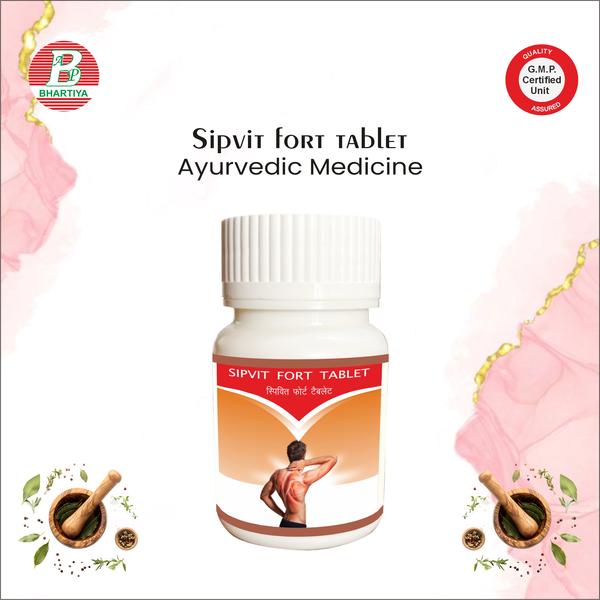
"name": "Sipvit Fort Tablet",
"description": " SIPVIT FORT TABLET \n\nProduct Identification\n•\tGeneric Name: Sipvit Fort Tablet\n•\tType: Ayurvedic Patent Medicine\n•\tPrimary Indication Area: Supports male sexual health by improving erectile function, libido, stamina, and overall reproductive performance.\nTherapeutic Indications\n•\tSupports improvement of male sexual function by enhancing erectile performance, libido, stamina, and overall reproductive wellness\nKey benefits include:\n•\tSupports male sexual health by improving libido, erection quality, stamina, and overall sexual performance.\nPrimary Benefit:\n•\tSupports male sexual health by enhancing libido, erectile function, stamina, and overall reproductive vitality.\nAdditional Benefits:\n•\tImprove sperm production and quality — supporting fertility and reproductive outcomes. \n•\tEnhance libido and sexual desire — increasing interest in sexual activity. \n•\tSupport hormonal balance (e.g., testosterone) — important for energy, stamina, and erectile function. \n•\tBoost overall vitality and endurance during sexual activity\n\nIngredients:\n SAFED MUSLI (Chlorophytum borivilianum)\nBotanical Name: Chlorophytum borivilianum\nPart Used: Root (commonly used in Ayurvedic Vajikaran Rasayana)\nTraditional Use: Rejuvenator, aphrodisiac, strength & stamina tonic\n Mechanism of Action in Male Sexual Health (Biochemistry / Pharmacology)\n1.\tSpermatogenic Support & Sperm Quality\n• Root extracts have been shown to increase sperm count and motility in experimental models, indicating support for spermatogenesis and semen quality. \n2.\tAntioxidant Protection of Reproductive Cells\n• Phenolic compounds and antioxidants help reduce oxidative stress in sperm cells, protecting membranes and DNA, which promotes healthier sperm characteristics. \n\nSHATAVARI (Asparagus racemosus) \nBotanical Name: Asparagus racemosus\nFamily: Asparagaceae\nPart Used: Root\nTraditional Use: Rejuvenative tonic (Rasāyana), adaptogen, aphrodisiac, reproductive support\n Phytoconstituents Relevant to Sexual Health\nShatavari root contains:\n1.\tSteroidal saponins (Shatavarins I–IV) – major bioactives linked with hormonal and antioxidant actions. \n2.\tFlavonoids & polyphenols – antioxidant effects. \n3.\tAlkaloids & mucilage – tissue nourishment and soothing. \n\n Mechanism of Action in Male Sexual Health (Biochemistry / Pharmacology)\n1.\tAntioxidant Support & Sperm Protection\n• Shatavari’s saponins and flavonoids neutralize free radicals, protecting sperm from oxidative damage, which is crucial for healthy sperm count, motility, and morphology. \n2.\tSpermatogenic Enhancement\n• Experimental evidence suggests Shatavari may improve sperm count, motility, and seminal quality by reducing oxidative stress and nourishing reproductive tissues. \n\nMULETHI (Licorice) \nBotanical Name: Glycyrrhiza glabra\nPart Used: Root (Yashtimadhu)\nTraditional Use: Ayurvedic rasāyana for anti inflammatory, antioxidant, digestive support; also used in reproductive tonics in some formulations. \n Phytoconstituents Relevant to Male Sexual Health\n•\tGlycyrrhizin & Glycyrrhizic acid – saponin glycosides\n•\tFlavonoids (e.g., glabridin) and phenolic compounds – antioxidant effects \n Mechanism of Action in Male Sexual Health (Biochemistry / Pharmacology)\n1.\tAntioxidant Protection of Sperm & Testicular Tissue\n• Flavonoids like glabridin and other phenolics exert antioxidant effects, scavenging reactive oxygen species (ROS) that damage sperm DNA, cell membranes, and reduce sperm motility and quality. \n2.\tAnti Inflammatory Action\n• Licorice compounds can inhibit pro inflammatory pathways (e.g., NF κB), reducing testicular or reproductive inflammation, which may otherwise impair spermatogenesis and tissue health. \n\nGOKHARU / GOKSHURA (Tribulus terrestris) \nBotanical Name: Tribulus terrestris\nPart Used: Fruit / Herb\nTraditional Use: Ayurvedic aphrodisiac (Vrishya), reproductive tonic, urinary support\n Phytoconstituents Relevant to Male Sexual Health\n•\tSaponins (e.g., protodioscin) — thought to influence hormonal pathways. \n•\tFlavonoids and phenolic compounds — antioxidant effects.\n Mechanism of Action in Male Sexual Health (Biochemistry / Pharmacology)\n1.\tNitric Oxide Mediated Erectile Support\n• Gokshura extracts can promote relaxation of penile smooth muscle via NO related pathways, aiding blood flow and erection quality.\n2.\tAphrodisiac & Libido Enhancement\n• Human and experimental evidence shows increased sexual desire and function, likely via nervous endocrine modulation and local vascular effects. \n\n AMLA (Indian Gooseberry) \nBotanical Name: Phyllanthus emblica (syn. Emblica officinalis)\nPart Used: Fruit\nTraditional Use: Ayurvedic Rasayana (rejuvenator), general tonic for vitality and strength\n\n Phytoconstituents Relevant to Male Sexual Health\nAmla is rich in nutrients and bioactive compounds including:\n1.\tVitamin C (Ascorbic acid) – very high antioxidant content. \n2.\tPolyphenols & Tannins (emblicanin A/B, gallic acid, ellagic acid) – potent antioxidants.\n3.\tFlavonoids (quercetin, kaempferol) – antioxidant and anti inflammatory.\n4.\t Minerals including Zinc and amino acids – important for reproductive biochemistry. \n\n Mechanism of Action in Male Sexual Health (Biochemistry / Pharmacology)\n1.\tAntioxidant Protection of Reproductive Tissues\n• Amla’s vitamin C and polyphenols neutralize free radicals (ROS) and reduce oxidative stress, which is crucial for protecting sperm cells and testicular tissue from biochemical damage. \n2.\tSupport for Testosterone Production\n• By reducing oxidative damage in Leydig cells (testosterone producing cells), amla may help maintain testosterone levels, which are fundamental for libido and sexual function. \n\nHALDI (Turmeric) \nBotanical Name: Curcuma longa\nPart Used: Rhizome (root\n Mechanism of Action in Male Sexual Health (Biochemistry / Pharmacology)\n1.\tAntioxidant Protection of Reproductive Tissues\n• Curcumin, the main active compound in turmeric, is a powerful antioxidant that scavenges free radicals (ROS) and reduces oxidative stress in testicular and sperm cells — protecting sperm DNA and membranes from damage.\n2.\tSupports Sperm Quality & Protection\n• Curcumin helps improve sperm motility and density in animal studies and protects sperm structure by reducing lipid peroxidation and preserving membrane integrity. \n3.\tAnti Inflammatory & Cell Protective Actions\n• Curcumin’s anti inflammatory effect reduces inflammation in reproductive tissues and mitigates testicular damage from stress, toxins, or adverse conditions, helping maintain reproductive function. \n\nKAUNCH / KAUNCH BEEJ (Mucuna pruriens) \nBotanical Name: Mucuna pruriens\nPart Used: Seeds (Beej)\n Mechanism of Action in Male Sexual Health (Biochemistry / Pharmacology)\n1.\tDopamine Precursor (L DOPA) Boost\n• Kaunch seeds contain L DOPA, a biochemical precursor to dopamine — increasing dopamine levels in the brain helps enhance libido, arousal, and sexual desire. Higher dopamine can also support testosterone synthesis through the hypothalamic pituitary gonadal axis\n2.\tTestosterone & Hormonal Support\n• By modulating neurotransmitters and supporting luteinizing hormone (LH) release, Kaunch may help support natural testosterone production — the key hormone for male libido, energy, and reproductive function. \n\nVIDHARA (Elephant Creeper) \nBotanical Name: Argyreia speciosa (syn. Argyreia nervosa)\nFamily: Convolvulaceae\nPart Used: Roots, seeds, leaves (roots most commonly) \nTraditional Use: Ayurvedic Vajikarana (aphrodisiac) and rejuvenative tonic, used to support male sexual health, sperm quality, and vitality. \n\n Mechanism of Action in Male Sexual Health (Biochemistry / Pharmacology)\n1.\tAphrodisiac & Reproductive Stimulation\n• Vidhara is traditionally considered aphrodisiac (Vajikarana), and its root extracts are used to enhance libido, sexual vigor, and reproductive function in Ayurveda. \n2.\tSupport for Sperm Count & Quality\n• Ayurvedic uses include improving sperm count and supporting semen quality, likely through antioxidant and tissue nourishing effects on reproductive organs. \n\nKHARETI (Khareti / Atibala / Bala) \nBotanical Name: Sida cordifolia\nSanskrit Name: Balā (Bala)\nCommon English Name: Country Mallow\nParts Used: Roots, leaves, seeds, stems (traditional use) \n Mechanism of Action in Male Sexual Health (Biochemistry / Pharmacology)\n1.\tVajikarana (Aphrodisiac) & Reproductive Support\n• Khareti (Bala) is traditionally classified as a Vajikarana herb — meaning it supports libido, sexual desire, and reproductive vigor in males \n2.\tTestosterone & Hormone Related Support\n• By helping balance male hormones and nerve tone, it may enhance sexual drive and reproductive function. \n\nHARAD (Haritaki / Terminalia chebula) \nBotanical Name: Terminalia chebula\nPart Used: Fruit\n Mechanism of Action in Male Sexual Health (Biochemistry / Pharmacology)\n1.\tAstringent & Antioxidant Phytochemicals\n• Harad contains tannins (chebulinic acid, chebulagic acid), gallic acid, ellagic acid, and flavonoids — all strong antioxidants that protect cells from oxidative stress. These biochemical antioxidants help maintain general reproductive tissue health by neutralizing free radicals. \n2.\tTraditional Rasayana & Aphrodisiac Action (Short Term Use)\n• In classical Ayurvedic texts, Harad is described as Rasayana (rejuvenative) and in small doses can increase sexual energy and address premature ejaculation or nocturnal emissions due to its astringent and balancing effect on tissues. \n\nAKARKARA (Anacyclus pyrethrum) \nBotanical Name: Anacyclus pyrethrum\nPart Used: Root\nTraditional Use: Ayurvedic Vajikarana (aphrodisiac), reproductive tonic\n\n Mechanism of Action in Male Sexual Health (Biochemistry / Pharmacology)\n1.\tLibido & Aphrodisiac Stimulation\n• Contains Alkylamides and Anacyclin, which stimulate nerve centres and sexual desire, traditionally increasing libido and willingness for sexual activity. \n2.\tSpermatogenic & Testosterone Support\n• In experimental studies, extracts increased testosterone and androgen levels, and enhanced sperm count, motility, and viability by influencing hormone pathways and testicular function. \n\nLAJWANTI (Sensitive Plant / Mimosa pudica) \nBotanical Name: Mimosa pudica\nFamily: Fabaceae\nParts Used: Whole plant / seeds (traditionally)\n Mechanism of Action in Male Sexual Health (Biochemistry / Pharmacology)\n1.\tStrengthening & Nourishing Action\n• Traditionally, Lajwanti seed powder is regarded as balya (strength promoting) — believed to nourish reproductive tissues, support stamina, and help improve male reproductive vitality. \n2.\tAntioxidant & Anti Inflammatory Effects\n• Contains alkaloids, flavonoids, tannins, saponins, glycosides, phenolic acids, and sterols, which provide antioxidant and anti inflammatory actions — these helps protect cells from oxidative stress and may support general tissue health relevant to reproductive function. \n\nTALMAKHANA (Kokilaksha) \nBotanical Name: Hygrophila auriculata (syn. Hygrophila spinosa, Asteracantha longifolia)\nFamily: Acanthaceae\nPart Used: Seeds (primarily) / Roots & leaves also used traditionally \n\n Mechanism of Action in Male Sexual Health (Biochemistry / Pharmacology)\n1.\tAphrodisiac & Reproductive Support\n• Talmakhana is traditionally considered a Vrishya (aphrodisiac) herb in Ayurveda, used to enhance libido, sexual drive, and stamina in men. \n2.\tSupport for Sperm Quality & Hormonal Balance\n• In traditional practice, it is believed to improve sperm quality, semen strength, and reproductive function, possibly by supporting hormonal balance. \n\n VIDARIKAND (Indian Kudzu) \nBotanical Name: Pueraria tuberosa\nPart Used: Tuberous root\nTraditional Use: Rasayana (rejuvenator), Balya (strength promoting), Vrishya (aphrodisiac) herb in Ayurveda, used to support reproductive health and vitality. \n Mechanism of Action in Male Sexual Health (Biochemistry / Pharmacology)\n1.\tSpermatogenic & Reproductive Tissue Support\n• Vidarikand bioactive compounds nourish Shukra dhatu (semen) and reproductive tissues, traditionally increasing sperm count, motility, and semen quality. \n2.\tAndrogenic & Hormonal Modulation\n• Phytoestrogens and Isoflavonoids like puerarin, daidzein, genistein, and biochanin A may influence the hypothalamic–pituitary–gonadal axis, supporting release of FSH, LH, and testosterone, which are essential for libido and sexual performance.\n\nKALI MUSLI (Black Musli) \nBotanical Name: Curculigo orchioides\nPart Used: Rhizome / Root\n Mechanism of Action in Male Sexual Health (Biochemistry / Pharmacology)\n1.\tAphrodisiac (Vrishya) & Libido Support\n• Kali Musli is traditionally used in Ayurveda as a natural aphrodisiac that helps increase sexual desire and drive. \n2.\tSpermatogenic & Reproductive Function\n• It is associated with spermatogenic activity, helping improve sperm count, motility, and seminal quality, supporting male fertility. \n\n SEMAL MUSALI (Semal Root / Bombax ceiba) \nBotanical Equivalent: Bombax ceiba / Bombax mulabaricum\nParts Used: Root (musli), sometimes flower or bark used in formulations \n Mechanism of Action & Uses (Traditional / Ayurvedic Context)\n1.\tBalya (Strength Promoting) & Rejuvenative Action\n• Semal musali (root) is traditionally used as a balya (body strengthening) and nutritive tonic to support overall energy and vitality, similar to other Musali herbs. \n2.\tVrishya (Aphrodisiac / Reproductive Support)\n• In Ayurveda, Semal musali is considered to have vrishya (aphrodisiac) and balya effects that help with sexual weakness, seminal depletion, and reproductive debility — often used in shukrakshaya (semen loss) and weakness. \n\nKALI MIRCH (Black Pepper) \nBotanical Name: Piper nigrum\nPart Used: Dried fruit (peppercorn)\n Mechanism of Action in Male Sexual Health (Biochemistry / Pharmacology)\n1.\tImproves Blood Flow & Erections\n• Black pepper contains piperine, which can enhance circulation and vasodilation, supporting better blood flow — key for strong and sustained erections. \n2.\tSupports Testosterone & Hormonal Balance\n• Piperine may help boost natural testosterone levels and testicular function, which supports libido, sexual desire, and reproductive health. \n\nSALAM PANJA (Marsh Orchid / Dactylorhiza hatagirea) \nBotanical Name: Dactylorhiza hatagirea\nCommon Names: Salam Panja, Salab Panja, Hatta Haddi, Panchaule, Marsh Orchid\nPart Used: Tuberous roots (resembling hand/fingers) \n Mechanism of Action in Male Sexual Health (Biochemistry / Pharmacology)\n1.\tAphrodisiac & Libido Enhancing Action\n• Traditionally classified as a strong Vrishya (aphrodisiac) in Ayurvedic and Unani systems, the root extract is believed to enhance sexual desire and vigor. \n2.\tSupports Sperm Quality & Reproductive Function\n• Used to improve sperm count, motility, and semen quality, making it a traditional shukra dhatu (semen) nourishing herb. \n\nCHOTI ELAICHI (Cardamom) \nBotanical Name: Elettaria cardamomum\nPart Used: Seeds / pods\n Biochemistry / Mechanism of Action in Male Sexual Health\n1.\tImproved Blood Circulation\n• Cardamom contains essential oils that can improve blood circulation, which is important for delivering nutrients and oxygen to reproductive organs. Better circulation supports overall vitality and reproductive tissue health. \n2.\tAntioxidant Protection\n• Rich in antioxidants (e.g., cineole, terpenes, flavonoids), cardamom helps reduce oxidative stress, which can protect sperm cells and reproductive tissues from free radical damage.\n\nCHINI (Sugar – Dietary Sucrose) \nCommon Source: Table sugar, sweets, desserts, sugary drinks\nBotanical Equivalent: Derived from Saccharum officinarum (sugarcane) sugar\n Biochemistry / Mechanism of Action in Male Sexual Health\n1.\tNegative Impact on Sperm Quality\n• Higher dietary sugar intake is associated with lower sperm concentration and poorer semen quality, likely due to metabolic and oxidative effects of excess sugar. \n2.\tMetabolic Dysregulation & Sexual Function\n• Even slight elevations in blood sugar (below diabetes thresholds) can correlate with reduced sperm motility and impaired erectile function, indicating blood glucose regulation affects sexual physiology. \n\n LOHA BHASMA (Lauha Bhasma / Iron Bhasma) \nSource: Purified and calcined iron processed through Rasashastra methods in Ayurveda. \n Therapeutic Indication \nIron supplement to treat anaemia, improve energy, strength, and support male sexual health (via aphrodisiac and stamina enhancing properties). \n\nPrimary Benefit \nImproves iron status, reduces weakness/anaemia, and supports strength and libido. \nOther Benefits \n•\tBoosts haemoglobin and energy levels\n•\tEnhances overall vitality and stamina\n•\tActs as a rejuvenative (Rasayana)\n•\tMay improve male sexual function and stamina due to Vrishya and Balya properties\n•\tSupports digestion and immunity\n\n Shudh Shilajit (Pure Shilajit) \nSource: Natural mineral resin obtained from high-altitude Himalayan rocks, purified using classical Ayurvedic methods.\n\n Therapeutic Indication (Short):\nNatural rejuvenator that enhances energy, strength, immunity, and male vitality.\nPrimary Benefit:\nBoosts physical stamina, mental clarity, and overall vitality, while supporting sexual health.\nOther Benefits:\n•\tImproves energy levels and reduces fatigue\n•\tEnhances endurance and strength\n•\tActs as a Rasayana (rejuvenative tonic)\n•\tSupports male sexual health and fertility\n•\tPromotes cognitive function and immunity\n\n Trivang Bhasma \nSource: Calcined preparation of Tin (Vanga), Lead (Naga), and Zinc (Yashada) processed through classical Rasashastra methods in Ayurveda.\n Therapeutic Indication (Short):\nNatural mineral formulation used to support digestion, metabolism, reproductive health, and overall strength.\nPrimary Benefit:\nEnhances digestive power, metabolic balance, and sexual vitality.\n\nOther Benefits:\n•\tSupports male sexual health and fertility\n•\tImproves energy, stamina, and strength\n•\tActs as a rejuvenative (Rasayana)\n•\tHelps maintain healthy digestion and nutrient absorption\n•\tSupports immunity and overall well-being\n\nDosage:\n1.\tDose per intake: 2–3 tablets\n2.\tFrequency: Twice a day (morning & evening)\n3.\tTotal daily dose: 2–6 tablets per day-(For 500 mg tablets, this equals 1–3 g/day)\n4.\tHow to take: With water, preferably after meals to reduce gastric irritation and improve absorption\n5.\tPrecautions\no\tDo not exceed the prescribed dose\no\tMonitor for side effects\nConsult an Ayurvedic practitioner for:\no\tChildren\no\tElderly\no\tChronic illnesses\n\nsipvit fort tablet uses, sipvit fort tablets\nsipvit fort tablet uses in hindi, sipvit fort tablet price\nsipvit fort tablet amazon, sipvit fort tablet benefits\nsipvit fort tablet benefits in hindi, sipvit fort tablet brand name\nsipvit fort tablet buy online, sipvit fort tablet composition\nsipvit fort tablet content, sipvit fort tablet dosage\nsipvit fort tablet dose, sipvit fort tablet details\nsipvit fort tablet english, sipvit fort tablet expiry date\nsipvit fort tablet generic name, sipvit fort tablet gst rate\nsipvit fort tablet gst, sipvit fort tablet hindi\nsipvit fort tablet how to use, sipvit fort tablet how to take\nsipvit fort tablet in hindi, sipvit fort tablet ingredients\nsipvit fort tablet image, sipvit fort tablet india\nsipvit fort tablet ke fayde in hindi, sipvit fort tablet kis kaam aati hai\nsipvit fort tablet manufacturer, sipvit fort tablet mrp\nsipvit fort tablet manufacturers in india, sipvit fort tablet online\nsipvit fort tablet online shopping, sipvit fort tablet price in india\nsipvit fort tablet q10, sipvit fort tablet quantity\nsipvit fort tablet quality, sipvit fort tablet review\nsipvit fort tablet rate, sipvit fort tablet review in hindi\nsipvit fort tablet supplier\n\n",
"price": 96.0,
"discountamount": 48.0,
"currencycode": "INR",
"priority": 1000000,
"isfreeshipmentavailable": false,
"shipmentduration": 1,
"_keywords": null,
"isarchived": false,
"isavailable": true,
"applicationid": null,
"productindex": 113,
"imageuri": "https://productimages.withfloats.com/actual/69fb20053254637915078929.jpg",
"tileimageuri": "https://productimages.withfloats.com/tile/69fb20053254637915078929.jpg",
"images": null,
"totalqueries": 0,
"gpid": null,
"groupproductid": null,
"createdon": "2026-05-06T11:03:29.874Z",
"updatedon": "2026-05-06T11:03:29.874Z",
"buyonlinelink": null,
"producturl": "http://WWW.BHARTIYAAYURVEDICPHARMACY.COM//sipvit-fort-tablet/113",
"availableunits": -1.0,
"iscodavailable": true,
"isprepaidonlineavailable": true,
"maxcodorders": -1,
"maxprepaidonlineorders": -1,
"uniquepaymenturl": null,
"brandname": "Bakula Fort",
"category": "Sipvit Fort Tablet 100 TAB X 50",
"tags": [],
"variants": false,
"keyspecification": null,
"otherspecifications": null,
"pickupaddressreferenceid": null,
"paymenttype": "AssuredPurchase",
"producttype": "products",
"hsncode": null,
"gstslab": 0.0,
"isnotforsale": false
},
{
"_id": "698c4c5cae6697176621053e",
"fptag": "BHARTIYEAYURVEDICPHARMACY",
"merchantname": null,
"customwidgets": null,
"externalsourceid": null,
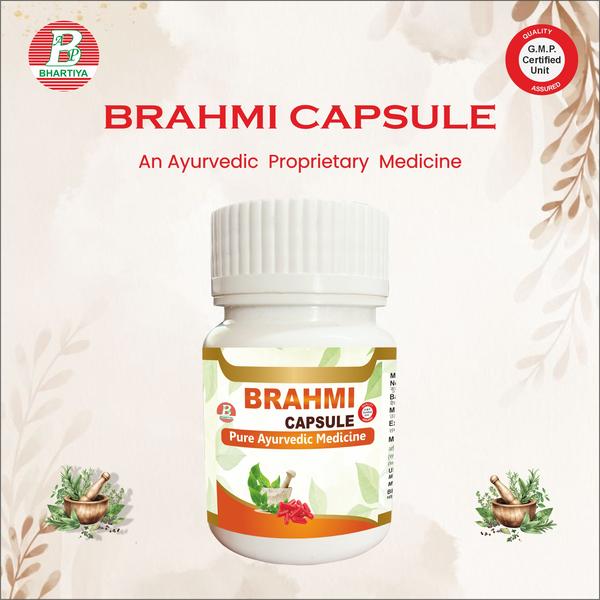
"name": "Brahmi Capsule",
"description": " Brahmi (Bacopa monnieri) \n The Ancient Rejuvenating Herb for Mind, Memory, and Nervous System\n\nBrahmi is one of the most revered herbs in Ayurveda, prized for its profound effects on cognition, memory, intellect, and mental resilience. The name Brahmi derives from Brahma, the creator, symbolizing its connection to higher mental faculties and spiritual insight.\nIn Ayurveda, Brahmi is classified as a Medhya Rasayana (intellect and memory enhancer), Shukra-Vardhaka (reproductive tissue supporter), and Rasayana (rejuvenative). It is highly valued for improving memory, concentration, calming the mind, reducing mental fatigue and anxiety, supporting the nervous system, and promoting longevity.\nThe herb has a rich historical background, documented in classical Ayurvedic texts for thousands of years, highlighting its role in enhancing mental faculties, cognition, and overall vitality.\n Historical Study and Classical References\n1. Charaka Samhita\n•\tAcharya Charaka describes Brahmi as a Medhya Rasayana that strengthens intellect, improves memory, and sharpens mental faculties.\n•\tRecommended for Manasika Vikara (mental disorders), nervous system weakness, and stress-related conditions.\n•\tClassical Dosage: 3–6 g of root/whole plant powder (Churna); decoction (Kwatha) 40–60 ml, 2–3 times daily.\n2. Sushruta Samhita\n•\tAcharya Sushruta emphasizes Brahmi in Manas-Roga Chikitsa (mental disorder treatment) and as a rejuvenative for the nervous system.\n•\tForms: root/whole plant paste, powder, decoction.\n•\tUses: Memory enhancement, calming overactive mind, improving mental clarity.\n3. Bhavaprakasha Nighantu\n•\tBrahmi listed under Medhya and Smritivardhini categories.\n•\tVariants: Wild vs. cultivated forms; leaf quality and flowering stage noted for potency.\n•\tSynonyms: Brahmaka, Medhya, Smritivardhini, Haritaki-brahmi.\n4. Raja Nighantu & Dhanvantari Nighantu\n•\tBrahmi described as Medhya and Jivaniya, improving intelligence, longevity, and mental function.\n•\tUsed in compound formulations for cognitive enhancement, stress reduction, and rejuvenation.\n5. Classical Ayurvedic Formulations\n•\tBrahmi Ghrita / Taila: Nourishes the brain, calms the mind, improves memory.\n•\tBrahmi Churna / Tablet / Capsule: For cognitive support, memory, and mental clarity.\n•\tMedhya Rasayana Compounds: Brahmi often combined with Shankhpushpi, Ashwagandha, and Vacha for brain tonics.\n Botanical Information of Brahmi\n•\tScientific Name: Bacopa monnieri (L.) Wettst.\n•\tFamily: Plantaginaceae\n•\tOrder: Lamiales\n•\tGenus: Bacopa\n•\tSpecies: monnieri\nCommon Names:\n•\tSanskrit: Brahmī, Medhya, Smritivardhini\n•\tHindi: Brahmi\n•\tEnglish: Water Hyssop, Herb of Grace\n•\tTamil: Brahmi, Neer Brahmi\n•\tTelugu: Brahmi\n•\tMalayalam: Brahmi\n•\tKannada: Brahmi\n•\tBengali: Brahmi\nSynonyms in Ayurvedic Nighantus:\n•\tBhavaprakasha Nighantu – Brahmi, Medhya, Smritivardhini\n•\tRaja Nighantu – Brahmaka, Jivaniya\n•\tDhanvantari Nighantu – Medhya, Smritivardhaka\n Morphology of Brahmi\n•\tPlant Type: Perennial, creeping, succulent herb\n•\tStem: Creeping, quadrangular, green, slightly succulent\n•\tLeaves: Opposite, small, oblong to spatulate, fleshy, light green\n•\tFlowers: Small, white to light purple, axillary cymes, bloom during warm seasons\n•\tRoots: Fibrous, white\n•\tFruits: Capsule, ovoid, containing tiny seeds\n•\tHabit: Creeping, spreading, fast-growing, regenerates easily\n Ecological Preferences\n•\tClimate: Tropical and subtropical; tolerates heat and moderate drought\n•\tSoil: Sandy, loamy, marshy, wet soils; thrives in marshes and near water bodies\n•\tSunlight: Full sun to partial shade\n•\tMoisture: Prefers moist conditions; hardy to dry periods\n•\tAltitude: Low to medium elevations\n•\tHabitat: Marshes, wetlands, riverbanks, paddy fields, gardens\n\n Distribution\n•\tIndia: Found across the country in wetlands, paddy fields, marshes\n•\tAsia: Sri Lanka, Nepal, Bangladesh, Myanmar\n•\tGlobal: Naturalized in tropical/subtropical regions worldwide due to hardy growth\n\n Classical Ayurvedic Properties\n•\tRasa (Taste): Tikta (bitter)\n•\tGuna (Qualities): Laghu (light), Snigdha (slightly oily)\n•\tVirya (Potency): Shita (cooling)\n•\tVipaka: Madhura (sweet)\n•\tDosha Effect: Kapha-Vata pacifying\n•\tKarma (Actions / Therapeutic Effects):\no\tMedhya – Enhances memory and intellect\no\tRasayana – Rejuvenative, anti-aging\no\tHridya – Supports heart function\no\tShukra-Vardhaka – Supports reproductive tissue\no\tVata-Kapha pacifying – Reduces neurological weakness\n\n Therapeutic Actions According to Acharyas\n1.\tMedhya (Nootropic): Improves memory, cognition, and focus\n2.\tRasayana (Rejuvenative): Enhances vitality, immunity, and longevity\n3.\tManah-Shamana: Reduces anxiety, stress, and mental fatigue\n4.\tHridya: Supports cardiovascular health\n5.\tShukra-Vardhaka: Improves reproductive tissue quality\n6.\tVata-Kapha Balancing: Useful in neurological weakness, tremors, fatigue\n\n Modern Phytochemistry\n•\tBacosides (A & B): Cognitive enhancement, neuroprotective\n•\tAlkaloids: Nervine tonic\n•\tFlavonoids (Apigenin, Luteolin): Antioxidant, anti-inflammatory, neuroprotective\n•\tSaponins: Brain rejuvenation, memory support\n\n Classical Dosage\n•\tPowder (Churna): 3–6 g/day\n•\tDecoction (Kwatha): 40–60 ml, 2–3 times daily\n•\tJuice (Swarasa): 10–20 ml, 1–2 times daily\n•\tTaila / Ghrita: External application or oral use as per formulation\nPrecautions: Safe in classical dosage; pregnant/lactating women under supervision; avoid overdose.\n\n Classical Ayurvedic Formulations of Brahmi\n1.\tBrahmi Ghrita / Taila: Brain nourishment, mental calmness, memory enhancement\n2.\tBrahmi Churna / Tablet / Capsule: Cognitive support, stress reduction\n3.\tBrahmi Kwatha: Nervous system support, memory enhancement\n4.\tMedhya Rasayana Compounds: With Shankhpushpi, Ashwagandha, Vacha for brain tonics\n5.\tCompound Formulations: Brahmi included in brain tonics, rejuvenative preparations, and nervous system revitalizers\n\n Brahmi Formulations by Bhartiya Ayurvedic Pharmacy\nAt Bhartiya Ayurvedic Pharmacy, we prepare a range of Brahmi (Bacopa monnieri) formulations following classical Ayurvedic methods as described in Charaka Samhita, Sushruta Samhita, Bhavaprakasha Nighantu, and other Ayurvedic Granthas. Each product is crafted to retain the therapeutic potency, purity, and efficacy of the herb, ensuring benefits for memory enhancement, cognitive support, nervous system health, stress relief, and overall mental rejuvenation.\n\n Brahmi Capsule\nDescription: Brahmi Capsule contains high-quality standardized extract of Bacopa monnieri in an easy-to-swallow form for optimal absorption.\nKey Actions: \n•\tEnhances learning ability, concentration, and memory retention.\n•\tReduces mental fatigue, brain fog, and overthinking\n•\tCalms the mind and supports balanced emotional health\n•\tSupports healthy sleep-wake cycles\n\nDosage:\n•\t1 capsule twice daily with warm water after meals\n•\tFor high stress or exam periods: 2 capsules daily\n•\tCan be taken for long-term brain rejuvenation\nPrecautions:\n•\tDo not exceed recommended dose\n•\tMay enhance sedation if used with sleeping medicines\n•\tConsult during pregnancy, lactation, or chronic neurological illness\n\n Brahmi Powder (Churna)\nDescription: Pure Brahmi powder for traditional Ayurvedic use, ideal for decoctions, smoothies, or milk-based preparations.\nKey Actions:\n•\tSupports memory, cognition, and overall nervous system health\n•\tActs as a Rasayana (rejuvenative) for the brain\n•\tReduces stress, anxiety, and mental fatigue\nDosage:\n•\t3–6 grams daily with water, milk, or honey\n•\tCan be used as decoction: 40–60 ml, 1–2 times daily\nPrecautions:\n•\tAvoid overdose\n•\tUse under supervision during pregnancy or neurological disorders\n Brahmi Amla Taila\n\nDescription: Medicated herbal oil prepared with Brahmi and Amla (Indian gooseberry) for external application or internal use as per classical Ayurvedic methods.\nKey Actions:\n•\tNourishes brain tissues and supports the nervous system\n•\tEnhances memory, mental clarity, and concentration\n•\tReduces stress and promotes calmness\n•\tSupports hair and scalp health when applied topically\nDosage:\n•\tApply externally as needed\n•\tFor internal use, take as directed by an Ayurvedic practitioner\nPrecautions:\n•\tAvoid excessive use\n•\tConsult a physician during pregnancy, lactation, or neurological conditions\n\n\nbenefits of brahmi capsule, best brahmi capsules, best brahmi supplement\nbest time to take brahmi capsule, brahmi amla capsules\nbrahmi ashwagandha capsule, brahmi capsule amazon\nbrahmi capsule awpl price, brahmi capsule ayurvedic\nbrahmi capsule benefits, brahmi capsule benefits in hindi\nbrahmi capsule dosage, brahmi capsule for kids\nbrahmi capsule ke fayde, brahmi capsule khane ke fayde\nbrahmi capsule kis kam aata hai, brahmi capsule price\nbrahmi capsule price in india, brahmi capsule side effects\nbrahmi capsule uses, brahmi capsule uses in hindi\nbrahmi capsules 500mg, brahmi capsules benefits\nbrahmi capsules benefits for hair, brahmi capsules benefits in hindi\nbrahmi capsules dosage, brahmi capsules india\nbrahmi capsules ingredients, brahmi capsules kerala ayurveda\nbrahmi capsules near me, brahmi capsules online\nbrahmi capsules organic, brahmi capsules organic india\nbrahmi capsules review, brahmi capsules side effects\nbrahmi capsules uk, brahmi capsules uses, brahmi capsules uses in hindi\nbrahmi extract capsule, brahmi extract capsule awpl\nbrahmi extract capsule awpl price, brahmi extract capsules\nbrahmi extract capsules uses in hindi, brahmi ghrita capsule\nbrahmi gold capsule, brahmi ke capsule, brahmi mind capsule\nbrahmi mind capsule benefits, brahmi mind capsule benefits in hindi\nbrahmi mind capsule herbal, brahmi mind capsule hindi\nbrahmi mind capsule in hindi, brahmi mind capsule ke fayde\nbrahmi mind capsule ke fayde in hindi, brahmi mind capsule price",
"price": 360.0,
"discountamount": 180.0,
"currencycode": "INR",
"priority": 1000000,
"isfreeshipmentavailable": false,
"shipmentduration": 1,
"_keywords": null,
"isarchived": false,
"isavailable": true,
"applicationid": null,
"productindex": 53,
"imageuri": "https://productimages.withfloats.com/actual/698c4c5e6a6c506fb8d6de8b.jpg",
"tileimageuri": "https://productimages.withfloats.com/tile/698c4c5e6a6c506fb8d6de8b.jpg",
"images": null,
"totalqueries": 0,
"gpid": null,
"groupproductid": null,
"createdon": "2026-02-11T09:31:08.072Z",
"updatedon": "2026-02-18T05:39:19.501Z",
"buyonlinelink": null,
"producturl": "http://WWW.BHARTIYAAYURVEDICPHARMACY.COM//brahmi-capsule/53",
"availableunits": -1.0,
"iscodavailable": true,
"isprepaidonlineavailable": true,
"maxcodorders": -1,
"maxprepaidonlineorders": -1,
"uniquepaymenturl": null,
"brandname": "Bakula Fort",
"category": "Brahmi Capsule 60 Cap X 24",
"tags": [],
"variants": false,
"keyspecification": null,
"otherspecifications": null,
"pickupaddressreferenceid": null,
"paymenttype": "AssuredPurchase",
"producttype": "products",
"hsncode": null,
"gstslab": 0.0,
"isnotforsale": false
},
{
"_id": "6985bde7fa5708ebdc6e8b5c",
"fptag": "BHARTIYEAYURVEDICPHARMACY",
"merchantname": null,
"customwidgets": null,
"externalsourceid": null,
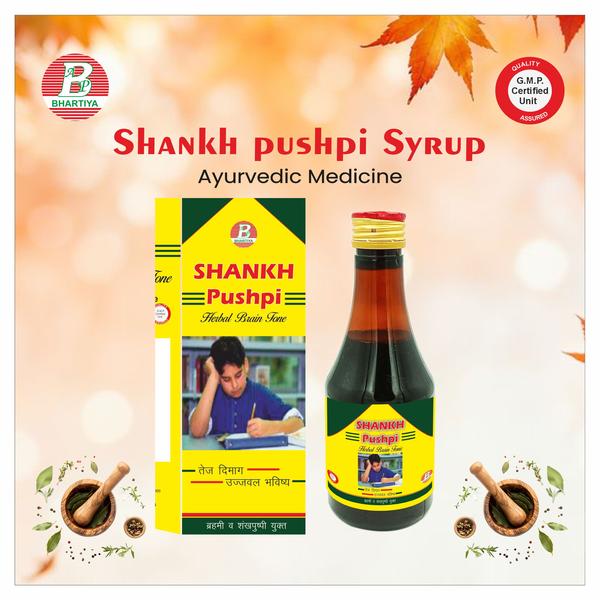
"name": "Shankhpushpi Syrup",
"description": " SANKHPUSHPI SYRUP \n\nProduct Identification\n•\tGeneric Name: Sankhpushpi Syrup\n•\tType: Ayurvedic Patent Medicine\n•\tPrimary Indication Area: Cognitive enhancement and nervous system support (memory, concentration, and mental well-being).\nTherapeutic Indications\nSankhpushpi syrup is used as a brain tonic to improve memory, concentration, reduce stress, and promote restful sleep.\nKey benefits:\n Enhances Memory and Cognitive Function\n•\tActs as a medhya (brain) tonic in Ayurveda.\n•\tImproves memory, learning, and concentration, making it useful for students and professionals with mental fatigue.\nReduces Stress and Anxiety\n•\tHas adaptogenic and calming properties that help manage mental tension.\n•\tCan reduce symptoms of anxiety, irritability, and mental fatigue.\nPromotes Restful Sleep\n•\tCalms the nervous system and mind, aiding in insomnia or disturbed sleep.\n Supports Nervous System Health\n•\tStrengthens the nervous system, reduces mental exhaustion, and promotes overall brain vitality.\n Adjunct Benefits\n•\tMay help in mild headaches, hyperacidity, or digestive discomfort due to its soothing and calming effects.\n\n\nIngredient: \n Brahmi \nBotanical Name: Bacopa monnieri\nKey Phytoconstituents:\n•\tBacosides (A & B) – primary active compounds\n•\tFlavonoids\n•\tAlkaloids\n•\tSaponins\n\nMechanism of Action and Benefits\n1.\tCognitive Enhancement\no\tMemory Improvement: Bacosides enhance the formation of new nerve endings (dendrites), improving memory and learning ability.\no\tConcentration & Focus: Supports attention span and mental clarity, useful for students, professionals, and elderly individuals with cognitive decline.\n2.\tNeuroprotective Effects\no\tProtects neurons from oxidative stress and free radical damage.\no\tMay slow age-related cognitive degeneration and maintain healthy brain function.\n3.\tAnti-Anxiety & Stress Reduction\no\tActs as an adaptogen, helping the body cope with mental stress.\no\tReduces anxiety, restlessness, and mental fatigue, promoting calmness and emotional balance.\n4.\tAntioxidant Activity\no\tScavenges free radicals, preventing oxidative damage in the brain.\no\tProtects neuronal cells and enhances overall brain vitality.\n5.\tSupports Neurotransmission\no\tModulates acetylcholine levels and improves synaptic communication between neurons.\no\tEnhances alertness, processing speed, and mental clarity.\n\n\n Sankhpushpi \nBotanical Name: Convolvulus pluricaulis (most commonly)\nKey Phytoconstituents:\n•\tAlkaloids\n•\tFlavonoids\n•\tCoumarins\n•\tSteroids\n•\tGlycosides\n\nMechanism of Action and Benefits\n1.\tCognitive Enhancement\no\tImproves memory, learning, and concentration.\no\tSupports overall mental alertness and clarity.\n2.\tNervous System Support\no\tActs as a mild nervine tonic, calming the nervous system.\no\tReduces mental fatigue, restlessness, and nervous tension.\n3.\tAnti-Anxiety & Stress Reduction\no\tHelps alleviate stress and anxiety by calming the mind.\no\tUseful in hyperactive or over-stressed individuals.\n4.\tSleep Support\no\tMild sedative effects promote restful sleep.\no\tReduces insomnia associated with stress or mental overactivity.\n5.\tAntioxidant Activity\no\tProtects neurons from oxidative damage and supports brain cell health.\nAdult Dose\n•\t2–3 teaspoons (≈10–15 ml) twice daily, preferably with milk or water.\n•\tDuration: 2–4 weeks or as advised by an Ayurvedic practitioner.\n\nPrecautions\n1.\tPregnancy & Lactation: Use only under medical supervision.\n2.\tHypersensitivity: Avoid if allergic to any ingredient of Sankhpushpi.\n3.\tChronic Illness: Patients with severe liver, kidney, or heart disease should consult a doctor before use.\n4.\tConcurrent Medications: May enhance the sedative effect of CNS depressants; use caution with sleeping pills or anti-anxiety drugs.\n5.\tChildren: Use lower doses (typically 1–2 teaspoons twice daily) and under pediatric guidance.\n6.\tOverdose Risk: Excessive intake may cause mild nausea or gastrointestinal discomfort.\n\n\nayukalp shankhpushpi syrup, ayurvedic brain booster shankhpushpi syrup\nayurvedic brain shankhpushpi syrup, ayurvedic shankhpushpi syrup\nbest shankhpushpi syrup, best shankhpushpi syrup brand\nbest shankhpushpi syrup for adults, best shankhpushpi syrup for kids\nbest shankhpushpi syrup in india, best time to take shankhpushpi syrup\nbrahmi ashwagandha shankhpushpi jatamansi and vacha syrup\nbrahmi shankhpushpi jatamansi syrup, can adults take shankhpushpi syrup\ncan we take shankhpushpi syrup with milk, charak shankhpushpi syrup\ncontents of shankhpushpi syrup, dabur ka shankhpushpi syrup\ndabur shankhpushpi syrup, how long does shankhpushpi take to work\nhow to drink shankhpushpi syrup, how to make shankhpushpi syrup\nhow to make shankhpushpi syrup at home, how to use shankhpushpi syrup\nhow to use shankhpushpi syrup in hindi, ingredients of shankhpushpi syrup\nis shankhpushpi really effective, m shankhpushpi syrup ke fayde\nm shankhpushpi syrup uses, m shankhpushpi syrup uses in english\nm shankhpushpi syrup uses in hindi, memory booster shankhpushpi syrup\nmsg shankhpushpi syrup, original shankhpushpi syrup\nprice of shankhpushpi syrup, pure shankhpushpi syrup\nreal shankhpushpi syrup, shankhpushpi cough syrup\nshankhpushpi medicine syrup, shankhpushpi memory syrup\nshankhpushpi syrup, shankhpushpi syrup 200 ml\nshankhpushpi syrup age, shankhpushpi syrup age limit\nshankhpushpi syrup age limit hindi, shankhpushpi syrup amazon\nshankhpushpi syrup ayurvedic, shankhpushpi syrup bacho ke liye\nshankhpushpi syrup before or after food,m shankhpushpi syrup benefits\nshankhpushpi syrup benefits and side effects, shankhpushpi syrup benefits for brain\nshankhpushpi syrup benefits for skin, shankhpushpi syrup benefits hindi\nshankhpushpi syrup benefits in english, shankhpushpi syrup benefits in gujarati\nshankhpushpi syrup benefits in hindi, shankhpushpi syrup best company\nshankhpushpi syrup colour, shankhpushpi syrup content\nshankhpushpi syrup cost, shankhpushpi syrup dose\nshankhpushpi syrup for adults in hindi, shankhpushpi syrup for brain, \nshankhpushpi syrup for child, shankhpushpi syrup for child in hindi\nshankhpushpi syrup hindi use, shankhpushpi syrup how to take\nshankhpushpi syrup how to use, shankhpushpi syrup in hindi\nshankhpushpi syrup jiomart, shankhpushpi syrup ka rate kya hai\nshankhpushpi syrup kab lena chahiye, shankhpushpi syrup kaisa hai\nshankhpushpi syrup kaise le, shankhpushpi syrup kaise piya jata hai\nshankhpushpi syrup ke bare mein jankari, shankhpushpi syrup ke fayde\nshankhpushpi syrup ke fayde aur nuksan, shankhpushpi syrup ke fayde in hindi\nshankhpushpi syrup kis liye hota hai, shankhpushpi syrup kiske liye hoti hai",
"price": 180.0,
"discountamount": 90.0,
"currencycode": "INR",
"priority": 1000000,
"isfreeshipmentavailable": false,
"shipmentduration": 1,
"_keywords": null,
"isarchived": false,
"isavailable": true,
"applicationid": null,
"productindex": 39,
"imageuri": "https://productimages.withfloats.com/actual/6985bdebf6053c165dcb8015.jpg",
"tileimageuri": "https://productimages.withfloats.com/tile/6985bdebf6053c165dcb8015.jpg",
"images": null,
"totalqueries": 0,
"gpid": null,
"groupproductid": null,
"createdon": "2026-02-06T10:09:43.873Z",
"updatedon": "2026-02-19T03:20:25.141Z",
"buyonlinelink": null,
"producturl": "http://WWW.BHARTIYAAYURVEDICPHARMACY.COM//shankhpushpi-syrup/39",
"availableunits": -1.0,
"iscodavailable": true,
"isprepaidonlineavailable": true,
"maxcodorders": -1,
"maxprepaidonlineorders": -1,
"uniquepaymenturl": null,
"brandname": "Bakula Fort",
"category": "Shankhpushpi Syrup 200 ML X 24",
"tags": [],
"variants": false,
"keyspecification": null,
"otherspecifications": null,
"pickupaddressreferenceid": null,
"paymenttype": "AssuredPurchase",
"producttype": "products",
"hsncode": null,
"gstslab": 0.0,
"isnotforsale": false
},
{
"_id": "698084369b2383ec7eecaa68",
"fptag": "BHARTIYEAYURVEDICPHARMACY",
"merchantname": null,
"customwidgets": null,
"externalsourceid": null,
"name": "Punarnava Tablet",
"description": "Punarnava (Boerhavia diffusa) \n The Rejuvenating Herb with Healing Leaves\nPunarnava is one of the most important rejuvenating herbs in Ayurveda, widely valued for its unique ability to revive and renew the body.\nThe name Punarnava literally means “that which becomes new again”, indicating its powerful regenerative and restorative nature.\nIn Ayurveda, Punarnava is classified as a Mutrala (diuretic), Shothahara (anti-inflammatory), and Rasayana (rejuvenative) drug. It is highly beneficial in managing swelling (oedema), kidney disorders, liver weakness, urinary problems, digestive issues, anaemia, and general debility.\nBotanical Information of Punarnava\nScientific Name: Boerhavia diffusa Linn.\nFamily: Nyctaginaceae\nOrder: Caryophyllales\nGenus: Boerhavia\nSpecies: diffusa\nCommon Names:\n•\tSanskrit: Punarnavā, Shothaghanī, Raktapunarnavā, Śvetapunarnavā, Shreṇī, Shoṭikā\n•\tHindi: Punarnava\n•\tEnglish: Spreading Hogweed, Red Spiderling\n•\tTamil: Mookarattai\n•\tTelugu: Atika\n•\tMalayalam: Thazhuthama\n•\tKannada: Komme beru\n•\tBengali: Punarnava\nSynonyms of Punarnava (Boerhavia diffusa) in Ayurvedic Nighantus:\n Bhavaprakasha Nighantu – Shothaghni, Raktapunarnava, Shvetapunarnava, Shoṭikā\n Raja Nighantu & Kaiyadeva Nighantu – Panchanga, Jalapushpa, Mochana, Bhujanga\n Hrudaya Nighantu & Dhanvantari Nighantu – Utkalika, Shreni\n Morphology of Punarnava (Boerhavia diffusa)\nPlant Type: Perennial, creeping, and spreading herb\nStem:\n•\tProstrate or slightly ascending, creeping along the ground\n•\tPurplish-green, hairy, with swollen nodes\n•\tRoots develop at nodes where the stem touches the soil\nLeaves:\n•\tSimple, opposite arrangement\n•\tShape: Ovate, elliptic, or slightly rounded\n•\tTexture: Fleshy and soft\n•\tColor: Dark green on the upper surface, pale green below\n•\tPetiole: Short\nFlowers:\n•\tSmall, tubular, and bisexual\n•\tColor: Pink, reddish, or white\n•\tArranged in axillary clusters (cymes)\n•\tBloom mainly during summer and rainy seasons\nRoots:\n•\tThick, cylindrical, fleshy, and tapering\n•\tColor: White in Shveta Punarnava, reddish in Rakta Punarnava\n•\tMedicinal part, rich in active constituents\nFruits:\n•\tSmall, ovoid, glandular, and sticky when young\n•\tDark brown at maturity\n•\tOne-seeded\nHabit:\n•\tCreeping, spreading, fast-growing, regenerates easily\n•\tAdapted to drought and poor soil conditions\n Ecological Preferences of Punarnava\n•\tClimate: Thrives in tropical and subtropical climates; tolerates heat and moderate drought.\n•\tSoil: Prefers sandy, loamy, or well-drained soils; can grow in poor or degraded soils.\n•\tSunlight: Grows well in full sunlight to partial shade.\n•\tMoisture: Requires moderate moisture; can survive dry periods due to its hardy nature.\n•\tAltitude: Found at low to medium altitudes, commonly in plains and open areas.\n•\tHabitat: Common along roadsides, fields, gardens, wastelands, and riverbanks.\n•\tGrowth habit: Creeping, spreading, fast-growing, and regenerates easily after adverse conditions.\n Distribution of Punarnava\nGeographical Distribution:\nPunarnava is a widely distributed perennial herb found in tropical and subtropical regions across the world.\n•\tIndia: Found throughout the country in almost all states, particularly in plains, dry regions, roadsides, wastelands, and fields.\n•\tAsia: Occurs in Pakistan, Sri Lanka, Bangladesh, Nepal, and Myanmar.\n•\tAfrica: Common in tropical and subtropical Africa.\n•\tAmericas: Found in parts of South America and Central America.\n•\tOther Regions: Naturalized in various tropical areas worldwide due to its hardy and fast-growing nature\n Classical Ayurvedic Properties of Punarnava\n•\tRasa (Taste): Tikta (bitter), Kashaya (astringent)\n•\tGuna (Qualities): Laghu (light), Ruksha (dry)\n•\tVirya (Potency): Ushna (hot)\n•\tVipaka (post-digestive effect): Katu (pungent)\n•\tDosha Effect: Kapha-Vata shamaka (pacifies Kapha and Vata doshas)\n•\tKarma (Actions / Therapeutic Effects):\no\tMutrala: Promotes urination, useful in oedema and urinary disorders\no\tShothahara: Reduces swelling and inflammation\no\tYakrit-Pleeha Shodhaka: Supports liver and spleen health\no\tRasayana: Rejuvenative and revitalizing\no\tHridya: Supports heart function\nTherapeutic Actions of Punarnava According to Acharyas\n1.\tMutrala (Diuretic):\no\tPromotes urine formation, relieves Shotha (edema, ascites, anasarca)\no\tUseful in kidney and urinary disorders\n2.\tShothahara (Anti-inflammatory / Anti-edema):\no\tReduces Kapha and Vata-related swelling\no\tUseful in joint swelling, ascites, and edema\n3.\tYakrit-Pleeha Shodhaka (Hepato-splenic tonic / Detoxifier):\no\tSupports liver and spleen health\no\tClears stagnation in Rakta and Pitta\n4.\tRasayana (Rejuvenative / Revitalizing):\no\tImproves strength, vitality, and general health\no\tEnhances immunity and longevity\n5.\tHridya (Cardio-supportive):\no\tSupports heart function by reducing fluid overload\n6.\tMedohara / Vatashamaka:\no\tHelps in reducing excessive fat (Medo Dhatu) and pacifies Vata dosha in the body\n\nReferences from Acharyas:\n•\tCharaka Samhita: Punarnava is Shothaghni, Mutrala, Rasayana\n•\tSushruta Samhita: Shveta and Rakta Punarnava described for Shotha, Mutra, and Yakrit-Pleeha disorders\n•\tBhavaprakasha: Emphasizes anti-edema, diuretic, hepatoprotective, and rejuvenative actions\n Modern Phytochemistry of Punarnava\nPunarnava is rich in bioactive compounds responsible for its therapeutic properties. Key phytochemicals identified include:\n1. Alkaloids\n•\tPunarnavine – major alkaloid, responsible for diuretic and hepatoprotective activity\n•\tBoeravinones (A–F) – rotenoid compounds with antioxidant, hepatoprotective, and anti-inflammatory properties\n2. Flavonoids\n•\tQuercetin, Kaempferol – contribute to antioxidant and anti-inflammatory effects\n3. Glycosides\n•\tPunarnavoside – responsible for diuretic and anti-edema activity\nSpecies of Punarnava (Genus: Boerhavia)\nThe genus Boerhavia (family Nyctaginaceae) includes several species, but Boerhavia diffusa is the most commonly used in Ayurveda. Other species are also recognized botanically for various regional and medicinal uses:\n1. Boerhavia diffusa Linn.\n•\tMost widely used in Ayurveda\n•\tPerennial, creeping, and spreading herb\n•\tKnown for diuretic, anti-inflammatory, hepatoprotective, and rejuvenative properties\n2. Boerhavia erecta L.\n•\tErect or semi-erect habit, less creeping\n•\tFound in tropical regions\n•\tUsed in traditional medicine locally, but less common in classical Ayurveda\n3. Boerhavia repens L.\n•\tCreeping herb, often used as ground cover\n•\tOccasional medicinal use in folk medicine\n4. Boerhavia coccinea Mill.\n•\tRed-flowered species, creeping habit\n•\tSometimes used in ethnomedicine for fever and inflammation\n5. Boerhavia verticillata Willd.\n•\tFound in Africa and Asia\n•\tLimited medicinal use; occasionally cited in ethnobotanical surveys\nCultivation:\n•\tPropagation: Primarily by seeds; can also propagate via stem cuttings due to its creeping habit.\n•\tSowing Time: Best sown during the early monsoon or rainy season.\n•\tSpacing: Maintain 30–40 cm between plants to allow spreading.\n•\tWatering: Requires moderate moisture; drought-tolerant once established.\n•\tFertilization: Responds well to organic manure or compost, though hardy enough to grow in poor soils.\n•\tHarvesting: Roots, stems, and leaves are harvested after 3–4 months of growth, depending on medicinal use.\n•\tEcological Note: Acts as a pioneer plant, stabilizing soil and growing in degraded lands.\n Classical Dosage of Punarnava in Granthas\n1. Charaka Samhita\nForm: Root or whole plant powder (Churna), decoction (Kwatha)\nDose: 3–6 grams of powder; 40–60 ml of decoction, 2–3 times daily\nUses: Shotha (edema), Mutrakriccha (urinary disorders), Rasayana\n2. Sushruta Samhita\nForm: Root, whole plant, or paste\nDose: 3–6 grams powder; decoction 40–60 ml; external paste as required\nUses: Shotha, Mutra, Yakrit-Pleeha disorders\n3. Bhavaprakasha Nighantu\nForm: Churna, Kwatha, Swarasa (juice)\nDose: 3–6 grams Churna; 40–60 ml Kwatha; 20–30 ml Swarasa 1–2 times daily\nNotes: Shveta Punarnava for urinary issues; Rakta Punarnava for liver and blood disorders\n4. Raja Nighantu & Kaiyadeva Nighantu\nForm: Panchanga (whole plant), decoction, powder\nDose: Similar classical dose as above; 3–6 grams for powder, decoction 40–60 ml\nTherapeutic Use: Shothahara, Mutrala, Rasayana\n\n Safety and Precautions of Punarnava\n Safe in classical dosage.\n Avoid overdose -caution with strong diuretics.\n Pregnant Woman- use only under supervision.\n\n Classical Ayurvedic Formulations of Punarnava\nPunarnava is a key ingredient in many classical Ayurvedic preparations for edema, liver disorders, kidney ailments, and rejuvenation. Common formulations include:\n1. Punarnavadi Kwatha (Decoction)\n•\tIngredients: Punarnava, Trikatu (Pippali, Maricha, Shunthi), Musta, Haritaki, and other supporting herbs\n•\tAction: Diuretic, anti-edema, hepatoprotective, rejuvenative\n•\tIndication: Shotha (edema), Ascites, Mutrakriccha (urinary disorders)\n2. Punarnavadi Churna (Powder)\n•\tIngredients: Punarnava root, Haritaki, Musta, Chitrak, Shunthi\n•\tAction: Supports kidney and liver health, promotes detoxification, reduces swelling\n•\tDose: 3–6 g/day with water or honey\n3. Punarnava Swarasa (Juice)\n•\tForm: Fresh juice of Punarnava root or whole plant\n•\tAction: Diuretic, anti-inflammatory, mild laxative\n•\tDose: 20–30 ml, 1–2 times daily\n4. Punarnava Grita or Taila (Medicated Ghee/Oil)\n•\tUsage: External application for swelling, inflammation, and joint disorders\n•\tAction: Shothahara, soothing, and rejuvenative\n5. Compound Formulations\n•\tPunarnavadi Kashaya, Punarnavadi Gutika, Punarnavadi Avaleha – used in liver disorders, urinary diseases, edema, and general rejuvenation.\n Punarnava Formulations by Bhartiya Ayurvedic Pharmacy\nAt Bhartiya Ayurvedic Pharmacy, we prepare a range of Punarnava (Boerhavia diffusa) formulations following classical Ayurvedic methods as described in Charaka Samhita, Sushruta Samhita, Bhav Prakash Nighantu, and other Ayurvedic Granthas. Each product is crafted to retain the therapeutic potency, purity, and efficacy of the herb, ensuring benefits for fluid balance, kidney & liver support, detoxification, and rejuvenation.\n1. Punarnava Tablet\nDescription:\nPunarnava Tablets contain standardized powdered extract of Boerhavia diffusa, providing a convenient dosage form for daily use.\nKey Actions:\n•\tSupports normal urinary output and reduces mild water retention\n•\tPromotes liver and kidney health\n•\tReduces swelling (Edema)\n•\tBeneficial in cough or intestinal colic\n•\tIt can help lower the blood pressure\n•\tProvides general detox and rejuvenation\nDosage:\n•\t1–2 tablets twice daily after meals, or as advised by an Ayurvedic practitioner\nPrecautions:\n•\tUse under guidance in pregnancy, kidney disorders, or excessive fluid loss\n•\tMaintain recommended dosage\n\n\n\nbest punarnava tablet, best punarnava tablets, best time to take punarnava tablets\ncan anyone take punarnava, can i take punarnava daily, how to drink punarnava\nhow to take punarnava tablet, how to take punarnava tablets, \nhow to use punarnava for weight loss, how to use punarnava tablet\npunarnava plant tablet, punarnava tablet, punarnava tablet ayurvedic\npunarnava tablet benefits, punarnava tablet benefits in hindi\npunarnava tablet composition, punarnava tablet dosage\npunarnava tablet flipkart, punarnava tablet hindi\npunarnava tablet how to use, punarnava tablet in hindi\npunarnava tablet ingredients, punarnava tablet kab lena chahiye\npunarnava tablet kaise khaye, punarnava tablet ke fayde\npunarnava tablet ke fayde in hindi, punarnava tablet ke labh\npunarnava tablet kya hai, punarnava tablet lene ke fayde\npunarnava tablet online, punarnava tablet price\npunarnava tablet quality, punarnava tablet quantity\npunarnava tablet uses, punarnava tablet uses hindi\npunarnava tablet uses in hindi, punarnava tablets amazon\npunarnava tablets benefits, punarnava tablets benefits in hindi\npunarnava tablets near me, punarnava tablets price in india\npunarnava tablets reviews, punarnava tablets uses\npunarnava tablets when to take, what is punarnava tablet",
"price": 180.0,
"discountamount": 90.0,
"currencycode": "INR",
"priority": 1000000,
"isfreeshipmentavailable": false,
"shipmentduration": 1,
"_keywords": null,
"isarchived": false,
"isavailable": true,
"applicationid": null,
"productindex": 29,
"imageuri": "https://productimages.withfloats.com/actual/69808437fc3cf1d183418882.jpg",
"tileimageuri": "https://productimages.withfloats.com/tile/69808437fc3cf1d183418882.jpg",
"images": null,
"totalqueries": 0,
"gpid": null,
"groupproductid": null,
"createdon": "2026-02-02T11:02:14.772Z",
"updatedon": "2026-02-19T11:12:54.092Z",
"buyonlinelink": null,
"producturl": "http://WWW.BHARTIYAAYURVEDICPHARMACY.COM//punarnava-tablet/29",
"availableunits": -1.0,
"iscodavailable": true,
"isprepaidonlineavailable": true,
"maxcodorders": 0,
"maxprepaidonlineorders": -1,
"uniquepaymenturl": null,
"brandname": "Bakula Fort",
"category": "Punarnava Tablet 100 - Tab X 24",
"tags": [],
"variants": false,
"keyspecification": null,
"otherspecifications": null,
"pickupaddressreferenceid": null,
"paymenttype": "AssuredPurchase",
"producttype": "products",
"hsncode": null,
"gstslab": 0.0,
"isnotforsale": false
},
{
"_id": "69806ac2c52bdc1fe0c2abc7",
"fptag": "BHARTIYEAYURVEDICPHARMACY",
"merchantname": null,
"customwidgets": null,
"externalsourceid": null,
"name": "ASHWAGANDHA TABLET",
"description": "ASHWAGANDHA (Withania somnifera / Indian Ginseng) \n The Rejuvenating, Strength-Giving & Adaptogenic Herb of Ayurveda\n\nAshwagandha, also known as Indian Ginseng, is a highly revered herb in Ayurveda, valued for its adaptogenic, rejuvenating, and restorative properties. The name “Ashwagandha” means “smell of horse,” signifying its ability to impart strength, vitality, and stamina. In Ayurveda, it is described as Balya, Rasayana, Medhya, Vajikarana, Jwaraghna, and Chakshushya. It is widely used for stress, anxiety, fatigue, low immunity, sexual weakness, cognitive enhancement, inflammation, and chronic diseases.\n BOTANICAL INFORMATION\n•\tScientific Name: Withania somnifera\n•\tFamily: Solanaceae\n•\tOrder: Solanales\n•\tGenus: Withania\n•\tSpecies: somnifera\n•\tCommon Names:\no\tSanskrit – Ashwagandha, Rasayana\no\tHindi – Ashwagandha\no\tEnglish – Indian Ginseng, Winter Cherry\no\tTamil – Amukkara\no\tTelugu – Ksheeravallari\no\tMalayalam – Amukkara\no\tKannada – Aswagandha\no\tBengali – Aswagandha\n•\tTypes / Varieties:\n1.\tShweta (White root variety)\n2.\tRaktapushpi (Red-flowered variety)\n3.\tSita (Medicinal root-rich variety)\n SYNONYMS FROM AYURVEDIC NIGHANTUS\n•\tBhavaprakasha: Ashwagandha, Rasayana, Vajikarana\n•\tDhanvantari Nighantu: Ashwagandha, Mahashweta\n•\tKaiyadeva Nighantu: Ashwagandha, Balya, Medhya\n•\tRaja Nighantu: Ashwagandha, Vajikarana\n MORPHOLOGY\n•\tPlant Type: Erect, woody perennial shrub\n•\tStem: Woody, pale green to brown, slightly hairy\n•\tLeaves: Simple, ovate, gray-green, soft, slightly hairy\n•\tFlowers: Small, greenish-yellow, bell-shaped\n•\tRoots: Thick, tuberous, aromatic\n•\tFruits: Small red berries containing seeds\n ECOLOGICAL PREFERENCES\n•\tClimate: Tropical & subtropical\n•\tSoil: Well-drained, sandy-loamy\n•\tSunlight: Full sun to partial shade\n•\tMoisture: Moderate\n•\tAltitude: Up to 1500 m\n•\tHabitat: Cultivated fields, home gardens, wild areas\n\n DISTRIBUTION\nWidely found throughout India, particularly in Madhya Pradesh, Rajasthan, Uttar Pradesh, and southern states. Also present in Nepal, Sri Lanka, and parts of Africa; cultivated worldwide due to medicinal importance.\n CLASSICAL AYURVEDIC PROPERTIES\n•\tRasa: Madhura (sweet), Tikta (bitter)\n•\tGuna: Guru (heavy), Snigdha (unctuous)\n•\tVirya: Ushna (hot)\n•\tVipaka: Madhura (sweet)\n•\tDosha Effect: Vata-Kapha shamaka\n•\tKarma (Therapeutic Actions):\nBalya, Rasayana, Medhya, Vajikarana, Jwaraghna, Chakshushya, Shothahara, Agnivardhana\n HISTORICAL REFERENCES & STORIES\n•\tVedic Era: Mentioned as a strength-giving and rejuvenating herb.\n•\tCharaka Samhita: Used for weakness, Vata disorders, low immunity, cognitive enhancement.\n•\tSushruta Samhita: Recommended for chronic diseases, wounds, debility, and sexual weakness.\n•\tBhavaprakasha Nighantu: Praised for Balya, Rasayana, Medhya, Vajikarana effects.\n•\tStory: Traditionally given to warriors before battle to enhance vitality and stamina.\n MODERN PHYTOCHEMISTRY\nContains Withanolides, Withaferin A, Alkaloids (Withanine), Saponins, Flavonoids, Steroidal lactones, Iron, and Amino acids.\n CULTIVATION\n•\tPropagated by seeds or root cuttings.\n•\tRequires well-drained soil, sunlight, and moderate irrigation.\n•\tHarvested after 150–180 days for root use.\n CLASSICAL DOSAGE (ACCORDING TO GRANATHAS)\n•\tAshwagandha Churna (Powder): 3–6 g, twice daily\n•\tAshwagandha Swarasa (Juice): 10–20 ml, 1–2 times daily\n•\tAshwagandha Kwatha (Decoction): 30–50 ml, twice daily\n•\tAshwagandha Patra (Leaves): 5–10 fresh leaves daily\n•\tAshwagandha Ark: 10–20 ml daily\n•\tAshwagandha Tablet / Capsule: 1–2 tablets/capsules twice daily with warm water after meals\n\n THERAPEUTIC INDICATIONS\nWeakness, fatigue, stress, anxiety, insomnia, low immunity, sexual debility, arthritis, Vata disorders, cognitive decline, chronic fever, inflammation, heart weakness.\n SAFETY & PRECAUTIONS\n•\tGenerally safe in recommended doses.\n•\tAvoid high doses during pregnancy and lactation.\n•\tCaution in hyperthyroidism or gastric ulcers.\n•\tSuitable for long-term use in small doses.\nClassical Formulations: Ashwagandha with Ghee, Milk, Honey, Chyawanprash, Guduchi, Shatavari – used for rejuvenation, immunity, stress relief, and strength.\n Ashwagandha Formulations by Bhartiya Ayurvedic Pharmacy\nAt Bhartiya Ayurvedic Pharmacy, we prepare a range of Ashwagandha (Withania somnifera) formulations following classical Ayurvedic methods as described in Charaka Samhita, Sushruta Samhita, Bhavaprakasha Nighantu, and other Ayurvedic Granthas. Each product is crafted to retain the therapeutic potency, purity, and efficacy of the herb, ensuring benefits for stress relief, immunity, sexual and cognitive health, and overall rejuvenation.\n1. ASHWAGANDHA TABLET\n•\tDosage: 1–2 tablets twice daily after meals\nIndications\n•\tFatigue and general weakness\n•\tStress and anxiety\n•\tLow immunity and recurrent infections\n•\tArthritis and Vata disorders\n•\tSexual weakness and reproductive health support\n•\tCognitive enhancement, memory and concentration\n•\tChronic debility and convalescence after illness\n\n\nashwagandha powder best hai ya tablet, ashwagandha powder le ya tablet\nashwagandha powder ya tablet, ashwagandha tablet, ashwagandha tablet acha hai ya powder\nashwagandha tablet amway, ashwagandha tablet any side effects, ashwagandha tablet at night\nashwagandha tablet awpl, ashwagandha tablet awpl price, ashwagandha tablet ayurvedic\nashwagandha tablet before or after food, ashwagandha tablet benefits, ashwagandha tablet benefits for female\nashwagandha tablet benefits for male, ashwagandha tablet benefits for women in hindi\nashwagandha tablet benefits hindi, ashwagandha tablet best brand, ashwagandha tablet best quality\nashwagandha tablet best time to take, ashwagandha tablet blinkit\nashwagandha tablet can be taken with water, ashwagandha tablet can take daily\nashwagandha tablet can take with milk, ashwagandha tablet composition\nashwagandha tablet consume time, ashwagandha tablet consumption\nashwagandha tablet dosage, ashwagandha tablet dose for adults\nashwagandha tablet dose per day, ashwagandha tablet doses\nashwagandha tablet eating time, ashwagandha tablet effects\nashwagandha tablet everyday, ashwagandha tablet expiry\nashwagandha tablet expiry date, ashwagandha tablet fayde\nashwagandha tablet flipkart, ashwagandha tablet for gym\nashwagandha tablet for hair growth, ashwagandha tablet for men\nashwagandha tablet generic, ashwagandha tablet gold\nashwagandha tablet good for, ashwagandha tablet good for health\nashwagandha tablet gym, ashwagandha tablet hindi\nashwagandha tablet how to take, ashwagandha tablet how to use\nashwagandha tablet image, ashwagandha tablet in hindi\nashwagandha tablet india, ashwagandha tablet indication\nashwagandha tablet ingredients, ashwagandha tablet jan aushadhi\nashwagandha tablet jeena sikho, ashwagandha tablet jiomart\nashwagandha tablet kab khana chahiye, ashwagandha tablet kaise le\nashwagandha tablet ke fayde, ashwagandha tablet ke fayde in hindi\nashwagandha tablet khane ke fayde, ashwagandha tablet kitne din khana chahiye, \nashwagandha tablet kya kam karti hai, ashwagandha tablet label\nashwagandha tablet lene ka sahi samay, ashwagandha tablet lene ka tarika\nashwagandha tablet lene ke fayde, ashwagandha tablet low price\nashwagandha tablet mb, ashwagandha tablet modicare\nashwagandha tablet near me, ashwagandha tablet nutrition\nashwagandha tablet or powder which is best\nashwagandha tablet or powder which is better\nashwagandha tablet price in india\nashwagandha tablet quantity per day\nashwagandha tablet reduce blood pressure\nashwagandha tablet research paper\nashwagandha tablet se kya hota hai",
"price": 270.0,
"discountamount": 135.0,
"currencycode": "INR",
"priority": 1000000,
"isfreeshipmentavailable": false,
"shipmentduration": 1,
"_keywords": null,
"isarchived": false,
"isavailable": true,
"applicationid": null,
"productindex": 25,
"imageuri": "https://productimages.withfloats.com/actual/69806ac30c444cec450f6658.jpg",
"tileimageuri": "https://productimages.withfloats.com/tile/69806ac30c444cec450f6658.jpg",
"images": null,
"totalqueries": 0,
"gpid": null,
"groupproductid": null,
"createdon": "2026-02-02T09:13:38.386Z",
"updatedon": "2026-02-20T05:07:19.839Z",
"buyonlinelink": null,
"producturl": "http://WWW.BHARTIYAAYURVEDICPHARMACY.COM//ashwagandha-tablet/25",
"availableunits": -1.0,
"iscodavailable": true,
"isprepaidonlineavailable": true,
"maxcodorders": 0,
"maxprepaidonlineorders": 0,
"uniquepaymenturl": null,
"brandname": "BAKULA FORT ",
"category": "ASHWAGANDHA TABLET 100 - TAB X 24",
"tags": [],
"variants": false,
"keyspecification": null,
"otherspecifications": null,
"pickupaddressreferenceid": null,
"paymenttype": "AssuredPurchase",
"producttype": "products",
"hsncode": null,
"gstslab": 0.0,
"isnotforsale": false
},
{
"_id": "6a8bf82aa55db46e245b2b80",
"fptag": "BHARTIYEAYURVEDICPHARMACY",
"merchantname": null,
"customwidgets": null,
"externalsourceid": null,
"name": "Punarnavasav",
"description": " PUNARNAVASAVA \n\n\nProduct Identification\nGeneric Name: Punarnavaasava \nType: Ayurvedic Polyherbal Fermented Formulation (Asava)\nPrimary Indication Area: Urinary disorders, edema, liver disorders, anaemia, detoxification, inflammation\n\nTherapeutic Indications\n• Shotha (edema)\n• Mutrakricchra (dysuria)\n• Mutravikara (urinary disorders)\n• Pandu (anaemia)\n• Yakrit-Pliha vriddhi (liver & spleen enlargement)\n• Jalodara (ascites)\n• Chronic inflammation\n• Fluid retention\n• Metabolic toxin accumulation (Ama)\n\nKey Benefits\n• Reduces swelling and water retention\n• Supports kidney and urinary health\n• Improves liver function and detoxification\n• Helps in anaemia support\n• Reduces inflammation\n• Improves metabolism and digestion\n• Supports systemic cleansing\n\nFORMULA\n1. Punarnava\nBotanical Name: Boerhavia diffusa\n\nRasa: Tikta, Kashaya\n Guna: Laghu, Ruksha\nVirya: Ushna\nVipaka: Katu\nMechanism of Action:\n• Strong diuretic action reduces edema\n• Supports kidney filtration and urinary flow\n• Helps eliminate excess fluids from tissues\n• Anti-inflammatory and detoxifying\n• Reduces accumulation of Ama\n\n2. Sunthi\nBotanical Name: Zingiber officinale\n\nRasa: Katu\nGuna: Laghu, Snigdha\nVirya: Ushna\n Vipaka: Madhura\nMechanism of Action:\n• Enhances digestion and Agni\n• Improves circulation and metabolism\n• Reduces Ama accumulation\n• Supports bioavailability of herbs\n\n3. Maricha\nBotanical Name: Piper nigrum\n\nRasa: Katu\n Guna: Laghu, Tikshna\n Virya: Ushna\n Vipaka: Katu\nMechanism of Action:\n• Stimulates digestive fire\n• Enhances nutrient absorption\n• Improves bioavailability of compounds\n• Reduces metabolic toxins (Ama)\n\n4. Pippali\nBotanical Name: Piper longum\n\nRasa: Katu\nGuna: Laghu, Snigdha\nVirya: Ushna\nVipaka: Madhura\nMechanism of Action:\n• Deepana and Pachana (digestive stimulant)\n• Improves respiratory and metabolic function\n• Enhances absorption of nutrients\n• Reduces Ama formation\n\n5. Haritaki\nBotanical Name: Terminalia chebula\n\nRasa: Pancha Rasa (except Lavana)\n Guna: Laghu, Ruksha\n Virya: Ushna\n Vipaka: Madhura\nMechanism of Action:\n• Mild laxative and detoxifier\n• Supports bowel cleansing\n• Improves digestion and elimination\n• Reduces systemic toxins\n\n6. Bibhitaki\nBotanical Name: Terminalia bellirica\n\nRasa: Kashaya\n Guna: Laghu, Ruksha\nVirya: Ushna\nVipaka: Madhura\nMechanism of Action:\n• Supports respiratory and digestive cleansing\n• Helps detoxify body fluids\n• Improves metabolism\n• Reduces Kapha accumulation\n\n7. Amalaki\nBotanical Name: Phyllanthus emblica\n\nRasa: Pancha Rasa (predominantly Amla)\n Guna: Laghu, Ruksha\n Virya: Sheeta\nVipaka: Madhura\nMechanism of Action:\n• Powerful antioxidant and rejuvenative\n• Supports liver function\n• Improves immunity and digestion\n• Reduces oxidative stress\n\n8. Gokshura\nBotanical Name: Tribulus terrestris\nRasa: Madhura\n Guna: Guru, Snigdha\n Virya: Sheeta\n Vipaka: Madhura\nMechanism of Action:\n• Supports urinary tract function\n• Mild diuretic effect\n• Reduces urinary irritation\n• Supports kidney health\n\n9. Kutaki\nBotanical Name: Picrorhiza kurroa\n\nRasa: Tikta\nGuna: Laghu, Ruksha\nVirya: Sheeta\n Vipaka: Katu\nMechanism of Action:\n• Strong liver detoxifier\n• Enhances bile secretion\n• Supports digestion and metabolism\n• Reduces toxic load in liver\n\n10. Nimba\nBotanical Name: Azadirachta indica\n\nRasa: Tikta, Kashaya\nGuna: Laghu, Ruksha\nVirya: Sheeta\n Vipaka: Katu\nMechanism of Action:\n• Blood purifier\n• Anti-inflammatory and antimicrobial\n• Supports skin and liver detox\n• Reduces metabolic toxins\n\n11. Guduchi\nBotanical Name: Tinospora cordifolia\n\nRasa: Tikta, Kashaya\n Guna: Laghu, Snigdha\n Virya: Ushna\n Vipaka: Madhura\nMechanism of Action:\n• Immunomodulator\n• Anti-inflammatory and detoxifying\n• Supports liver and systemic health\n• Reduces chronic inflammation\n\n12. Vasa\nBotanical Name: Adhatoda vasica\n\nRasa: Tikta, Kashaya\nGuna: Laghu, Ruksha\n Virya: Sheeta\n Vipaka: Katu\nMechanism of Action:\n• Supports respiratory detoxification\n• Anti-inflammatory action\n• Helps remove excess Kapha\n• Supports systemic cleansing\n\n13. Eranda\nBotanical Name: Ricinus communis\n\nRasa: Madhura, Katu\nGuna: Guru, Snigdha\n Virya: Ushna\n Vipaka: Madhura\nMechanism of Action:\n• Mild laxative action\n• Helps remove constipation-related toxins\n• Supports Vata balance\n• Improves elimination\n\n14. Dhataki\nBotanical Name: Woodfordia fruticosa\n\nRasa: Kashaya\n Guna: Laghu, Ruksha\n Virya: Ushna\nVipaka: Katu\nMechanism of Action:\n• Natural fermentation catalyst\n• Enhances extraction of phytochemicals\n• Improves bioavailability\n• Supports stability of formulation\n\n15. Madhu\nRasa: Madhura, Kashaya\nGuna: Laghu, Ruksha\n Virya: Sheeta\n Vipaka: Madhura\nMechanism of Action:\n• Natural preservative and carrier\n• Enhances absorption of herbs\n• Supports metabolism\n• Improves palatability\n\n16. Sita (Sugar)\nRasa: Madhura\nGuna: Guru, Snigdha\n Virya: Sheeta\nVipaka: Madhura\nMechanism of Action:\n• Fermentation base\n• Provides energy substrate\n• Supports formulation stability\n• Improves taste and acceptance\n\nDosage\nAdults:\n• 15–30 mL\n• Twice daily after meals\n• Dilute with equal quantity of water\n\nCommon Usage Guidance\n• Used in edema, urinary disorders, liver disorders\n• Supports detoxification and fluid balance\n• Typically used for 4–8 weeks under supervision\n• Best taken after meals\n\nImportant Notes\n• Contains naturally fermented alcohol\n• Use cautiously in diabetes mellitus\n• Should be taken under Ayurvedic supervision\n• Avoid self-medication in severe kidney/liver disease\n• Store in cool, dry place\n• Keep tightly closed\n• Keep out of reach of children\n\n\npunarnavasava, punarnavasava uses in hindi, punarnavasava uses\npunarnavasavam, punarnavasava syrup benefits, punarnavasava syrup benefits in hindi uses in hindi\npunarnavasava ayurvedic medicine, punarnavasava ayurvedic medicine uses\npunarnavasava ayurvedic medicine uses in hindi, punarnavasava asava\npunarnavasava ayurvedic medicine in hindi, punarnavasava ayurvedic\npunarnavasava asava 450 ml, punarnavasava benefits\npunarnavasava benefits in hindi, punarnavasava syrup benefits in hindi\npunarnavasava composition, punarnavasava syrup content\npunarnavasava price, punarnavarishta vs punarnavasava\npunarnavasava dose, punarnavasava syrup dosage\npunarnavasava easy ayurveda, punarnavasava side effects\npunarnavasava for liver, punarnavasava for fatty liver\npunarnavasava ke fayde, punarnavasav ke fayde in hindi\npunarnavasava used for, punarnavasava syrup fayde\npunarnavasava hindi, punarnavasava how to use\npunarnavasava hindi meaning, punarnavasava how to take\npunarnavasava syrup how to take, punarnavasava syrup how to use\npunarnavasava syrup hindi, punarnavasava uses hindi\npunarnavasava kya hai, punarnavasava syrup himalaya\npunarnavasava ingredients, punarnavasava in hindi\npunarnavasava ingredients in hindi, punarnavasava indication\npunarnavasava is used for, punarnavasava in tamil\npunarnavasava uses in telugu, punarnavasava kis kaam aata hai\npunarnavasava kya kaam karta hai, punarnavasavam syrup\npunarnavasavam uses and benefits, punarnavasavam uses\npunarnavasavam syrup uses, punarnavasava online\nuses of punarnavasava, uses of punarnavasava syrup\nbenefits of punarnavasava syrup, benefits of punarnavasava\ndosage of punarnavasava, punarnavasava syrup online\nuse of punarnavasava in hindi, punarnavasava plant\npunarnavasava powder, punarnavasava syrup price\npunarnava q uses in hindi, punarnavasava syrup in hindi\npunarnavasava tablet, punarnavasava tablet uses\npunarnavasava tablet uses in hindi",
"price": 165.0,
"discountamount": 82.0,
"currencycode": "INR",
"priority": 1000000,
"isfreeshipmentavailable": false,
"shipmentduration": 1,
"_keywords": null,
"isarchived": false,
"isavailable": true,
"applicationid": null,
"productindex": 169,
"imageuri": "https://productimages.withfloats.com/actual/6a8bf82cac3dad3bd653d26d.jpg",
"tileimageuri": "https://productimages.withfloats.com/tile/6a8bf82cac3dad3bd653d26d.jpg",
"images": null,
"totalqueries": 0,
"gpid": null,
"groupproductid": null,
"createdon": "2026-08-24T07:52:10.183Z",
"updatedon": "2026-08-24T07:52:10.183Z",
"buyonlinelink": null,
"producturl": "http://WWW.BHARTIYAAYURVEDICPHARMACY.COM//punarnavasav/169",
"availableunits": -1.0,
"iscodavailable": true,
"isprepaidonlineavailable": true,
"maxcodorders": -1,
"maxprepaidonlineorders": -1,
"uniquepaymenturl": null,
"brandname": "Bakula Fort",
"category": "Punarnavasav 450 ML X 30",
"tags": [],
"variants": false,
"keyspecification": null,
"otherspecifications": null,
"pickupaddressreferenceid": null,
"paymenttype": "AssuredPurchase",
"producttype": "products",
"hsncode": null,
"gstslab": 0.0,
"isnotforsale": false
},
{
"_id": "6a54d89bb0195150594aa5d3",
"fptag": "BHARTIYEAYURVEDICPHARMACY",
"merchantname": null,
"customwidgets": null,
"externalsourceid": null,
"name": "YOGRAJ GUGGUL",
"description": "\n YOGRAJ GUGGUL\n\nProduct Identification \n•\tGeneric Name: Yograj Guggul\n•\tType: Ayurvedic Polyherbal Formulation\n•\tPrimary Indication Area: Chronic joint pain and stiffness (Sandhivata / osteoarthritis-type conditions) \n•\t Especially when pain is caused by Vata imbalance (dryness, cracking, stiffness, movement restriction)\nTherapeutic Indications: Traditionally used for:\n•\tOsteoarthritis (Sandhivata) – joint pain, stiffness, restricted movement \n•\tRheumatoid arthritis-like conditions (Amavata) – inflammatory joint pain and swelling \n•\tSciatica (Gridhrasi) – radiating nerve pain from back to legs \n•\tCervical and lumbar spondylosis – chronic spine pain and stiffness \n•\tGout (Vatarakta) – uric acid–related inflammatory joint disorders \n•\tChronic back and neck pain (Kati & Greeva Shoola) \n•\tGeneral musculoskeletal weakness – bones, joints, ligaments, and muscles\n\nKey Benefits:\n Relieves joint pain and stiffness \n•\tHelps reduce chronic pain in knees, hips, shoulders, and spine \nImproves joint mobility \n•\tSupports better movement in osteoarthritis and spondylosis \nReduces inflammation (traditional action) \n•\tUseful in inflammatory joint conditions like Amavata and gout \n Eases nerve pain \n•\tHelps in sciatica and radiating neuropathic pain \n Supports spine health \n•\tBeneficial in cervical and lumbar spondylosis-related discomfort \n Aids detoxification (Ama reduction in Ayurveda) \n•\tHelps improve digestion and reduce toxin accumulation linked with joint issues \nStrengthens musculoskeletal system (long-term use) \n•\tSupports bones, ligaments, and overall Vata balance\nFORMULA\nEach Tablet contains: \nChitraka \t1 part \nPippalimula\t1 part \nYavani\t1 part \nKrishna Jiraka \t1 part \nVidanga\t1 part \nAjmoda\t1 part \nSveta Jiraka\t1 part \nDevdaru \t1 part \nChavya \t1 part \nEla\t1 part \nSaindhava Lavana \t1 part \nKushta\t1 part \nRasna \t1 part \nGokshura\t1 part \nDhanyka \t1 part \nHaritaki\t1 part \nBibhitaki\t1 part \nAmalaki\t1 part \nMusta \t1 part \nSunthi \t1 part \nMaricha \t1 part \nPippali\t1 part \nTvak\t1 part \nUsira\t1 part \nYava Kshar \t1 part \nTalisa Patra \t1 part \nTejpatra\t1 part \nShudh Guggul\t1 part \nGoghrita \t1 part \n\n \nIngredients:\n1. Chitraka\n Botanical/Scientific Name: Plumbago zeylanica\n Rasa–Guna–Vīrya–Vipāka:\no Rasa: Kaṭu (Pungent)\no Guna: Laghu (Light), Rūkṣa (Dry), Tikṣṇa (Sharp)\no Vīrya: Uṣṇa (Hot)\no Vipāka: Kaṭu (Pungent)\n• Prabhāva: Deepana–Pachana (Strong digestive stimulant)\nMechanism of Action (Karma):\n• Strongly digests Ama (toxins)\n• Reduces inflammatory swelling in joints\n• Improves Agni and metabolism\n• Clears obstructed Srotas (channels) in arthritis\n\n2. Pippalimula\nBotanical/Scientific Name: Piper longum (root)\nRasa–Guna–Vīrya–Vipāka:\no Rasa: Kaṭu (Pungent)\no Guna: Laghu, Rūkṣa\no Vīrya: Uṣṇa (Hot)\no Vipāka: Kaṭu\n• Prabhāva: Deepana–Vata-Kapha Shamaka\nMechanism of Action (Karma):\n• Improves digestion of Ama\n• Reduces stiffness and heaviness in joints\n• Pacifies Vata-Kapha in musculoskeletal system\n• Supports pain reduction in chronic arthritis\n\n3. Yavani\nBotanical/Scientific Name: Trachyspermum ammi\nRasa–Guna–Vīrya–Vipāka:\no Rasa: Kaṭu, Tikta\no Guna: Laghu, Rūkṣa, Tikṣṇa\no Vīrya: Uṣṇa\no Vipāka: Kaṭu\n• Prabhāva: Vata-Kapha Shamaka\nMechanism of Action (Karma):\n• Reduces joint stiffness\n• Improves digestion and Ama clearance\n• Relieves inflammatory pain\n• Enhances joint mobility\n\n4. Krishna Jiraka\n Botanical/Scientific Name: Nigella sativa\nRasa–Guna–Vīrya–Vipāka:\no Rasa: Kaṭu, Tikta\no Guna: Laghu, Rūkṣa\no Vīrya: Uṣṇa\no Vipāka: Kaṭu\n• Prabhāva: Shothahara (Anti-inflammatory)\nMechanism of Action (Karma):\n• Reduces joint inflammation\n• Modulates immune response in arthritis\n• Decreases swelling and pain\n• Supports tissue protection\n\n5. Vidanga\n Botanical/Scientific Name: Embelia ribes\n Rasa–Guna–Vīrya–Vipāka:\no Rasa: Kaṭu, Tikta\no Guna: Laghu, Rūkṣa, Tikṣṇa\no Vīrya: Uṣṇa\no Vipāka: Kaṭu\n• Prabhāva: Krimighna (Detoxifying action)\nMechanism of Action (Karma):\n• Removes deep-seated toxins (Ama)\n• Reduces chronic inflammatory load\n• Improves Srotas cleansing\n• Supports joint healing process\n\n6. Ajmoda\n Botanical/Scientific Name: Apium leptophyllum\n Rasa–Guna–Vīrya–Vipāka:\no Rasa: Kaṭu, Tikta\no Guna: Laghu, Rūkṣa\no Vīrya: Uṣṇa\no Vipāka: Kaṭu\n• Prabhāva: Vatahara\nMechanism of Action (Karma):\n• Reduces Vata-induced pain\n• Relieves stiffness in joints\n• Improves neuromuscular function\n• Enhances circulation in affected joints\n\n7. Sveta Jiraka\n Botanical/Scientific Name: Cuminum cyminum\n Rasa–Guna–Vīrya–Vipāka:\no Rasa: Kaṭu, Tikta\no Guna: Laghu, Rūkṣa\no Vīrya: Uṣṇa\no Vipāka: Kaṭu\n• Prabhāva: Deepana\nMechanism of Action (Karma):\n• Improves digestion of Ama\n• Reduces joint heaviness\n• Supports metabolic clearance\n• Helps reduce stiffness\n\n8. Devdaru\nBotanical/Scientific Name: Cedrus deodara\nRasa–Guna–Vīrya–Vipāka:\no Rasa: Tikta, Kaṭu\no Guna: Laghu, Rūkṣa\no Vīrya: Uṣṇa\no Vipāka: Kaṭu\n• Prabhāva: Vata-Kapha Shamaka\nMechanism of Action (Karma):\n• Reduces joint pain and inflammation\n• Improves blood circulation in joints\n• Relieves stiffness in spine disorders\n• Useful in sciatica-like pain\n\n9. Chavya\nBotanical/Scientific Name: Piper chaba\nRasa–Guna–Vīrya–Vipāka:\no Rasa: Kaṭu\no Guna: Laghu, Rūkṣa\no Vīrya: Uṣṇa\no Vipāka: Kaṭu\n• Prabhāva: Deepana\nMechanism of Action (Karma):\n• Enhances digestion of Ama\n• Reduces Kapha-related heaviness\n• Improves joint mobility\n• Reduces chronic inflammatory pain\n\n10. Ela\nBotanical/Scientific Name: Elettaria cardamomum\nRasa–Guna–Vīrya–Vipāka:\no Rasa: Madhura, Tikta, Kaṭu\no Guna: Laghu, Snigdha\no Vīrya: Śīta\no Vipāka: Madhura\n• Prabhāva: Hridya (cardio-protective, soothing)\nMechanism of Action (Karma):\n• Improves circulation\n• Reduces inflammatory stress\n• Supports mild analgesic effect\n• Enhances drug absorption\n\n11. Saindhava Lavana\nBotanical/Scientific Name: Rock salt\nRasa–Guna–Vīrya–Vipāka:\no Rasa: Lavaṇa (Salty)\no Guna: Snigdha, Sukshma\no Vīrya: Anuṣṇa-Śīta\no Vipāka: Madhura\n• Prabhāva: Yogavahi\nMechanism of Action (Karma):\n• Enhances penetration of medicines\n• Improves Srotas opening\n• Reduces stiffness\n• Supports pain relief\n12. Kushta\nBotanical/Scientific Name: Saussurea lappa\nRasa–Guna–Vīrya–Vipāka:\no Rasa: Tikta, Kaṭu\no Guna: Laghu, Rūkṣa, Tikṣṇa\no Vīrya: Uṣṇa\no Vipāka: Kaṭu\n• Prabhāva: Vata-Kapha Shamaka\nMechanism of Action (Karma):\n• Reduces deep-seated joint pain\n• Improves nerve-related pain (sciatica-like)\n• Reduces stiffness and inflammation\n• Enhances circulation in affected joints\n\n13. Rasna\nBotanical/Scientific Name: Pluchea lanceolata\nRasa–Guna–Vīrya–Vipāka:\no Rasa: Tikta, Kaṭu\no Guna: Laghu, Rūkṣa\no Vīrya: Uṣṇa\no Vipāka: Kaṭu\n• Prabhāva: Vata-Shamaka\nMechanism of Action (Karma):\n• Strong anti-arthritic action\n• Reduces joint swelling and stiffness\n• Relieves chronic musculoskeletal pain\n• Improves mobility in spondylosis\n\n14. Gokshura\n Botanical/Scientific Name: Tribulus terrestris\nRasa–Guna–Vīrya–Vipāka:\no Rasa: Madhura, Tikta\no Guna: Guru (Heavy), Snigdha\no Vīrya: Śīta\no Vipāka: Madhura\n• Prabhāva: Balya (strengthening)\nMechanism of Action (Karma):\n• Strengthens bones and joints\n• Improves ligament and tendon health\n• Reduces degenerative weakness\n• Supports long-term joint stability\n\n15. Dhanyaka\nBotanical/Scientific Name: Coriandrum sativum\nRasa–Guna–Vīrya–Vipāka:\no Rasa: Madhura, Tikta\no Guna: Laghu, Snigdha\no Vīrya: Śīta\no Vipāka: Madhura\n• Prabhāva: Deepana-Pachana (mild)\nMechanism of Action (Karma):\n• Reduces Ama formation\n• Soothes inflammatory conditions\n• Improves digestion in chronic arthritis\n• Supports detoxification\n\n16. Haritaki\nBotanical/Scientific Name: Terminalia chebula\nRasa–Guna–Vīrya–Vipāka:\no Rasa: Kaṣāya, Amla, Madhura, Tikta, Kaṭu\no Guna: Laghu, Rūkṣa\no Vīrya: Uṣṇa\no Vipāka: Madhura\n• Prabhāva: Anulomana\nMechanism of Action (Karma):\n• Regulates Vata movement\n• Reduces Ama accumulation\n• Supports detoxification in chronic disease\n• Reduces inflammatory swelling\n\n17. Bibhitaki\nBotanical/Scientific Name: Terminalia bellirica\nRasa–Guna–Vīrya–Vipāka:\no Rasa: Kaṣāya\no Guna: Laghu, Rūkṣa\no Vīrya: Uṣṇa\no Vipāka: Madhura\n• Prabhāva: Kapha-Pitta Shamaka \nMechanism of Action (Karma):\n• Reduces joint inflammation\n• Clears toxins from tissues\n• Improves metabolic balance\n• Supports chronic arthritis recovery\n\n18. Amalaki\nBotanical/Scientific Name: Emblica officinalis\nRasa–Guna–Vīrya–Vipāka:\no Rasa: Amla, Madhura, Tikta, Kaṣāya\no Guna: Laghu, Rūkṣa\no Vīrya: Śīta\no Vipāka: Madhura\n• Prabhāva: Rasayana\nMechanism of Action (Karma):\n• Protects cartilage from degeneration\n• Reduces oxidative stress in joints\n• Strengthens bones and connective tissue\n• Supports long-term joint health\n\n19. Musta\nBotanical/Scientific Name: Cyperus rotundus\nRasa–Guna–Vīrya–Vipāka:\no Rasa: Tikta, Kaṭu\no Guna: Laghu, Rūkṣa\no Vīrya: Śīta\no Vipāka: Kaṭu\n• Prabhāva: Pachana\nMechanism of Action (Karma):\n• Reduces Ama formation\n• Improves digestion and metabolism\n• Reduces inflammatory swelling\n• Supports detoxification in arthritis\n\n20. Sunthi\nBotanical/Scientific Name: Zingiber officinale\nRasa–Guna–Vīrya–Vipāka:\no Rasa: Kaṭu\no Guna: Laghu, Snigdha\no Vīrya: Uṣṇa\no Vipāka: Madhura\n• Prabhāva: Ama-Pachana\nMechanism of Action (Karma):\n• Reduces stiffness and pain\n• Improves circulation in joints\n• Digests Ama and toxins\n• Anti-inflammatory action\n\n21. Maricha\nBotanical/Scientific Name: Piper nigrum\nRasa–Guna–Vīrya–Vipāka:\no Rasa: Kaṭu\no Guna: Laghu, Rūkṣa, Tikṣṇa\no Vīrya: Uṣṇa\no Vipāka: Kaṭu\n• Prabhāva: Yogavahi\nMechanism of Action (Karma):\n• Enhances bioavailability of herbs\n• Reduces Kapha and Ama\n• Improves joint circulation\n• Reduces chronic inflammation\n\n22. Pippali\nBotanical/Scientific Name: Piper longum\nRasa–Guna–Vīrya–Vipāka:\no Rasa: Kaṭu\no Guna: Laghu, Snigdha\no Vīrya: Uṣṇa\no Vipāka: Madhura\n• Prabhāva: Rasayana\nMechanism of Action (Karma):\n• Rejuvenates joint tissues\n• Reduces Vata-Kapha imbalance\n• Improves Agni and metabolism\n• Supports chronic pain relief\n\n23. Tvak\nBotanical/Scientific Name: Cinnamomum zeylanicum\nRasa–Guna–Vīrya–Vipāka:\no Rasa: Kaṭu, Tikta, Madhura\no Guna: Laghu, Rūkṣa\no Vīrya: Uṣṇa\no Vipāka: Kaṭu\n• Prabhāva: Shothahara\nMechanism of Action (Karma):\n• Reduces inflammation in joints\n• Improves blood circulation\n• Relieves pain and stiffness\n• Supports metabolic balance\n\n24. Usira\nBotanical/Scientific Name: Vetiveria zizanioides\nRasa–Guna–Vīrya–Vipāka:\no Rasa: Tikta, Madhura\no Guna: Laghu, Snigdha\no Vīrya: Śīta\no Vipāka: Madhura\n• Prabhāva: Pitta Shamaka\nMechanism of Action (Karma):\n• Reduces burning and inflammation\n• Soothes joint tissues\n• Detoxifies blood\n• Supports cooling anti-inflammatory action\n25. Yava Kshara\nBotanical/Scientific Name: Alkali preparation from Hordeum vulgare (barley)\nRasa–Guna–Vīrya–Vipāka:\no Rasa: Katu, Lavana\no Guna: Tikshna, Sukshma, Laghu\no Vīrya: Ushna\no Vipāka: Katu\n• Prabhāva: Lekhana (scraping action)\nMechanism of Action (Karma):\n• Removes obstruction in Srotas (channels)\n• Reduces stiffness due to Ama accumulation\n• Improves mobility in joints\n• Helps in metabolic clearance of toxins\n\n26. Talisa Patra\nBotanical/Scientific Name: Abies webbiana (or related species)\nRasa–Guna–Vīrya–Vipāka:\no Rasa: Katu, Tikta\no Guna: Laghu, Rūkṣa\no Vīrya: Ushna\no Vipāka: Katu\n• Prabhāva: Kapha-Vata Shamaka\nMechanism of Action (Karma):\n• Reduces chronic pain and stiffness\n• Improves respiratory and metabolic function\n• Helps in Ama digestion\n• Supports anti-inflammatory activity\n\n27. Tejpatra\nBotanical/Scientific Name: Cinnamomum tamala\nRasa–Guna–Vīrya–Vipāka:\no Rasa: Katu, Tikta\no Guna: Laghu, Rūkṣa\no Vīrya: Ushna\no Vipāka: Katu\n• Prabhāva: Deepana\nMechanism of Action (Karma):\n• Improves Agni and digestion\n• Reduces Ama-related joint stiffness\n• Enhances circulation\n• Helps in pain reduction\n\n28. Shuddha Guggul\n• Botanical/Scientific Name: Commiphora mukul (purified resin)\n• Rasa–Guna–Vīrya–Vipāka:\no Rasa: Tikta, Katu\no Guna: Laghu, Rūkṣa, Sara\no Vīrya: Ushna\no Vipāka: Katu\n• Prabhāva: Yogavahi, Lekhana\nMechanism of Action (Karma):\n• Major anti-inflammatory action on joints\n• Reduces swelling and synovial inflammation\n• Clears lipid and toxin deposits in tissues\n• Improves joint mobility and lubrication\n\n29. Goghrita\nBotanical/Scientific Name: Cow ghee (Clarified butter from cow milk)\nRasa–Guna–Vīrya–Vipāka:\no Rasa: Madhura\no Guna: Snigdha, Guru, Mridu\no Vīrya: Shita\no Vipāka: Madhura\n• Prabhāva: Yogavahi, Rasayana\nMechanism of Action (Karma):\n• Acts as carrier for deep tissue delivery of herbs\n• Nourishes Asthi (bone) and Majja (marrow)\n• Reduces dryness and Vata aggravation\n• Enhances long-term tissue healing\n\nDosage of Triphala Guggul\n•\tForm: Tablet / Capsule \n•\tDose: 1–2 tablets (250–500 mg each) \n•\tFrequency: Twice daily (BID) \n•\tTiming: After food \n•\tAnupana: Lukewarm water.\n\n\nyograj guggulu, yograj guggulu benefits in hindi, yograj guggulu tablet uses in hindi\nyograj guggulu uses, yograj guggulu uses in hindi, yograj guggulu ke fayde\nyograj guggulu kis kaam aata hai, yograj guggulu benefits, yograj guggulu ingredients\nyograj guggulu ayurvedic medicine uses, yograj guggulu ayurvedic medicine\nyograj guggulu amazon, yograj guggul botanical name, yograj guggulu composition\nyograj guggulu dose per day, yograj guggulu dose, yograj guggul easy ayurveda\nwhat is yograj guggul, what is yograj guggulu, yograj guggul use, how to take yograj guggulu\nyograj guggulu easy ayurveda, yograj guggulu uses easy ayurveda\nyograj guggulu for joint pain, yograj guggulu for piles, yograj guggulu flipkart\nyograj guggulu for constipation, yograj guggulu how to use\nyograj guggulu hamdard, yograj guggulu how to take\nyograj guggul ingredients, yograj guggul in hindi, yograj guggul is used for\nyograj guggul image, yograj guggulu indications, yograj guggulu is used for\nyograj guggul ke fayde in hindi\nyograj guggul ke fayde\nyograj guggul kis kam aati hai\nyograj guggul khane ke fayde\nyograj guggul ke fayde aur nuksan\nyograj guggulu lene ke fayde\nyograj guggulu maha uses in hindi\nyograj guggulu maha tablet uses in hindi\nyograj guggulu medicine\nyograj guggulu maha uses\nyograj guggulu main ingredients\nyograj guggul netmeds\nyograj guggulu nagarjuna\nyograj guggulu online\nyograj guggul powder\nyograj guggul patanjali uses\nyograj guggul uses\nyograj guggul use in hindi\nyograj guggulu uses in hindi price\nyograj guggulu uses hindi\nyograj guggulu uses in english\nhow to consume yograj guggulu",
"price": 240.0,
"discountamount": 120.0,
"currencycode": "INR",
"priority": 1000000,
"isfreeshipmentavailable": false,
"shipmentduration": 1,
"_keywords": null,
"isarchived": false,
"isavailable": true,
"applicationid": null,
"productindex": 153,
"imageuri": "https://productimages.withfloats.com/actual/6a54d89de9337cfefeb42897.jpg",
"tileimageuri": "https://productimages.withfloats.com/tile/6a54d89de9337cfefeb42897.jpg",
"images": null,
"totalqueries": 0,
"gpid": null,
"groupproductid": null,
"createdon": "2026-07-13T12:22:51.679Z",
"updatedon": "2026-07-13T12:22:51.679Z",
"buyonlinelink": null,
"producturl": "http://WWW.BHARTIYAAYURVEDICPHARMACY.COM//yograj-guggul/153",
"availableunits": -1.0,
"iscodavailable": true,
"isprepaidonlineavailable": true,
"maxcodorders": -1,
"maxprepaidonlineorders": -1,
"uniquepaymenturl": null,
"brandname": "Bakula Fort",
"category": "YOGRAJ GUGGUL 100 gm X 40",
"tags": [],
"variants": false,
"keyspecification": null,
"otherspecifications": null,
"pickupaddressreferenceid": null,
"paymenttype": "AssuredPurchase",
"producttype": "products",
"hsncode": null,
"gstslab": 0.0,
"isnotforsale": false
},
{
"_id": "6a54aed0b948651ed5af3048",
"fptag": "BHARTIYEAYURVEDICPHARMACY",
"merchantname": null,
"customwidgets": null,
"externalsourceid": null,
"name": "Triphala Guggul",
"description": "\n TRIPHALA GUGGUL\n\nProduct Identification \n•\tGeneric Name: Triphala Guggul\n•\tType: Ayurvedic Polyherbal Formulation\n•\tPrimary Indication Area: Anorectal disorders (Piles / Hemorrhoids)\nTherapeutic Indications: Traditionally used for:\n•\tHemorrhoids (Arsha) \n•\tPainful piles with swelling \n•\tBleeding or non-bleeding hemorrhoids (mild to moderate cases) \n•\tConstipation-associated anorectal disorders \n•\tAnal inflammation and discomfort\n\nKey Benefits:\n•\tRelieves constipation by improving bowel movement (reduces straining) \n•\tHelps reduce swelling in anal veins due to anti-inflammatory action \n•\tSupports pain relief in mild to moderate piles \n•\tSoftens stool, making defecation easier and less traumatic \n•\tMay reduce bleeding tendency in early-stage hemorrhoids (supportive effect) \n•\tImproves gut detox & digestion, which helps prevent recurrence \n•\tSupports healing of inflamed anorectal tissue over time matrix from premature wear and tear, reducing the risk of frequent fractures in old age.\nFORMULA\nEach Tablet contains: \nHaritaki\t48g\nBibhitaki\t48g\nAmalaki\t48g\nPippali\t48g\nShudh Guggul \t240g\n \nIngredients:\n1. Haritaki (Terminalia chebula)\n•\tBotanical/Scientific Name: Terminalia chebula \n•\tRasa–Guna–Vīrya–Vipāka: \no\tRasa: Kaṣāya (Astringent), Amla (Sour), Madhura (Sweet), Tikta (Bitter), Kaṭu (Pungent) \no\tGuna: Laghu (Light), Rūkṣa (Dry) \no\tVīrya: Uṣṇa (Hot) \no\tVipāka: Madhura (Sweet) \n•\tPrabhāva: Virecana & Anulomana (Mild laxative and bowel regulator) \nMechanism of Action (Karma):\n•\tAnulomana Karma: Regulates Apana Vayu, improves bowel evacuation and prevents constipation-related straining. \n•\tDeepana-Pachana Karma: Enhances digestive fire and reduces Ama (toxins). \n•\tShothahara Karma: Helps reduce inflammatory swelling in anorectal tissues. \n\n2. Bibhitaki (Terminalia bellirica)\n•\tBotanical/Scientific Name: Terminalia bellirica \n•\tRasa–Guna–Vīrya–Vipāka: \no\tRasa: Kaṣāya (Astringent) \no\tGuna: Laghu (Light), Rūkṣa (Dry) \no\tVīrya: Uṣṇa (Hot) \no\tVipāka: Madhura (Sweet) \n•\tPrabhāva: Lekhana (Scraping action) \nMechanism of Action (Karma):\n•\tMedohara Karma: Helps in reduction of excessive tissue congestion and metabolic impurities. \n•\tShothahara Karma: Reduces inflammation and venous swelling in hemorrhoidal tissue. \n•\tStambhana Karma (mild): Supports control of excessive discharge/bleeding tendencies. \n\n3. Amalaki (Emblica officinalis)\n•\tBotanical/Scientific Name: Emblica officinalis \n•\tRasa–Guna–Vīrya–Vipāka: \no\tRasa: Pancha Rasa (All tastes except Lavana), predominantly Amla (Sour) \no\tGuna: Guru (Heavy), Rūkṣa (Dry) \no\tVīrya: Śīta (Cooling) \no\tVipāka: Madhura (Sweet) \n•\tPrabhāva: Rasayana (Rejuvenator) \nMechanism of Action (Karma):\n•\tRasayana Karma: Promotes tissue repair and cellular regeneration. \n•\tPitta Shamana Karma: Reduces inflammation, burning sensation, and mucosal irritation in piles. \n•\tRakta Prasadana Karma: Improves blood quality and supports healing of vascular damage. \n\n4. Pippali (Piper longum)\n•\tBotanical/Scientific Name: Piper longum \n•\tRasa–Guna–Vīrya–Vipāka: \no\tRasa: Kaṭu (Pungent) \no\tGuna: Laghu (Light), Snigdha (Oily) \no\tVīrya: Uṣṇa (Hot) \no\tVipāka: Madhura (Sweet) \n•\tPrabhāva: Yogavahi (Bioavailability enhancer) \nMechanism of Action (Karma):\n•\tDeepana-Pachana Karma: Enhances digestion and reduces Ama accumulation. \n•\tSrotoshodhana Karma: Clears micro-channels, improving drug absorption. \n•\tYogavahi Karma: Enhances therapeutic potency of the entire formulation. \n\n5. Shuddha Guggul (Commiphora mukul resin)\n•\tBotanical/Scientific Name: Commiphora mukul (Purified resin) \n•\tRasa–Guna–Vīrya–Vipāka: \no\tRasa: Tikta (Bitter), Kaṭu (Pungent), Kashaya (Astringent) \no\tGuna: Laghu (Light), Rūkṣa (Dry), Tikshna (Sharp) \no\tVīrya: Uṣṇa (Hot) \no\tVipāka: Kaṭu (Pungent) \n•\tPrabhāva: Lekhana & Shothahara (Scraping and anti-inflammatory action) \nMechanism of Action (Karma):\n•\tShothahara Karma: Reduces inflammation and venous swelling in hemorrhoids. \n•\tLekhana Karma: Helps reduce fibrotic tissue and venous congestion. \n•\tVata-Kapha Shamana Karma: Balances aggravated Vata and Kapha in anorectal disorders. \n•\tRakta Prasadana Karma: Improves microcirculation and healing in affected tissues. \nDosage of Triphala Guggul\n•\tForm: Tablet / Capsule \n•\tDose: 1–2 tablets (250–500 mg each) \n•\tFrequency: Twice daily (BID) \n•\tTiming: After food \n•\tAnupana: Lukewarm water.\n\n\ntriphala guggulu, triphala guggulu uses and benefits in hindi, triphala guggulu uses\ntriphala guggulu tablet, triphala guggulu kis kaam aata hai, triphala guggulu ke fayde\ntriphala guggulu uses in hindi, triphala guggul amazon, triphala and guggul benefits\ntriphala and guggul, triphala guggulu ayurveda, triphala guggul benefits\ntriphala guggul benefits in hindi, triphala guggul benefits weight loss\ntriphala guggulu before or after food, triphala guggul content\ntriphala guggul churna, triphala guggul composition, triphala guggulu contraindications\ntriphala guggul dosage, triphala guggulu dose per day, triphala guggulu ds uses\ntriphala guggulu empty stomach, triphala guggulu expiry date, triphala guggul for weight loss\ntriphala guggul fayde, triphala guggul goli ke fayde, triphala guggul goli, triphala guggul hindi\ntriphala guggulu how to use, triphala guggulu how to take, triphala guggul kya hai, triphala guggul ingredients\ntriphala guggul in hindi, triphala guggul image, triphala guggul is used for, what is triphala guggul\nhow does triphala guggul work, triphala guggul kya hota hai, triphala guggul ke fayde\ntriphala guggul ke fayde in hindi, triphala guggul kis kaam aata hai, triphala guggul khane ke fayde\ntriphala guggul kaise khaye, triphala guggul ke labh, triphala guggul weight loss\ntriphala guggul medicine, triphala guggul meaning in hindi, triphala guggulu mode of action\ntriphala guggulu mrp, triphala guggulu medicine use, triphala guggulu near me\ntriphala guggulu online, triphala guggul tablet ke fayde, triphala guggulu reference\ntriphala guggulu reviews, triphala guggul tablets benefits, triphala guggul tablet price\ntriphala guggulu use, how to take triphala guggul, ingredients of triphala guggul\njeena sikho triphala guggul tablets, jeena sikho triphala guggul, where triphala guggulu is best\nwhere triphala guggul how to take, when triphala should be taken, when triphala should take\nhow to take triphala guggulu tablets, how to use triphala guggulu, how to take triphala guggulu\nhow to make triphala guggulu, why triphala guggulu, why triphala guggul tablets\nwhy triphala guggulu tablets, why triphala guggul do, best triphala guggulu tablets\nbest triphala guggulu, triphala guggulu best brand, best time to take triphala guggulu\ntriphala guggulu best company, which is the best triphala, top triphala brands\ntop triphala powder",
"price": 240.0,
"discountamount": 120.0,
"currencycode": "INR",
"priority": 1000000,
"isfreeshipmentavailable": false,
"shipmentduration": 1,
"_keywords": null,
"isarchived": false,
"isavailable": true,
"applicationid": null,
"productindex": 152,
"imageuri": "https://productimages.withfloats.com/actual/6a54aed216606ce7f98f8adf.jpg",
"tileimageuri": "https://productimages.withfloats.com/tile/6a54aed216606ce7f98f8adf.jpg",
"images": null,
"totalqueries": 0,
"gpid": null,
"groupproductid": null,
"createdon": "2026-07-13T09:24:32.673Z",
"updatedon": "2026-07-13T09:24:32.673Z",
"buyonlinelink": null,
"producturl": "http://WWW.BHARTIYAAYURVEDICPHARMACY.COM//triphala-guggul/152",
"availableunits": -1.0,
"iscodavailable": true,
"isprepaidonlineavailable": true,
"maxcodorders": -1,
"maxprepaidonlineorders": -1,
"uniquepaymenturl": null,
"brandname": "Bakula Fort",
"category": "Triphala Guggul 100 gm X 40",
"tags": [],
"variants": false,
"keyspecification": null,
"otherspecifications": null,
"pickupaddressreferenceid": null,
"paymenttype": "AssuredPurchase",
"producttype": "products",
"hsncode": null,
"gstslab": 0.0,
"isnotforsale": false
}
],
"hasmoreitems": false,
"isapirequest": false,
"totalresults": 27,
"query": null,
"floatingpoint": null
}