BHARTIYEAYURVEDICPHARMACY
Products
08048126861
919711305254
Chat with us


Chat with us on WhatsApp
×
This is your website preview.
Currently it only shows your basic business info. Start adding relevant business details such as description, images and products or services to gain your customers attention by using Boost 360 android app / iOS App / web portal.
Home
 body luster
 body luster
Items tagged with 'body luster'
{
"products": [
{
"_id": "6a081086f07b0c299fde3d2b",
"fptag": "BHARTIYEAYURVEDICPHARMACY",
"merchantname": null,
"customwidgets": null,
"externalsourceid": null,
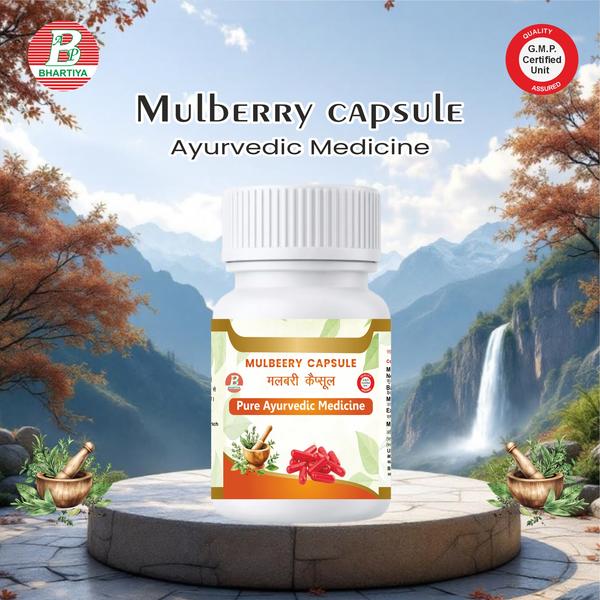
"name": "Mulbarry Capsule",
"description": " MULBERRY \n\n MULBERRY (Morus alba L., Morus nigra L.) \nThe Nutritive, Rejuvenative Herb — “Sangri / Shahtoot”\nMulberry is a widely valued medicinal and nutritive plant in Ayurveda for its rejuvenative, blood-purifying, and metabolism-supporting properties. Traditionally used to support digestion, improve immunity, maintain blood sugar levels, and enhance overall vitality, Mulberry is rich in flavonoids, anthocyanins, vitamins, and minerals. It is considered beneficial for managing diabetes, improving haemoglobin, supporting liver and kidney health, and promoting longevity.\n CLASSICAL AYURVEDIC REFERENCES\n1.\tCharaka Samhita\n•\tMentioned in Chikitsa Sthana for strengthening blood, improving digestion, and enhancing Ojas.\n•\tUsed as Rasayana and for diabetes management (Prameha).\n2.\tSushruta Samhita\n•\tRecommended for skin disorders, bleeding disorders, and general debility.\n•\tDescribed as Snigdha (unctuous), Sheeta (cooling), and Madhura (sweet), supporting metabolism and rejuvenation.\n3.\tBhavaprakasha Nighantu\n•\tReferred to as Shahtoot / Shukrala (Morus).\n•\tPromotes longevity, Ojas, and blood health.\n•\tUsed in Rasayana and Medhya formulations.\n\n CLASSICAL STORY / ANECDOTE\nIn Ayurvedic texts, Mulberry is praised for its nutritive and rejuvenating effect on the body and mind. Acharyas describe Mulberry as “Rasayana, Ojasvardhaka, and Balya,” emphasizing its role in restoring vitality and stamina. Traditionally, Mulberry leaves and fruits were recommended to improve haemoglobin levels, support digestion, and maintain balanced blood sugar. Bhavaprakasha Nighantu likens Mulberry to a “nourishing tree,” symbolizing its life-sustaining and rejuvenative qualities.\n BOTANICAL INFORMATION OF MULBERRY\n•\tScientific Name: Morus alba L. / Morus nigra L.\n•\tFamily: Moraceae\n•\tOrder: Rosales\n•\tGenus: Morus\n•\tSpecies: alba / nigra\n\nCommon Names:\n•\tSanskrit: Shahtoot\n•\tHindi: Shahtoot / Tut\n•\tEnglish: Mulberry\n•\tTamil: Tutti\n•\tTelugu: Tooti\n•\tMalayalam: Tutti\n•\tKannada: Tooti\n•\tBengali: Tut\n\n SYNONYMS IN CLASSICAL AYURVEDIC NIGHANTUS\n•\tCharaka Samhita: Shahtoot – Rasayana, Ojasvardhaka, Balya\n•\tSushruta Samhita: Shahtoot – Medhya, Rasayana, Shukrala\n•\tBhavaprakasha Nighantu: Shahtoot – Promotes longevity, blood health, and vitality\n MORPHOLOGY OF MULBERRY\n•\tPlant Type: Deciduous, perennial tree\n•\tHeight: 5–15 m\n•\tLeaves: Simple, heart-shaped, serrated edges\n•\tFlowers: Small, greenish-white, dioecious\n•\tFruits: Sweet or slightly tart, multiple small drupes clustered (white, red, black)\n•\tSeeds: Tiny, embedded in the fruit\n ECOLOGICAL PREFERENCES\n•\tClimate: Temperate to subtropical, tolerates drought\n•\tSoil: Well-drained loamy soil, pH 6–7.5\n•\tHabitat: Cultivated widely; wild in riverbanks and open forests\n•\tAltitude: 0–2,000 m\n GEOGRAPHICAL DISTRIBUTION\n•\tIndia: Uttar Pradesh, Punjab, Madhya Pradesh, Himachal Pradesh, Maharashtra\n•\tOutside India: China, Europe, North America, Middle East\n CLASSICAL AYURVEDIC PROPERTIES (RASA–GUNA–VIRYA–VIPAKA)\n•\tRasa (Taste): Madhura (sweet), Kashaya (astringent)\n•\tGuna (Qualities): Snigdha (unctuous), Laghu (light)\n•\tVirya (Potency): Sheeta (cooling)\n•\tVipaka (post-digestive effect): Madhura (sweet)\n•\tDosha Effects: Pitta-Vata hara (reduces Pitta & Vata), Kapha balancing\n THERAPEUTIC ACTIONS (KARMA)\n1.\tRasayana: Enhances longevity, immunity, and vitality\n2.\tRaktaprasadaka: Supports blood health and hemoglobin\n3.\tMedhya: Supports mental clarity and cognitive function\n4.\tPramehahara: Helps regulate blood sugar\n5.\tHridya: Supports heart and circulation\n6.\tBalya: Improves strength and stamina\n INDICATIONS\n•\tNervous System: Weakness, fatigue\n•\tDigestive System: Indigestion, constipation\n•\tMetabolic / Endocrine: Diabetes, low vitality\n•\tCardiovascular System: Mild hypertension, palpitations\n•\tHaematological: Anaemia, low haemoglobin\n•\tImmunity & Rejuvenation: General debility, aging-related weakness\n MODERN PHARMACOLOGY & PHYTOCHEMISTRY\n•\tMajor Constituents:\no\tFlavonoids, anthocyanins, vitamins (C, K), minerals (iron, calcium, magnesium), alkaloids, phenolics\n•\tPharmacological Actions:\no\tAntioxidant & anti-inflammatory\no\tHypoglycaemic & metabolic regulator\no\tCardioprotective\no\tImmunomodulatory\no\tHepatoprotective\n CULTIVATION DETAILS\n•\tPropagation: Seeds, cutting, grafting\n•\tSowing Time: Spring (March–May)\n•\tSpacing: 3–5 m between trees\n•\tIrrigation: Moderate; tolerates drought\n•\tFertilization: Organic manure preferred\n•\tHarvesting: Fruits harvested seasonally; leaves harvested multiple times per year\n CLASSICAL DOSAGE (According to Ayurvedic Granthas)\n•\tFruits (fresh or dried): 10–30 g/day\n•\tLeaves (decoction / juice): 20–50 ml twice daily\n•\tRoot / Bark (powder / decoction): 2–5 g/day\n•\tOil / Taila (external): 5–10 ml/day for massages\n MULBERRY FORMULATIONS – BHARTIYA AYURVEDIC PHARMACY\nBhartiya Ayurvedic Pharmacy prepares Mulberry formulations following classical Ayurvedic principles. Each product retains the nutritive, rejuvenative, and metabolism-supporting properties of Mulberry, promoting blood health, immunity, cognitive function, and overall vitality.\nKey Uses of Mulberry Formulations:\n•\tBlood and metabolic system support\n•\tImmunity enhancement\n•\tCognitive and mental health support\n•\tRasayana: longevity, vitality, and balanced energy\n\n MULBERRY CAPSULE \n•\tKey Benefits:\no\tSupports blood, metabolism, and immunity\no\tEnhances energy, stamina, and vitality\no\tPromotes mental clarity and cognitive function\n•\tDosage:\no\tAdults: 1–2 capsules twice daily with warm water or as directed\no\tCan be combined with milk or ghee for enhanced Rasayana effect\n•\tSafety & Precautions:\no\tSafe for long-term use as per dosage\no\tMild hypoglycaemic effect may occur; monitor if on diabetes medications\n•\tFormulation Highlights:\no\t100% natural Mulberry (Morus) powder\no\tFree from artificial colours, preservatives, and additives\no\tPrepared using classical Ayurvedic methods\n\n•\tSuggested Use:\no\tIdeal for adults seeking rejuvenation, immunity, blood support, and metabolic balance\no\tSuitable for daily Rasayana and revitalization\n\n\nmulberry capsules, mulberry capsules benefits, mulberry leaf capsules\nwhite mulberry capsules, mulberry extract capsules, mulberry fruit capsules\nmulberry leaf extract capsules, mulberry capsule amazon, mulberry capsule ayurvedic\nmulberry capsule ayurveda, mulberry capsule ayurvedic medicine\nmultiberry capsule, mulberine capsules uses\nmulberry capsule download, mulberry capsule dosage\nmulberry capsule dose, mulberry capsule dose per day\nmulberry capsule daily dose, mulberry capsule dark chocolate\nmulberry leaf extract capsule, mulberry extract tablet\nmulberry capsule gold, mulberry capsule gst rate\nmulberry capsule hindi, mulberry capsule how to use\nmulberry capsule hsn code, mulberry capsule hoti hai\nindian mulberry capsule, mulberry capsule japan\nmulberry capsule juice, mulberry capsule joy\nmulberry capsule juice price, mulberry capsule juice benefits\nmulberry capsule jiomart, mulberry capsule juice amazon\nmulberry capsule juice online, mulberry capsule khane ke fayde\nmulberry capsule ke fayde in hindi, mulberry leaf capsule\n mulberry capsule manufacturer, mulberry capsule manufacturers in india\nmulberry capsule name, mulberry capsule near me, mulberry capsule nutrition\nmulberry capsule nutrition facts, mulberry capsule new packaging\nmulberry capsule na, mulberry capsule night, mulberry capsule note\nmulberry capsule online, mulberry capsule online shopping\nmulberry capsule original, mulberry capsule online order\nmulberry capsule on amazon, mulberry capsule on face\nmulberry capsule price, mulberry capsule pdf, mulberry capsule price in india\nmulberry capsule pharma, mulberry capsule pillow price, mulberry capsule quality\nmulberry capsule quantity, mulberry capsule quotes short, mulberry capsule review\nmulberry capsule rate, mulberry capsule research paper, mulberry capsule red\nmulberry capsule red benefits, mulberry capsule release, mulberry capsule rose\nmulberry capsule tablet, mulberry capsule types, mulberry capsule test\nmulberry capsule tata, mulberry capsule tab, mulberry capsule tonic\nmulberry capsule topic, mulberry capsule tshirt, mulberry capsule tonic benefits\nmulberry capsule uses in hindi, mulberry capsule uses, mulberry capsule wholesale\nwhere mulberry capsule manufactured, where mulberry capsules are made\nwhere mulberry capsules, when does mulberry grow, when is mulberry season in india\nhow mulberry capsule works, why mulberry face wash, does mulberry increase weight\nwho mulberry capsules, is mulberry capsule good, is mulberry good for cholesterol\n",
"price": 480.0,
"discountamount": 240.0,
"currencycode": "INR",
"priority": 1000000,
"isfreeshipmentavailable": false,
"shipmentduration": 1,
"_keywords": null,
"isarchived": false,
"isavailable": true,
"applicationid": null,
"productindex": 120,
"imageuri": "https://productimages.withfloats.com/actual/6a081088f72a9a60137a7547.jpg",
"tileimageuri": "https://productimages.withfloats.com/tile/6a081088f72a9a60137a7547.jpg",
"images": null,
"totalqueries": 0,
"gpid": null,
"groupproductid": null,
"createdon": "2026-05-16T06:36:54.248Z",
"updatedon": "2026-05-16T06:36:54.248Z",
"buyonlinelink": null,
"producturl": "http://WWW.BHARTIYAAYURVEDICPHARMACY.COM/products/mulbarry-capsule/120",
"availableunits": -1.0,
"iscodavailable": true,
"isprepaidonlineavailable": true,
"maxcodorders": -1,
"maxprepaidonlineorders": -1,
"uniquepaymenturl": null,
"brandname": "Bakula Fort",
"category": "Mulbarry Capsule 60 Cap X 30",
"tags": [],
"variants": false,
"keyspecification": null,
"otherspecifications": null,
"pickupaddressreferenceid": null,
"paymenttype": "AssuredPurchase",
"producttype": "products",
"hsncode": null,
"gstslab": 0.0,
"isnotforsale": false
},
{
"_id": "69a27c1007634e1b29b4922c",
"fptag": "BHARTIYEAYURVEDICPHARMACY",
"merchantname": null,
"customwidgets": null,
"externalsourceid": null,
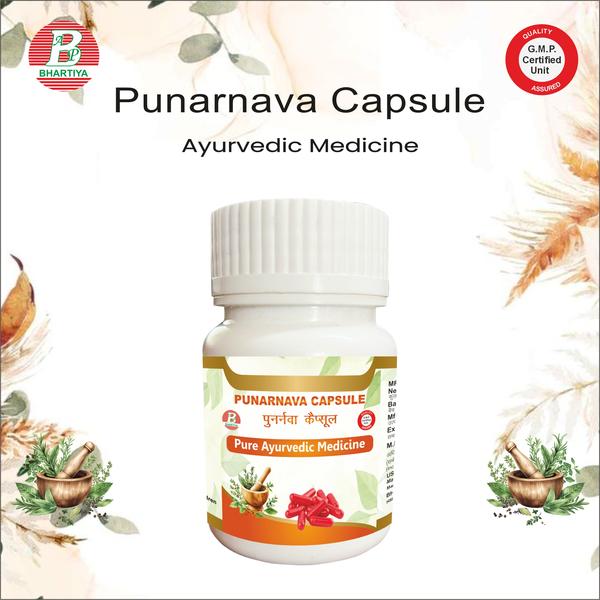
"name": "Punarnava Capsule",
"description": " Punarnava (Boerhavia diffusa) \n The Rejuvenating Herb with Healing Leaves\nPunarnava is one of the most important rejuvenating herbs in Ayurveda, widely valued for its unique ability to revive and renew the body.\nThe name Punarnava literally means “that which becomes new again”, indicating its powerful regenerative and restorative nature.\nIn Ayurveda, Punarnava is classified as a Mutrala (diuretic), Shothahara (anti-inflammatory), and Rasayana (rejuvenative) drug. It is highly beneficial in managing swelling (oedema), kidney disorders, liver weakness, urinary problems, digestive issues, anaemia, and general debility.\nBotanical Information of Punarnava\nScientific Name: Boerhavia diffusa Linn.\nFamily: Nyctaginaceae\nOrder: Caryophyllales\nGenus: Boerhavia\nSpecies: diffusa\nCommon Names:\n•\tSanskrit: Punarnavā, Shothaghanī, Raktapunarnavā, Śvetapunarnavā, Shreṇī, Shoṭikā\n•\tHindi: Punarnava\n•\tEnglish: Spreading Hogweed, Red Spiderling\n•\tTamil: Mookarattai\n•\tTelugu: Atika\n•\tMalayalam: Thazhuthama\n•\tKannada: Komme beru\n•\tBengali: Punarnava\nSynonyms of Punarnava (Boerhavia diffusa) in Ayurvedic Nighantus:\n Bhavaprakasha Nighantu – Shothaghni, Raktapunarnava, Shvetapunarnava, Shoṭikā\n Raja Nighantu & Kaiyadeva Nighantu – Panchanga, Jalapushpa, Mochana, Bhujanga\n Hrudaya Nighantu & Dhanvantari Nighantu – Utkalika, Shreni\n Morphology of Punarnava (Boerhavia diffusa)\nPlant Type: Perennial, creeping, and spreading herb\nStem:\n•\tProstrate or slightly ascending, creeping along the ground\n•\tPurplish-green, hairy, with swollen nodes\n•\tRoots develop at nodes where the stem touches the soil\nLeaves:\n•\tSimple, opposite arrangement\n•\tShape: Ovate, elliptic, or slightly rounded\n•\tTexture: Fleshy and soft\n•\tColor: Dark green on the upper surface, pale green below\n•\tPetiole: Short\nFlowers:\n•\tSmall, tubular, and bisexual\n•\tColor: Pink, reddish, or white\n•\tArranged in axillary clusters (cymes)\n•\tBloom mainly during summer and rainy seasons\nRoots:\n•\tThick, cylindrical, fleshy, and tapering\n•\tColor: White in Shveta Punarnava, reddish in Rakta Punarnava\n•\tMedicinal part, rich in active constituents\nFruits:\n•\tSmall, ovoid, glandular, and sticky when young\n•\tDark brown at maturity\n•\tOne-seeded\nHabit:\n•\tCreeping, spreading, fast-growing, regenerates easily\n•\tAdapted to drought and poor soil conditions\n Ecological Preferences of Punarnava\n•\tClimate: Thrives in tropical and subtropical climates; tolerates heat and moderate drought.\n•\tSoil: Prefers sandy, loamy, or well-drained soils; can grow in poor or degraded soils.\n•\tSunlight: Grows well in full sunlight to partial shade.\n•\tMoisture: Requires moderate moisture; can survive dry periods due to its hardy nature.\n•\tAltitude: Found at low to medium altitudes, commonly in plains and open areas.\n•\tHabitat: Common along roadsides, fields, gardens, wastelands, and riverbanks.\n•\tGrowth habit: Creeping, spreading, fast-growing, and regenerates easily after adverse conditions.\n Distribution of Punarnava\nGeographical Distribution:\nPunarnava is a widely distributed perennial herb found in tropical and subtropical regions across the world.\n•\tIndia: Found throughout the country in almost all states, particularly in plains, dry regions, roadsides, wastelands, and fields.\n•\tAsia: Occurs in Pakistan, Sri Lanka, Bangladesh, Nepal, and Myanmar.\n•\tAfrica: Common in tropical and subtropical Africa.\n•\tAmericas: Found in parts of South America and Central America.\n•\tOther Regions: Naturalized in various tropical areas worldwide due to its hardy and fast-growing nature\n Classical Ayurvedic Properties of Punarnava\n•\tRasa (Taste): Tikta (bitter), Kashaya (astringent)\n•\tGuna (Qualities): Laghu (light), Ruksha (dry)\n•\tVirya (Potency): Ushna (hot)\n•\tVipaka (post-digestive effect): Katu (pungent)\n•\tDosha Effect: Kapha-Vata shamaka (pacifies Kapha and Vata doshas)\n•\tKarma (Actions / Therapeutic Effects):\no\tMutrala: Promotes urination, useful in oedema and urinary disorders\no\tShothahara: Reduces swelling and inflammation\no\tYakrit-Pleeha Shodhaka: Supports liver and spleen health\no\tRasayana: Rejuvenative and revitalizing\no\tHridya: Supports heart function\nTherapeutic Actions of Punarnava According to Acharyas\n1.\tMutrala (Diuretic):\no\tPromotes urine formation, relieves Shotha (edema, ascites, anasarca)\no\tUseful in kidney and urinary disorders\n2.\tShothahara (Anti-inflammatory / Anti-edema):\no\tReduces Kapha and Vata-related swelling\no\tUseful in joint swelling, ascites, and edema\n3.\tYakrit-Pleeha Shodhaka (Hepato-splenic tonic / Detoxifier):\no\tSupports liver and spleen health\no\tClears stagnation in Rakta and Pitta\n4.\tRasayana (Rejuvenative / Revitalizing):\no\tImproves strength, vitality, and general health\no\tEnhances immunity and longevity\n5.\tHridya (Cardio-supportive):\no\tSupports heart function by reducing fluid overload\n6.\tMedohara / Vatashamaka:\no\tHelps in reducing excessive fat (Medo Dhatu) and pacifies Vata dosha in the body\n\nReferences from Acharyas:\n•\tCharaka Samhita: Punarnava is Shothaghni, Mutrala, Rasayana\n•\tSushruta Samhita: Shveta and Rakta Punarnava described for Shotha, Mutra, and Yakrit-Pleeha disorders\n•\tBhavaprakasha: Emphasizes anti-edema, diuretic, hepatoprotective, and rejuvenative actions\n Modern Phytochemistry of Punarnava\nPunarnava is rich in bioactive compounds responsible for its therapeutic properties. Key phytochemicals identified include:\n1. Alkaloids\n•\tPunarnavine – major alkaloid, responsible for diuretic and hepatoprotective activity\n•\tBoeravinones (A–F) – rotenoid compounds with antioxidant, hepatoprotective, and anti-inflammatory properties\n2. Flavonoids\n•\tQuercetin, Kaempferol – contribute to antioxidant and anti-inflammatory effects\n3. Glycosides\n•\tPunarnavoside – responsible for diuretic and anti-edema activity\nSpecies of Punarnava (Genus: Boerhavia)\nThe genus Boerhavia (family Nyctaginaceae) includes several species, but Boerhavia diffusa is the most commonly used in Ayurveda. Other species are also recognized botanically for various regional and medicinal uses:\n1. Boerhavia diffusa Linn.\n•\tMost widely used in Ayurveda\n•\tPerennial, creeping, and spreading herb\n•\tKnown for diuretic, anti-inflammatory, hepatoprotective, and rejuvenative properties\n2. Boerhavia erecta L.\n•\tErect or semi-erect habit, less creeping\n•\tFound in tropical regions\n•\tUsed in traditional medicine locally, but less common in classical Ayurveda\n3. Boerhavia repens L.\n•\tCreeping herb, often used as ground cover\n•\tOccasional medicinal use in folk medicine\n4. Boerhavia coccinea Mill.\n•\tRed-flowered species, creeping habit\n•\tSometimes used in ethnomedicine for fever and inflammation\n5. Boerhavia verticillata Willd.\n•\tFound in Africa and Asia\n•\tLimited medicinal use; occasionally cited in ethnobotanical surveys\nCultivation:\n•\tPropagation: Primarily by seeds; can also propagate via stem cuttings due to its creeping habit.\n•\tSowing Time: Best sown during the early monsoon or rainy season.\n•\tSpacing: Maintain 30–40 cm between plants to allow spreading.\n•\tWatering: Requires moderate moisture; drought-tolerant once established.\n•\tFertilization: Responds well to organic manure or compost, though hardy enough to grow in poor soils.\n•\tHarvesting: Roots, stems, and leaves are harvested after 3–4 months of growth, depending on medicinal use.\n•\tEcological Note: Acts as a pioneer plant, stabilizing soil and growing in degraded lands.\n Classical Dosage of Punarnava in Granthas\n1. Charaka Samhita\nForm: Root or whole plant powder (Churna), decoction (Kwatha)\nDose: 3–6 grams of powder; 40–60 ml of decoction, 2–3 times daily\nUses: Shotha (edema), Mutrakriccha (urinary disorders), Rasayana\n2. Sushruta Samhita\nForm: Root, whole plant, or paste\nDose: 3–6 grams powder; decoction 40–60 ml; external paste as required\nUses: Shotha, Mutra, Yakrit-Pleeha disorders\n3. Bhavaprakasha Nighantu\nForm: Churna, Kwatha, Swarasa (juice)\nDose: 3–6 grams Churna; 40–60 ml Kwatha; 20–30 ml Swarasa 1–2 times daily\nNotes: Shveta Punarnava for urinary issues; Rakta Punarnava for liver and blood disorders\n4. Raja Nighantu & Kaiyadeva Nighantu\nForm: Panchanga (whole plant), decoction, powder\nDose: Similar classical dose as above; 3–6 grams for powder, decoction 40–60 ml\nTherapeutic Use: Shothahara, Mutrala, Rasayana\n\n Safety and Precautions of Punarnava\n Safe in classical dosage.\n Avoid overdose -caution with strong diuretics.\n Pregnant Woman- use only under supervision.\n\n Classical Ayurvedic Formulations of Punarnava\nPunarnava is a key ingredient in many classical Ayurvedic preparations for edema, liver disorders, kidney ailments, and rejuvenation. Common formulations include:\n1. Punarnavadi Kwatha (Decoction)\n•\tIngredients: Punarnava, Trikatu (Pippali, Maricha, Shunthi), Musta, Haritaki, and other supporting herbs\n•\tAction: Diuretic, anti-edema, hepatoprotective, rejuvenative\n•\tIndication: Shotha (edema), Ascites, Mutrakriccha (urinary disorders)\n2. Punarnavadi Churna (Powder)\n•\tIngredients: Punarnava root, Haritaki, Musta, Chitrak, Shunthi\n•\tAction: Supports kidney and liver health, promotes detoxification, reduces swelling\n•\tDose: 3–6 g/day with water or honey\n3. Punarnava Swarasa (Juice)\n•\tForm: Fresh juice of Punarnava root or whole plant\n•\tAction: Diuretic, anti-inflammatory, mild laxative\n•\tDose: 20–30 ml, 1–2 times daily\n4. Punarnava Grita or Taila (Medicated Ghee/Oil)\n•\tUsage: External application for swelling, inflammation, and joint disorders\n•\tAction: Shothahara, soothing, and rejuvenative\n5. Compound Formulations\n•\tPunarnavadi Kashaya, Punarnavadi Gutika, Punarnavadi Avaleha – used in liver disorders, urinary diseases, edema, and general rejuvenation.\n Punarnava Formulations by Bhartiya Ayurvedic Pharmacy\nAt Bhartiya Ayurvedic Pharmacy, we prepare a range of Punarnava (Boerhavia diffusa) formulations following classical Ayurvedic methods as described in Charaka Samhita, Sushruta Samhita, Bhav Prakash Nighantu, and other Ayurvedic Granthas. Each product is crafted to retain the therapeutic potency, purity, and efficacy of the herb, ensuring benefits for fluid balance, kidney & liver support, detoxification, and rejuvenation.\n1. Punarnava Tablet\nDescription:\nPunarnava Tablets contain standardized powdered extract of Boerhavia diffusa, providing a convenient dosage form for daily use.\nKey Actions:\n•\tSupports normal urinary output and reduces mild water retention\n•\tPromotes liver and kidney health\n•\tReduces swelling (Edema)\n•\tBeneficial in cough or intestinal colic\n•\tIt can help lower the blood pressure\n•\tProvides general detox and rejuvenation\nDosage:\n•\t1–2 tablets twice daily after meals, or as advised by an Ayurvedic practitioner\nPrecautions:\n•\tUse under guidance in pregnancy, kidney disorders, or excessive fluid loss\n•\tMaintain recommended dosage\n2. Punarnava Capsule\nDescription:\nThese capsules offer a modern, easy-to-swallow format containing Punarnava extract, ideal for those who prefer capsules over tablets or decoctions.\nKey Actions:\n•\tSupports diuresis (mutrala) and reduces edema (shothahara)\n•\tHelps maintain healthy liver function\n•\tActs as a rejuvenative (rasayana)\nDosage:\n•\t1 capsule twice daily with warm water after meals\nPrecautions:\n•\tNot recommended for patients on strong diuretics without consulting a physician\n3. Punarnava Asava\nDescription:\nPunarnava Asava is a classical Ayurvedic fermented liquid formulation, prepared from fresh roots/whole plant to preserve bioactive constituents.\nKey Actions:\n•\tPromotes fluid balance and detoxification\n•\tSupports liver and kidney health\n•\tEasily digestible, suitable for patients with weak digestive fire\nDosage:\n•\t20–30 ml twice daily after meals, or as advised\n•\tCan be taken with warm water or honey as per taste and constitution\nPrecautions:\n•\tStore in a cool, dry place\n•\tUse under supervision during pregnancy or lactation\n4. Punarnavadi Mandura\nDescription:\nA classical Ayurvedic herbo-mineral formulation combining Punarnava with Mandura Bhasma (iron). Designed to support blood health, anemia, spleen function, along with Punarnava’s diuretic and rejuvenative actions.\nKey Actions:\n•\tHematinic: Replenishes iron and supports blood formation\n•\tDiuretic & Detox: Reduces edema and fluid retention\n•\tRejuvenative: Improves vitality and metabolic balance\nDosage:\n•\t1–2 tablets twice daily after meals with warm water or milk, as directed by an Ayurvedic practitioner\nPrecautions:\n•\tAvoid excessive intake; monitor iron levels if used long-term\n•\tNot recommended in cases of iron overload or severe gastric sensitivity\n\n\n\npunarnava capsule, punarnava capsule benefits, punarnava capsule company name\npunarnava capsule composition, punarnava capsule contains\npunarnava capsule cost, punarnava capsule gm\npunarnava capsule gst, punarnava capsule gst rate\npunarnava capsule ke fayde, punarnava capsule kis kaam aata hai\npunarnava capsule online, punarnava capsule online order\npunarnava capsule online shopping, punarnava capsule original\npunarnava capsule price, punarnava capsule quality\npunarnava capsule quantity, punarnava capsule review\npunarnava capsule root, punarnava capsule root powder\npunarnava capsule root powder benefits\npunarnava capsule side effects, punarnava capsule uses\npunarnava capsule uses in hindi, punarnava capsule video\npunarnava capsule video youtube, punarnava capsules benefits\npunarnava capsules benefits in hindi, punarnava capsules price in india\npunarnava capsules uses, punarnava capsules uses in hindi\npunarnava extract capsules, punarnava how to use\npunarnava ka juice, punarnava ke capsule\npunarnava nutritious capsule, punarnava tablet benefits\npunarnava tablet lene ke fayde, punarnava tablets benefits\nwhat is punarnava, when to take punarnava",
"price": 360.0,
"discountamount": 180.0,
"currencycode": "INR",
"priority": 1000000,
"isfreeshipmentavailable": false,
"shipmentduration": 1,
"_keywords": null,
"isarchived": false,
"isavailable": true,
"applicationid": null,
"productindex": 68,
"imageuri": "https://productimages.withfloats.com/actual/69a27c16871d453ad0f0d462.jpg",
"tileimageuri": "https://productimages.withfloats.com/tile/69a27c16871d453ad0f0d462.jpg",
"images": null,
"totalqueries": 0,
"gpid": null,
"groupproductid": null,
"createdon": "2026-02-28T05:24:32.91Z",
"updatedon": "2026-03-02T04:31:26.469Z",
"buyonlinelink": null,
"producturl": "http://WWW.BHARTIYAAYURVEDICPHARMACY.COM//punarnava-capsule/68",
"availableunits": -1.0,
"iscodavailable": true,
"isprepaidonlineavailable": true,
"maxcodorders": -1,
"maxprepaidonlineorders": -1,
"uniquepaymenturl": null,
"brandname": "Bakula Fort",
"category": "Punarnava Capsule 60 - cap X 24",
"tags": [],
"variants": false,
"keyspecification": null,
"otherspecifications": null,
"pickupaddressreferenceid": null,
"paymenttype": "AssuredPurchase",
"producttype": "products",
"hsncode": null,
"gstslab": 0.0,
"isnotforsale": false
},
{
"_id": "698f0f2661796b22a0856371",
"fptag": "BHARTIYEAYURVEDICPHARMACY",
"merchantname": null,
"customwidgets": null,
"externalsourceid": null,
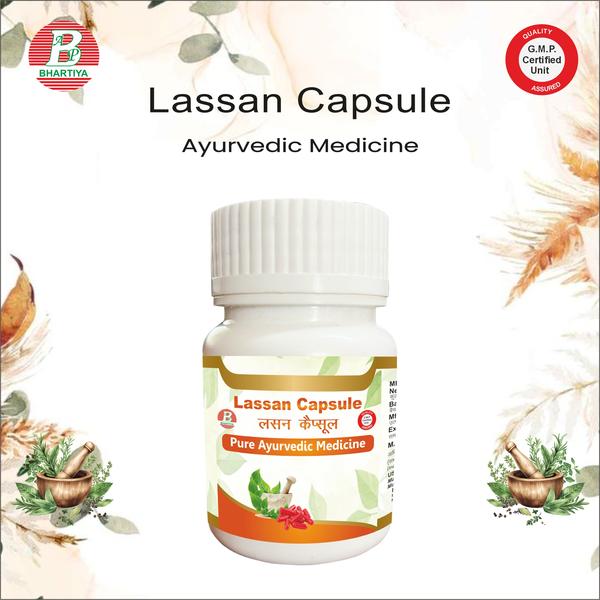
"name": "Lassan Capsule",
"description": " LAHSUN \n\n LASSAN / LAHSUN (Allium sativum Linn.) \nThe Supreme Heart & Immunity Herb — “Lahsun / Garlic”\nLahsun is a highly esteemed herb in Ayurveda, celebrated for its Hrudya (heart-supporting), Balya (strength-promoting), Rasayana (rejuvenative), Jwaraghna (febrifuge), and Krimighna (antimicrobial) properties. It is traditionally used to enhance cardiovascular health, immunity, digestive strength, and overall vitality. Lahsun is particularly effective in Kapha–Vata disorders, hypertension, respiratory congestion, digestive weakness, and fatigue.\n \n BOTANICAL INFORMATION OF LASSAN\n•\tScientific Name: Allium sativum Linn.\n•\tFamily: Amaryllidaceae\n•\tOrder: Asparagales\n•\tGenus: Allium\n•\tSpecies: sativum\nCommon Names\n•\tSanskrit: Rasuna\n•\tHindi: Lahsun / Lassan\n•\tEnglish: Garlic\n•\tTamil: Vellulli\n•\tTelugu: Vellulli\n•\tKannada: Bellulli\n•\tMalayalam: Poondu\n•\tBengali: Rosun\n\n SYNONYMS IN CLASSICAL AYURVEDIC NIGHANTUS\nCharaka Samhita\n•\tRasuna – Cardio-protective, immune-boosting\nSushruta Samhita\n•\tLassan – Digestive stimulant, rejuvenative\nBhavaprakasha Nighantu\n•\tHrudya, Balya, Rasayana – Supports heart, strength, and rejuvenation\nDhanvantari Nighantu\n•\tKrimighna – Anti-parasitic, antimicrobial\n\n MORPHOLOGY OF LASSAN\n•\tPlant Type: Herbaceous perennial\n•\tHeight: 30–60 cm\n•\tLeaves: Strap-like, green\n•\tFlowers: Umbellate clusters, white or pink\n•\tBulb: Underground, composed of multiple cloves\n•\tRoots: Fibrous\n\n ECOLOGICAL PREFERENCES\n•\tClimate: Temperate to subtropical\n•\tSoil: Well-drained, fertile, loamy soil\n•\tSunlight: Full sun\n•\tWater Requirement: Moderate\n•\tAltitude: Up to 2,000 m\n\n GEOGRAPHICAL DISTRIBUTION\n•\tIndia: Punjab, Uttar Pradesh, Madhya Pradesh, Rajasthan\n•\tOutside India: China, Mediterranean, USA, Europe\n\n CLASSICAL AYURVEDIC PROPERTIES (RASA–GUNA–VIRYA–VIPAKA)\n•\tRasa (Taste): Katu (pungent), Tikta (bitter)\n•\tGuna (Qualities): Laghu (light), Ruksha (dry)\n•\tVirya (Potency): Ushna (hot)\n•\tVipaka (post-digestive effect): Katu (pungent)\n•\tDosha Effects: Kapha–Vata hara; increases Pitta\n\n THERAPEUTIC ACTIONS (KARMA)\n1.\tHrudya – Supports cardiovascular health\n2.\tBalya – Strengthens body and immunity\n3.\tRasayana – Rejuvenative, anti-aging, restores vitality\n4.\tPachana – Digestive stimulant\n5.\tKrimighna – Antimicrobial, antiparasitic\n6.\tShleshma-Kapha Hara – Reduces congestion and mucus\n7.\tVajikarana – Enhances sexual vitality\n\n INDICATIONS\n•\tHypertension, high cholesterol, heart disorders\n•\tWeak immunity and frequent infections\n•\tRespiratory congestion, cough, cold\n•\tDigestive weakness, bloating, and gas\n•\tMale sexual weakness or low libido\n•\tGeneral fatigue and low vitality\n\n MODERN PHYTOCHEMISTRY & PHARMACOLOGY\nMajor Constituents:\n•\tAllicin (sulphur compound)\n•\tSaponins\n•\tFlavonoids\n•\tVitamins (C, B6) and minerals (selenium, manganese)\nPharmacological Actions:\n•\tCardioprotective, antihypertensive, lipid-lowering\n•\tAnti-microbial, anti-inflammatory, antioxidant\n•\tImmune-modulatory\n•\tRejuvenative and anabolic\n•\tNeuroprotective\n\n CULTIVATION DETAILS\n•\tPropagation: Cloves / Bulbs\n•\tSowing Time: October–November\n•\tSpacing: 10–15 cm between plants\n•\tIrrigation: Moderate\n•\tHarvesting: 6–8 months after planting\n•\tFertilization: Organic manure preferred\n\n CLASSICAL DOSAGE (According to Ayurvedic Granthas)\n•\tFresh Cloves: 2–4 g daily\n•\tPowder (Churna): 1–2 g twice daily\n•\tJuice / Decoction: 5–10 ml with honey or warm water\n\n CLASSICAL AYURVEDIC FORMULATIONS CONTAINING LASSAN\n1.\tLahsun Churna – Digestive and immune support\n2.\tLahsun Kashaya (Decoction) – Respiratory congestion, cough, and cold\n3.\tMedicated Garlic Oil (Lahsun Taila) – For massage, nerve, and hair health\n4.\tRasayana with Lahsun – Rejuvenative and vitality-promoting\n\n SAFETY & PRECAUTIONS\n•\tSafe under classical doses\n•\tAvoid excessive intake in Pitta disorders (can cause acidity)\n•\tCaution in bleeding disorders or if on anticoagulants\n•\tMay irritate stomach in raw form\n\n “Lahsun, the pungent bulb, nurtures heart, immunity, digestion, and vitality — a humble yet potent gift of nature for rejuvenation and strength.” \n\n LASSAN / LAHSUN FORMULATIONS – BHARTIYA AYURVEDIC PHARMACY \nBhartiya Ayurvedic Pharmacy prepares a range of Lahsun (Allium sativum) formulations following classical Ayurvedic principles, retaining full Hrudya, Balya, Rasayana, Krimighna, and immune-supporting properties. Each product is designed to support cardiovascular health, immunity, digestive strength, vitality, and overall rejuvenation.\n\n 1. Lahsun Capsule\nDescription:\nLahsun Capsule is a convenient, modern dosage form containing standardized Lahsun extract. Ideal for those who prefer capsules over powders, it preserves all rejuvenative, immune-boosting, and cardio-protective properties of the bulb.\nKey Actions:\n•\tSupports heart and circulatory system health (Hrudya)\n•\tEnhances immunity and overall vitality (Rasayana)\n•\tPromotes digestive strength and energy (Balya Pachana)\n•\tAnti-aging and rejuvenative effects\nDosage:\n•\t1–2 capsules twice daily with warm water after meals\nPrecautions:\n•\tAvoid overdose\n•\tUse under supervision in bleeding disorders, hypertension, or pregnancy\n\n 2. Lahsun Powder (Churna)\nDescription:\nPure, finely powdered Lahsun for traditional use. Can be consumed with honey, ghee, warm water, or milk.\nKey Actions:\n•\tSupports cardiovascular health and lowers cholesterol\n•\tBoosts immunity and fights infections\n•\tEnhances digestive strength and metabolism\n•\tRejuvenative and anti-aging effects\nDosage:\n•\t1–2 g daily, mixed with honey, ghee, or warm water, or as advised by physician\nPrecautions:\n•\tAvoid excess intake in Pitta-prone individuals\n•\tUse with caution in bleeding disorders\n\n\nbest kashmiri lahsun, lahsun capsule ke fayde , lahsun capsule khane ke fayde, lahsun contains\nlahsun for skin, lahsun ka beej, lahsun ka capsule, lahsun ka doctor, lahsun ka upyog, lahsun ka use\nlahsun kaise hataye, lahsun kaise hoga, lahsun kaise rupaye, lahsun kaise wala, lahsun ke capsule\nlahsun ke capsule ke fayde, lahsun medicine, lahsun uses, lahsun vitamin, lahsun wala, lahsun wale capsule,\nlashun capsule amazon, lashun capsule ayurvedic, lashun capsule benefits, lashun capsule benefits in hindi,\n lashun capsule company, lashun capsule company name, lashun capsule composition, lashun capsule content,\nlashun capsule cost, lashun capsule english, lashun capsule english name, lashun capsule expiry date\nlashun capsule extract, lashun capsule gst rate, lashun capsule image, lashun capsule in english\nlashun capsule in hindi, lashun capsule indiamart, lashun capsule machine, lashun capsule manufacturer\nlashun capsule manufacturers in india, lashun capsule name, lashun capsule near me, lashun capsule online\nlashun capsule online order, lashun capsule online shopping, lashun capsule price, lashun capsule quality\nlashun capsule quantity per day, lashun capsule question, lashun capsule se kya hota hai, lashun capsule side effects\nlashun capsule side effects in hindi, lashun capsule supplier, lashun capsule time to consume\nlashun capsule today price, lashun capsule today rate, lashun capsule uses, lashun capsule uses in hindi\nlasun capsules, lasun side effects, side effects of lahsun, uses of lahsun",
"price": 270.0,
"discountamount": 135.0,
"currencycode": "INR",
"priority": 1000000,
"isfreeshipmentavailable": false,
"shipmentduration": 1,
"_keywords": null,
"isarchived": false,
"isavailable": true,
"applicationid": null,
"productindex": 63,
"imageuri": "https://productimages.withfloats.com/actual/698f0f28ce45eacfd2649794.jpg",
"tileimageuri": "https://productimages.withfloats.com/tile/698f0f28ce45eacfd2649794.jpg",
"images": null,
"totalqueries": 0,
"gpid": null,
"groupproductid": null,
"createdon": "2026-02-13T11:46:46.666Z",
"updatedon": "2026-02-17T09:27:13.421Z",
"buyonlinelink": null,
"producturl": "http://WWW.BHARTIYAAYURVEDICPHARMACY.COM//lassan-capsule/63",
"availableunits": -1.0,
"iscodavailable": true,
"isprepaidonlineavailable": true,
"maxcodorders": -1,
"maxprepaidonlineorders": -1,
"uniquepaymenturl": null,
"brandname": "Bakula Fort",
"category": "Lassan Capsule 60 Cap X 24",
"tags": [],
"variants": false,
"keyspecification": null,
"otherspecifications": null,
"pickupaddressreferenceid": null,
"paymenttype": "AssuredPurchase",
"producttype": "products",
"hsncode": null,
"gstslab": 0.0,
"isnotforsale": false
},
{
"_id": "698ea823ae21e6001288f3ef",
"fptag": "BHARTIYEAYURVEDICPHARMACY",
"merchantname": null,
"customwidgets": null,
"externalsourceid": null,
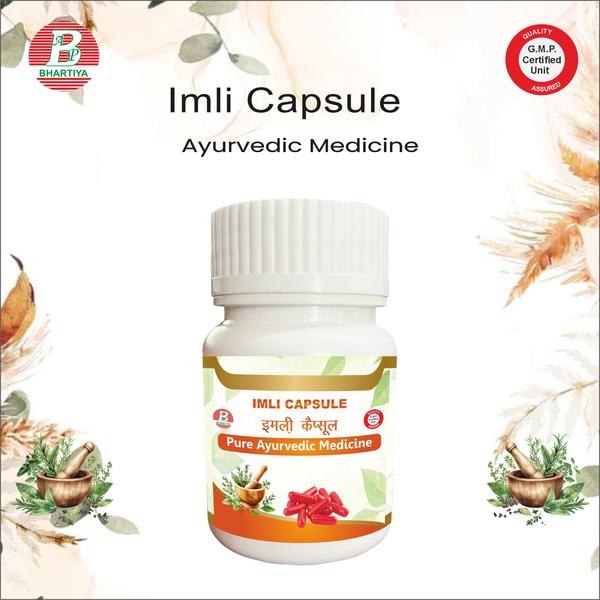
"name": "Imali Capsule",
"description": " IMLI \n\n\n IMLI (Tamarindus indica L.) \nThe Digestive & Metabolic Fruit — “Tamarind”\nImli, commonly known as Tamarind, is a widely used fruit in Ayurveda and traditional medicine. It is valued for its digestive, cooling, detoxifying, and rejuvenative properties. Rich in organic acids, polyphenols, and dietary fiber, Imli supports digestion, metabolism, liver function, cardiovascular health, and overall vitality.\n\n CLASSICAL AYURVEDIC REFERENCES\n1.\tCharaka Samhita\n•\tMentioned in Sutra Sthana and Kalpa Sthana as a digestive and metabolism-supporting fruit.\n•\tDescribed as Madhura-Amla-Kashaya in taste, pacifying Vata and Pitta.\n2.\tSushruta Samhita\n•\tEmphasized in Kalpa Sthana as a natural laxative and liver-supporting herb.\n•\tUsed in formulations for Vata-Pitta disorders, constipation, and digestive sluggishness.\n3.\tBhavaprakasha Nighantu\n•\tReferred to as Imli / Tamarind, supporting Agni (digestive fire), Medha (intellect), and Ojas (vitality).\n•\tRecommended in Rasayana and Hrudya formulations, often combined with honey or ghee.\n\n CLASSICAL STORY / ANECDOTE\nImli is often praised in Ayurvedic texts as the “King of Digestive Fruits” for its ability to restore Agni (digestive fire) and eliminate Ama (toxins).\nTraditionally, sages recommended Imli to strengthen digestion and metabolism, particularly during hot seasons, by consuming the pulp with water or in churna form to rejuvenate the body and maintain vitality.\n\n BOTANICAL INFORMATION OF IMLI\n•\tScientific Name: Tamarindus indica L.\n•\tFamily: Fabaceae\n•\tOrder: Fabales\n•\tGenus: Tamarindus\n•\tSpecies: indica\n•\tCommon Names:\no\tSanskrit: Imli, Amli, Chinta\no\tHindi: Imli\no\tEnglish: Tamarind\no\tTamil: Puli\no\tTelugu: Chintapandu\no\tMalayalam: Puliyam\no\tKannada: Hunase Hannu\no\tBengali: Tentul\n\n SYNONYMS IN CLASSICAL AYURVEDIC NIGHANTUS\n•\tCharaka Samhita: Imli – Digestive, Vata-Pitta pacifying\n•\tSushruta Samhita: Imli – Hrudya, Medhya, Vata-Pitta balancing\n•\tBhavaprakasha Nighantu: Imli, Chinta – Rasayana, Agni vardhaka, Detoxifier\n\n MORPHOLOGY OF IMLI\n•\tPlant Type: Large evergreen tree\n•\tHeight: 12–18 m\n•\tLeaves: Pinnate, 6–12 pairs of leaflets, small and oblong\n•\tFlowers: Small, yellowish-brown, clustered, fragrant\n•\tFruit: Leguminous pod, brown, elongated, pulpy, tangy-sweet\n•\tSeeds: Hard, shiny brown, 1–2 cm, embedded in pulp\n\n ECOLOGICAL PREFERENCES\n•\tClimate: Tropical and subtropical; tolerates heat and drought\n•\tSoil: Well-drained sandy, loamy, or red soils\n•\tHabitat: Fields, gardens, village premises; native to Indian subcontinent\n•\tAltitude: Sea level to 1,200 m\n\n GEOGRAPHICAL DISTRIBUTION\n•\tIndia: Tamil Nadu, Kerala, Karnataka, Maharashtra, Andhra Pradesh\n•\tOutside India: Sri Lanka, Africa, Southeast Asia, Caribbean, Latin America\n\n CLASSICAL AYURVEDIC PROPERTIES (RASA–GUNA–VIRYA–VIPAKA)\n•\tRasa (Taste): Madhura (sweet), Amla (sour), Kashaya (astringent)\n•\tGuna (Qualities): Snigdha (unctuous), Laghu (light)\n•\tVirya (Potency): Śīta (cooling)\n•\tVipaka (post-digestive effect): Madhura (sweet)\n•\tDosha Effects: Vata-Pitta hara, Kapha samana in moderation\n\n THERAPEUTIC ACTIONS (KARMA)\n1.\tDipana & Pachana: Enhances digestive fire, prevents constipation\n2.\tMedhya: Supports memory and intellect\n3.\tHrudya: Strengthens heart and circulation\n4.\tRasayana: Promotes overall vitality and rejuvenation\n5.\tVata-Pittahara: Balances Vata and Pitta disorders\n6.\tKeshya: Supports hair health\n7.\tLekhana & Raktaprasadana: Detoxifies blood, reduces toxins\n\n INDICATIONS\nWITH AACHARYA AND GRANTHS\nHere’s a detailed Imli (Tamarindus indica) monograph in the same format as Alsi, including classical Ayurvedic references and acharya/granth citations:\n IMLI (Tamarindus indica L.) \nThe Digestive and Metabolic Fruit — “Tamarind”\nImli, commonly known as Tamarind, is a widely used fruit in Ayurveda and traditional medicine. It is valued for its digestive, metabolism-supporting, cooling, and rejuvenative properties. Rich in organic acids, vitamins (A, C, B), minerals, and antioxidants, Imli supports digestion, liver function, heart health, metabolism, and overall vitality.\n\n CLASSICAL AYURVEDIC REFERENCES\n1.\tCharaka Samhita\no\tMentioned in Kalpa Sthana (Charaka Kalpa 6/28–30) as a sweet, sour, and nourishing fruit beneficial for digestive fire (Agni) and metabolism.\no\tUsed in formulations for Medhya (intellect) and Rasayana (rejuvenation).\n2.\tSushruta Samhita\no\tListed in Kalpa Sthana (Sushruta 52/18–20) for constipation, digestive sluggishness, and liver support.\no\tEmphasized as Snigdha (unctuous), Madhura (sweet), and Tikta (bitter) — suitable for Rasayana and mild laxative therapies.\n3.\tBhavaprakasha Nighantu\no\tReferred to as Imli / Amli, promoting Ojas, digestion, and rejuvenation.\no\tMentioned in Hrudya, Medhya, and Virechana formulations — often used with ghee, honey, or warm water.\n4.\tOther Classical Anecdotes\no\tAyurvedic texts describe Imli as a “pachana phala” — the fruit that digests and metabolizes food efficiently.\no\tTraditionally, sages recommended Imli to warriors and kings as a digestive and metabolism-supporting Rasayana, often combined with other herbs for enhanced rejuvenation.\n\n BOTANICAL INFORMATION OF IMLI\n•\tScientific Name: Tamarindus indica L.\n•\tFamily: Fabaceae (Leguminosae)\n•\tOrder: Fabales\n•\tGenus: Tamarindus\n•\tSpecies: indica\n•\tCommon Names:\no\tSanskrit: Imli, Amli, Chinta Phala\no\tHindi: Imli\no\tEnglish: Tamarind\no\tTamil: Puli\no\tTelugu: Chintapandu\no\tMalayalam: Puli\no\tKannada: Hunase Hannu\no\tBengali: Tentul\n\n SYNONYMS IN CLASSICAL AYURVEDIC NIGHANTUS\n•\tCharaka Samhita: Imli – Pachana, Medhya\n•\tSushruta Samhita: Imli – Virechana, Hrudya, Medhya\n•\tBhavaprakasha Nighantu: Amli, Imli – Rasayana, Pachana, Ojasvardhaka\n\n MORPHOLOGY OF IMLI\n•\tTree Type: Medium to large deciduous tree, 12–18 m height\n•\tBark: Brown, rough, fibrous\n•\tLeaves: Pinnate, alternate, leaflets small and oblong\n•\tFlowers: Yellowish, small, in clusters\n•\tFruit: Long, curved pods containing sticky, brown pulp\n•\tSeeds: Hard, glossy, dark brown\n\n ECOLOGICAL PREFERENCES\n•\tClimate: Tropical and subtropical, tolerates dry conditions\n•\tSoil: Well-drained loamy, clay, or sandy soils\n•\tHabitat: Fields, gardens, village premises; native to Indian subcontinent\n•\tAltitude: Sea level to 1,200 m\n\n GEOGRAPHICAL DISTRIBUTION\n•\tIndia: Maharashtra, Tamil Nadu, Karnataka, Andhra Pradesh, Gujarat\n•\tOutside India: Sri Lanka, Africa, Southeast Asia, Caribbean\n\n CLASSICAL AYURVEDIC PROPERTIES (RASA–GUNA–VIRYA–VIPAKA)\n•\tRasa (Taste): Madhura (sweet), Amla (sour), Tikta (bitter)\n•\tGuna (Qualities): Snigdha (unctuous), Laghu (light)\n•\tVirya (Potency): Śīta (cooling)\n•\tVipaka (post-digestive effect): Madhura (sweet)\n•\tDosha Effects: Tridoshaghna (balances all three); especially Vata-Pitta hara\n\n THERAPEUTIC ACTIONS (KARMA)\n1.\tPachana & Dipana: Enhances digestive fire, prevents acidity\n2.\tMedhya: Supports memory, intellect, and brain tissue\n3.\tHrudya: Supports heart and circulation\n4.\tRasayana: Promotes rejuvenation, Ojas, and vitality\n5.\tVatahara: Relieves constipation, joint stiffness\n6.\tLekhana: Mild lipid-lowering effect\n7.\tVrishya: Supports reproductive health and Shukra dhatu\n\n INDICATIONS\n•\tDigestive System: Constipation, sluggish digestion, hyperacidity\n•\tMetabolism: Obesity, mild dyslipidemia\n•\tNervous System: Fatigue, stress\n•\tReproductive & Urinary System: Supports fertility\n•\tSkin & Hair: Nourishes skin, mild detoxification\n MODERN PHARMACOLOGY & PHYTOCHEMISTRY\n•\tMajor Constituents:\no\tOrganic acids: tartaric, citric, malic\no\tPolyphenols: flavonoids, phenolic acids\no\tVitamins: A, C, B-complex\no\tMinerals: K, Mg, Ca, Fe\n•\tPharmacological Actions:\no\tDigestive tonic, mild laxative\no\tAntioxidant\no\tHepatoprotective\no\tAnti-inflammatory\no\tAnti-obesity and metabolic modulator\n\n CULTIVATION DETAILS\n•\tPropagation: Seeds (most common), grafting\n•\tSowing Time: May–June (monsoon)\n•\tSpacing: 10–12 m between plants\n•\tIrrigation: Moderate, drought-tolerant once mature\n•\tFertilization: Organic manure preferred\n•\tHarvesting: Fruits harvested November–March\n\n CLASSICAL DOSAGE (According to Ayurvedic Granthas)\n•\tPulp / Fresh Fruit: 10–20 g/day, chewed or in decoction\n•\tPowdered Fruit / Churna: 3–6 g/day\n•\tJuice / Paste: As per therapeutic need, especially for digestive support\n•\tSeed / Oil: 1–5 g/day, used in formulations for digestion and skin\n\n IMLI FORMULATIONS – BHARTIYA AYURVEDIC PHARMACY\nBhartiya Ayurvedic Pharmacy prepares Imli formulations following classical Ayurvedic principles described in Charaka Samhita, Sushruta Samhita, Bhavaprakasha Nighantu, and other texts. Each product retains digestive, metabolism-supporting, and rejuvenative properties, promoting overall vitality.\nKey Uses of Imli Formulations:\n•\tDigestive support: Relieves constipation, enhances Agni\n•\tMetabolic balance: Supports healthy weight and lipid profile\n•\tLiver support: Detoxification and mild hepatoprotection\n•\tRasayana: Promotes vitality and rejuvenation\n•\tSkin & Hair: Mild detoxification and nourishment\n\n IMLI CAPSULE\nBhartiya Ayurvedic Pharmacy offers Imli Capsules prepared according to classical Ayurvedic principles. Each capsule contains premium quality Tamarind pulp or extract, retaining full digestive, metabolism-supporting, and rejuvenative properties.\nKey Benefits:\n•\tSupports digestion and bowel regularity\n•\tPromotes metabolic balance and weight management\n•\tMild liver support and detoxification\n•\tActs as a Rasayana, enhancing vitality\n•\tSupports healthy skin and hair\nDosage:\n•\tAdults: 1–2 capsules twice daily with warm water\n•\tCan be combined with warm water or milk for enhanced effect\nSafety & Precautions:\n•\tSafe for long-term use when taken as per dosage\n•\tMay cause mild laxative effect in sensitive individuals\n•\tMonitor if taking antidiabetic or laxative medications\nFormulation Highlights:\n•\t100% natural Imli (Tamarindus indica) pulp/extract\n•\tFree from artificial colors, preservatives, and additives\n•\tPrepared using Ayurvedic-inspired processing methods\nSuggested Use:\n•\tIdeal for adults seeking digestive, metabolic, and Rasayana support\n•\tConvenient capsule form for daily use\n\n\nbest imli, best imli candy, best imli in india, capsule c care, capsule image\ndoes imli cause acidity, does imli cause gas, does imli expire, does imli have vitamin c\ndoes imli help in digestion, does imli help lose weight, does imli increase weight, e imli\nhow imli is made, i am capsule, i imli, imali capsule at home, imali capsule ayurvedic\nimali capsule company name, imali capsule contains, imali capsule daily use\nimali capsule daily use in hindi, imali capsule dainik bhaskar, imali capsule delhi\nimali capsule english name, imali capsule expiry date, imali capsule hindi\nimali capsule how to use, imali capsule in english, imali capsule in hindi\nimali capsule jiomart, imali capsule ke fayde, imali capsule ke fayde in hindi\nimali capsule khane ke fayde, imali capsule manufacturer, imali capsule manufacturers in india\nimali capsule meesho, imali capsule name, imali capsule near me, imali capsule online\nimali capsule online order, imali capsule online shopping, imali capsule online shopping india\nimali capsule price, imali capsule rate, imali capsule recipe, imali capsule se kya hota hai\nimali capsule side effects, imali capsule side effects in hindi, imali capsule uses\nimali capsule uses in hindi\nimli capsule\nimli capsules\nimli cause cough\nwhat is imli",
"price": 300.0,
"discountamount": 150.0,
"currencycode": "INR",
"priority": 1000000,
"isfreeshipmentavailable": false,
"shipmentduration": 1,
"_keywords": null,
"isarchived": false,
"isavailable": true,
"applicationid": null,
"productindex": 60,
"imageuri": "https://productimages.withfloats.com/actual/698ea825e8395ed6920a532a.jpg",
"tileimageuri": "https://productimages.withfloats.com/tile/698ea825e8395ed6920a532a.jpg",
"images": null,
"totalqueries": 0,
"gpid": null,
"groupproductid": null,
"createdon": "2026-02-13T04:27:15.232Z",
"updatedon": "2026-02-17T10:23:47.696Z",
"buyonlinelink": null,
"producturl": "http://WWW.BHARTIYAAYURVEDICPHARMACY.COM//imali-capsule/60",
"availableunits": -1.0,
"iscodavailable": true,
"isprepaidonlineavailable": true,
"maxcodorders": -1,
"maxprepaidonlineorders": -1,
"uniquepaymenturl": null,
"brandname": "Bakula Fort",
"category": "Imali Capsule 60 Cap X 24",
"tags": [],
"variants": false,
"keyspecification": null,
"otherspecifications": null,
"pickupaddressreferenceid": null,
"paymenttype": "AssuredPurchase",
"producttype": "products",
"hsncode": null,
"gstslab": 0.0,
"isnotforsale": false
},
{
"_id": "698d91060e3bcc31e5947822",
"fptag": "BHARTIYEAYURVEDICPHARMACY",
"merchantname": null,
"customwidgets": null,
"externalsourceid": null,
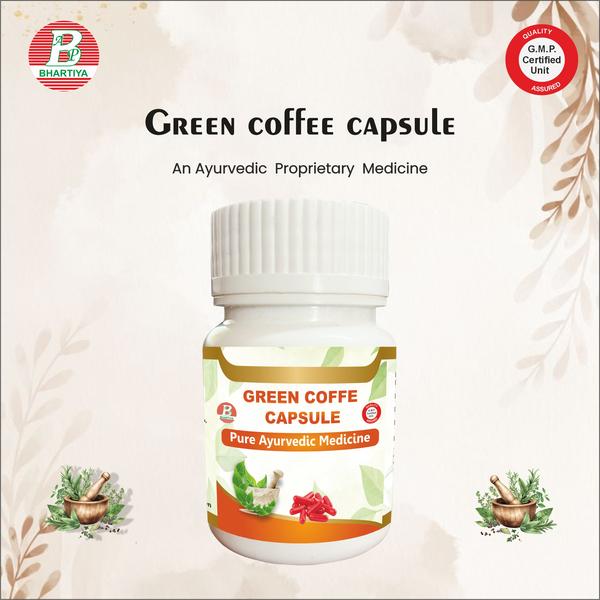
"name": "Green coffee capsule",
"description": " GREEN COFFEE \n\n GREEN COFFEE (Coffea arabica L.) \n\nThe Natural Metabolic Booster — “Unroasted Coffee Bean”\nGreen Coffee, the unroasted form of the coffee bean, is valued in modern herbal and Ayurvedic-inspired nutrition for its weight management, antioxidant, and metabolic-supporting properties. Rich in chlorogenic acids, polyphenols, and essential minerals, Green Coffee supports blood sugar balance, cardiovascular health, digestion, and overall vitality.\n\n CLASSICAL AYURVEDIC REFERENCES\nAlthough not classically described in traditional Ayurvedic texts, Green Coffee’s properties can be aligned with Ayurveda based on its effects:\n1.\tRasa (Taste): Katu (pungent), Tikta (bitter)\n2.\tGuna (Qualities): Laghu (light), Ruksha (dry)\n3.\tVirya (Potency): Ushna (heating)\n4.\tVipaka (post-digestive effect): Katu (pungent)\n5.\tDosha Effects: Vata-Kapha hara, Pitta samana in moderation\nModern herbal scholars often reference Green Coffee as a Metabolic Rasayana, supporting weight management, antioxidant defense, and cardiovascular health.\n\n BOTANICAL INFORMATION OF GREEN COFFEE\n•\tScientific Name: Coffea arabica L.\n•\tFamily: Rubiaceae\n•\tOrder: Gentianales\n•\tGenus: Coffea\n•\tSpecies: arabica\n•\tCommon Names:\no\tSanskrit: Coffee Beeja\no\tHindi: Hara Coffee\no\tEnglish: Green Coffee\no\tTamil: Pachai Coffee\no\tTelugu: Pachha Coffee\no\tMalayalam: Pachha Coffee\no\tKannada: Hara Coffee\no\tBengali: Green Coffee\n MORPHOLOGY OF GREEN COFFEE\n•\tPlant Type: Evergreen shrub / small tree\n•\tHeight: 2–5 m (cultivated), up to 10 m in wild\n•\tLeaves: Glossy, dark green, elliptical\n•\tFlowers: Small, white, fragrant, clustered\n•\tFruit / Seed: Drupes (coffee cherries), green when unripe\n•\tSeeds: Oval, green (unroasted coffee beans)\n\n ECOLOGICAL PREFERENCES\n•\tClimate: Tropical and subtropical; prefers moderate rainfall and mild temperatures\n•\tSoil: Well-drained loamy soils, slightly acidic (pH 6–6.5)\n•\tHabitat: Cultivated plantations, home gardens, shaded slopes\n•\tAltitude: 600–2,000 m above sea level\n\n GEOGRAPHICAL DISTRIBUTION\n•\tIndia: Karnataka, Kerala, Tamil Nadu, Arunachal Pradesh\n•\tOutside India: Brazil, Colombia, Ethiopia, Vietnam, Central America\n\n THERAPEUTIC ACTIONS (KARMA)\n1.\tMetabolic Support: Helps regulate blood sugar and support weight management\n2.\tAntioxidant: Neutralizes free radicals, supports cellular health\n3.\tCardiovascular Health: Supports healthy lipid profile and circulation\n4.\tDigestive Aid: Mild stimulant, supports digestive fire (Agni)\n5.\tMental Alertness: Enhances focus and energy without roasting-induced bitterness\n6.\tRasayana: Supports vitality and general endurance\n\n INDICATIONS\n•\tWeight management, obesity, and metabolic syndrome\n•\tMild fatigue or lethargy\n•\tDigestive sluggishness\n•\tMild cognitive support and alertness\n•\tCardiovascular and antioxidant support\n\n MODERN PHARMACOLOGY & PHYTOCHEMISTRY\n•\tMajor Constituents:\no\tChlorogenic acids (CGA)\no\tPolyphenols and antioxidants\no\tCaffeine (low to moderate)\no\tMinerals: magnesium, potassium, iron\n•\tPharmacological Actions:\no\tAntioxidant\no\tAnti-obesity / metabolic modulator\no\tMild CNS stimulant\no\tAntihyperglycemic effect\no\tCardioprotective\n\n CULTIVATION DETAILS\n•\tPropagation: Seeds (beans) or grafted saplings\n•\tSowing / Planting: Monsoon season or as suitable for elevation\n•\tSpacing: 1–2 m between plants\n•\tIrrigation: Moderate; avoid waterlogging\n•\tFertilization: Organic manure preferred\n•\tHarvesting: Cherries picked green for Green Coffee powder\n\n CLASSICAL DOSAGE (Modern Herbal / Ayurvedic Use)\n•\tGreen Coffee Powder / Extract: 200–400 mg twice daily or as directed\n•\tCapsules / Tablets: 1–2 capsules twice daily with water\n•\tDecoction / Tea: 1–2 cups/day, preferably before meals\n\n GREEN COFFEE FORMULATIONS – BHARTIYA AYURVEDIC PHARMACY\n\nBhartiya Ayurvedic Pharmacy prepares Green Coffee formulations maintaining full bioactive content of chlorogenic acids and antioxidants, designed to support metabolic health, weight management, digestion, and vitality.\nKey Uses of Green Coffee Formulations:\n•\tWeight and metabolism support\n•\tBlood sugar regulation\n•\tCardiovascular and antioxidant protection\n•\tDigestive support and mild stimulation\n•\tRasayana for energy and vitality\n\n GREEN COFFEE CAPSULE – BHARTIYA AYURVEDIC PHARMACY \nBhartiya Ayurvedic Pharmacy offers Green Coffee Capsules, prepared from premium quality unroasted coffee beans (Coffea arabica), retaining full bioactive content of chlorogenic acids, antioxidants, and nutrients. The capsules provide a convenient way to support metabolism, weight management, cardiovascular health, digestive balance, and overall vitality.\n\nKey Benefits:\n•\tSupports healthy blood sugar levels and metabolism\n•\tPromotes weight management and helps maintain healthy body composition\n•\tMild CNS stimulant for alertness and cognitive support\n•\tSupports cardiovascular health by maintaining lipid balance\n•\tActs as a Rasayana, enhancing energy, endurance, and vitality\n•\tSupports digestive health and regular bowel function\n\nDosage:\n•\tAdults: 1–2 capsules twice daily with warm water, preferably before meals\n•\tCan be combined with warm water or milk for enhanced Rasayana effect\n\nSafety & Precautions:\n•\tSafe for long-term use when taken as per dosage\n•\tMay cause mild stimulation in caffeine-sensitive individuals\n•\tNot recommended in high doses during pregnancy or lactation\n•\tMonitor if taking stimulant or antidiabetic medications\nFormulation Highlights:\n•\t100% natural Green Coffee (Coffea arabica) powder/extract\n•\tFree from artificial colours, preservatives, and additives\n•\tPrepared using Ayurvedic-inspired processing methods to preserve therapeutic qualities\n\nSuggested Use:\n•\tIdeal for adults seeking support in weight management, metabolism, and vitality\n•\tConvenient form for Ayurvedic Rasayana support in daily life\n\ngreen coffee capsule, green coffee capsule benefits, green coffee capsule how to use\ngreen coffee capsule jar, green coffee capsule jiomart, green coffee capsule kaise khana hai\ngreen coffee capsule price, green coffee capsule side effects, green coffee capsule zepto\ngreen coffee capsules benefits, green coffee capsules for weight loss\ngreen coffee capsules for weight loss in hindi, green coffee capsules for weight loss reviews\ngreen coffee capsules for weight loss side effects, green coffee capsules for women\ngreen coffee capsules side effects, green coffee diet pills, green coffee extract amazon\ngreen coffee extract and weight loss, green coffee extract australia, green coffee extract benefits\ngreen coffee extract benefits for skin, green coffee extract benefits in hindi\ngreen coffee extract botanical name, green coffee extract caffeine free\ngreen coffee extract capsule, green coffee extract for skin, green coffee extract for weight loss\ngreen coffee extract hsn code, green coffee extract in hindi, green coffee extract kids\ngreen coffee extract manufacturer in india, green coffee extract powder, green coffee extract products\ngreen coffee extract uses, green coffee extract uses in hindi, green coffee extract vs coffee\ngreen coffee ke capsule, green coffee leaf extract, green coffee pills for weight loss\ngreen coffee pills side effects, green coffee seed extract uses, green coffee tea extract\nherbal green coffee capsule, how green coffee taste, how green coffee work for weight loss\nhow to take green coffee capsules for weight loss, how to use green coffee capsule for weight loss\nis green coffee extract good for weight loss, is green coffee extract good for you\nis green coffee good, is green coffee harmful, is green coffee safe, lyf green capsule use\nwhat is green coffee for weight loss, when to consume green coffee for weight loss\n",
"price": 600.0,
"discountamount": 300.0,
"currencycode": "INR",
"priority": 1000000,
"isfreeshipmentavailable": false,
"shipmentduration": 1,
"_keywords": null,
"isarchived": false,
"isavailable": true,
"applicationid": null,
"productindex": 55,
"imageuri": "https://productimages.withfloats.com/actual/698d91086b32d8a25066985a.jpg",
"tileimageuri": "https://productimages.withfloats.com/tile/698d91086b32d8a25066985a.jpg",
"images": null,
"totalqueries": 0,
"gpid": null,
"groupproductid": null,
"createdon": "2026-02-12T08:36:22.173Z",
"updatedon": "2026-02-18T05:03:41.47Z",
"buyonlinelink": null,
"producturl": "http://WWW.BHARTIYAAYURVEDICPHARMACY.COM//green-coffee-capsule/55",
"availableunits": -1.0,
"iscodavailable": true,
"isprepaidonlineavailable": true,
"maxcodorders": -1,
"maxprepaidonlineorders": -1,
"uniquepaymenturl": null,
"brandname": "Bakula Fort",
"category": "Green coffee capsule 60 Cap 12",
"tags": [],
"variants": false,
"keyspecification": null,
"otherspecifications": null,
"pickupaddressreferenceid": null,
"paymenttype": "AssuredPurchase",
"producttype": "products",
"hsncode": null,
"gstslab": 0.0,
"isnotforsale": false
},
{
"_id": "698084369b2383ec7eecaa68",
"fptag": "BHARTIYEAYURVEDICPHARMACY",
"merchantname": null,
"customwidgets": null,
"externalsourceid": null,
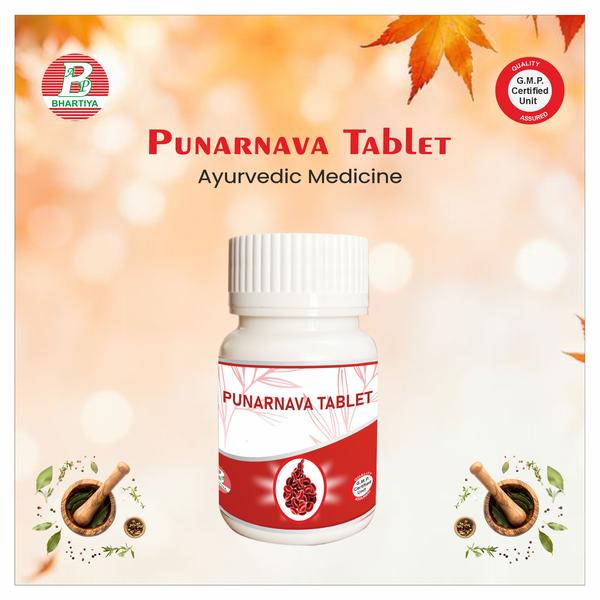
"name": "Punarnava Tablet",
"description": "Punarnava (Boerhavia diffusa) \n The Rejuvenating Herb with Healing Leaves\nPunarnava is one of the most important rejuvenating herbs in Ayurveda, widely valued for its unique ability to revive and renew the body.\nThe name Punarnava literally means “that which becomes new again”, indicating its powerful regenerative and restorative nature.\nIn Ayurveda, Punarnava is classified as a Mutrala (diuretic), Shothahara (anti-inflammatory), and Rasayana (rejuvenative) drug. It is highly beneficial in managing swelling (oedema), kidney disorders, liver weakness, urinary problems, digestive issues, anaemia, and general debility.\nBotanical Information of Punarnava\nScientific Name: Boerhavia diffusa Linn.\nFamily: Nyctaginaceae\nOrder: Caryophyllales\nGenus: Boerhavia\nSpecies: diffusa\nCommon Names:\n•\tSanskrit: Punarnavā, Shothaghanī, Raktapunarnavā, Śvetapunarnavā, Shreṇī, Shoṭikā\n•\tHindi: Punarnava\n•\tEnglish: Spreading Hogweed, Red Spiderling\n•\tTamil: Mookarattai\n•\tTelugu: Atika\n•\tMalayalam: Thazhuthama\n•\tKannada: Komme beru\n•\tBengali: Punarnava\nSynonyms of Punarnava (Boerhavia diffusa) in Ayurvedic Nighantus:\n Bhavaprakasha Nighantu – Shothaghni, Raktapunarnava, Shvetapunarnava, Shoṭikā\n Raja Nighantu & Kaiyadeva Nighantu – Panchanga, Jalapushpa, Mochana, Bhujanga\n Hrudaya Nighantu & Dhanvantari Nighantu – Utkalika, Shreni\n Morphology of Punarnava (Boerhavia diffusa)\nPlant Type: Perennial, creeping, and spreading herb\nStem:\n•\tProstrate or slightly ascending, creeping along the ground\n•\tPurplish-green, hairy, with swollen nodes\n•\tRoots develop at nodes where the stem touches the soil\nLeaves:\n•\tSimple, opposite arrangement\n•\tShape: Ovate, elliptic, or slightly rounded\n•\tTexture: Fleshy and soft\n•\tColor: Dark green on the upper surface, pale green below\n•\tPetiole: Short\nFlowers:\n•\tSmall, tubular, and bisexual\n•\tColor: Pink, reddish, or white\n•\tArranged in axillary clusters (cymes)\n•\tBloom mainly during summer and rainy seasons\nRoots:\n•\tThick, cylindrical, fleshy, and tapering\n•\tColor: White in Shveta Punarnava, reddish in Rakta Punarnava\n•\tMedicinal part, rich in active constituents\nFruits:\n•\tSmall, ovoid, glandular, and sticky when young\n•\tDark brown at maturity\n•\tOne-seeded\nHabit:\n•\tCreeping, spreading, fast-growing, regenerates easily\n•\tAdapted to drought and poor soil conditions\n Ecological Preferences of Punarnava\n•\tClimate: Thrives in tropical and subtropical climates; tolerates heat and moderate drought.\n•\tSoil: Prefers sandy, loamy, or well-drained soils; can grow in poor or degraded soils.\n•\tSunlight: Grows well in full sunlight to partial shade.\n•\tMoisture: Requires moderate moisture; can survive dry periods due to its hardy nature.\n•\tAltitude: Found at low to medium altitudes, commonly in plains and open areas.\n•\tHabitat: Common along roadsides, fields, gardens, wastelands, and riverbanks.\n•\tGrowth habit: Creeping, spreading, fast-growing, and regenerates easily after adverse conditions.\n Distribution of Punarnava\nGeographical Distribution:\nPunarnava is a widely distributed perennial herb found in tropical and subtropical regions across the world.\n•\tIndia: Found throughout the country in almost all states, particularly in plains, dry regions, roadsides, wastelands, and fields.\n•\tAsia: Occurs in Pakistan, Sri Lanka, Bangladesh, Nepal, and Myanmar.\n•\tAfrica: Common in tropical and subtropical Africa.\n•\tAmericas: Found in parts of South America and Central America.\n•\tOther Regions: Naturalized in various tropical areas worldwide due to its hardy and fast-growing nature\n Classical Ayurvedic Properties of Punarnava\n•\tRasa (Taste): Tikta (bitter), Kashaya (astringent)\n•\tGuna (Qualities): Laghu (light), Ruksha (dry)\n•\tVirya (Potency): Ushna (hot)\n•\tVipaka (post-digestive effect): Katu (pungent)\n•\tDosha Effect: Kapha-Vata shamaka (pacifies Kapha and Vata doshas)\n•\tKarma (Actions / Therapeutic Effects):\no\tMutrala: Promotes urination, useful in oedema and urinary disorders\no\tShothahara: Reduces swelling and inflammation\no\tYakrit-Pleeha Shodhaka: Supports liver and spleen health\no\tRasayana: Rejuvenative and revitalizing\no\tHridya: Supports heart function\nTherapeutic Actions of Punarnava According to Acharyas\n1.\tMutrala (Diuretic):\no\tPromotes urine formation, relieves Shotha (edema, ascites, anasarca)\no\tUseful in kidney and urinary disorders\n2.\tShothahara (Anti-inflammatory / Anti-edema):\no\tReduces Kapha and Vata-related swelling\no\tUseful in joint swelling, ascites, and edema\n3.\tYakrit-Pleeha Shodhaka (Hepato-splenic tonic / Detoxifier):\no\tSupports liver and spleen health\no\tClears stagnation in Rakta and Pitta\n4.\tRasayana (Rejuvenative / Revitalizing):\no\tImproves strength, vitality, and general health\no\tEnhances immunity and longevity\n5.\tHridya (Cardio-supportive):\no\tSupports heart function by reducing fluid overload\n6.\tMedohara / Vatashamaka:\no\tHelps in reducing excessive fat (Medo Dhatu) and pacifies Vata dosha in the body\n\nReferences from Acharyas:\n•\tCharaka Samhita: Punarnava is Shothaghni, Mutrala, Rasayana\n•\tSushruta Samhita: Shveta and Rakta Punarnava described for Shotha, Mutra, and Yakrit-Pleeha disorders\n•\tBhavaprakasha: Emphasizes anti-edema, diuretic, hepatoprotective, and rejuvenative actions\n Modern Phytochemistry of Punarnava\nPunarnava is rich in bioactive compounds responsible for its therapeutic properties. Key phytochemicals identified include:\n1. Alkaloids\n•\tPunarnavine – major alkaloid, responsible for diuretic and hepatoprotective activity\n•\tBoeravinones (A–F) – rotenoid compounds with antioxidant, hepatoprotective, and anti-inflammatory properties\n2. Flavonoids\n•\tQuercetin, Kaempferol – contribute to antioxidant and anti-inflammatory effects\n3. Glycosides\n•\tPunarnavoside – responsible for diuretic and anti-edema activity\nSpecies of Punarnava (Genus: Boerhavia)\nThe genus Boerhavia (family Nyctaginaceae) includes several species, but Boerhavia diffusa is the most commonly used in Ayurveda. Other species are also recognized botanically for various regional and medicinal uses:\n1. Boerhavia diffusa Linn.\n•\tMost widely used in Ayurveda\n•\tPerennial, creeping, and spreading herb\n•\tKnown for diuretic, anti-inflammatory, hepatoprotective, and rejuvenative properties\n2. Boerhavia erecta L.\n•\tErect or semi-erect habit, less creeping\n•\tFound in tropical regions\n•\tUsed in traditional medicine locally, but less common in classical Ayurveda\n3. Boerhavia repens L.\n•\tCreeping herb, often used as ground cover\n•\tOccasional medicinal use in folk medicine\n4. Boerhavia coccinea Mill.\n•\tRed-flowered species, creeping habit\n•\tSometimes used in ethnomedicine for fever and inflammation\n5. Boerhavia verticillata Willd.\n•\tFound in Africa and Asia\n•\tLimited medicinal use; occasionally cited in ethnobotanical surveys\nCultivation:\n•\tPropagation: Primarily by seeds; can also propagate via stem cuttings due to its creeping habit.\n•\tSowing Time: Best sown during the early monsoon or rainy season.\n•\tSpacing: Maintain 30–40 cm between plants to allow spreading.\n•\tWatering: Requires moderate moisture; drought-tolerant once established.\n•\tFertilization: Responds well to organic manure or compost, though hardy enough to grow in poor soils.\n•\tHarvesting: Roots, stems, and leaves are harvested after 3–4 months of growth, depending on medicinal use.\n•\tEcological Note: Acts as a pioneer plant, stabilizing soil and growing in degraded lands.\n Classical Dosage of Punarnava in Granthas\n1. Charaka Samhita\nForm: Root or whole plant powder (Churna), decoction (Kwatha)\nDose: 3–6 grams of powder; 40–60 ml of decoction, 2–3 times daily\nUses: Shotha (edema), Mutrakriccha (urinary disorders), Rasayana\n2. Sushruta Samhita\nForm: Root, whole plant, or paste\nDose: 3–6 grams powder; decoction 40–60 ml; external paste as required\nUses: Shotha, Mutra, Yakrit-Pleeha disorders\n3. Bhavaprakasha Nighantu\nForm: Churna, Kwatha, Swarasa (juice)\nDose: 3–6 grams Churna; 40–60 ml Kwatha; 20–30 ml Swarasa 1–2 times daily\nNotes: Shveta Punarnava for urinary issues; Rakta Punarnava for liver and blood disorders\n4. Raja Nighantu & Kaiyadeva Nighantu\nForm: Panchanga (whole plant), decoction, powder\nDose: Similar classical dose as above; 3–6 grams for powder, decoction 40–60 ml\nTherapeutic Use: Shothahara, Mutrala, Rasayana\n\n Safety and Precautions of Punarnava\n Safe in classical dosage.\n Avoid overdose -caution with strong diuretics.\n Pregnant Woman- use only under supervision.\n\n Classical Ayurvedic Formulations of Punarnava\nPunarnava is a key ingredient in many classical Ayurvedic preparations for edema, liver disorders, kidney ailments, and rejuvenation. Common formulations include:\n1. Punarnavadi Kwatha (Decoction)\n•\tIngredients: Punarnava, Trikatu (Pippali, Maricha, Shunthi), Musta, Haritaki, and other supporting herbs\n•\tAction: Diuretic, anti-edema, hepatoprotective, rejuvenative\n•\tIndication: Shotha (edema), Ascites, Mutrakriccha (urinary disorders)\n2. Punarnavadi Churna (Powder)\n•\tIngredients: Punarnava root, Haritaki, Musta, Chitrak, Shunthi\n•\tAction: Supports kidney and liver health, promotes detoxification, reduces swelling\n•\tDose: 3–6 g/day with water or honey\n3. Punarnava Swarasa (Juice)\n•\tForm: Fresh juice of Punarnava root or whole plant\n•\tAction: Diuretic, anti-inflammatory, mild laxative\n•\tDose: 20–30 ml, 1–2 times daily\n4. Punarnava Grita or Taila (Medicated Ghee/Oil)\n•\tUsage: External application for swelling, inflammation, and joint disorders\n•\tAction: Shothahara, soothing, and rejuvenative\n5. Compound Formulations\n•\tPunarnavadi Kashaya, Punarnavadi Gutika, Punarnavadi Avaleha – used in liver disorders, urinary diseases, edema, and general rejuvenation.\n Punarnava Formulations by Bhartiya Ayurvedic Pharmacy\nAt Bhartiya Ayurvedic Pharmacy, we prepare a range of Punarnava (Boerhavia diffusa) formulations following classical Ayurvedic methods as described in Charaka Samhita, Sushruta Samhita, Bhav Prakash Nighantu, and other Ayurvedic Granthas. Each product is crafted to retain the therapeutic potency, purity, and efficacy of the herb, ensuring benefits for fluid balance, kidney & liver support, detoxification, and rejuvenation.\n1. Punarnava Tablet\nDescription:\nPunarnava Tablets contain standardized powdered extract of Boerhavia diffusa, providing a convenient dosage form for daily use.\nKey Actions:\n•\tSupports normal urinary output and reduces mild water retention\n•\tPromotes liver and kidney health\n•\tReduces swelling (Edema)\n•\tBeneficial in cough or intestinal colic\n•\tIt can help lower the blood pressure\n•\tProvides general detox and rejuvenation\nDosage:\n•\t1–2 tablets twice daily after meals, or as advised by an Ayurvedic practitioner\nPrecautions:\n•\tUse under guidance in pregnancy, kidney disorders, or excessive fluid loss\n•\tMaintain recommended dosage\n\n\n\nbest punarnava tablet, best punarnava tablets, best time to take punarnava tablets\ncan anyone take punarnava, can i take punarnava daily, how to drink punarnava\nhow to take punarnava tablet, how to take punarnava tablets, \nhow to use punarnava for weight loss, how to use punarnava tablet\npunarnava plant tablet, punarnava tablet, punarnava tablet ayurvedic\npunarnava tablet benefits, punarnava tablet benefits in hindi\npunarnava tablet composition, punarnava tablet dosage\npunarnava tablet flipkart, punarnava tablet hindi\npunarnava tablet how to use, punarnava tablet in hindi\npunarnava tablet ingredients, punarnava tablet kab lena chahiye\npunarnava tablet kaise khaye, punarnava tablet ke fayde\npunarnava tablet ke fayde in hindi, punarnava tablet ke labh\npunarnava tablet kya hai, punarnava tablet lene ke fayde\npunarnava tablet online, punarnava tablet price\npunarnava tablet quality, punarnava tablet quantity\npunarnava tablet uses, punarnava tablet uses hindi\npunarnava tablet uses in hindi, punarnava tablets amazon\npunarnava tablets benefits, punarnava tablets benefits in hindi\npunarnava tablets near me, punarnava tablets price in india\npunarnava tablets reviews, punarnava tablets uses\npunarnava tablets when to take, what is punarnava tablet",
"price": 180.0,
"discountamount": 90.0,
"currencycode": "INR",
"priority": 1000000,
"isfreeshipmentavailable": false,
"shipmentduration": 1,
"_keywords": null,
"isarchived": false,
"isavailable": true,
"applicationid": null,
"productindex": 29,
"imageuri": "https://productimages.withfloats.com/actual/69808437fc3cf1d183418882.jpg",
"tileimageuri": "https://productimages.withfloats.com/tile/69808437fc3cf1d183418882.jpg",
"images": null,
"totalqueries": 0,
"gpid": null,
"groupproductid": null,
"createdon": "2026-02-02T11:02:14.772Z",
"updatedon": "2026-02-19T11:12:54.092Z",
"buyonlinelink": null,
"producturl": "http://WWW.BHARTIYAAYURVEDICPHARMACY.COM//punarnava-tablet/29",
"availableunits": -1.0,
"iscodavailable": true,
"isprepaidonlineavailable": true,
"maxcodorders": 0,
"maxprepaidonlineorders": -1,
"uniquepaymenturl": null,
"brandname": "Bakula Fort",
"category": "Punarnava Tablet 100 - Tab X 24",
"tags": [],
"variants": false,
"keyspecification": null,
"otherspecifications": null,
"pickupaddressreferenceid": null,
"paymenttype": "AssuredPurchase",
"producttype": "products",
"hsncode": null,
"gstslab": 0.0,
"isnotforsale": false
},
{
"_id": "6a7afd282a5df640d9fd3af9",
"fptag": "BHARTIYEAYURVEDICPHARMACY",
"merchantname": null,
"customwidgets": null,
"externalsourceid": null,
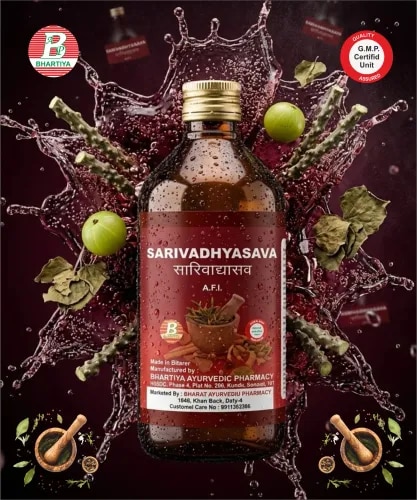
"name": "SARIVADYASAVA",
"description": " SARIVADYASAVA \n\n\nProduct Identification\nGeneric Name: Sarivadyasava\nType: Ayurvedic Polyherbal Fermented Formulation (Asava)\nPrimary Indication Area: Skin disorders, blood purification, urinary disorders, burning sensation, Pitta imbalance, and chronic inflammatory conditions.\n\nTherapeutic Indications\n• Kushta (skin disorders)\n• Twak vikara (chronic skin diseases)\n• Raktadushti (vitiated blood)\n• Daha (burning sensation)\n• Mutrakrichra (difficulty in urination)\n• Mutravaha disorders (urinary tract disorders)\n• Pittaja disorders\n• Chronic inflammatory conditions\n• Pruritus (itching)\n• Acne and recurrent skin eruptions\n• General weakness associated with chronic skin diseases\n\nKey Benefits\n• Supports healthy blood purification (Rakta Shodhana)\n• Helps maintain healthy skin and complexion\n• Reduces burning sensation and excess Pitta\n• Supports urinary tract health\n• Promotes natural detoxification\n• Helps reduce itching and inflammatory skin conditions\n• Supports immunity and tissue nourishment\n• Acts as a cooling rejuvenative tonic\n\nFORMULA\n1. Sariva\nBotanical Name: Hemidesmus indicus\nRasa: Madhura, Tikta\nGuna: Guru, Snigdha\n Virya: Sheeta\nVipaka: Madhura\n\nMechanism of Action:\n• Excellent blood purifier (Rakta Shodhaka)\n• Reduces Pitta and burning sensation\n• Supports healthy skin\n• Acts as a cooling rejuvenative\n\n2. Musta\nBotanical Name: Cyperus rotundus\nRasa: Tikta, Katu, Kashaya\nGuna: Laghu, Ruksha\nVirya: Sheeta\n Vipaka: Katu\n\nMechanism of Action:\n• Improves digestion and metabolism\n• Reduces Ama accumulation\n• Supports urinary health\n• Helps reduce inflammation\n\n3. Lodhra\nBotanical Name: Symplocos racemosa\nRasa: Kashaya\n Guna: Laghu, Ruksha\n Virya: Sheeta\n Vipaka: Katu\n\nMechanism of Action:\n• Supports healthy skin tissues\n• Reduces inflammation and discharge\n• Helps purify blood\n• Promotes wound healing\n\n4. Nyagrodha\nBotanical Name: Ficus benghalensis\nRasa: Kashaya\n Guna: Guru, Ruksha\nVirya: Sheeta\n Vipaka: Katu\n\nMechanism of Action:\n• Supports tissue healing\n• Helps reduce excessive Pitta\n• Promotes healthy skin\n• Supports blood purification\n\n5. Asvatha\nBotanical Name: Ficus religiosa\nRasa: Kashaya\nGuna: Guru, Ruksha\nVirya: Sheeta\nVipaka: Katu\n\nMechanism of Action:\n• Supports wound healing\n• Helps reduce inflammation\n• Promotes healthy blood circulation\n• Supports skin health\n\n6. Sati\nBotanical Name: Hedychium spicatum\nRasa: Katu, Tikta\n Guna: Laghu, Tikshna\nVirya: Ushna\nVipaka: Katu\n\nMechanism of Action:\n• Improves digestion\n• Reduces Ama formation\n• Supports respiratory and metabolic balance\n• Enhances bioavailability of herbs\n\n7. Sveta Sariva\nBotanical Name: Ichnocarpus frutescens\nRasa: Madhura, Tikta\n Guna: Guru, Snigdha\nVirya: Sheeta\n Vipaka: Madhura\n\nMechanism of Action:\n• Supports blood purification\n• Reduces burning sensation\n• Promotes healthy skin\n• Acts as a cooling tonic\n\n8. Padmaka\nBotanical Name: Prunus cerasoides\nRasa: Kashaya, Tikta\n Guna: Laghu, Ruksha\n Virya: Sheeta\n Vipaka: Katu\n\nMechanism of Action:\n• Supports healthy complexion\n• Helps reduce Pitta disorders\n• Promotes skin nourishment\n• Acts as an antioxidant\n\n9. Bala\nBotanical Name: Sida cordifolia\nRasa: Madhura\nGuna: Guru, Snigdha\nVirya: Sheeta\n Vipaka: Madhura\n\nMechanism of Action:\n• Strengthens body tissues\n• Supports recovery in chronic illness\n• Acts as a rejuvenative\n• Helps maintain vitality\n\n10. Patha\nBotanical Name: Cissampelos pareira\nRasa: Tikta, Kashaya\n Guna: Laghu, Ruksha\nVirya: Ushna\nVipaka: Katu\n\nMechanism of Action:\n• Supports urinary health\n• Reduces inflammation\n• Helps detoxification\n• Supports healthy digestion\n\n11. Amalaki\nBotanical Name: Phyllanthus emblica\nRasa: Pancha Rasa (predominantly Amla)\nGuna: Laghu, Ruksha\n Virya: Sheeta\n Vipaka: Madhura\n\nMechanism of Action:\n• Strong antioxidant and rejuvenative\n• Supports immunity\n• Helps purify blood\n• Supports healthy skin\n\n12. Guduchi\nBotanical Name: Tinospora cordifolia\nRasa: Tikta, Kashaya\n Guna: Laghu, Snigdha\n Virya: Ushna\nVipaka: Madhura\n\nMechanism of Action:\n• Supports immune function\n• Helps detoxification\n• Reduces inflammation\n• Promotes liver health\n\n13. Usira\nBotanical Name: Vetiveria zizanioides\nRasa: Tikta, Madhura\n Guna: Laghu, Ruksha\nVirya: Sheeta\nVipaka: Katu\n\nMechanism of Action:\n• Cooling and refreshing herb\n• Reduces burning sensation\n• Supports urinary health\n• Promotes blood purification\n\n14. Sveta Chandana\nBotanical Name: Santalum album\nRasa: Tikta, Madhura\nGuna: Laghu, Ruksha\nVirya: Sheeta\nVipaka: Katu\n\nMechanism of Action:\n• Reduces heat and burning sensation\n• Supports urinary comfort\n• Promotes healthy skin\n• Acts as a cooling tonic\n\n15. Rakta Chandana\nBotanical Name: Pterocarpus santalinus\nRasa: Tikta, Kashaya\nGuna: Laghu, Ruksha\nVirya: Sheeta\nVipaka: Katu\n\nMechanism of Action:\n• Supports blood purification\n• Helps reduce inflammation\n• Promotes skin health\n• Reduces excess Pitta\n\n16. Yavani\nBotanical Name: Trachyspermum ammi\nRasa: Katu\n Guna: Laghu, Ruksha, Tikshna\nVirya: Ushna\nVipaka: Katu\nMechanism of Action:\n• Improves digestion\n• Reduces gas and bloating\n• Supports metabolism\n• Helps digest Ama\n\n17. Kutaki\nBotanical Name: Picrorhiza kurroa\nRasa: Tikta\nGuna: Laghu, Ruksha\nVirya: Sheeta\n Vipaka: Katu\n\nMechanism of Action:\n• Supports liver function\n• Promotes detoxification\n• Improves digestion\n• Helps purify blood\n\n18. Tejpatra\nBotanical Name: Cinnamomum tamala\nRasa: Katu, Tikta\n Guna: Laghu, Ruksha\n Virya: Ushna\n Vipaka: Katu\n\nMechanism of Action:\n• Supports digestion and metabolism\n• Reduces gas and heaviness\n• Improves Agni\n• Helps digest Ama\n\n19. Sthuilaila\nBotanical Name: Amomum subulatum\nRasa: Tikta, Katu\nGuna: Laghu, Tikshna\nVirya: Ushna\nVipaka: Katu\n\nMechanism of Action:\n• Supports digestion\n• Reduces inflammation\n• Helps detoxification\n• Supports skin health\n\n20. Swernpatri\nBotanical Name: Cassia angustifolia\nRasa: Tikta, Kashaya\nGuna: Laghu, Ruksha\nVirya: Ushna\nVipaka: Katu\n\nMechanism of Action:\n• Mild natural laxative\n• Supports bowel cleansing\n• Helps eliminate toxins\n• Promotes detoxification\n\n21. Haritaki\nBotanical Name: Terminalia chebula\nRasa: Pancha Rasa (except Lavana)\nGuna: Laghu, Ruksha\nVirya: Ushna\nVipaka: Madhura\n\nMechanism of Action:\n• Mild laxative and detoxifier\n• Supports bowel cleansing\n• Improves digestion\n• Promotes elimination of toxins\n\n22. Guda\nBotanical Name: Jaggery\nRasa: Madhura\nGuna: Guru, Snigdha\n Virya: Ushna\n Vipaka: Madhura\n\nMechanism of Action:\n• Fermentation base\n• Provides energy substrate\n• Improves formulation stability\n• Enhances palatability\n\n23. Dhataki\nBotanical Name: Woodfordia fruticosa\nRasa: Kashaya\nGuna: Laghu, Ruksha\nVirya: Ushna\n Vipaka: Katu\n\nMechanism of Action:\n• Natural fermentation catalyst\n• Enhances extraction of phytochemicals\n• Improves bioavailability\n• Supports preservation of formulation\n\n24. Draksha\nBotanical Name: Vitis vinifera\nRasa: Madhura\n Guna: Guru, Snigdha\n Virya: Sheeta\n Vipaka: Madhura\nMechanism of Action:\n• Nourishes body tissues\n• Provides antioxidant support\n• Helps reduce burning sensation\n• Acts as a rejuvenative tonic\n\nDosage\nAdults:\n• 15–30 mL\n• Twice daily after meals\n• Dilute with equal quantity of water\n\nCommon Usage Guidance\n• Traditionally used in skin and blood disorders\n• Supports blood purification and healthy complexion\n• Helps reduce burning sensation and Pitta imbalance\n• Supports urinary health and detoxification\n• Usually prescribed for 4–8 weeks under Ayurvedic supervision\n• Best taken after food\n\nImportant Notes\n• Contains naturally fermented alcohol\n• Use cautiously in diabetes mellitus\n• Should be taken under Ayurvedic supervision\n• Avoid self-medication in severe systemic illness\n• Store in a cool, dry place\n• Keep tightly closed after use\n• Keep out of reach of children\n\n\nsarivadyasava uses in hindi, sarivadyasava uses, sarivadyasava syrup\nsarivadyasava benefits in hindi, sarivadyasava syrup side effects\nsarivadyasava syrup uses, sarivadyasava ingredients, sarivadyasava benefits\nsarivadyasava in hindi, sarivadyasava ayurvedic medicine, sarivadyasava ayurvedic\nsarivadyasava ayurvedic medicine uses in hindi, sarivadyasava amazon\nsarivadyasava easy ayurveda, sarivadyasava composition, sarivadyasava dosage\nsarivadyasava dabur uses, divya sarivadyasava, sarivadyasava uses in english\nsarivadyasava for skin in hindi, sarivadyasava for skin, sarivadyasava uses for skin\nsarivadyasava ke fayde, sarivadyasava used for, sarivadyasava hindi\nsarivadyasava how to take, sarivadyasava how to use, sarivadyasava uses hindi\nsarivadyasava syrup hindi, sarivadyasava syrup uses hindi, sarivadyasava ingredients in hindi\nsarivadyasava indication, sarivadyasava in pregnancy, sarivadyasava uses in ayurveda\nbaidyanath sarivadyasava ingredients, sarivadyasava jiva ayurveda\nsarivadyasava kaise use kare, sarivadyasava kadha uses, sarivadyasava kis kaam aati hai\nkerala ayurveda sarivadyasava, sarivadyasava kashayam, sarivadyasava medicine\nuse of sarivadyasava in hindi, ingredients of sarivadyasava, use of sarivadyasava syrup\nsarivadyasava price, sarivadyasava syrup price, sarivadyasava review\nsarivadyasava syrup benefits, sarivadyasava syrup benefits in hindi\nsarivadyasava tablet, sarivadyasava tablet uses in hindi\nsarivadyasava taste, how to take sarivadyasava, how to use sarivadyasava syrup\nhow to use sarivadyasava, sarivadyasava syrup uses in hindi, what is sarivadyasava used for",
"price": 165.0,
"discountamount": 82.0,
"currencycode": "INR",
"priority": 1000000,
"isfreeshipmentavailable": false,
"shipmentduration": 1,
"_keywords": null,
"isarchived": false,
"isavailable": true,
"applicationid": null,
"productindex": 167,
"imageuri": "https://productimages.withfloats.com/actual/6a7afd2abe4e6975bb0ae21f.jpg",
"tileimageuri": "https://productimages.withfloats.com/tile/6a7afd2abe4e6975bb0ae21f.jpg",
"images": null,
"totalqueries": 0,
"gpid": null,
"groupproductid": null,
"createdon": "2026-08-11T10:44:56.779Z",
"updatedon": "2026-08-11T10:44:56.779Z",
"buyonlinelink": null,
"producturl": "http://WWW.BHARTIYAAYURVEDICPHARMACY.COM//sarivadyasava/167",
"availableunits": -1.0,
"iscodavailable": true,
"isprepaidonlineavailable": true,
"maxcodorders": -1,
"maxprepaidonlineorders": -1,
"uniquepaymenturl": null,
"brandname": "BALULA FORT",
"category": "SARIVADYASAVA 450 ML X 40",
"tags": [],
"variants": false,
"keyspecification": null,
"otherspecifications": null,
"pickupaddressreferenceid": null,
"paymenttype": "AssuredPurchase",
"producttype": "products",
"hsncode": null,
"gstslab": 0.0,
"isnotforsale": false
},
{
"_id": "6a7af152dc4cc98142dd8d64",
"fptag": "BHARTIYEAYURVEDICPHARMACY",
"merchantname": null,
"customwidgets": null,
"externalsourceid": null,
"name": "DRAKSHAASAVA",
"description": " DRAKSHAASAVA\n \n\nProduct Identification\nGeneric Name: Drakshaasava (Drakshasava)\nType: Ayurvedic Polyherbal Fermented Formulation (Asava)\nPrimary Indication Area: Digestive tonic, restorative tonic, blood-supportive tonic, and rejuvenative formulation.\n\nTherapeutic Indications\n• General debility and fatigue\n• Loss of appetite (Aruchi)\n• Chronic indigestion and weak digestion (Agnimandya)\n• Anaemia and weakness associated with chronic illness\n• Convalescence after fever and infection\n• Mild constipation associated with debility\n• Nutritional deficiency and poor strength\n• Respiratory weakness and chronic cough (supportive use)\n• Elderly weakness and recovery support\n• Low body weight and poor vitality\n\nKey Benefits\n• Acts as a nourishing and restorative tonic\n• Improves digestion and appetite\n• Supports healthy blood formation\n• Enhances strength and vitality\n• Helps reduce fatigue and exhaustion\n• Supports healthy bowel function\n• Promotes recovery after illness\n• Supports respiratory health\n• Improves overall nutritional status\n\nFORMULA\nMain Ingredients\n• Draksha (Vitis vinifera – Raisins) – 4.800 kg\n• Water – sufficient quantity for extraction\nSweetening and Fermentation Base\n• Guda (Jaggery) – 9.600–14.400 kg (as per reference)\n• Madhu (Honey) – quantity as per classical reference (where applicable)\n• Dhataki Pushpa (Woodfordia fruticosa) – 768 g\nPrakshepa Dravyas\n• Tvak (Cinnamomum verum) – 48 g\n• Ela (Elettaria cardamomum) – 48 g\n• Patra (Cinnamomum tamala) – 48 g\n• Nagakesara (Mesua ferrea) – 48 g\n• Maricha (Piper nigrum) – 48 g\n• Pippali (Piper longum) – 48 g\n• Shunthi (Zingiber officinale) – 48 g\n\nKey Ingredient Actions\n1.Draksha (Vitis vinifera)\n\nRasa: Madhura\nGuna: Guru, Snigdha\nVirya: Sheeta\n Vipaka: Madhura\n Prabhava: Brimhana, Raktavardhaka\nMechanism of Action:\n• Provides nourishment and energy\n• Supports blood health and vitality\n• Helps reduce fatigue and weakness\n• Mild laxative action supports bowel regularity\n• Supports respiratory and cardiovascular health\n\n2. Shunthi (Zingiber officinale)\nRasa: Katu\n Guna: Laghu, Ruksha\nVirya: Ushna\nVipaka: Madhura\nMechanism of Action:\n• Improves digestion and appetite\n• Enhances circulation\n• Reduces bloating and indigestion\n• Supports respiratory function\n• Improves nutrient assimilation\n\n3. Pippali (Piper longum)\nRasa: Katu\n Guna: Laghu, Snigdha\n Virya: Anushna-Ushna\n Vipaka: Madhura\nMechanism of Action:\n• Enhances digestive strength\n• Improves bioavailability of herbal constituents\n• Supports respiratory health\n• Helps reduce chronic weakness\n• Acts as rejuvenative support\n\n4. Maricha (Piper nigrum)\nRasa: Katu\nGuna: Laghu, Tikshna\nVirya: Ushna\n Vipaka: Katu\nMechanism of Action:\n• Stimulates digestion and metabolism\n• Improves nutrient absorption\n• Reduces Ama (metabolic toxins)\n• Supports respiratory clearance\n• Enhances circulation\n\n5. Tvak (Cinnamomum verum)\nRasa: Katu, Tikta, Madhura\n Guna: Laghu, Tikshna\n Virya: Ushna\nVipaka: Katu\nMechanism of Action:\n• Improves digestion and appetite\n• Supports circulation\n• Provides antioxidant activity\n• Reduces abdominal discomfort\n• Enhances flavor and palatability\n\n6. Ela (Elettaria cardamomum)\nRasa: Madhura, Katu\nGuna: Laghu\nVirya: Sheeta\nVipaka: Madhura\nMechanism of Action:\n• Reduces bloating and nausea\n• Improves digestion\n• Supports respiratory comfort\n• Enhances aroma and taste\n• Promotes appetite\n\n7. Nagakesara (Mesua ferrea)\nRasa: Kashaya, Tikta\n Guna: Laghu, Ruksha\nVirya: Sheeta\nVipaka: Katu\nMechanism of Action:\n• Supports blood health\n• Helps maintain tissue integrity\n• Reduces inflammation\n• Supports overall vitality\n• Provides restorative support\n\n8. Dhataki (Woodfordia fruticosa)\nRasa: Kashaya\nGuna: Laghu, Ruksha\n Virya: Ushna\n Vipaka: Katu\n Prabhava: Sandhana Karaka\nMechanism of Action:\n• Natural fermentation catalyst\n• Supports self-generated alcohol formation\n• Improves extraction of active constituents\n• Enhances stability and shelf life\n• Increases bioavailability\n\nDosage\n• Adults: 15–30 ml\n• Twice daily after meals\n• Dilute with equal quantity of water\n\nCommon Usage Guidance\n• Used as a restorative tonic after illness\n• Beneficial in weakness, fatigue, and poor digestion\n• Supports healthy blood formation and vitality\n• Commonly prescribed for 4–12 weeks depending on condition\n• Best taken after food\n\nImportant Notes\n• Contains jaggery, honey, and naturally generated alcohol due to fermentation\n• Use cautiously in diabetes\n• Not recommended during pregnancy unless prescribed by a qualified practitioner\n• Should be used under Ayurvedic supervision in chronic illnesses\n• Store in a cool, dry place and keep tightly closed\n• Keep out of reach of children\n• Shake well before use if recommended by the manufacturer\n\n\n\ndrakshasava, drakshasava uses in hindi, drakshasava benefits in hindi\ndrakshasava uses, drakshasava syrup, drakshasava price\ndrakshasava syrup uses, drakshasava benefits, drakshasava ayurvedic medicine\ndrakshasava ayurvedic medicine uses in hindi, drakshasava ayurvedic\ndrakshasava ayurvedic syrup, drakshasava ayurvedic medicine hindi\ndrakshasava amazon, drakshasava ayurvedic medicine uses\ndrakshasava buy online, drakshasava best brand, drakshasava benefits in english\ndrakshasava contains alcohol, drakshasava churna, drakshasava che fayde\ndrakshasava for child, drakshasava dabur syrup uses in hindi, drakshasava dose\ndrakshasava in english, when to take drakshasava, drakshasava for liver\ndrakshasava for skin, drakshasava for weight gain, drakshasava for kids\ndrakshasava for weight loss, drakshasava fayde, drakshasava for acidity\n drakshasava for cough, drakshasava glass bottle, drakshasava how to take,\ndrakshasava hindi use, drakshasava use, benefits of drakshasava in hindi\ndrakshasava kya hai, drakshasava ingredients, drakshasava in hindi\ndrakshasava ingredients in hindi, drakshasava indication, drakshasava images\ndrakshasava in cough, drakshasava juice, drakshasava ke fayde, drakshasava ke upyog\ndrakshasava ke labh, drakshasava ke fayde in hindi, drakshasava kis kaam aata hai\ndrakshasava kya kam karta hai, drakshasava lohasava syrup, drakshasava lene ke fayde\ndrakshasava meaning in hindi, drakshasava medicine uses in hindi, drakshasava marathi\ndrakshasava medicine, drakshasava meaning, drakshasava medicine uses, drakshasava mrp\ndrakshasava near me, drakshasava syrup near me, drakshasava online, benefits of drakshasava\nuses of drakshasava, benefits of drakshasava syrup, drakshasava price in india\ndrakshasava rate, drakshasava syrup benefits, drakshasava syrup in hindi\ndrakshasava syrup price, what does drakshasava do, where drakshasava\nwhen drakshasava, how to take drakshasava, why drakshasava\nwho drakshasava, is drakshasava good for sleep, is drakshasava good for liver\nis drakshasava good for diabetes, is drakshasava alcohol\nis drakshasava and draksharishta same, is drakshasava wine\nis drakshasava good for cough, is drakshasava good for acidity\nis drakshasava good for health, can we take drakshasava daily\nshould drakshasava, will drakshasava, was drakshasava\nbest drakshasava syrup, best drakshasava, top drakshasava",
"price": 170.0,
"discountamount": 135.0,
"currencycode": "INR",
"priority": 1000000,
"isfreeshipmentavailable": false,
"shipmentduration": 1,
"_keywords": null,
"isarchived": false,
"isavailable": true,
"applicationid": null,
"productindex": 166,
"imageuri": "https://productimages.withfloats.com/actual/6a7af1547d36c41d87d8e5de.jpg",
"tileimageuri": "https://productimages.withfloats.com/tile/6a7af1547d36c41d87d8e5de.jpg",
"images": null,
"totalqueries": 0,
"gpid": null,
"groupproductid": null,
"createdon": "2026-08-11T09:54:26.703Z",
"updatedon": "2026-08-11T12:11:05.313Z",
"buyonlinelink": null,
"producturl": "http://WWW.BHARTIYAAYURVEDICPHARMACY.COM//drakshaasava/166",
"availableunits": -1.0,
"iscodavailable": true,
"isprepaidonlineavailable": true,
"maxcodorders": -1,
"maxprepaidonlineorders": -1,
"uniquepaymenturl": null,
"brandname": "BAKULA FORT",
"category": "DRAKSHAASAVA 450 ML X 170",
"tags": [],
"variants": false,
"keyspecification": null,
"otherspecifications": null,
"pickupaddressreferenceid": null,
"paymenttype": "AssuredPurchase",
"producttype": "products",
"hsncode": null,
"gstslab": 0.0,
"isnotforsale": false
},
{
"_id": "6a7ac6626f0de6a685d521bd",
"fptag": "BHARTIYEAYURVEDICPHARMACY",
"merchantname": null,
"customwidgets": null,
"externalsourceid": null,
"name": "USHIRASAVA",
"description": " USHIRASAVA \n\n\n\nGeneric Name: Ushirasava\nType: Ayurvedic Polyherbal Fermented Formulation (Asava)\nPrimary Indication Area: Bleeding disorders, burning sensation, Pitta disorders, skin diseases, urinary disorders, blood vitiation, and inflammatory conditions.\n\nTherapeutic Indications\n• Raktapitta (bleeding disorders)\n• Daha (burning sensation)\n• Pittaja disorders\n• Raktadushti (vitiated blood)\n• Twak vikara (skin disorders)\n• Mutrakrichra (difficulty in urination)\n• Mutravaha disorders (urinary tract disorders)\n• Excessive body heat\n• Chronic inflammatory conditions\n• Pruritus (itching)\n• General debility associated with Pitta disorders\n\nKey Benefits\n• Supports healthy blood purification (Rakta Shodhana)\n• Helps reduce excessive body heat and burning sensation\n• Supports urinary tract health\n• Promotes healthy skin and complexion\n• Helps maintain Pitta balance\n• Supports natural detoxification\n• Helps reduce inflammatory conditions\n• Acts as a cooling rejuvenative tonic\n\nFORMULA\n1. Ushira\nBotanical Name: Vetiveria zizanioides\nRasa: Tikta, Madhura\nGuna: Laghu, Ruksha\n Virya: Sheeta\n Vipaka: Katu\nMechanism of Action:\n• Strong cooling herb\n• Reduces burning sensation and excess Pitta\n• Supports urinary health\n• Purifies blood\n\n2. Harivera\nBotanical Name: Pavonia odorata\nRasa: Tikta, Madhura\nGuna: Laghu, Ruksha\nVirya: Sheeta\nVipaka: Katu\nMechanism of Action:\n• Cooling and refreshing herb\n• Supports blood purification\n• Reduces body heat\n• Promotes urinary comfort\n\n3. Padma\nBotanical Name: Nelumbo nucifera\nRasa: Madhura, Kashaya\nGuna: Laghu, Snigdha\n Virya: Sheeta\nVipaka: Madhura\nMechanism of Action:\n• Supports healthy blood circulation\n• Reduces burning sensation\n• Promotes skin health\n• Helps balance Pitta\n\n4. Gambhari\nBotanical Name: Gmelina arborea\nRasa: Madhura, Kashaya\n Guna: Guru, Snigdha\nVirya: Sheeta\n Vipaka: Madhura\nMechanism of Action:\n• Nourishes body tissues\n• Supports rejuvenation\n• Helps reduce inflammation\n• Promotes overall vitality\n\n5. Utpala\nBotanical Name: Nymphaea stellata\nRasa: Tikta, Kashaya, Madhura\n Guna: Laghu, Snigdha\n Virya: Sheeta\nVipaka: Madhura\nMechanism of Action:\n• Cooling and soothing herb\n• Helps reduce burning sensation\n• Supports blood purification\n• Promotes skin health\n\n6. Priyangu\nBotanical Name: Callicarpa macrophylla\nRasa: Kashaya, Madhura\nGuna: Laghu, Ruksha\nVirya: Sheeta\n Vipaka: Katu\nMechanism of Action:\n• Supports healthy skin\n• Reduces inflammation\n• Helps control excessive sweating\n• Supports blood purification\n\n7. Padmaka\nBotanical Name: Prunus cerasoides\nRasa: Kashaya, Tikta\n Guna: Laghu, Ruksha\nVirya: Sheeta\nVipaka: Katu\nMechanism of Action:\n• Supports healthy complexion\n• Helps reduce Pitta disorders\n• Promotes skin nourishment\n• Acts as an antioxidant\n\n8. Lodhra\nBotanical Name: Symplocos racemosa\nRasa: Kashaya\nGuna: Laghu, Ruksha\n Virya: Sheeta\nVipaka: Katu\nMechanism of Action:\n• Supports healthy skin tissues\n• Reduces inflammation and discharge\n• Helps purify blood\n• Promotes wound healing\n\n9. Manjistha\nBotanical Name: Rubia cordifolia\nRasa: Tikta, Kashaya, Madhura\n Guna: Guru, Ruksha\n Virya: Ushna\nVipaka: Katu\nMechanism of Action:\n• Powerful blood purifier\n• Supports healthy skin\n• Reduces inflammation\n• Promotes detoxification\n\n10. Dhanvayasaka\nBotanical Name: Fagonia cretica\nRasa: Tikta, Kashaya\n Guna: Laghu, Ruksha\nVirya: Sheeta\nVipaka: Katu\nMechanism of Action:\n• Supports blood purification\n• Helps reduce inflammation\n• Promotes skin health\n• Supports detoxification\n\n11. Patha\nBotanical Name: Cissampelos pareira\nRasa: Tikta, Kashaya\nGuna: Laghu, Ruksha\nVirya: Ushna\n Vipaka: Katu\nMechanism of Action:\n• Supports urinary health\n• Reduces inflammation\n• Helps detoxification\n• Supports healthy digestion\n\n12. Kiratatikta\nBotanical Name: Swertia chirata\nRasa: Tikta\n Guna: Laghu, Ruksha\nVirya: Sheeta\n Vipaka: Katu\nMechanism of Action:\n• Supports liver function\n• Purifies blood\n• Reduces fever and inflammation\n• Improves metabolism\n\n13. Nyagrodha\nBotanical Name: Ficus benghalensis\nRasa: Kashaya\n Guna: Guru, Ruksha\nVirya: Sheeta\n Vipaka: Katu\nMechanism of Action:\n• Supports tissue healing\n• Helps reduce excessive Pitta\n• Promotes healthy skin\n• Supports blood purification\n\n14. Udumbara\nBotanical Name: Ficus racemosa\nRasa: Kashaya, Madhura\n Guna: Guru, Ruksha\nVirya: Sheeta\nVipaka: Madhura\nMechanism of Action:\n• Helps control bleeding disorders\n• Supports wound healing\n• Promotes healthy skin\n• Reduces inflammation\n\n15. Sati\nBotanical Name: Hedychium spicatum\nRasa: Katu, Tikta\n Guna: Laghu, Tikshna\n Virya: Ushna\n Vipaka: Katu\nMechanism of Action:\n• Improves digestion\n• Reduces Ama formation\n• Supports respiratory and metabolic balance\n• Enhances bioavailability of herbs\n\n16. Parpata\nBotanical Name: Fumaria parviflora\nRasa: Tikta\n Guna: Laghu, Ruksha\n Virya: Sheeta\nVipaka: Katu\nMechanism of Action:\n• Supports liver function\n• Purifies blood\n• Reduces burning sensation\n• Promotes skin health\n\n17. Pundarika\nBotanical Name: Nelumbo nucifera (White Lotus)\nRasa: Madhura, Kashaya\nGuna: Laghu, Snigdha\n Virya: Sheeta\n Vipaka: Madhura\nMechanism of Action:\n• Cooling and soothing herb\n• Supports blood purification\n• Reduces Pitta disorders\n• Promotes healthy complexion\n\n18. Patola\nBotanical Name: Trichosanthes dioica\nRasa: Tikta\n Guna: Laghu, Ruksha\n Virya: Ushna\nVipaka: Katu\nMechanism of Action:\n• Supports healthy skin\n• Purifies blood\n• Helps detoxification\n• Improves digestion\n\n19. Kachnar\nBotanical Name: Bauhinia variegata\nRasa: Kashaya\n Guna: Laghu, Ruksha\nVirya: Sheeta\n Vipaka: Katu\nMechanism of Action:\n• Supports glandular health\n• Helps reduce inflammatory swelling\n• Promotes detoxification\n• Supports skin health\n\n20. Jambu\nBotanical Name: Syzygium cumini\nRasa: Kashaya, Madhura\n Guna: Laghu, Ruksha\n Virya: Sheeta\nVipaka: Katu\nMechanism of Action:\n• Supports blood purification\n• Helps regulate metabolism\n• Promotes urinary health\n• Supports healthy skin\n\n21. Salmali\nBotanical Name: Bombax ceiba\nRasa: Kashaya, Madhura\n Guna: Guru, Snigdha\nVirya: Sheeta\nVipaka: Madhura\nMechanism of Action:\n• Supports tissue healing\n• Helps reduce bleeding tendencies\n• Promotes skin health\n• Provides rejuvenative support\n\n22. Draksha\nBotanical Name: Vitis vinifera\nRasa: Madhura\n Guna: Guru, Snigdha\n Virya: Sheeta\nVipaka: Madhura\nMechanism of Action:\n• Nourishes body tissues\n• Provides antioxidant support\n• Helps reduce burning sensation\n• Acts as a rejuvenative tonic\n\n23. Dhataki\nBotanical Name: Woodfordia fruticosa\nRasa: Kashaya\n Guna: Laghu, Ruksha\n Virya: Ushna\n Vipaka: Katu\nMechanism of Action:\n• Natural fermentation catalyst\n• Enhances extraction of phytochemicals\n• Improves bioavailability\n• Supports preservation of formulation\n\n24. Sarkara\nBotanical Name: Sugar\nRasa: Madhura\n Guna: Guru, Snigdha\nVirya: Sheeta\nVipaka: Madhura\nMechanism of Action:\n• Fermentation substrate\n• Improves palatability\n• Provides formulation stability\n• Supports natural fermentation\n\n25. Madhu\nBotanical Name: Honey\nRasa: Madhura, Kashaya\nGuna: Laghu, Ruksha\n Virya: Sheeta\n Vipaka: Madhura\nMechanism of Action:\n• Supports natural fermentation\n• Enhances bioavailability\n• Acts as a Yogavahi (catalytic carrier)\n• Promotes tissue nourishment\n\n26. Maricha\nBotanical Name: Piper nigrum\nRasa: Katu\nGuna: Laghu, Tikshna\nVirya: Ushna\n Vipaka: Katu\nMechanism of Action:\n• Improves digestion and metabolism\n• Enhances bioavailability of herbal constituents\n• Reduces Ama accumulation\n• Supports detoxification\n\nDosage\nAdults:\n• 15–30 mL\n• Twice daily after meals\n• Dilute with equal quantity of water\n\nCommon Usage Guidance\n• Traditionally used in bleeding disorders and Pitta disorders\n• Supports blood purification and healthy skin\n• Helps reduce burning sensation and excessive body heat\n• Supports urinary health and natural detoxification\n• Usually prescribed for 4–8 weeks under Ayurvedic supervision\n• Best taken after food\n\nImportant Notes\n• Contains naturally fermented alcohol\n• Use cautiously in diabetes mellitus\n• Should be taken under Ayurvedic supervision\n• Avoid self-medication in severe bleeding disorders or systemic illness\n• Store in a cool, dry place\n• Keep tightly closed after use\n• Keep out of reach of children\n\nushirasava syrup, ushirasava syrup uses, ushirasava syrup uses in hindi\nushirasava uses, ushirasava uses in hindi, ushirasava syrup benefits\nushirasava ingredients, ushirasava ayurvedic medicine uses\nushirasava and chandanasava, ushirasava ayurvedic syrup\nushirasava ayurvedic, ushirasava ayurvedic medicine\nushirasava amazon, ushirasava ayur times, ushirasava ayurvedic medicine uses in kannada\nushirasava benefits in hindi, ushirasava benefits, ushirasava contents\nchandanasava ushirasava, benefits of ushirasava, ushirasava dhootapapeshwar\nushirasava dosage, ushirasava dose, ushirasava dawa ke fayde\ndivya ushirasava benefits, ushirasava uses in english, ushirasava for acidity\nushirasava for skin, ushirasava uses for skin, ushirasava uses for piles\nushirasava ke fayde, ushirasava ke fayde in hindi, ushirasava used for\nushirasava syrup ke fayde in hindi, ushirasava syrup ke fayde\nushirasava hindi, ushirasava how to use, ushirasava how to take\nushirasava uses hindi, ushirasava benefits hindi, ushirasava syrup hindi\nushirasava kya hai, ushirasava ingredients in hindi, ushirasava meaning in hindi\nushirasava in hindi, ushirasava indication, ushirasava in uti, ushirasava in ayurveda\nbaidyanath jhansi ushirasava, benefits of juani, ushirasava kadha, ushirasava kis kaam aati hai\nushirasava kadha uses, ushirasava near me, ushirasava online, uses of ushirasava\nuse of ushirasava syrup, use of ushirasava in hindi, ingredients of ushirasava\nbenefits of ushirasava in hindi, benefits of ushirasava syrup, ushirasava price\nushirasava planet ayurveda, ushirasava preparation, ushirasava syrup price\nushirasava reference, ushirasava research article, ushirasava unjha\nayurvedic medicine ushirasava, ayurvedic ushirasava, divya ushirasava uses\nsyp ushirasava uses in hindi, sandu ushirasava benefits, syrup ushirasava uses",
"price": 210.0,
"discountamount": 105.0,
"currencycode": "INR",
"priority": 1000000,
"isfreeshipmentavailable": false,
"shipmentduration": 1,
"_keywords": null,
"isarchived": false,
"isavailable": true,
"applicationid": null,
"productindex": 165,
"imageuri": "https://productimages.withfloats.com/actual/6a7ac667756b497df898fbeb.jpg",
"tileimageuri": "https://productimages.withfloats.com/tile/6a7ac667756b497df898fbeb.jpg",
"images": null,
"totalqueries": 0,
"gpid": null,
"groupproductid": null,
"createdon": "2026-08-11T06:51:14.369Z",
"updatedon": "2026-08-11T06:56:26.648Z",
"buyonlinelink": null,
"producturl": "http://WWW.BHARTIYAAYURVEDICPHARMACY.COM//ushirasava/165",
"availableunits": -1.0,
"iscodavailable": true,
"isprepaidonlineavailable": true,
"maxcodorders": -1,
"maxprepaidonlineorders": -1,
"uniquepaymenturl": null,
"brandname": "BAKULA FORT",
"category": "USHIRASAVA 450 ML X 40",
"tags": [],
"variants": false,
"keyspecification": null,
"otherspecifications": null,
"pickupaddressreferenceid": null,
"paymenttype": "AssuredPurchase",
"producttype": "products",
"hsncode": null,
"gstslab": 0.0,
"isnotforsale": false
}
],
"hasmoreitems": false,
"isapirequest": false,
"totalresults": 27,
"query": null,
"floatingpoint": null
}