BHARTIYEAYURVEDICPHARMACY
Products
08048126861
919711305254
Chat with us


Chat with us on WhatsApp
×
This is your website preview.
Currently it only shows your basic business info. Start adding relevant business details such as description, images and products or services to gain your customers attention by using Boost 360 android app / iOS App / web portal.
Home
 ayurvedic medicine manufacturing delhi bhartiye
 ayurvedic medicine manufacturing delhi bhartiye
Items tagged with 'ayurvedic medicine manufacturing delhi bhartiye'
{
"products": [
{
"_id": "69f041bb3d0dd66733f9e574",
"fptag": "BHARTIYEAYURVEDICPHARMACY",
"merchantname": null,
"customwidgets": null,
"externalsourceid": null,
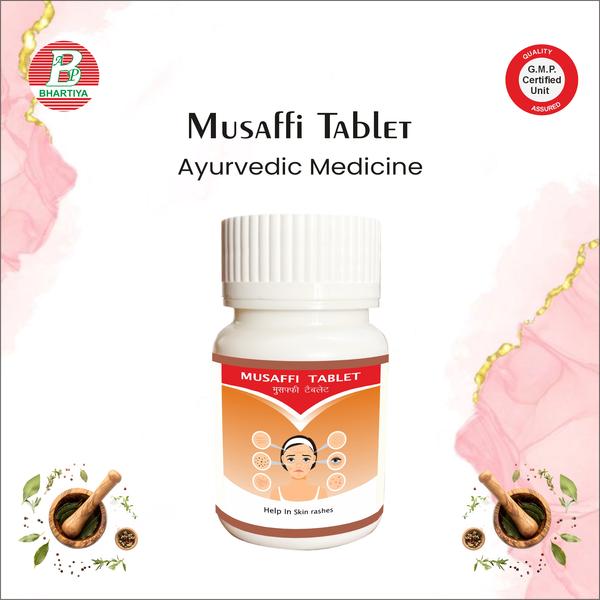
"name": "Musaffi Tablet",
"description": " \n MUSAFFI TABLET \n\n\nProduct Identification\n• Generic Name: Musaffi Tablet\n• Type: Ayurvedic Patent Medicine\n• Primary Indication Area: Blood purification, detoxification, and support in blood-related disorders (Rakt Vikar).\nTherapeutic Indications\nMusaffi Tablet is used to support blood health by purifying the blood, managing blood disorders (Rakt Vikar), and promoting overall vitality.\nKey Benefits:\nPrimary Benefit:\n• Supports blood purification and helps in the management of blood-related disorders by improving the quality of blood.\nOther Benefits:\n• Enhances energy and overall vitality.\n• Supports skin health by improving blood quality.\n• Promotes general well-being and immunity.\n\n CHOBCHINI \nBotanical / Common Name: Gymnema sylvestre\nKey Phytoconstituents:\n•\tGymnemic acids\n•\tSaponins\n•\tFlavonoids\n•\tAlkaloids\nMechanism of Action in Rakt Vikar (Blood Disorders / Anaemia) – Biochemistry / Pharmacology:\n1.\tBlood Purification & Detoxification\no\tGymnemic acids and flavonoids exhibit antioxidant properties, reducing oxidative stress on blood cells.\no\tHelps in cleansing the blood by neutralizing free radicals, which supports overall blood health.\n2.\tHematopoietic Support\no\tSaponins and flavonoids support haemoglobin synthesis and improve red blood cell (RBC) count.\no\tEnhances the quality and quantity of blood, aiding in the management of anaemia and other blood disorders.\n\nKUTAKI \nBotanical / Common Name: Picrorhiza kurroa\nKey Phytoconstituents:\n•\tPicrosides (Picrosides I & II)\n•\tKutkoside\n•\tIridoid glycosides\n•\tFlavonoids\nMechanism of Action in Rakt Vikar (Blood Disorders / Anaemia) – Biochemistry / Pharmacology:\n1.\tHepatoprotective & Blood Purification Effects\no\tPicrosides and iridoid glycosides support liver function, enhancing detoxification.\no\tImproved liver function aids in purifying the blood and removing metabolic toxins.\n2.\tHematopoietic Support\no\tFlavonoids and kutakoside promote RBC production and haemoglobin synthesis.\no\tHelps improve blood quality and manage anaemia associated with blood disorders.\n\nHARAD \nBotanical / Common Name: Terminalia chebula\nKey Phytoconstituents:\n•\tTannins (chebulinic acid, chebulagic acid)\n•\tFlavonoids\n•\tPhenolic compounds\n•\tGlycosides\nMechanism of Action in Rakt Vikar (Blood Disorders / Anaemia) – Biochemistry / Pharmacology:\n1.\tBlood Purification & Detoxification\no\tTannins and phenolic compounds exhibit antioxidant activity, helping neutralize free radicals in blood.\no\tSupports detoxification and improves overall blood quality.\n2.\tHematopoietic Support\no\tPromotes RBC formation and haemoglobin synthesis.\no\tSupports management of anaemia and other blood-related disorders.\n\nBAHEDA \nBotanical / Common Name: Terminalia belerica\nKey Phytoconstituents:\n•\tTannins (gallic acid, ellagic acid)\n•\tFlavonoids\n•\tGlycosides\n•\tPhenolic compounds\nMechanism of Action in Rakt Vikar (Blood Disorders / Anaemia) – Biochemistry / Pharmacology:\n1.\tBlood Purification & Detoxification\no\tTannins and phenolic compounds act as antioxidants, reducing oxidative stress on blood cells.\no\tSupports cleansing of blood and removal of toxins, improving blood quality.\n2.\tHematopoietic Support\no\tPromotes red blood cell formation and haemoglobin synthesis.\no\tHelps manage anaemia and strengthens overall blood health.\n\nAMLA \nBotanical / Common Name: Phyllanthus emblica\nKey Phytoconstituents:\n•\tVitamin C (ascorbic acid)\n•\tTannins (gallic acid, ellagic acid)\n•\tFlavonoids\n•\tPolyphenols\nMechanism of Action in Rakt Vikar (Blood Disorders / Anaemia) – Biochemistry / Pharmacology:\n1.\tAntioxidant & Blood Purification\no\tVitamin C, tannins, and polyphenols reduce oxidative stress on blood cells.\no\tSupports detoxification and improves the quality of blood.\n2.\tHematopoietic Support\no\tEnhances iron absorption and supports haemoglobin synthesis, aiding in anaemia management.\no\tImproves red blood cell count and overall blood health.\n\nDARUHALDI \nBotanical / Common Name: Berberis aristata\nKey Phytoconstituents:\n•\tBerberine (alkaloid)\n•\tTannins\n•\tFlavonoids\n•\tPhenolic compounds\nMechanism of Action in Rakt Vikar (Blood Disorders / Anaemia) – Biochemistry / Pharmacology:\n1.\tBlood Purification & Detoxification\no\tBerberine and flavonoids act as antioxidants, reducing oxidative stress on blood cells.\no\tSupports liver function and detoxification, indirectly improving blood quality.\n2.\tHematopoietic Support\no\tStimulates red blood cell formation and haemoglobin synthesis.\no\tAids in managing anaemia and other blood disorders.\n\nGORAKHMUNDI \nBotanical / Common Name: Sphaeranthus indicus\nKey Phytoconstituents:\n•\tSesquiterpene lactones (sphaerantholide)\n•\tFlavonoids\n•\tEssential oils\n•\tAlkaloids\nMechanism of Action in Rakt Vikar (Blood Disorders / Anaemia) – Biochemistry / Pharmacology:\n1.\tBlood Purification & Detoxification\no\tFlavonoids and sesquiterpene lactones reduce oxidative stress and help cleanse the blood.\no\tSupports liver and metabolic function, indirectly improving blood quality.\n2.\tHematopoietic Support\no\tStimulates red blood cell production and improves haemoglobin levels.\no\tAids in managing anaemia and related blood disorders.\n\nAFSTEEN \nBotanical / Common Name: Clerodendrum serratum (or related species)\nKey Phytoconstituents:\n•\tFlavonoids\n•\tAlkaloids\n•\tPhenolic compounds\n•\tTriterpenoids\nMechanism of Action in Rakt Vikar (Blood Disorders / Anaemia) – Biochemistry / Pharmacology:\n1.\tBlood Purification & Detoxification\no\tFlavonoids and phenolic compounds act as antioxidants, reducing oxidative stress in blood.\no\tSupports liver function and detoxification, enhancing overall blood quality.\n2.\tHematopoietic Support\no\tAlkaloids and triterpenoids aid in RBC formation and haemoglobin synthesis.\no\tHelps improve blood quality and manage anaemia.\n\nPITPAPDA \nBotanical / Common Name: Fumaria indica\nKey Phytoconstituents:\n•\tAlkaloids (fumarin, protopine)\n•\tFlavonoids\n•\tTannins\n•\tPhenolic compounds\nMechanism of Action in Rakt Vikar (Blood Disorders / Anaemia) – Biochemistry / Pharmacology:\n1.\tBlood Purification & Detoxification\no\tAlkaloids and flavonoids exhibit antioxidant activity, helping to cleanse the blood and reduce oxidative stress on blood cells.\no\tSupports liver function and metabolic detoxification, improving overall blood quality.\n2.\tHematopoietic Support\no\tPromotes RBC formation and hemoglobin synthesis.\no\tSupports management of anemia and enhances overall blood health.\n\nNILOPHER \nBotanical / Common Name: Nymphaea alba (White Water Lily)\nKey Phytoconstituents:\n•\tFlavonoids\n•\tAlkaloids\n•\tTannins\n•\tPhenolic compounds\nMechanism of Action in Rakt Vikar (Blood Disorders / Anaemia) – Biochemistry / Pharmacology:\n1.\tBlood Purification & Detoxification\no\tFlavonoids and tannins act as antioxidants, reducing oxidative stress on blood cells.\no\tSupports detoxification pathways, enhancing blood quality and overall vitality.\n2.\tHematopoietic Support\no\tAlkaloids and phenolic compounds promote RBC formation and hemoglobin synthesis.\no\tHelps in managing anemia and improving overall blood health.\n\nMANJEETH \nBotanical / Common Name: Rubia cordifolia\nKey Phytoconstituents:\n•\tAnthraquinones (alizarin, purpurin)\n•\tIridoid glycosides\n•\tFlavonoids\n•\tTannins\nMechanism of Action in Rakt Vikar (Blood Disorders / Anaemia) – Biochemistry / Pharmacology:\n1.\tBlood Purification & Detoxification\no\tAnthraquinones and flavonoids act as antioxidants, neutralizing free radicals and cleansing the blood.\no\tSupports liver and kidney function, indirectly improving blood quality.\n2.\tHematopoietic Support\no\tPromotes RBC formation and enhances hemoglobin synthesis.\no\tHelps in managing anemia and other blood-related disorders.\n\nGULAB PHOOL \nBotanical / Common Name: Rosa indica\nKey Phytoconstituents:\n•\tFlavonoids (quercetin, kaempferol)\n•\tTannins\n•\tVolatile oils (rose oil)\n•\tPhenolic compounds\nMechanism of Action in Rakt Vikar (Blood Disorders / Anaemia) – Biochemistry / Pharmacology:\n1.\tBlood Purification & Detoxification\no\tFlavonoids and phenolic compounds act as antioxidants, reducing oxidative stress on blood cells.\no\tSupports detoxification and improves blood quality.\n2.\tHematopoietic Support\no\tPromotes RBC formation and supports hemoglobin synthesis.\no\tHelps in managing anemia and enhancing overall blood health.\n\nREVAND CHINI \nBotanical / Common Name: Rheum emodi (Himalayan Rhubarb)\nKey Phytoconstituents:\n•\tAnthraquinones (emodin, chrysophanol)\n•\tTannins\n•\tFlavonoids\n•\tStilbenes\nMechanism of Action in Rakt Vikar (Blood Disorders / Anaemia) – Biochemistry / Pharmacology:\n1.\tBlood Purification & Detoxification\no\tAnthraquinones and flavonoids exhibit antioxidant activity, reducing oxidative stress on blood cells.\no\tSupports detoxification and cleansing of blood, improving overall blood quality.\n2.\tHematopoietic Support\no\tPromotes RBC formation and hemoglobin synthesis.\no\tHelps manage anemia and supports healthy blood composition.\n\nANANTMOOL \nBotanical Name: Hemidesmus indicus\nCommon Name: Indian Sarsaparilla\n\nKey Phytoconstituents\n•\tSaponins\n•\tFlavonoids\n•\tTannins\n•\tEssential oils\nMechanism of Action in Rakt Vikar (Blood Disorders / Anaemia)\n1. Blood Purification & Detoxification\n•\tSaponins and flavonoids act as powerful antioxidants, reducing oxidative stress and supporting the removal of circulating toxins.\n•\tEnhances liver and kidney function, promoting efficient detoxification and improved blood quality.\n2. Hematopoietic Support\n•\tSupports erythropoiesis (RBC formation) and hemoglobin synthesis.\n•\tHelps in managing anemia and contributes to improved overall blood composition.\n\nGILOY (Guduchi) \nBotanical Name: Tinospora cordifolia\nFamily: Menispermaceae\n\nKey Phytoconstituents\n•\tAlkaloids (berberine, tinosporin, magnoflorine)\n•\tDiterpenoid lactones (tinosporide, cordifolide)\n•\tGlycosides\n•\tPolysaccharides\n•\tPhenolics & Flavonoids\n\nMechanism of Action in Rakt Vikar (Blood Disorders / Anaemia)\n1. Blood Purification & Detoxification\n•\tPotent antioxidant and free-radical scavenging action from phenolics and flavonoids.\n•\tEnhances hepatic detoxification enzymes, supporting liver-based blood purification.\n•\tReduces circulating toxins (ama) and improves blood quality.\n\n2. Hematopoietic Support\n•\tStimulates bone marrow activity, increasing RBC and WBC production.\n•\tImproves hemoglobin synthesis and overall blood profile.\n•\tBeneficial in mild to moderate anemia due to its Rasayana (rejuvenative) effect.\n\nDosage:\nDose per Intake: 1–2 tablets\nFrequency: Twice a day (morning and evening)\nTotal Daily Dose: 2–4 tablets per day\nAnupan (Vehicle / Medium):\n•\tPreferred: Take with water\n•\tTiming: Preferably after meals to reduce gastric irritation\nPrecautions:\n•\tDo not exceed the prescribed dose\n•\tMonitor for any side effects\nConsult an Ayurvedic Practitioner Before Use in:\n•\tChildren\n•\tElderly\n•\tIndividuals with chronic illnesses\n\n\nmusaffi tablets, musaffi khoon tablet, musaffi khoon tablet uses\nmusaffi tablet amazon, musaffi tablet amazon india\nmusaffi tablet available in delhi, musaffi tablet available in india\nmusaffi tablet ajeeb uses in hindi, musaffi tablet benefits\nmusaffi tablet benefits in hindi, musaffi tablet buy online\nmusaffi tablet buy, musaffi tablet composition, musaffi tablet company\nmusaffi tablet content, musaffi tablet cost, musaffi tablet company name\nmusaffi tablet download, musaffi tablet dosage, musaffi tablet dose\nmusaffi tablet english, musaffi tablet expiry date, musaffi tablet export\nmusaffi tablet flipkart, musaffi tablet free download, musaffi tablet fayde in hindi\nmusaffi tablet gold, musaffi tablet good, musaffi tablet google, musaffi tablet in india\nmusaffi tablet in hindi, musaffi tablet in english, musaffi tablet jiomart\nmusaffi tablet login, musaffi tablet list pdf, musaffi tablet life science\nmusaffi tablet manufacturer, musaffi tablet meaning, musaffi tablet manufacturers in india\nmusaffi tablet manufacturing company, musaffi tablet medicine\nmusaffi tablet name, musaffi tablet near me, musaffi tablet nutrition\nmusaffi tablet name in india, musaffi tablet online, musaffi tablet online shopping\nmusaffi tablet online order, musaffi tablet price, musaffi tablet price in india\nmusaffi tablet qatar, musaffi tablet q10, musaffi tablet quality\nmusaffi tablet review, musaffi tablet review in hindi, musaffi tablet rate\nmusaffi tablet recipe, musaffi tablet tablet, musaffi tablet tab\nmusaffi tablet weight loss, musaffi tablet zamzam, ayurvedic musaffi syrup",
"price": 102.0,
"discountamount": 51.0,
"currencycode": "INR",
"priority": 1000000,
"isfreeshipmentavailable": false,
"shipmentduration": 1,
"_keywords": null,
"isarchived": false,
"isavailable": true,
"applicationid": null,
"productindex": 108,
"imageuri": "https://productimages.withfloats.com/actual/69f041bd7824e0f41855c98a.jpg",
"tileimageuri": "https://productimages.withfloats.com/tile/69f041bd7824e0f41855c98a.jpg",
"images": null,
"totalqueries": 0,
"gpid": null,
"groupproductid": null,
"createdon": "2026-04-28T05:12:27.341Z",
"updatedon": "2026-04-28T05:12:27.341Z",
"buyonlinelink": null,
"producturl": "http://WWW.BHARTIYAAYURVEDICPHARMACY.COM/products/musaffi-tablet/108",
"availableunits": -1.0,
"iscodavailable": true,
"isprepaidonlineavailable": true,
"maxcodorders": -1,
"maxprepaidonlineorders": -1,
"uniquepaymenturl": null,
"brandname": "Bakula Fort",
"category": "Musaffi Tablet 100 Tab X 102",
"tags": [],
"variants": false,
"keyspecification": null,
"otherspecifications": null,
"pickupaddressreferenceid": null,
"paymenttype": "AssuredPurchase",
"producttype": "products",
"hsncode": null,
"gstslab": 0.0,
"isnotforsale": false
},
{
"_id": "69e08903ef2bb462c498463f",
"fptag": "BHARTIYEAYURVEDICPHARMACY",
"merchantname": null,
"customwidgets": null,
"externalsourceid": null,
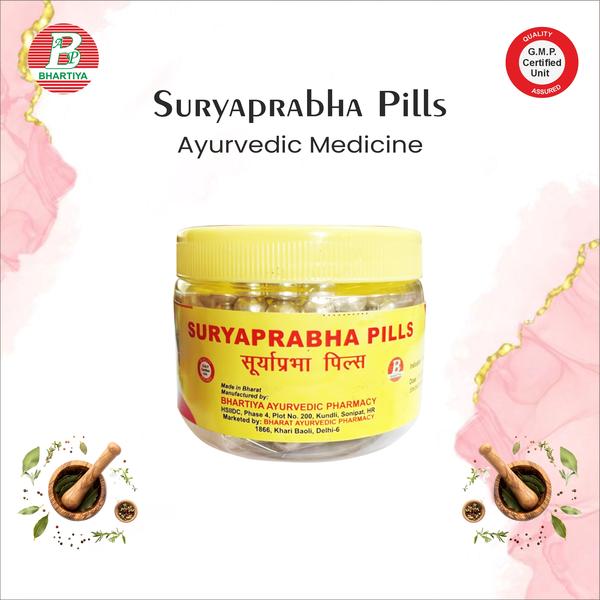
"name": "SURYAPRABHA PILLS",
"description": " SURYAPRABHA PILLS (SILVER COATED) \n\nProduct Identification\n•\tGeneric Name: Suryaprabha Pills\n•\tType: Ayurvedic Patent Medicine\n•\tPrimary Indication Area: Diabetes (Prameha / Blood Sugar Imbalance)\nTherapeutic Indications: The management of diabetes (Prameha / high blood sugar) and to support metabolic health, digestive strength, and overall vitality.\n\nKey benefits include:\n•\tBlood Sugar Support: Helps maintain healthy glucose levels.\n•\tDigestive & Metabolic Support: Enhances digestion, nutrient absorption, and metabolism.\n•\tPancreatic & Liver Health: Supports proper insulin function and detoxification.\n•\tStamina & Vitality: Helps combat fatigue and weakness associated with diabetes.\n•\tRasayana (Rejuvenation): Supports overall tissue nourishment and long-term health.\n\nIngredients:\n Giloy (Tinospora cordifolia) \nAyurvedic Name: Giloy / Guduchi\nPrimary Uses in Diabetes: Helps regulate blood glucose, improves insulin sensitivity, and protects organs from diabetic complications.\nKey Phytoconstituents\n•\tAlkaloids (e.g., berberine, magnoflorine)\n•\tDiterpenoid lactones (e.g., Tinosporide)\n•\tGlycosides\n•\tFlavonoids\n•\tSteroids\n•\tPolysaccharides\nThese compounds contribute to its antidiabetic, antioxidant, and immunomodulatory effects.\nMechanism of Action in Diabetes\n1. Insulin Sensitization & Secretion\n•\tGiloy stimulates pancreatic beta cells → increases insulin secretion.\n•\tImproves insulin receptor sensitivity on target tissues (muscle and adipose), enhancing glucose uptake.\n•\tAlkaloids like berberine mimic insulin action by activating AMPK pathway, which helps lower blood glucose.\n2. Carbohydrate Metabolism Regulation\n•\tModulates key enzymes:\no\tIncreases glucokinase activity → promotes glucose utilization in the liver.\no\tInhibits glucose-6-phosphatase & fructose-1,6-bisphosphatase → reduces hepatic gluconeogenesis.\n•\tThis leads to lower fasting and postprandial blood glucose.\n\nHaldi / Turmeric (Curcuma longa) \nAyurvedic Name: Haridra / Haldi\nPrimary Uses: Anti-inflammatory, antioxidant, digestive support, liver protection, and metabolic health (including blood sugar support).\nKey Phytoconstituents\n•\tCurcuminoids: Curcumin (major active compound), desmethoxycurcumin, bisdemethoxycurcumin\n•\tVolatile oils: Turmerone, zingiberene, atlantone\n•\tProteins & sugars\n•\tMinerals: Iron, calcium\nBiochemical & Pharmacological Actions\n1. Anti-inflammatory\n•\tCurcumin inhibits NF-κB pathway, reducing pro-inflammatory cytokines: TNF-α, IL-1β, IL-6.\n•\tSuppresses COX-2 and LOX enzymes, reducing prostaglandin and leukotriene production.\n•\tHelps in arthritis, inflammation, and chronic metabolic inflammation.\n2. Antioxidant\n•\tCurcumin neutralizes free radicals (ROS and RNS).\n•\tUpregulates endogenous antioxidant enzymes: SOD, catalase, glutathione peroxidase.\n•\tProtects tissues (liver, pancreas, kidneys, and heart) from oxidative stress.\n\nAtis (Aconitum heterophyllum) \nPrimary Role in Diabetes (Ayurvedic / Biochemical Basis):\nAtis is considered a mild hypoglycaemic and metabolism-supportive herb in traditional use, mainly through digestive and metabolic regulation. Modern research is limited, but biochemical mechanisms can be inferred.\nKey Phytochemicals Relevant to Diabetes\n•\tNon-toxic alkaloids (stimulatory to metabolism)\n•\tPhenolic compounds (antioxidant effects)\n•\tCarbohydrates and starch (support energy metabolism)\n•\tTannins (reduce oxidative gut stress)\nMechanisms of Action – Biochemical Basis\n1. Digestive & Metabolic Support\n•\tEnhances Agni (digestive fire) → indirectly supports carbohydrate digestion and absorption.\n•\tBetter digestion → improved glucose homeostasis because nutrients are metabolized efficiently.\n2. Antioxidant Action\n•\tPhenolic compounds neutralize free radicals generated by high blood sugar.\n•\tProtects pancreatic β-cells from oxidative damage → maintains insulin production.\n\nDaru Haldi (Berberis aristata) \nAyurvedic Name: Daruharidra / Daruhaldi\nPrimary Uses: Diabetes (Madhumeha), metabolic disorders, liver protection, antioxidant support\nKey Phytochemicals\n•\tAlkaloids: Berberine (major active compound), palmatine, jatrorrhizine\n•\tPolyphenols and flavonoids\n•\tTannins\n•\tOrganic acids\nBerberine is the primary active compound responsible for most antidiabetic effects.\nBiochemical Mechanisms in Diabetes\n1. Insulin Sensitization\n•\tBerberine activates AMPK (AMP-activated protein kinase) → acts like an “energy sensor” in cells.\n•\tIncreases glucose uptake in muscle and adipose tissue → lowers blood sugar.\n•\tImproves insulin receptor expression and sensitivity.\n2. Inhibition of Gluconeogenesis\n•\tReduces hepatic glucose production by inhibiting gluconeogenic enzymes:\no\tGlucose-6-phosphatase\no\tPhosphoenolpyruvate carboxykinase (PEPCK)\n•\tLeads to lower fasting blood glucose.\n\nPippali (Piper longum) \nAyurvedic Name: Pippali\nPrimary Uses: Diabetes (Madhumeha), digestive support, respiratory support, metabolism booster\nKey Phytochemicals\n•\tAlkaloids: Piperine (main active compound)\n•\tEssential oils: Caryophyllene, Pinene\n•\tFlavonoids, phenolic compounds\n•\tLignans\nPiperine is the primary bioactive compound responsible for most pharmacological effects.\nBiochemical Mechanisms in Diabetes\n1. Improves Insulin Sensitivity\n•\tPiperine enhances insulin receptor activity → increases glucose uptake in muscles and adipose tissue.\n•\tActs as a cellular sensitizer, making tissues respond better to insulin.\n2. Enhances Glucose Metabolism\n•\tStimulates glycolytic enzymes → promotes breakdown of glucose for energy.\n•\tReduces hepatic gluconeogenesis → less glucose is released into blood by the liver.\n\nChitrak (Plumbago zeylanica) \nAyurvedic Name: Chitraka\nPrimary Uses in Diabetes (Madhumeha): Digestive and metabolic support, improving glucose utilization, stimulating pancreatic function, and enhancing fat metabolism.\nKey Phytochemicals\n•\tPlumbagin (primary bioactive naphthoquinone)\n•\tAlkaloids\n•\tFlavonoids and phenolic compounds\n•\tEssential oils\nPlumbagin is the main compound responsible for antidiabetic effects.\nBiochemical Mechanisms in Diabetes\n1. Enhances Glucose Uptake\n•\tPlumbagin stimulates glucose transporter (GLUT4) translocation in muscle and adipose tissue.\n•\tImproves peripheral glucose utilization, lowering blood sugar.\n2. Stimulates Pancreatic Function\n•\tMildly supports pancreatic β-cell activity → helps maintain insulin secretion.\n•\tProtects β-cells from oxidative stress-induced damage.\n\nHarad (Terminalia chebula) \nAyurvedic Name: Haritaki / Harad\nPrimary Uses in Diabetes (Madhumeha): Blood sugar regulation, antioxidant support, lipid metabolism improvement, and digestive/metabolic balance.\nKey Phytochemicals\n•\tTannins: Chebulinic acid, chebulagic acid, gallic acid\n•\tFlavonoids and phenolic compounds\n•\tOrganic acids\n•\tPolysaccharides\nMost antidiabetic effects are attributed to tannins and polyphenols.\nBiochemical Mechanisms in Diabetes\n1. Improves Insulin Sensitivity\n•\tPolyphenols and tannins enhance insulin receptor activity on muscle and adipose tissues.\n•\tPromotes glucose uptake by cells → lowers blood sugar.\n2. Reduces Hepatic Glucose Production\n•\tInhibits gluconeogenic enzymes (glucose-6-phosphatase, PEPCK) → reduces fasting blood glucose.\n•\tHelps regulate hepatic glucose output.\n\nAmla (Phyllanthus emblica) \nAyurvedic Name: Amla / Amalaki\nPrimary Uses in Diabetes (Madhumeha): Blood sugar regulation, antioxidant protection, lipid metabolism improvement, and pancreatic β-cell protection.\nKey Phytochemicals\n•\tVitamin C (Ascorbic acid) – very high content\n•\tTannins: Emblicanin A & B, punigluconin, pedunculagin\n•\tFlavonoids and polyphenols\n•\tGallic acid and ellagic acid\nThe antioxidant compounds and tannins are responsible for most antidiabetic effects.\nBiochemical Mechanisms in Diabetes\n1. Enhances Insulin Secretion & β-Cell Protection\n•\tAntioxidants in Amla protect pancreatic β-cells from oxidative stress.\n•\tSupports insulin secretion in mild diabetes.\n2. Improves Insulin Sensitivity\n•\tPolyphenols improve insulin receptor activity on muscle and adipose tissues.\n•\tEnhances peripheral glucose uptake → lowers blood sugar.\n\nChavya (Piper chaba) \nAyurvedic Name: Chavya\nPrimary Uses in Diabetes (Madhumeha): Blood sugar regulation, digestive/metabolic support, and insulin sensitization.\nKey Phytochemicals\n•\tAlkaloids: Piperine (main active compound)\n•\tEssential oils: Caryophyllene, pinene\n•\tFlavonoids and polyphenols\n•\tLignans\nPiperine is the main bioactive compound responsible for most antidiabetic effects\nBiochemical Mechanisms in Diabetes\n1. Enhances Insulin Sensitivity\n•\tPiperine improves insulin receptor activity in muscle and adipose tissue.\n•\tIncreases glucose uptake → lowers blood sugar.\n2. Stimulates Glucose Metabolism\n•\tEnhances glycolytic enzyme activity → better glucose utilization by cells.\n•\tReduces hepatic gluconeogenesis → less glucose released into blood.\n\nVaividang (Embelia ribes) \nAyurvedic Name: Vaividang / Vidanga\nPrimary Uses in Diabetes (Madhumeha): Blood sugar regulation, antioxidant protection, lipid metabolism improvement, and digestive/metabolic support.\nKey Phytochemicals\n•\tAlkaloids: Embelin (main active compound)\n•\tFlavonoids and phenolic compounds\n•\tTannins and glycosides\n•\tEssential oils\nEmbelin is the major bioactive molecule responsible for antidiabetic effects.\nBiochemical Mechanisms in Diabetes\n1. Enhances Insulin Sensitivity\n•\tEmbelin improves insulin receptor activity in peripheral tissues (muscle and adipose).\n•\tIncreases glucose uptake, lowering blood sugar.\n2. Stimulates Glucose Metabolism\n•\tPromotes glycolytic enzyme activity → better glucose utilization in tissues.\n•\tReduces hepatic gluconeogenesis → decreases blood glucose release from liver.\n\nSaunth / Shunthi (Zingiber officinale, dry ginger) \nAyurvedic Name: Saunth / Shunthi\nPrimary Uses in Diabetes (Madhumeha): Blood sugar regulation, insulin sensitization, antioxidant protection, and metabolic support.\nKey Phytochemicals\n•\tGingerols and Shogaols (major bioactive compounds)\n•\tPolyphenols and flavonoids\n•\tEssential oils (zingiberene, bisabolene)\n•\tDiarylheptanoids\nGingerols and Shogaols are mainly responsible for antidiabetic effects.\nBiochemical Mechanisms in Diabetes\n1. Enhances Insulin Sensitivity\n•\tGingerol and shogaol improve insulin receptor signaling in muscle and adipose tissue.\n•\tEnhances glucose uptake by cells, reducing blood sugar.\n2. Reduces Hepatic Glucose Production\n•\tInhibits gluconeogenic enzymes like glucose-6-phosphatase and PEPCK.\n•\tLeads to lower fasting blood glucose.\n\nSajji kshar (Alkaline Salt / Kshara) \nAyurvedic Name: Sajji kshar / Kshara\nPrimary Uses in Diabetes (Madhumeha):\n•\tDigestive support and enhancing metabolism\n•\tBlood sugar balance\n•\tAcid-base regulation in the body\nKey Biochemical Properties\n•\tAlkaline nature (basic pH)\n•\tSodium ions and carbonate ions\n•\tNo direct organic phytochemicals (inorganic compound)\nSajji kshar is not a herb but an alkaline mineral-based therapeutic agent used in Ayurveda to correct metabolic imbalances.\nBiochemical Mechanisms Relevant to Diabetes\n1. Supports Digestive Enzymes & Metabolism\n•\tAlkaline environment improves digestive enzyme activity → better breakdown and absorption of nutrients.\n•\tHelps regulate glucose metabolism indirectly by improving digestion (Agni).\n2. Neutralizes Excess Acidity\n•\tIn diabetes, acid-base imbalance and metabolic acidosis may occur in uncontrolled cases.\n•\tSajji kshar helps maintain systemic pH balance, which supports enzymatic reactions for carbohydrate metabolism.\n\nSaindha Namak (Rock Salt / Himalayan Salt) \nAyurvedic Name: Saindha Namak / Lavana\nPrimary Uses in Diabetes (Madhumeha):\n•\tSupports digestion and metabolism\n•\tEnhances nutrient absorption\n•\tElectrolyte and mineral balance\nKey Biochemical Properties\n•\tSodium chloride – primary component\n•\tTrace minerals: potassium, magnesium, calcium, iron\n•\tAlkaline-forming salts (helps balance pH in tissues)\nSaindha Namak is not an organic herb, but a mineral salt used in Ayurveda to improve digestion and metabolic balance, which is important in diabetes management.\n\nBiochemical Mechanisms Relevant to Diabetes\n1. Digestive & Metabolic Support\n•\tEnhances Agni (digestive fire) → improves enzymatic breakdown of carbohydrates.\n•\tBetter digestion → improved glucose absorption and utilization.\n2. Electrolyte & Mineral Balance\n•\tProvides sodium, potassium, and trace minerals → helps maintain cellular osmolarity and enzyme function.\n•\tProper electrolyte balance supports insulin signaling and glucose transport in tissues.\n\nKala Namak (Black Salt) \nAyurvedic Name: Kala Namak / Black Salt\nPrimary Uses in Diabetes (Madhumeha):\n•\tDigestive and metabolic support\n•\tElectrolyte and mineral balance\n•\tMild alkalizing effect → helps in metabolic homeostasis\nKey Biochemical Properties\n•\tMain components: Sodium chloride, sodium sulphate, trace minerals (iron, magnesium, potassium)\n•\tContains sulfur compounds → gives characteristic taste and mild therapeutic action\n•\tMildly alkaline → supports acid-base balance\nKala Namak is a mineral-based adjunct in Ayurveda, not a direct herb, but plays an important role in metabolic regulation and diabetes support.\n\nBiochemical Mechanisms Relevant to Diabetes\n1. Digestive & Metabolic Support\n•\tImproves Agni (digestive fire) → enhances carbohydrate breakdown and absorption.\n•\tProper digestion → more stable blood glucose levels.\n2. Electrolyte & Mineral Balance\n•\tProvides sodium, potassium, and magnesium → supports cellular osmolarity, insulin signaling, and enzyme activity.\n\nDantimool (Baliospermum montanum) \nAyurvedic Name: Dantimool / Danti\nPrimary Uses in Diabetes (Madhumeha):\n•\tBlood sugar regulation\n•\tDigestive and metabolic support\n•\tLipid metabolism improvement\n•\tMild detoxification of blood\nKey Phytochemicals\n•\tAlkaloids: Baliospermin, solanifolamine\n•\tFlavonoids and phenolic compounds\n•\tGlycosides\n•\tFatty acids\nThe alkaloids and flavonoids are mainly responsible for metabolic and antidiabetic effects.\nBiochemical Mechanisms in Diabetes\n1. Digestive & Metabolic Support\n•\tImproves Agni (digestive fire) → enhances carbohydrate breakdown and nutrient absorption.\n•\tBetter digestion → improves glucose metabolism and stabilizes blood sugar levels.\n2. Enhances Glucose Utilization\n•\tStimulates glycolytic enzymes → promotes cellular glucose utilization.\n•\tReduces hepatic gluconeogenesis, lowering fasting blood sugar.\n\nTejpatra (Cinnamomum tamala) \nAyurvedic Name: Tejpatra / Indian Bay Leaf\nPrimary Uses in Diabetes (Madhumeha):\n•\tBlood sugar regulation\n•\tInsulin sensitization\n•\tAntioxidant protection\n•\tLipid metabolism support\nKey Phytochemicals\n•\tEssential oils: Eugenol, cinnamaldehyde, linalool\n•\tPolyphenols\n•\tFlavonoids\n•\tTannins\nThe cinnamaldehyde and polyphenols are mainly responsible for antidiabetic effects.\nBiochemical Mechanisms in Diabetes\n1. Enhances Insulin Sensitivity\n•\tPolyphenols and cinnamaldehyde improve insulin receptor activity in muscle and adipose tissue.\n•\tEnhances glucose uptake by cells, reducing postprandial blood sugar.\n2. Reduces Hepatic Glucose Production\n•\tInhibits gluconeogenic enzymes (glucose-6-phosphatase, PEPCK) → lowers fasting blood glucose.\n\nNagarmotha (Cyperus rotundus) \nAyurvedic Name: Nagarmotha / Musta-moola\nPrimary Uses in Diabetes (Madhumeha):\n•\tBlood sugar regulation\n•\tInsulin sensitization\n•\tDigestive and metabolic support\n•\tLipid metabolism improvement\nKey Phytochemicals\n•\tEssential oils: Cyperene, α-cyperone, β-selinene\n•\tFlavonoids and phenolic compounds\n•\tTannins\n•\tAlkaloids and glycosides\nThe α-cyperone, flavonoids, and phenolic compounds are mainly responsible for antidiabetic effects.\nBiochemical Mechanisms in Diabetes\n1. Enhances Insulin Sensitivity\n•\tFlavonoids and α-cyperone improve insulin receptor activity in muscle and adipose tissue.\n•\tEnhances glucose uptake by peripheral tissues, reducing postprandial blood sugar.\n2. Reduces Hepatic Glucose Production\n•\tInhibits gluconeogenic enzymes (glucose-6-phosphatase, PEPCK) → lowers fasting blood glucose.\n\nShudh Guggul (Commiphora mukul) \nAyurvedic Name: Guggul / Shudh Guggul\nPrimary Uses in Diabetes (Madhumeha):\n•\tBlood sugar regulation\n•\tLipid metabolism improvement\n•\tInsulin sensitization\n•\tAnti-inflammatory and antioxidant effects\n\nKey Phytochemicals\n•\tGuggulsterones (E & Z) – primary active compounds\n•\tFlavonoids and polyphenols\n•\tTerpenoids and volatile oils\n•\tResin compounds\nGuggulsterones are mainly responsible for antidiabetic and lipid-lowering effects.\nBiochemical Mechanisms in Diabetes\n1. Enhances Insulin Sensitivity\n•\tGuggulsterones improve insulin receptor signaling in peripheral tissues (muscle and adipose).\n•\tEnhances glucose uptake, lowering postprandial blood sugar.\n2. Regulates Hepatic Glucose Metabolism\n•\tModulates gluconeogenic enzymes in the liver → reduces fasting blood glucose.\n•\tSupports glycolysis, promoting cellular glucose utilization.\n\nShudh Shilajeet (Purified Shilajit) \nAyurvedic Name: Shilajeet / Shilajit\nPrimary Uses in Diabetes (Madhumeha):\n•\tBlood sugar regulation\n•\tInsulin sensitization\n•\tAntioxidant and anti-inflammatory support\n•\tEnergy metabolism enhancement\nKey Biochemical Constituents\n•\tFulvic acid – major bioactive compound\n•\tHumic acids\n•\tTrace minerals: zinc, iron, magnesium, copper\n•\tDibenzo-α-pyrones (antioxidant compounds)\n•\tAmino acids and phenolic compounds\nFulvic acid and dibenzo-α-pyrones are mainly responsible for antidiabetic effects.\nBiochemical Mechanisms in Diabetes\n1. Enhances Insulin Sensitivity\n•\tFulvic acid improves insulin receptor activity in muscle and adipose tissue.\n•\tEnhances glucose uptake, lowering blood sugar.\n2. Regulates Hepatic Glucose Metabolism\n•\tInhibits gluconeogenic enzymes (glucose-6-phosphatase, PEPCK) → reduces fasting blood glucose.\n•\tStimulates glycolysis → improves cellular glucose utilization.\n\nLoh Bhasma (Iron Ash) \nAyurvedic Name: Loh Bhasma\nPrimary Uses in Diabetes (Madhumeha):\n•\tSupports Hemoglobin and iron metabolism\n•\tEnhances energy and stamina\n•\tImproves glucose metabolism indirectly\n•\tAntioxidant and tissue-protective effects\n\nKey Biochemical Properties\n•\tInorganic Iron (Fe³⁺/Fe²⁺) – main active component\n•\tTrace minerals retained during preparation\n•\tHighly bioavailable form after Ayurvedic calcination (Bhasmikarana)\nLoh Bhasma is a mineral-based Ayurvedic preparation that primarily improves haematological and metabolic functions, indirectly supporting glucose homeostasis.\nBiochemical Mechanisms Relevant to Diabetes\n1. Supports Red Blood Cells & Oxygen Transport\n•\tIncreases Hemoglobin synthesis → better oxygen delivery to tissues.\n•\tEnhanced tissue oxygenation improves glucose utilization in muscles and organs.\n2. Energy & Metabolic Support\n•\tIron is a cofactor for enzymes in the electron transport chain and oxidative phosphorylation.\n•\tImproves ATP production, which enhances glucose metabolism and cellular energy.\n\nDosage & Administration\n•\tDose per intake: 1–2 pills\n•\tFrequency: 2–3 times daily\n•\tTotal daily dose: 2–6 pills (as per physician advice)\n•\tHow to take: With warm water, preferably after meals\n\nPrecautions\n•\tDo not exceed prescribed dose\n•\tConsult Ayurvedic practitioner before use in:\no\tChildren\no\tElderly\no\tChronic illness patients\n•\tMonitor for digestive discomfort\n•\tMaintain proper diet, hydration, and lifestyle for diabetes management\n\n\nsuryaprabha tablet, suryaprabha tablet uses, suryaprabha pills amazon\nsuryaprabha pills buy, suryaprabha pills buy online, suryaprabha pills benefits\nsuryaprabha pills brand, suryaprabha pills benefits in hindi\nsuryaprabha pills bibwewadi pune, suryaprabha pills company\nsuryaprabha pills contact number, suryaprabha pills content\nsuryaprabha pills chemist, suryaprabha pills contact details\nsuryaprabha pills contact no, suryaprabha pills channel\nsuryaprabha pills delhi, suryaprabha pills details\nsuryaprabha pills distributor, suryaprabha pills email id\nsuryaprabha pills energy, suryaprabha pills enterprises\nsuryaprabha pills education, suryaprabha pills energy private limited\nsuryaprabha pills effects, suryaprabha pills edit\nsuryaprabha pills for hair, suryaprabha pills for skin\nsuryaprabha pills for weight loss, suryaprabha pills group\nsuryaprabha pills gst number, suryaprabha pills granules\nsuryaprabha pills gulika uses, suryaprabha pills gulika\nsuryaprabha pills gulika benefits, suryaprabha pills gulika side effects\nsuryaprabha pills hyderabad, suryaprabha pills hindi\nsuryaprabha pills himachal pradesh, suryaprabha pills hospital\nsuryaprabha pills holidays, suryaprabha pills home\nsuryaprabha pills hospital pune, suryaprabha pills hot latest\nsuryaprabha pills in hindi, suryaprabha pills industries\nsuryaprabha pills indiamart, suryaprabha pills ingredients\nsuryaprabha pills in malayalam, suryaprabha pills instagram\nsuryaprabha pills in tamil, suryaprabha pills in perambalur\nsuryaprabha pills jee advanced, suryaprabha pills ke fayde\nsuryaprabha pills ke fayde in hindi, suryaprabha pills khanna\nsuryaprabha pills limited, suryaprabha pills linkedin\nsuryaprabha pills login, suryaprabha pills latest\nsuryaprabha pills manufacturer, suryaprabha pills manufacturing company\nsuryaprabha pills malayalam, suryaprabha pills matrimony\nsuryaprabha pills model, suryaprabha pills news\nsuryaprabha pills name, suryaprabha pills net worth\nsuryaprabha pills network, suryaprabha pills new delhi\nsuryaprabha pills nursing home, suryaprabha pills owner\nsuryaprabha pills online, suryaprabha pills online shopping\nsuryaprabha pills owner name, suryaprabha pills online order\nsuryaprabha pills oil, suryaprabha pills official\nsuryaprabha pills photography, suryaprabha pills photoshoot\nsuryaprabha pills pune, suryaprabha pills review\nsuryaprabha pills research, suryaprabha pills reels\nsuryaprabha pills supplier, suryaprabha pills share price\nsuryaprabha pills today, suryaprabha vati uses\nsuryaprabha pills veterinary, suryaprabha pills vs\nsuryaprabha pills vati uses, suryaprabha pills vati\nsuryaprabha pills vlogs, suryaprabha pills vahanam\nsuryaprabha pills vahanam images, suryaprabha pills website\nsuryaprabha pills wholesale, suryaprabha pills zepto\nayurvedic medicine suryaprabha, sooryaprabha tablet\ndoes suryaprabha pills work, does suryaprabha pills uses\nwas suryaprabha pills good, was suryaprabha pills uses\nwas suryaprabha pills uses in malayalam\nbest suryaprabha pills in india, best suryaprabha pills uses\nbest suryaprabha pills uses in malayalam",
"price": 450.0,
"discountamount": 225.0,
"currencycode": "INR",
"priority": 1000000,
"isfreeshipmentavailable": false,
"shipmentduration": 1,
"_keywords": null,
"isarchived": false,
"isavailable": true,
"applicationid": null,
"productindex": 87,
"imageuri": "https://productimages.withfloats.com/actual/69e08924c32735ec39db6c8e.jpg",
"tileimageuri": "https://productimages.withfloats.com/tile/69e08924c32735ec39db6c8e.jpg",
"images": null,
"totalqueries": 0,
"gpid": null,
"groupproductid": null,
"createdon": "2026-04-16T07:00:19.771Z",
"updatedon": "2026-04-16T07:00:19.771Z",
"buyonlinelink": null,
"producturl": "http://WWW.BHARTIYAAYURVEDICPHARMACY.COM//suryaprabha-pills/87",
"availableunits": -1.0,
"iscodavailable": true,
"isprepaidonlineavailable": true,
"maxcodorders": -1,
"maxprepaidonlineorders": -1,
"uniquepaymenturl": null,
"brandname": "Bakula Fort",
"category": "SURYAPRABHA PILLS 100gm X 30",
"tags": [],
"variants": false,
"keyspecification": null,
"otherspecifications": null,
"pickupaddressreferenceid": null,
"paymenttype": "AssuredPurchase",
"producttype": "products",
"hsncode": null,
"gstslab": 0.0,
"isnotforsale": false
},
{
"_id": "69afa519bf4e24909aec2e8e",
"fptag": "BHARTIYEAYURVEDICPHARMACY",
"merchantname": null,
"customwidgets": null,
"externalsourceid": null,
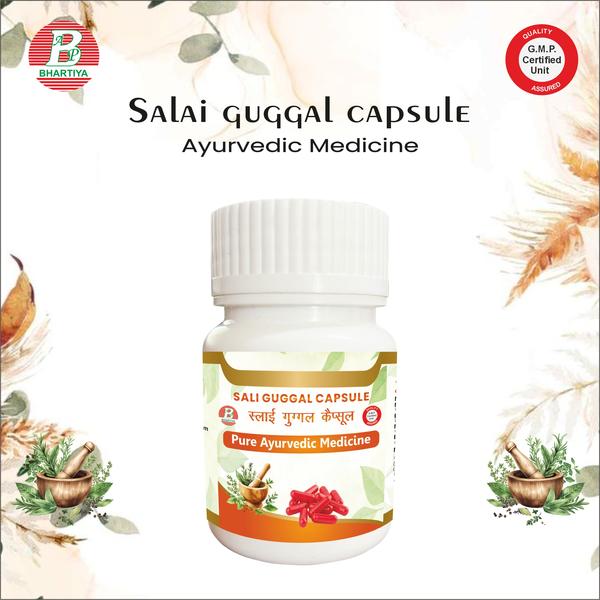
"name": "Salai guggal capsule",
"description": " SALAI GUGGUL \n\n SALAI GUGGUL (Boswellia serrata Roxb.) \nThe Natural Anti-Inflammatory & Joint Protector\n“Shallaki / Indian Frankincense”\nSalai Guggul is one of Ayurveda’s most powerful Shothahara (anti-inflammatory) and Vedanasthapana (pain-relieving) herbs. Revered for its exceptional ability to reduce joint inflammation, improve mobility, and protect cartilage, it is widely used in arthritis, joint degeneration, musculoskeletal pain, and inflammatory disorders.\n\n CLASSICAL AYURVEDIC REFERENCES\nCharaka Samhita\n• Mentioned among Shothahara Dravya’s for inflammatory conditions\n• Described as Vata-Kapha shamaka and Sandhishoolahara\nSushruta Samhita\n• Recommended in Sandhigata Vata, joint swelling, and pain disorders\n• Used in Vatavyadhi and traumatic inflammation\nBhavaprakasha Nighantu\n• Described as Shallaki – Shothahara, Vedanasthapana, Balya\n• Especially beneficial in joint and musculoskeletal disorders\n CLASSICAL STORY / ANECDOTE\nTraditional Ayurvedic physicians observed that the resin of the Salai tree exudes naturally to heal wounds and protect the tree from injury.\nThis self-protective and healing nature inspired its use in joint inflammation and tissue degeneration, where it “protects and restores” internal structures just as it does externally.\n\n BOTANICAL INFORMATION OF SALAI GUGGUL\nScientific Name: Boswellia serrata Roxb.\nFamily: Burseraceae\nOrder: Sapindales\nGenus: Boswellia\nSpecies: serrata\n\nCommon Names\nSanskrit: Shallaki\nHindi: Salai Guggul \nEnglish: Indian Frankincense\nTamil: Parangisambirani\nTelugu: Anduguggilam\nKannada: Chandra Dhoopa\nBengali: Salai Guggal\n\n SYNONYMS IN CLASSICAL AYURVEDIC NIGHANTUS\n Charaka Samhita: Shallaki – Shothahara\n Sushruta Samhita: Salai – Vatashamaka\n• Bhavaprakasha: Shallaki – Vedanasthapana, Balya\n MORPHOLOGY OF SALAI GUGGUL\n• Plant Type: Medium-sized deciduous tree\n• Bark: Thin, papery, exfoliating\n• Resin: Aromatic oleo-gum-resin (Salai Guggul)\n• Leaves: Pinnate, serrated\n• Flowers: Small, white\n• Taste: Bitter, astringent\n\n ECOLOGICAL PREFERENCES\n• Climate: Dry tropical\n• Soil: Rocky, well-drained soil\n• Habitat: Dry forests, hills\n• Sunlight: Full sun\n• Altitude: Up to 1200 m\n\n GEOGRAPHICAL DISTRIBUTION\n• India: Rajasthan, Madhya Pradesh, Gujarat, Maharashtra, Andhra Pradesh\n• Outside India: Africa, Middle East\n\n CLASSICAL AYURVEDIC PROPERTIES\n(RASA–GUNA–VIRYA–VIPAKA)\n• Rasa (Taste): Tikta (bitter), Kashaya (astringent)\n• Guna (Qualities): Laghu (light), Ruksha (dry)\n• Virya (Potency): Ushna (heating)\n• Vipaka: Katu (pungent)\nDosha Effect\n• Vata–Kapha hara\n• Excess use may aggravate Pitta\n\n THERAPEUTIC ACTIONS (KARMA)\n Shothahara – Reduces inflammation\n Vedanasthapana – Relieves pain\n Sandhishoolahara – Alleviates joint pain\n Balya – Strengthens joints and muscles\n Amapachana – Digests metabolic toxins\n Vranaropana – Supports healing\n INDICATIONS\n• Osteoarthritis\n• Rheumatoid arthritis\n• Joint pain and stiffness\n• Cervical & lumbar spondylosis\n• Sports injuries\n• Tendinitis and bursitis\n• Inflammatory musculoskeletal disorders\n\n MODERN PHARMACOLOGY & PHYTOCHEMISTRY\nMajor Constituents\n• Boswellic acids (AKBA)\n• Triterpenoids\n• Essential oils\n• Resin acids\nPharmacological Actions\n• Potent anti-inflammatory\n• Anti-arthritic\n• Analgesic\n• Cartilage protective\n• Anti-degenerative\n\n CULTIVATION DETAILS\n• Propagation: Seeds\n• Harvesting: Resin tapping after tree maturity\n• Collection Season: Summer\n• Processing: Purification and drying\n\n CLASSICAL DOSAGE (Ayurvedic Practice)\n• Powder (Churna): 1–3 g/day\n• Decoction (Kwatha): 30–60 ml/day\n• Capsules/Tablets: As prescribed\n• External Application: Oil or paste as required\n\n SALAI GUGGUL FORMULATIONS\nBhartiya Ayurvedic Pharmacy\nBhartiya Ayurvedic Pharmacy prepares authentic Salai Guggul formulations following classical Ayurvedic principles to support joint health, inflammation control, and musculoskeletal strength.\n\n SALAI GUGGUL CAPSULE \nPrepared using premium quality Boswellia serrata resin extract, standardized for optimal boswellic acid content.\nKey Benefits\n• Reduces joint inflammation\n• Relieves pain and stiffness\n• Improves mobility\n• Protects cartilage\n• Supports arthritis management\nDosage\n• Adults: 1–2 capsules twice daily with warm water\n• Or as directed by an Ayurvedic physician\nSafety & Precautions\n• Safe for long-term use under guidance\n• Use cautiously in high Pitta conditions\nFormulation Highlights\n• 100% pure Salai Guggul extract\n• No artificial additives or preservatives\n• Classical Ayurvedic processing\n\n SALAI GUGGUL POWDER \nPrepared from purified, shade-dried Salai Guggul resin, retaining its natural anti-inflammatory potency.\nKey Benefits\n• Reduces swelling and pain\n• Strengthens joints\n• Improves flexibility\n• Supports inflammatory balance\nDosage\n• Adults: 1–3 g daily\n• Take with warm water or honey\n• Or as advised by an Ayurvedic physician\nSafety & Precautions\n• Excess use may increase Pitta\n• Store in a cool, dry place\nFormulation Highlights\n• 100% pure Salai Guggul resin\n• No fillers or chemicals\n• Traditionally processed\n\n\n\nguggul capsules benefits, guggul how to use\nguggul is used for, guggul medicine uses\nguggul weight loss, guggul weight loss reviews\nguggulu capsules, salai guggal capsule amazon\nsalai guggal capsule ayurvedic, salai guggal capsule benefits\nsalai guggal capsule benefits in hindi, salai guggal capsule buy online\nsalai guggal capsule company, salai guggal capsule company name\nsalai guggal capsule composition, salai guggal capsule content\nsalai guggal capsule cost, salai guggal capsule details\nsalai guggal capsule details in hindi, salai guggal capsule dose\nsalai guggal capsule dose per day, salai guggal capsule download\nsalai guggal capsule easy ayurveda, salai guggal capsule english\nsalai guggal capsule english name, salai guggal capsule extract\nsalai guggal capsule for hair, salai guggal capsule for hair growth\nsalai guggal capsule for skin, salai guggal capsule for weight loss\nsalai guggal capsule goli, salai guggal capsule green world\nsalai guggal capsule gst number, salai guggal capsule gst rate\nsalai guggal capsule gujarati, salai guggal capsule hindi\nsalai guggal capsule hindi name, salai guggal capsule how to use\nsalai guggal capsule image, salai guggal capsule in english\nsalai guggal capsule in hindi, salai guggal capsule in india\nsalai guggal capsule indiamart, salai guggal capsule ke fayde\nsalai guggal capsule ke fayde in hindi, salai guggal capsule life\nsalai guggal capsule manufacturer, salai guggal capsule manufacturers in india\nsalai guggal capsule manufacturing company, salai guggal capsule name\nsalai guggal capsule name in hindi, salai guggal capsule near me\nsalai guggal capsule online, salai guggal capsule online order\nsalai guggal capsule online purchase, salai guggal capsule online shopping\nsalai guggal capsule original, salai guggal capsule price\nsalai guggal capsule price in india, salai guggal capsule rate\nsalai guggal capsule review, salai guggal capsule review in hindi\nsalai guggal capsule side effects, salai guggal capsule side effects in hindi\nsalai guggal capsule uses, salai guggal capsule uses in hindi",
"price": 450.0,
"discountamount": 225.0,
"currencycode": "INR",
"priority": 1000000,
"isfreeshipmentavailable": false,
"shipmentduration": 1,
"_keywords": null,
"isarchived": false,
"isavailable": true,
"applicationid": null,
"productindex": 77,
"imageuri": "https://productimages.withfloats.com/actual/69afa520f73acb380293150b.jpg",
"tileimageuri": "https://productimages.withfloats.com/tile/69afa520f73acb380293150b.jpg",
"images": null,
"totalqueries": 0,
"gpid": null,
"groupproductid": null,
"createdon": "2026-03-10T04:59:05.318Z",
"updatedon": "2026-03-10T04:59:05.318Z",
"buyonlinelink": null,
"producturl": "http://WWW.BHARTIYAAYURVEDICPHARMACY.COM//salai-guggal-capsule/77",
"availableunits": -1.0,
"iscodavailable": true,
"isprepaidonlineavailable": true,
"maxcodorders": -1,
"maxprepaidonlineorders": -1,
"uniquepaymenturl": null,
"brandname": "Bakula fort",
"category": "Salai guggal capsule 60-cap x 24",
"tags": [],
"variants": false,
"keyspecification": null,
"otherspecifications": null,
"pickupaddressreferenceid": null,
"paymenttype": "AssuredPurchase",
"producttype": "products",
"hsncode": null,
"gstslab": 0.0,
"isnotforsale": false
},
{
"_id": "69ae87ee2e7f818071483959",
"fptag": "BHARTIYEAYURVEDICPHARMACY",
"merchantname": null,
"customwidgets": null,
"externalsourceid": null,
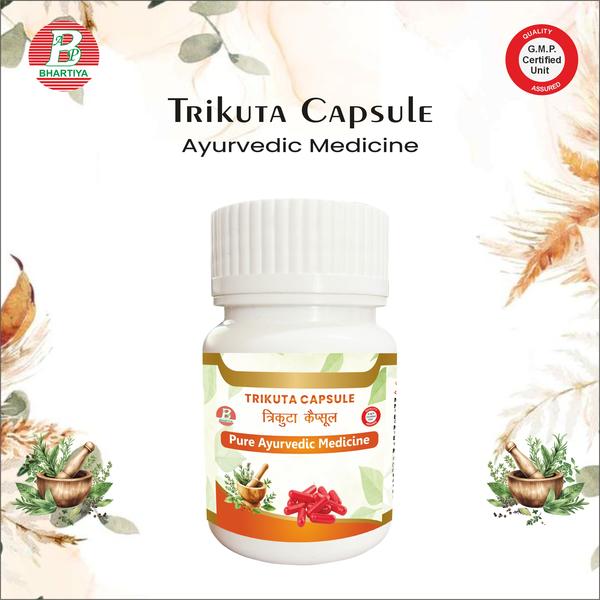
"name": "Trikuta capsule",
"description": " TRIKATU \n TRIKATU \nThe Agni-Deepaka Yoga of Ayurveda\nTrikatu is a powerful classical Ayurvedic formulation composed of three pungent herbs—Shunthi (Dry Ginger), Maricha (Black Pepper), and Pippali (Long Pepper). Renowned as a Deepana–Pachana Yoga, Trikatu kindles digestive fire (Agni), removes Ama (toxins), enhances bioavailability of nutrients and medicines, and supports respiratory and metabolic health. It is especially effective in Kapha-dominant disorders and Agni-mandya.\n\n CLASSICAL AYURVEDIC REFERENCES\nCharaka Samhita\n• Describes Trikatu as a potent Deepana and Pachana Yoga.\n• Recommended in Ama, Agnimandya, and Kapha disorders.\nSushruta Samhita\n• Advocates Trikatu in Shwasa, Kasa, Medoroga, and digestive obstruction.\n• Used to clear channels (Srotoshodhana).\nAshtanga Hridaya\n• Mentions Trikatu for enhancing Agni and drug absorption (Yogavahi effect).\nBhavaprakasha Nighantu\n• Describes Trikatu as Kaphavatahara, Deepana, Pachana, and Lekhana.\n\n CLASSICAL ANCIENT STORY / AACHARYA ANECDOTE\nAncient Ayurvedic lore recounts that the Acharyas observed many diseases arising not from lack of food, but from weak digestive fire. Even the best medicines failed when Agni was impaired.\nSages approached Lord Dhanvantari, seeking a formulation that could ignite Agni swiftly without harming tissues. He revealed Trikatu, the union of three fiery herbs symbolizing the three flames of digestion:\n• Shunthi – Rekindles Jatharagni and removes Ama\n• Maricha – Penetrates channels and breaks Kapha stagnation\n• Pippali – Nourishes Agni gently and acts as Rasayana for Pranavaha Srotas\nThe Acharyas declared:\n“Agnau Pradīpte Rogāṇāṃ Mūlaṃ Nashyati”\n(When Agni is kindled, the root of disease is destroyed.)\nThus, Trikatu became known as the key to therapeutic success, often used as a Yogavahi with other formulations.\n\n BOTANICAL COMPOSITION OF TRIKATU\nIngredient\tBotanical Name\tPart Used\nShunthi\tZingiber officinale\tRhizome\nMaricha\tPiper nigrum\tFruit\nPippali\tPiper longum\tFruit\nFamily: Zingiberaceae & Piperaceae\n\n SYNONYMS IN CLASSICAL TEXTS\n• Trikatu\n• Vyosha\n• Katutraya\n• Deepana Yoga\n\n CLASSICAL AYURVEDIC PROPERTIES\n(RASA – GUNA – VIRYA – VIPAKA)\nRasa (Taste):\nKatu (Pungent)\nGuna (Qualities):\nLaghu (light), Ruksha (dry), Tikshna (sharp)\nVirya (Potency):\nUshna (Hot)\nVipaka:\nMadhura\nDosha Effect:\n✔ Kapha-Vata Hara\n⚠ May aggravate Pitta if used excessively\n\n THERAPEUTIC ACTIONS (KARMA)\n• Deepana – Kindles digestive fire\n• Pachana – Digests Ama\n• Srotoshodhana – Clears body channels\n• Lekhana – Reduces excess fat & Kapha\n• Shwasahara – Supports respiratory health\n• Yogavahi – Enhances efficacy of other medicines\n\n INDICATIONS\n• Indigestion & Ama\n• Loss of appetite\n• Obesity & metabolic disorders\n• Cough, cold, asthma\n• High cholesterol\n• Sluggish metabolism\n\n MODERN PHARMACOLOGY & PHYTOCHEMISTRY\nMajor Constituents:\n• Piperine\n• Gingerols & Shogaols\n• Essential oils\nPharmacological Actions:\n• Digestive stimulant\n• Bioavailability enhancer\n• Anti-inflammatory\n• Thermogenic\n• Respiratory support\n\n TRIKATU FORMULATIONS – Bhartiya Ayurvedic Pharmacy\nBhartiya Ayurvedic Pharmacy prepares authentic Trikatu formulations—a classical blend of Shunthi (Zingiber officinale), Maricha (Piper nigrum), and Pippali (Piper longum)—based on authoritative Ayurvedic texts, ensuring optimal digestive stimulation, metabolic enhancement, respiratory support, and improved bioavailability of nutrients and medicines.\n\n 1. TRIKATU CAPSULE \nDescription:\nTrikatu Capsules are prepared from equal proportions of Shunthi, Maricha, and Pippali, processed according to classical Ayurvedic guidelines to ensure maximum Agni-deepana potency.\n KEY BENEFITS\n• Improves digestion & appetite\n• Removes Ama and Kapha\n• Enhances metabolism\n• Supports respiratory health\n• Improves absorption of medicines\n DOSAGE\n• Adults: 1–2 capsules once or twice daily\n• Taken after meals with warm water\n• Or as directed by an Ayurvedic physician\n SAFETY & PRECAUTIONS\n• Avoid excess use in high Pitta conditions\n• Use cautiously in gastritis or ulcers\n• Not recommended during pregnancy without advice\n FORMULATION HIGHLIGHTS\n• Classical 1:1:1 Trikatu formulation\n• 100% pure herbal ingredients\n• No additives or preservatives\n• Prepared as per Ayurvedic Shastra\n\n 2. TRIKATU CHURNA \n TRIKATU \nThe Flame that Awakens Agni\nTrikatu Churna is a finely powdered classical formulation used to ignite digestive fire, digest Ama, and restore metabolic balance. It is one of the most trusted formulations for Kapha disorders and poor digestion.\n DOSAGE (CLASSICAL PRACTICE)\n• Adults: 500 mg – 1 g, once or twice daily\n• Taken with honey or warm water\n• Or as advised by an Ayurvedic physician\n SAFETY & PRECAUTIONS\n• Reduce dose in Pitta prakriti\n• Avoid in burning sensation or acidity\n\n Trikatu is not merely pungent herbs—it is the master key to Agni, without which no healing is complete, as taught by the great Acharyas.\n\n\n\ntrikatu capsules, trikuta ayurvedic, trikuta ayurvedic medicine\ntrikuta benefits, trikuta capsule ayurvedic\ntrikuta capsule benefits, trikuta capsule benefits in hindi\ntrikuta capsule college, trikuta capsule college sonipat\ntrikuta capsule course, trikuta capsule course details\ntrikuta capsule delhi, trikuta capsule details\ntrikuta capsule education, trikuta capsule english\ntrikuta capsule for weight loss, trikuta capsule haridwar\ntrikuta capsule hindi, trikuta capsule hospital\ntrikuta capsule housem, trikuta capsule iit kanpur\ntrikuta capsule in ayurvedam, trikuta capsule in english\ntrikuta capsule in hindi, trikuta capsule jain\ntrikuta capsule ke fayde, trikuta capsule ke fayde in hindi\ntrikuta capsule lab, trikuta capsule life science\ntrikuta capsule login, trikuta capsule machine\ntrikuta capsule machine price, trikuta capsule mdu\ntrikuta capsule medicine, trikuta capsule mg\ntrikuta capsule name, trikuta capsule neem karoli baba\ntrikuta capsule new, trikuta capsule on amazon\ntrikuta capsule online, trikuta capsule online order\ntrikuta capsule online purchase, trikuta capsule online shopping\ntrikuta capsule price, trikuta capsule qualification\ntrikuta capsule review, trikuta capsule review in hindi\ntrikuta capsule rishikesh, trikuta capsule sdm\ntrikuta capsule side effects, trikuta capsule side effects in hindi\ntrikuta capsule test price, trikuta capsule uses\ntrikuta capsule uses in hindi, trikuta capsule wala\ntrikuta capsule wali",
"price": 526.0,
"discountamount": 263.0,
"currencycode": "INR",
"priority": 1000000,
"isfreeshipmentavailable": false,
"shipmentduration": 1,
"_keywords": null,
"isarchived": false,
"isavailable": true,
"applicationid": null,
"productindex": 75,
"imageuri": "https://productimages.withfloats.com/actual/69ae87f56d4be1fa9ce7953b.jpg",
"tileimageuri": "https://productimages.withfloats.com/tile/69ae87f56d4be1fa9ce7953b.jpg",
"images": null,
"totalqueries": 0,
"gpid": null,
"groupproductid": null,
"createdon": "2026-03-09T08:42:22.315Z",
"updatedon": "2026-03-09T08:42:22.315Z",
"buyonlinelink": null,
"producturl": "http://WWW.BHARTIYAAYURVEDICPHARMACY.COM//trikuta-capsule/75",
"availableunits": -1.0,
"iscodavailable": true,
"isprepaidonlineavailable": true,
"maxcodorders": -1,
"maxprepaidonlineorders": -1,
"uniquepaymenturl": null,
"brandname": "Bakula fort",
"category": "Trikuta capsule",
"tags": [],
"variants": false,
"keyspecification": null,
"otherspecifications": null,
"pickupaddressreferenceid": null,
"paymenttype": "AssuredPurchase",
"producttype": "products",
"hsncode": null,
"gstslab": 0.0,
"isnotforsale": false
},
{
"_id": "698ea823ae21e6001288f3ef",
"fptag": "BHARTIYEAYURVEDICPHARMACY",
"merchantname": null,
"customwidgets": null,
"externalsourceid": null,
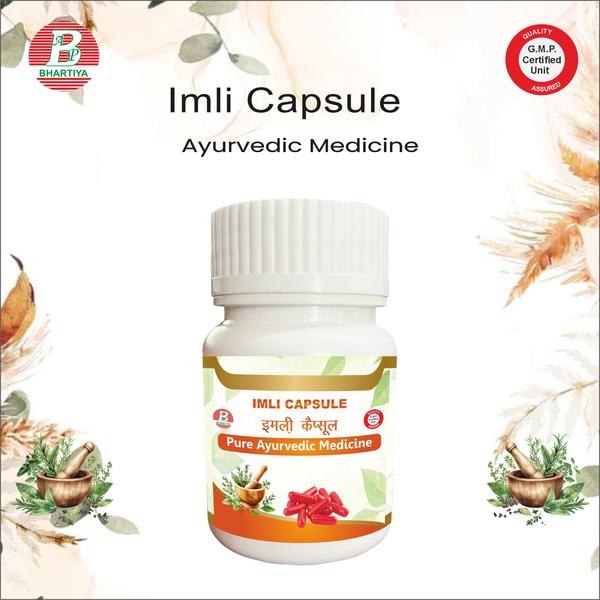
"name": "Imali Capsule",
"description": " IMLI \n\n\n IMLI (Tamarindus indica L.) \nThe Digestive & Metabolic Fruit — “Tamarind”\nImli, commonly known as Tamarind, is a widely used fruit in Ayurveda and traditional medicine. It is valued for its digestive, cooling, detoxifying, and rejuvenative properties. Rich in organic acids, polyphenols, and dietary fiber, Imli supports digestion, metabolism, liver function, cardiovascular health, and overall vitality.\n\n CLASSICAL AYURVEDIC REFERENCES\n1.\tCharaka Samhita\n•\tMentioned in Sutra Sthana and Kalpa Sthana as a digestive and metabolism-supporting fruit.\n•\tDescribed as Madhura-Amla-Kashaya in taste, pacifying Vata and Pitta.\n2.\tSushruta Samhita\n•\tEmphasized in Kalpa Sthana as a natural laxative and liver-supporting herb.\n•\tUsed in formulations for Vata-Pitta disorders, constipation, and digestive sluggishness.\n3.\tBhavaprakasha Nighantu\n•\tReferred to as Imli / Tamarind, supporting Agni (digestive fire), Medha (intellect), and Ojas (vitality).\n•\tRecommended in Rasayana and Hrudya formulations, often combined with honey or ghee.\n\n CLASSICAL STORY / ANECDOTE\nImli is often praised in Ayurvedic texts as the “King of Digestive Fruits” for its ability to restore Agni (digestive fire) and eliminate Ama (toxins).\nTraditionally, sages recommended Imli to strengthen digestion and metabolism, particularly during hot seasons, by consuming the pulp with water or in churna form to rejuvenate the body and maintain vitality.\n\n BOTANICAL INFORMATION OF IMLI\n•\tScientific Name: Tamarindus indica L.\n•\tFamily: Fabaceae\n•\tOrder: Fabales\n•\tGenus: Tamarindus\n•\tSpecies: indica\n•\tCommon Names:\no\tSanskrit: Imli, Amli, Chinta\no\tHindi: Imli\no\tEnglish: Tamarind\no\tTamil: Puli\no\tTelugu: Chintapandu\no\tMalayalam: Puliyam\no\tKannada: Hunase Hannu\no\tBengali: Tentul\n\n SYNONYMS IN CLASSICAL AYURVEDIC NIGHANTUS\n•\tCharaka Samhita: Imli – Digestive, Vata-Pitta pacifying\n•\tSushruta Samhita: Imli – Hrudya, Medhya, Vata-Pitta balancing\n•\tBhavaprakasha Nighantu: Imli, Chinta – Rasayana, Agni vardhaka, Detoxifier\n\n MORPHOLOGY OF IMLI\n•\tPlant Type: Large evergreen tree\n•\tHeight: 12–18 m\n•\tLeaves: Pinnate, 6–12 pairs of leaflets, small and oblong\n•\tFlowers: Small, yellowish-brown, clustered, fragrant\n•\tFruit: Leguminous pod, brown, elongated, pulpy, tangy-sweet\n•\tSeeds: Hard, shiny brown, 1–2 cm, embedded in pulp\n\n ECOLOGICAL PREFERENCES\n•\tClimate: Tropical and subtropical; tolerates heat and drought\n•\tSoil: Well-drained sandy, loamy, or red soils\n•\tHabitat: Fields, gardens, village premises; native to Indian subcontinent\n•\tAltitude: Sea level to 1,200 m\n\n GEOGRAPHICAL DISTRIBUTION\n•\tIndia: Tamil Nadu, Kerala, Karnataka, Maharashtra, Andhra Pradesh\n•\tOutside India: Sri Lanka, Africa, Southeast Asia, Caribbean, Latin America\n\n CLASSICAL AYURVEDIC PROPERTIES (RASA–GUNA–VIRYA–VIPAKA)\n•\tRasa (Taste): Madhura (sweet), Amla (sour), Kashaya (astringent)\n•\tGuna (Qualities): Snigdha (unctuous), Laghu (light)\n•\tVirya (Potency): Śīta (cooling)\n•\tVipaka (post-digestive effect): Madhura (sweet)\n•\tDosha Effects: Vata-Pitta hara, Kapha samana in moderation\n\n THERAPEUTIC ACTIONS (KARMA)\n1.\tDipana & Pachana: Enhances digestive fire, prevents constipation\n2.\tMedhya: Supports memory and intellect\n3.\tHrudya: Strengthens heart and circulation\n4.\tRasayana: Promotes overall vitality and rejuvenation\n5.\tVata-Pittahara: Balances Vata and Pitta disorders\n6.\tKeshya: Supports hair health\n7.\tLekhana & Raktaprasadana: Detoxifies blood, reduces toxins\n\n INDICATIONS\nWITH AACHARYA AND GRANTHS\nHere’s a detailed Imli (Tamarindus indica) monograph in the same format as Alsi, including classical Ayurvedic references and acharya/granth citations:\n IMLI (Tamarindus indica L.) \nThe Digestive and Metabolic Fruit — “Tamarind”\nImli, commonly known as Tamarind, is a widely used fruit in Ayurveda and traditional medicine. It is valued for its digestive, metabolism-supporting, cooling, and rejuvenative properties. Rich in organic acids, vitamins (A, C, B), minerals, and antioxidants, Imli supports digestion, liver function, heart health, metabolism, and overall vitality.\n\n CLASSICAL AYURVEDIC REFERENCES\n1.\tCharaka Samhita\no\tMentioned in Kalpa Sthana (Charaka Kalpa 6/28–30) as a sweet, sour, and nourishing fruit beneficial for digestive fire (Agni) and metabolism.\no\tUsed in formulations for Medhya (intellect) and Rasayana (rejuvenation).\n2.\tSushruta Samhita\no\tListed in Kalpa Sthana (Sushruta 52/18–20) for constipation, digestive sluggishness, and liver support.\no\tEmphasized as Snigdha (unctuous), Madhura (sweet), and Tikta (bitter) — suitable for Rasayana and mild laxative therapies.\n3.\tBhavaprakasha Nighantu\no\tReferred to as Imli / Amli, promoting Ojas, digestion, and rejuvenation.\no\tMentioned in Hrudya, Medhya, and Virechana formulations — often used with ghee, honey, or warm water.\n4.\tOther Classical Anecdotes\no\tAyurvedic texts describe Imli as a “pachana phala” — the fruit that digests and metabolizes food efficiently.\no\tTraditionally, sages recommended Imli to warriors and kings as a digestive and metabolism-supporting Rasayana, often combined with other herbs for enhanced rejuvenation.\n\n BOTANICAL INFORMATION OF IMLI\n•\tScientific Name: Tamarindus indica L.\n•\tFamily: Fabaceae (Leguminosae)\n•\tOrder: Fabales\n•\tGenus: Tamarindus\n•\tSpecies: indica\n•\tCommon Names:\no\tSanskrit: Imli, Amli, Chinta Phala\no\tHindi: Imli\no\tEnglish: Tamarind\no\tTamil: Puli\no\tTelugu: Chintapandu\no\tMalayalam: Puli\no\tKannada: Hunase Hannu\no\tBengali: Tentul\n\n SYNONYMS IN CLASSICAL AYURVEDIC NIGHANTUS\n•\tCharaka Samhita: Imli – Pachana, Medhya\n•\tSushruta Samhita: Imli – Virechana, Hrudya, Medhya\n•\tBhavaprakasha Nighantu: Amli, Imli – Rasayana, Pachana, Ojasvardhaka\n\n MORPHOLOGY OF IMLI\n•\tTree Type: Medium to large deciduous tree, 12–18 m height\n•\tBark: Brown, rough, fibrous\n•\tLeaves: Pinnate, alternate, leaflets small and oblong\n•\tFlowers: Yellowish, small, in clusters\n•\tFruit: Long, curved pods containing sticky, brown pulp\n•\tSeeds: Hard, glossy, dark brown\n\n ECOLOGICAL PREFERENCES\n•\tClimate: Tropical and subtropical, tolerates dry conditions\n•\tSoil: Well-drained loamy, clay, or sandy soils\n•\tHabitat: Fields, gardens, village premises; native to Indian subcontinent\n•\tAltitude: Sea level to 1,200 m\n\n GEOGRAPHICAL DISTRIBUTION\n•\tIndia: Maharashtra, Tamil Nadu, Karnataka, Andhra Pradesh, Gujarat\n•\tOutside India: Sri Lanka, Africa, Southeast Asia, Caribbean\n\n CLASSICAL AYURVEDIC PROPERTIES (RASA–GUNA–VIRYA–VIPAKA)\n•\tRasa (Taste): Madhura (sweet), Amla (sour), Tikta (bitter)\n•\tGuna (Qualities): Snigdha (unctuous), Laghu (light)\n•\tVirya (Potency): Śīta (cooling)\n•\tVipaka (post-digestive effect): Madhura (sweet)\n•\tDosha Effects: Tridoshaghna (balances all three); especially Vata-Pitta hara\n\n THERAPEUTIC ACTIONS (KARMA)\n1.\tPachana & Dipana: Enhances digestive fire, prevents acidity\n2.\tMedhya: Supports memory, intellect, and brain tissue\n3.\tHrudya: Supports heart and circulation\n4.\tRasayana: Promotes rejuvenation, Ojas, and vitality\n5.\tVatahara: Relieves constipation, joint stiffness\n6.\tLekhana: Mild lipid-lowering effect\n7.\tVrishya: Supports reproductive health and Shukra dhatu\n\n INDICATIONS\n•\tDigestive System: Constipation, sluggish digestion, hyperacidity\n•\tMetabolism: Obesity, mild dyslipidemia\n•\tNervous System: Fatigue, stress\n•\tReproductive & Urinary System: Supports fertility\n•\tSkin & Hair: Nourishes skin, mild detoxification\n MODERN PHARMACOLOGY & PHYTOCHEMISTRY\n•\tMajor Constituents:\no\tOrganic acids: tartaric, citric, malic\no\tPolyphenols: flavonoids, phenolic acids\no\tVitamins: A, C, B-complex\no\tMinerals: K, Mg, Ca, Fe\n•\tPharmacological Actions:\no\tDigestive tonic, mild laxative\no\tAntioxidant\no\tHepatoprotective\no\tAnti-inflammatory\no\tAnti-obesity and metabolic modulator\n\n CULTIVATION DETAILS\n•\tPropagation: Seeds (most common), grafting\n•\tSowing Time: May–June (monsoon)\n•\tSpacing: 10–12 m between plants\n•\tIrrigation: Moderate, drought-tolerant once mature\n•\tFertilization: Organic manure preferred\n•\tHarvesting: Fruits harvested November–March\n\n CLASSICAL DOSAGE (According to Ayurvedic Granthas)\n•\tPulp / Fresh Fruit: 10–20 g/day, chewed or in decoction\n•\tPowdered Fruit / Churna: 3–6 g/day\n•\tJuice / Paste: As per therapeutic need, especially for digestive support\n•\tSeed / Oil: 1–5 g/day, used in formulations for digestion and skin\n\n IMLI FORMULATIONS – BHARTIYA AYURVEDIC PHARMACY\nBhartiya Ayurvedic Pharmacy prepares Imli formulations following classical Ayurvedic principles described in Charaka Samhita, Sushruta Samhita, Bhavaprakasha Nighantu, and other texts. Each product retains digestive, metabolism-supporting, and rejuvenative properties, promoting overall vitality.\nKey Uses of Imli Formulations:\n•\tDigestive support: Relieves constipation, enhances Agni\n•\tMetabolic balance: Supports healthy weight and lipid profile\n•\tLiver support: Detoxification and mild hepatoprotection\n•\tRasayana: Promotes vitality and rejuvenation\n•\tSkin & Hair: Mild detoxification and nourishment\n\n IMLI CAPSULE\nBhartiya Ayurvedic Pharmacy offers Imli Capsules prepared according to classical Ayurvedic principles. Each capsule contains premium quality Tamarind pulp or extract, retaining full digestive, metabolism-supporting, and rejuvenative properties.\nKey Benefits:\n•\tSupports digestion and bowel regularity\n•\tPromotes metabolic balance and weight management\n•\tMild liver support and detoxification\n•\tActs as a Rasayana, enhancing vitality\n•\tSupports healthy skin and hair\nDosage:\n•\tAdults: 1–2 capsules twice daily with warm water\n•\tCan be combined with warm water or milk for enhanced effect\nSafety & Precautions:\n•\tSafe for long-term use when taken as per dosage\n•\tMay cause mild laxative effect in sensitive individuals\n•\tMonitor if taking antidiabetic or laxative medications\nFormulation Highlights:\n•\t100% natural Imli (Tamarindus indica) pulp/extract\n•\tFree from artificial colors, preservatives, and additives\n•\tPrepared using Ayurvedic-inspired processing methods\nSuggested Use:\n•\tIdeal for adults seeking digestive, metabolic, and Rasayana support\n•\tConvenient capsule form for daily use\n\n\nbest imli, best imli candy, best imli in india, capsule c care, capsule image\ndoes imli cause acidity, does imli cause gas, does imli expire, does imli have vitamin c\ndoes imli help in digestion, does imli help lose weight, does imli increase weight, e imli\nhow imli is made, i am capsule, i imli, imali capsule at home, imali capsule ayurvedic\nimali capsule company name, imali capsule contains, imali capsule daily use\nimali capsule daily use in hindi, imali capsule dainik bhaskar, imali capsule delhi\nimali capsule english name, imali capsule expiry date, imali capsule hindi\nimali capsule how to use, imali capsule in english, imali capsule in hindi\nimali capsule jiomart, imali capsule ke fayde, imali capsule ke fayde in hindi\nimali capsule khane ke fayde, imali capsule manufacturer, imali capsule manufacturers in india\nimali capsule meesho, imali capsule name, imali capsule near me, imali capsule online\nimali capsule online order, imali capsule online shopping, imali capsule online shopping india\nimali capsule price, imali capsule rate, imali capsule recipe, imali capsule se kya hota hai\nimali capsule side effects, imali capsule side effects in hindi, imali capsule uses\nimali capsule uses in hindi\nimli capsule\nimli capsules\nimli cause cough\nwhat is imli",
"price": 300.0,
"discountamount": 150.0,
"currencycode": "INR",
"priority": 1000000,
"isfreeshipmentavailable": false,
"shipmentduration": 1,
"_keywords": null,
"isarchived": false,
"isavailable": true,
"applicationid": null,
"productindex": 60,
"imageuri": "https://productimages.withfloats.com/actual/698ea825e8395ed6920a532a.jpg",
"tileimageuri": "https://productimages.withfloats.com/tile/698ea825e8395ed6920a532a.jpg",
"images": null,
"totalqueries": 0,
"gpid": null,
"groupproductid": null,
"createdon": "2026-02-13T04:27:15.232Z",
"updatedon": "2026-02-17T10:23:47.696Z",
"buyonlinelink": null,
"producturl": "http://WWW.BHARTIYAAYURVEDICPHARMACY.COM//imali-capsule/60",
"availableunits": -1.0,
"iscodavailable": true,
"isprepaidonlineavailable": true,
"maxcodorders": -1,
"maxprepaidonlineorders": -1,
"uniquepaymenturl": null,
"brandname": "Bakula Fort",
"category": "Imali Capsule 60 Cap X 24",
"tags": [],
"variants": false,
"keyspecification": null,
"otherspecifications": null,
"pickupaddressreferenceid": null,
"paymenttype": "AssuredPurchase",
"producttype": "products",
"hsncode": null,
"gstslab": 0.0,
"isnotforsale": false
},
{
"_id": "6789ed6c9a138948a6f97beb",
"fptag": "BHARTIYEAYURVEDICPHARMACY",
"merchantname": null,
"customwidgets": null,
"externalsourceid": null,
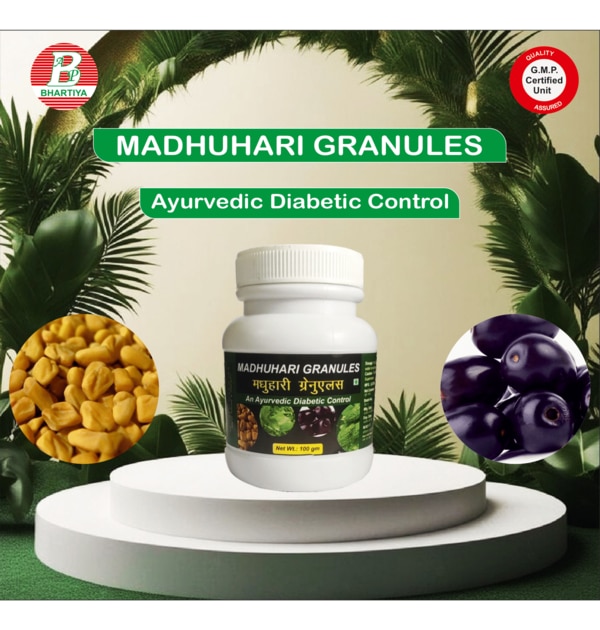
"name": "Madhuhari Granules 100gm",
"description": "Madhuhari Granules is a trusted name in the manufacturing of high-quality polymer granules, specializing in eco-friendly, durable, and versatile materials. With state-of-the-art facilities and a commitment to innovation, we deliver granules tailored to diverse industrial needs. Our products ensure consistency, reliability, and superior performance, empowering businesses with sustainable solutions for a greener future. Choose Madhuhari for unmatched quality and expertise\n\n\nmadhuhari granules available in haryana, madhuhari granules ayurvedic\nmadhuhari granules ayurvedic medicine, madhuhari granules ayurvedic uses in hindi\nmadhuhari granules company, madhuhari granules composition\nmadhuhari granules content, madhuhari granules flipkart\nmadhuhari granules for plants, madhuhari granules for vegetables\nmadhuhari granules jiomart, madhuhari granules journal\nmadhuhari granules ke fayde, madhuhari granules ke fayde in hindi\nmadhuhari granules limited, madhuhari granules login\nmadhuhari granules logo images, madhuhari granules ltd\nmadhuhari granules manufacturer, madhuhari granules mg\nmadhuhari granules web, madhuhari granules website\nmadhuhari granules weight, madhuhari granules which company\nmadhuhari granules zepto, madhumehari granules benefits\nmadhumehari granules benefits in hindi, madhumehari granules dosage\nmadhumehari granules how to use, madhumehari granules in hindi\nmadhumehari granules ingredients, madhumehari granules price\nmadhumehari granules uses, madhumehari granules uses in hindi",
"price": 300.0,
"discountamount": 150.0,
"currencycode": "INR",
"priority": 1000000,
"isfreeshipmentavailable": false,
"shipmentduration": 1,
"_keywords": [
"unmatched quality",
"sustainable solutions",
"diverse industrial",
"stateoftheart facilities",
"versatile materials",
"ecofriendly durable",
"deliver granules tailored",
"madhuhari granulesmadhuhari granules"
],
"isarchived": false,
"isavailable": true,
"applicationid": null,
"productindex": 4,
"imageuri": "https://productimages.withfloats.com/actual/6789fe26877870266c88cac6.png",
"tileimageuri": "https://productimages.withfloats.com/tile/6789fe26877870266c88cac6.png",
"images": null,
"totalqueries": 0,
"gpid": null,
"groupproductid": null,
"createdon": "2025-01-17T05:41:00.924Z",
"updatedon": "2026-02-21T08:19:46.503Z",
"buyonlinelink": null,
"producturl": "http://WWW.BHARTIYAAYURVEDICPHARMACY.COM//madhuhari-granules-100gm/4",
"availableunits": -1.0,
"iscodavailable": true,
"isprepaidonlineavailable": true,
"maxcodorders": 0,
"maxprepaidonlineorders": 0,
"uniquepaymenturl": null,
"brandname": "Bhartiya Ayurvedic Pharmacy",
"category": "Madhuhari Granules 100gm X 24",
"tags": [],
"variants": false,
"keyspecification": null,
"otherspecifications": null,
"pickupaddressreferenceid": null,
"paymenttype": "AssuredPurchase",
"producttype": "products",
"hsncode": null,
"gstslab": 0.001,
"isnotforsale": false
},
{
"_id": "6a7b09867c3863faf5f35940",
"fptag": "BHARTIYEAYURVEDICPHARMACY",
"merchantname": null,
"customwidgets": null,
"externalsourceid": null,
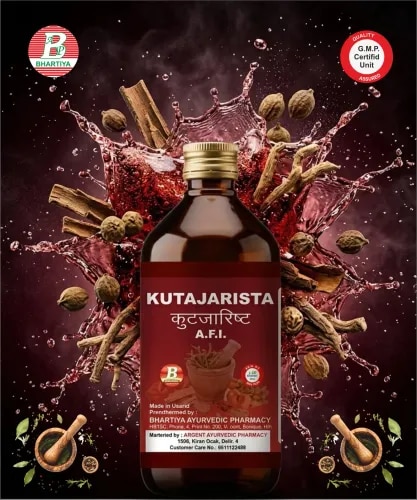
"name": "KUTJARISHTA",
"description": " KUTAJARISHTA\n\n\nProduct Identification \nGeneric Name: Kutajarishta (Kutajarishtam)\nType: Ayurvedic Polyherbal Fermented Formulation (Arishta)\nPrimary Indication Area: Diarrheal disorders, dysentery, irritable bowel conditions, digestive health, and intestinal detoxification.\n\nTherapeutic Indications\n• Atisara (diarrhea)\n• Pravahika (dysentery)\n• Chronic loose stools\n• irritable bowel syndrome with diarrhea (supportive management)\n• Grahani disorders (malabsorption syndrome)\n• Amoebic dysentery (supportive use)\n• Intestinal infections (supportive management)\n• Excess mucus in stools\n• post-infectious bowel weakness\n• Digestive debility associated with chronic diarrhea\n\nKey Benefits\n• Helps control diarrhea and dysentery\n• Supports restoration of normal bowel function\n• Reduces intestinal inflammation\n• Helps decrease mucus in stools\n• Supports healthy gut microbiota balance\n• Improves digestive strength (Agni)\n• Promotes intestinal healing and recovery\n• Acts as a restorative gastrointestinal tonic\n\nFORMULA\nMain Ingredients\n• Kutaja (Holarrhena antidysenterica)\n• Draksha (Vitis vinifera)\n• Madhuka (Madhuca longifolia)\n• Gambhari (Gmelina arborea)\nSweetening and Fermentation Base\n• Jala (Water)\n• Sarkara (Sugar)\n• Dhataki (Woodfordia fruticosa)\n\nKey Ingredient Actions\n1. Kutaja\nBotanical Name: Holarrhena antidysenterica \nRasa: Tikta, Kashaya\nGuna: Laghu, Ruksha\n Virya: Sheeta\nVipaka: Katu\nMechanism of Action:\n• Classical Atisaraghna (anti-diarrheal) herb\n• Helps control excessive bowel movements\n• Reduces intestinal inflammation\n• Supports management of dysentery and Grahani\n• Antimicrobial activity against intestinal pathogens\n• Promotes restoration of normal intestinal function\n\n2. Draksha\nBotanical Name: Vitis vinifera L.\nRasa: Madhura\n Guna: Guru, Snigdha\n Virya: Sheeta\n Vipaka: Madhura\nMechanism of Action:\n• Nourishing and restorative tonic\n• Helps replenish fluids and strength lost during diarrhea\n• Provides antioxidant support\n• Supports intestinal healing\n• Reduces dehydration-associated weakness\n• Promotes tissue nourishment and recovery\n\n3. Madhuka\nBotanical Name: Madhuca longifolia \nRasa: Madhura\nGuna: Guru, Snigdha\nVirya: Sheeta\nVipaka: Madhura\nMechanism of Action:\n• Provides nourishment and strength\n• Supports recovery from chronic gastrointestinal disorders\n• Helps soothe irritated intestinal mucosa\n• Promotes tissue healing and restoration\n• Supports overall digestive stability\n• Contributes to the fermentation process\n\n4. Gambhari\nBotanical Name: Gmelina arborea Roxb.\nRasa: Madhura, Kashaya\nGuna: Guru, Snigdha\n Virya: Sheeta\n Vipaka: Madhura\nMechanism of Action:\n• Supports intestinal healing and recovery\n• Helps reduce inflammatory conditions of the gut\n• Nourishes weakened tissues\n• Acts as a mild Rasayana (rejuvenative)\n• Supports recovery from chronic bowel disorders\n• Promotes gastrointestinal strength\n\n5. Dhataki\nBotanical Name: Woodfordia fruticosa (L.) Kurz\nRasa: Kashaya\n Guna: Laghu, Ruksha\n Virya: Ushna\nVipaka: Katu\n Prabhava: Sandhana Karaka\nMechanism of Action:\n• Natural fermentation catalyst\n• Enables alcohol formation in Arishta preparations\n• Enhances extraction of active phytochemicals\n• Improves bioavailability of herbal constituents\n• Supports preservation and shelf stability\n• Maintains quality of fermented formulation\n\n6. Sarkara (Sugar)\nRasa: Madhura\n Guna: Guru, Snigdha\n Virya: Sheeta\n Vipaka: Madhura\nMechanism of Action:\n• Provides substrate for fermentation\n• Improves palatability\n• Supports energy replenishment\n• Facilitates self-generated alcohol formation\n• Contributes to stability of the formulation\n\n7. Jala (Water)\nMechanism of Action:\n• Medium for herbal decoction preparation\n• Solvent for extraction of phytochemicals\n• Essential for fermentation process\n• Supports uniform distribution of active constituents\n• Facilitates preparation of the Arishta formulation\n\nDosage\nAdults\n• 15–30 mL\n• Twice daily after meals\n• Dilute with equal quantity of water\n\nkutjarishta use in hindi, kutjarishta use, kutjarishta price\nkutjarishta syrup, kutjarishta hindi, kutjarishta tablet\nkutajarishta ayurvedic medicine, kutajarishta ayurvedic syrup\nkutajarishta ayurvedic syrup in hindi, kutajarishta ayurvedic medicine uses\nkutajarishta ayurvedic, kutajarishtam amazon, kutajarishta ayurvedic aushadhi\nkutajarishta aushadhi, kutajarishta benefits in hindi, kutajarishta benefits\nkutajarishta before or after food, kutajarishta best company, kutajarishta composition\nkutajarishta contents, kutajarishta churna, kutajarishta cause constipation\nkutajarishta constipation, does kutajarishta cause constipation\ncan kutajarishta cure ibs, does kutajarishta contain alcohol, kutjarishta dosage\npatanjali divya kutjarishta, kutajarishta expiry date, kutajarishta in english\nbaidyanath kutajarishta ingredients, kutajarishta for ibs, kutajarishta for kids\nkutajarishta for constipation, kutajarishta for liver, kutajarishta for acidity\nkutajarishta for loose motion, kutajarishta for piles, kutajarishta for fatty liver\nkutajarishta for stomach infection, kutjarishta use hindi, kutajarishta syrup hindi\nkutjarishta use in hindi price, kutajarishta ingredients, kutajarishta in hindi\nkutajarishta ingredients in hindi, kutajarishta in constipation\nkutajarishta in pregnancy, kutjarishta ke nuksan, kutjarishta ke fayde in hindi\nkutajarishta ke, kutjarishta kadha, kutjarishta me kya hota hai, kutajarishta kya kam karta hai\nkutajarishta lene ke fayde, kutajarishta lene ka tarika, kutajarishta ke labh\nkutajarishta kab lena chahiye, kutajarishta kis liye hota hai, kutajarishta kis liye hai\nkutajarishta how long to take, kutajarishta me kya hota hai, kutajarishta medicine use in hindi\nkutajarishta multani, kutajarishta mrp, kutajarishta mode of action, kutajarishta near me\nkutajarishta online, benefits of kutjarishta, use of kutjarishta, dabur kutajarishta online\nuses of kutajarishta, ingredients of kutajarishta, benefits of kutajarishta syrup\nkutajarishta syrup price, kutajarishta reviews, kutajarishta research update\nkutajarishta research paper, kutajarishta reference, kutajarishta rate\nkutajarishta ramdev, kutajarishta syrup uses, kutajarishta syrup uses in hindi\nkutajarishta syrup benefits, kutajarishta uses, kutajarishta use hindi\nkutajarishta usage, kutajarishta when to take, how kutajarishta works\nkutajarishta used for, what does kutajarishta do, which kutajarishta is best\nkutajarishta for worms, how to use kutajarishta, how to take kutajarishta\ncan kutajarishta be given to kids, can kutajarishta cause constipation\ncan kutajarishta be taken daily",
"price": 165.0,
"discountamount": 82.0,
"currencycode": "INR",
"priority": 1000000,
"isfreeshipmentavailable": false,
"shipmentduration": 1,
"_keywords": null,
"isarchived": false,
"isavailable": true,
"applicationid": null,
"productindex": 168,
"imageuri": "https://productimages.withfloats.com/actual/6a7b0988a17759ddd0ad1917.jpg",
"tileimageuri": "https://productimages.withfloats.com/tile/6a7b0988a17759ddd0ad1917.jpg",
"images": null,
"totalqueries": 0,
"gpid": null,
"groupproductid": null,
"createdon": "2026-08-11T11:37:42.446Z",
"updatedon": "2026-08-11T12:11:44.451Z",
"buyonlinelink": null,
"producturl": "http://WWW.BHARTIYAAYURVEDICPHARMACY.COM//kutjarishta/168",
"availableunits": -1.0,
"iscodavailable": true,
"isprepaidonlineavailable": true,
"maxcodorders": -1,
"maxprepaidonlineorders": -1,
"uniquepaymenturl": null,
"brandname": "BAKULA FORT",
"category": "KUTJARISHTA 450 ML X 40",
"tags": [],
"variants": false,
"keyspecification": null,
"otherspecifications": null,
"pickupaddressreferenceid": null,
"paymenttype": "AssuredPurchase",
"producttype": "products",
"hsncode": null,
"gstslab": 0.0,
"isnotforsale": false
},
{
"_id": "6a7afd282a5df640d9fd3af9",
"fptag": "BHARTIYEAYURVEDICPHARMACY",
"merchantname": null,
"customwidgets": null,
"externalsourceid": null,
"name": "SARIVADYASAVA",
"description": " SARIVADYASAVA \n\n\nProduct Identification\nGeneric Name: Sarivadyasava\nType: Ayurvedic Polyherbal Fermented Formulation (Asava)\nPrimary Indication Area: Skin disorders, blood purification, urinary disorders, burning sensation, Pitta imbalance, and chronic inflammatory conditions.\n\nTherapeutic Indications\n• Kushta (skin disorders)\n• Twak vikara (chronic skin diseases)\n• Raktadushti (vitiated blood)\n• Daha (burning sensation)\n• Mutrakrichra (difficulty in urination)\n• Mutravaha disorders (urinary tract disorders)\n• Pittaja disorders\n• Chronic inflammatory conditions\n• Pruritus (itching)\n• Acne and recurrent skin eruptions\n• General weakness associated with chronic skin diseases\n\nKey Benefits\n• Supports healthy blood purification (Rakta Shodhana)\n• Helps maintain healthy skin and complexion\n• Reduces burning sensation and excess Pitta\n• Supports urinary tract health\n• Promotes natural detoxification\n• Helps reduce itching and inflammatory skin conditions\n• Supports immunity and tissue nourishment\n• Acts as a cooling rejuvenative tonic\n\nFORMULA\n1. Sariva\nBotanical Name: Hemidesmus indicus\nRasa: Madhura, Tikta\nGuna: Guru, Snigdha\n Virya: Sheeta\nVipaka: Madhura\n\nMechanism of Action:\n• Excellent blood purifier (Rakta Shodhaka)\n• Reduces Pitta and burning sensation\n• Supports healthy skin\n• Acts as a cooling rejuvenative\n\n2. Musta\nBotanical Name: Cyperus rotundus\nRasa: Tikta, Katu, Kashaya\nGuna: Laghu, Ruksha\nVirya: Sheeta\n Vipaka: Katu\n\nMechanism of Action:\n• Improves digestion and metabolism\n• Reduces Ama accumulation\n• Supports urinary health\n• Helps reduce inflammation\n\n3. Lodhra\nBotanical Name: Symplocos racemosa\nRasa: Kashaya\n Guna: Laghu, Ruksha\n Virya: Sheeta\n Vipaka: Katu\n\nMechanism of Action:\n• Supports healthy skin tissues\n• Reduces inflammation and discharge\n• Helps purify blood\n• Promotes wound healing\n\n4. Nyagrodha\nBotanical Name: Ficus benghalensis\nRasa: Kashaya\n Guna: Guru, Ruksha\nVirya: Sheeta\n Vipaka: Katu\n\nMechanism of Action:\n• Supports tissue healing\n• Helps reduce excessive Pitta\n• Promotes healthy skin\n• Supports blood purification\n\n5. Asvatha\nBotanical Name: Ficus religiosa\nRasa: Kashaya\nGuna: Guru, Ruksha\nVirya: Sheeta\nVipaka: Katu\n\nMechanism of Action:\n• Supports wound healing\n• Helps reduce inflammation\n• Promotes healthy blood circulation\n• Supports skin health\n\n6. Sati\nBotanical Name: Hedychium spicatum\nRasa: Katu, Tikta\n Guna: Laghu, Tikshna\nVirya: Ushna\nVipaka: Katu\n\nMechanism of Action:\n• Improves digestion\n• Reduces Ama formation\n• Supports respiratory and metabolic balance\n• Enhances bioavailability of herbs\n\n7. Sveta Sariva\nBotanical Name: Ichnocarpus frutescens\nRasa: Madhura, Tikta\n Guna: Guru, Snigdha\nVirya: Sheeta\n Vipaka: Madhura\n\nMechanism of Action:\n• Supports blood purification\n• Reduces burning sensation\n• Promotes healthy skin\n• Acts as a cooling tonic\n\n8. Padmaka\nBotanical Name: Prunus cerasoides\nRasa: Kashaya, Tikta\n Guna: Laghu, Ruksha\n Virya: Sheeta\n Vipaka: Katu\n\nMechanism of Action:\n• Supports healthy complexion\n• Helps reduce Pitta disorders\n• Promotes skin nourishment\n• Acts as an antioxidant\n\n9. Bala\nBotanical Name: Sida cordifolia\nRasa: Madhura\nGuna: Guru, Snigdha\nVirya: Sheeta\n Vipaka: Madhura\n\nMechanism of Action:\n• Strengthens body tissues\n• Supports recovery in chronic illness\n• Acts as a rejuvenative\n• Helps maintain vitality\n\n10. Patha\nBotanical Name: Cissampelos pareira\nRasa: Tikta, Kashaya\n Guna: Laghu, Ruksha\nVirya: Ushna\nVipaka: Katu\n\nMechanism of Action:\n• Supports urinary health\n• Reduces inflammation\n• Helps detoxification\n• Supports healthy digestion\n\n11. Amalaki\nBotanical Name: Phyllanthus emblica\nRasa: Pancha Rasa (predominantly Amla)\nGuna: Laghu, Ruksha\n Virya: Sheeta\n Vipaka: Madhura\n\nMechanism of Action:\n• Strong antioxidant and rejuvenative\n• Supports immunity\n• Helps purify blood\n• Supports healthy skin\n\n12. Guduchi\nBotanical Name: Tinospora cordifolia\nRasa: Tikta, Kashaya\n Guna: Laghu, Snigdha\n Virya: Ushna\nVipaka: Madhura\n\nMechanism of Action:\n• Supports immune function\n• Helps detoxification\n• Reduces inflammation\n• Promotes liver health\n\n13. Usira\nBotanical Name: Vetiveria zizanioides\nRasa: Tikta, Madhura\n Guna: Laghu, Ruksha\nVirya: Sheeta\nVipaka: Katu\n\nMechanism of Action:\n• Cooling and refreshing herb\n• Reduces burning sensation\n• Supports urinary health\n• Promotes blood purification\n\n14. Sveta Chandana\nBotanical Name: Santalum album\nRasa: Tikta, Madhura\nGuna: Laghu, Ruksha\nVirya: Sheeta\nVipaka: Katu\n\nMechanism of Action:\n• Reduces heat and burning sensation\n• Supports urinary comfort\n• Promotes healthy skin\n• Acts as a cooling tonic\n\n15. Rakta Chandana\nBotanical Name: Pterocarpus santalinus\nRasa: Tikta, Kashaya\nGuna: Laghu, Ruksha\nVirya: Sheeta\nVipaka: Katu\n\nMechanism of Action:\n• Supports blood purification\n• Helps reduce inflammation\n• Promotes skin health\n• Reduces excess Pitta\n\n16. Yavani\nBotanical Name: Trachyspermum ammi\nRasa: Katu\n Guna: Laghu, Ruksha, Tikshna\nVirya: Ushna\nVipaka: Katu\nMechanism of Action:\n• Improves digestion\n• Reduces gas and bloating\n• Supports metabolism\n• Helps digest Ama\n\n17. Kutaki\nBotanical Name: Picrorhiza kurroa\nRasa: Tikta\nGuna: Laghu, Ruksha\nVirya: Sheeta\n Vipaka: Katu\n\nMechanism of Action:\n• Supports liver function\n• Promotes detoxification\n• Improves digestion\n• Helps purify blood\n\n18. Tejpatra\nBotanical Name: Cinnamomum tamala\nRasa: Katu, Tikta\n Guna: Laghu, Ruksha\n Virya: Ushna\n Vipaka: Katu\n\nMechanism of Action:\n• Supports digestion and metabolism\n• Reduces gas and heaviness\n• Improves Agni\n• Helps digest Ama\n\n19. Sthuilaila\nBotanical Name: Amomum subulatum\nRasa: Tikta, Katu\nGuna: Laghu, Tikshna\nVirya: Ushna\nVipaka: Katu\n\nMechanism of Action:\n• Supports digestion\n• Reduces inflammation\n• Helps detoxification\n• Supports skin health\n\n20. Swernpatri\nBotanical Name: Cassia angustifolia\nRasa: Tikta, Kashaya\nGuna: Laghu, Ruksha\nVirya: Ushna\nVipaka: Katu\n\nMechanism of Action:\n• Mild natural laxative\n• Supports bowel cleansing\n• Helps eliminate toxins\n• Promotes detoxification\n\n21. Haritaki\nBotanical Name: Terminalia chebula\nRasa: Pancha Rasa (except Lavana)\nGuna: Laghu, Ruksha\nVirya: Ushna\nVipaka: Madhura\n\nMechanism of Action:\n• Mild laxative and detoxifier\n• Supports bowel cleansing\n• Improves digestion\n• Promotes elimination of toxins\n\n22. Guda\nBotanical Name: Jaggery\nRasa: Madhura\nGuna: Guru, Snigdha\n Virya: Ushna\n Vipaka: Madhura\n\nMechanism of Action:\n• Fermentation base\n• Provides energy substrate\n• Improves formulation stability\n• Enhances palatability\n\n23. Dhataki\nBotanical Name: Woodfordia fruticosa\nRasa: Kashaya\nGuna: Laghu, Ruksha\nVirya: Ushna\n Vipaka: Katu\n\nMechanism of Action:\n• Natural fermentation catalyst\n• Enhances extraction of phytochemicals\n• Improves bioavailability\n• Supports preservation of formulation\n\n24. Draksha\nBotanical Name: Vitis vinifera\nRasa: Madhura\n Guna: Guru, Snigdha\n Virya: Sheeta\n Vipaka: Madhura\nMechanism of Action:\n• Nourishes body tissues\n• Provides antioxidant support\n• Helps reduce burning sensation\n• Acts as a rejuvenative tonic\n\nDosage\nAdults:\n• 15–30 mL\n• Twice daily after meals\n• Dilute with equal quantity of water\n\nCommon Usage Guidance\n• Traditionally used in skin and blood disorders\n• Supports blood purification and healthy complexion\n• Helps reduce burning sensation and Pitta imbalance\n• Supports urinary health and detoxification\n• Usually prescribed for 4–8 weeks under Ayurvedic supervision\n• Best taken after food\n\nImportant Notes\n• Contains naturally fermented alcohol\n• Use cautiously in diabetes mellitus\n• Should be taken under Ayurvedic supervision\n• Avoid self-medication in severe systemic illness\n• Store in a cool, dry place\n• Keep tightly closed after use\n• Keep out of reach of children\n\n\nsarivadyasava uses in hindi, sarivadyasava uses, sarivadyasava syrup\nsarivadyasava benefits in hindi, sarivadyasava syrup side effects\nsarivadyasava syrup uses, sarivadyasava ingredients, sarivadyasava benefits\nsarivadyasava in hindi, sarivadyasava ayurvedic medicine, sarivadyasava ayurvedic\nsarivadyasava ayurvedic medicine uses in hindi, sarivadyasava amazon\nsarivadyasava easy ayurveda, sarivadyasava composition, sarivadyasava dosage\nsarivadyasava dabur uses, divya sarivadyasava, sarivadyasava uses in english\nsarivadyasava for skin in hindi, sarivadyasava for skin, sarivadyasava uses for skin\nsarivadyasava ke fayde, sarivadyasava used for, sarivadyasava hindi\nsarivadyasava how to take, sarivadyasava how to use, sarivadyasava uses hindi\nsarivadyasava syrup hindi, sarivadyasava syrup uses hindi, sarivadyasava ingredients in hindi\nsarivadyasava indication, sarivadyasava in pregnancy, sarivadyasava uses in ayurveda\nbaidyanath sarivadyasava ingredients, sarivadyasava jiva ayurveda\nsarivadyasava kaise use kare, sarivadyasava kadha uses, sarivadyasava kis kaam aati hai\nkerala ayurveda sarivadyasava, sarivadyasava kashayam, sarivadyasava medicine\nuse of sarivadyasava in hindi, ingredients of sarivadyasava, use of sarivadyasava syrup\nsarivadyasava price, sarivadyasava syrup price, sarivadyasava review\nsarivadyasava syrup benefits, sarivadyasava syrup benefits in hindi\nsarivadyasava tablet, sarivadyasava tablet uses in hindi\nsarivadyasava taste, how to take sarivadyasava, how to use sarivadyasava syrup\nhow to use sarivadyasava, sarivadyasava syrup uses in hindi, what is sarivadyasava used for",
"price": 165.0,
"discountamount": 82.0,
"currencycode": "INR",
"priority": 1000000,
"isfreeshipmentavailable": false,
"shipmentduration": 1,
"_keywords": null,
"isarchived": false,
"isavailable": true,
"applicationid": null,
"productindex": 167,
"imageuri": "https://productimages.withfloats.com/actual/6a7afd2abe4e6975bb0ae21f.jpg",
"tileimageuri": "https://productimages.withfloats.com/tile/6a7afd2abe4e6975bb0ae21f.jpg",
"images": null,
"totalqueries": 0,
"gpid": null,
"groupproductid": null,
"createdon": "2026-08-11T10:44:56.779Z",
"updatedon": "2026-08-11T10:44:56.779Z",
"buyonlinelink": null,
"producturl": "http://WWW.BHARTIYAAYURVEDICPHARMACY.COM//sarivadyasava/167",
"availableunits": -1.0,
"iscodavailable": true,
"isprepaidonlineavailable": true,
"maxcodorders": -1,
"maxprepaidonlineorders": -1,
"uniquepaymenturl": null,
"brandname": "BALULA FORT",
"category": "SARIVADYASAVA 450 ML X 40",
"tags": [],
"variants": false,
"keyspecification": null,
"otherspecifications": null,
"pickupaddressreferenceid": null,
"paymenttype": "AssuredPurchase",
"producttype": "products",
"hsncode": null,
"gstslab": 0.0,
"isnotforsale": false
},
{
"_id": "6a7af152dc4cc98142dd8d64",
"fptag": "BHARTIYEAYURVEDICPHARMACY",
"merchantname": null,
"customwidgets": null,
"externalsourceid": null,
"name": "DRAKSHAASAVA",
"description": " DRAKSHAASAVA\n \n\nProduct Identification\nGeneric Name: Drakshaasava (Drakshasava)\nType: Ayurvedic Polyherbal Fermented Formulation (Asava)\nPrimary Indication Area: Digestive tonic, restorative tonic, blood-supportive tonic, and rejuvenative formulation.\n\nTherapeutic Indications\n• General debility and fatigue\n• Loss of appetite (Aruchi)\n• Chronic indigestion and weak digestion (Agnimandya)\n• Anaemia and weakness associated with chronic illness\n• Convalescence after fever and infection\n• Mild constipation associated with debility\n• Nutritional deficiency and poor strength\n• Respiratory weakness and chronic cough (supportive use)\n• Elderly weakness and recovery support\n• Low body weight and poor vitality\n\nKey Benefits\n• Acts as a nourishing and restorative tonic\n• Improves digestion and appetite\n• Supports healthy blood formation\n• Enhances strength and vitality\n• Helps reduce fatigue and exhaustion\n• Supports healthy bowel function\n• Promotes recovery after illness\n• Supports respiratory health\n• Improves overall nutritional status\n\nFORMULA\nMain Ingredients\n• Draksha (Vitis vinifera – Raisins) – 4.800 kg\n• Water – sufficient quantity for extraction\nSweetening and Fermentation Base\n• Guda (Jaggery) – 9.600–14.400 kg (as per reference)\n• Madhu (Honey) – quantity as per classical reference (where applicable)\n• Dhataki Pushpa (Woodfordia fruticosa) – 768 g\nPrakshepa Dravyas\n• Tvak (Cinnamomum verum) – 48 g\n• Ela (Elettaria cardamomum) – 48 g\n• Patra (Cinnamomum tamala) – 48 g\n• Nagakesara (Mesua ferrea) – 48 g\n• Maricha (Piper nigrum) – 48 g\n• Pippali (Piper longum) – 48 g\n• Shunthi (Zingiber officinale) – 48 g\n\nKey Ingredient Actions\n1.Draksha (Vitis vinifera)\n\nRasa: Madhura\nGuna: Guru, Snigdha\nVirya: Sheeta\n Vipaka: Madhura\n Prabhava: Brimhana, Raktavardhaka\nMechanism of Action:\n• Provides nourishment and energy\n• Supports blood health and vitality\n• Helps reduce fatigue and weakness\n• Mild laxative action supports bowel regularity\n• Supports respiratory and cardiovascular health\n\n2. Shunthi (Zingiber officinale)\nRasa: Katu\n Guna: Laghu, Ruksha\nVirya: Ushna\nVipaka: Madhura\nMechanism of Action:\n• Improves digestion and appetite\n• Enhances circulation\n• Reduces bloating and indigestion\n• Supports respiratory function\n• Improves nutrient assimilation\n\n3. Pippali (Piper longum)\nRasa: Katu\n Guna: Laghu, Snigdha\n Virya: Anushna-Ushna\n Vipaka: Madhura\nMechanism of Action:\n• Enhances digestive strength\n• Improves bioavailability of herbal constituents\n• Supports respiratory health\n• Helps reduce chronic weakness\n• Acts as rejuvenative support\n\n4. Maricha (Piper nigrum)\nRasa: Katu\nGuna: Laghu, Tikshna\nVirya: Ushna\n Vipaka: Katu\nMechanism of Action:\n• Stimulates digestion and metabolism\n• Improves nutrient absorption\n• Reduces Ama (metabolic toxins)\n• Supports respiratory clearance\n• Enhances circulation\n\n5. Tvak (Cinnamomum verum)\nRasa: Katu, Tikta, Madhura\n Guna: Laghu, Tikshna\n Virya: Ushna\nVipaka: Katu\nMechanism of Action:\n• Improves digestion and appetite\n• Supports circulation\n• Provides antioxidant activity\n• Reduces abdominal discomfort\n• Enhances flavor and palatability\n\n6. Ela (Elettaria cardamomum)\nRasa: Madhura, Katu\nGuna: Laghu\nVirya: Sheeta\nVipaka: Madhura\nMechanism of Action:\n• Reduces bloating and nausea\n• Improves digestion\n• Supports respiratory comfort\n• Enhances aroma and taste\n• Promotes appetite\n\n7. Nagakesara (Mesua ferrea)\nRasa: Kashaya, Tikta\n Guna: Laghu, Ruksha\nVirya: Sheeta\nVipaka: Katu\nMechanism of Action:\n• Supports blood health\n• Helps maintain tissue integrity\n• Reduces inflammation\n• Supports overall vitality\n• Provides restorative support\n\n8. Dhataki (Woodfordia fruticosa)\nRasa: Kashaya\nGuna: Laghu, Ruksha\n Virya: Ushna\n Vipaka: Katu\n Prabhava: Sandhana Karaka\nMechanism of Action:\n• Natural fermentation catalyst\n• Supports self-generated alcohol formation\n• Improves extraction of active constituents\n• Enhances stability and shelf life\n• Increases bioavailability\n\nDosage\n• Adults: 15–30 ml\n• Twice daily after meals\n• Dilute with equal quantity of water\n\nCommon Usage Guidance\n• Used as a restorative tonic after illness\n• Beneficial in weakness, fatigue, and poor digestion\n• Supports healthy blood formation and vitality\n• Commonly prescribed for 4–12 weeks depending on condition\n• Best taken after food\n\nImportant Notes\n• Contains jaggery, honey, and naturally generated alcohol due to fermentation\n• Use cautiously in diabetes\n• Not recommended during pregnancy unless prescribed by a qualified practitioner\n• Should be used under Ayurvedic supervision in chronic illnesses\n• Store in a cool, dry place and keep tightly closed\n• Keep out of reach of children\n• Shake well before use if recommended by the manufacturer\n\n\n\ndrakshasava, drakshasava uses in hindi, drakshasava benefits in hindi\ndrakshasava uses, drakshasava syrup, drakshasava price\ndrakshasava syrup uses, drakshasava benefits, drakshasava ayurvedic medicine\ndrakshasava ayurvedic medicine uses in hindi, drakshasava ayurvedic\ndrakshasava ayurvedic syrup, drakshasava ayurvedic medicine hindi\ndrakshasava amazon, drakshasava ayurvedic medicine uses\ndrakshasava buy online, drakshasava best brand, drakshasava benefits in english\ndrakshasava contains alcohol, drakshasava churna, drakshasava che fayde\ndrakshasava for child, drakshasava dabur syrup uses in hindi, drakshasava dose\ndrakshasava in english, when to take drakshasava, drakshasava for liver\ndrakshasava for skin, drakshasava for weight gain, drakshasava for kids\ndrakshasava for weight loss, drakshasava fayde, drakshasava for acidity\n drakshasava for cough, drakshasava glass bottle, drakshasava how to take,\ndrakshasava hindi use, drakshasava use, benefits of drakshasava in hindi\ndrakshasava kya hai, drakshasava ingredients, drakshasava in hindi\ndrakshasava ingredients in hindi, drakshasava indication, drakshasava images\ndrakshasava in cough, drakshasava juice, drakshasava ke fayde, drakshasava ke upyog\ndrakshasava ke labh, drakshasava ke fayde in hindi, drakshasava kis kaam aata hai\ndrakshasava kya kam karta hai, drakshasava lohasava syrup, drakshasava lene ke fayde\ndrakshasava meaning in hindi, drakshasava medicine uses in hindi, drakshasava marathi\ndrakshasava medicine, drakshasava meaning, drakshasava medicine uses, drakshasava mrp\ndrakshasava near me, drakshasava syrup near me, drakshasava online, benefits of drakshasava\nuses of drakshasava, benefits of drakshasava syrup, drakshasava price in india\ndrakshasava rate, drakshasava syrup benefits, drakshasava syrup in hindi\ndrakshasava syrup price, what does drakshasava do, where drakshasava\nwhen drakshasava, how to take drakshasava, why drakshasava\nwho drakshasava, is drakshasava good for sleep, is drakshasava good for liver\nis drakshasava good for diabetes, is drakshasava alcohol\nis drakshasava and draksharishta same, is drakshasava wine\nis drakshasava good for cough, is drakshasava good for acidity\nis drakshasava good for health, can we take drakshasava daily\nshould drakshasava, will drakshasava, was drakshasava\nbest drakshasava syrup, best drakshasava, top drakshasava",
"price": 170.0,
"discountamount": 135.0,
"currencycode": "INR",
"priority": 1000000,
"isfreeshipmentavailable": false,
"shipmentduration": 1,
"_keywords": null,
"isarchived": false,
"isavailable": true,
"applicationid": null,
"productindex": 166,
"imageuri": "https://productimages.withfloats.com/actual/6a7af1547d36c41d87d8e5de.jpg",
"tileimageuri": "https://productimages.withfloats.com/tile/6a7af1547d36c41d87d8e5de.jpg",
"images": null,
"totalqueries": 0,
"gpid": null,
"groupproductid": null,
"createdon": "2026-08-11T09:54:26.703Z",
"updatedon": "2026-08-11T12:11:05.313Z",
"buyonlinelink": null,
"producturl": "http://WWW.BHARTIYAAYURVEDICPHARMACY.COM//drakshaasava/166",
"availableunits": -1.0,
"iscodavailable": true,
"isprepaidonlineavailable": true,
"maxcodorders": -1,
"maxprepaidonlineorders": -1,
"uniquepaymenturl": null,
"brandname": "BAKULA FORT",
"category": "DRAKSHAASAVA 450 ML X 170",
"tags": [],
"variants": false,
"keyspecification": null,
"otherspecifications": null,
"pickupaddressreferenceid": null,
"paymenttype": "AssuredPurchase",
"producttype": "products",
"hsncode": null,
"gstslab": 0.0,
"isnotforsale": false
}
],
"hasmoreitems": false,
"isapirequest": false,
"totalresults": 27,
"query": null,
"floatingpoint": null
}