BHARTIYEAYURVEDICPHARMACY
Products
08048126861
919711305254
Chat with us


Chat with us on WhatsApp
×
This is your website preview.
Currently it only shows your basic business info. Start adding relevant business details such as description, images and products or services to gain your customers attention by using Boost 360 android app / iOS App / web portal.
Home
 akshaya means
 akshaya means
Items tagged with 'akshaya means'
{
"products": [
{
"_id": "6a0efae7f0187bd56f2cf310",
"fptag": "BHARTIYEAYURVEDICPHARMACY",
"merchantname": null,
"customwidgets": null,
"externalsourceid": null,
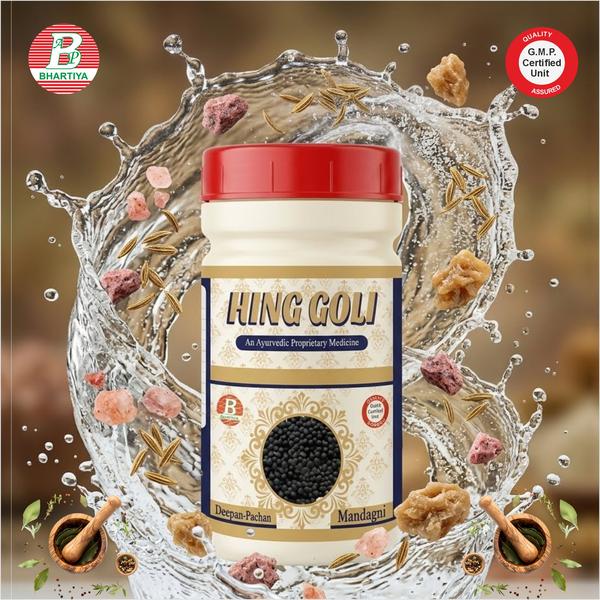
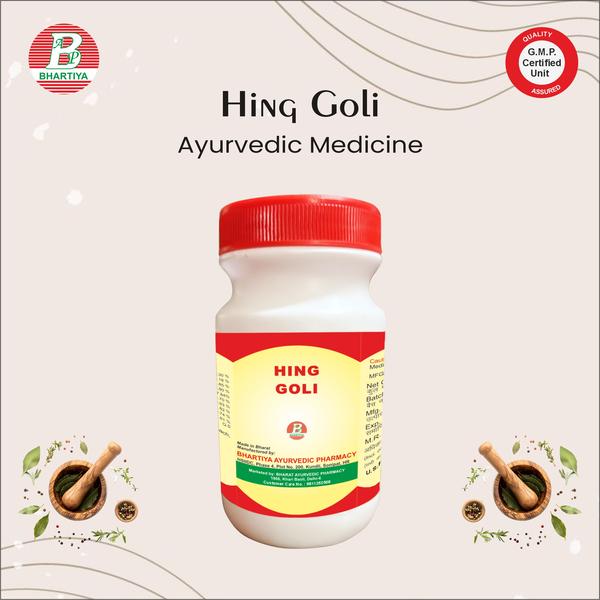
"name": "Hing Goli",
"description": " HING GOLI \n\nProduct Identification\n•\tGeneric Name: Hing Goli\n•\tType: Ayurvedic Patent Medicine\n•\tPrimary Indication Area: Indicated for apachan (indigestion) and badhajmi; helps improve digestion and stimulate appetite.\n•\tTherapeutic Indications: Helps improve digestion, increase appetite, enhance vitality, and reduce general weakness.\nKey benefits include:\n1.\t Relieves Apachan and Badhajmi: Helps in the management of apachan (indigestion) and badhajmi by supporting proper digestion and reducing digestive discomfort such as heaviness and bloating.\n\n2.\tImproves Digestive Function: Enhances digestive capacity by promoting efficient breakdown and absorption of food.\n\n\n3.\tStimulates Appetite: Encourages healthy appetite, especially in individuals experiencing loss of appetite due to weak digestion.\n\n4.\tEnhances Vitality: By improving digestion and nutrient absorption, it helps support overall strength and vitality.\n\n\n5.\t Reduces General Weakness: Aids in reducing weakness associated with poor digestion and inadequate nutrient assimilation.\n\nIngredients:\n Dry Ginger)\nBotanical name: Zingiber officinale (rhizome, dried)\n\n Key Biochemical Constituents\n•\tGingerols (reduced in drying)\n•\tShogaols (increase after drying – more potent)\n•\tZingerone\n•\tVolatile oils (zingiberene, bisabolene)\n Shogaols are mainly responsible for strong digestive action.\n\n Biochemistry of Action in Indigestion (Apāchan)\n1. Stimulation of Digestive Enzymes\n•\tShogaols stimulate secretion of:\no\tSalivary amylase\no\tGastric acid (HCl)\no\tPancreatic enzymes (proteases, lipase)\n•\tImproves breakdown of carbohydrates, proteins, and fats\n\n2. Enhancement of Gastrointestinal Motility\n•\tActivates cholinergic receptors in the gut\n•\tImproves gastric emptying\n•\tReduces food stagnation → prevents heaviness and bloating\n\n3. Carminative Action\n•\tVolatile oils reduce intestinal gas formation\n•\tDecreases fermentation by gut microbes\n•\tRelieves abdominal distension and discomfort\n\n4. Anti-inflammatory & Antioxidant Effect\n•\tInhibits COX and LOX pathways\n•\tReduces mild gastric inflammation\n•\tProtects gastric mucosa during indigestion\n\n Kali Mirch (Black Pepper) \nBotanical name: Piper nigrum (fruit, dried)\nIndication: Indigestion, loss of appetite, bloating\n Key Biochemical Constituents\n•\tPiperine – main active alkaloid\n•\tVolatile oils – e.g., limonene, pinene, caryophyllene\n•\tResins and minor alkaloids\n Biochemistry of Action in Indigestion (Apachan / Ajīrṇa)\n1.\tStimulation of Digestive Secretions\n\n•\tPiperine enhances secretion of:\no\tSalivary amylase\no\tGastric acid (HCl)\no\tPancreatic enzymes (proteases, lipase)\n• Improves breakdown of carbohydrates, proteins, and fats\n2.\tEnhancement of Gastrointestinal Motility\n\n•\tStimulates gut smooth muscles via cholinergic pathways\n•\t Improves gastric emptying → reduces heaviness and bloating\n3.\tCarminative Action\n\n•\tVolatile oils reduce gas formation in intestines\n•\t Decreases fermentation by gut microbes → relieves flatulence\n4.\tThermogenic & Bioavailability Effect\n \n•\tPiperine increases absorption of other nutrients and herbal compounds\n•\t Mildly increases metabolic heat, aiding digestion\n5.\tAnti-inflammatory & Antioxidant Effect•\n•\tInhibits oxidative stress in gut tissues\n•\tHelps reduce mild inflammation of the digestive tract\n\n Dhaniya (Coriander seeds)\nBotanical name: Coriandrum sativum (dried seeds)\nIndication: Indigestion, bloating, loss of appetite, nausea\n Key Biochemical Constituents\n•\tEssential oils – linalool, geraniol, borneol\n•\tFlavonoids – quercetin, kaempferol\n•\tFatty acids – petroselinic acid\n•\tResins and tannins\n Biochemistry of Action in Indigestion (Apāchan / Ajīrṇa)\n1. Stimulation of Digestive Secretions\n\n•\tEnhances secretion of:\no\tSalivary amylase\no\tGastric acid (HCl)\no\tPancreatic enzymes\n• Improves breakdown of food, especially fats\n2.Carminative & Anti-flatulent Action\n\n•\tReduces gas formation in intestines\n•\tRelieves bloating and abdominal discomfort\n•\tVolatile oils help in smooth expulsion of intestinal gas\n3.Gastroprotective & Anti-inflammatory Effect\n\n•\tProtects gastric mucosa\n•\tReduces mild inflammation in the gut\n4.Appetizer & Mild Spasmolytic\n\n•\tStimulates appetite\n•\tRelaxes gut muscles mildly → helps with cramps and colic\n5.Antioxidant Effect\n\n•\tFlavonoids and essential oils reduce oxidative stress in the digestive tract\n\n Jeera (Cumin seeds)\nBotanical name: Cuminum cyminum (dried seeds)\nIndication: Indigestion, bloating, loss of appetite, nausea\n Key Biochemical Constituents\n•\tEssential oils – cuminaldehyde, cymene, terpenes\n•\tFlavonoids – apigenin, luteolin\n•\tFatty acids – linoleic acid, oleic acid\n•\tResins and tannins\n Biochemistry of Action in Indigestion (Apāchan / Ajīrṇa)\n1.\tStimulation of Digestive Secretions\n\n•\tIncreases:\no\tSalivary amylase\no\tGastric acid (HCl)\no\tPancreatic enzymes\n• Improves digestion of carbohydrates, proteins, and fats\n2.\tCarminative & Anti-flatulent Action\n\n•\tReduces gas formation in intestines \n•\tRelieves bloating and abdominal discomfort\n•\t Volatile oils facilitate smooth expulsion of intestinal gas\n3.\tGastrointestinal Motility Enhancement\n\n•\tMildly stimulates gut smooth muscles → aids gastric emptying\n•\t Helps prevent food stagnation\n4.\tAppetizer & Mild Spasmolytic\n\n•\tStimulates appetite\n\n•\t Relaxes gut muscles → helps with cramps\n5.\tAntioxidant & Anti-inflammatory Effect\n\n•\tProtects gastric mucosa\n•\t Reduces oxidative stress in digestive tract\n\n Namak (Common Salt / Rock Salt)\nBotanical/chemical name: Sodium chloride (NaCl)\nIndication: Indigestion, loss of appetite, bloating, nausea\n Key Biochemical Constituents\n•\tSodium (Na⁺)\n•\tChloride (Cl⁻)\n•\tTrace minerals in natural rock salts (iodine, potassium, magnesium)\n Biochemistry of Action in Indigestion (Apāchan / Ajīrṇa)\n1.\tStimulation of Digestive Secretions\n•\tEnhances secretion of:\no\tSalivary amylase → aids carbohydrate digestion\no\tGastric acid (HCl) → improves protein digestion\n• Helps maintain proper pH in the stomach for enzymatic activity\n2.\tAppetizer Effect\n\n•\tMildly stimulates taste receptors → improves appetite\n3.\tElectrolyte & Fluid Balance\n\n•\tMaintains osmotic balance in the gut\n•\tSupports smooth muscle contraction → aids peristalsis\n4.\tCarminative Support (with other herbs)\n• Often combined with cumin, black pepper, or ginger to relieve bloating and gas\n5.\tCautions\n• Excess salt can cause water retention and high blood pressure\n• Best used in moderation, especially in digestive formulations\n\n Nausāra / Nausadar\nType: Mineral preparation (Rasayana / Ayurvedic digestive mineral)\nIndication: Indigestion (Apāchan), loss of appetite, bloating\n Key Biochemical/Active Components\n•\tPrimarily contains Sodium carbonate / Sodium bicarbonate\n•\tSometimes processed with herbs to enhance digestion\n•\tClassically prepared to reduce toxicity of raw minerals\n Mechanism of Action in Digestion (Apāchan / Ajīrṇa)\n1.\tAntacid Effect\n \n•\tNeutralizes excess stomach acid (HCl)\n\n•\tProvides quick relief from acidity, heartburn, and heaviness\n2.\tAppetizer & Digestive Enhancer\n\n•\tMildly stimulates digestive enzymes\n•\tImproves breakdown of carbohydrates, proteins, and fats\n3.\tCarminative Support\n\n•\tOften combined with Jeera, Dhaniya, or Dry Ginger\n•\t Reduces bloating, gas, and fermentation\n4.\tGastroprotective Effect\n\n•\tProtects stomach lining from mild acid irritation\n•\tSupports overall gut health\n\n Nimbusar / Nimbu-Sara (sometimes “Lemon Juice” in formulations)\nType: Herbal/mineral digestive aid (acidic preparation)\nIndication: Indigestion (apachan), heaviness, bloating, loss of appetite\n Key Biochemical/Active Components\n•\tCitric acid (from lemon juice or citrus component)\n•\tOrganic acids and flavonoids\n•\tSometimes combined with rock salt or other digestive minerals\n Mechanism of Action in Digestion\n1.\tMild Acidic Stimulation\n \n•\tStimulates salivary and gastric secretions\n•\t Improves breakdown of food → supports digestion\n2.\tAppetizer Effect\n\n•\tEnhances appetite\n•\t Reduces nausea\n3.\tCarminative Support\n\n•\tReduces bloating and gas\n•\t Often combined with cumin, dry ginger, or coriander\n4.\tDigestive Balancing\n\n•\tHelps restore proper stomach pH (mildly acidic)\n•\tAids in proper enzyme activity\n\n Aam Churan (Amchur / Dried Unripe Mango Powder)\nBotanical name: Mangifera indica (unripe fruit, dried and powdered)\nIndication: Indigestion (Apāchan), loss of appetite, heaviness, nausea\n Key Biochemical Constituents\n•\tOrganic acids – citric acid, malic acid, tartaric acid\n•\tVitamin C (ascorbic acid)\n•\tTannins – mild astringent effect\n•\tFlavonoids – antioxidant activity\n Mechanism of Action in Digestion (Apāchan / Ajīrṇa)\n1.\tAppetizer & Digestive Stimulant\n\n•\tOrganic acids stimulate salivary and gastric secretions\n•\t Enhances breakdown of carbohydrates and proteins\n•\t Improves appetite\n2.\tCarminative & Anti-fermentation\n\n•\tReduces gas formation and bloating\n•\t Mildly astringent tannins help control intestinal fermentation\n3.\tGastroprotective & Antioxidant\n•\tProtects stomach lining\n•\t Reduces oxidative stress in gut tissues\n4.\tBalancing Digestive Pitta (Ayurvedic perspective)\n\n•\tReduces acidity-related discomfort\n•\t Supports healthy digestion\n\n Hing (Asafoetida)\nBotanical name: Ferula asafoetida (resin from rhizome/stem)\nIndication: Indigestion (Apāchan), bloating, flatulence, colic\n Key Biochemical Constituents\n•\tVolatile oils – e.g., ferulic acid, asaresinotannols\n•\tResins – asaresinotannol\n•\tSulfur compounds – responsible for pungent smell and digestive action\n Mechanism of Action in Digestion (Apāchan / Ajīrṇa)\n1.\tCarminative Action\n\n•\tReduces gas formation in intestines\n•\t Relieves bloating, heaviness, and abdominal discomfort\n2.\tStimulation of Digestive Secretions\n\n•\tIncreases salivary, gastric, and pancreatic enzymes\n•\t Improves digestion of carbohydrates, proteins, and fats\n3.\tGut Motility Enhancement\n•\tMild spasmolytic → relaxes gut muscles\n•\tReduces colic and smoothens bowel movements\n4.\tAnti-inflammatory & Antioxidant\n•\tReduces mild inflammation in the gut\n•\t Protects gastric mucosa during digestion\n5.\tAppetizer Effect\n\n•\tEnhances taste and stimulates appetite\n•\tOften used in very small amounts due to pungent taste\n\n Kala Namak (Black Salt / Himalayan Black Salt)\nChemical/Traditional name: Sodium chloride with trace minerals (NaCl + iron sulphide)\nIndication: Indigestion (Apāchan), bloating, loss of appetite, heartburn\n Key Biochemical/Active Components\n•\tSodium chloride (main component)\n•\tTrace minerals: iron, sulfur compounds\n•\tMildly acidic sulphide compounds → give its characteristic smell\n Mechanism of Action in Digestion (Apāchan / Ajīrṇa)\n1.\tStimulation of Digestive Secretions\n\n•\tEnhances salivary, gastric, and pancreatic enzymes\n•\tImproves breakdown of food → aids digestion\n2.\tAppetizer Effect\n\n•\tStimulates appetite by acting on taste receptors\n•\tMild digestive stimulant\n3.\tCarminative / Gas Reliever\n\n•\tSulfur compounds reduce intestinal gas formation\n•\tRelieves bloating and heaviness\n4.\tAlkaline & Electrolyte Balance\n\n•\tSupports proper gut pH\n•\t Maintains electrolyte balance in digestive tract\n\n1.\tDose:\no\t1–2goli (tablets/lozenges) two times a day.\n2.\tTiming:\no\tTake after meals (breakfast, lunch, and dinner).\n3.\tMode of Intake:\no\tChew or slowly suck the goli for better digestive effect.\no\tCan be taken with lukewarm water if needed.\n4.\tPurpose:\no\tImproves digestion.\no\tReduces bloating, gas, and mild acidity.\n5.\tPrecautions:\no\tDo not take on an empty stomach.\no\tPeople with diabetes should monitor blood sugar.\no\tAvoid excessive intake to prevent loose stools or acidity.\n6.\tDuration:\no\tCan be used safely for 1–2 months or as advised by an Ayurvedic practitioner.\n\n\nhing goli packet, hing goli benefits, hing goli khane ke fayde\nhing goli ke fayde in hindi, hing goli ingredients\nhing goli old packet, hing goli kaise banti hai\nhing goli ayurvedic, hing goli amazon, hing goli after meal\nhing goli advantage, hing ajwain goli, hing goli for acidity\nhing goli kis kaam aati hai, hing goli benefits in hindi\nhing goli badal, hing goli blue packet, hing goli bottle\nhing goli buy online, hing goli churan, hing goli chocolate\nhing goli dosage, hing goli digestive, hing goli dabbi\nhing goli extra strong, hing goli empty stomach\nhing goli in english, does hing goli expire\nhing goli side effects in hindi, hing goli meaning in english\nhing goli for digestion, hing goli for gas, hing goli for weight loss\nhing goli for constipation, hing goli fayde, hing goli flipkart\nhing goli for stomach, hing goli green, hing goli hajmola\nhing goli hindi, hing goli how to make, hing goli hathras\nhing goli hsn, does hing goli help in digestion\nhing goli in pregnancy in hindi, hing goli india\nhing goli in hindi, hing jeera goli, benefits of hing goli\nhing goli price, hing goli uses, side effects of hing goli\nhing goli ke fayde, hing goli khane ke nuksan\nhing goli kab khana chahiye, hing goli khane ke fayde or nuksan\nhing goli khatti meethi, hing goli kaise khaye\nhing goli in loose motion, what is hing goli\nhing goli uses in hindi, hing goli manufacturer in delhi\nhing goli means, hing goli making machine\nhing goli making, hing goli meesho\nhing goli manufacturer in india, hing goli near me\nhing goli nepal, hing goli nepali\npoddar hing goli near me\nhing goli ke nuksan\nhing goli online\nhing goli old packaging\nhing goli original\nhing goli quantity\n\n",
"price": 90.0,
"discountamount": 45.0,
"currencycode": "INR",
"priority": 1000000,
"isfreeshipmentavailable": false,
"shipmentduration": 1,
"_keywords": null,
"isarchived": false,
"isavailable": true,
"applicationid": null,
"productindex": 127,
"imageuri": "https://productimages.withfloats.com/actual/6a0efaeb991284cd7485ac96.jpg",
"tileimageuri": "https://productimages.withfloats.com/tile/6a0efaeb991284cd7485ac96.jpg",
"images": null,
"totalqueries": 0,
"gpid": null,
"groupproductid": null,
"createdon": "2026-05-21T12:30:31.771Z",
"updatedon": "2026-05-21T12:30:31.771Z",
"buyonlinelink": null,
"producturl": "http://WWW.BHARTIYAAYURVEDICPHARMACY.COM/products/hing-goli/127",
"availableunits": -1.0,
"iscodavailable": true,
"isprepaidonlineavailable": true,
"maxcodorders": -1,
"maxprepaidonlineorders": -1,
"uniquepaymenturl": null,
"brandname": "Bakula Fort",
"category": "Hing Goli 100 gm X 40",
"tags": [],
"variants": false,
"keyspecification": null,
"otherspecifications": null,
"pickupaddressreferenceid": null,
"paymenttype": "AssuredPurchase",
"producttype": "products",
"hsncode": null,
"gstslab": 0.0,
"isnotforsale": false
},
{
"_id": "6a0d871a8613ca78d7401948",
"fptag": "BHARTIYEAYURVEDICPHARMACY",
"merchantname": null,
"customwidgets": null,
"externalsourceid": null,
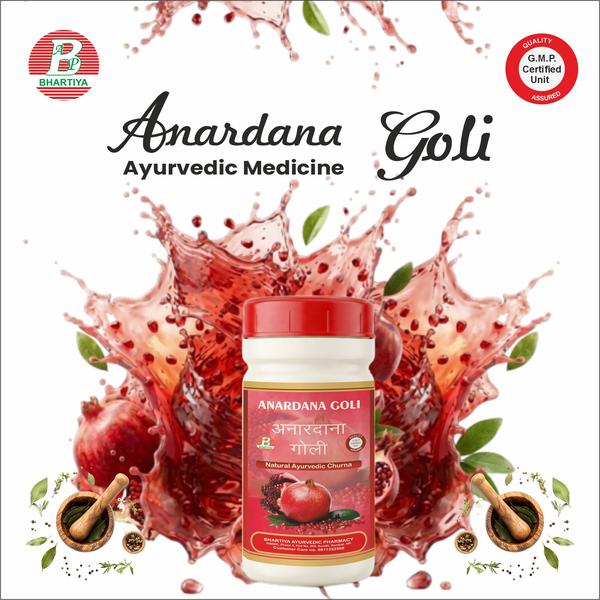
"name": "Anardana Goli",
"description": " ANARDANA GOLI \n\nProduct Identification\n•\tGeneric Name: Anardana Goli\n•\tType: Ayurvedic Patent Medicine\n•\tPrimary Indication Area: Improves digestion and stimulates appetite.\n•\tTherapeutic Indications: Helps improve digestion, increase appetite, boost vitality, and reduce weakness.\n\nKey benefits include:\n1. Digestive Support\n•\tAnardana Goli contains ingredients that are considered “Agnivardhaka” in Ayurveda, meaning they strengthen digestive fire (Agni).\n•\tStrong digestive fire ensures that food is properly broken down and nutrients are absorbed efficiently.\n•\tImproved digestion reduces issues like bloating, heaviness, or indigestion, which often suppress appetite.\n2. Appetite Stimulation\n•\tBy improving digestion, the body naturally signals hunger, leading to better appetite.\n•\tIt helps people who have poor appetite due to weakness, stress, or overexertion.\n•\tRegular use may lead to steady and healthy hunger cues, making it easier to eat balanced meals.\n3. Additional Benefits Linked to Digestion & Appetite\n•\tIncreased nutrient absorption → more energy and stamina\n•\tReduced digestive discomfort → enhanced overall well-being\n•\tSupports healthy metabolism, which can maintain proper body weight and vitality\n\nIngredients:\n Anardana \nBotanical Name: Punica granatum\nCommon Names: Anardana (India), Dried Pomegranate Seeds\n\nKey Nutrients / Phytochemicals\n•\tPolyphenols (punicalagins, ellagic acid) – potent antioxidants\n•\tVitamins: Vitamin C, some B-complex vitamins\n•\tMinerals: Potassium, iron, calcium, magnesium\n•\tFiber\n•\tStimulation of Digestive Enzymes\no\tOrganic acids in Anardana (like citric and malic acid) stimulate the secretion of saliva, gastric juices, and pancreatic enzymes.\no\tThis improves breakdown of food, especially proteins and fats.\n•\tEnhancement of Agni (Digestive Fire)\no\tIn Ayurvedic terms, Anardana strengthens Agni, helping proper digestion, nutrient absorption, and assimilation.\n•\tCarminative Effect\no\tReduces gas formation and bloating.\no\tThe mild aromatic compounds help relax intestinal muscles and aid smooth digestion.\n•\tMild Laxative & Stool Softening\no\tDietary fiber in Anardana adds bulk to stool.\no\tHelps in preventing constipation and promoting regular bowel movements.\n•\tReduction of Acidity & Indigestion\no\tOrganic acids balance stomach pH.\no\tHelps prevent fermentation of undigested food, reducing acidity, heartburn, and bloating.\n\n\n Kala Namak (Black Salt) \nBotanical/Source Name: Naturally occurring rock salt, mainly from the Himalayan region (mineral salt, not plant-based).\nCommon Names: Black Salt, Himalayan Black Salt, Kala Namak\n\nKey Constituents / Components\n•\tSodium chloride (NaCl) – main component\n•\tIron sulphide (gives the characteristic dark colour and sulphurous smell)\n•\tTrace minerals: potassium, magnesium, calcium, sulfur compounds\n\nDigestive Mechanism of Action\n1.\tStimulation of Digestive Enzymes & Saliva\no\tThe sulfur compounds and salts in Kala Namak stimulate salivary glands and gastric juices, improving breakdown of food.\no\tEnhances enzyme activity in the stomach, especially for protein digestion.\n2.\tEnhancement of Agni (Digestive Fire)\no\tIn Ayurveda, Kala Namak is considered Ushna (hot in potency) and Deepana (enhances Agni).\no\tPromotes proper digestion, assimilation of nutrients, and prevents Aama (undigested toxins) formation.\n3.\tCarminative & Gas-Relieving Effect\no\tHelps reduce flatulence, bloating, and heaviness in the stomach.\no\tMild action on intestinal muscles supports smooth movement of food.\n4.\tMild Laxative / Gut-Regulating Effect\no\tSupports bowel regularity in small doses.\no\tCan reduce constipation and improve stool consistency.\n5.\tAcidity & Heartburn Relief\no\tUnlike regular salt, Kala Namak neutralizes excess stomach acid due to its unique mineral composition.\no\tHelps maintain pH balance in the stomach, reducing acidity-related discomfort.\n\n Kali Mirch (Black Pepper) \nBotanical Name: Piper nigrum\nCommon Names: Black Pepper, Kali Mirch\n\nKey Phytochemicals\n•\tPiperine – main active compound, gives pungency\n•\tEssential oils (limonene, pinene) – contribute to digestive and carminative effects\n•\tAlkaloids and trace minerals\n\nDigestive Mechanism of Action\n1.\tStimulation of Digestive Enzymes\no\tPiperine in black pepper stimulates the secretion of saliva, gastric juices, bile, and pancreatic enzymes.\no\tEnhances breakdown and absorption of proteins, fats, and carbohydrates.\n2.\tEnhancement of Agni (Digestive Fire)\no\tIn Ayurveda, Kali Mirch is Ushna (hot) and Laghu (light), enhancing Agni.\no\tHelps in digestion of heavy or oily foods and prevents Aama (undigested toxins).\n3.\tCarminative Effect\no\tReduces gas formation, bloating, and flatulence.\no\tHelps relax intestinal muscles and improve bowel movement.\n4.\tImproved Nutrient Absorption\no\tPiperine enhances bioavailability of nutrients and other herbs.\no\tSupports efficient absorption of fat-soluble vitamins and minerals.\n5.\tGut Motility & Mild Laxative Action\no\tStimulates peristalsis, aiding smooth bowel movements.\no\tHelps prevent mild constipation.\n\n Amchur (Dried Mango Powder) \nBotanical Name: Mangifera indica (unripe mango)\nCommon Names: Amchur, Amchoor, Mango Powder\n\nKey Phytochemicals / Nutrients\n•\tOrganic acids: citric acid, malic acid, tartaric acid – provide sour taste\n•\tPolyphenols and flavonoids – antioxidant effect\n•\tVitamins: Vitamin C, small amounts of B-complex\n•\tMinerals: Potassium, magnesium\n\nDigestive Mechanism of Action\n1.\tStimulation of Digestive Enzymes\no\tOrganic acids in Amchur stimulate salivary and gastric secretions, enhancing breakdown of carbohydrates, proteins, and fats.\n2.\tEnhancement of Agni (Digestive Fire)\no\tIn Ayurveda, Amchur is Deepana (stimulates Agni) and Pachana (aids digestion).\no\tHelps digest heavy, oily, or kapha-aggravating foods.\n3.\tCarminative Effect\no\tReduces gas formation, bloating, and flatulence due to its sour and slightly astringent properties.\no\tSupports smooth movement of food in the intestines.\n4.\tAppetizer & Acid-Balancer\no\tImproves appetite by enhancing taste and stimulating digestive secretions.\no\tBalances mild acidity due to regulation of gastric pH.\n5.\tMild Laxative / Gut-Regulating Effect\no\tSlightly promotes bowel movements due to its fiber content and organic acids.\n Namak (Common Salt / Table Salt) \nChemical Composition: Mainly Sodium Chloride (NaCl)\nOther Components: Trace minerals (depending on source)\n\nDigestive Mechanism of Action\n1.\tStimulation of Digestive Secretions\no\tSalt stimulates salivary glands, promoting saliva production.\no\tIncreases secretion of gastric juices, which helps in breaking down food, especially proteins.\n2.\tEnhancement of Agni (Digestive Fire)\no\tIn Ayurveda, small amounts of salt are Deepana (stimulate Agni), aiding digestion and assimilation of nutrients.\n3.\tElectrolyte Balance\no\tMaintains osmotic balance in the gut, helping smooth movement of food through intestines.\n4.\tMild Appetite Stimulant\no\tImproves taste perception, which indirectly encourages better digestion by promoting chewing and salivation.\n5.\tGut Motility Support\no\tHelps maintain water balance in intestines, preventing constipation and aiding smooth bowel movements in normal amounts.\n\n Pippali (Long Pepper) \nBotanical Name: Piper longum\nCommon Names: Pippali, Long Pepper\n\nKey Phytochemicals\n•\tPiperine – main pungent compound\n•\tEssential oils – contribute to digestive and carminative effects\n•\tAlkaloids and volatile oils\n\nDigestive Mechanism of Action\n1.\tStimulation of Digestive Enzymes\no\tPiperine and essential oils stimulate secretion of saliva, gastric juices, and pancreatic enzymes.\no\tEnhances digestion of proteins, fats, and carbohydrates.\n2.\tEnhancement of Agni (Digestive Fire)\no\tIn Ayurveda, Pippali is Ushna (hot), Laghu (light), and Deepana (stimulates Agni).\no\tHelps digest heavy, kapha-aggravating foods and prevents formation of Aama (toxins from undigested food).\n3.\tCarminative Effect\no\tReduces bloating, gas formation, and flatulence.\no\tRelaxes intestinal muscles, aiding smooth movement of food.\n4.\tAppetite Stimulant\no\tImproves taste perception and digestive excitement, which indirectly enhances nutrient breakdown and assimilation.\n5.\tGut Motility & Mild Laxative Action\no\tStimulates peristalsis, supporting regular bowel movements.\no\tMildly laxative in nature, helps prevent constipation\n\n Gulkand (Rose Petal Preserve) \nBotanical Name: Rosa damascena (Damask Rose)\nCommon Names: Gulkand, Rose Petal Preserve\n\nKey Constituents / Phytochemicals\n•\tNatural sugars (from rose petals and sugar) – provide mild energy\n•\tFlavonoids and phenolic compounds – antioxidants\n•\tVolatile oils – aromatic and carminative properties\n•\tTrace minerals: iron, calcium\n\nDigestive Mechanism of Action\n1.\tEnhancement of Agni (Digestive Fire)\no\tGulkand is Deepana (stimulates digestion) and Pachana (aids digestion of heavy foods) in Ayurveda.\no\tHelps digest fatty or heavy meals and reduces formation of Aama (undigested toxins).\n2.\tCarminative Effect\no\tAromatic compounds and rose oils reduce gas, bloating, and flatulence.\no\tHelps smooth intestinal motility.\n3.\tCooling Digestive Tonic\no\tBalances Pitta and excess heat in the digestive tract while supporting digestion.\no\tMildly soothing for acidity and hyperacidity.\n4.\tAppetite Stimulant\no\tSweet taste and aroma improve appetite, increasing salivation and digestive enzyme secretion.\n5.\tGut-Regulating Effect\no\tSugar content provides mild bulk and energy for smooth bowel movement.\no\tMay prevent constipation in moderate use.\n\n Sugar (Sharkara / Saccharose / Table Sugar) \nChemical Composition: Mainly Sucrose (C12H22O11)\nSource: Sugarcane, sugar beet\n\nDigestive Mechanism of Action\n1.\tEnergy Source for Digestion\no\tSugar provides readily available glucose, which supplies quick energy for metabolic processes, including the digestive system.\n2.\tStimulation of Saliva & Taste\no\tSweet taste stimulates salivation, which begins pre-digestion of carbohydrates.\no\tEnhances the appetite indirectly by making food more palatable.\n3.\tMild Laxative / Gut-Regulating Effect (in moderate amounts)\no\tSugar can retain water in the intestines, softening stool slightly and supporting bowel movement.\n4.\tEnhancement of Digestive Enzyme Activity\no\tSimple sugars can activate carbohydrate-digesting enzymes (amylase) in saliva and pancreas.\n5.\tCooling Effect (in Ayurveda)\no\tSugar is considered Shita (cooling), which can soothe Pitta-related digestive irritation (like mild acidity).\n\n\n AMLA (Amalaki) \n1.\tDose:\no\t2–3 goli (tablets/lozenges) three times a day.\n2.\tTiming:\no\tTake after meals (breakfast, lunch, and dinner).\n3.\tMode of Intake:\no\tChew or slowly suck the goli for better digestive effect.\no\tCan be taken with lukewarm water if needed.\n4.\tPurpose:\no\tImproves digestion.\no\tReduces bloating, gas, and mild acidity.\n5.\tPrecautions:\no\tDo not take on an empty stomach.\no\tPeople with diabetes should monitor blood sugar.\no\tAvoid excessive intake to prevent loose stools or acidity.\n6.\tDuration:\no\tCan be used safely for 1–2 months or as advised by an Ayurvedic practitioner.\n\n\n\nanardana goli benefits, anardana goli benefits in hindi\nanardana goli khane ke fayde, anardana goli uses\nanardana goli ingredients, anardana goli recipe\nanardana goli amazon, anardana goli at home\nhow to make anardana goli at home, ayurvedic anardana goli\nwhat is anardana goli, is anardana goli good for health\nanardana goli buy online, anardana goli bottle\nanardana goli buy, anardana churan benefits\nanardana goli calories, anardana goli candy\nanardana goli contents, anardana chatpati goli\ncalories in anardana churan, anardana goli red colour\nanardana goli digestive, anardana goli dosage\nanardana goli in english, anardana goli for digestion\nanardana goli flipkart, anardana goli for kids\nanardana goli nutritional facts, anardana goli used for\nanardana goli gst rate, anardana churan goliyan\nanardana goli how to use, anardana goli health benefits\nanardana goli hindi, anardana churan hsn code\nis anardana goli healthy, anardana goli kya hota hai\nanardana goli in pregnancy, anardana goli india\nanardana goli indiamart, anardana goli in hindi\nanardana churan in pregnancy, anardana goli jiomart\nanardana goli jar, anardana goli kaise banti hai\nanardana goli kaise banate hain, anardana goli khatta meetha\nanardana ki goli, anardana churan ke fayde, anardana churan kaise banta hai\nanardana goli manufacturers, anardana goli making machine\nanardana goli manufacturers in india, anardana goli making\nanardana goli near me, anardana churan near me\nanardana goli shop near me, anardana churan online\nbuy anardana goli online, anardana goli pouch\nanardana goli powder, anardana goli price per kg\nanardana goli quantity, anardana goli qr code\nanardana goli q10, anardana goli qartulad\nanardana goli red, anardana churan recipe\njeera goli red, anardana churan recipe in hindi\nanardana churan goli recipe, anardana goli shadani\nanardana goli taste, anardana goli tablet\nanardana goli uses in hindi, anardana goli uses malayalam\nanardana churan uses, anardana goli kaise banaen\nanardana goli wholesale market, anardana goli wholesale\nanardana goli wholesale price, best anardana goli in india\nbenefits of eating anardana goli, why anardana goli healthy\nwhy anardana goli good for health, why anardana goli means\nwhy anardana goli good for digestion, who anardana goli price\nwho anardana goli in delhi, who anardana goli in a day\nwho anardana goli kaise banate hain, who anardana goli kaise banti hai\nwho anardana goli banane ka tarika, who anardana goli means\nwho anardana goli is made, who anardana goli good for health\nbest anardana goli brand, best anardana churan\nbest anardana brand",
"price": 108.0,
"discountamount": 54.0,
"currencycode": "INR",
"priority": 1000000,
"isfreeshipmentavailable": false,
"shipmentduration": 1,
"_keywords": null,
"isarchived": false,
"isavailable": true,
"applicationid": null,
"productindex": 125,
"imageuri": "https://productimages.withfloats.com/actual/6a0d871d881b69a5d83cfec8.jpg",
"tileimageuri": "https://productimages.withfloats.com/tile/6a0d871d881b69a5d83cfec8.jpg",
"images": null,
"totalqueries": 0,
"gpid": null,
"groupproductid": null,
"createdon": "2026-05-20T10:04:10.77Z",
"updatedon": "2026-05-20T10:04:10.77Z",
"buyonlinelink": null,
"producturl": "http://WWW.BHARTIYAAYURVEDICPHARMACY.COM//anardana-goli/125",
"availableunits": -1.0,
"iscodavailable": true,
"isprepaidonlineavailable": true,
"maxcodorders": -1,
"maxprepaidonlineorders": -1,
"uniquepaymenturl": null,
"brandname": "Bakula Fort",
"category": "Anardana Goli 100 GM X 40",
"tags": [],
"variants": false,
"keyspecification": null,
"otherspecifications": null,
"pickupaddressreferenceid": null,
"paymenttype": "AssuredPurchase",
"producttype": "products",
"hsncode": null,
"gstslab": 0.0,
"isnotforsale": false
},
{
"_id": "69fb2001bc5d678f88b2f5b3",
"fptag": "BHARTIYEAYURVEDICPHARMACY",
"merchantname": null,
"customwidgets": null,
"externalsourceid": null,
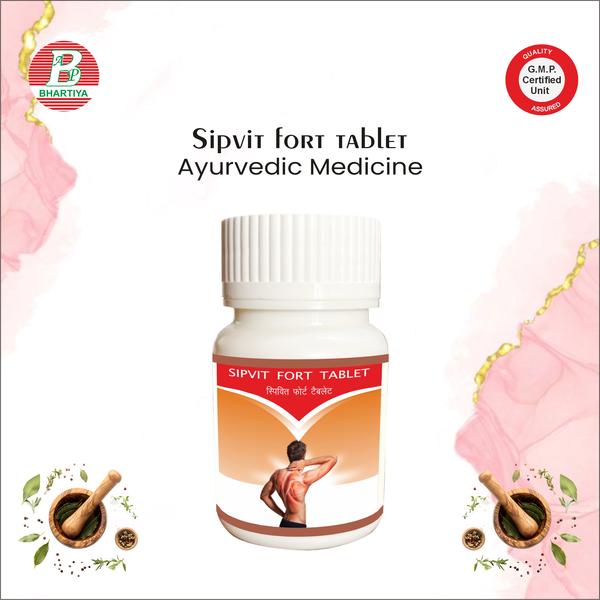
"name": "Sipvit Fort Tablet",
"description": " SIPVIT FORT TABLET \n\nProduct Identification\n•\tGeneric Name: Sipvit Fort Tablet\n•\tType: Ayurvedic Patent Medicine\n•\tPrimary Indication Area: Supports male sexual health by improving erectile function, libido, stamina, and overall reproductive performance.\nTherapeutic Indications\n•\tSupports improvement of male sexual function by enhancing erectile performance, libido, stamina, and overall reproductive wellness\nKey benefits include:\n•\tSupports male sexual health by improving libido, erection quality, stamina, and overall sexual performance.\nPrimary Benefit:\n•\tSupports male sexual health by enhancing libido, erectile function, stamina, and overall reproductive vitality.\nAdditional Benefits:\n•\tImprove sperm production and quality — supporting fertility and reproductive outcomes. \n•\tEnhance libido and sexual desire — increasing interest in sexual activity. \n•\tSupport hormonal balance (e.g., testosterone) — important for energy, stamina, and erectile function. \n•\tBoost overall vitality and endurance during sexual activity\n\nIngredients:\n SAFED MUSLI (Chlorophytum borivilianum)\nBotanical Name: Chlorophytum borivilianum\nPart Used: Root (commonly used in Ayurvedic Vajikaran Rasayana)\nTraditional Use: Rejuvenator, aphrodisiac, strength & stamina tonic\n Mechanism of Action in Male Sexual Health (Biochemistry / Pharmacology)\n1.\tSpermatogenic Support & Sperm Quality\n• Root extracts have been shown to increase sperm count and motility in experimental models, indicating support for spermatogenesis and semen quality. \n2.\tAntioxidant Protection of Reproductive Cells\n• Phenolic compounds and antioxidants help reduce oxidative stress in sperm cells, protecting membranes and DNA, which promotes healthier sperm characteristics. \n\nSHATAVARI (Asparagus racemosus) \nBotanical Name: Asparagus racemosus\nFamily: Asparagaceae\nPart Used: Root\nTraditional Use: Rejuvenative tonic (Rasāyana), adaptogen, aphrodisiac, reproductive support\n Phytoconstituents Relevant to Sexual Health\nShatavari root contains:\n1.\tSteroidal saponins (Shatavarins I–IV) – major bioactives linked with hormonal and antioxidant actions. \n2.\tFlavonoids & polyphenols – antioxidant effects. \n3.\tAlkaloids & mucilage – tissue nourishment and soothing. \n\n Mechanism of Action in Male Sexual Health (Biochemistry / Pharmacology)\n1.\tAntioxidant Support & Sperm Protection\n• Shatavari’s saponins and flavonoids neutralize free radicals, protecting sperm from oxidative damage, which is crucial for healthy sperm count, motility, and morphology. \n2.\tSpermatogenic Enhancement\n• Experimental evidence suggests Shatavari may improve sperm count, motility, and seminal quality by reducing oxidative stress and nourishing reproductive tissues. \n\nMULETHI (Licorice) \nBotanical Name: Glycyrrhiza glabra\nPart Used: Root (Yashtimadhu)\nTraditional Use: Ayurvedic rasāyana for anti inflammatory, antioxidant, digestive support; also used in reproductive tonics in some formulations. \n Phytoconstituents Relevant to Male Sexual Health\n•\tGlycyrrhizin & Glycyrrhizic acid – saponin glycosides\n•\tFlavonoids (e.g., glabridin) and phenolic compounds – antioxidant effects \n Mechanism of Action in Male Sexual Health (Biochemistry / Pharmacology)\n1.\tAntioxidant Protection of Sperm & Testicular Tissue\n• Flavonoids like glabridin and other phenolics exert antioxidant effects, scavenging reactive oxygen species (ROS) that damage sperm DNA, cell membranes, and reduce sperm motility and quality. \n2.\tAnti Inflammatory Action\n• Licorice compounds can inhibit pro inflammatory pathways (e.g., NF κB), reducing testicular or reproductive inflammation, which may otherwise impair spermatogenesis and tissue health. \n\nGOKHARU / GOKSHURA (Tribulus terrestris) \nBotanical Name: Tribulus terrestris\nPart Used: Fruit / Herb\nTraditional Use: Ayurvedic aphrodisiac (Vrishya), reproductive tonic, urinary support\n Phytoconstituents Relevant to Male Sexual Health\n•\tSaponins (e.g., protodioscin) — thought to influence hormonal pathways. \n•\tFlavonoids and phenolic compounds — antioxidant effects.\n Mechanism of Action in Male Sexual Health (Biochemistry / Pharmacology)\n1.\tNitric Oxide Mediated Erectile Support\n• Gokshura extracts can promote relaxation of penile smooth muscle via NO related pathways, aiding blood flow and erection quality.\n2.\tAphrodisiac & Libido Enhancement\n• Human and experimental evidence shows increased sexual desire and function, likely via nervous endocrine modulation and local vascular effects. \n\n AMLA (Indian Gooseberry) \nBotanical Name: Phyllanthus emblica (syn. Emblica officinalis)\nPart Used: Fruit\nTraditional Use: Ayurvedic Rasayana (rejuvenator), general tonic for vitality and strength\n\n Phytoconstituents Relevant to Male Sexual Health\nAmla is rich in nutrients and bioactive compounds including:\n1.\tVitamin C (Ascorbic acid) – very high antioxidant content. \n2.\tPolyphenols & Tannins (emblicanin A/B, gallic acid, ellagic acid) – potent antioxidants.\n3.\tFlavonoids (quercetin, kaempferol) – antioxidant and anti inflammatory.\n4.\t Minerals including Zinc and amino acids – important for reproductive biochemistry. \n\n Mechanism of Action in Male Sexual Health (Biochemistry / Pharmacology)\n1.\tAntioxidant Protection of Reproductive Tissues\n• Amla’s vitamin C and polyphenols neutralize free radicals (ROS) and reduce oxidative stress, which is crucial for protecting sperm cells and testicular tissue from biochemical damage. \n2.\tSupport for Testosterone Production\n• By reducing oxidative damage in Leydig cells (testosterone producing cells), amla may help maintain testosterone levels, which are fundamental for libido and sexual function. \n\nHALDI (Turmeric) \nBotanical Name: Curcuma longa\nPart Used: Rhizome (root\n Mechanism of Action in Male Sexual Health (Biochemistry / Pharmacology)\n1.\tAntioxidant Protection of Reproductive Tissues\n• Curcumin, the main active compound in turmeric, is a powerful antioxidant that scavenges free radicals (ROS) and reduces oxidative stress in testicular and sperm cells — protecting sperm DNA and membranes from damage.\n2.\tSupports Sperm Quality & Protection\n• Curcumin helps improve sperm motility and density in animal studies and protects sperm structure by reducing lipid peroxidation and preserving membrane integrity. \n3.\tAnti Inflammatory & Cell Protective Actions\n• Curcumin’s anti inflammatory effect reduces inflammation in reproductive tissues and mitigates testicular damage from stress, toxins, or adverse conditions, helping maintain reproductive function. \n\nKAUNCH / KAUNCH BEEJ (Mucuna pruriens) \nBotanical Name: Mucuna pruriens\nPart Used: Seeds (Beej)\n Mechanism of Action in Male Sexual Health (Biochemistry / Pharmacology)\n1.\tDopamine Precursor (L DOPA) Boost\n• Kaunch seeds contain L DOPA, a biochemical precursor to dopamine — increasing dopamine levels in the brain helps enhance libido, arousal, and sexual desire. Higher dopamine can also support testosterone synthesis through the hypothalamic pituitary gonadal axis\n2.\tTestosterone & Hormonal Support\n• By modulating neurotransmitters and supporting luteinizing hormone (LH) release, Kaunch may help support natural testosterone production — the key hormone for male libido, energy, and reproductive function. \n\nVIDHARA (Elephant Creeper) \nBotanical Name: Argyreia speciosa (syn. Argyreia nervosa)\nFamily: Convolvulaceae\nPart Used: Roots, seeds, leaves (roots most commonly) \nTraditional Use: Ayurvedic Vajikarana (aphrodisiac) and rejuvenative tonic, used to support male sexual health, sperm quality, and vitality. \n\n Mechanism of Action in Male Sexual Health (Biochemistry / Pharmacology)\n1.\tAphrodisiac & Reproductive Stimulation\n• Vidhara is traditionally considered aphrodisiac (Vajikarana), and its root extracts are used to enhance libido, sexual vigor, and reproductive function in Ayurveda. \n2.\tSupport for Sperm Count & Quality\n• Ayurvedic uses include improving sperm count and supporting semen quality, likely through antioxidant and tissue nourishing effects on reproductive organs. \n\nKHARETI (Khareti / Atibala / Bala) \nBotanical Name: Sida cordifolia\nSanskrit Name: Balā (Bala)\nCommon English Name: Country Mallow\nParts Used: Roots, leaves, seeds, stems (traditional use) \n Mechanism of Action in Male Sexual Health (Biochemistry / Pharmacology)\n1.\tVajikarana (Aphrodisiac) & Reproductive Support\n• Khareti (Bala) is traditionally classified as a Vajikarana herb — meaning it supports libido, sexual desire, and reproductive vigor in males \n2.\tTestosterone & Hormone Related Support\n• By helping balance male hormones and nerve tone, it may enhance sexual drive and reproductive function. \n\nHARAD (Haritaki / Terminalia chebula) \nBotanical Name: Terminalia chebula\nPart Used: Fruit\n Mechanism of Action in Male Sexual Health (Biochemistry / Pharmacology)\n1.\tAstringent & Antioxidant Phytochemicals\n• Harad contains tannins (chebulinic acid, chebulagic acid), gallic acid, ellagic acid, and flavonoids — all strong antioxidants that protect cells from oxidative stress. These biochemical antioxidants help maintain general reproductive tissue health by neutralizing free radicals. \n2.\tTraditional Rasayana & Aphrodisiac Action (Short Term Use)\n• In classical Ayurvedic texts, Harad is described as Rasayana (rejuvenative) and in small doses can increase sexual energy and address premature ejaculation or nocturnal emissions due to its astringent and balancing effect on tissues. \n\nAKARKARA (Anacyclus pyrethrum) \nBotanical Name: Anacyclus pyrethrum\nPart Used: Root\nTraditional Use: Ayurvedic Vajikarana (aphrodisiac), reproductive tonic\n\n Mechanism of Action in Male Sexual Health (Biochemistry / Pharmacology)\n1.\tLibido & Aphrodisiac Stimulation\n• Contains Alkylamides and Anacyclin, which stimulate nerve centres and sexual desire, traditionally increasing libido and willingness for sexual activity. \n2.\tSpermatogenic & Testosterone Support\n• In experimental studies, extracts increased testosterone and androgen levels, and enhanced sperm count, motility, and viability by influencing hormone pathways and testicular function. \n\nLAJWANTI (Sensitive Plant / Mimosa pudica) \nBotanical Name: Mimosa pudica\nFamily: Fabaceae\nParts Used: Whole plant / seeds (traditionally)\n Mechanism of Action in Male Sexual Health (Biochemistry / Pharmacology)\n1.\tStrengthening & Nourishing Action\n• Traditionally, Lajwanti seed powder is regarded as balya (strength promoting) — believed to nourish reproductive tissues, support stamina, and help improve male reproductive vitality. \n2.\tAntioxidant & Anti Inflammatory Effects\n• Contains alkaloids, flavonoids, tannins, saponins, glycosides, phenolic acids, and sterols, which provide antioxidant and anti inflammatory actions — these helps protect cells from oxidative stress and may support general tissue health relevant to reproductive function. \n\nTALMAKHANA (Kokilaksha) \nBotanical Name: Hygrophila auriculata (syn. Hygrophila spinosa, Asteracantha longifolia)\nFamily: Acanthaceae\nPart Used: Seeds (primarily) / Roots & leaves also used traditionally \n\n Mechanism of Action in Male Sexual Health (Biochemistry / Pharmacology)\n1.\tAphrodisiac & Reproductive Support\n• Talmakhana is traditionally considered a Vrishya (aphrodisiac) herb in Ayurveda, used to enhance libido, sexual drive, and stamina in men. \n2.\tSupport for Sperm Quality & Hormonal Balance\n• In traditional practice, it is believed to improve sperm quality, semen strength, and reproductive function, possibly by supporting hormonal balance. \n\n VIDARIKAND (Indian Kudzu) \nBotanical Name: Pueraria tuberosa\nPart Used: Tuberous root\nTraditional Use: Rasayana (rejuvenator), Balya (strength promoting), Vrishya (aphrodisiac) herb in Ayurveda, used to support reproductive health and vitality. \n Mechanism of Action in Male Sexual Health (Biochemistry / Pharmacology)\n1.\tSpermatogenic & Reproductive Tissue Support\n• Vidarikand bioactive compounds nourish Shukra dhatu (semen) and reproductive tissues, traditionally increasing sperm count, motility, and semen quality. \n2.\tAndrogenic & Hormonal Modulation\n• Phytoestrogens and Isoflavonoids like puerarin, daidzein, genistein, and biochanin A may influence the hypothalamic–pituitary–gonadal axis, supporting release of FSH, LH, and testosterone, which are essential for libido and sexual performance.\n\nKALI MUSLI (Black Musli) \nBotanical Name: Curculigo orchioides\nPart Used: Rhizome / Root\n Mechanism of Action in Male Sexual Health (Biochemistry / Pharmacology)\n1.\tAphrodisiac (Vrishya) & Libido Support\n• Kali Musli is traditionally used in Ayurveda as a natural aphrodisiac that helps increase sexual desire and drive. \n2.\tSpermatogenic & Reproductive Function\n• It is associated with spermatogenic activity, helping improve sperm count, motility, and seminal quality, supporting male fertility. \n\n SEMAL MUSALI (Semal Root / Bombax ceiba) \nBotanical Equivalent: Bombax ceiba / Bombax mulabaricum\nParts Used: Root (musli), sometimes flower or bark used in formulations \n Mechanism of Action & Uses (Traditional / Ayurvedic Context)\n1.\tBalya (Strength Promoting) & Rejuvenative Action\n• Semal musali (root) is traditionally used as a balya (body strengthening) and nutritive tonic to support overall energy and vitality, similar to other Musali herbs. \n2.\tVrishya (Aphrodisiac / Reproductive Support)\n• In Ayurveda, Semal musali is considered to have vrishya (aphrodisiac) and balya effects that help with sexual weakness, seminal depletion, and reproductive debility — often used in shukrakshaya (semen loss) and weakness. \n\nKALI MIRCH (Black Pepper) \nBotanical Name: Piper nigrum\nPart Used: Dried fruit (peppercorn)\n Mechanism of Action in Male Sexual Health (Biochemistry / Pharmacology)\n1.\tImproves Blood Flow & Erections\n• Black pepper contains piperine, which can enhance circulation and vasodilation, supporting better blood flow — key for strong and sustained erections. \n2.\tSupports Testosterone & Hormonal Balance\n• Piperine may help boost natural testosterone levels and testicular function, which supports libido, sexual desire, and reproductive health. \n\nSALAM PANJA (Marsh Orchid / Dactylorhiza hatagirea) \nBotanical Name: Dactylorhiza hatagirea\nCommon Names: Salam Panja, Salab Panja, Hatta Haddi, Panchaule, Marsh Orchid\nPart Used: Tuberous roots (resembling hand/fingers) \n Mechanism of Action in Male Sexual Health (Biochemistry / Pharmacology)\n1.\tAphrodisiac & Libido Enhancing Action\n• Traditionally classified as a strong Vrishya (aphrodisiac) in Ayurvedic and Unani systems, the root extract is believed to enhance sexual desire and vigor. \n2.\tSupports Sperm Quality & Reproductive Function\n• Used to improve sperm count, motility, and semen quality, making it a traditional shukra dhatu (semen) nourishing herb. \n\nCHOTI ELAICHI (Cardamom) \nBotanical Name: Elettaria cardamomum\nPart Used: Seeds / pods\n Biochemistry / Mechanism of Action in Male Sexual Health\n1.\tImproved Blood Circulation\n• Cardamom contains essential oils that can improve blood circulation, which is important for delivering nutrients and oxygen to reproductive organs. Better circulation supports overall vitality and reproductive tissue health. \n2.\tAntioxidant Protection\n• Rich in antioxidants (e.g., cineole, terpenes, flavonoids), cardamom helps reduce oxidative stress, which can protect sperm cells and reproductive tissues from free radical damage.\n\nCHINI (Sugar – Dietary Sucrose) \nCommon Source: Table sugar, sweets, desserts, sugary drinks\nBotanical Equivalent: Derived from Saccharum officinarum (sugarcane) sugar\n Biochemistry / Mechanism of Action in Male Sexual Health\n1.\tNegative Impact on Sperm Quality\n• Higher dietary sugar intake is associated with lower sperm concentration and poorer semen quality, likely due to metabolic and oxidative effects of excess sugar. \n2.\tMetabolic Dysregulation & Sexual Function\n• Even slight elevations in blood sugar (below diabetes thresholds) can correlate with reduced sperm motility and impaired erectile function, indicating blood glucose regulation affects sexual physiology. \n\n LOHA BHASMA (Lauha Bhasma / Iron Bhasma) \nSource: Purified and calcined iron processed through Rasashastra methods in Ayurveda. \n Therapeutic Indication \nIron supplement to treat anaemia, improve energy, strength, and support male sexual health (via aphrodisiac and stamina enhancing properties). \n\nPrimary Benefit \nImproves iron status, reduces weakness/anaemia, and supports strength and libido. \nOther Benefits \n•\tBoosts haemoglobin and energy levels\n•\tEnhances overall vitality and stamina\n•\tActs as a rejuvenative (Rasayana)\n•\tMay improve male sexual function and stamina due to Vrishya and Balya properties\n•\tSupports digestion and immunity\n\n Shudh Shilajit (Pure Shilajit) \nSource: Natural mineral resin obtained from high-altitude Himalayan rocks, purified using classical Ayurvedic methods.\n\n Therapeutic Indication (Short):\nNatural rejuvenator that enhances energy, strength, immunity, and male vitality.\nPrimary Benefit:\nBoosts physical stamina, mental clarity, and overall vitality, while supporting sexual health.\nOther Benefits:\n•\tImproves energy levels and reduces fatigue\n•\tEnhances endurance and strength\n•\tActs as a Rasayana (rejuvenative tonic)\n•\tSupports male sexual health and fertility\n•\tPromotes cognitive function and immunity\n\n Trivang Bhasma \nSource: Calcined preparation of Tin (Vanga), Lead (Naga), and Zinc (Yashada) processed through classical Rasashastra methods in Ayurveda.\n Therapeutic Indication (Short):\nNatural mineral formulation used to support digestion, metabolism, reproductive health, and overall strength.\nPrimary Benefit:\nEnhances digestive power, metabolic balance, and sexual vitality.\n\nOther Benefits:\n•\tSupports male sexual health and fertility\n•\tImproves energy, stamina, and strength\n•\tActs as a rejuvenative (Rasayana)\n•\tHelps maintain healthy digestion and nutrient absorption\n•\tSupports immunity and overall well-being\n\nDosage:\n1.\tDose per intake: 2–3 tablets\n2.\tFrequency: Twice a day (morning & evening)\n3.\tTotal daily dose: 2–6 tablets per day-(For 500 mg tablets, this equals 1–3 g/day)\n4.\tHow to take: With water, preferably after meals to reduce gastric irritation and improve absorption\n5.\tPrecautions\no\tDo not exceed the prescribed dose\no\tMonitor for side effects\nConsult an Ayurvedic practitioner for:\no\tChildren\no\tElderly\no\tChronic illnesses\n\nsipvit fort tablet uses, sipvit fort tablets\nsipvit fort tablet uses in hindi, sipvit fort tablet price\nsipvit fort tablet amazon, sipvit fort tablet benefits\nsipvit fort tablet benefits in hindi, sipvit fort tablet brand name\nsipvit fort tablet buy online, sipvit fort tablet composition\nsipvit fort tablet content, sipvit fort tablet dosage\nsipvit fort tablet dose, sipvit fort tablet details\nsipvit fort tablet english, sipvit fort tablet expiry date\nsipvit fort tablet generic name, sipvit fort tablet gst rate\nsipvit fort tablet gst, sipvit fort tablet hindi\nsipvit fort tablet how to use, sipvit fort tablet how to take\nsipvit fort tablet in hindi, sipvit fort tablet ingredients\nsipvit fort tablet image, sipvit fort tablet india\nsipvit fort tablet ke fayde in hindi, sipvit fort tablet kis kaam aati hai\nsipvit fort tablet manufacturer, sipvit fort tablet mrp\nsipvit fort tablet manufacturers in india, sipvit fort tablet online\nsipvit fort tablet online shopping, sipvit fort tablet price in india\nsipvit fort tablet q10, sipvit fort tablet quantity\nsipvit fort tablet quality, sipvit fort tablet review\nsipvit fort tablet rate, sipvit fort tablet review in hindi\nsipvit fort tablet supplier\n\n",
"price": 96.0,
"discountamount": 48.0,
"currencycode": "INR",
"priority": 1000000,
"isfreeshipmentavailable": false,
"shipmentduration": 1,
"_keywords": null,
"isarchived": false,
"isavailable": true,
"applicationid": null,
"productindex": 113,
"imageuri": "https://productimages.withfloats.com/actual/69fb20053254637915078929.jpg",
"tileimageuri": "https://productimages.withfloats.com/tile/69fb20053254637915078929.jpg",
"images": null,
"totalqueries": 0,
"gpid": null,
"groupproductid": null,
"createdon": "2026-05-06T11:03:29.874Z",
"updatedon": "2026-05-06T11:03:29.874Z",
"buyonlinelink": null,
"producturl": "http://WWW.BHARTIYAAYURVEDICPHARMACY.COM//sipvit-fort-tablet/113",
"availableunits": -1.0,
"iscodavailable": true,
"isprepaidonlineavailable": true,
"maxcodorders": -1,
"maxprepaidonlineorders": -1,
"uniquepaymenturl": null,
"brandname": "Bakula Fort",
"category": "Sipvit Fort Tablet 100 TAB X 50",
"tags": [],
"variants": false,
"keyspecification": null,
"otherspecifications": null,
"pickupaddressreferenceid": null,
"paymenttype": "AssuredPurchase",
"producttype": "products",
"hsncode": null,
"gstslab": 0.0,
"isnotforsale": false
},
{
"_id": "69e5eaf3db2d9a8c8dff4611",
"fptag": "BHARTIYEAYURVEDICPHARMACY",
"merchantname": null,
"customwidgets": null,
"externalsourceid": null,
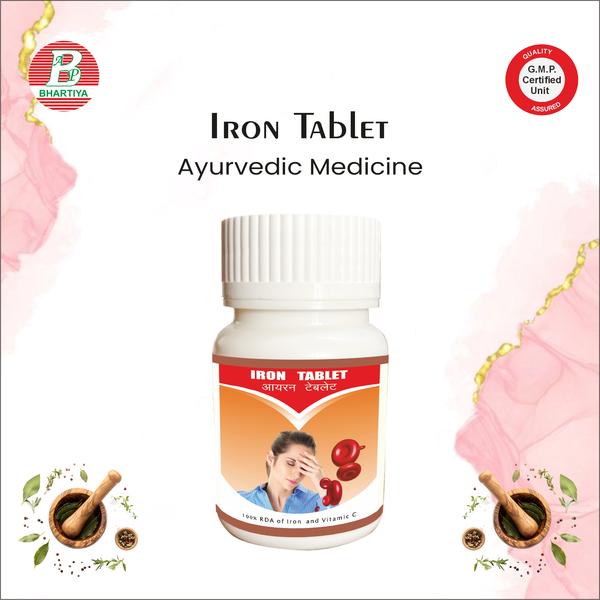
"name": "Iron Tablet",
"description": " IRON TABLET \n\nProduct Identification\n•\tGeneric Name: Iron Tablet\n•\tType: Ayurvedic Patent Medicine\n•\tPrimary Indication Area: To prevent or treat iron-deficiency anaemia and restore haemoglobin levels.\nTherapeutic Indications\nUsed for the prevention and treatment of iron-deficiency anaemia, including cases due to menstrual blood loss, nutritional deficiency, or increased physiological demand, and to restore normal haemoglobin and iron levels.\nKey benefits include:\nPrimary Benefit:\n•\tRestores iron levels and improves haemoglobin, reducing fatigue and weakness associated with iron-deficiency anaemia.\nAdditional Benefits:\n1. Reduces fatigue, weakness, and dizziness\nIron is a key component of haemoglobin, which carries oxygen in the blood. Low iron leads to anaemia, causing:\n•\tPersistent tiredness\n•\tMuscle weakness\n•\tLight-headedness or dizziness\nIron supplementation restores haemoglobin, allowing oxygen to be delivered efficiently to tissues, reducing these symptoms.\n2. Supports overall energy and vitality\n•\tAdequate iron levels help maintain metabolic efficiency and cellular energy production.\n•\tWomen with heavy menstrual bleeding or nutritional deficiency often feel lethargic; iron replenishment improves stamina and daily functioning.\n3. Enhances concentration and cognitive function\n•\tIron deficiency affects brain function, leading to poor concentration, forgetfulness, and reduced mental performance.\n•\tSupplementing iron supports oxygen supply to the brain, improving focus, memory, and cognitive alertness.\n4. Helps in recovery after blood loss\n•\tIron tablets are crucial for rebuilding iron stores after:\no\tHeavy menstruation\no\tSurgery or minor injuries\no\tPregnancy or childbirth\n•\tThis ensures faster recovery and prevents recurrent anaemia.\n5. Supports immune function (additional bonus)\n•\tIron is also needed for healthy immune cell function.\n•\tRestoring iron levels can indirectly improve resistance to infections that may be more common in anaemic individuals.\nIngredients:\n Lauh Bhasma \nType: Ayurvedic herbo-mineral (Bhasma) medicine\nPrimary Indication / Use:\n•\tIron-deficiency anaemia\n•\tSymptoms such as fatigue, weakness, pallor, and dizziness\n•\tRestores haemoglobin and iron levels\nPrimary Benefit:\n•\tReplenishes iron and corrects anaemia\nAdditional Benefits:\n•\tReduces fatigue, weakness, and dizziness associated with low haemoglobin\n•\tSupports overall energy, vitality, and metabolic functions\n•\tEnhances concentration and cognitive function affected by anaemia\n•\tAids recovery after blood loss (e.g., heavy menstruation, childbirth)\n•\tSupports immune function indirectly by restoring iron-dependent enzymatic activity\nDosage:\n•\tUsually 30–250 mg daily, depending on formulation and practitioner guidance\n•\tOften taken with warm water, honey, or as directed by an Ayurvedic physician\nPrecautions:\n•\tTake under Ayurvedic practitioner supervision\n•\tAvoid overdose, as excess iron may cause digestive upset or toxicity\n•\tNot recommended in cases of hemochromatosis or severe liver disease\n\n Amla (Phyllanthus emblica) \nType: Ayurvedic herbal medicine (fruit)\nPrimary Indication / Use:\n•\tRejuvenation and blood health\n•\tSupports digestion, immunity, and antioxidant protection\n•\tHelpful in fatigue and mild anaemia\nPrimary Benefit:\n•\tBoosts haemoglobin and overall blood health\nAdditional Benefits:\n•\tReduces fatigue and weakness during menstruation\n•\tAlleviates mild menstrual cramps through anti-inflammatory effects\n•\tSupports digestion and nutrient absorption, improving general well-being\n•\tEnhances immunity due to high vitamin C and antioxidant content\n•\tActs as a general rejuvenator (Rasayana) for women’s health\nDosage:\n•\t1–3 g powder or 1–2 tsp juice daily, as directed by an Ayurvedic practitioner\n•\tCan be taken with warm water, honey, or milk\nPrecautions:\n•\tTake under Ayurvedic guidance for therapeutic doses\n•\tMay have mild laxative effects if taken in excess\n•\tAvoid if allergic to fruits in the Phyllanthaceae family\n\n Bhringraj (Eclipta alba / Eclipta prostrata) \nType: Ayurvedic herbal medicine (whole plant or leaf extract)\nPrimary Indication / Use:\n•\tHair and liver health\n•\tTraditionally used for jaundice, liver disorders, and promoting hair growth\n•\tSupports detoxification and rejuvenation (Rasayana)\nPrimary Benefit:\n•\tSupports liver function and detoxification\nAdditional Benefits:\n•\tPromotes healthy hair growth and prevents premature graying\n•\tProvides antioxidant and anti-inflammatory support, protecting liver and overall health\n•\tMay help alleviate mild jaundice by improving bile flow\n•\tSupports general rejuvenation and vitality\nDosage:\n•\t1–3 g powder or 1–2 tsp juice daily, or as directed by an Ayurvedic practitioner\n•\tCan be taken with water, milk, or honey\nPrecautions:\n•\tTake under Ayurvedic practitioner guidance\n•\tAvoid overdose, as it may cause mild gastrointestinal upset in sensitive individuals\n•\tUse cautiously in pregnancy or lactation\nDosage:\n1.\tDose per intake: 1–2 tablets\n2.\tFrequency: Twice a day (morning & evening)\n3.\tTotal daily dose: 2–6 tablets per day-(For 500 mg tablets, this equals 1–3 g/day)\n4.\tHow to take: With water, preferably after meals to reduce gastric irritation and improve absorption\n5.\tPrecautions\no\tDo not exceed the prescribed dose\no\tMonitor for side effects\nConsult an Ayurvedic practitioner for:\no\tChildren\no\tElderly\no\tChronic illnesses\n\n \n\niron tablets, iron tablets for women, iron tablets uses\niron tablets names, iron tablets for men, iron tablets price\niron tablets for hair, iron tablets benefits, iron tablet after food\niron tablet at night, iron tablet after milk, iron tablet ayurvedic\niron tablet and folic acid, iron tablet benefits, iron tablet brand name\niron tablet before or after food, iron tablet brands\niron tablet best time to take, iron tablet brands in india\niron tablet best, iron tablet brand name in india\niron tablet benefits in hindi, iron tablet composition\niron tablet colour, iron tablet can be taken at night\niron tablet consuming time, iron tablet contains\niron tablet dose, iron tablet dosage per day\niron tablet dose for adults, iron tablet daily dose\niron tablet during periods, iron tablet dosage for women\niron tablet dr reddy, iron tablet effects, iron tablet eating time\niron tablet expiry date, iron tablet for women, iron tablet for men\niron tablet for kids, iron tablet generic name\niron tablet government, iron tablet govt supply\niron tablet generic, iron tablet how to take\niron tablet hindi, iron tablet how many times a day\niron tablet helps in, iron tablet how to consume\niron tablet image, iron tablet india, iron tablet in hindi\niron tablet just after meal, iron tablet japan\niron tablet jamaica, iron tablet joint pain, iron tablet kab lena chahiye\niron tablet kaise le, iron tablet kab khana chahiye\niron tablet khane ke fayde, iron tablet kis time khana chahiye\niron tablet ke fayde, iron tablet kaise khaye\niron tablet kis kaam aati hai, iron tablet lene ke fayde\niron tablet low price, iron tablet lene ka sahi tarika\niron tablet mg, iron tablet means, iron tablet morning or night\niron tablet medicine, iron tablet men, iron tablet name\niron tablet names in india, iron tablet name list\niron tablet normal dose, iron tablet name in hindi\niron tablets quantity, iron medicine qatar\niron tablet rate, best iron tablets for men\nbest iron tablets in india",
"price": 60.0,
"discountamount": 25.0,
"currencycode": "INR",
"priority": 1000000,
"isfreeshipmentavailable": false,
"shipmentduration": 1,
"_keywords": null,
"isarchived": false,
"isavailable": true,
"applicationid": null,
"productindex": 99,
"imageuri": "https://productimages.withfloats.com/actual/69e5eaf6f23569a3e42a70d6.jpg",
"tileimageuri": "https://productimages.withfloats.com/tile/69e5eaf6f23569a3e42a70d6.jpg",
"images": null,
"totalqueries": 0,
"gpid": null,
"groupproductid": null,
"createdon": "2026-04-20T08:59:31.787Z",
"updatedon": "2026-04-20T08:59:31.787Z",
"buyonlinelink": null,
"producturl": "http://WWW.BHARTIYAAYURVEDICPHARMACY.COM//iron-tablet/99",
"availableunits": -1.0,
"iscodavailable": true,
"isprepaidonlineavailable": true,
"maxcodorders": -1,
"maxprepaidonlineorders": -1,
"uniquepaymenturl": null,
"brandname": "Bakula Fort",
"category": "Iron Tablet 100 Tab X 50",
"tags": [],
"variants": false,
"keyspecification": null,
"otherspecifications": null,
"pickupaddressreferenceid": null,
"paymenttype": "AssuredPurchase",
"producttype": "products",
"hsncode": null,
"gstslab": 0.0,
"isnotforsale": false
},
{
"_id": "69dc89374f6df2ce02d84b62",
"fptag": "BHARTIYEAYURVEDICPHARMACY",
"merchantname": null,
"customwidgets": null,
"externalsourceid": null,
"name": "Hing Goli",
"description": " HING GOLI \n\nProduct Identification\n•\tGeneric Name: Hing Goli\n•\tType: Ayurvedic Patent Medicine\n•\tPrimary Indication Area: Indicated for apachan (indigestion) and badhajmi; helps improve digestion and stimulate appetite.\n•\tTherapeutic Indications: Helps improve digestion, increase appetite, enhance vitality, and reduce general weakness.\nKey benefits include:\n1.\t Relieves Apachan and Badhajmi: Helps in the management of apachan (indigestion) and badhajmi by supporting proper digestion and reducing digestive discomfort such as heaviness and bloating.\n\n2.\tImproves Digestive Function: Enhances digestive capacity by promoting efficient breakdown and absorption of food.\n\n\n3.\tStimulates Appetite: Encourages healthy appetite, especially in individuals experiencing loss of appetite due to weak digestion.\n\n4.\tEnhances Vitality: By improving digestion and nutrient absorption, it helps support overall strength and vitality.\n\n\n5.\t Reduces General Weakness: Aids in reducing weakness associated with poor digestion and inadequate nutrient assimilation.\n\nIngredients:\n Dry Ginger)\nBotanical name: Zingiber officinale (rhizome, dried)\n\n Key Biochemical Constituents\n•\tGingerols (reduced in drying)\n•\tShogaols (increase after drying – more potent)\n•\tZingerone\n•\tVolatile oils (zingiberene, bisabolene)\n Shogaols are mainly responsible for strong digestive action.\n\n Biochemistry of Action in Indigestion (Apāchan)\n1. Stimulation of Digestive Enzymes\n•\tShogaols stimulate secretion of:\no\tSalivary amylase\no\tGastric acid (HCl)\no\tPancreatic enzymes (proteases, lipase)\n•\tImproves breakdown of carbohydrates, proteins, and fats\n\n2. Enhancement of Gastrointestinal Motility\n•\tActivates cholinergic receptors in the gut\n•\tImproves gastric emptying\n•\tReduces food stagnation → prevents heaviness and bloating\n\n3. Carminative Action\n•\tVolatile oils reduce intestinal gas formation\n•\tDecreases fermentation by gut microbes\n•\tRelieves abdominal distension and discomfort\n\n4. Anti-inflammatory & Antioxidant Effect\n•\tInhibits COX and LOX pathways\n•\tReduces mild gastric inflammation\n•\tProtects gastric mucosa during indigestion\n\n Kali Mirch (Black Pepper) \nBotanical name: Piper nigrum (fruit, dried)\nIndication: Indigestion, loss of appetite, bloating\n Key Biochemical Constituents\n•\tPiperine – main active alkaloid\n•\tVolatile oils – e.g., limonene, pinene, caryophyllene\n•\tResins and minor alkaloids\n Biochemistry of Action in Indigestion (Apachan / Ajīrṇa)\n1.\tStimulation of Digestive Secretions\n\n•\tPiperine enhances secretion of:\no\tSalivary amylase\no\tGastric acid (HCl)\no\tPancreatic enzymes (proteases, lipase)\n• Improves breakdown of carbohydrates, proteins, and fats\n2.\tEnhancement of Gastrointestinal Motility\n\n•\tStimulates gut smooth muscles via cholinergic pathways\n•\t Improves gastric emptying → reduces heaviness and bloating\n3.\tCarminative Action\n\n•\tVolatile oils reduce gas formation in intestines\n•\t Decreases fermentation by gut microbes → relieves flatulence\n4.\tThermogenic & Bioavailability Effect\n \n•\tPiperine increases absorption of other nutrients and herbal compounds\n•\t Mildly increases metabolic heat, aiding digestion\n5.\tAnti-inflammatory & Antioxidant Effect•\n•\tInhibits oxidative stress in gut tissues\n•\tHelps reduce mild inflammation of the digestive tract\n\n Dhaniya (Coriander seeds)\nBotanical name: Coriandrum sativum (dried seeds)\nIndication: Indigestion, bloating, loss of appetite, nausea\n Key Biochemical Constituents\n•\tEssential oils – linalool, geraniol, borneol\n•\tFlavonoids – quercetin, kaempferol\n•\tFatty acids – petroselinic acid\n•\tResins and tannins\n Biochemistry of Action in Indigestion (Apāchan / Ajīrṇa)\n1. Stimulation of Digestive Secretions\n\n•\tEnhances secretion of:\no\tSalivary amylase\no\tGastric acid (HCl)\no\tPancreatic enzymes\n• Improves breakdown of food, especially fats\n2.Carminative & Anti-flatulent Action\n\n•\tReduces gas formation in intestines\n•\tRelieves bloating and abdominal discomfort\n•\tVolatile oils help in smooth expulsion of intestinal gas\n3.Gastroprotective & Anti-inflammatory Effect\n\n•\tProtects gastric mucosa\n•\tReduces mild inflammation in the gut\n4.Appetizer & Mild Spasmolytic\n\n•\tStimulates appetite\n•\tRelaxes gut muscles mildly → helps with cramps and colic\n5.Antioxidant Effect\n\n•\tFlavonoids and essential oils reduce oxidative stress in the digestive tract\n\n Jeera (Cumin seeds)\nBotanical name: Cuminum cyminum (dried seeds)\nIndication: Indigestion, bloating, loss of appetite, nausea\n Key Biochemical Constituents\n•\tEssential oils – cuminaldehyde, cymene, terpenes\n•\tFlavonoids – apigenin, luteolin\n•\tFatty acids – linoleic acid, oleic acid\n•\tResins and tannins\n Biochemistry of Action in Indigestion (Apāchan / Ajīrṇa)\n1.\tStimulation of Digestive Secretions\n\n•\tIncreases:\no\tSalivary amylase\no\tGastric acid (HCl)\no\tPancreatic enzymes\n• Improves digestion of carbohydrates, proteins, and fats\n2.\tCarminative & Anti-flatulent Action\n\n•\tReduces gas formation in intestines \n•\tRelieves bloating and abdominal discomfort\n•\t Volatile oils facilitate smooth expulsion of intestinal gas\n3.\tGastrointestinal Motility Enhancement\n\n•\tMildly stimulates gut smooth muscles → aids gastric emptying\n•\t Helps prevent food stagnation\n4.\tAppetizer & Mild Spasmolytic\n\n•\tStimulates appetite\n\n•\t Relaxes gut muscles → helps with cramps\n5.\tAntioxidant & Anti-inflammatory Effect\n\n•\tProtects gastric mucosa\n•\t Reduces oxidative stress in digestive tract\n\n Namak (Common Salt / Rock Salt)\nBotanical/chemical name: Sodium chloride (NaCl)\nIndication: Indigestion, loss of appetite, bloating, nausea\n Key Biochemical Constituents\n•\tSodium (Na⁺)\n•\tChloride (Cl⁻)\n•\tTrace minerals in natural rock salts (iodine, potassium, magnesium)\n Biochemistry of Action in Indigestion (Apāchan / Ajīrṇa)\n1.\tStimulation of Digestive Secretions\n•\tEnhances secretion of:\no\tSalivary amylase → aids carbohydrate digestion\no\tGastric acid (HCl) → improves protein digestion\n• Helps maintain proper pH in the stomach for enzymatic activity\n2.\tAppetizer Effect\n\n•\tMildly stimulates taste receptors → improves appetite\n3.\tElectrolyte & Fluid Balance\n\n•\tMaintains osmotic balance in the gut\n•\tSupports smooth muscle contraction → aids peristalsis\n4.\tCarminative Support (with other herbs)\n• Often combined with cumin, black pepper, or ginger to relieve bloating and gas\n5.\tCautions\n• Excess salt can cause water retention and high blood pressure\n• Best used in moderation, especially in digestive formulations\n\n Nausāra / Nausadar\nType: Mineral preparation (Rasayana / Ayurvedic digestive mineral)\nIndication: Indigestion (Apāchan), loss of appetite, bloating\n🔬 Key Biochemical/Active Components\n•\tPrimarily contains Sodium carbonate / Sodium bicarbonate\n•\tSometimes processed with herbs to enhance digestion\n•\tClassically prepared to reduce toxicity of raw minerals\n Mechanism of Action in Digestion (Apāchan / Ajīrṇa)\n1.\tAntacid Effect\n \n•\tNeutralizes excess stomach acid (HCl)\n\n•\tProvides quick relief from acidity, heartburn, and heaviness\n2.\tAppetizer & Digestive Enhancer\n\n•\tMildly stimulates digestive enzymes\n•\tImproves breakdown of carbohydrates, proteins, and fats\n3.\tCarminative Support\n\n•\tOften combined with Jeera, Dhaniya, or Dry Ginger\n•\t Reduces bloating, gas, and fermentation\n4.\tGastroprotective Effect\n\n•\tProtects stomach lining from mild acid irritation\n•\tSupports overall gut health\n\n Nimbusar / Nimbu-Sara (sometimes “Lemon Juice” in formulations)\nType: Herbal/mineral digestive aid (acidic preparation)\nIndication: Indigestion (apachan), heaviness, bloating, loss of appetite\n Key Biochemical/Active Components\n•\tCitric acid (from lemon juice or citrus component)\n•\tOrganic acids and flavonoids\n•\tSometimes combined with rock salt or other digestive minerals\n Mechanism of Action in Digestion\n1.\tMild Acidic Stimulation\n \n•\tStimulates salivary and gastric secretions\n•\t Improves breakdown of food → supports digestion\n2.\tAppetizer Effect\n\n•\tEnhances appetite\n•\t Reduces nausea\n3.\tCarminative Support\n\n•\tReduces bloating and gas\n•\t Often combined with cumin, dry ginger, or coriander\n4.\tDigestive Balancing\n\n•\tHelps restore proper stomach pH (mildly acidic)\n•\tAids in proper enzyme activity\n\n Aam Churan (Amchur / Dried Unripe Mango Powder)\nBotanical name: Mangifera indica (unripe fruit, dried and powdered)\nIndication: Indigestion (Apāchan), loss of appetite, heaviness, nausea\n Key Biochemical Constituents\n•\tOrganic acids – citric acid, malic acid, tartaric acid\n•\tVitamin C (ascorbic acid)\n•\tTannins – mild astringent effect\n•\tFlavonoids – antioxidant activity\n Mechanism of Action in Digestion (Apāchan / Ajīrṇa)\n1.\tAppetizer & Digestive Stimulant\n\n•\tOrganic acids stimulate salivary and gastric secretions\n•\t Enhances breakdown of carbohydrates and proteins\n•\t Improves appetite\n2.\tCarminative & Anti-fermentation\n\n•\tReduces gas formation and bloating\n•\t Mildly astringent tannins help control intestinal fermentation\n3.\tGastroprotective & Antioxidant\n•\tProtects stomach lining\n•\t Reduces oxidative stress in gut tissues\n4.\tBalancing Digestive Pitta (Ayurvedic perspective)\n\n•\tReduces acidity-related discomfort\n•\t Supports healthy digestion\n\n Hing (Asafoetida)\nBotanical name: Ferula asafoetida (resin from rhizome/stem)\nIndication: Indigestion (Apāchan), bloating, flatulence, colic\n Key Biochemical Constituents\n•\tVolatile oils – e.g., ferulic acid, asaresinotannols\n•\tResins – asaresinotannol\n•\tSulfur compounds – responsible for pungent smell and digestive action\n Mechanism of Action in Digestion (Apāchan / Ajīrṇa)\n1.\tCarminative Action\n\n•\tReduces gas formation in intestines\n•\t Relieves bloating, heaviness, and abdominal discomfort\n2.\tStimulation of Digestive Secretions\n\n•\tIncreases salivary, gastric, and pancreatic enzymes\n•\t Improves digestion of carbohydrates, proteins, and fats\n3.\tGut Motility Enhancement\n•\tMild spasmolytic → relaxes gut muscles\n•\tReduces colic and smoothens bowel movements\n4.\tAnti-inflammatory & Antioxidant\n•\tReduces mild inflammation in the gut\n•\t Protects gastric mucosa during digestion\n5.\tAppetizer Effect\n\n•\tEnhances taste and stimulates appetite\n•\tOften used in very small amounts due to pungent taste\n\n Kala Namak (Black Salt / Himalayan Black Salt)\nChemical/Traditional name: Sodium chloride with trace minerals (NaCl + iron sulphide)\nIndication: Indigestion (Apāchan), bloating, loss of appetite, heartburn\n Key Biochemical/Active Components\n•\tSodium chloride (main component)\n•\tTrace minerals: iron, sulfur compounds\n•\tMildly acidic sulphide compounds → give its characteristic smell\n Mechanism of Action in Digestion (Apāchan / Ajīrṇa)\n1.\tStimulation of Digestive Secretions\n\n•\tEnhances salivary, gastric, and pancreatic enzymes\n•\tImproves breakdown of food → aids digestion\n2.\tAppetizer Effect\n\n•\tStimulates appetite by acting on taste receptors\n•\tMild digestive stimulant\n3.\tCarminative / Gas Reliever\n\n•\tSulfur compounds reduce intestinal gas formation\n•\tRelieves bloating and heaviness\n4.\tAlkaline & Electrolyte Balance\n\n•\tSupports proper gut pH\n•\t Maintains electrolyte balance in digestive tract\n\n1.\tDose:\no\t1–2goli (tablets/lozenges) two times a day.\n2.\tTiming:\no\tTake after meals (breakfast, lunch, and dinner).\n3.\tMode of Intake:\no\tChew or slowly suck the goli for better digestive effect.\no\tCan be taken with lukewarm water if needed.\n4.\tPurpose:\no\tImproves digestion.\no\tReduces bloating, gas, and mild acidity.\n5.\tPrecautions:\no\tDo not take on an empty stomach.\no\tPeople with diabetes should monitor blood sugar.\no\tAvoid excessive intake to prevent loose stools or acidity.\n6.\tDuration:\no\tCan be used safely for 1–2 months or as advised by an Ayurvedic practitioner.\n\n\nhing goli benefits, hing goli blue packet, hing goli pouch\nhing goli ke fayde in hindi, hing goli khane ke fayde\nhing goli ayurvedic, hing goli amazon, hing goli ad\nhing goli after meal, hing goli advantage\nhing goli for acidity, hing goli kis kaam aati hai\nhing goli benefits in hindi, hing goli bottle\nhing goli buy online, hing goli box, hing goli buy\nhing goli bajaj, hing goli dibbi, hing goli dosage\nhing goli dabbi, hing goli digestive, hing goli empty stomach\nhing goli in english. does hing goli expire, hing goli for digestion\nhing goli for gas, hing goli for constipation, hing goli for kids\nhing goli for baby, hing goli fayde, hing goli flipkart, hing goli for stomach\nis hing goli good for health, is hing goli good for digestion\nis hing goli good for acidity, is hing goli good for gas\nis hing goli good for constipation, is hing goli good\nhing goli hajmola, hing goli hindi, hing goli how to make\nhing goli helps in, hing goli hsn, hing goli ingredients\nhing goli india, hing goli in tamil, hing goli in hindi\nhing goli instant delivery, hing goli in telugu\nhing goli jyada khane ke nuksan, hing goli jar\nhing goli jiomart, hing goli jaipur, hing jeera goli\nbenefits of hing goli, hing goli price, hing goli uses\nhing goli khane ke fayde or nuksan, hing goli kab khana chahiye\nhing goli kaise banti hai, hing goli ke fayde, hing goli kaise khaye\nwhat is hing goli, hing goli in loose motion, side effects of hing goli\nhing goli manufacturer in delhi, hing goli means, hing goli making machine\nhing goli making, hing goli manufacturer in india, hing goli near me\nhing goli khatti meethi, hing ki goli, hing goli shop near me\nhing goli online, hing goli old packet, hing goli old, hing goli old packaging\nhing goli original, chamria hing goli online, hing goli pachak\nhing goli quantity, hing goli quality, hing goli question answer\nhing goli qr code, hing goli recipe, hing goli se kya hota hai\nhing goli small, hing goli satmola, hing goli taste, hing goli uses in hindi\nhing goli uses in marathi, pachak hing goli uses in hindi\npachak hing goli uses, hing goli for vomiting, ayurvedic hing goli\namazon hing goli, how to make hing goli at home\ndoes hing goli cause acidity, indian kitchen hing goli\ningredients of hing goli, benefits of hing ki goli ",
"price": 90.0,
"discountamount": 44.0,
"currencycode": "INR",
"priority": 1000000,
"isfreeshipmentavailable": false,
"shipmentduration": 1,
"_keywords": null,
"isarchived": false,
"isavailable": true,
"applicationid": null,
"productindex": 79,
"imageuri": "https://productimages.withfloats.com/actual/69dc893c414b00e0c5f3a79e.jpg",
"tileimageuri": "https://productimages.withfloats.com/tile/69dc893c414b00e0c5f3a79e.jpg",
"images": null,
"totalqueries": 0,
"gpid": null,
"groupproductid": null,
"createdon": "2026-04-13T06:12:07.437Z",
"updatedon": "2026-04-13T06:12:07.437Z",
"buyonlinelink": null,
"producturl": "http://WWW.BHARTIYAAYURVEDICPHARMACY.COM//hing-goli/79",
"availableunits": -1.0,
"iscodavailable": true,
"isprepaidonlineavailable": true,
"maxcodorders": -1,
"maxprepaidonlineorders": -1,
"uniquepaymenturl": null,
"brandname": "Bakula Fort",
"category": "Hing Golo 100 gm X 40",
"tags": [],
"variants": false,
"keyspecification": null,
"otherspecifications": null,
"pickupaddressreferenceid": null,
"paymenttype": "AssuredPurchase",
"producttype": "products",
"hsncode": null,
"gstslab": 0.0,
"isnotforsale": false
},
{
"_id": "69abe347e762637e8ffc6f29",
"fptag": "BHARTIYEAYURVEDICPHARMACY",
"merchantname": null,
"customwidgets": null,
"externalsourceid": null,
"name": "Tulsi capsule",
"description": " TULSI (Ocimum sanctum / Ocimum tenuiflorum)\n The Sacred, Divine & Healing Herb of Ayurveda\nTulsi, also known as Holy Basil, is one of the most revered Ayurvedic herbs, worshipped for thousands of years for its spiritual purity, healing power, and protective energy. The name Tulsi means “the incomparable one,” signifying its unmatched medicinal and spiritual importance. In Ayurveda, Tulsi is described as Kaphahara, Vatahara, Hridya, Kasa-Shwasahara, Krimighna, Jwaraghna, and Rasayana. It is highly beneficial in respiratory infections, fever, cough, cold, asthma, immune weakness, digestive problems, skin disorders, stress, and mental imbalance.\n BOTANICAL INFORMATION\nScientific Name : Ocimum sanctum / Ocimum tenuiflorum\nFamily : Lamiaceae\nOrder : Lamiales\nGenus : Ocimum\nSpecies : sanctum / tenuiflorum\nCommon Names :\nSanskrit – Tulsi, Surasa, Parnasa, Gramya-jiraka\nHindi – Tulsi\nEnglish – Holy Basil, Sacred Basil\nTamil – Thulasi\nTelugu – Tulasi\nMalayalam – Tulasi\nKannada – Tulasi\nBengali – Tulshi\nTypes of Tulsi:\n1.\tShri (Green) Tulsi\n2.\tKrishna (Purple) Tulsi\n3.\tVan Tulsi (Wild)\n4.\tKapoor Tulsi (Aromatic)\n5.\tRama Tulsi\n SYNONYMS FROM AYURVEDIC NIGHANTUS\nBhavaprakasha – Tulasi, Surasa, Parnasa\nDhanvantari Nighantu – Tulasi, Mahoshadhi\nKaiyadeva Nighantu – Surasa, Vishaghni\nRaja Nighantu – Tulsi, Krishna Tulsi, Shyamala\n MORPHOLOGY\nPlant Type: Aromatic, erect, highly branched perennial herb\nStem: Quadrangular, purplish or green, soft and slightly hairy\nLeaves: Simple, opposite, ovate or elliptical, highly aromatic, serrated edges\nFlowers: Small, purplish or white, in elongated spikes\nRoots: Fibrous, branched, aromatic\nFruits: Tiny nutlets containing small seeds\n ECOLOGICAL PREFERENCES\nClimate – Tropical & subtropical\nSoil – Well-drained, loamy\nSunlight – Full sun exposure\nMoisture – Moderate watering\nAltitude – Up to 1800 m\nHabitat – Courtyards, temples, gardens, wild areas\n DISTRIBUTION\nWidely found throughout India; also present in Nepal, Sri Lanka, Bangladesh, Indonesia; naturalized worldwide due to religious and medicinal importance.\n CLASSICAL AYURVEDIC PROPERTIES\nRasa : Katu (pungent), Tikta (bitter)\nGuna : Laghu (light), Ruksha (dry), Tikshna (sharp)\nVirya : Ushna (hot)\nVipaka : Katu (pungent)\nDosha Effect : Kapha-Vata shamaka\nKarma (Therapeutic Actions):\nKasa-Shwasahara, Jwaraghna, Krimighna, Hridya, Vishaghna, Rasayana, Balya\n HISTORICAL REFERENCES & STORIES\nVedic Era: Mentioned in Rigveda and Atharva Veda as a herb of purity, protection, and healing.\nCharaka Samhita: Used for Kasa (cough), Shwasa (asthma), Jwara (fever), Krimi (infection), Hridroga (heart disorders).\nSushruta Samhita: Used for skin diseases, poisoning, Kapha disorders, and wound cleansing.\nAshtanga Hridaya: Praised for balancing Kapha, enhancing digestion, boosting intelligence and longevity.\nStory : In ancient texts, a kingdom was protected from epidemic by planting and worshipping Tulsi; it became known as “Vishnu Priya” – beloved of Lord Vishnu, symbolizing purification and protection.\nBhavaprakasha Nighantu: Describes Tulsi as Tikshna, Ushna, Vishaghni, Swasahara, Jwarahara, Rasayana.\n MODERN PHYTOCHEMISTRY\nContains Eugenol, Ursolic acid, Rosmarinic acid, Caryophyllene, Ocimarin, Flavonoids (apigenin, luteolin), essential oils (methyl chavicol, linalool).\n CULTIVATION\nPropagated by seeds, sown in spring or monsoon. Requires sunlight, organic manure; leaves harvested after 2–3 months.\n CLASSICAL DOSAGE (ACCORDING TO GRANATHAS)\n•\tTulsi Churna (Powder) : 1–3 g, twice daily\n•\tTulsi Swarasa (Juice) : 10–15 ml, 1–2 times daily\n•\tTulsi Kwatha (Decoction) : 30–50 ml, twice daily\n•\tTulsi Patra (Leaves) : 5–10 fresh leaves daily\n•\tTulsi Ark : 10–20 ml daily\n•\tTulsi Tablet : 1–2 tablets, twice daily after meals\n•\tTulsi Capsule : 1 capsule, twice daily with warm water after meals\n THERAPEUTIC INDICATIONS\nCough, cold, asthma, fever, viral/bacterial infections, respiratory congestion, stress, anxiety, digestion issues, skin diseases, heart support, immunity enhancement, insect bites, poisoning.\n SAFETY & PRECAUTIONS\nSafe in recommended doses. \nUse cautiously during pregnancy (high doses). \nAvoid with strong anticoagulant drugs. \nSuitable for long-term daily use in small doses.\nTulsi Compound Formulations (Classical): Tulsi with Sitopaladi, Trikatu, Chyawanprash, Ginger & Black Pepper, or Honey/Jaggery—used for cough, asthma, digestion, immunity, and rejuvenation, prepared as per classical Ayurvedic methods.\n Tulsi Formulations by Bhartiya Ayurvedic Pharmacy\nAt Bhartiya Ayurvedic Pharmacy, we prepare a range of Tulsi formulations following classical Ayurvedic methods as described in Charaka Samhita, Sushruta Samhita, Bhavaprakasha Nighantu, and other Ayurvedic Granthas. Each product is crafted to retain the therapeutic potency, purity, and efficacy of the herb, ensuring benefits for immunity, respiratory health, stress relief, and overall vitality\n TULSI TABLET\nDosage :\n1–2 tablets twice daily after meals.\nIndications:\nCough, cold, throat congestion, asthma, fever, low immunity, stress, digestive weakness, skin infections, Kapha disorders, seasonal allergies.\nKey Actions (According to Acharya) :\nKasa-Shwasahara, Jwaraghna, Krimighna, Vishaghna, Rasayana, Kapha-Vata Hara.\n TULSI CAPSULE\nDosage :\n1 capsule twice daily with warm water after meals.\nIndications :\nChronic cough, respiratory infections, viral fevers, allergic rhinitis, immunity booster, stress, indigestion, heart support, detoxification.\nKey Ayurvedic Benefits :\nStrengthens lungs, clears Kapha, improves digestion, supports heart, enhances natural immunity (Ojas).\n TULSI (PATRA) POWDER (CHURNA)\nDosage (Classical):\n1–3 grams twice daily with warm water or honey.\nIndications:\nCold, cough, asthma, fever, indigestion, parasites, skin disorders, stress, mental fatigue, oral infections.\nClassical References:\nCharaka – Kasa, Shwasa, Jwara, Hridroga\nSushruta – Krimighna, Vrana Shodhana\nBhavaprakasha – Vishaghna, Rasayana, Swasa-Kasa Hara\n\n\nbenefits of tulsi capsules, best tulsi capsules\nbest tulsi cough syrup, can tulsi cure dry cough\ncan tulsi cure fever, does tulsi cause constipation\ndoes tulsi contains caffeine, tulasi capsule\ntulsi capsule benefits, tulsi capsule jan aushadhi kendra\ntulsi capsule jind haryana, tulsi capsule jyoti\ntulsi capsule ke fayde, tulsi capsule manufacturer\ntulsi capsule manufacturers in india\ntulsi capsule organic india, tulsi capsule price\ntulsi capsule quality, tulsi capsule quantity\ntulsi capsule weight loss, tulsi capsule wholesale\ntulsi capsule with benefits, tulsi capsule with price\ntulsi capsule with warm water, tulsi capsule work\ntulsi capsules benefits, tulsi capsules benefits in hindi\ntulsi capsules organic india, tulsi capsules planet ayurveda\ntulsi extract capsules, tulsi forte capsule, tulsi ke capsule\ntulsi plus capsule ke fayde, tulsi plus capsule price\ntulsi plus capsule uses, tulsi plus capsule uses in hindi",
"price": 300.0,
"discountamount": 150.0,
"currencycode": "INR",
"priority": 1000000,
"isfreeshipmentavailable": false,
"shipmentduration": 1,
"_keywords": null,
"isarchived": false,
"isavailable": true,
"applicationid": null,
"productindex": 74,
"imageuri": "https://productimages.withfloats.com/actual/69abe349ce30eb0364cd92f8.jpg",
"tileimageuri": "https://productimages.withfloats.com/tile/69abe349ce30eb0364cd92f8.jpg",
"images": null,
"totalqueries": 0,
"gpid": null,
"groupproductid": null,
"createdon": "2026-03-07T08:35:19.132Z",
"updatedon": "2026-03-07T08:35:19.132Z",
"buyonlinelink": null,
"producturl": "http://WWW.BHARTIYAAYURVEDICPHARMACY.COM//tulsi-capsule/74",
"availableunits": -1.0,
"iscodavailable": true,
"isprepaidonlineavailable": true,
"maxcodorders": -1,
"maxprepaidonlineorders": -1,
"uniquepaymenturl": null,
"brandname": "Bakula Fort",
"category": "Tulsi capsule 60-cap x 24",
"tags": [],
"variants": false,
"keyspecification": null,
"otherspecifications": null,
"pickupaddressreferenceid": null,
"paymenttype": "AssuredPurchase",
"producttype": "products",
"hsncode": null,
"gstslab": 0.0,
"isnotforsale": false
},
{
"_id": "69a27c1007634e1b29b4922c",
"fptag": "BHARTIYEAYURVEDICPHARMACY",
"merchantname": null,
"customwidgets": null,
"externalsourceid": null,
"name": "Punarnava Capsule",
"description": " Punarnava (Boerhavia diffusa) \n The Rejuvenating Herb with Healing Leaves\nPunarnava is one of the most important rejuvenating herbs in Ayurveda, widely valued for its unique ability to revive and renew the body.\nThe name Punarnava literally means “that which becomes new again”, indicating its powerful regenerative and restorative nature.\nIn Ayurveda, Punarnava is classified as a Mutrala (diuretic), Shothahara (anti-inflammatory), and Rasayana (rejuvenative) drug. It is highly beneficial in managing swelling (oedema), kidney disorders, liver weakness, urinary problems, digestive issues, anaemia, and general debility.\nBotanical Information of Punarnava\nScientific Name: Boerhavia diffusa Linn.\nFamily: Nyctaginaceae\nOrder: Caryophyllales\nGenus: Boerhavia\nSpecies: diffusa\nCommon Names:\n•\tSanskrit: Punarnavā, Shothaghanī, Raktapunarnavā, Śvetapunarnavā, Shreṇī, Shoṭikā\n•\tHindi: Punarnava\n•\tEnglish: Spreading Hogweed, Red Spiderling\n•\tTamil: Mookarattai\n•\tTelugu: Atika\n•\tMalayalam: Thazhuthama\n•\tKannada: Komme beru\n•\tBengali: Punarnava\nSynonyms of Punarnava (Boerhavia diffusa) in Ayurvedic Nighantus:\n Bhavaprakasha Nighantu – Shothaghni, Raktapunarnava, Shvetapunarnava, Shoṭikā\n Raja Nighantu & Kaiyadeva Nighantu – Panchanga, Jalapushpa, Mochana, Bhujanga\n Hrudaya Nighantu & Dhanvantari Nighantu – Utkalika, Shreni\n Morphology of Punarnava (Boerhavia diffusa)\nPlant Type: Perennial, creeping, and spreading herb\nStem:\n•\tProstrate or slightly ascending, creeping along the ground\n•\tPurplish-green, hairy, with swollen nodes\n•\tRoots develop at nodes where the stem touches the soil\nLeaves:\n•\tSimple, opposite arrangement\n•\tShape: Ovate, elliptic, or slightly rounded\n•\tTexture: Fleshy and soft\n•\tColor: Dark green on the upper surface, pale green below\n•\tPetiole: Short\nFlowers:\n•\tSmall, tubular, and bisexual\n•\tColor: Pink, reddish, or white\n•\tArranged in axillary clusters (cymes)\n•\tBloom mainly during summer and rainy seasons\nRoots:\n•\tThick, cylindrical, fleshy, and tapering\n•\tColor: White in Shveta Punarnava, reddish in Rakta Punarnava\n•\tMedicinal part, rich in active constituents\nFruits:\n•\tSmall, ovoid, glandular, and sticky when young\n•\tDark brown at maturity\n•\tOne-seeded\nHabit:\n•\tCreeping, spreading, fast-growing, regenerates easily\n•\tAdapted to drought and poor soil conditions\n Ecological Preferences of Punarnava\n•\tClimate: Thrives in tropical and subtropical climates; tolerates heat and moderate drought.\n•\tSoil: Prefers sandy, loamy, or well-drained soils; can grow in poor or degraded soils.\n•\tSunlight: Grows well in full sunlight to partial shade.\n•\tMoisture: Requires moderate moisture; can survive dry periods due to its hardy nature.\n•\tAltitude: Found at low to medium altitudes, commonly in plains and open areas.\n•\tHabitat: Common along roadsides, fields, gardens, wastelands, and riverbanks.\n•\tGrowth habit: Creeping, spreading, fast-growing, and regenerates easily after adverse conditions.\n Distribution of Punarnava\nGeographical Distribution:\nPunarnava is a widely distributed perennial herb found in tropical and subtropical regions across the world.\n•\tIndia: Found throughout the country in almost all states, particularly in plains, dry regions, roadsides, wastelands, and fields.\n•\tAsia: Occurs in Pakistan, Sri Lanka, Bangladesh, Nepal, and Myanmar.\n•\tAfrica: Common in tropical and subtropical Africa.\n•\tAmericas: Found in parts of South America and Central America.\n•\tOther Regions: Naturalized in various tropical areas worldwide due to its hardy and fast-growing nature\n Classical Ayurvedic Properties of Punarnava\n•\tRasa (Taste): Tikta (bitter), Kashaya (astringent)\n•\tGuna (Qualities): Laghu (light), Ruksha (dry)\n•\tVirya (Potency): Ushna (hot)\n•\tVipaka (post-digestive effect): Katu (pungent)\n•\tDosha Effect: Kapha-Vata shamaka (pacifies Kapha and Vata doshas)\n•\tKarma (Actions / Therapeutic Effects):\no\tMutrala: Promotes urination, useful in oedema and urinary disorders\no\tShothahara: Reduces swelling and inflammation\no\tYakrit-Pleeha Shodhaka: Supports liver and spleen health\no\tRasayana: Rejuvenative and revitalizing\no\tHridya: Supports heart function\nTherapeutic Actions of Punarnava According to Acharyas\n1.\tMutrala (Diuretic):\no\tPromotes urine formation, relieves Shotha (edema, ascites, anasarca)\no\tUseful in kidney and urinary disorders\n2.\tShothahara (Anti-inflammatory / Anti-edema):\no\tReduces Kapha and Vata-related swelling\no\tUseful in joint swelling, ascites, and edema\n3.\tYakrit-Pleeha Shodhaka (Hepato-splenic tonic / Detoxifier):\no\tSupports liver and spleen health\no\tClears stagnation in Rakta and Pitta\n4.\tRasayana (Rejuvenative / Revitalizing):\no\tImproves strength, vitality, and general health\no\tEnhances immunity and longevity\n5.\tHridya (Cardio-supportive):\no\tSupports heart function by reducing fluid overload\n6.\tMedohara / Vatashamaka:\no\tHelps in reducing excessive fat (Medo Dhatu) and pacifies Vata dosha in the body\n\nReferences from Acharyas:\n•\tCharaka Samhita: Punarnava is Shothaghni, Mutrala, Rasayana\n•\tSushruta Samhita: Shveta and Rakta Punarnava described for Shotha, Mutra, and Yakrit-Pleeha disorders\n•\tBhavaprakasha: Emphasizes anti-edema, diuretic, hepatoprotective, and rejuvenative actions\n Modern Phytochemistry of Punarnava\nPunarnava is rich in bioactive compounds responsible for its therapeutic properties. Key phytochemicals identified include:\n1. Alkaloids\n•\tPunarnavine – major alkaloid, responsible for diuretic and hepatoprotective activity\n•\tBoeravinones (A–F) – rotenoid compounds with antioxidant, hepatoprotective, and anti-inflammatory properties\n2. Flavonoids\n•\tQuercetin, Kaempferol – contribute to antioxidant and anti-inflammatory effects\n3. Glycosides\n•\tPunarnavoside – responsible for diuretic and anti-edema activity\nSpecies of Punarnava (Genus: Boerhavia)\nThe genus Boerhavia (family Nyctaginaceae) includes several species, but Boerhavia diffusa is the most commonly used in Ayurveda. Other species are also recognized botanically for various regional and medicinal uses:\n1. Boerhavia diffusa Linn.\n•\tMost widely used in Ayurveda\n•\tPerennial, creeping, and spreading herb\n•\tKnown for diuretic, anti-inflammatory, hepatoprotective, and rejuvenative properties\n2. Boerhavia erecta L.\n•\tErect or semi-erect habit, less creeping\n•\tFound in tropical regions\n•\tUsed in traditional medicine locally, but less common in classical Ayurveda\n3. Boerhavia repens L.\n•\tCreeping herb, often used as ground cover\n•\tOccasional medicinal use in folk medicine\n4. Boerhavia coccinea Mill.\n•\tRed-flowered species, creeping habit\n•\tSometimes used in ethnomedicine for fever and inflammation\n5. Boerhavia verticillata Willd.\n•\tFound in Africa and Asia\n•\tLimited medicinal use; occasionally cited in ethnobotanical surveys\nCultivation:\n•\tPropagation: Primarily by seeds; can also propagate via stem cuttings due to its creeping habit.\n•\tSowing Time: Best sown during the early monsoon or rainy season.\n•\tSpacing: Maintain 30–40 cm between plants to allow spreading.\n•\tWatering: Requires moderate moisture; drought-tolerant once established.\n•\tFertilization: Responds well to organic manure or compost, though hardy enough to grow in poor soils.\n•\tHarvesting: Roots, stems, and leaves are harvested after 3–4 months of growth, depending on medicinal use.\n•\tEcological Note: Acts as a pioneer plant, stabilizing soil and growing in degraded lands.\n Classical Dosage of Punarnava in Granthas\n1. Charaka Samhita\nForm: Root or whole plant powder (Churna), decoction (Kwatha)\nDose: 3–6 grams of powder; 40–60 ml of decoction, 2–3 times daily\nUses: Shotha (edema), Mutrakriccha (urinary disorders), Rasayana\n2. Sushruta Samhita\nForm: Root, whole plant, or paste\nDose: 3–6 grams powder; decoction 40–60 ml; external paste as required\nUses: Shotha, Mutra, Yakrit-Pleeha disorders\n3. Bhavaprakasha Nighantu\nForm: Churna, Kwatha, Swarasa (juice)\nDose: 3–6 grams Churna; 40–60 ml Kwatha; 20–30 ml Swarasa 1–2 times daily\nNotes: Shveta Punarnava for urinary issues; Rakta Punarnava for liver and blood disorders\n4. Raja Nighantu & Kaiyadeva Nighantu\nForm: Panchanga (whole plant), decoction, powder\nDose: Similar classical dose as above; 3–6 grams for powder, decoction 40–60 ml\nTherapeutic Use: Shothahara, Mutrala, Rasayana\n\n Safety and Precautions of Punarnava\n Safe in classical dosage.\n Avoid overdose -caution with strong diuretics.\n Pregnant Woman- use only under supervision.\n\n Classical Ayurvedic Formulations of Punarnava\nPunarnava is a key ingredient in many classical Ayurvedic preparations for edema, liver disorders, kidney ailments, and rejuvenation. Common formulations include:\n1. Punarnavadi Kwatha (Decoction)\n•\tIngredients: Punarnava, Trikatu (Pippali, Maricha, Shunthi), Musta, Haritaki, and other supporting herbs\n•\tAction: Diuretic, anti-edema, hepatoprotective, rejuvenative\n•\tIndication: Shotha (edema), Ascites, Mutrakriccha (urinary disorders)\n2. Punarnavadi Churna (Powder)\n•\tIngredients: Punarnava root, Haritaki, Musta, Chitrak, Shunthi\n•\tAction: Supports kidney and liver health, promotes detoxification, reduces swelling\n•\tDose: 3–6 g/day with water or honey\n3. Punarnava Swarasa (Juice)\n•\tForm: Fresh juice of Punarnava root or whole plant\n•\tAction: Diuretic, anti-inflammatory, mild laxative\n•\tDose: 20–30 ml, 1–2 times daily\n4. Punarnava Grita or Taila (Medicated Ghee/Oil)\n•\tUsage: External application for swelling, inflammation, and joint disorders\n•\tAction: Shothahara, soothing, and rejuvenative\n5. Compound Formulations\n•\tPunarnavadi Kashaya, Punarnavadi Gutika, Punarnavadi Avaleha – used in liver disorders, urinary diseases, edema, and general rejuvenation.\n Punarnava Formulations by Bhartiya Ayurvedic Pharmacy\nAt Bhartiya Ayurvedic Pharmacy, we prepare a range of Punarnava (Boerhavia diffusa) formulations following classical Ayurvedic methods as described in Charaka Samhita, Sushruta Samhita, Bhav Prakash Nighantu, and other Ayurvedic Granthas. Each product is crafted to retain the therapeutic potency, purity, and efficacy of the herb, ensuring benefits for fluid balance, kidney & liver support, detoxification, and rejuvenation.\n1. Punarnava Tablet\nDescription:\nPunarnava Tablets contain standardized powdered extract of Boerhavia diffusa, providing a convenient dosage form for daily use.\nKey Actions:\n•\tSupports normal urinary output and reduces mild water retention\n•\tPromotes liver and kidney health\n•\tReduces swelling (Edema)\n•\tBeneficial in cough or intestinal colic\n•\tIt can help lower the blood pressure\n•\tProvides general detox and rejuvenation\nDosage:\n•\t1–2 tablets twice daily after meals, or as advised by an Ayurvedic practitioner\nPrecautions:\n•\tUse under guidance in pregnancy, kidney disorders, or excessive fluid loss\n•\tMaintain recommended dosage\n2. Punarnava Capsule\nDescription:\nThese capsules offer a modern, easy-to-swallow format containing Punarnava extract, ideal for those who prefer capsules over tablets or decoctions.\nKey Actions:\n•\tSupports diuresis (mutrala) and reduces edema (shothahara)\n•\tHelps maintain healthy liver function\n•\tActs as a rejuvenative (rasayana)\nDosage:\n•\t1 capsule twice daily with warm water after meals\nPrecautions:\n•\tNot recommended for patients on strong diuretics without consulting a physician\n3. Punarnava Asava\nDescription:\nPunarnava Asava is a classical Ayurvedic fermented liquid formulation, prepared from fresh roots/whole plant to preserve bioactive constituents.\nKey Actions:\n•\tPromotes fluid balance and detoxification\n•\tSupports liver and kidney health\n•\tEasily digestible, suitable for patients with weak digestive fire\nDosage:\n•\t20–30 ml twice daily after meals, or as advised\n•\tCan be taken with warm water or honey as per taste and constitution\nPrecautions:\n•\tStore in a cool, dry place\n•\tUse under supervision during pregnancy or lactation\n4. Punarnavadi Mandura\nDescription:\nA classical Ayurvedic herbo-mineral formulation combining Punarnava with Mandura Bhasma (iron). Designed to support blood health, anemia, spleen function, along with Punarnava’s diuretic and rejuvenative actions.\nKey Actions:\n•\tHematinic: Replenishes iron and supports blood formation\n•\tDiuretic & Detox: Reduces edema and fluid retention\n•\tRejuvenative: Improves vitality and metabolic balance\nDosage:\n•\t1–2 tablets twice daily after meals with warm water or milk, as directed by an Ayurvedic practitioner\nPrecautions:\n•\tAvoid excessive intake; monitor iron levels if used long-term\n•\tNot recommended in cases of iron overload or severe gastric sensitivity\n\n\n\npunarnava capsule, punarnava capsule benefits, punarnava capsule company name\npunarnava capsule composition, punarnava capsule contains\npunarnava capsule cost, punarnava capsule gm\npunarnava capsule gst, punarnava capsule gst rate\npunarnava capsule ke fayde, punarnava capsule kis kaam aata hai\npunarnava capsule online, punarnava capsule online order\npunarnava capsule online shopping, punarnava capsule original\npunarnava capsule price, punarnava capsule quality\npunarnava capsule quantity, punarnava capsule review\npunarnava capsule root, punarnava capsule root powder\npunarnava capsule root powder benefits\npunarnava capsule side effects, punarnava capsule uses\npunarnava capsule uses in hindi, punarnava capsule video\npunarnava capsule video youtube, punarnava capsules benefits\npunarnava capsules benefits in hindi, punarnava capsules price in india\npunarnava capsules uses, punarnava capsules uses in hindi\npunarnava extract capsules, punarnava how to use\npunarnava ka juice, punarnava ke capsule\npunarnava nutritious capsule, punarnava tablet benefits\npunarnava tablet lene ke fayde, punarnava tablets benefits\nwhat is punarnava, when to take punarnava",
"price": 360.0,
"discountamount": 180.0,
"currencycode": "INR",
"priority": 1000000,
"isfreeshipmentavailable": false,
"shipmentduration": 1,
"_keywords": null,
"isarchived": false,
"isavailable": true,
"applicationid": null,
"productindex": 68,
"imageuri": "https://productimages.withfloats.com/actual/69a27c16871d453ad0f0d462.jpg",
"tileimageuri": "https://productimages.withfloats.com/tile/69a27c16871d453ad0f0d462.jpg",
"images": null,
"totalqueries": 0,
"gpid": null,
"groupproductid": null,
"createdon": "2026-02-28T05:24:32.91Z",
"updatedon": "2026-03-02T04:31:26.469Z",
"buyonlinelink": null,
"producturl": "http://WWW.BHARTIYAAYURVEDICPHARMACY.COM//punarnava-capsule/68",
"availableunits": -1.0,
"iscodavailable": true,
"isprepaidonlineavailable": true,
"maxcodorders": -1,
"maxprepaidonlineorders": -1,
"uniquepaymenturl": null,
"brandname": "Bakula Fort",
"category": "Punarnava Capsule 60 - cap X 24",
"tags": [],
"variants": false,
"keyspecification": null,
"otherspecifications": null,
"pickupaddressreferenceid": null,
"paymenttype": "AssuredPurchase",
"producttype": "products",
"hsncode": null,
"gstslab": 0.0,
"isnotforsale": false
},
{
"_id": "69a16506696ba164ff83ed1b",
"fptag": "BHARTIYEAYURVEDICPHARMACY",
"merchantname": null,
"customwidgets": null,
"externalsourceid": null,
"name": "Mulethi Capsule",
"description": " MULETHI \n\n\n MULETHI (Glycyrrhiza glabra L.) \nThe Sweet Root — “Yashtimadhu” (The Compassionate Healer)\n\nMulethi, also known as Yashtimadhu, is a revered herb in Ayurveda, celebrated for its sweetness, cooling properties, and therapeutic versatility. Known as a demulcent, expectorant, and rejuvenative, it is used for respiratory, digestive, endocrine, liver, and skin health. It balances Vata and Pitta, while supporting immunity, vitality, and longevity.\n\n ANCIENT STORY & TRADITIONAL SIGNIFICANCE OF MULETHI (Yashtimadhu) \nSanskrit Name: Yashtimadhu – “Yashti” means root, “Madhu” means sweet; literally “Sweet Root.”\nSymbolism: Sweetness, nourishment, healing, and vitality.\n\nMythological & Historical References\n1.\tVedic References:\no\tMulethi finds mention in the Rigveda and Atharvaveda as a medicinal plant with restorative properties.\no\tIt was considered sacred and used in rituals to purify the body and maintain health.\no\tSweetness of Mulethi symbolizes Ahimsa (compassion) and Sattva (purity) in Ayurvedic philosophy.\n2.\tAyurvedic Classics:\no\tCharaka Samhita: Yashtimadhu is described as Madhura, Shita, Rasayana, suitable for balancing Vata and Pitta, nourishing Ojas, and promoting longevity.\no\tSushruta Samhita: Prescribes Mulethi for respiratory disorders, throat diseases, ulcers, and digestive issues.\no\tBhavaprakasha Nighantu: Calls it the “sweetest of roots,” a divine healer that restores strength, immunity, and vitality.\n3.\tLegendary Story (Folk & Mythological Tradition):\no\tOnce, during the cosmic churning of the ocean (Samudra Manthan), the gods were seeking nectar for immortality.\no\tAmongst the divine plants that emerged, Yashtimadhu (Mulethi) was gifted by the gods to humans as a herb of longevity and protection.\no\tIt is said that Sage Agastya, the revered Ayurvedic seer, first discovered its sweet root in the Vindhya forests and prescribed it as a remedy for throat, digestion, and vitality, making it a staple Rasayana in Ayurveda.\no\tBecause of its sweetness and healing power, Mulethi was also offered to deities and kings, symbolizing health, grace, and divine nourishment.\n\nAncient Uses & Cultural Significance\n•\tRoyal Medicine: Kings and warriors used Mulethi root as a daily tonic to enhance stamina, strength, and immunity.\n•\tSpiritual Practice: Used in Ayurvedic tonics during meditation and rituals to maintain balance of the doshas and clarity of mind.\n•\tSacred Offering: In temples, Mulethi was considered sacred and sometimes mixed in honey or ghee as prasadam for devotees.\n•\tThroat and Voice Care: Ancient singers and priests chewed Mulethi root to soothe the throat and strengthen the voice for chanting and recitations.\n\nSummary of Ancient Wisdom\n•\tNature: Sweet, cooling, nourishing, rejuvenative\n•\tPurpose: Promotes longevity, vitality, immunity, and respiratory wellness\n•\tSpiritual Symbolism: Sweetness of life, harmony, and divine health\n•\tCultural Legacy: From Vedic times to classical Ayurveda, Mulethi has been revered as a miraculous root that protects life and supports human well-being\n\n BOTANICAL INFORMATION OF MULETHI\nScientific Name: Glycyrrhiza glabra L.\nSynonyms: Glycyrrhiza glandulifera, Glycyrrhiza inflata\nFamily: Fabaceae (Leguminosae)\nOrder: Fabales\nGenus: Glycyrrhiza\nSpecies: glabra\nCommon Names\n•\tSanskrit: Yashtimadhu, Mula, Madhura\n•\tHindi: Mulethi\n•\tEnglish: Licorice\n•\tTamil: Athimadhuram\n•\tTelugu: Athimadhuram\n•\tMalayalam: Athimadhuram\n•\tKannada: Athimadhura\n•\tGujarati/Marathi: Mulethi\n•\tBengali: Mulethi\n SYNONYMS IN CLASSICAL AYURVEDIC NIGHANTUS\n•\tCharaka Samhita: Yashtimadhu – Balances Vata & Pitta, Rasayana for throat and digestion\n•\tSushruta Samhita: Mula, Madhura – Healing, demulcent, and rejuvenative\n•\tBhavaprakasha Nighantu: Madhura, Rasayana, Hrudya – Enhances strength and longevity\n•\tDhanvantari Nighantu: Yashtimadhu, Mula – Sweet root for vitality and respiratory wellness\n MORPHOLOGY OF MULETHI\n•\tPlant Type: Perennial herb or small shrub, Height: 1–2 m\n•\tStem: Erect, branched, woody at base\n•\tLeaves: Pinnate, 7–17 leaflets, oblong-elliptic\n•\tFlowers: Small, purple to pale violet, in racemes\n•\tFruit: Legume (pod), oblong, 1–2 cm, containing small seeds\n•\tRoot: Long, cylindrical, brown exterior, yellow interior, sweet taste, medicinal\n ECOLOGICAL PREFERENCES\n•\tClimate: Tropical and subtropical, tolerates semi-arid conditions\n•\tSoil: Well-drained loamy, sandy, or calcareous soils; prefers alkaline soils\n•\tHabitat: Cultivated fields, wastelands, gardens\n•\tAltitude: Sea level to 1,500 m\n GEOGRAPHICAL DISTRIBUTION\nIndia: Punjab, Haryana, Uttar Pradesh, Gujarat, Rajasthan\nOutside India: Afghanistan, Iran, Iraq, Turkey, China, Mediterranean region\nNaturalized: Worldwide in temperate and subtropical regions\n CLASSICAL AYURVEDIC PROPERTIES (RASA–GUNA–VIRYA–VIPAKA)\n•\tRasa (Taste): Madhura (sweet), Laghu tikta (slightly bitter)\n•\tGuna (Qualities): Snigdha (unctuous), Guru (heavy)\n•\tVirya (Potency): Śīta (cooling)\n•\tVipaka (post-digestive effect): Madhura (sweet)\n•\tDosha Effects: Balances Vata & Pitta; reduces dryness, supports Ojas\n THERAPEUTIC ACTIONS ACCORDING TO AYURVEDA (KARMA)\n1.\tRasayana (Rejuvenative): Strengthens body, restores vitality\n2.\tHridya (Cardioprotective): Supports heart and circulation\n3.\tKashaya / Pranahara (Respiratory Health): Reduces cough, throat irritation, asthma\n4.\tMedhya: Supports intellect and memory indirectly by nourishing tissues\n5.\tJvarahara: Reduces fever\n6.\tKledahara / Deepana: Promotes digestion, mucosa soothing\n7.\tTwachya (Skin Health): Anti-inflammatory, promotes healing\n8.\tMutravirechana (Diuretic): Mild diuretic effect\n9.\tShukra / Reproductive Health: Enhances vitality\n INDICATIONS\n•\tRespiratory System: Cough, cold, bronchitis, asthma, sore throat\n•\tDigestive System: Gastritis, heartburn, peptic ulcers, acidity\n•\tEndocrine / Metabolism: Supports adrenal and thyroid function\n•\tLiver & Kidney Health: Hepatoprotective, detoxifying\n•\tSkin & Hair: Anti-inflammatory, wound healing, anti-aging\n•\tImmunity & Vitality: Chronic fatigue, stress, weakness\n MODERN PHARMACOLOGY & PHYTOCHEMISTRY\nMajor Constituents:\n•\tGlycyrrhizin (sweet triterpene saponin)\n•\tFlavonoids: Liquiritin, Isoliquiritin\n•\tPolysaccharides, Sterols, Coumarins, Amino acids, Minerals\nPharmacological Actions:\n•\tAnti-inflammatory, Antioxidant, Immunomodulatory\n•\tDemulcent, Expectorant, Anti-ulcer, Hepatoprotective\n•\tAdaptogenic, Antiviral, Anti-allergic\n CULTIVATION DETAILS\n•\tPropagation: Seeds, stem cuttings\n•\tSowing Time: March–May\n•\tSpacing: 30–45 cm between plants\n•\tIrrigation: Moderate; drought-tolerant once established\n•\tFertilization: Organic manure preferred\n•\tHarvesting: Roots harvested 2–3 years after planting\n CLASSICAL DOSAGE (According to Ayurvedic Granthas)\n•\tChurna (Powder): 1–3 g twice daily\n•\tSwarasa (Juice): 5–10 ml\n•\tKwatha (Decoction): 20–40 ml\n•\tAvaleha / Lehyam: 10–15 g\n•\tOil / Thaila: External use for skin or hair\n CLASSICAL AYURVEDIC FORMULATIONS CONTAINING MULETHI\n1.\tYashtimadhu Churna: Respiratory and digestive tonic\n2.\tDashamoola Kashaya: Anti-inflammatory, stress reduction\n3.\tSitopaladi Churna: Cough, cold, respiratory wellness\n4.\tMulethi Avaleha / Lehyam: Rejuvenative, throat and digestive health\n5.\tHerbal Decoctions / Oils: Skin and hair applications\n SAFETY & PRECAUTIONS\n•\tGenerally safe in classical doses\n•\tExcessive consumption may cause water retention, hypertension, or hypokalemia\n•\tCaution in:\no\tHypertensive patients\no\tPregnant or lactating women (large doses)\no\tKidney disease\n\n MULETHI (Glycyrrhiza glabra) FORMULATIONS – BHARTIYA AYURVEDIC PHARMACY\nBhartiya Ayurvedic Pharmacy prepares a range of Mulethi formulations following classical Ayurvedic principles described in Charaka Samhita, Sushruta Samhita, Bhavaprakasha Nighantu, and other Ayurvedic texts. Each product is designed to retain the full therapeutic, rejuvenative, and demulcent properties of Mulethi, supporting respiratory, digestive, liver, and overall vitality.\n\n\n 1. Mulethi Capsule\nDescription:\nMulethi Capsule contains standardized extract in a convenient, easy-to-swallow form. Ideal for respiratory, digestive, and immune support.\nKey Actions:\n•\tDemulcent and expectorant\n•\tAntioxidant and anti-inflammatory\n•\tRejuvenative and immunity-enhancing\n•\tSupports liver, kidney, and digestive health\nDosage:\n•\t1–2 capsules twice daily with warm water after meals\nPrecautions:\n•\tAvoid overdose\n•\tMonitor blood pressure in hypertensive patients\n•\tUse under supervision if pregnant or lactating\n\n 2. Mulethi Powder (Churna)\nDescription:\nPure, finely powdered Mulethi root for traditional use. Can be consumed with honey, water, or ghee.\nKey Actions:\n•\tRasayana and demulcent\n•\tSupports respiratory and digestive health\n•\tEnhances liver and kidney detoxification\n•\tPromotes throat and skin health\nDosage:\n•\t1–3 g daily with warm water, honey, or as advised\nPrecautions:\n•\tAvoid excessive intake in hypertension or edema\n•\tDiabetics should consult before use\n\n\n\nbenefits mulethi, best mulethi powder, best mulethi powder for eating\nmulethi capsule amazon, mulethi capsule ayurvedic, mulethi capsule benefits\nmulethi capsule benefits in hindi, mulethi capsule composition\nmulethi capsule contains, mulethi capsule daily dose, mulethi capsule dosage\nmulethi capsule dose, mulethi capsule dose per day, mulethi capsule english\nmulethi capsule english name, mulethi capsule expiry date, mulethi capsule extract\nmulethi capsule ghar par kaise banaye, mulethi capsule good for skin\nmulethi capsule gst rate, mulethi capsule image, mulethi capsule in english\nmulethi capsule in hindi, mulethi capsule ingredients, mulethi capsule jan aushadhi\nmulethi capsule jan aushadhi kendra, mulethi capsule jiomart, mulethi capsule ke fayde\nmulethi capsule lagane ke fayde, mulethi capsule lagane se kya hota hai\nmulethi capsule lene ke fayde, mulethi capsule life, mulethi capsule life pharmacy\nmulethi capsule manufacturer, mulethi capsule manufacturers in india\nmulethi capsule mrp, mulethi capsule name, mulethi capsule near me\nmulethi capsule nutrition facts, mulethi capsule on amazon\nmulethi capsule on flipkart, mulethi capsule online\nmulethi capsule online order, mulethi capsule online shopping\nmulethi capsule qualification, mulethi capsule quality\nmulethi capsule quantity, mulethi capsule rate\nmulethi capsule result, mulethi capsule review\nmulethi capsule se kya hota hai, mulethi capsule side effects\nmulethi capsule side effects in hindi, mulethi capsule vs powder\nmulethi capsule water, mulethi capsule wholesale\nmulethi capsule with milk, mulethi capsule with milk benefits\nmulethi capsule youtube, mulethi consumption\nmulethi expiry date",
"price": 300.0,
"discountamount": 150.0,
"currencycode": "INR",
"priority": 1000000,
"isfreeshipmentavailable": false,
"shipmentduration": 1,
"_keywords": null,
"isarchived": false,
"isavailable": true,
"applicationid": null,
"productindex": 66,
"imageuri": "https://productimages.withfloats.com/actual/69a1650826088bebd41af280.jpg",
"tileimageuri": "https://productimages.withfloats.com/tile/69a1650826088bebd41af280.jpg",
"images": null,
"totalqueries": 0,
"gpid": null,
"groupproductid": null,
"createdon": "2026-02-27T09:33:58.793Z",
"updatedon": "2026-02-27T09:33:58.793Z",
"buyonlinelink": null,
"producturl": "http://WWW.BHARTIYAAYURVEDICPHARMACY.COM//mulethi-capsule/66",
"availableunits": -1.0,
"iscodavailable": true,
"isprepaidonlineavailable": true,
"maxcodorders": -1,
"maxprepaidonlineorders": -1,
"uniquepaymenturl": null,
"brandname": "Bakula Fort",
"category": "Mulethi capsule 60 - Cap X 24",
"tags": [],
"variants": false,
"keyspecification": null,
"otherspecifications": null,
"pickupaddressreferenceid": null,
"paymenttype": "AssuredPurchase",
"producttype": "products",
"hsncode": null,
"gstslab": 0.0,
"isnotforsale": false
},
{
"_id": "6981b2530337a60dee80f223",
"fptag": "BHARTIYEAYURVEDICPHARMACY",
"merchantname": null,
"customwidgets": null,
"externalsourceid": null,
"name": "Tulsi Tablet",
"description": "TULSI (Ocimum sanctum / Ocimum tenuiflorum) \n The Sacred, Divine & Healing Herb of Ayurveda\nTulsi, also known as Holy Basil, is one of the most revered Ayurvedic herbs, worshipped for thousands of years for its spiritual purity, healing power, and protective energy. The name Tulsi means “the incomparable one,” signifying its unmatched medicinal and spiritual importance. In Ayurveda, Tulsi is described as Kaphahara, Vatahara, Hridya, Kasa-Shwasahara, Krimighna, Jwaraghna, and Rasayana. It is highly beneficial in respiratory infections, fever, cough, cold, asthma, immune weakness, digestive problems, skin disorders, stress, and mental imbalance.\n BOTANICAL INFORMATION\nScientific Name: Ocimum sanctum / Ocimum tenuiflorum\nFamily: Lamiaceae\nOrder: Lamiales\nGenus: Ocimum\nSpecies: sanctum / tenuiflorum\nCommon Names:\nSanskrit – Tulsi, Surasa, Parnasa, Gramya-jiraka\nHindi – Tulsi\nEnglish – Holy Basil, Sacred Basil\nTamil – Thulasi\nTelugu – Tulasi\nMalayalam – Tulasi\nKannada – Tulasi\nBengali – Tulshi\nTypes of Tulsi:\n1.\tShri (Green) Tulsi\n2.\tKrishna (Purple) Tulsi\n3.\tVan Tulsi (Wild)\n4.\tKapoor Tulsi (Aromatic)\n5.\tRama Tulsi\n SYNONYMS FROM AYURVEDIC NIGHANTUS\nBhavaprakasha – Tulasi, Surasa, Parnasa\nDhanvantari Nighantu – Tulasi, Mahoshadhi\nKaiyadeva Nighantu – Surasa, Vishaghni\nRaja Nighantu – Tulsi, Krishna Tulsi, Shyamala\n MORPHOLOGY\nPlant Type: Aromatic, erect, highly branched perennial herb\nStem: Quadrangular, purplish or green, soft and slightly hairy\nLeaves: Simple, opposite, ovate or elliptical, highly aromatic, serrated edges\nFlowers: Small, purplish or white, in elongated spikes\nRoots: Fibrous, branched, aromatic\nFruits: Tiny nutlets containing small seeds\n ECOLOGICAL PREFERENCES\nClimate – Tropical & subtropical\nSoil – Well-drained, loamy\nSunlight – Full sun exposure\nMoisture – Moderate watering\nAltitude – Up to 1800 m\nHabitat – Courtyards, temples, gardens, wild areas\n DISTRIBUTION\nWidely found throughout India; also present in Nepal, Sri Lanka, Bangladesh, Indonesia; naturalized worldwide due to religious and medicinal importance.\n CLASSICAL AYURVEDIC PROPERTIES\nRasa: Katu (pungent), Tikta (bitter)\nGuna: Laghu (light), Ruksha (dry), Tikshna (sharp)\nVirya: Ushna (hot)\nVipaka: Katu (pungent)\nDosha Effect: Kapha-Vata shamaka\nKarma (Therapeutic Actions):\nKasa-Shwasahara, Jwaraghna, Krimighna, Hridya, Vishaghna, Rasayana, Balya\n HISTORICAL REFERENCES & STORIES\nVedic Era: Mentioned in Rigveda and Atharva Veda as a herb of purity, protection, and healing.\nCharaka Samhita: Used for Kasa (cough), Shwasa (asthma), Jwara (fever), Krimi (infection), Hridroga (heart disorders).\nSushruta Samhita: Used for skin diseases, poisoning, Kapha disorders, and wound cleansing.\nAshtanga Hridaya: Praised for balancing Kapha, enhancing digestion, boosting intelligence and longevity.\nStory: In ancient texts, a kingdom was protected from epidemic by planting and worshipping Tulsi; it became known as “Vishnu Priya” – beloved of Lord Vishnu, symbolizing purification and protection.\nBhavaprakasha Nighantu: Describes Tulsi as Tikshna, Ushna, Vishaghni, Swasahara, Jwarahara, Rasayana.\n MODERN PHYTOCHEMISTRY\nContains Eugenol, Ursolic acid, Rosmarinic acid, Caryophyllene, Ocimarin, Flavonoids (apigenin, luteolin), essential oils (methyl chavicol, linalool).\n CULTIVATION\nPropagated by seeds, sown in spring or monsoon. Requires sunlight, organic manure; leaves harvested after 2–3 months.\n CLASSICAL DOSAGE (ACCORDING TO GRANATHAS)\n•\tTulsi Churna (Powder): 1–3 g, twice daily\n•\tTulsi Swarasa (Juice): 10–15 ml, 1–2 times daily\n•\tTulsi Kwatha (Decoction): 30–50 ml, twice daily\n•\tTulsi Patra (Leaves): 5–10 fresh leaves daily\n•\tTulsi Ark: 10–20 ml daily\n•\tTulsi Tablet: 1–2 tablets, twice daily after meals\n•\tTulsi Capsule: 1 capsule, twice daily with warm water after meals\nTHERAPEUTIC INDICATIONS\nCough, cold, asthma, fever, viral/bacterial infections, respiratory congestion, stress, anxiety, digestion issues, skin diseases, heart support, immunity enhancement, insect bites, poisoning.\n SAFETY & PRECAUTIONS\nSafe in recommended doses. \nUse cautiously during pregnancy (high doses). \nAvoid with strong anticoagulant drugs. \nSuitable for long-term daily use in small doses.\nTulsi Compound Formulations (Classical): Tulsi with Sitopaladi, Trikatu, Chyawanprash, Ginger & Black Pepper, or Honey/Jaggery—used for cough, asthma, digestion, immunity, and rejuvenation, prepared as per classical Ayurvedic methods.\n Tulsi Formulations by Bhartiya Ayurvedic Pharmacy\nAt Bhartiya Ayurvedic Pharmacy, we prepare a range of Tulsi formulations following classical Ayurvedic methods as described in Charaka Samhita, Sushruta Samhita, Bhavaprakasha Nighantu, and other Ayurvedic Granthas. Each product is crafted to retain the therapeutic potency, purity, and efficacy of the herb, ensuring benefits for immunity, respiratory health, stress relief, and overall vitality\n TULSI TABLET\nDosage:\n1–2 tablets twice daily after meals.\nIndications:\nCough, cold, throat congestion, asthma, fever, low immunity, stress, digestive weakness, skin infections, Kapha disorders, seasonal allergies.\n\nKey Actions (According to Acharya):\nKasa-Shwasahara, Jwaraghna, Krimighna, Vishaghna, Rasayana, Kapha-Vata Hara.\n\n\narogya tulsi tablet, ayurvedic tulsi tablet\nbenefits of tulsi tablet, best time to take tulsi tablets\nbest tulsi, best tulsi in the world, best tulsi powder\nbest tulsi tablet, best tulsi tablets in india\ncan tulsi be taken daily, can tulsi cure cough\ncan tulsi cure fever, did tulsi kumar, how to take tulsi\nhow to take tulsi tablets, how tulsi is good for health\nhow tulsi is used for medicine, how tulsi is useful\ntulasi tablet uses, tulasi tablets uses, tulsi ghan extract tablet\ntulsi mint tablet, tulsi tablet, tulsi tablet amazon\ntulsi tablet amway, tulsi tablet ayurvedic\ntulsi tablet benefits, tulsi tablet benefits in hindi\ntulsi tablet dosage, tulsi tablet for cough, tulsi tablet in hindi\ntulsi tablet ke fayde, tulsi tablet ke fayde in hindi\ntulsi tablet khane ke fayde, tulsi tablet kis kaam aati hai\ntulsi tablet near me, tulsi tablet price, tulsi tablet side effects\ntulsi tablet uses, tulsi tablet uses in hindi\ntulsi tablets benefits, tulsi tablets online\nuses of tulsi tablet",
"price": 180.0,
"discountamount": 90.0,
"currencycode": "INR",
"priority": 1000000,
"isfreeshipmentavailable": false,
"shipmentduration": 1,
"_keywords": null,
"isarchived": false,
"isavailable": true,
"applicationid": null,
"productindex": 31,
"imageuri": "https://productimages.withfloats.com/actual/6981b25567208ae6db48c640.jpg",
"tileimageuri": "https://productimages.withfloats.com/tile/6981b25567208ae6db48c640.jpg",
"images": null,
"totalqueries": 0,
"gpid": null,
"groupproductid": null,
"createdon": "2026-02-03T08:31:15.524Z",
"updatedon": "2026-02-19T09:27:32.358Z",
"buyonlinelink": null,
"producturl": "http://WWW.BHARTIYAAYURVEDICPHARMACY.COM//tulsi-tablet/31",
"availableunits": -1.0,
"iscodavailable": true,
"isprepaidonlineavailable": true,
"maxcodorders": -1,
"maxprepaidonlineorders": -1,
"uniquepaymenturl": null,
"brandname": "",
"category": "Tulsi Tablet 100 - Tab X 24",
"tags": [],
"variants": false,
"keyspecification": null,
"otherspecifications": null,
"pickupaddressreferenceid": null,
"paymenttype": "AssuredPurchase",
"producttype": "products",
"hsncode": null,
"gstslab": 0.0,
"isnotforsale": false
}
],
"hasmoreitems": false,
"isapirequest": false,
"totalresults": 27,
"query": null,
"floatingpoint": null
}