
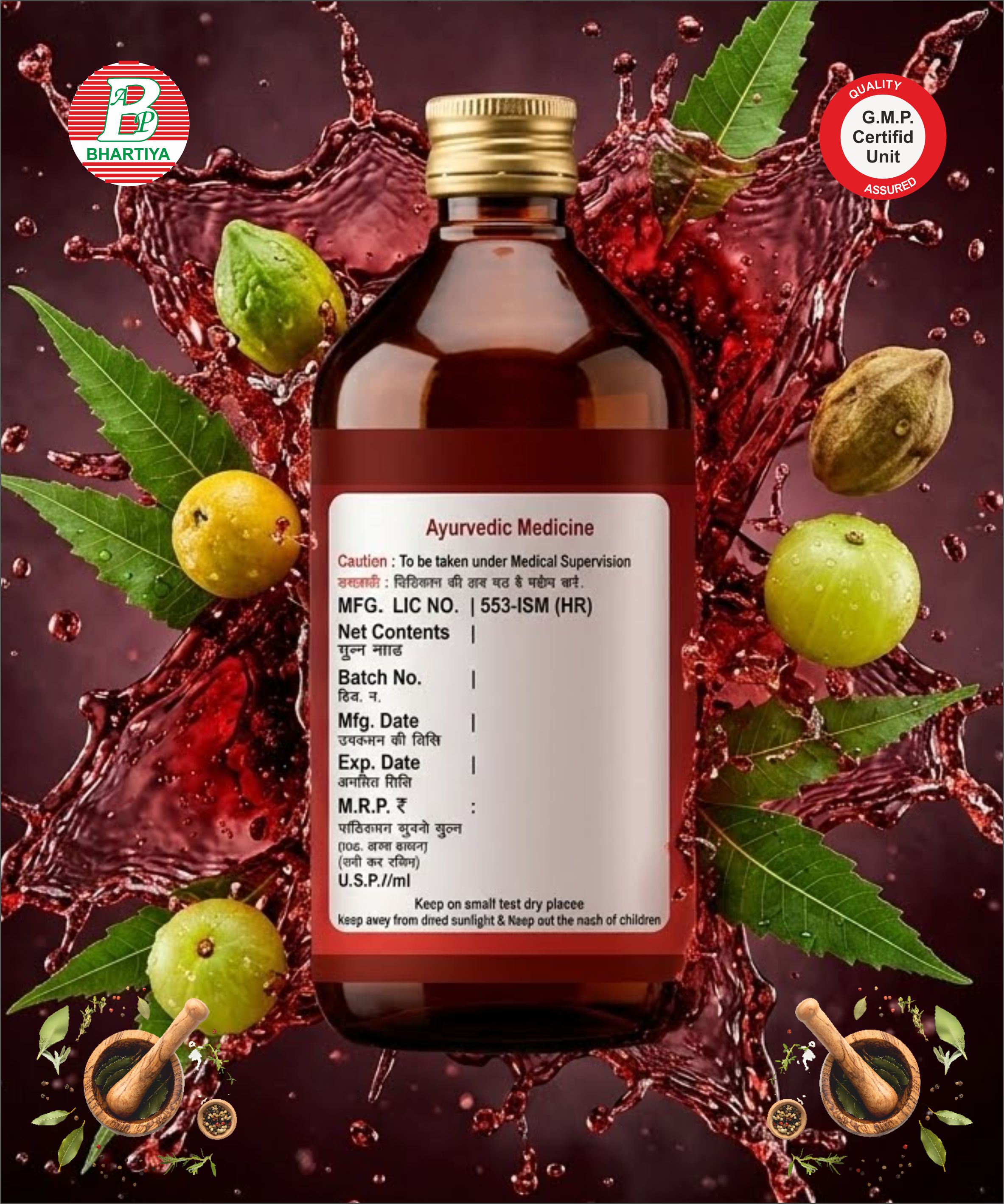
Rohitkarishta
Description
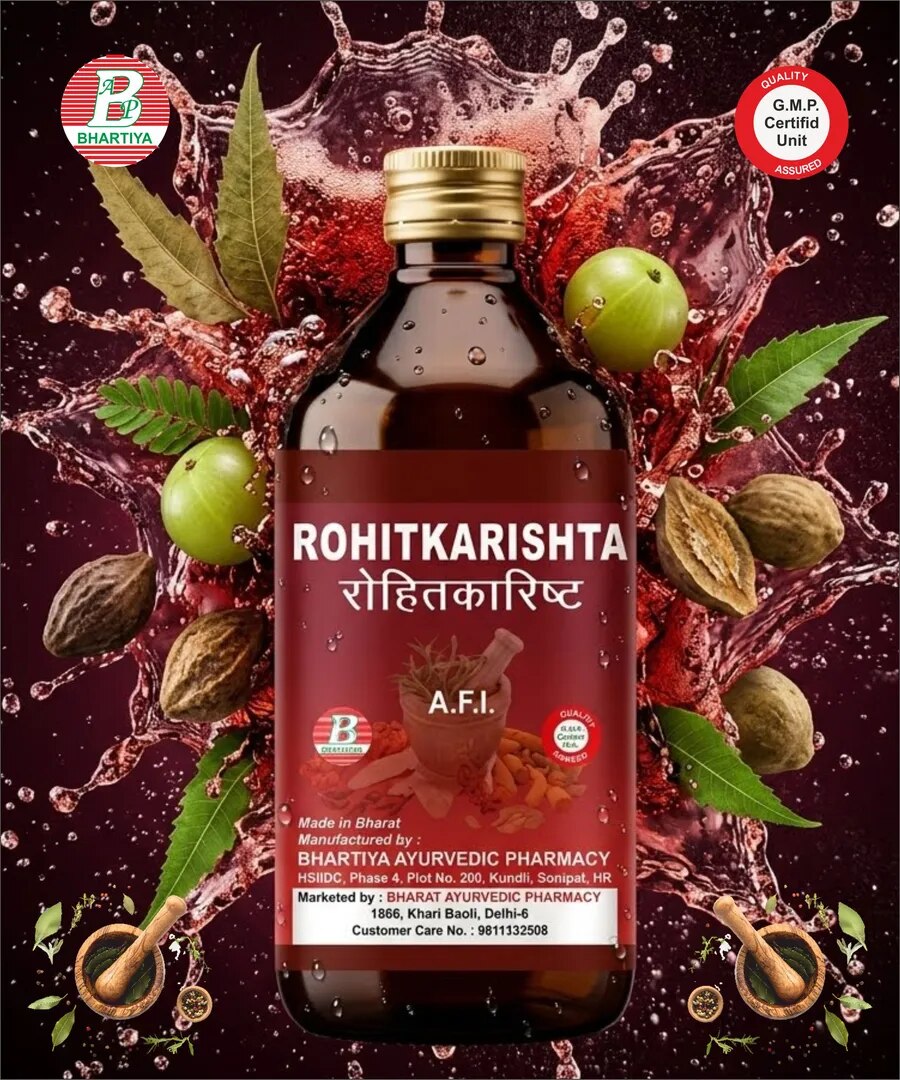
ROHITAKARISHTA
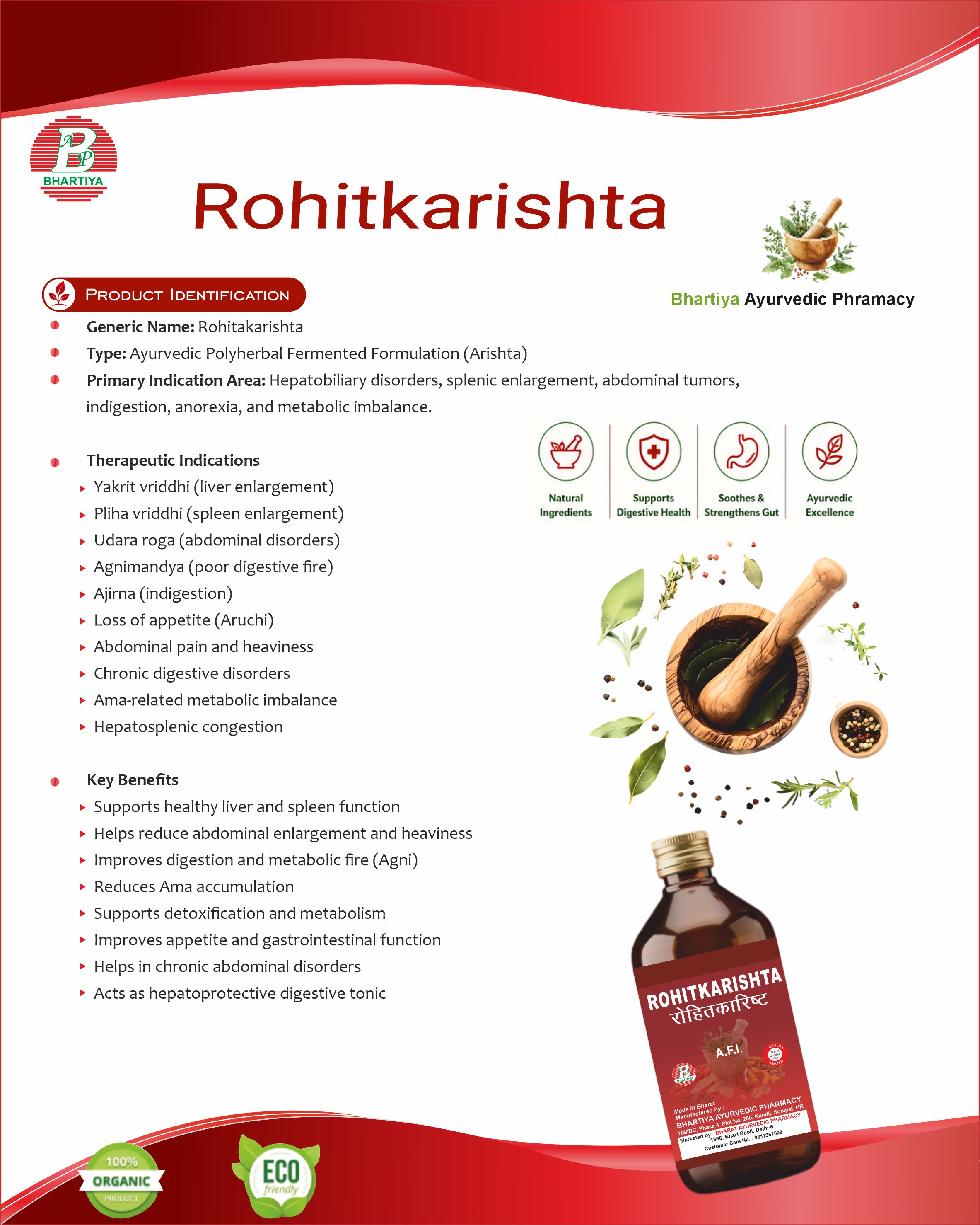
Product Identification
Generic Name: Rohitakarishta
Type: Ayurvedic Polyherbal Fermented Formulation (Arishta)
Primary Indication Area: Hepatobiliary disorders, splenic enlargement, abdominal tumors, indigestion, anorexia, and metabolic imbalance.
Therapeutic Indications
• Yakrit vriddhi (liver enlargement)
• Pliha vriddhi (spleen enlargement)
• Udara roga (abdominal disorders)
• Agnimandya (poor digestive fire)
• Ajirna (indigestion)
• Loss of appetite (Aruchi)
• Abdominal pain and heaviness
• Chronic digestive disorders
• Ama-related metabolic imbalance
• Hepatosplenic congestion
Key Benefits
• Supports healthy liver and spleen function
• Helps reduce abdominal enlargement and heaviness
• Improves digestion and metabolic fire (Agni)
• Reduces Ama accumulation
• Supports detoxification and metabolism
• Improves appetite and gastrointestinal function
• Helps in chronic abdominal disorders
• Acts as hepatoprotective digestive tonic
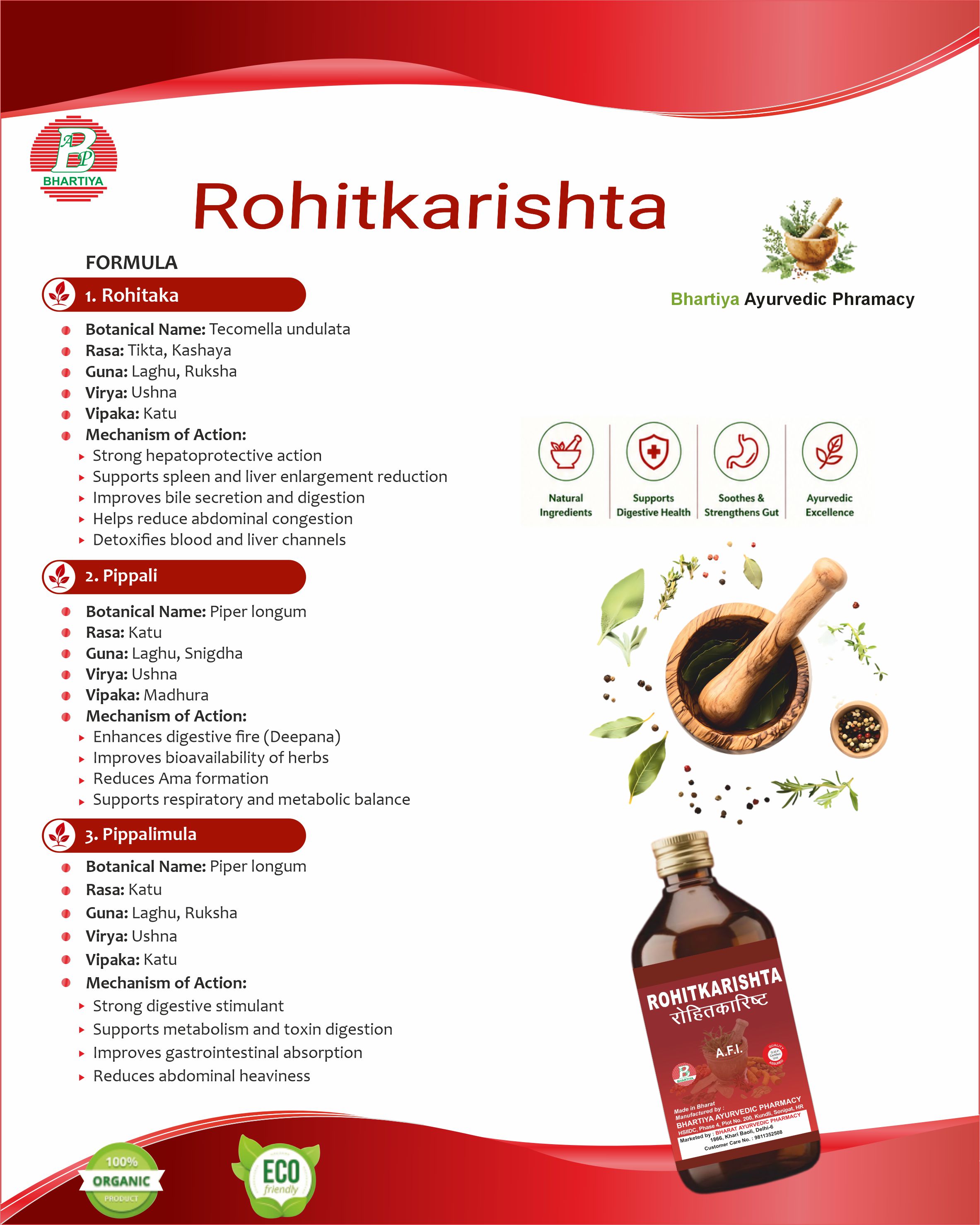
FORMULA
1. Rohitaka
Botanical Name: Tecomella undulata
Rasa: Tikta, Kashaya
Guna: Laghu, Ruksha
Virya: Ushna
Vipaka: Katu
Mechanism of Action:
• Strong hepatoprotective action
• Supports spleen and liver enlargement reduction
• Improves bile secretion and digestion
• Helps reduce abdominal congestion
• Detoxifies blood and liver channels
2. Pippali
Botanical Name: Piper longum
Rasa: Katu
Guna: Laghu, Snigdha
Virya: Ushna
Vipaka: Madhura
Mechanism of Action:
• Enhances digestive fire (Deepana)
• Improves bioavailability of herbs
• Reduces Ama formation
• Supports respiratory and metabolic balance
3. Pippalimula
Botanical Name: Piper longum
Rasa: Katu
Guna: Laghu, Ruksha
Virya: Ushna
Vipaka: Katu
Mechanism of Action:
• Strong digestive stimulant
• Supports metabolism and toxin digestion
• Improves gastrointestinal absorption
• Reduces abdominal heaviness
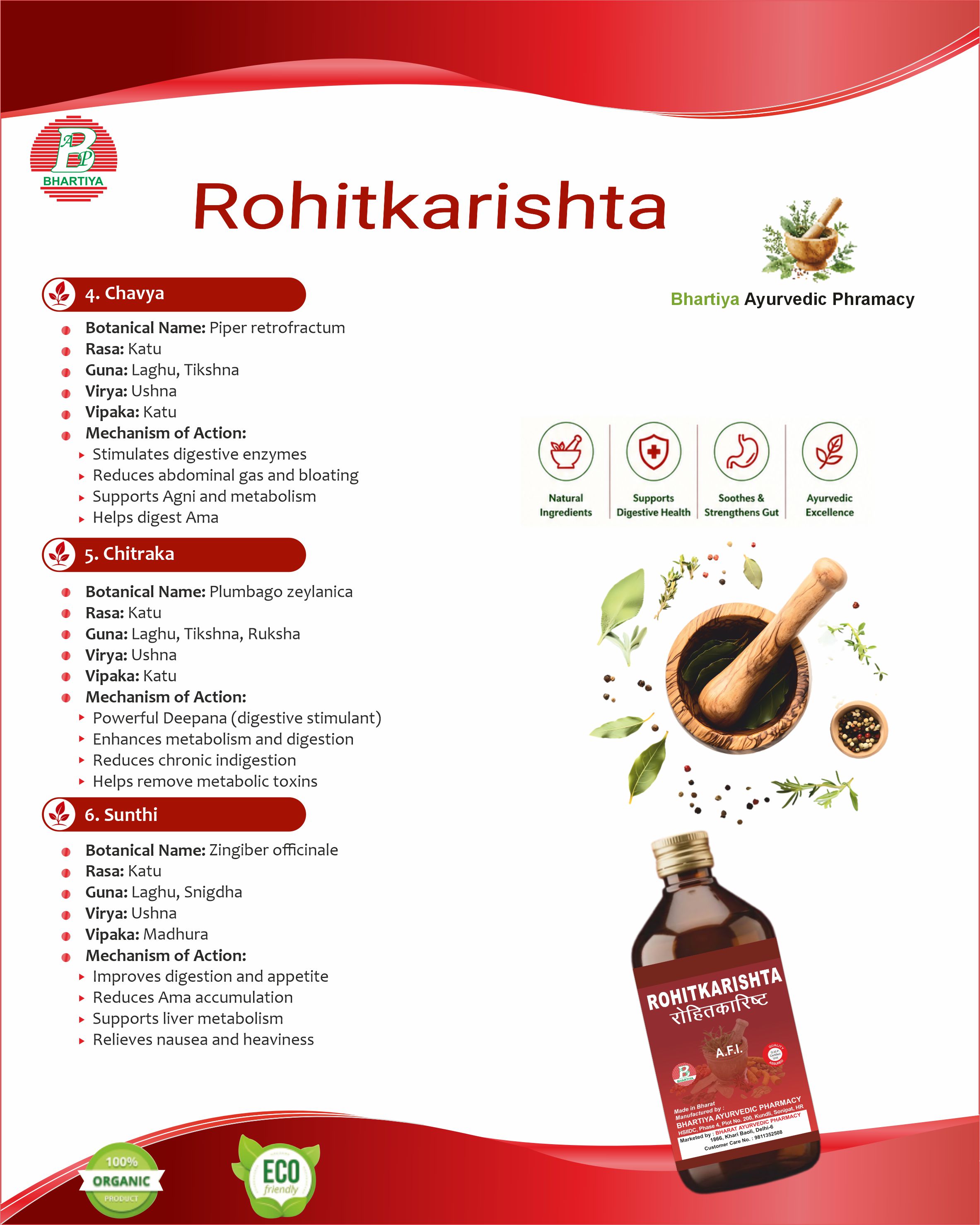
4. Chavya
Botanical Name: Piper retrofractum
Rasa: Katu
Guna: Laghu, Tikshna
Virya: Ushna
Vipaka: Katu
Mechanism of Action:
• Stimulates digestive enzymes
• Reduces abdominal gas and bloating
• Supports Agni and metabolism
• Helps digest Ama
5. Chitraka
Botanical Name: Plumbago zeylanica
Rasa: Katu
Guna: Laghu, Tikshna, Ruksha
Virya: Ushna
Vipaka: Katu
Mechanism of Action:
• Powerful Deepana (digestive stimulant)
• Enhances metabolism and digestion
• Reduces chronic indigestion
• Helps remove metabolic toxins
6. Sunthi
Botanical Name: Zingiber officinale
Rasa: Katu
Guna: Laghu, Snigdha
Virya: Ushna
Vipaka: Madhura
Mechanism of Action:
• Improves digestion and appetite
• Reduces Ama accumulation
• Supports liver metabolism
• Relieves nausea and heaviness
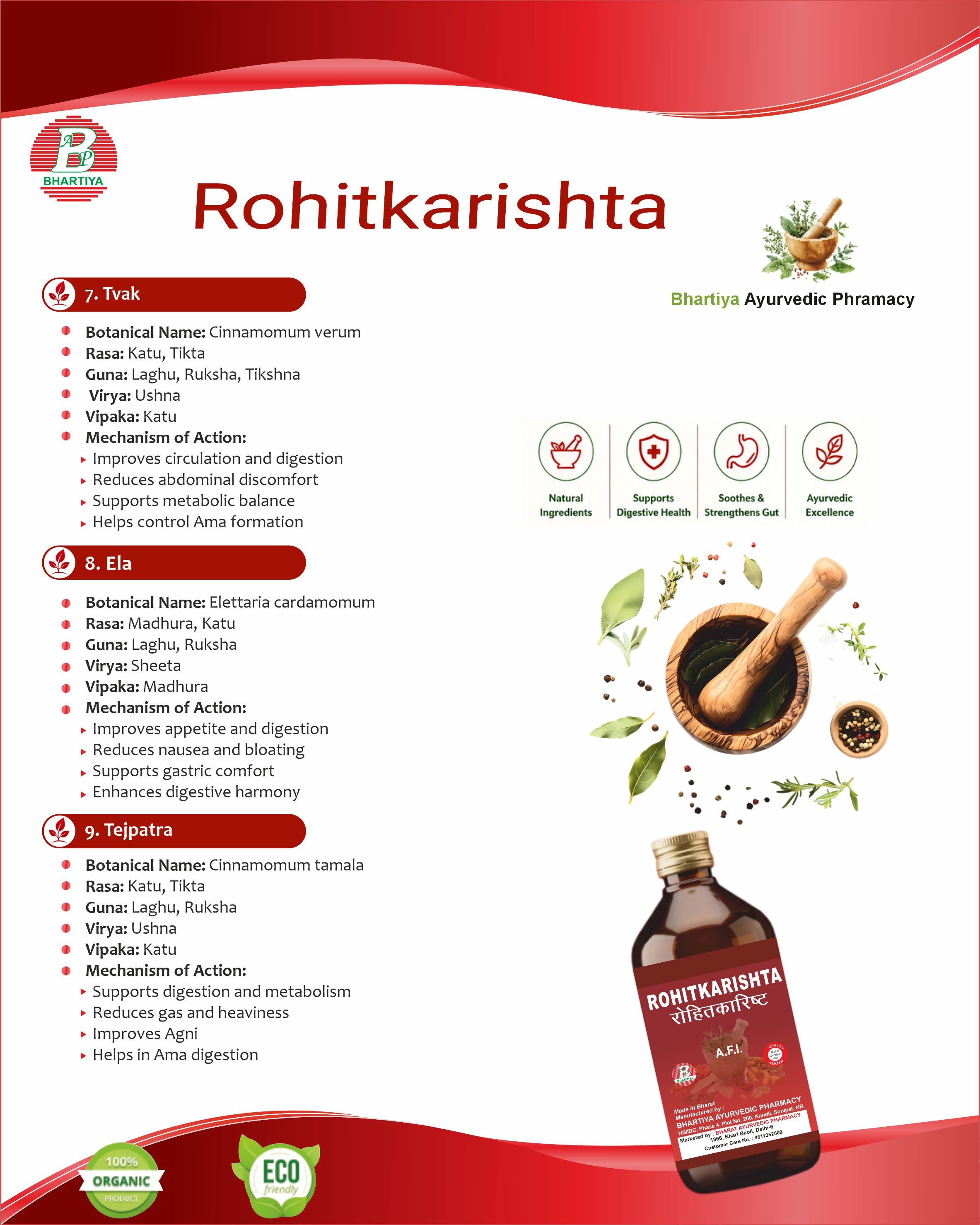
7. Tvak
Botanical Name: Cinnamomum verum
Rasa: Katu, Tikta
Guna: Laghu, Ruksha, Tikshna
Virya: Ushna
Vipaka: Katu
Mechanism of Action:
• Improves circulation and digestion
• Reduces abdominal discomfort
• Supports metabolic balance
• Helps control Ama formation
8. Ela
Botanical Name: Elettaria cardamomum
Rasa: Madhura, Katu
Guna: Laghu, Ruksha
Virya: Sheeta
Vipaka: Madhura
Mechanism of Action:
• Improves appetite and digestion
• Reduces nausea and bloating
• Supports gastric comfort
• Enhances digestive harmony
9. Tejpatra
Botanical Name: Cinnamomum tamala
Rasa: Katu, Tikta
Guna: Laghu, Ruksha
Virya: Ushna
Vipaka: Katu
Mechanism of Action:
• Supports digestion and metabolism
• Reduces gas and heaviness
• Improves Agni
• Helps in Ama digestion
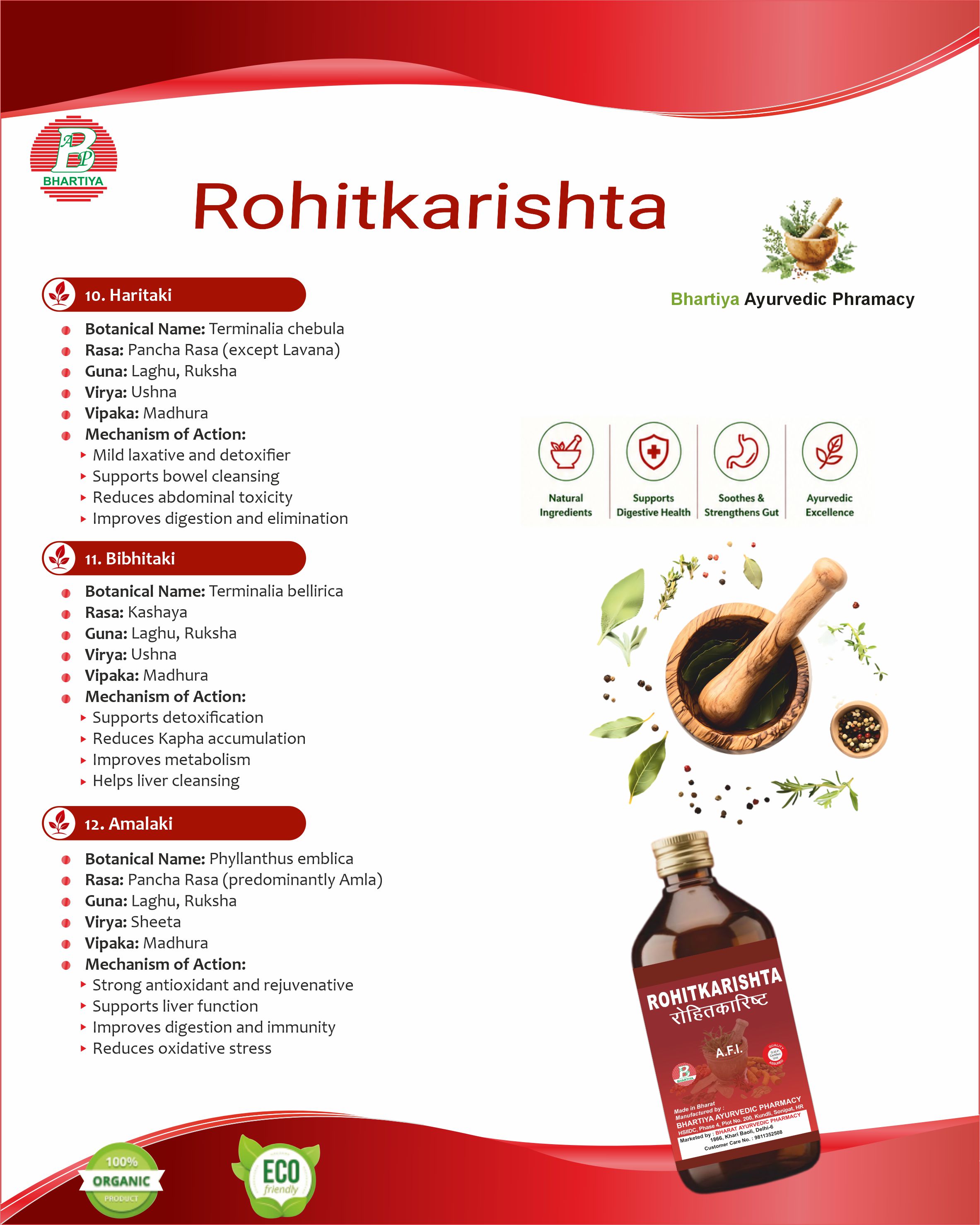
10. Haritaki
Botanical Name: Terminalia chebula
Rasa: Pancha Rasa (except Lavana)
Guna: Laghu, Ruksha
Virya: Ushna
Vipaka: Madhura
Mechanism of Action:
• Mild laxative and detoxifier
• Supports bowel cleansing
• Reduces abdominal toxicity
• Improves digestion and elimination
11. Bibhitaki
Botanical Name: Terminalia bellirica
Rasa: Kashaya
Guna: Laghu, Ruksha
Virya: Ushna
Vipaka: Madhura
Mechanism of Action:
• Supports detoxification
• Reduces Kapha accumulation
• Improves metabolism
• Helps liver cleansing
12. Amalaki
Botanical Name: Phyllanthus emblica
Rasa: Pancha Rasa (predominantly Amla)
Guna: Laghu, Ruksha
Virya: Sheeta
Vipaka: Madhura
Mechanism of Action:
• Strong antioxidant and rejuvenative
• Supports liver function
• Improves digestion and immunity
• Reduces oxidative stress
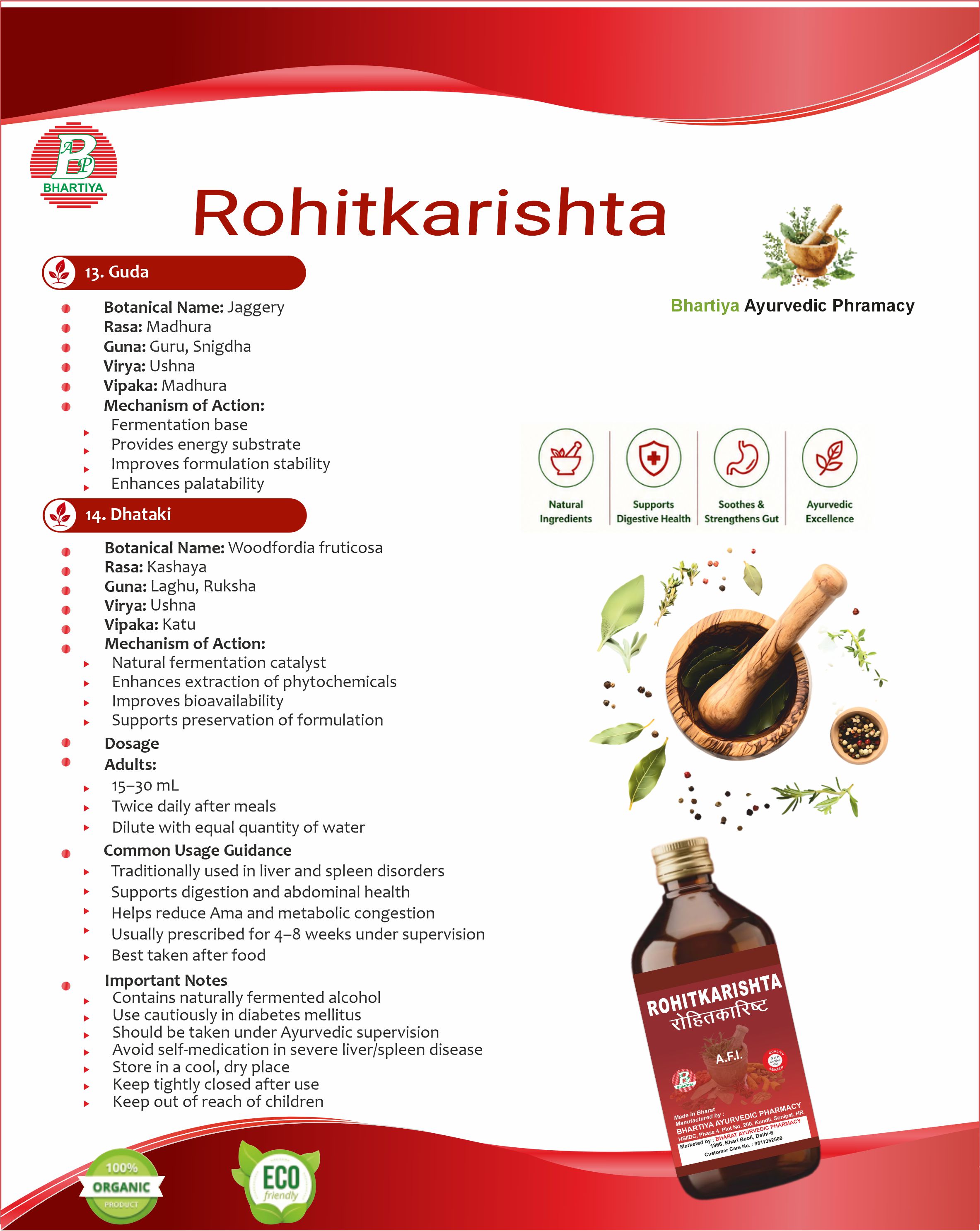
13. Guda
Botanical Name: Jaggery
Rasa: Madhura
Guna: Guru, Snigdha
Virya: Ushna
Vipaka: Madhura
Mechanism of Action:
• Fermentation base
• Provides energy substrate
• Improves formulation stability
• Enhances palatability
14. Dhataki
Botanical Name: Woodfordia fruticosa
Rasa: Kashaya
Guna: Laghu, Ruksha
Virya: Ushna
Vipaka: Katu
Mechanism of Action:
• Natural fermentation catalyst
• Enhances extraction of phytochemicals
• Improves bioavailability
• Supports preservation of formulation
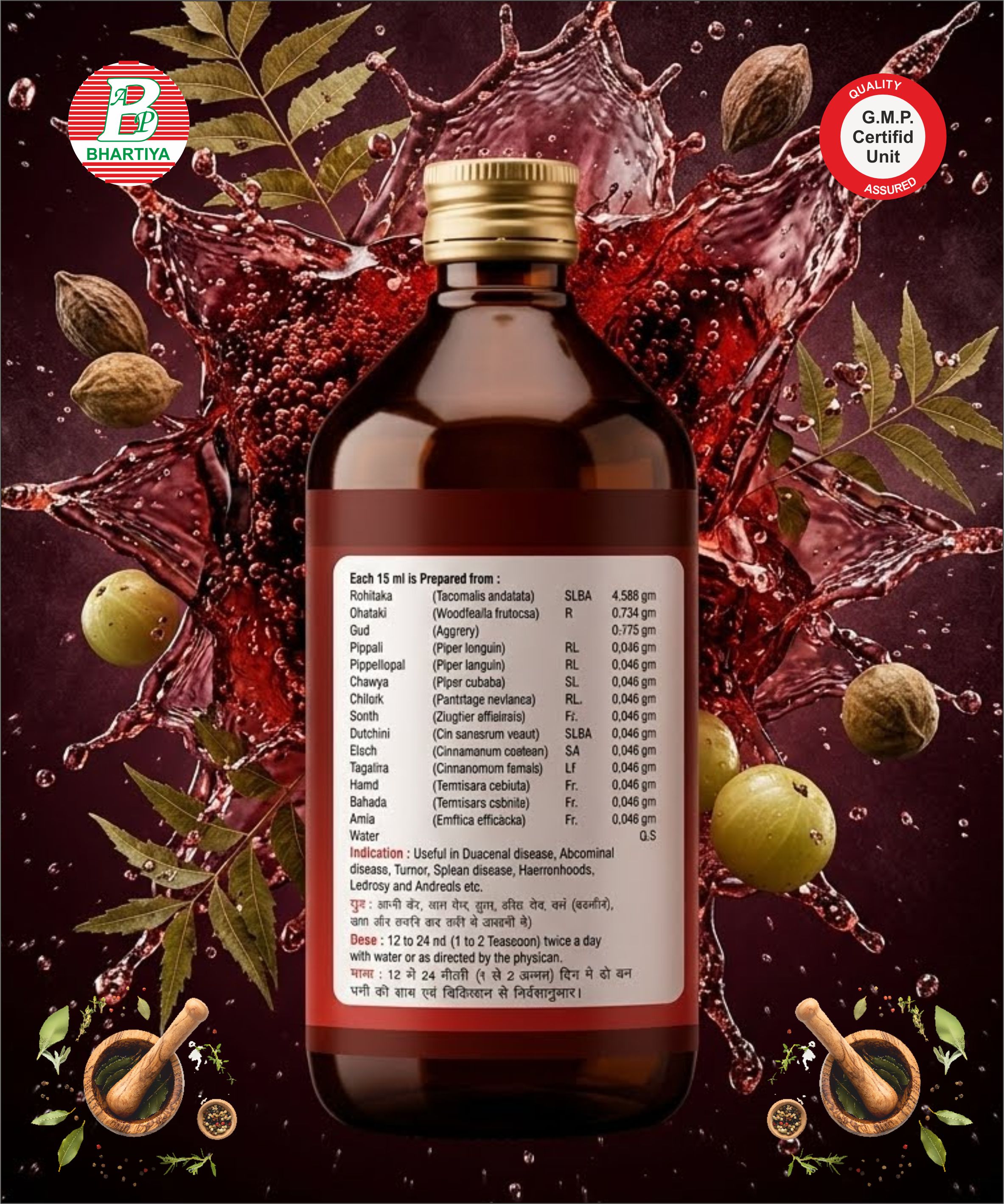
Dosage
Adults:
• 15–30 mL
• Twice daily after meals
• Dilute with equal quantity of water
Common Usage Guidance
• Traditionally used in liver and spleen disorders
• Supports digestion and abdominal health
• Helps reduce Ama and metabolic congestion
• Usually prescribed for 4–8 weeks under supervision
• Best taken after food
Important Notes
• Contains naturally fermented alcohol
• Use cautiously in diabetes mellitus
• Should be taken under Ayurvedic supervision
• Avoid self-medication in severe liver/spleen disease
• Store in a cool, dry place
• Keep tightly closed after use
• Keep out of reach of children