

Description
Product details
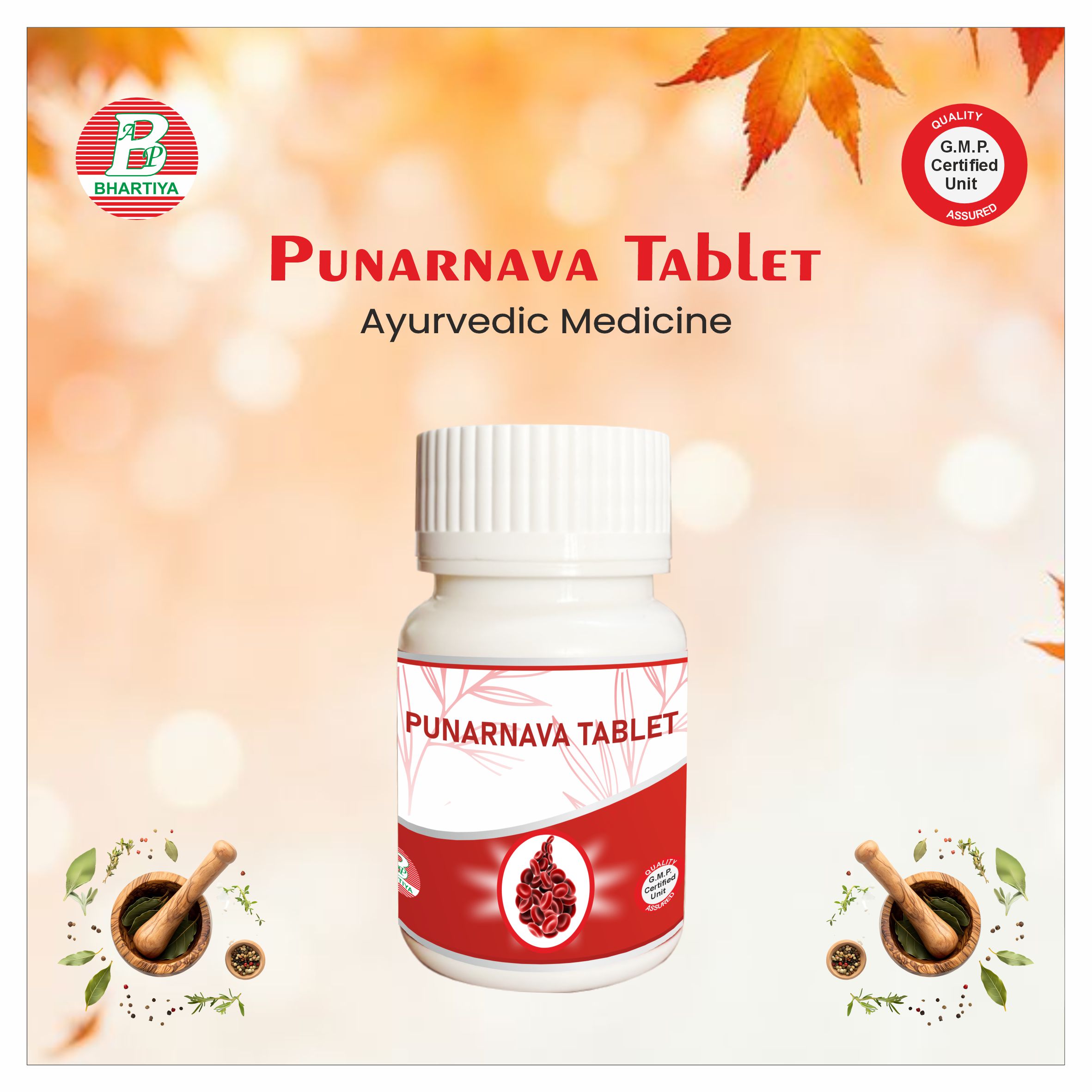
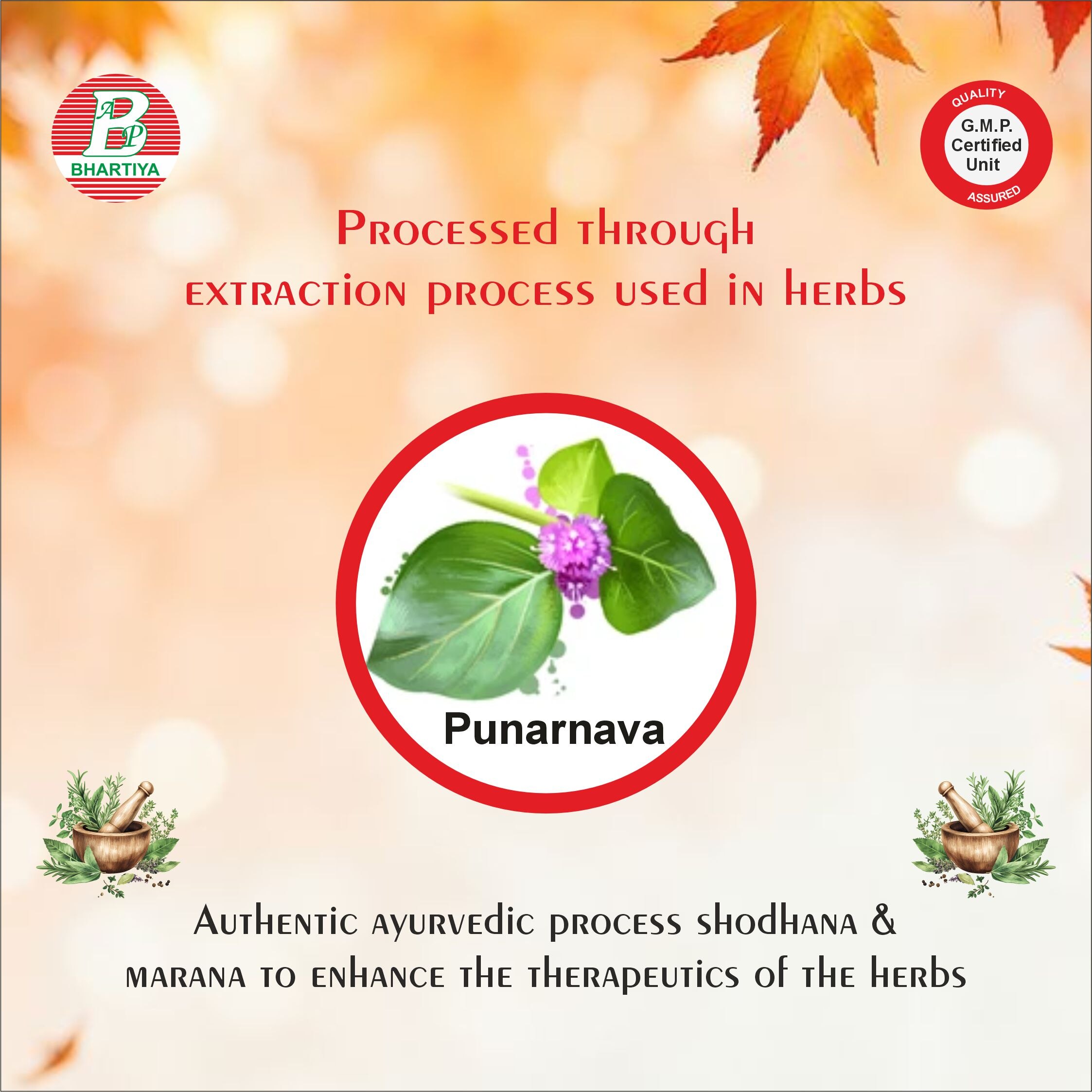
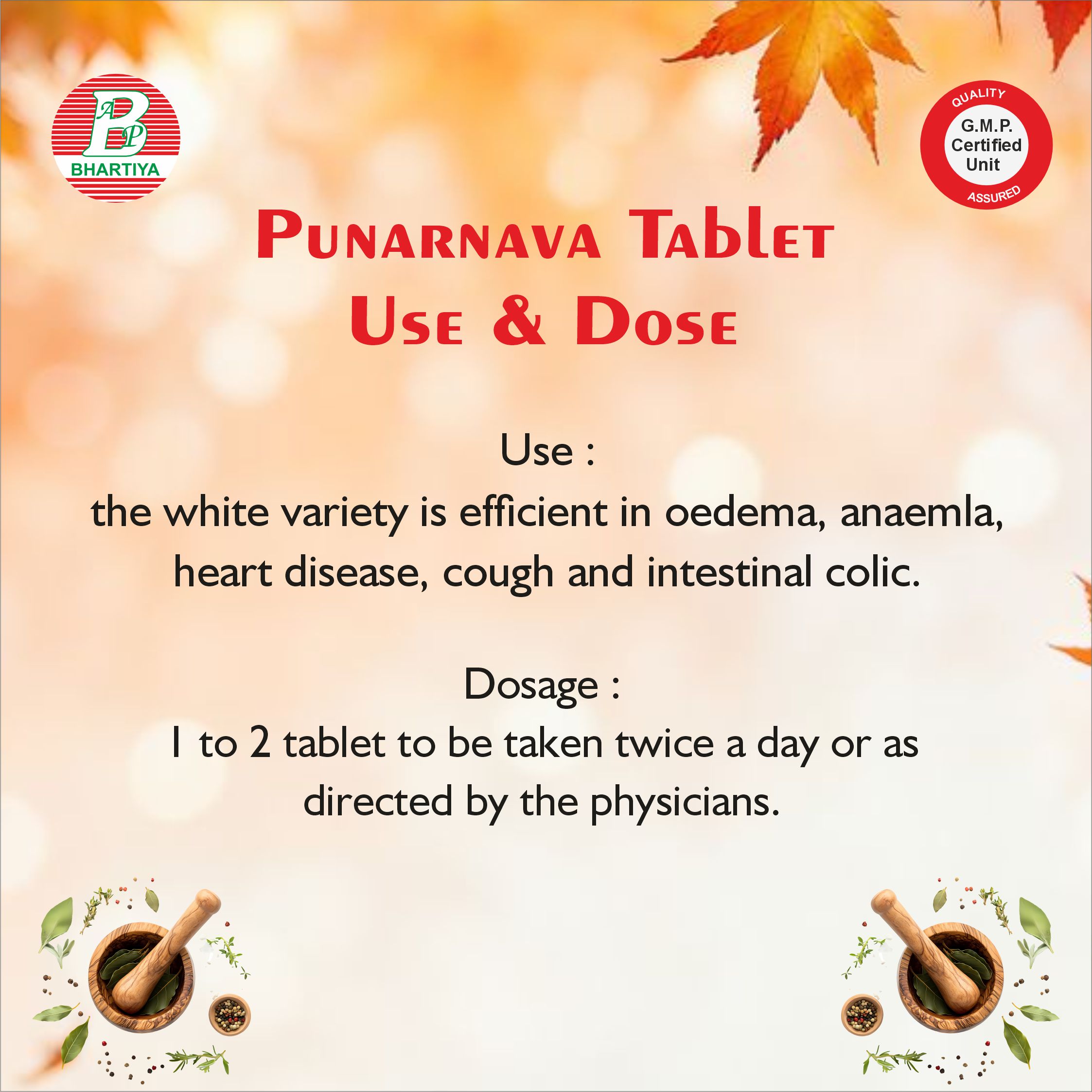
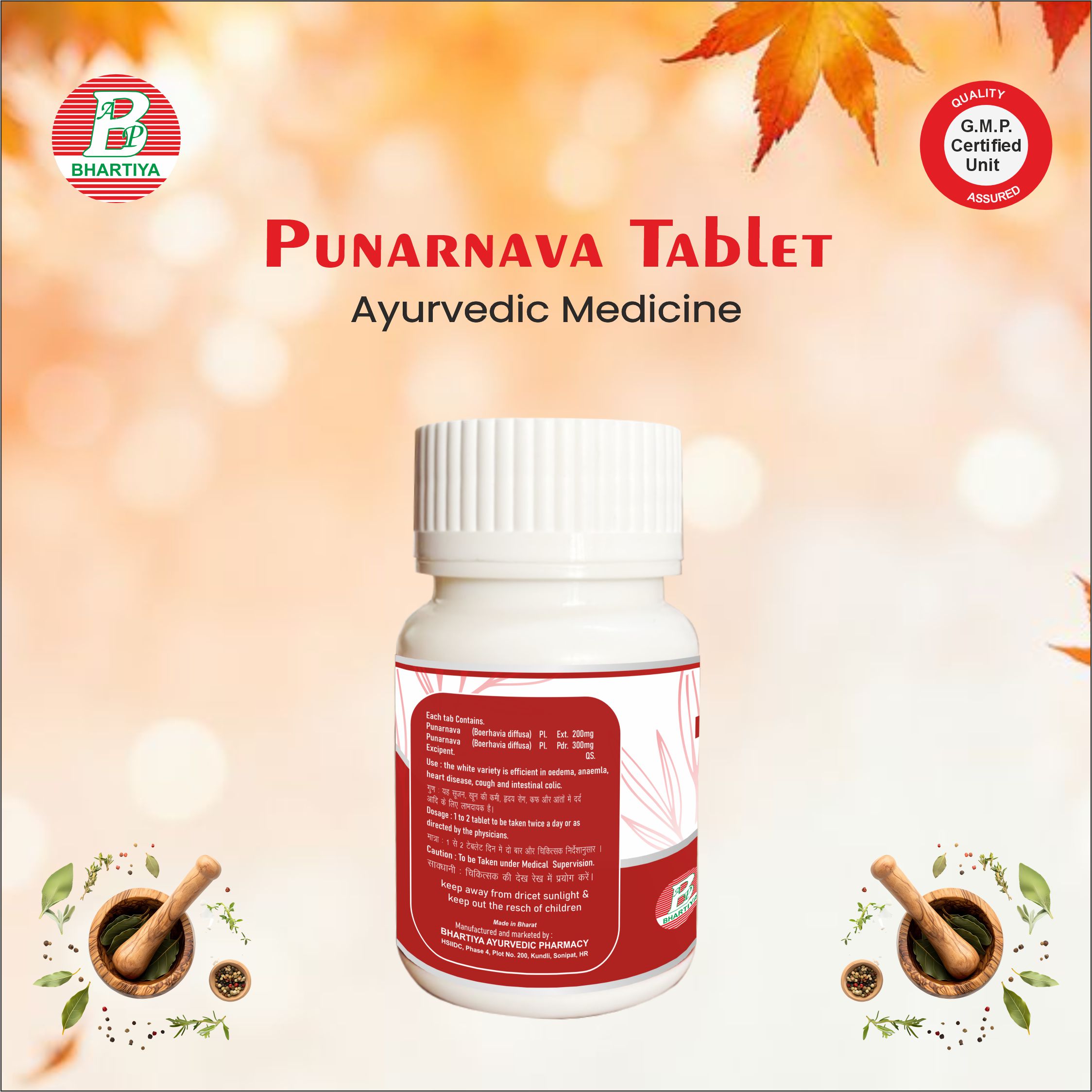
Punarnava (Boerhavia diffusa) The Rejuvenating Herb with Healing Leaves Punarnava is one of the most important rejuvenating herbs in Ayurveda, widely valued for its unique ability to revive and renew the body. The name Punarnava literally means “that which becomes new again”, indicating its powerful regenerative and restorative nature. In Ayurveda, Punarnava is classified as a Mutrala (diuretic), Shothahara (anti-inflammatory), and Rasayana (rejuvenative) drug. It is highly beneficial in managing swelling (oedema), kidney disorders, liver weakness, urinary problems, digestive issues, anaemia, and general debility. Botanical Information of Punarnava Scientific Name: Boerhavia diffusa Linn. Family: Nyctaginaceae Order: Caryophyllales Genus: Boerhavia Species: diffusa Common Names: • Sanskrit: Punarnavā, Shothaghanī, Raktapunarnavā, Śvetapunarnavā, Shreṇī, Shoṭikā • Hindi: Punarnava • English: Spreading Hogweed, Red Spiderling • Tamil: Mookarattai • Telugu: Atika • Malayalam: Thazhuthama • Kannada: Komme beru • Bengali: Punarnava Synonyms of Punarnava (Boerhavia diffusa) in Ayurvedic Nighantus: Bhavaprakasha Nighantu – Shothaghni, Raktapunarnava, Shvetapunarnava, Shoṭikā Raja Nighantu & Kaiyadeva Nighantu – Panchanga, Jalapushpa, Mochana, Bhujanga Hrudaya Nighantu & Dhanvantari Nighantu – Utkalika, Shreni Morphology of Punarnava (Boerhavia diffusa) Plant Type: Perennial, creeping, and spreading herb Stem: • Prostrate or slightly ascending, creeping along the ground • Purplish-green, hairy, with swollen nodes • Roots develop at nodes where the stem touches the soil Leaves: • Simple, opposite arrangement • Shape: Ovate, elliptic, or slightly rounded • Texture: Fleshy and soft • Color: Dark green on the upper surface, pale green below • Petiole: Short Flowers: • Small, tubular, and bisexual • Color: Pink, reddish, or white • Arranged in axillary clusters (cymes) • Bloom mainly during summer and rainy seasons Roots: • Thick, cylindrical, fleshy, and tapering • Color: White in Shveta Punarnava, reddish in Rakta Punarnava • Medicinal part, rich in active constituents Fruits: • Small, ovoid, glandular, and sticky when young • Dark brown at maturity • One-seeded Habit: • Creeping, spreading, fast-growing, regenerates easily • Adapted to drought and poor soil conditions Ecological Preferences of Punarnava • Climate: Thrives in tropical and subtropical climates; tolerates heat and moderate drought. • Soil: Prefers sandy, loamy, or well-drained soils; can grow in poor or degraded soils. • Sunlight: Grows well in full sunlight to partial shade. • Moisture: Requires moderate moisture; can survive dry periods due to its hardy nature. • Altitude: Found at low to medium altitudes, commonly in plains and open areas. • Habitat: Common along roadsides, fields, gardens, wastelands, and riverbanks. • Growth habit: Creeping, spreading, fast-growing, and regenerates easily after adverse conditions. Distribution of Punarnava Geographical Distribution: Punarnava is a widely distributed perennial herb found in tropical and subtropical regions across the world. • India: Found throughout the country in almost all states, particularly in plains, dry regions, roadsides, wastelands, and fields. • Asia: Occurs in Pakistan, Sri Lanka, Bangladesh, Nepal, and Myanmar. • Africa: Common in tropical and subtropical Africa. • Americas: Found in parts of South America and Central America. • Other Regions: Naturalized in various tropical areas worldwide due to its hardy and fast-growing nature Classical Ayurvedic Properties of Punarnava • Rasa (Taste): Tikta (bitter), Kashaya (astringent) • Guna (Qualities): Laghu (light), Ruksha (dry) • Virya (Potency): Ushna (hot) • Vipaka (post-digestive effect): Katu (pungent) • Dosha Effect: Kapha-Vata shamaka (pacifies Kapha and Vata doshas) • Karma (Actions / Therapeutic Effects): o Mutrala: Promotes urination, useful in oedema and urinary disorders o Shothahara: Reduces swelling and inflammation o Yakrit-Pleeha Shodhaka: Supports liver and spleen health o Rasayana: Rejuvenative and revitalizing o Hridya: Supports heart function Therapeutic Actions of Punarnava According to Acharyas 1. Mutrala (Diuretic): o Promotes urine formation, relieves Shotha (edema, ascites, anasarca) o Useful in kidney and urinary disorders 2. Shothahara (Anti-inflammatory / Anti-edema): o Reduces Kapha and Vata-related swelling o Useful in joint swelling, ascites, and edema 3. Yakrit-Pleeha Shodhaka (Hepato-splenic tonic / Detoxifier): o Supports liver and spleen health o Clears stagnation in Rakta and Pitta 4. Rasayana (Rejuvenative / Revitalizing): o Improves strength, vitality, and general health o Enhances immunity and longevity 5. Hridya (Cardio-supportive): o Supports heart function by reducing fluid overload 6. Medohara / Vatashamaka: o Helps in reducing excessive fat (Medo Dhatu) and pacifies Vata dosha in the body References from Acharyas: • Charaka Samhita: Punarnava is Shothaghni, Mutrala, Rasayana • Sushruta Samhita: Shveta and Rakta Punarnava described for Shotha, Mutra, and Yakrit-Pleeha disorders • Bhavaprakasha: Emphasizes anti-edema, diuretic, hepatoprotective, and rejuvenative actions Modern Phytochemistry of Punarnava Punarnava is rich in bioactive compounds responsible for its therapeutic properties. Key phytochemicals identified include: 1. Alkaloids • Punarnavine – major alkaloid, responsible for diuretic and hepatoprotective activity • Boeravinones (A–F) – rotenoid compounds with antioxidant, hepatoprotective, and anti-inflammatory properties 2. Flavonoids • Quercetin, Kaempferol – contribute to antioxidant and anti-inflammatory effects 3. Glycosides • Punarnavoside – responsible for diuretic and anti-edema activity Species of Punarnava (Genus: Boerhavia) The genus Boerhavia (family Nyctaginaceae) includes several species, but Boerhavia diffusa is the most commonly used in Ayurveda. Other species are also recognized botanically for various regional and medicinal uses: 1. Boerhavia diffusa Linn. • Most widely used in Ayurveda • Perennial, creeping, and spreading herb • Known for diuretic, anti-inflammatory, hepatoprotective, and rejuvenative properties 2. Boerhavia erecta L. • Erect or semi-erect habit, less creeping • Found in tropical regions • Used in traditional medicine locally, but less common in classical Ayurveda 3. Boerhavia repens L. • Creeping herb, often used as ground cover • Occasional medicinal use in folk medicine 4. Boerhavia coccinea Mill. • Red-flowered species, creeping habit • Sometimes used in ethnomedicine for fever and inflammation 5. Boerhavia verticillata Willd. • Found in Africa and Asia • Limited medicinal use; occasionally cited in ethnobotanical surveys Cultivation: • Propagation: Primarily by seeds; can also propagate via stem cuttings due to its creeping habit. • Sowing Time: Best sown during the early monsoon or rainy season. • Spacing: Maintain 30–40 cm between plants to allow spreading. • Watering: Requires moderate moisture; drought-tolerant once established. • Fertilization: Responds well to organic manure or compost, though hardy enough to grow in poor soils. • Harvesting: Roots, stems, and leaves are harvested after 3–4 months of growth, depending on medicinal use. • Ecological Note: Acts as a pioneer plant, stabilizing soil and growing in degraded lands. Classical Dosage of Punarnava in Granthas 1. Charaka Samhita Form: Root or whole plant powder (Churna), decoction (Kwatha) Dose: 3–6 grams of powder; 40–60 ml of decoction, 2–3 times daily Uses: Shotha (edema), Mutrakriccha (urinary disorders), Rasayana 2. Sushruta Samhita Form: Root, whole plant, or paste Dose: 3–6 grams powder; decoction 40–60 ml; external paste as required Uses: Shotha, Mutra, Yakrit-Pleeha disorders 3. Bhavaprakasha Nighantu Form: Churna, Kwatha, Swarasa (juice) Dose: 3–6 grams Churna; 40–60 ml Kwatha; 20–30 ml Swarasa 1–2 times daily Notes: Shveta Punarnava for urinary issues; Rakta Punarnava for liver and blood disorders 4. Raja Nighantu & Kaiyadeva Nighantu Form: Panchanga (whole plant), decoction, powder Dose: Similar classical dose as above; 3–6 grams for powder, decoction 40–60 ml Therapeutic Use: Shothahara, Mutrala, Rasayana Safety and Precautions of Punarnava Safe in classical dosage. Avoid overdose -caution with strong diuretics. Pregnant Woman- use only under supervision. Classical Ayurvedic Formulations of Punarnava Punarnava is a key ingredient in many classical Ayurvedic preparations for edema, liver disorders, kidney ailments, and rejuvenation. Common formulations include: 1. Punarnavadi Kwatha (Decoction) • Ingredients: Punarnava, Trikatu (Pippali, Maricha, Shunthi), Musta, Haritaki, and other supporting herbs • Action: Diuretic, anti-edema, hepatoprotective, rejuvenative • Indication: Shotha (edema), Ascites, Mutrakriccha (urinary disorders) 2. Punarnavadi Churna (Powder) • Ingredients: Punarnava root, Haritaki, Musta, Chitrak, Shunthi • Action: Supports kidney and liver health, promotes detoxification, reduces swelling • Dose: 3–6 g/day with water or honey 3. Punarnava Swarasa (Juice) • Form: Fresh juice of Punarnava root or whole plant • Action: Diuretic, anti-inflammatory, mild laxative • Dose: 20–30 ml, 1–2 times daily 4. Punarnava Grita or Taila (Medicated Ghee/Oil) • Usage: External application for swelling, inflammation, and joint disorders • Action: Shothahara, soothing, and rejuvenative 5. Compound Formulations • Punarnavadi Kashaya, Punarnavadi Gutika, Punarnavadi Avaleha – used in liver disorders, urinary diseases, edema, and general rejuvenation. Punarnava Formulations by Bhartiya Ayurvedic Pharmacy At Bhartiya Ayurvedic Pharmacy, we prepare a range of Punarnava (Boerhavia diffusa) formulations following classical Ayurvedic methods as described in Charaka Samhita, Sushruta Samhita, Bhav Prakash Nighantu, and other Ayurvedic Granthas. Each product is crafted to retain the therapeutic potency, purity, and efficacy of the herb, ensuring benefits for fluid balance, kidney & liver support, detoxification, and rejuvenation. 1. Punarnava Tablet Description: Punarnava Tablets contain standardized powdered extract of Boerhavia diffusa, providing a convenient dosage form for daily use. Key Actions: • Supports normal urinary output and reduces mild water retention • Promotes liver and kidney health • Reduces swelling (Edema) • Beneficial in cough or intestinal colic • It can help lower the blood pressure • Provides general detox and rejuvenation Dosage: • 1–2 tablets twice daily after meals, or as advised by an Ayurvedic practitioner Precautions: • Use under guidance in pregnancy, kidney disorders, or excessive fluid loss • Maintain recommended dosage best punarnava tablet, best punarnava tablets, best time to take punarnava tablets can anyone take punarnava, can i take punarnava daily, how to drink punarnava how to take punarnava tablet, how to take punarnava tablets, how to use punarnava for weight loss, how to use punarnava tablet punarnava plant tablet, punarnava tablet, punarnava tablet ayurvedic punarnava tablet benefits, punarnava tablet benefits in hindi punarnava tablet composition, punarnava tablet dosage punarnava tablet flipkart, punarnava tablet hindi punarnava tablet how to use, punarnava tablet in hindi punarnava tablet ingredients, punarnava tablet kab lena chahiye punarnava tablet kaise khaye, punarnava tablet ke fayde punarnava tablet ke fayde in hindi, punarnava tablet ke labh punarnava tablet kya hai, punarnava tablet lene ke fayde punarnava tablet online, punarnava tablet price punarnava tablet quality, punarnava tablet quantity punarnava tablet uses, punarnava tablet uses hindi punarnava tablet uses in hindi, punarnava tablets amazon punarnava tablets benefits, punarnava tablets benefits in hindi punarnava tablets near me, punarnava tablets price in india punarnava tablets reviews, punarnava tablets uses punarnava tablets when to take, what is punarnava tablet