

Description
Product details
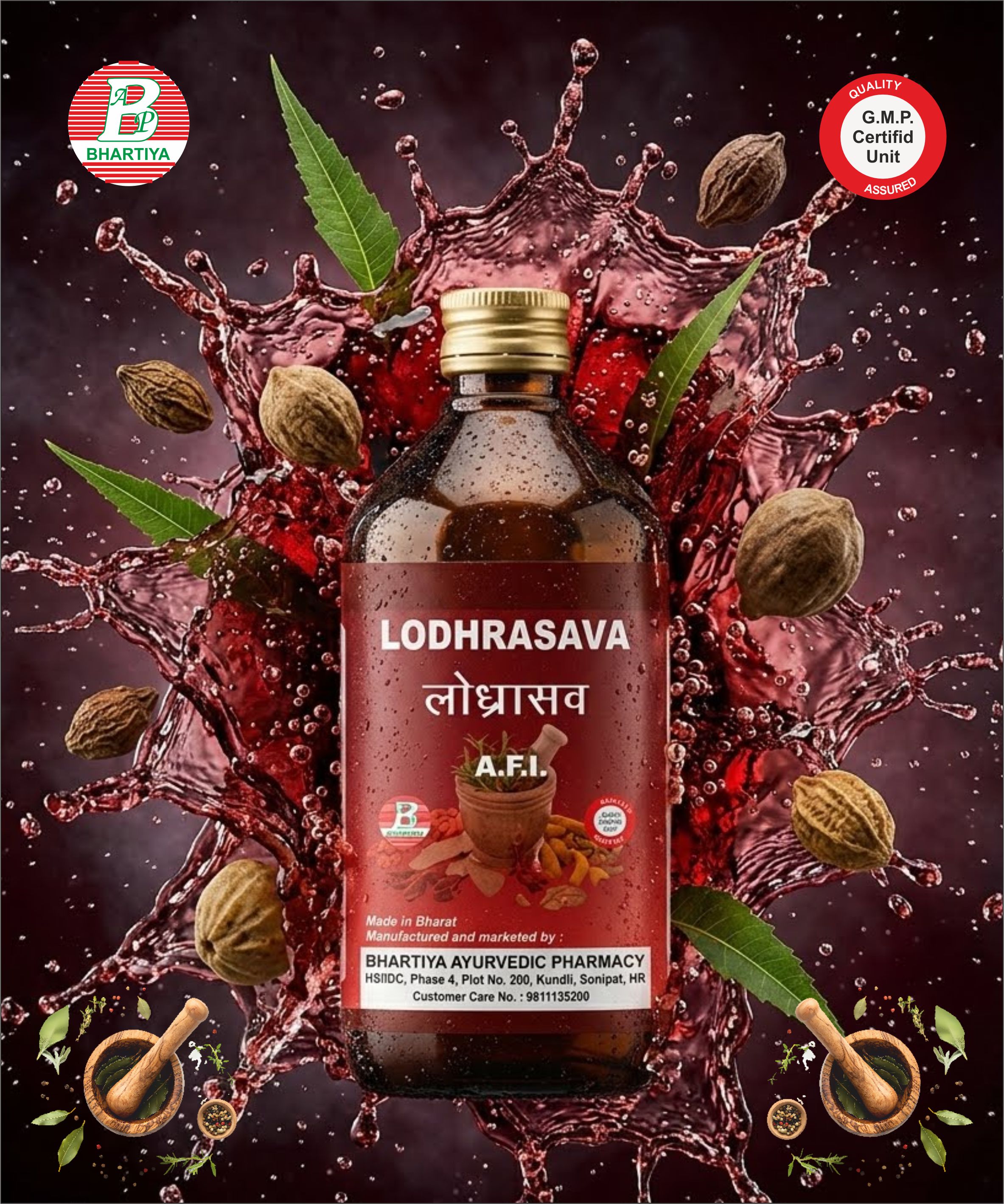
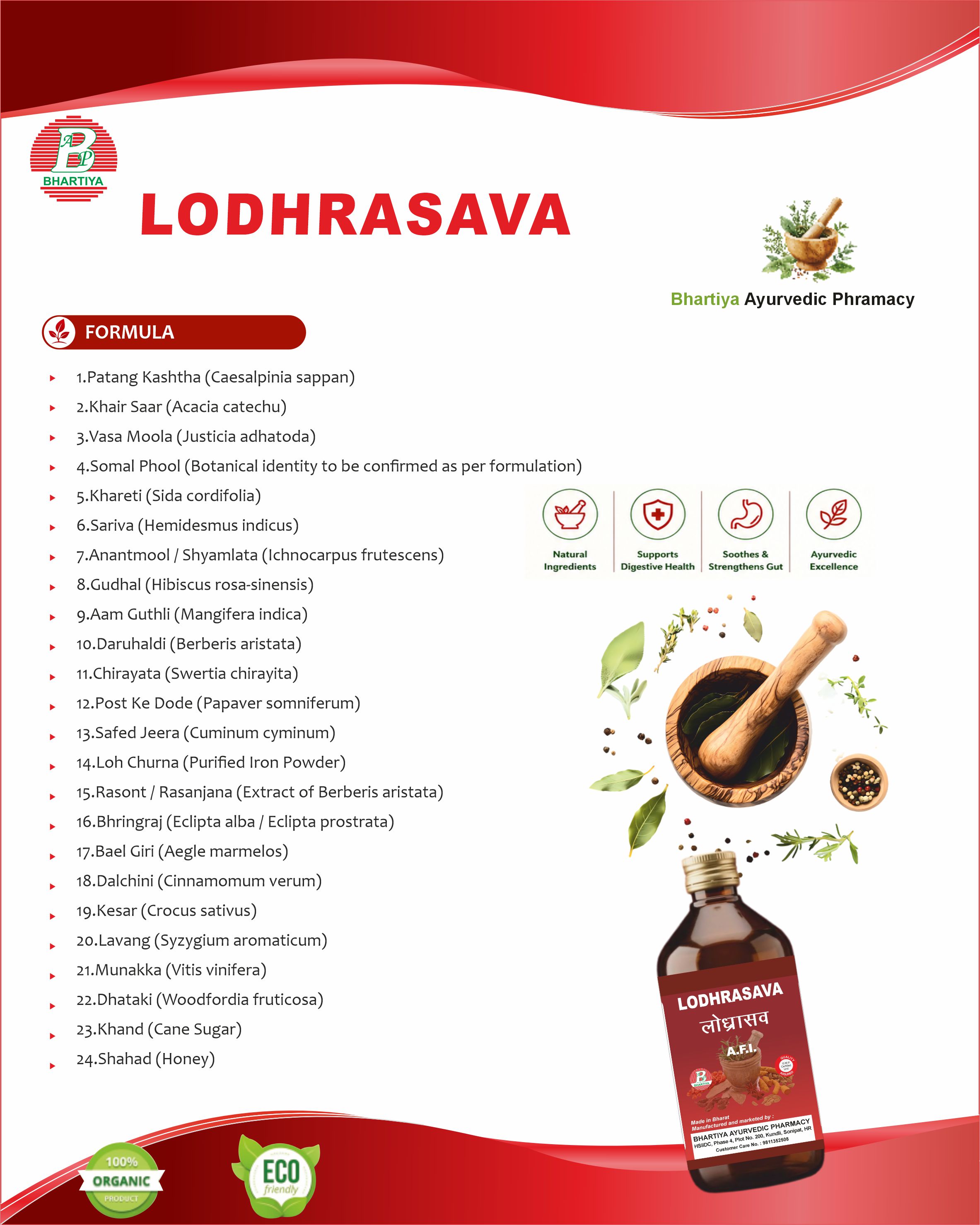
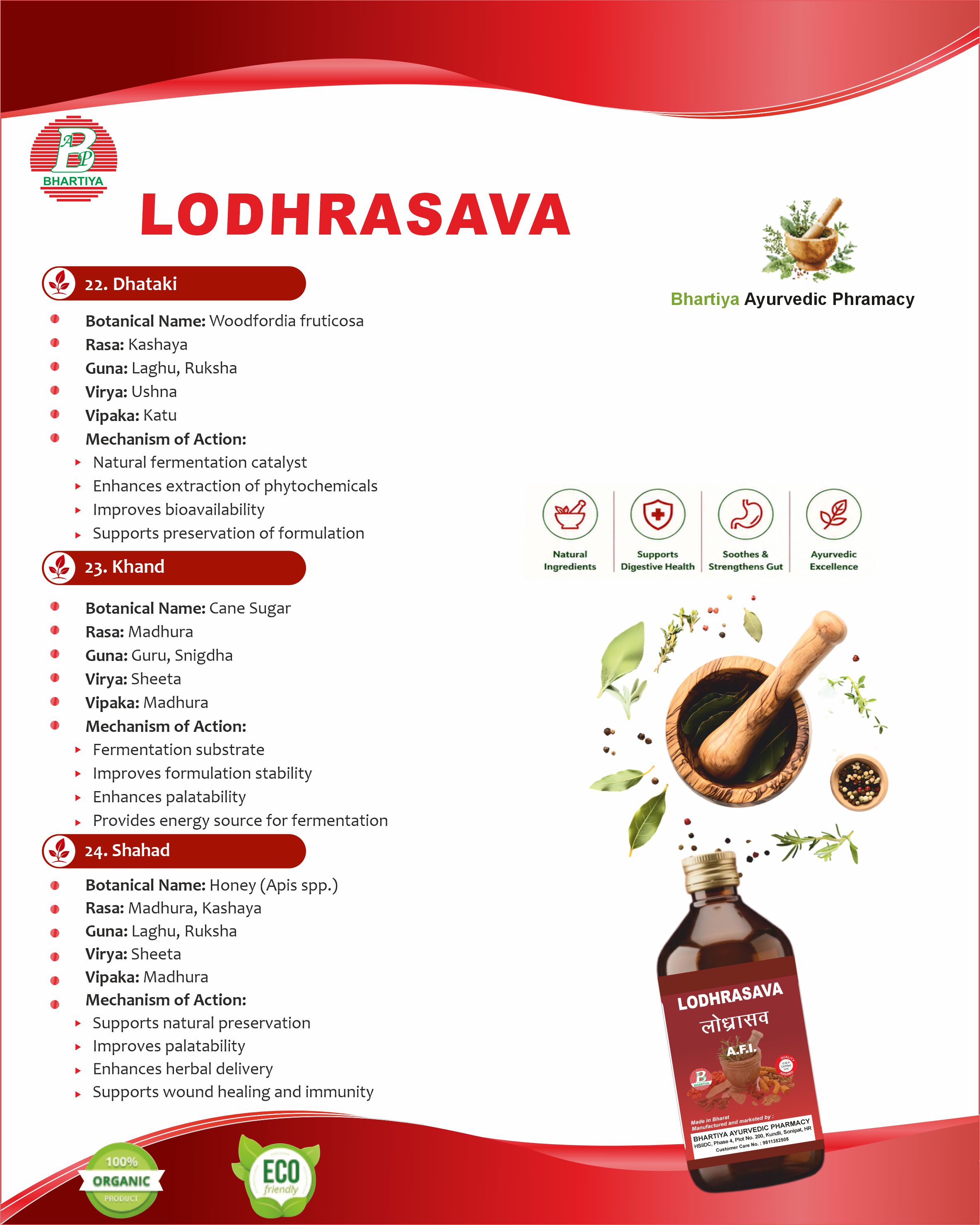
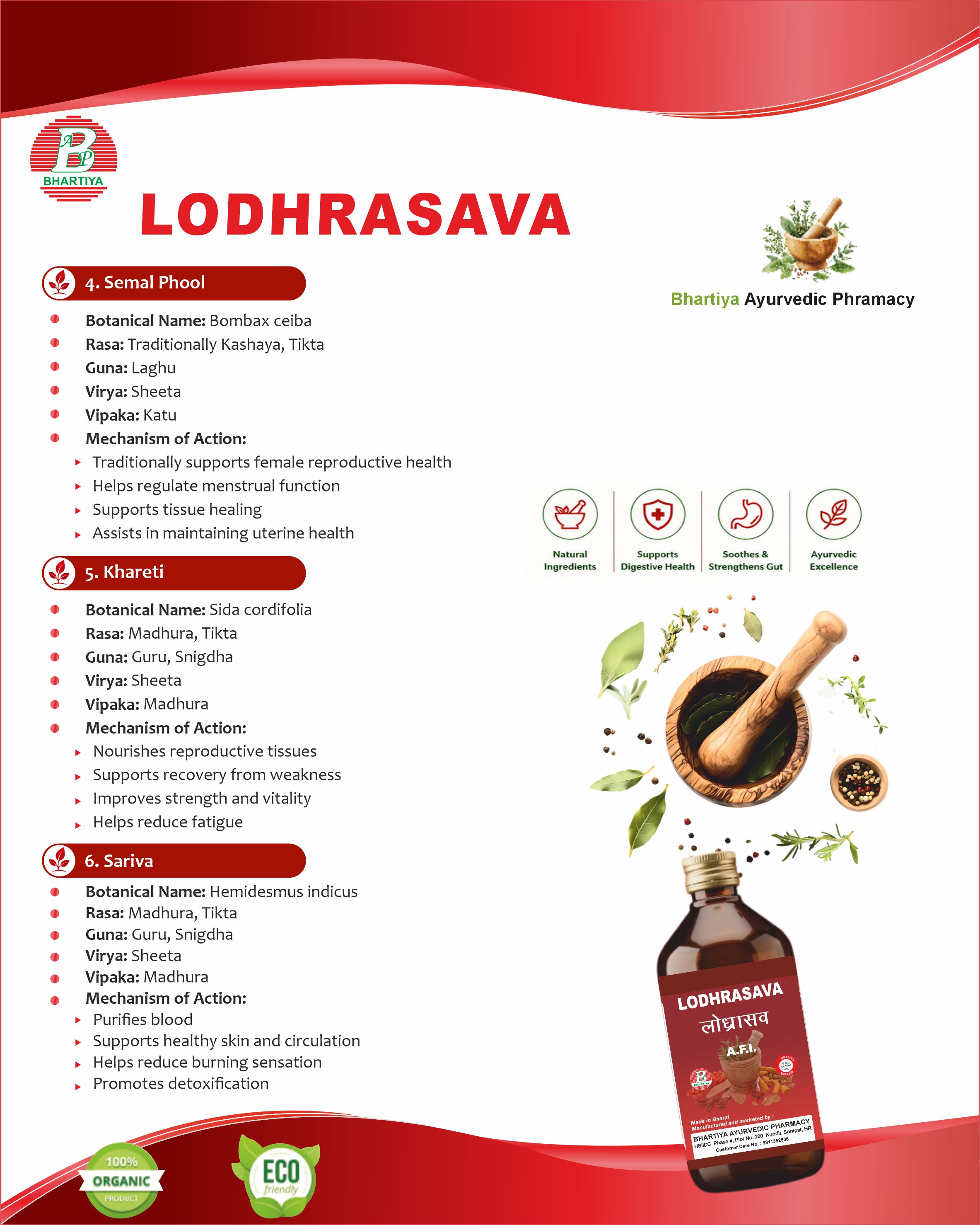
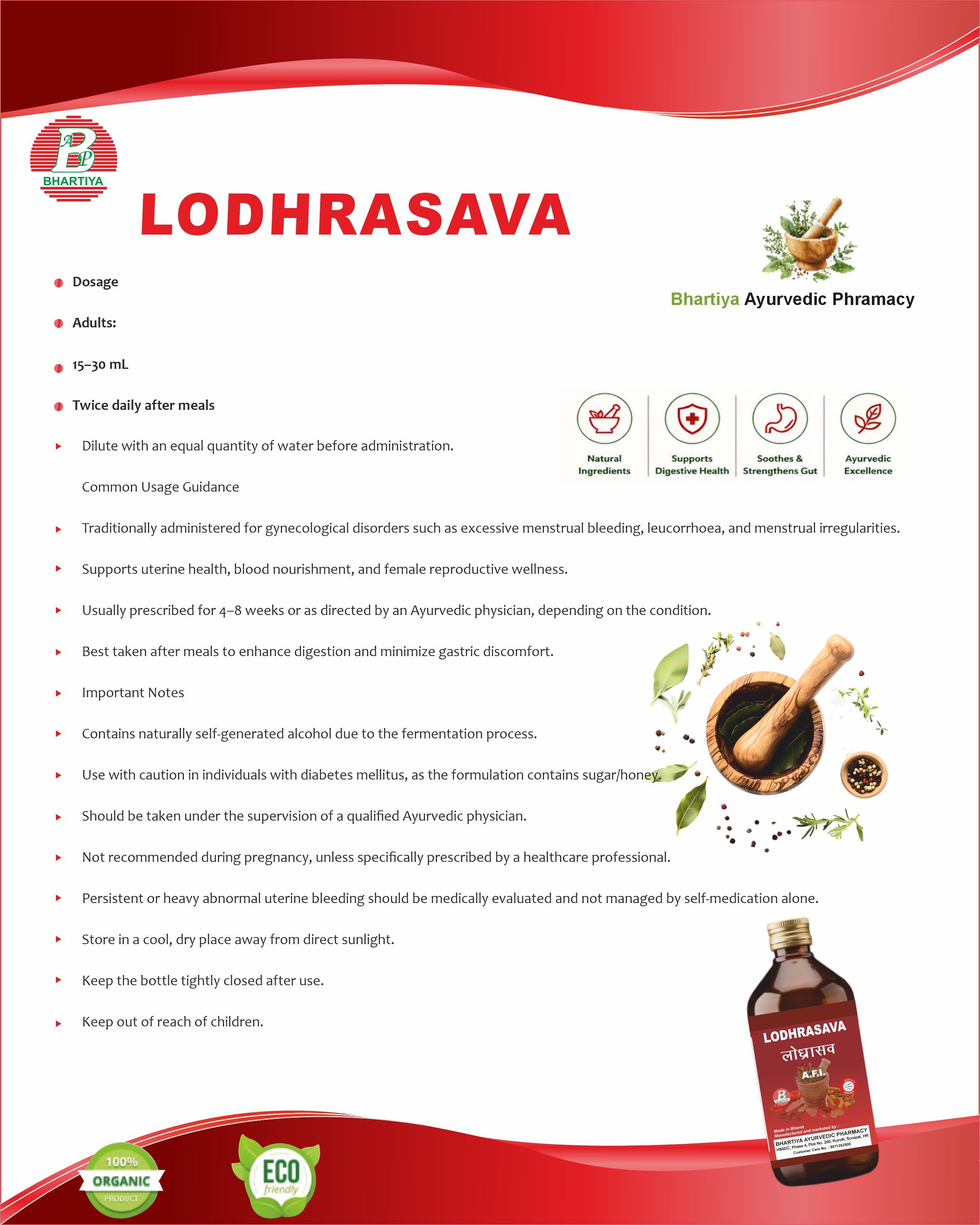
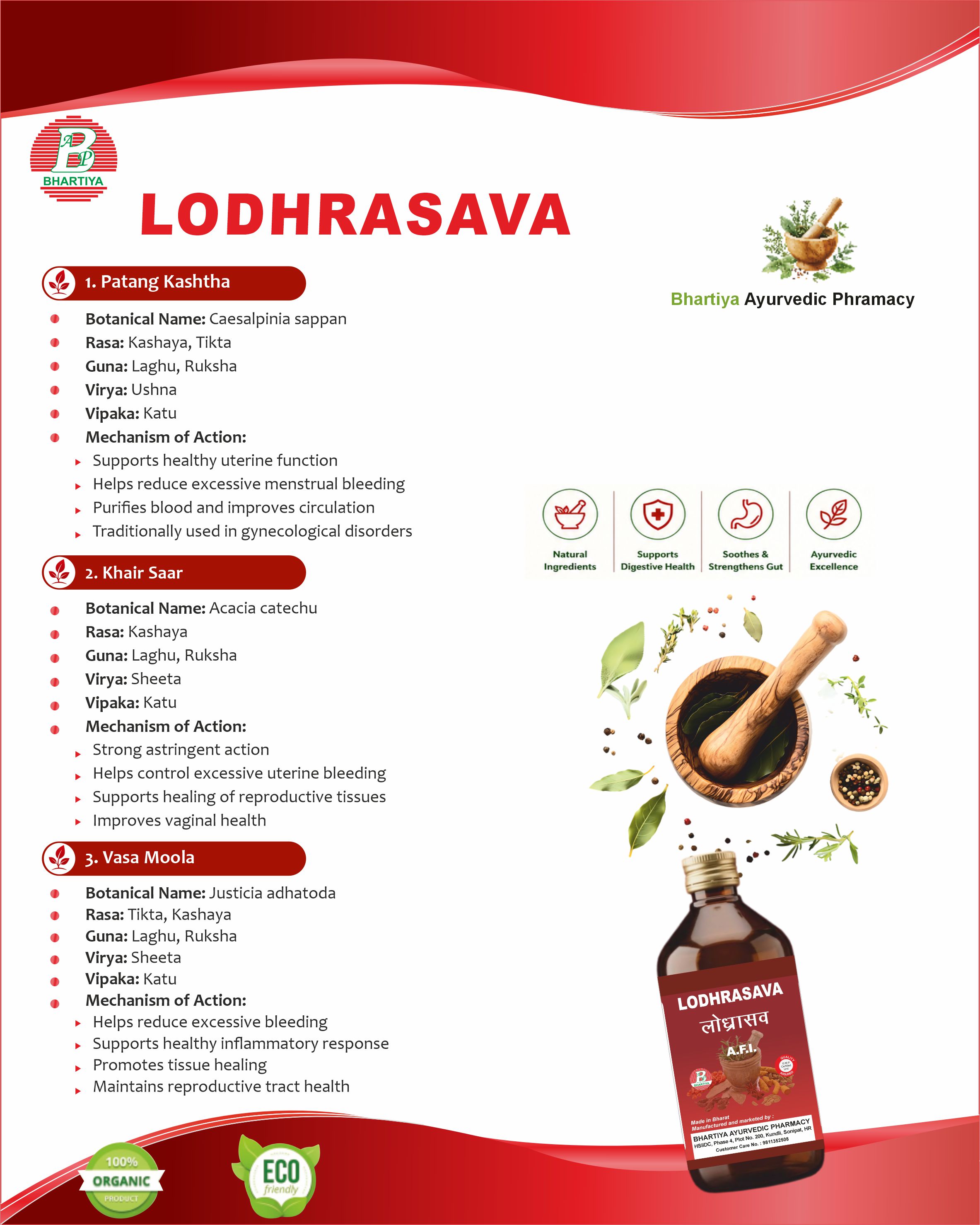
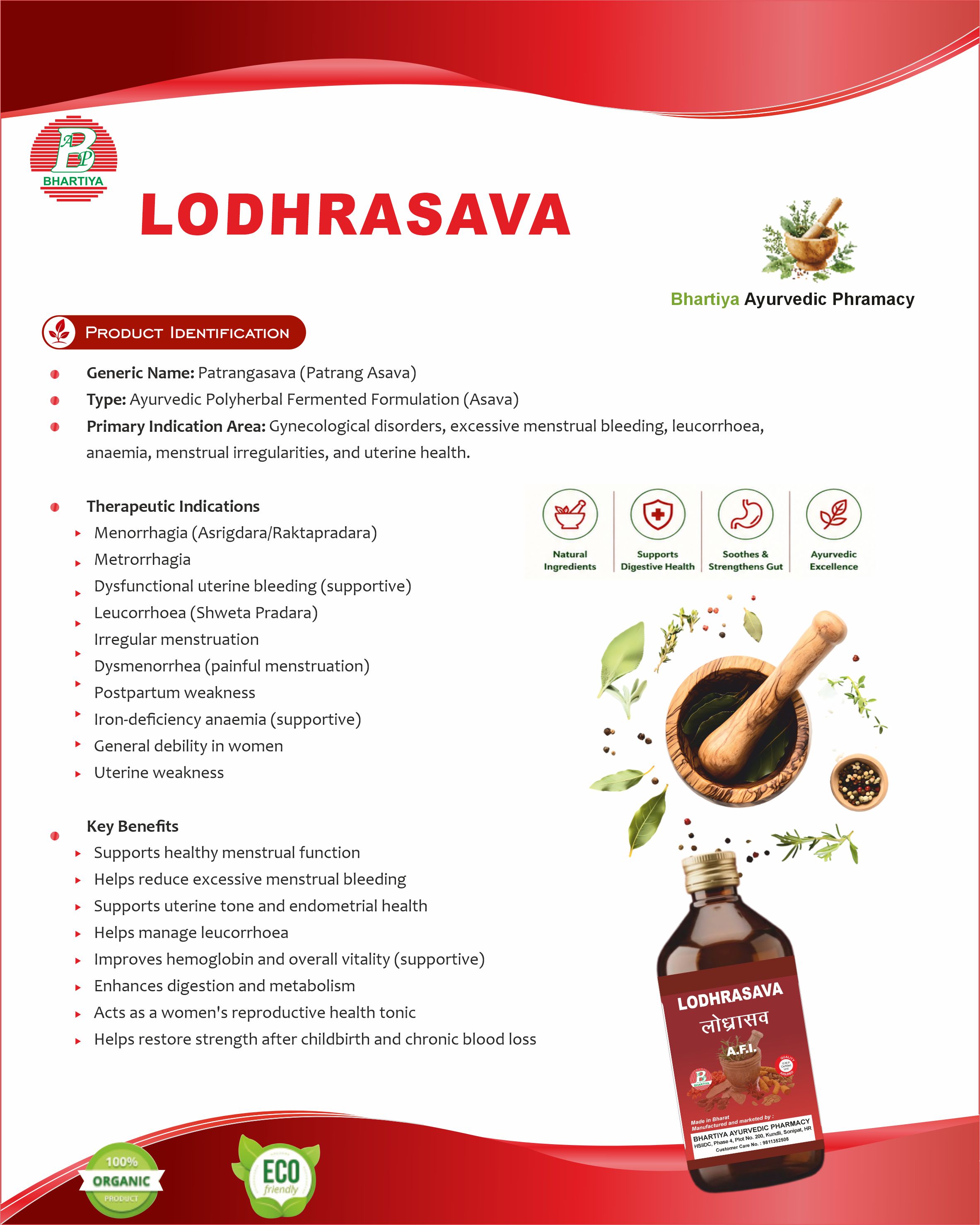
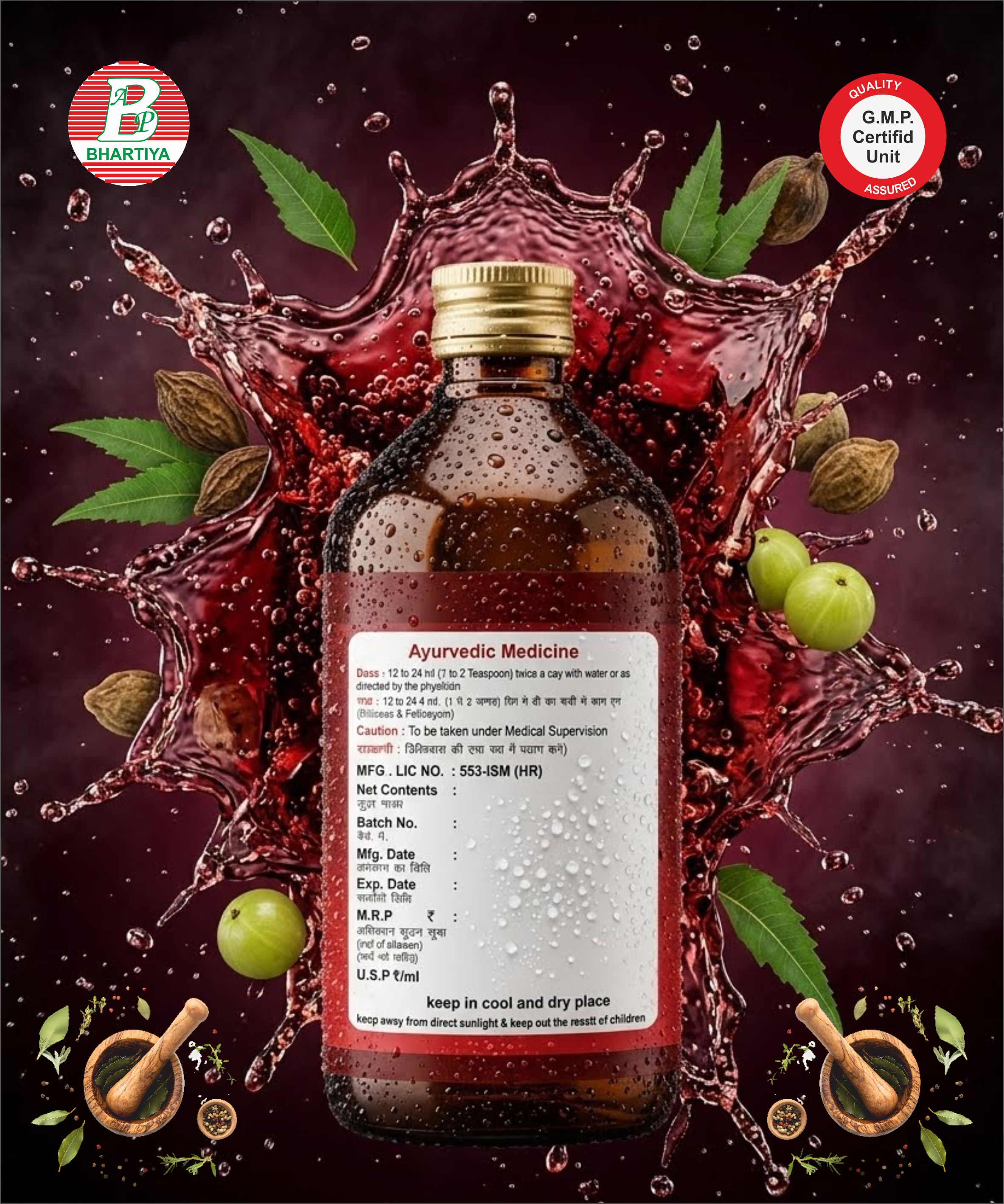
LODHRASAVA Product Identification Generic Name: Lodhrasava Type: Ayurvedic Polyherbal Fermented Formulation (Asava) Primary Indication Area: Women's reproductive health, excessive menstrual bleeding, leucorrhoea, uterine health, post-partum recovery, and gynecological disorders. Therapeutic Indications (Traditional Ayurvedic Uses) Asrigdara (excessive menstrual bleeding) Rakta Pradara (abnormal uterine bleeding) Shweta Pradara (leucorrhoea) Artava Vikara (menstrual disorders) Yonivyapad (gynecological disorders) Garbhashaya Daurbalya (uterine weakness) Post-partum recovery (supportive management) Pelvic weakness associated with reproductive disorders General debility in women associated with chronic blood loss Key Benefits Supports normal menstrual health Helps maintain healthy uterine function Supports reproductive system health Helps reduce excessive vaginal discharge Supports healthy menstrual flow Promotes recovery after childbirth Supports tissue strength and uterine tone according to Ayurvedic principles Provides antioxidant and rejuvenative herbal support Helps improve overall women's wellness FORMULA Main Ingredients Lodhra (Symplocos racemosa) Dhataki (Woodfordia fruticosa) Haritaki (Terminalia chebula) Bibhitaki (Terminalia bellirica) Amalaki (Phyllanthus emblica) Musta (Cyperus rotundus) Patha (Cissampelos pareira) Vasa (Justicia Adhatoda) Kutaja (Holarrhena antidysenterica) Sweetening and Fermentation Base Jala (Water) Sarkara (Sugar/Jaggery, depending on the classical preparation) Dhataki (Woodfordia fruticosa) Key Ingredient Actions 1. Lodhra Botanical Name: Symplocos racemosa Rasa: Kashaya Guna: Laghu, Ruksha Virya: Sheeta Vipaka: Katu Mechanism of Action Traditionally regarded as an important herb for women's health Supports healthy uterine function Helps maintain normal menstrual flow Supports healthy vaginal tissues Provides antioxidant activity Promotes tissue healing and strengthening 2. Haritaki Botanical Name: Terminalia chebula Rasa: Predominantly Kashaya (all tastes except Lavana) Guna: Laghu, Ruksha Virya: Ushna Vipaka: Madhura Mechanism of Action Supports digestion Promotes bowel regularity Supports nutrient absorption Helps maintain gastrointestinal health Acts as a mild rejuvenative 3. Bibhitaki Botanical Name: Terminalia bellirica Rasa: Kashaya Guna: Laghu, Ruksha Virya: Ushna Vipaka: Madhura Mechanism of Action Supports healthy metabolism Provides antioxidant support Helps maintain tissue health Supports digestive function 4. Amalaki Botanical Name: Phyllanthus emblica Rasa: Predominantly Amla (all tastes except Lavana) Guna: Laghu, Ruksha Virya: Sheeta Vipaka: Madhura Mechanism of Action Rich source of natural antioxidants Supports immune function Helps maintain reproductive health Supports healthy skin Acts as a Rasayana 5. Musta Botanical Name: Cyperus rotundus Rasa: Tikta, Katu, Kashaya Guna: Laghu, Ruksha Virya: Sheeta Vipaka: Katu Mechanism of Action Supports menstrual health Helps maintain digestive balance Supports healthy metabolism Traditionally used for gynecological disorders 6. Patha Botanical Name: Cissampelos pareira Rasa: Tikta, Kashaya Guna: Laghu Virya: Ushna Vipaka: Katu Mechanism of Action Supports female reproductive health Helps maintain healthy uterine function Supports urinary tract health Promotes tissue healing 7. Vasa Botanical Name: Justicia adhatoda Rasa: Tikta, Kashaya Guna: Laghu, Ruksha Virya: Sheeta Vipaka: Katu Mechanism of Action Supports healthy blood circulation Traditionally used in bleeding disorders Provides antioxidant support Supports tissue repair 8. Kutaja Botanical Name: Holarrhena antidysenterica Rasa: Tikta, Kashaya Guna: Laghu, Ruksha Virya: Sheeta Vipaka: Katu Mechanism of Action Supports healthy gastrointestinal function Helps maintain microbial balance Supports tissue healing Provides astringent action 9. Dhataki Botanical Name: Woodfordia fruticosa Rasa: Kashaya Guna: Laghu, Ruksha Virya: Ushna Vipaka: Katu Prabhava: Sandhana Karaka Mechanism of Action Natural fermentation catalyst Enables self-generated alcohol formation Enhances extraction of phytochemicals Improves bioavailability of herbal constituents Supports preservation and shelf stability Maintains quality of the Asava formulation 10. Sarkara (Sugar/Jaggery) Rasa: Madhura Guna: Guru, Snigdha Virya: Sheeta Vipaka: Madhura Mechanism of Action Serves as the fermentation substrate Supports formation of self-generated alcohol Improves palatability Replenishes energy Contributes to stability of the formulation 11. Jala (Water) Mechanism of Action Medium for herbal extraction Solvent for phytochemicals Essential for fermentation Facilitates uniform distribution of active constituents Supports preparation of the Asava formulation Dosage Adults 15–30 mL Twice daily after meals Dilute with an equal quantity of water Common Usage Guidance Traditionally used to support women's reproductive health. Used in Ayurveda to help maintain normal menstrual flow. Supports healthy uterine function and tissue strength. May be used as an adjunct in leucorrhoea, excessive menstrual bleeding, and post-partum recovery under Ayurvedic supervision. Usually prescribed for 4–8 weeks or as directed by an Ayurvedic physician. Best taken after food. Important Notes Contains naturally fermented alcohol. Use cautiously in individuals with diabetes mellitus, as it may contain residual sugars. Should be taken under the supervision of a qualified Ayurvedic practitioner. Consult a healthcare professional before use during pregnancy, breastfeeding, or in individuals with serious medical conditions. Not intended to diagnose, treat, cure, or prevent any disease. Store in a cool, dry place. Keep the bottle tightly closed after use. Keep out of reach of children