
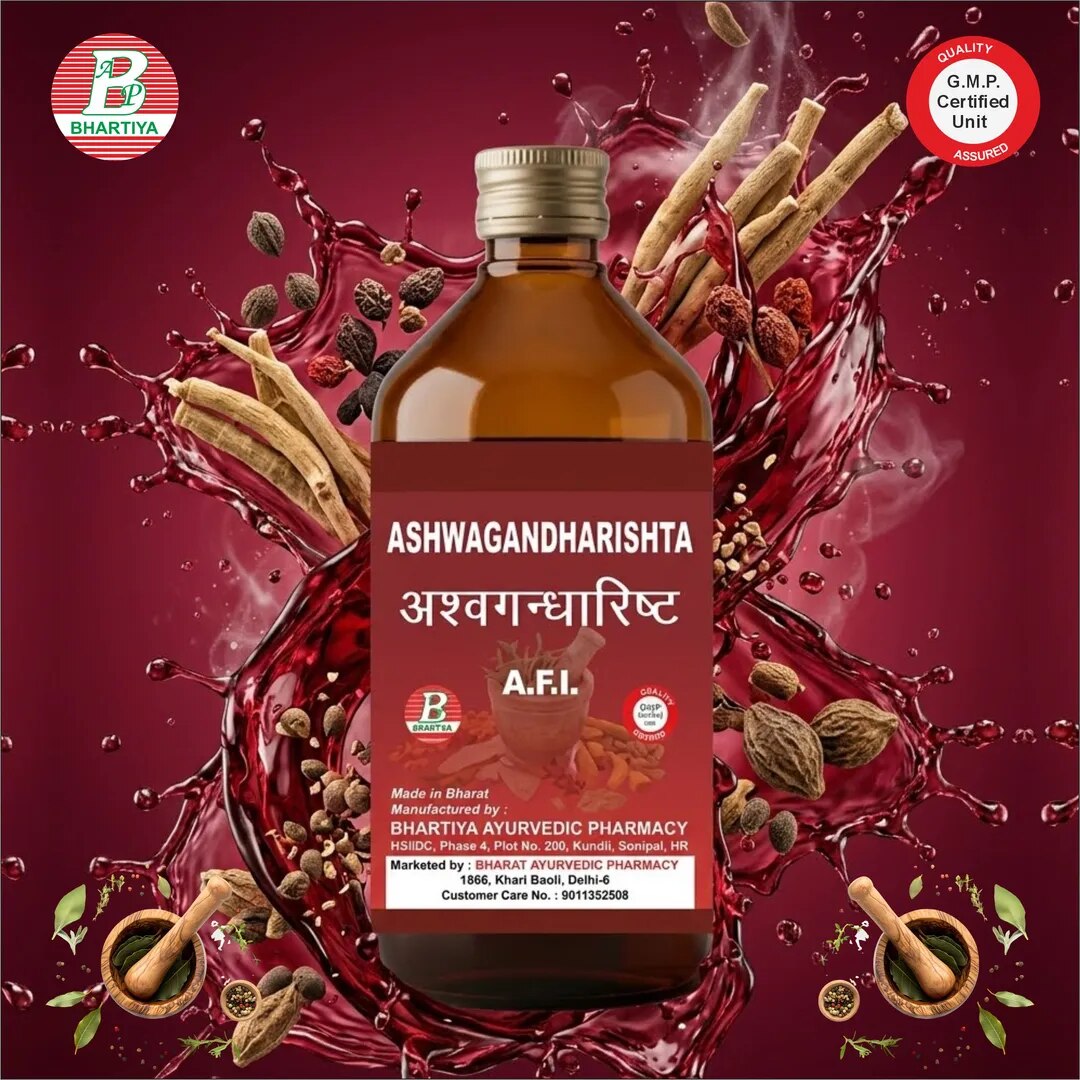
ASHWAGANDHARISHTA
Description
ASHWAGANDHARISHTA
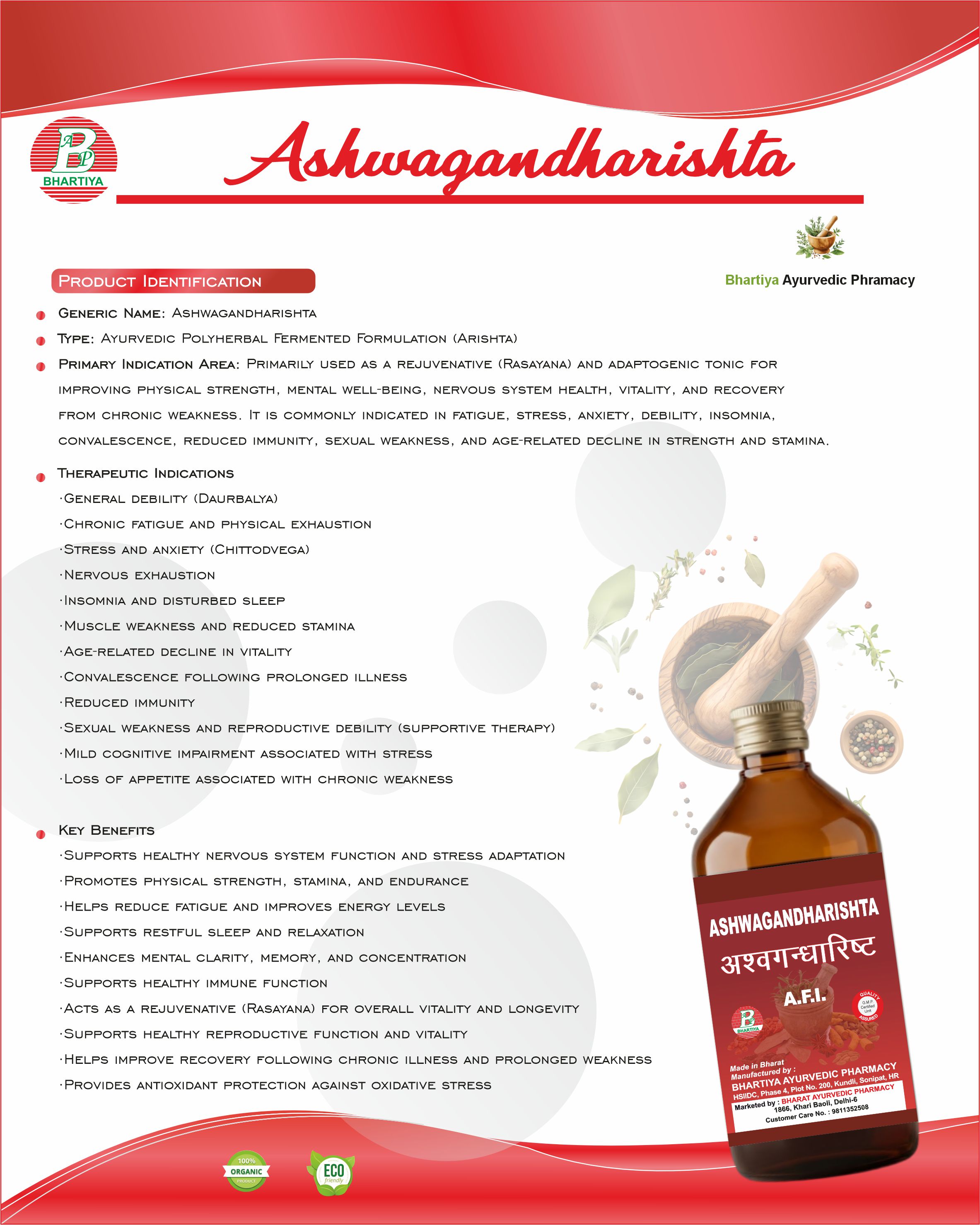
Product Identification
Generic Name: Ashwagandharishta
Type: Ayurvedic Polyherbal Fermented Formulation (Arishta)
Primary Indication Area: Primarily used as a rejuvenative (Rasayana) and adaptogenic tonic for improving physical strength, mental well-being, nervous system health, vitality, and recovery from chronic weakness. It is commonly indicated in fatigue, stress, anxiety, debility, insomnia, convalescence, reduced immunity, sexual weakness, and age-related decline in strength and stamina.
Therapeutic Indications
• General debility (Daurbalya)
• Chronic fatigue and physical exhaustion
• Stress and anxiety (Chittodvega)
• Nervous exhaustion
• Insomnia and disturbed sleep
• Muscle weakness and reduced stamina
• Age-related decline in vitality
• Convalescence following prolonged illness
• Reduced immunity
• Sexual weakness and reproductive debility (supportive therapy)
• Mild cognitive impairment associated with stress
• Loss of appetite associated with chronic weakness
Key Benefits
• Supports healthy nervous system function and stress adaptation
• Promotes physical strength, stamina, and endurance
• Helps reduce fatigue and improves energy levels
• Supports restful sleep and relaxation
• Enhances mental clarity, memory, and concentration
• Supports healthy immune function
• Acts as a rejuvenative (Rasayana) for overall vitality and longevity
• Supports healthy reproductive function and vitality
• Helps improve recovery following chronic illness and prolonged weakness
• Provides antioxidant protection against oxidative stress
FORMULA
Each part contains:
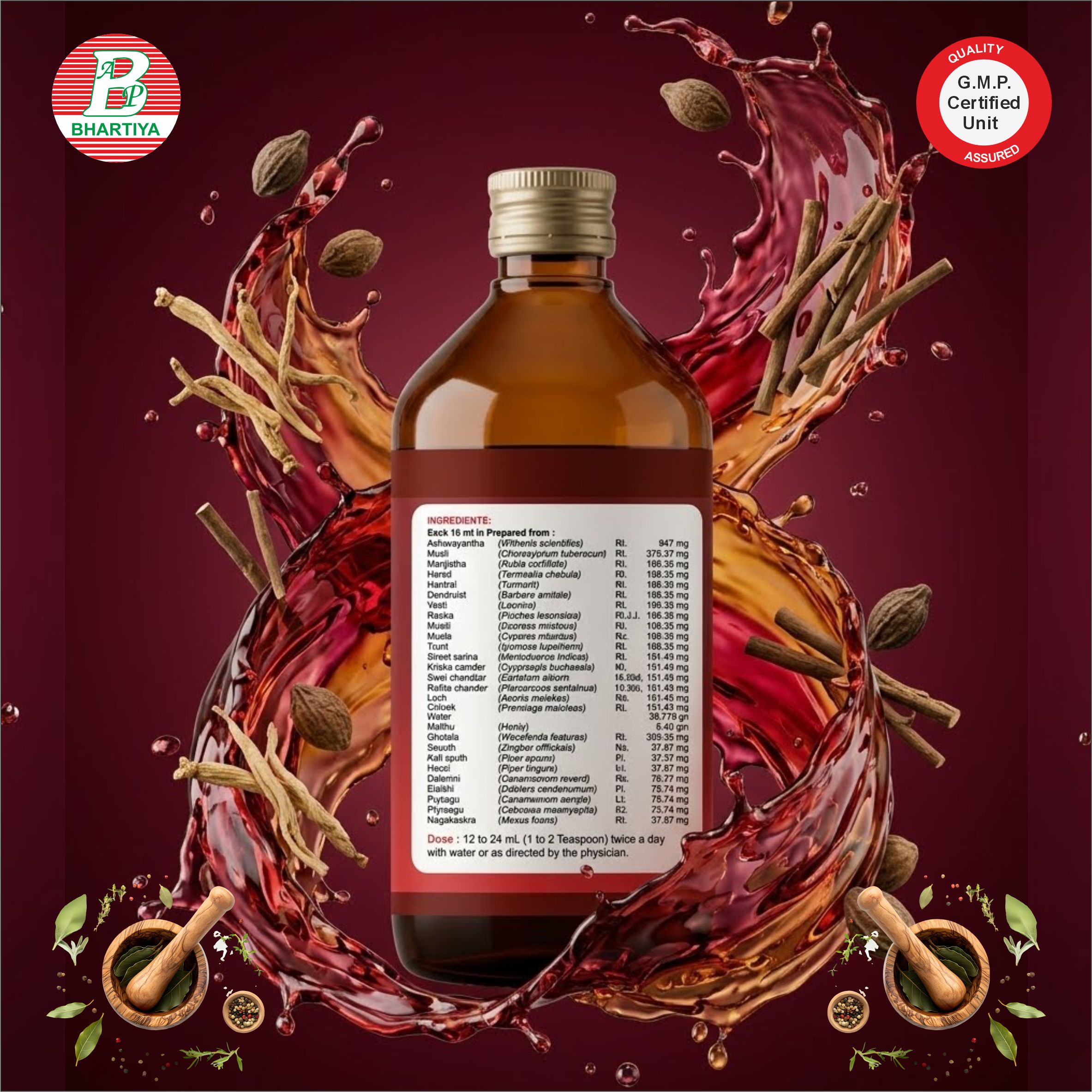
• Ashwagandha (Withania somnifera) Root – 2.400 kg
• Musali (Chlorophytum borivilianum) – 960 g
• Manjistha (Rubia cordifolia) – 480 g
• Haritaki (Terminalia chebula) – 480 g
• Haridra (Curcuma longa) – 480 g
• Daruharidra (Berberis aristata) – 480 g
• Rasna (Pluchea lanceolata) – 480 g
• Vidari (Pueraria tuberosa) – 480 g
• Arjuna (Terminalia arjuna) – 480 g
• Musta (Cyperus rotundus) – 480 g
• Chitraka (Plumbago zeylanica) – 384 g
• Trivrit (Operculina turpethum) – 480 g
• Sveta Sariva (Hemidesmus indicus)-384 g
• Krsna Sariva (Cyrptolepis buchanani)-384 g
• Shweta Chandana (Santalum album) – 384 g
• Rakta Chandana (Pterocarpus santalinus) – 384 g
• Vacha (Acorus calamus) – 384 g
• Water – 98.304 L, reduced to 12.288 L
Prakshepa Dravyas
• Madhu (Honey) – 14.400 K g
• Dhataki Pushpa (Woodfordia fruticosa) – 768 g
• Shunthi (Zingiber officinale) – 96 g
• Maricha (Piper nigrum) – 96 g
• Pippali (Piper longum) – 96 g
• Tvak (Cinnamomum verum) – 96 g
• Ela (Elettaria cardamomum) – 96 g
• Tejapatra (Cinnamomum tamala) – 96 g
• Priyangu (Callicarpa macrophylla) – 96 g
• Nagakesara (Mesua ferrea) – 96 g
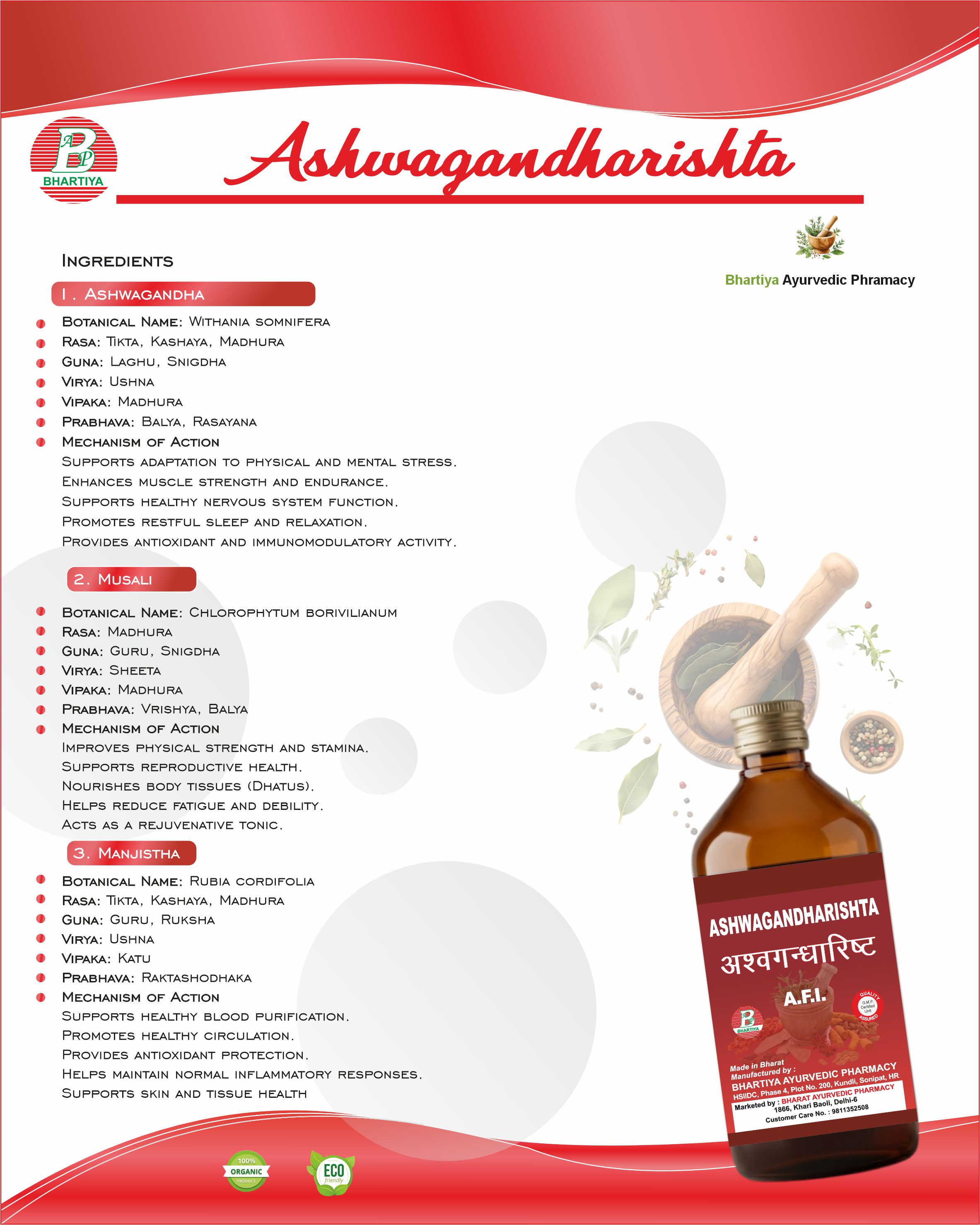
Ingredients
1. Ashwagandha
Botanical Name: Withania somnifera
• Rasa: Tikta, Kashaya, Madhura
• Guna: Laghu, Snigdha
• Virya: Ushna
• Vipaka: Madhura
• Prabhava: Balya, Rasayana
Mechanism of Action
• Supports adaptation to physical and mental stress.
• Enhances muscle strength and endurance.
• Supports healthy nervous system function.
• Promotes restful sleep and relaxation.
• Provides antioxidant and immunomodulatory activity.
2. Musali
Botanical Name: Chlorophytum borivilianum
• Rasa: Madhura
• Guna: Guru, Snigdha
• Virya: Sheeta
• Vipaka: Madhura
• Prabhava: Vrishya, Balya
Mechanism of Action
• Improves physical strength and stamina.
• Supports reproductive health.
• Nourishes body tissues (Dhatus).
• Helps reduce fatigue and debility.
• Acts as a rejuvenative tonic.
3. Manjistha
Botanical Name: Rubia cordifolia
• Rasa: Tikta, Kashaya, Madhura
• Guna: Guru, Ruksha
• Virya: Ushna
• Vipaka: Katu
• Prabhava: Raktashodhaka
Mechanism of Action
• Supports healthy blood purification.
• Promotes healthy circulation.
• Provides antioxidant protection.
• Helps maintain normal inflammatory responses.
• Supports skin and tissue health.
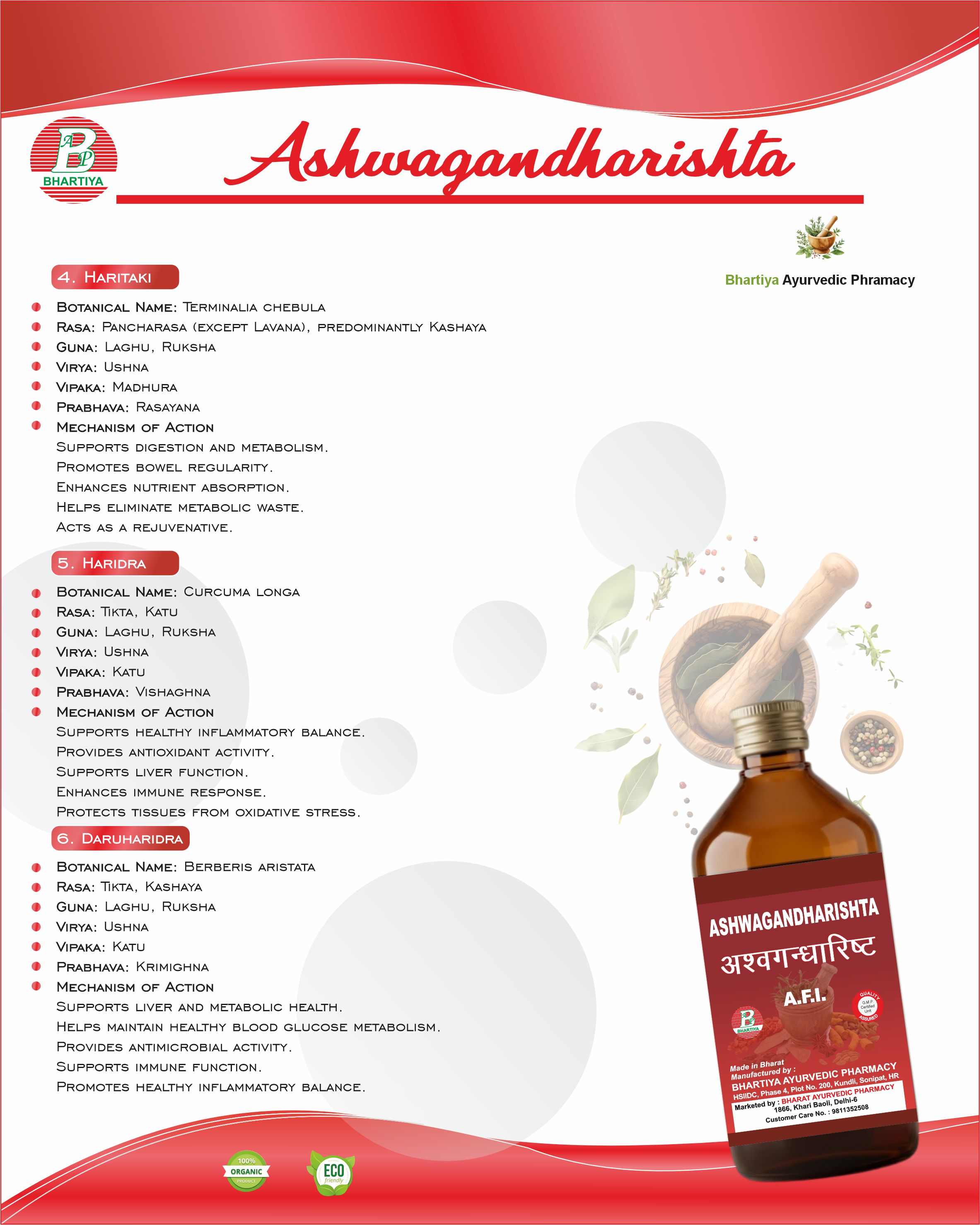
4. Haritaki
Botanical Name: Terminalia chebula
• Rasa: Pancharasa (except Lavana), predominantly Kashaya
• Guna: Laghu, Ruksha
• Virya: Ushna
• Vipaka: Madhura
• Prabhava: Rasayana
Mechanism of Action
• Supports digestion and metabolism.
• Promotes bowel regularity.
• Enhances nutrient absorption.
• Helps eliminate metabolic waste.
• Acts as a rejuvenative.
5. Haridra
Botanical Name: Curcuma longa
• Rasa: Tikta, Katu
• Guna: Laghu, Ruksha
• Virya: Ushna
• Vipaka: Katu
• Prabhava: Vishaghna
Mechanism of Action
• Supports healthy inflammatory balance.
• Provides antioxidant activity.
• Supports liver function.
• Enhances immune response.
• Protects tissues from oxidative stress.
6. Daruharidra
Botanical Name: Berberis aristata
• Rasa: Tikta, Kashaya
• Guna: Laghu, Ruksha
• Virya: Ushna
• Vipaka: Katu
• Prabhava: Krimighna
Mechanism of Action
• Supports liver and metabolic health.
• Helps maintain healthy blood glucose metabolism.
• Provides antimicrobial activity.
• Supports immune function.
• Promotes healthy inflammatory balance.
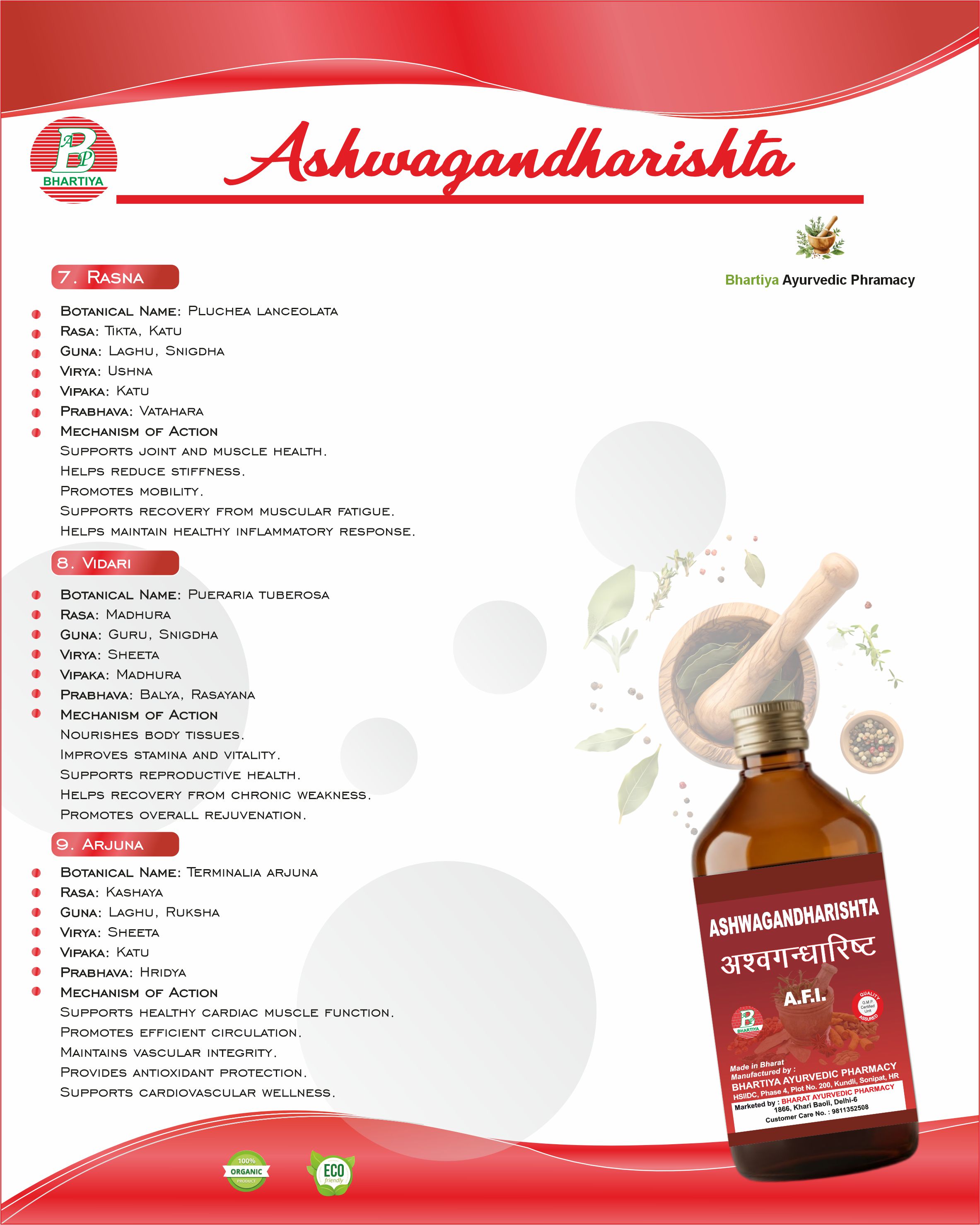
7. Rasna
Botanical Name: Pluchea lanceolata
• Rasa: Tikta, Katu
• Guna: Laghu, Snigdha
• Virya: Ushna
• Vipaka: Katu
• Prabhava: Vatahara
Mechanism of Action
• Supports joint and muscle health.
• Helps reduce stiffness.
• Promotes mobility.
• Supports recovery from muscular fatigue.
• Helps maintain healthy inflammatory response.
8. Vidari
Botanical Name: Pueraria tuberosa
• Rasa: Madhura
• Guna: Guru, Snigdha
• Virya: Sheeta
• Vipaka: Madhura
• Prabhava: Balya, Rasayana
Mechanism of Action
• Nourishes body tissues.
• Improves stamina and vitality.
• Supports reproductive health.
• Helps recovery from chronic weakness.
• Promotes overall rejuvenation.
9. Arjuna
Botanical Name: Terminalia arjuna
• Rasa: Kashaya
• Guna: Laghu, Ruksha
• Virya: Sheeta
• Vipaka: Katu
• Prabhava: Hridya
Mechanism of Action
• Supports healthy cardiac muscle function.
• Promotes efficient circulation.
• Maintains vascular integrity.
• Provides antioxidant protection.
• Supports cardiovascular wellness.
10. Musta
Botanical Name: Cyperus rotundus
• Rasa: Tikta, Katu, Kashaya
• Guna: Laghu, Ruksha
• Virya: Sheeta
• Vipaka: Katu
• Prabhava: Deepana, Pachana
Mechanism of Action
• Supports digestion and appetite.
• Promotes healthy metabolism.
• Helps relieve digestive discomfort.
• Maintains gastrointestinal balance.
• Supports nutrient assimilation.
11. Chitraka
Botanical Name: Plumbago zeylanica
• Rasa: Katu
• Guna: Laghu, Tikshna, Ruksha
• Virya: Ushna
• Vipaka: Katu
• Prabhava: Deepana, Pachana
Mechanism of Action
• Stimulates digestive fire (Agni).
• Improves digestion and nutrient absorption.
• Reduces Ama (metabolic toxins).
• Supports healthy metabolism.
• Enhances bioavailability of herbal constituents.
12. Trivrit
Botanical Name: Operculina turpethum
• Rasa: Tikta, Katu
• Guna: Laghu, Snigdha, Tikshna
• Virya: Ushna
• Vipaka: Katu
• Prabhava: Rechana
Mechanism of Action
• Supports natural detoxification.
• Promotes bowel regularity.
• Helps eliminate metabolic waste.
• Supports digestive health.
• Maintains healthy metabolism.
13. Sveta Sariva
Botanical Name: Hemidesmus indicus
• Rasa: Madhura, Tikta
• Guna: Guru, Snigdha
• Virya: Sheeta
• Vipaka: Madhura
• Prabhava: Raktaprasadana
Mechanism of Action
• Supports blood purification.
• Provides cooling and rejuvenating effects.
• Helps maintain healthy skin.
• Supports immune function.
• Promotes overall vitality.
14. Krishna Sariva
Botanical Name: Cryptolepis buchanani
• Rasa: Tikta, Kashaya
• Guna: Guru, Snigdha
• Virya: Sheeta
• Vipaka: Madhura
• Prabhava: Balya
Mechanism of Action
• Supports healthy joints and muscles.
• Helps maintain normal inflammatory responses.
• Promotes tissue nourishment.
• Supports musculoskeletal health.
• Provides antioxidant protection.
15. Shweta Chandana
Botanical Name: Santalum album
• Rasa: Tikta, Madhura
• Guna: Laghu, Ruksha
• Virya: Sheeta
• Vipaka: Katu
• Prabhava: Pittashamaka
Mechanism of Action
• Provides cooling effects.
• Supports urinary health.
• Promotes mental calmness.
• Helps balance Pitta.
• Provides antioxidant activity.
16. Rakta Chandana
Botanical Name: Pterocarpus santalinus
• Rasa: Tikta, Kashaya
• Guna: Laghu, Ruksha
• Virya: Sheeta
• Vipaka: Katu
• Prabhava: Raktaprasadana
Mechanism of Action
• Supports healthy circulation.
• Provides antioxidant protection.
• Helps maintain skin health.
• Supports tissue healing.
• Helps maintain normal inflammatory balance.
17. Vacha
Botanical Name: Acorus calamus
• Rasa: Katu, Tikta
• Guna: Laghu, Tikshna
• Virya: Ushna
• Vipaka: Katu
• Prabhava: Medhya
Mechanism of Action
• Supports cognitive function.
• Enhances memory and concentration.
• Supports nervous system health.
• Helps reduce mental fatigue.
• Promotes mental clarity.
Prakshepa Dravyas
1. Madhu (Honey)
Source: Honey
• Rasa: Madhura, Kashaya Anurasa
• Guna: Laghu, Ruksha
• Virya: Sheeta
• Vipaka: Madhura
• Prabhava: Yogavahi
Mechanism of Action
• Acts as a Yogavahi, enhancing the delivery and absorption of herbal constituents.
• Supports tissue nourishment and rejuvenation.
• Provides antioxidant and antimicrobial properties.
• Improves the palatability of the formulation.
• Helps preserve the fermented preparation.
2. Dhataki Pushpa
Botanical Name: Woodfordia fruticosa
• Rasa: Kashaya
• Guna: Laghu, Ruksha
• Virya: Sheeta
• Vipaka: Katu
• Prabhava: Sandhaniya, Yogavahi
Mechanism of Action
• Acts as the natural fermenting agent in Arishta preparation.
• Facilitates the formation of self-generated alcohol for efficient extraction of phytoconstituents.
• Improves bioavailability of herbal constituents.
• Supports preservation and stability of the formulation.
• Enhances overall therapeutic efficacy through improved absorption.
3. Shunthi
Botanical Name: Zingiber officinale (Dry Rhizome)
• Rasa: Katu
• Guna: Laghu, Snigdha
• Virya: Ushna
• Vipaka: Madhura
• Prabhava: Deepana, Pachana
Mechanism of Action
• Stimulates digestive fire (Agni).
• Improves digestion and nutrient absorption.
• Helps reduce Ama (metabolic toxins).
• Supports healthy circulation and metabolism.
• Enhances bioavailability of herbal constituents.
4. Maricha
Botanical Name: Piper nigrum
• Rasa: Katu
• Guna: Laghu, Tikshna
• Virya: Ushna
• Vipaka: Katu
• Prabhava: Deepana, Lekhana
Mechanism of Action
• Stimulates digestion and metabolism.
• Enhances intestinal absorption of phytoconstituents.
• Supports respiratory health.
• Promotes healthy circulation.
• Provides antioxidant activity.
5. Pippali
Botanical Name: Piper longum
• Rasa: Katu
• Guna: Laghu, Snigdha, Tikshna
• Virya: Anushna (Mildly Ushna)
• Vipaka: Madhura
• Prabhava: Rasayana
Mechanism of Action
• Supports respiratory and digestive health.
• Enhances absorption and bioavailability of herbal compounds.
• Promotes rejuvenation and vitality.
• Supports immune function.
• Helps improve endurance and recovery.
6. Tvak
Botanical Name: Cinnamomum verum (Syn. Cinnamomum zeylanicum)
• Rasa: Katu, Tikta, Madhura
• Guna: Laghu, Ruksha, Tikshna
• Virya: Ushna
• Vipaka: Katu
• Prabhava: Hridya
Mechanism of Action
• Supports healthy digestion and metabolism.
• Promotes healthy blood circulation.
• Provides antioxidant activity.
• Helps maintain healthy blood glucose metabolism.
• Improves aroma and taste of the formulation.
7. Ela
Botanical Name: Elettaria cardamomum
• Rasa: Katu, Madhura
• Guna: Laghu, Ruksha
• Virya: Sheeta
• Vipaka: Madhura
• Prabhava: Hridya
Mechanism of Action
• Supports healthy digestion.
• Helps reduce bloating and indigestion.
• Supports respiratory health.
• Provides antioxidant activity.
• Improves aroma and palatability.
8. Tejapatra
Botanical Name: Cinnamomum tamala
• Rasa: Katu, Tikta, Kashaya
• Guna: Laghu, Ruksha
• Virya: Ushna
• Vipaka: Katu
• Prabhava: Deepana
Mechanism of Action
• Stimulates appetite and digestion.
• Supports healthy metabolism.
• Promotes circulation.
• Provides antioxidant protection.
• Enhances the aromatic quality of the formulation.
9. Priyangu
Botanical Name: Callicarpa macrophylla
• Rasa: Kashaya, Madhura
• Guna: Laghu, Ruksha
• Virya: Sheeta
• Vipaka: Katu
• Prabhava: Pittashamaka
Mechanism of Action
• Supports healthy skin and blood.
• Helps maintain normal inflammatory responses.
• Provides antioxidant activity.
• Promotes tissue healing.
• Contributes to the rejuvenative effects of the formulation.
10. Nagakesara
Botanical Name: Mesua ferrea
• Rasa: Kashaya, Tikta
• Guna: Laghu, Ruksha
• Virya: Sheeta
• Vipaka: Katu
• Prabhava: Grahi, Raktastambhaka
Mechanism of Action
• Supports healthy circulation and vascular integrity.
• Helps maintain normal inflammatory responses.
• Provides antioxidant protection.
• Supports digestive health.
• Contributes to tissue repair and rejuvenation.
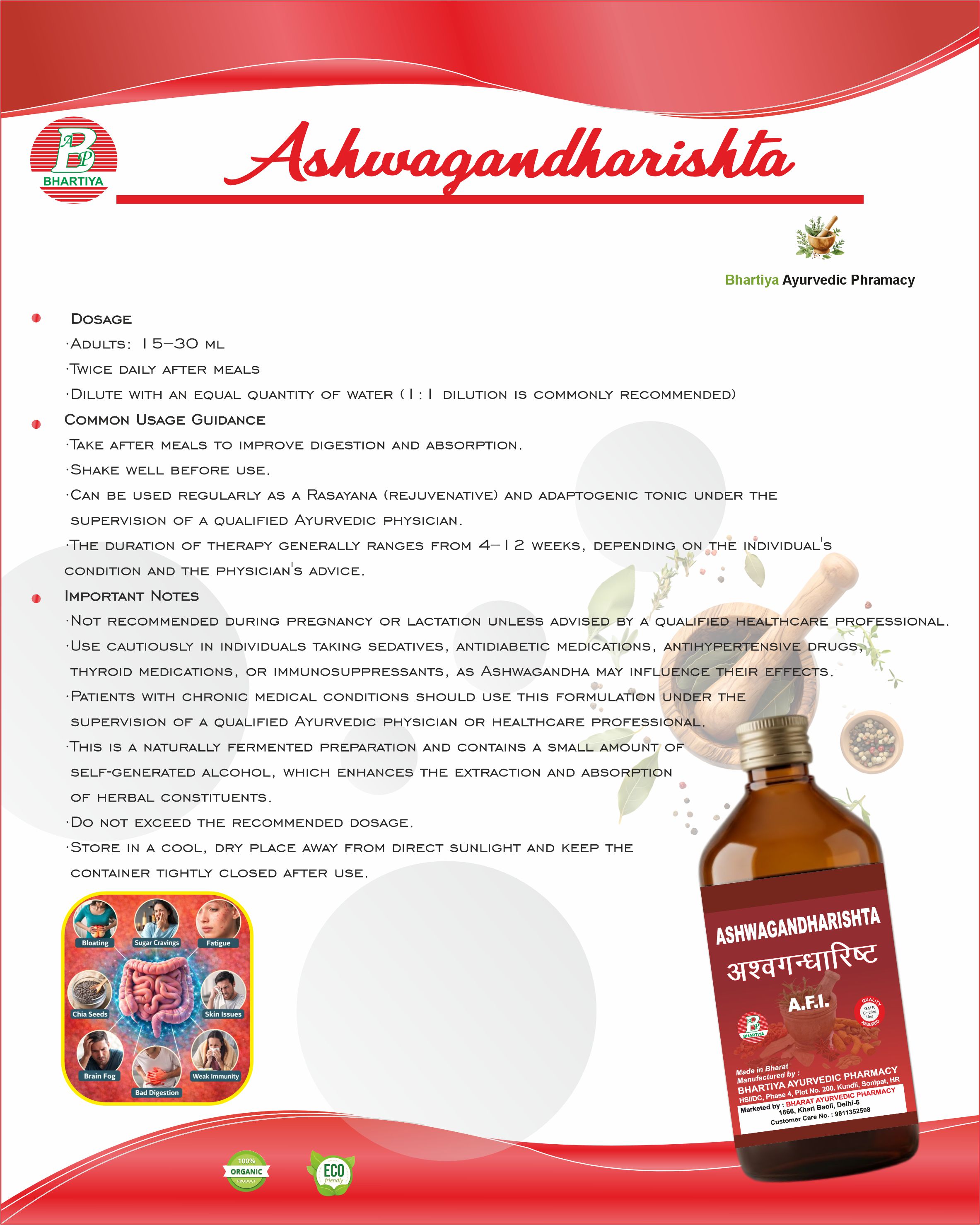
Dosage
• Adults: 15–30 ml
• Twice daily after meals
• Dilute with an equal quantity of water (1:1 dilution is commonly recommended)
Common Usage Guidance
• Take after meals to improve digestion and absorption.
• Shake well before use.
• Can be used regularly as a Rasayana (rejuvenative) and adaptogenic tonic under the supervision of a qualified Ayurvedic physician.
• The duration of therapy generally ranges from 4–12 weeks, depending on the individual's condition and the physician's advice.
Important Notes
• Not recommended during pregnancy or lactation unless advised by a qualified healthcare professional.
• Use cautiously in individuals taking sedatives, antidiabetic medications, antihypertensive drugs, thyroid medications, or immunosuppressants, as Ashwagandha may influence their effects.
• Patients with chronic medical conditions should use this formulation under the supervision of a qualified Ayurvedic physician or healthcare professional.
• This is a naturally fermented preparation and contains a small amount of self-generated alcohol, which enhances the extraction and absorption of herbal constituents.
• Do not exceed the recommended dosage.
• Store in a cool, dry place away from direct sunlight and keep the container tightly closed after use.
ashwagandharishta ke fayde
ashwagandharishta syrup benefits in hindi
ashwagandharishta syrup
ashwagandharishta kis kaam aati hai
ashwagandharishta benefits in hindi
ashwagandharishta uses in hindi
ashwagandharishta ayurvedic medicine uses
ashwagandharishta ayurveda
ashwagandharishta ayurvedic medicine uses in hindi
ashwagandharishta ayurvedic syrup uses in hindi
ashwagandharishta composition
ashwagandharishta expiry date
ashwagandharishta empty stomach
ashwagandharishta uses easy ayurveda
ashwagandharishta syrup expiry date
ashwagandharishta for women
ashwagandharishta fayde
ashwagandharishta flipkart
ashwagandharishta for weight gain
ashwagandharishta for heart
ashwagandharishta fayde in hindi
ashwagandharishta ke gun
ashwagandharishta hindi use
ashwagandharishta hindi mein
ashwagandharishta how to take
ashwagandharishta hai
ashwagandharishta how long to take
ashwagandharishta how to use
ashwagandharishta hamdard
ashwagandharishta in hindi
ashwagandharishta ingredients
ashwagandharishta ingredients in hindi
ashwagandharishta image
ashwagandharishta india
ashwagandharishta kaise piya jata hai
ashwagandharishta ke fayde hindi mein
ashwagandharishta kis kaam mein aata hai
ashwagandharishta mein kya-kya hota hai
ashwagandharishta mein kya-kya hai
ashwagandharishta meaning in hindi
ashwagandharishta me kya hota hai
ashwagandharishta near me
ashwagandharishta online
ashwagandharishta online buy
ashwagandharishta online price
ashwagandharishta peene ke fayde
ashwagandharishta price
ashwagandharishta peene se kya hota hai
ashwagandharishta powder
ashwagandharishta peene se kya-kya fayda hai
ashwagandharishta rate
ashwagandharishta ras
ashwagandharishta syrup kis kaam aata hai
ashwagandharishta special
ashwagandharishta syrup uses in hindi
ashwagandharishta syrup benefits
ashwagandharishta syrup uses
ashwagandharishta special benefits
ashwagandharishta syrup price