

Description
Product details
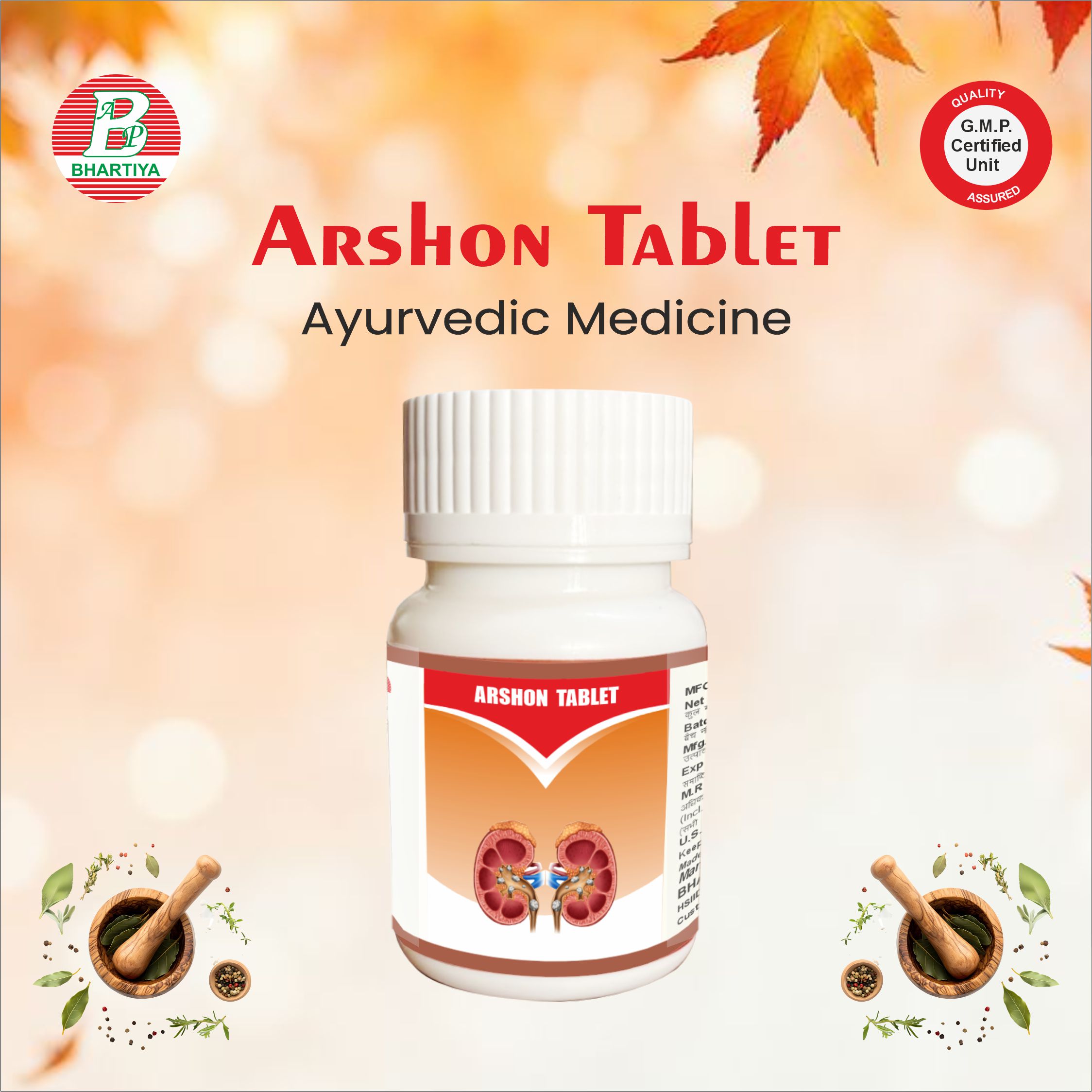
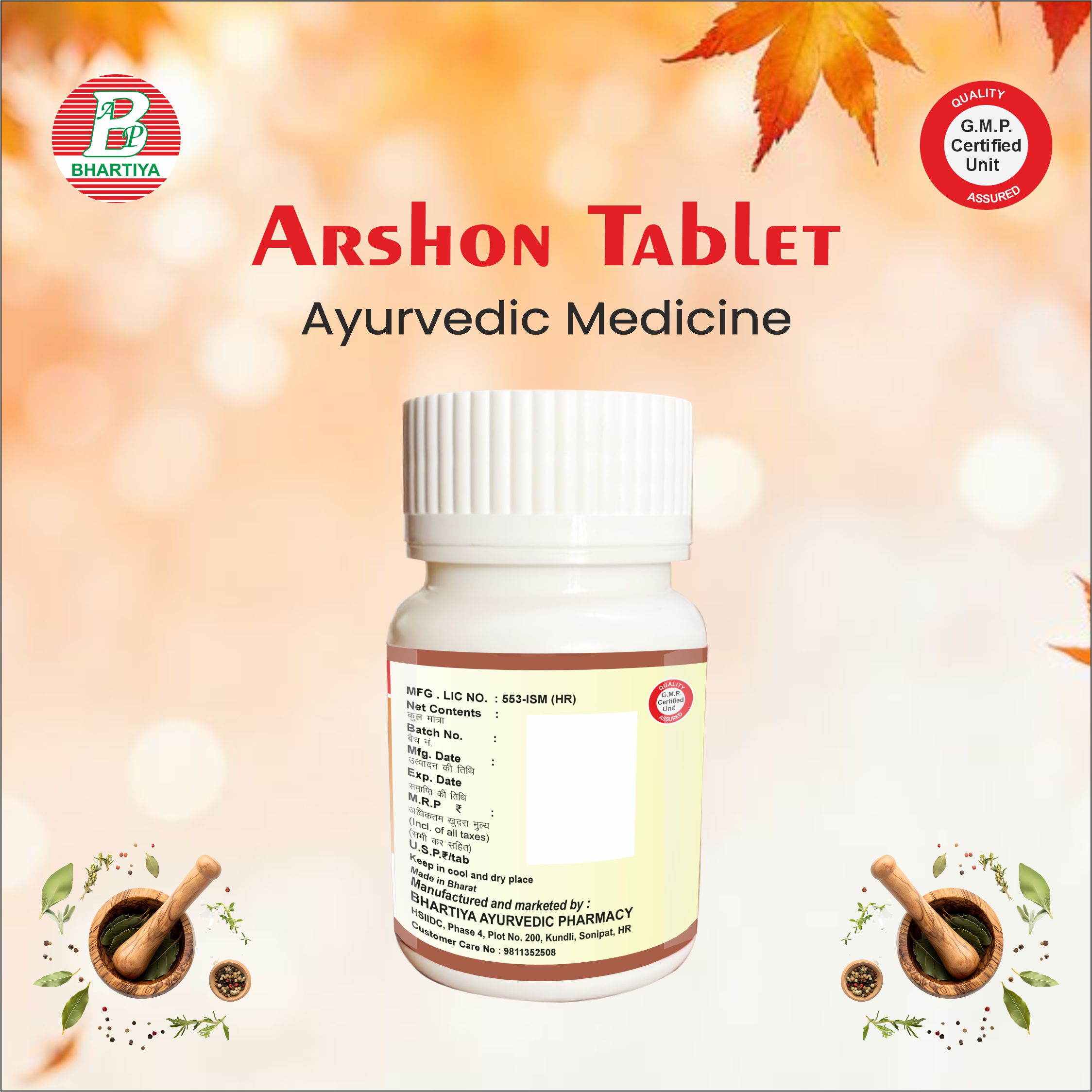
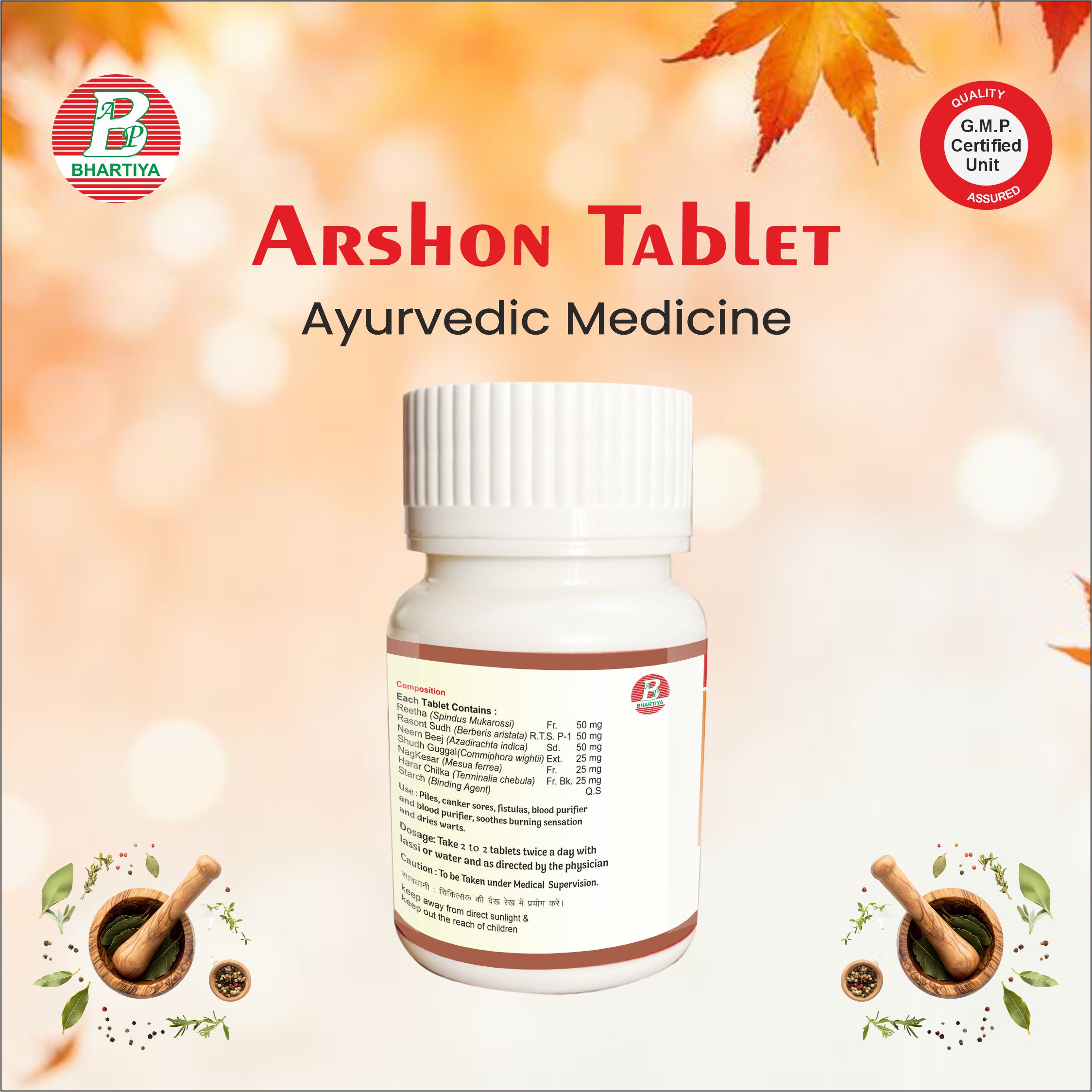
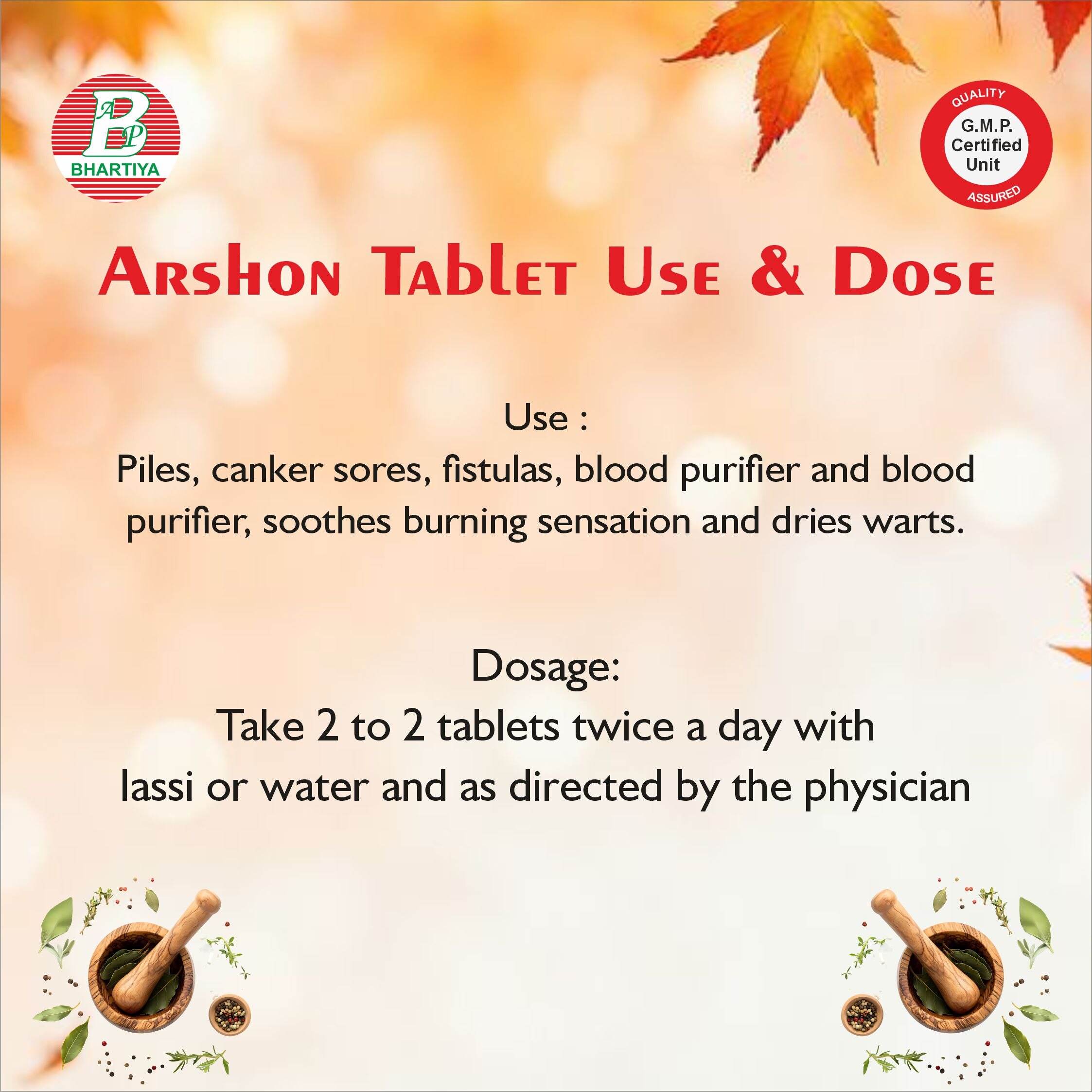
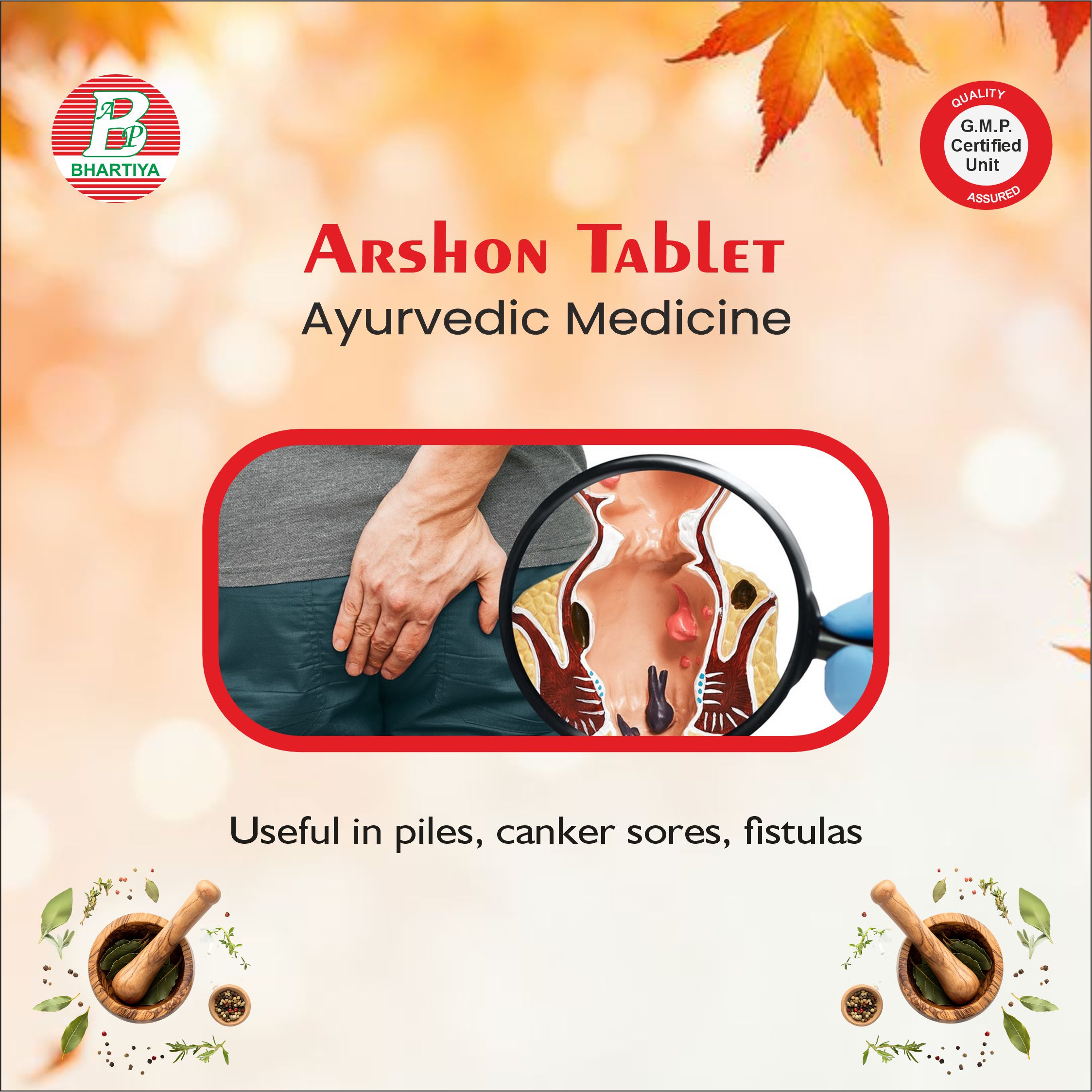
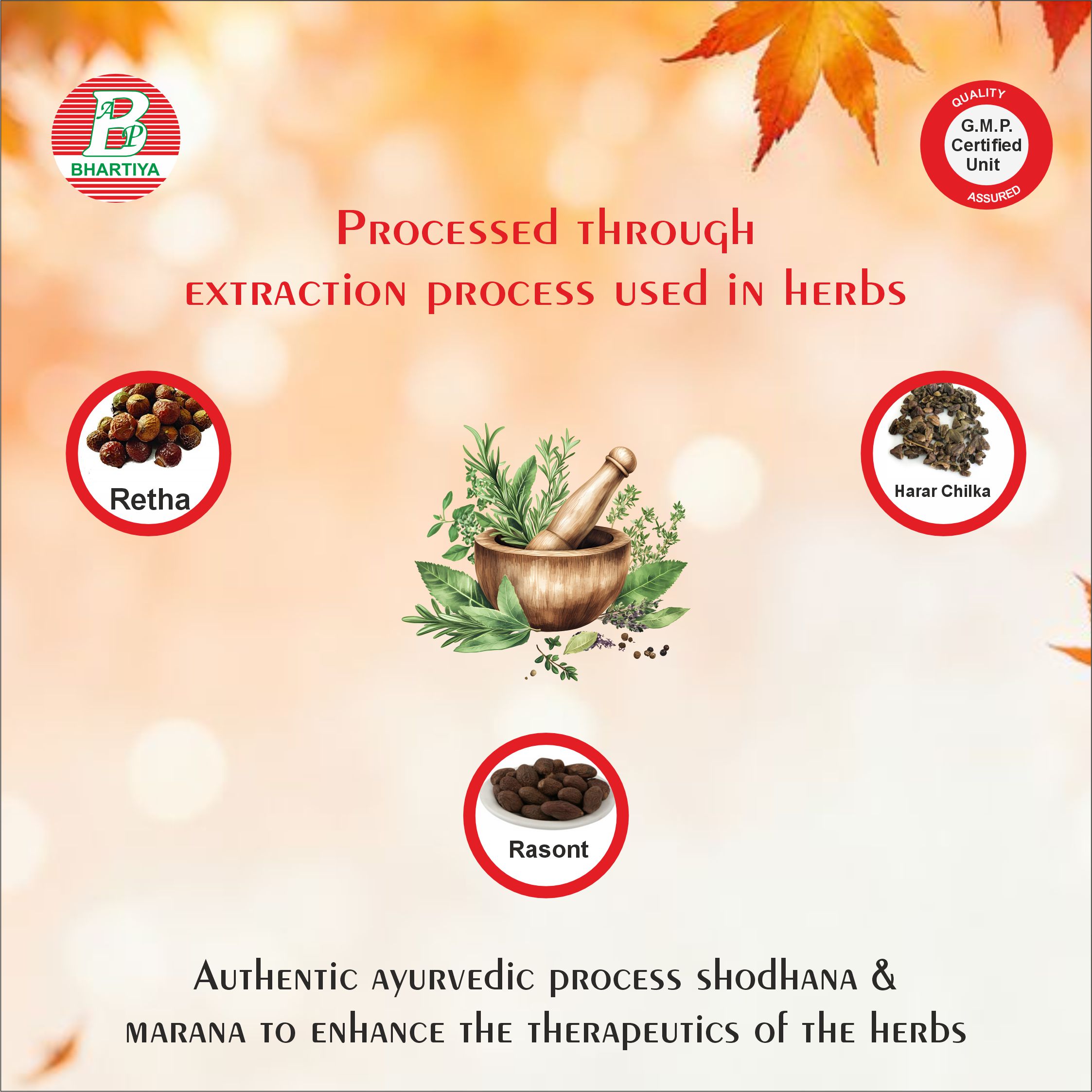
Product Identification • Generic Name: Arshon Tablet • Type: Ayurvedic Patent Medicine • Primary Indication Area: Piles (Babasir / Hemorrhoids) Therapeutic Indications Arshon Tablet is traditionally used for the management of Babasir (Piles / Hemorrhoids). Key benefits include: • Pain Relief: Reduces pain and discomfort in swollen hemorrhoids • Bleeding Control: Helps manage bleeding from hemorrhoids (Raktasrava) • Anti-inflammatory: Reduces swelling, irritation, and inflammation in the anal region • Constipation Support: Regulates bowel movements to reduce straining and pressure • Soothing & Healing: Supports healing of irritated or inflamed anal tissue Use : Piles, canker sores, fistulas, blood purifier and blood purifier, soothes burning sensation and dries warts. Dosage: Take 2 to 2 tablets twice a day with lassi or water and as directed by the physician Ingredients: REETHA Botanical / Common Name- Sapindus mukorossi Key Phytoconstituents: Saponins (primary active compounds) • Flavonoids • Tannins • Phenolic compounds Mechanism of Action of reetha in Piles / Babasir (Biochemistry / Pharmacology) 1. Anti-inflammatory Action • Tannins and flavonoids inhibit pro-inflammatory mediators (e.g., prostaglandins, histamines, leukotrienes) in the affected anal tissue. • Reduces swelling, pain, and local irritation caused by inflamed hemorrhoidal veins. 2. Astringent Effect • Tannins cause protein precipitation in the mucosa, which tightens tissues and reduces bleeding from hemorrhoids. • Helps strengthen capillaries and venous walls, preventing further engorgement. RASONT SHUDH Botanical / Common Name -Berberis aristata (Rasont / Indian Barberry) Key Phytoconstituents: • Alkaloids: Berberine, Palmatine • Flavonoids • Tannins • Phenolic compounds Mechanism of Action of shudh Rasont in Piles / Babasir (Biochemistry / Pharmacology) 1. Anti-inflammatory Action o Berberine and flavonoids inhibit pro-inflammatory mediators such as prostaglandins, leukotrienes, and cytokines. o Reduces swelling, redness, and irritation in hemorrhoidal tissue. 2. Venotonic / Vascular Support o Strengthens capillary and venous walls, reducing engorgement and preventing bleeding from hemorrhoids. NEEM BEEJ Botanical / Common Name: Azadirachta indica (Neem Seeds) Key Phytoconstituents: • Limonoids (e.g., Nimbin, Nimbidin, Azadirachtin) • Flavonoids • Tannins • Polyphenols • Essential fatty acids Mechanism of Action of neem beej in Piles / Babasir (Biochemistry / Pharmacology) 1. Anti-inflammatory Action o Limonoids (nimbin, nimbidin) suppress prostaglandins, leukotrienes, and cytokines. Reduces swelling, irritation, and inflammatory pain in hemorrhoidal tissue. 2. Antimicrobial / Antiseptic Effect o Limonoids, tannins, and azadirachtin show broad antibacterial & antifungal action. Prevents secondary infection in cracked, bleeding, or irritated hemorrhoids. SHUDH GUGGUL Botanical / Common Name: Commiphora mukul (Purified Guggul Resin) Key Phytoconstituents • Guggulsterones (E- & Z-guggulsterone) • Terpenoids (myrrhanol, mukulol) • Resin acids • Flavonoids • Volatile oils • Polysaccharides Mechanism of Action of shudh guggul in Piles / Babasir (Biochemistry / Pharmacology) 1.Anti-inflammatory Action o Guggulsterones inhibit NF-κB, reducing TNF-α, IL-1β, IL-6, prostaglandins & leukotrienes. Decreases swelling, redness, and inflammatory pain in hemorrhoidal veins. 2. Venotonic / Vascular-Strengthening Effect o Terpenoids improve venous tone, reduce capillary fragility, and enhance microcirculation. Shrinks engorged hemorrhoidal veins and reduces congestion NAGKESAR Botanical / Common Name: Mesua ferrea / Nagkesar / Ironwood Tree Key Phytoconstituents: • Tannins • Flavonoids • Phenolic compounds • Essential oils • Xanthones • Coumarins Mechanism of Action of nagkesar in Piles / Babasir (Biochemistry / Pharmacology) 1. Hemostatic / Anti-bleeding Action o Tannins in Nagkesar cause protein precipitation, strengthening local capillaries. o Reduces bleeding in haemorrhagic piles. 2. Astringent / Venotonic Effect o Flavonoids and phenolic compounds tighten tissues and strengthen veins. Shrinks swollen hemorrhoidal veins. HARAD Botanical / Common Name: Terminalia chebula / Harad / Chebulic Myrobalan Key Phytoconstituents (Names Only): • Tannins • Chebulinic acid • Chebulagic acid • Gallic acid • Ellagic acid • Flavonoids • Glycosides • Sugars Mechanism of Action of harad in Piles / Babasir (Biochemistry / Pharmacology) 1. Astringent / Venotonic Effect o Tannins and polyphenols cause protein precipitation and tissue contraction. Strengthens anal veins and reduces hemorrhoidal swelling 2. Hemostatic Action o Tannins and chebulinic acid help constrict capillaries. Controls minor bleeding in bleeding piles